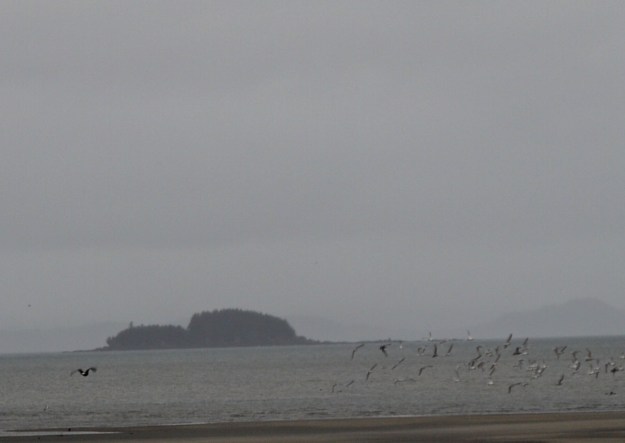
No one would write a homesick song about the Eagle River meadows today. Rain, wind and current provide the only moment before the little dog and I start down an icy trail. I stop where we once watch mergansers and golden eye ducks rotate around an eddy, peer where harbor seals spy-hopped to get a better look at Aki, search the meadow where we found occupied by grumbling geese. The little dog manages to attract the negative attention of a squirrel, but, maybe made grumpy by the rain, it soon loses interest in us.
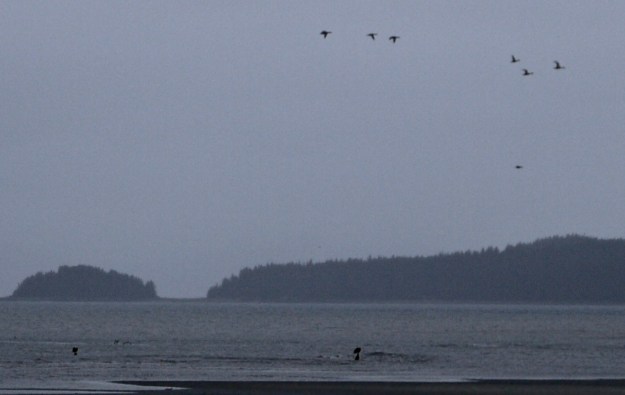
The tide if out so we can see sand bars at the river’s mouth. Two eagles lift off the sand and fly into a nearby spruce tree. When we pass it on the way to the beach, the big birds fly over our heads and out to tide’s edge. One settles onto a driftwood perch. The other dives on him. The first eagle holds on to its perch as now the incoming tidal flow surrounds it and the other one manages to find a similar perch fifty feet away. Both ignore a third eagle’s attempt to drive them off. Surrounded by a cloud of gulls, they hunch in the rain and wait for the tide to deliver dinner.
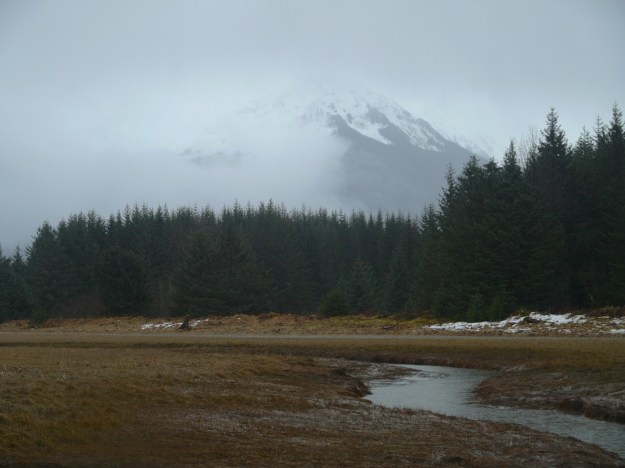

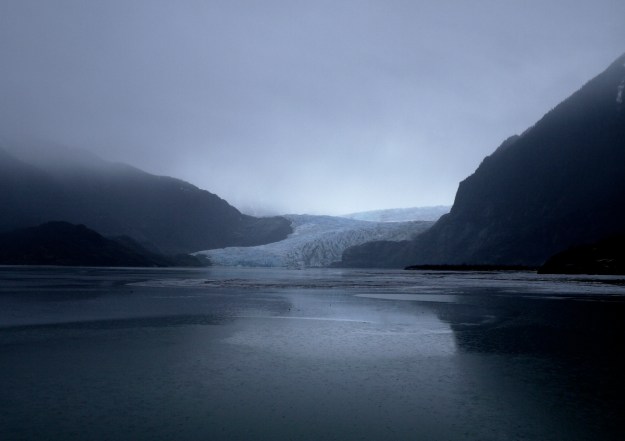
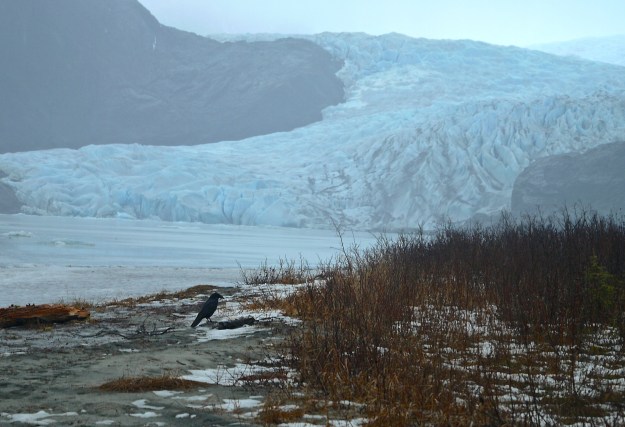
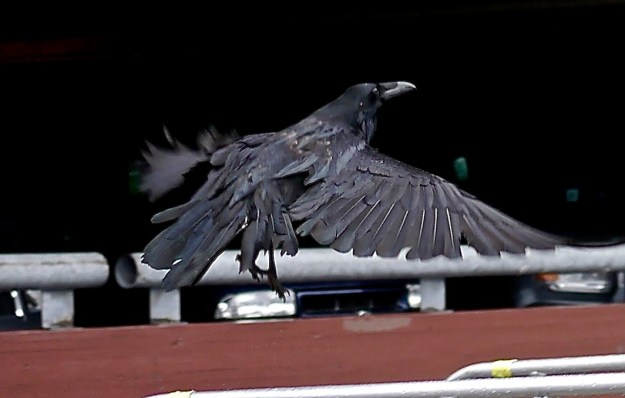
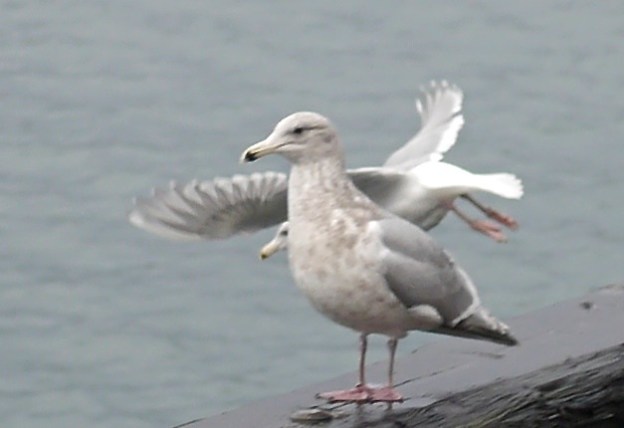
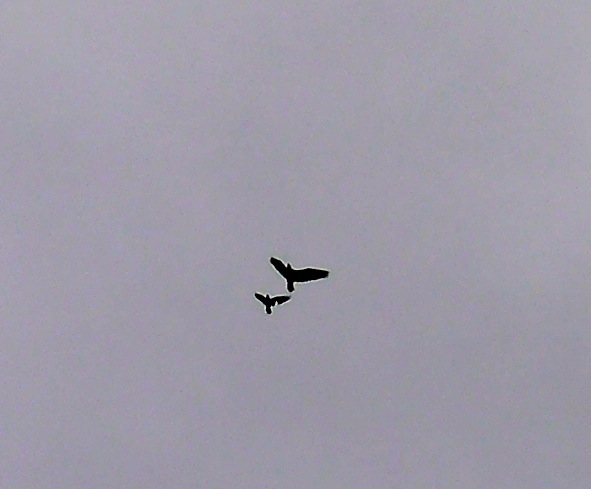
 This morning, Aki and her two humans cruised the semi-frozen wetlands. At the grassland’s edge, the ebbing tide revealed great expanses of sand over which the poodle-mix chased her Frisbee. A great gathering of Canada geese cackled together near Sunny Point, a name made ironic by the flat gray light and clouds that distributed snow pellets on Aki’s gray curls. Eagles, chased from the dump by cracker shells flew over the geese, set some to flight. Most of the Canadians stayed on the ground as did a single swan, its white-feathered body drawing my attention like a candle flame would on a dark night. The geese are local boys, commonly seen on this broad stretch of grassland. But a swan alone in mid-winter is a weather omen, sign of climate change, or just a confused bird.
 Rain and slick-ice trails must be keeping everyone else out of the Gold Creek valley. Aki doesn’t appear to notice the solitude. For a dog with sensitive nose and an inquisitive nature like her, this mid-winter thaw is magic—as stimulating as Disneyland or an overturned meat truck. Nose impaired and cocooned in waterproofs against the rain, I look inward, rather than out today.
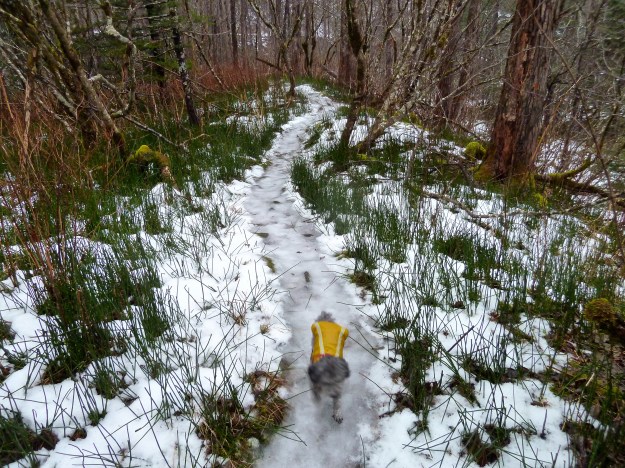 We cross a young forest growing over the rubble of hydraulic mining. A century ago, I couldn’t walk over the wasteland created here by men moiling for gold. The old growth forest they destroyed fed hunters and gathers and offered a peaceful place for the rest. But the gold extraction efforts that destroyed it provided jobs for the people in the nescient Juneau town. Without them, there would be no Juneau. Without them, I might still be living in California. I guess I owe them a debt but refuse to share responsibility for their destructive acts.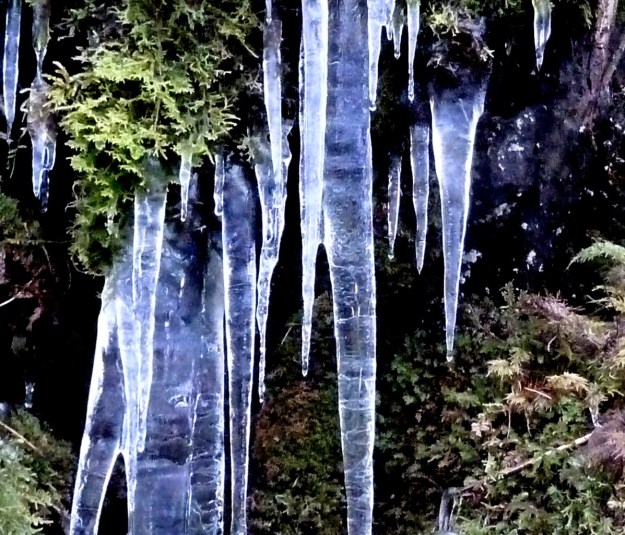
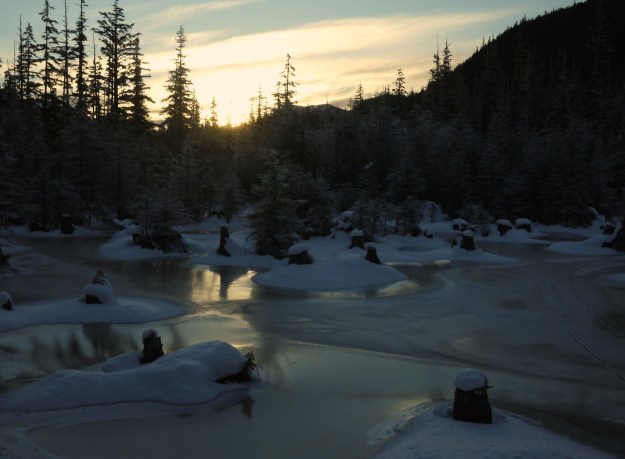
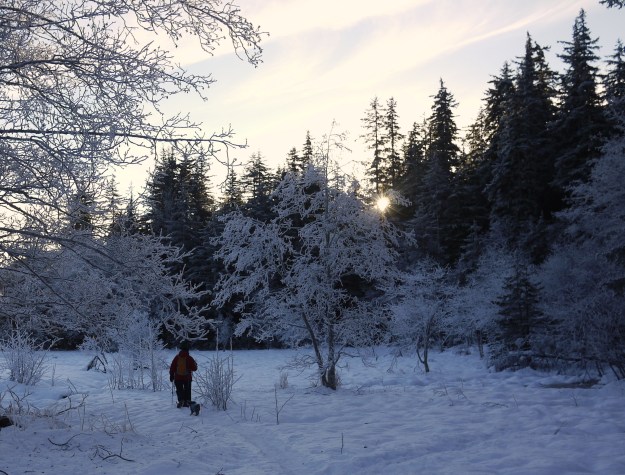
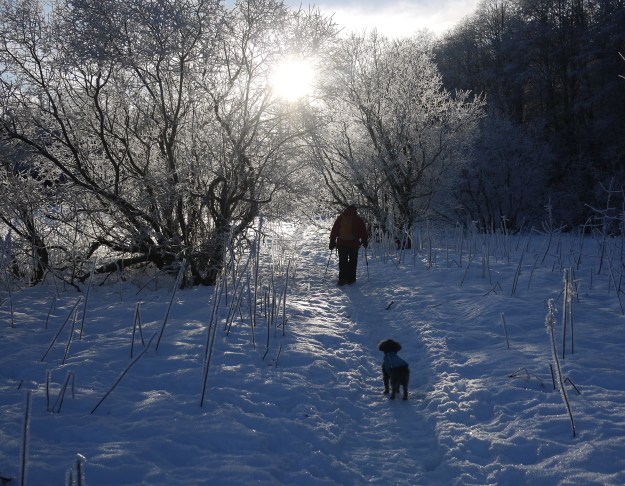
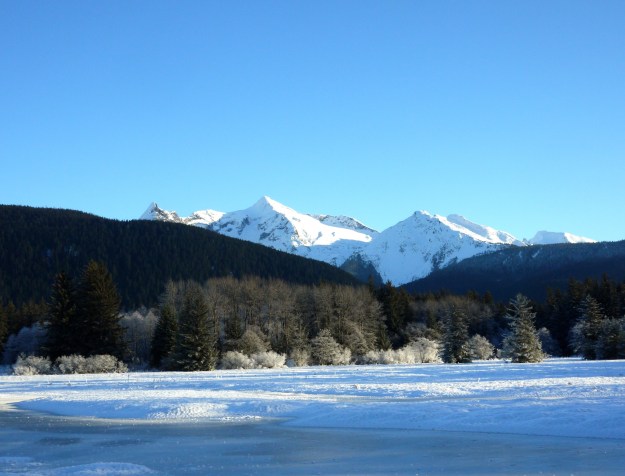
 First appearance of sunshine after days of snow. Aki and I spend the best part of it wandering over the moraine. Normally, I wonder why hikers block out natural sounds with ear buds. But today, I wish the air would fill with a Townes Van Zandt song, maybe “For the Sake of The Song” or “Tecumseh Valley,” and then a Corelli concerto. Aki dances down the snowy trail like she hears her own rich sound track.
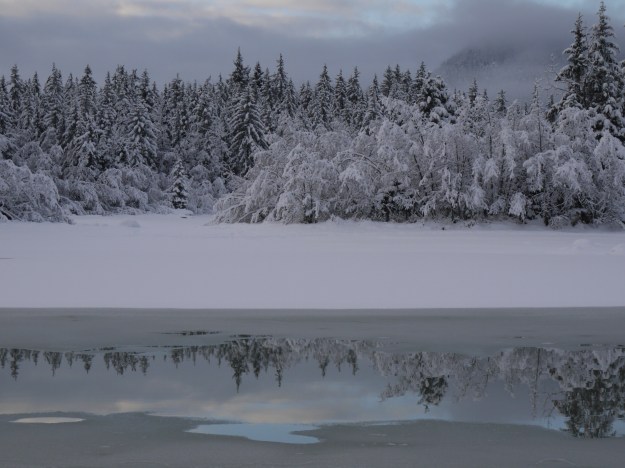 We reach the river a little damp from melting snow. With the 14 mm lens that I usually bring to the moraine, I could share a picture of the scene at the end of the trail: the snow-banked river making a sharp, green-colored bend beneath the forested slope of Mt. McGinnis. Pearl-colored clouds obscure a swatch of the mountain while a blade of sunlight outlines one of the mountain’s sharp-edged ridges. I have a telephoto zoom that only allows me to pull chunks of beauty from the scene. But, if not for the lens problem, I might not have noticed a little world of forest and sky trapped in a shrinking patch of open water on the fast moving river.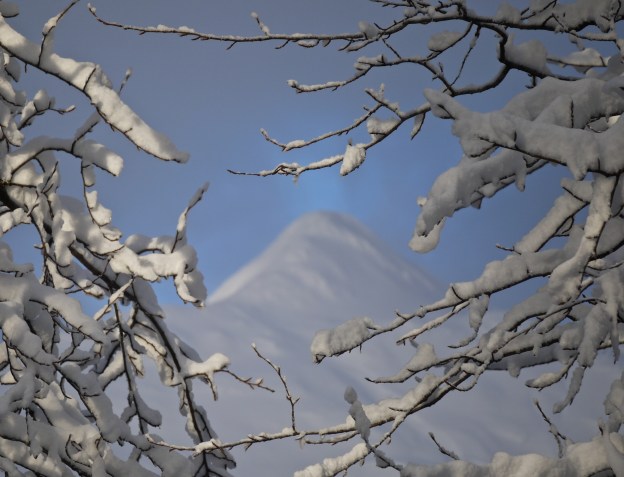



 Walking with Aki