Aki and her other owner just crossed the shrinking dry path that will allow them to avoid being soaked by the incoming tide. A judgmental crow keeps me from immediately following them. It lands two meters away on a piece of ground about to be covered by tidal waters. Having crossed the disappearing spot without getting my boots wet, I stop to watch the bratty bird.
The crow holds it ground, seemingly ignoring me and the incoming tide. Seconds before he is inundated with ocean water, he flies away. I take a few seconds to photograph his rescue, then look down to spot flooding tide waters about to soak my boots. He is not the first crow that tried to trick me. More than one has succeeded.
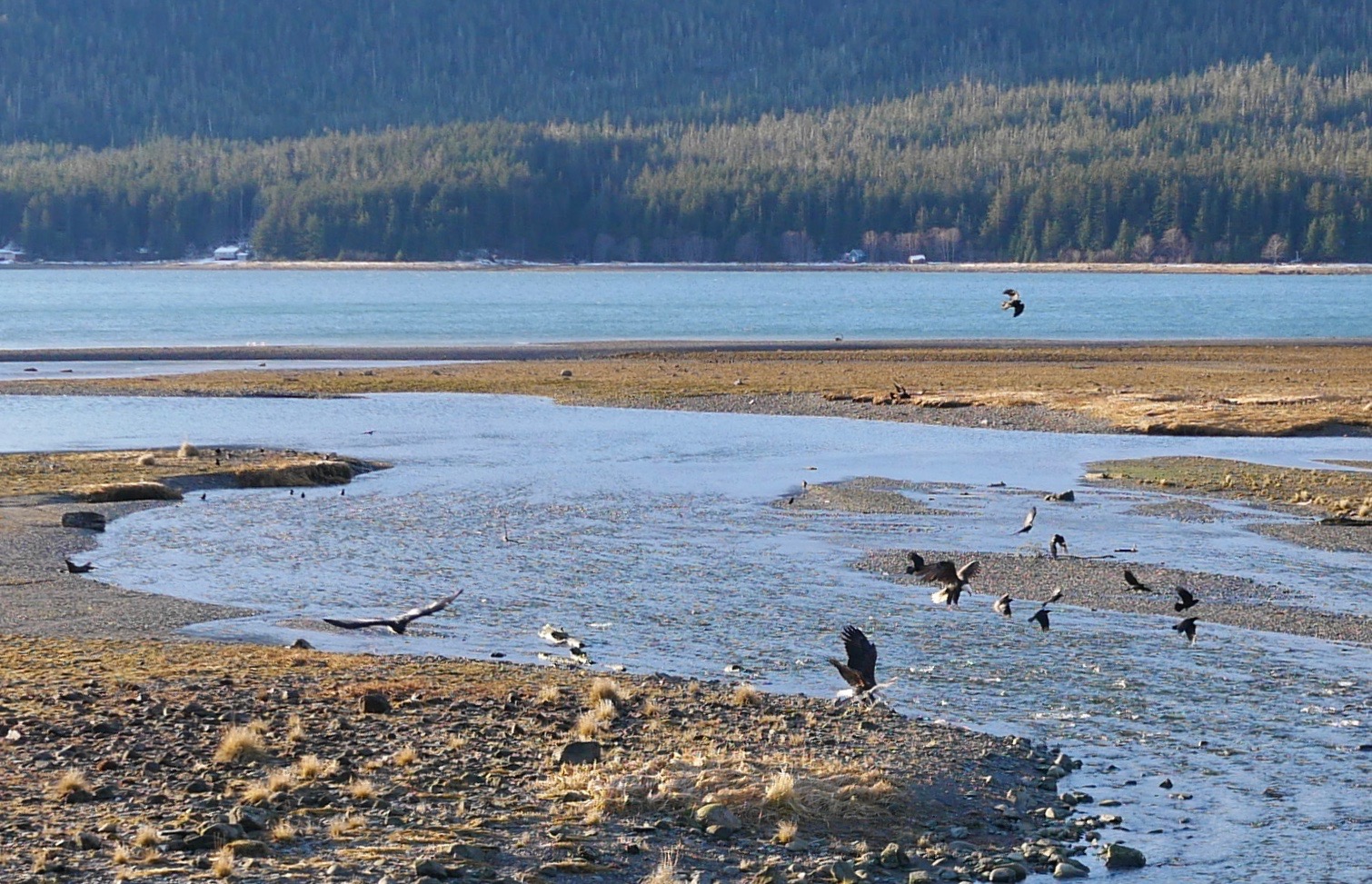
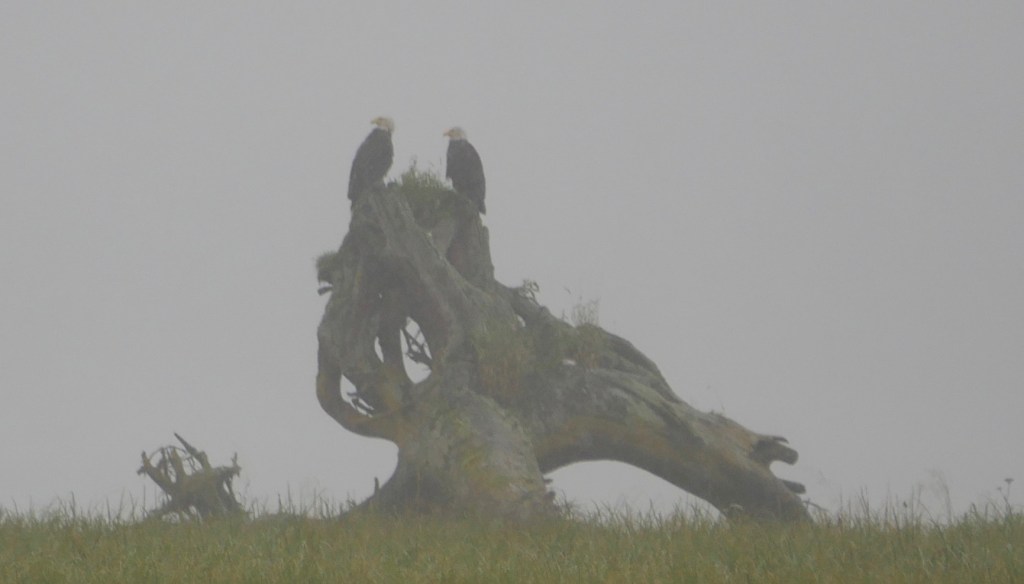
The friends of the surley crow have been drawn to Sheep Creek, where four bald eagles were fighting over a scrap of meat. As is usual, one of the eagles is pulling chunks of feed off the carcass while the other eagles watch. So do a gang of crows. One or two of the crows try to sneak up on the munching eagle but can’t snatch away any food. Maybe that is why the other eagles keep nearby where they can chase off any crow willing to cross the line.
A pair of ravens live in our neighborhood. When upstairs, I often hear them climbing around on our metal roof. This morning, when Aki and I leave for a downtown walk our ravens are nowhere to be seen.
The streets and sidewalks are mostly empty. As she also does, Aki takes her time moving through the neighborhood. She pees often but sniffs more. Two ravens greet us at the bottom of Gastineau Avenue. Most will be perched on the top of the library building or a tiny park.
We work our way down ice covered stairs and walk onto the dock. Just before reaching it, we spot a crowd of wax wing birds feeding in a tangle of deciduous trees. Fall colored leaves still cling the tree branches even though we have already had a week full of cold and snow.
The dock waters are empty of birds but near a little picnic area we can spot a raven playing with an empty plastic food container. Aki approaches the big bird, her doggy tail wagging, her posture held like she does when about to play with another dog. The raven continues playing with the food container even though he is less than a meter from Aki. I wonder, with good cause, whether this raven is one of the pair that lives in our neighborhood,
“This is the worst snow storm I’ve seen here in forty years.” That’s what my neighbor told me while resting on his snow shovel. Several of us were working to clear our little roadway.
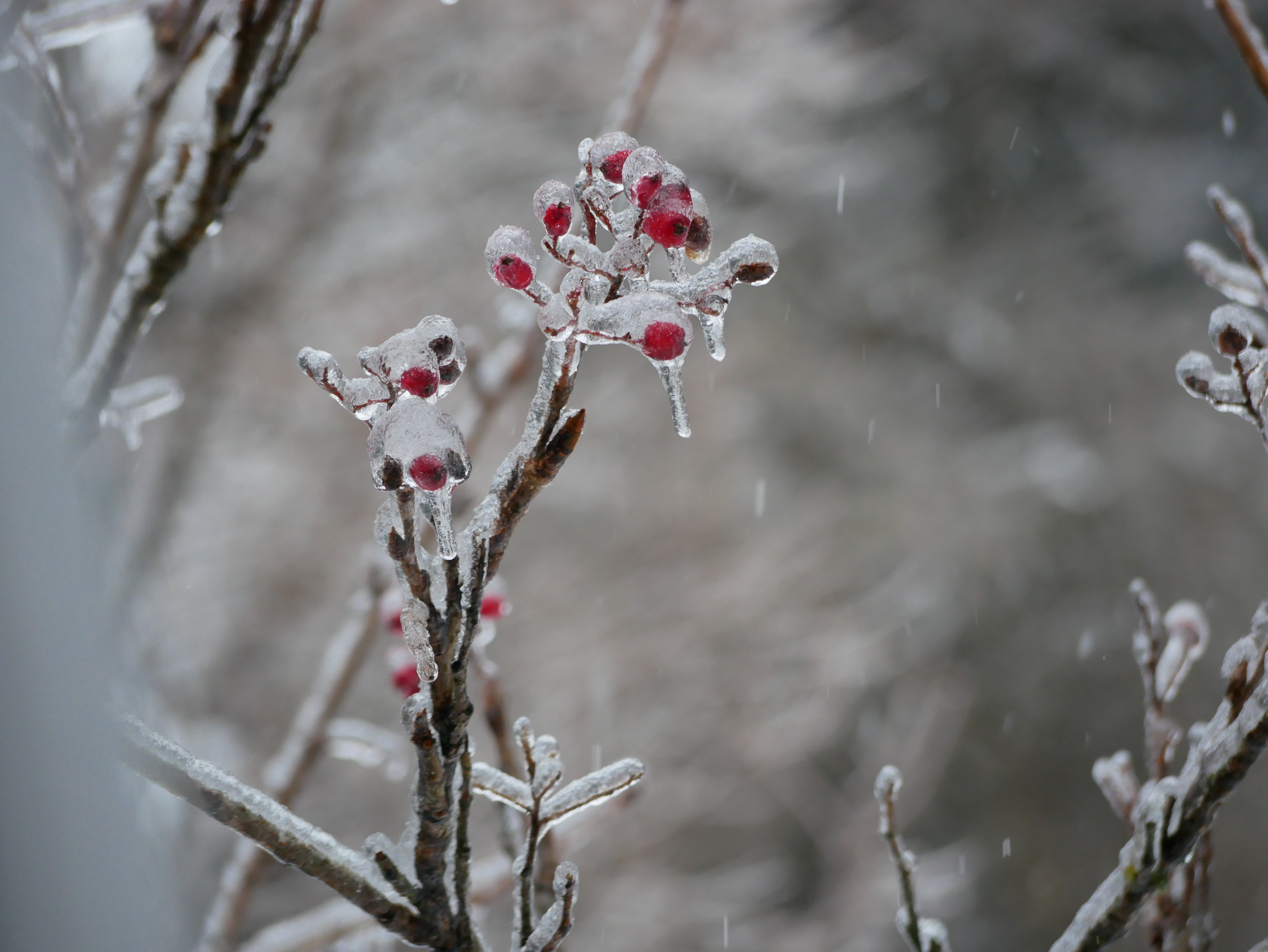
During last night’ snow storm, the temperature rose above freezing for a few hours. This melted the snow. Before the moisture could drip to the ground, the temperature plummeted, turning tit into a thick, transparent coating on our lilac branches and leaves. Six inches of new snow already covered our yards. The quick change in temperature transformed it into a rock-hard mess. We could walk on the surface without sinking in. We had to work very hard to shovel it away.
There was a time, not so long ago, when we rarely saw Stellar’s jays on Chicken Ridge. In 1995 crows dominated the neighborhood. They’d arrive in a noisy crowd each spring on one of the first warm days, taking positions in the neighborhood trees like an occupying force. Ten years later they relocated in another neighborhood, allowing a pair of ravens to move in.
I am happy to hang with the ravens, who entertained we humans by hiding flashy little garbage scraps in our yard. The ravens still spend much of their time in ours or our neighbors’ yards. But a pair of Stellar’s jays now fly in and out of our yard like bossy blue birds.
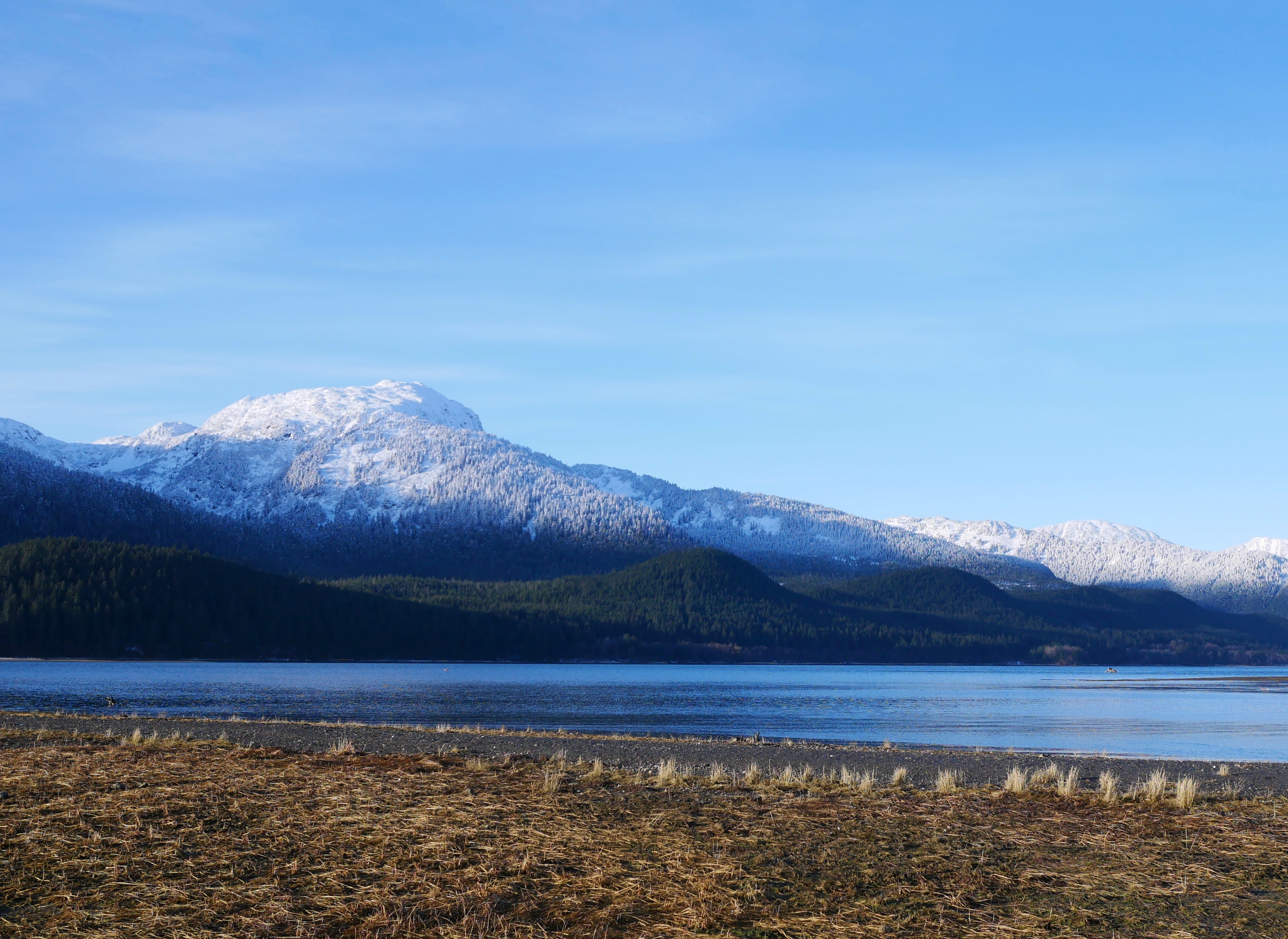
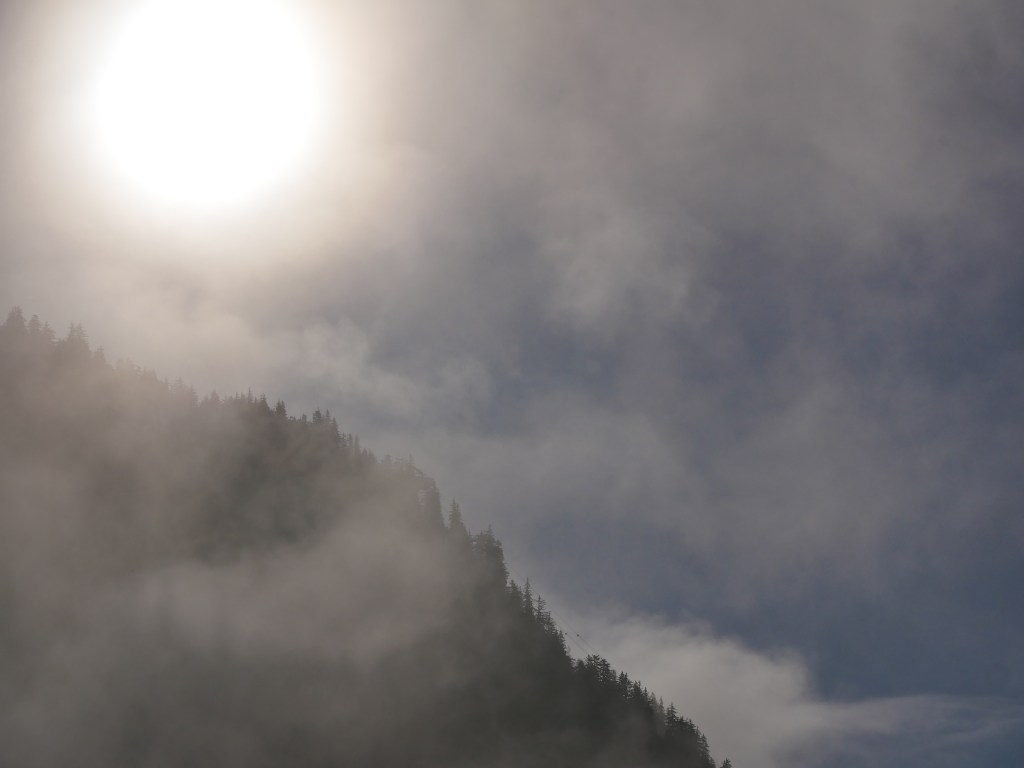
Our best weather app promised two hours of dry weather this afternoon. We headed out of the house at the choice time. But a heavy rain greeted us when we reached the Sheep Creek Delta. After I wiped a heavy coating of rain off my glasses, I discovered sunshine illuminating the side of Mt. Roberts. All of Downtown Juneau was basking in sunshine.
We proceeded onto the delta as more sunshine lit up the northern edge of Gastineau Channel. Aki complained because rain continued to soak through her wrap around parka. We continued to walk under wet, grey skies and turned back toward Juneau as a rainbow emerged of the middle of the channel.
Expecting expansion of the sunny weather, I stop walking to wait. That’s when the sunshine vanished and the rain returned.
After the Second World War, most brave Japanese Americans left the army. Their family members had just been freed from unjust prison camps. They worked their way back into American society. They told no one the history of their poor treatment with their new neighbors or their own children. In 1970 I first discovered the history of the Japanese American internment camp at college museum. Later I discovered that my Japanese American friends were learning the sad story at the same time.
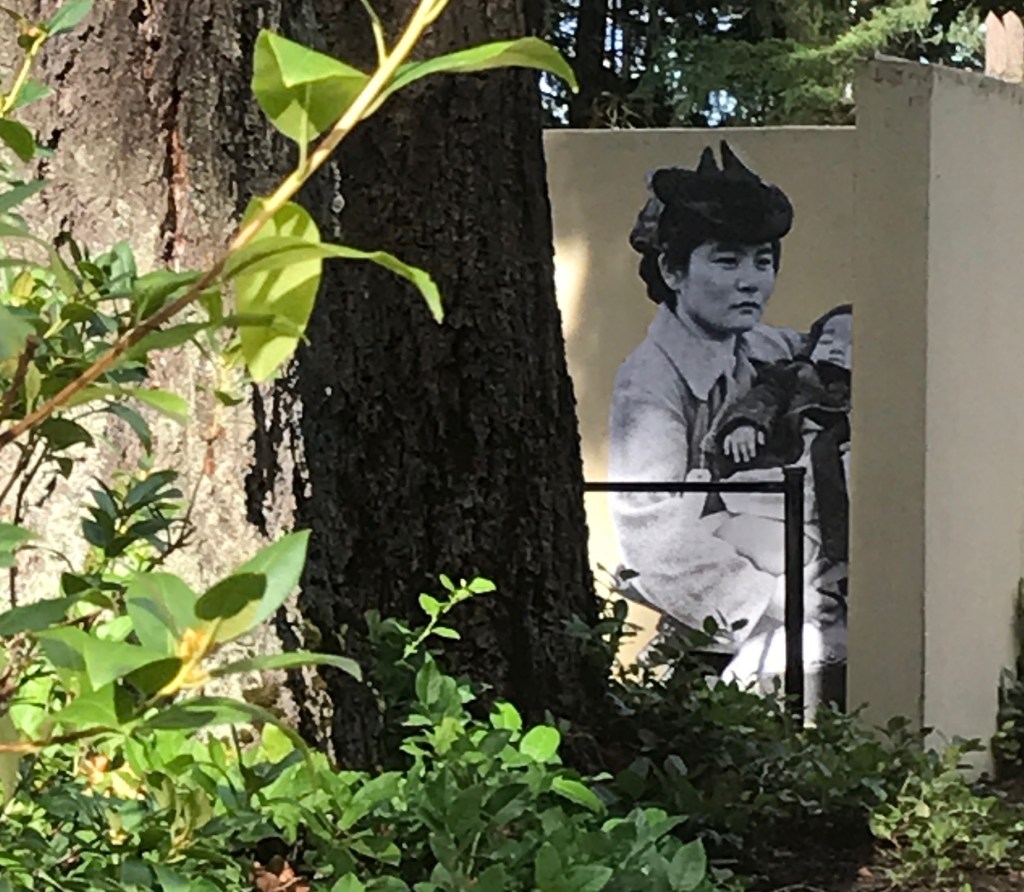
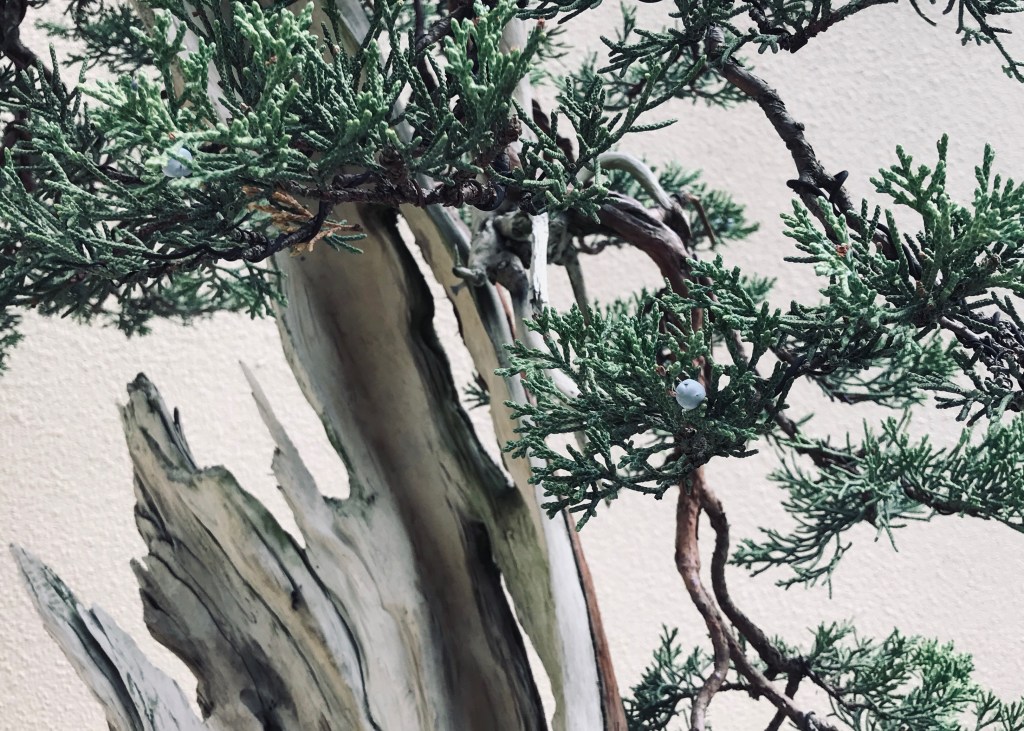
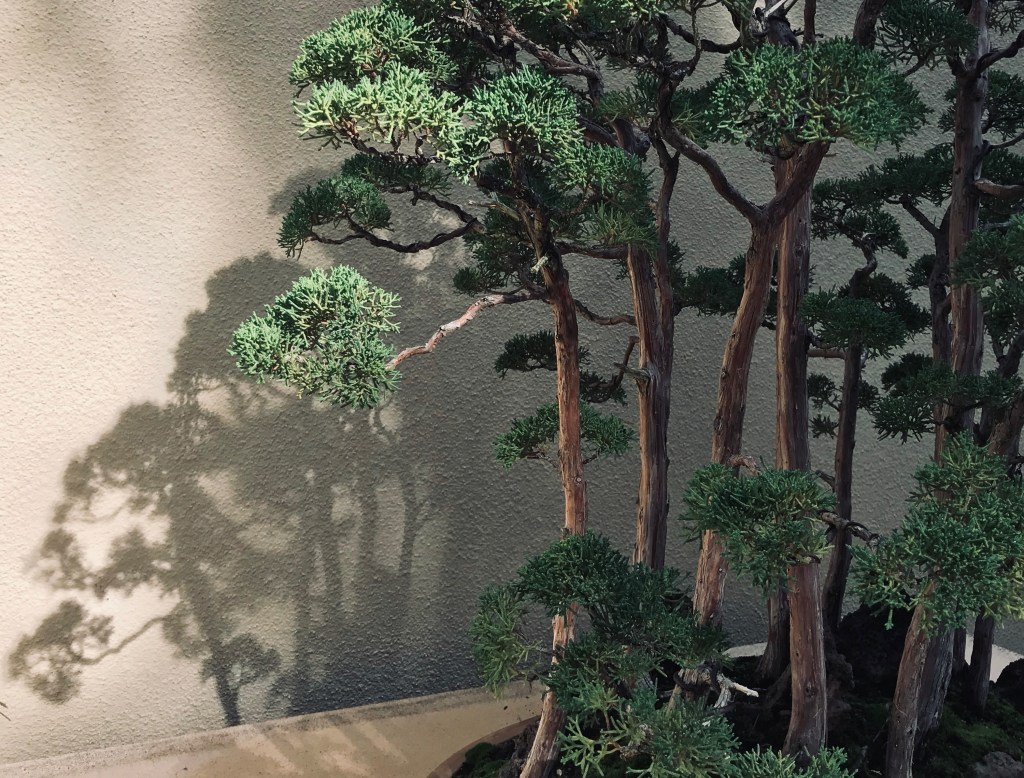
I remembered this history yesterday while visiting a bonsai garden in Tacoma. All of the plants had been started after World War II. Some stood in front of photographs of Japanese Americans entering guarded internment camps, where bonsai artists would teach the interned how to create new bonsai trees. Only one tree had recently been plucked from a mountainside. Nearby, a thousand year old bristle pine looked like it was still growing on the slope of a 13 thousand foot Californian peak.
People often visit this bonsai garden. Few are Asian. All are drawn to the trees’ beauty. They collect little stories of how Japanese Americans protected that beauty from racism, transformed common American trees into symbols of an ancient culture adapting to cultural change.
He would be up early, drinking rich expresso at the cabin window as a strengthening sunshine sparkled the frosted meadow grass and the usual hometown deer worked his latest attempt at kale.
He would turn on the radio and listen to morning’s new complaints about followed politics and the latest baseball scores. He would be bored but he would be free to putter and push for change.
He’s up but there is no bear to search for, no sun melting a satisfied frost, no desire to do anything than monitor the fire, the smoke that thickens and soaks the morning air like a sarcastic joke as it has for the last week.
The kale still grows as if it cannot feel the gray heat. He passed it while carrying survival things to his car, an older Toyota almost filled with stuff he can’t abandon or burn, like fresh ground coffee. He now drinks instant.
Will the fancy cut street houses catch first, or will the abandon old growth forests burn? A northerly gust rips across the meadow, driving away smoke, turning the air crisp and clear, letting the sun pierce and reveal.
The survival road clears. He starts to return his coffee maker from the car, plans on re-furnishing the cabin with needed gear. Then the thick smoke returns, a nearby forest fire renders the air almost impossible to breath so he repacks the car and waits.
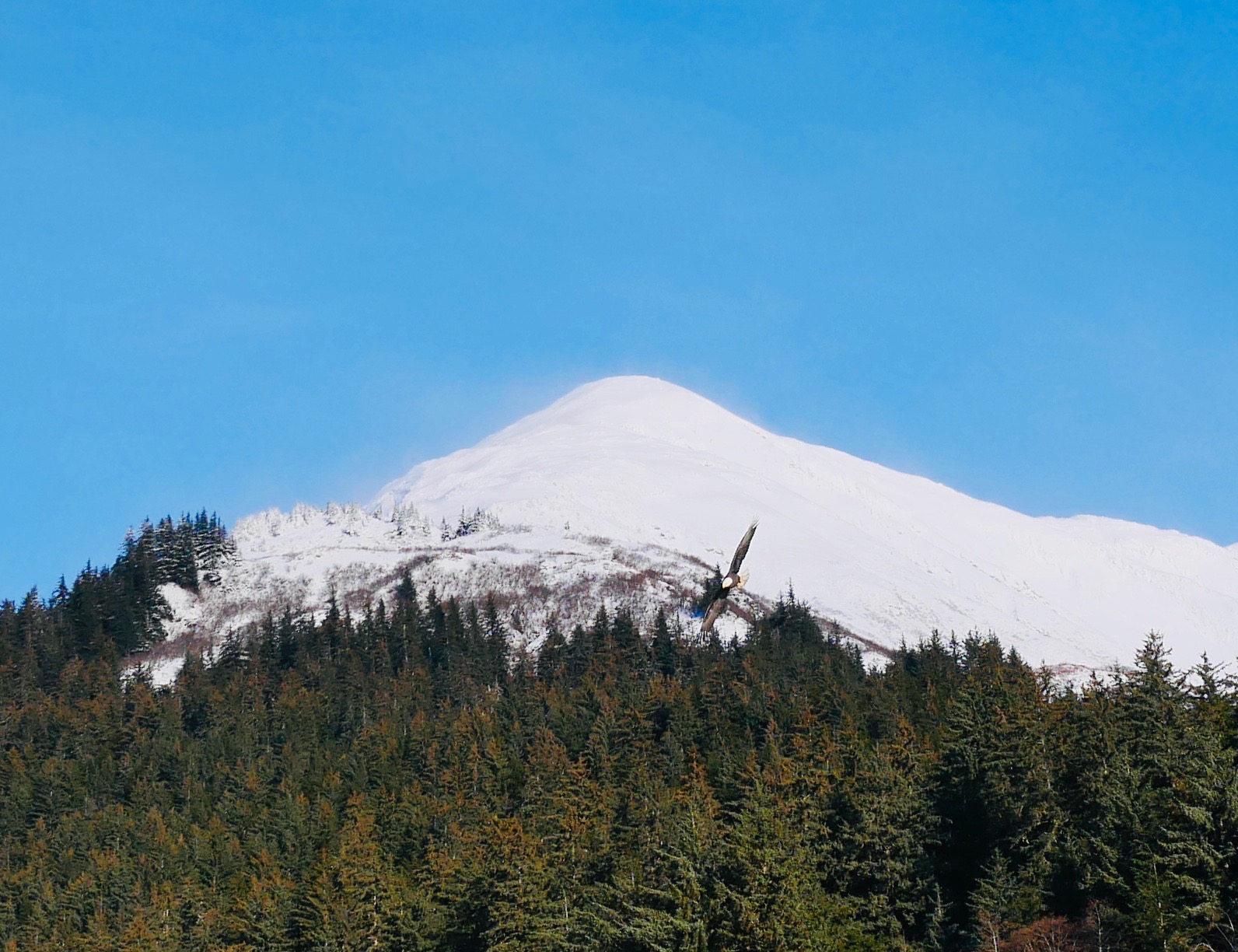
The day will offer spectacular views of eagles, some with the glacier as a backdrop. But two ravens, perched together near the opening into Fish Creek Pond, are the first to peek my interest. They do it with their voices, not their appearance. Looking into each other’s eyes, they speak in language with more clicks than the African bush people. It sounds sped up. Aki, could we understand them if we made a recording of it and then played it are a slower speed?
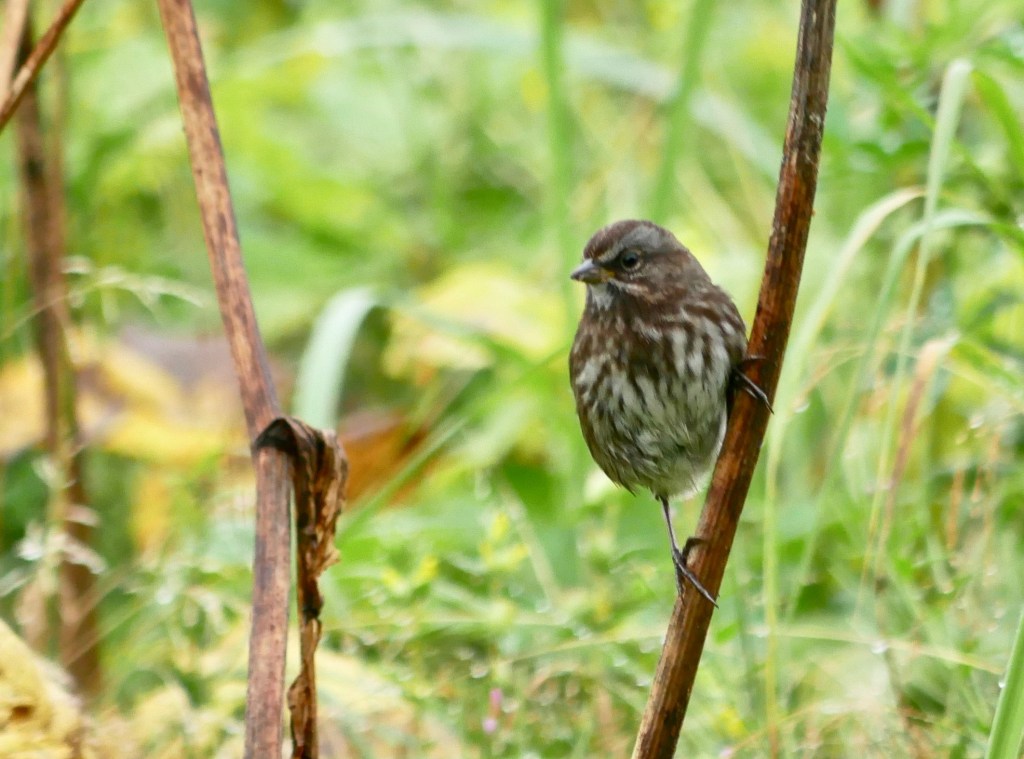
My question gets no response from the little dog but spooks the ravens into flight. We move on, leaving the pond for the spit trail, now almost closed in by wild roses and fireweed stalks aging into their fall colors. My pant legs are soaked by the time we pass through the gauntlet. Near the end, a sparrow observes us while perched on the side of a dried cow parsnip stalk. It is one of a large flock of sparrows harvesting the spit for seeds.
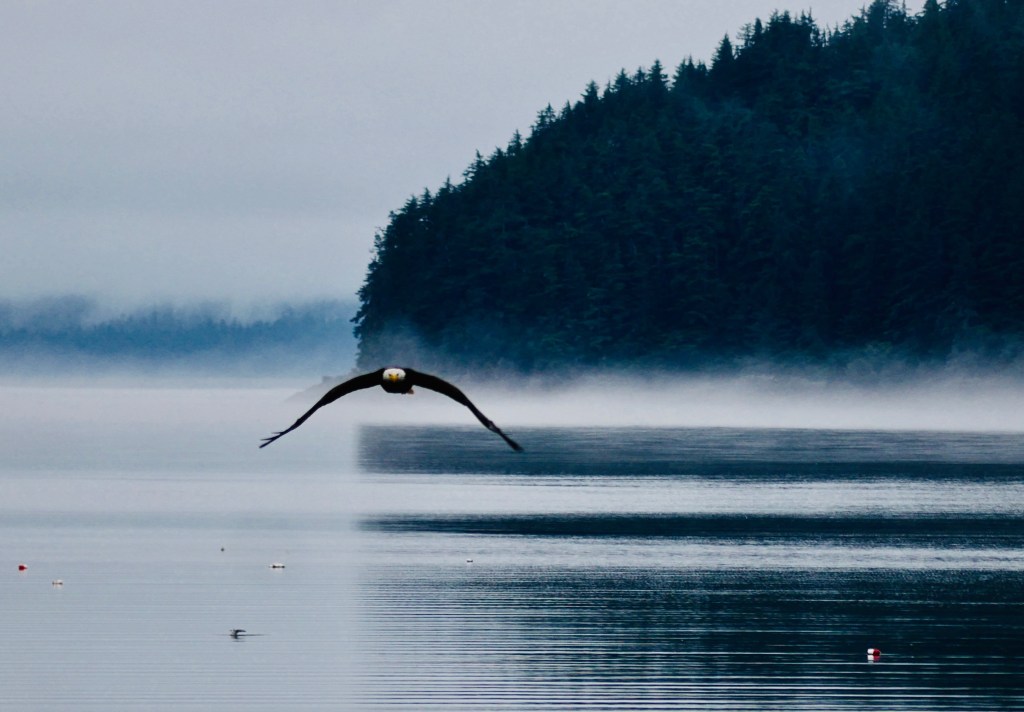
The outgoing tide has exposed wide swaths of wetlands. Eagles that usually roost in nearby spruce trees stand near the water’s edge. Some eat the flesh of spawned out salmon. Others just chill. A murder of crows takes to the air, bickering and banging into each other as they make their way to the little spruce island at the end of the spit.
I spot something out of my eye just as we are about to round the island’s tip. One meter away, an adult bald eagle clutches a spruce limb with both talons. It is soaked but otherwise appears unharmed. We lock eyes and then I look away. It is still watching me when I aim my camera at it. I’ve never been this close to an eagle unless it was clutching something to eat. Even then, the raptor would not hold its ground with a stare as this bird is doing.
On the walk back to the car I called the raptor rescue center and with hesitation left a message about my close encounter. All the other eagles flew off when the trail took us within fifty meters of them. This one clutched its spruce limb tighter and drove me off with a hard look. Hopefully the eagle experts can determine if the bird is bum or brave. Hours later, I got a call from someone at the raptor center. From looking at my photos of the eagle, she learned that the eagle had a broken tail and had been on the ground for sometime. They would take it into protective custody so it can safely heal.
Once or twice a year I bring a fishing pole along when Aki and I visit the Troll Woods. It’s best done in the fall, when trout and char follow silver salmon up one of the moraine streams. But given the pour returns of the other types of salmon to their spawning waters, I don’t think we can count on the silvers showing up next month.
The little dog and I take different approaches fishing. It’s serious business for Aki. She stands by my side as I cast, watching the lure or fly hit the water. For me the fishing pole becomes something to distract the practical part of my brain so my imagination can escape. After a few fruitful casts, Aki gives a little moan, which cancels my imagination’s leave of absence.
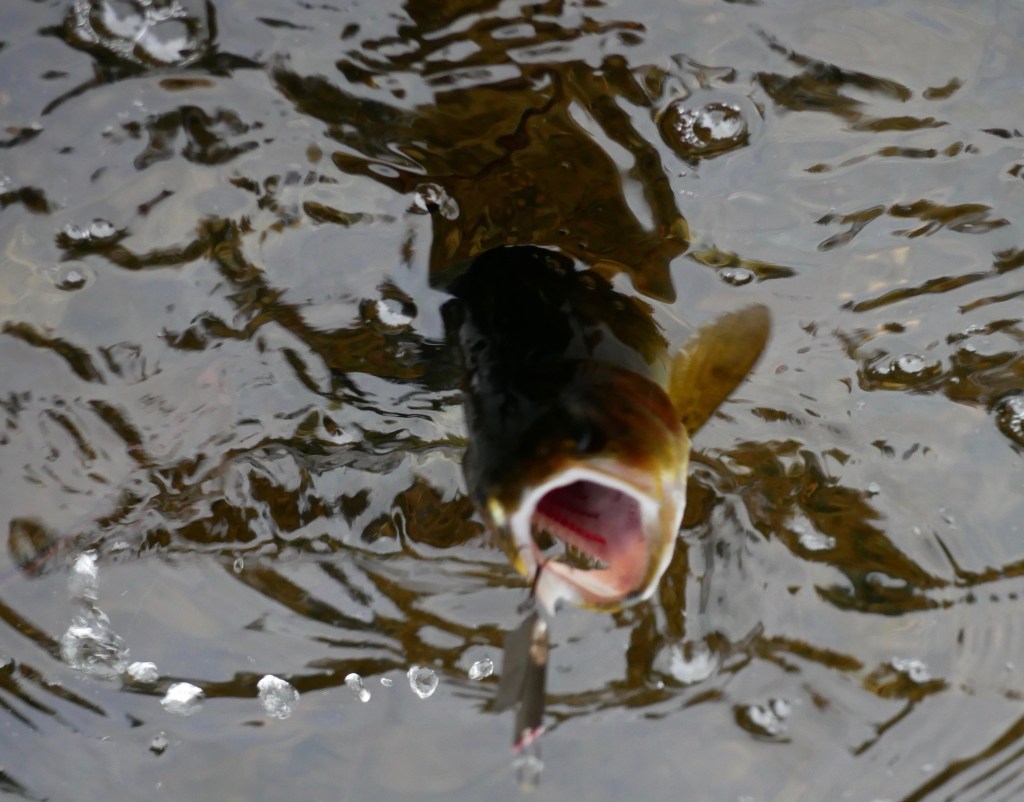
We move from place to place, stopping at breaks in the shoreside woods to fling out line. Once this morning, I felt a light tug. Another effort hooked a 10-inch cutthroat trout, beautiful in it crimson and gold blush. It would make a tasty lunch but it is 4 inches short of a keeper. Aki does not act pleased when I let it slip off the hook.
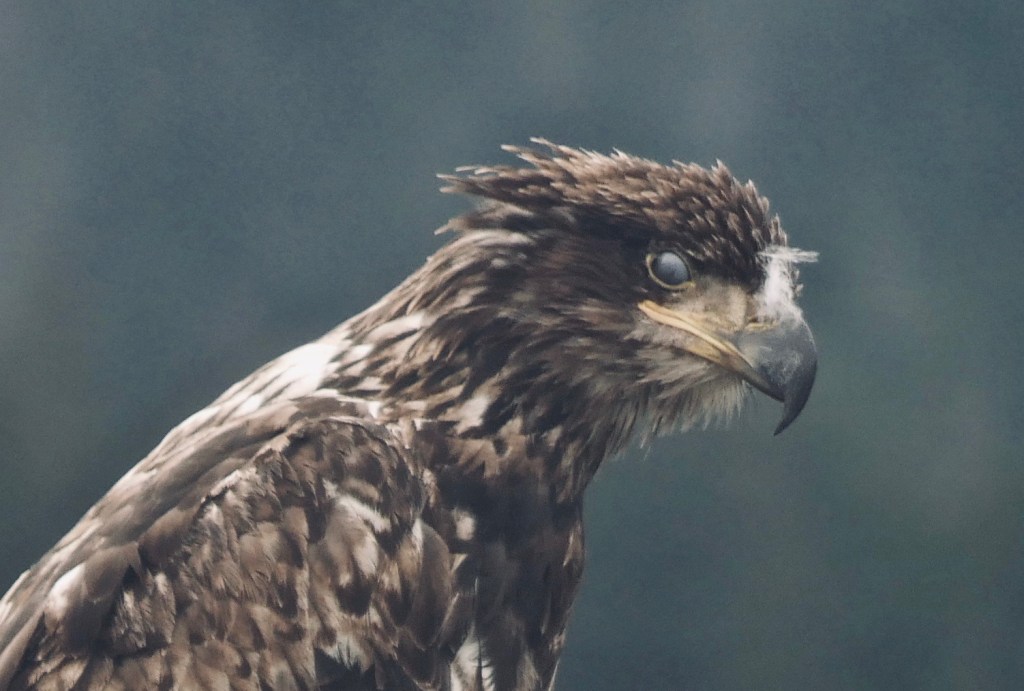
We stop at the hatchery on the way home to check out the scrap-hunting eagles that can be found there every low tide, sulking about the low salmon returns. Today, an immature eagle with a clump of down still stuck to the top of its beak puffs out its feathers and gives them a hard shake. The air fills with down.
I think of Tlingit dancers, who fill headdresses made with sea lion whiskers with eagle down. Body stiff with dignity, elbows extending their button-blanket cloaks to mimic eagle wings, they dance towards the audience and bow until the air is full of down.
Weather has taken most of the promise out of this late summer day. Aki and I are wandering through the Treadwell Woods, where thick growth hides most of the mining ruins. Wild nettles are going to flower along the trail, letting the passersby know that it too late to harvest them for greens. A handful of touch-me-not flowers rock on their delicate stems each time they are hit by rain drops.
If there are birds in the woods, we cannot see or hear them. Out on Sandy Beach an eagle sulks on its usual perch on the restored ventilator shaft. A scattering of gulls flit about undeterred by the storm. The rain doesn’t bother Aki either. She charges around the beach, hunting smells and snacks dropped by other dog owners.
After crossing a long stretch of empty beach, we reach the small, but deep bay formed by a mine tunnel collapse. Two belted kingfishers battled over the aquamarine water. The scrappy little dudes can always be counted on for excitement.













 Walking with Aki