Category Archives: Southeast Alaska

Welcome Calm

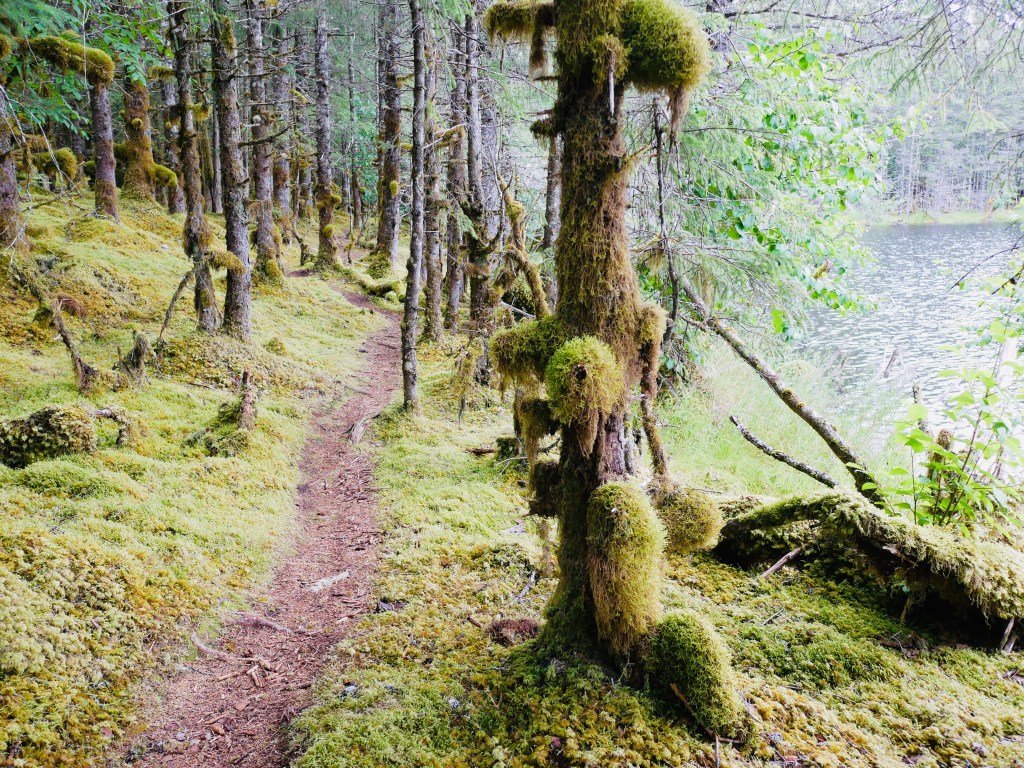
There is nothing special about the Troll Woods this morning, certainly not the Payne’s gray skies. Mushrooms have to provide the highlights now that the wildflowers have gone to seed. But I am still happy to walk on the soft ground between moss-covered trees. 

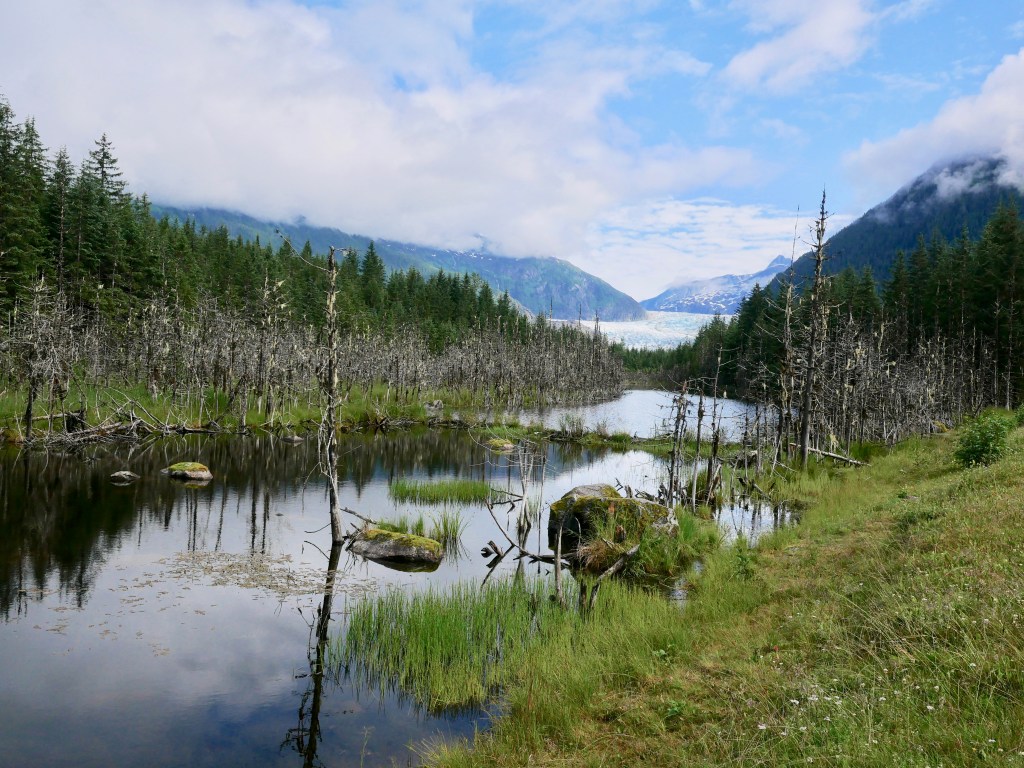
            I don’t need a mask on the moraine. We won’t see another Covid spreader until we return to the car. Aki patrols out ahead to make sure we don’t surprise a momma bear and her cubs. One does crash through the woods but it moves away, not toward us. The peace floating between the trees can be felt on the skin.
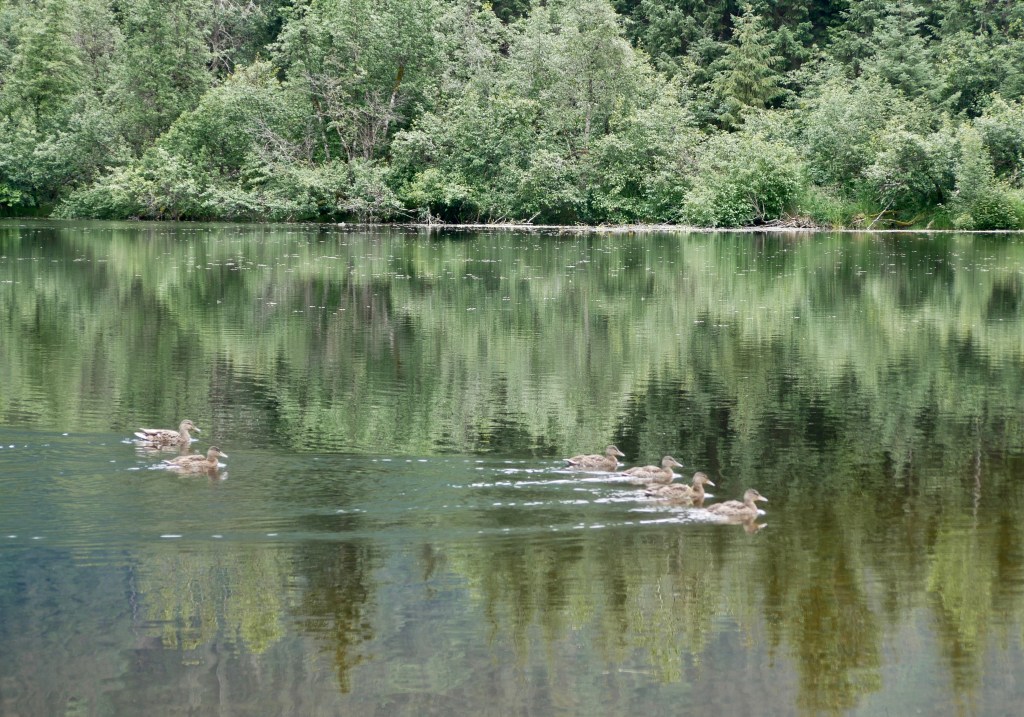
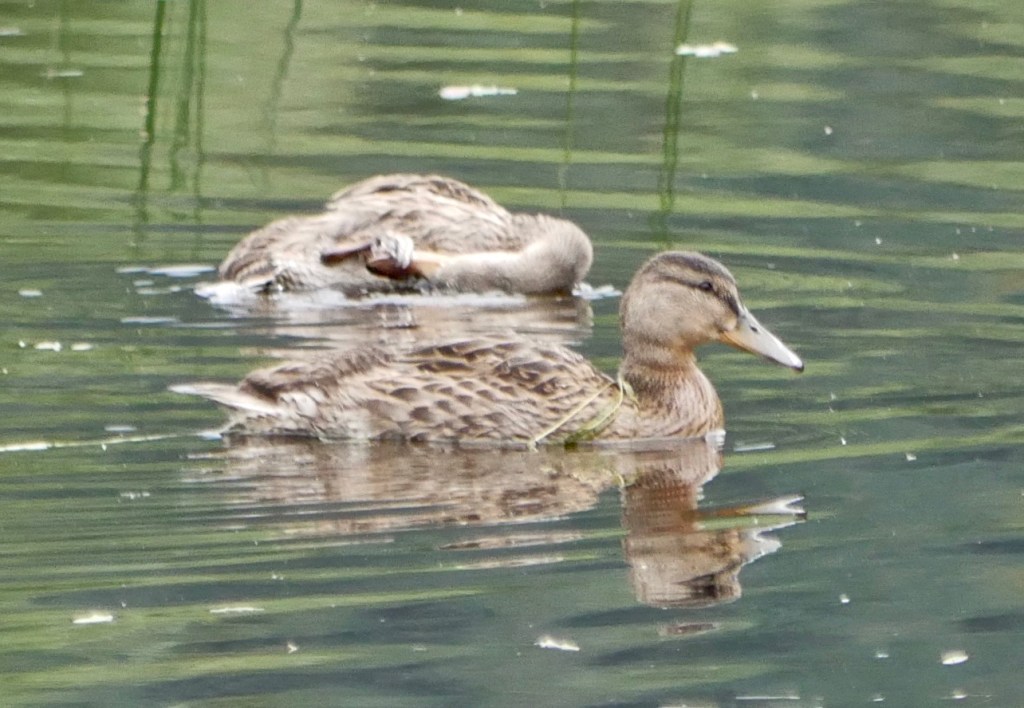
            In a good, quiet mood, I follow the little dog to the shore of Crystal Lake, surprised by a clutch of mallards feeding a few feet away. They plunge their heads into the water until their rear ends point toward sky. Thick strands of grass encircle their beaks when they re-emerge.
Tundra Yellows

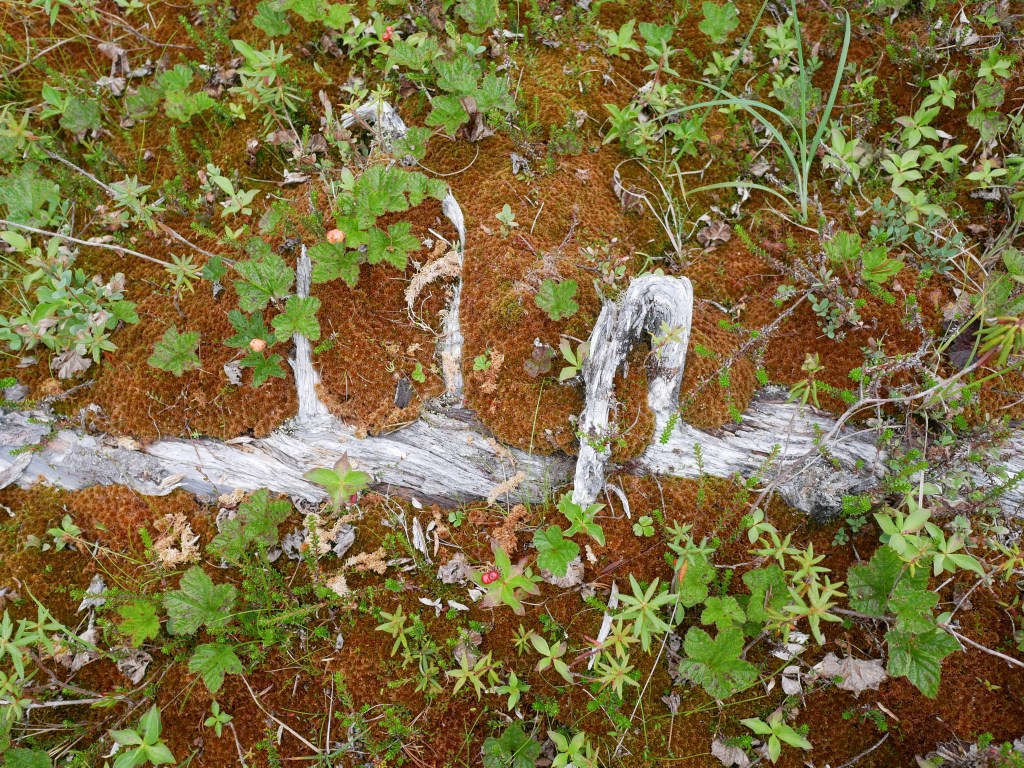
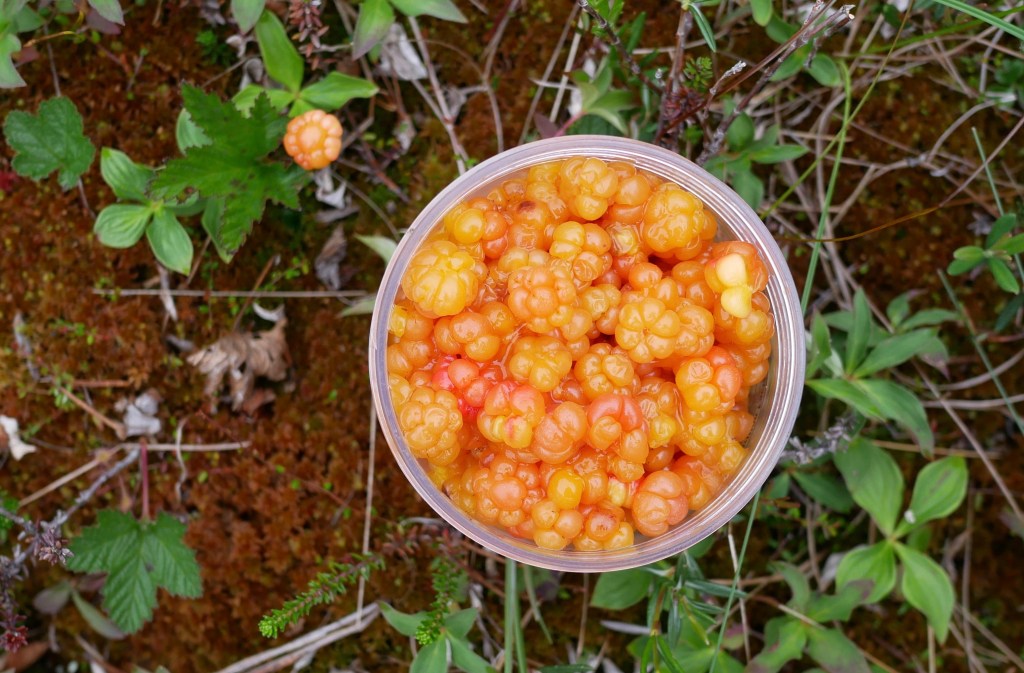
Cloudberries struggle to grow in this Southern Alaskan meadow. When Aki’s other human and I lived on the Tundra in Western Alaska, the locals called named them, “salmonberries.” Harvested by Yup’ik families, salmonberries provided essential vitamins and nutrients all winter long. We pick them this morning, to enjoy their tundra flavors in our rain forest home.

            Aki trots between his humans, stopping long enough for one of us to feed her before moving over to the other one. Sometimes, she harvests one herself. Yesterday, after eating lots of blueberries, her poop turned blue. Tonight, it may take on the yellow tundra colors of cloudberries.

Moraine Harvest

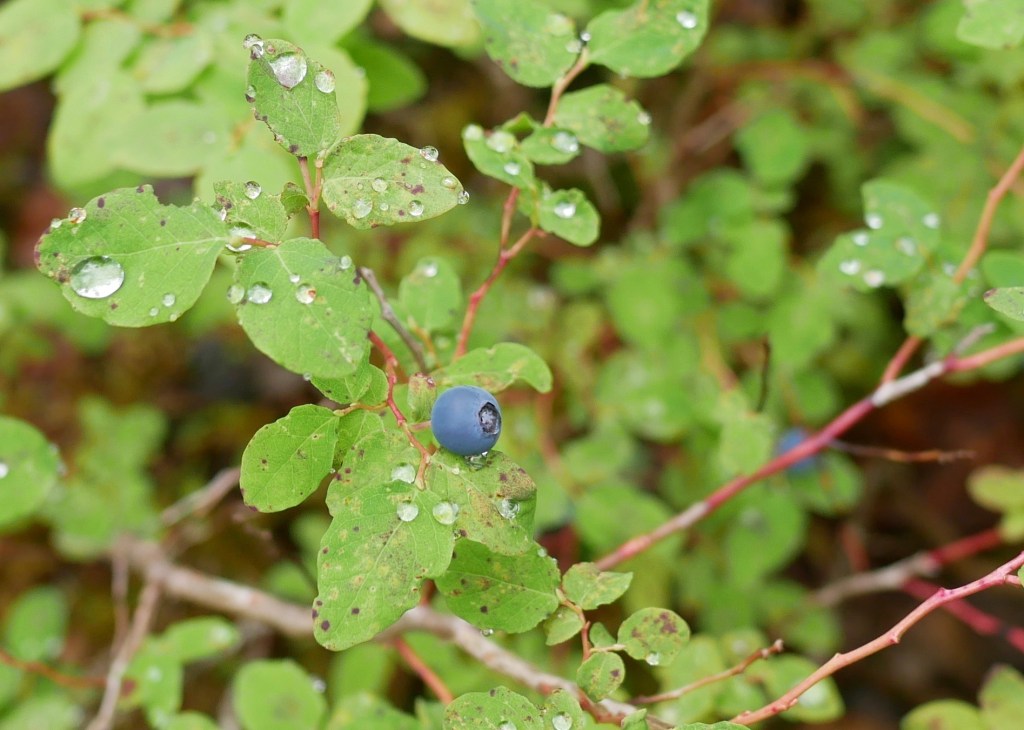
Today we test Aki’s patience. The moraine blueberries are finally ripe. Aki’s other human and I intend to bring some home. 

            Last year the bears harvested our favorite patch before we reached it. We had to step around bear scat to pick what was left. Today, we see no evidence of bears but lots of berries. 

            Aki moves back and forth between her humans. We try to teach her how to pull berries off low lying bushes. Instead of learning, she boops our legs with her nose until we give her a palmful of harvested berries. 

Waiting Out the Rain

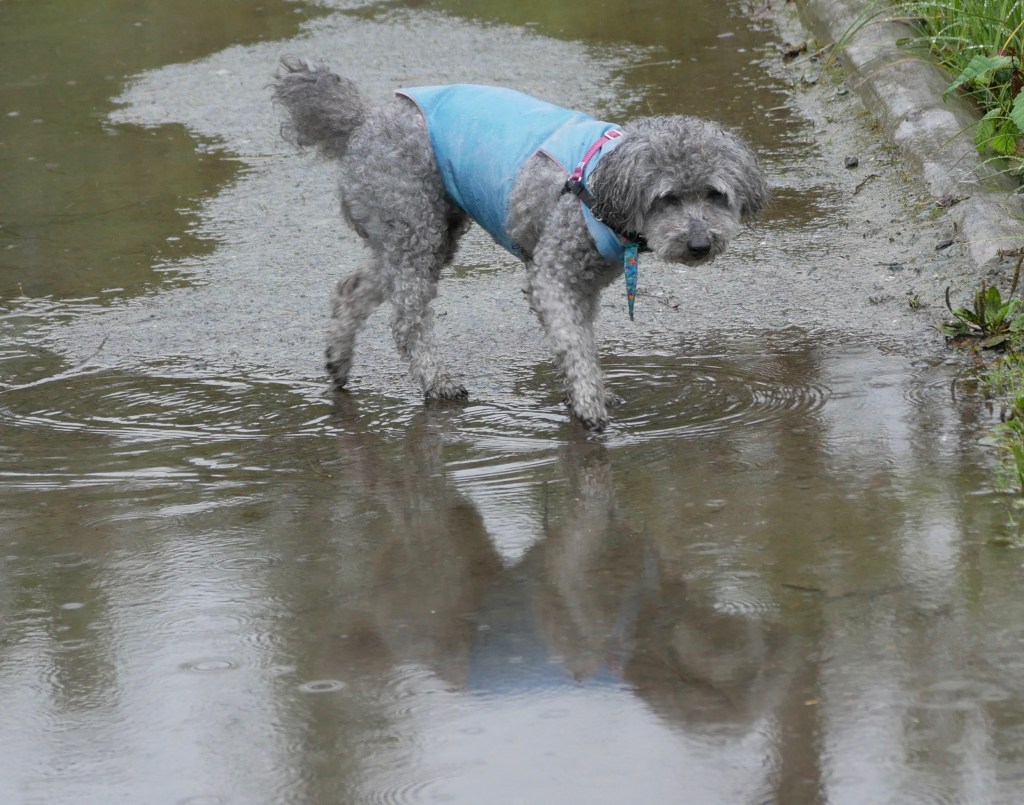
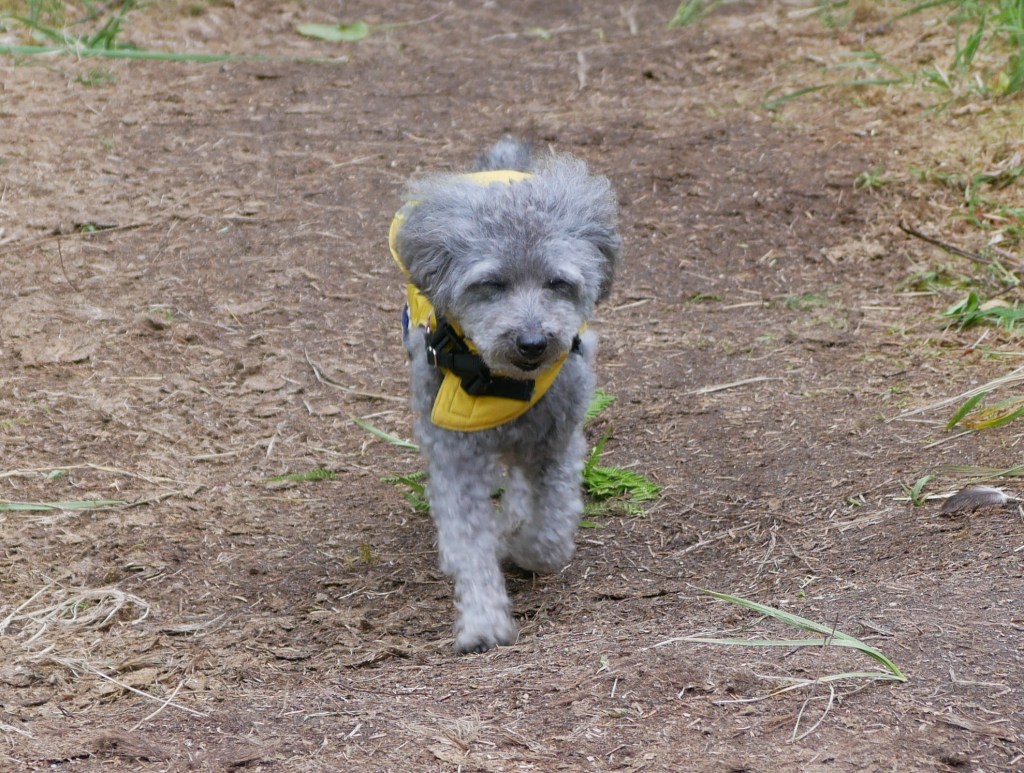
This morning Aki heard rain splattering against the bedroom window as she sulked under the bed. From her hiding place, she watched me pull on rain pants and slip into a waterproof parka. She went limp as I fastened on her best rain wrap. Then, as if she was just testing my resolve, the poodle-mix did a downward-dog stretch, yawned, and beat me to the front door.

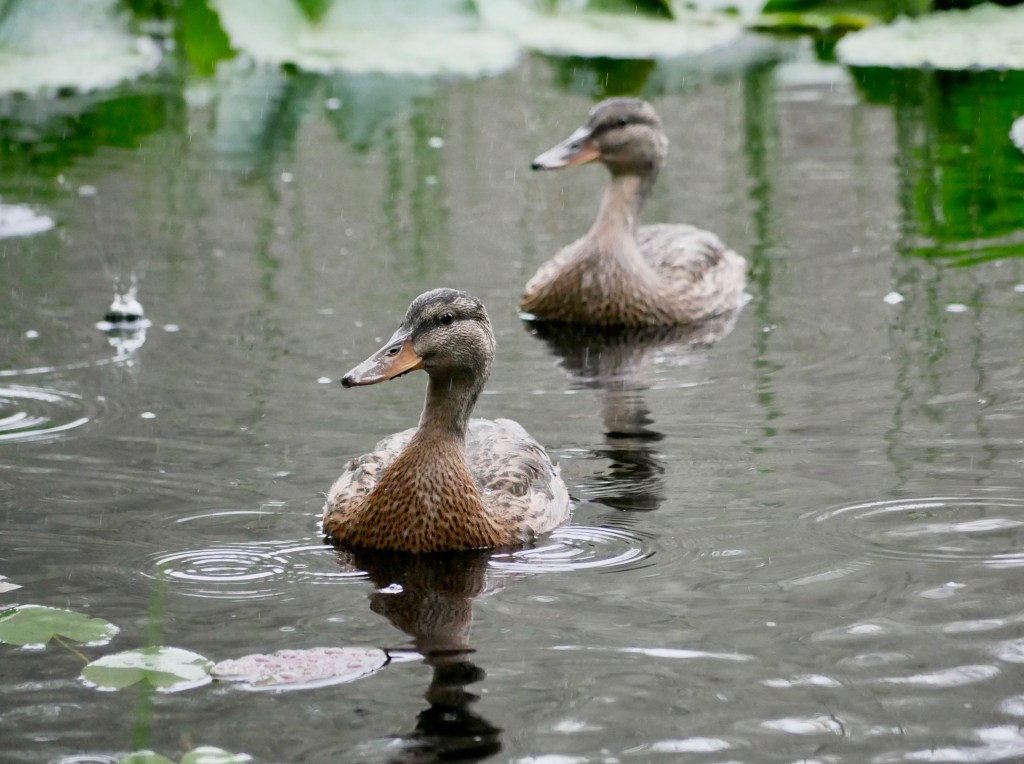
            The forest was silent, except for the sound of rain drops plunking onto devil’s club leaves. The only birds not waiting out the storm were ducks. A mallard hen and her surviving chicks swam near the trail where it ran parallel to the beaver dam. They weren’t bothered by the sound of water pouring over the beaver’s dam.

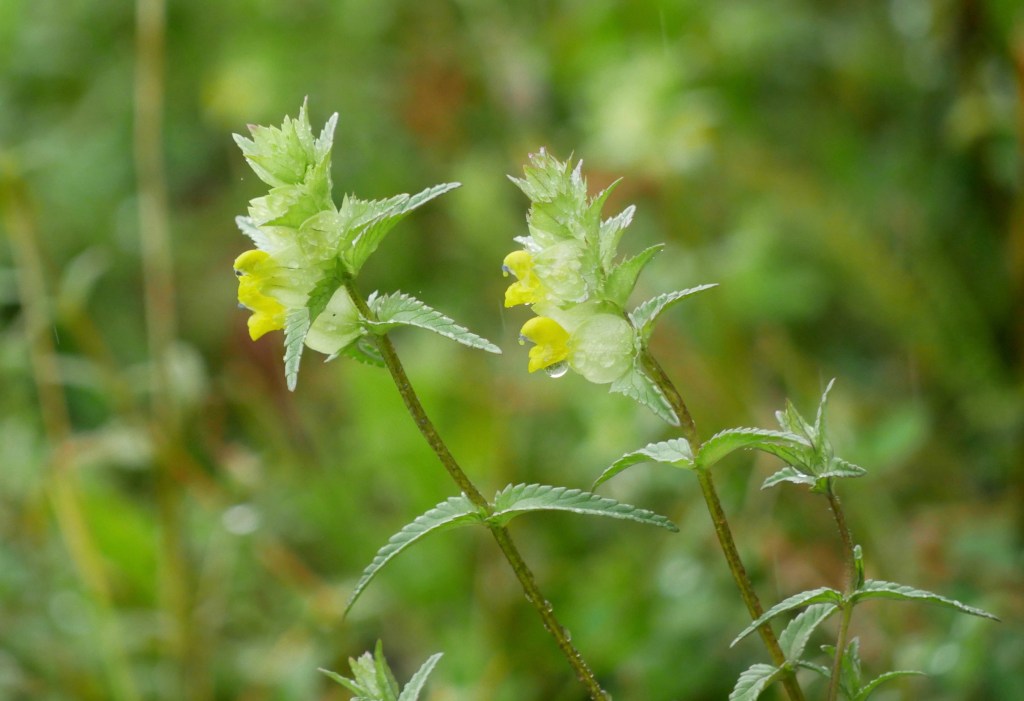
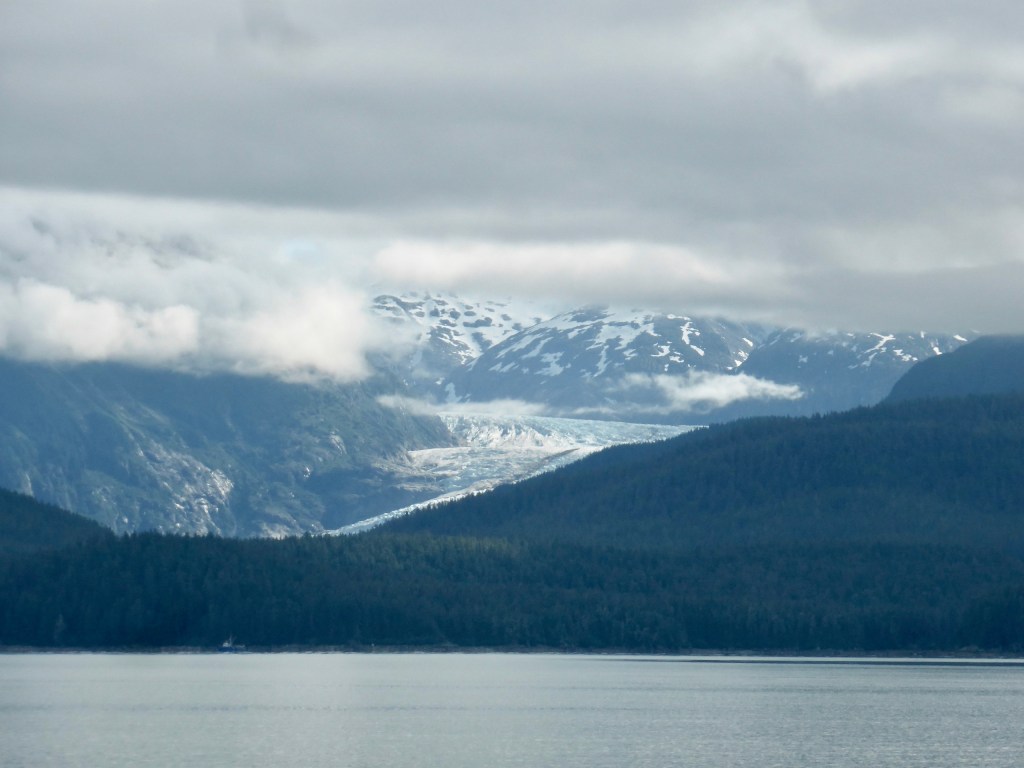
Raindrops made normally dull things, like cow parsnip blossoms, sparkle. Other than the parsnips and a scattering of flowering sorel plants, the forest plants had already gone to seed. Yellow blooms of  chicken and egg plants provided the only bright spots on the beach verge when we reached it. We could make out Shaman Island in the gloam, but nothing beyond it. There must be whales a little further out, but we wouldn’t be able to spot them until the weather cleared. 

Waiting

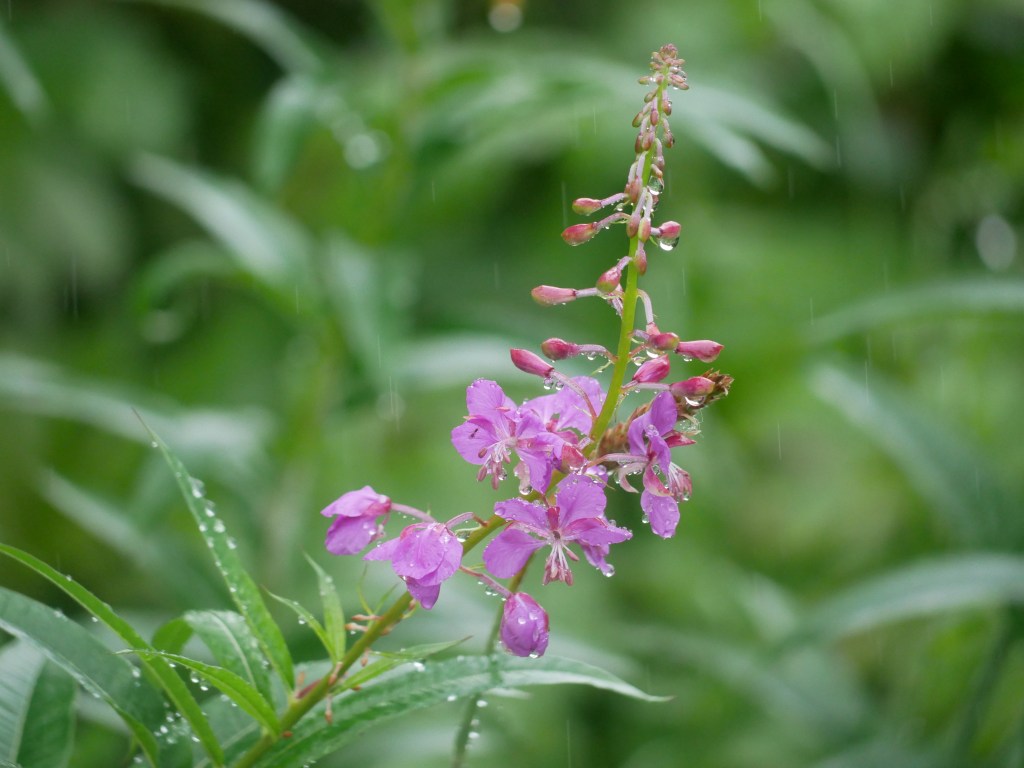
The magenta blossoms of fireweed glow in the gloom of this rainy morning. Except for the eagles scattered around the gravel, Aki and I have the Sheep Creek delta to ourselves. I’m not counting the swallows perched together like judgmental gossipers on a driftwood tangle. I don’t include the crows crowding one of the eagles. I should acknowledge the greater yellowlegs sandpiper that moves across a shallow pond. That’s enough denial. This place is crowded with life.

            This late in summer, the creek should be a turmoil of spawning chum salmon. Only one male powers upstream against the current. There may be others hidden in the muddy water. When the mountain rains let up, the stream will clear enough for a proper survey. I pray that the chums are just late in arriving. So do the eagles and the other animals that rely on them for food. 

Closing the Purse

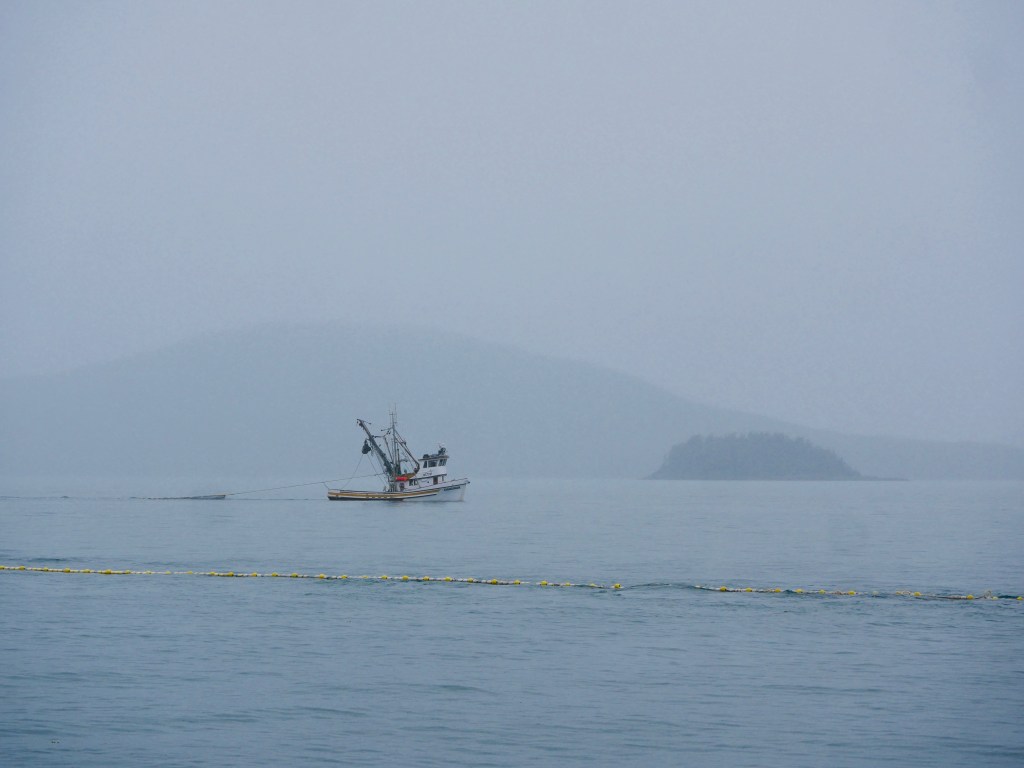
Aki and I pushed through heavy rain to this headland. I came for a chance to see whales or sea lions. The little dog is here out of loyalty. We are both soaked. Just off shore, the purse seiner Challenger is its net on a school of chum salmon. 

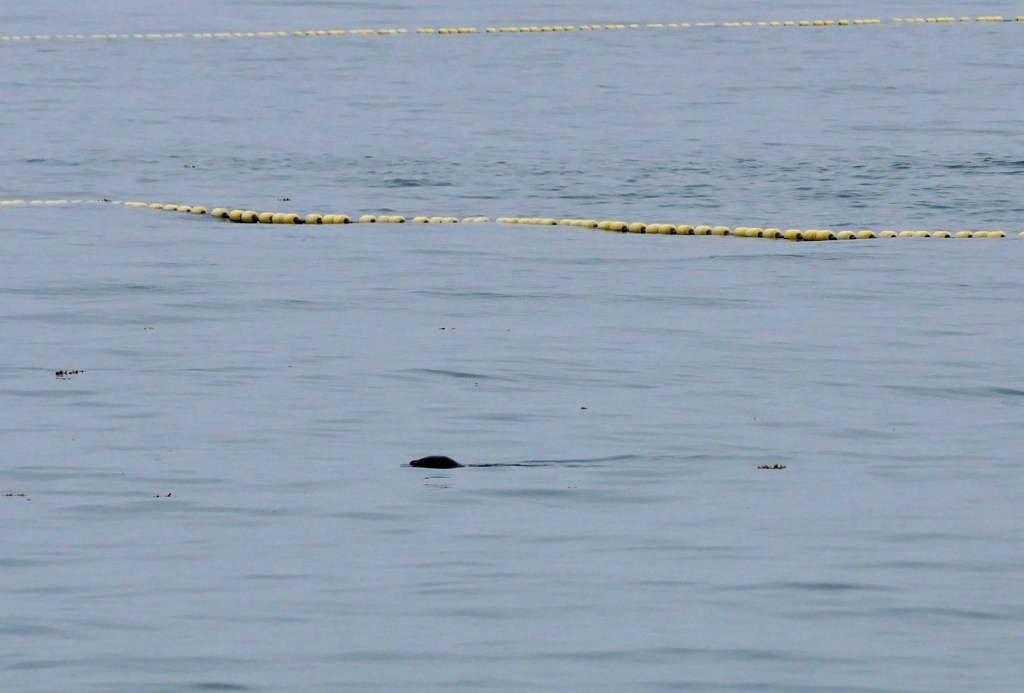
            The mechanical noise of the fishing boat makes it impossible to hear bird song or even eagle screams. It might have driven feeding humpback whales to divert to quieter waters. We won’t see whales or sea lions today. One harbor seal will cruise along the edge of the seine net as it closes on protentional prey.

            The Challenger has a contract with the hatchery to recover chum salmon that started their lives in net pens and have spent the last two years in the North Pacific. Their eggs and milt will be used to start a new generation of chums. Because of adverse ocean conditions, fewer and fewer salmon are returning to the hatchery. For the same reason, the number of wild chums to reach their home streams is way down. 

            After watching the Challenger finish its set, now cold as well as wet, we head back into the forest as the power skiff of another seine boat begins to stretch out its net.  

Eagle River in Wild Flower Time

Aki doesn’t realize that Chum salmon are trickling into Eagle River.  They pooled up in nearby salt water until the tide changed from ebb to flood.  Now they ride an income tide over the sand bars at the river’s mouth. To enter the river the salmon must swim pass a half-a-dozen seals.

            Aki doesn’t see the seals, even when one 50 meters away snatches a salmon and splashes around the river surface until its powerful jaws crush the fish’s spine. Distracted by the seal-salmon scene, I don’t notice the little dog wade chest-deep into the river. While Aki sips away, two of the seals swirl toward her. They stop when they spot me and the black barrel of my camera lens.  

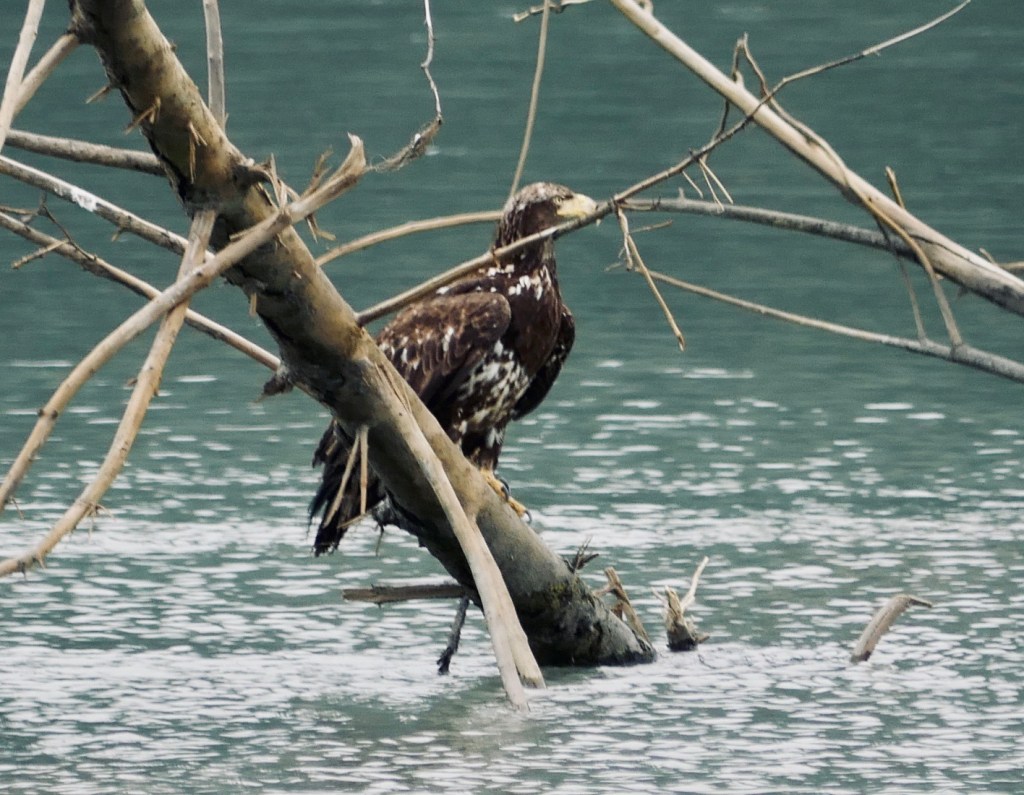
            An immature bald eagle watches Aki and the seals, perched on the skeleton of a spruce tree that vibrates in the river current. The eagle is close enough to the water for a seal to grab it with a quick lunge. The eagle wouldn’t have to worry about the seals if it moved further up the tree. But the tree limbs protect it from any assault from the air. An adult eagle watches all of us from the top of a riverside spruce tree. Maybe the mid-river bird has some history with the mature eagle. 

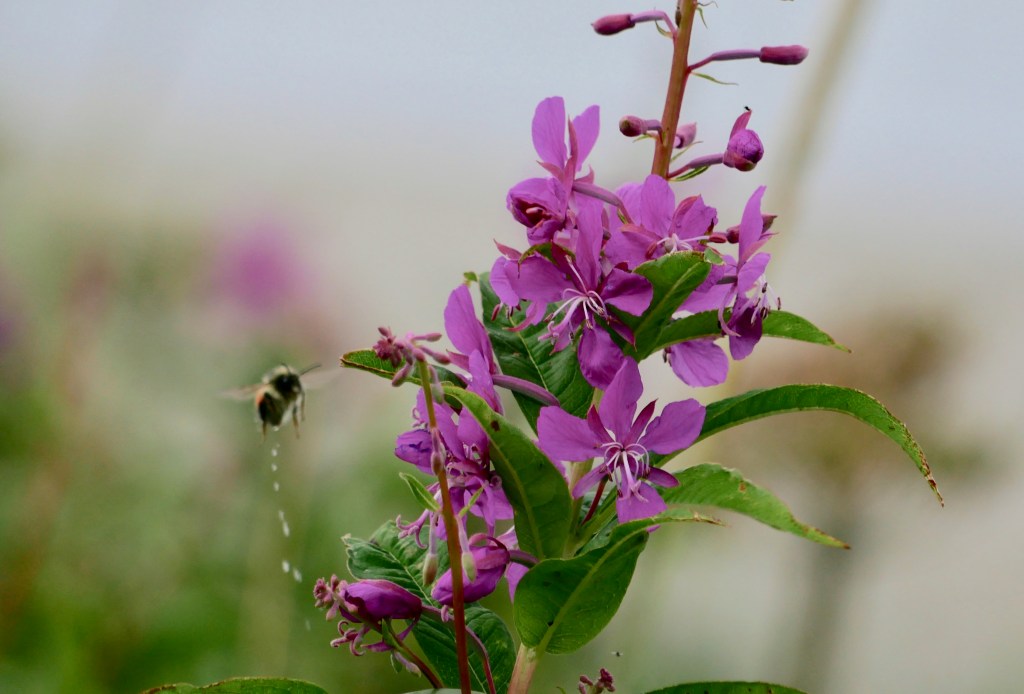
            When Aki leaves the river, the immature bird flies off and the seals return to their salmon hunt. We walk over to a line of dunes now covered with summer wildflowers. Five-foot high stalks of fireweed line our trail. Heavy-bodied bumble fees collect pollen feed from the magenta fireweed blossoms. One releases some golden-colored liquid that dribbles toward the ground. Do bees pee like poodles, little dog?   

A Slow Day in the North Pass

My hand reaches out for the little dog, but she is not there. My mind knows this but apparently, not my hand. Aki is cozy at home. I’m sitting on a folding chair on the deck of an old fishing boat. Two hooks baited with herring spin behind the boat as it moves through the north pass between Lincoln and Shelter Islands. 

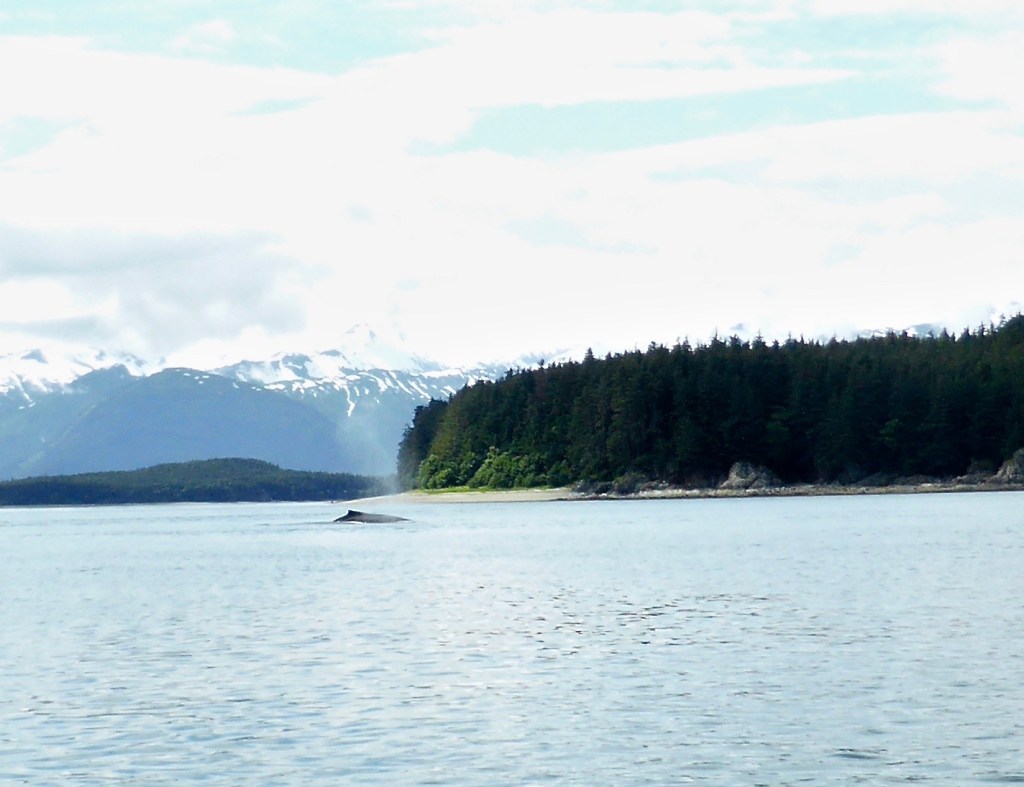
            Two eagles watch from Shelter Island. A sea lion follows in case we hook a coho salmon. It would see that we would not be able to get the salmon into the boat. A few minutes ago, three Dahl porpoise weaved in and out of the water to our right. In a half-an-hour, a humpback whale will do the same. 

            Salmon will make several attempts to pull herring from our hooks. One will be hooked briefly. Neither the sea lion nor I will catch a fish. 

Just a Reconnaissance Run

I won’t lie. Aki and I are on a mission. I’ve brought her to this mountain meadow to search for berries. We are too early for picking so this might just be a reconnaissance run. In case it is not, I’m carrying the repurposed soy sauce jug that I use as a berry bucket. 

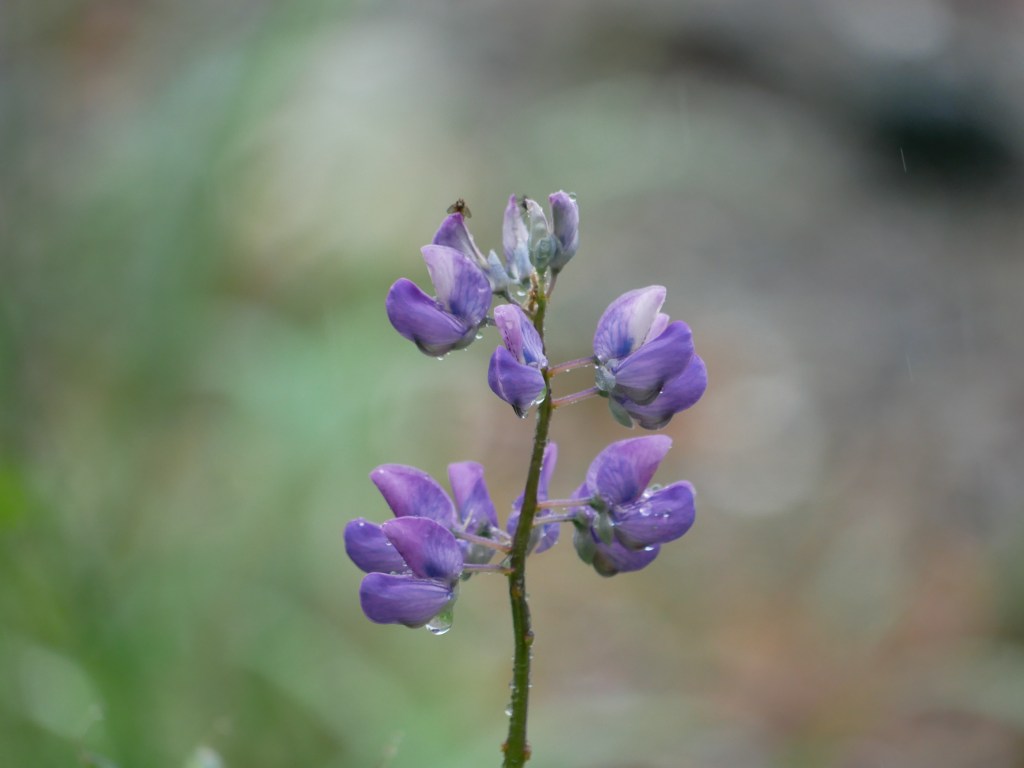
             The rain that soaked the muskeg last night has stop but cloud remnants still cling to mountainside sprue trees. Water drops grip the petals of bog cranberry and blueberry flowers. There’s promise of a harvest there, but it is more than a month off.  In a tree above one of the berry patches, a Steller’s jay scolds the little dog and I, as if warning us off it’s berry bushes.

            I had hoped to harvest cloud berries for pouring over morning oatmeal. But the few I find are still as hard as marbles. Too bad. Their smell and apple-pie taste remind me of visits to Sweden, were they are called hjortron, and the tundra near the town in Western Alaskan where I lived for ten years. 

Quiet is Okay

It’s quiet in the rain forest. No woodpeckers hammer hemlocks, no thrush sing. That’s okay. Even in a summer when most of the engines of industrial tourism have been silenced by a virus, a quiet forest is often hard to find. 

            Aki’s nails beat a faint tattoo on the trail boards. When we pass a little cataract of moving water, the sound seems deafening. We return to quiet when we leave the boardwalk to walk on the soft forest floor. That’s why the sudden burst of eagle bickering is so jarring. While we approach the beach, one bald eagle chases another, driving its victim into a spruce tree. I can’t find either eagle after we emerge from the woods. 

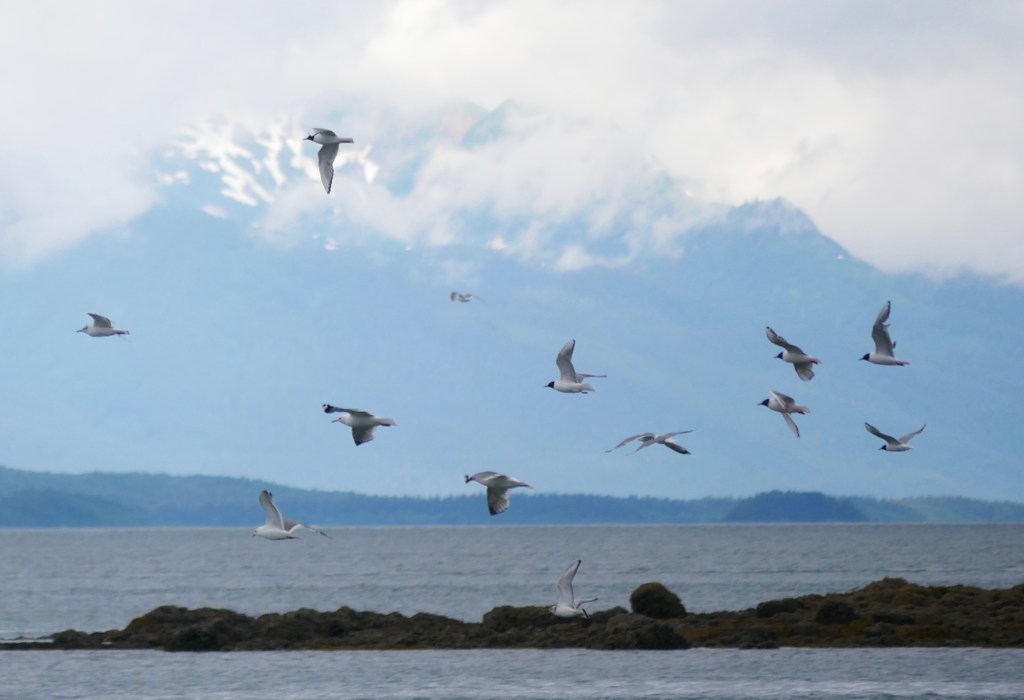
            A single parent merganser family cruises off shore, making no noise. The resident crows and a flock of Bonaparte gulls remain silent until I walk in their direction. They take to the air, moan a bit, then fly noiselessly away. Later we see eagles sulking quietly on the beach.