Category Archives: Southeast Alaska

Always Posing

1

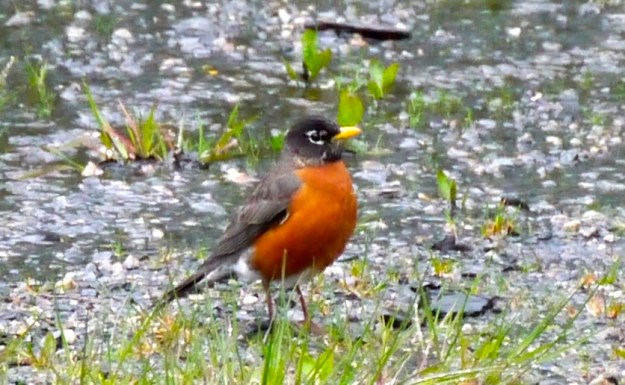
I take many photos of robins this time of year. They are always posing. Today, on the gravel road leading to one of our favorite meadows, a robin stands fifty feet away. When neither Aki nor I try to catch it, the bird turns so we have a better view of its prominent red breast. It waits for Aki to finish her business and for me to bag the resulting product in plastic. Only after we move ten feet closer does the robin make a showy burst into the trailside alders.

3

Two robins seem to wait for us as we make our way back to the car. Aki runs towards one, which flies easily to a perch just a few feet away from the little dog. The other robin trots away slowly, stops, and when neither Aki nor I head toward it, moves back in Aki’s direction. My little dog, apparently bored with the game, ignores the bird. I want to tell the robins that they can save their breath for singing. We have no interest in harming their nestlings and so they don’t need to decoy us away from their nest.
2

3

Aki watches with apparent approval as I drop a bag of her poop into a bear-proof trashcan. A little dog that finds great value in dog feces and urine, she must think of trailhead rubbish drops as banks. If that were true, Aki and I would be rich. I don’t leave the house without a pocket full of crinkling plastic bags.

After making the deposit, I follow Aki to pond normally dotted with goldeneye and bufflehead ducks. This morning it is empty. Fish Creek that drains the pond, normally loaded with waterfowl, is another bird desert. We only find a greater yellowlegs working a shallow pond, two mergansers, and a clump of spruce overburdened by crows.

1

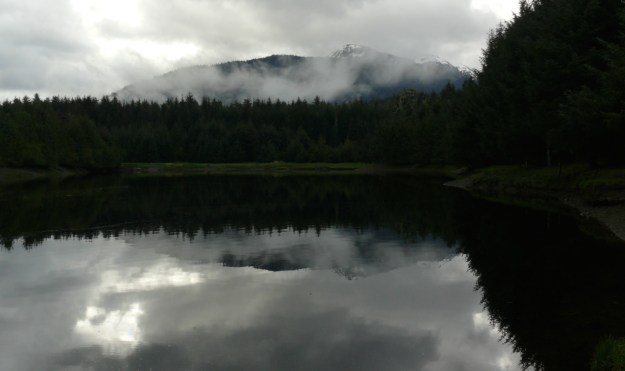
We can’t see the glacier through clouds but spot an Alaska State ferry making the Lynn Canal run to Haines. Sun streaks provide a bright backdrop for its passage.

Like the tourists now crowding the northbound ferry, the birds that normally crowd this creek delta have moved on to their coastal summering areas.

2

1

You would expect disharmony from the mismatched trio. They don’t disappoint, The bald eagle opens with its sharp pitched screech. As it echoes over a calm beaver pond, varied thrush follows with a warbling whistle. A winter wren gives out its own trill. I hear repeats of their shrill refrain until Aki and I cross a small muskeg meadow and drop onto the beach where a oyster catcher bobs near the water line.

3

Back in the forest, we hear another eagle’s scream then an unseen Swainson thrush practices its scales. It’s a happy sound, as cheerful as the robin’s song. I notice that the rain has finally stopped. Last night’s storm has swollen the forest watercourses and soaked the ground.

4

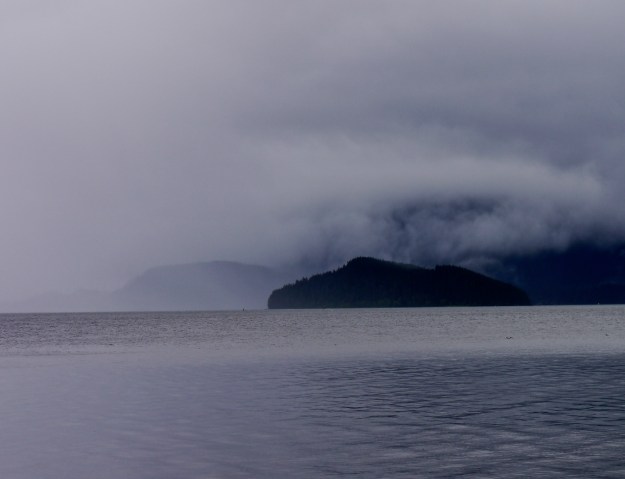
Ground hugging clouds obscure upper Lynn Canal when we return to the beach. The white wall seems to swallow Lena Point and the scattering of islands just north of Auk Bay. This new storm soon reaches us but brings a soft, almost warm rain, not the cold, pounding stuff of last night. Is this to be our summer start—marked by warm rain replacing the cold and thrush song?

2

Respectful Silence

1

Like ravens, gulls, and eagles, you can hear middle school boys in the woods long before you see them. A coven of them spreads out from a fire ring. All but the one sitting by a weak fire are soon out bouncing around the old growth, shouting at each other as the last of the crows and gulls abandon the nearby beach. The boys in the woods all wear bright colored rain gear and, to be honest, smiles.

3

Aki and I came early to this forest for a quiet, if wet walk through forest and bird song to the beach. I also hoped to bird watch. On our last visit I spotted a small raft of northern shoveler ducks swimming past a stalking heron and godwit. When we break out of the woods today a formation of goldeneye ducks flies away in a panic, leaving the near in waters empty.

2

I think of the Tlingit elder that once taught me how to make an octopus bag. She also taught my five-year-old daughter the raven and canoe dances. She told the young dancers to keep a respectful silence on our beaches and in our woods. “Don’t even skip rocks,” she said. Even that shows disrespect to wild things.

4

Eagle Church

1

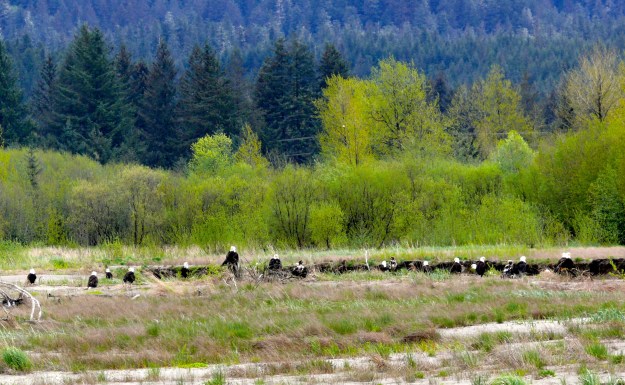
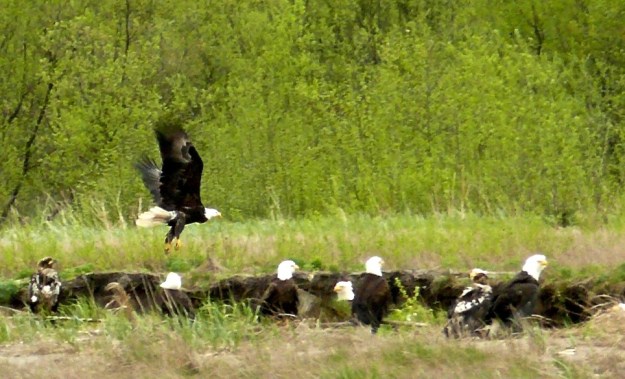
From under the Egan Highway bridge over Lemon Creek, Aki and I watch more than 30 bald eagles occupy an island in the creek. I know they landed there to sulk after having just been chased away from the dump. But because one eagle has situated itself on a piece of driftwood above the others, I image her a preacher and the rest, the congregation.

2

Bald Eagles should be seen soaring all rugged mountain ridges, not hunkered together between city dump and high-speed highway. But, as the locals know, city dumps and streambeds littered with dead salmon are the best places to see the carrion eaters.

3

The eagle preacher lowers her beak as the more restless members of her congregation fly to trees on the other side of the creek. Others follow and the church reforms on a meadow dotted with the cement bases of WWII era radio antennas.

4

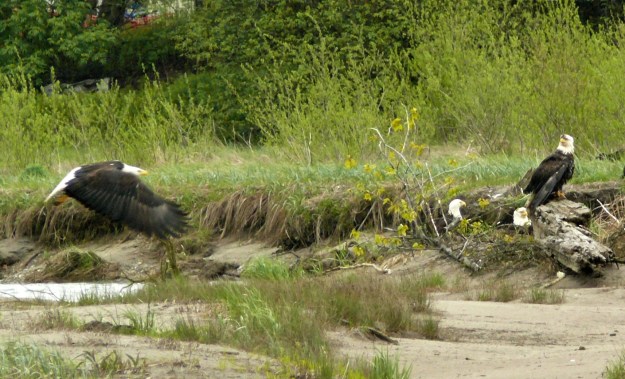
Aki and head cross back under the bridge and walk onto the wetlands, now dominated by ravens. In the distance, an immature bald eagle rests on a driftwood root-wad perch, holding its wings out to dry. A mature eagle with white head and tail feathers shares the same root wad. Now I imagine a counseling session that breaks up when the little dog and I approach.

5

Balm of Gilead Trees

1

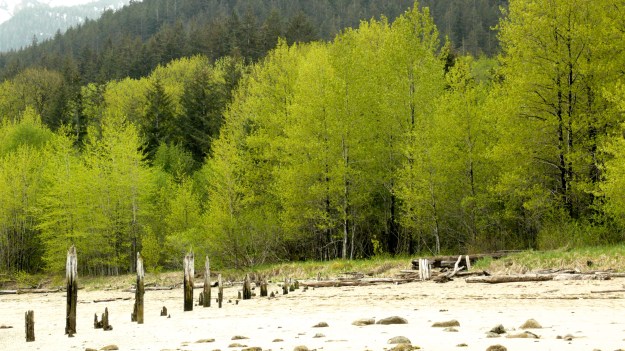
Years ago, when living in Ketchikan, I asked two Tlingit elders the names of some trees that smelled in Spring like church incense. “Balm of Gilead trees,” they answered. The memory seems fresh as new growth as Aki and I walk through the Treadwell ruins, now dominated by balsam poplar incense and the songs of American robins. Any residual sadness a person brought to this forest would surely ebb away before reaching the site of the mine collapse. I wonder if someone in the Ketchikan Tlingit community gave the poplars that descriptive name after hearing the old Balm of Gilead spiritual:

There is a balm in Gilead,

To make the wounded whole;

There is power enough in heaven,

To cure a sin-sick soul.

2

Photobombed by a Godwit


1

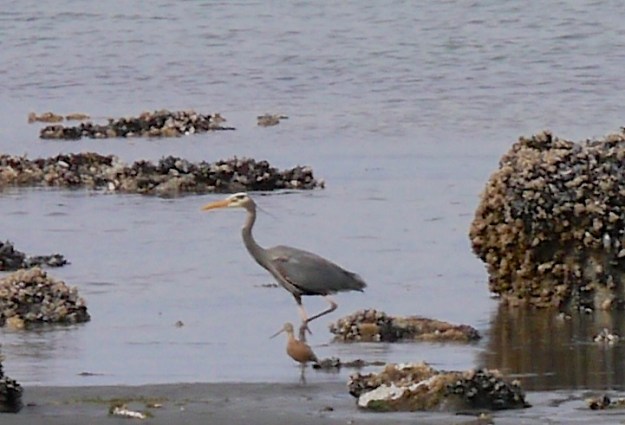
When I look up, it’s all grey and cloud. But here on the ground sunlight makes the most out of the new growth colors. Aki and I squint against it. We hear an eagle claim ownership of a beachside spruce before we spot it. Aki hangs back near some rocks as I walk past the eagle and toward the partially exposed causeway to Shaman Island. Black crows and white/gray gulls patrol the tidelands and I wonder why they evolved into such easy-to-spot colors. A godwit, a rare visitor with a chestnut cloak almost disappears against dun colored rocks. Same with the blue-grey heron. When I get home from the walk I discover that the two camo birds pose together in one of my photographs. I was trying to capture the great blue heron when photobombed by the godwit.

2

Sea Mammal Rock

3

I would call this sea mammal rock if I wasn’t inadvertently sitting on the remains of a river otter’s meal. From the amount of scat and empty shells, it must be a favorite meal spot for the big weasels.

1

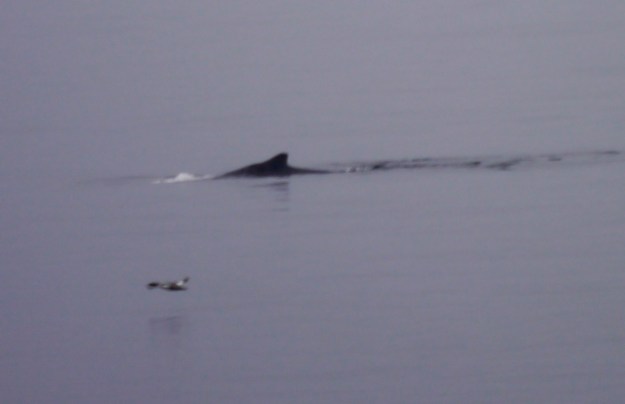
On prior visits Aki and I have looked down on harbor seals raising their curious heads into the air and watched a raucous pod of stellar sea lions swim around us on a high tide. Today two humpback whales feed just a quarter-mile away.

2

One of the whales is two-thirds the size of the other and I wonder if they are related. They are all business. We see no showy breaches or even an iconic flash of a tail framed against the sky. They just feed like they would at the end of a fast. Have they just returned from Hawaii, where humpbacks are so busy procreating they don’t eat? Or are they part of the minority that stays all year in Alaska waters?

4Concentrating on the whales, I don’t notice that my little dog has begun shivering. Stiffly, I rise up, poke my head over the rock edge like a curious otter, and lead Aki back into the woods.
Why Does the Robin Sing?

3

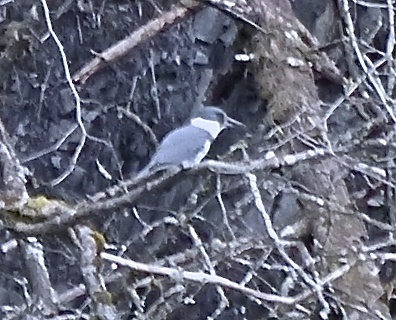
For the third day in a row, I’ve been scolded by a belted kingfisher. It happened today when Aki and walked to the edge of the collapsed glory hole near Treadwell. There, gnarled pilings, the ruins of the old loading quays, poke up through sand manufactured almost 100 years ago by stamp mills. The sound of the mill’s great weights pulverizing gold ore would have blocked out off other sound on this beach. If they operated today, I wouldn’t have been able to hear the kingfisher’s angry lecture. He yelled at the little dog and I from an overhanging branch. After freezing up in place it dived into the glory hole to seize a sliver-bright herring in its spear-shaped beak.

1

While the kingfisher ate, Aki and returned to the woods mixed-hardwood forest were the sweeter songs of robin, wren, and thrush blocked out the sound of boat wakes hitting Sandy Beach. Wandering through such a saccharine cloud, I felt like a minor character in a Disney cartoon, where birds keep up their spirits by whistling while they work. I understand the purpose of the territorial kingfisher’s ugly squawk but why does the robin sing such an appealing tune?

2

New Growth

2

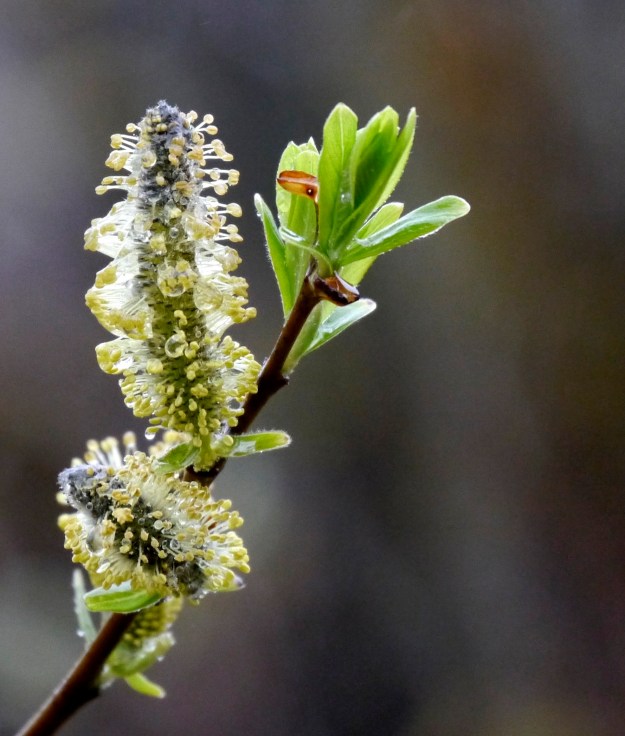
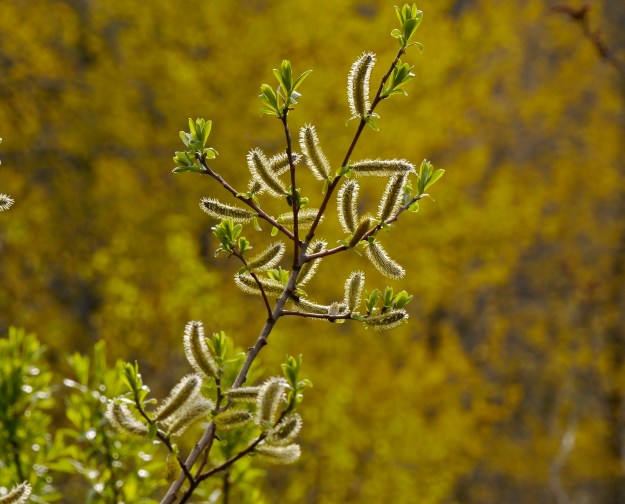
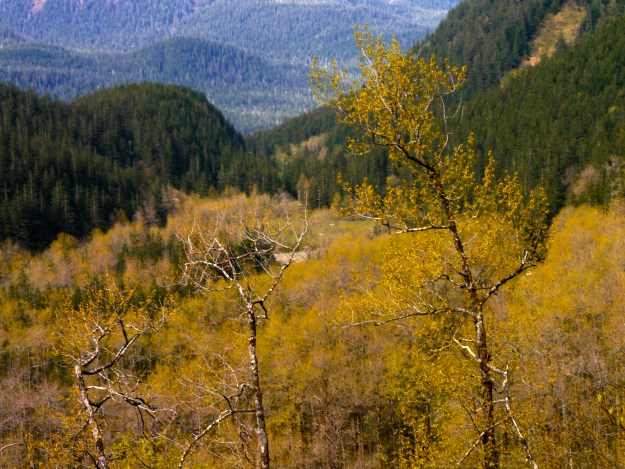
Yesterday’s warmth triggered a release of sap that now coats the balsam poplars’ new growth. It also must have released incense trapped in the sap because the air along the Perseverance Trail smells like church. When the sun finally pushes through the morning cloud layer, the yellow-green poplar leaves seem to absorb it until they glow. These leaves will spend the summer coated in an drab green and then, while dying, give the Gold Creek valley it’s only fall glory by turning rich yellow.

1

Above the new growth I look for mountain goats but only find two. One disappears. The other, its fur poofing out like a well trimmed French poodle, lingers. Just down the trail, I watched a bald eagle cruise low over the flank of Mt. Juneau where I spotted two goats last week. It could have been hunting for kids or afterbirth. The goats aren’t due to birth their young until late May but I wonder if, like everything else this year, they are ahead of schedule.

3