Category Archives: Juneau

More Futility

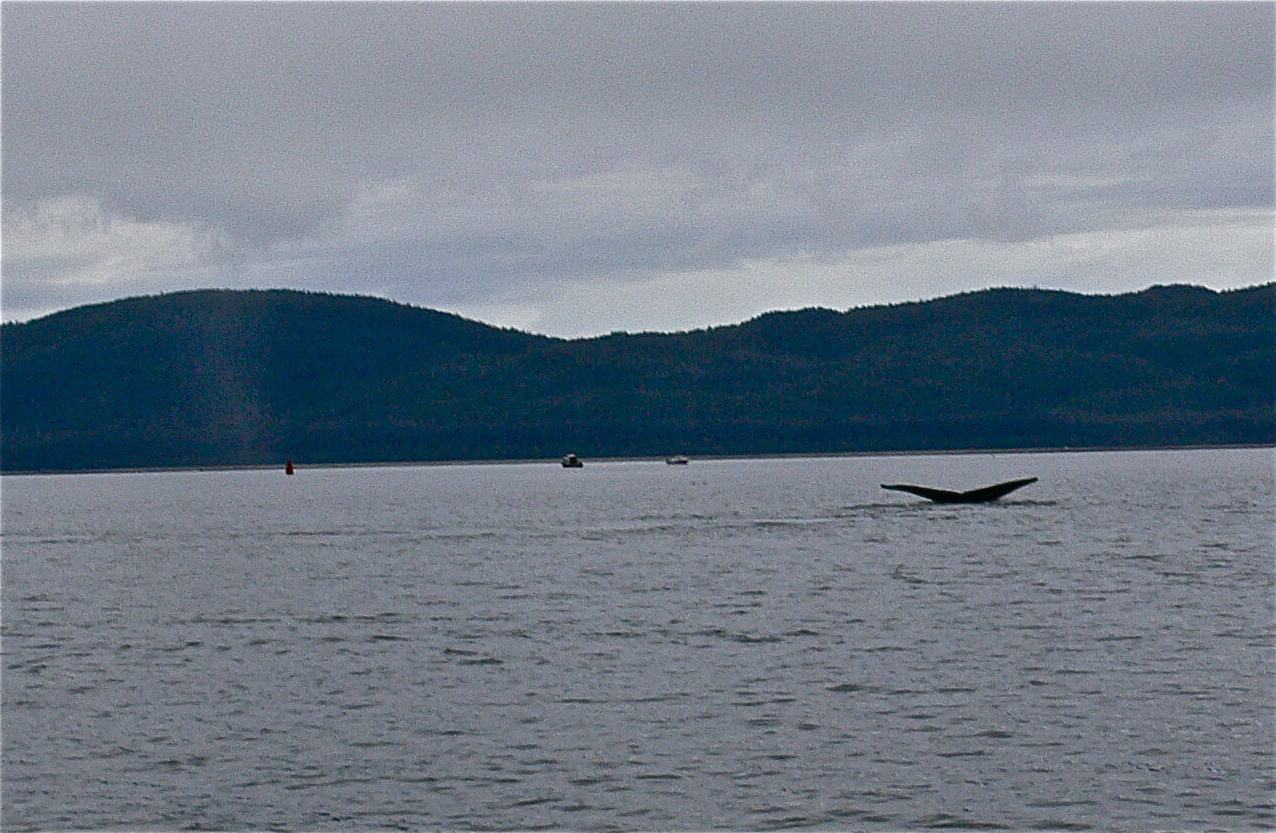
Again I say goodbye to a sad Aki and head to the harbor for another try for King Salmon. Just one fish will feed us for awhile. Like our last attempt on Saturday there is rain and a bay full of herring. These beautiful silver fish draw a gang of sea lions and one very forward humpback whale. The sea lions alone almost eliminate any chance we have of caching a king. If we did hook one, a sea lion would probably bite it in half before we could boat it. I still enjoy watching them find so much fun in chasing their lunch. The gulls hang about them when they surface with a herring in mouth. One cheeky bird tried to pull a fish from the sea lion’s mouth. 

We trolled for seven hours without receiving a single bite. From the rolling boat deck I grew even more frustrated trying to photograph the whales and birds and sea lions. By the time the camera focused, they would be gone. Sometimes the sea lions would surface right next to the boat, then swim away underwater. The whale pulled the opposite trick. A young whale, it headed right at our boat, giving me a start when it appeared in my view finder.  (It is not as close as it seems as I using a zoom lens). 

Not a Nice Way to Treat New Neighbors

It’s raining again on the glacier moraine and the troll woods it surounds. Aki and I are here to check out the baby king salmon recently released into three little lakes.  Raised along side king salmon about to be dropped into ocean waters where they might grow to fish that deserve their name, the 500 fish dumped into these landlocked lakes will live as farm animals until eaten by someone or something.

Near the beaver village we spot the tell tale rings of rising fish on the lake that borders it. We also see the swirl of large animal, mammal not bird, break the surface in the middle of the rising salmon. I’m thinking river otter because, as  the government who planted the salmon in this lake will tell you, beavers don’t eat fish. Fresh green yellow foliage now hides the main beaver house and provides a rich counterpoint for the line of dark green spruce trees that fill the space between lake and the cloud obscured ridge of Thunder Mountain. 

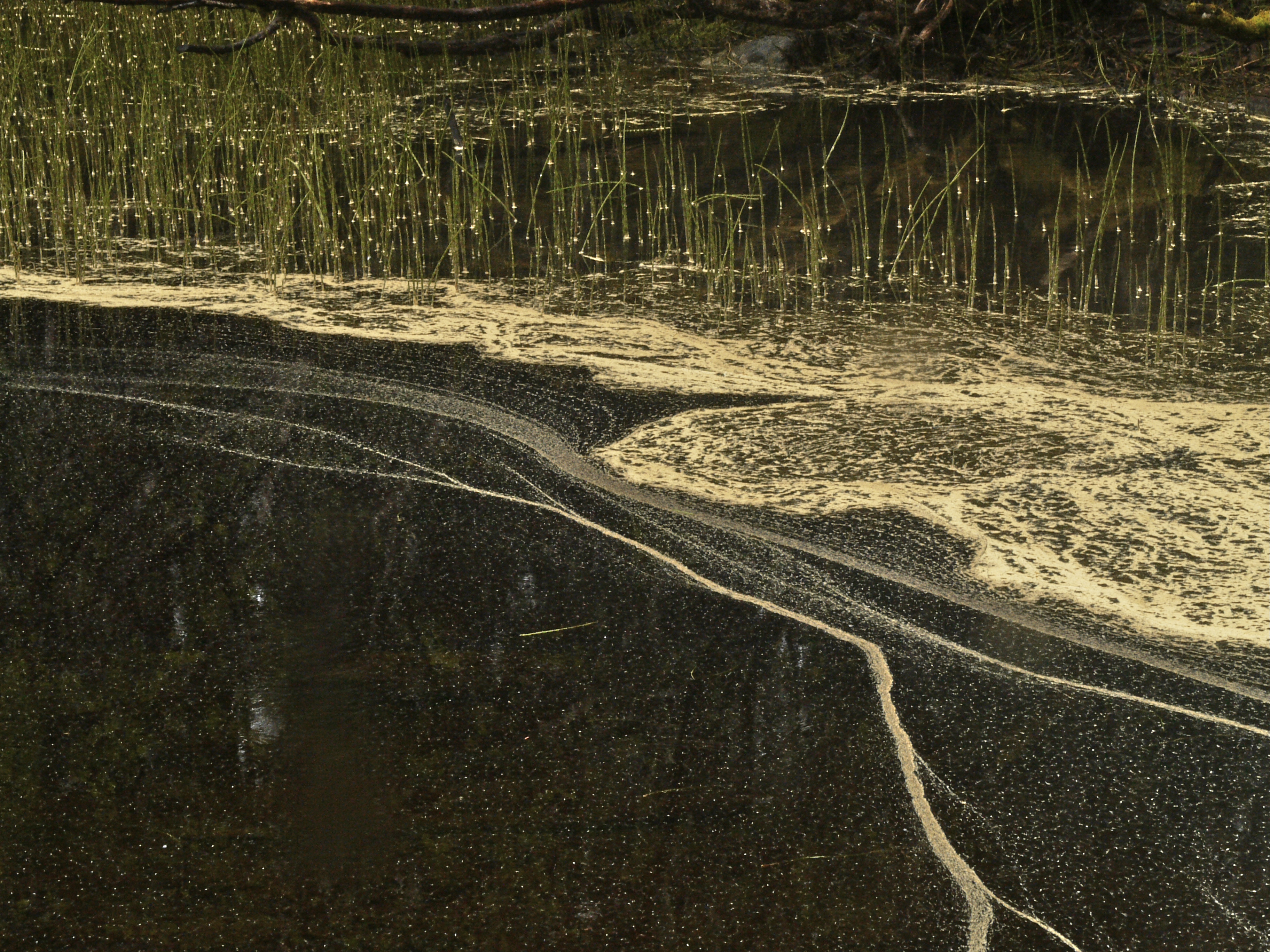
From here we follow a trail into the troll woods. We pass a pocket lake where a single Common Merganser, its white body standing out against the dark lake waters glides by.  Seeing a lone duck on water this time of year makes you wonder if it is fiercely independent or the victim of tragedy. Did he drive other birds from the lake or come to a place no one else wanted to sulk? Did I mention it is still raining? Along the lake shore recently released spruce pollen forms elongated yellow islands on the water’s surface. 
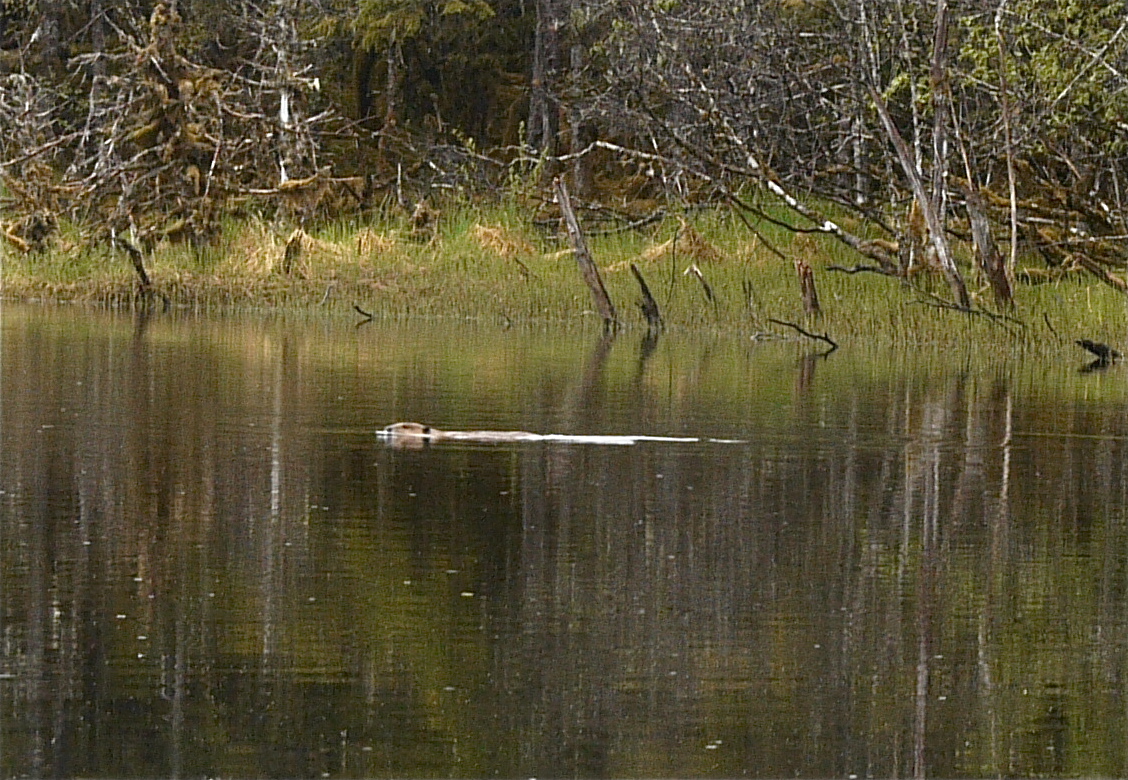
While moving deeper into the woods Aki and I are startled by a small explosive sound like that made by a sizable rock striking deep water. A bear practicing diving? More likely a strong child throwing something in the lake for the resulting splash. Minutes later we reach a lake where a beaver swims back and forth across the surface. Just before reaching the shore it slaps the water with its tail and dives. In seconds it is on the surface heading back to the opposite shore. Beyond small king salmon stir. Some launch themselves a foot or two into the air.    
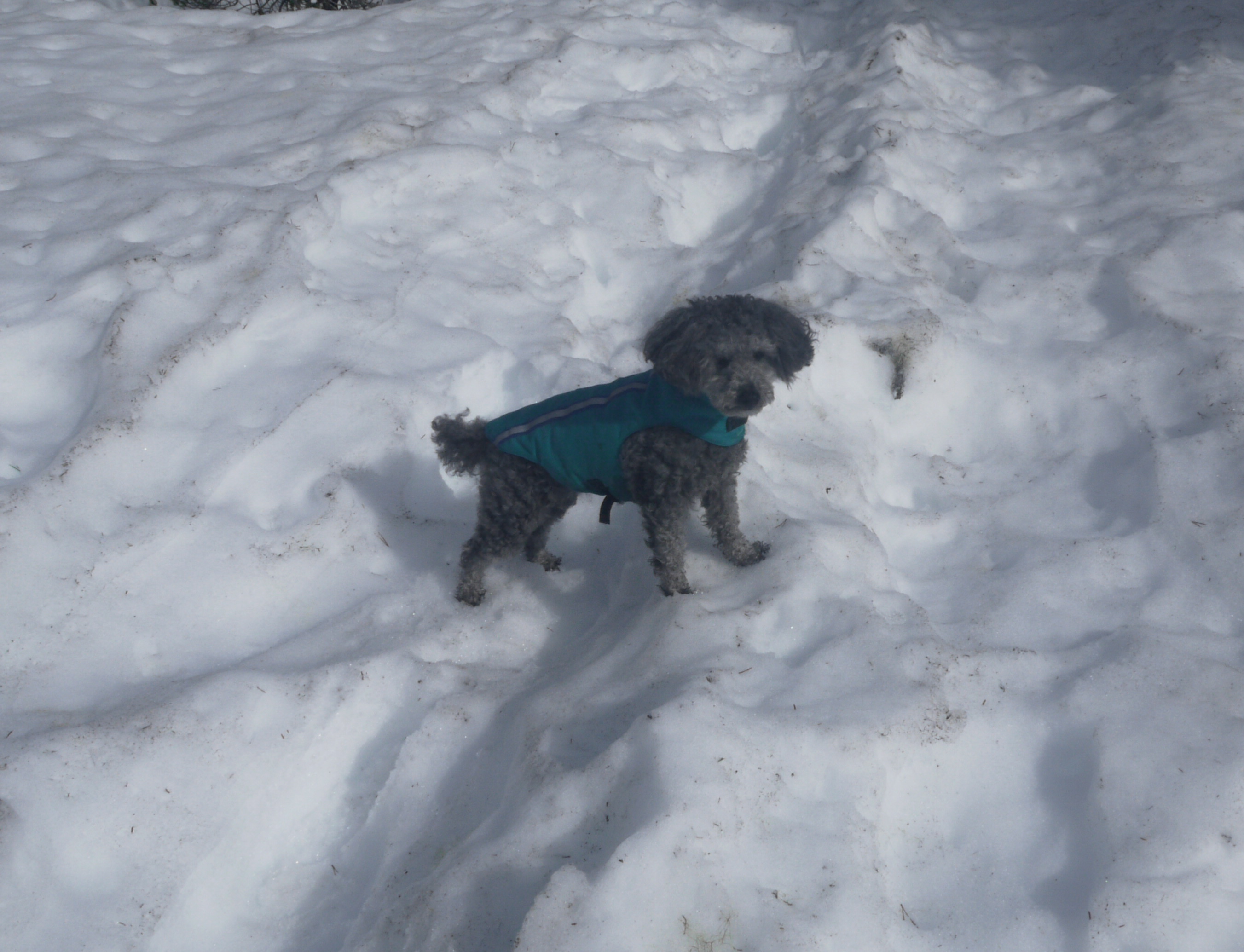
Aki, displaying the posture she reserves for meeting other dogs (tail and rear up/legs straight/ feet slightly forward) is half submerged at the lake’s edge. The beaver takes no notice of either of us and soon Aki is back at my side.

What is going on? If this were a seal I’d know the score. It would be driving the salmon to it’s hungry buddies at the other end of the lake. That would explain why some of the salmon are jumping high out of the water. But, as those that study these things in college will tell you, beavers eat wood bark, not fish.  If this is true then the beaver is just being territorial and wants to drive these new neighbors out of town. Eat tail slap could be telling the salmon to find their own lake.

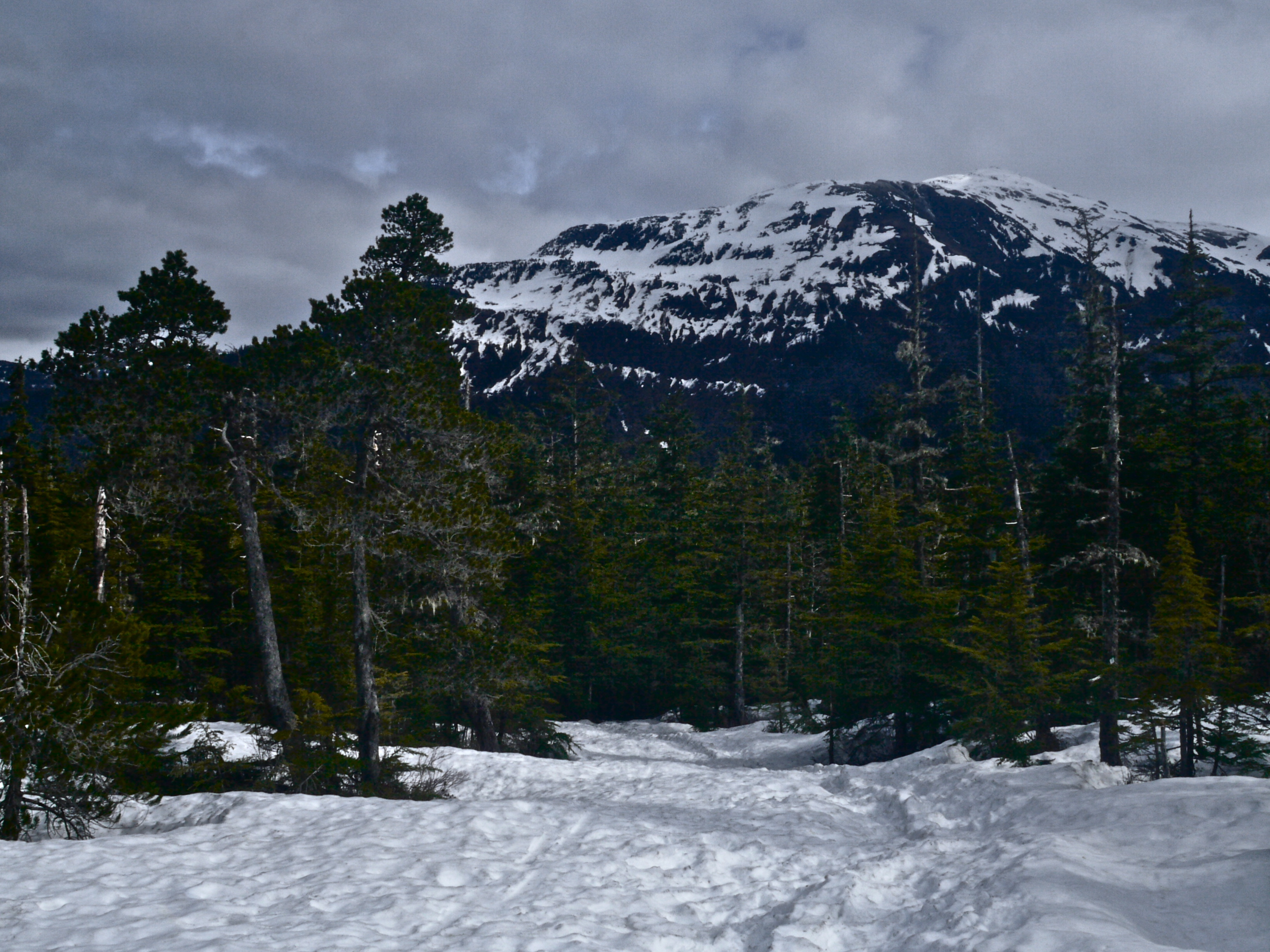
I could see why the beaver would want this lake to himself. It offers a beautiful view of the glacier and surrounding mountains. When he stops disturbing the water’s surface with antics, he can appreciate the serene reflections of mountains and glacier captured on the lake’s surface.

The beaver is still tail slapping the lake’s surface when we head back to the car. At home I use our internet search engine to look for an explanation for the beaver’s behavior. As expected there are many government websites providing assurances that beavers are vegetarians.  Each is written in “pat on the head that’s a good boy” prose.  One You Tube posting might make the authors of the other web articles re-examine their research on beavers. It shows one near Lake Clark Alaska happily munching on a fish.  http://www.youtube.com/watch?v=ES0YQyqv4O0

They Don’t Care About the Rain

Leaving Aki with a promise of an afternoon adventure, I’m out the door with everything needed to catch a king salmon except luck.  A low marine layer of clouds block out the mountain tops but there is no rain. It waits for us at the harbor.

For a few weeks in early spring large king salmon, some over 30 pounds, fatten themselves on herring where we fish. They don’t care about the rain or the cold air temperature. We try to ignore these things as well.

 Other creatures come here to chase the herring, forcing them into concentrated balls of feed. Hoping to catch a king we troll hooks baited with herring through the balls. A harbor seal splashes nearby, coming to the surface often with a mouth full of silvery fish. He doesn’t care about the rain, now falling in heavy pellets that send up spray when hitting the ocean surface.  The rain doesn’t worry that brace of eagles gliding slowly to the water to pluck herring that were driven to the surface by the seal.

Distracted by the eagle ballet I stop caring about the rain and cold.  While I watch the birds, the captain calls out in alarm.  A humpback whale has just surfaced near the boat. Attracted by the concentration of bait fish, the whale spends the next hour hoovering up herring along the cove’s inner shore.  We don’t get in its way but other boats have to take evasive action to keep out of the whale’s path. 

This time of year it takes 144 hours of fishing to catch a king salmon. We put in our first four and call it quits. Driving home in the heavy rain we pass a large black bear grazing on road side vegetation.  A driving rain can give any fur bearing a pathetic bearing, this bear included. It doesn’t keep him from the task at hand.


Soft Day for Troubled Eagles

Last night I asked Aki politely, to let us sleep past the usual wake up time. That was a mistake as was my assembling the fishing rod before going to bed. She rose this morning before 6 am to pace up and down the wooden floors leading to our bedroom.  Not able to sleep through the resulting tattoo I was soon up and out the door on the way to Fish Creek.

We drove from town to the trailhead through a settled rain —the kind that lasts all day. It’s what the Irish call a soft day. Comfortable in decent rain gear I don’t mind.   We have the trail to ourselves. The weather doesn’t stop the animals of forest and stream from their jobs. When the creek noise abates over a clear deep reach we hear song birds and the complaints of eagles.

Walking down stream first we check the pond for early king salmon but see only the pens of thousands of juvenile fish that will soon be released to seek their fortune in the sea. Many will pass their ancestors returning to these natal waters. It’s an artificial deal, this salmon run, manufactured by the state to create a sport fishing opportunity. The king salmon, some reaching 10 or 15 kilos, arrive in early June then wander around the pond most of the summer dodging fishing lures. When the rains of August raise the creek level some will follow the wild chum and pink salmon up stream to battle for space on the spawning redds.

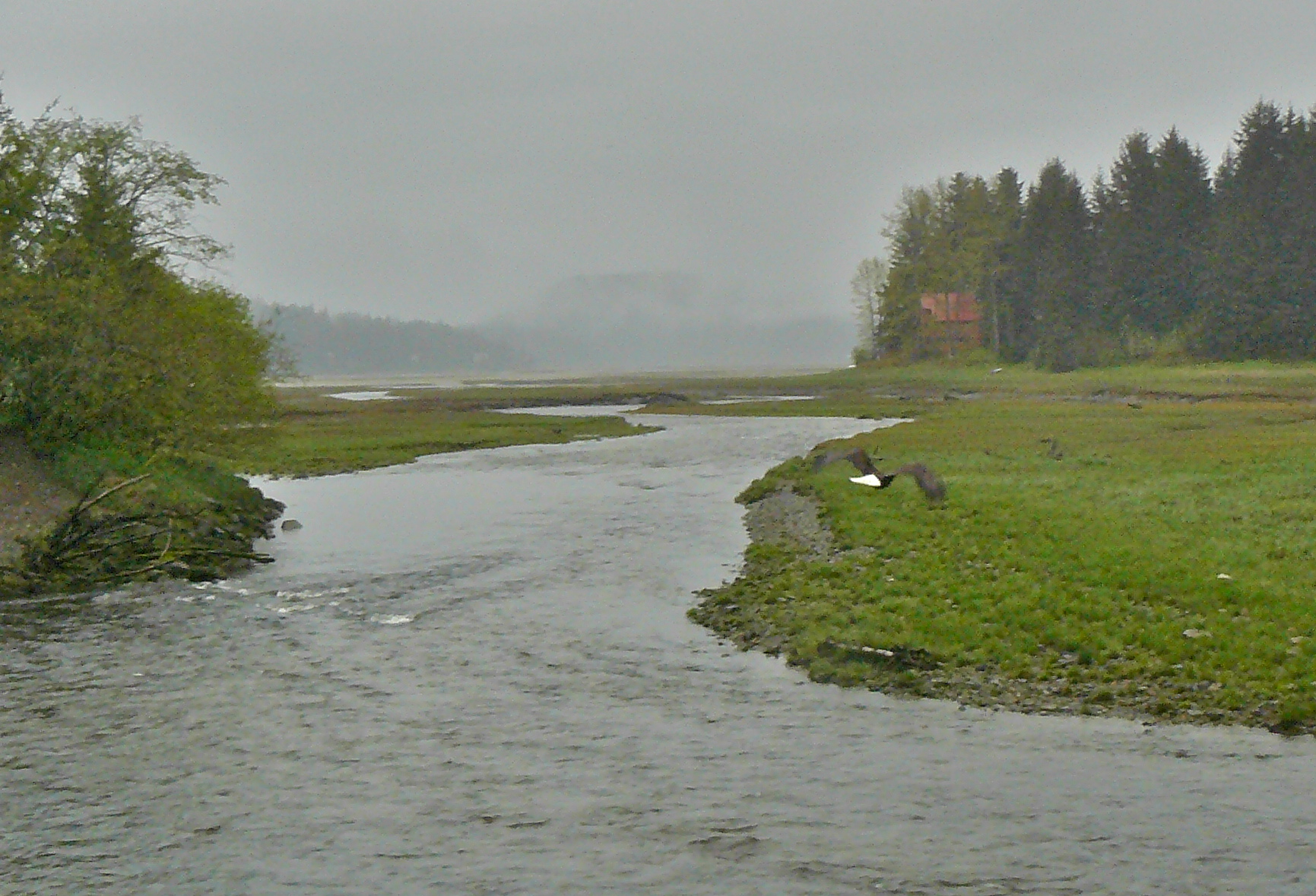
An earthen dike once separated the pond and stream. Now a 50 meter wide breach in the dike allows the waters to mix and fish to enter the pond from the stream. We stand on the dike near to breach under an eagle’s tree. The big brown and white bird breaks from its perch above us and flies directly away. 

Across the pond several crows try to drive a different bald eagle from atop a waterside spruce tree. The crows take turns descending on the eagle in a noisy dive. Hunkering down, the eagle holds his ground for a few minutes then leaves for a quieter perch. I’ve included one blurry picture of the scene because the crow has managed to make itself look like an avenging angel.

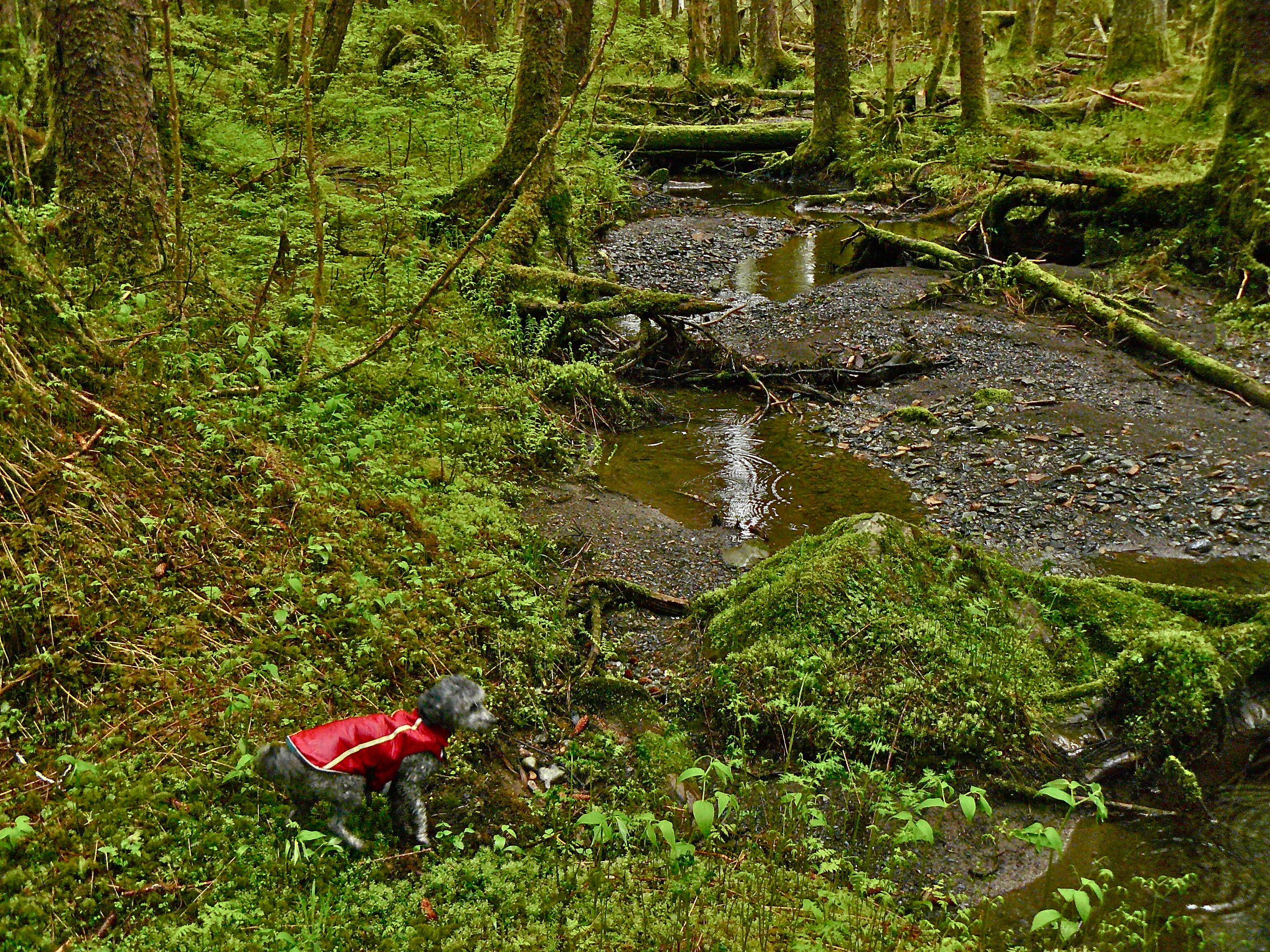
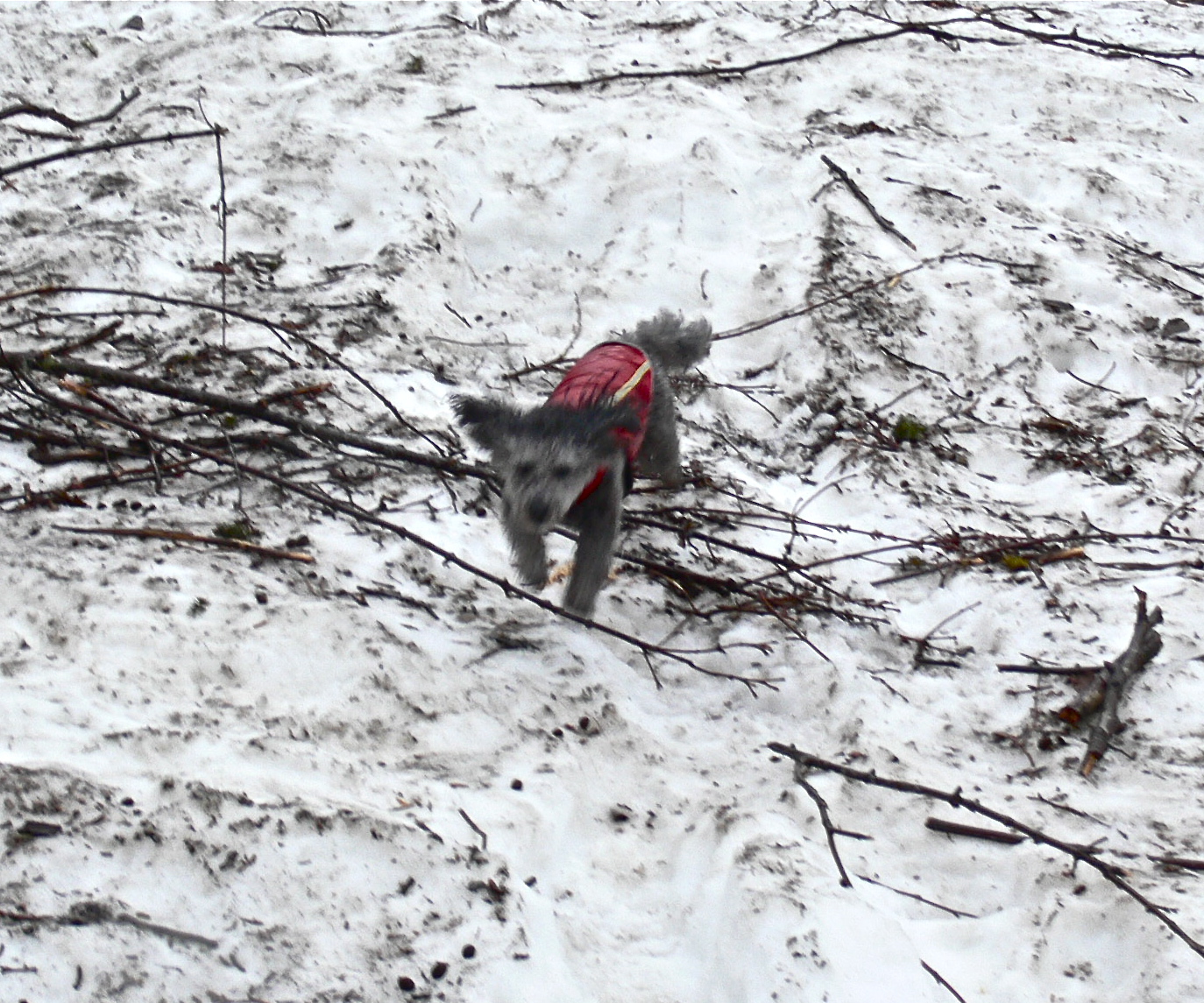
Turning away from all this drama we move up stream where the sound of moving water and tern song and the green explosion of early summer offers me true peace. Aki, not really a seeker of peace, charges up and down the trail, her red wrap soaked with rain.    

Aki’s Disappointing Canoe Ride

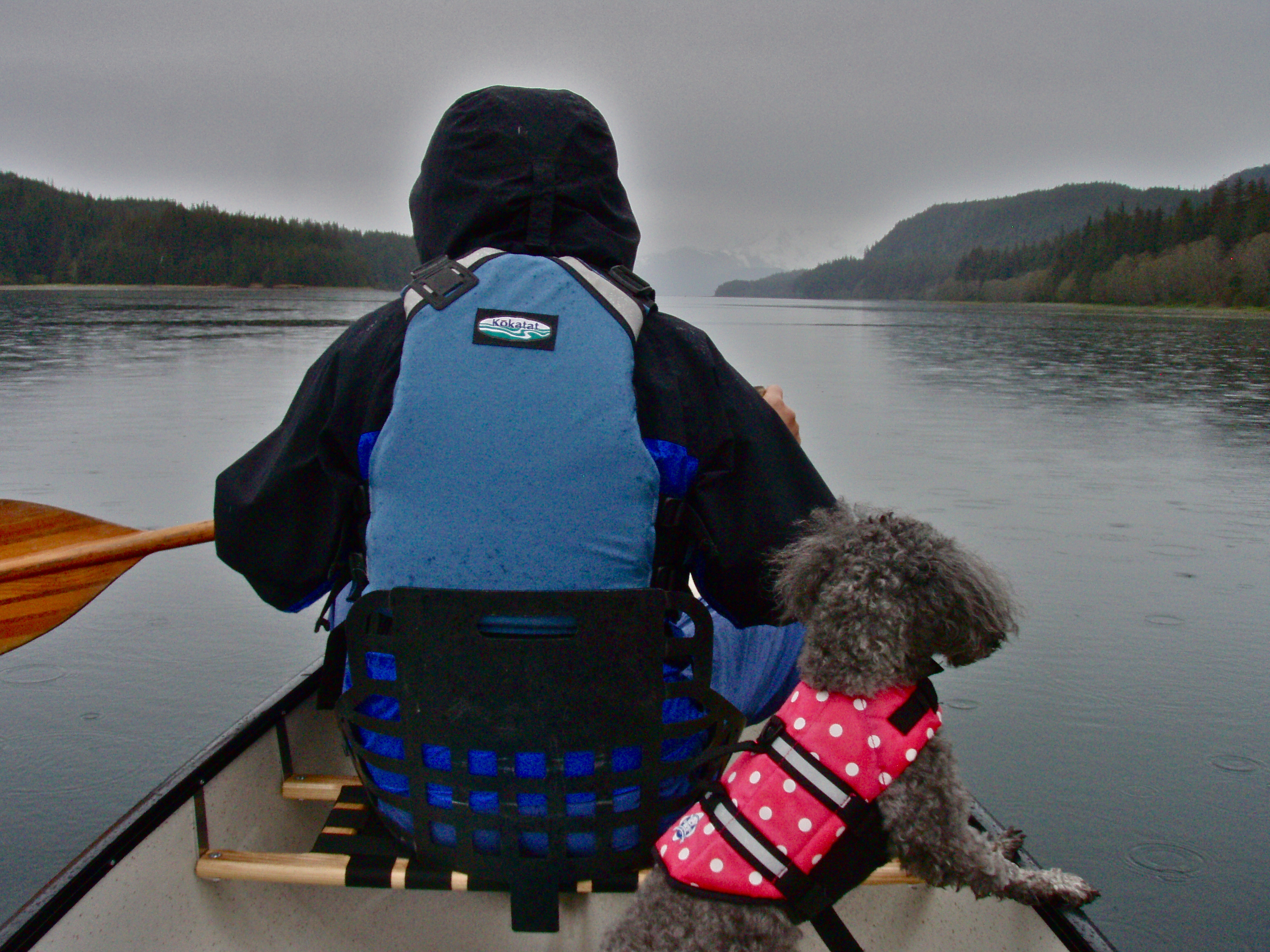
For Aki this canoe ride is as boring as one in the car. She doesn’t mind the weather — light rain falling from gum metal clouds.  It’s the lack of smells. On this large salt water lake our bee line course keeps us far away from shore with its promise of adventure. She moves nervously from side to side of the canoe straining to hear some promising sound, trying to catch an enticing scent.

If she looked down she would see grey bodied sole flattened into the sandy bottom. One bursts away when my paddle comes too close. We could easily catch a dinners worth.

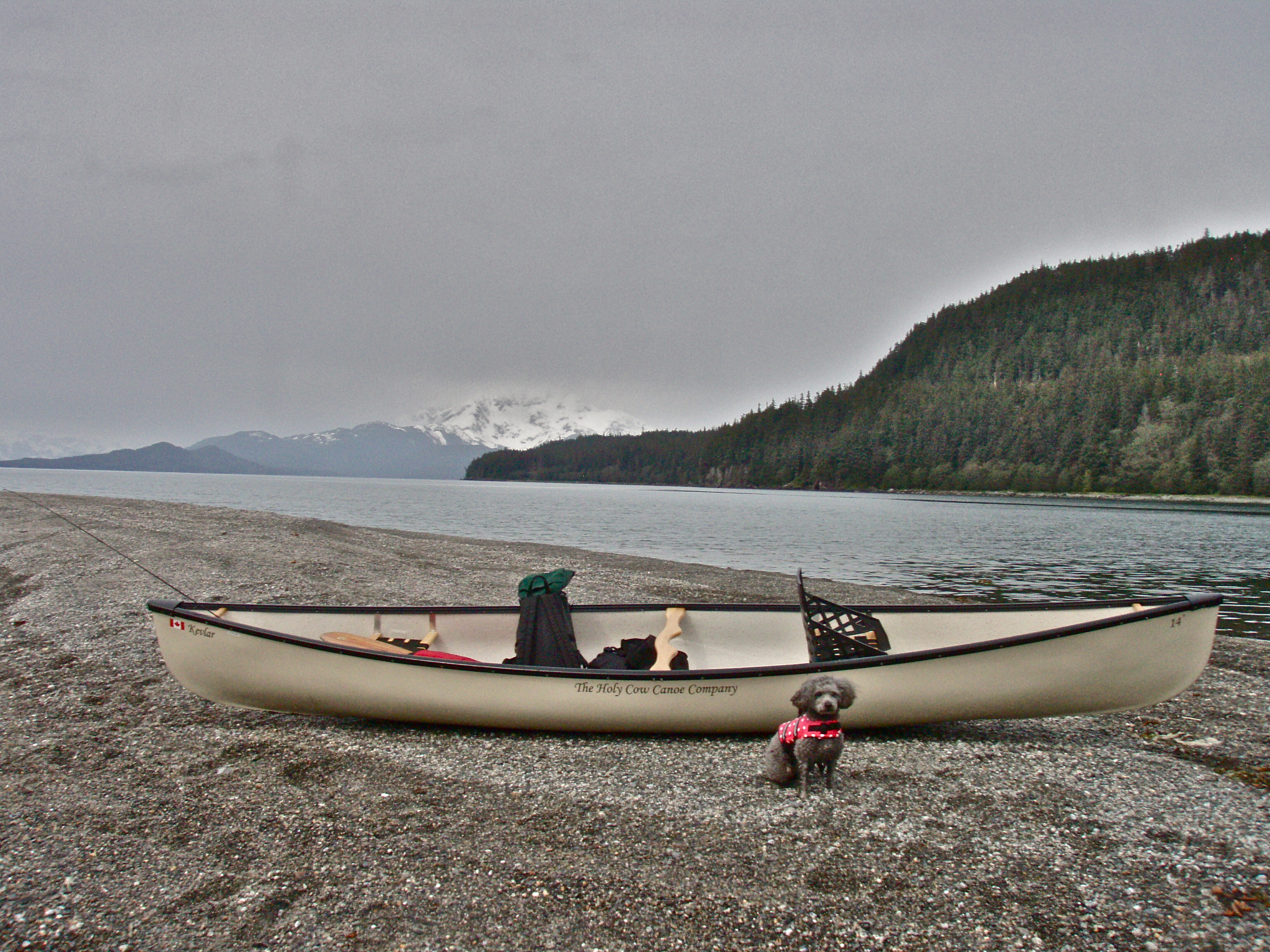
Eventually Aki settles into the arms of the forward paddler, staying there until we reach the great sand bar that protects the lake, really a cove, from ocean swells. Normally a dog landing here could hope for a throwing stick to chase or some interesting flotsam to smell.  But a recent large tide sterilized the bar by sweeping it clean of objects useful to a dog.

After tea and sandwiches I walk to end of the bar. Aki stays with the other adult in her life until I cross a flooded section of the bar. Then she races, ears flapping, down the sand, across the wet break and to my feet. Satisfied that I am fine, she retraces her course to the canoe. 

As I return to the canoe a small barge, loaded down by a yellow school bus passes by, its outboard engines straining against the out going tide. Such things are common in this island region and I only question why a school bus is on the move on Sunday, when students have a day off.

Perhaps frustrated by the ride Aki misbehaves after we return to our starting point and charges after a raven, making it drop a crab shell it was carrying in its talons. She has never done such a thing before, the little brat. I hope the ravens forgive her and us.

Returning to the Green Gray Woods

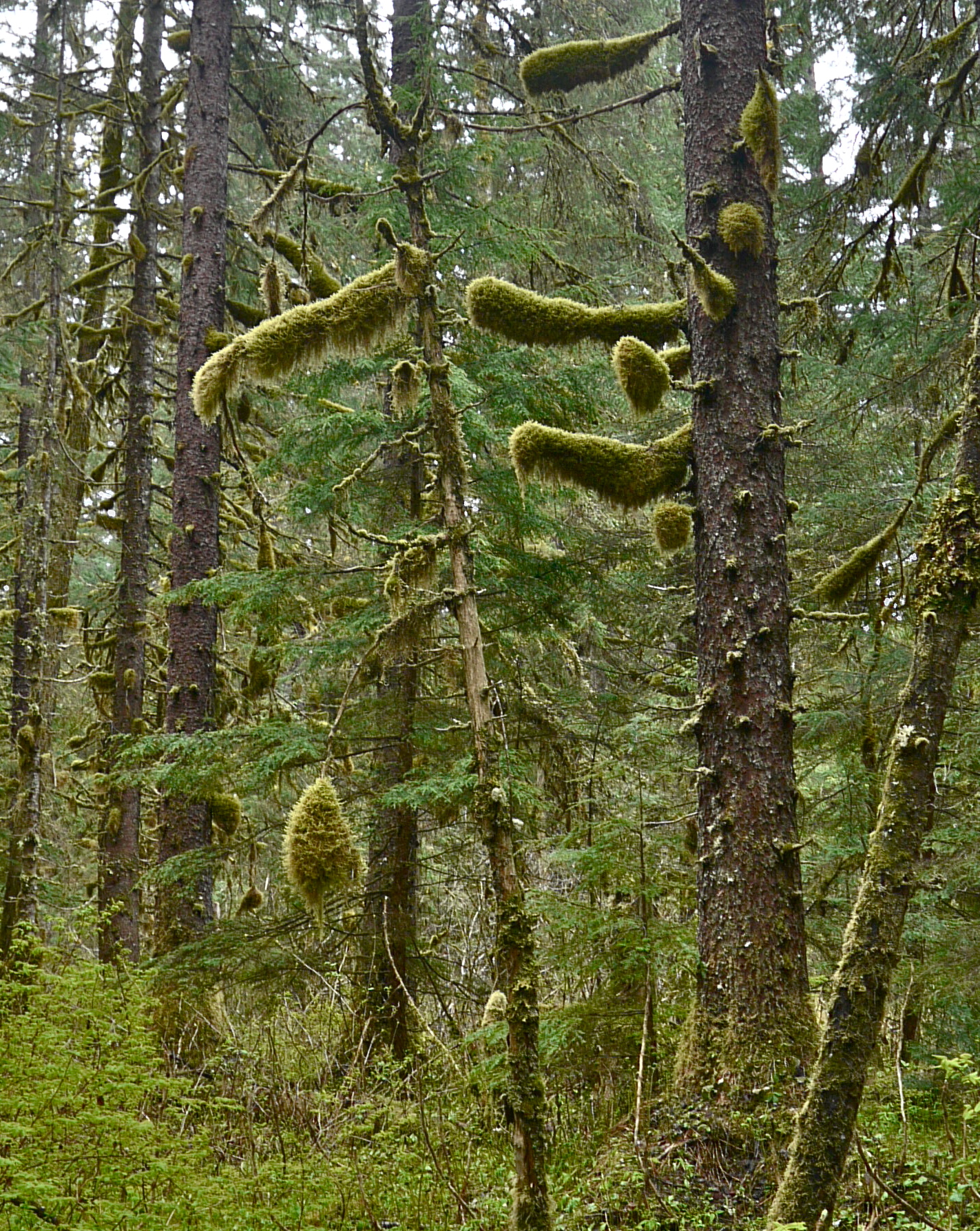
After Oahu, with its nature painted with a garish palette, this simple forest trail seems too green and grey. In this time before the salmon and berries, we can only find peace and the promise of summer. Even though the devil’s club leaf buds are barely swelling the fern shoots now reach a foot above the ground. Their tips are still rolled into the fiddle head shape that gives them their name. A tasty treat when harvested early and then sauteed in butter, the tips will soon relax and allow the fern leaves to flatten out and capture the sun.

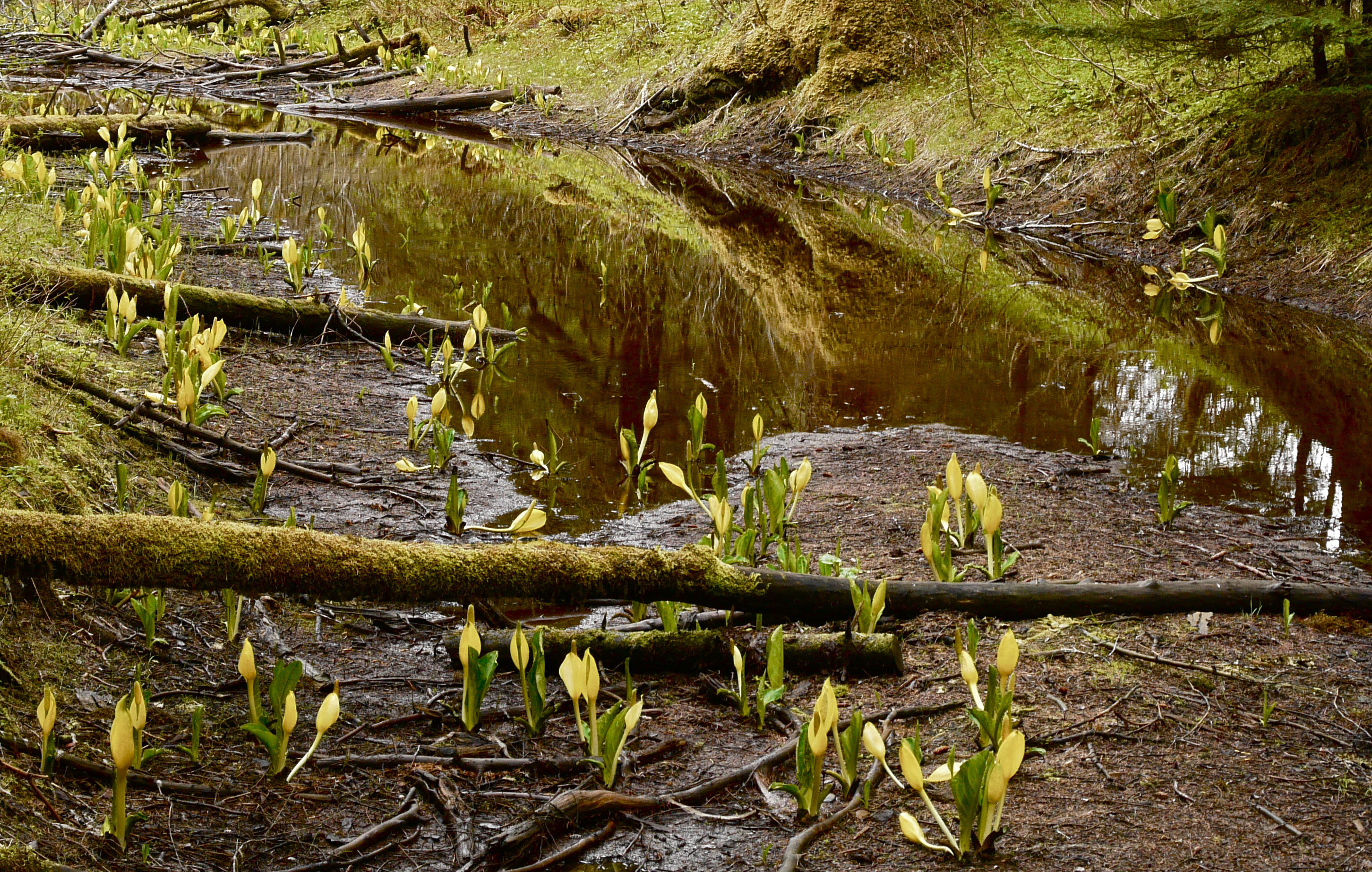
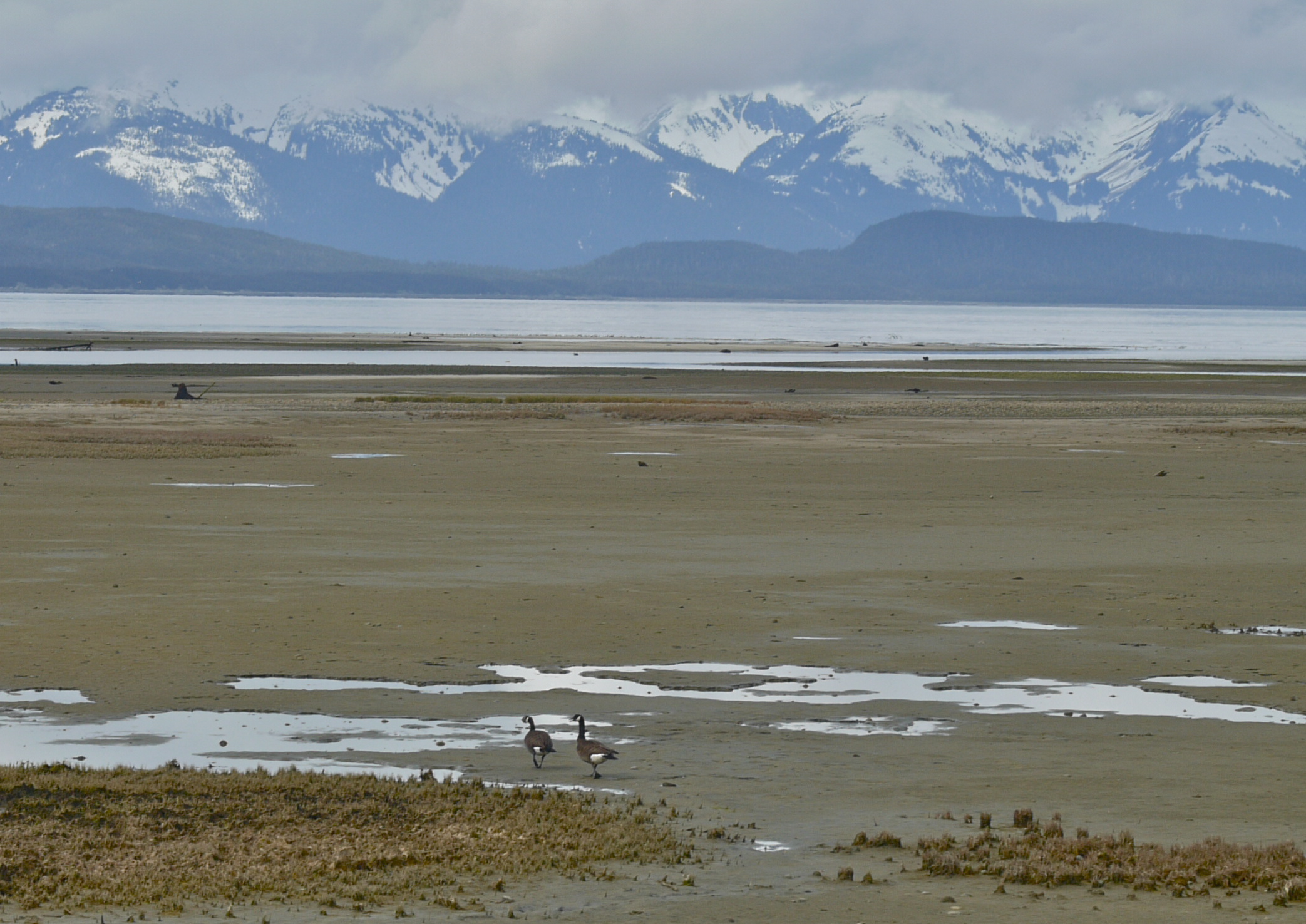
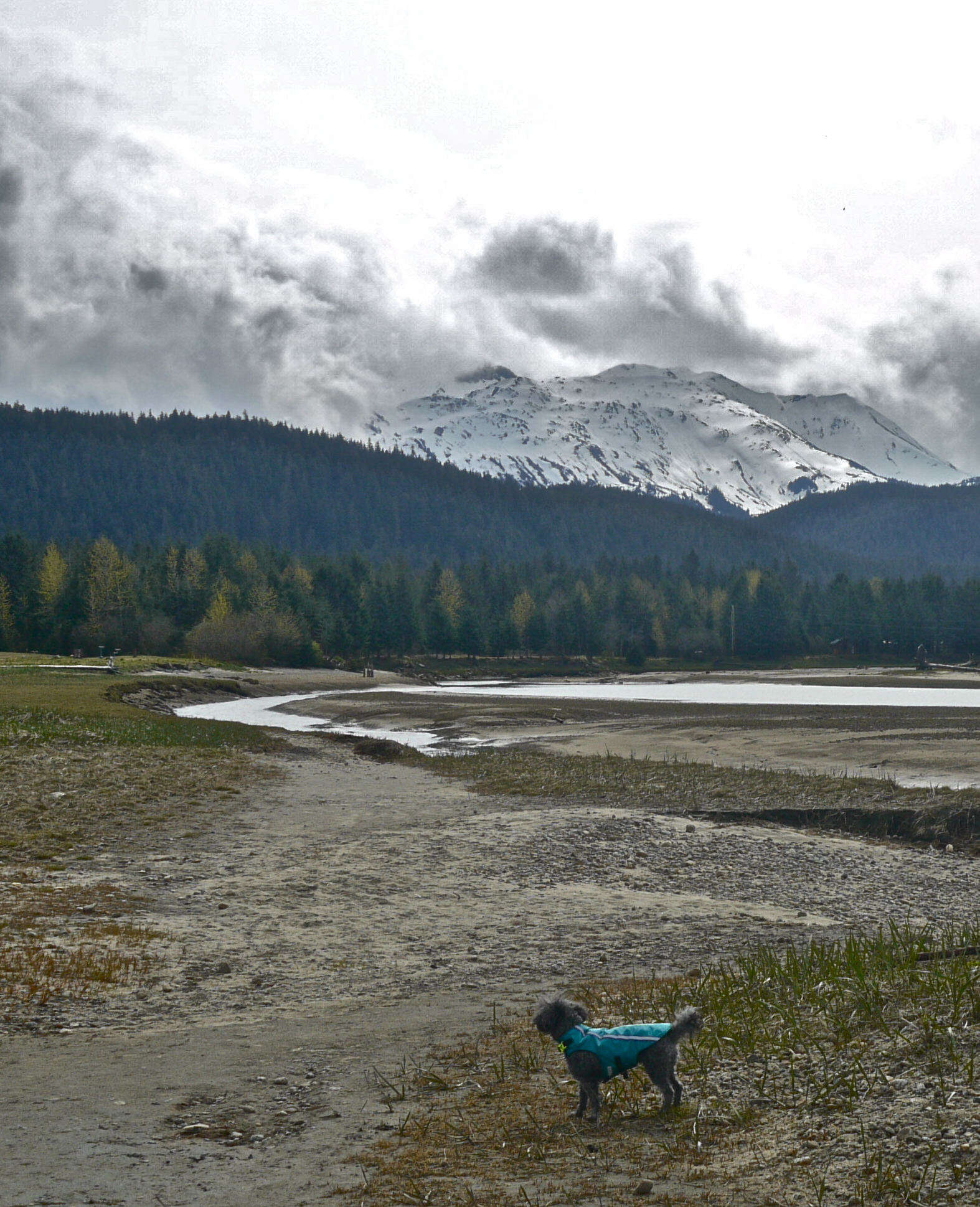
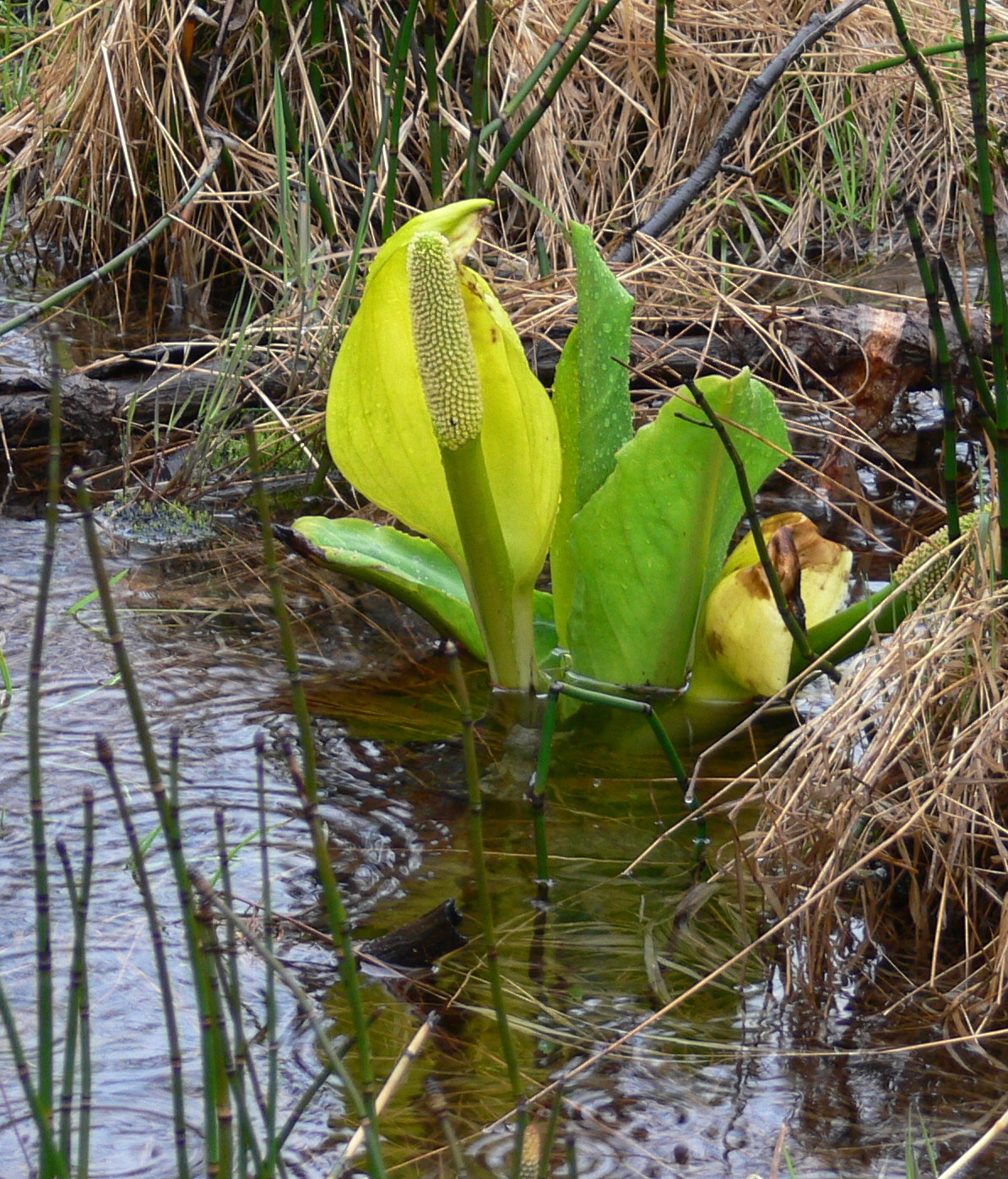
We find a few magenta salmon berry blossoms near the trailhead but for a trail mile its all green and brown. Only the nest building song of the forest birds provides any counterpoint to the forest’s earth tones. That changes where we reach the first meadow, which hosts a myriad of yellow skunk cabbage blooms. Small yellow violets and marsh flowers grow near the forest edges.  Southeast Alaska summer always starts with a show of yellow flowers but on this trip we also find  some blue lupine flower stalks and even a small island of magenta shooting stars. We also find four Canada geese feeding on the river flats. They stir at our approach but stroll, rather than fly away.  Maybe they know that Aki is geese shy for they hold their ground while another group of geese across the river break to flight at the appearance of a black labrador. 

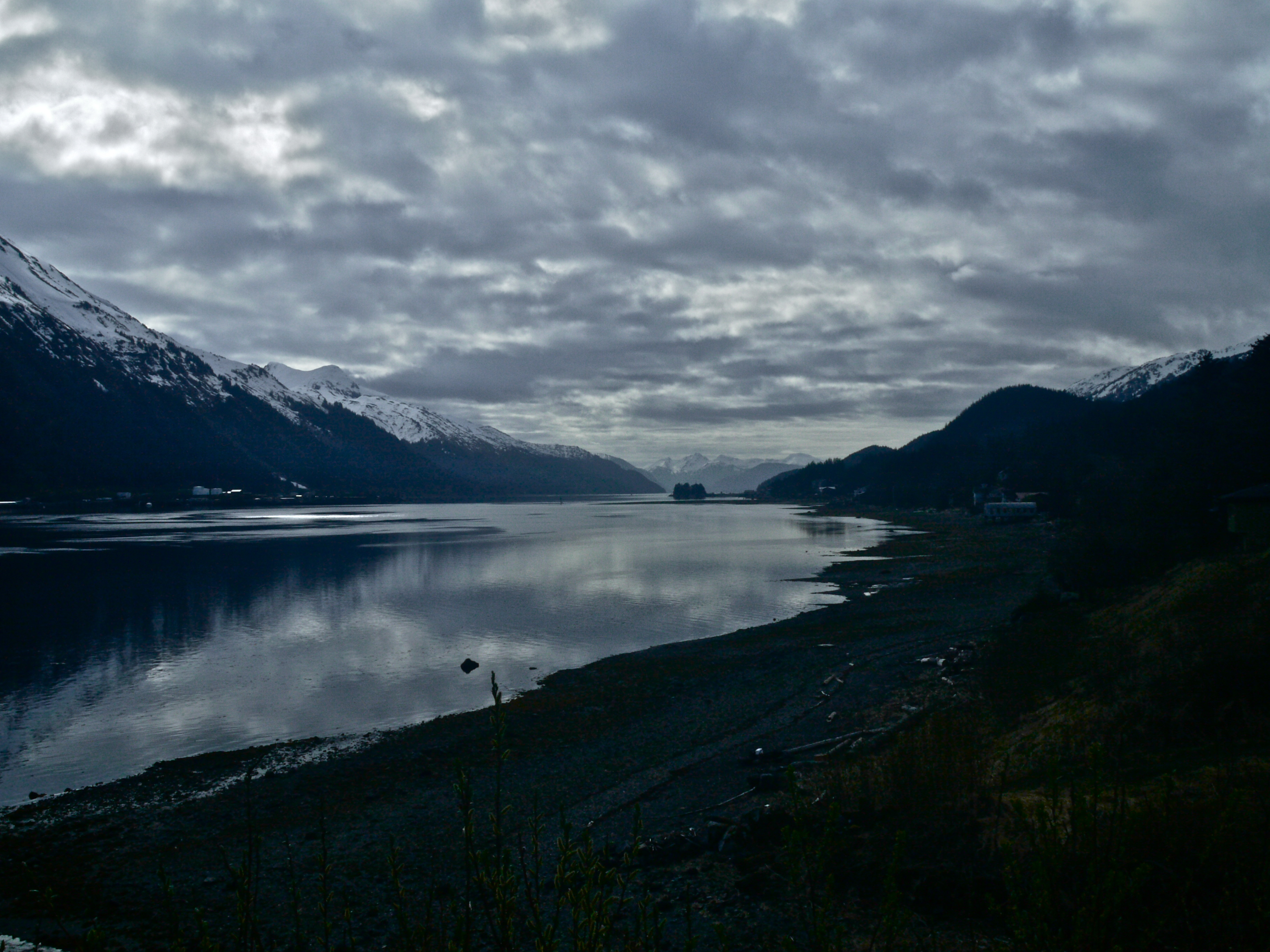
We walk for the most part under grey skies and flat light that fools the sensors on my camera. I want to capture all the shades of grey in the clouds, the whites on the mountains, and the strong yellow of the new cottonwood leaves that have yet to turn their summer green.  No setting works until  maverick shaft of light strikes a mixed spruce and cottonwood forest beneath the mountains.  

Four Stages of Sun Acceptance

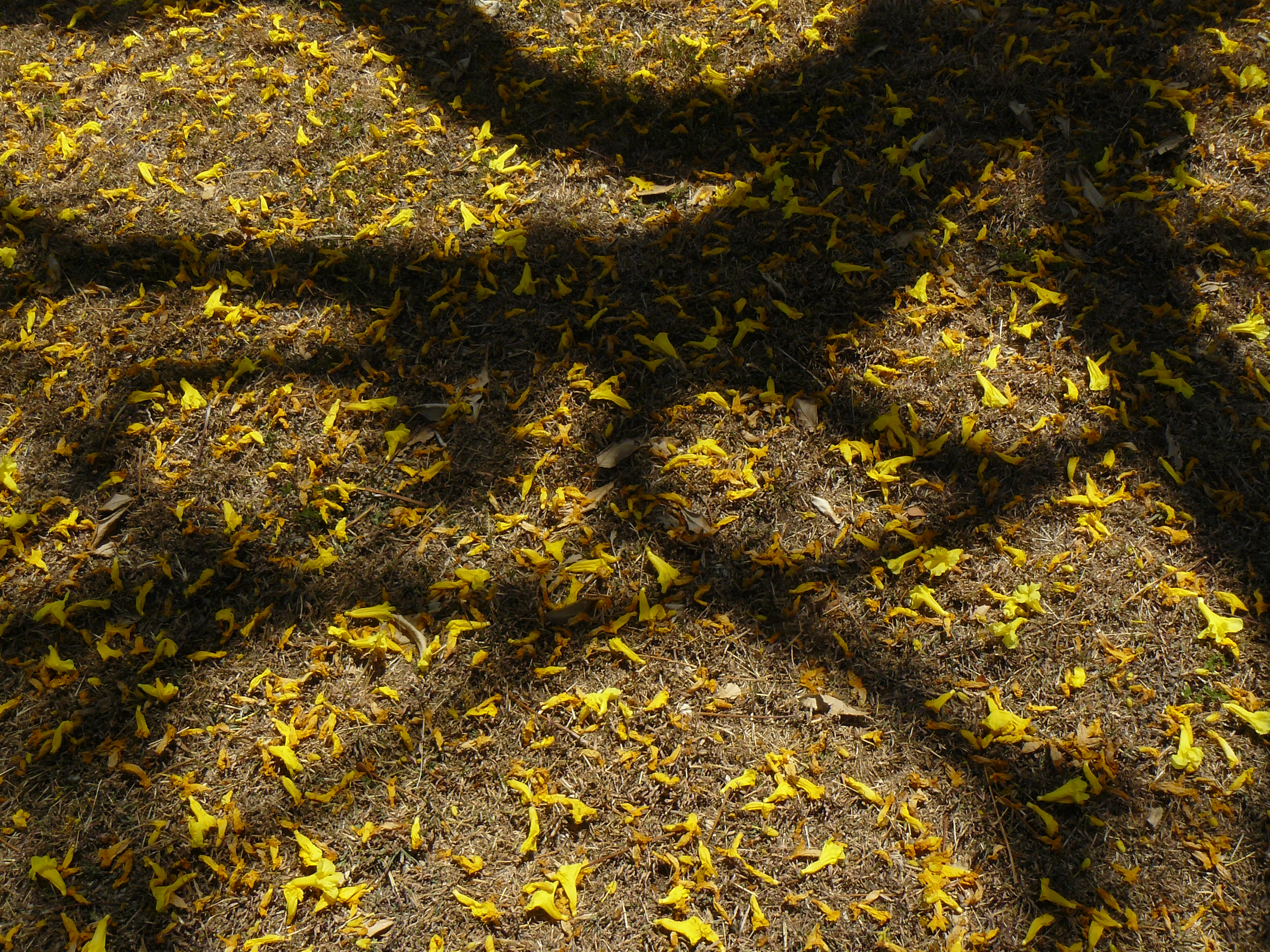
Living in the Southeast Alaska rainforest doesn’t provide many opportunities to appreciate shadows. You need sun all day for that. We get a taste of it from time to time but our sunshine is too precious to waste on shadow gazing.  People in Hawaii must be experts in the sport.

I wasn’t equipped to appreciate a fine shadow line when we first arrived on the island. First I had to go through the northern tourist’s four stage transition of acceptance.

First you wander around half stunned by the sun-drenched flowers. This happens at the Airport walking from the gate to the baggage claim. Someone planted a garden there which shimmered with late afternoon sun when we deplaned. The second stage involves a lot of pointing with finger and camera. For me this stage also involved much sniffing of flowers. By stage three you realize the danger all this skin presents to your pale skin and start applying copious amounts of sunscreen to protect it. Finally, in the fourth stage you start appreciating the crisp shadow lines thrown down daily by tropic sunshine and tropical shade trees. 

Manoa Valley Oahu

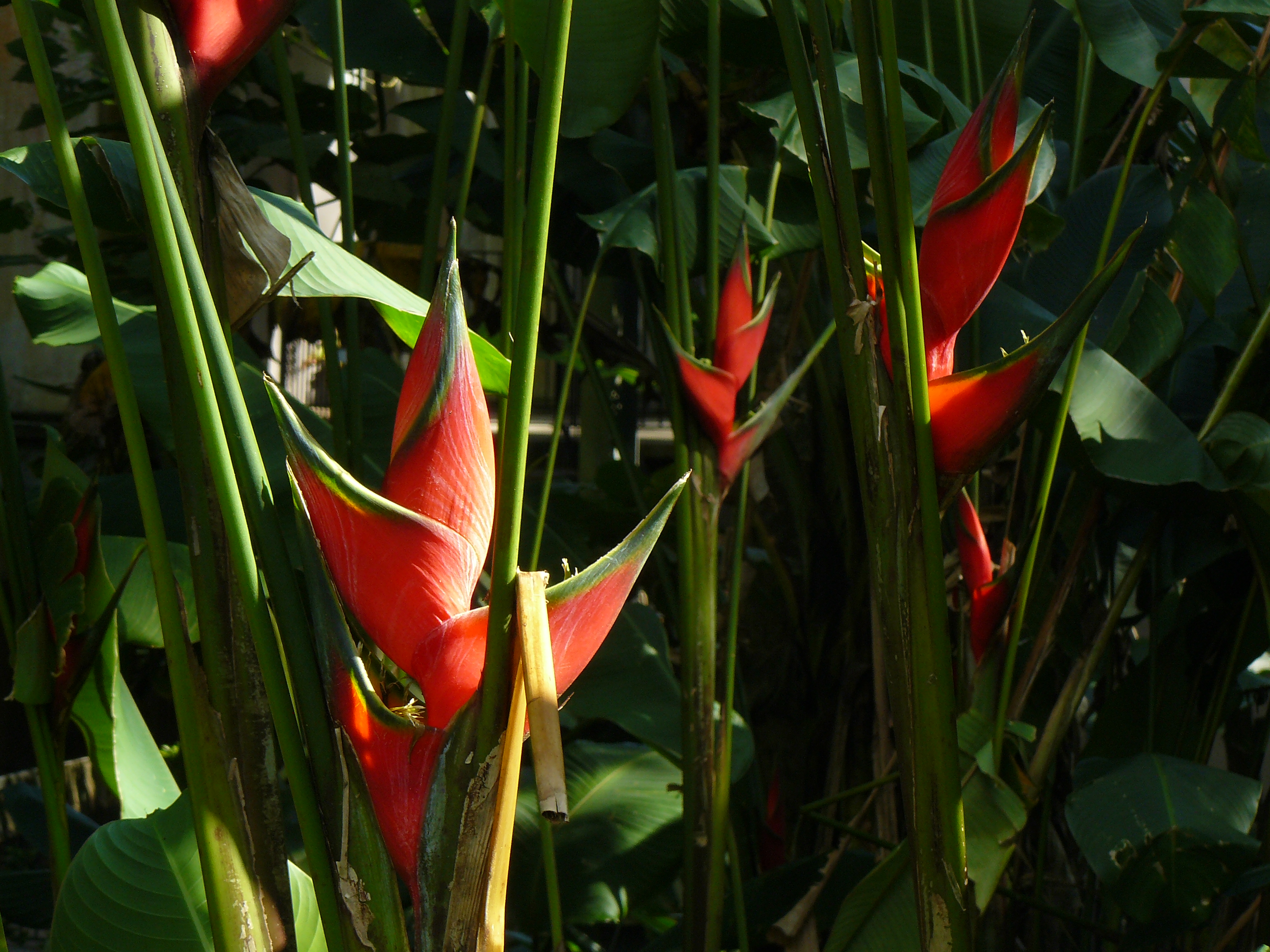
The lush jungle of the Manoa valley lies within a 45 minute drive of the semi-dessert region where we stay on Oahu. Giant red blossoms, shaped like matching cruets, lay on the trailside after being chopped down like weeds. Perhaps they are but it pains to see them so destroyed.

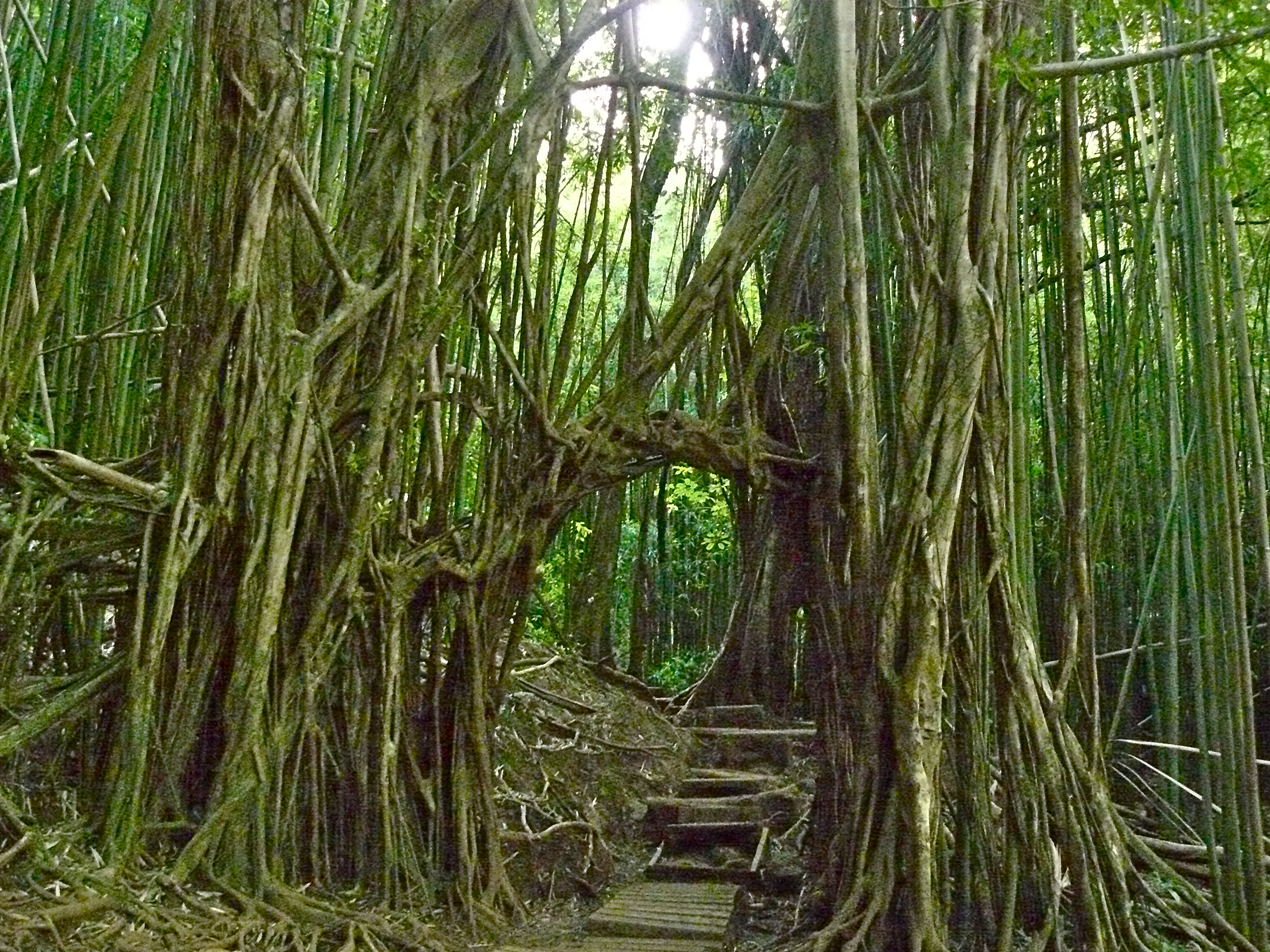
Moving up the trail we meet hikers returning to their cars, each smiling, each wishing us a good day in the accent of non-native English speakers. They look as if they have seen the face of God and lived. We are standing near massive banyan trees and white barked giants covered with climbing vines.

Later the trail enters a bamboo forest and becomes greasy with mud. I begin to resent the sound of talking in English and other languages about everything except the exotic beauty slapping them in the face. In hope to hear only bird song and the hollow clunks and squeaks of wind in a thick bamboo forest I stop to let everyone pass.  The Chinese laughing thrush awards me a tune that blends with the song of rubbing bamboo.

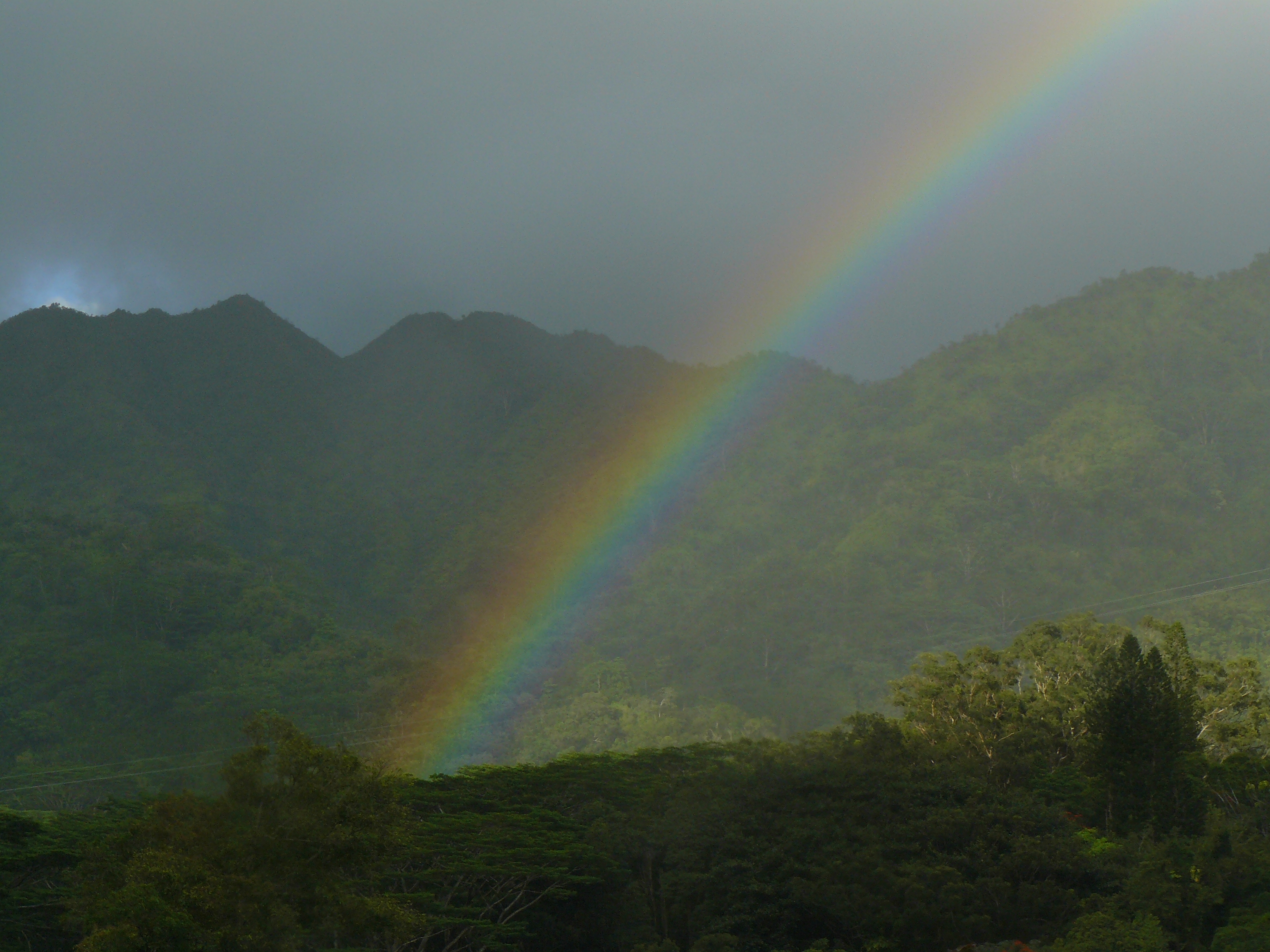
It’s been sunny all day but it begins to rain when we reach the car. In the American south they would look up and ask whether the devil was beating his wife — rain falling through the sunshine. A rainbow forms an arch above the verdant valley, reminding me of  the time my 3 year old daughter and I watched a rainbow form above the temperate rain forest of Alaska. She asked me what made those crayon colors in the sky. I told her about Noah’s flood and how God had sent the rainbow to seal his promise never again to flood all the earth. She didn’t seem convinced so I took a page from the great Thlingt story tellers of Ketchikan and said, :It is true –look there’s the rainbow.”

Hummingbirds, Aki and Heavy Rain

We have a taste of Fall today with 40 degree temperatures and heavy rain. In the kitchen I try to ignore Aki’s plaintive stare and fantasize about spending the morning drinking coffee and watching Italian soccer on the TV. Then I spot the hummingbird, a Rufus, taking sustenance at our neighbor’s feeder. He manages to suck the red sugar water from the feeder even as it sways in the wind. The bird shames me into action.

These tiny hummingbirds migrate great distances to feed on our columbine flowers. A Ketchikan legend has them riding north while burrowed into the feathers of strong geese. It is easier to see the tiny birds (3.22 grams) hitchhiking north on snow geese than actually flying the thousands miles on their own.

Wrapping myself in rain gear and Aki in a red cape we drop off the ridge to explore Gold Creek. Juneau’s European founders followed a path of gold in the creek to Perseverance Basin which contained enough of the shinning mineral to make Juneau one of the most productive mining districts in the world. We start in Cope Park, skirting the ball field and tennis courts and enter the old growth spruce forest allowed to grow along the creek. This is the best sort of urban planning — ignoring   what can not be improved upon.

From the park a seldom used trail crosses Gold Creek and then meanders through alders up to the flume trail. At first Aki doesn’t follow me up the trial. Turning around I see her, now completely soaked in rain. She wears her “you have got to be kidding look.” I know there is a snow field ahead, which she will love, and chances for dog encounters so I push on. Loyal thing that she is, she follows.

Today’s heavy rain accelerates the snow melt and the creek runs full with it. The sound blocks out bird song until we reach the flume trail. From then until we return to Chicken Ridge we hear the robin and the thrust and the wren singing melody to spruce grouse’s percussion. (a drum played the first time by a carpenter — the rhythm of hammer driving nail.).

With grey skies and clouds obscuring mountain tops I am thankful for the new balsam poplar growth that brings a rich fall like color to the forest. A few of the trees stand like brilliant yellow-green candles above avalanche snow covering the trail.  Aki gets a bit wild here, dashing up and down the trail, rolling her face in the snow. 

After crossing the snow field with its trees shattered by avalanches we drop down to the creek and walk a trail now lined with dark green horse tail reeds. In a flooded area of the forest islands of blooming skunk cabbage rise out of the water.  Their rich yellow and green colors stand out against the still dormant grass of last fall. Like the hummingbird, they are creatures of spring and summer. 

Hearing Carillon Bells in a Mountain Meadow

Without a working car this weekend we again start and end our walk from Chicken Ridge.  It means keeping Aki on a leash for the drop down Goldbelt Street with it’s gold baron mansions and then through streets lined with Craftsman houses that lead to the Douglas Bridge. We cross over Gold Creek, here contained by a concrete trench and past the giant willow on 10th Street, now orange-yellow with rising sap.

Aki manages three bowel movements between the house and the bridge. forcing me to pick up the product of each with large leaves and carry it to the nearest trash can. Since the cans are few and far between I carry her waste for blocks, passing friends and a legislator and his wife. They all smile and act as if I am not carrying  a smelly leaf wrapped bundle in my right hand. 

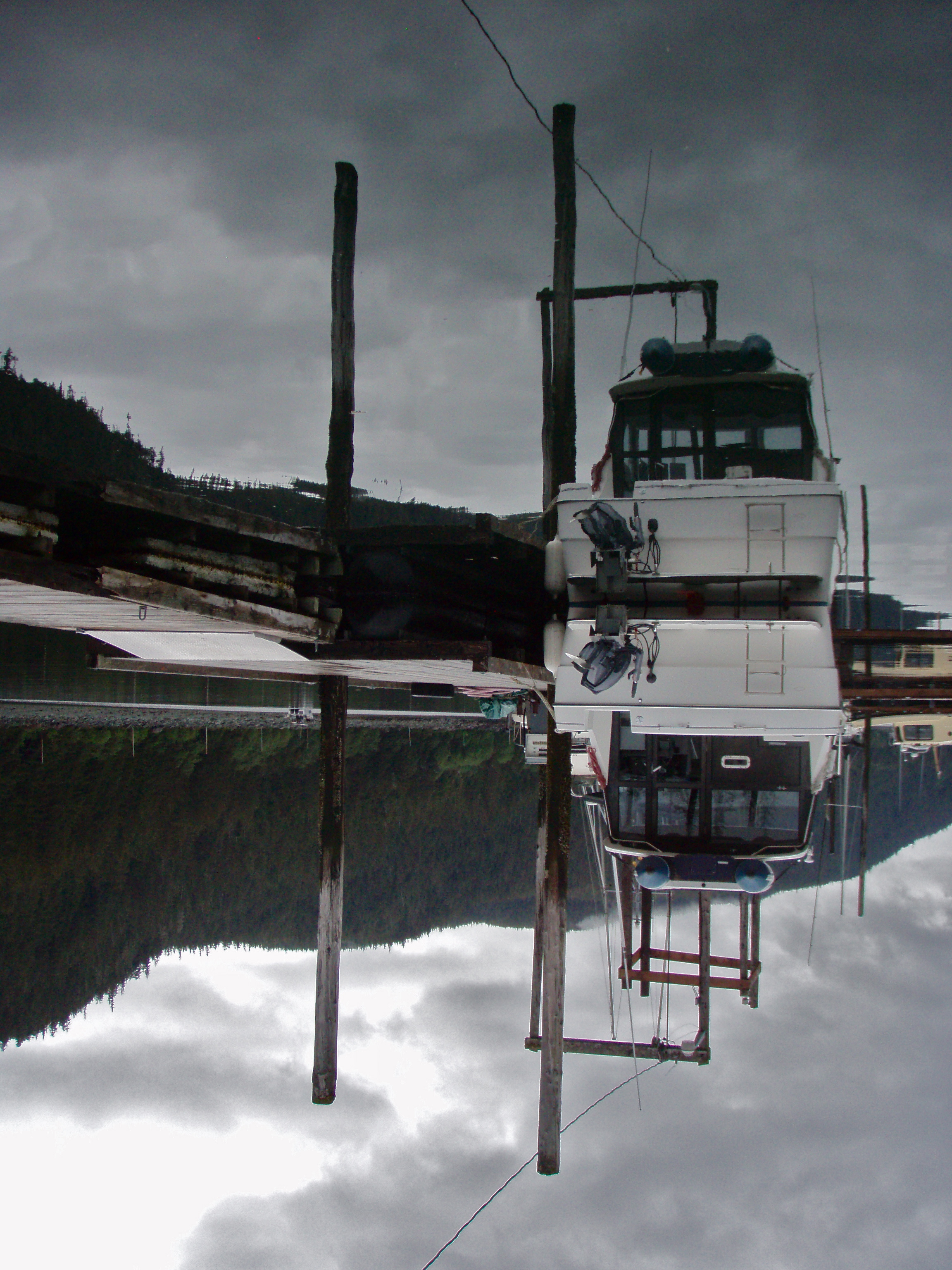
The sky clouds up as we begin the climb up the Douglas Bridge. I photograph the mottled sky reflected in a spot of calm channel water while Aki cringes at each passing car. We move quickly on to Douglas Island and start climbing through the Cordova Hill neighbor to the Dan Moller trail head.  This is crow country and one of the black birds shadows our ascent. “Is this Cubby,” I mutter to myself for he acts like he knows me.

Cubby was the runt of a brood of crows that hatched in our spruce tree. That was before the crows abandoned Chicken Ridge to the ravens.  He only survived through the kindness of a sibling who would bring him food after they fledged. A weak flyer, Cubby could just manage to reach a suspended telephone cable that ran in front of our house.  Once there he would call for help until one of his nest mates landed to transfer food from her beak to his.

The following summer Cubby returned, now sleek and strong to raise his own brood in our tree. On sunny mornings he would take up station on our porch railing and peer in the window while I practiced guitar. The crows left that year and never returned. Perhaps they moved to this wide suburban street with its large new houses and mowed lawns. The crow that could be Cubby escorts us to the trail head and is there where we return to his street for the trip back to Chicken Ridge. 

The Dan Moller Trail starts at a small parking lot that separates two fancy modern houses. It makes a modest angled climb up a wooded slope and then cuts across a series of muskeg meadows.  After that it forms a series of switch backs that carry you to the Treadwell Ditch.  Today we hit deep soft snow before the first meadow. I am breaking through with every step, sometimes up to my crotch. Even Aki makes deep impressions with her diminutive paws. 

Fighting on we reach the first meadow and hear the chimes of a carillon in Downtown Juneau announcing the tenth hour of the day.