Category Archives: Dan Branch

Mountain Soliloquy

OLYMPUS DIGITAL CAMERA

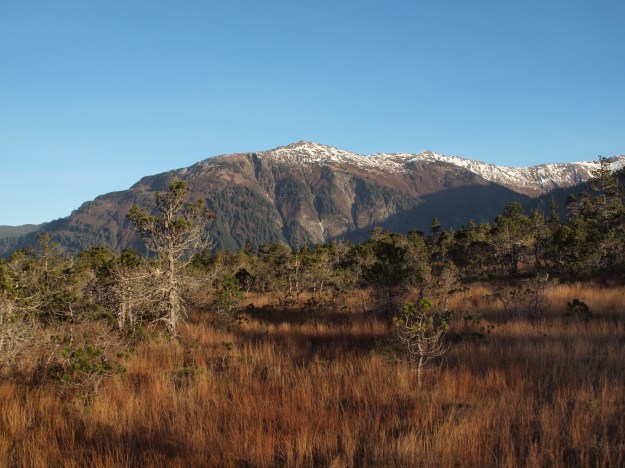
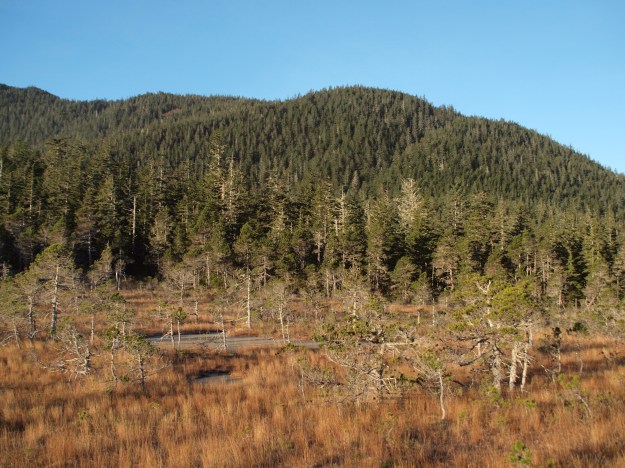
It’s sunrise on Gastineau Meadow. There are no clouds to block the light so it illuminates the meadow’s frozen surface, hitting the golden grass at an oblique angle. In less than a minute I’m 30 meters in, camera clicking, looking for Aki. If the sunlight weren’t highlighting the fur on her raised ears I wouldn’t be able to spot the little dog. She is still on the gravel trail waiting for me to come to my senses.

OLYMPUS DIGITAL CAMERA

She has been burned twice metaphorically by following me onto the meadow. Once she trotted after me in early fall and dropped chest-deep into meadow mire. The other time was after a winter storm when the little dog floundered in deep snow until I rescued her. Today, when I whistle, Aki runs to a spot halfway between the trail and me and stops, perhaps giving a chance to reconsider my rash decision. When I don’t she catches up and we both enjoy a meander over the rock-hard meadow muskeg.
OLYMPUS DIGITAL CAMERA

The strong sunlight softens the images of the mountains it backlights, like Jumbo, Sheep, and Gastineau Peak. But the sun gives Mt. Juneau the position of pride like it is Hamlet reciting a soliloquy. Most of my early photos feature the mountain.
OLYMPUS DIGITAL CAMERA

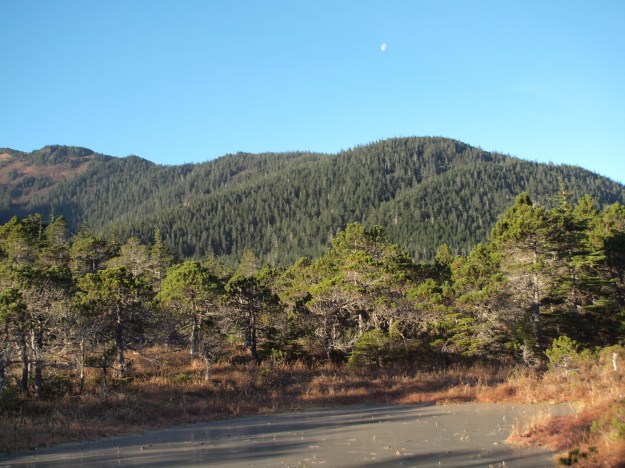
At the northern edge of the meadow I take a well-used animal trail that would allow a deer or wolf to view activity of the meadow without being seen. Aki follows close at my heals, like she does when nervous or uncertain. She calms down after we spot the fresh scat of a deer buck. The green-colored poop does not steam like it did when just dropped by the deer but it hasn’t been here long enough to earn a coating of frost.
OLYMPUS DIGITAL CAMERA

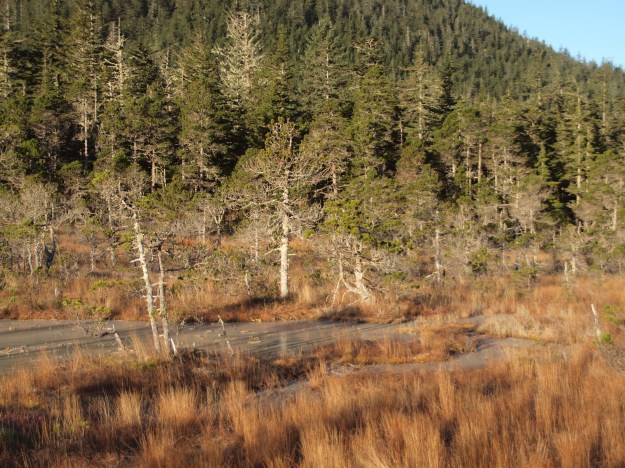
Aki pulls ahead and tries to lead me toward a human trail we have used many times to drop off the meadow. But I want to follow animal paths marked by broken blades of grass and crushed moss. Aki doesn’t mind. Her tiny frame can slip between narrow openings between alders like a deer and slide under windfalls that I have to struggle over. She reaches the human trail while I am eating frozen blue berries in the middle of an alder thicket.  The sun has awakened the local birds—a grumpy bluejay, industrious red-breasted sap sucker, and a cloud of black-capped chickadees that chit and chirp as they feed.

Content in Being Lost

OLYMPUS DIGITAL CAMERA

Aki and I are lost. I don’t mind and the little dog doesn’t seem to care. We’re lost in a box formed by roads, forests and mountains. We are lost on a muskeg meadow, not far from the tidelands. Its normally boggy surface has been frozen into a firm table by the recent cold snap. Later, snow will come to complicate passage over the meadow. But today it is dry and almost glows in the morning’s low angle light.

OLYMPUS DIGITAL CAMERA

The sun throws dark shadows off everything, even diminutive blades of yellowing grass. This makes it easy for me to find the shallow trail formed by the passage of deer and the occasional wolf. Aki follows her own trail made of scent. She wanders off, a slave to her nose. When I call her back, she throws me an indignant look and then trots over to my side.

OLYMPUS DIGITAL CAMERA

When we reach the spruce forest that form the meadow’s southeast border, I turn to face west and wander along a tree line. On my right, rising high above the meadow’s snarled Douglas pines, Nugget Mountain reflects back the morning light. From the here, the meadow looks primordial, a place for wooly mammoths and ancient bison to graze. But I only see my little poodle-mix when I scan for life.

OLYMPUS DIGITAL CAMERA

Halfway back across the meadow I find a deep trail, almost a wound across the muskeg made by human boots. Before the freeze, it would have offered sloppy walking. But today it is almost a hiking superhighway. I follow it blindly until spotting a house, when none should be. We backtrack; take another trail that leads us to a chicken coop far from the trailhead. Aki would follow me back onto the meadow and tolerate even more confusion as I try to retrace our steps back to the car. But I leave our little frozen box for the assurance of the North Douglas Highway and walk the indirect route home.

OLYMPUS DIGITAL CAMERA

Sunshine Withdrawals

2

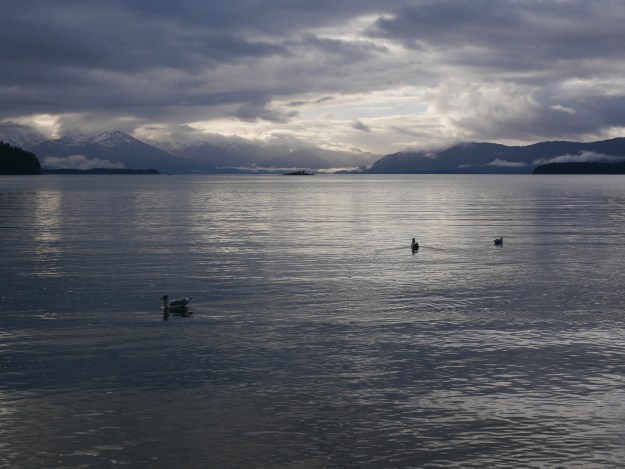
Aki, I may be suffering from sunshine withdrawals. The little dog and I are on the false outer point beach. She has waited patiently as I collected severed seaweed for the garden. Now we both look out over Fritz Cove. It’s a gray scene: gray beach, ocean, mountains, glacier and sky. Even the spruce and hemlocks on Sphun Island look grayer than green. One gray gull is the only thing beside waves animating the scene.

3

Work done, we enter the dim woods. Yesterday afternoon’s sunlight would have brought out the colors in the forest floor moss and the scattering of leaves not yet brown. But today, even the frost refuses to sparkle.

1

Aki is having a great time sniffing for sign and leaving post cards of scent for her dog friends. But I am in bit of a funk until we reach a half-drained pond. Apparently not ready to surrender to winter, green skunk cabbage shoots poke up through the pond’s surface to be gripped by a sheet of newly formed ice. Busted, I think, even as I admire the doomed plants’ spunk.

1

Moon Struck

1

It’s 22 degrees Fahrenheit. Aki and I fast walk around the Fish Creek Pond. The little dog stops very briefly from time to time to check the pee mail. I slip off my right hand glove to photograph the moon reflected in the new pond ice. We are still a half-an-hour away from true sunrise but the Chilkat Mountains are already brightening from pink alpenglow to white.

2

If she took the time to listen, I’d tell Aki I was a little moonstruck this morning. Southeast Alaska’s stubborn marine layer of clouds seldom lets us see the moon. This morning, it hangs fairly low in sky, letting my camera frame it with mountains, tidelands or pond. I stop to search its surface for cheese, rabbits, or a man. But, I only see dark continents on a white sea of reflected light.

3

Camping Cove

1

Aki is sharing the trail today with another dog and that dog’s human. The two canines had a scrap or two in car. But, now they cooperate as scouts, exploring the trailside woods and beaches. After two miles of walking we should be at the Camping Cove cabin.

4

It’s a great trail for a cold, sunny morning like this one. Lichen-cover rock slabs and wave-rolled beach grass glisten with frost. Strong sunlight invades the headlands between beaches, silhouetting the alders and spruce trees. Even inside the woods we can hear the boom of waves rolling off of Lynn Canal.

2

We learn from other hikers that a family of river otters is playing near the trail. We won’t see them or the critter that snapped a dry branch near the cabin as we snacked. Hearing the sound, both dogs make a half-hearted survey of the nearby woods but soon return to their humans. It could be a deer, which would look lovely if it wandered into the sunlit patch of grass near the beach. It could also be a bear, looking to snack on our apples. We leave before either shows itself.

3

The Days of The Dead

2

Perhaps because we just celebrated souls and saints—the days of the dead—the snarled pine snag has become a dancing spirit. Looking closer, I realize that it’s a trick of cold—the way that frost settled around the parallel, eye-socket-shaped injuries to a pine burl—that creates the illusion. But the apparition reminds me to honor my dead.

1

Like most Alaskan immigrants, my people are buried in hometown graveyards far away. I can not spend the first days of November tending their graves. But their spirit-like memories are quick to answer when beckoned.

If Aki remembers her dead, she does not say. Impatient with a human who stares too long at a frosted snag, the little dog starts off toward the beach. I follow and find two long rows of the orange and brown sea growth that we call rockweed. During the last storm tide, waves ripped the weed from anchoring stones and rocked it back and forth, like a baker needing dough, until the long, dense lines were formed.
3

I could dig into the rockweed rows and find eagle feathers, beaver-cleaned sticks, and opalescent shells. But a harbor seal just offshore grabs my attention by flipping a just-captured fish into the air and biting it in half. One death to sustain the life of another.

4

Tracks


4

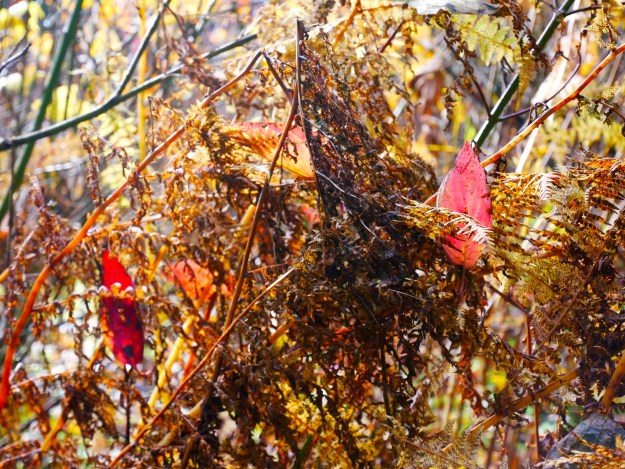
Aki and I are back on the glacier moraine where all the leaves have already fallen. I am not surprised. Winter always comes first to the moraine. The glacier, the big river of ice, sees to that. There is still some color to be found. Green and yellow islands of grass stand above new ice on the lakes. A few stubborn leaves hang by a thread from frosty willow branches.

2

I have to coax the little dog off the main dog-walking trail and onto a rougher one that leads to the river. She stands for a minute at the junction, trying to use her mental powers to bend me to her will. When the invisible rubber band that connects us stretches to the breaking point, she gallops to me over crisp cottonwood leaves, producing a sound like that made by horse hooves on firm ground.

1

I am angered by the presence of wide-tire bicycle tracks on the soft trail. Just one pass of a fat bike over it last weekend reduced sections of the trail to a muddy gruel. Some of it sticks to my boots.

3

We find other, more welcome tracks at the river. Yesterday, before it froze, a deer crossed over the sandy beach and swam across the river. Frost has filled in one of the cloven tracks, now preserved in frozen sand until the next thaw.

5

Not Enough Patience

1

Aki and I have just reached a beach on the backside of Douglas Island. Across Stephens Passage, morning sunlight floods the beaches of Admiralty Island. We are still in shadow. A bald eagle flies over us and lands near its mate on a spruce tree. They greet each other in their complaining way. Just offshore a harbor seal works through a line of small surf. It’s round head slips above water once, twice, and then disappears. We won’t see it again.

3

A flew white clouds float above Admiralty but otherwise the sky is clear and blue. I scan the channel in hopes of spotting a whale but none spouts. Without sunlight to warm us, the little dog and I are starting to feel the cold. But, I can’t make myself leave the beach and the comforting sound of small surf hitting the rocks.

4

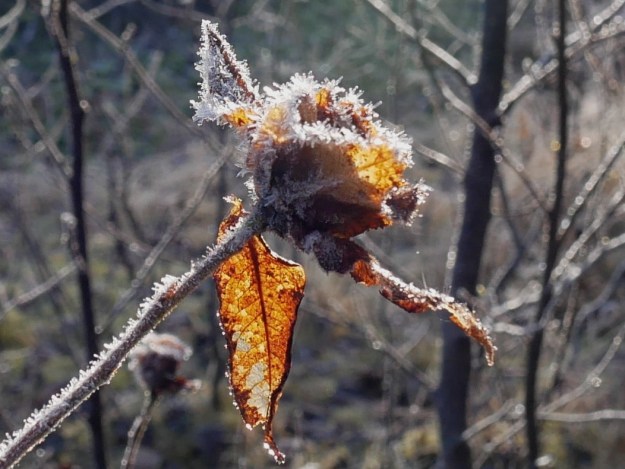
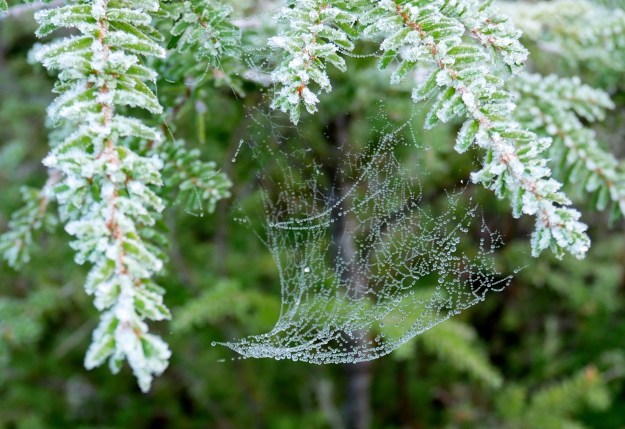
Frosted brush lines the trail back to the car. Unseen spiders have recently woven basket-shaped webs in the crotches of hemlock or willow twigs. The morning’s rising temperature is melting the frost that had settled on the net webbing during the night, leaving tiny drops of water to cling to the silk.

5

In half-an-hour, the sun will be high enough to reach the spider webs. It will make the little drops of water sparkle until they fall to the ground. But neither Aki nor I have the patience to wait.

2

After the Storm

1

Aki loves the human friend we walk with today. She squeals when I drive up to his house and spends the whole ride to the trailhead on his lap. The little dog walks attentively at his side as we travel the length of the Auk Rec trail.

2

The resident clutch of harlequin ducks are in their winter place just off shore of the mouth of a small streams. Down beach from them a school of gulls sulks at the mouth of another stream. Last week Typhoon Lan rains turned the normally gentle streams into eroding firehoses, cutting deep channels into the beach gravel and exposing roots of tough beach grass. But shafts of silver light pouring from the marine layer seem to bless the storm tired land. Sunlight even manages to illuminate yellow stands of dogwood and Mt. ash trees to remind us of why we love the rain forest.

3

Even with all this beauty, the human conversation turns to the effects of mine tailing stacking on marine life. As we watch harlequins, buffleheads, and golden eye ducks dive on small fish, my friend tells me about the heavy metal concentrations being found in seals. As if on queue, a Steller sea lion surfaces just off Pt. Louisa to disturb the glide of a loon. The descendents of the Tlingit people who once lived above these beaches still harvest seals for meat. Rich in protein and vitamins, they feed it to their children.

4

Digging out a little beauty

3

In a gray interlude between yesterday’s sunshine and today’s predicted rain, Aki and I sneak in a visit to the Last Chance Basin. The trail we use suffered from the effects of Typhoon Lan. Thick tracks of fresh mud line both sides of the trail. At one point we have to climb up and over a ten-foot high hill of rock and mud washed down the side of Mt. Juneau during the typhoon.

2

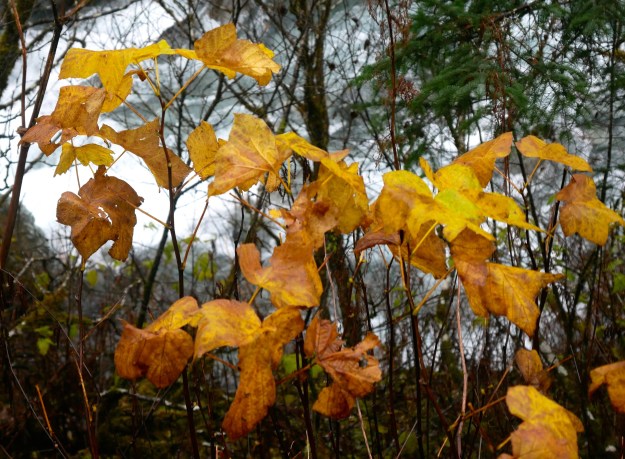
As if we are the only folks in Juneau that didn’t get the memo, Aki and are alone on the normally popular trail. Even the animals seemed to have abandoned it. No squirrels chatter at the little dog. No birds flit between the yellowing thimbleberry brush. There are the cloven tracks of a mountain goat that had recently struggled through a muddy stretch. But Aki’s lack of interest confirms my suspicion that the goat is long gone.

1

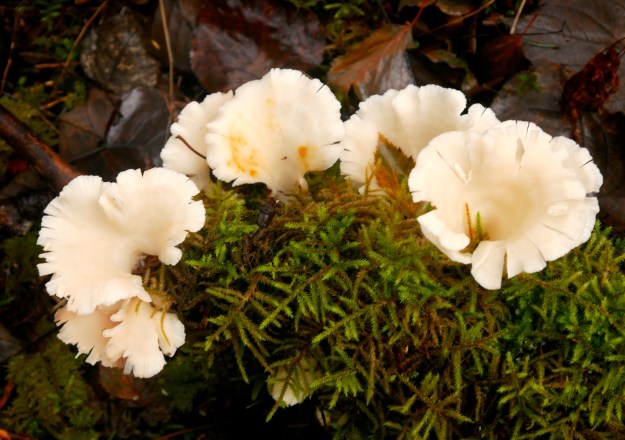
I work hard to dig out some beauty on this flat-light day. But the fall color is fading and the normally red high bush cranberries are drifting to black husks. A white eruption of plum agaric mushrooms does provide a pleasant surprise deep in a mossy wood.