
The trail Aki and I take today starts at the end of Industrial Boulevard. To get here we had to drive past a small fish processing plant, metal fabricators, and boat yards. Most of these businesses have a view of mountains or the glacier from their parking lots. The place is a metaphor for modern Alaska. The only one better is our landfill, where smoke and methane gas curlicues up from the dump against a wall of mountains and a hanging glacier.
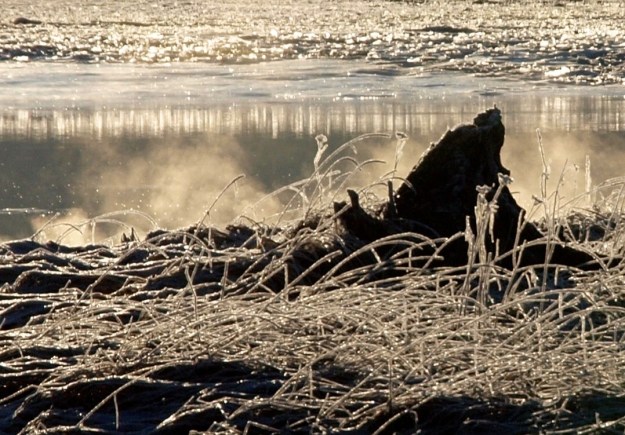
Aki doesn’t stop to discuss metaphors or take time to appreciate how the white masts of stored fishing boats in the foreground pop against their backdrop of blue glacial ice. She has to pee and poop. Last night’s cold, calm weather allowed frost to form on every twig, branch, and blade of grass. All sparkle in the morning light, making the little dog squint. I’d do the same if I weren’t wearing sunglasses. As a floatplane returning from a village mail run lands, the little dog and I walk along Mendenhall River. She finds plenty of sign to sniff. I look, without success, for wild animals or birds.
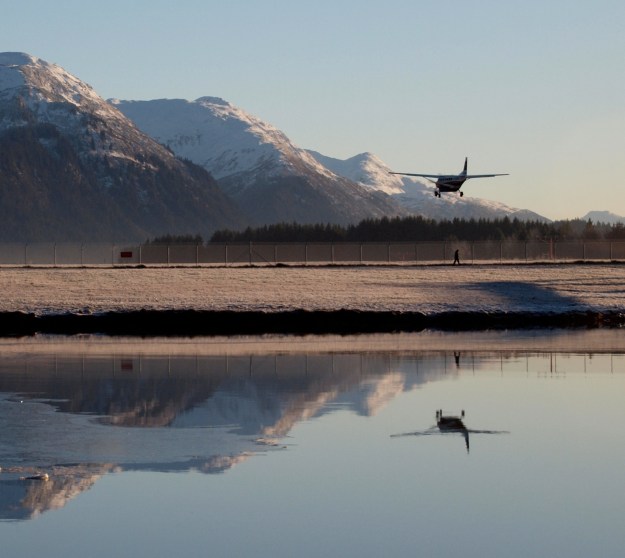
No wind riffles its surface so only thin pans of ice disrupt the reflection of mountains and glacier in the river. No paddling goose or duck cuts a dark scar across the watery mirror. I spot an old fashion, humpbacked trailer on a frosted field of grass. Between it and the glacier a thin radio tower pokes up through an alder thicket. Both could have been here when dairymen grazed their cows on these flats. They form a metaphor for the quieter Alaska—before jet planes, Alaska statehood, or modern cruise ships.

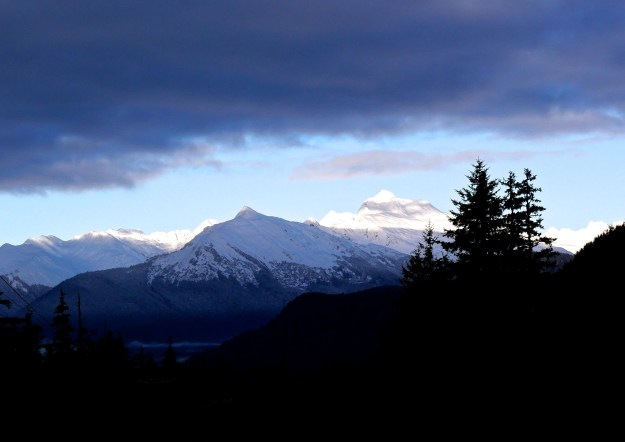



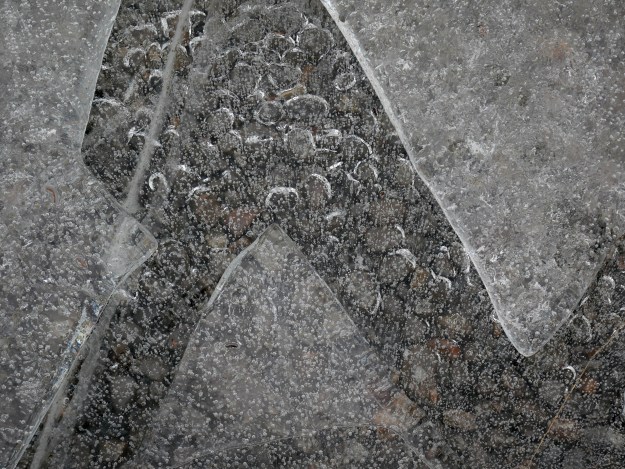
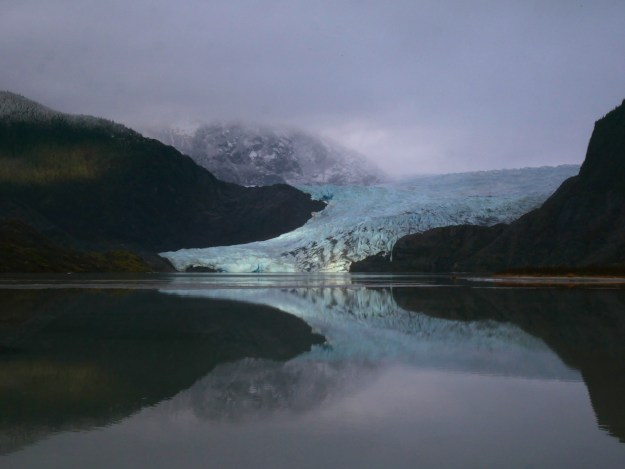
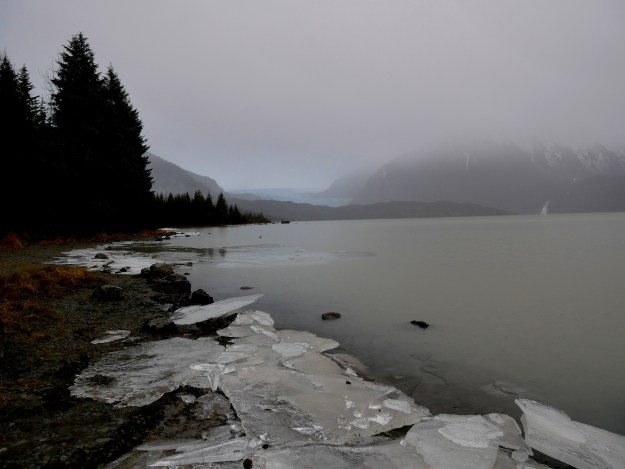 This afternoon Aki is going to have her picture taken with Santa. It’s for a fundraiser to feed homeless dogs. But first we will take a walk together on the glacial moraine. Rain pours down on us when we leave the car. While Aki does her business, I climb up a small rise and look out over Mendenhall Lake. Its waters are almost as gray as the sky. I can just make out the blue of the glacier across the lake. Small pans of ice line the shore. They provide the only evidence of winter’s November visit.
 Backtracking to the car, I lead Aki onto a new cross-country ski trail that snakes through a belt of thin spruce and hemlock trees. A month ago, a foot of snow covered the trail. Nordic skate skiers would have flown past us. Today it’s a bare as summer.



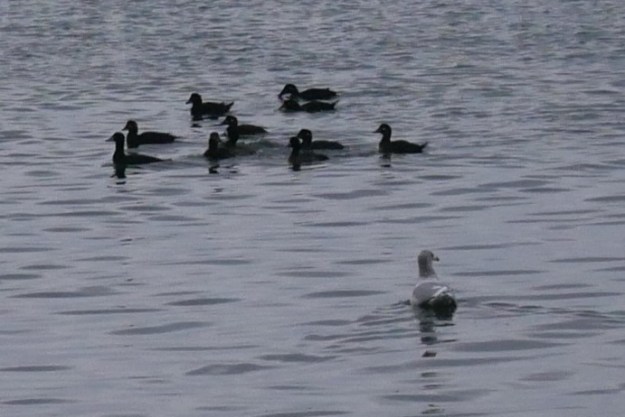


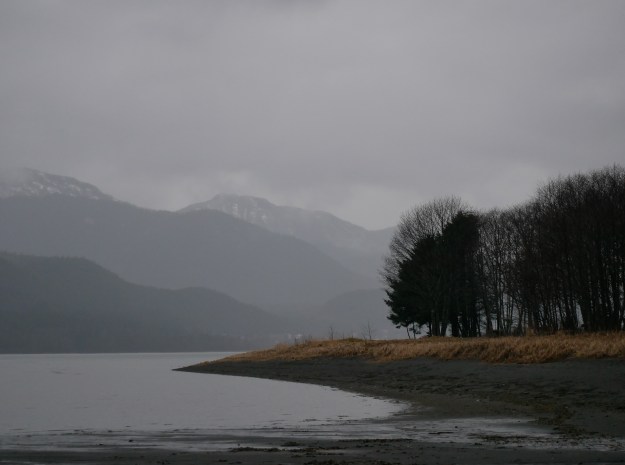
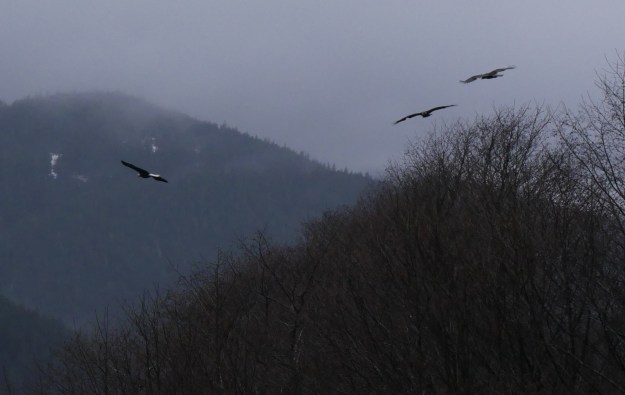


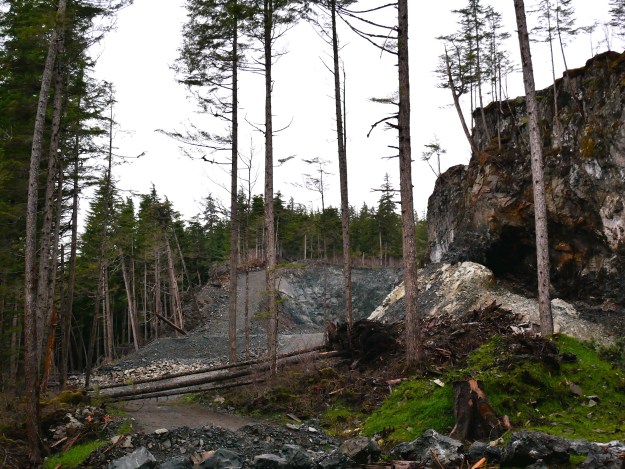


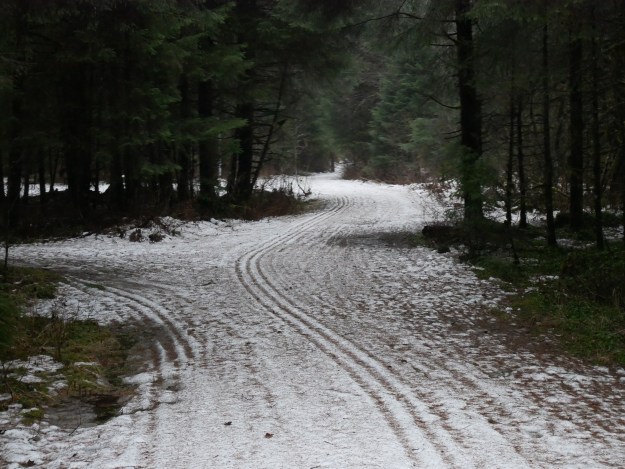
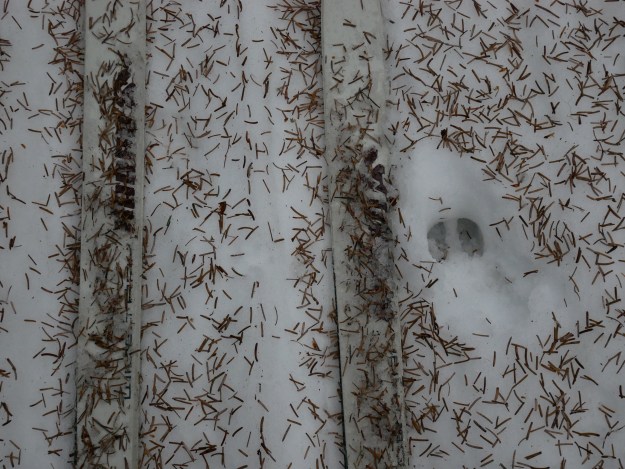


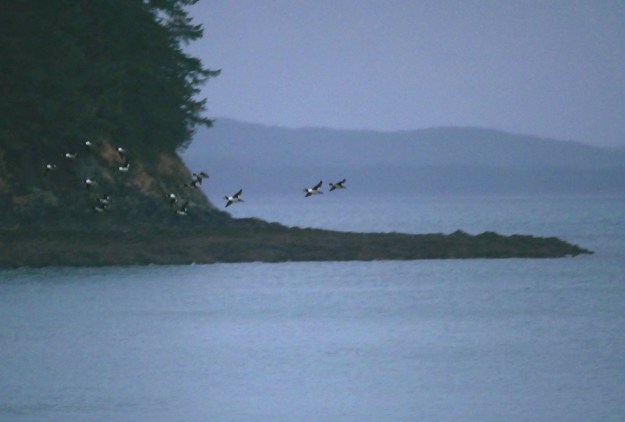 After we pass the boat harbor, with its fair weather view of the glacier, strong wind gusts buffet the car. I tell the little dog: We’ll just make a quick dash around the trail and then dry out during the drive back home. But as often happens at the tip of Douglas Island, the wind and rain drop off. We barely notice either during our walk through the forest to the beach. It’s even calm on the beach. A half-mile away on Lynn Canal, strong winds bother the water into waves.
 Walking with Aki