Category Archives: Aki

Small Thing

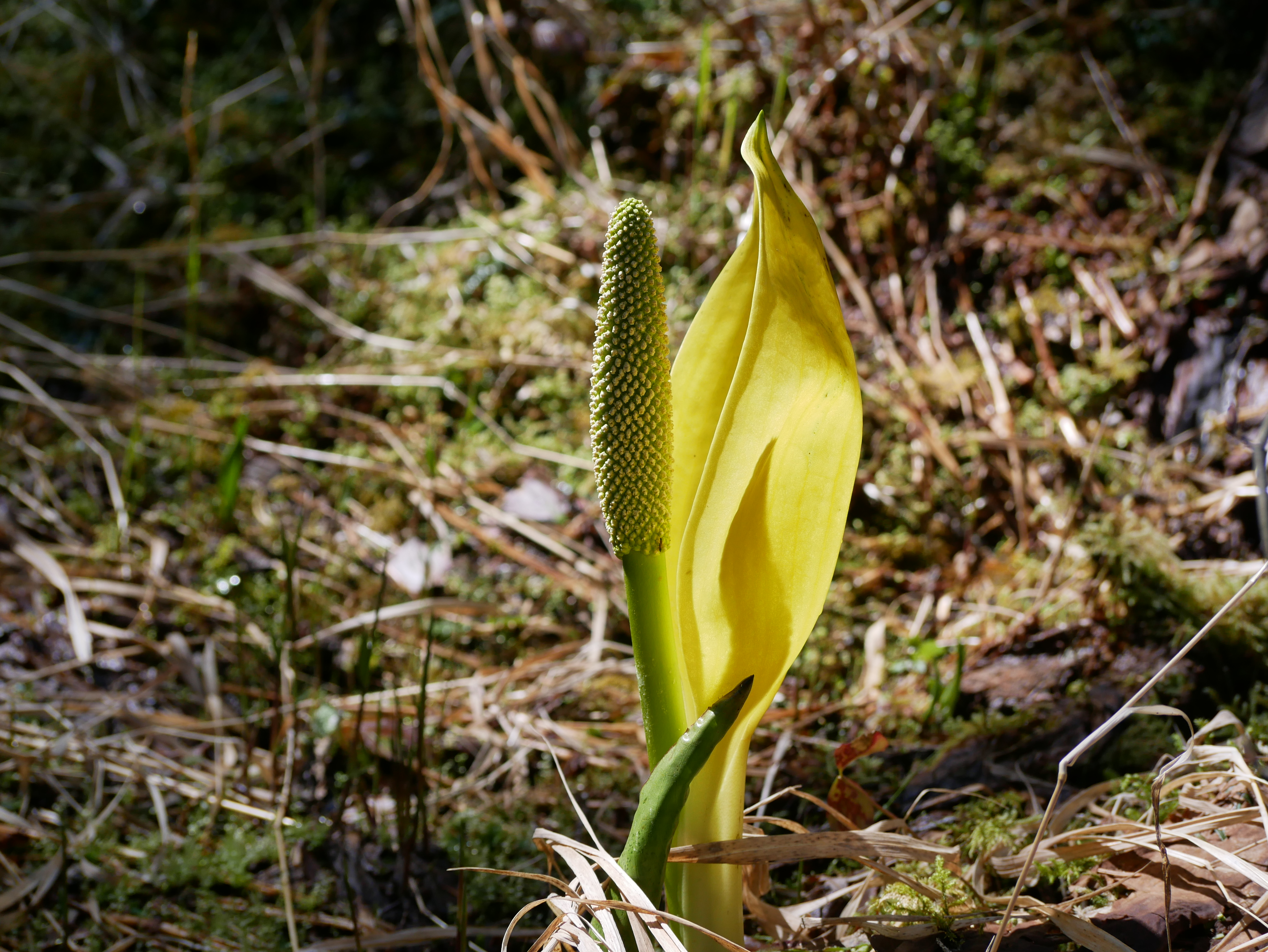
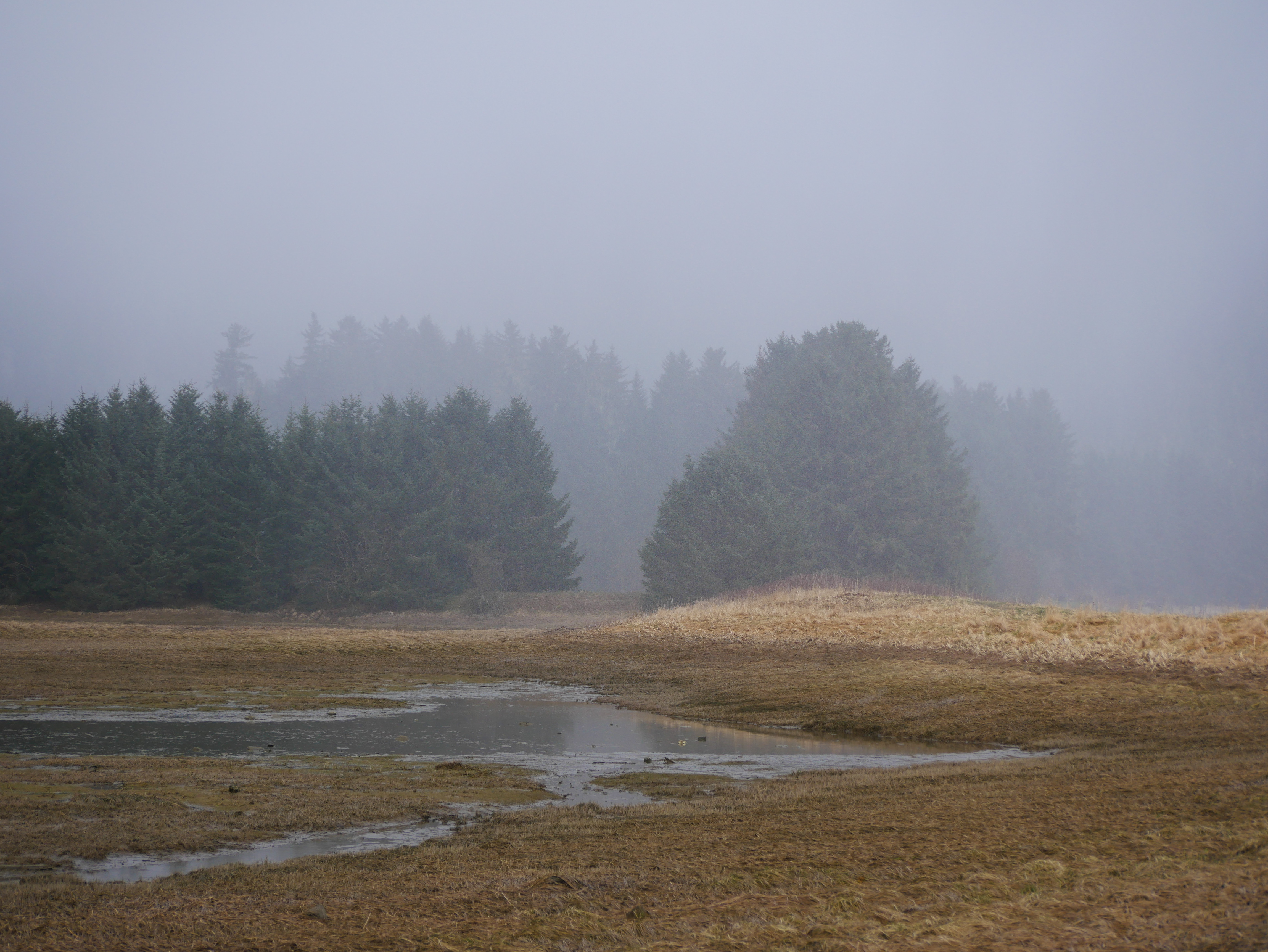
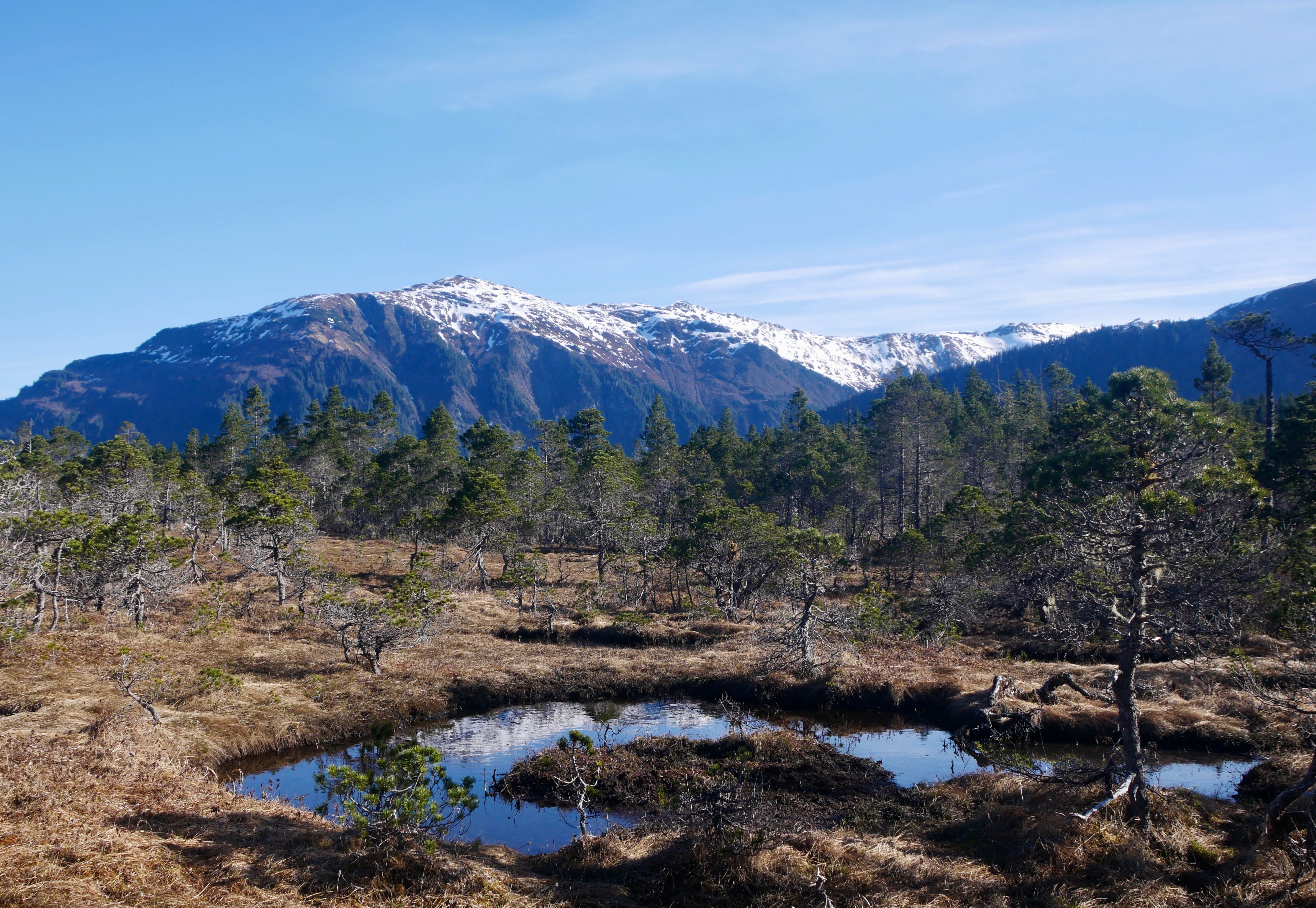
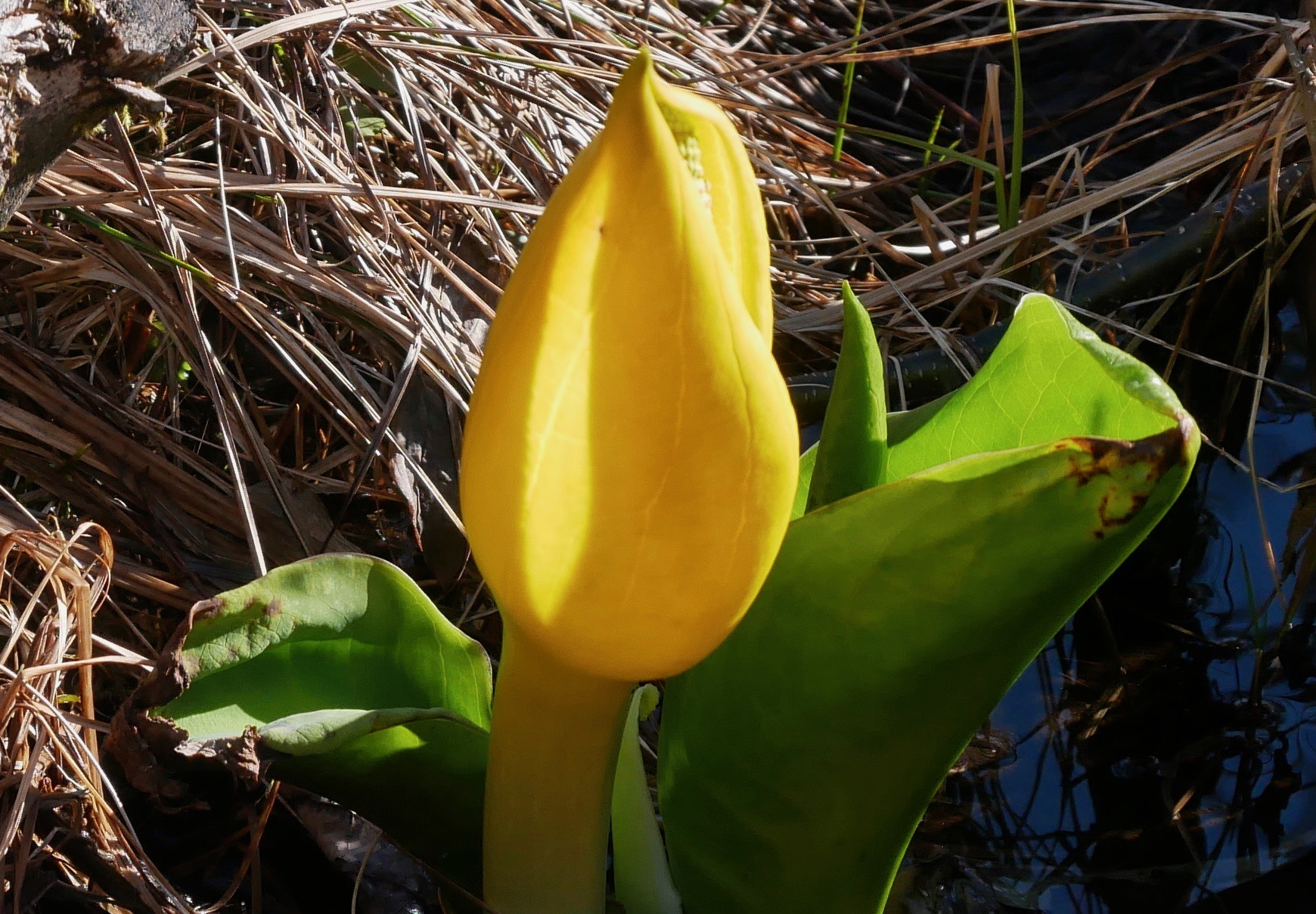
It’s as hard to ignore the screaming yellow skunk cabbage blossoms as it is to look away from the mountains that surround Gastineau Meadows. I am making a conscious attempt to find beauty on a much smaller scale. This, as any delay in our walk usually does, seems to perturb Aki. She refuses to join me in my search of the wet meadow. 
As the little dog keeps her paws dry, I pry back dead blades of grass and find tight buds of cranberry leaves and swelling pollen pods at the tip of Labrador Tea stalks. A scattering of last summer’s cranberries dot mossy patches. In those places reduced to mud by dogs and hikers, the insect eating sundew plants spread their tentacles like tiny sea anemones.

The poodle-mix and I are startled by the sudden appearance of three songbirds. Two of them drive a third one to the ground where it rolls onto its back. All I can make out of their tussle is a confusion of brown and white feathers and a blade of grass clamped in the beak of the downed bird. Before I can raise my camera they are airborne.  From the branch of a dead pine tree one of the birds, with the dark head of a junco, gives the little dog and I a nasty stare and is gone. 

Pilgrim at Fish Creek

The little dog and I rush out the door again, again wanting to see the Fish Creek delta while the morning light is still good. Okay, that was a human-centric statement. While I wanted to see the delta washed by the kind of light captured by Flemish painters, Aki would have preferred a sleep in. She’s joined up to make sure I don’t get into trouble. It’s still cold enough on the delta for me to need gloves. (Another human-centric statement). The grass not yet touched by the morning sun is covered with a fine frost. Crow caws and eagle screams let everything within a mile that Aki is back in town. 

            As I watch a solitary swallow thin out the mosquito population, I think about Annie Dillard and her book, Pilgrim at Tinker Creek. She dived deep in what her creek had to offer on each of her many visits. If she lived in our rain forest, what would she make of seeing only one swallow instead of the expected cloud of its kind diving and gliding after flying bugs. The scene might inspire her to get out her copy of Silent Sprintand return each morning in hope of seeing more swallows hunting over the meadow. 

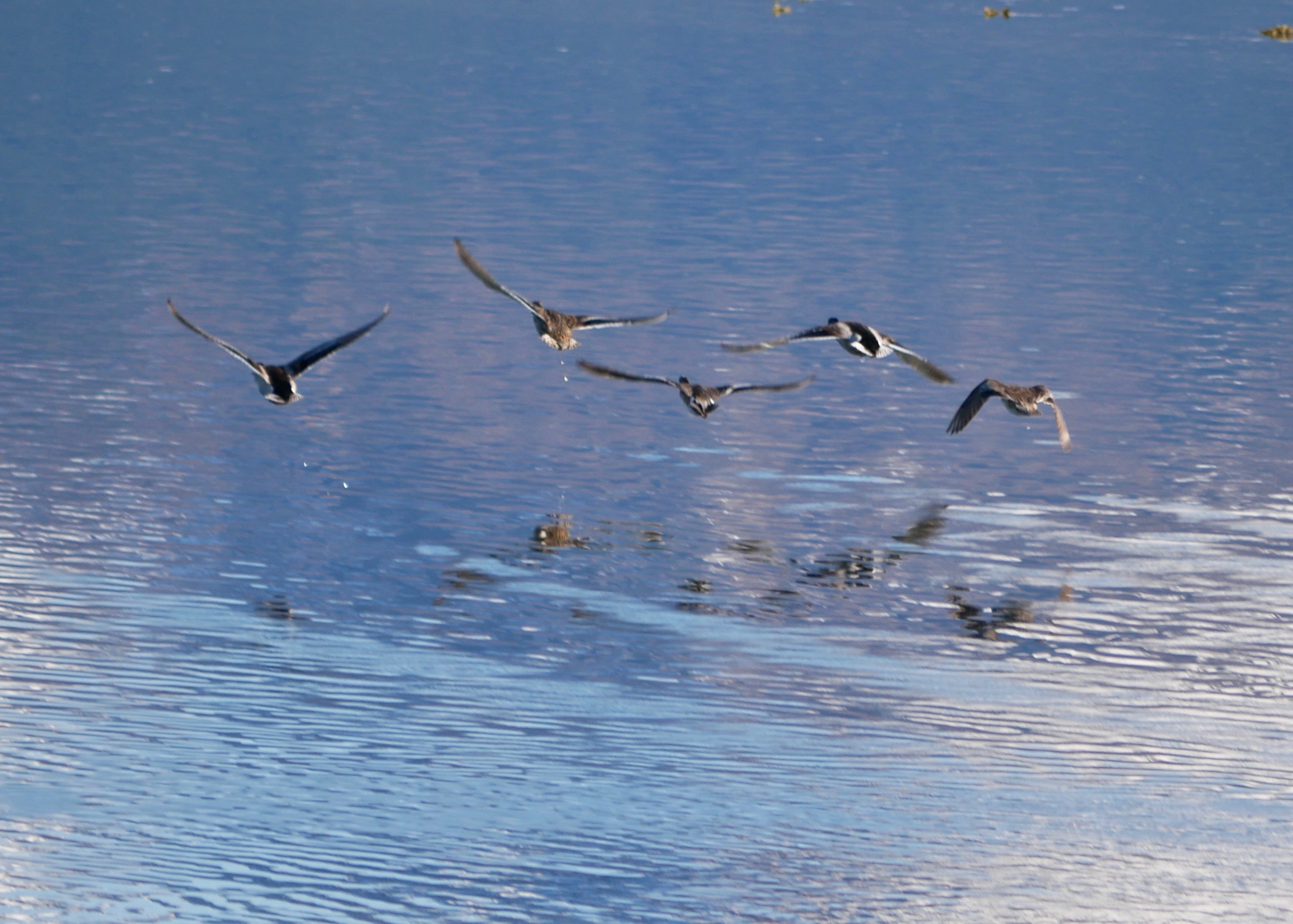
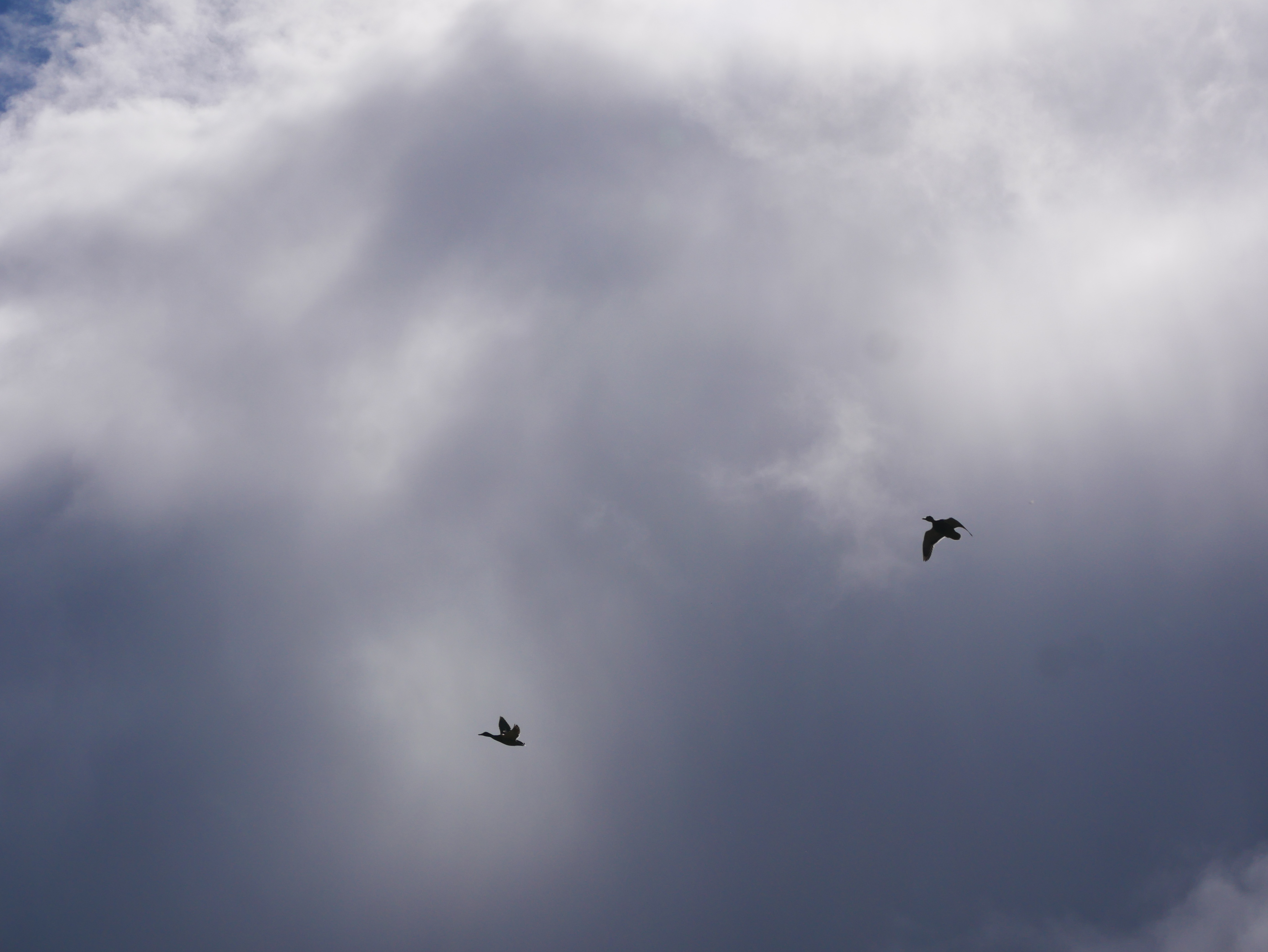
            Trying on Ms. Dillard’s skin for size, I lead Aki along the creek, watching mallards in twos and threes fly over our heads and those of roosting eagles to the same meadow where I watched to swallow. Would she guess that the flooding tide forced the ducks into the air? 

            Crows seem to be every where, wading in shallow ponds, bathing in the fast moving creek, pecking their way through meadow grass. So are eagles. A brace of mature eagles keeps watch on each end of the causeway that links the mainland with a small, spruce-covered island. The island seems infested with noisy crows. We inadvertently flush an immature eagle from the edge of the island by walking under its roosting tree. It circles over our head and lands in a different roosting tree. Ms. Dillard might ask what is keeping all these eagles on the parameter of a crow-infested island. 

Aki gives me her worried look, something she conveys by flexing her eyebrows.  She doesn’t care about natural philosophy or biology or Annie Dillard. She was touched by the shadow of a predator. “Time,” the ten-pound-poodle-mix seems to say, “to go.” 

Grump

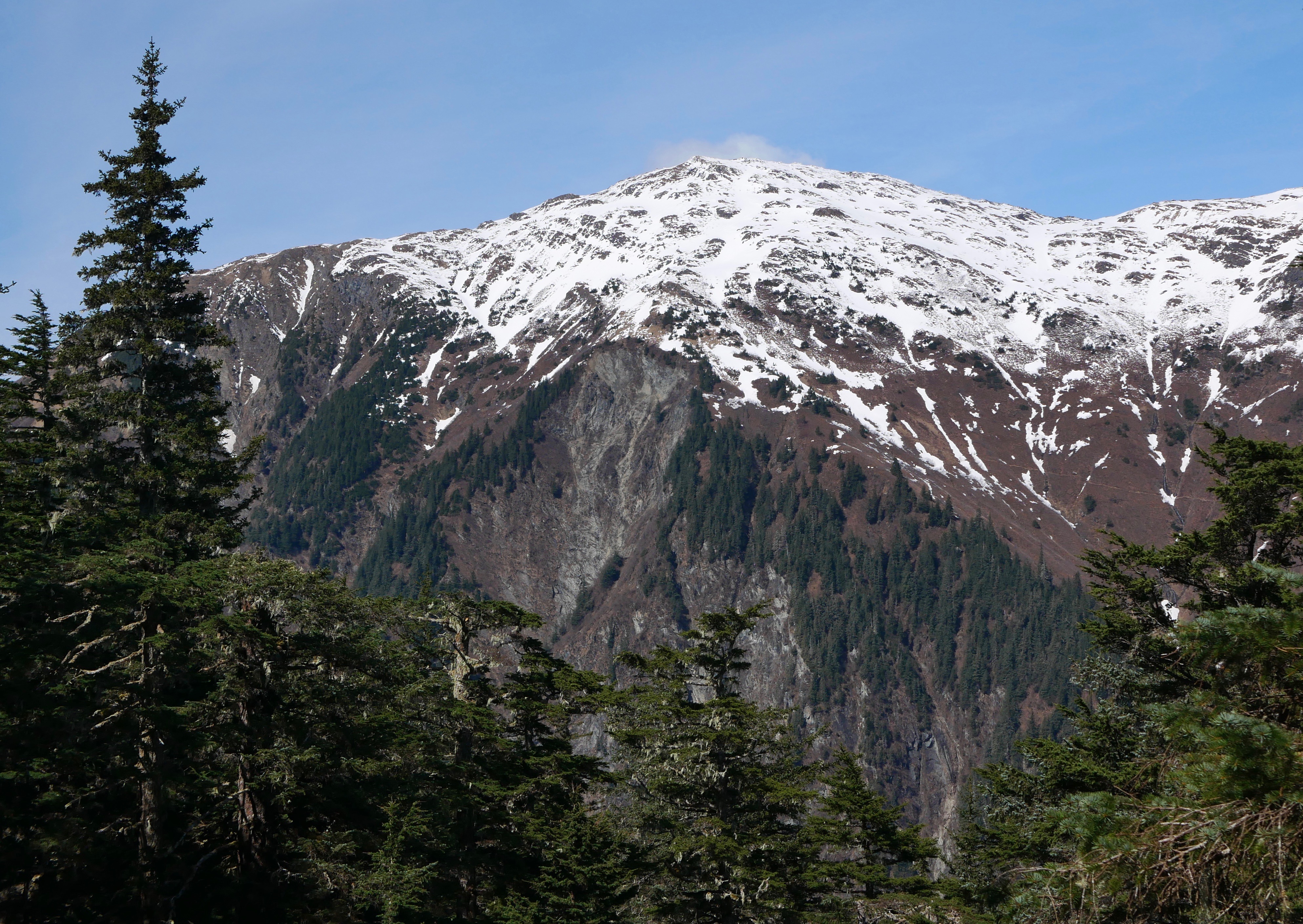
Aki’s heading up Mount Roberts. So are three of her humans. It seems like every family in Juneau is climbing the mountain too. There are even a few tourists off the first cruise ship of year using the trail.  Aki is in doggie heaven because many of the humans have brought their pups. 

            I should be happy to share the mountain with so many people. But I’ve become addicted to solitude and I am not getting it today. It’s too bad I’m preoccupied and grumpy. Otherwise I could fully appreciate the sunlight dappling the forest floor, shinning spotlights on emerging ferns. I’d probably get a kick out of the ravens flying low over our heads as they imitate the beep beep sound of an unlocking Subaru hatchback. 

Noisy But Beautiful

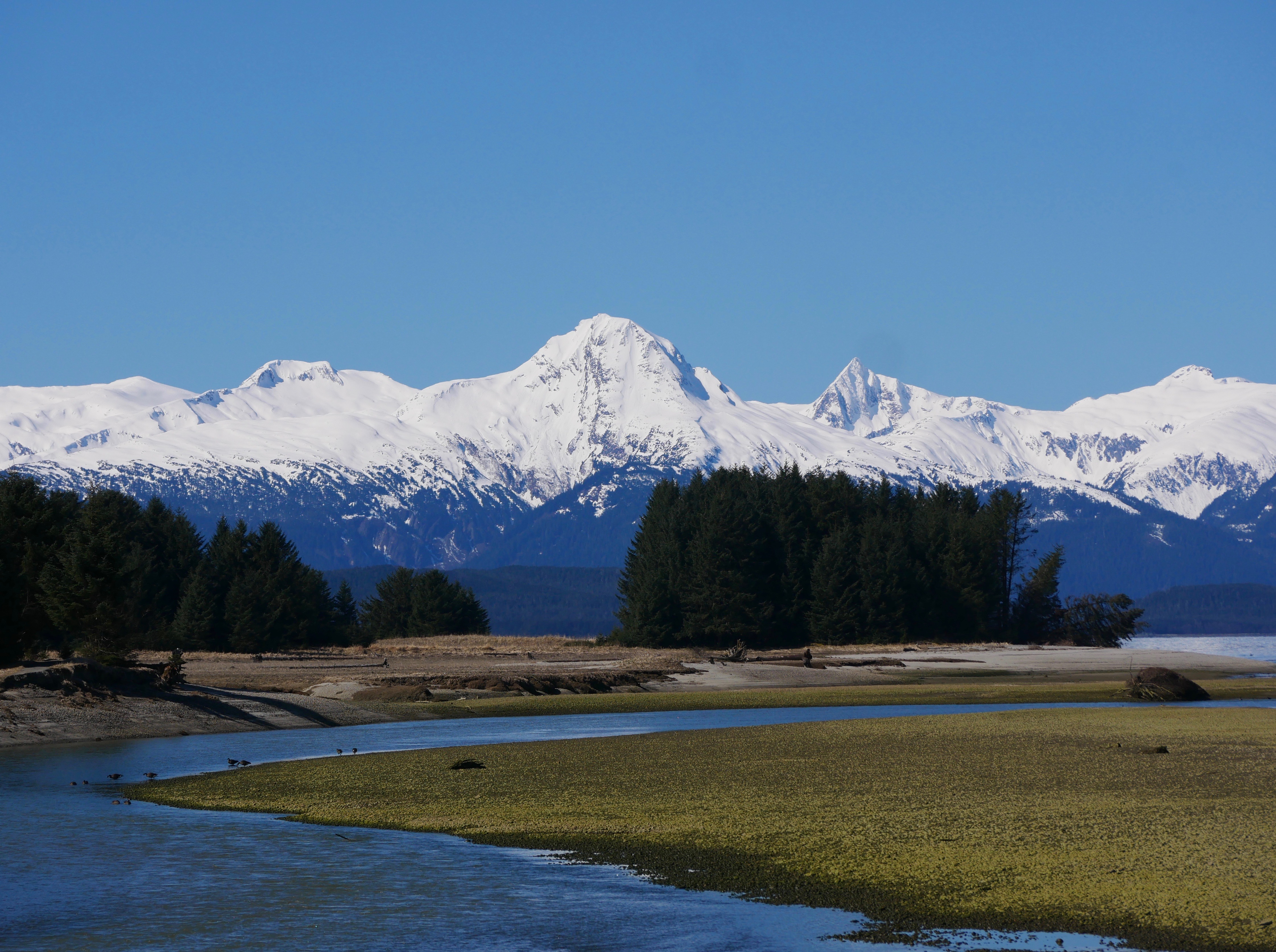
Canada geese have made themselves as common as pigeons in the USA and even Europe. But I still love to hear their nervous honking calls and watch their plump bodies strutting over a gravel bar.  This morning a small gang of the geese feeds down near the mouth of Eagle River. Their designated guard goose issues more and more desperate warnings as the little dog and I approach them. 

            An extreme ebb tide has drained much of the water from the river. It would take us no more than minutes to reach the geese across the exposed riverbed. They would be airborne and gone in half that time. Aki, who weighs less than the guard goose, studiously ignores the noisy birds. I take a few photographs and swing with Aki into the riverside woods. 

            Thanks to strong sunshine it had been warm on the riverbank. Here, where trees block the sun, I start wishing for a heavier coat. We can hear robins and their cousins thrushes, except when their songs are blocked out by the honking warning of the gravel bar geese.  

The Sunshine is Enough

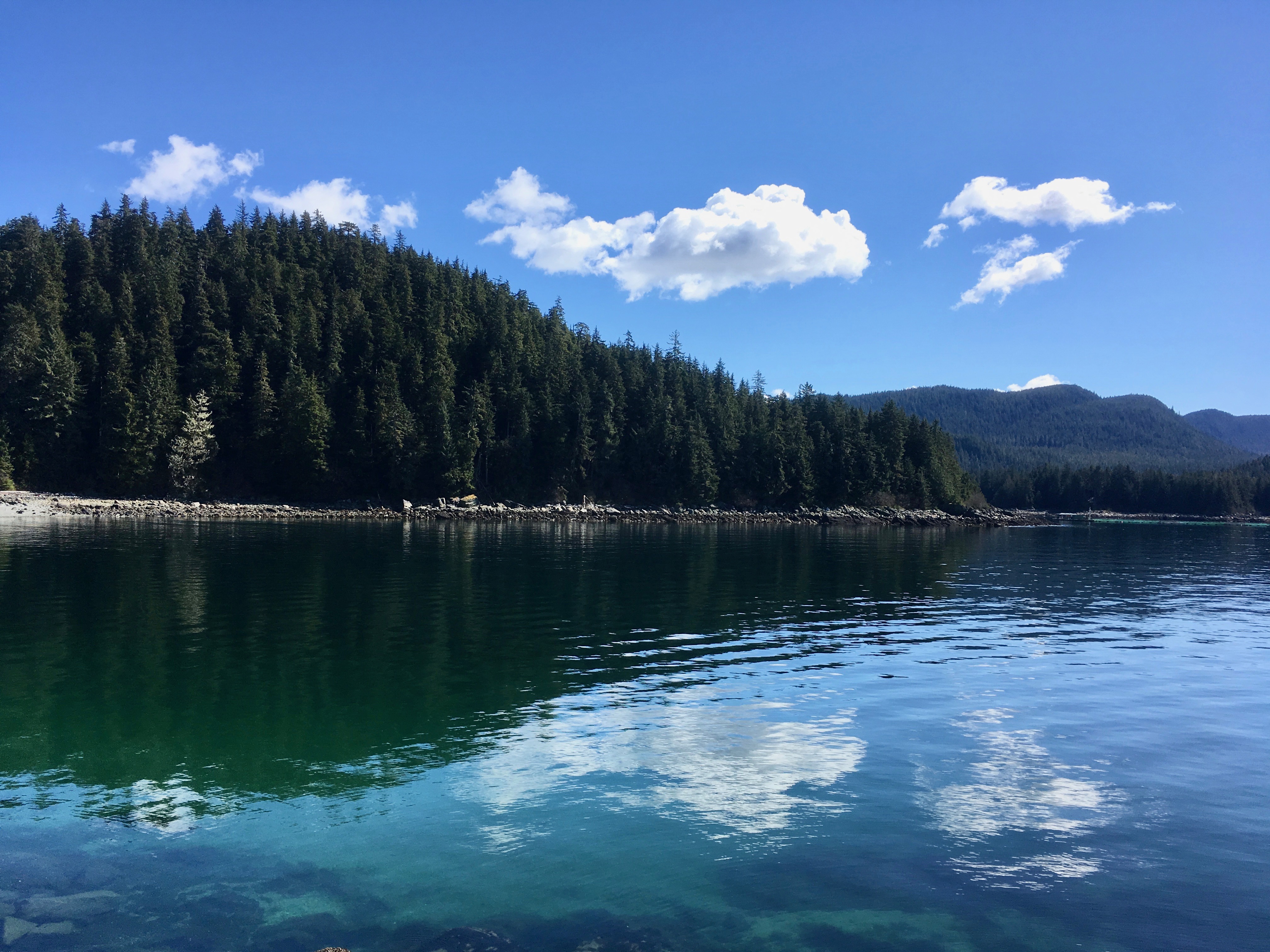
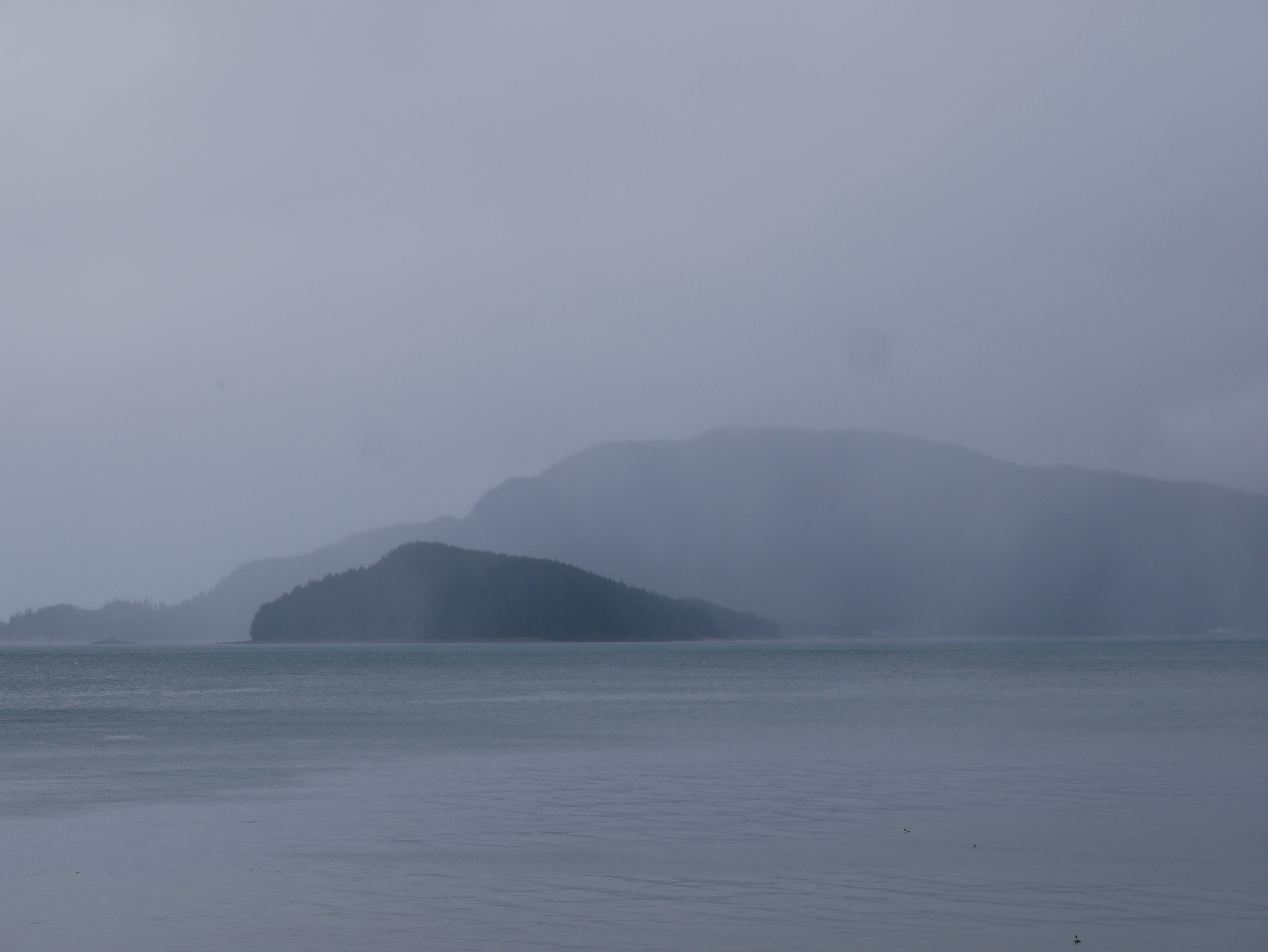
Aki and I sit, back to back on a lichen-covered rock. Her eyelids droop as her body warms in the strong sunshine. I keep my eyes open and scan Favorite Channel for whale spouts or the dog-like head of a sea lion. Only the reflections of clouds show in the flat-calm surface of the channel. 
            I should be disappointed. From this rock on a previous spring day the little dog and I watched two humpback whales end their long migration from Hawaii. Another time a gang of sea lions swam around the rock close enough to make Aki nervous.  On every other visit we have seen at least seen ducks or seals. Once I counted 13 bald eagles roosting in the surrounding trees. Today only one eagle appears but is gone in seconds. 

A solitary crow warms itself on a nearby point. I follow his and Aki’s examples and relax in the sunshine. It fills me with a sense of peace and contentment as if I’ve just finished a good meal with friends. The little dog looks like I feel. 
Addition

I left the house this morning without brushing my teeth. Aki looked puzzled but still joined me in the car. Most days at this hour she’d still be curled up and asleep. A feeling, not a phone call or Facebook tip drew me out the door. I just knew that something magical was happening where the woods of northern Douglas Island touched the sea.

            We looked without success for whale spouts in Fritz Cove on the drive to the north end of Douglas Island. No orca dorsal fins broke the surface of Lynn Canal when we passed False Outer Point. If we were to find anything special it had to be hiding in the woods. 

            At this hour I was not surprised to find an empty parking lot at the Outer Point trailhead.  Bird song, punctuated by raven squawks and the hammering of red-breasted sapsuckers provided the soundtrack for our walk.  The beaver pond was gray with patches of sky blue as the rising sun weakened the persistent cloud cover. 

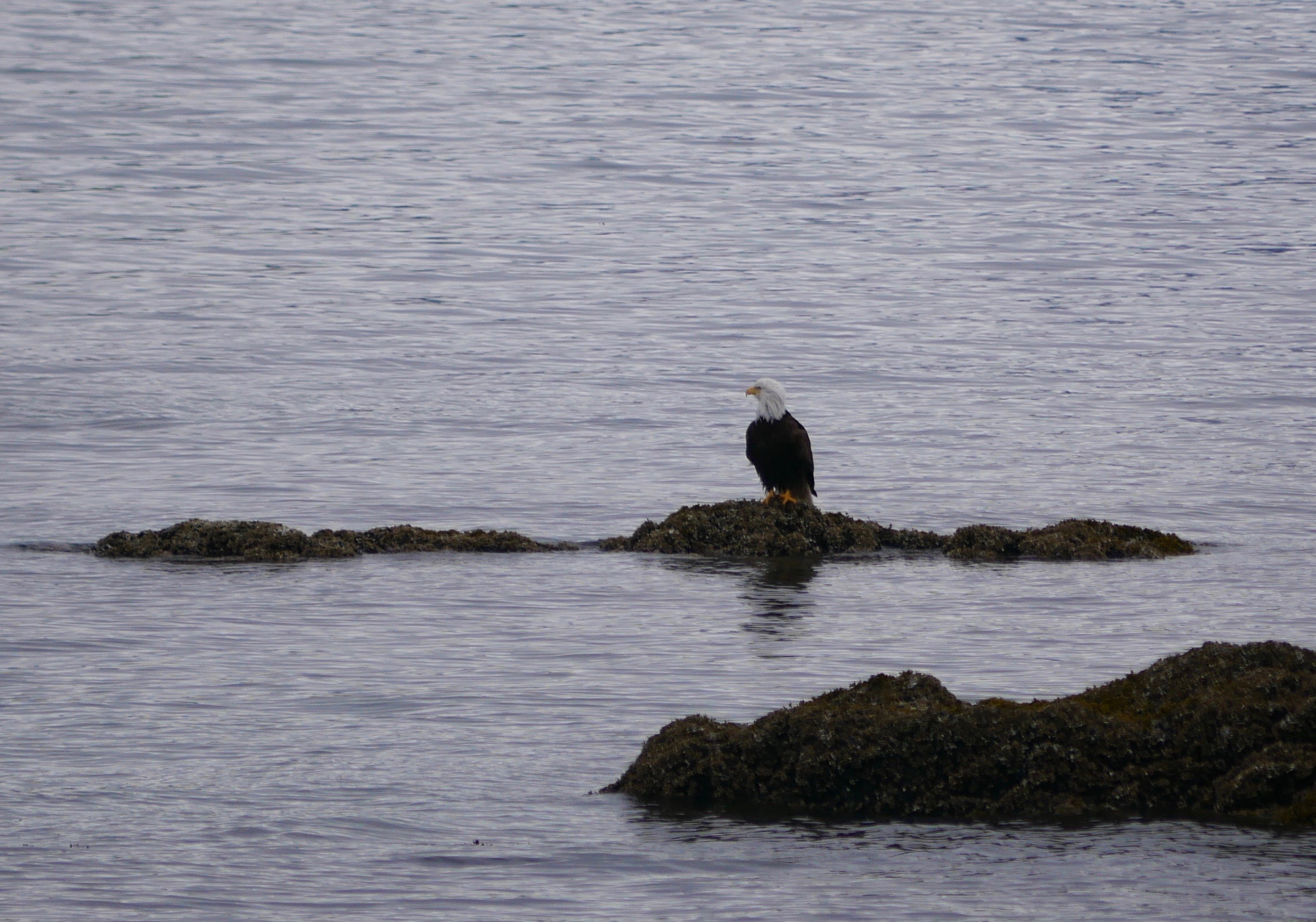
            When Aki followed me onto the beach, we spotted a greater yellowlegs sandpiper in the shallows. An adult bald eagle seemed to be contemplating life from its perch on an offshore rock.  On other rocks harlequin ducks slept or stretched. 

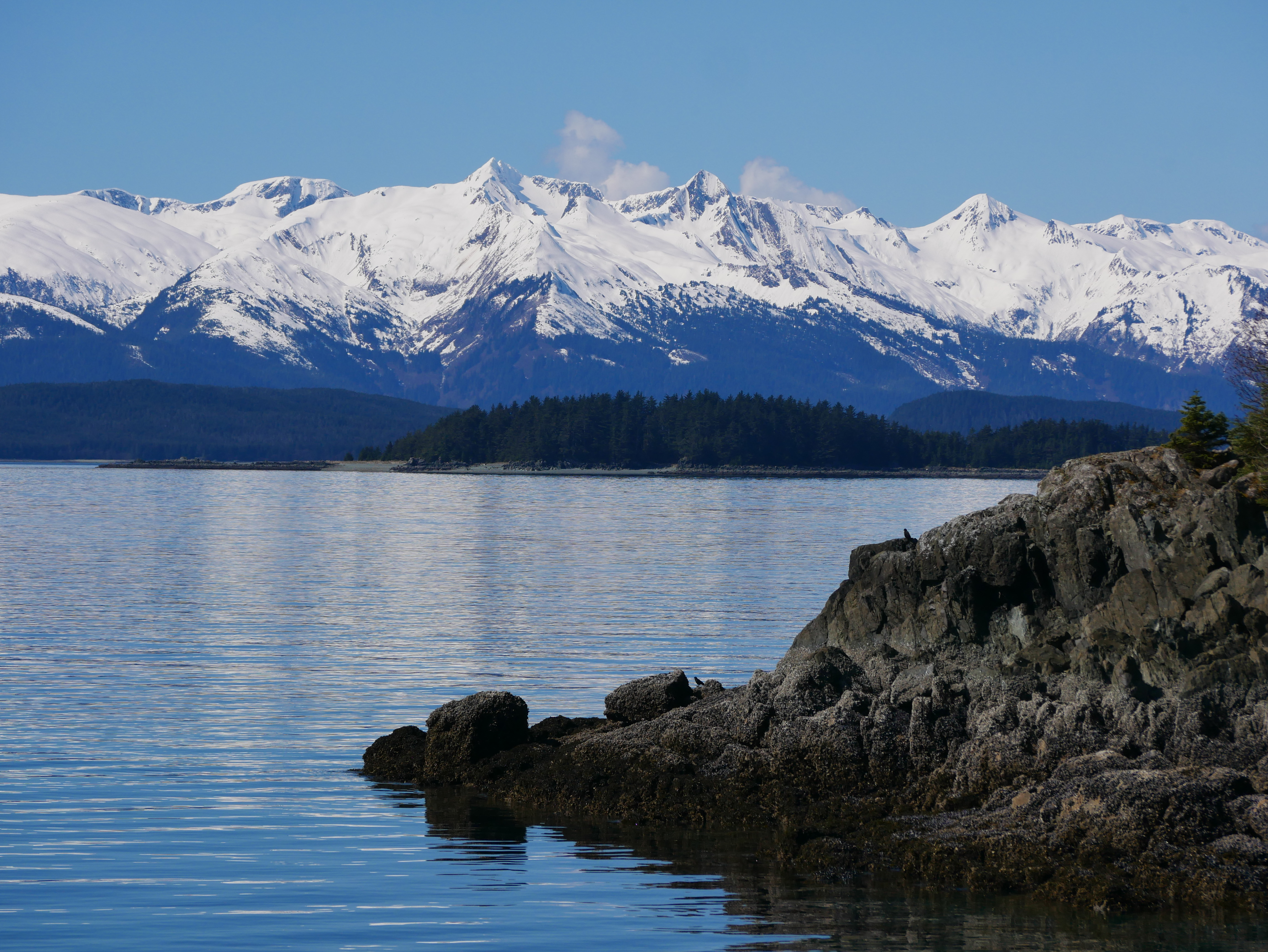
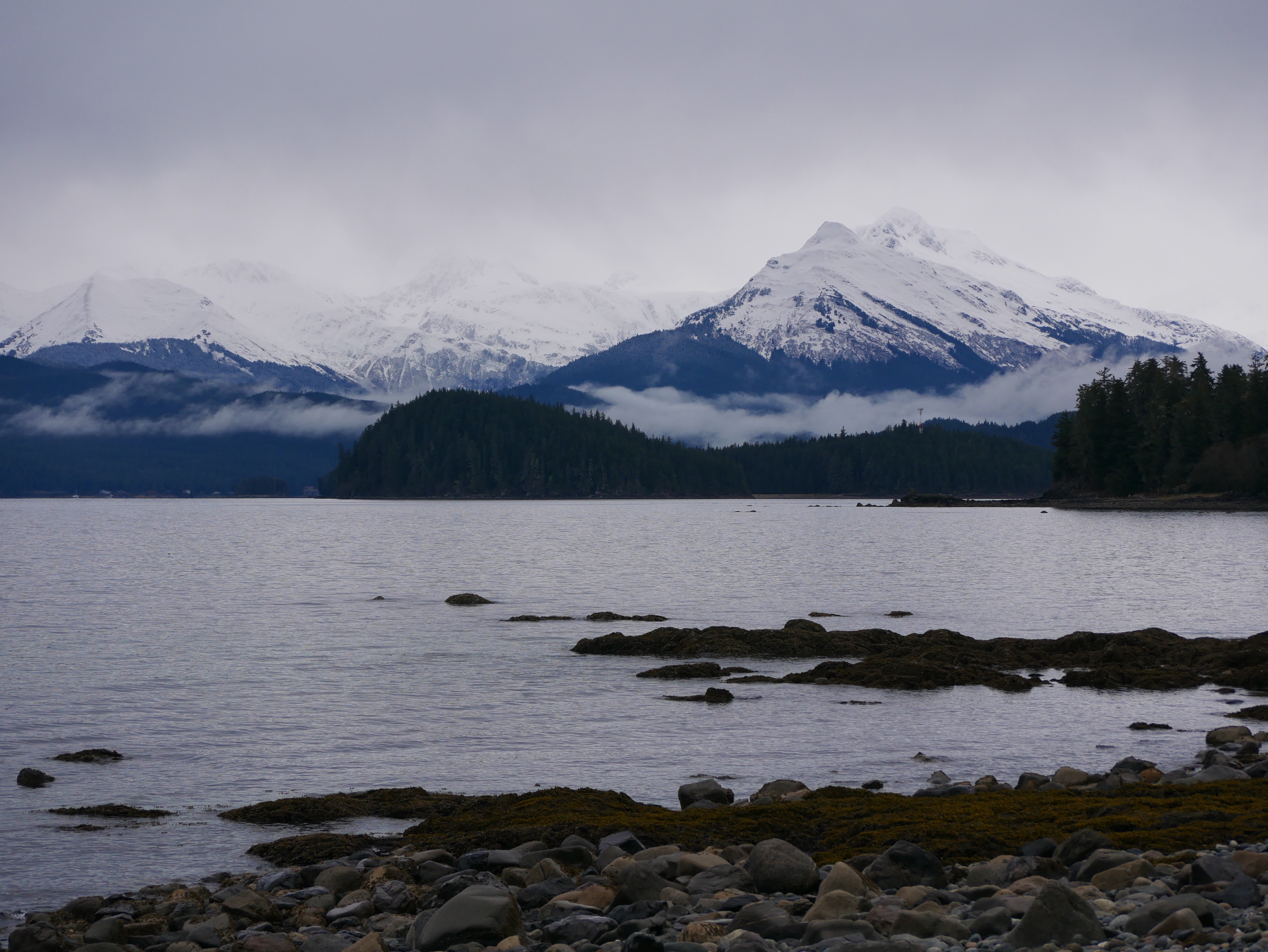
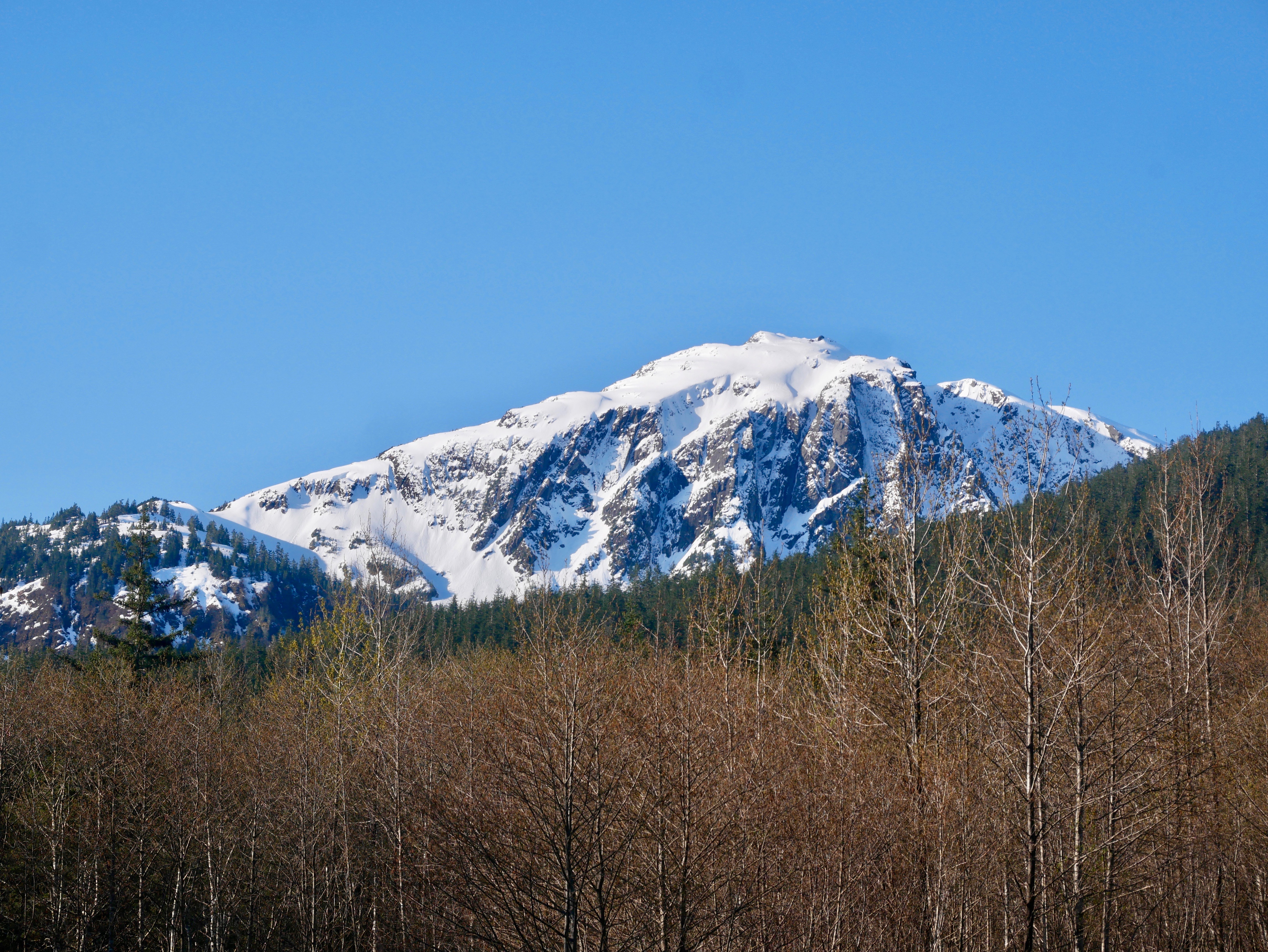
The mountains bordering Lynn Canal, beautified by late winter snow, emerged from cloud cover. All the things we experienced—the nesting bird songs, woodpecker tapping, the sandpiper (first of the year for me), the contemplative eagle, and whitened mountains—were enough to draw us from our beds. But the magic of the moment was provided by early morning solitude, unshattered by the works or words of man. 

Convention of Ghosts

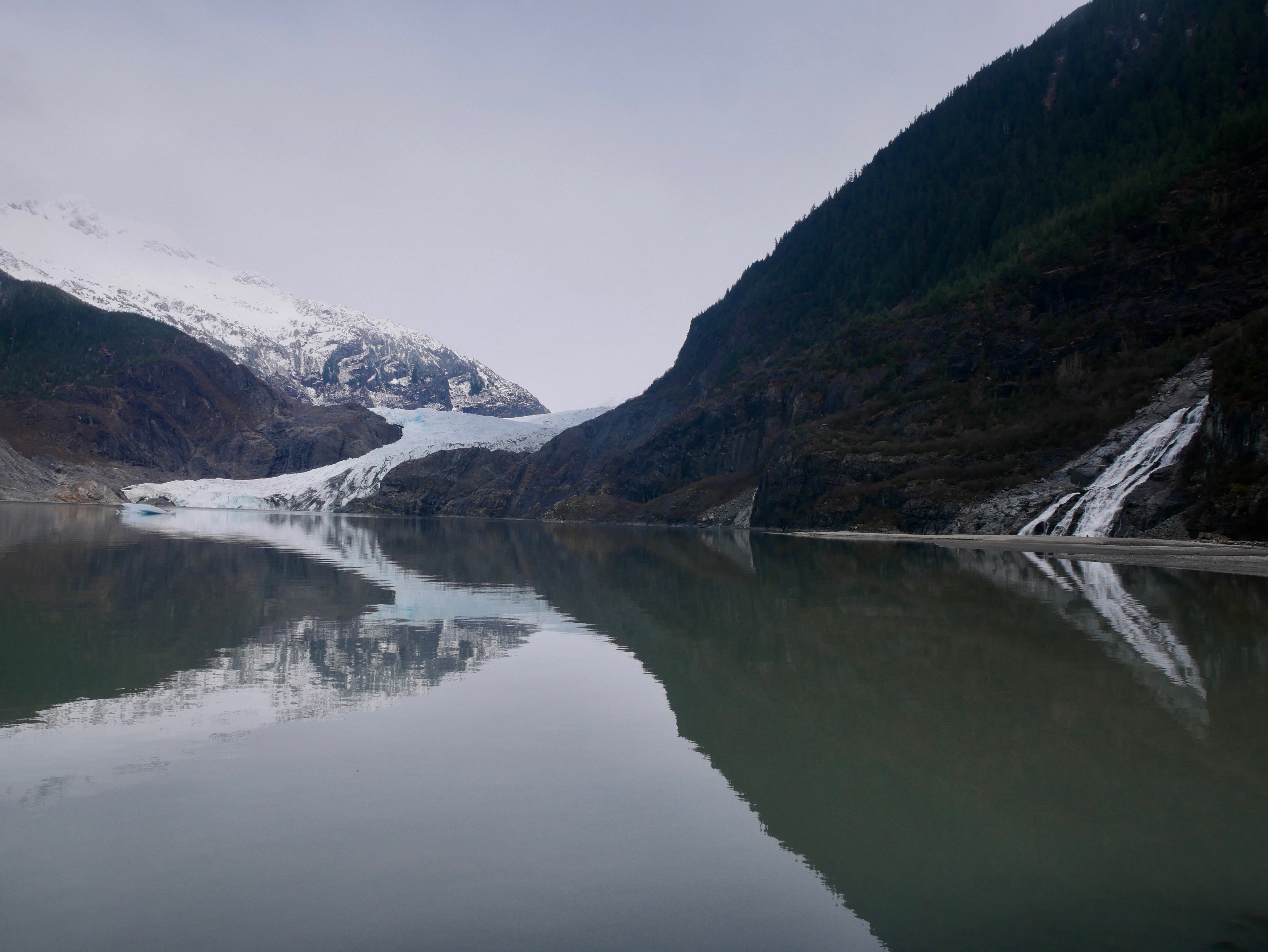
Wanting to sneak in at least one more trip to the glacier before the cruise ship hordes inundate its trails, I drive Aki out to the Mendenhall Visitor Center parking lot. The water level in the lake has dropped enough to allow the little dog and I to walk along the shore to Nugget Falls. But we soon find that the Forest Service has blocked off the beach to protect nesting sites of the income arctic terns.  Aki, whose little paws were already muddy with beach clay, is happy to reverse our way back to the regular trail. 

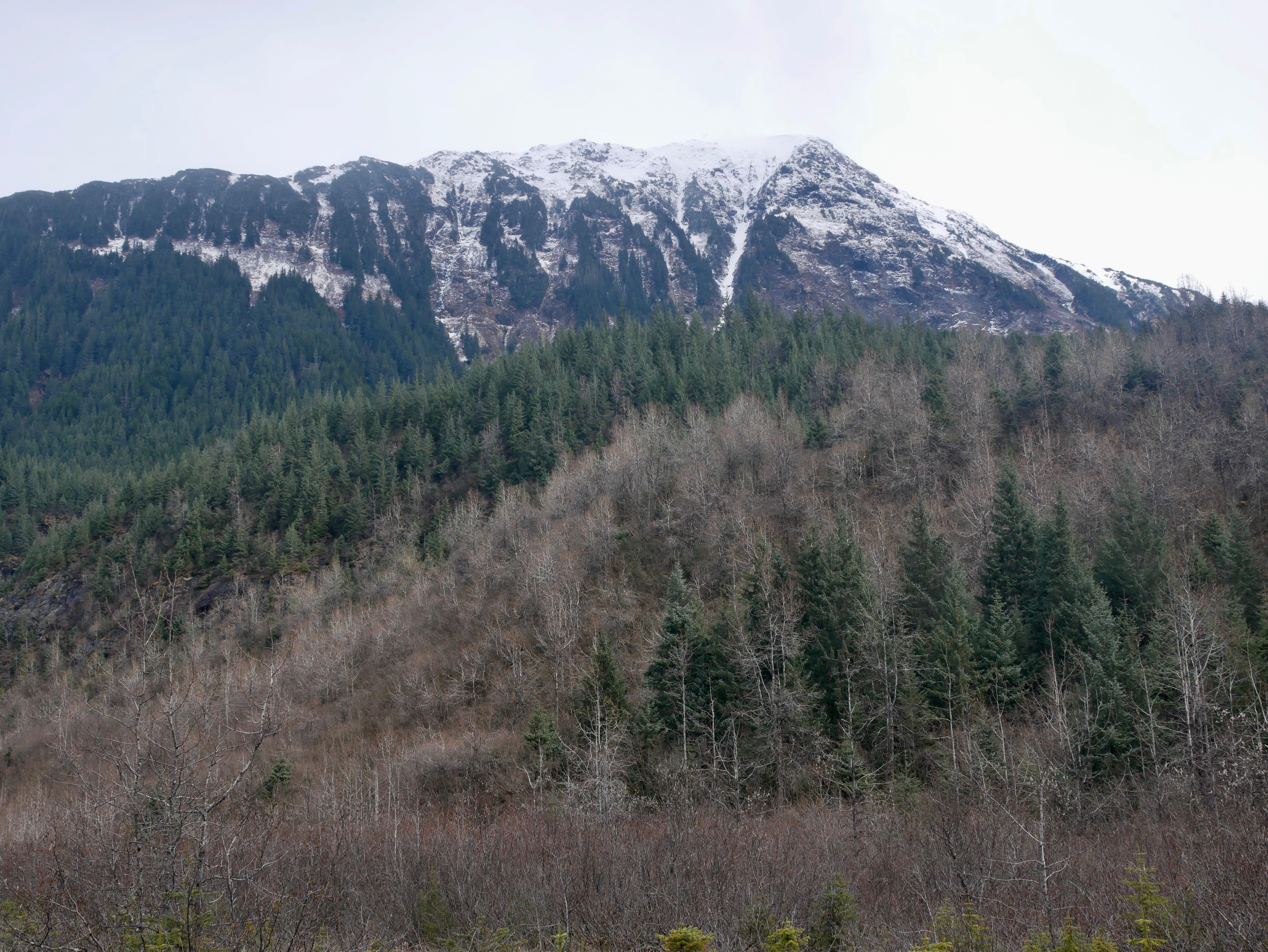
            The ice river meanders out of a layer of low clouds that hides the Mendenhall Towers but not Mt. McGinnis or Mt. Stroller White. Alder trees on the mountains’ slopes, bare except for their swollen, white buds, could be a convention of ghosts. One bald eagle circles a forest meadow on the far side of the lake. Otherwise the sky below the clouds is empty of obvious life. 

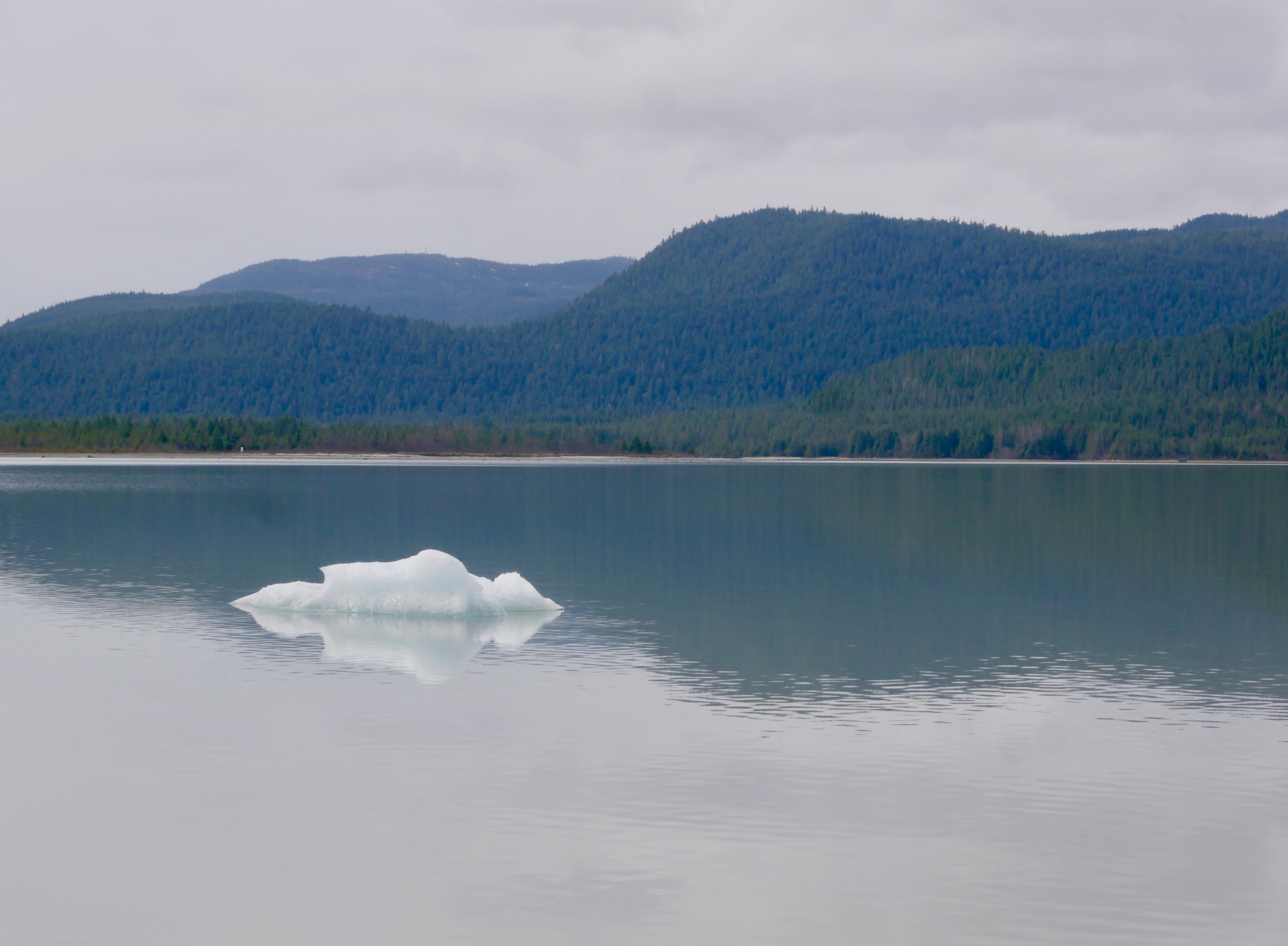
            At the beginning of the hike a constant breeze made the lake surface look like dun colored corduroy.  It dies out by the time we reach the falls, allowing the lake to form a mirror for the mountains, falls and glacier. 

Crazy Weather

I’m leaning against a young tree, using its trunk to steady my camera. The tree is part of a spruce hedge that should prevent a nearby great blue heron from seeing me. Through a narrow opening in the hedge I watch the heron wade across a narrow stream.  It moves with such stiff grace that my eye can’t catch actual movement. 

            Aki doesn’t whine or give any other clue of our presence. It won’t be her fault of the heron spots us. In my makeshift blind, I wait for the big bird to stab down into the water after a sand lance. Instead it slowly turns its head until it is looking directly at me. Busted.             

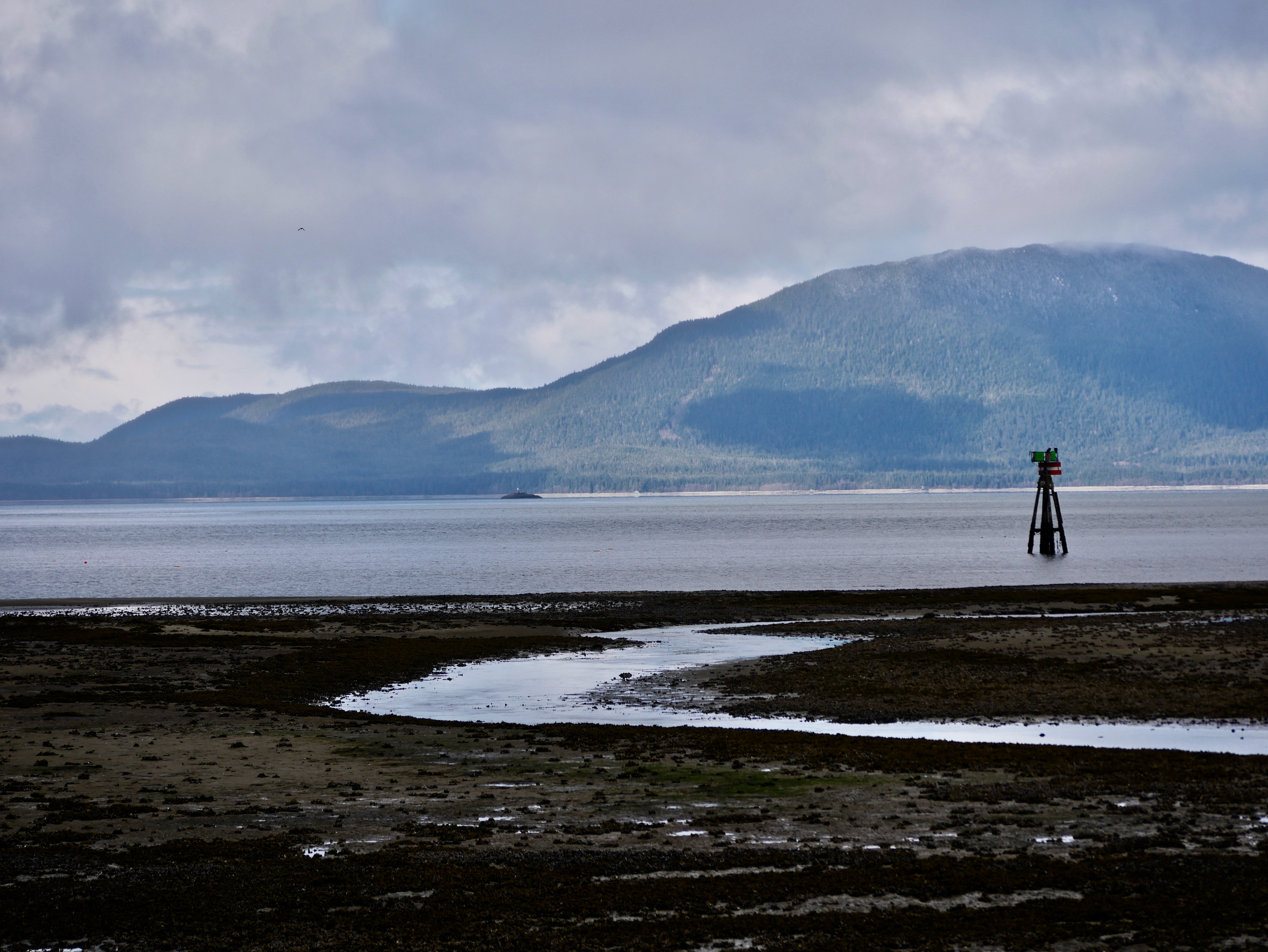
            After extracting myself from the hedge, I give the little poodle-mix a reassuring pet and lead us further out into the Fish Creek Delta. We cross an open spit from which we have a 360-degree view of the area. In the center of this natural compass a cold wind slams snow and rain at us. To the west, the sun is throwing cloud shadows on the green slopes of Admiralty Island. A wall of clouds obscures the glacier to the north and the Douglas Island ridge to the south. For a moment another cloud curtain raises to reveal Sheep Mountain in the East and then drops. 

Family Ties

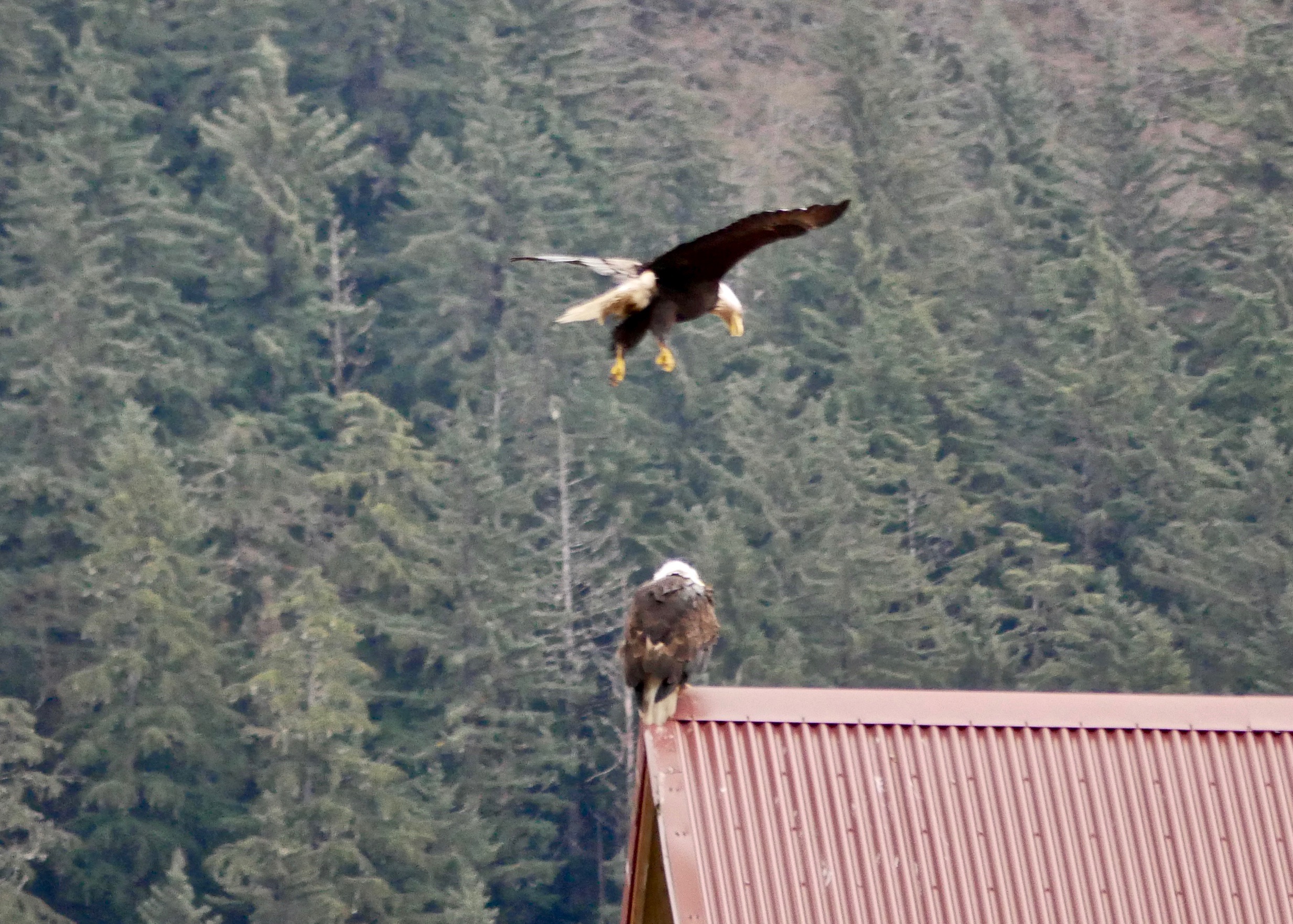
Two eagles, both hunched against a cold wind, cling to the roof of an old mine ventilation tower. The tower rises out of a beach of mine tailings that were crushed to sand over a hundred years ago. Rusting relics of the time when this was a mining town emerge from the sandy tailings, exposed by the ebb tide. 

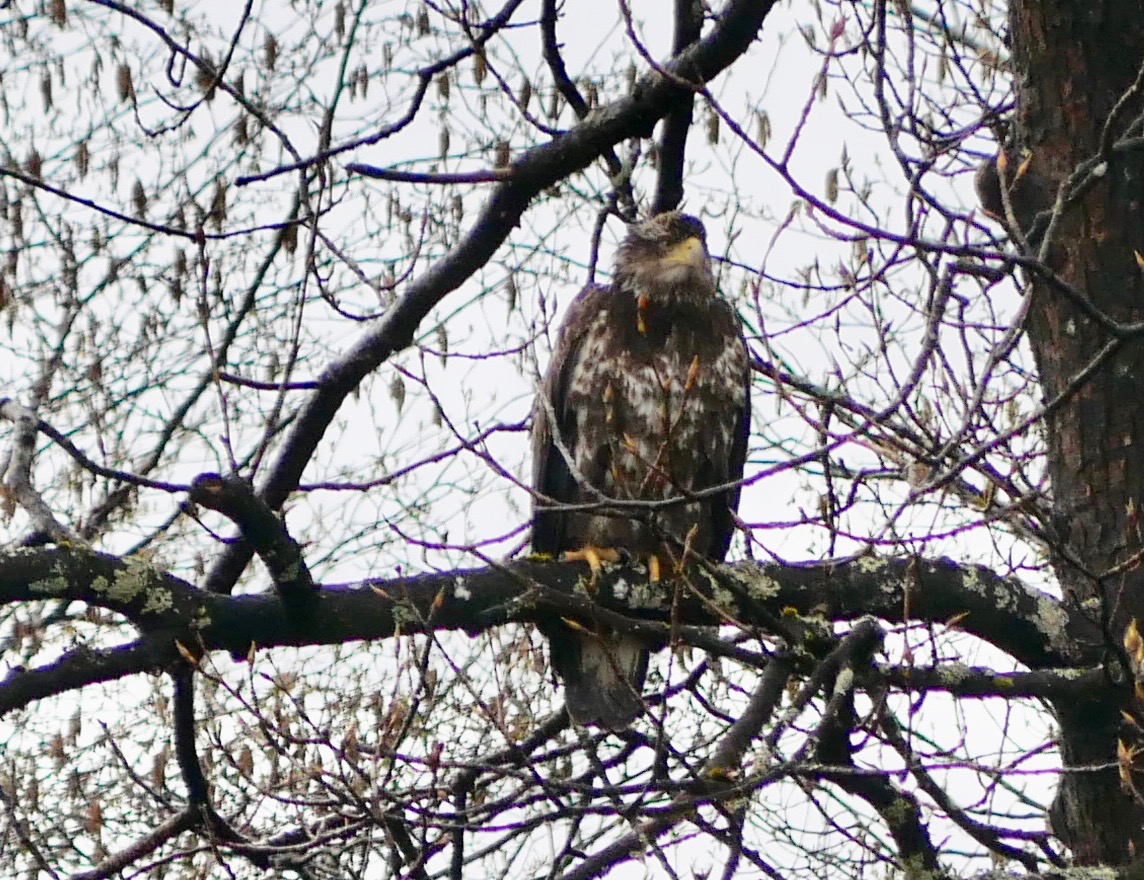
            The eagles on the tower have the white head and tail feathers of mature birds. Fifty meters away, an eagle with the mottled brown and whites of an immature predator roosts far back in a tangle of alder branches. It watches one of the mature eagles, maybe a parent, fly out and over Gastineau Channel, circle and then dive toward the water. When the hunter returns with empty talons, its mate gives it a scolding that can be heard all the way from Downtown Juneau to the cabins at Lucky Me. I turn to see what effect the scolding has had on the immature bird and find that it has flown away. 

            The adult eagles settle into silence sulks allowing me to concentrate on the sound of Aki’s paws pounding on the sand and the songs of nesting birds. In spite of the lingering stretch of cold weather, the inhabitants of the Treadwell woods have committed to spring.

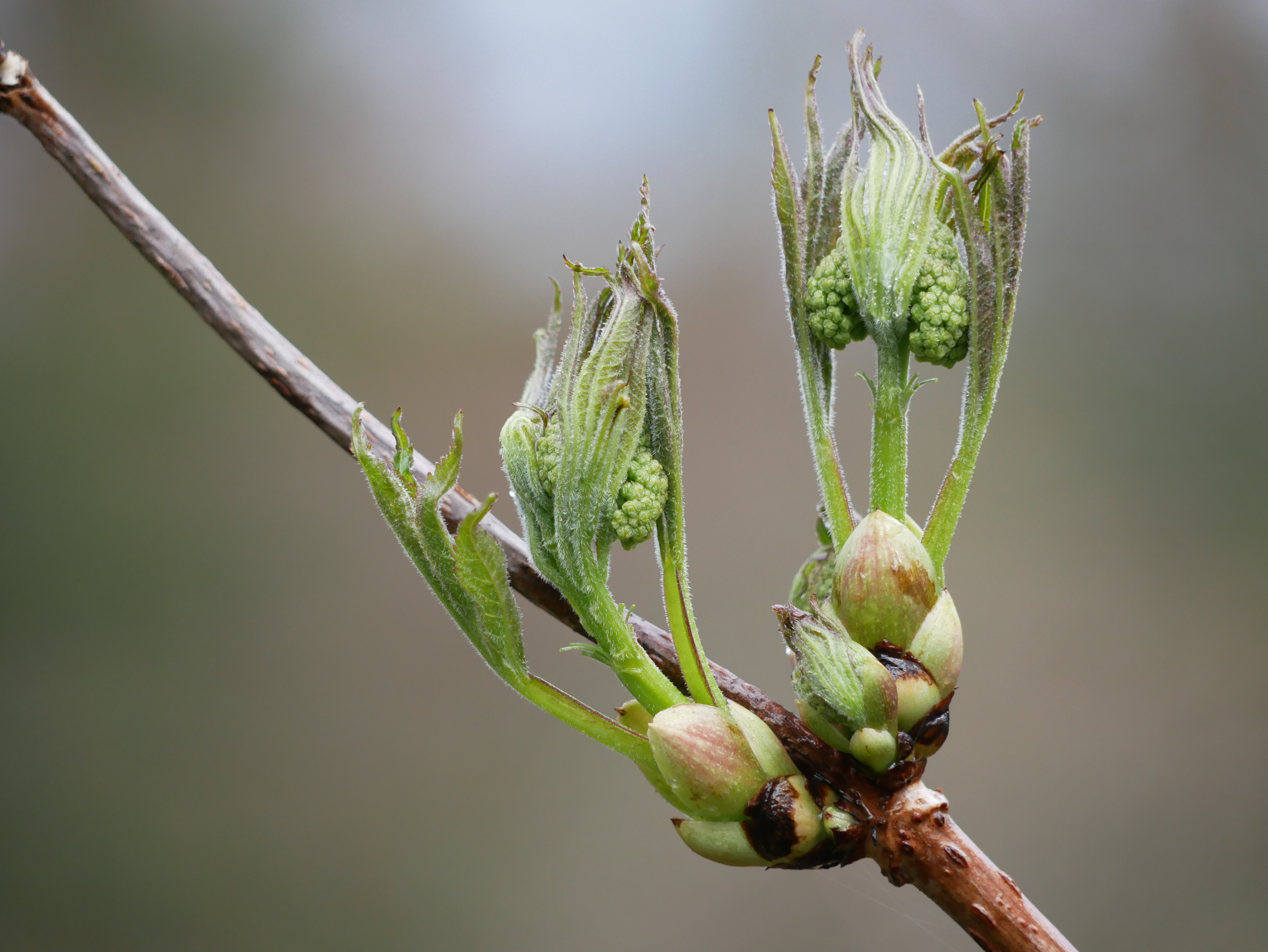
Pollen pods of alders lay empty on the forest floor.  Sharp-edged leaves emerge from the dead-looking branches of cow parsnips.  Drops of last night’s rain cling to the butter-yellow skunk cabbage flowers. Elderberry leaves slowly relax their grip on their clusters of incipient flowers.

Missing the Kings

False Outer Point is empty today. No one casts out hooks bated with herring off the rocks. That is not surprising this early in the spring. May, not April, is usually the month for fishing King Salmon here. But this year, because of low salmon returns, no one will be allowed to fish for kings next month. The collapse of the king salmon run will hurt the eagles, killer whales, seals and sea lions that usually target the fat, oily king salmon each spring. It will disappoint human fishermen, especially those from the Tlingit and Pilipino communities who rely upon salmon to feed their families. 

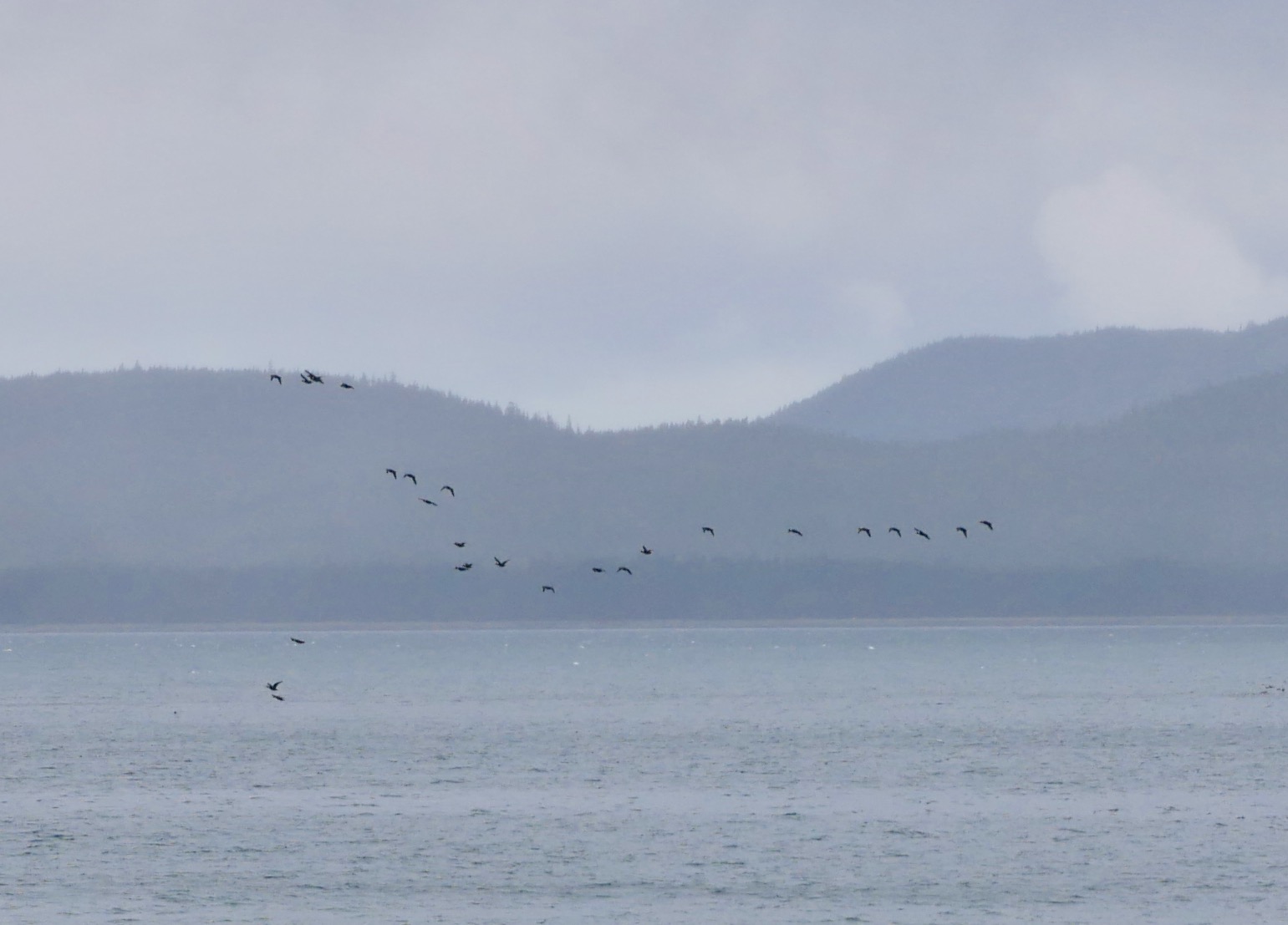
The little dog and I round the empty point, trying to ignore two eagles bickering above us in a shoreline spruce tree. A line of waterfowl, maybe scoters, fly up and down Lynn Canal. They change relative position constantly. In each photo I take of them, their bodies look like notes in a musical measure. 

We leave the beach and climb up onto a headland and spot a small raft of harlequin ducks tucked into a small bay. A few of the parti-colored birds stand on the beach. I’ve never seen harlequins surrender the protection of the ocean. I wonder if the same threat that keeps the scoters in motion has beached the harlequins.