Category Archives: Aki

Norton Lake

Beavers. Aki and I are on the lookout for the buck-toothed rodents on this walk across the moraine. We walk along the Mendenhall River, which is dropping after a recent run of high water. It was raining earlier, which might explain why we have the place to ourselves.
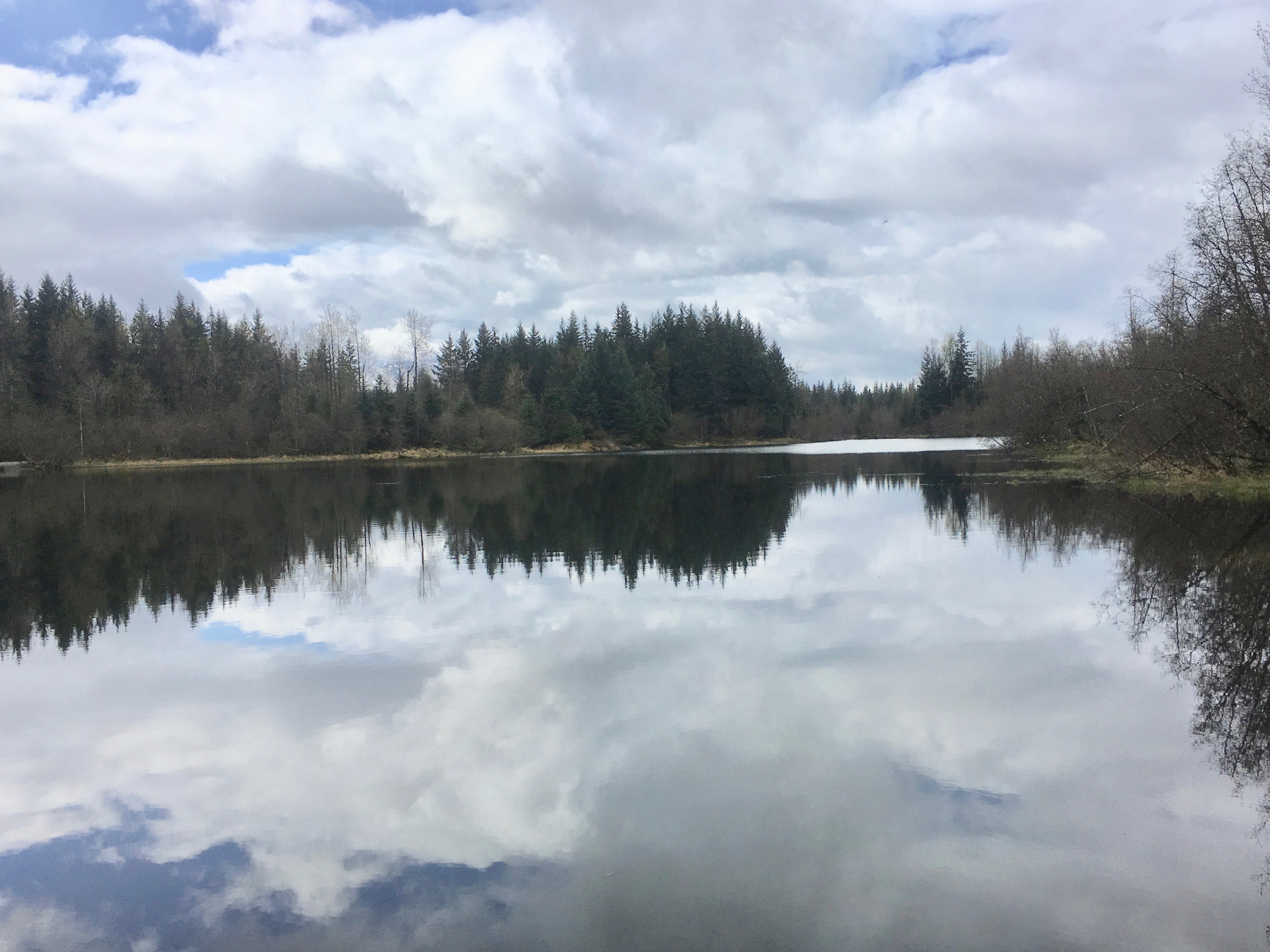
            Even though there is a large beaver house just upriver from our position, we have no chance of seeing one of them swimming across the water. We have to go deeper into the moraine—to the rarely visited Norton Lake. In years past, the little dog and I have been able to watch beavers tail slap the lake water and then swim towards us to check out the poodle wearing clothes. 
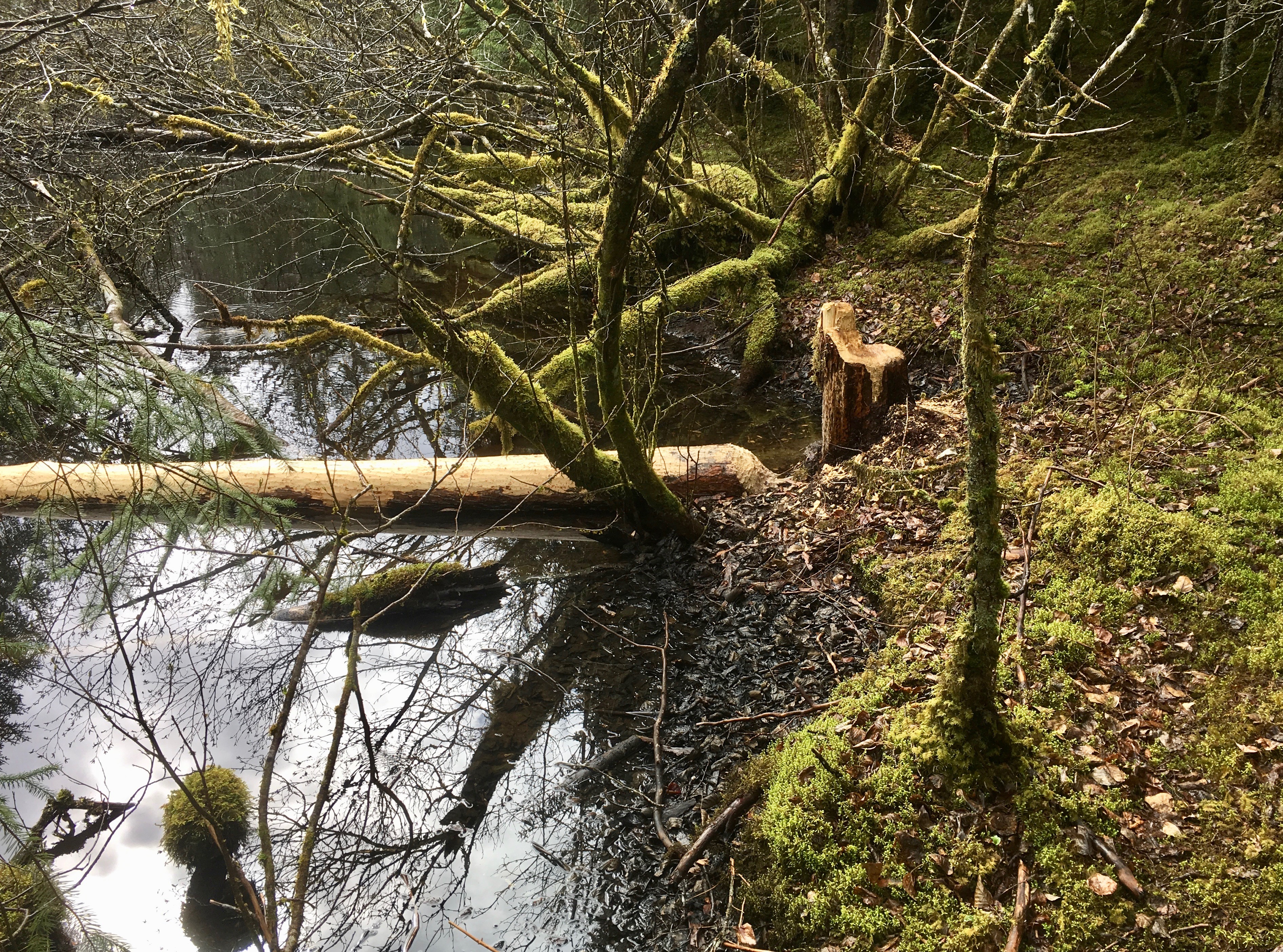
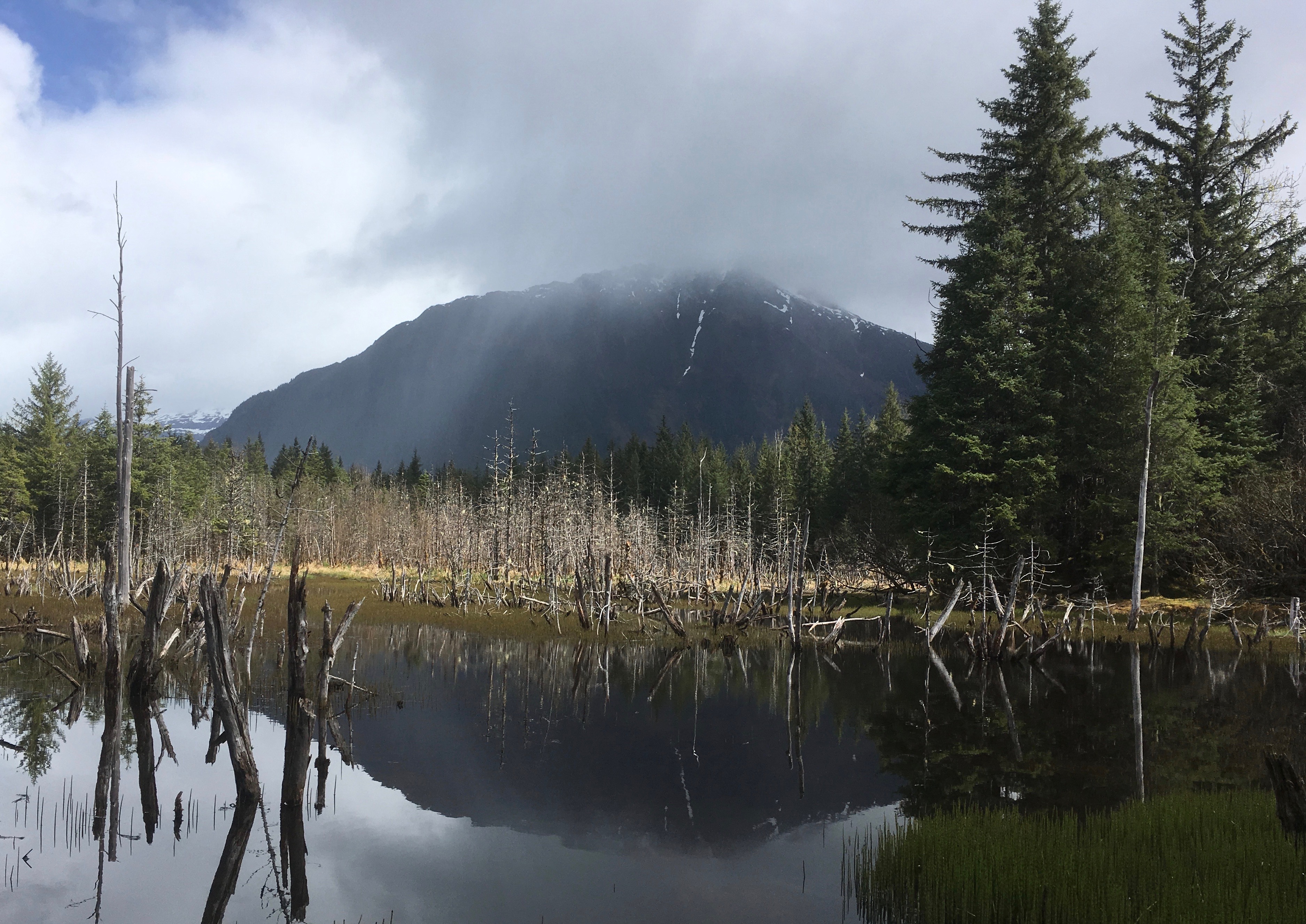
            The beavers have made it difficult to reach Norton Lake. You have to skirt a flooded portion of the trail and then tightrope walk along the top of one of their dams. After Aki and I walk maneuver our way through this obstacle course, I search the remains of beaver killed trees that rise like grave markers from the surface of the pond, looking for the arrow-head shaped beaver snout cutting a “v” across the water.  
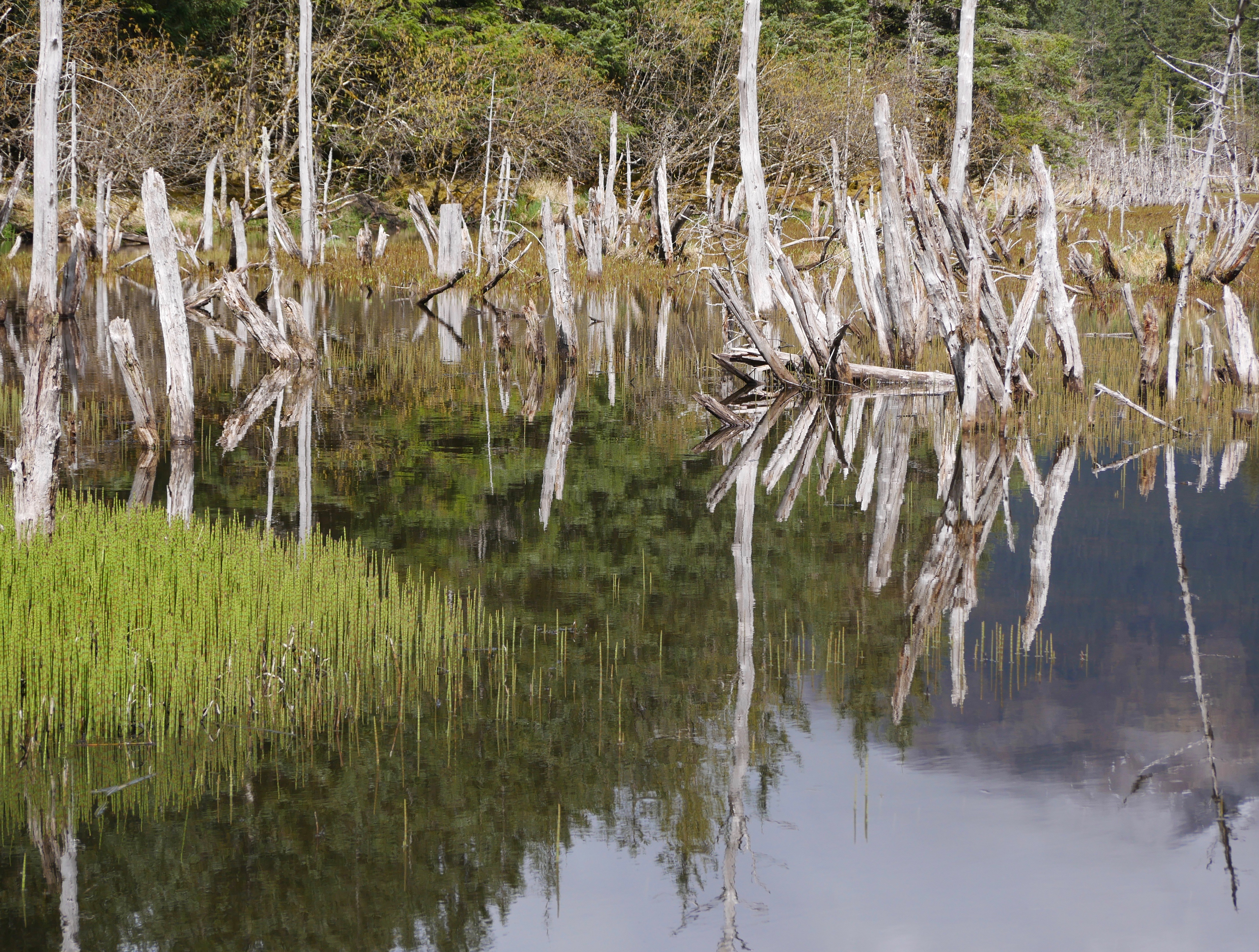
            There will no beavers sighted this day, a pair of mallard drakes floating without apparent purpose across the surface of the lake.   

Above the Fog

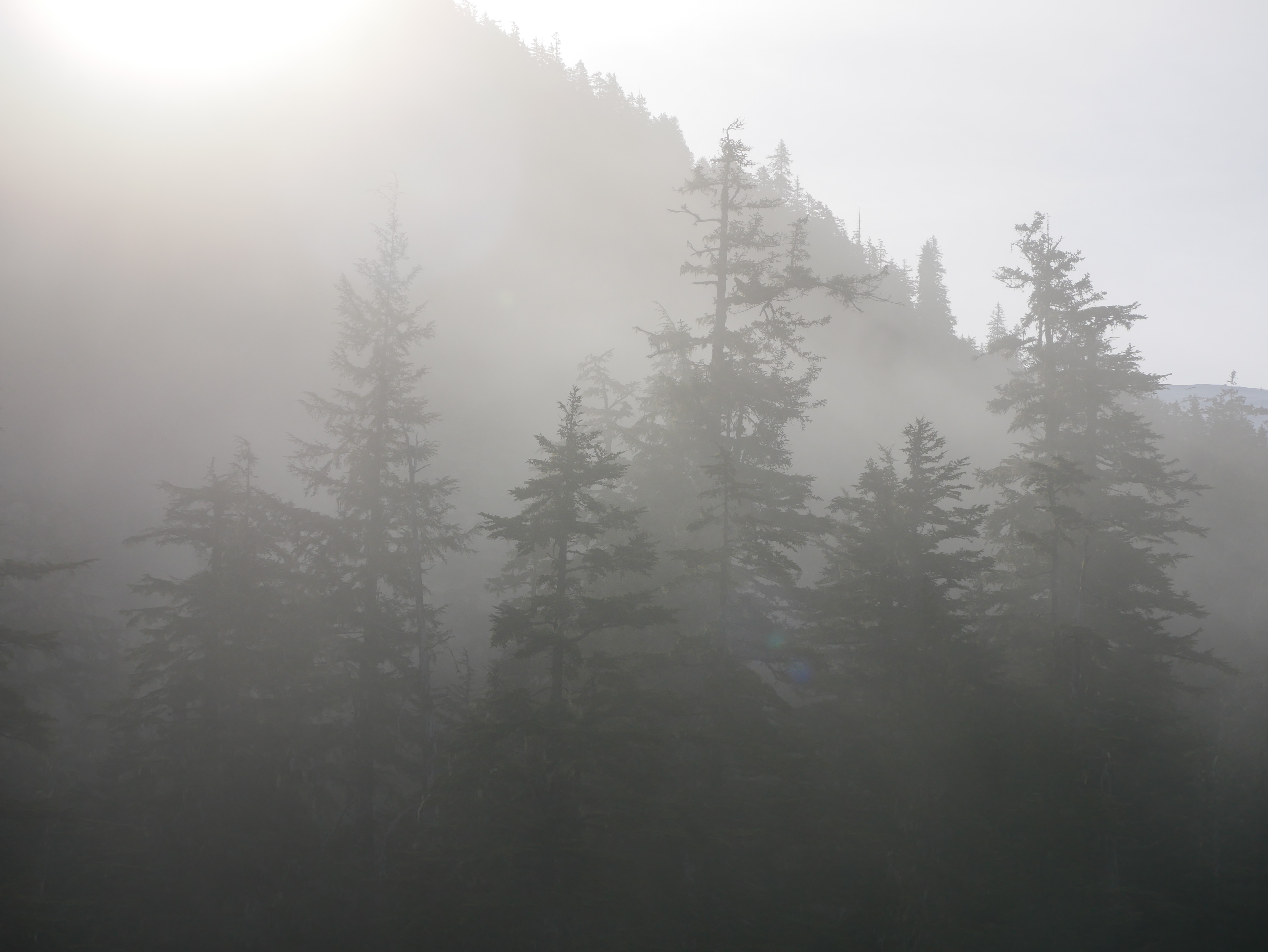
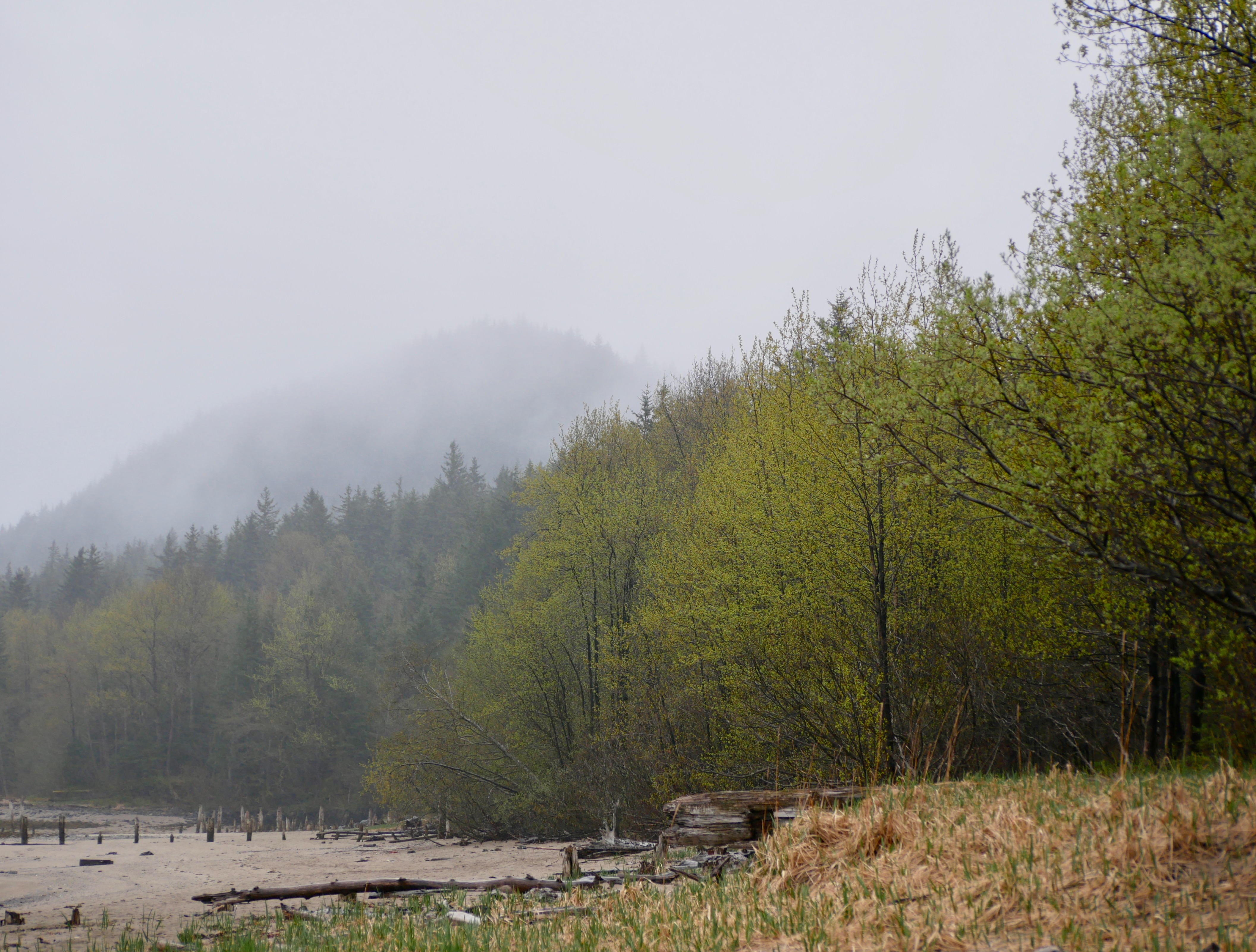
Fog wraps around Chicken Ridge when the little dog and I climb into the car. It thickens as we drop down to the channel. If the fog could burn off in a half and hour this would be a great morning for a tidewater walk. Rather than rely on the gloom doing a quick disappearance act, I steer the car across the Douglas Bridge and drive into the mountains. 

            I just make out the tops of the Douglas Island ridge as the car climbs up Fish Creek Road. Aki starts squeaking when we crest a small hill and near the parking lot for a trail that crosses three meadows. But the meadows’ stunted pines are as vague as ghosts in a grey cloud. Letting Aki know that we will stop soon, I push on to the road’s end where the fog is melting away like ferry vapor. 

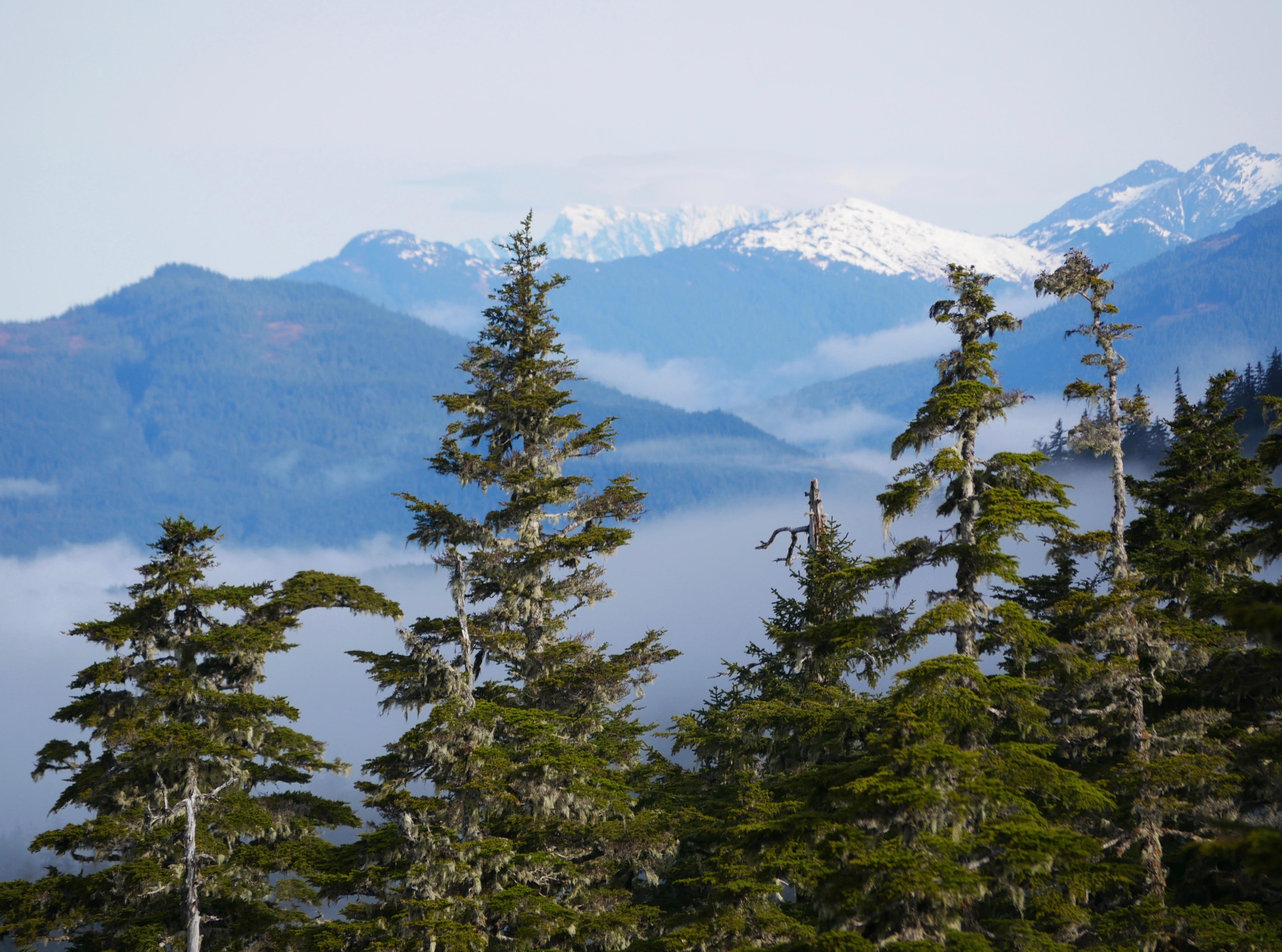
            We climb the service road to a mountain shoulder. Below us fog still obscures the three meadows trail. By the time we reach the shoulder, the grey is gone. If I could have seen the future, I would have taken the meadows trail. But then, I wouldn’t have smelled or seen or heard the high country coming to life. 

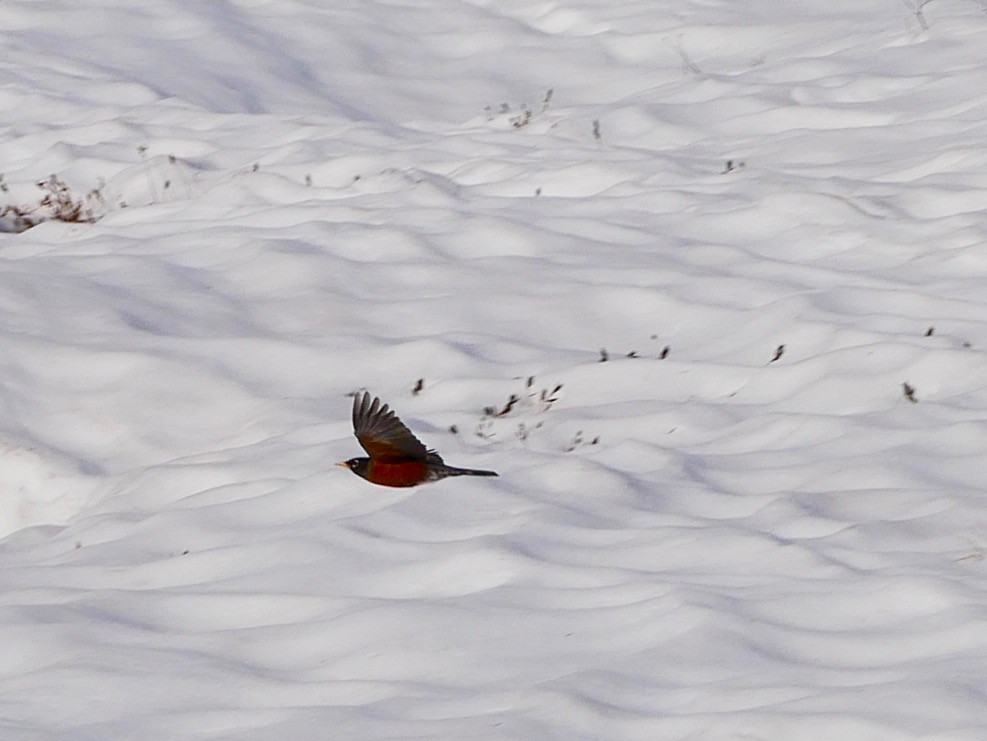
            Melting snow has charged the mountain streams until they overflow their banks. Nesting robins twill loudly, as if to be overheard about the shushing streams. The shrill piping of a mountain marmot startles the little dog and me. I look for the large guinea pig that gave the alarm but it has already dived in a hidey-hole. The air fills with the smell of sweet resin each time we pass near a pine tree. 

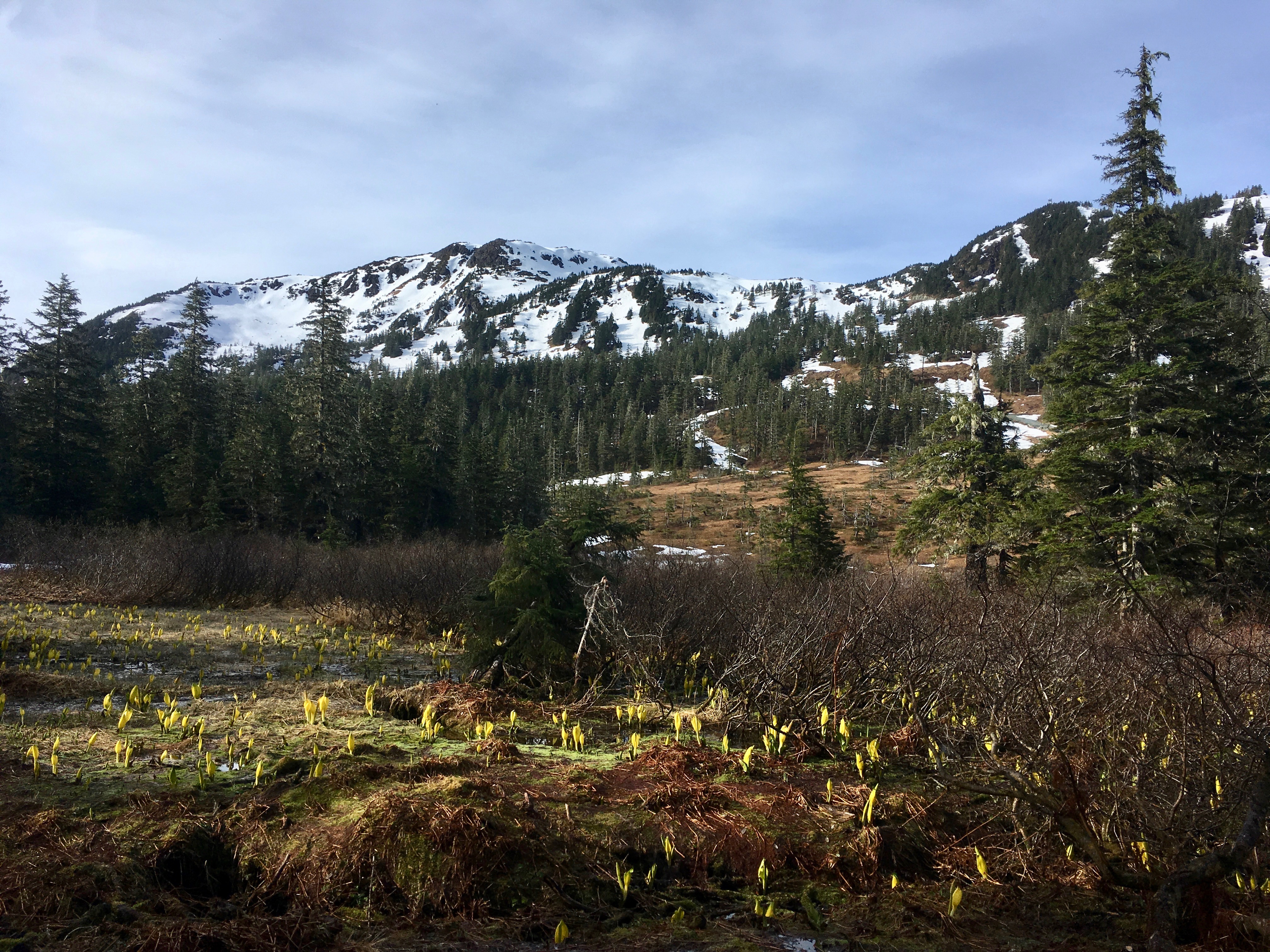
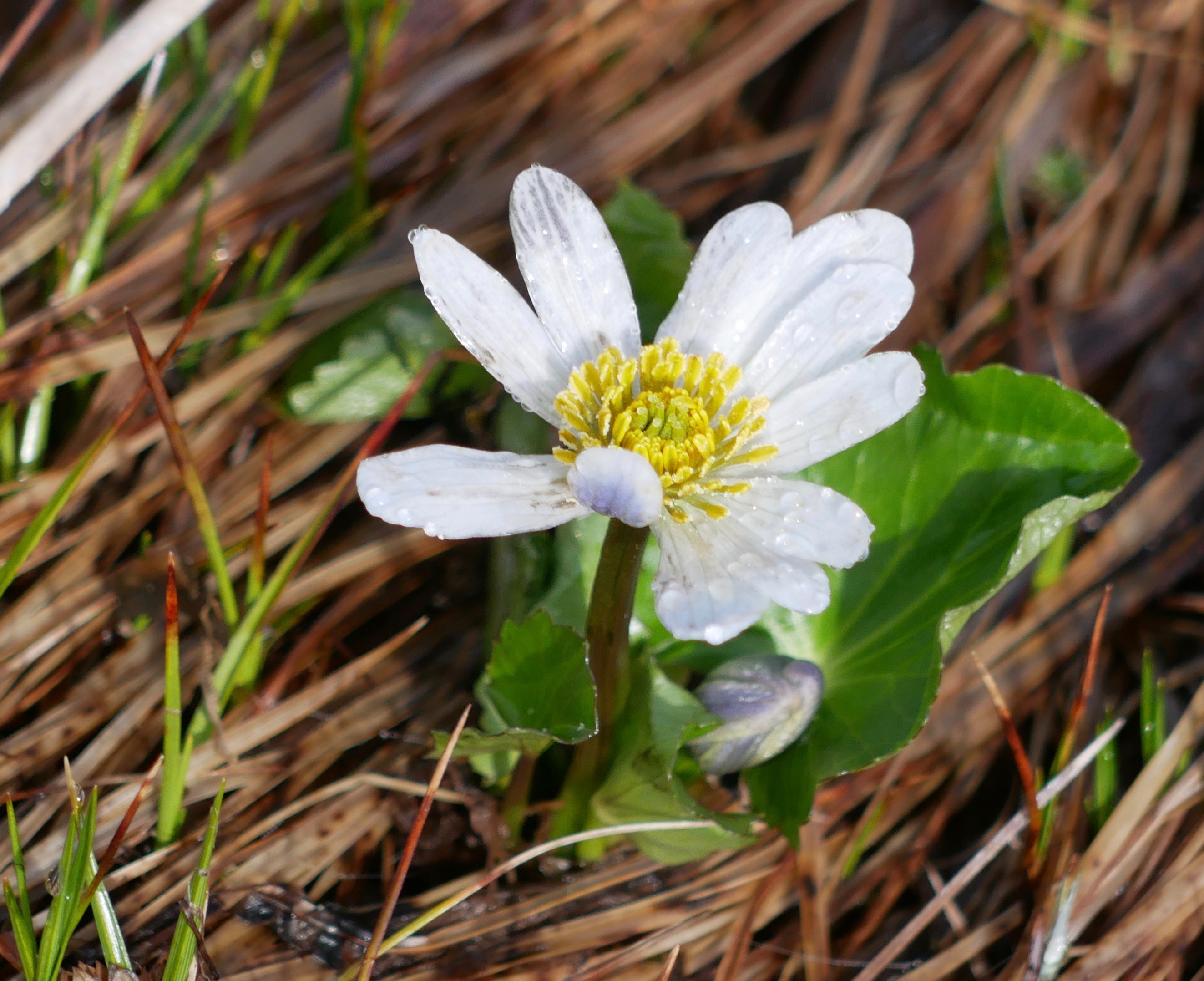
            Somewhere on the mountain bears are breakfasting on roots but we see none. Peak views and the tall, yellow blossoms of skunk cabbage provide all the visual drama until we stumble on our first true wildflower of the year: a mountain marigold. All of its white petals lay flat except one. It uncurls as we watch. The sun will soon make short work of the dewdrops clinging to its petals. For the marigold’s sake, I pray that true summer has arrived. There is no turning back for the flower now.  

Secret Spots

Aki trots down the narrow boardwalk, passing blueberry bushes in full bloom. For the first time in weeks, the sun muscles its way through the cloud cover. It enriches the pinks of the berry blossoms and warms the little dog’s tight, grey curls. A pair of red-breasted robins hop between bushes. Above them, a  chestnut-backed chickadee, its clever toes clinging to a thin alder branch, leans back as if to be better enjoy the sun. 

Bird song fills the air and I wonder why this place is so rich. It’s just a swampy yard with soil too poor to support spruce or hemlocks.  The stubby Douglas pines are the only evergreen trees that can survive. 

A flash of blue startles me out a sun-induced reverie—a sparrow-like bird with bright-yellow patches on its wings and back. It has vertical white and gray stripes on its chest and back that make it look like it is wearing a thrift store vest.  I won’t be able to find a picture of it in any of my bird books. The handsome stranger, like the other songbirds along this trail are not shy. They flit and fly often but always seem to land in a spot where I can see them. 

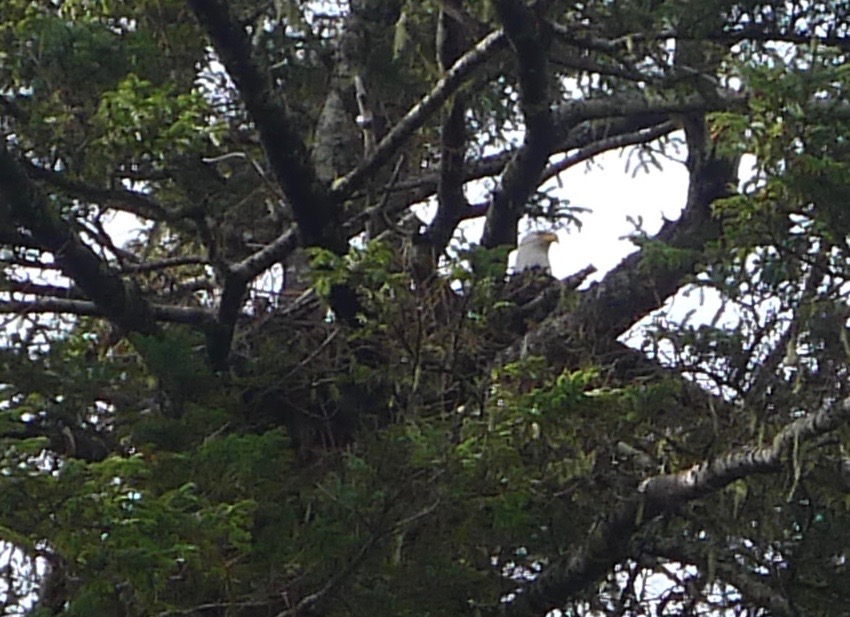
Crossing a slow creek lined with blooming skunk cabbage we make our way to the beach. Just before reaching it we pass beneath an eagle’s nest built high in a spruce. Only the white head of an adult eagle shows above the lip of the nest but we can hear the mewing of a chick. 

There is little wind to riffle Stephen’s Passage when we reach the beach. I plop down onto a patch of dry gravel and let the little dog explore. A northern harrier flies off the water towards us a few feet off the ground. The nested eagle screams and the harrier swings away and moves south towards Outer Point. 

Back to the Troll Woods

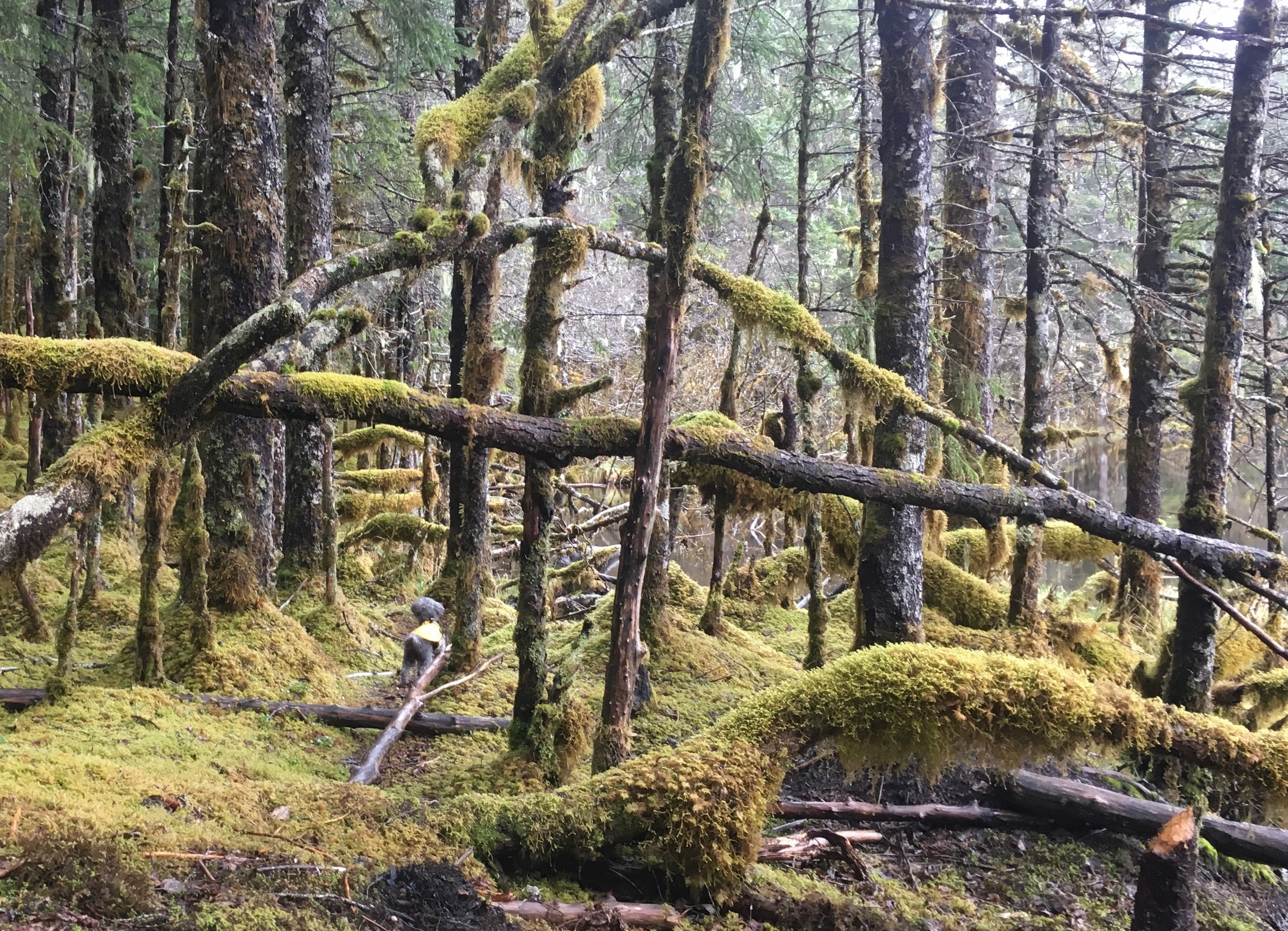
Aki and I are back in the Troll Woods after a long absence. It’s good to be in the peaceful place. This time of year the little dog doesn’t have to worry about eagles. We might run into a wandering black bear but that doesn’t trouble a dog with a heart way too big for her 10-pound body. 

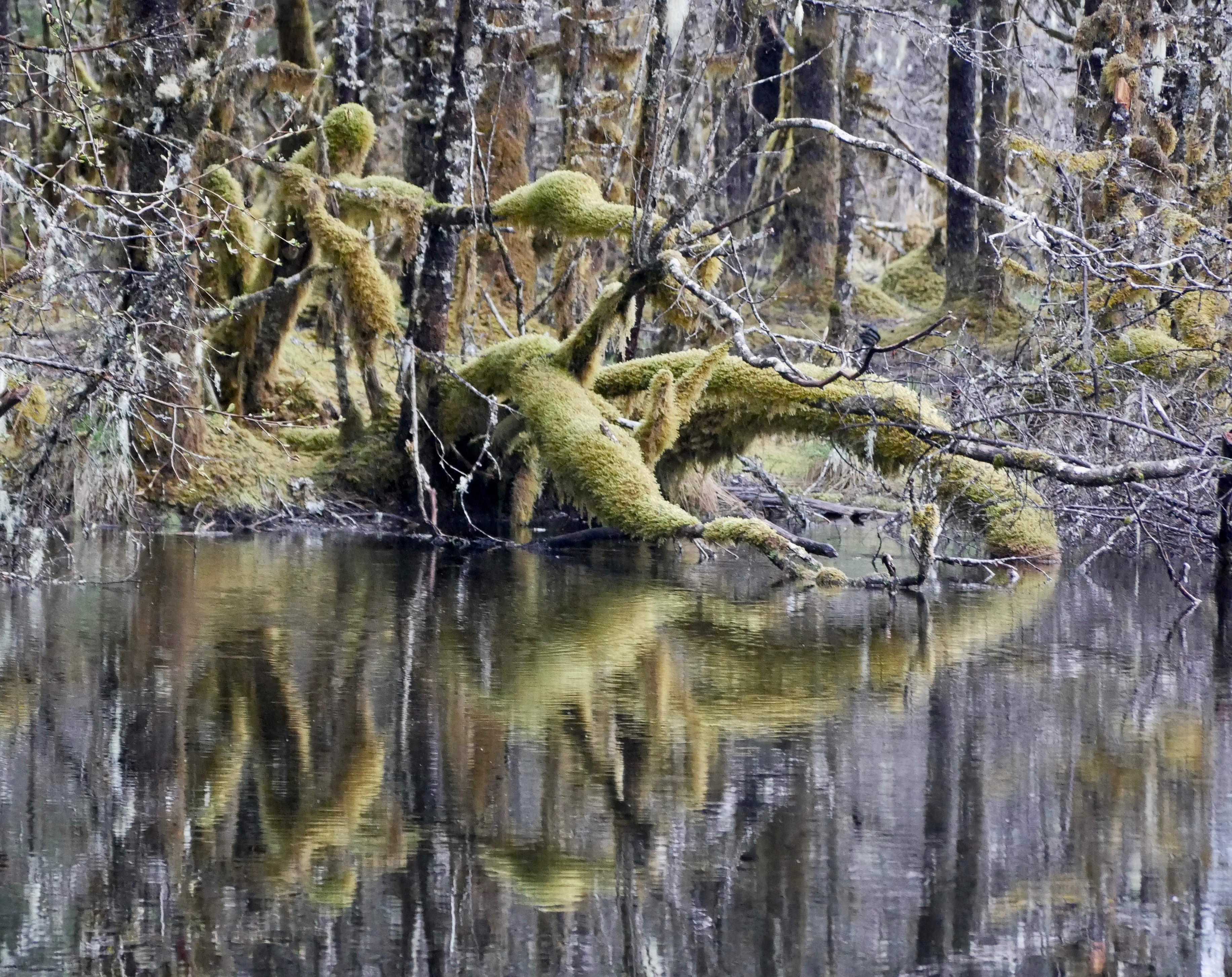
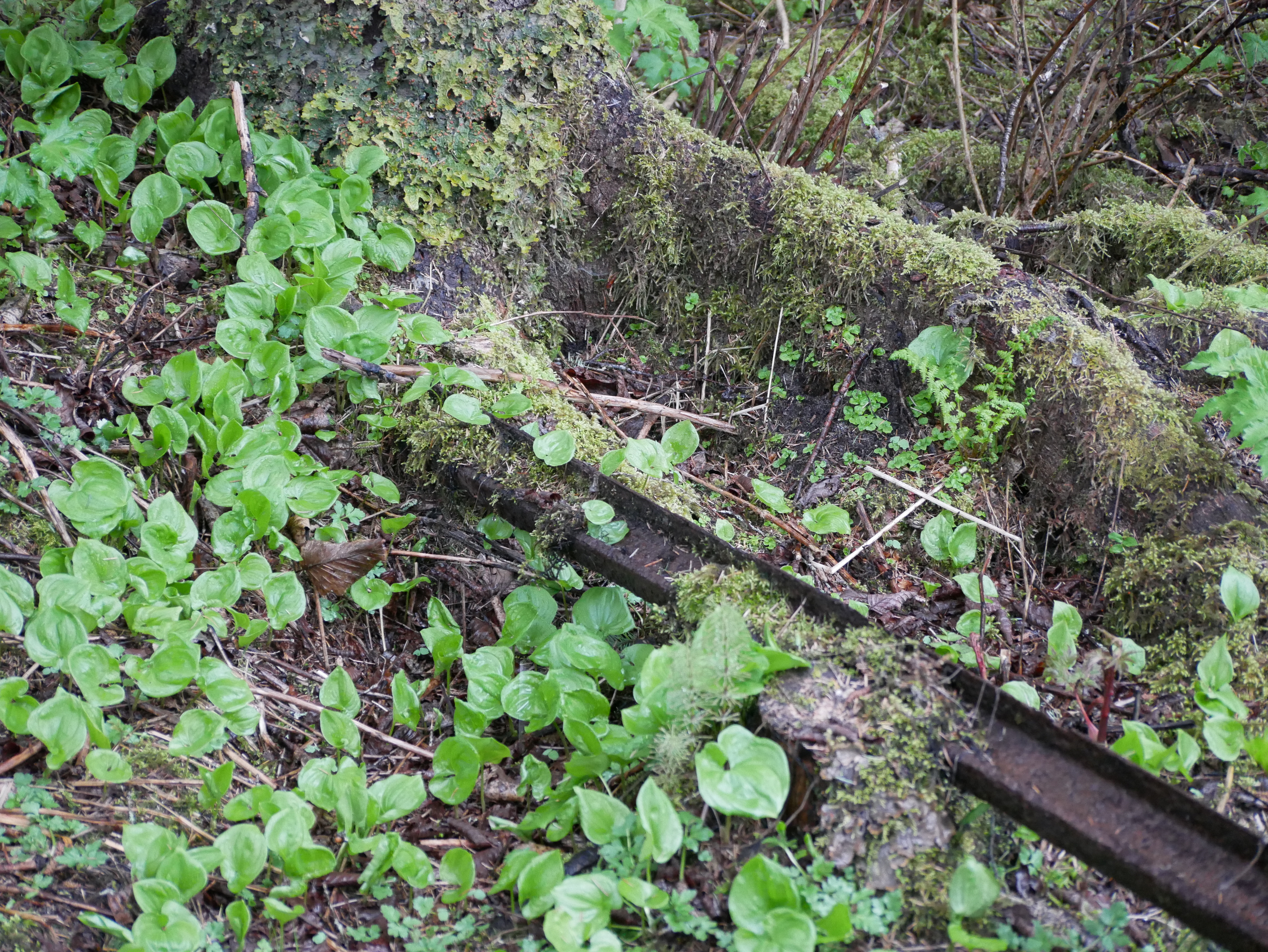
Thick, yellow-green moss covers the forest floor and the trunks and branches of the trees, turning them into sculptures that could have been designed by Gaudi. It would be silent if not for the nesting songs of invisible birds and the muffled roar of Nugget Falls. 

There is beaver sign everywhere: cottonwood limbs stripped of their bark, trails formed by the beavers skidding wood into their ponds, small dams slowing the flow of every watercourse. We run into a member of the beaver patrol. Late every afternoon she caps a pipe that runs underneath the beaver’s main dam. Otherwise the sound of moving water would energize the beavers into building a bigger dam behind the one pierced by the pipe. Every morning she uncaps the pipe, allowing the pond’s water level to drop. Otherwise the trail we use to access to the woods would be flooded. 

Sometimes the Small Guys Win

Aki and were walking back to the car, powering into a strong wind when the heron flew low over our heads, croaked like a sick raven, and dropped onto the surface of a small pond. The heron was a surprise. I expected to see some eagles on the Fish Creek delta and we did. But we rarely see herons here. 

I could see five bald eagles from the spot where I watched the heron. Aki acted like we were alone in the universe. Two eagles were hanging out on a nearby navigational aid tower. Another stood on a beach, ripping apart some morsel of food. The other two eagles crouched, head to head, on the bank of Fish Creek. They couldn’t see much in the creek. Our recent rainstorms had swollen it and turned its normally clear water mocha brown. 

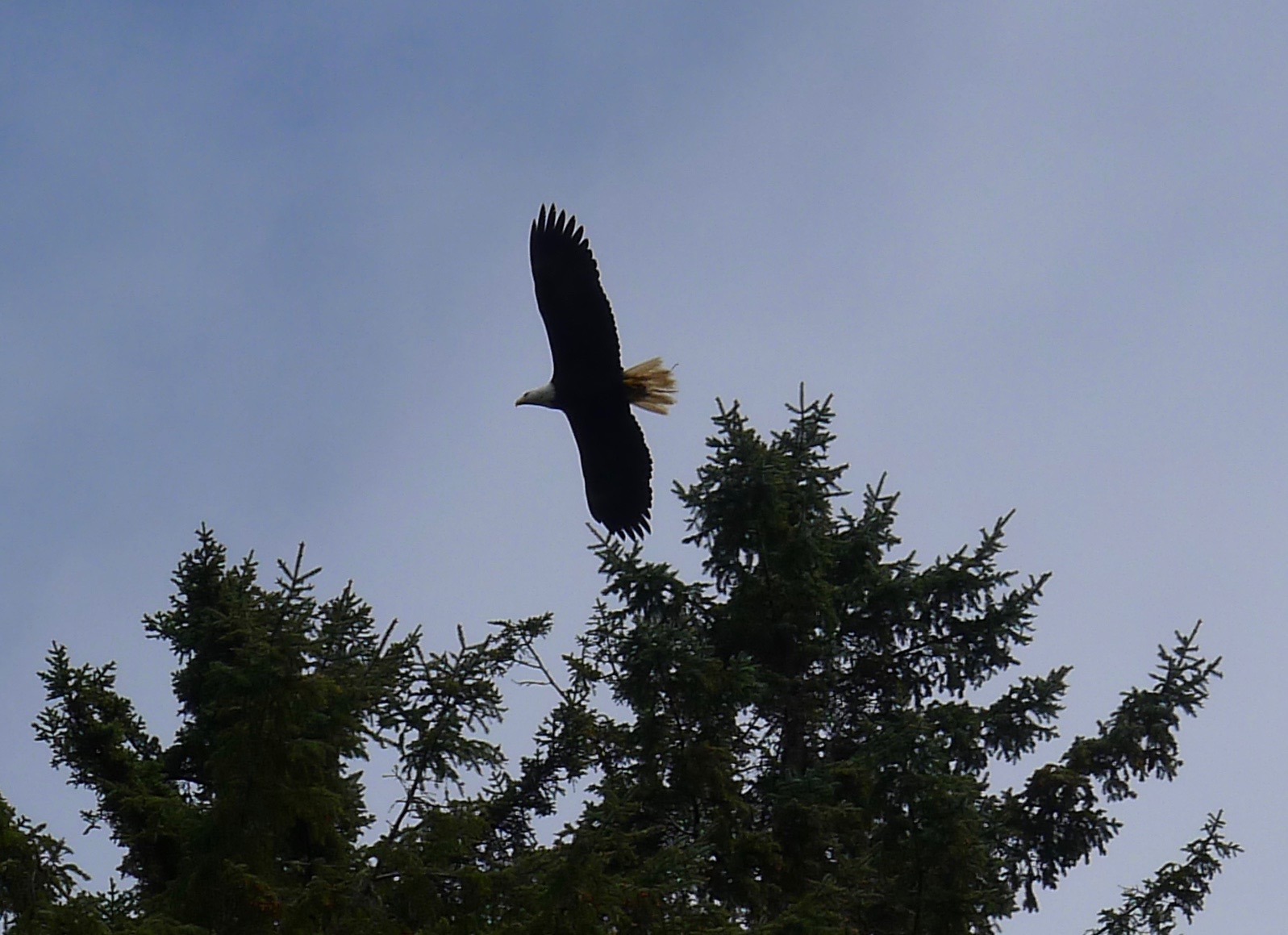
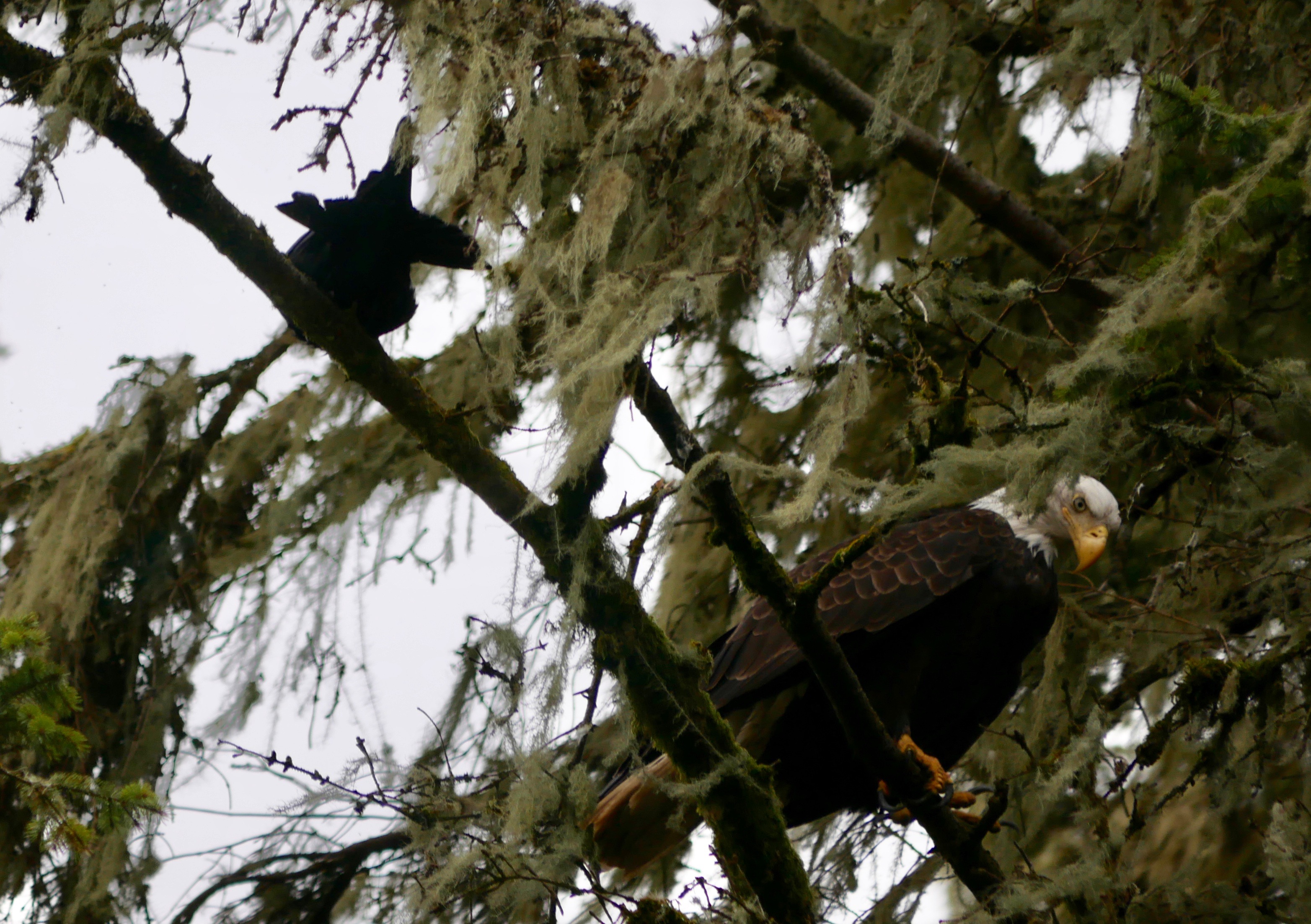
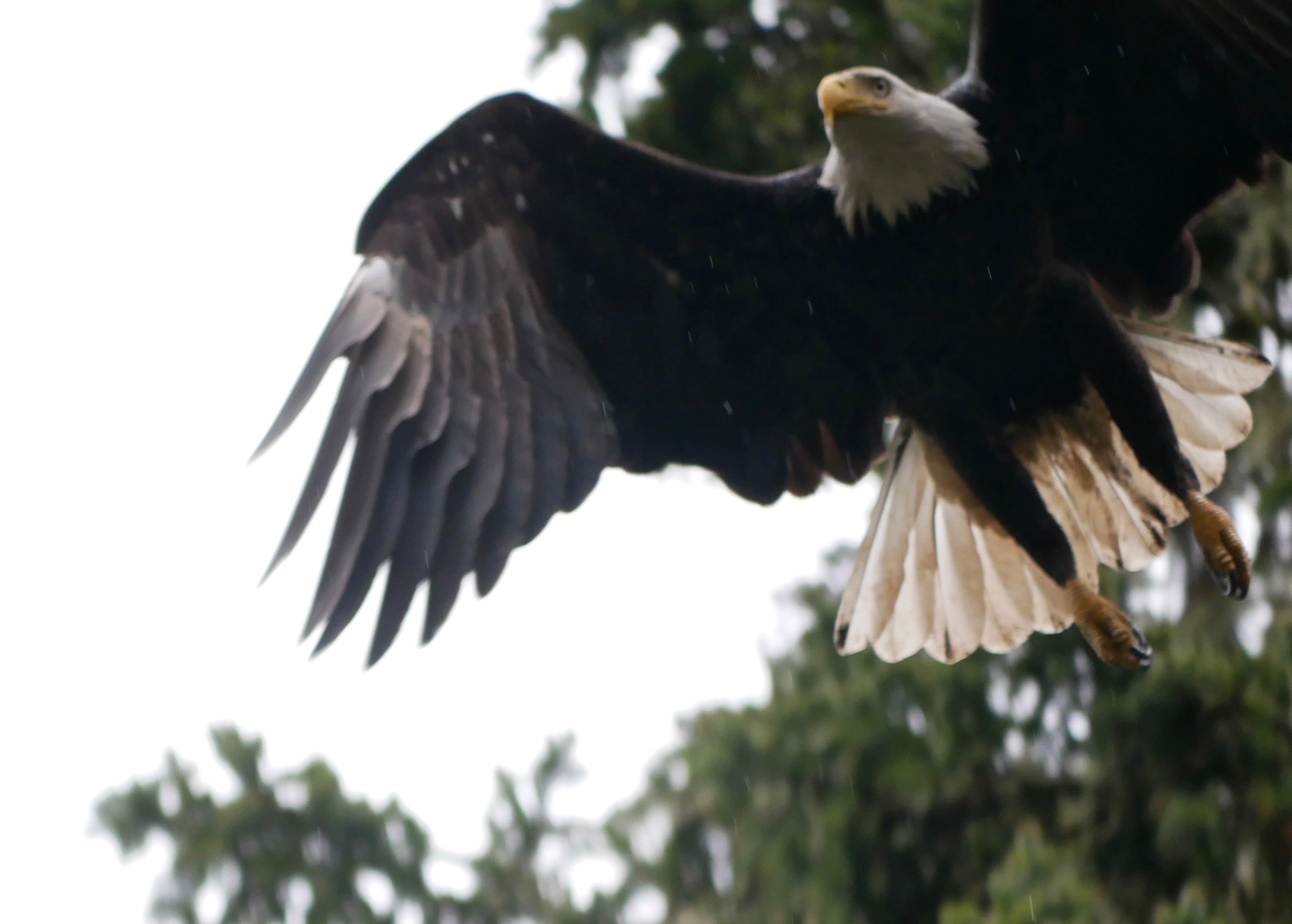
            During the outbound portion of the walk, we had watched an adult bald eagle lift off from the wetlands and fly toward us. As it grew larger and larger I looked down to make sure Aki was safe. No fool, the poodle mix stood right next to my legs. Another eagle, roosted just above us in a spruce, screamed out a welcome just before the other eagle joined it. 

            A brace of crows, each less than an eighth the mass of the eagles, landed just above the eagles. They cawed and invaded the eagle’s personal space. They weren’t going to let two eagles roost on the edge of the forest where their murder is raising this year’s brood.  In seconds the eagles departed. We left too before the crows focused their attention on us. We have both been dive bombed by crows during their nesting season. 

Thanks Kids

Aki and I are cruising the Mendenhall campground, looking for the perfect spot to set up our family tents. We need a place with room for two tents that is within easy canoe carrying distance of the lake. From nearby comes the sound of preschool students heading in our direction. Aki, who thinks that little kids are really just puppies wearing funny clothes, tends to scare them with exuberant welcomes. To avoid that I lead the little dog down toward the lake and find a great blue heron fishing the shallows. 

            Either Aki can’t see the bird or she ignores it. Either way the heron doesn’t exhibit any signs of stress or concern. It lets me watch it stalk salmon smolt, moving slowly with its neck pulled back to form an “S.” When it freezes, it releases the tension in its neck to fire its head and long beak forward like a lance.  It does this several times. The fish win their first battles with the heron. Finally the tall bird snatches a meal from the water, flipping up its beak to force its prey down that long neck. 

            After the preschoolers move on, Aki and I return to the campground road and follow it around the edge of a large pond. Mergansers, buffleheads, and mallards are paddling toward the far shore when an osprey cruises over their heads to land in the top of a nearby spruce. It’s been years since I have seen one of the fish eagles. I would have passed the pond long before the osprey appeared if not the for noisy toddlers.

Worth It

One of Aki’s other humans and I paddle toward the glacier into a rain bearing head wind.  Kittiwakes from the nearby rookery watch us from a small iceberg. They don’t stir as we pass.  Members of their clan mew and keen before diving on sockeye salmon smolt in the lake waters. I worry that we will face worse conditions when we round a point of a rocky hill that has been partially blocking the wind. I am glad that Aki is home snug and warm.

It may be the lovely month of May but today is a wicked-wet day. It’s the only day I have to sneak in a kayak trip to the glacier. Soon an eco tourist company will be hauling cruise ship tourists across Mendenhall Lake in faux Chippewa canoes and lead them into the shrinking ice cave. I want to enjoy it when empty. 

            Pulling past the point we get an unblocked view of the glacier descending out of rain clouds.  A rocky hill rises to our left, colored by low growing plants fertilized by kittiwake guano.  It seems to take hours to paddle the mile to the glacier in the now unrestrained wind. An empty tourist canoe sits on the beach where we haul out the kayak. Who, I wonder, would pay big money to ride here in an open canoe today? Must be a group of hardy Australians. 

            Listening for ANZAC accents, we walkover a landscape as barren as the moon’s surface. At first appearance, the trail seems to be well graveled. But I find myself slipping on portions that are really hard glacial ice covered with a thin layer of mud or pebbles. We pass torn chunks of trees just released from hundreds of years of icy imprisonment by the glacier’s retreat. The only bird sound we hear is from the keening kittiwakes. No songbirds could earn a living in such a sterile place. 

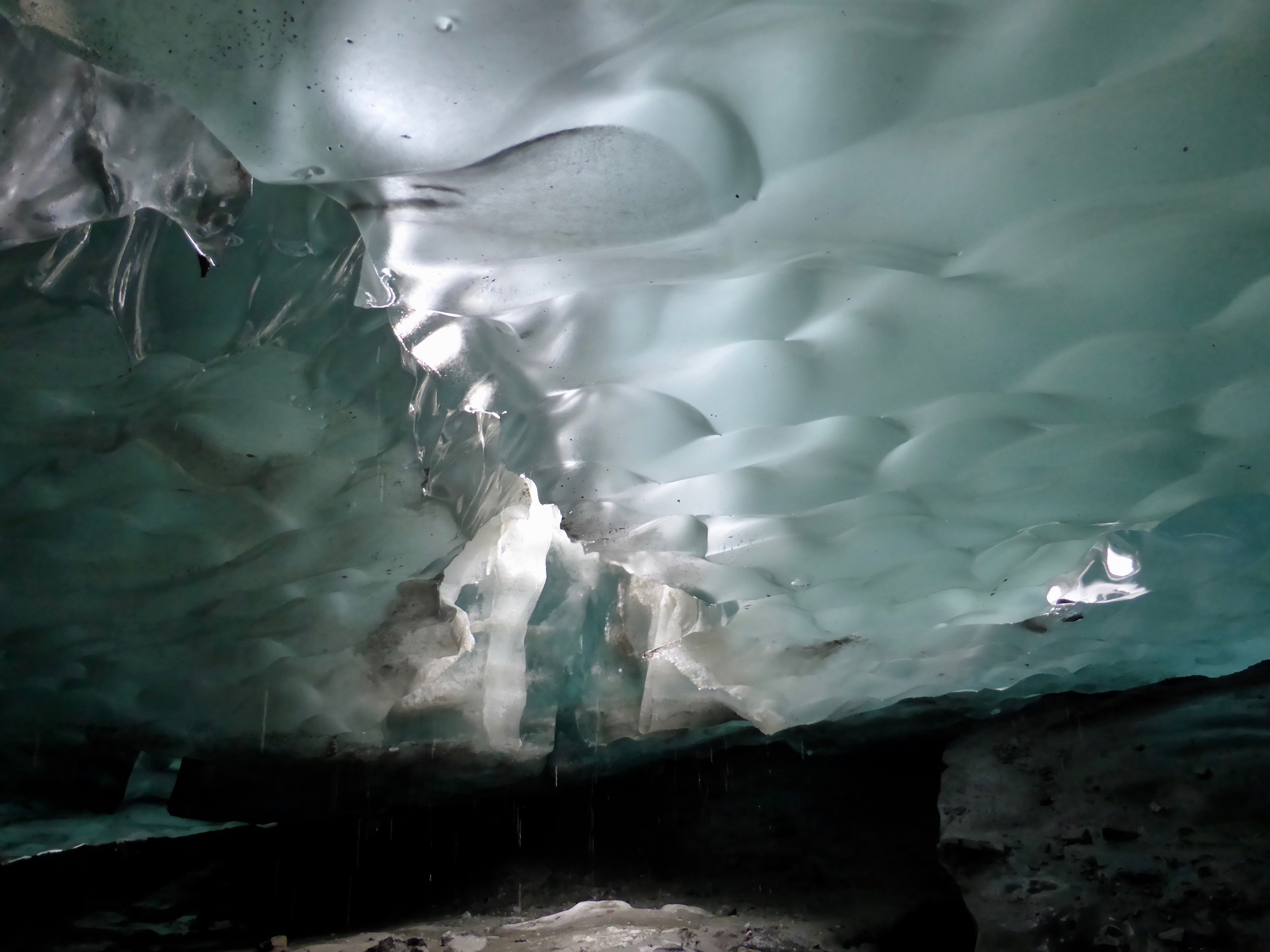
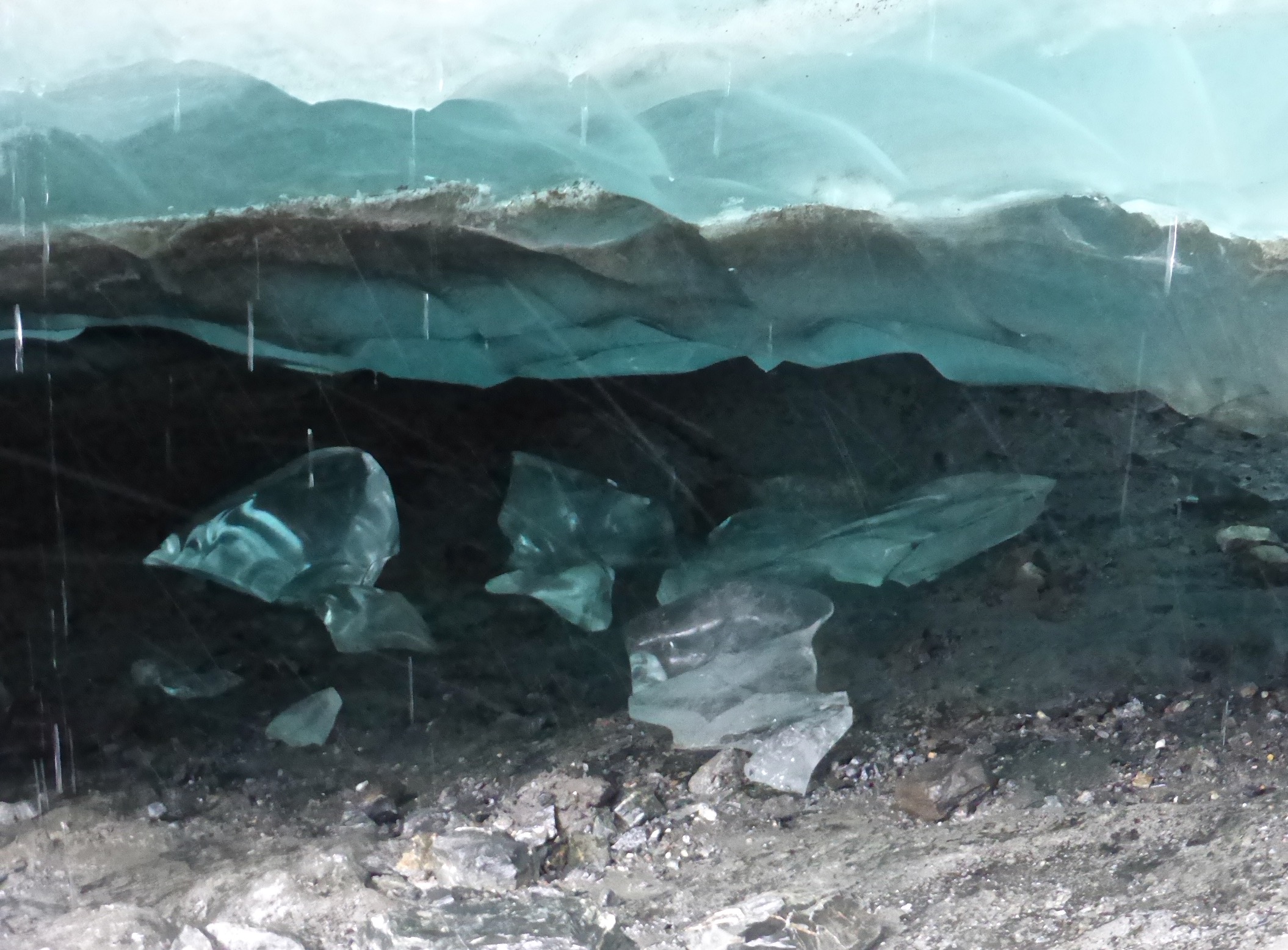
            The glacier seems to be collapsing into itself like an overripe pumpkin. Mocha brown water rushes from beneath the ice. I worry that the mystic blue ice that formed the glacial cave will now be fragile, and opaque. But in spite of our recent heat wave and the subsequent days of rain, the cave retains its basic shape and color. Rainwater streams from cracks in the overhead ice and some of the old entrances have collapsed. It is still a suitable venue for a religious ceremony or at least a brief prayer for our challenged world. 

It is Must be Summer

In the center of Treadwell Woods, a single salmon berry flower bounces gently up and down. It is moved, not by wind, but by the heavy raindrops falling through the forest canopy. This far away from the beach, the magenta-colored flower is the only thing challenging the trees’ monopoly of grays and browns.             

            As Aki moves ahead, excited by a pee mail message left by an earlier canine visitor, I stay with the flower, remembering a visit made years ago to my carving class by a Haida elder. Her eyes promised the delivery of an exciting message. It is summer. I just saw my first salmon berry blossom. 

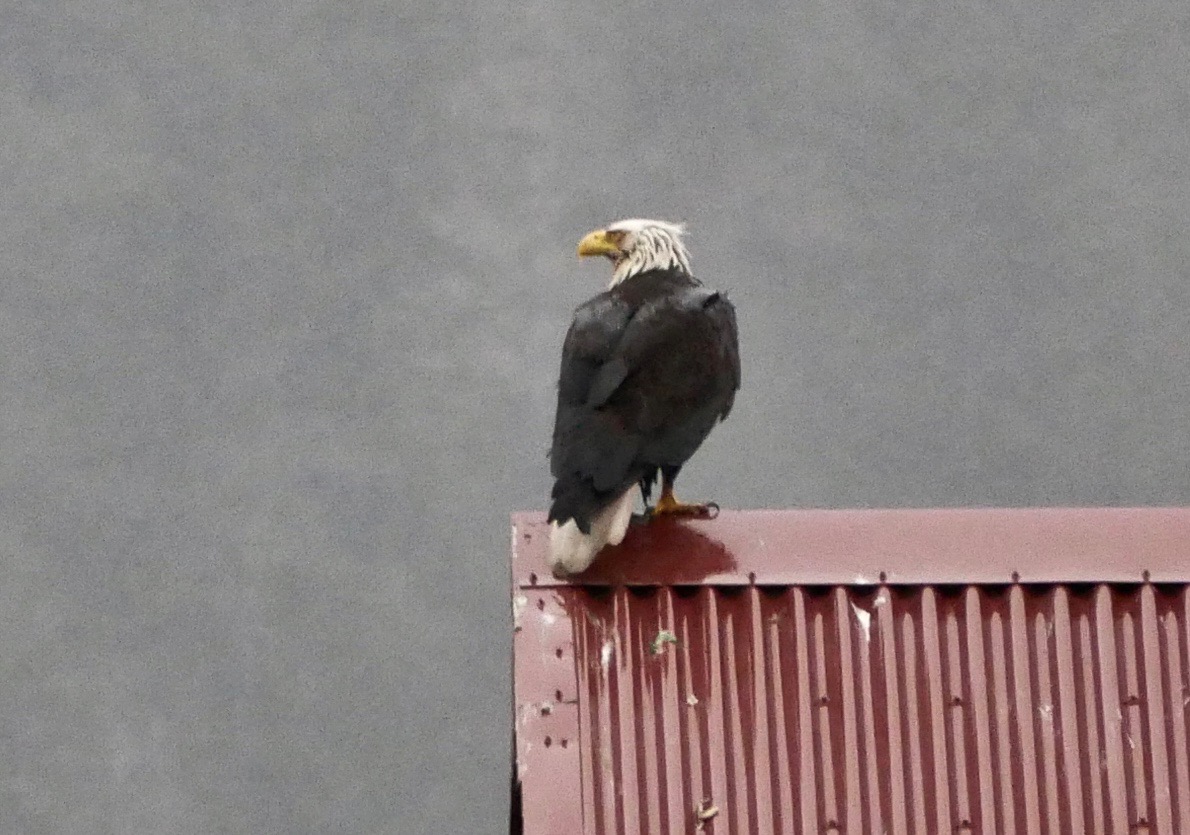
            The little dog and I move through the woods and drop onto Sandy Beach. It is empty except for a bald eagle. The big bird perches on top of the old ventilator tower, its feathers soaked and askew.  Wind driven rain sweeps down the beach, making me wince and Aki shiver.  It feels more like early winter than summer. But salmon berry blossoms provide color along the beach’s edge. Summer can’t be denied. 

All Birds

It rained last night for the first time in at least a week. It will rain again and soon. Good day to visit with the ducks. Aki and I head out to wetlands drained by the Mendenhall River.  We pass two bald eagles perched on the superstructure for one of the airport approach lights. After a third eagle flies over them, the roosting pair lean in toward each other, as if to gossip or show each other affection. Heads almost touching, the eagles watch the early morning jet to Anchorage. 

            To be honest, I here for the blue birds, not eagles or waterfowl. Many Juneauites have seen mountain bluebirds perched on snags above one of the wetlands meadows. The little dog and I leave the main trail to better scan the meadow for little guys. We won’t spot one of the rare songbirds but will make our first yearly sightings of northern shovelers and lesser scaups. 

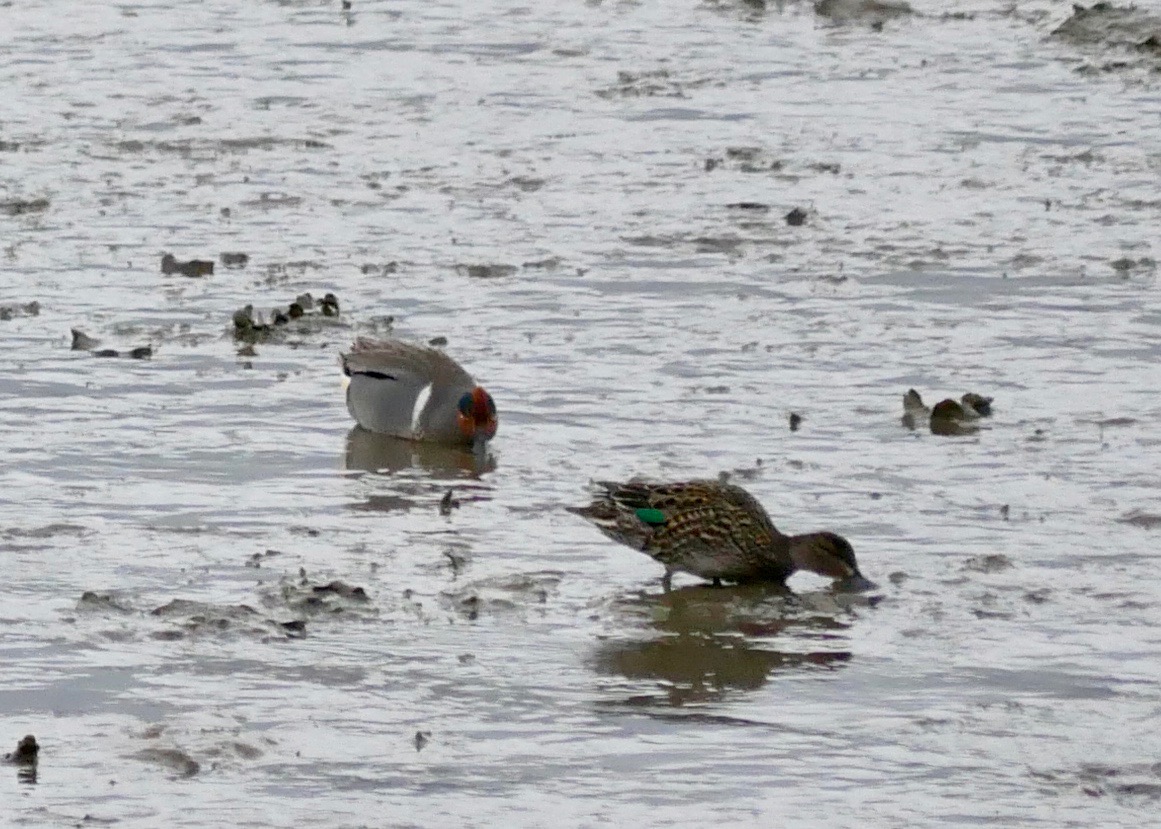
 We’ll have ample opportunities to watch green wing teals and American Widgeons patrolling the mud flats for food. At one point two Canada geese will fly over our heads, giving away their position by their persistent honking. 

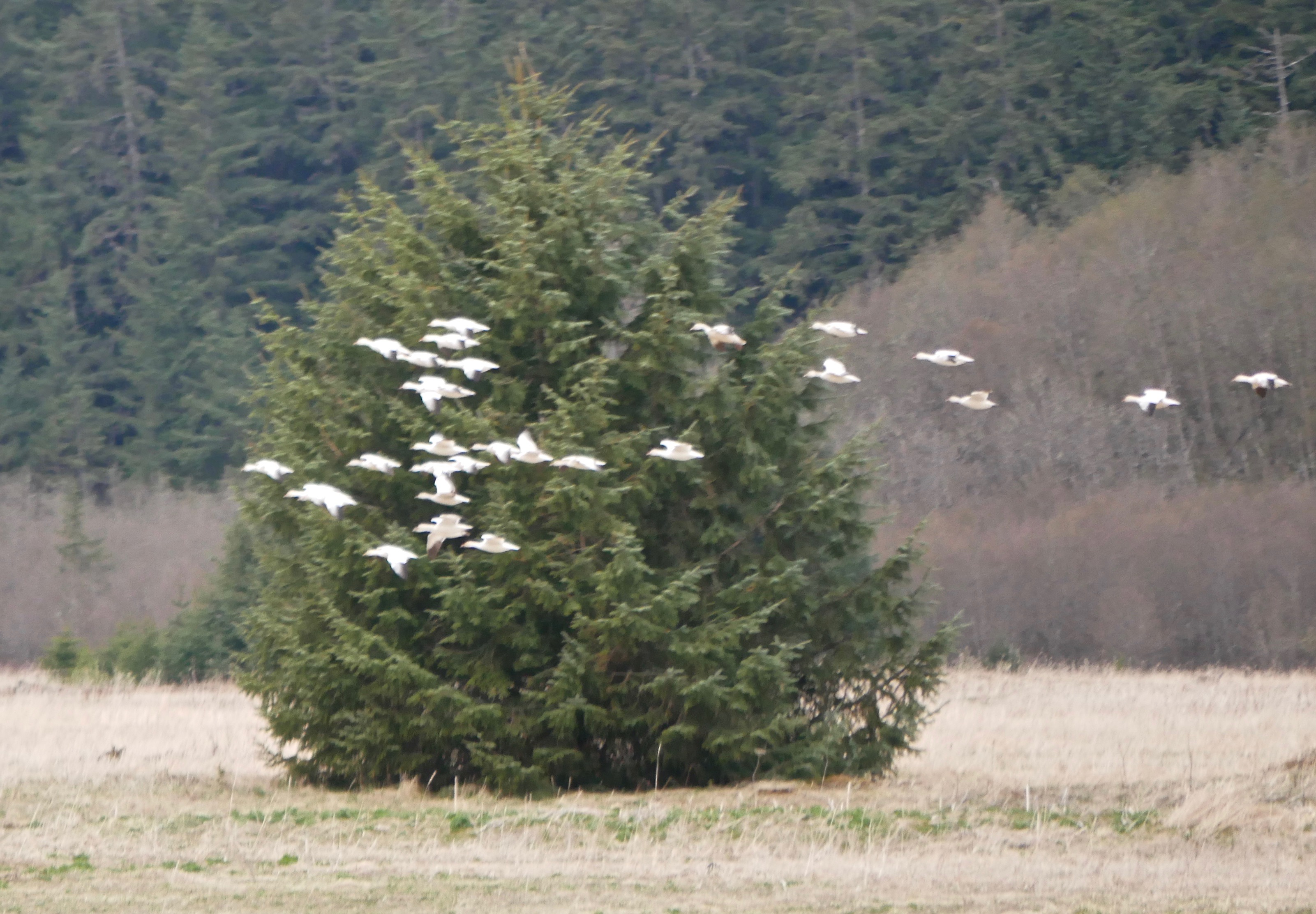
            There will be other eagles and a greater yellowlegs shorebird. But the big surprise, sprung on the little dog and I while crossing the most likely part of the meadow for spotting bluebirds, will be a flight of migrating snow geese that rise out of meadow grass and head down the Mendenhall River. 

Not Even Close

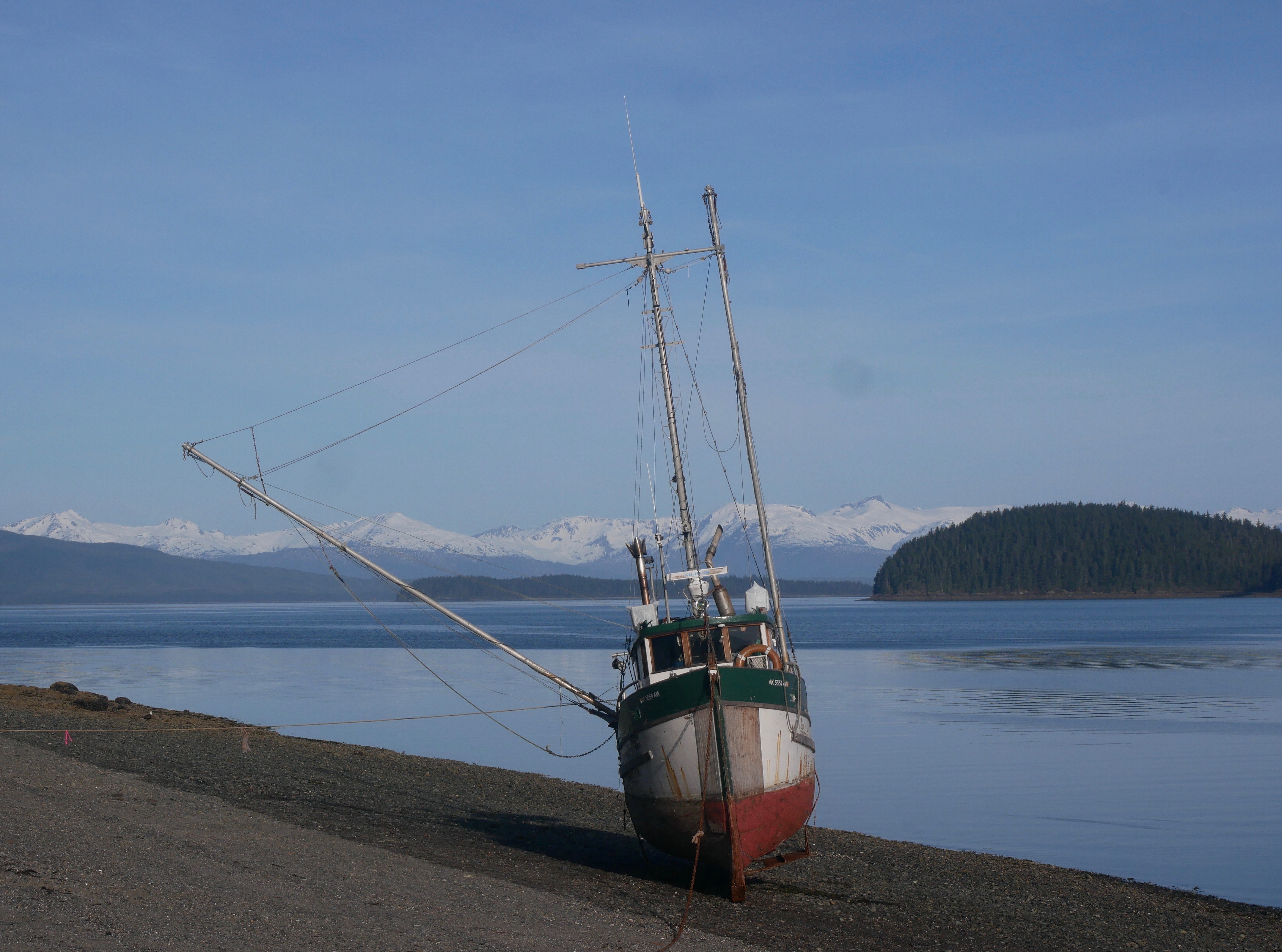
This morning, I stopped at the North Douglas Boat Ramp to take a picture of a commercial fishing boat. The boat was designed to catch salmon by trolling a collection of baited hooks through the water. Now it squats on beach usually used for launching kayaks, useless but looking as pretty as a picture. 

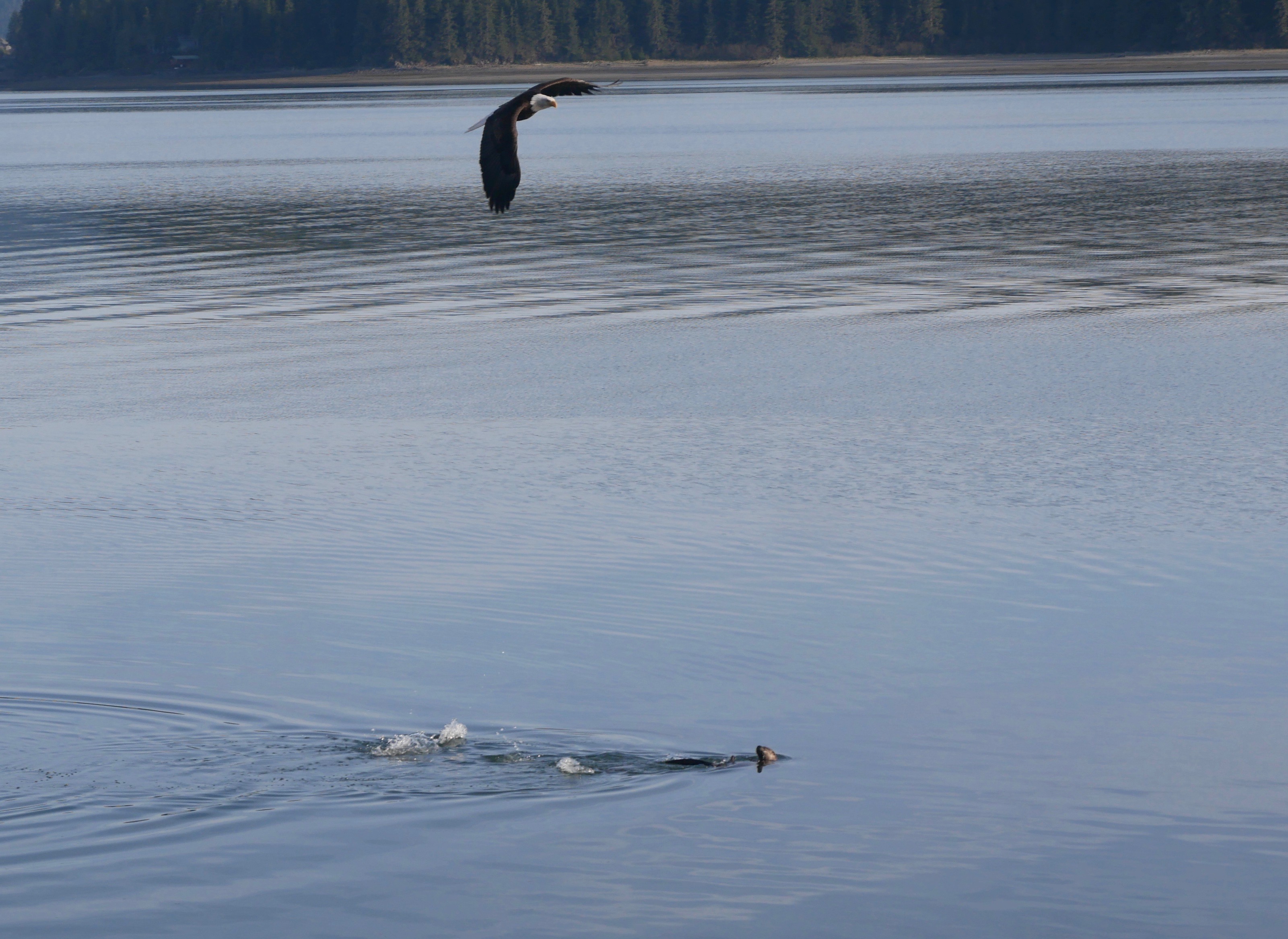
            Three land otters swam past the troller and climbed onto the end of the boat ramp float. Like hungry burglars, they gorge themselves on chunks of flesh discarded by the person who cleaned his catch on the little processing table. Good thing I didn’t let Aki out of the car. The last time we came across this gang of otters, they tried to seduce her into the water. 

            As the otters savored their quick meal, an adult bald eagle approached from the north.  Rather than using the usual circling technique, this sneaky eagle cruised low over the water. The otters spotted me and dived into the water. When they looked up again, the eagle was right above them. Apparently startled, the otters panic dived as the eagle arcs toward them. 

            A land otter can weigh anywhere between 11 and 30 pounds. They are way too heavy for the eagle to lift, even from dry land.  The aquatic otters were never in any real danger.  After the hungry eagle returned to its roost, the otters cruised along the shore, heads above water, looking for more trouble.