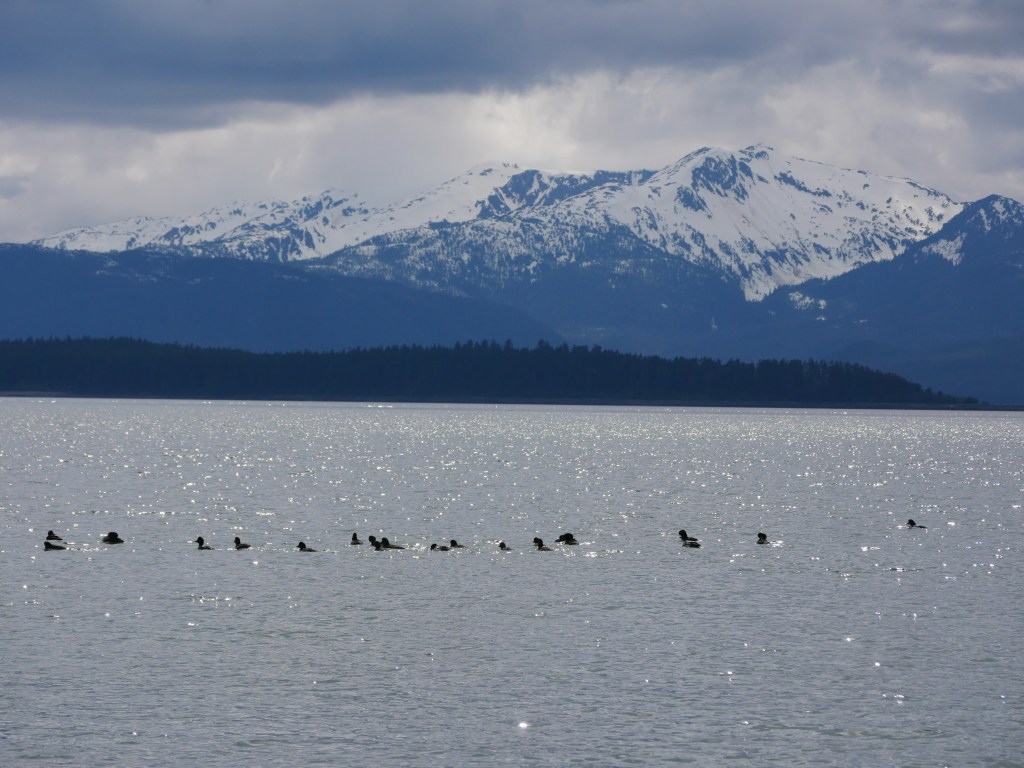
Last week this beach was jammed with people and dogs. Kids splashed in the small surf. Today we pretty much have the place to ourselves. Two adults sleep on towels. Two gulls complain about our presence. Twelve golden eye ducks fish just off the beach.
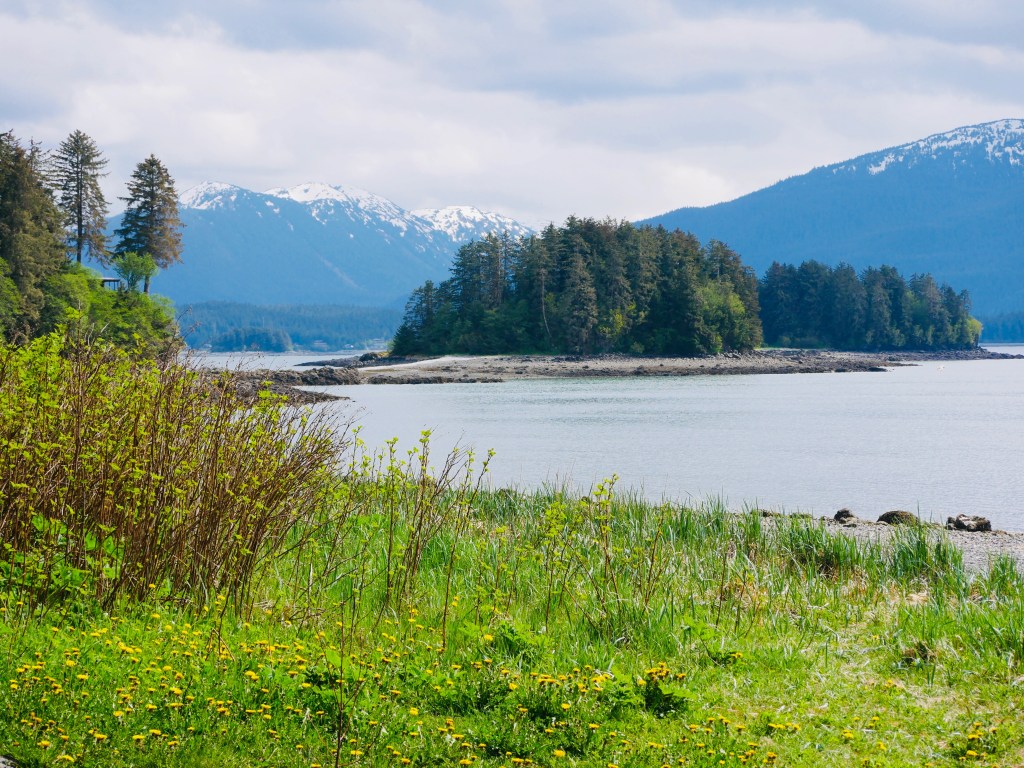
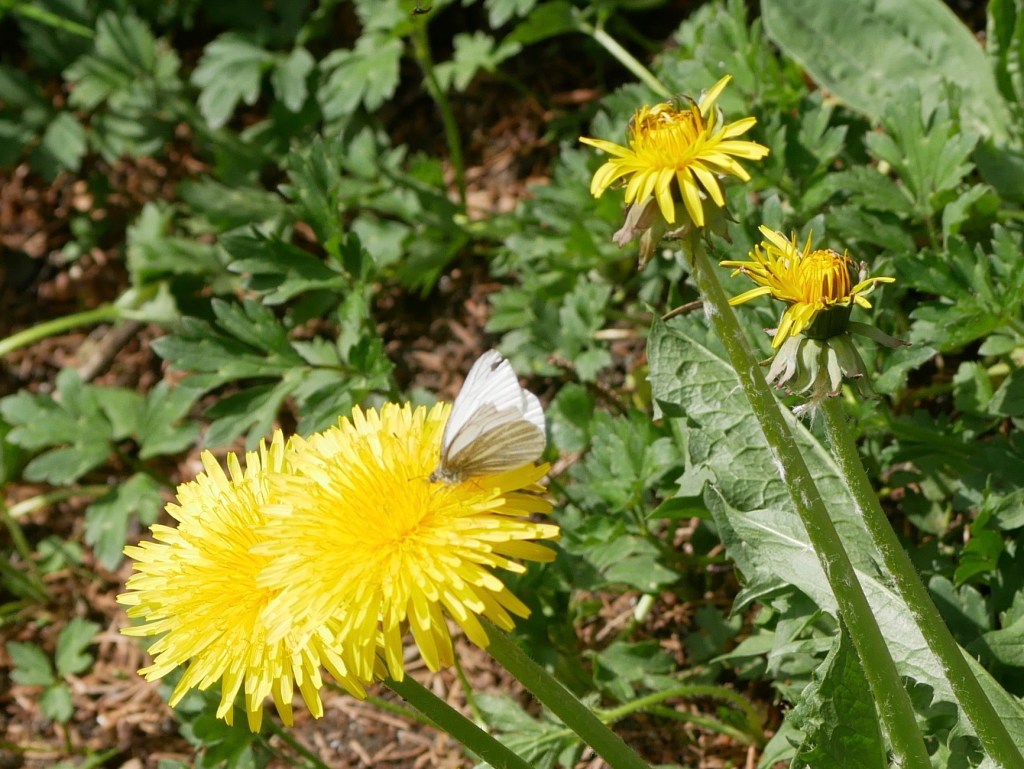
Sunlight slips in and out of the clouds, intensifying the yellow-green color of cottonwood leaves, making the water around the golden eyes sparkle. It brightens the yellow of dandelion flowers lining the beach.
The little dog and I have reached the junction in Treadwell Woods where we always turn left. It’s marked by the tall cottonwood with an eagle’s nest. The other trail leads to Lucky Me. No eaglet calls for food. No adult looks accusingly over the lip of the nest at the poodle mix. A corona of backlit cottonwood leaves circles of the nest. Too bad there isn’t a white-headed adult to wear the green crown.
I’ve never been able to coax Aki away to take the right fork at this junction until today. Today, she is more than happy to follow a dog friend and its human right to take the road less traveled. It’s a trail dappled by leaf shadows that leads to a beach of pulverized ore from the Ready Bullion mine. The mine closed more than 100 years ago, leaving behind the beach, buildings, mine carts, bricks and crockery. Rusting wheels and rails emerge like mammoth tusks from the shifting ore sand.
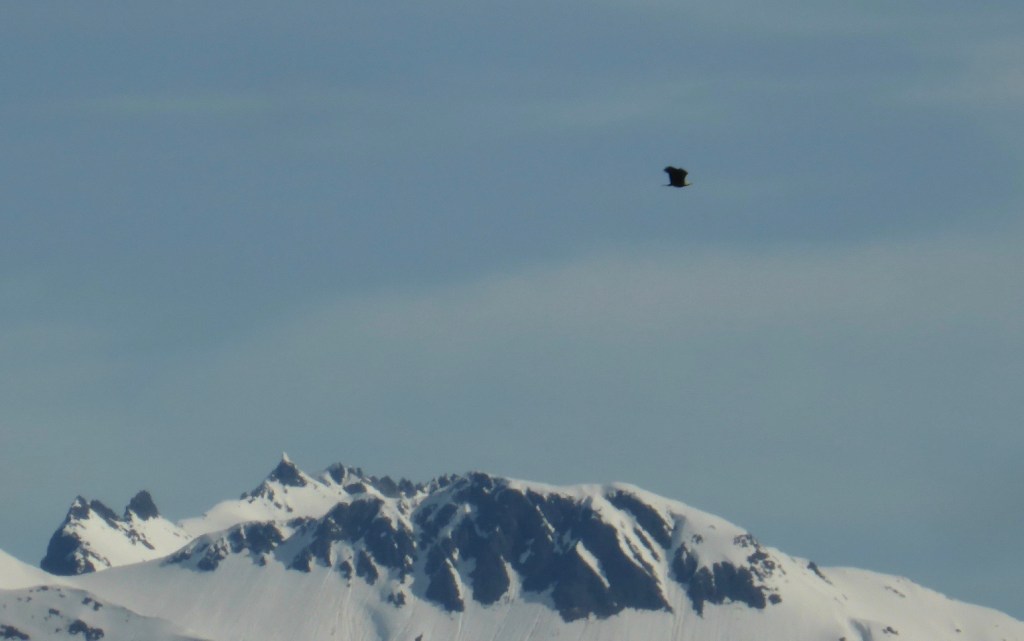
All of the bird action is taking place at the waterline. Two sandpipers—a greater yellow legs and a grey tailed tattler—feed in the shallows until driven off by the wake of a Seattle-bound barge. An adult bald eagle munches on a crab carcass and then flies over to a small stream to bathe. Just offshore a raft of surf scoters descends on of school of bait fish.
Bird song has dropped in the Troll Woods. The wrens are still going to town. But I haven’t heard a thrush’s blurry whistle since we left the car. Our sunny streak is continuing so I feel like singing, even if the birds had gone silent.
Aki and I circle several small lakes, seeing no one. Since the Covid crisis, I tend to choose the lesser used trails. The little loyal little dog doesn’t object, even though it means she rarely can do a meet and greet with another dog. She still stops often to check out interesting scents. I had to wait a minute for her to finish checking out a smell near the beavers’ lodge.
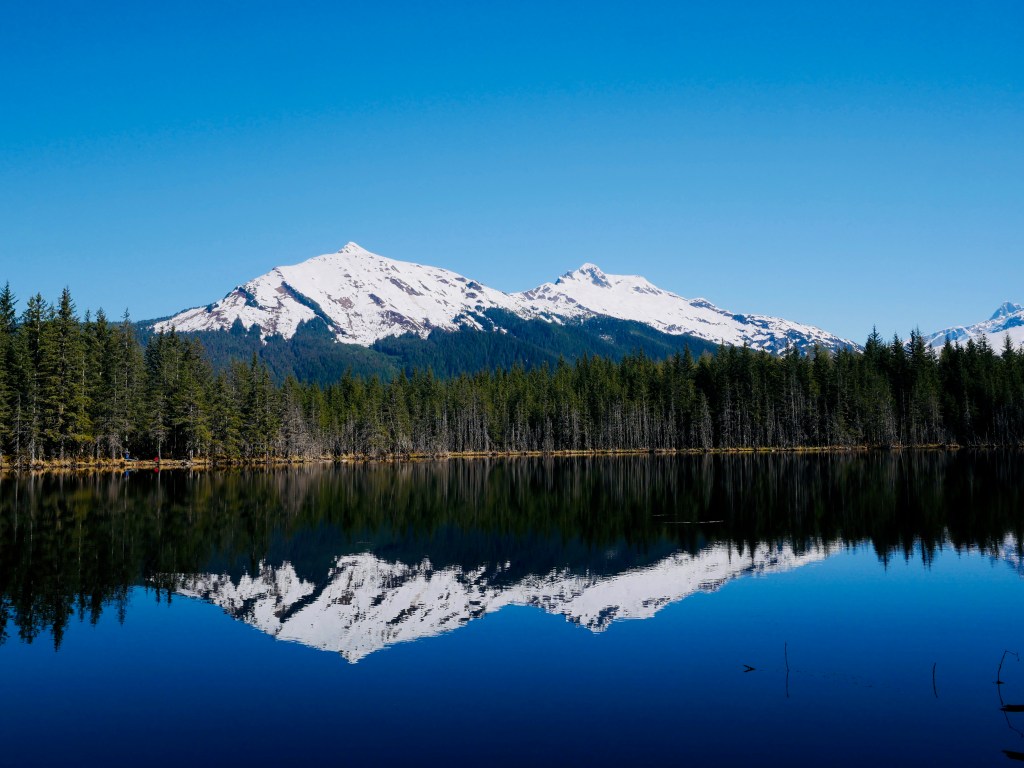
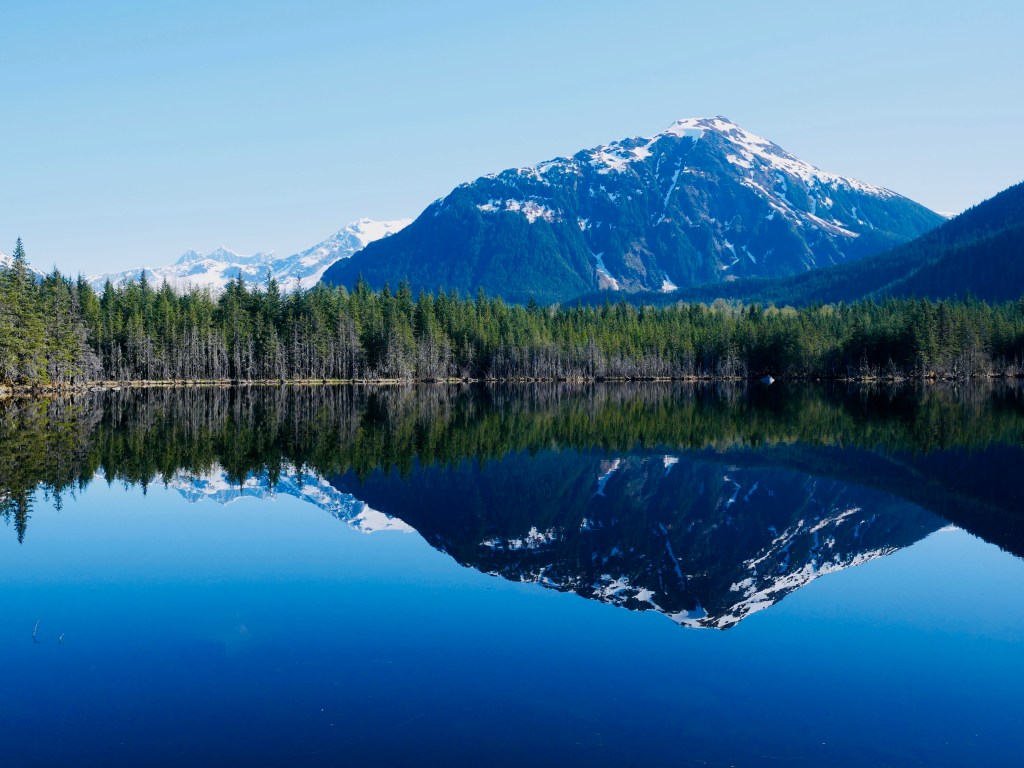
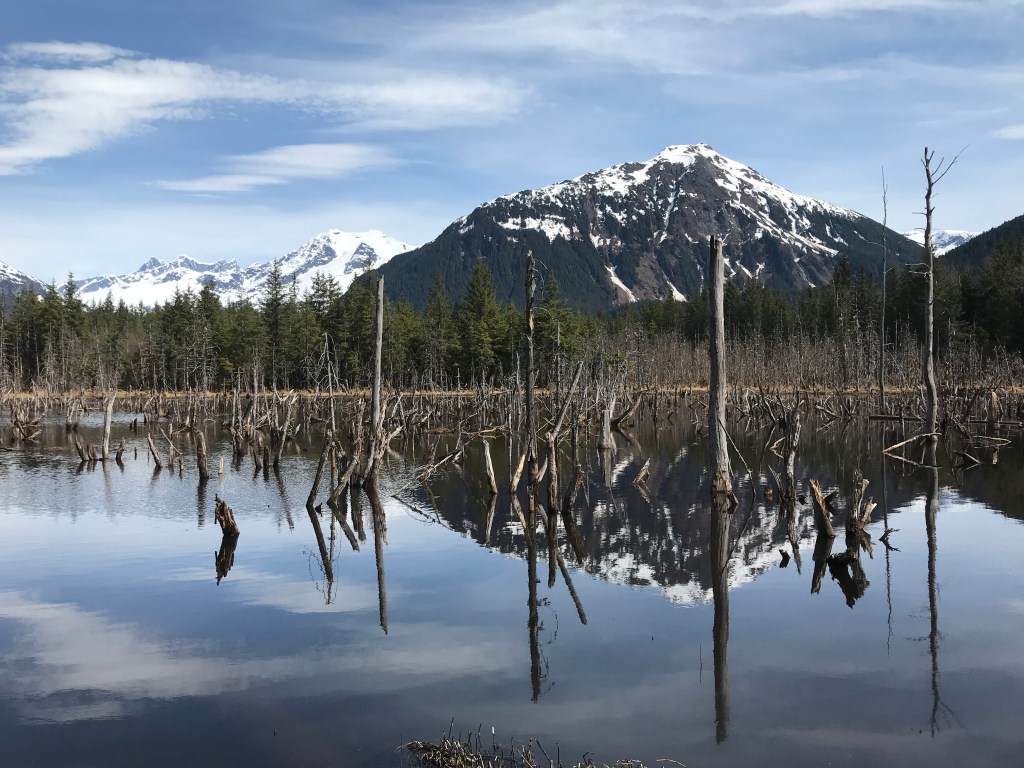
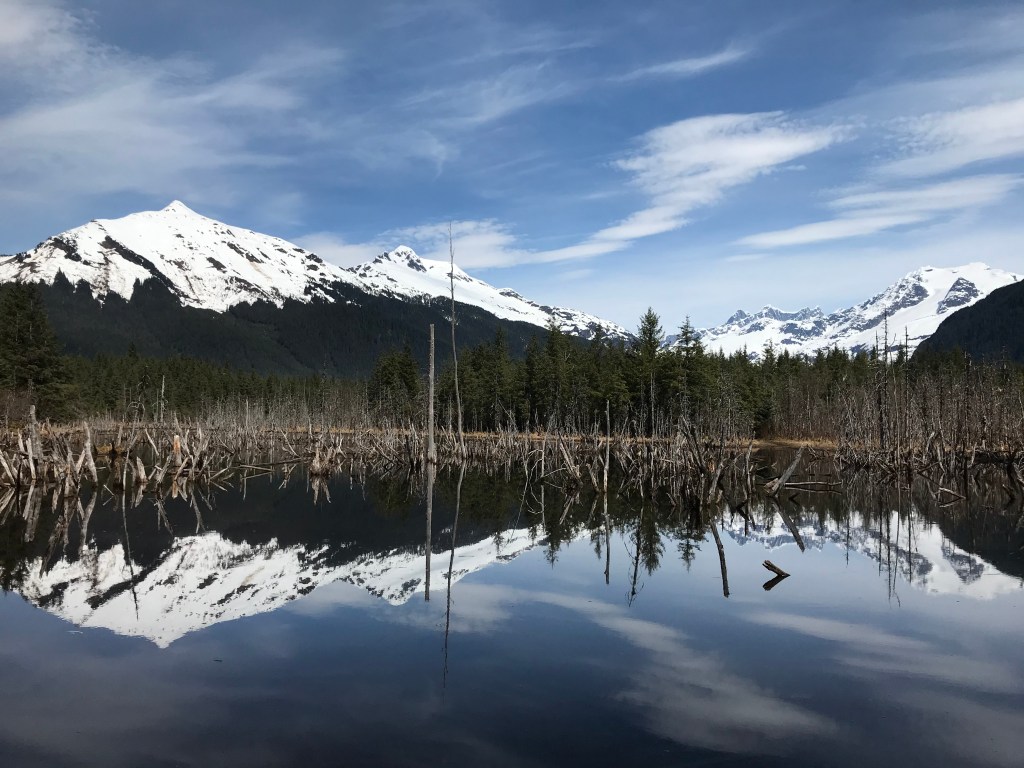
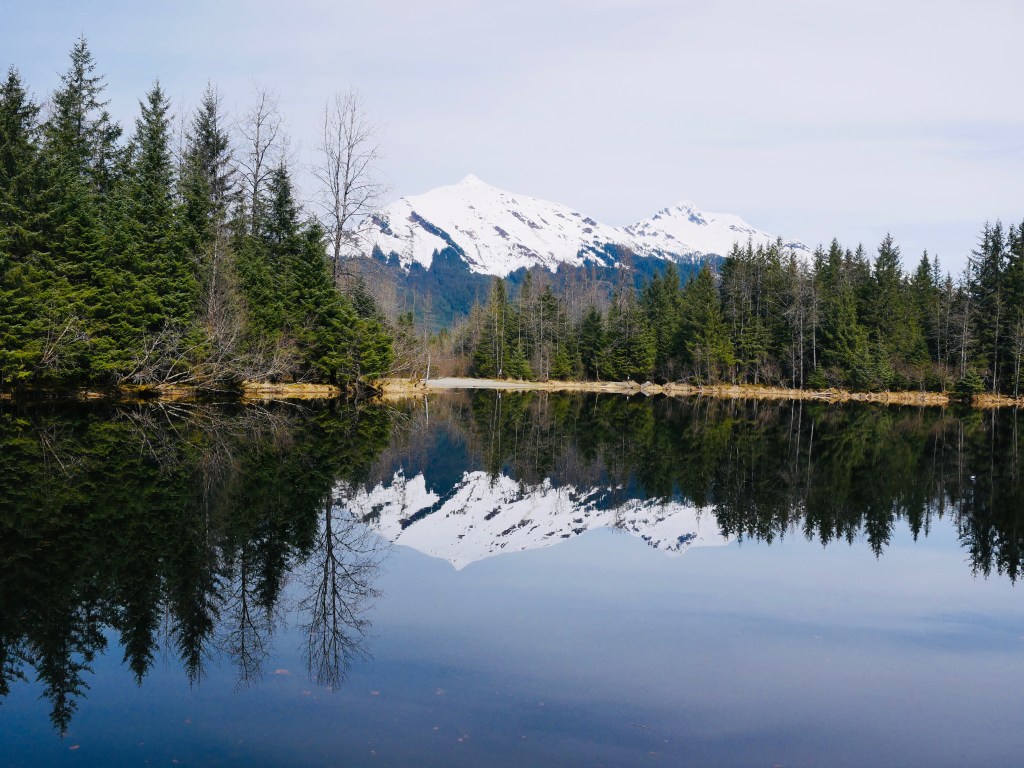
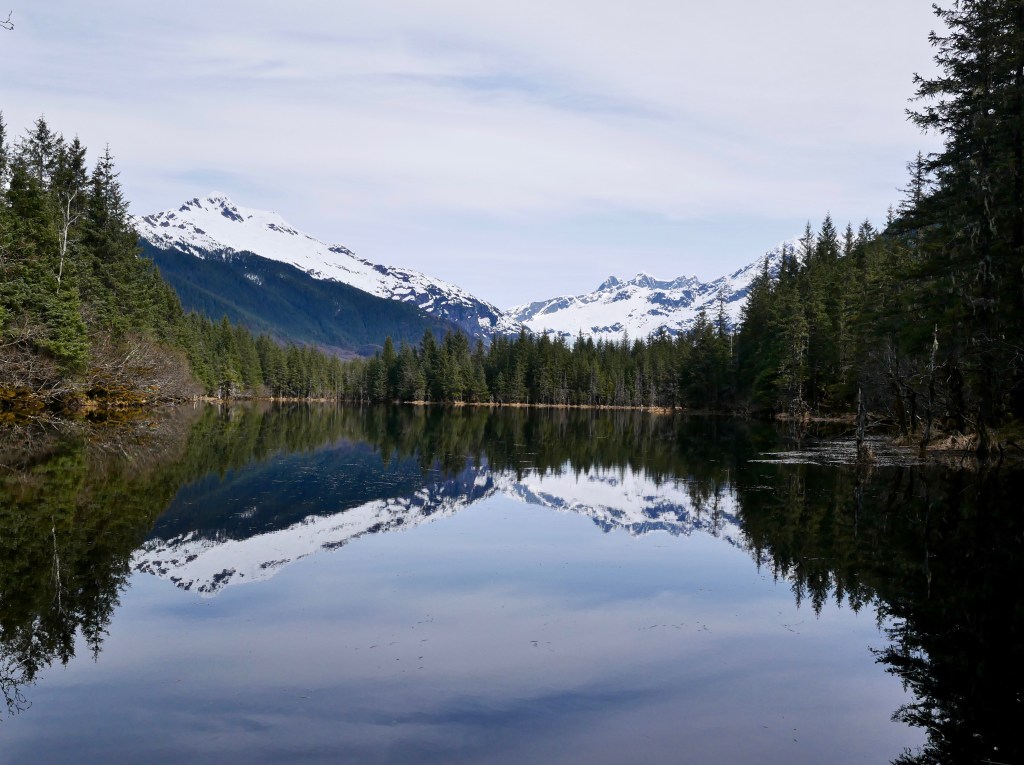
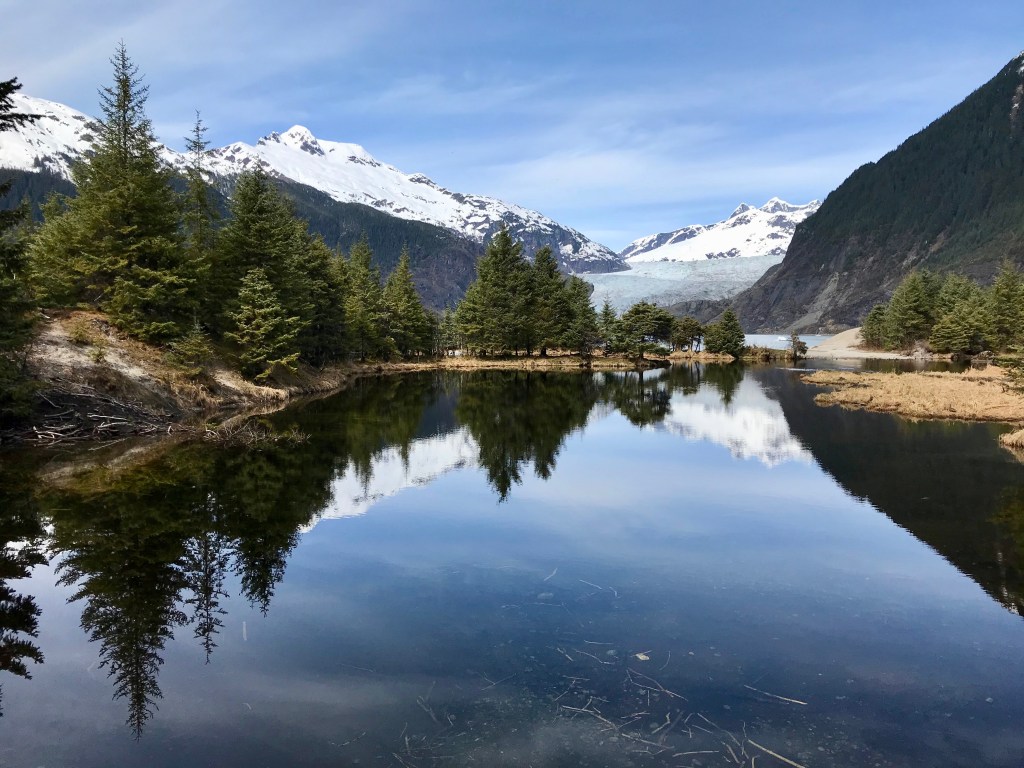
Usually sunny weather brings the wind to riffle the Troll Woods lakes. But today, only the faintest breeze flows through the woods. Each lake is a crystal mirror reflecting mountains and glaciers.
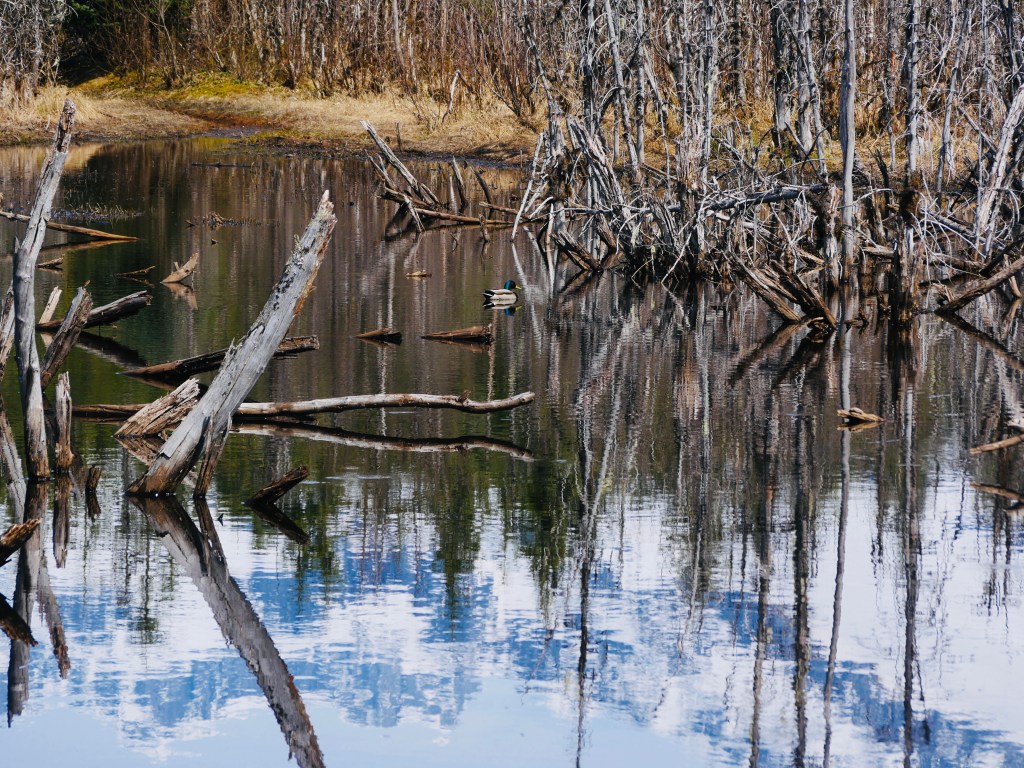
Clusters of emerging water lily leaves look like whales breaching on the surface of the beaver pond. Some leaves have already flattened out on the water to gather the summer’s energy. Strong morning light makes the others translucent.
The tail slap of a nervous beaver sounds on the other side of the pond. Above the pond, a male woodpecker hops erratically up and down an overhanging alder tree. It’s a red-breasted sapsucker, not the three-toed woodpecker I was expecting. Last summer the three-toed raised a brood of chicks in a nearby spruce snag. I saw the male feeding near where the sapsucker is staring at me. Each season has its winners and losers.
We’ve been enjoying an early stretch of sunny, warm weather, which has drawn campers to beaches, like the one that Aki and I will soon reach on the trail. When a family of campers approaches, I grab Aki and retreat a few meters off the trail. In a few minutes the little dog and I reach their campsite and find an eagle and raven checking it out for scraps.
These campers had totally extinguished their fire before leaving. Two days ago, sixteen acres of forest and grass-covered dunes burned near Boy Scout Beach, a place Aki and I like to visit. We have seen bears digging up the meadow grass there to harvest chocolate lily roots. The place was crowded with Canada geese the last time we walked over the dunes. Now the geese and bears will have to find somewhere else to feed.
The forest light seems particularly pure this morning. It confuses my old digital camera and sometimes, even my eyes. It turns strands of spider webs into strings of prisms. Light and birdsong are the only things keeping us in the woods. Normally, Aki and I would have reached the beach by now, where we might see arriving humpback whales or orcas chasing incoming king salmon.
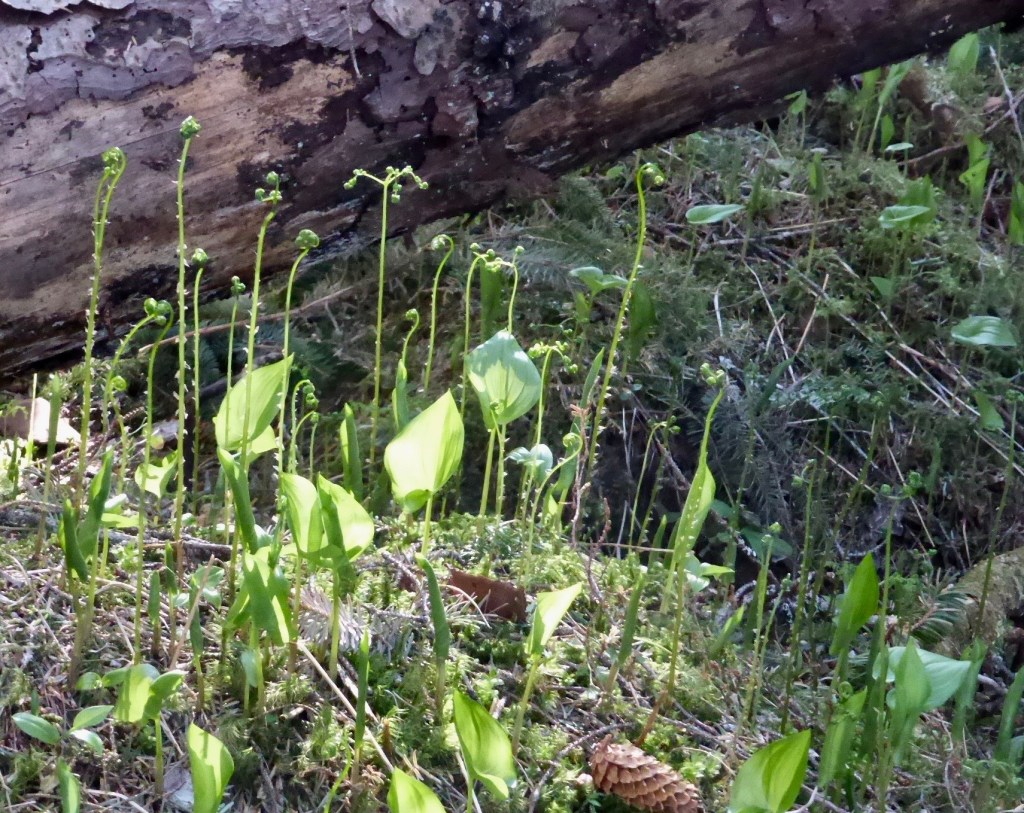
The tips of fragile ferns have already unfurled, marking the end of spring. While Aki reads her pee mail, I check the blue berry bushes for blossoms. We and the bears will have to look elsewhere for our berries this year.
When we finally reach the beach, it seems empty except for kids carry white plastic buckets. With rubber boots on their feet, they splash through the shallows, bent over, looking for shells or memories.
This is our third attempt in a month to reach Norton Lake. Water backing up from a beaver dam flooding the trail forced me to give up on the first two attempts. It has dropped enough to allow me to reach the lake with damp, but not soaked boots. Aki and I splash along the edge of the water until reaching an old beaver dam. I walk across the top of the dam until reaching a deer trail that leads to the lake.
Aki didn’t walk onto the dam until I was most of the way across it. When I look back, she gives me her, “Are you sure this is how you want to end your life?” look. I search the pond waters for crocodiles and the nearby woods for bears. Seeing none, I push on. Aki dashes across the dam to join me on the other side. Then, she gives me her “I hope this is worth it” glare.
Few dogs have passed this way so at first Aki has little use for her nose. Then she finds beaver scent and appears to go into a trance as she rolls in it. That must have made the dam crossing worth it for the little poodle-mix. I expected a chance to view more northbound waterfowl or even a young beaver looking for a mate. But we only see a bufflehead drake and a small gang of tense looking mallards.
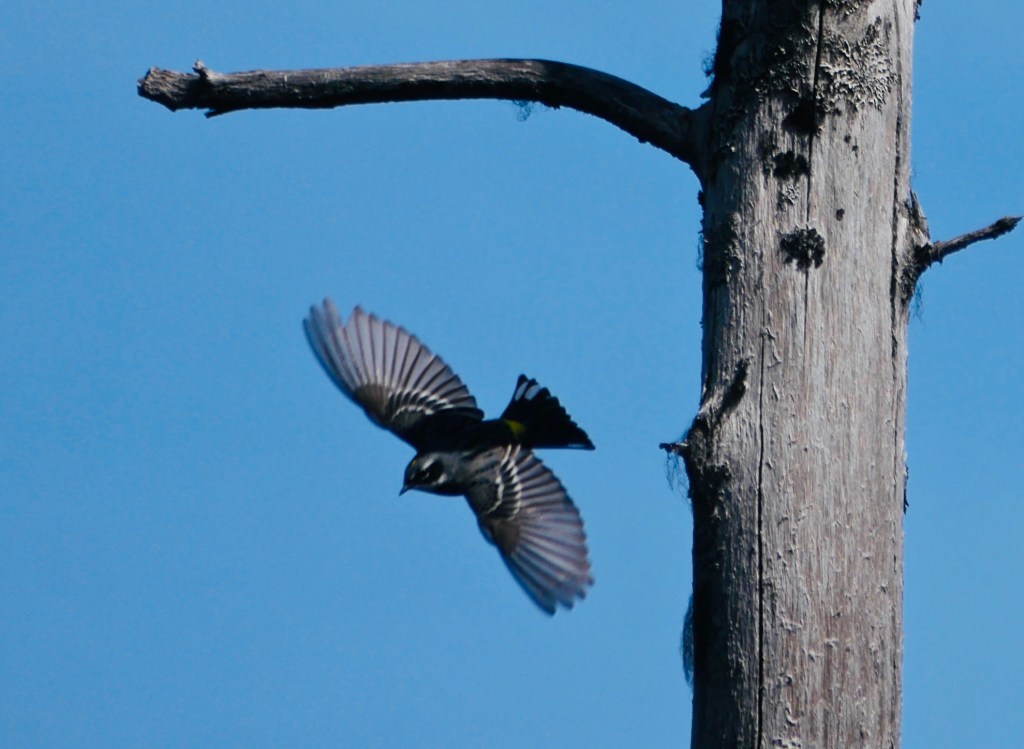
It’s a clam day so lake provides a nice mirror for the glacier and Mt. McGinnis. Little birds sing and make quick sorties onto the ground for seeds or gravel but don’t stay long enough for me to make an identification. Then, an alder flycatcher bops unto the limb of a dead snag lets itself be photographed. I manage to take two photos—one when it is frozen on the snag, and the other with its wings flashed out in a turn.
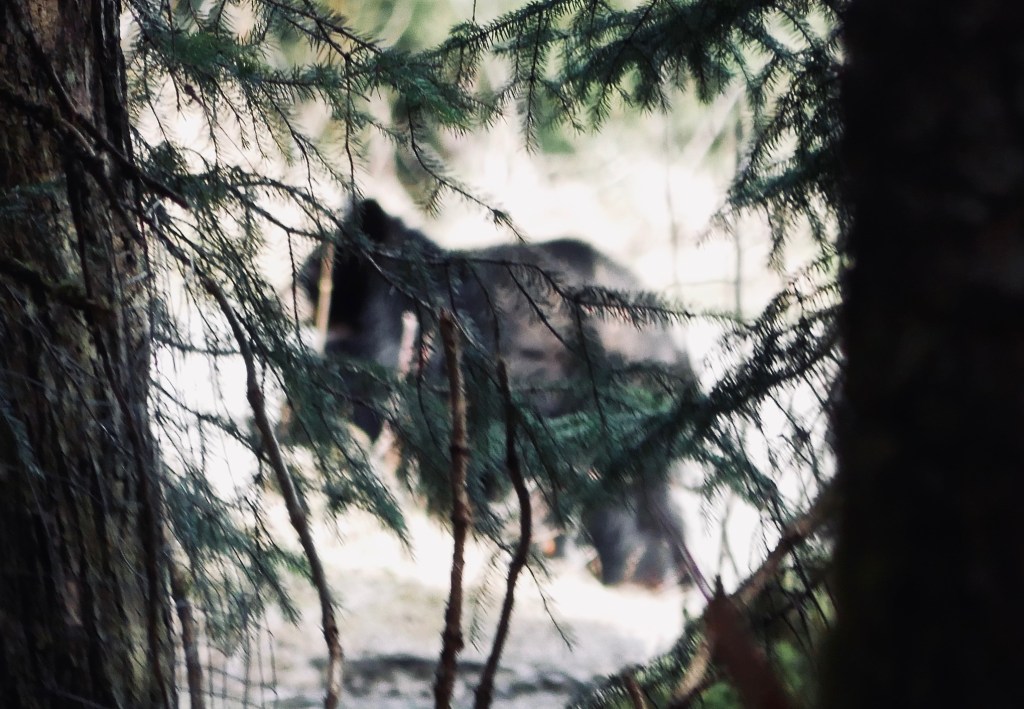
When the bear and her two cubs wander out of heavy brush, I’m pulling off my sweatshirt. The plop-like sound of the hoodie releasing its hold on my head causes momma bear to look across the stream that separates Aki and I from her and hers. As I fumble through switching the telephoto for my wide angle lens, the bear family slips back into the brush. I manage to spot mom moving between two large spruce and the teddy bear face of one of the cubs poking out from a tangle of alders.
If Aki tumbled to the bears’ presence, she didn’t let me know. We start down a trail the troll woods away from the bear family. I didn’t want to enter the woods on this blue-sky day. It would have been better to circle around Crystal, Moose or Moraine Lake, watching transient ducks, like blue wing teals, paddle across the reflections of the glacier or one its mountain consorts.
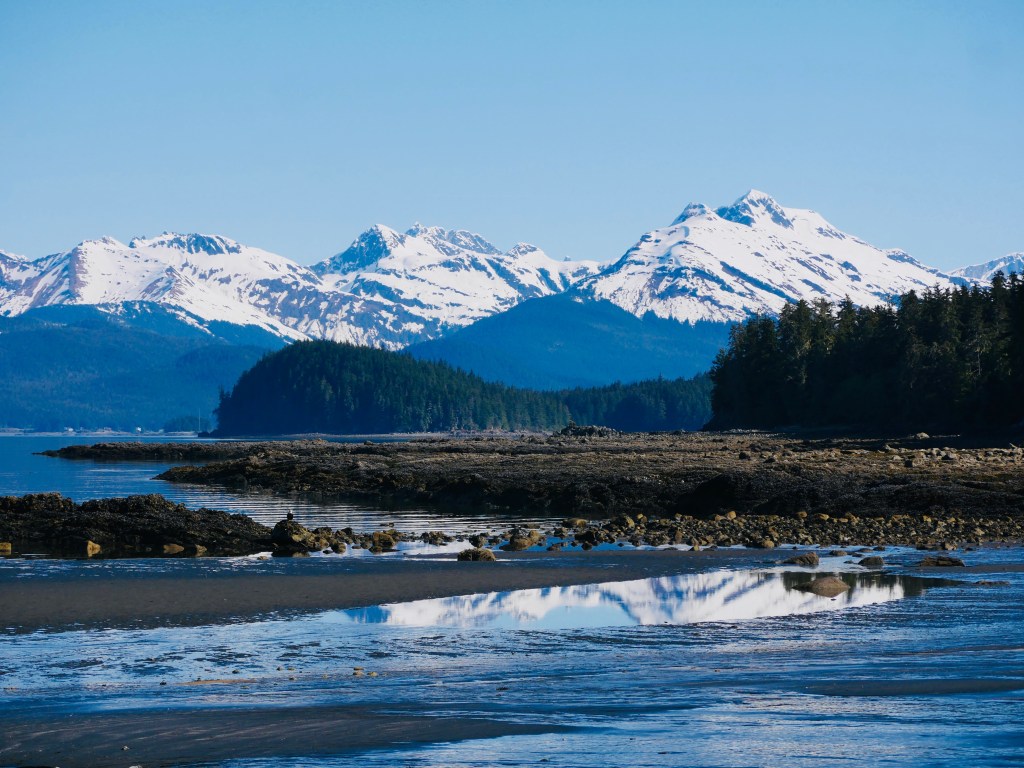
The bear’s was the only family we would see on the moraine. That was my plan. We had to avoid the beaches because it is Sea Week. Today’s minus 4.4 foot low tide will drawn every family with grade school children to our beach trails. For the past 49 years the kids would have ridden school buses to the beaches exposed by big spring tides to celebrate Sea Week. Naturalists pointed out cool things found in tide pools and helped them understand the power of the tides. This year, thanks to the virus, parents must take on the naturalists’ role, like they have to be their kids teachers after the schools closed, like mother bear does for her cubs.
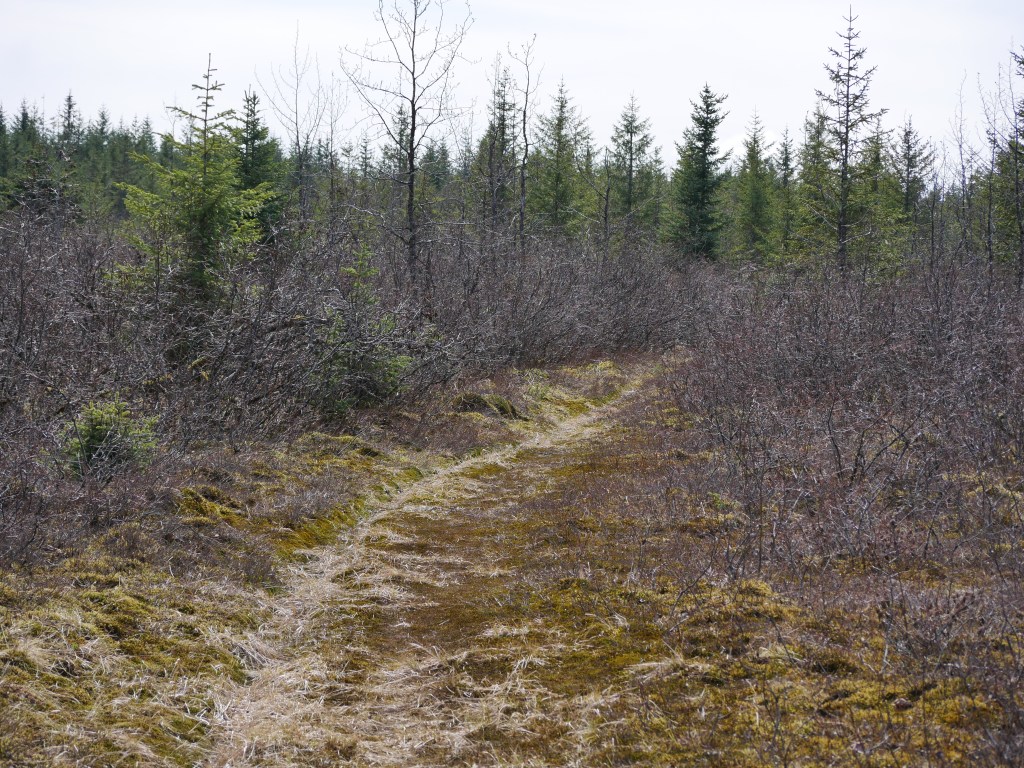
The snow seems to have vanished from the glacial moraine, uncovering dead grass, bare blueberry bushes, bones, and a scattering of feathers. Aki finds the feathers fascinating. The bird that sported them must have died near winter’s end. The little dog rarely shows an interest in old feathers.
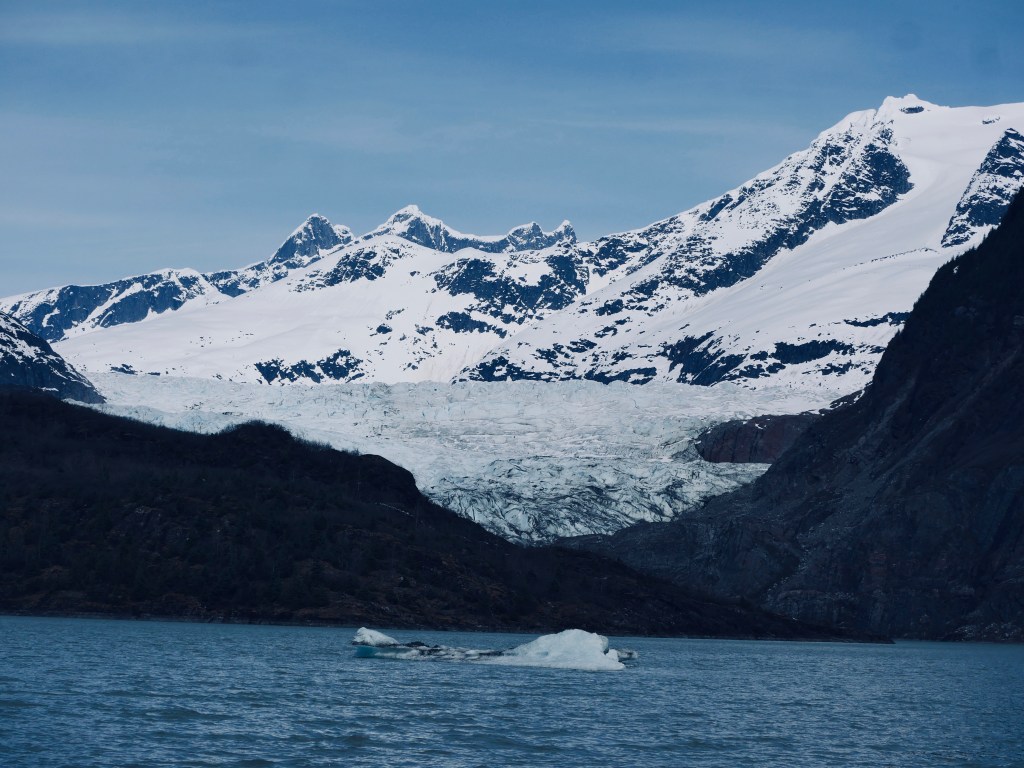
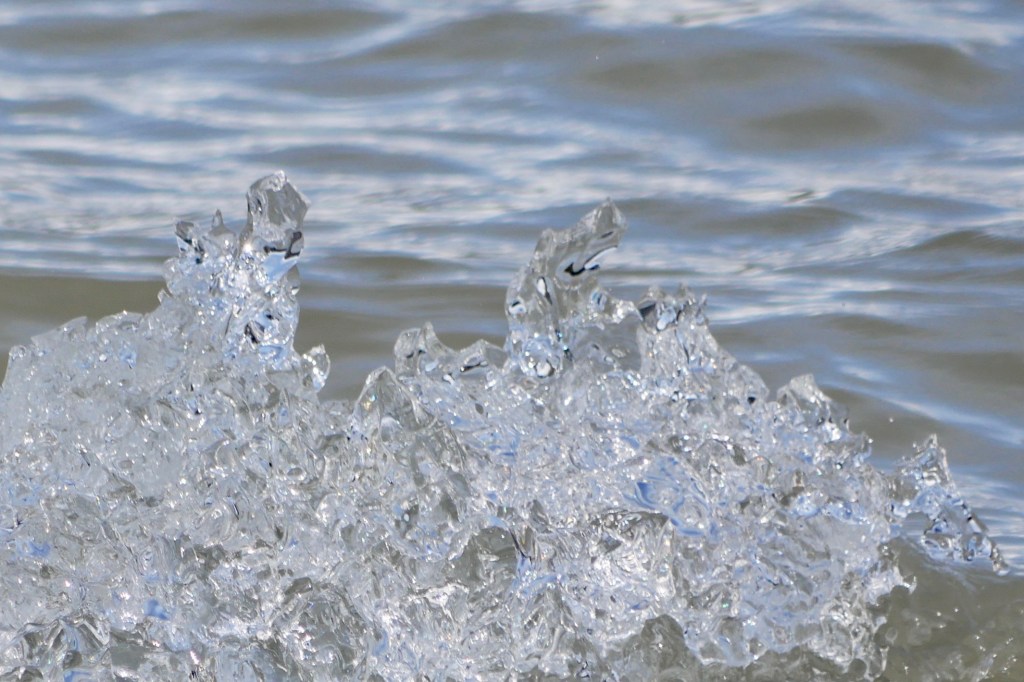
The lake is now ice free, if you don’t count icebergs recently calved by the glacier. Some sail like boats across the lake. Most have come to rest in the shallows. Most look white after escaping from the glacier. The older ones crystalize into super-clear ice. Then, they melt away.
I wish Aki had the patience for kayaking. If she did, I’d be on the lake right now, making the long paddle to the glacier’s foot. After beaching the boat, the little dog and I would look for translucent-blue caves in the melting ice. I usually make such a visit in early May, before the cruise ship tourists arrive.
This year, cruise ships will not their usual disgorge their usual million tourists onto the Juneau docks. They have cancelled all sailings to Alaska. Aki, the other locals and I will have the moraine to ourselves. I’ll have the pick of summer days to paddle out the great river of ice.
After yesterday’s canoe ride under technicolor skies, this walk on the wetlands may disappoint. Flat gray light flattens the scenery. Still, the color-blind little dog is finding plenty of smells to keep her busy.
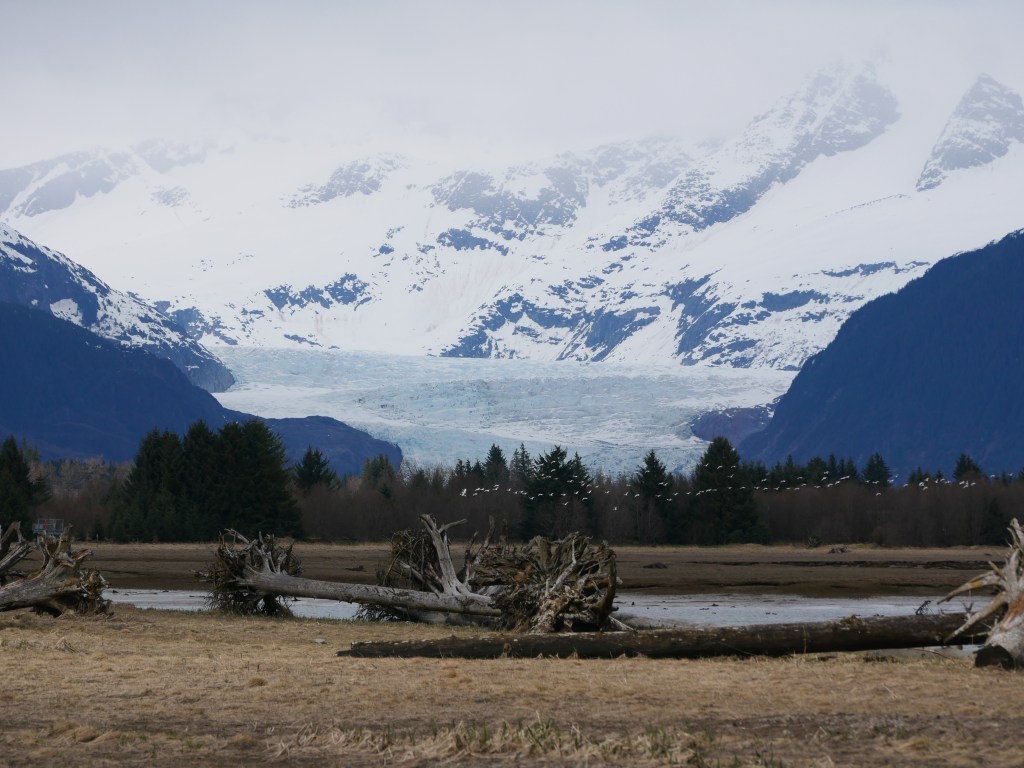
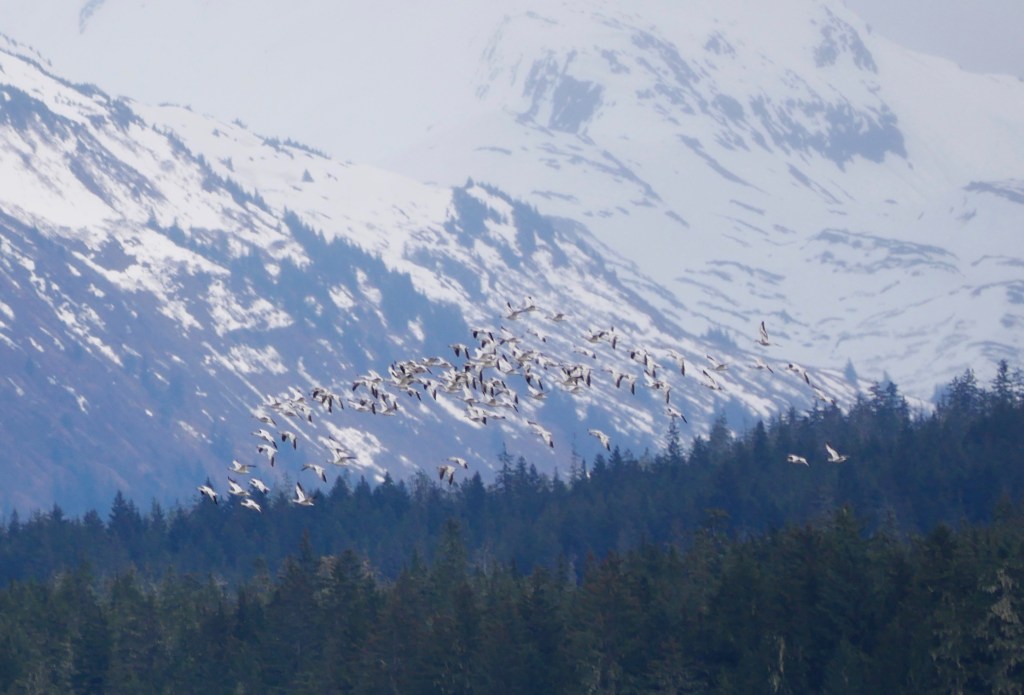
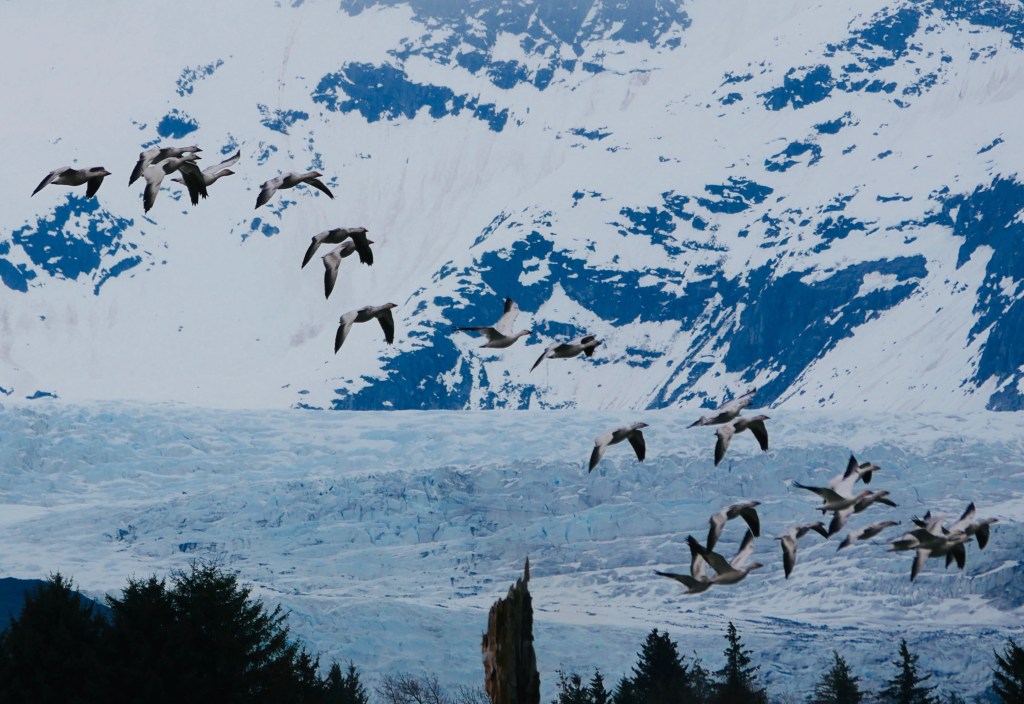
A white cloud rises out of the pewter-colored river and pulses over the wetlands. It also honks. Snow geese. Over a hundred of the white travelers swirl toward us and then crash into the river. If another dog doesn’t spook them, we may get a decent view of the geese. They are just passing through. Soon, they will continue their flight to their traditional nesting areas along the Bering Sea coast, over 1500 miles to the north. They need their rest.
Other northern migrants manage to get in some sleep today. A small scattering of canvas back and red headed ducks are curled up on the riverbank mud like sleeping sled dogs. A large flock of shorebirds aren’t so lucky. They are being chased from one end of the wetlands to the other by a husky-mix dog.
Aki watches her people tie on masks outside the grocery store. She squeals in fear, not that we will be arrested while robbing the store. She squeals in fear that we will take precious outdoor time shopping in the store. She had better calm down. After searching the store for flour and tahini we are heading to the end of the road. Aki is in for a wait.
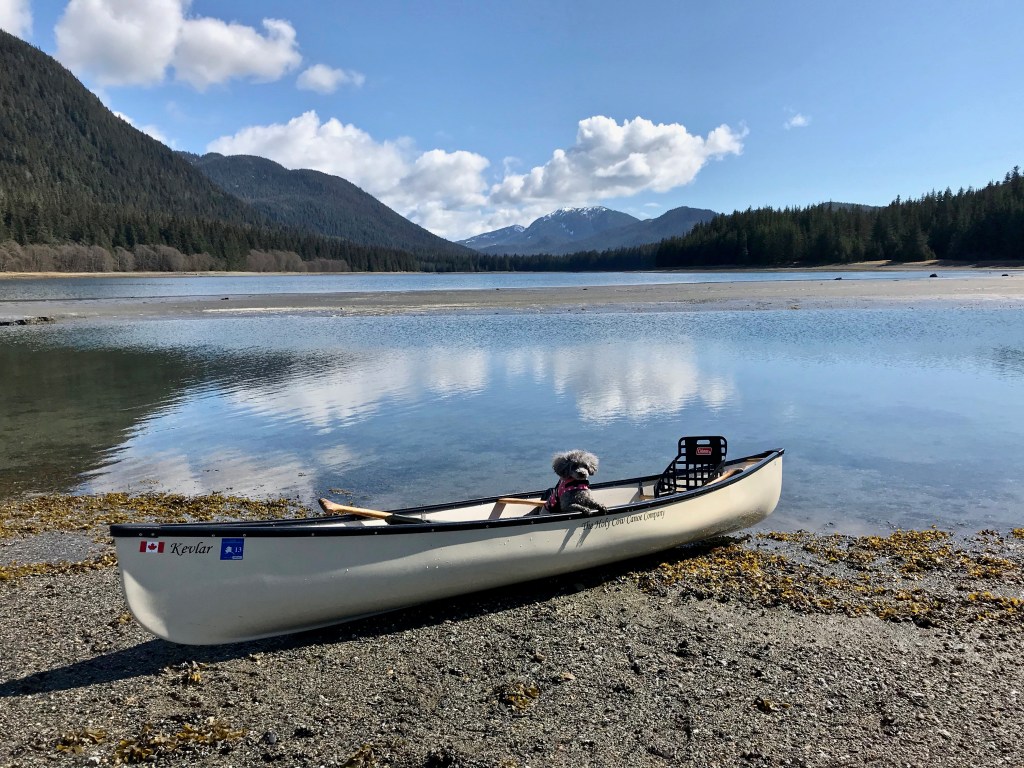
The store is out of flour but we are able to buy tahini and a bag of dog treats for the poodle-mix. Keeping the treat a surprise we drive 30 miles to the north end of the Juneau road system and launch our canoe in Echo Cove. Fighting a head wind, Aki’s humans make slow progress toward our destination—a large sandbar that narrows the mouth of the cove.
This early in spring, the cove’s birds act tame. Two marble murrelets paddle without haste a few meters from our canoe. A line of Bonaparte gulls let us get within a few meters before moving off. A single murre pays us no attention. Other gulls scream and hover over a ball of herring or hooligan. They are all here to feed on young salmon, herring, or hooligan, called candle fish for their high fat content.
Aki makes us carry her from the canoe after we land on the sand bar. Once she feels sand beneath her paws, she tears around in circles. She’ll make many more circles in the sand before we use the canoe to return to the car. The little dog will sleep in the car and have just enough energy to mooch rice from her human’s dinner. It was a good day, except the lack of flour.










 Walking with Aki