Gastineau Avenue cuts a gash across the side of Mt. Roberts. It once provided access to the A.J. Mine tunnels. Feral cats moved into the tunnels after the mine closed in 1944, living on scraps from the fish plant on the docks. The cats are long dead from Parvo Virus and the fish plant has been replaced by cruise ship facilities.
Even though it offers good views of downtown and the channel. Gastineau has a run down, skid road feel. There are some well-kept craftsmen-style houses and other nice buildings along the avenue. But the empty lots and a burned-out building invite people to camp out on the street in tired cars. None of this matters to Aki. The little dog loves it. She doubles the time needed to walk its length by stopping every few feet to sniff.
When Taku Smokeries is closed for the season and the cruise ships are down in the tropics for the winter, ravens like to patrol the avenue. Aki and I heard one croaking as we climbed past the Baranof Hotel parking lot this morning. We found the bird in a narrow alley, hanging out with two homeless guys and a dozen pigeons. The men had tucked themselves under a sheltering overhang to keep out of the rain. Raven, its feathers confused and wet, stood singing to them in the rain.
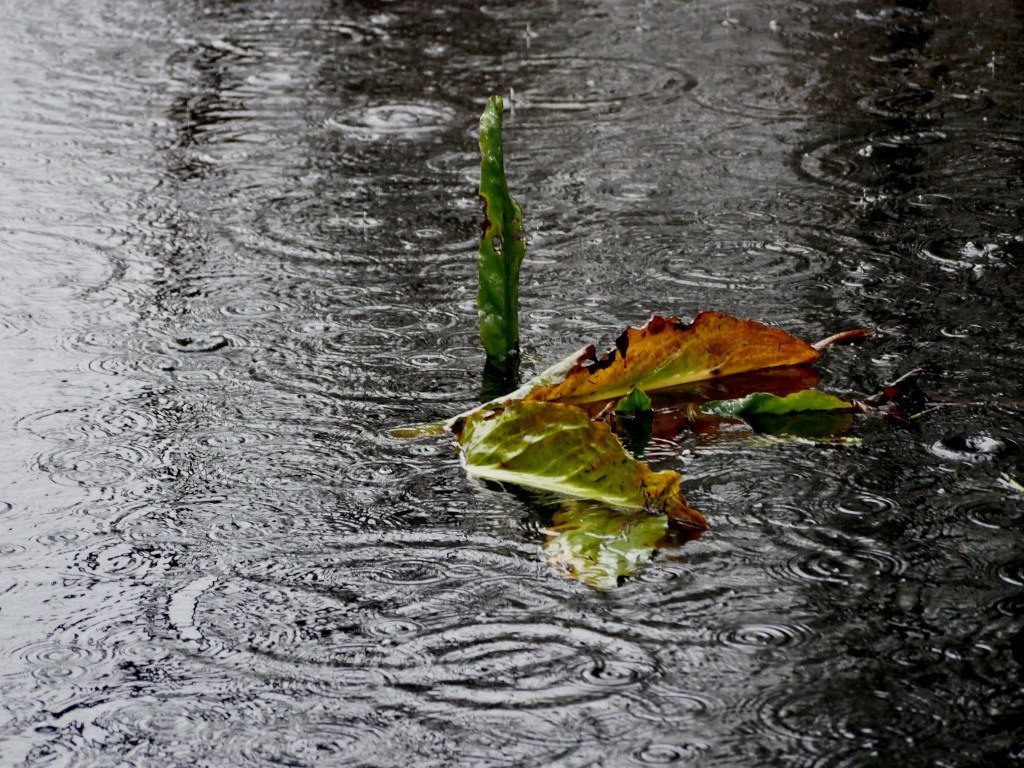
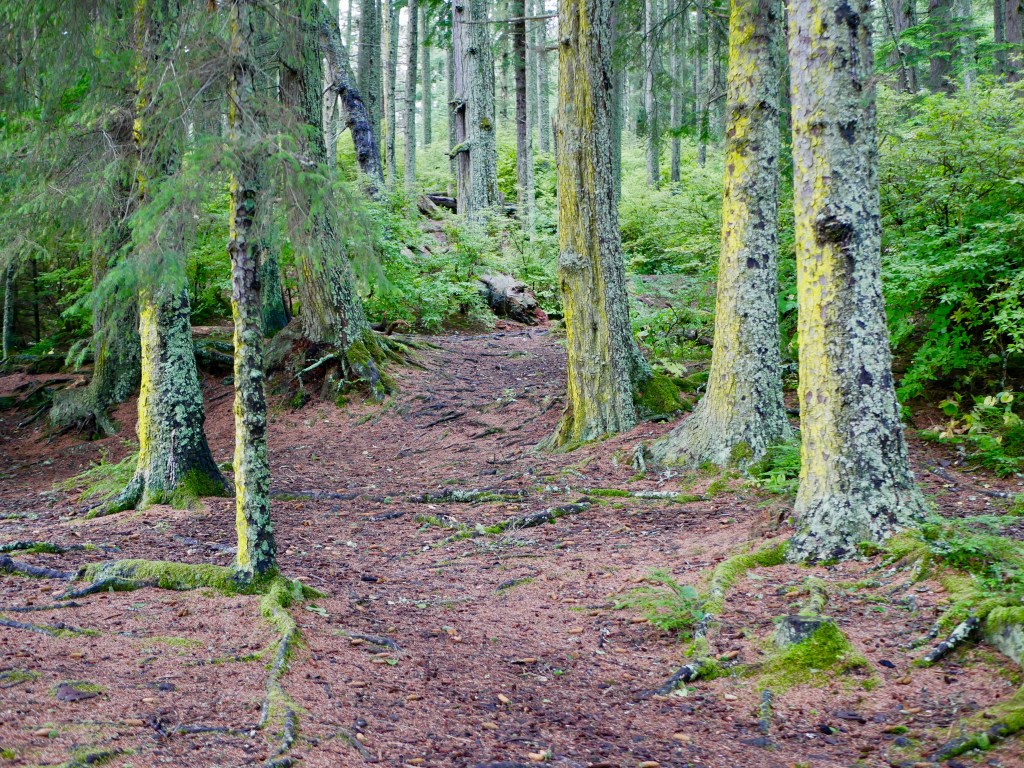
It rained hard last night, a real soaker that energized Gold Creek to a dangerous level. Aki and I waited all morning for the storm to stop or at least slow down. When it began to tail back, we headed out to Fish Creek and found it overflowing it banks and carving out new channels through the old growth forest. But the rain had stopped.
Three eagles circled above the creek but I could not figure out what they were hunting. Until we reached the creek mouth, the only other evidence of life would be a three-toed woodpecker prospecting for bugs in the bark of an alder.
Just last week the creek and the estuary that it floods into were empty of bird life. This morning giant rafts of mallards search for food there. The boys are back for the winter. I hope that most of them will survive hunting season. An eagle makes a low pass over the raft, flushing a dozen ducks to flight, then returns with empty talons to the top of a spruce tree.
A hundred-bird murder of crows occupy the beach. They rise as a thin, black cloud and fly toward another eagle, harassing it until to takes shelter in a tall cottonwood tree. Then the crows fly across the face of Mendenhall Glacier just as the sun arcs a rainbow across their path. Remember your Bible, little dog. God filled the sky above Noah’s grounded ark as a sign that he would never again flood the world with rain. The rainbow fades just then, and the first drops of another storm start soaking into the poodle-mix’s fur.
Aki looks upset. It could be the rain that pounds down on the little dog. She might be uncomfortable in the extra clothes I pulled over her head to keep her warm on this cool fall day. Perhaps she is having an existential crisis, wondering whether there is a point to her daily walks in the rain.The 12-year-old could quickly relieve herself in the side yard and be back in the house before the rain could darkened her curls.
I move on down the Outer Point Trail, one of her favorites. Aki stalls and then shuffles slowing towards me, head down. She spends little time checking the pee mail. Maybe the rain has managed to wash even the persistent dog urine away. I can feel water working its way down my collar and seep through my jacket fabric to soak into the sleeves of my pull over. Now of one mind with the poodle-mix, I speed up the pace, looking to be back at the car before rain washes the trail and us away.
We stall for a few minutes where the trail touches the beach. A half-a-dozen eagles sulk in the trees or along the shore of Peterson Creek. They show no interest in us. Nor do a mixed flock of dark-eyed juncos and swallows. An abundance of rain does that even to those that earn their living in the wild.
On our return through the forest we learn that our concern over wash outs is justified. Water backed up by a beaver dam has closed over sections of the boardwalk trail. Aki and I splash through, emerging with wet feet. A top-notched Steller’s jay watches while perched on a partially submerged skunk cabbage leaf. Normally a jumpy bird, the jay looks more puzzled than alarmed at our presence.
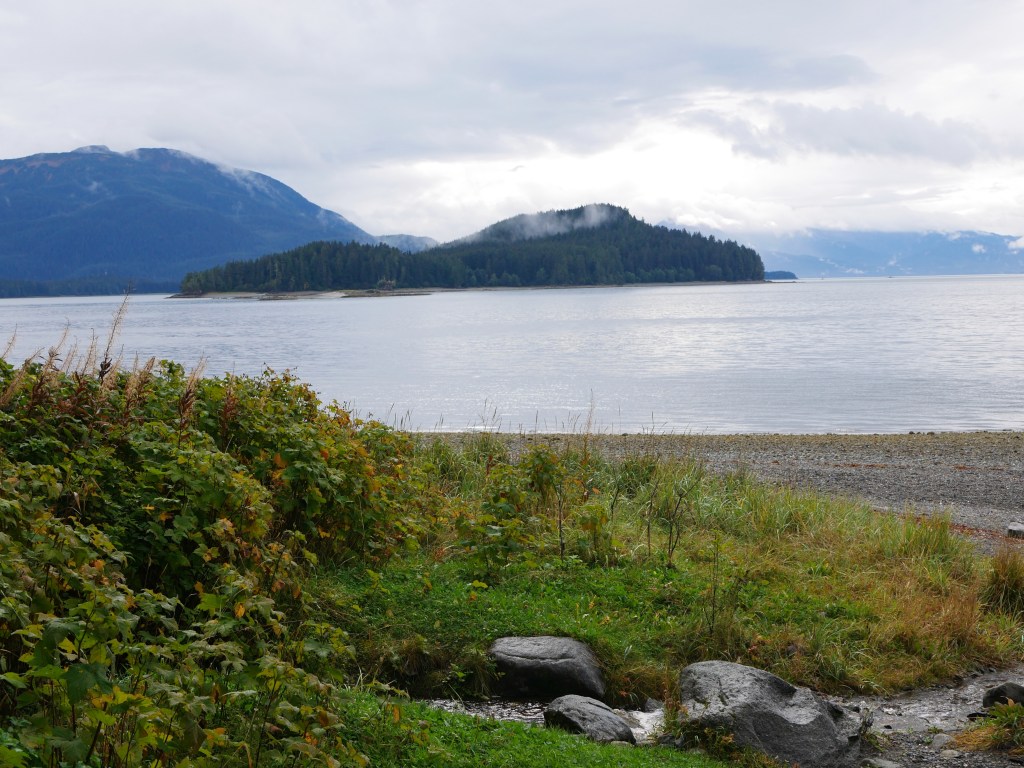
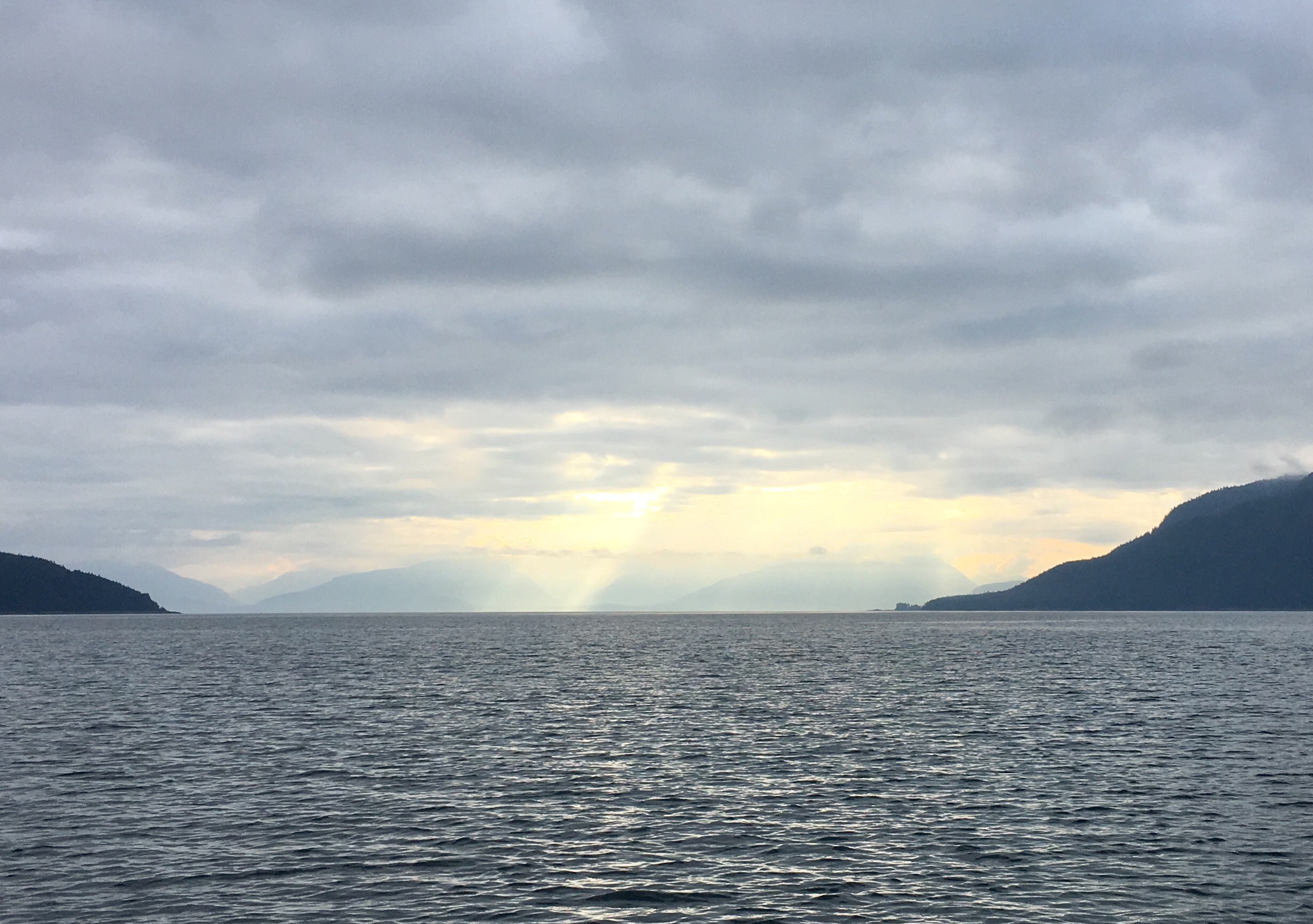
On the drive from town we saw the Chilkat Mountains for the first time in a week. We meant to walk around the Troll Woods but the northern break in the clouds encouraged me to change plans and head to Auk Bay. I wanted to get a better view of the mountains from Point Louisa.
Aki was happy with the change of plans. The Auk trail is a dog rich environment. She would see and smell more than six dogs on the trail. Only one would growl at her. From the trail I would search a crescent-shaped bay for the raft of harlequin ducks that usually winter there. I’d strain to see the black triangle dorsal fins of the little Dall porpoise that are often see there this time of year, chasing late returning salmon. There’d be no porpoise sign but a raft of harlequins would appear on the bay’s surface in quick succession of plops and the return to the water in a snappy group dive. We would stop often to check on the transition of the fireweed and dogwood plants from summer green to autumn reds.
Your other human and I send you greeting from Stockholm, Sweden. Hope you are enjoying your stay with Cedar and her humans. We’ll be home in a couple of days. I tried to send you some letters earlier but ran into insurmountable technical difficulties.
Before we left we told you that this was a trip for renewing friendships in Sweden and Norway. Food was another incentive. I had long been craving pickled herring on hardtack and filmilk over cornflakes.
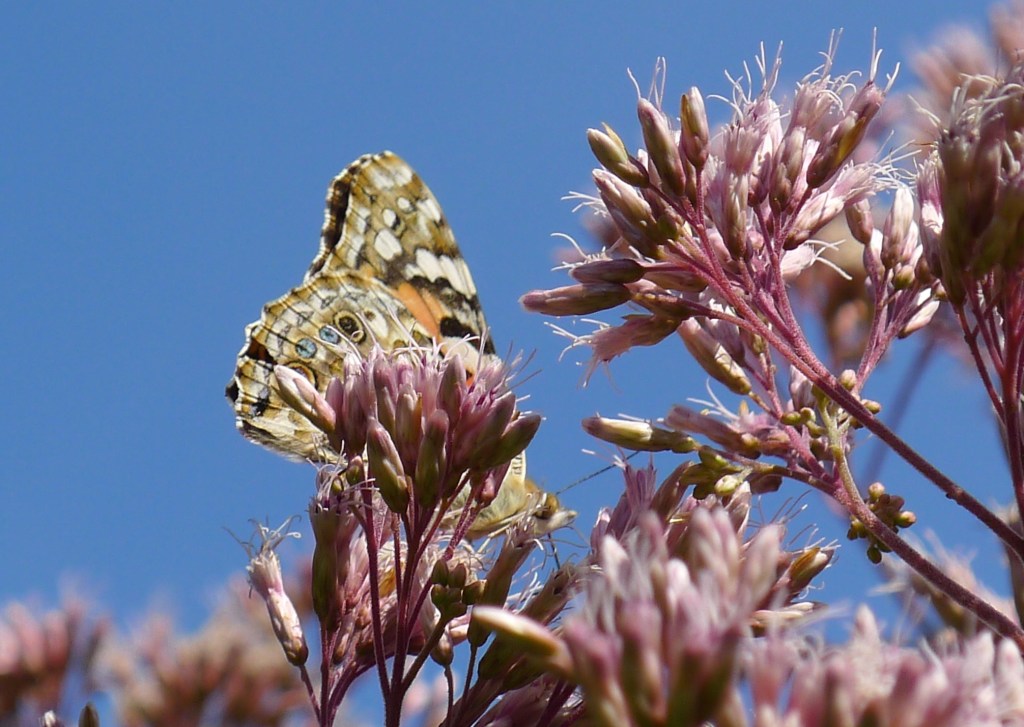
We stopped first in Uppsala, where the weather was hot but we still manage to visit Linneas’ garden where butterflies clung to flowers that swayed in a cooling wind. We also rode bikes out to the royal burial mounds at Gamla Uppsala.
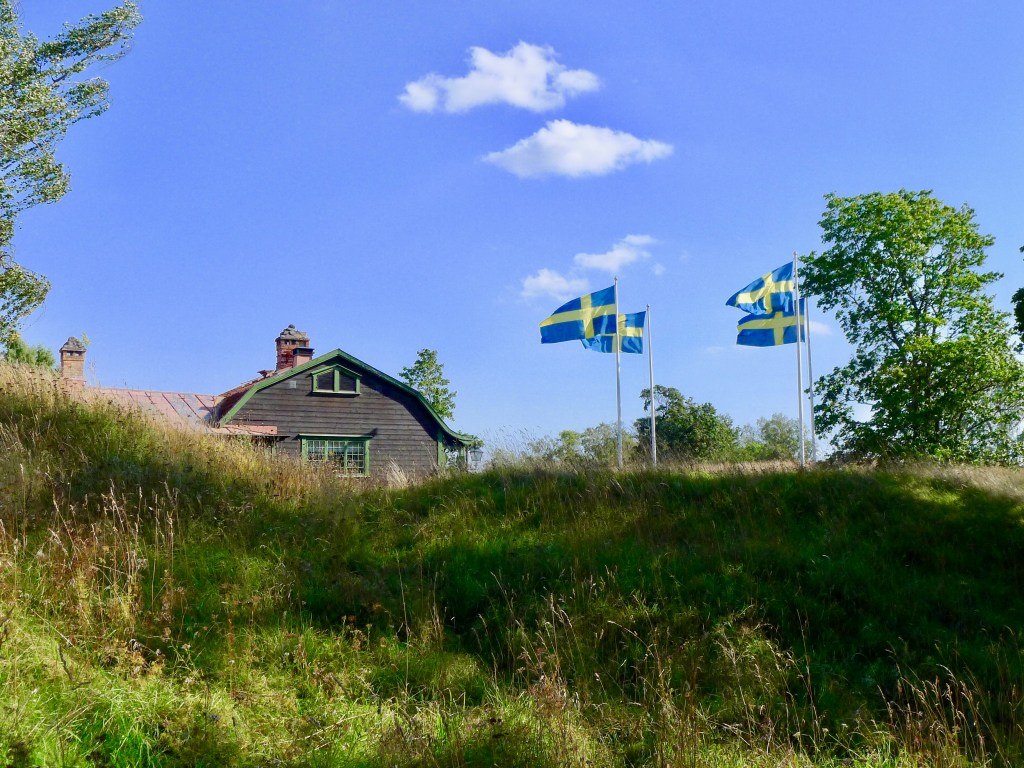
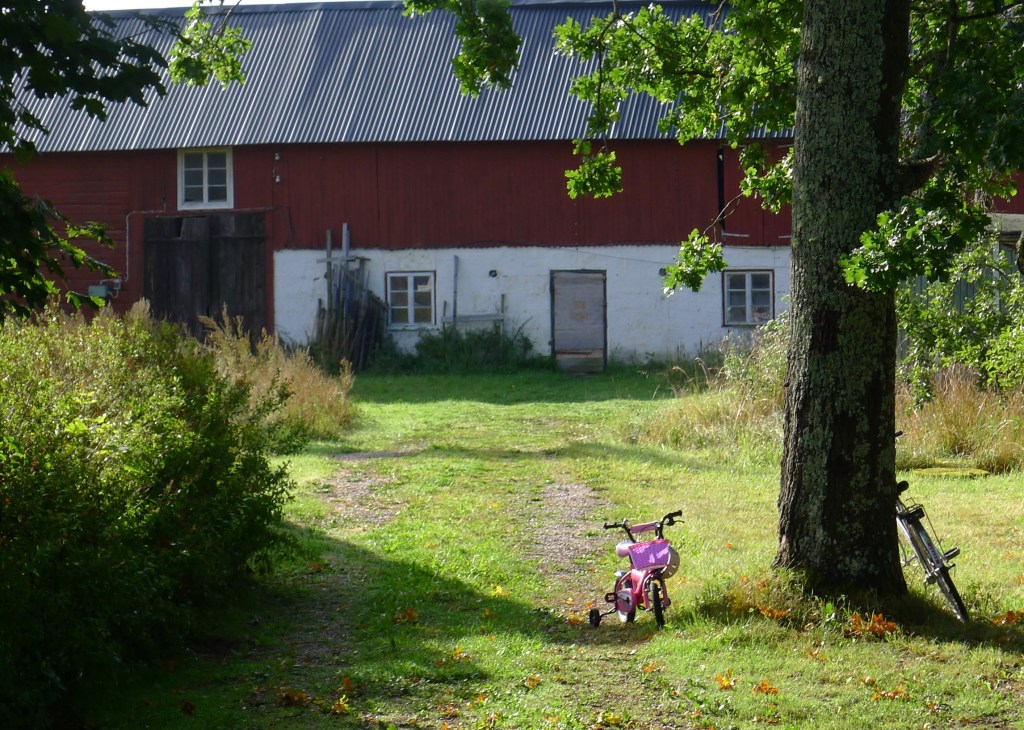
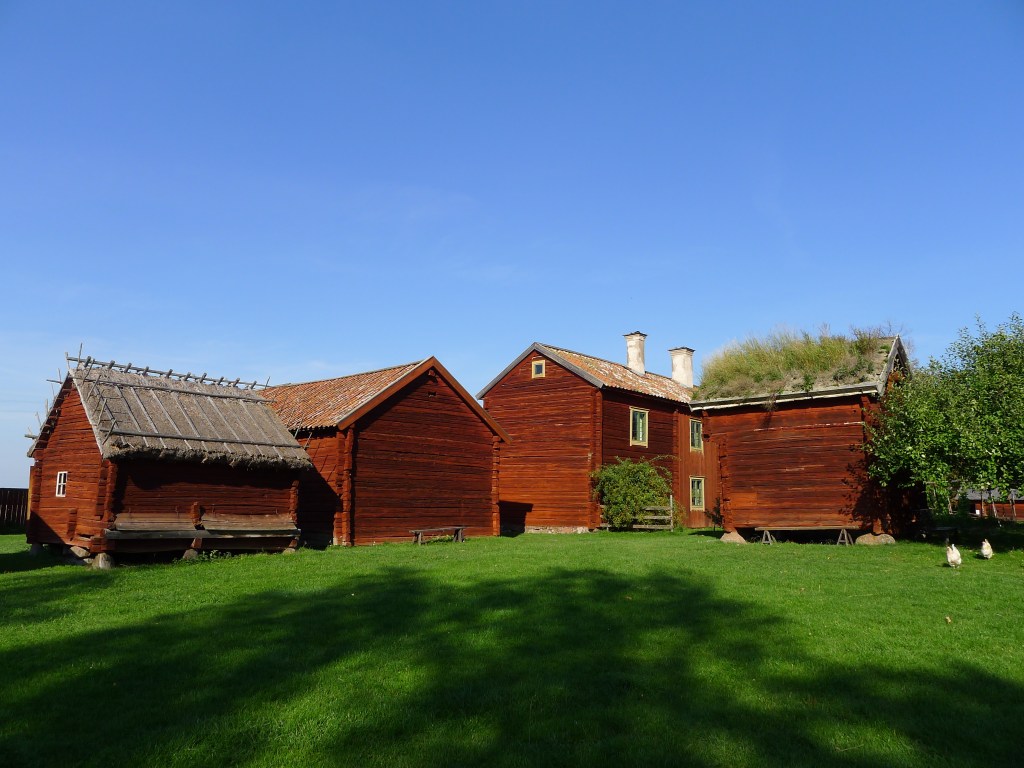
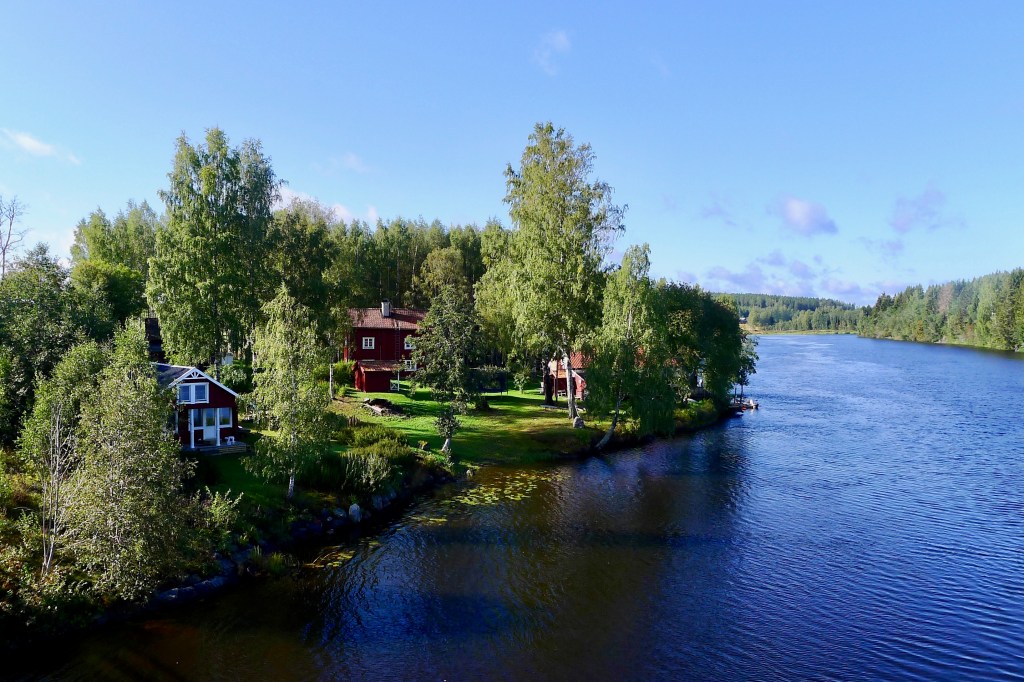
Afterwards we visited an open air farming museum where every building had been painted rust red. It’s the unofficial national color of Sweden, more unifying than the blue and yellow of the Swedish flag.
While drinking coffee with a 92-year-old friend, we learned the red paint tradition started long ago in Darlana, when people learned that painting their building with iron oxide from the Falun copper mine preserved them. Today many houses and most barns in Sweden are red with white trim.
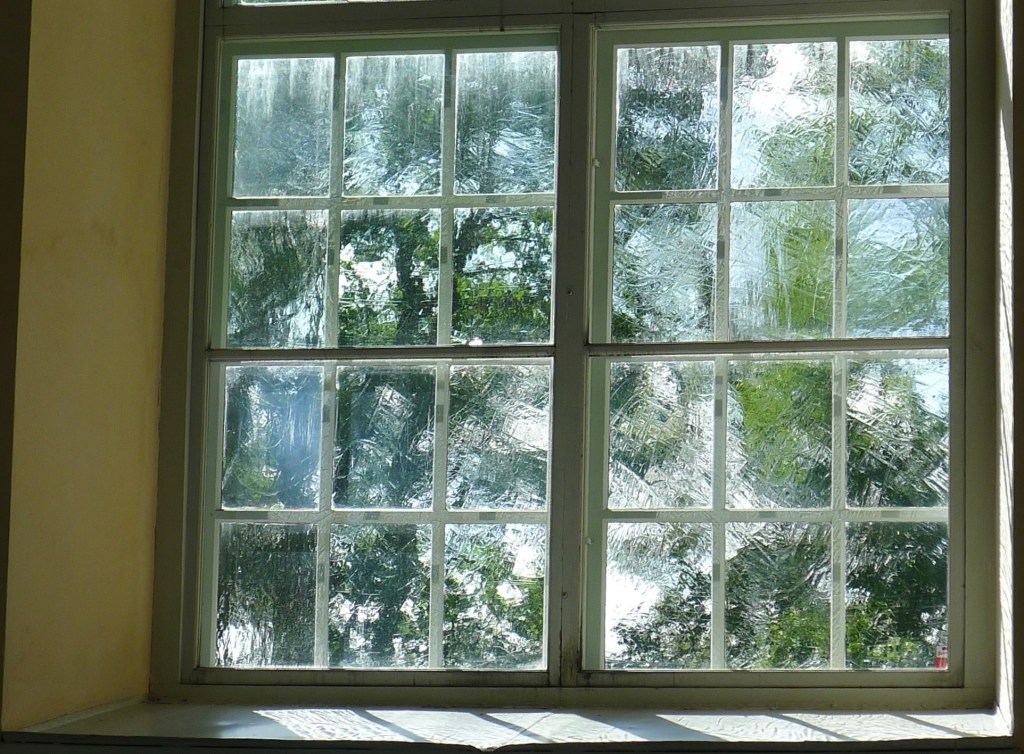
Later in the trip we moved to Avesta where an old friend and I rode bikes along the Dalälven (river) and out to a crossroads church that had thick walls and old window glass that distorted the images of surrounding birch trees. We passed sheep and horses, which you would have tried to herd. It’s a good thing you stayed home.
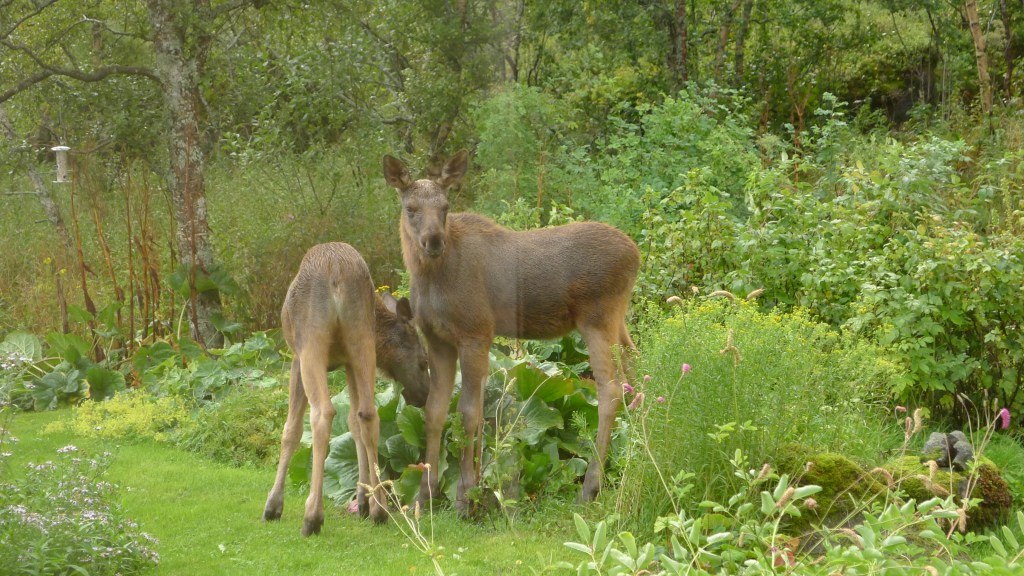
After Avesta we flew to the Lofoton Islands of northern Norway to spend time with other long-time friends. They are nice and like dogs. You would have been popular in their home until the two moose calves stopped by to sample plants in their garden.
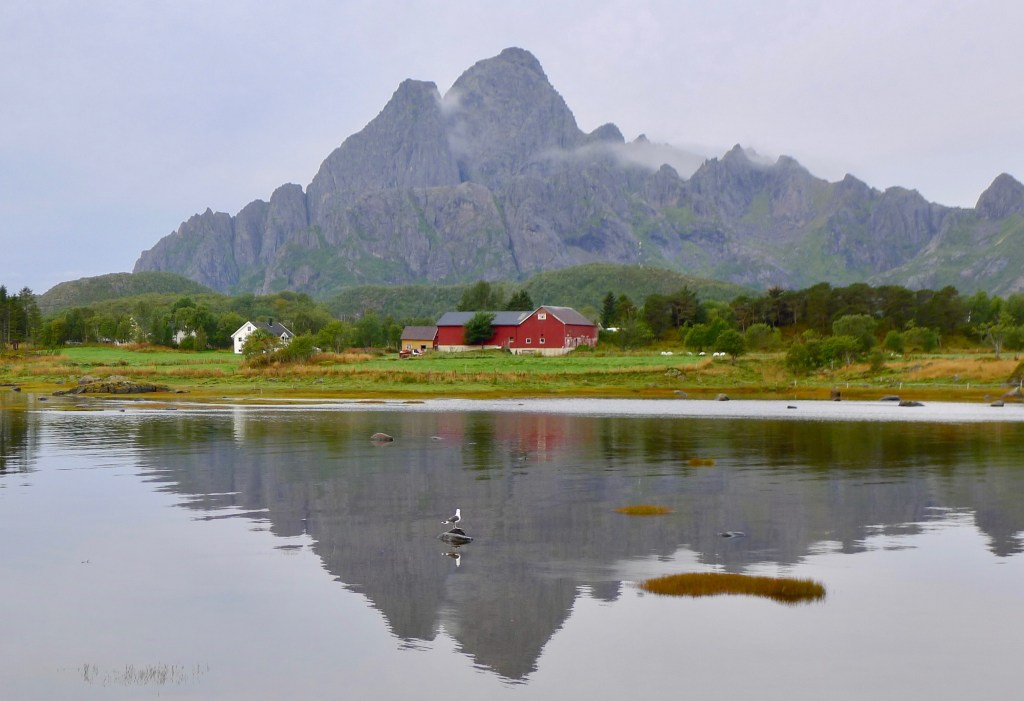
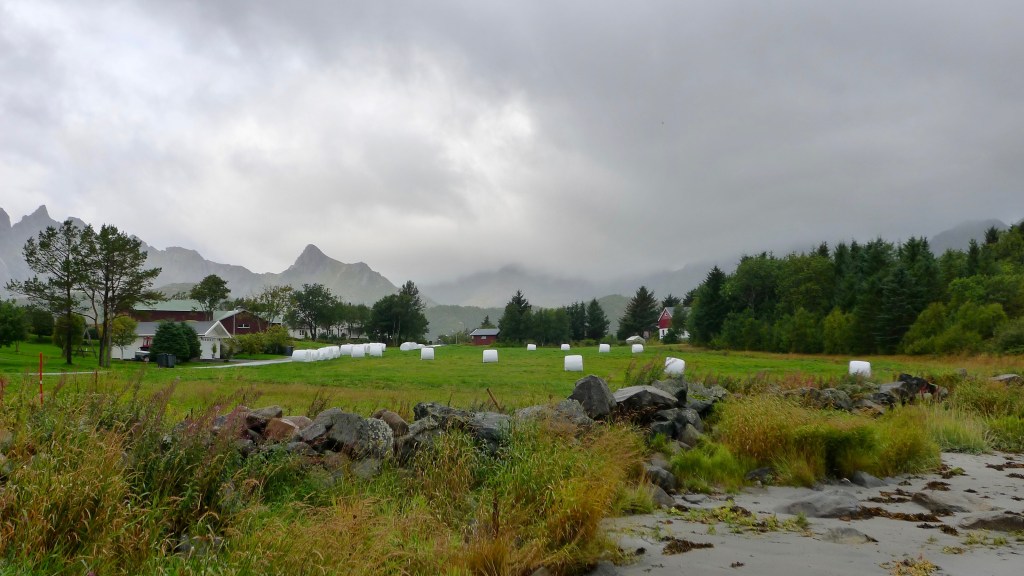
Each morning I borrowed a bicycle and rode along bays, disturbing herons when my brakes squeaked. This was fishing and farming country with farm houses and fishing huts painted as red as a Swedish barn and bare wooded pole racks where folks dry salted sides of arctic cod.
It rained during most of our visit to Lofoton but the clouds rarely blocked our views of the island mountains, many shaped like battered witches hats. I first saw the mountains over thirty years ago from the deck of a coastal mail boat. We had spent most of that trip from Narvik in a tiny parlor where the only chairs formed a circle around a coffin containing a body being brought home for burial. Cod fishing and salmon farming drove the economy then. Now, like Juneau, it’s becoming an international tourist destination.
Well, little dog, it’s late and we have an early flight to catch in the morning. We will pass part of the travel time telling Aki stories. It’s a thing people do when they are missing their dog.
It’s a good thing that you didn’t travel with us to Sweden. You hate airplanes and it would take you days to recover from the jet lag. Yesterday your other human and I rode bikes from Uppsala to Gamla Uppsala. You hate bicycles. We visited an open air museum with a bunch of beautiful old farm buildings, which you probably would have found boring. They had pigs, which you dislike and chickens, which you would have tried to herd, which would have gotten us all in trouble.
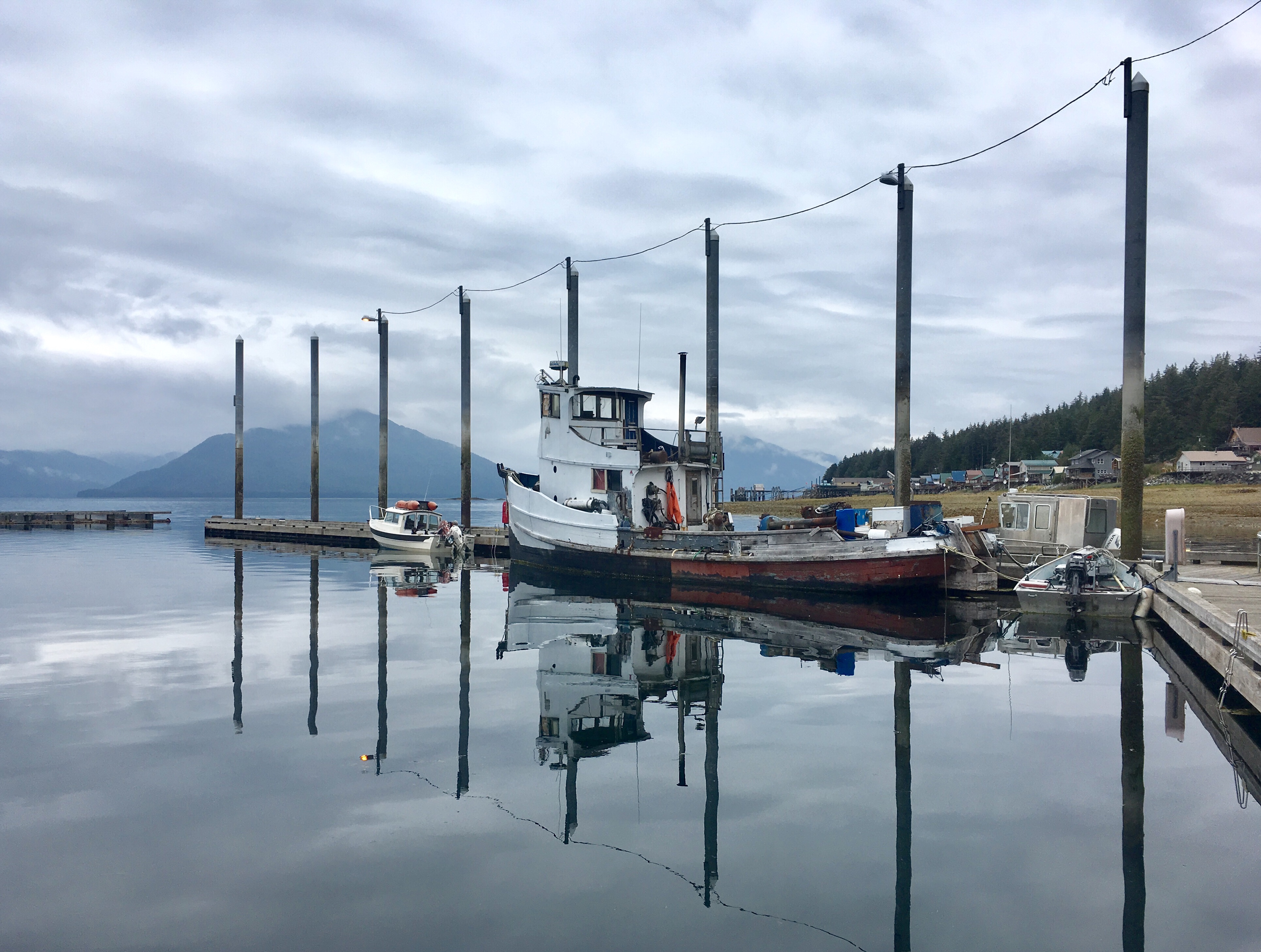
In an hour or so the MV LeConte will stop at Tenakee Springs. A line of all terrain vehicles, most driven by people with gray hair, will form at the dock. As soon as the ferry lowers its boarding ramp, the ATV drivers will motor onto the ferry’s car deck and start loading boxes onto the luggage cart. Passengers who rode the LeConte from Juneau will struggle to carry their belongings up the ramp against the flow of in bound traffic. The LeConte crew won’t try to bring order to the chaos. One or two will stand by the stairs and elevator. No one will be allowed past them until purchasing a ticket for the ride to Juneau.
I’ll wheel my ice chest down the boarding ramp after the initial rush. It will be heavy with frozen silver salmon that my friend and I caught during the stay. It will take eight hours for the ferry to return to Juneau after first stopping in the village of Hoonah. That will give me plenty of time to reflect and read.
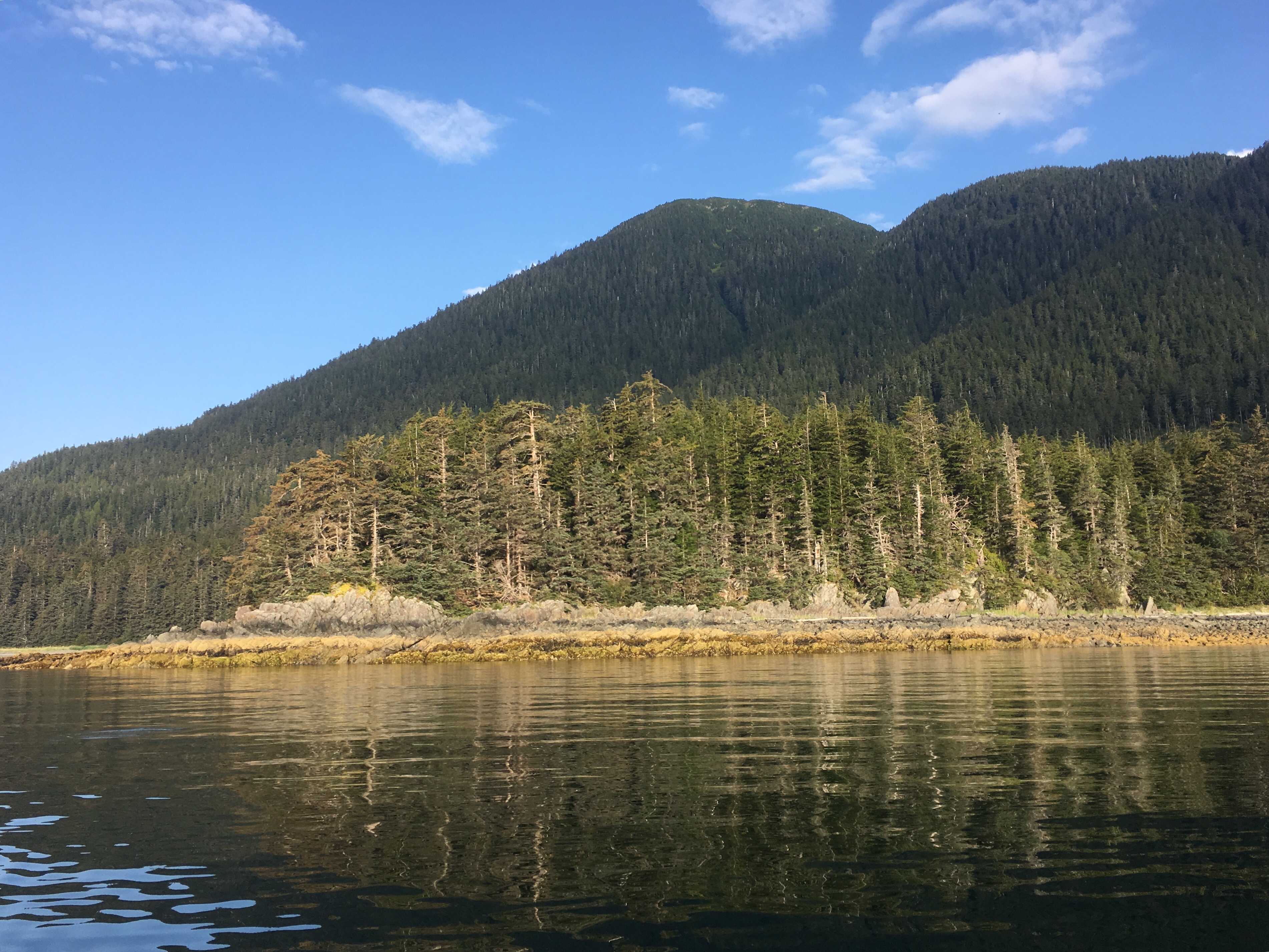
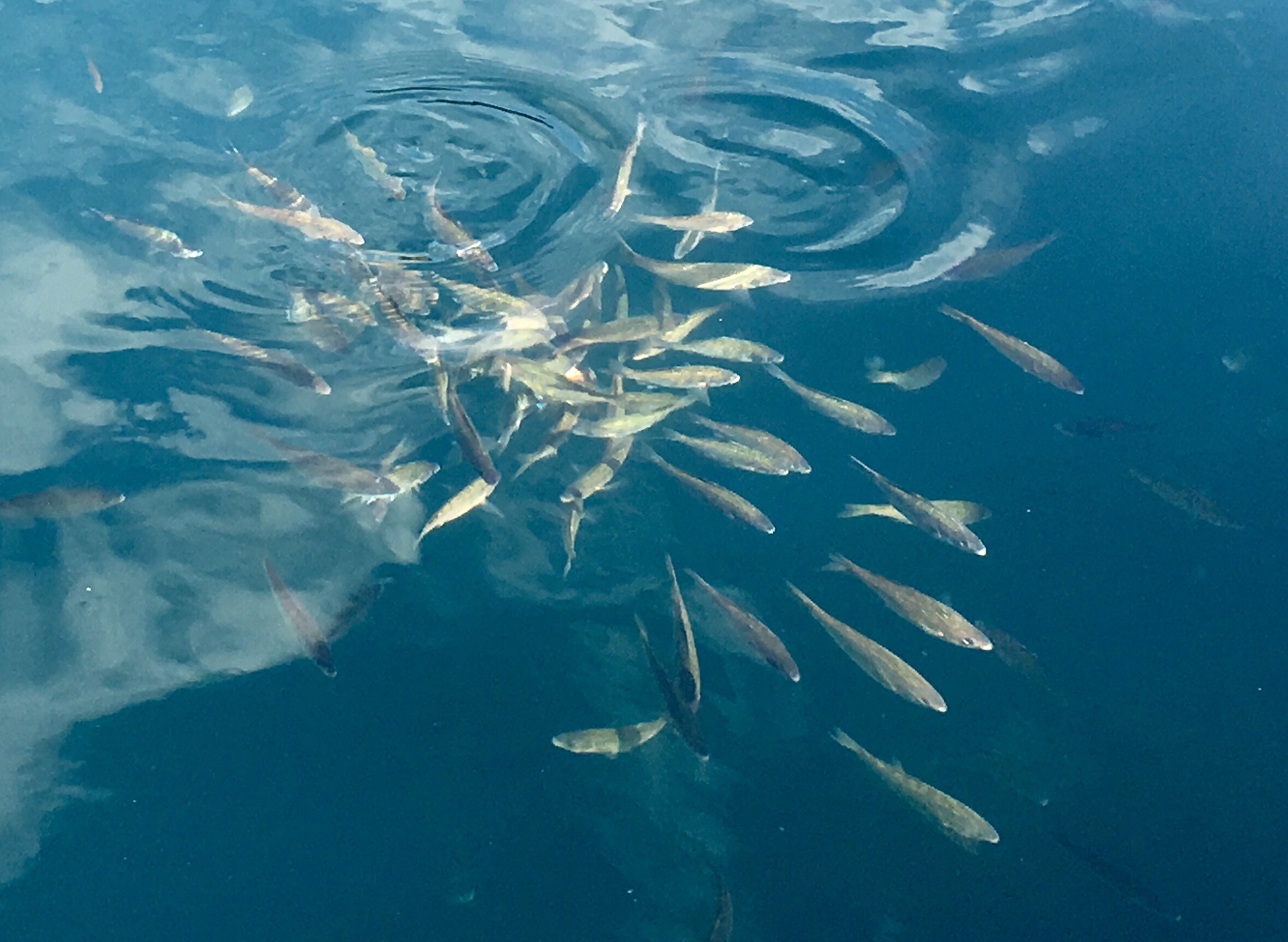
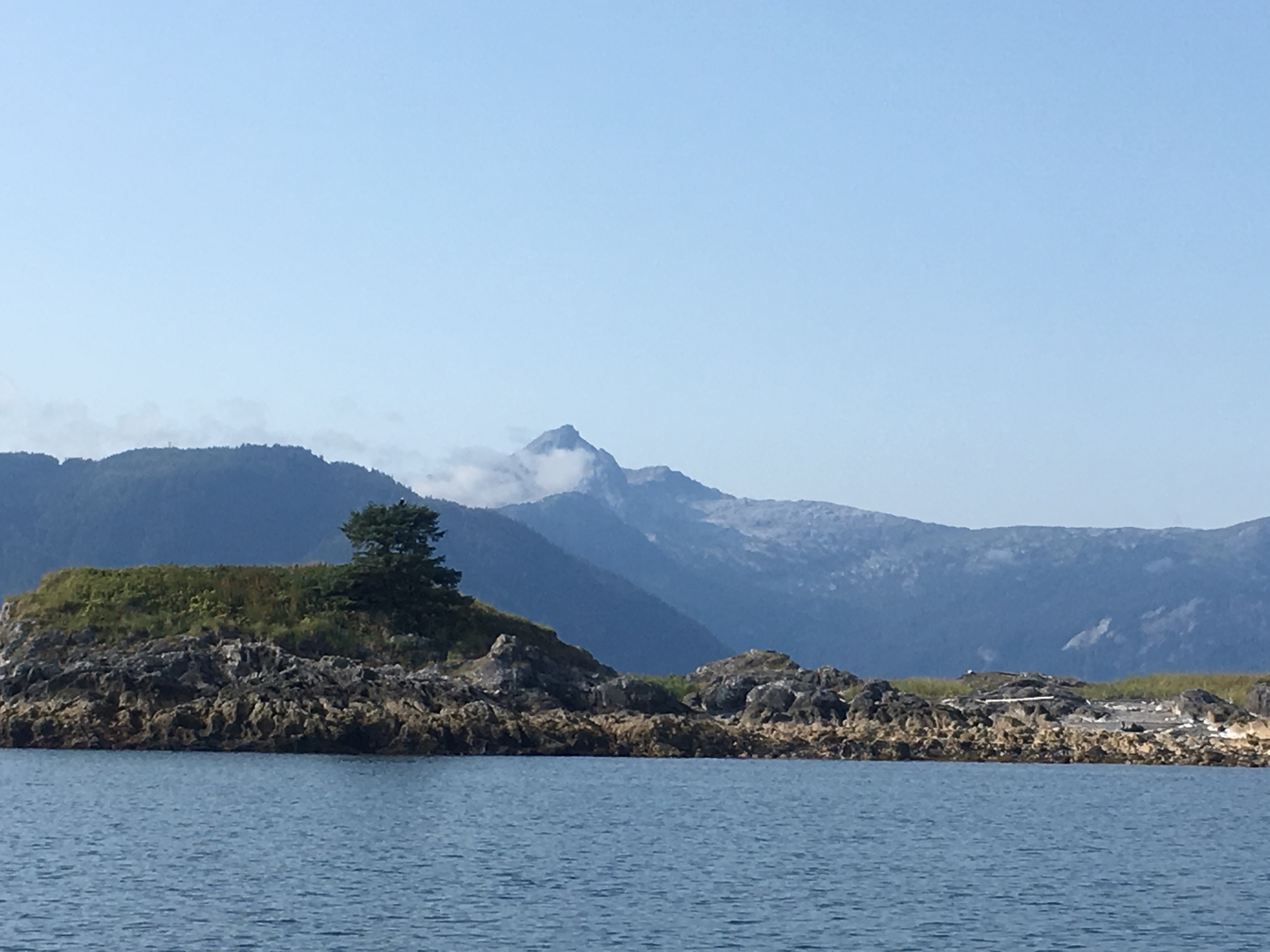
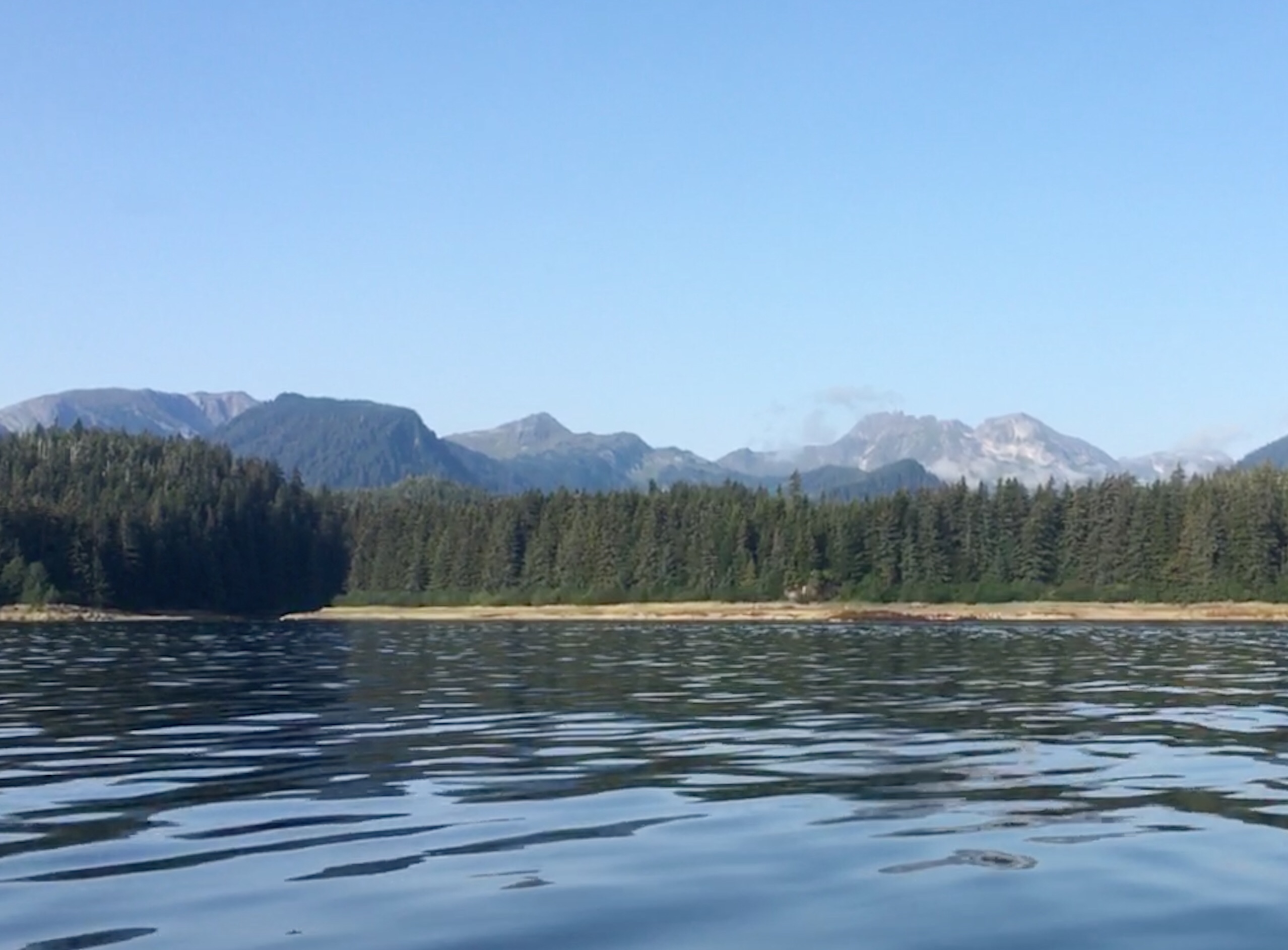
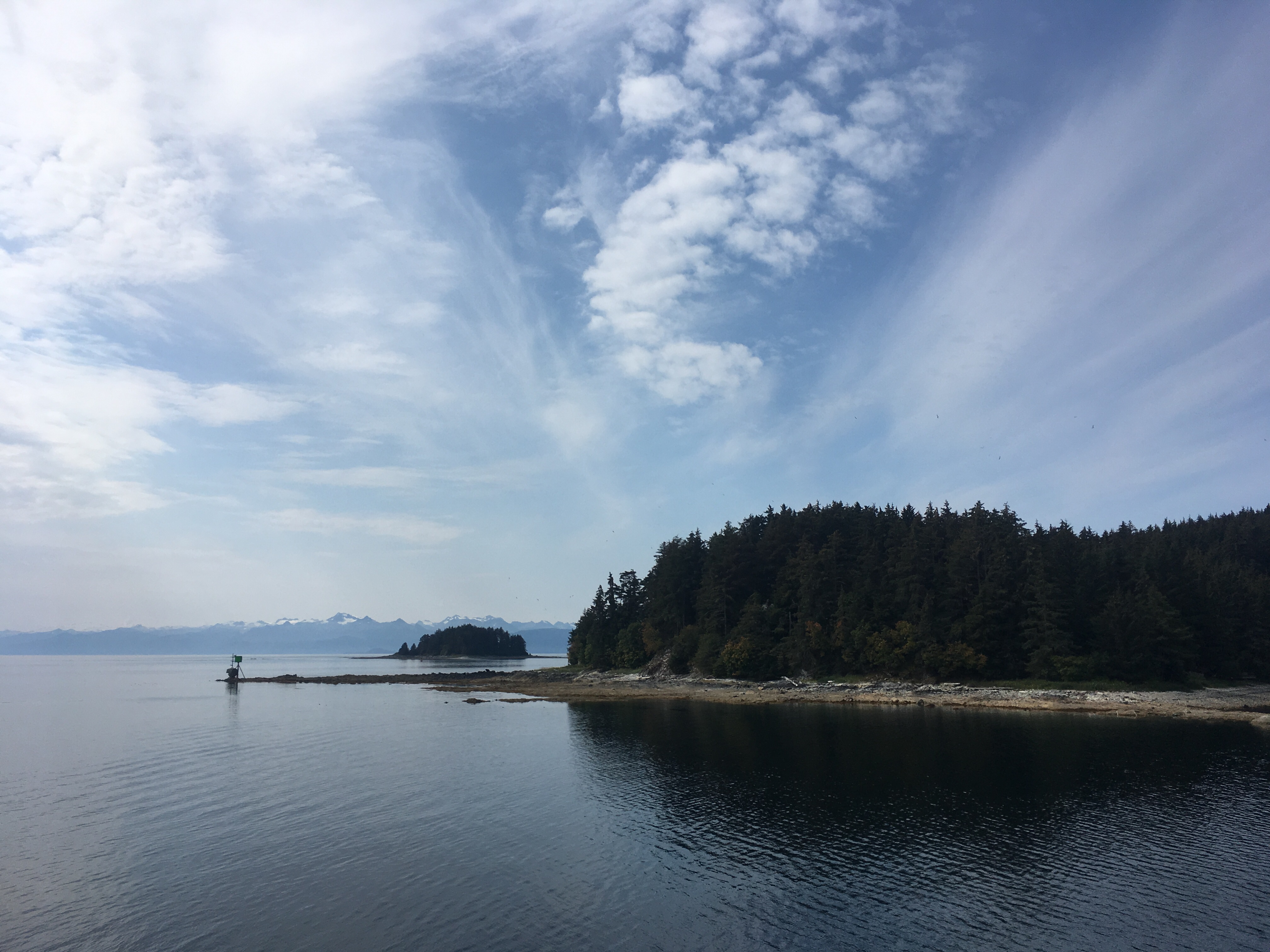
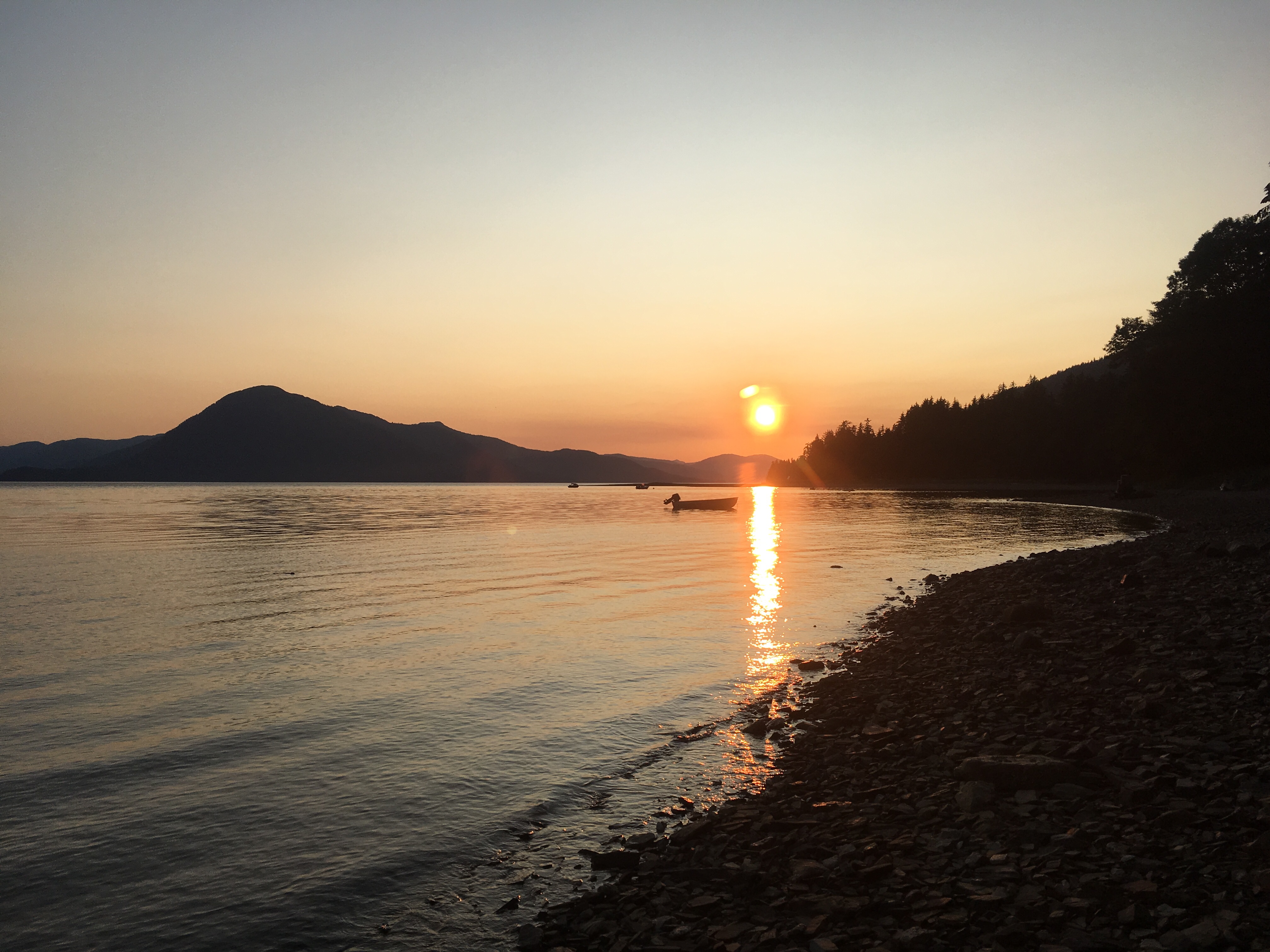
A friend and I are enjoying another morning cruising Tenakee Inlet. Rich, almost Mediterranean light ramps up the beauty level of simple things. A spit covered with living and dead spruce trees looks like the work of a Tuscan master. Silver salmon in transit from the Pacific Ocean to their spawning streams swim though schools of herring, making the smaller fish leap into the air. Gulls swim over the herring schools and try to pluck the flying fish from the air.
We temporarily leave Tenakee Inlet for Fresh Water Bay, rounding a point guarded by two bald eagles.
A brace of swans is swimming along the edge of Pavlov Bay when we enter it. Passengers from a high end cruise ship in a bright orange kayak flush the swans to flight. The birds fly over our boat and then circle the bay, apparently looking for a place to land away from tourists and us. My friend slowly drives his boat out of Pavlov and heads back to Tenakee Inlet, where the other night we saw whales.
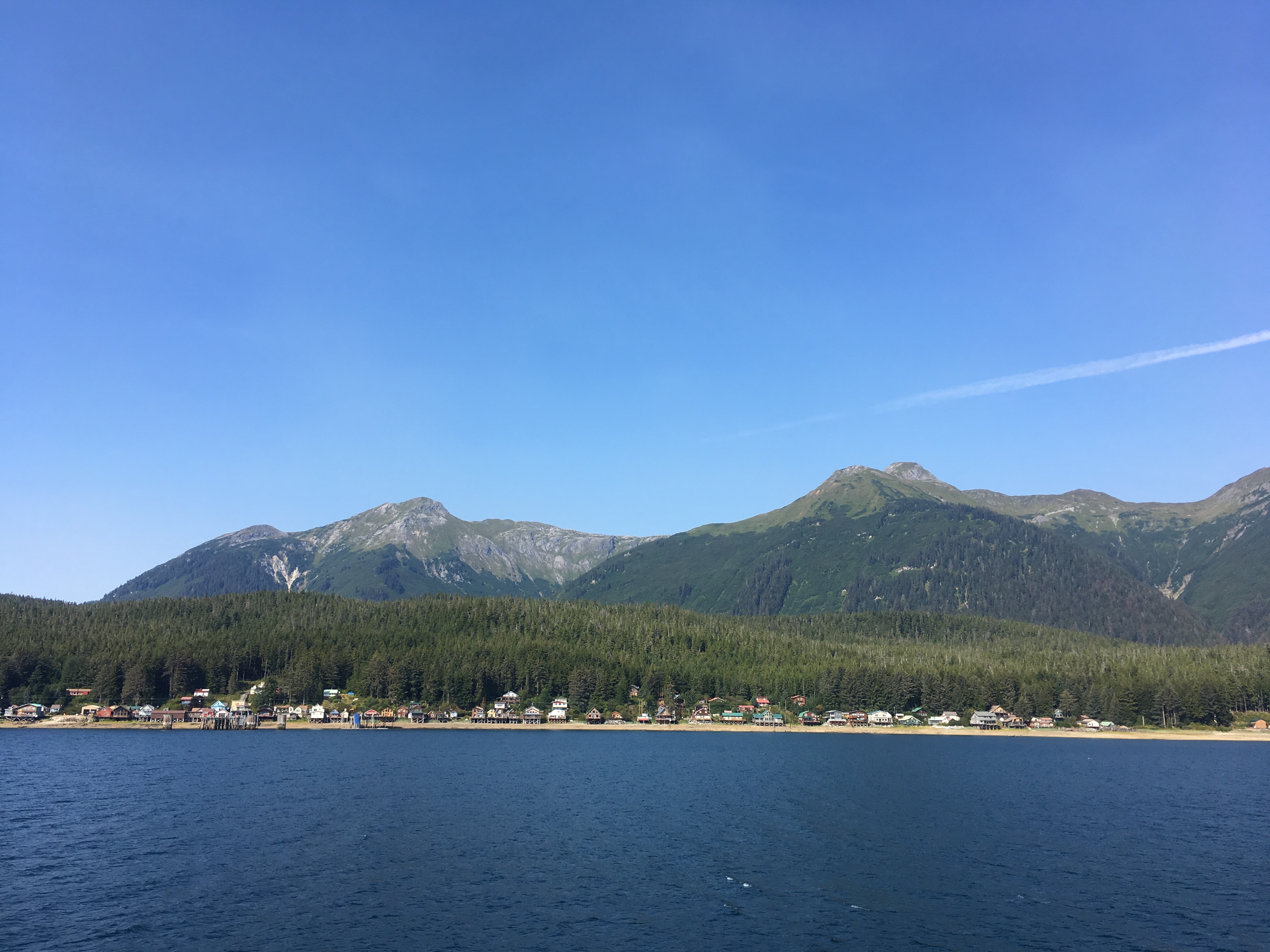
This morning Aki watched me board the MV LeConte for Tenakee Hot Springs. I thought about taking her but she would have howled during the entire voyage. It was hot and sunny as so many of our mornings have been this summer. Many of the other passengers were Tlingits returning home to Angoon. This was the first ferry to reach their village since the ferry strike ended. Many of the villagers were loaded down with things purchased in Juneau. Two large panel trucks full of inventory for the village store were parked on the LeConte’s car deck.
They had placed more boxes full of food, supplies and toilet paper on the luggage cart that is driven off and on the LeConte at each stop. Toward the end of the strike the Tenakee was out of beer and toilet paper as well as other staples. Angoon was probably in the same boat.
Aki is in Sitka. She and I flew here from Juneau yesterday. It was over 80 degrees when we left Juneau and 65 here. The little dog had two firsts today—tasting salmon berries and sniffing brown bear poop. On her home trails in Juneau, she has intimidated black bears. That won’t fly with these Sitka brown bears. Rather than standing tall and yelling, which works with black bears, the only way to survive a brown bear attack is to play dead.
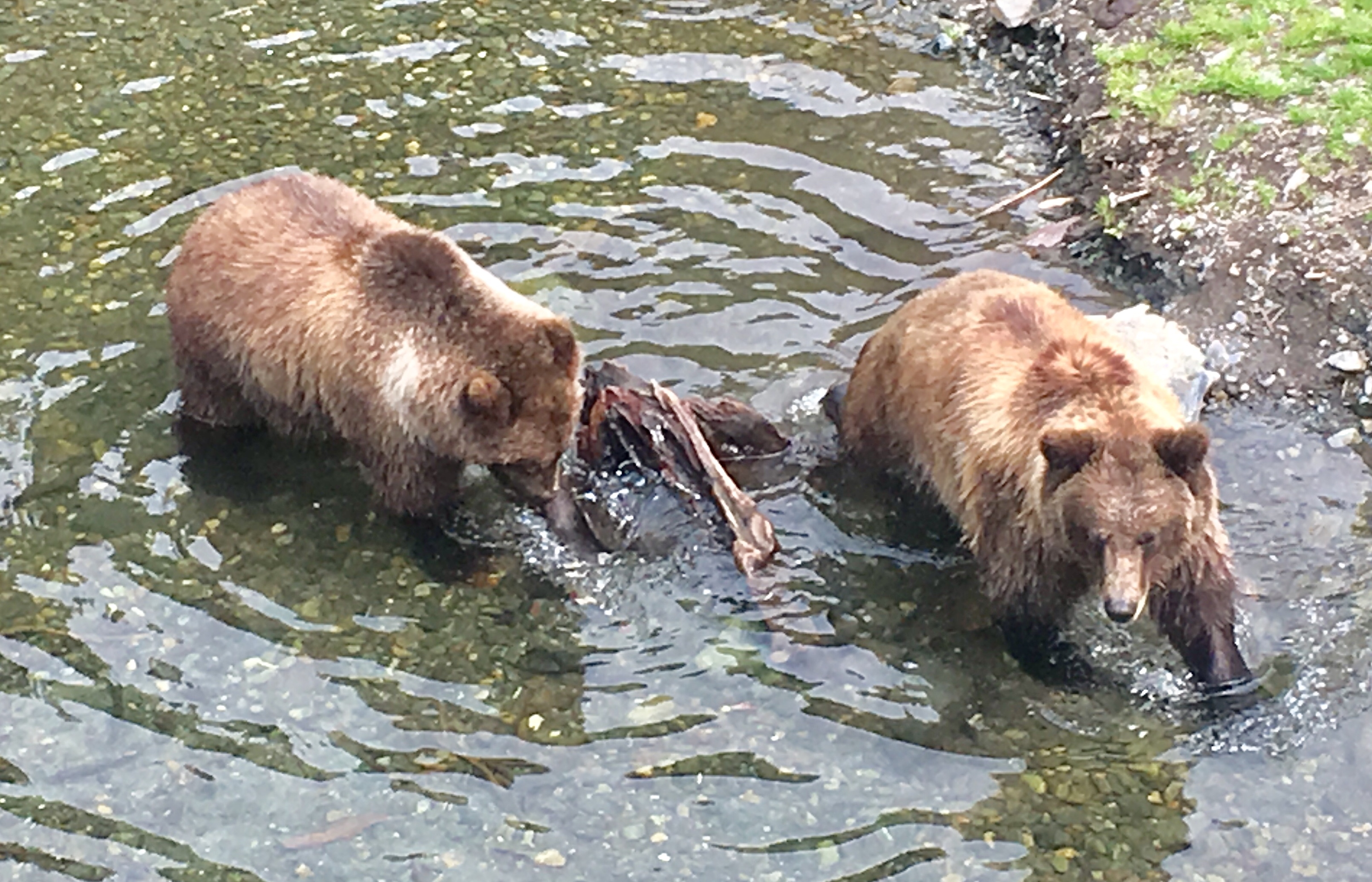
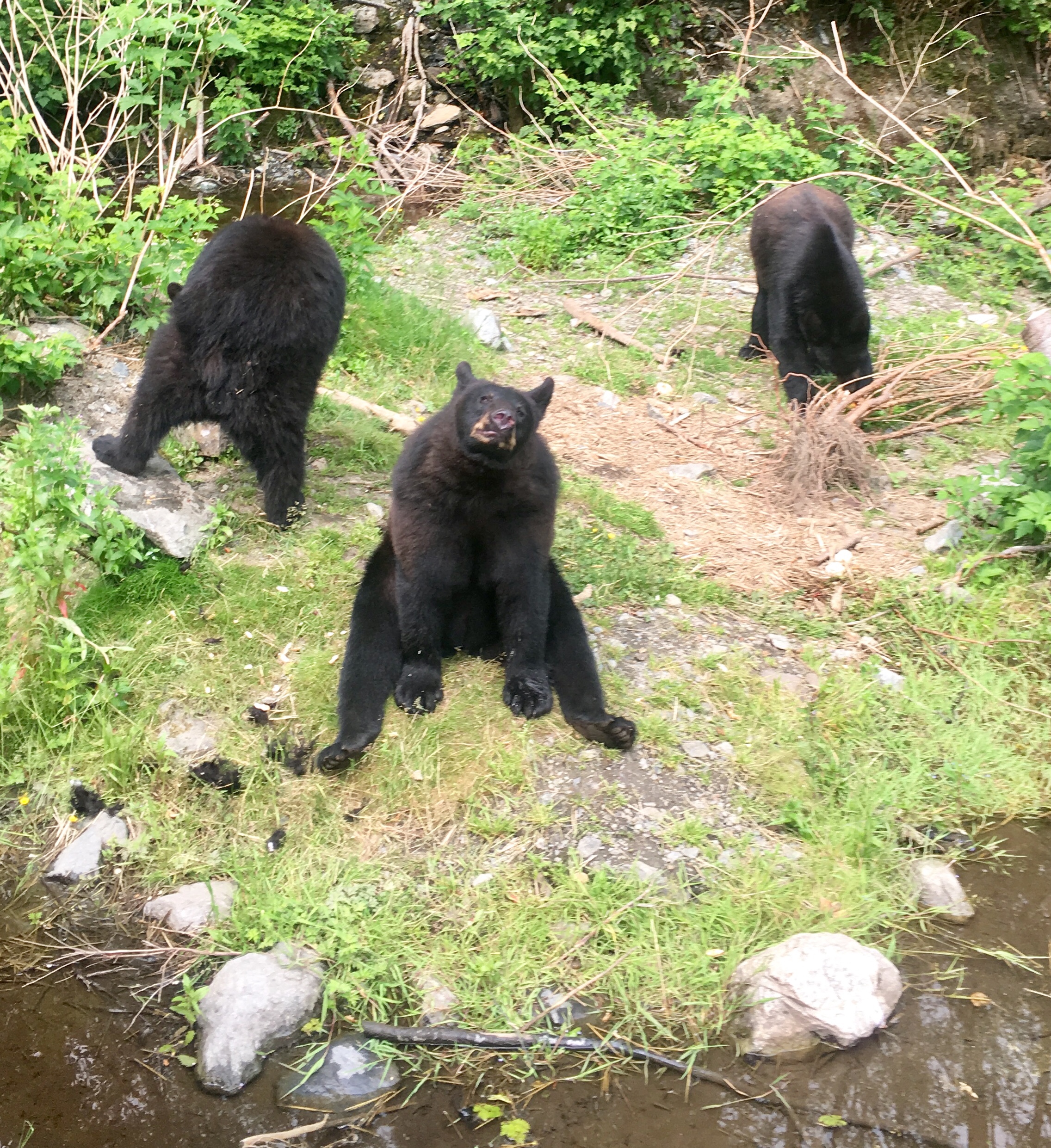
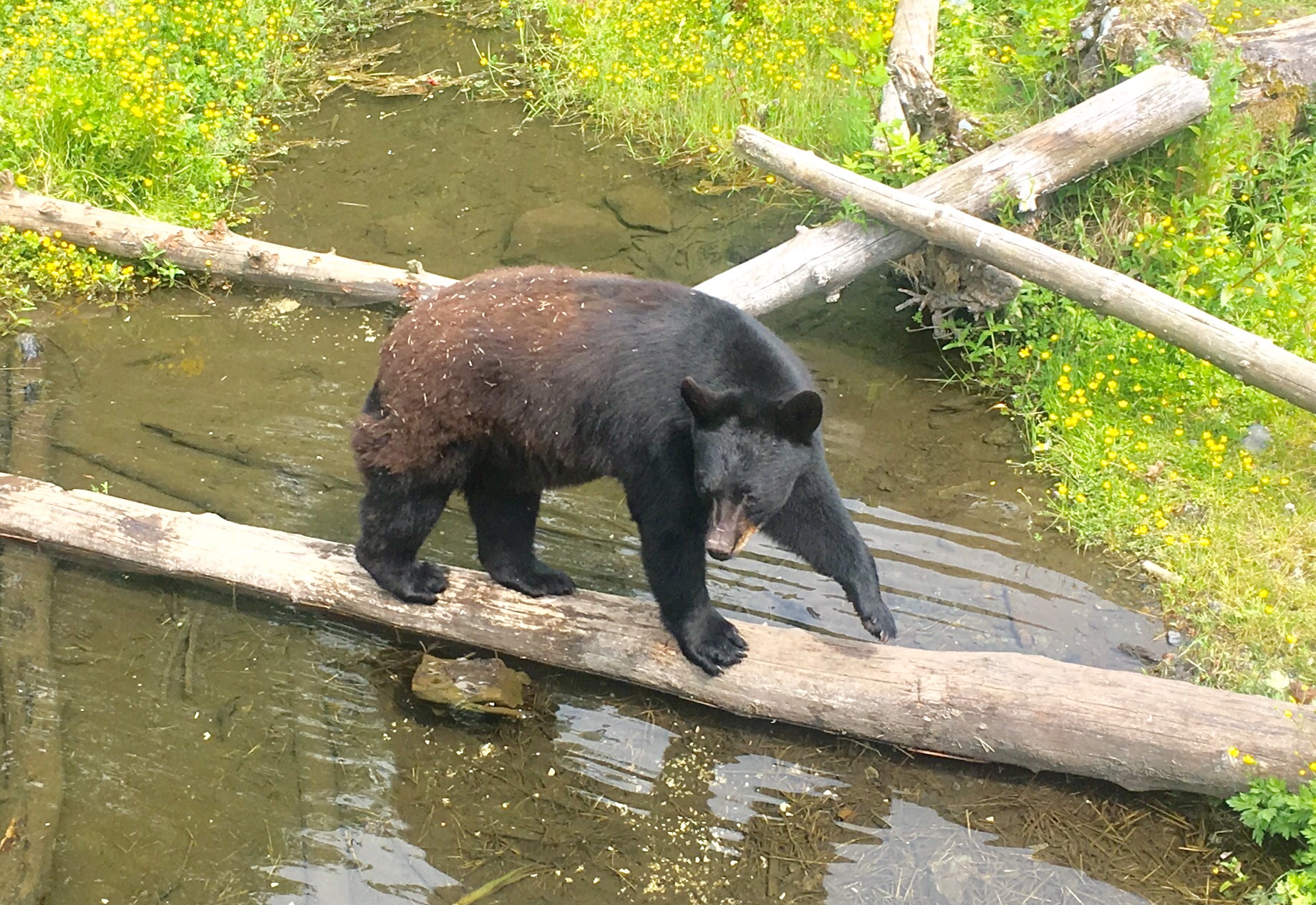
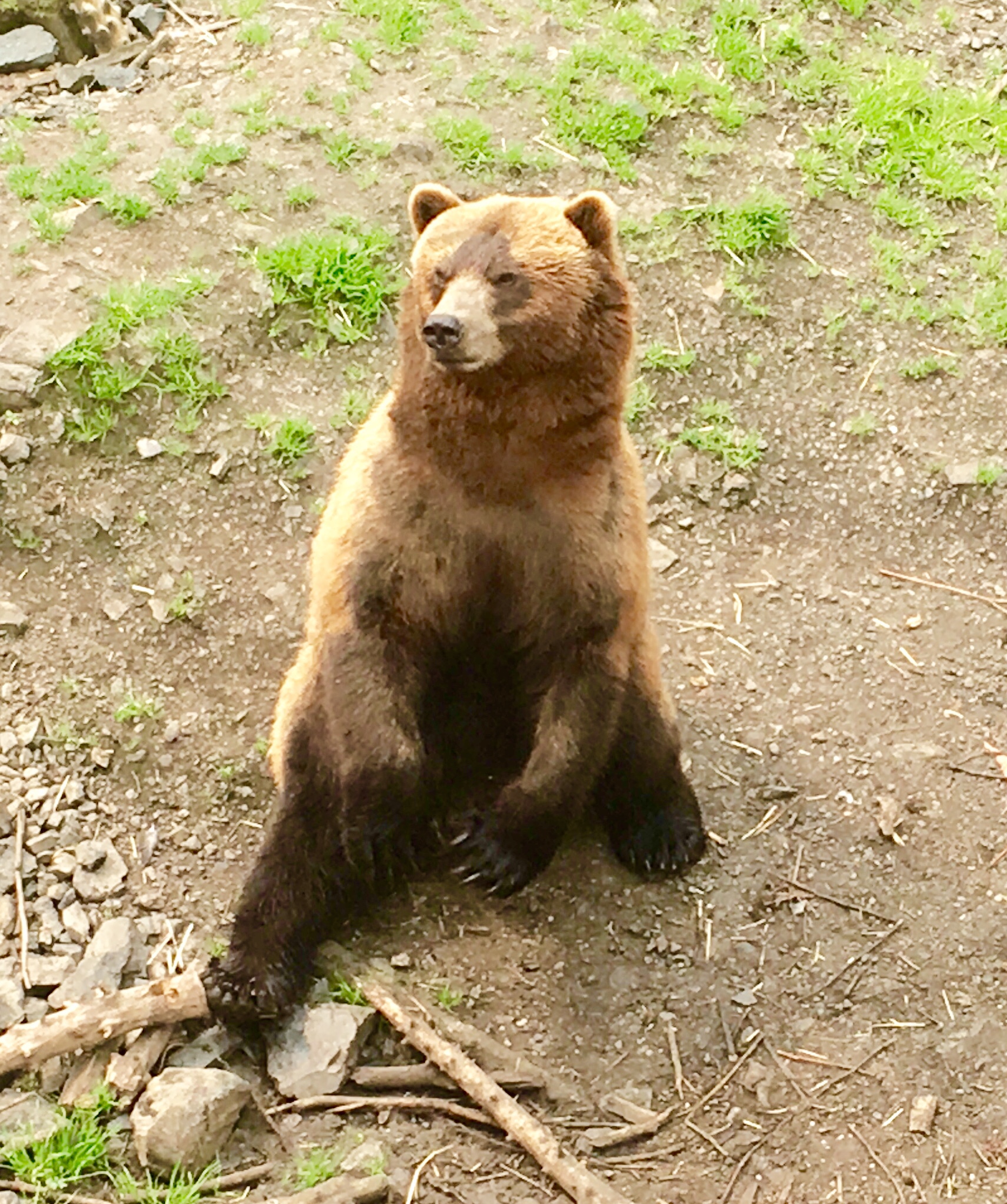
Before the hike, I visited the Fortress of the Bears. Aki stayed in the car. The fortress founder has filled the scoured out mixing tanks of a defunct pulp mill with orphaned black and brown bears. Except for a clownish black bear, the critters in the fortress have retained their natural dignity. From a safe view point above the tanks, you can watch the bears feed and wrestle with driftwood logs. Ravens and eagles skulk in the trees that line the tank enclosures. I enjoy the views but was thankful not to share them with the little poodle-mix.








 Walking with Aki