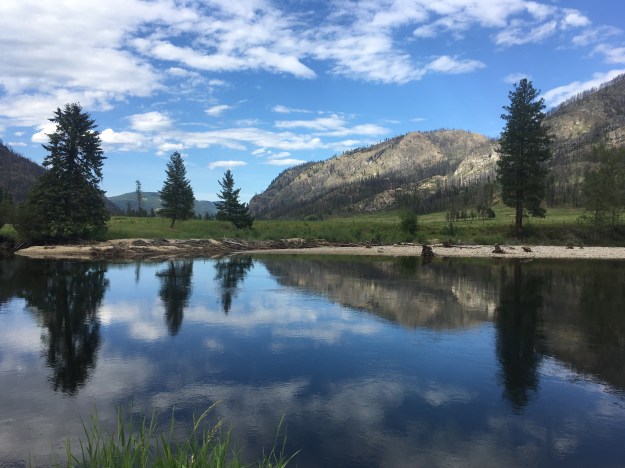
It’s 31 degrees centigrade. I am riding a mountain bike up the Kettle Valley Trail. But for a washout I would have missed seeing a family of geese tucked against the opposite shore of the river. There are fluffy chicks hanging closely to their mom.

It’s 31 degrees centigrade. I am riding a mountain bike up the Kettle Valley Trail. But for a washout I would have missed seeing a family of geese tucked against the opposite shore of the river. There are fluffy chicks hanging closely to their mom.
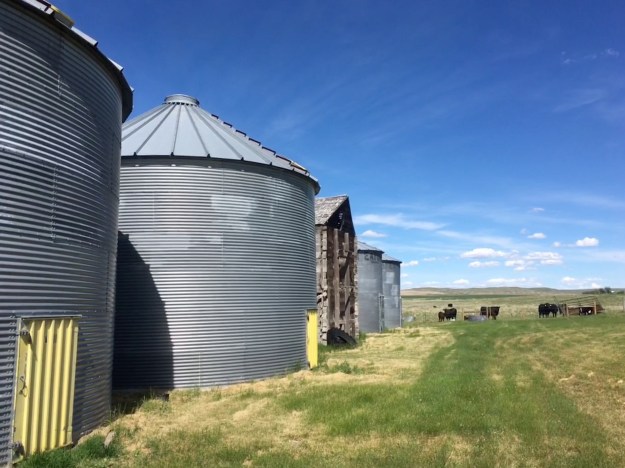
After a wheat truck bounces past the ranch house and the dust that it raised settles, I can hear bird song coming from the shelter belt. Meadow larks and red winged blackbirds, perched on the bare tips of blend in their songs. My grandfather planted the row of Russian olive trees to give the house some protect from storm winds. Today it shelters meadow larks, pheasants, and the occasional deer.

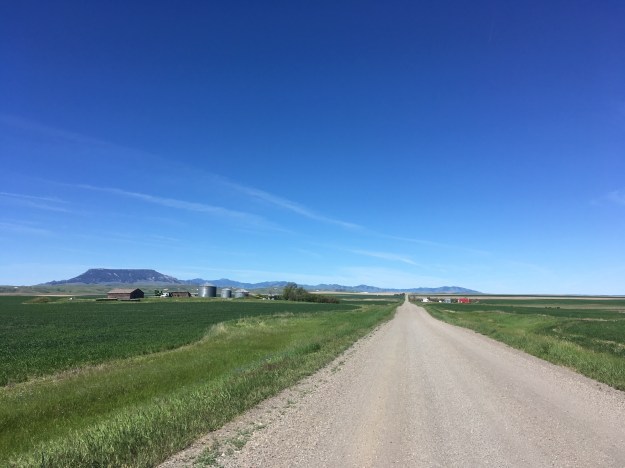
I ride toward the site of the one room schoolhouse that my mother and uncles learned to read and write. The building is gone now. Some of the bench families have buried their dead in a small cemetery near the old school site. It offers a beautiful view of wheat fields and Square Butte beyond.

Even though the road toward Square Butte is just drying out from a recent storm, I take it. Two prong horn antelope trot across a wheat field and seem to pose with the butte as a backdrop. Later I surprise a mule deer reclining in some summer fallow. It will stand up, shake off sleep, spot my bicycle, and run full speed toward the nearest shelter belt.

Aki would not have liked the barn cat that greeted my arrival at my grandfather’s Montana ranch. I still think of it as his even though he died in 1923. He homesteaded the bench land before he passed and left my grandmother with three children under 8 and a crop in the ground. Thanks to her two bachelor brothers, she held on to the ranch through the depression, surviving drops in wheat prices and hail storms that flatted the whole year’s crop in minutes.

Last night I slept alongside the Missouri River in the hotel where my grandparents spent their one night honeymoon. The next day they rode 40 miles to the ranch in an open buckboard. It was well below zero and snowing. They lived in a one room shack until grandpa built the Craftsman style house where I ate dinner. It was ordered from a Sears catalogue and shipped in parts from Chicago.

Meadow larks sang while I visited the family cemetery and later when I walked among the abandoned tractors, harrows, and shacks that have accumulated over a hundred years of farming. I spotted a loaping bear cross the far side of a field of winter wheat. A half an hour later an antelope trotted into view near the same place. Beyond the antelope low rounded hills and a flat topped butte rose above the field. The farmers of my family are responsible for beauty of the ground where the antelope stands. It enhances the natural beauty of the high ground beyond.

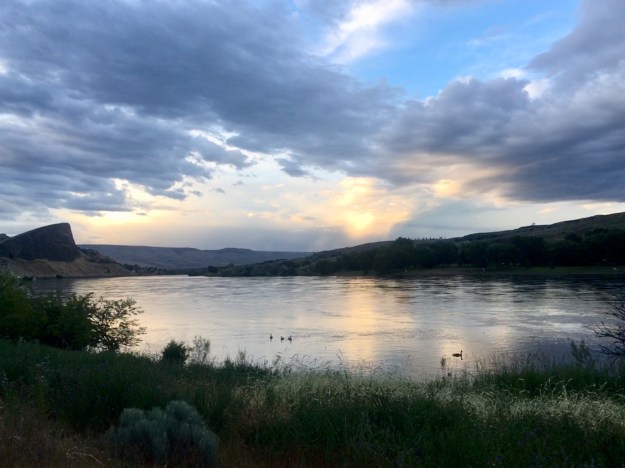
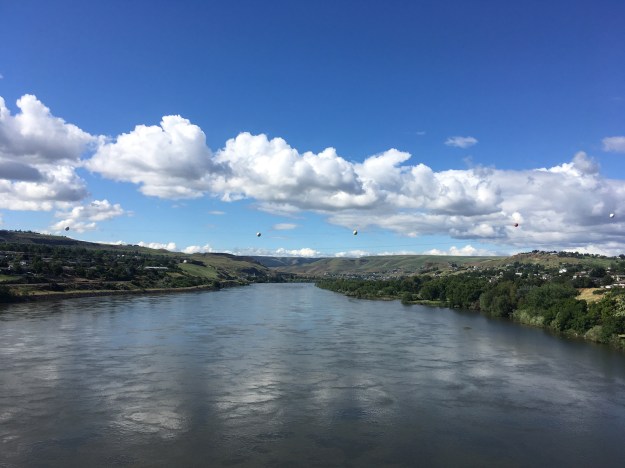
Yesterday, an osprey watched me peddled along the Washington shore of the Snake River. I always considered the fish eagles birds that only work clear waters. From it perch in a cottonwood tree, this citified eagle could watch cars and trucks clank over the interstate suspension bridge. Across the river, a factory cranked out bullets. What it did next left no doubt that it was the real deal.
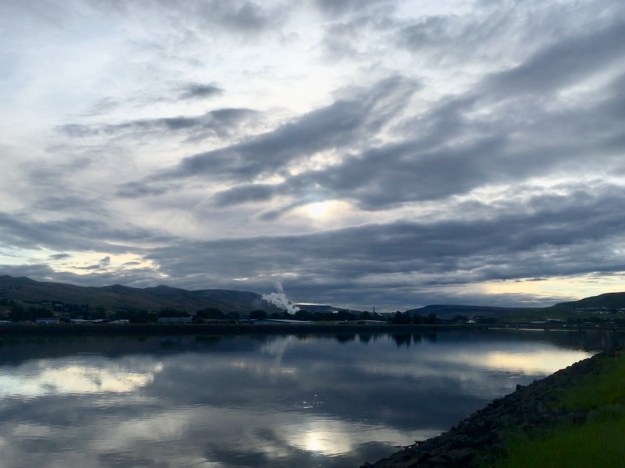
The bird launched from its perch and hung in mid-air above the river, beating its broad wings to tread air like a swimmer can tread water. It dived toward the river. A sceen of trees blocked my view of the osprey until it had pull back above the tree line, its talons empty.

This morning I passed another urban marmot as well as a great blue heron that let me approach much closer than its Alaskan cousins. Later in the day a coyote crossed the road in front of me. I have long known of that trickster’s ability to thrive on a city’s margins. I suspected that herons can handle the stress of suburban living. But the osprey really surprised me.
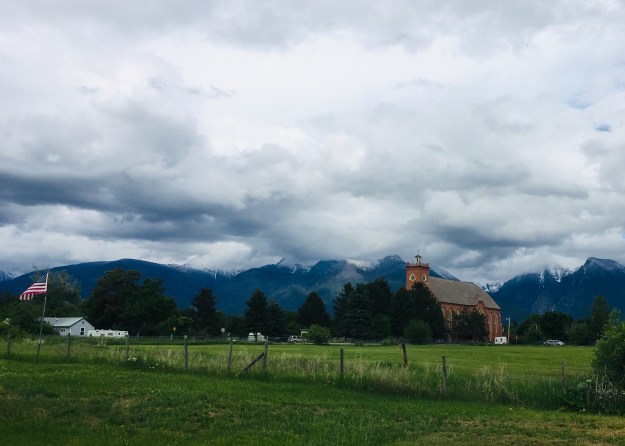
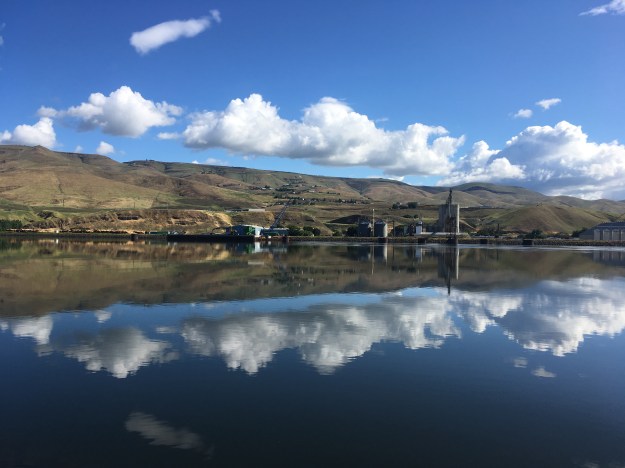
I am on the dike that protects Lewiston, Idaho from the Clearwater River. Aki would like the sunshine and cool, early morning temperature. She would be intrigued by the marmot that just ran across the bike path. If my little dog were here the marmot have slipped under a rock for protection. Instead the long-tailed rodent is only 7 meters away, enjoying the prairie light.
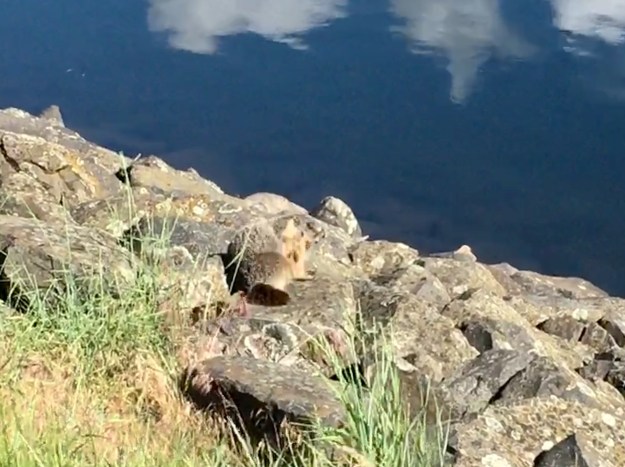
I’m enjoying the light too. Yesterday heavy rain washed the sky clean. No pollution softens the crisp sunshine or deadens the intense blue sky. It’s as if the marmot and I have been transported back to the time when Lewis and Clark were rescued by the Nez Pierce people: before the car, and grain trucks, and pulp mills.
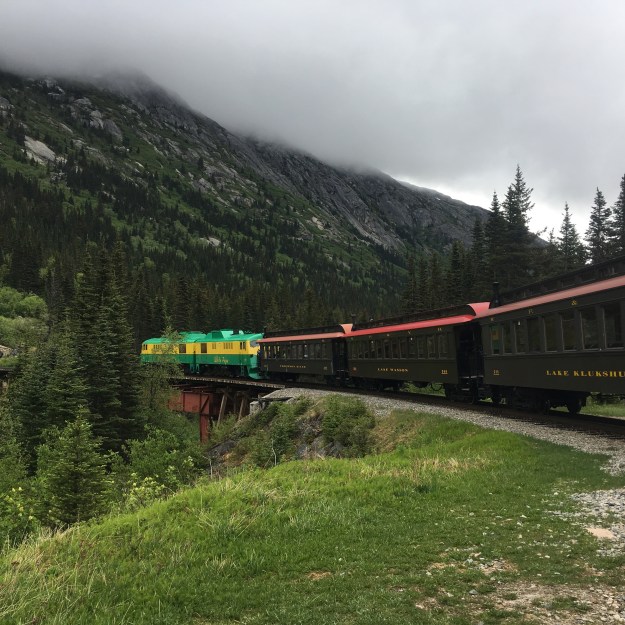
It’s early morning. Rain spots the windows of a railcar hauling forty writers toward the glacier trailhead. Some of the writers are published. Two are well established. All of us are talking loud enough to be heard over the creaks and grumbles of the White Pass Yukon train car. If each writer were making this trip solo, we would be quiet observers. We’d pay attention to the amplified, chipper voice that calls our attention to the U.S. Custom’s station on the Alaska border and then a great view of Skagway Harbor.
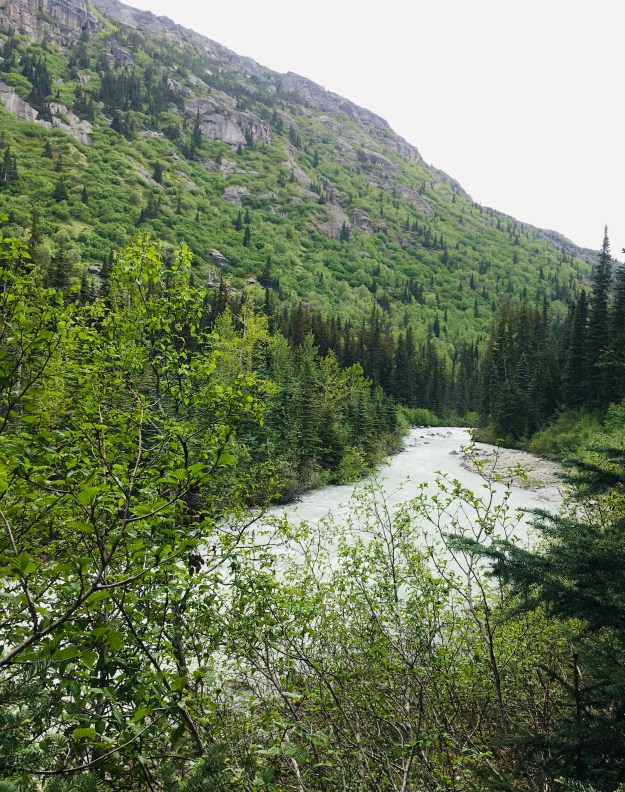
After the trail groans to a stop at Mile 14 we leave our warm, noisy car and watch the other train passengers—who all slept last night on a cruise ship—watch us. We pull on rain gear and start the mile and a half hike to the glacier cabin. The sounds made by a glacier-fed river dominates the walk. We pass a spruce tree scarred by the claws of stretching black bears. I can’t resist placing four fingers into one set of claw marks. Nearby beads of rain water weigh down the leaves of lupines.

After the cabin two friends and I move on toward the glacier on a trail over moraine. Not enough time has passed since the retreating glacier exposed it for a proper forest to form here. In a half-mile the stubby alder and popular woods end. We see, for the first time, the glacier and U-shaped valley of rocky rubble dropped in place by melting ice. Walls of moraine rise a half-mile on both sides of us. In sad realization, I understood just how deep the remnant glacier was just a few hundred years ago.


I should be heading back to Skagway. Another day of writing school will start soon and I haven’t had breakfast. I’d be back on the trail if not for the duck.

He and I have a little pocket cove to ourselves now that the eagle and tern have left. The duck keeps repeating a puzzling routine: roll headfirst into the water, pop up a minute later, check behind for predators by doing a 180 degree turn, return to his course.

The eagle is back and the duck just slipped away, trying to keep a rocky point between he and the eagle. Time too for me to go. Soon the helicopters and the other engines of industrial tourism will be firing up.
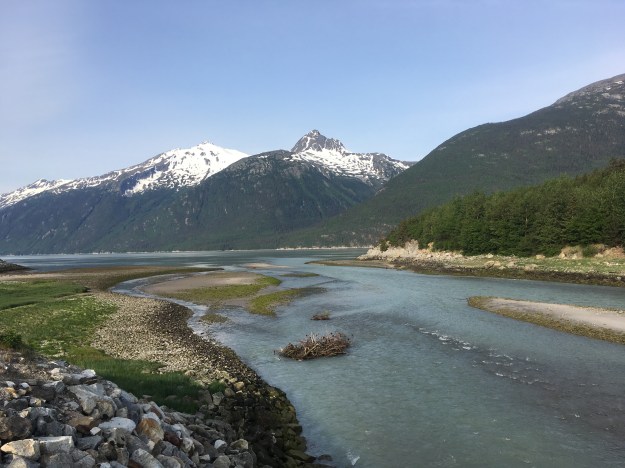 Aki is home, probably tucked in and cozy. I am standing on a glaciated point with rocks scraped smooth centuries ago by a retreating river of ice.

The glacier left behind deep fjords and peaks that stick up from their mountains like busted teeth. All the products of time and glacial ice.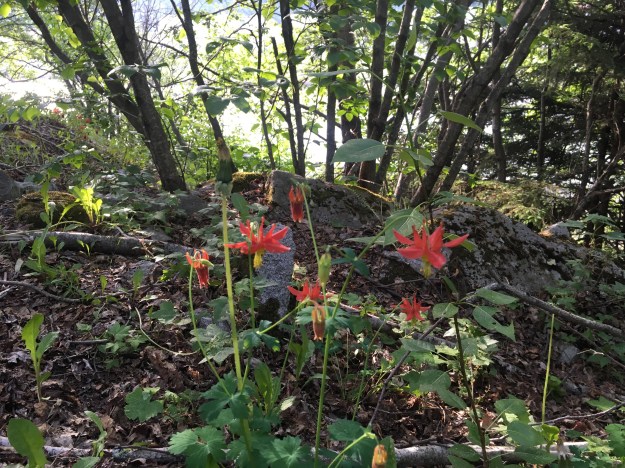

Aki and I made it to the Fish Creek Delta early enough to catch the clarifying effect of early light. But this morning broke hazy. The air it offers is obscured by forest fire smoke or pollution carried here by the jet stream. It feels like end times rather than a fresh summer morning.

Robin, sparrow, and the other songbirds work hard to lift the mood. It could be worse. We could have to suffer the complaints of the nesting crows. Near the pond an eagle roosts in the top of a spruce, it’s head turned away from the sun.
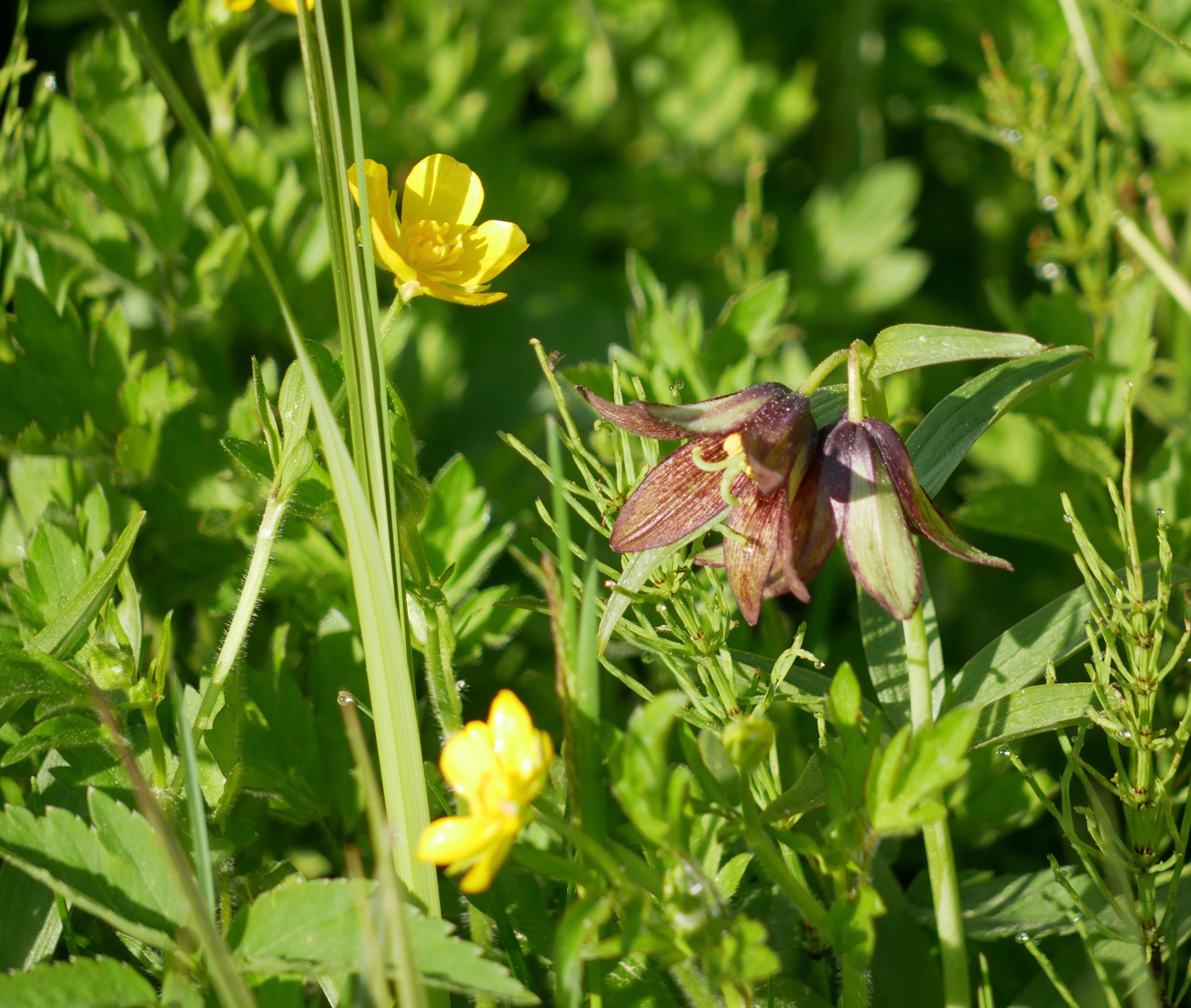
The little dog and I press on, my spirited lifted by the strong display of wildflowers on the spit that separates the creek from Fritz Cove. Purple lupine stalks dominate but must still compete with older swatches of magenta shooting stars and yellow buttercups. A single chocolate lily opens In the middle of the established flowers.

A single kayaker slides into Fish Creek just as we reach the creek’s mouth. Normally, I would grumble to Aki that the man’s presence has driven away shorebirds and ducks. He couldn’t have this morning. We haven’t seen any waterfowl. Besides, the present of another human is proof that the apocalypse didn’t arrive while we were rounding Fish Creek Pond.

The way Aki is panting, you’d think we were crossing the Gobi Desert in high summer. The little dog and I are on a mountain meadow warmed by the sun to 67 degrees (f.)—what we call Tee Shirt weather. Aki can’t strip off her coat of fur so is overheating.
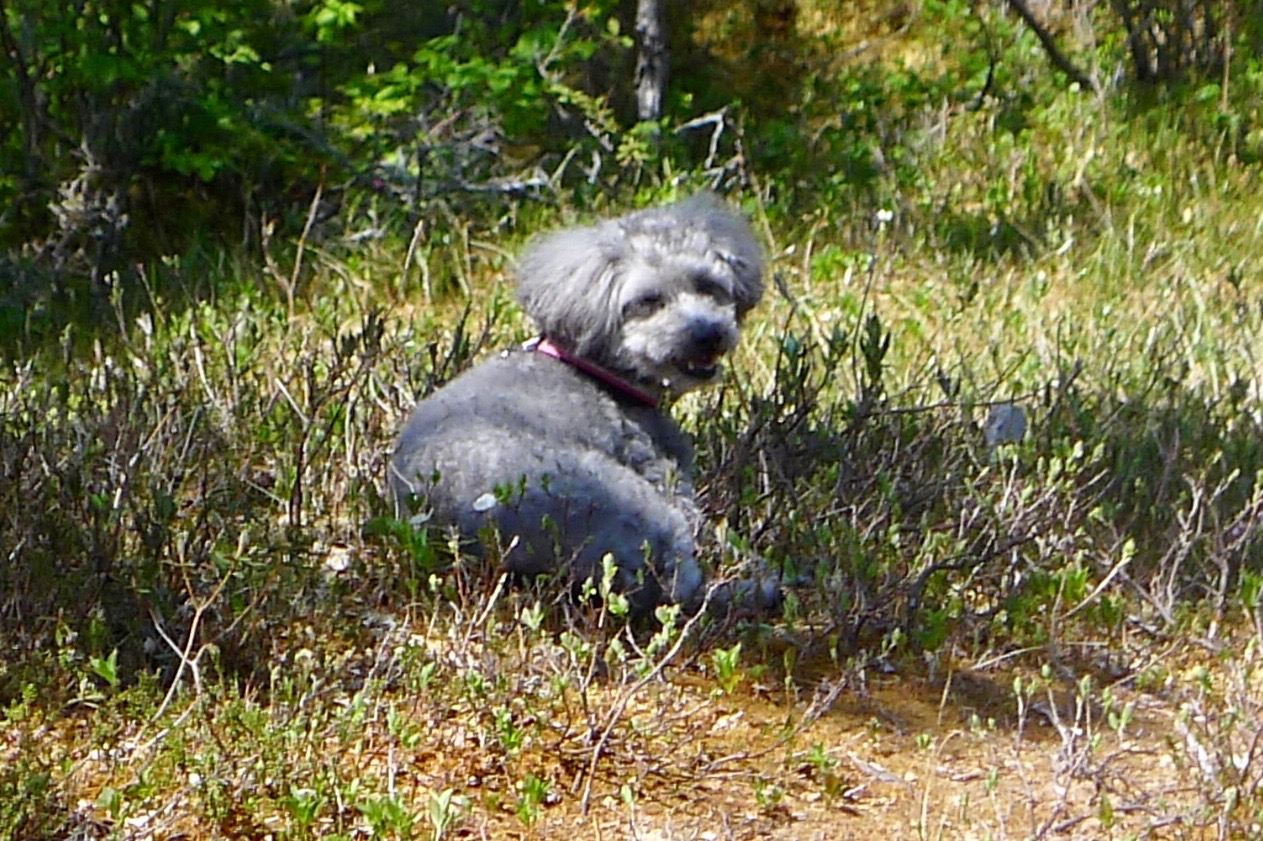
I turn to mutter something to her about the abundant of bog rosemary flowers on the meadow and find that the little dog has moved to a shady verge. She looks content, like she could stay there until nightfall.

A loyal little thing, the poodle-mix follows me across the open meadow, past pocket ponds dry due to lack of rain. I lead her off the meadow toward the lush corridor of trees and brush drained by upper Fish Creek. Just before we reach it, Aki slips into a mud-bottomed stream and lets herself sink in to her chest. She emerges with her lower half coated in a chocolate-colored mask. Once dried, the muck will be almost impossible to remove. Aki trots toward the creek, acting as happy with herself as someone just treated to a spa day.
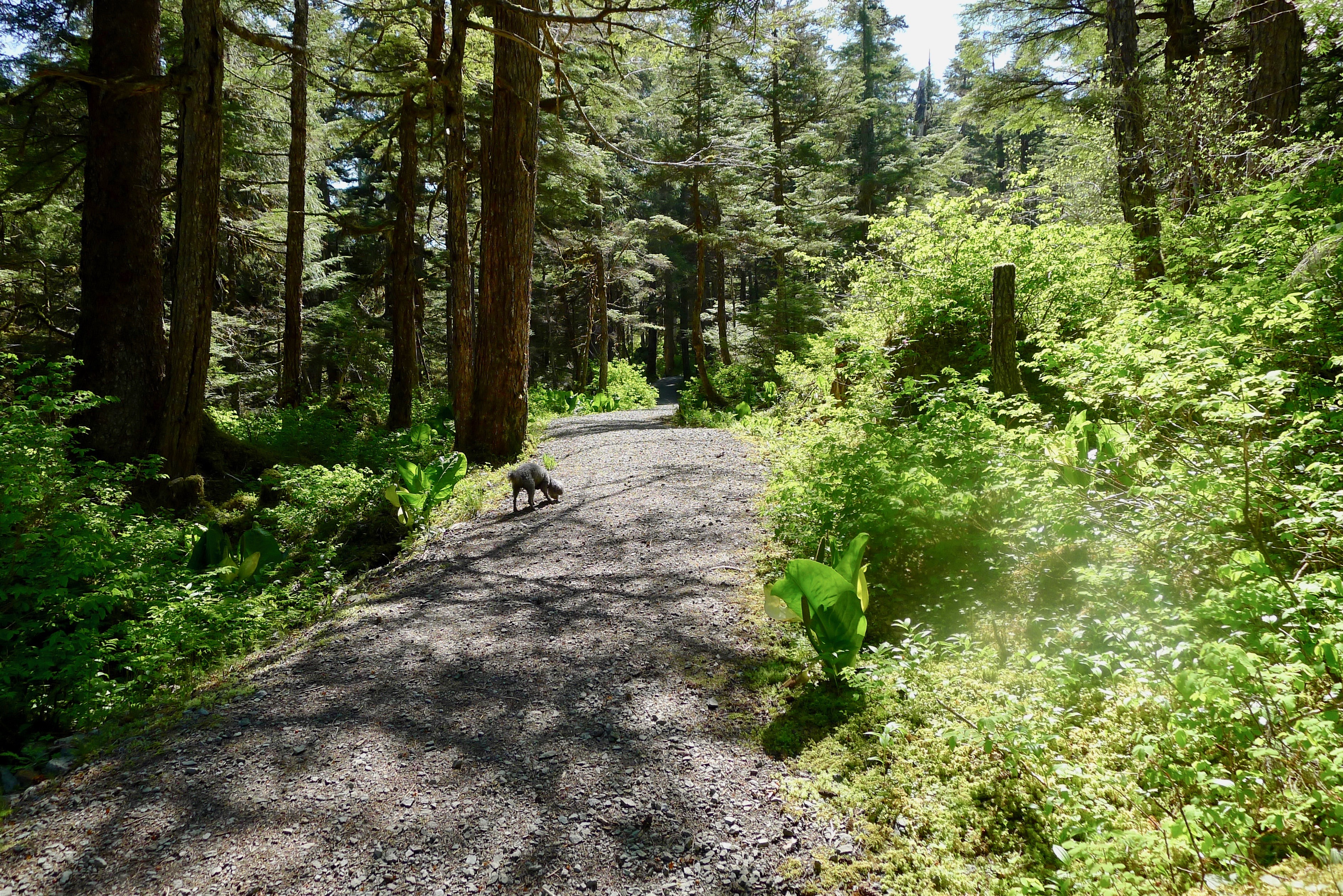
We find a spot along the creek where I can wash Aki without concern that the current will carry her away. She doesn’t squirm when I lower her into an eddy of the chilling water. She looks a little disappointed when I lift her back to solid ground. But she won’t bolt into the shade or seek out another mud bath when we walk back to the car.


