Category Archives: rain

Reading Ferns

1

Last night the remnants of a Pacific typhoon dumped rain on our Alaska panhandle. Aki and are trying to sneak in a forest/beach visit during a lull in the storm. The little dog dashes up and down the trail, apparently inspired by fresh pee mail. I’m relieved not to have to keep the bill of my ball cap down, happy to be able to point my camera up toward the canopy without having it smeared with rain drops.2

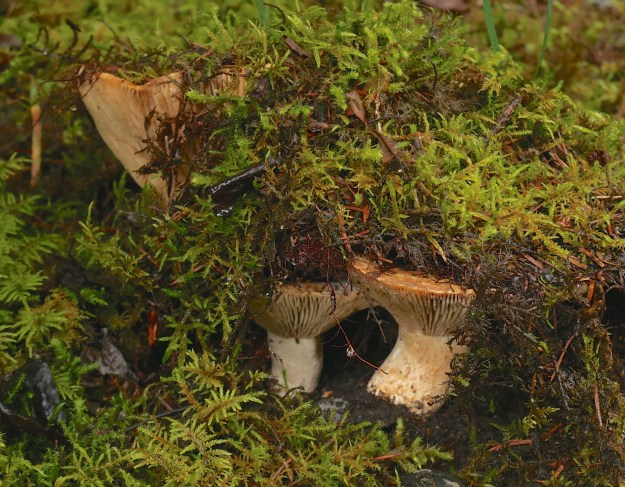
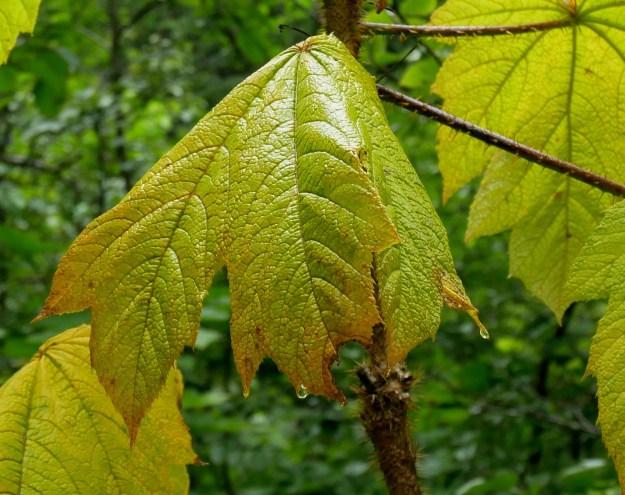
Everything is fresh washed and glistening by moisture delivered by the typhoon. Drops of runoff have collected along the base of bear-bread fungus, making it look like an alligator’s jaw. Others make the reddening blue berry leaves sparkle in the gray light. While somewhere in the Lower 48 States, people wearing cartoon dark glasses watch the moon extinguishing the sun, I stare up at the underside of broad devil’s club leaves that collect storm light.3

We find a fern, delicate as Queen Anne’s lace, shiver in a tiny breeze. Giving up on summer, the fern and its clan are already ghosting to white. Soon they will dry to dark-brown and then be crumbled by the first hard frost. In minutes we are back at the car. I have to coax Aki into it. We didn’t see anyone during the walk. Is she disappointed by the lack of dog company, or does the wise little thing know how to read fern sign?4

Winners and Losers

1

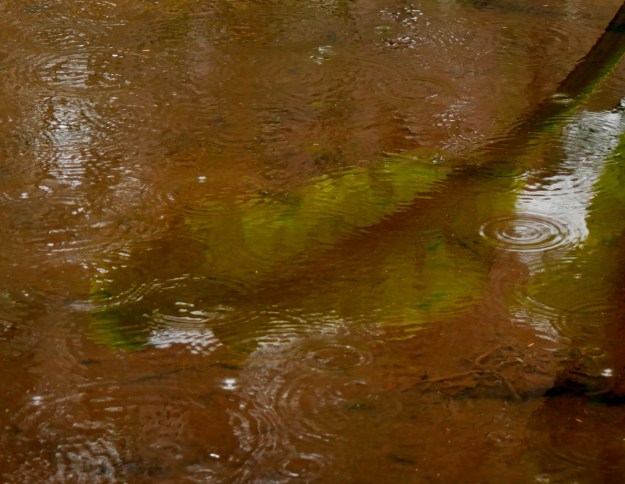
The rain starts as Aki and I round a cashew-shaped moraine lake, threatening the lake’s mirrored image of cottonwoods transforming into their fall colors. At first the falling drops just soften the reflected image so it mimics an impressionist painting. But then the shower’s violence increases; rendering the lake incapable of any reflection. The storm compensates for the loss of visual beauty with the percussive music of raindrop on leaf. Willow leafs fill the treble rain while the larger cottonwood and devil’s club foliage provide notes in the lower register.

3On this walk over the moraine Aki and I have already seen evidence of the wild world’s give and take: mushrooms ripping their way through the trailside moss, bones and berries in bear scat, cottonwood trees fallen by beavers, and moss slowing reducing trees in the troll woods to soil
2

Heavy Shower

3

We rain forest dwellers have many words to describe rain. There’s snain (mixed rain and snow), drizzle, mist, downpour, monsoon (long periods of washout rain), and showers. According to the weather service, Aki and I are experiencing a shower. I can’t argue. Rain streams from the sky like water from a showerhead. Even though we walk under the big cottonwood trees of the Treadwell ruins, drops hammer my parka and soak Aki’s fur, turning both dark gray.

2

As she tends to do when displeased, Aki uses mind control tactics to turn me back to the car. She plants herself and stares at my back as I move further into the woods. Only when I stretch to the emotional breaking point the invisible rubber band that connects us does she start to trot after me. Near the beach, the little dog relaxes and starts to check the pee mail. It provides her with more distractions than I can find on the beach.

4

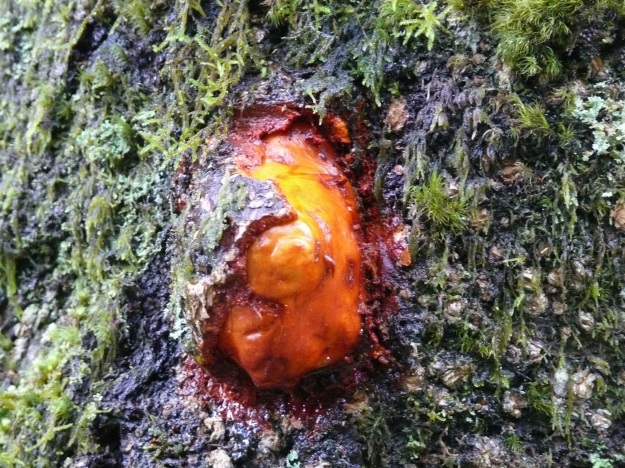
Across Gastineau Channel, a salmon seiner moves toward Taku Inlet. Near the collapsed glory hole two gulls complain about the weather. They don’t even bother with three plump dog salmon that washed up during last night’s flood tide. I can’t even enjoy the drama of heavy raindrops slamming into the channel because the shower has become a drizzle. We return to the forested ruins and amidst its monopoly of summer green and decay-brown a recent wound on an alder tree mimics the golden orange of autumn maple leaves.

1

Smart Little Dog

1

The recent heavy rain has swollen Gold Creek. It charges under the Christopher Trail Bridge. Aki trots on the bridge behind me, seemly oblivious to the rushing stream. She had refused to cross it every other time we used the trail, even when the stream was silenced by ice. I want to search her soaked face for an explanation but she slips by me when we reach solid ground. She trots on, probably drawn forward by an interesting smell. She is a smart little dog, smart enough to let me lead on the overgrown sections of the trail so my pants, not her fur, soaks up the water that clung to the trailside plants.2

Blues and Grays

1

One of the big Princess cruise ships moves up Gastineau Channel while we drive over the bridge that connects Juneau to the island of Douglas. A gentle rain falls on the boat and those passengers who ventured on deck to watch the docking. Down channel, only a small oval of blue skies survives a complex of gray clouds that is delivering rain. Are the passengers excited by the challenging weather or crushed? Will they hike up Juneau’s European-narrow streets to the Basin Road trail system or sulk in the Franklin Street tee shirt shops? Aki and I won’t see any of them wandering the Treadwell mining ruins.2

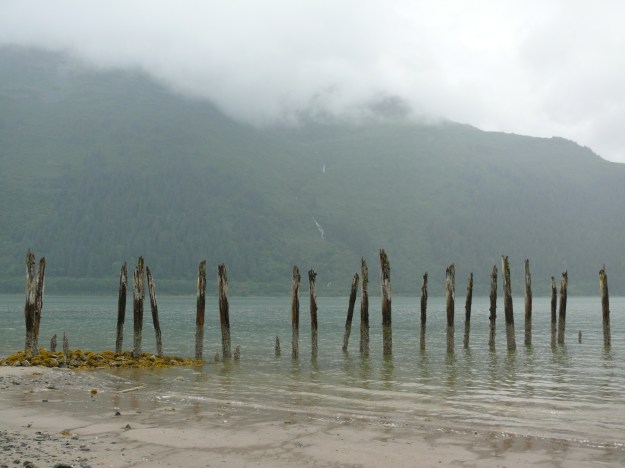
It stops raining before we have passed through the forested ruins and stepped onto a beach made of crushed mine tailing. A resident pair of ravens watch Aki and I from atop jagged-topped wharf pilings. The one with a white spot on its wing bows toward my little dog when she trots up to its piling. After Aki follows me over to the collapsed glory hole for a visit with the belted kingfisher, the two ravens fly off down the beach, turning their backs on a battle taking place near the southern tip of Douglas Island between blue sky and rain-charged clouds.3

Last Day of School

3

It’s the last day of writer’s school. Rain started last night and has washed clean the bike path. It must have also discouraged other users as I only pass homeless people on my ride to Russian Jack Park. One man sleeps on a trailside bench as rain drenches his thick, black hair and beads up on his tourist-grade rain gear. Another stands just off the trail as if waiting for a bus that will never come.1

There will no animal drama on this ride. No moose or bear will break across the path. No bird song will rise above the white noise of commuter traffic. I will hear the too-sad minor song of an Alaska Railroad engine warning of its approach. I’ll watch water dimple Goose Lake and speed up the demise of purple and blue iris flowers that brightened the trail during my last ride in the sun. I’ve enjoyed being part of writer’s school, a village that forms each summer near the confluence of Campbell and Chester Creeks. But, it will be good to be back home in Juneau—a town that knows how to look its best in the rain.2

Juneau Fourth of July

2

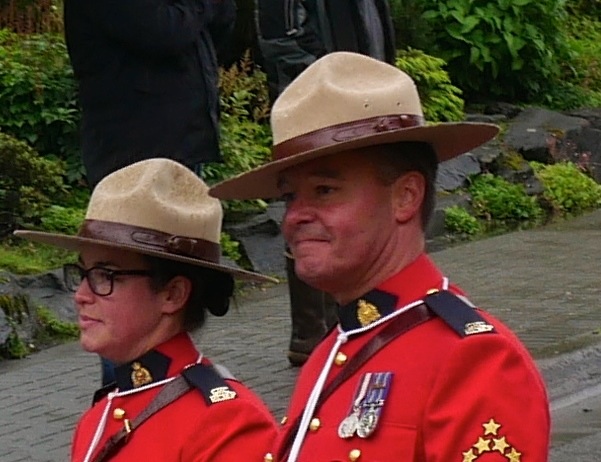
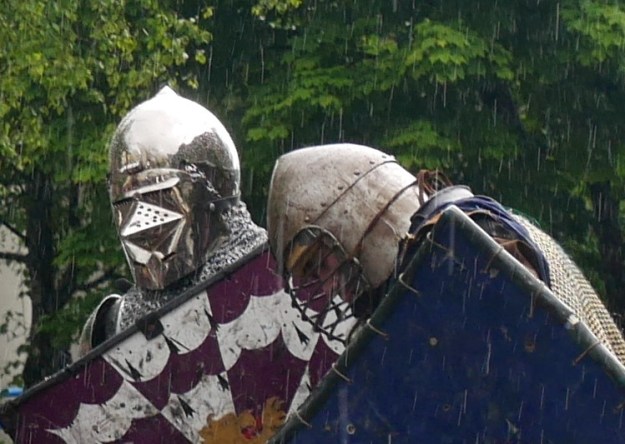
We Americans expect sunshine, warm temperatures, and lots of red, white, and blue bunting on the Fourth of July. In Juneau, we accept that rain often replaces sunshine., dives down the temperature and soaks our patriotic bunting. This morning, while Aki recovered from firework produced stress, I watched the annual birthday parade. People cheered the visiting Northwest Canadian Mounted Police, Shriners (big men in toy cars), rainbow flags, Veterans for Peace, and trucks full of Tlingit veterans wearing clear raingear over their wool blanket regalia. Kids scrambled for candy thrown from fire trucks and floats. Rain splattered on the handcrafted amor of men fighting with swords and maces.1

I enjoyed the parade but was more than happy to take Aki out to North Douglas for a walk through the rain-soaked woods. Empty of other people or dogs but full of bird song, the forest is a peaceful place. Almost ripe blueberries rise above clusters of leaves. I know I should wait for a week before sampling them but pluck a few into my mouth, find them almost summer sweet with a sharp aftertaste. Soon the sun will return to ramp up their sugar content and turn them into soft sacks of juice.3

Wet Bird

1

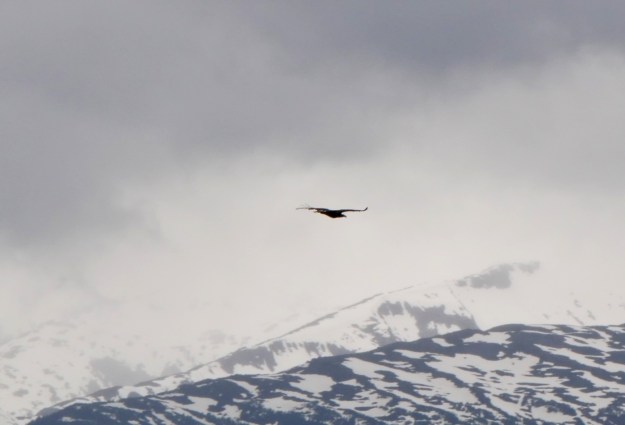
This eagle tells you everything you need to know about today’s weather. He squats in the top of a hemlock tree, rain-soaked wings spread out to dry. He will hold that pose for the ten minutes that Aki and I explore the false outer point beach. I poke at a spray of purple beach pea flowers, snap a photograph of them, pet the dog, and look up at the eagle. He holds the same pose. I talk with Aki’s human sister, watch her skim stones on the calm water, pet Aki, and look up at the eagle. I smile at a brown junco with the nerve to land on a drift wood log a few feet away and stare at us. I squint out toward Shaman Island at the head of a curious seal, apparently wondering why we linger on the beach. The eagle still hasn’t moved. That’s how hard it rained today.P1050913

Green Calm

5

The weather service issued a heavy-rain advisory for this morning. Mendenhall Lake could rise two feet and Montana Creek is likely to flood. In my mind I measure how high the arctic tern nesting colony is above the normal lake level. The colony just might survive a two-foot rise but not much more. If birds can experience fear and grief the terns, who migrated here from Patagonia to nest and feed, must have heavy hearts. 3

Knowing that there is nothing we can do for the tern colony, I decided to drive Aki out to the Eagle River. From under a bed the little dog watched me assemble camera and rain gear, showing no interest in joining the expedition. She listened to rain tattooing our roof as I pulled on rain pants and jacket. Just when I was about to walk out the door without the little dog, she stretched and trotted up, tail wagging. Maybe the rainy weather made her sleepy.1

The rain stopped by the time we reached Eagle River. But the sky stayed gray. Aki jumped out of the car and headed up the trail. I followed behind. We entered the forest where green understory plants were already taller than me. The time of flowers has passed and that of colorful berries is weeks away. The forest only offered varying shades of green. But envelopment in such a green world calms like a day spa can never do. I must have slowed my pace in response because Aki stopped often to stare back at me with what looked like concern.2

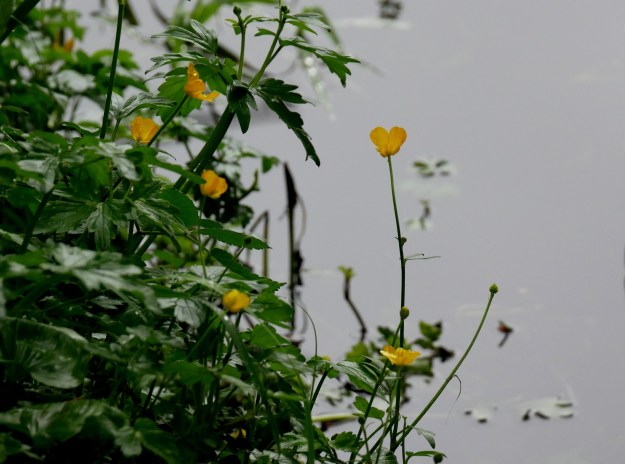
Later we crossed a riverside meadow rich in flowers. Blue lupine, magenta shooting stars and nagoon berry flowers, yellow buttercups, red columbines, and wild strawberries thrived. I remembered summers passed, when we watched chum salmon swim up the tiny watercourses that drain the meadow. At high flood tides, the salmon would swim across the meadow and die where the retreating waters left them. That part of their bodies not carried away by carrion birds, stayed to fertilize the meadow flowers and berry brush.4

Hell for the Hungover

2

While planning where to hike this morning, I look out at the garden where heavy raindrops make the tough kale leaves bounce. No wind blows them off course. Already the storm is soaking the old growth canopy. But the little dog and I still head to the Outer Point Trailhead.1

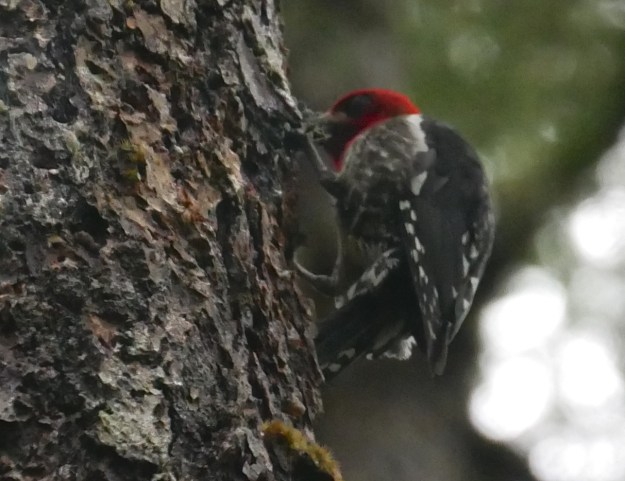
I am not surprised to find the parking lot empty and pleased that nothing falls from the sky. Ironically, inside the forest that usually protects us from the worst of storms, it is raining. Fat drops drip from the canopy of spruce and hemlock. Storm light, more pearl than gray in color, reaches into the forest and turns the surface of a beaver pond into a fairy tale mirror. It might tell Aki that she is the fairest dog in the forest. That wouldn’t be a lie since the place is empty except for local residents like the red-breasted sapsucker hammering into a 100 year old hemlock. The overdressed bird grips an imperfection in the bark with one foot, which in my mind, makes it look desperate, as it pounds yet another hole into the hemlock. Hell for the hungover must be full of such unrelenting woodpeckers.3