Category Archives: Poodle

Hot Dog

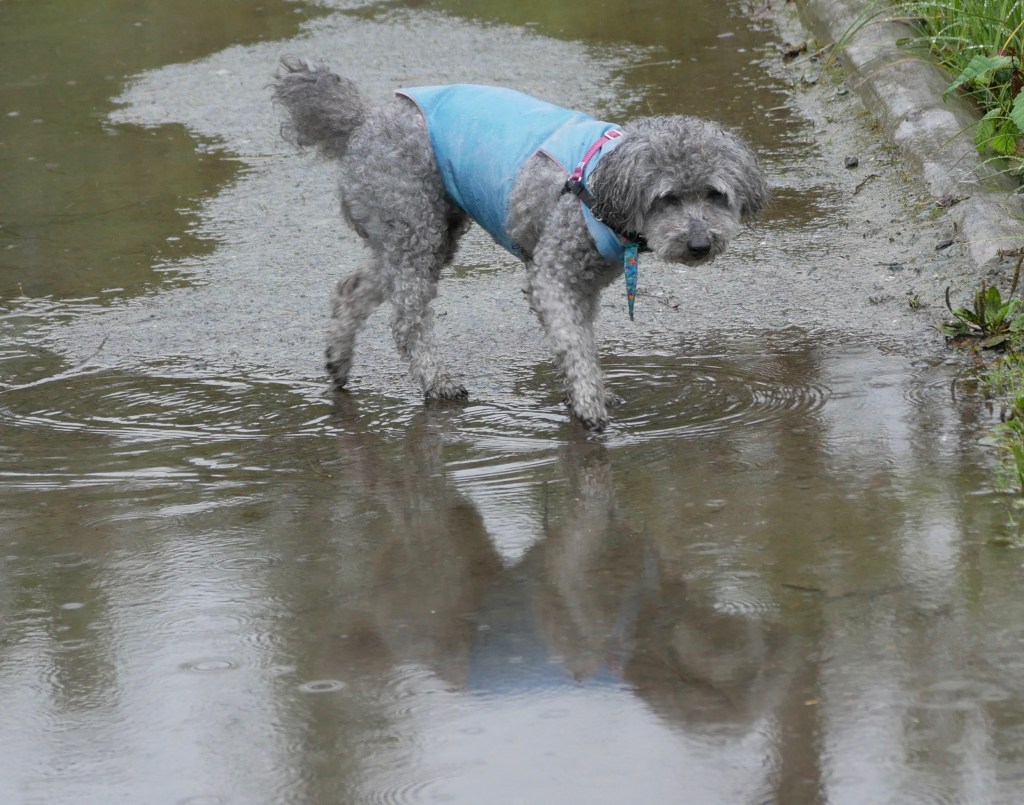
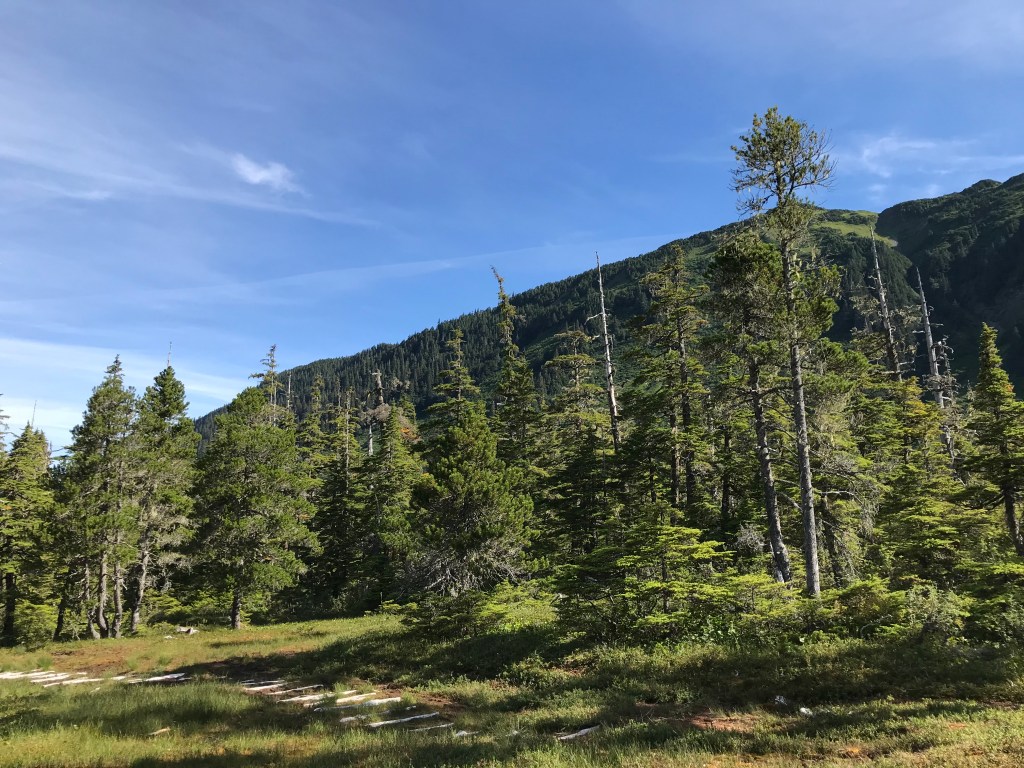
Aki is banned from the house. She isn’t being punished for a sin. All she did was lower herself into a muskeg mudhole on a very warm morning. She and I were hot, exposed on an open berry picking meadow. Our bodies had been generating heat by helping us bounce over the soggy surface of the meadow.
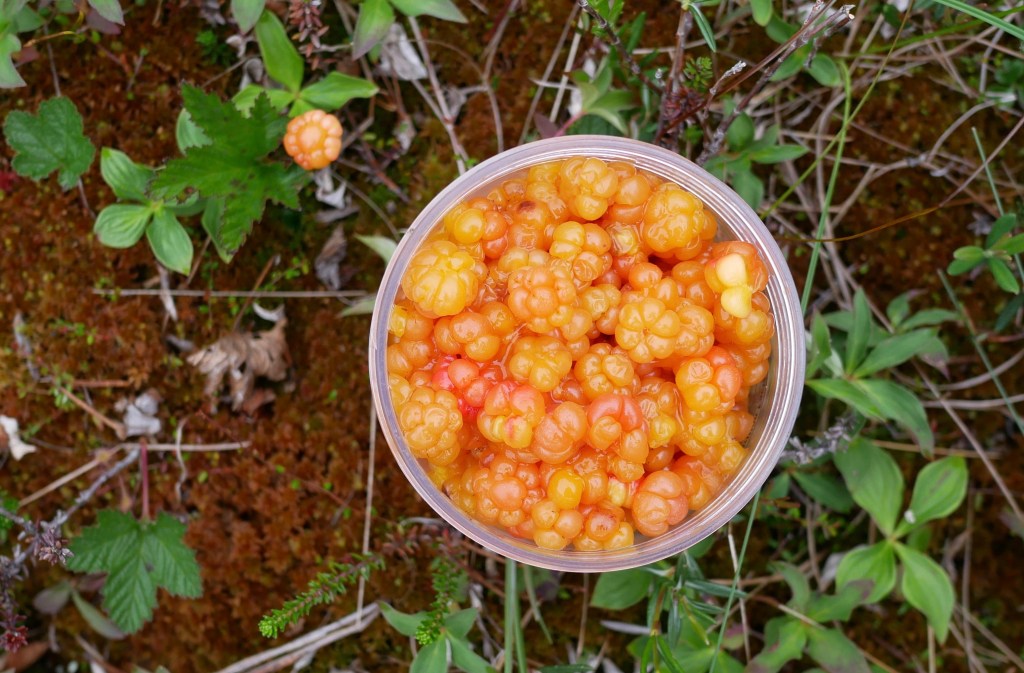
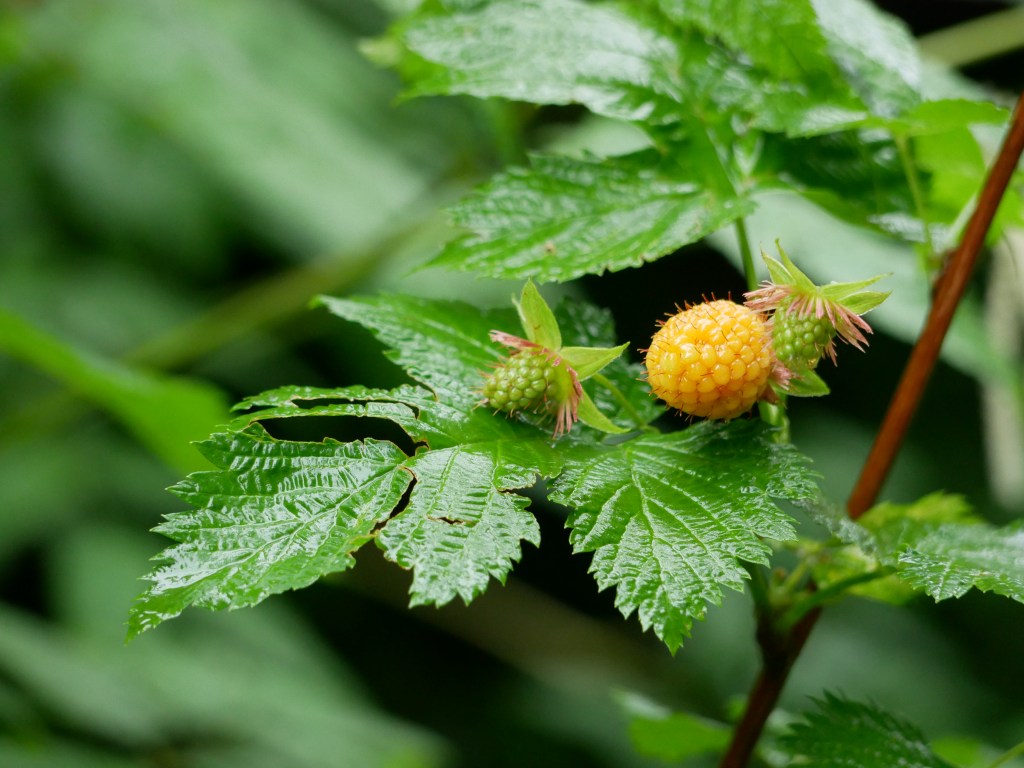
Before she sought relief in the mud, I tried to cool Aki off by feeding her cloudberries. I chose the overripe ones because they dissolved easily on her tongue.
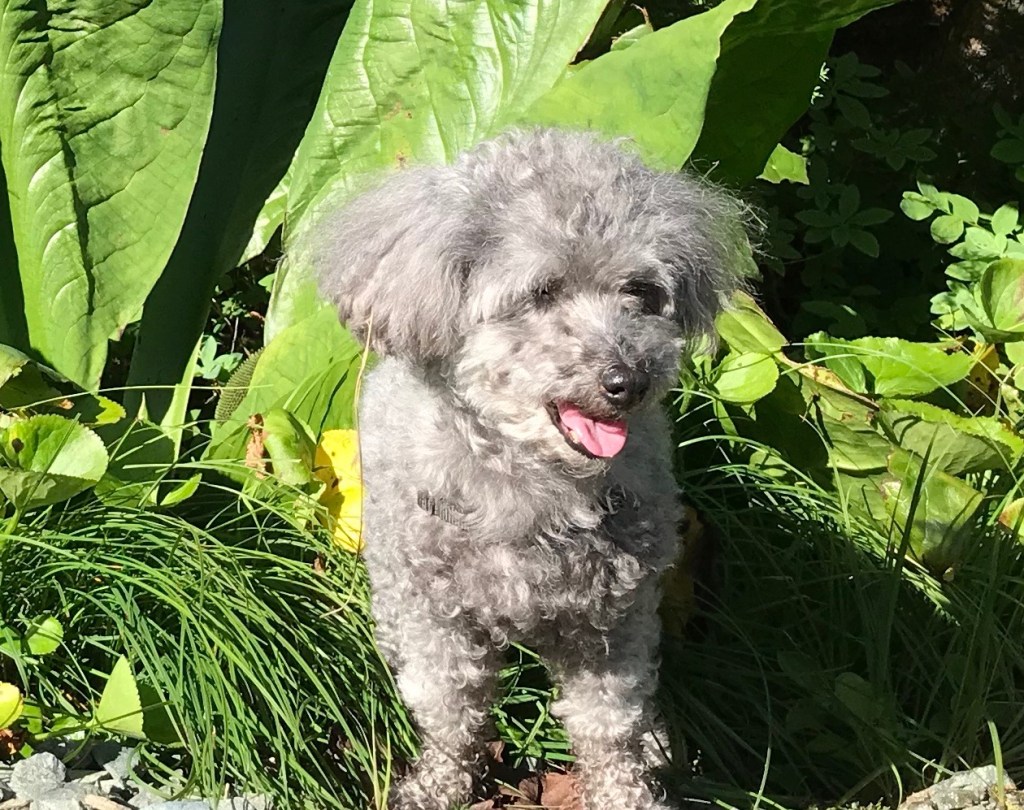
Juneau is enjoying our annual mid-summer sun spell. The clouds broke early in the week, after dumping near-record levels of rain on us. The weather folks are threatening a return of rain tonight. I’d have welcomed a brief rain shower when the little dog and I were picking cloudberries. Aki’s glad that we still have clear skies. After trying to sneak into the house, she curled herself on a patch of sun-warmed bricks and fell asleep.
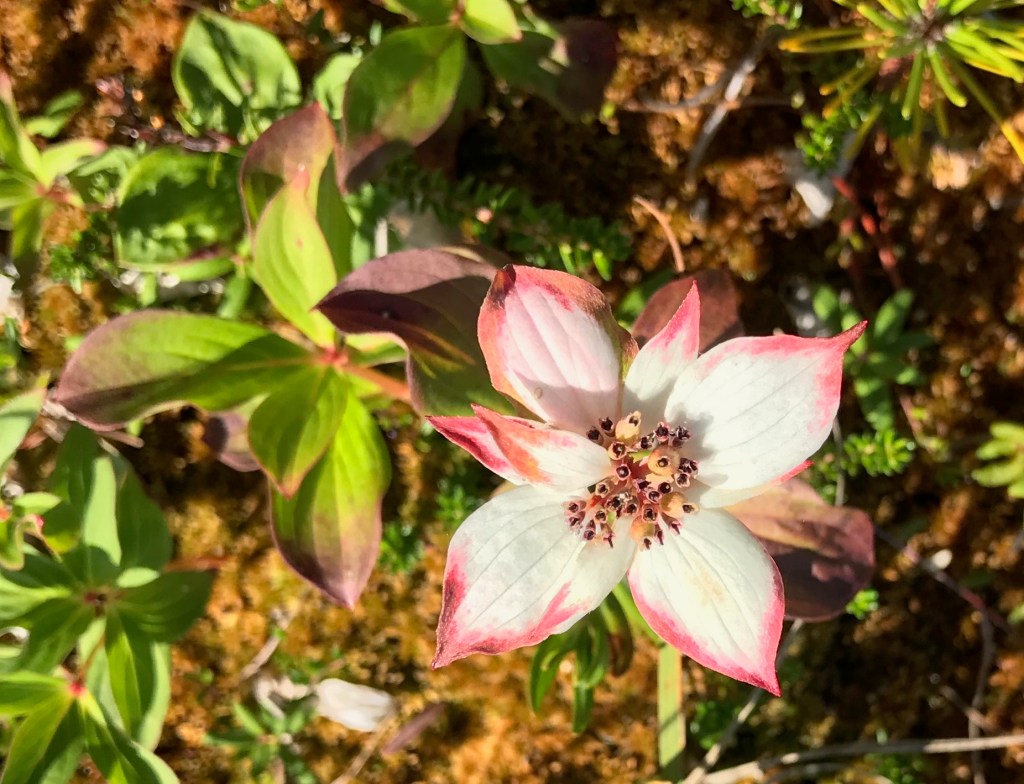
Sharing with the Bear

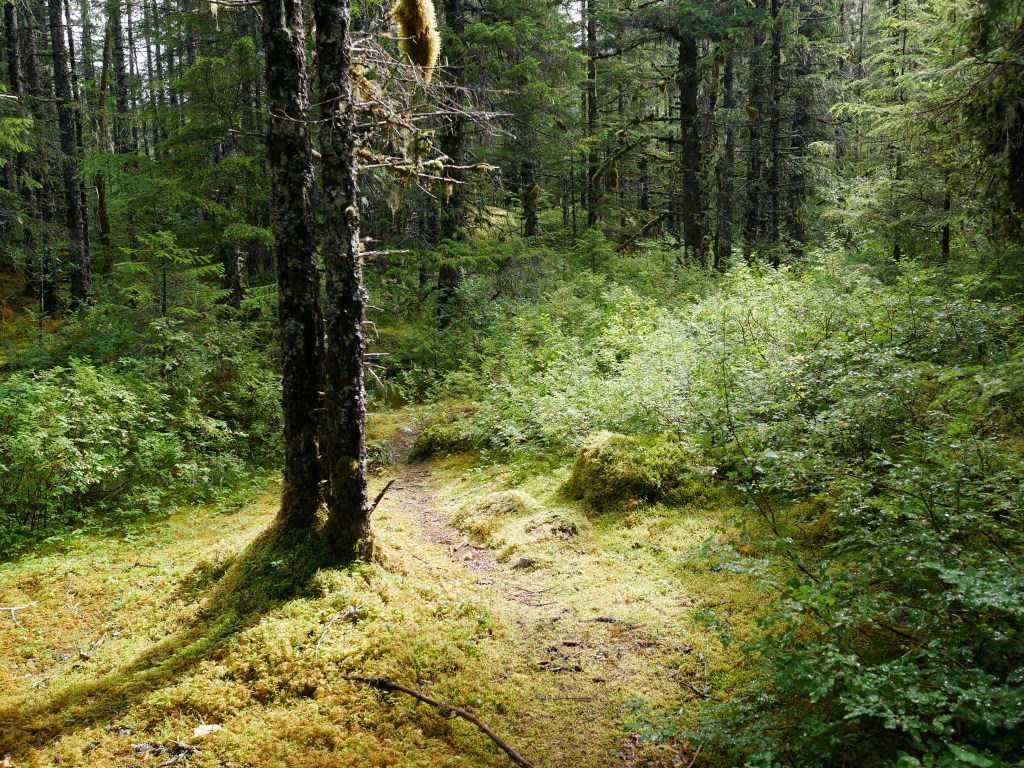
The rain stopped this morning but the forest is still soaked. The leaves of blue berry bushes glisten. They darken the fabric of my rain pants when I brush against them. We take a meandering forest trail to reach the berry patch. 

            These are not Aki’s favorite kind of adventures. She has to get her exercise on the walks in and out of the forest. For more than an hour she is reduced to guard duty, ready to chase away ravens, squirrels or bears. Every few minutes I let her nuzzle a few berries from my palm. 

            The bushes bordering the patch are weighed down with fruit. But those further in have been stripped clean. Recently, a bear dropped a huge, blue pile of scat. I turn around and head for another patch. 

Welcome Calm

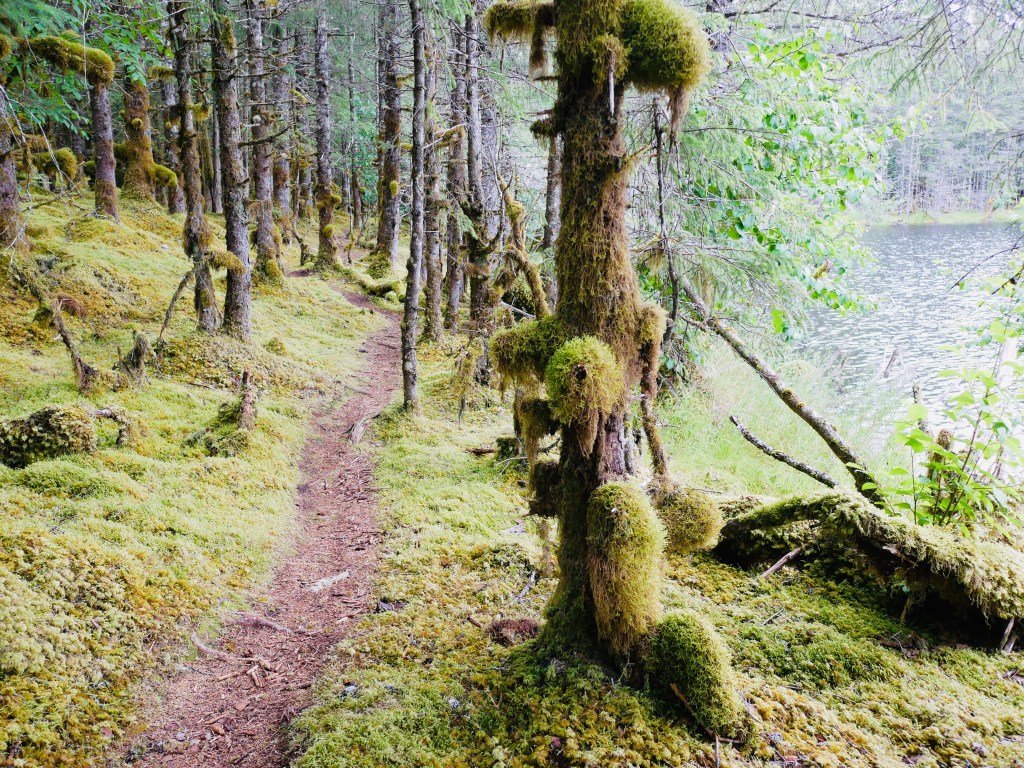
There is nothing special about the Troll Woods this morning, certainly not the Payne’s gray skies. Mushrooms have to provide the highlights now that the wildflowers have gone to seed. But I am still happy to walk on the soft ground between moss-covered trees. 

            I don’t need a mask on the moraine. We won’t see another Covid spreader until we return to the car. Aki patrols out ahead to make sure we don’t surprise a momma bear and her cubs. One does crash through the woods but it moves away, not toward us. The peace floating between the trees can be felt on the skin.

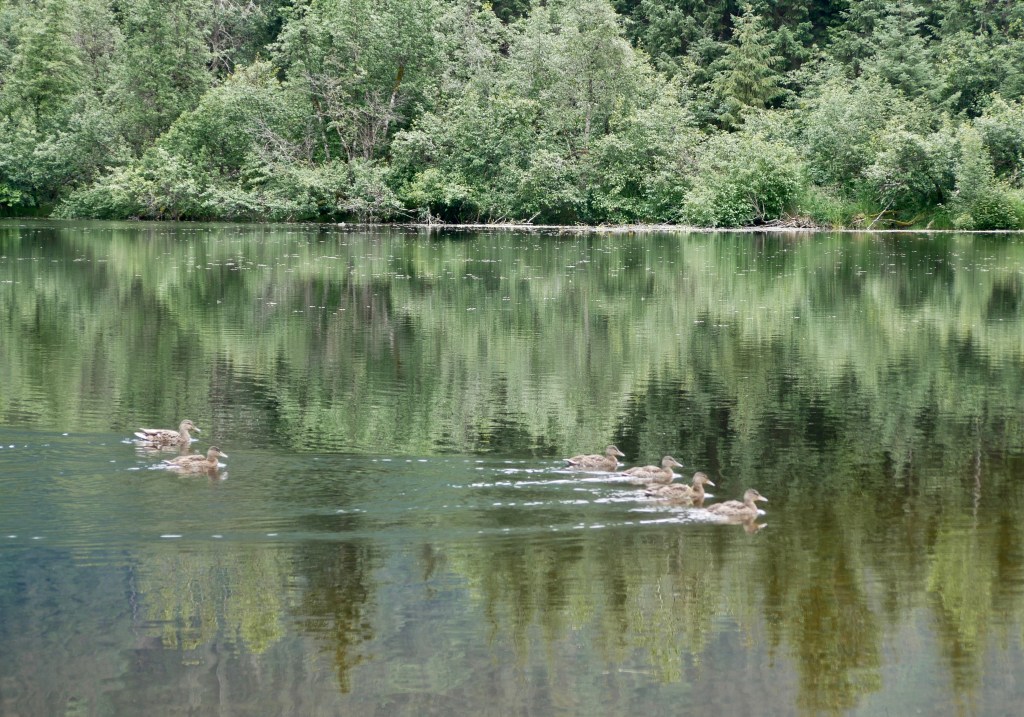
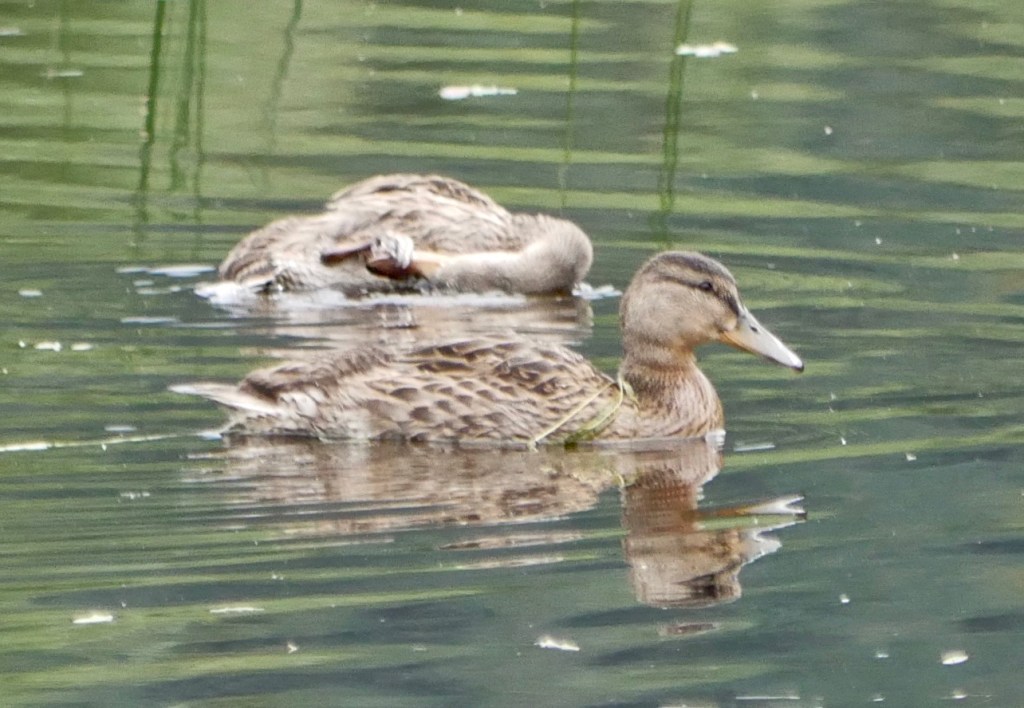
            In a good, quiet mood, I follow the little dog to the shore of Crystal Lake, surprised by a clutch of mallards feeding a few feet away. They plunge their heads into the water until their rear ends point toward sky. Thick strands of grass encircle their beaks when they re-emerge.

Tundra Yellows

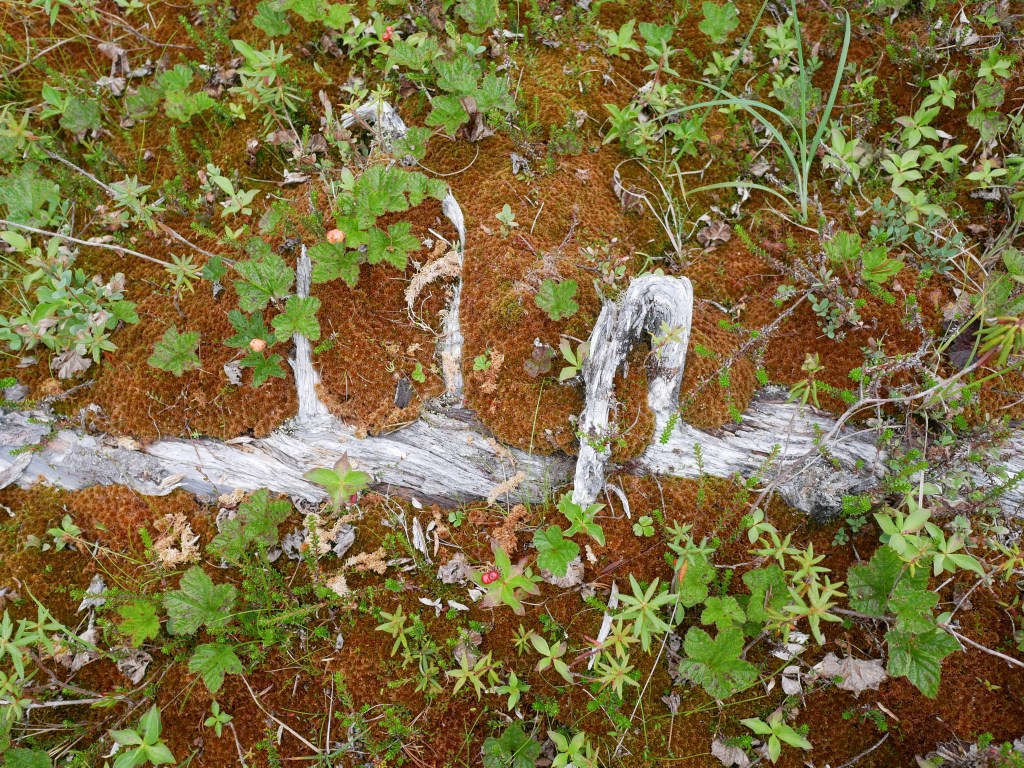
Cloudberries struggle to grow in this Southern Alaskan meadow. When Aki’s other human and I lived on the Tundra in Western Alaska, the locals called named them, “salmonberries.” Harvested by Yup’ik families, salmonberries provided essential vitamins and nutrients all winter long. We pick them this morning, to enjoy their tundra flavors in our rain forest home.

            Aki trots between his humans, stopping long enough for one of us to feed her before moving over to the other one. Sometimes, she harvests one herself. Yesterday, after eating lots of blueberries, her poop turned blue. Tonight, it may take on the yellow tundra colors of cloudberries.

Waiting Out the Rain

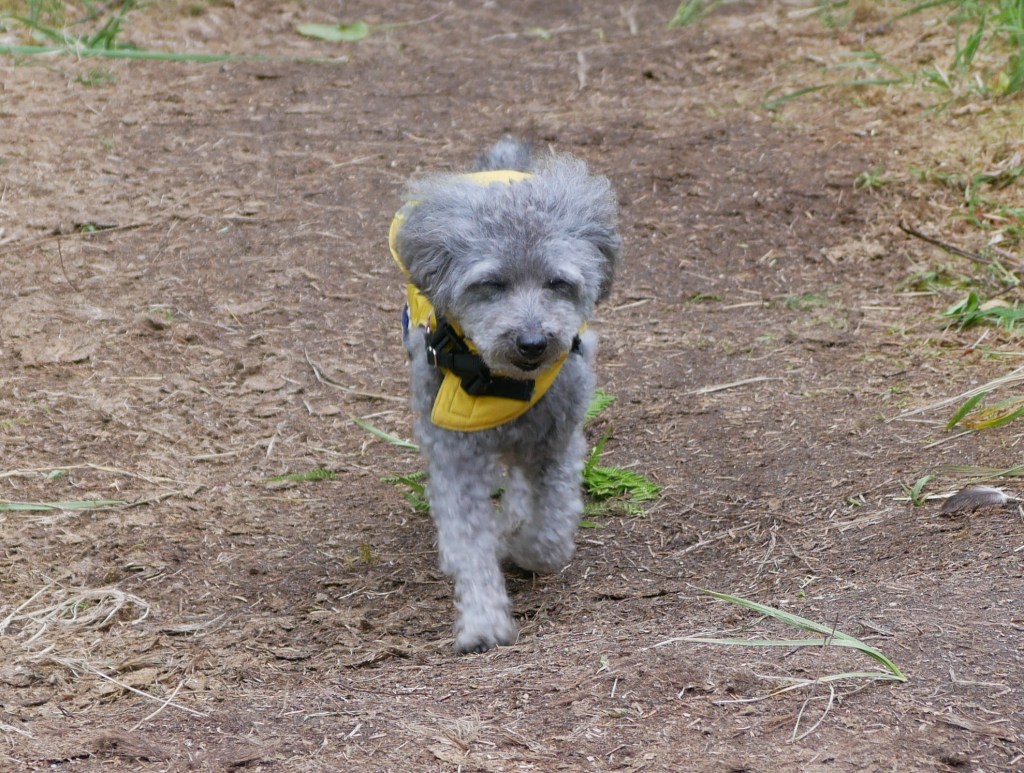
This morning Aki heard rain splattering against the bedroom window as she sulked under the bed. From her hiding place, she watched me pull on rain pants and slip into a waterproof parka. She went limp as I fastened on her best rain wrap. Then, as if she was just testing my resolve, the poodle-mix did a downward-dog stretch, yawned, and beat me to the front door.
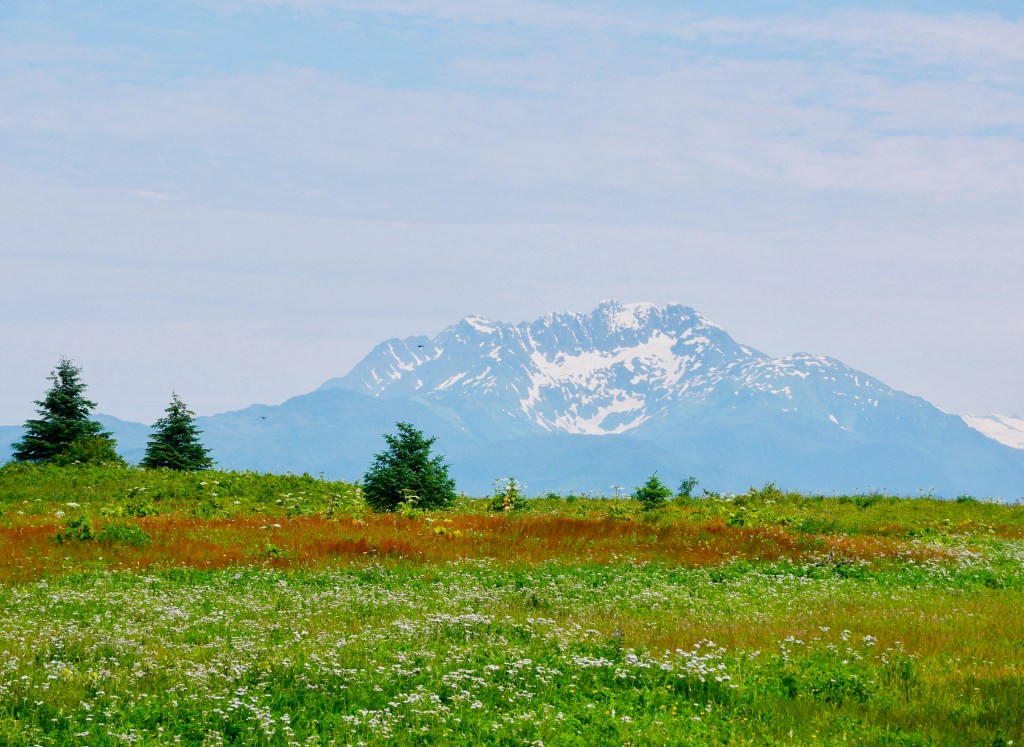
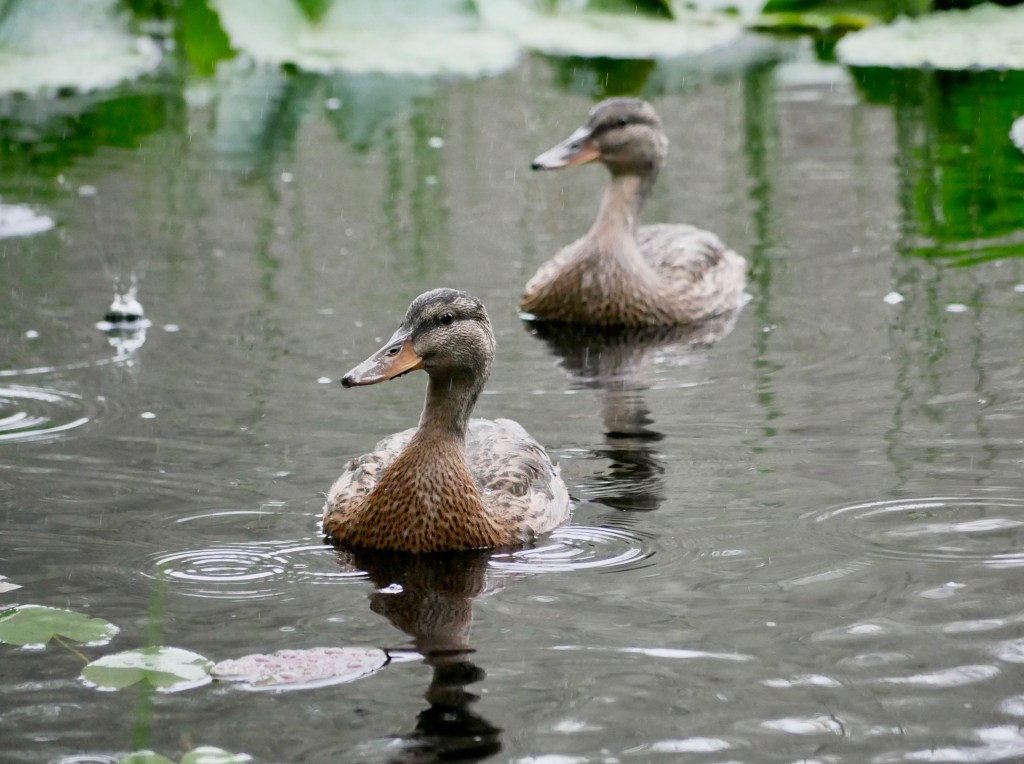
            The forest was silent, except for the sound of rain drops plunking onto devil’s club leaves. The only birds not waiting out the storm were ducks. A mallard hen and her surviving chicks swam near the trail where it ran parallel to the beaver dam. They weren’t bothered by the sound of water pouring over the beaver’s dam.

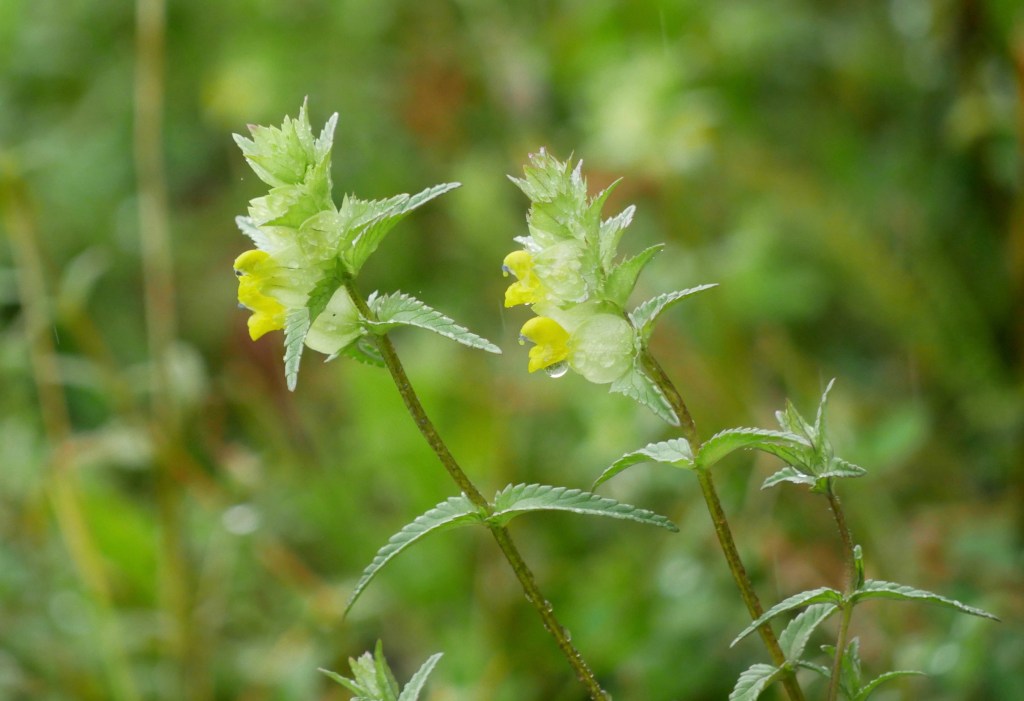
Raindrops made normally dull things, like cow parsnip blossoms, sparkle. Other than the parsnips and a scattering of flowering sorel plants, the forest plants had already gone to seed. Yellow blooms of  chicken and egg plants provided the only bright spots on the beach verge when we reached it. We could make out Shaman Island in the gloam, but nothing beyond it. There must be whales a little further out, but we wouldn’t be able to spot them until the weather cleared. 

Closing the Purse

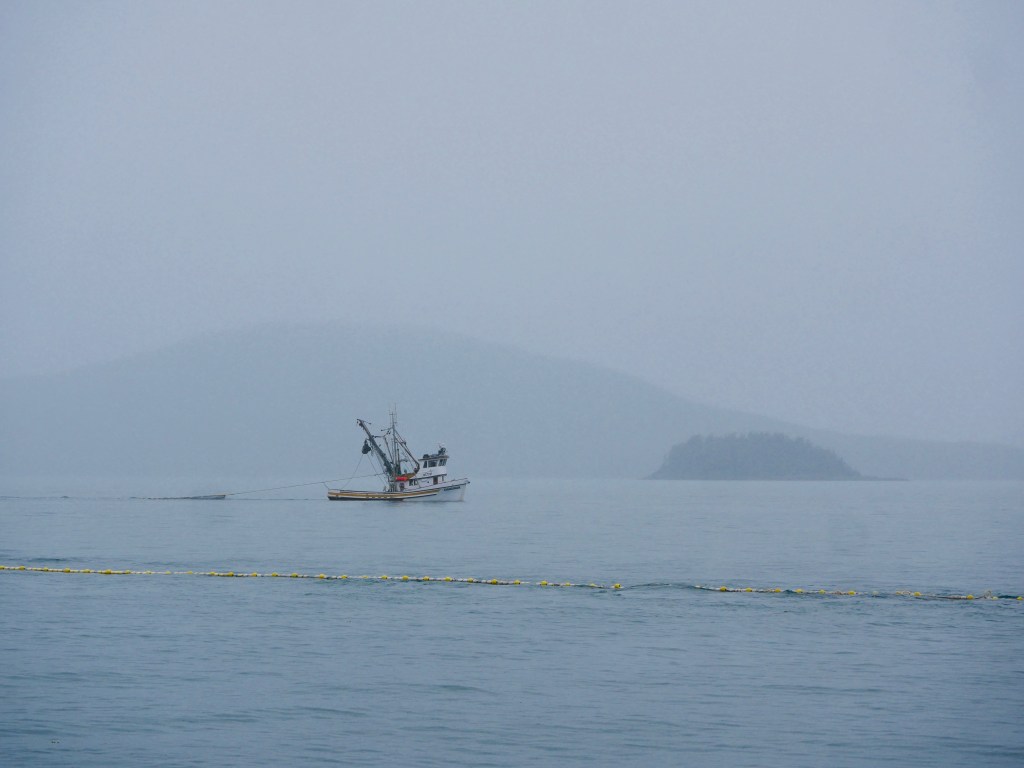
Aki and I pushed through heavy rain to this headland. I came for a chance to see whales or sea lions. The little dog is here out of loyalty. We are both soaked. Just off shore, the purse seiner Challenger is its net on a school of chum salmon. 

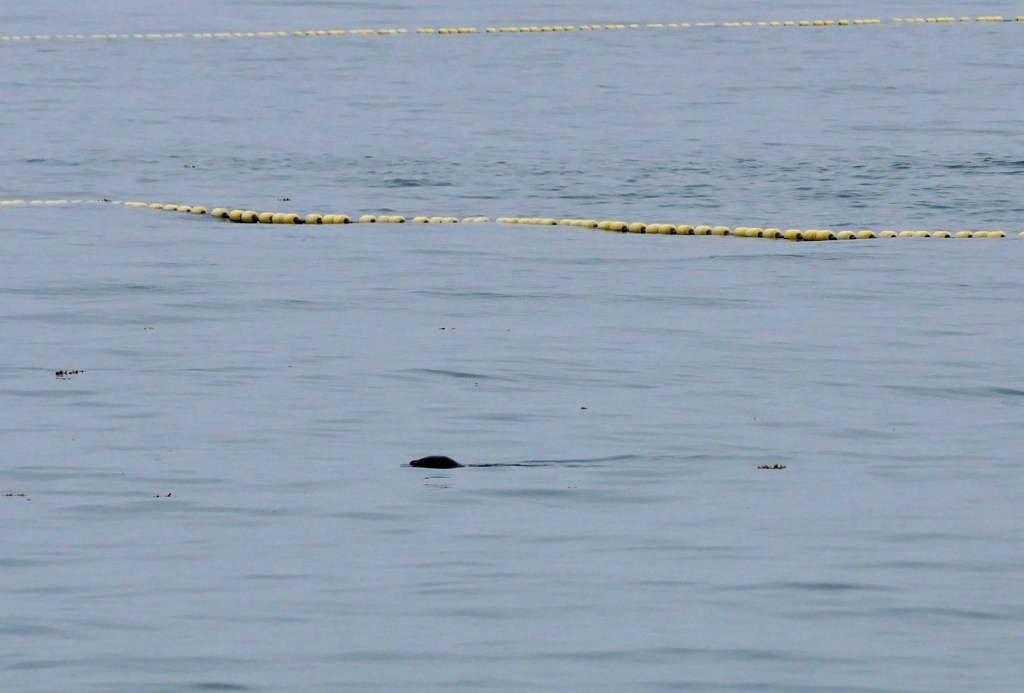
            The mechanical noise of the fishing boat makes it impossible to hear bird song or even eagle screams. It might have driven feeding humpback whales to divert to quieter waters. We won’t see whales or sea lions today. One harbor seal will cruise along the edge of the seine net as it closes on protentional prey.

            The Challenger has a contract with the hatchery to recover chum salmon that started their lives in net pens and have spent the last two years in the North Pacific. Their eggs and milt will be used to start a new generation of chums. Because of adverse ocean conditions, fewer and fewer salmon are returning to the hatchery. For the same reason, the number of wild chums to reach their home streams is way down. 

            After watching the Challenger finish its set, now cold as well as wet, we head back into the forest as the power skiff of another seine boat begins to stretch out its net.  

Eagle River in Wild Flower Time

Aki doesn’t realize that Chum salmon are trickling into Eagle River.  They pooled up in nearby salt water until the tide changed from ebb to flood.  Now they ride an income tide over the sand bars at the river’s mouth. To enter the river the salmon must swim pass a half-a-dozen seals.

            Aki doesn’t see the seals, even when one 50 meters away snatches a salmon and splashes around the river surface until its powerful jaws crush the fish’s spine. Distracted by the seal-salmon scene, I don’t notice the little dog wade chest-deep into the river. While Aki sips away, two of the seals swirl toward her. They stop when they spot me and the black barrel of my camera lens.  

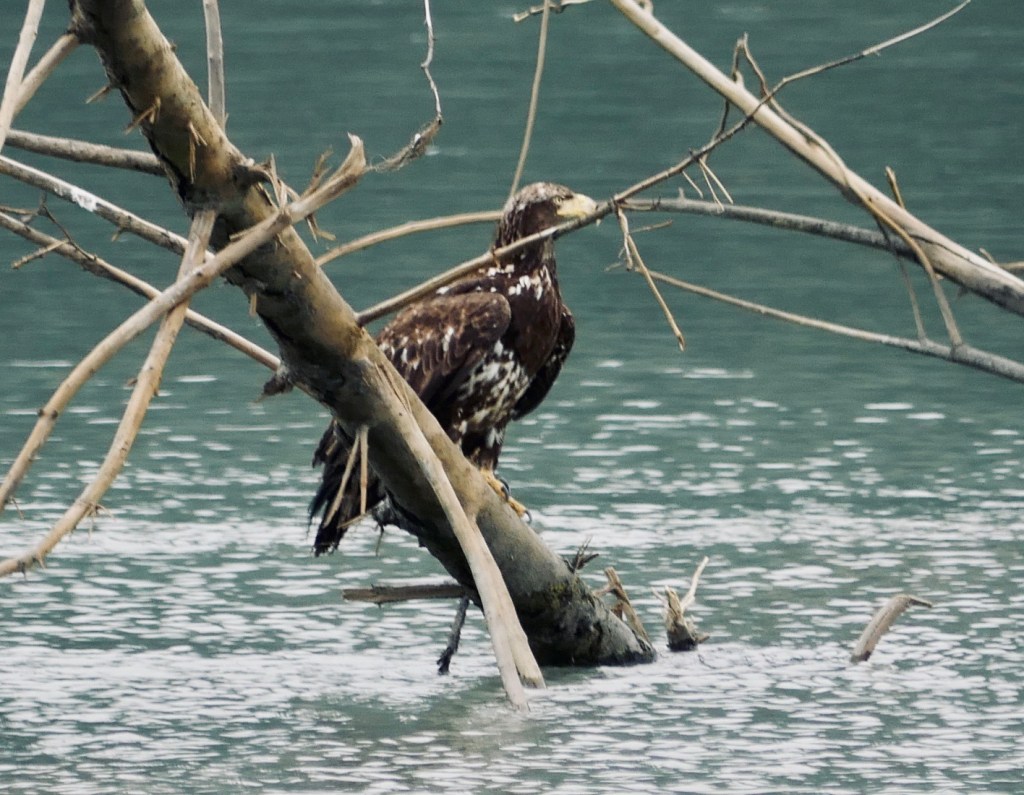
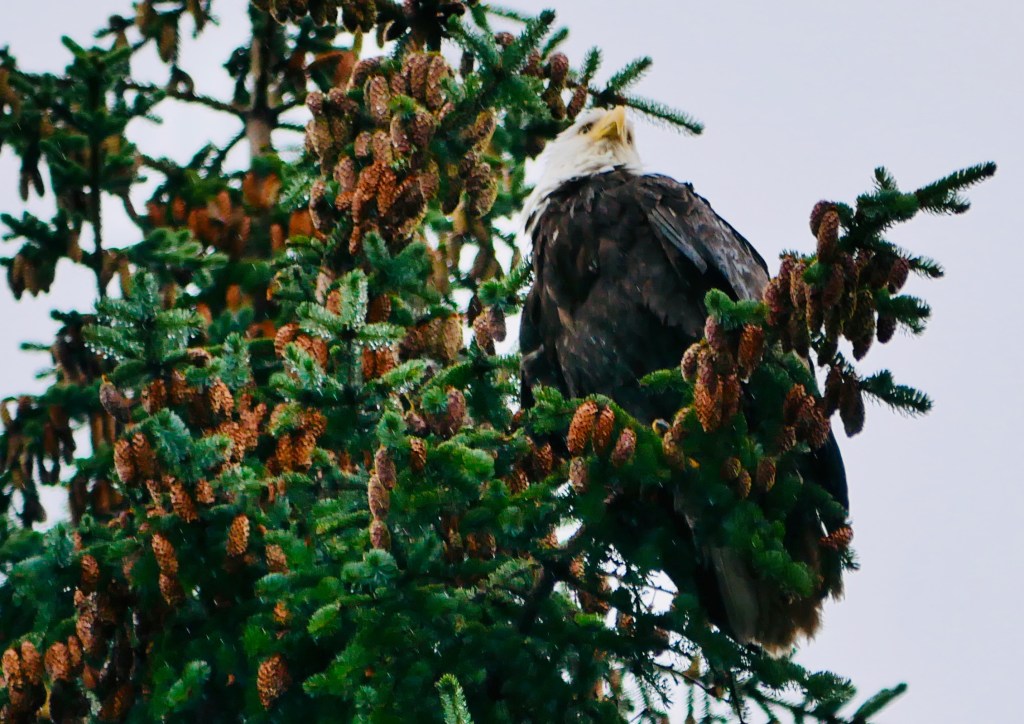
            An immature bald eagle watches Aki and the seals, perched on the skeleton of a spruce tree that vibrates in the river current. The eagle is close enough to the water for a seal to grab it with a quick lunge. The eagle wouldn’t have to worry about the seals if it moved further up the tree. But the tree limbs protect it from any assault from the air. An adult eagle watches all of us from the top of a riverside spruce tree. Maybe the mid-river bird has some history with the mature eagle. 

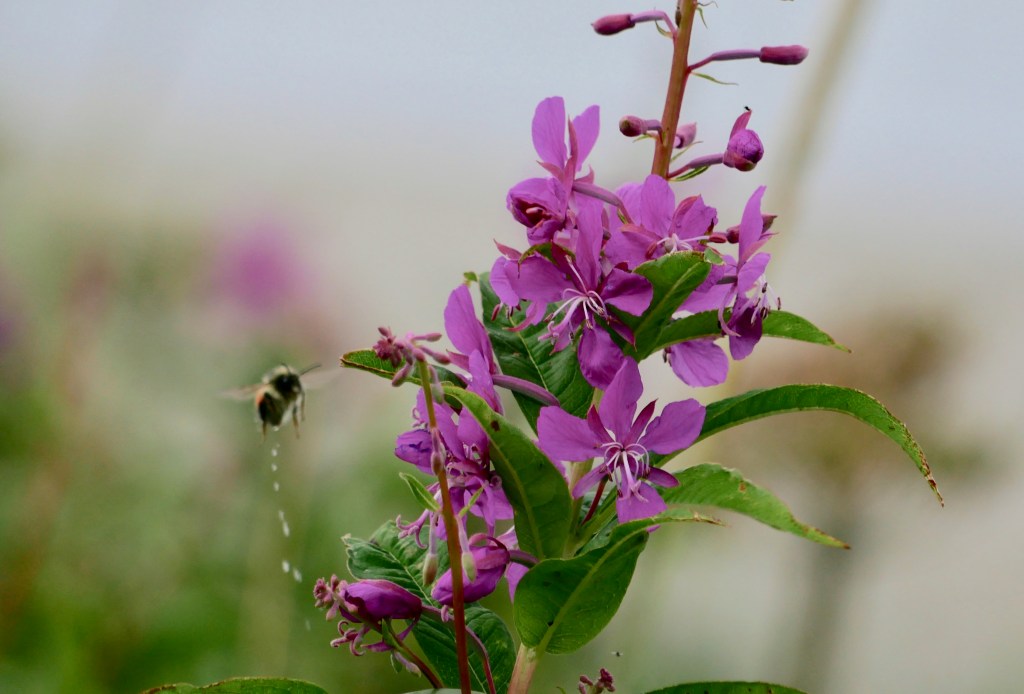
            When Aki leaves the river, the immature bird flies off and the seals return to their salmon hunt. We walk over to a line of dunes now covered with summer wildflowers. Five-foot high stalks of fireweed line our trail. Heavy-bodied bumble fees collect pollen feed from the magenta fireweed blossoms. One releases some golden-colored liquid that dribbles toward the ground. Do bees pee like poodles, little dog?   

Quiet is Okay

It’s quiet in the rain forest. No woodpeckers hammer hemlocks, no thrush sing. That’s okay. Even in a summer when most of the engines of industrial tourism have been silenced by a virus, a quiet forest is often hard to find. 

            Aki’s nails beat a faint tattoo on the trail boards. When we pass a little cataract of moving water, the sound seems deafening. We return to quiet when we leave the boardwalk to walk on the soft forest floor. That’s why the sudden burst of eagle bickering is so jarring. While we approach the beach, one bald eagle chases another, driving its victim into a spruce tree. I can’t find either eagle after we emerge from the woods. 

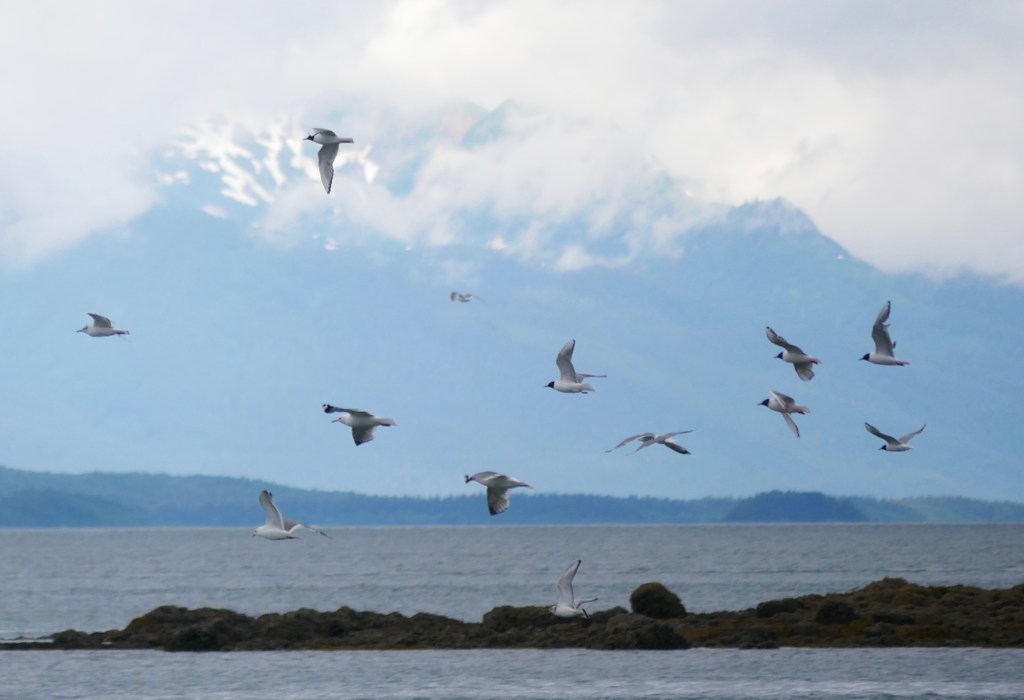
            A single parent merganser family cruises off shore, making no noise. The resident crows and a flock of Bonaparte gulls remain silent until I walk in their direction. They take to the air, moan a bit, then fly noiselessly away. Later we see eagles sulking quietly on the beach.

Harvest Time

On an otherwise empty beach, Aki snuffles the sand. I watch her even though it means facing an up-channel breeze that throws rain in my face. Two eagles in a nearby tree also watch the little dog. They turn their heads away when I point my camera at them. They are waiting for something editable to wash ashore. 

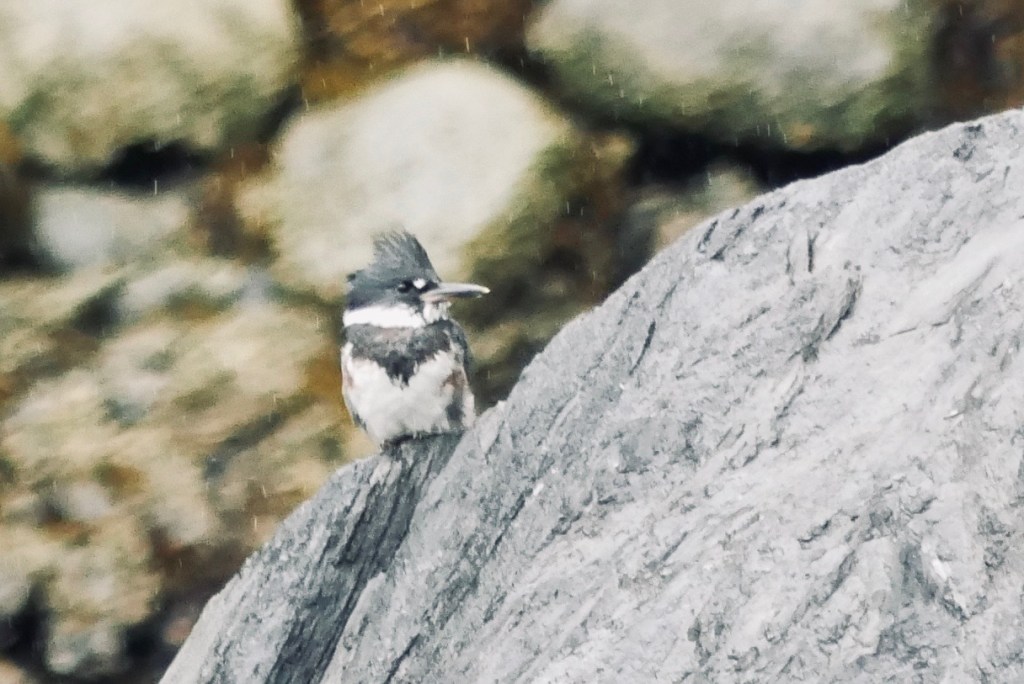
            In a week or so, the eagles will be pulling flesh from salmon carcasses marooned on the beach by the ebbing tide. For now, they must watch and wait for lesser fare. At least three more eagles roost in the beachside trees. Just down the beach, a belted kingfisher watches the glory hole bay while perched on a glacier erratic.

            The kingfisher won’t fly away unless I get really close. I don’t, choosing to watch it watching me through a curtain of rain. Inside the Treadwell Woods, I have a similar stare down with a pine siskin. It and the other song birds show no fear of Aki nor I, which surprises me given all the goof ball dogs that galumph through the woods. Then I realize that this is their  harvest time. 

Cowee Meadows

Aki and I are driving north to the end of the Juneau highway system. It’s a holiday weekend so the side of the road is lined with parked cars at each beach. I hadn’t intended on driving far. But each trailhead parking lot is jammed. Thirty-eight miles out, we reach the Cowee Meadows trailhead. Even though the trail leads to three forest service cabins, there are only two cars in the parking area. 

            After pulling on my mosquito repelling shirt, I lead Aki onto the boardwalk trail. Not wanting to overstress her injured leg, I tell myself that we will only walk a mile or so, to where the trail swings out of the forest and onto a flower-covered meadow. The little dog seems fine when we reach the meadow so I continue on, hoping to reach the section dominated by will iris. While there, I think about the marmots. 

            Just a mile more and we will reach the mouth of Cowee Creek where a colony of marmots hang out. Looking like oversized Guinea pigs, the marmots stand as rigid as bowling pins on the tops of glacier erratics (boulders) to watch us pass. 

            No clouds block the sun and its calm. The little dog starts to pant. I divert over to a small stream so she can help herself to water. She wades in chest deep, letting the stream cool her down. I forgot to bring a water bottle and could use a drink. But the marmot village is only a kilometer away. 

            A shrill warning whistle lets us know the marmots are near. But they don’t show themselves. I search each time we hear another whistle, but see nothing but wild flowers and sparrows trying to draw us away from their nests. 

            On the return trip to the car, I carry Aki over awkward sections of the trail. She acts surprised at first but then stops and waits to be picked up each time the trail is complicated by exposed tree roots and mud.