I’m again walking into the breeze on Sandy Beach. The wind tosses rain into my face and onto my parka. I want to ask Aki why I always make this mistake. But the little dog is thirty meters away, trotting along the forest’s edge where the wind can’t reach her.
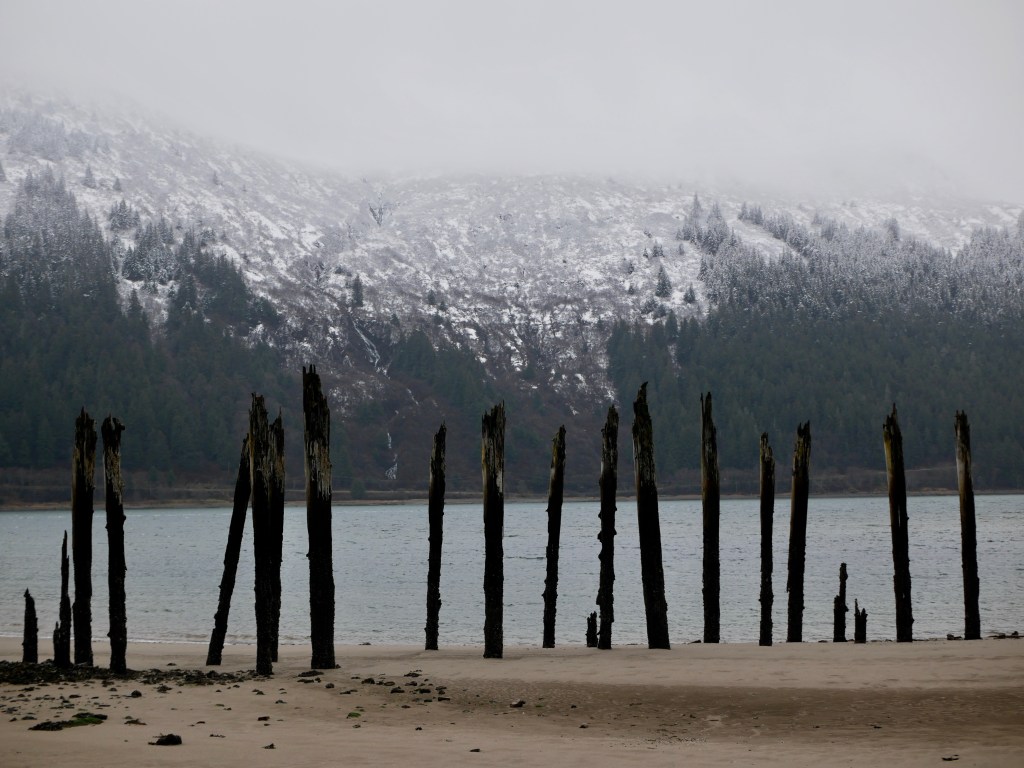
Next time, I promise myself, I will walk through the Treadwell Woods to Glory Hole Bay and then home with the wind at my back. I wipe rain from my glasses so I can see down Gastineau Channel. Just past Glory Hole Bay, two bald eagles ride upward in the wind. Flexing their wings, the eagles then drop like stones. One dives on something in the channel. The other eagle turns its wings into a parachute and drifts onto the top of an old wharf piling. They are masters of their six-foot wings.
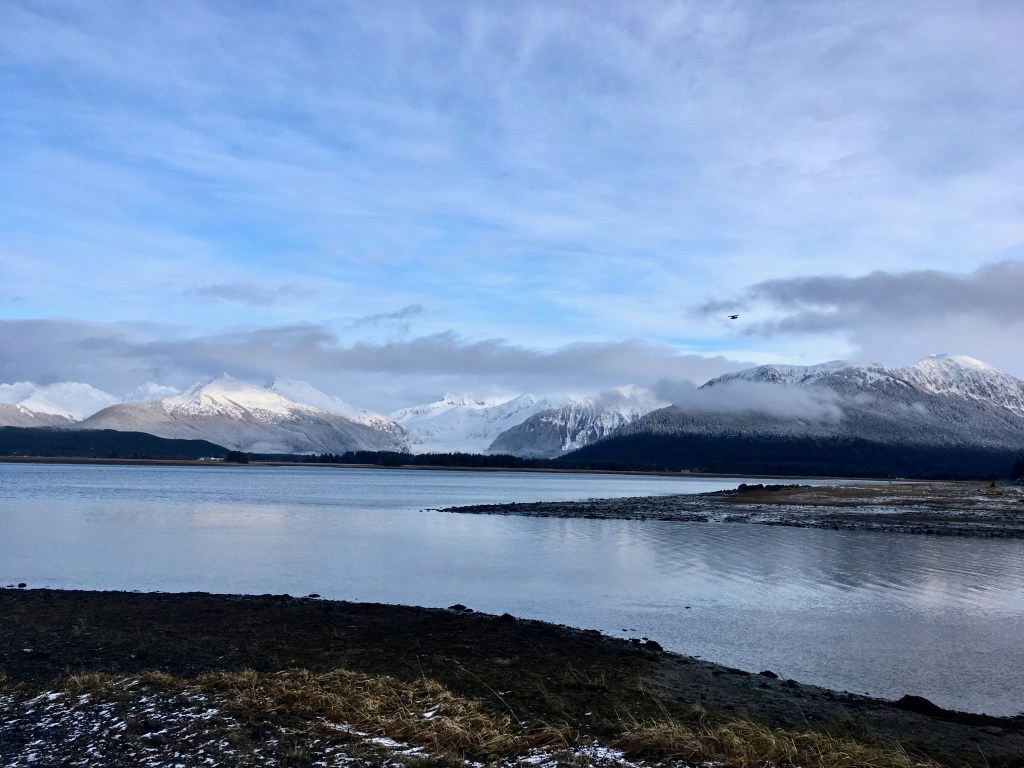
At 9:15 this morning, the sun climbed above the Douglas Island mountain ridge and lit up the glacier and mountains on the north side of Gastineau Channel. Aki and I waited at the mouth of Fish Creek for the sun to climb high just a little higher so it could shine light on the tidal meadow on which we stood.
Trailside grass protected the diminutive poodle from the wind. But nothing prevented the breeze from carrying away my body heat. Just offshore, a small circle of gulls rolled and splashed in the water. It was time for their morning bath. Further out, over a hundred mallard ducks lazed.
Feeling totally out classed by the birds and unwilling to let my hands go numb as they held my camera, I pulled on a heavy pair of mittens and turned to search for the sun. Even though it was only 9:30, the sun had already slipped behind the mountains for the day.
Aki needed no encouragement to join me on a return hike to the car. No ducks paddled on the pond but we did see a red-breasted merganser caught out in the open on the creek. The exposed fish duck powered through the current to reach the wooded shore where it disappeared under the overhanging limbs of a spruce tree.
While driving through the avalanche zone on the way to Sheep Creek, I wanted to stop and photograph the southern end of Gastineau Channel. A rising wind had broken up the gray mass of clouds that hung over the channel. Sunlight infused the clouds above Lucky Me. But there was no place to stop safely and we were only a few minutes away from the creek. When we arrived, the light was gone and the clouds were beginning to heal their wounds. At least it wasn’t raining.
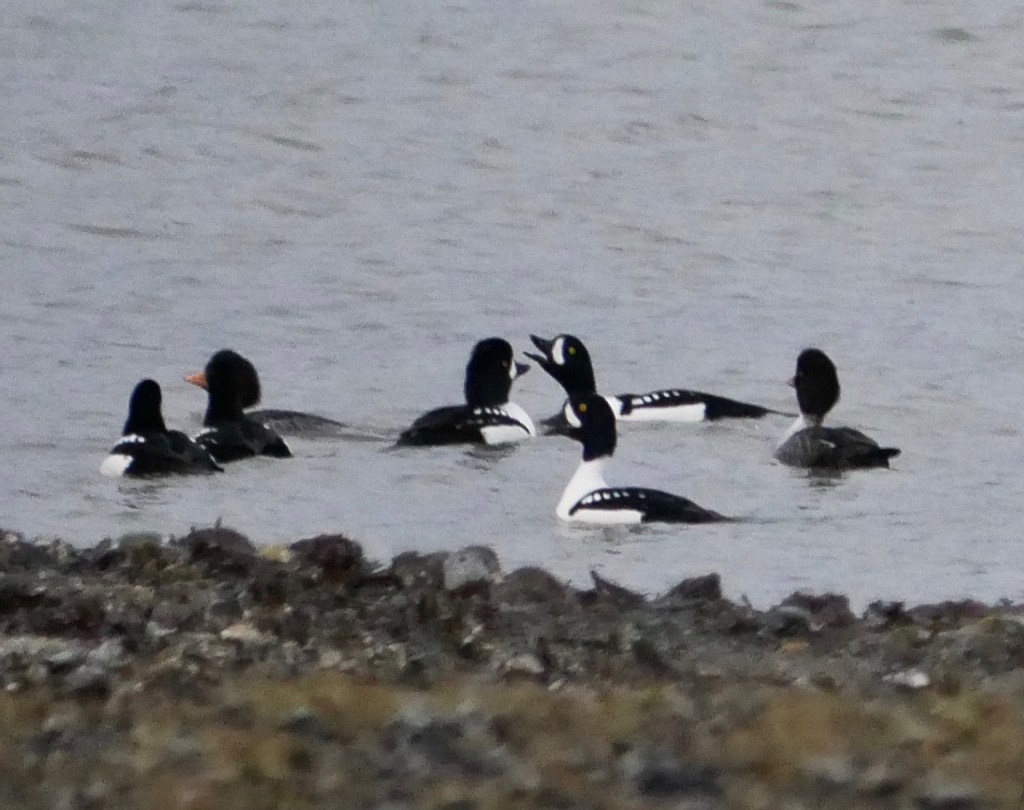
I followed a dune of gravel out toward the channel where a raft of Barrow golden eye ducks fed. Aki held back to stare at me from a fringe of beach grass. Then came rain. It feel in sporadic drops at first then followed by and a wind-driven deluge.
After the little dog joined me on the dune, we moved toward the channel for a better view of the ducks. The golden eyes were keeping close to the shore even as we approached them. Usually they would edge out into the channel, like shop lifters moving slowly out a store’s door to avoid looking suspicious. This morning, when they tried to edge out a little, they quickly returned and to the shallows. That’s when the seal head appeared. It wasn’t the first time that we had been used without our knowledge to herd ducks in a seal’s direction.
Snow no longer covers this trail through the old growth. Yesterday it did. Yesterday snow drifted down through the forest canopy. Today it’s rain. The rain forest is once again the venue for the annual fight between fall and winter.
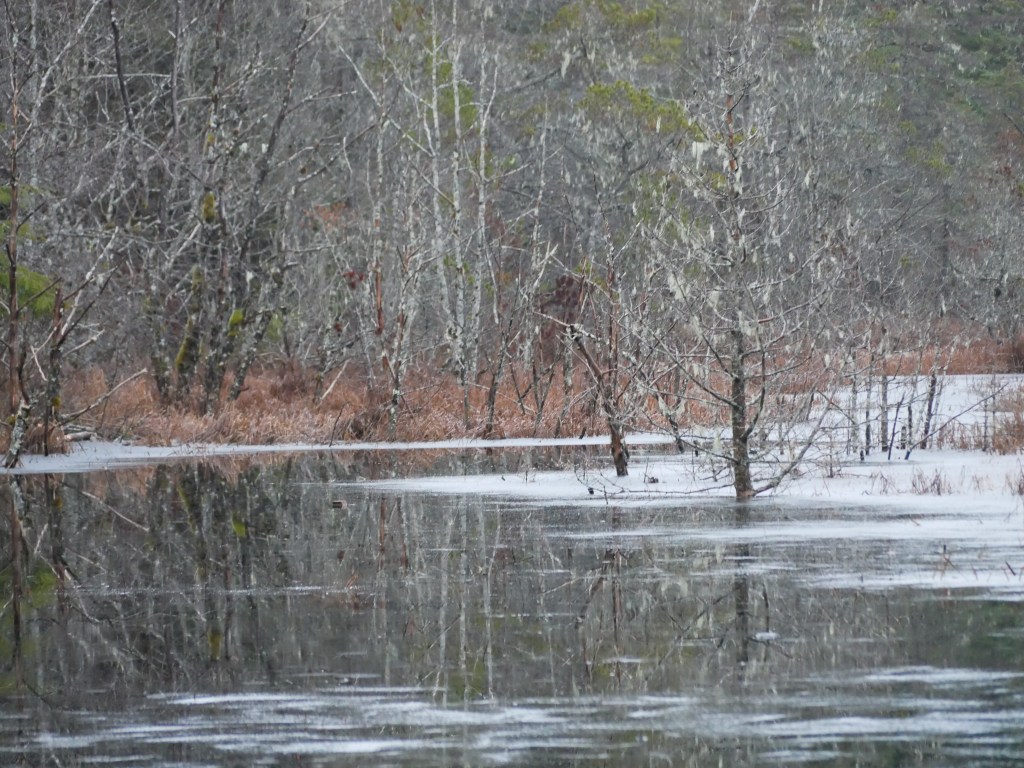
While Aki hangs back to investigate a stain of urine near the trail, I push on to the beaver dam. Water spills over the dam through layers of newly severed tree branches dragged there by beavers. There is still a paper-thin layer of ice covering parts of the pond. But it is already melting as the temperature climbs and the rain falls. Snow still covers the mountain backdrop for the pond. But winter lacks the strength to counterpunch the warmth of fall here where the beavers sleep.
I smell the smoke from his cigarette before I see a man heading towards us on an informal meadow trail. It’s deer hunting season so I expect to spot a rifle slung over his shoulder. But where a hunter would carry his rifle, he carries a small crosscut saw. After introducing himself to Aki, he says he is looking to cut down one of the meadow pines for a Christmas tree: “I used to take my grandchildren with me, but they have moved away.”
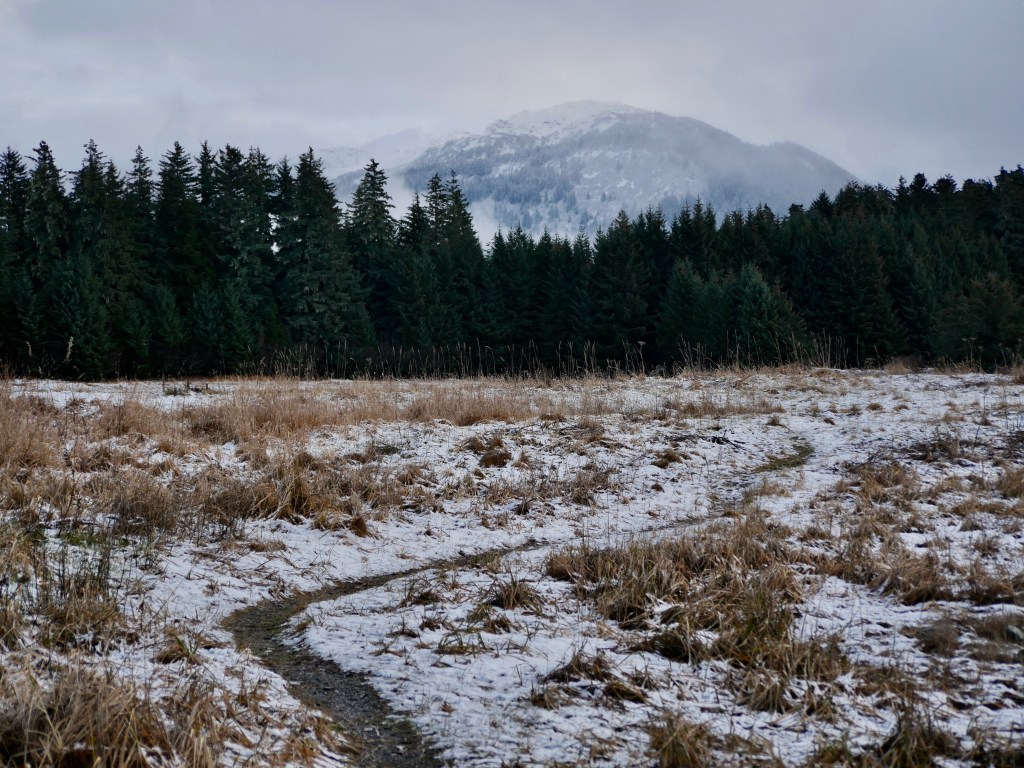
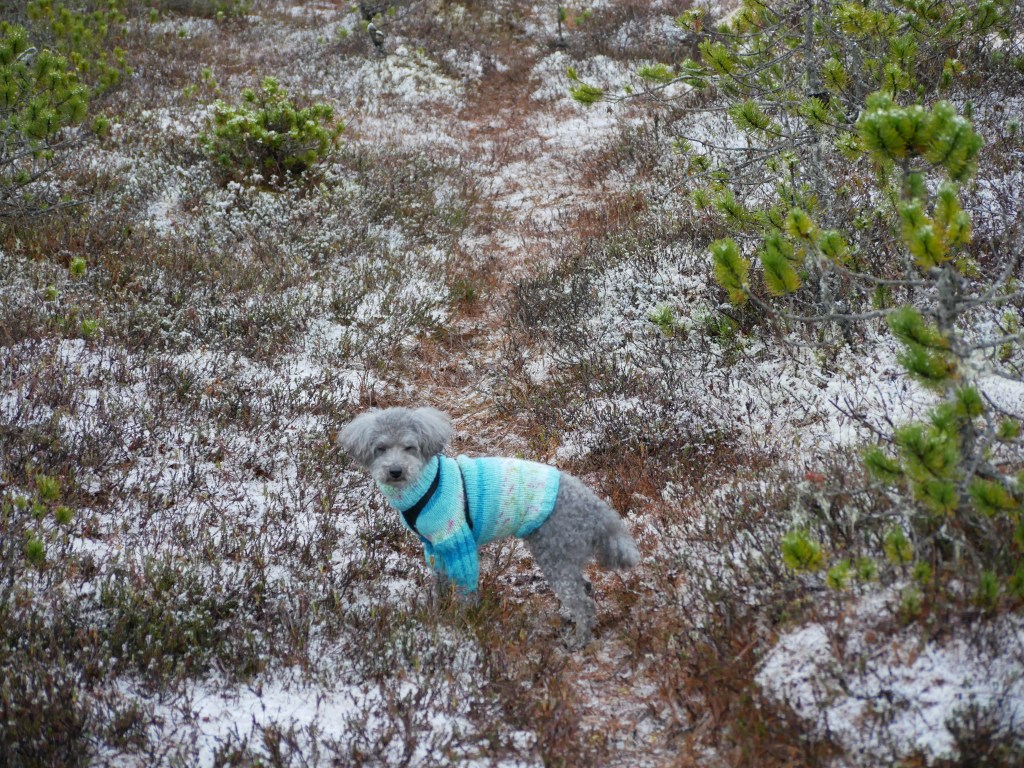
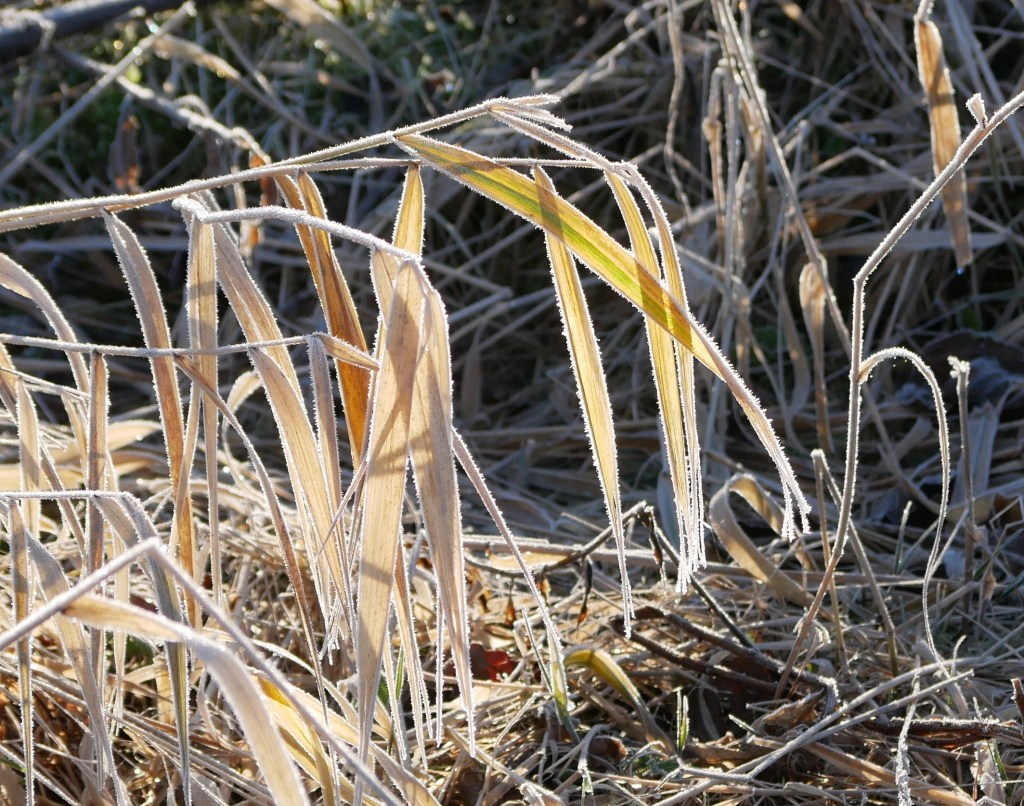
We share stories of taking kids into the woods to hunt for Christmas trees until Aki starts to shiver. Wishing the tree hunter good luck, we head out across the meadow. It’s a place of weather-stunted trees, tiny ponds, and patches of red cranberry moss. A thin layer of hoar frost binds the scene together.
Looking up, I spot Mt. McGinnis at the far end of the meadow. Used to seeing the mountain reflected on the surface of Mendenhall Lake, it takes me a while to identify McGinnis. It’s as if we are in the boarding area of a crowded airport when spotting someone familiar standing in flight to board a flight. Without the context of home, it takes time to convince myself that it really is my old friend.
A Stellar’s jay lands in the top of pine tree with a peanut trapped in its beak. The peanut is the size of the jay’s head. Its only chance of cracking the shell is to set it on the ground. But then a nearby raven would be on it in a New York minute. Aki needs to keep moving so we can’t wait to see how the jay cracks the nut. A half hour and a mile later the jay lands on another tree near the little dog and I. No longer burdened with the peanut, it squawks and gives us the evil eye. Since we haven’t offered up a nut with which to pay for our use of the meadow, it wants us exit his domain. As we enter a belt of trees bordering the meadow, a raven does a low fly over, as if to make sure we are not overstaying our welcome.
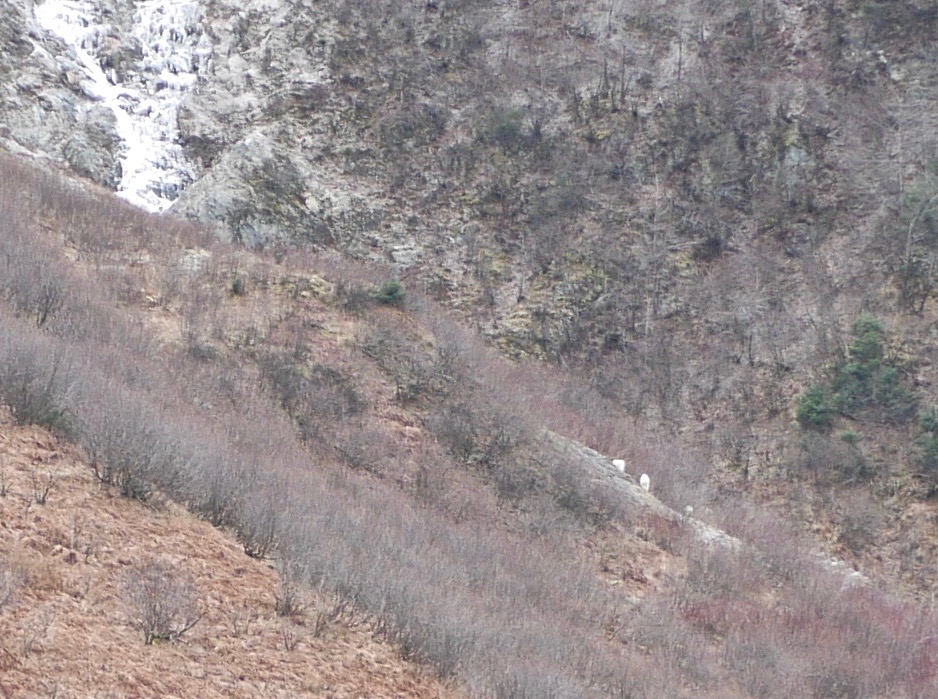
As three mountain goats climb the south flank of Mt. Juneau, I bend down to bag Aki’s scat. I want to ignore the steaming pile of poop so I can watch the goats approach a frozen waterfall. But the poop scoop needs to be done.
Aki watches with a look of pride on her face. She trots along to a nearby trashcan where I deposit her morning’s work product.
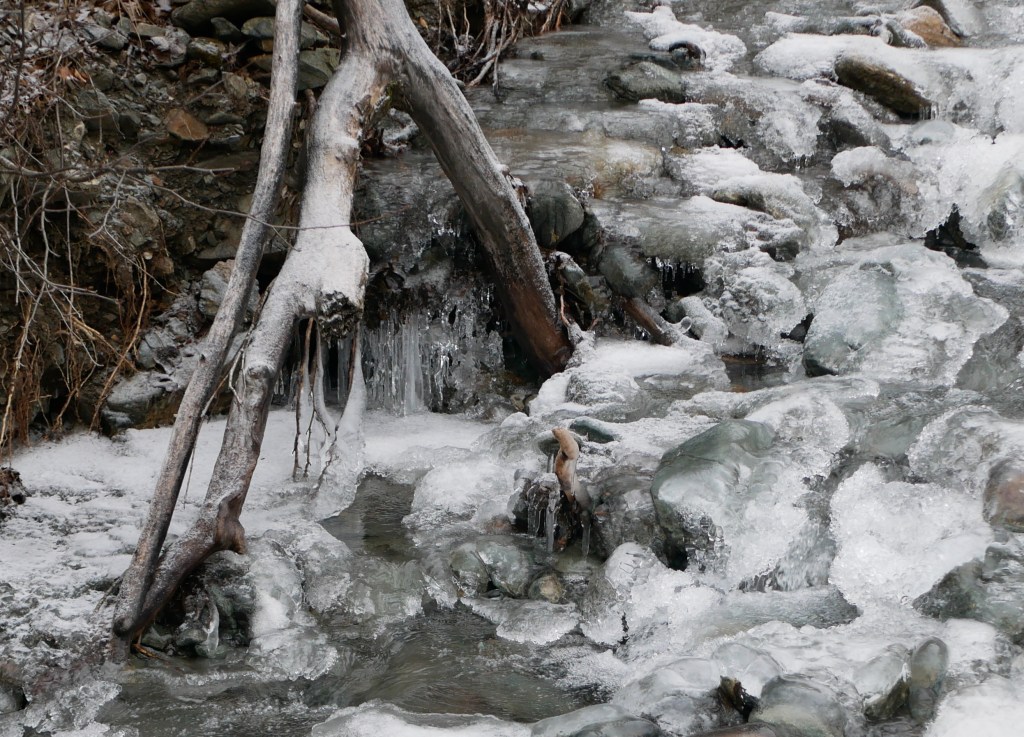
We are hiking up the Perseverance Trail, which was dusted with snow last night. Gold Creek still runs free but ice covers the creek’s tributaries. Not one leaf clings the trailside trees. It feels like a land waiting for winter.
Aki looks at me like she might at a dog ignoring a cooling chunk of king salmon. Have you lost your mind, man of mine? I’m squatting close to the meadow grass, trying to aim my camera so that it will capture a picture of the glacier but not the string of airport runway lights that slice across the bottom of the frame. I want to use some driftwood logs in the foreground to cover up the lights.
I want to use some driftwood logs in the foreground to cover up the lights.
I manage to depress the shutter button without falling on my face. But the resulting picture will end up in the deleted files folder. On a gravel bar on the other side of the Mendenhall River, a hundred Canada geese seem to be laughing at me. Standing up, I capture the best view of the scene—the one that includes the airport lights and the reflection of the glacier in the river. It’s a view remarkable for its beauty but also because it demonstrates how close our machines of commerce are to the river of ice.
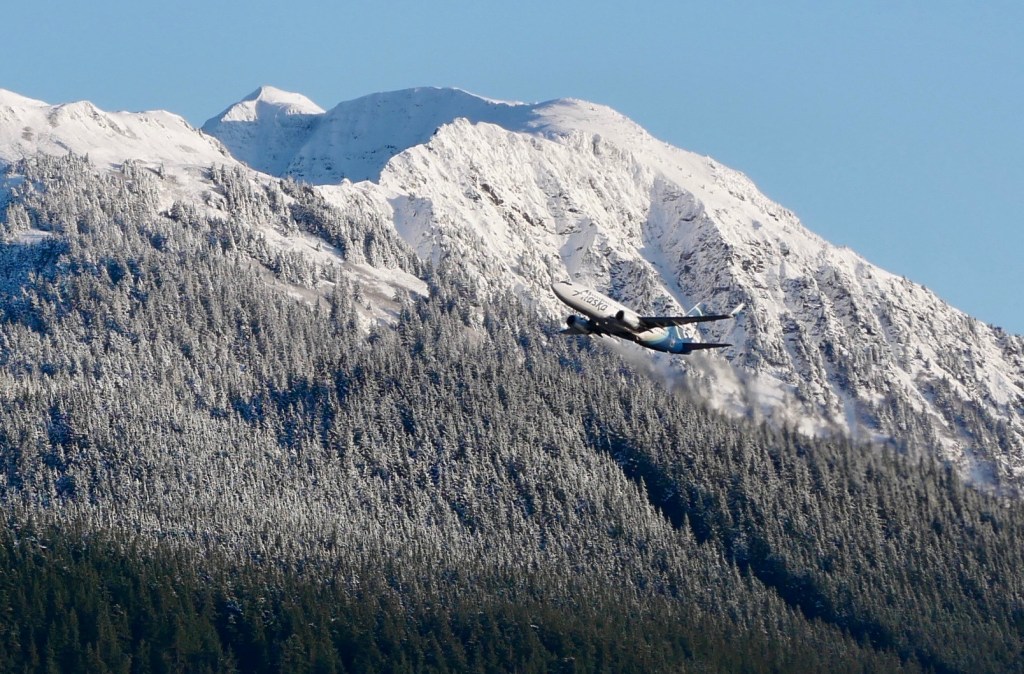
To get to this wetlands trail, we had to drive past a lumberyard, welding shops, boat storage lots, and a warehouse. Jets flying to Anchorage or Seattle and floatplanes traveling to Angoon or Hoonah flew over our heads during the walk. So did an eagle. A seal broke the surface of the river while the beep-beep-beep sound of a truck backing up reached us from water treatment plant.
I head over to the river to where the salmon pens are anchored. The Mendenhall Towers and boats on blocks for the winter rise above the river. Almost anywhere else in North America, the land under the boat storage lot would be packed with luxury houses that offered river and mountain views. Our city planners realized the value of providing fishing boats easy access to the sea.
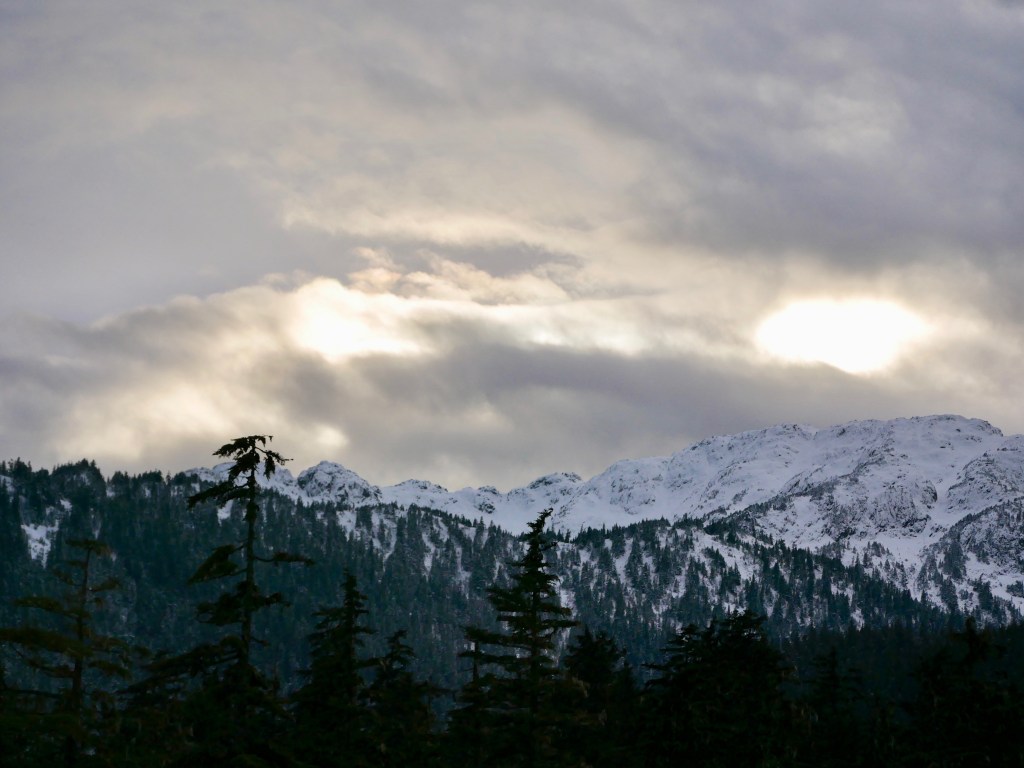
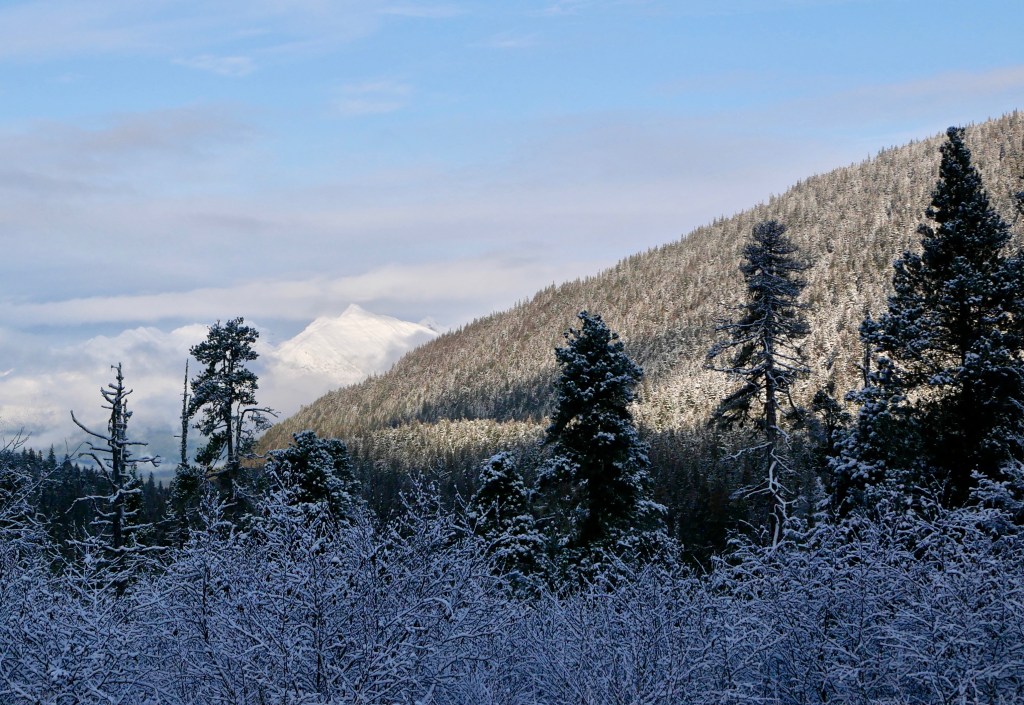
The clouds lift this morning, just after sunrise. They revealed Mt. Juneau and the Douglas Mountain Ridge white with new snow. Aki and I drove up to a mountain meadow. From Gastineau Channel we could see the sun burning off the remaining clouds. Some lingered in the valley we drove through to reach the meadow, glowing with backlit sunshine.
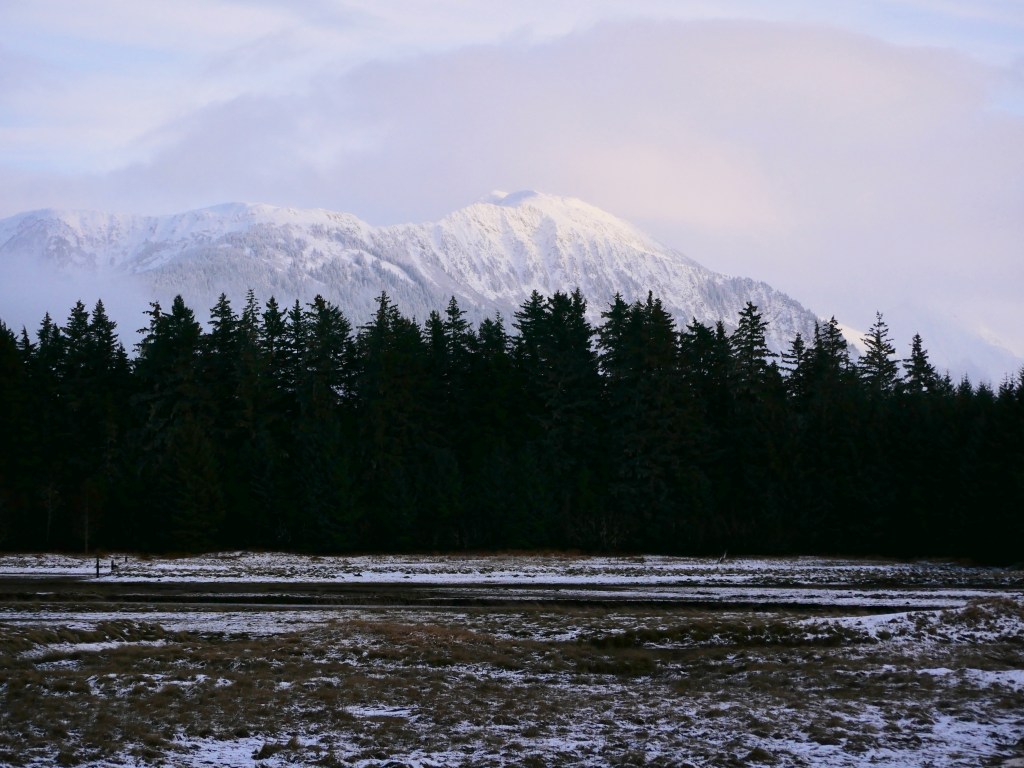
Even though it was only 10 A.M. the sun had already drifted between a gap in the ridge and disappeared. This time of year, the sun couldn’t linger more than an hour on the meadow. But sunlight still brightened the jumble of mountains that rose up on the east side of the meadow.
Aki has always loved walks over snowy ground. This morning she seemed more reserved than usual, staying near rather than running orbits around me. Just before we returned to the car she took off, following tracks down the meadow. She still answered my summons, undulating like a porpoise through the fresh snow.
Morning clouds hide the Mendenhall Towers and the top of Mt. Stroller White. They do lift enough to offer a filtered view of Mt. McGinnis. From the pocket beach of gravel where Aki and I stand, Mendenhall Lake looks like a solid, gray-colored mirror. I am tempted to test the mirror’s strength. If it could hold my weight, I could stroll across reflections of McGinnis and the blue glacial ice to Nugget Falls.
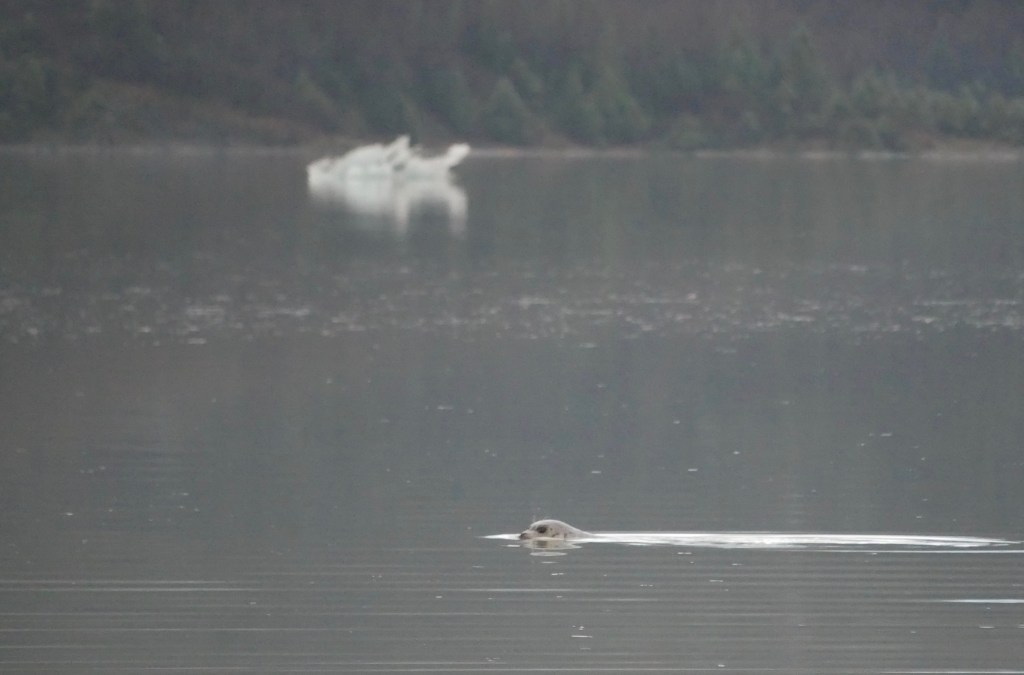
Something hidden swirls the lake’s surface, rippling the glacier’s reflection. Ten meters off shore the head of a harbor seal breaks water. After snatching a quick look at us it is submerges. When the seal next comes up for a breath, it will be fifty meters away. There must still be some salmon working their way across the lake to their spawning stream.
The seal’s presence is as unexpected as the lack of rain. We must be in between Pacific storms. Hoping to complete our walk before the skies let loose, I join Aki on a trail through the woods, leaving the seal to hunt for salmon. We pass two braces of bufflehead ducks on a kettle pond that quickly put as much water as they can between them and us. I wonder if they are reacting to our presence or the sound of rapidly fired rifles from the nearby gun range.
When the shooting stops an eagle screams in the way they do when another eagle invades their personal space. I expect it to fly off when it spots us, but the eagle keeps its talons wrapped around branches in the top of a young spruce tree. For the rest of the walk we will hear it scream every few minutes, as if calling out to a missing child or wandering lover.
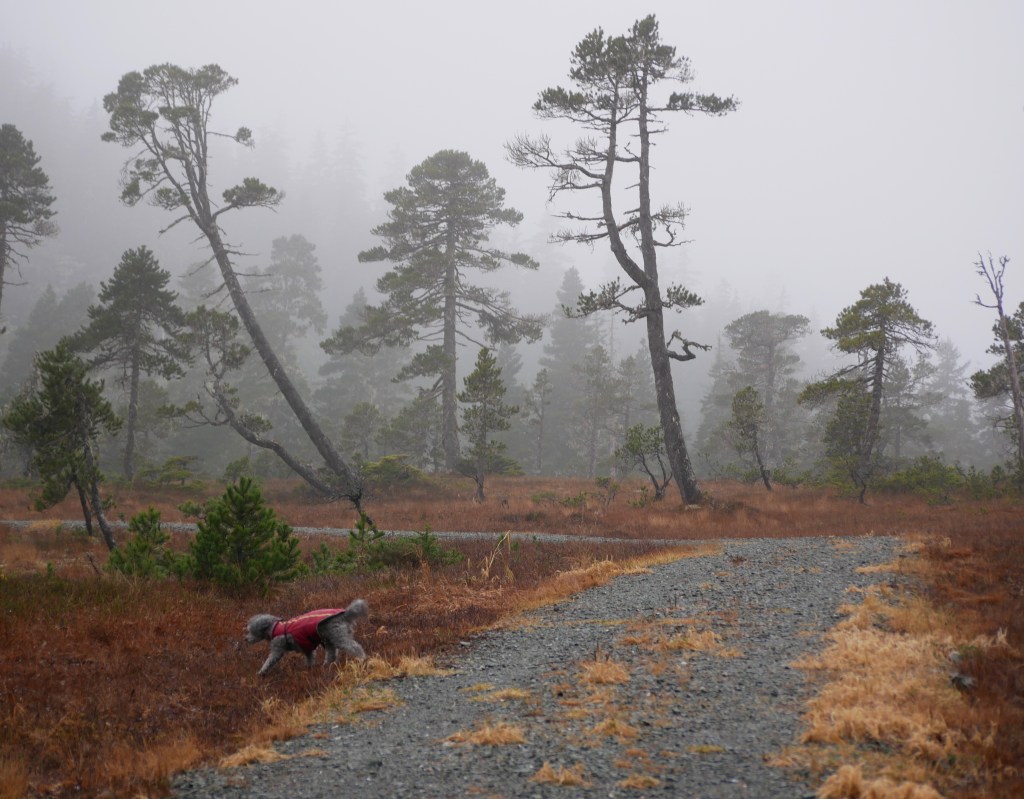
This morning, after a night of mixed snow and rain, clouds descended on this mountain meadow. Rather than curse the obscuring wall of white for hiding the surrounding mountains, I smile. Aki, this must what it is like to walk in a cloud.
Aki, already moist from the dewy air, trots away without responding to my romantic statement. She has no interest in spinning the day into something other than what it is—wet and gray. The little dog is nose down, her body tense with anticipation as she walks a crooked path across the muskeg. Near one of the pothole ponds she slams to a stop and buries her nose into a clump of lichen. Then she whirls around and marks the spot with urine.
Once again I envy Aki’s powerful nose and the excitement she feels when tracking scent left my animals she will never meet. Bending down to harvest a few bog cranberries, I imagine sniffing out the trail left by a passing wolf, coyote or lynx. How great it would be to read nature without my eyes. But my sight is all I have so I scan the meadow for the animal that my dog just identified with her nose. All I see are the shapes of scattered pine trees made grotesque by wind and winter.
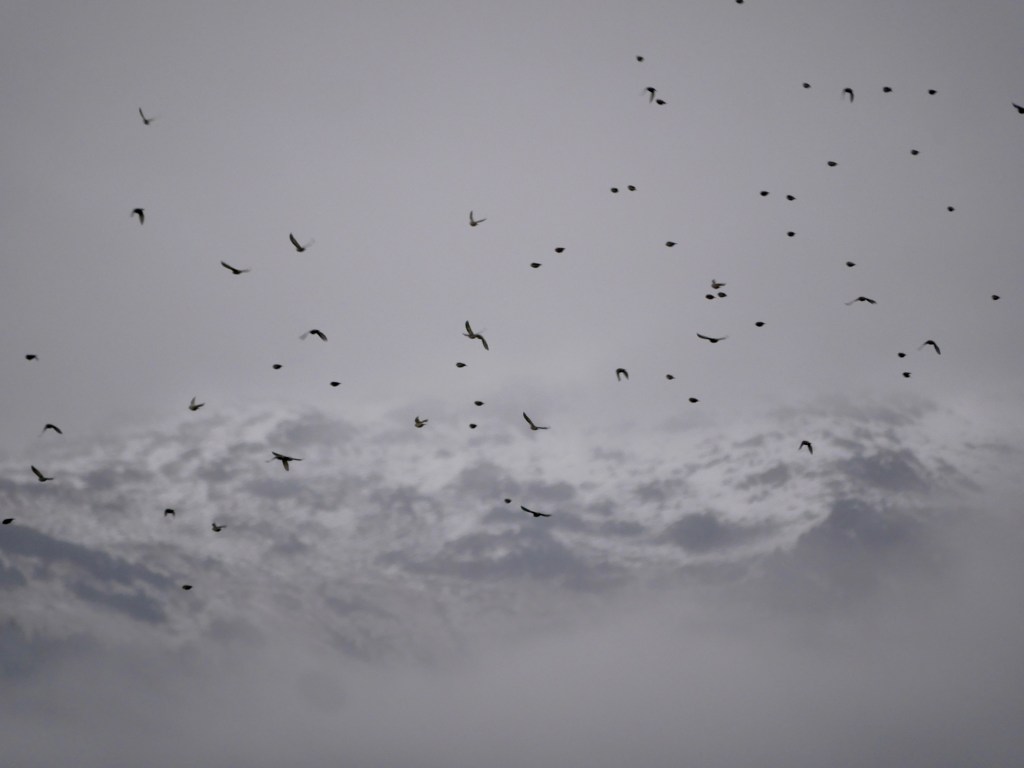
On the way home we stop at mile three of the North Douglas Highway. I park and watch a flock of siskins explode out of a leafless alder and fly toward the mountains on the other side of Gastineau Channel. If Aki saw the birds, she showed no interested in them. Perhaps they were too far away to smell.






















 Walking with Aki