It’s the last day of writer’s school in Skagway. Students and teachers, including Paul Theroux are in a White Pass narrow gauge railway carriage that rattles toward the Laughton Glacier trailhead. The conductor has stuffed all the writers into one carriage where the sound of thirty or forty conversations competes with the grumbles of the old carriage and the disembodied voice of a tour guide giving the railroad’s history.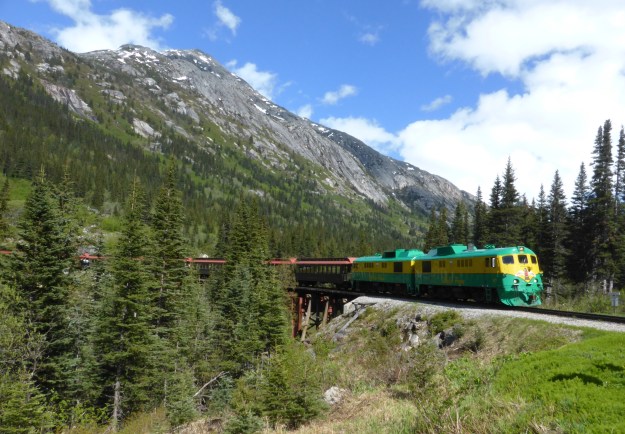
Last night rain soaked the trailside forest but now we have to squint to the morning’s sunshine while disembarking. Conversations began on the train continue as teachers and students start up the trail, joined by a couple from Galway who decided to follow us to the glacier rather than continue on the train to it’s terminus at Fraiser, British Columbia.
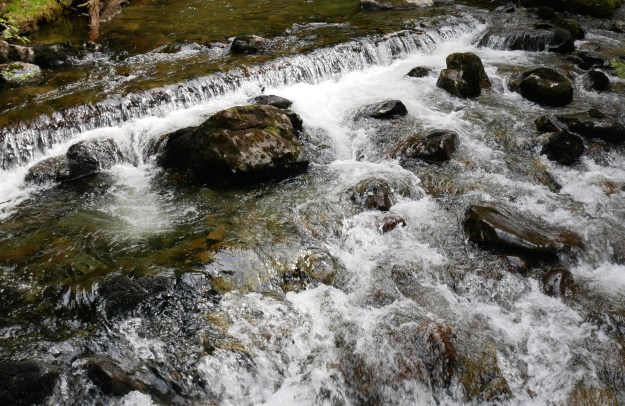
I hang back, letting everyone pass, until all conversation is being drowned out by a glacial river in a hurry to reach saltwater. The river also blocks out all birdsong. If a raven is scolding me, I can’t hear it. The forest plants aren’t steaming in the sun. That time has passed. But fat raindrops still cling to plantain plants and dead-brown foliage of last year’s bracken glows.
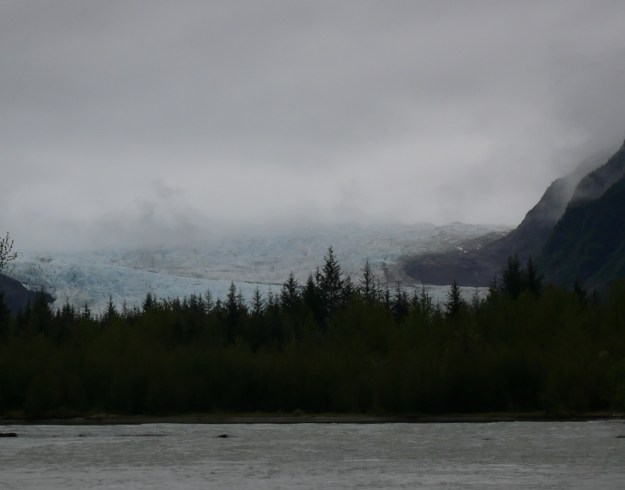
After a mile the trail leaves the river and leads me up through wind-stunted spruce and cottonwood plants. Still alone, I follow it onto a flat valley formed by twin walls of naked moraine. Only tough plants grow here. Ahead the Laughton Glacier curves up into clouds that obscure a mountain ridge. The clouds also block my sun. Ahead one of the writers, in long skit and windblown hair, walks towards toward the glacier with the help of a tall trekking pole. She turns the scene into a black and white photo of a pilgrim approaching her ashram.
 I’ll pass the pilgrim and climb onto the shrinking toe of the glacier. The sun will return. I will hold sharp edged rocks just being released from glacial ice that carried them from mountaintop to my feet. “Look at these rocks,” I will shout to a much younger writer wearing heart-shaped sunglasses. But magic will be in their history, not their appearance so she will probably thinks me weird. Higher up the toe, I will fall into a conversation about wolverines: whether the grumpy loners are magic or just thugs. “Magic” will become my favorite word for the day.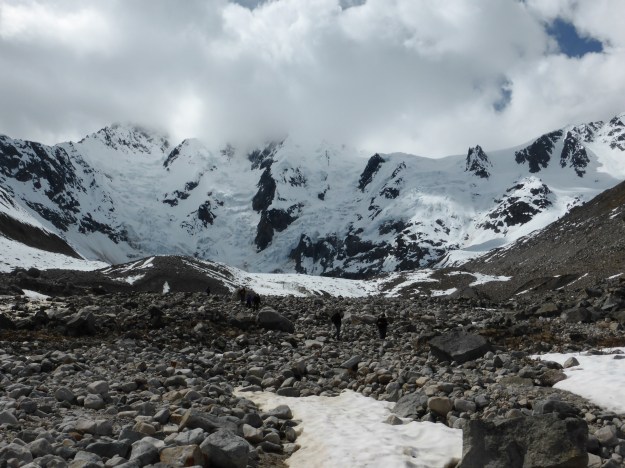

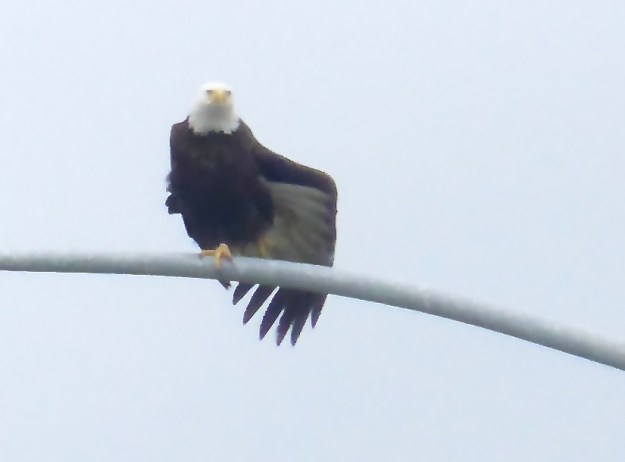
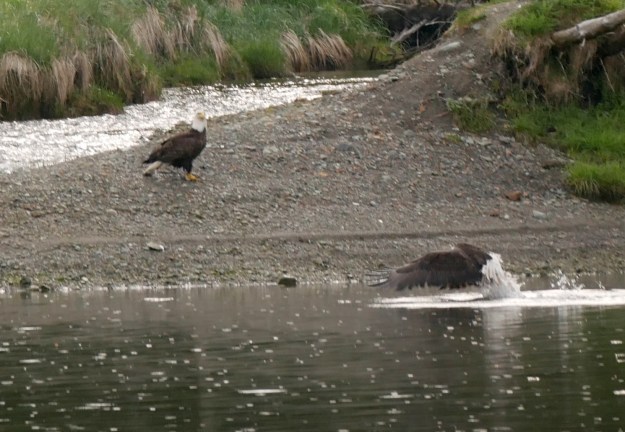 Two eagles, one wet, the other dry, sulk on the point separating fish creek from its pond. A minute earlier, one had crashed, talons first, into the pond water, struggled with something that appeared to pull it underwater. The then wet eagle released its prey and used its wings to lift out of the water for a short flight to the beach. Somewhere in pond, a sore backed king salmon drops into deeper water. .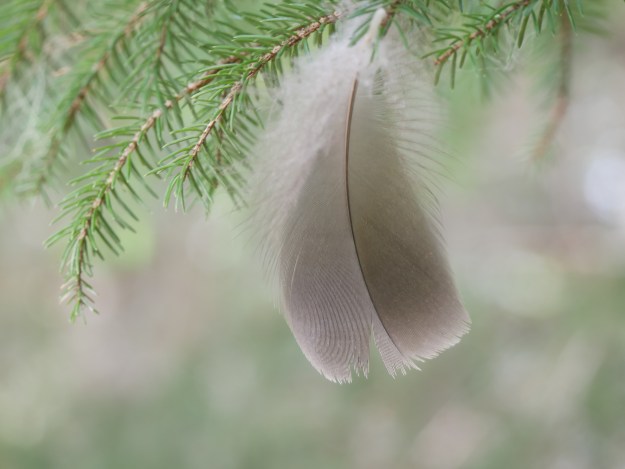

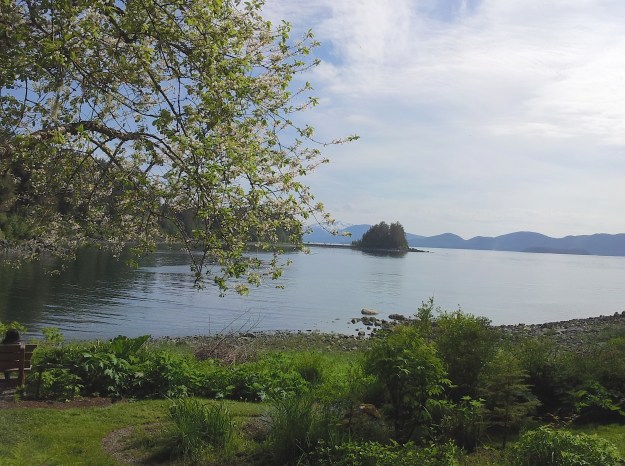
 It’s hard not to feel derided by the ravens and crows infesting the spruce forest that edges the Mendenhall River. The mere presence of Aki and me seems to put them in a foul mood. I experience emotions not felt since visiting a neighbor bar when in college. (Image me in school sweatshirt and jeans walking past a table of shipyard workers in machine-oil-stained overalls). The corvid choir takes me further back to the time of high school dances with their rigid hieratical order. The other birds along the river reinforce my feelings.
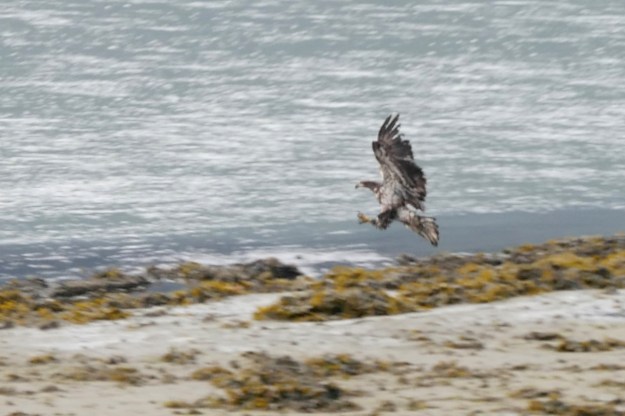 A sole, immature bald eagle was exiled on our side of the river when Aki and I first broke out of the forest. Across the way, on a bar exposed by a minus four low tide, the big men and women on campus—a gang of mature bald eagles—reigned. Gulls, crows and ravens kept a respectful distance.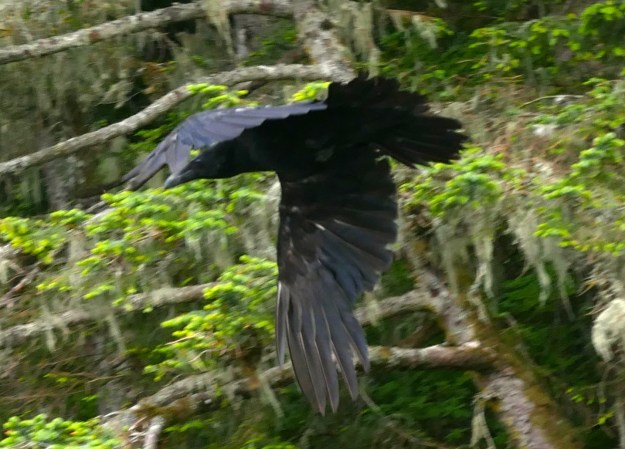
 I’ve seen a sole arctic tern drive off a mature bald eagle and a raven do the same. I’ve watched a crow harass a raven into leaving a tasty morsel of food. Today, the Mendenhall River crows, having been embarrassed by a diminutive gull, are putting us in our low place.