Category Archives: Juneau

Revealed by the Sun

Today we wish winter could last forever or at least until King Salmon season.  After weeks of thawing days followed by freezing nights the moraine snow pack offers unlimited access to seldom seen places. It will soften in this strong sunlight but not before Aki and I can take one last stroll through the beaver lands.

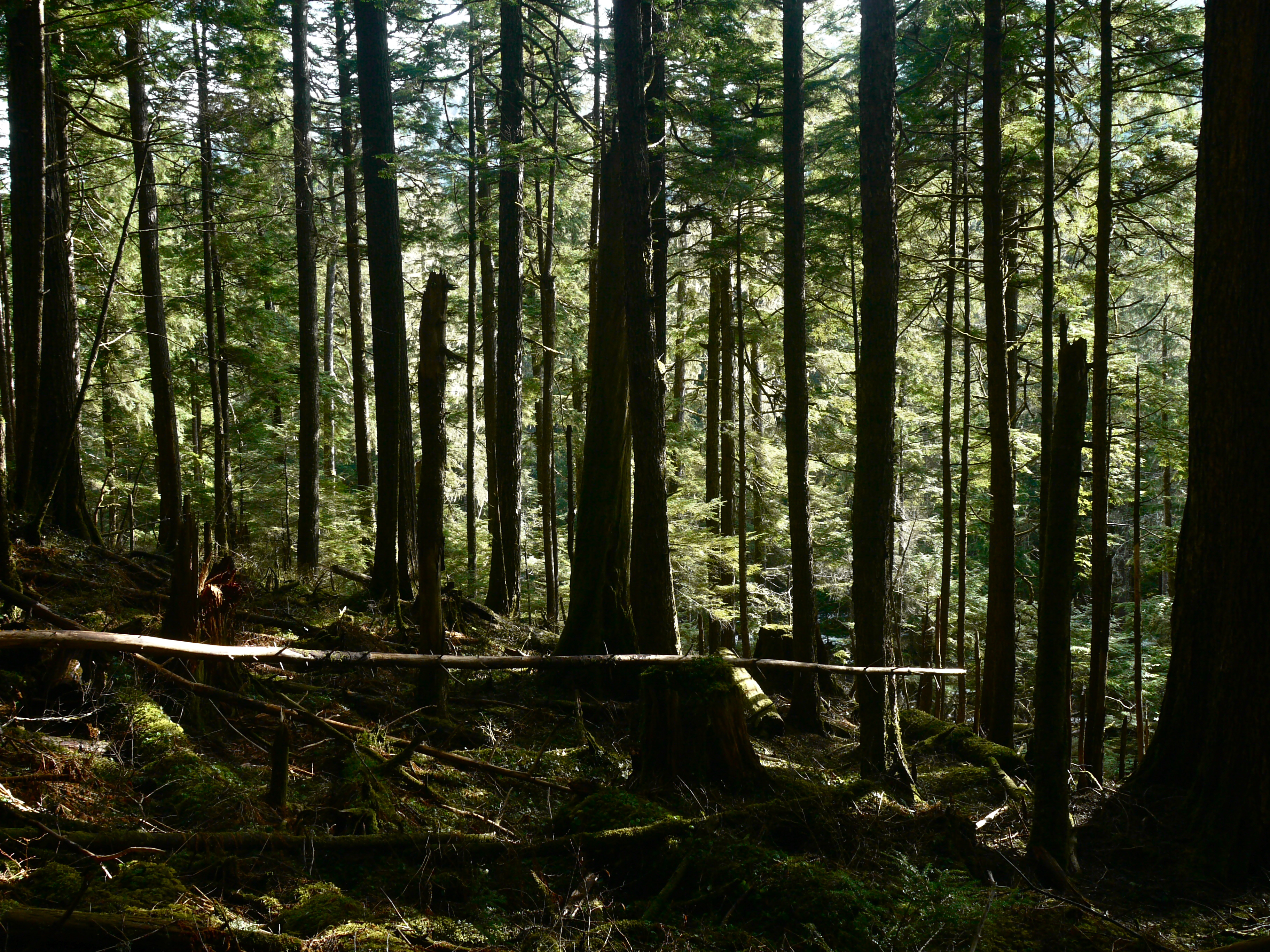
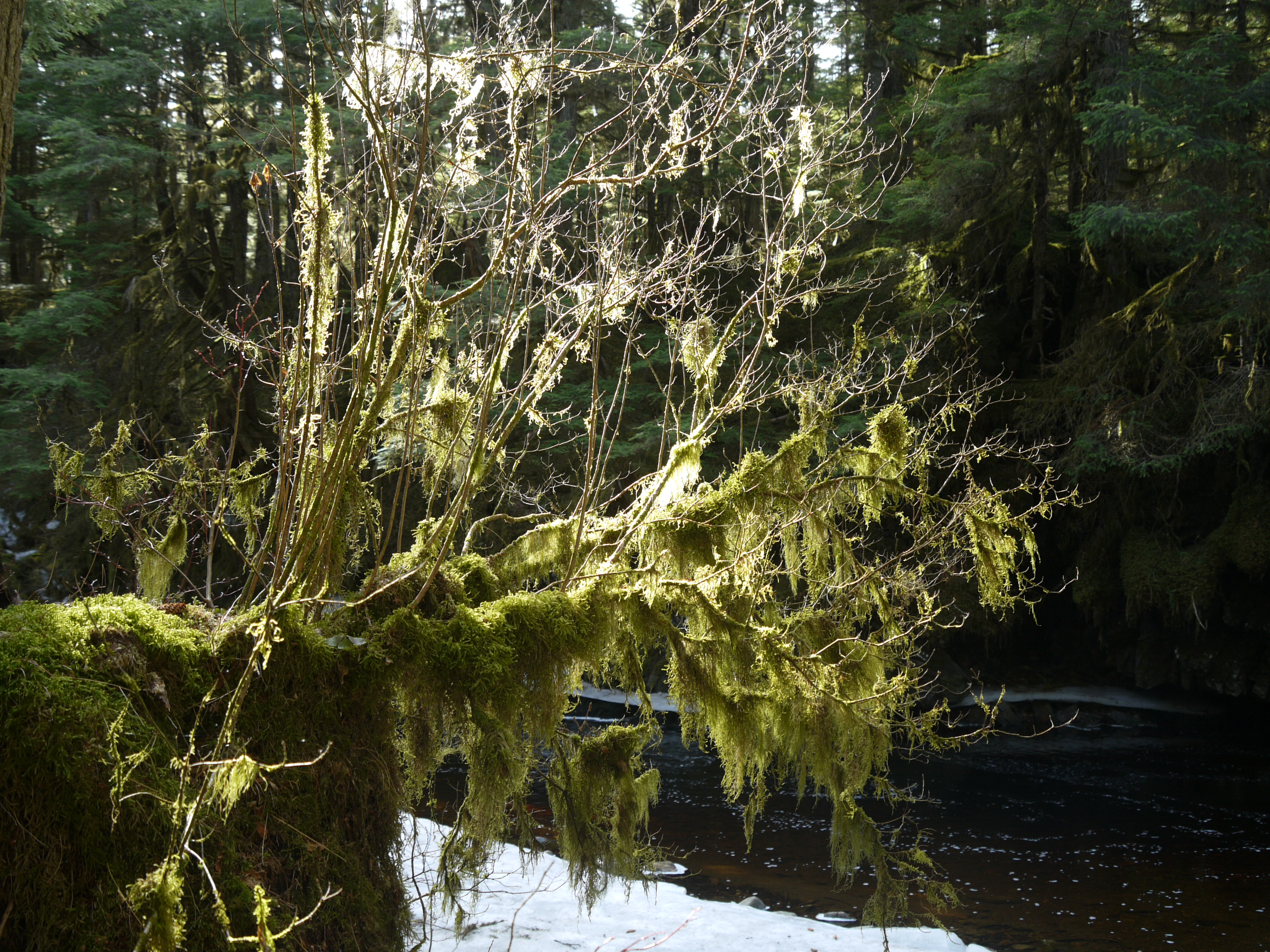
First we cut through the Troll Woods where morning sun once again infuses tree moss with vivid green light. Aki almost runs out of patience waiting for me to abandon efforts to capture it with the camera. Rather than frustrate, my failure pleases. There is still some beauty capable of defeating digital machines and may only be  captured by the human eye. 
We find what looks like the twisted remains of a child’s plush toy fashioned into a small rug. It’s the frozen scat of a wolf who recently enjoyed rabbit for dinner.

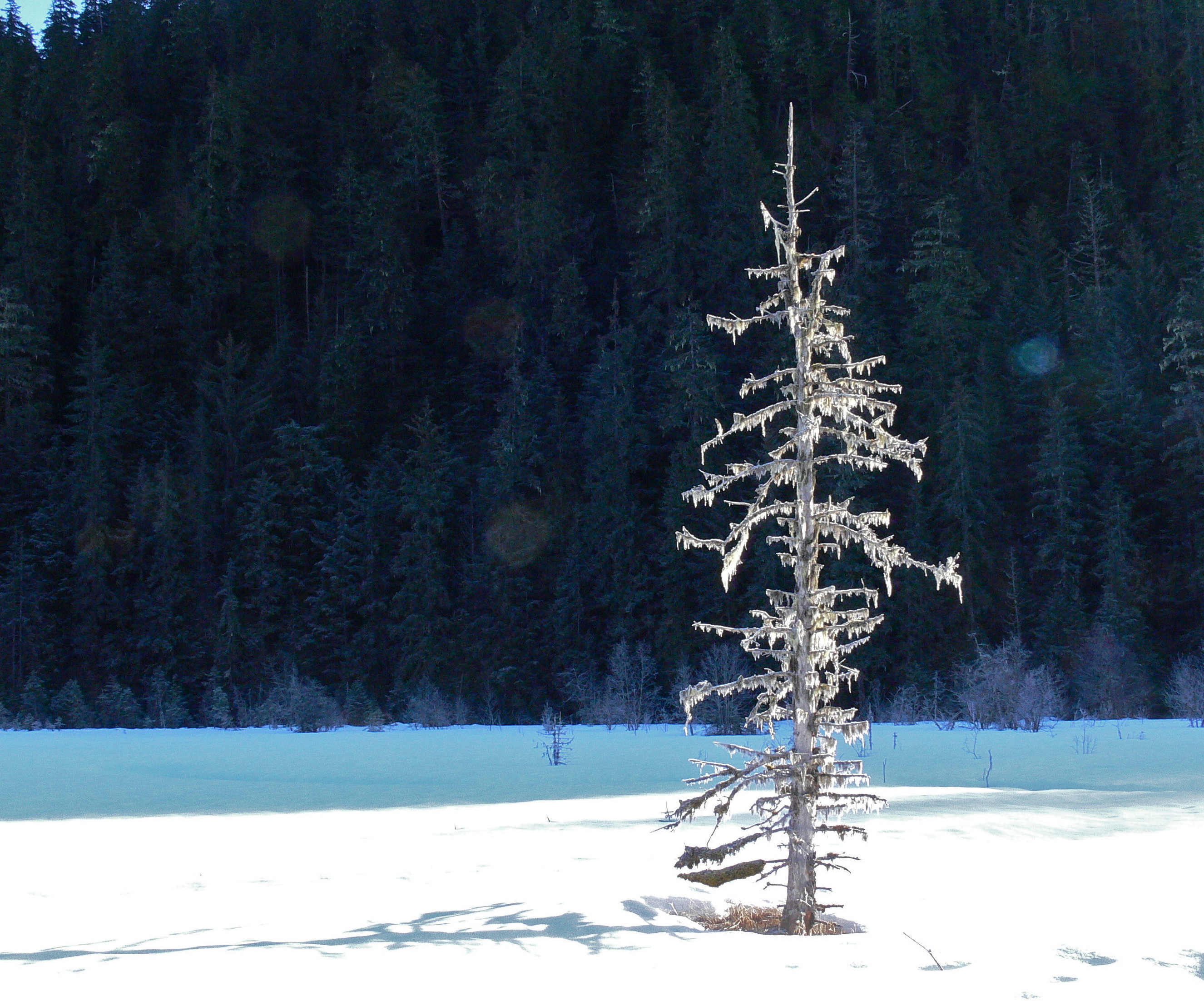
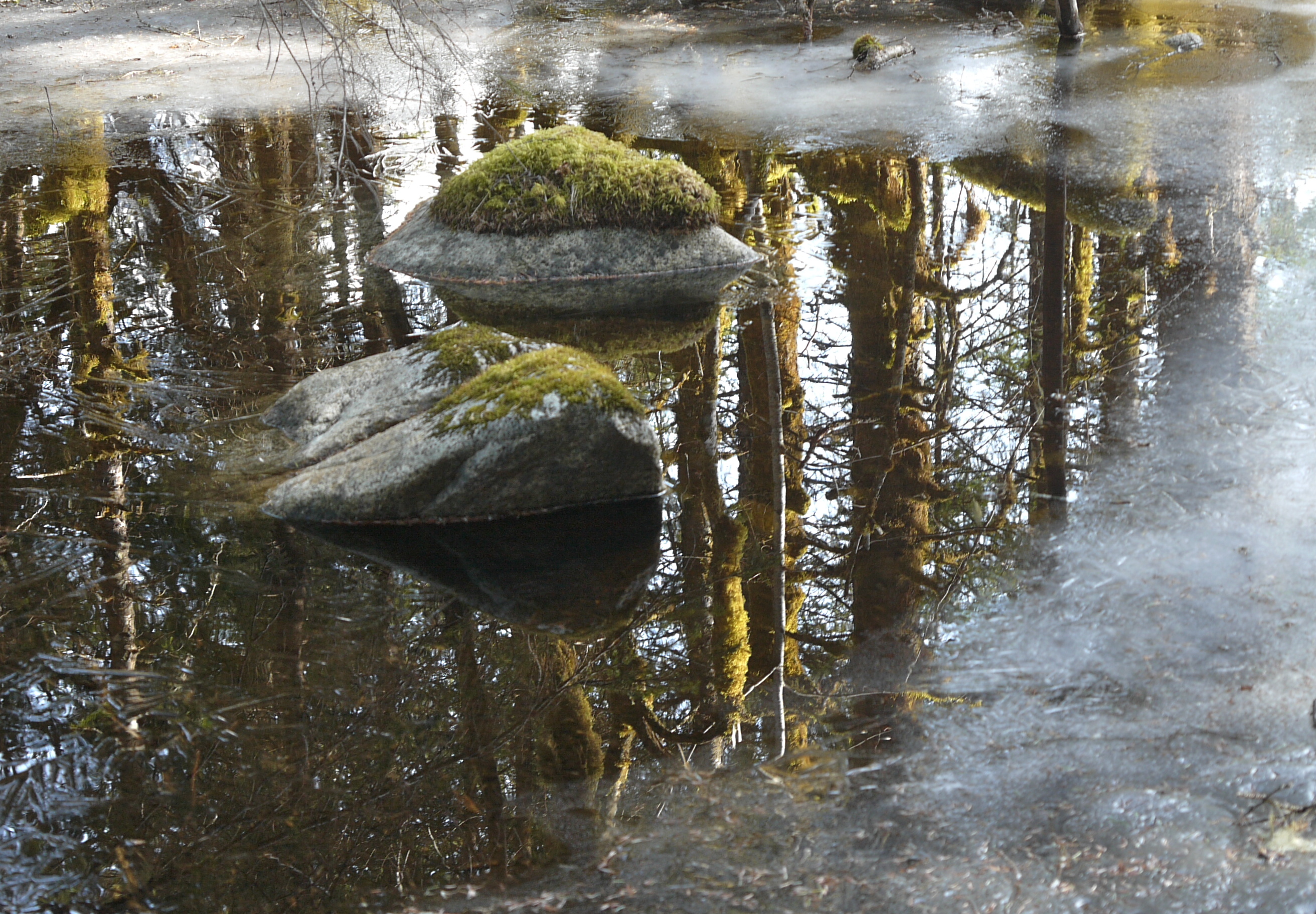
The troll trail skirts some small lakes covered with ice that has captured the tips of shoreline alders. Greedy for light, the trees reached out over the lake in summer and remained too long. Heavy winter snows bent their tops under water to be captured by rapidly freezing water. It will take weeks of warm weather to win their freedom.

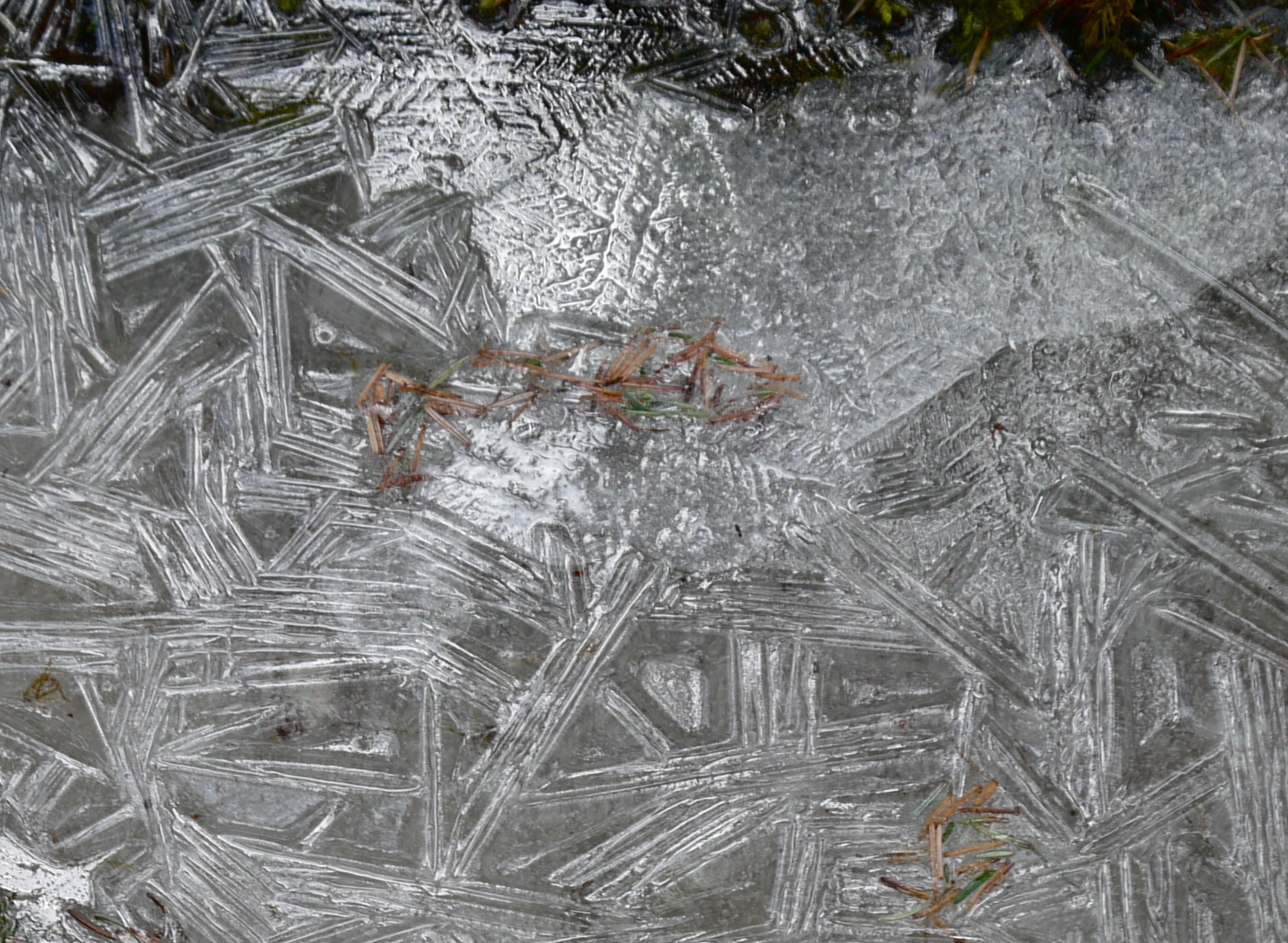
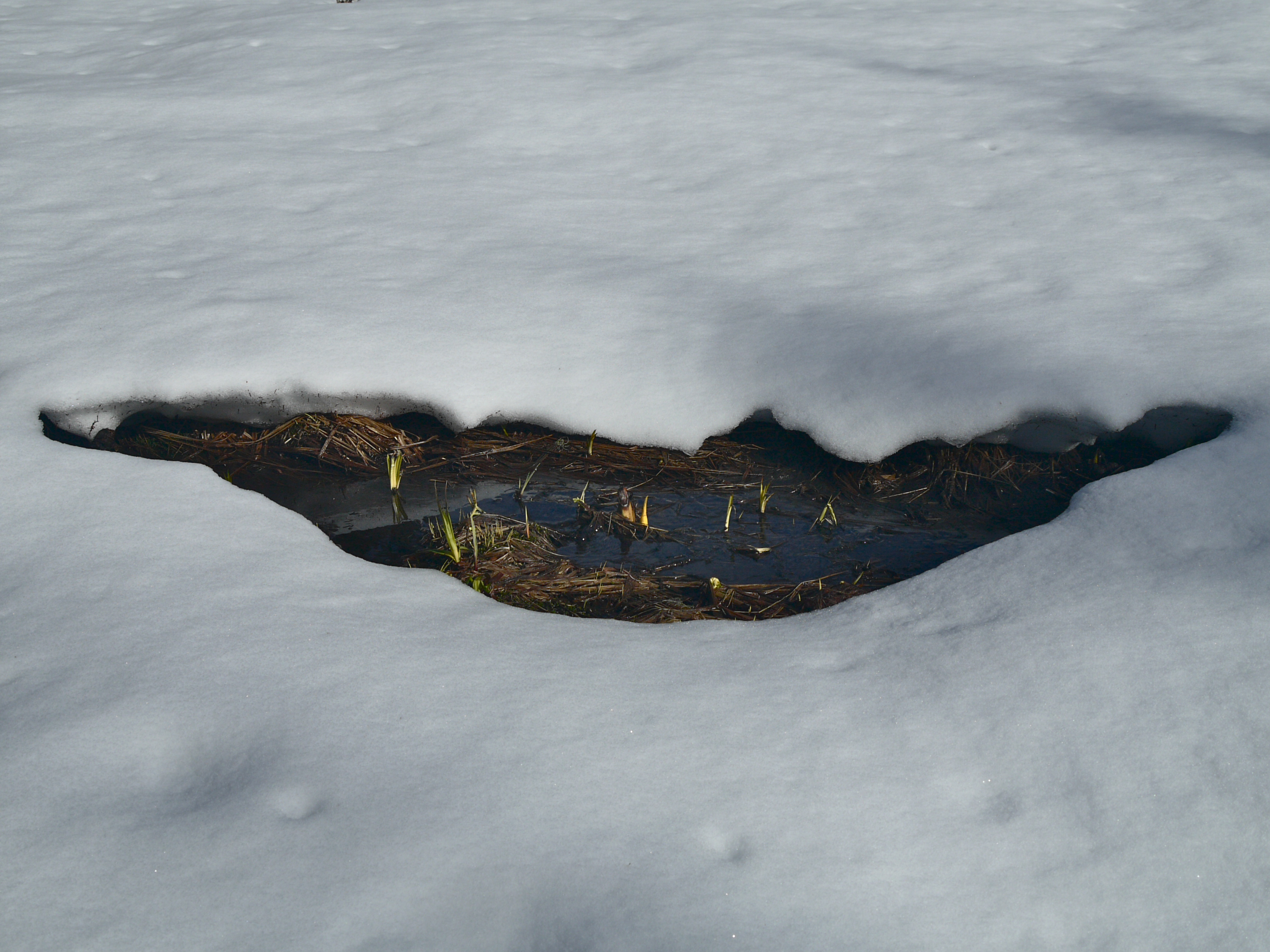
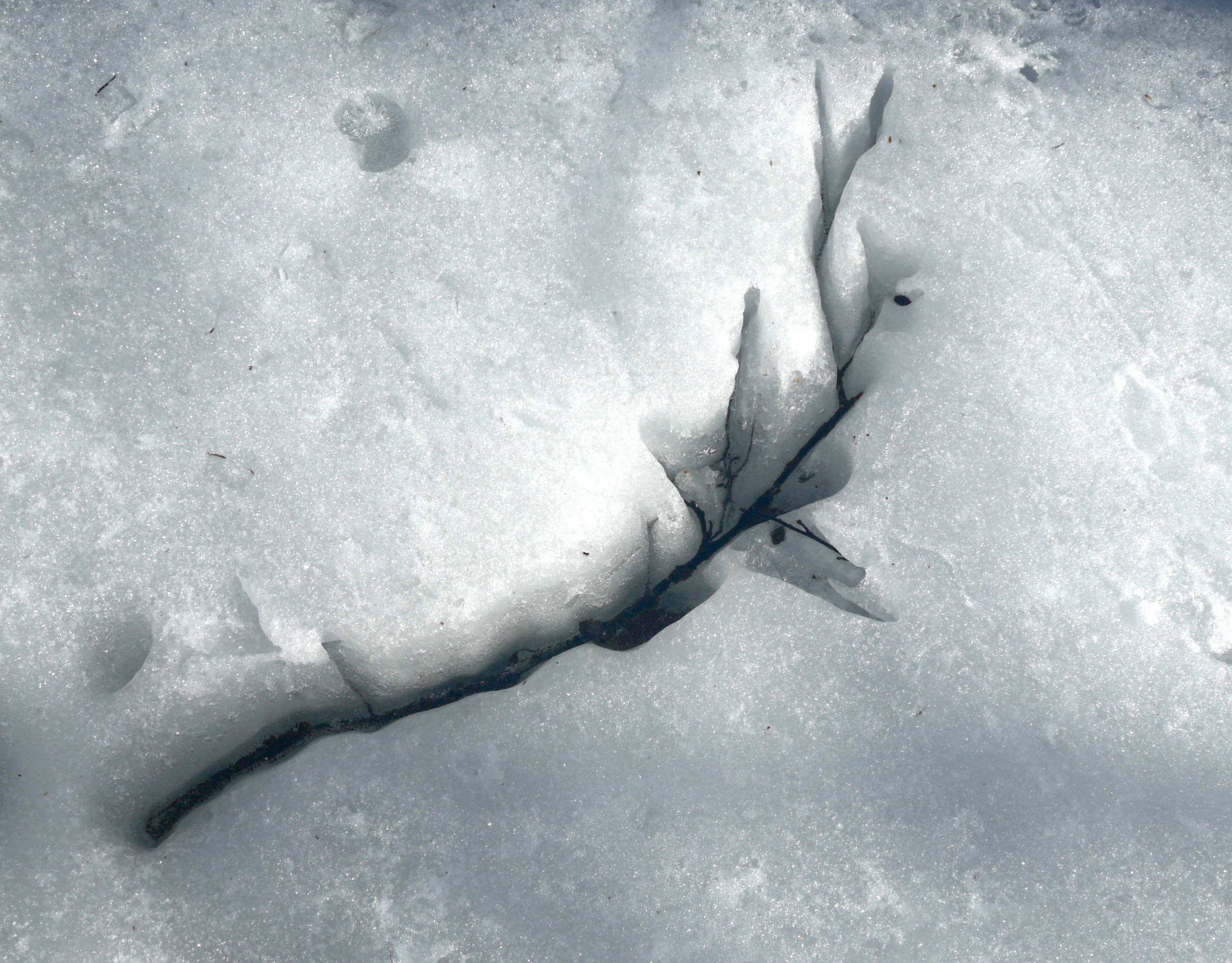
At the edge of the woods we drop down onto the flat beaver country and abandon the trail for a chance to move among the standing dead spruce to Mendenhall Lake.     With Mt. McGinnis as our guide we pass through the desolated country where only the stubborn willows have a chance to grow. Where exposed to full sun the ice is pockmarked by deep sided holes made by leaves or twigs that fell there during the winter. We find the grave of a small alder branch that it dug with the help of the sun. 
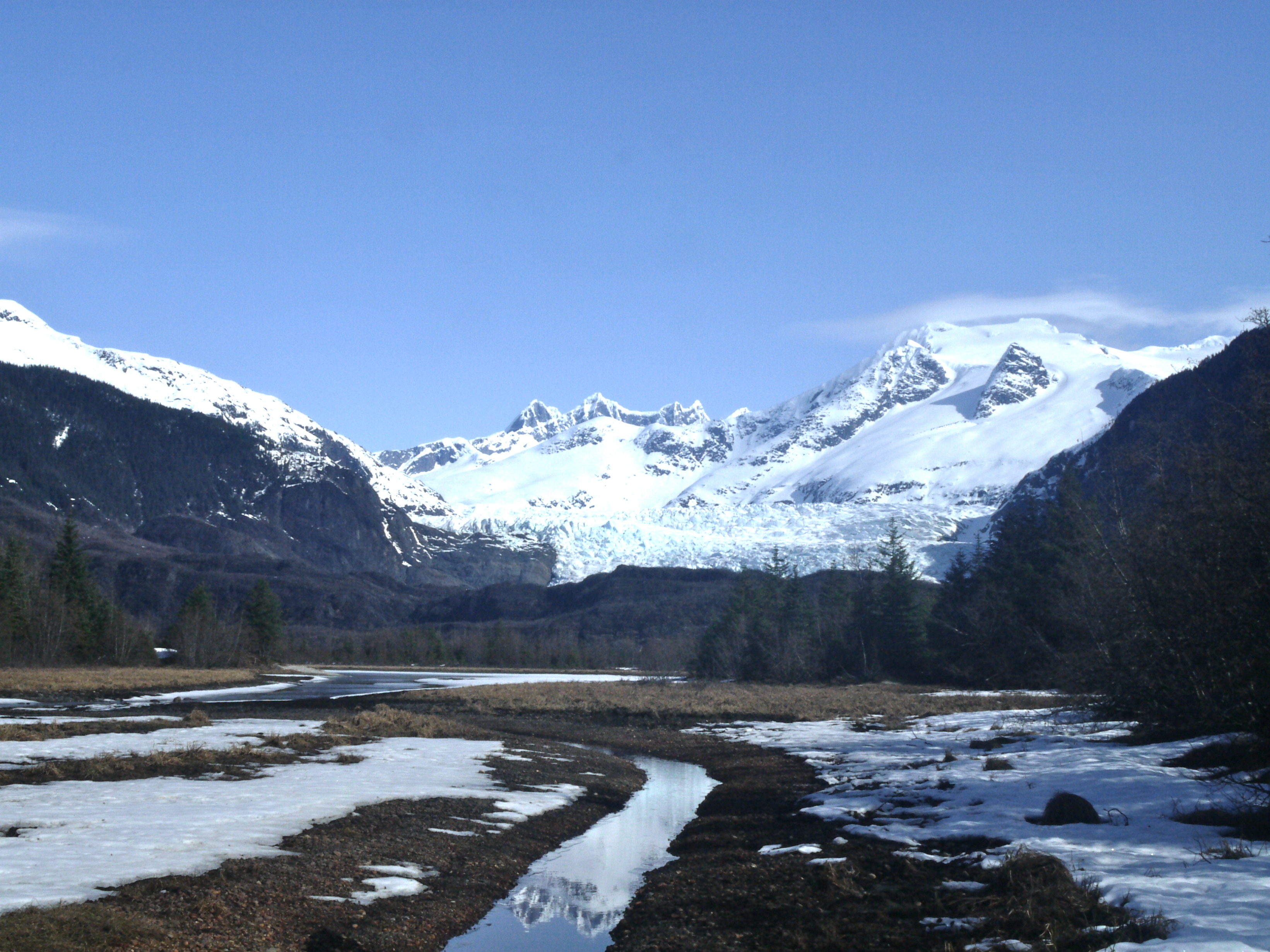
After rejoining the main trail we pass the massive two tiered beaver dam complex that provided so much transformation. Only a small trickle of water seeps out from underneath the last dam to only partially fills a winding stream flowing toward the lake. The once navigable watercourse is now too small to capture the glacier’s reflection.  It can only mirror the tips of two Mendenhall Towers.
For Other People to See

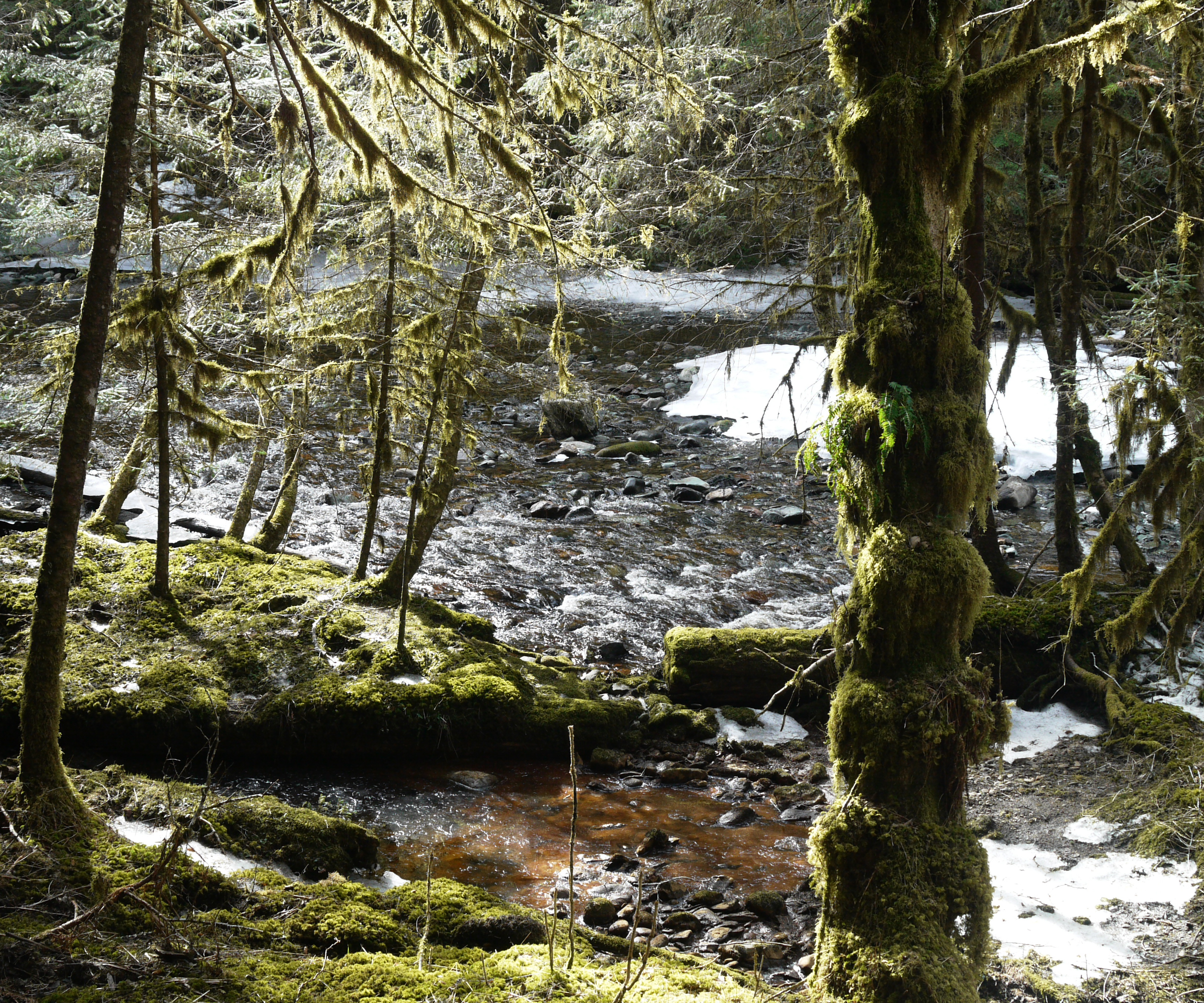
These old growth woods refuse to let in the Spring. The fast moving steam still undercuts shelves of ice. Shafts of sunlight manage to energize the colors of tree moss but offer us  no warmth. Surprised but accepting we head deeper into the woods.

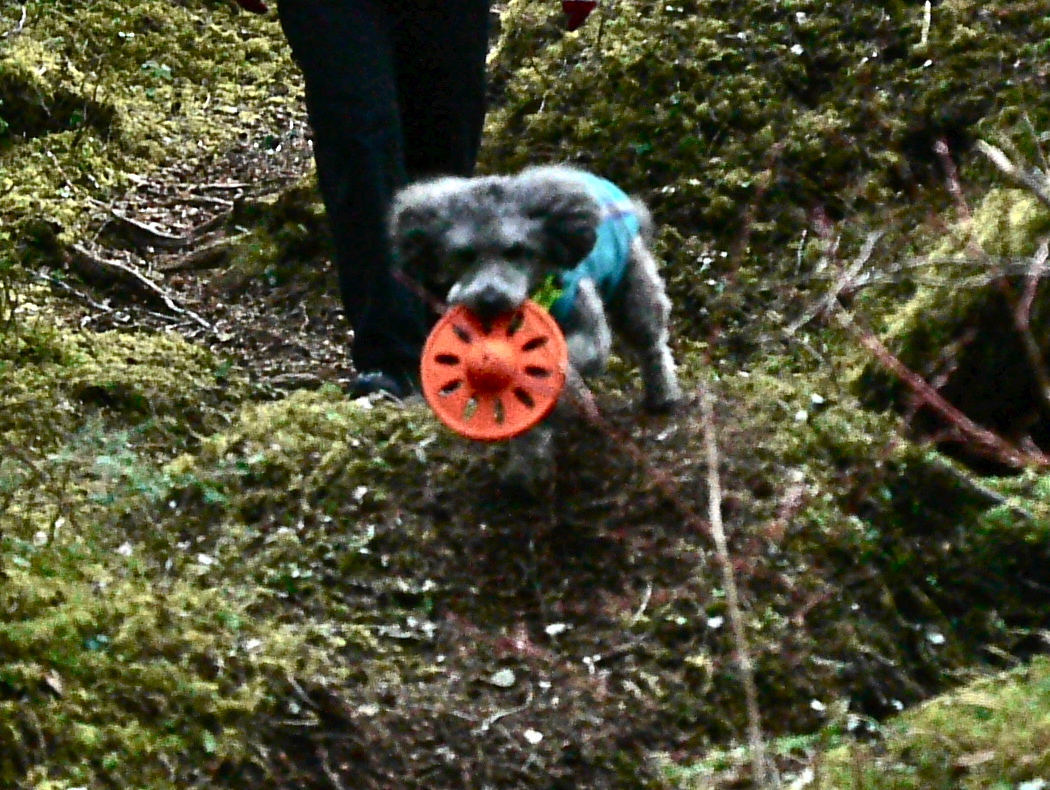
Aki has brought along another human member of the house who has her orange frisbee. Between tosses the thrower spots a belted kingfisher perched across the stream. Patient and wise for a bird, it stays in place on the spruce branch forty feet above the stream. I wish we could watch its steep dive for food in the stream but only grow cold waiting for it to drop.

Further upstream I think I hear bird song but find its only Aki squeezing her frisbee for the squeaking noise it makes. Then a echo of the squeak sounds above us. The winter wrens are back. One accepted Aki’s challenge to sing. 

Wanting warmth with our sun we turn around and follow the stream to tidal flats of sleeping grass, the color of light mud. The trail takes us along the edge of a rich pond still covered with a skim of ice. We pass a woman carrying a long range camera so I ask her is she has seen any birds. “Just a couple of blue herons,” she answers, “but there is a river otter.” Apparently it scared her breaking through the pond ice near the trail. 

Our local newspaper has been full of otter sighting reports. Six were seen often this winter fishing in the artificial lakes that border our busiest road. Hoping to get our own chance to watch an otter we start toward where the woman saw it. Close to  the sight I hear ice breaking followed by a splash. Expecting otter, I see a four year old dressed in pink tossing a series of stones onto the thin pond ice. My heart breaks with the ice. 

Winter Giving Way to Spring

Aki would have loved this sun soaked meadow of snow. She might have shown concern or distain when I broke through a snow bridge and plunged into a foot deep stream. I am glad she missed that part. It is enough that I must ski all the way to the car with one very wet foot.

The taste of spring hangs in the air over Amalga Meadows. One big rain storm will push it into spring. Now mud and snow fight it out for the high ground while watercourse ice rots to liquid. Even now a long tongue of open water reaches halfway across the salt chuck. Pushing past the stream of my rude baptism and deeper into the meadow, I find only silence.  Expecting the chatter of chickadees I only hear melting snow drops  hitting gentling moving water. It pleases rather than disappoints.

Later I ski over over a little hill to a pocket beach to test a theory. Without Aki will the ducks and birds relax around me? No. A small gang of mergansers relaxing on the beach re-enter the water when I am still in the woods and paddle to the middle of the bay. They leave me with a woodpecker pounding out food from a beach side spruce. Without seal lions or seals to keep them pinned to the beach the mergansers form an raft with a mix group other of ducks. Their muttering mixes with the sound of the woodpecker’s impact drill and periodic splashing by something I can’t make out.  A photograph shows something like a duck doing the iron cross. I’s guessing cormorant. 

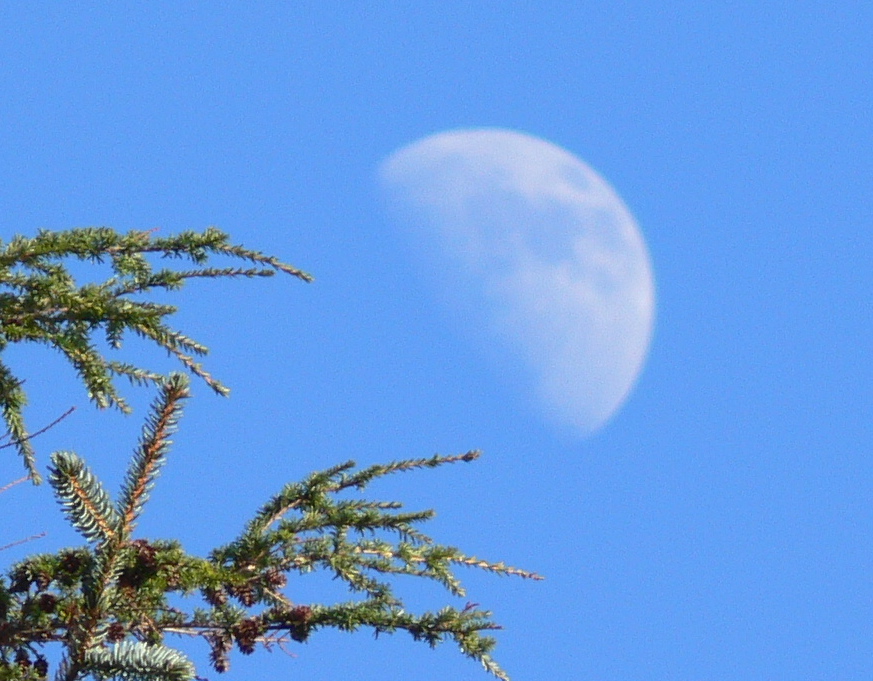
Turning back from the beach I search for the woodpecker and notice a rising half moon emerging from behind a spruce. It wears a toupee of clouds. He is bald before I can snap a picture.  

Wednesday in Ordinary Time

I should be disappointed that clouds have replaced the sunny blue skies that blessed Juneau this morning. But overcast often hangs over our rain forest. The clouds raised the temperature to near 50 degrees so I leave my jacket in the car and join Aki for a skiing investigation of this great open meadow. After dashing about and rolling in the snow Aki settles into a patience pace by my side.

Almost two feet of compressed snow still cover the meadow promising a late Spring for the wild flowers below. It easily supports our weight making skiing a matter to be done without stress or thought. We have the place to ourselves. No recent animal or people tracks dimple the snow. Finding that solid ice still covers the meadows’ watercourses I drop down into one and ski over to the beaver housing complex. The ice ends there and stream water sings a calming song by flowing over a dam made of gnawed tree limbs and sticks. The beaver’s huge pile of feed wood sits at one end of the dam and a snow covered den at the other.

Near here three or four shafts, maybe 12 inches across, drop to the meadow surface. I probe one with a ski pole and find a small tunnel entrance at the shaft’s center. Small concave shelves have been fashioned just beneath the snow’s surface, which makes me suspect it to the be the work of land otters. I can just see then nose out of their home tunnel, place front paws on the shelves and launch themselves onto the snow. There should be a rutted trail of tracks leading from the escape shafts to an otter slide down to the steam ice. There should be an otter sized hole chewed into the ice. We have seen slides and opens holes in the ice here before. Maybe the otter clan has moved over to the salt chuck to fatten up on last Fall’s salmon fry migrating to Favorite Passage.

Many willow bushes dot the meadow. Some mimic English tea roses with objects looking like fully formed flowers that might draw a second look from a florist. These miracles were not produced with the wave of a wand but rather the invasion of the willows by a parasite. Midges formed the flowers or gall for shelter for their larva. Green in summer these galls have now dried to a convincing rose shape the color of dried blood.


Wild Barnyard of Geese

The hike starts with a strange sound heard in a familiar place. An angry little sound, hawk like, breaks the silence of morning followed quickly by that of a song bird. The thick forest hides both singers so we move up river. Afterwards I stop often to listen for more bird song but only hear Aki’s paw-falls on the crusty snow.

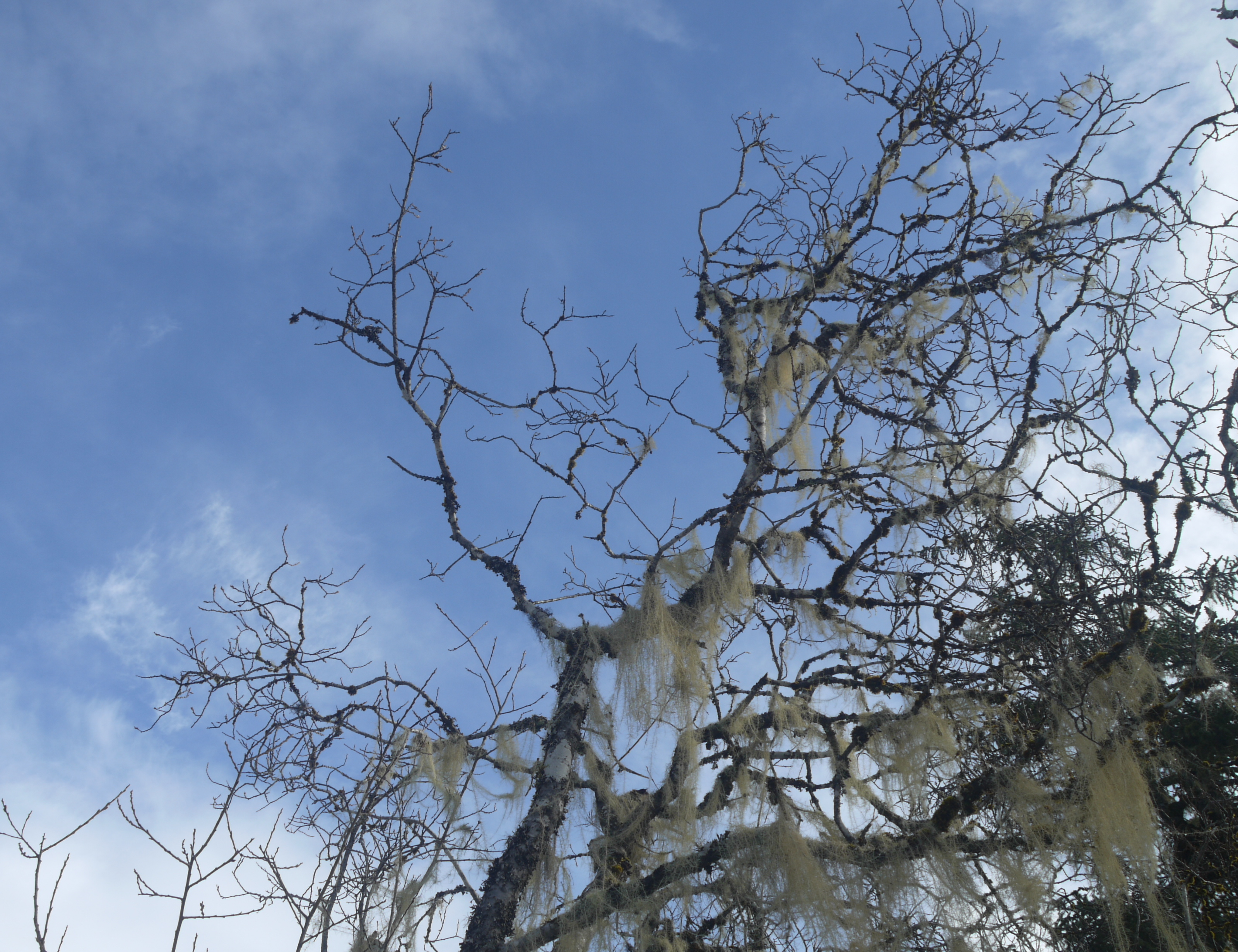
This morning’s low sun backlights the moss covering the big spruce and cottonwoods lining the trail making the moss grow with yellow green tones. I try again to capture a tenth of the beauty with my camera and fail. The place rewards physical, not virtual visitors.  

Leaving the boreal forest for a muskeg meadow we begin to hear the geese. We have been through this before — hearing a big flock of Canada Geese from this meadow but never seeing them when we reach the beach.  Today, the sound stirs Aki to explode down the trail. I find out why when we reach the river with its big meadow covered with geese.

Aki has driven at least one bear up a tree but has never before acknowledged the presence of waterfowl. Even today, when they strut openly on the dead grass land and shout out random warnings, Aki acts as if they do not exist. I see this as a sign of sensible caution, not arrogance.  Our mere presence, a couple of hundred yards away, seems to set the geese on edge so we keep our distance. Downriver a ringing geese alarm sounds, something like the amplified dithering of the Three Stooges, and a set of geese flies overhead. This is repeated several times — the die hard feeders being driven off their sand bars by a flooding tide.

Soon the meadow becomes an untidy barnyard of geese, heads down, looking for a meal. Above them snow whitened mountains rise into a darkening sky. Then it begins to snow.     

The Pocket Grove

This morning the mountains circling downtown Juneau stand as dowagers with shawls of snow melting under the morning sun. We stay close to home, choosing to explore lands drained by a nearby creek rather than head out to wilder places. It’s an odd choice on this warm sunny morning but, as it turns out, a good one.

We start across a broad meadow still covered with compressed snow. The sounds of fire crackers being set off at the nearby land fill compete with the roar of highway noise. Someone sets off the fireworks to chase eagles and raven from our decomposing garbage. The big birds now circle above us as we cross the meadow and enter into a hill side forest.

It’s a rich place with moderate sized spruce and hemlock trees rising straight as grain stalks above the stumps of their ancestors. No snow litters the ground in this well managed wood lot. Already blue berry leaf buds swell, looking lovely when backlit by shafts of sun light. The refugee eagles and ravens are settling into the trees above us. We hear the ravens sound out what may be a love song. It’s their time of year. The eagles just sound perturbed.  

We follow the trail as it climbs up the steep hillside to crest on a false summit that offers a view of more second growth forest. Rather than follow it over the hill we move on a diagonal line down the hill toward a promising splash of white snow showing through the trees. The chance to walk back all the way on a sun splashed field of snow draws me through patches of thorny devil’s club stalks and over countless fallen trees. We pass one hemlock with military posture and a two inch thick root climbing straight up the length of the trunk rather diving into the earth. The tree’s bark now partially encloses the errant root.

Just before our breakout we must cross a thick belt of devil’s club. In a few weeks when these nasty plants send out their prickly leaves we would have to turn around. Today it only requires caution to pass through. We find a stand of massive spruce on the other side. Here within ear shot of traffic and the dump we stumble on a pocket grove of majesty bordering a small snow covered meadow. A tiny stream drains the grove. Yellow shoots of skunk cabbage push up from the stream bed. I am not sure which is more surprising — the pocket grove of ancient trees or finding the first sign of spring in such an unexpected place. 

Aki ignores these wonders to concentrate on the snowy meadow where she dashes about before rolling in the sun softened snow. Looking beyond her I expect to see the meadow continuing along the base of the hill to offer an easy stroll to the car. I find a small pond backed by a rising hill.

Expecting another battle with devil club and windfalls we cross the meadow and entered an area still recovering from clear cutting. Here there is darkness and thin trees with reddish trunks. It’s lack of understory plants allows us to move quickly up the hill and then down through some old growth forest to where the big meadow begins. Compared to the complex forest, the meadow offers a simple beauty — a plane of white dotted with the twisted shapes of bare brush.

Hunting Moments in Time


If not for an old mine, no one would have cut this trail above Peterson Creek. Horses once dragged ore carts down it to tidewater. Did they, I wonder, start the journey deep inside a tunnel maze, moving from darkness into light?  Thankful I am not a horse, I plan on walking with Aki up this trail until it almost touches a big waterfall. Continuing on from there would take us along the creek to it’s source lake, which might finally be ice free given the warm weather.

It froze hard last night, which firmed up the trail. In early morning a brief storm dusted everything with a half inch of snow.  Now the sun shines above the forest. We look for tracks in the fresh snow and enjoy sunlight breaking through it through the forest canopy. Aki checks the pee mail messages left by passing wild things while I look at the prisms of light created by shafts of sunlight hitting the new snow.  Taking many pictures I try to capture these moments in time before they die with the movement of the sun.

Hoping to see the waterfall flooded with spring light I stash the camera and move up the trail. We hear it before seeing it, while crossing brightly lit ground. A minute later I down on the creek in deep shadow. We have missed the convergence of light, snow, and falling water.

I think about continuing on to the lake. A guy with a fly rod might catch some of the stunted rainbow trout that managed to eke out an existence in it. Fish and Game planted their ancestors in the lake years ago. With the waterfall blocking passage for the salmon that spawn in the lower stream, the trout can’t fatten themselves on salmon eggs and young like their native cousins, the cutthroat trout. Down at the fly fishing shop, the guys will tell you that some of the rainbows, swept over the falls, managed to make it to salt water and then return as massive steelheads — ocean going trout that can reach the size of salmon.  Legends of Peterson Creek.

We leave the trail near the falls and walk without guidance or hinderance over the snow covered ground. In summer we would be blocked by soft wet ground and thick stands of the thorny devil’s club brush.

Moving away from the creek I realize that it has produced the only sound we have heard since leaving the car. This late in winter, the forest should be almost burdened by bird song. Hope we don’t have a silent spring.

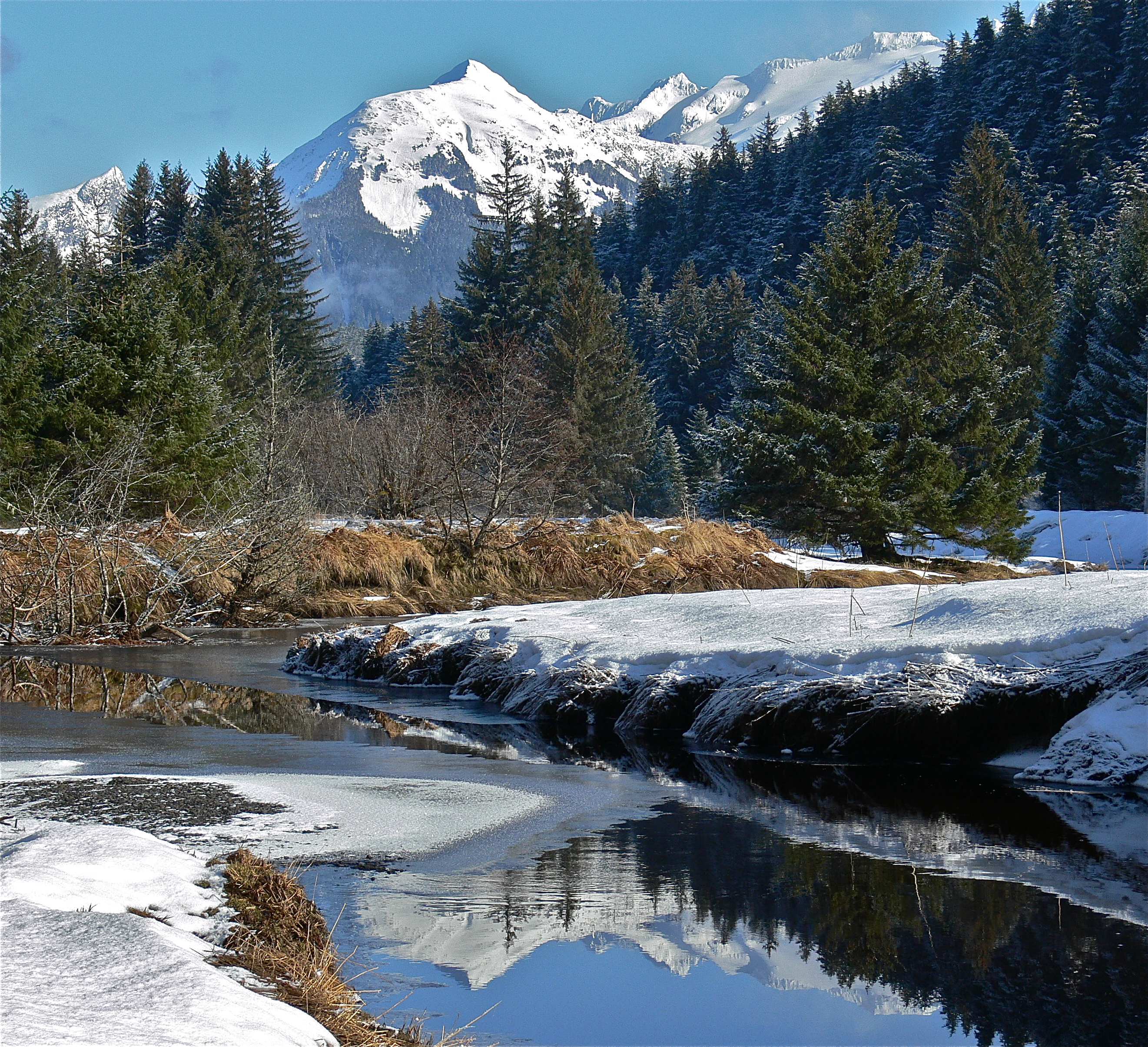
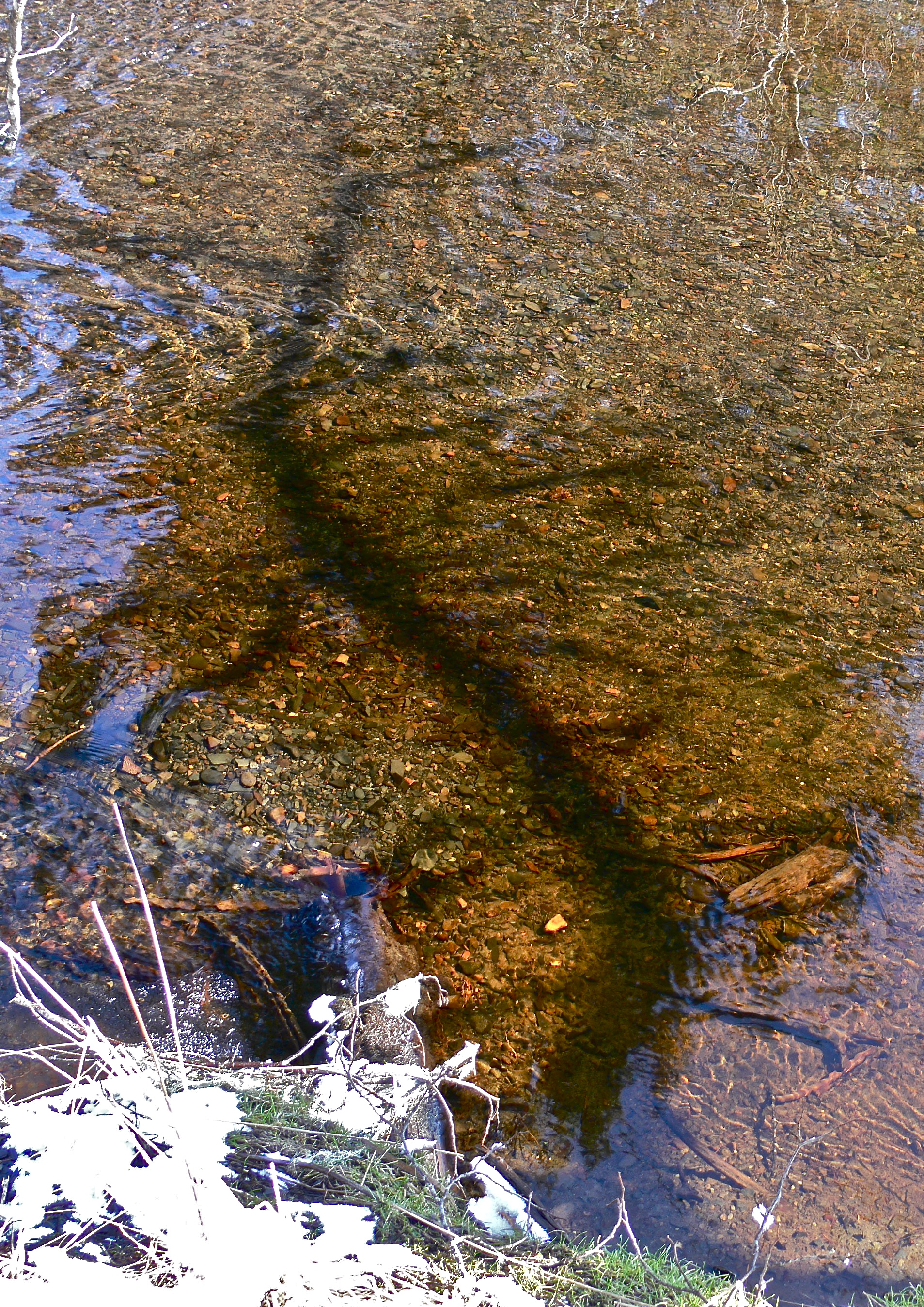
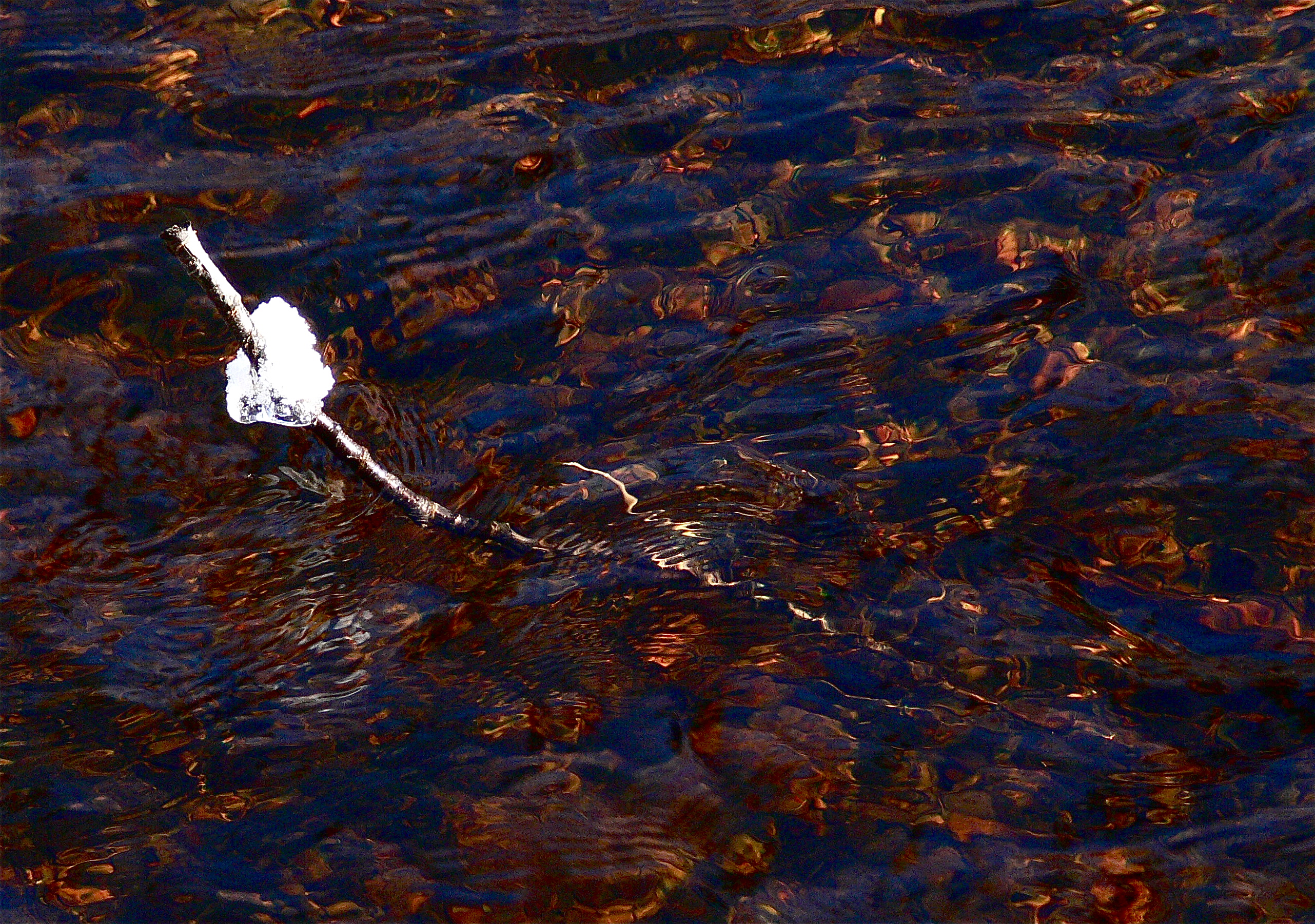
I continue taking pictures to catch the perfect moment in time. Most will die under the delete key but several taken at the end of hike catch some beauty. They show Lower Peterson Creek winding through a small grass land.  One photograph captures creek water reflecting Lion Mountain as it dominates the horizon.  Another features the reflection of bare alders. The last shows a ball of ice, still dusted with new snow that clings to a stick rising out of the moving stream. We watch its snow cover  shrink under the sun while being rocked by the current. I turn away before it can stand nude above the water where steelhead and salmon will soon travel.

Second Growth

Aki and I spend an hour walking this familiar trail from forest to the beach where a minus 2.6 foot low tide exposes a great expanse of sand and rock. Coming on a sunday morning, the event draws many people here for the chance to walk a now expose ribbon of rock to Shaman Island. Feeling anti social Aki and I head for a place that seldom receives visitors.

The early morning rain had given way to snow. Fat flakes, some an inch across, fall straight to the ground to whiten the forest through brakes in its canopy. I waste space on my camera’s memory card trying to capture their journey. In this low light they show as white streaks on the resulting photographs. 

We enter in area of second growth timber. Many years ago man or nature removed at once the large spruce and hemlocks that once grew here. This opened the way for their seedlings to take root. Brother shouldered out brother in the following fight for sunlight. Those trees able to form part of the new canopy lived. The others withered in the dark. We find these second growth survivors twisted and pale. Nothing grows in the shadow to feed the deer.

In minutes we pass through the mutant forest to a small grove of old growth hemlock trees. Here berry brush thrives along with other understory plants. Here in the past we have found many animal tracks. It will take at least 50 years for the second growth to reach this level of peace and abundance. 

Looking Down for Beauty

Today we look down for beauty but up for sound. Wet snow the consistency of stiff oatmeal covers the moraine trail. Snow shoeing over it tires. Even Aki plods behind in my tracks. What moisture falling from the sky arrives as rain. From their tracks in the snow the beavers, with their nifty waterproof coats, are not bothered by the slop.

After crossing a flooded portion of the trail we head over to the big beaver damn and find a hole in the lake ice near it. No tracks show in the surrounding snow, just a C shaped gap in the low white wall bordering the hole. River otters? There are juvenile king salmon wintering in the lake. 

Aki jumps a bit when we hear an avalanche rumbling down Thunder Mountain. This is not the roar made by Mt. Juneau avalanches but a manufacturer sound like that used to mimic thunder during a stage production of the Tempest. No Prospero here.

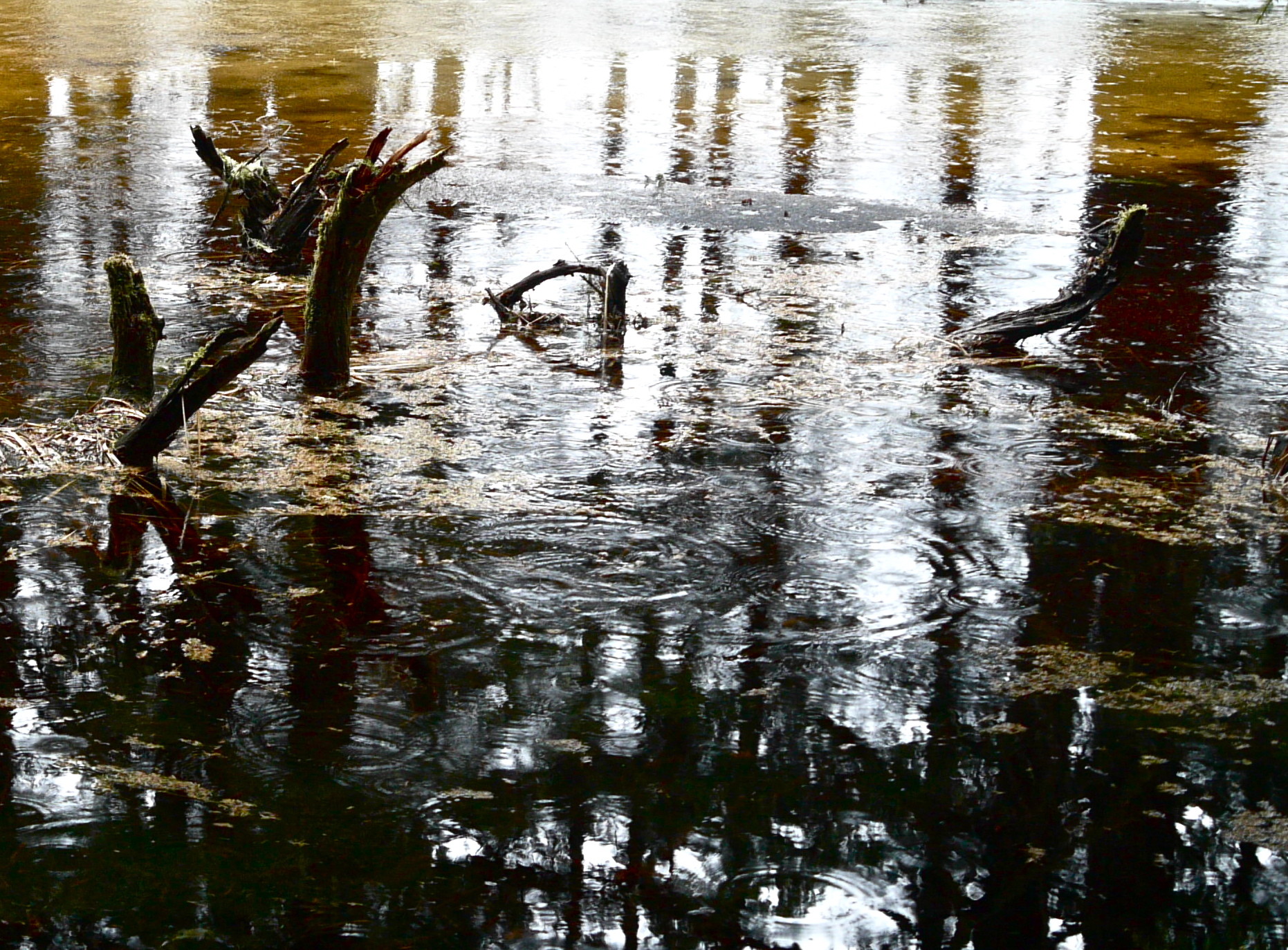
The trail deteriorates when we leave the damn. In places my snowshoes sink into water under the snow that soaks my boots. Aki manages to prance around this wet zones. The warm weather has flooded trail side watercourses which reflect spectral shapes of bare alder branches. Dripping water shatters these deep mirrors with rings of concentric waves. On a day stripped bare of sun and most color the effect is stunning.

Retreat from the Wetlands

Fresh snow this morning followed by sunshine drives us to the open spaces of the wetlands. Three or four inches of new snow almost covers everything, Enough straw colored grass and mud show through to provide an interesting contrast. A few weeks ago we tried to reach Gasteneau Channel from here only to be blocked by Duck Creek. Today I hope to cross the creek where it is still narrow.

Nothing has passed over this land since the last snow though we do spot the gull tracks in a tiny mud bar. Brightly colored plastic objects — buckets and bottles mostly, poke out from under the snow. I count myself lucky that I haven’t seen such flotsam on other parts of the wetlands.

The weather changes as we reach Duck Creek, which unfortunately is still impassible without rubber boots. An east wind rises, pushing clouds down channel to close over the diminishing blue sky. Aki takes shelter in my lee but I am exposed on this flat white plane. Ducks complain on the far side of the creek then take flight for more remote country. In minutes we received a replacement flight of Canada Geese fleeing from the direction that drew the ducks. Some form the traditional “V” shape while the rest fly as an organized gang.

On our retreat to the car we cross through a large patch of Fireweed plants that presented a brilliant magenta show late last summer. The dead stalks bent almost to the snowy ground by weather  offer a sad beauty. As a cold wind rises and snow begins to fall I join the stalks, as pathetic as the remnants of  Napoleon’s army retreating from Moscow, shouldering into the wind and make for the comfort of the car.