Category Archives: Canada Geese

Unencumbered

1

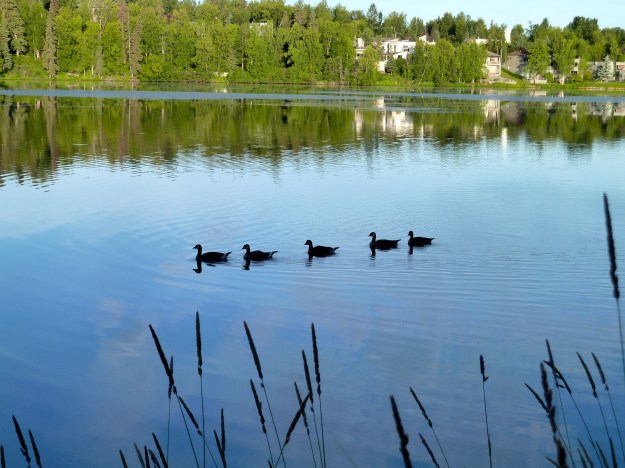
I’m back in Anchorage for writer’s school. While I am gone Aki is living large with friends at their waterside property. Last summer I saw many moose on my morning bike rides but this week I’ve only spotted homeless folks and grim faced commuters on the Chester Creek bike path. Until reaching Winchester Lagoon, I ride through light filtered by birch leaves. But the fireweed-covered islands in the lagoon almost glow thanks to the unencumbered early morning sun. The resident Canada geese have already formed lines of battle, each five birds long. When I stop riding, they move slowly past me, just a few yards from the bike path.
2

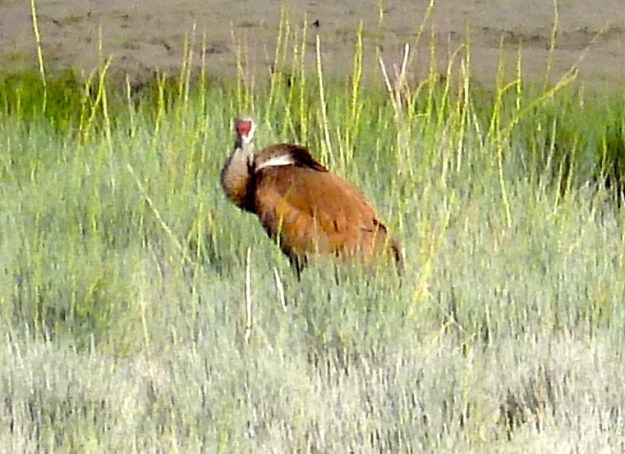
I’m awed but also a little sad to see this calm reaction of once wild birds to my presence. Swerving to avoid goose scat, I pedal toward the coastal trail where two days before I heard and saw a pair of sandhill cranes. They have always been an icon of wildness since I first watched they fly low over tundra near Bethel during their Spring migration. In the thirty something years since that day, I always savor the sound of their ratcheting cry.

3

I won’t see the sandhills on this ride but a flock of yellow legs mitigates the loss. They explode from the beach when the engineer of a Fairbanks-bound train releases a mournful warning whistle. I am near a woman with face hidden by a high-end DSLR camera. The shorebirds circle around us, instantly change directions and fly another circle in the opposite direction. Lowering her camera she gives me a stunned look. “Did you get a good shot of the birds?” I ask. “I don’t know,” is her reply. Unencumbered by camera, I cached a memory of the flight, how they instantly transformed from creatures of shadow into those of light when they snapped off their coordinated turns.

Out of the Wild

3

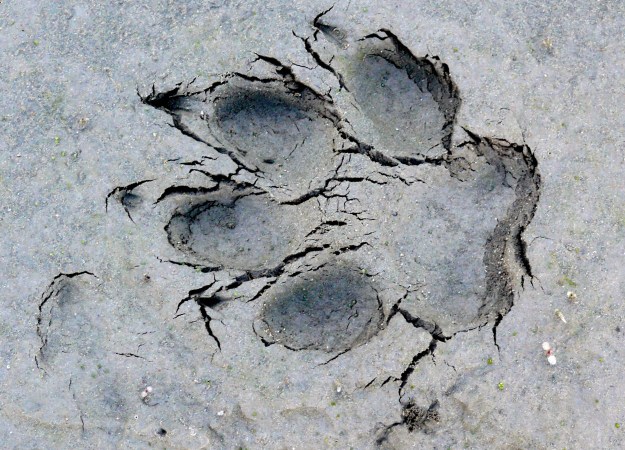
Last week, while Aki chased her Frisbee over Juneau trails, I explored lands drained by the Innoko River area in Western Alaska. Some of the area I passed through has been designated wilderness. But we saw as many or even more animals in the non-wilderness areas. The flying predators we spotted—eagles, peregrine falcons, owls (great grey and great horned), and even a raven—seemed more interested in keeping near their food source than fleeing us. On each beach we sampled we added our boot tracks to those of geese, wolves, moose, beaver, porcupine, and grizzly bears. Twice we watched moose swim the width of the Innoko River.

2

Today, now back with Aki in Juneau, I spent part of this Fourth of July picking blue berries near the Mendenhall River. While we walked on trails beaten through the patch by black bears, none appeared. Even one did appear it would not make the moraine a wild place, not when rubber rafts full of cruise ship customers constantly float past the berry patch.

1

Hungry Raptors

4

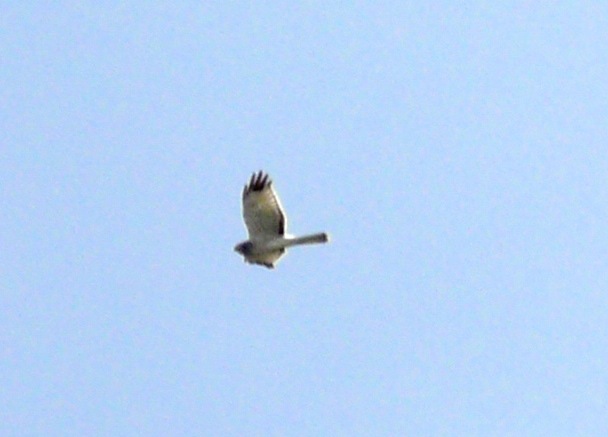
For the second time a northern harrier flew close over my head after crossing the Eagle River. The first time, when the river was full of spawned out silver salmon, the sleekly built owl flew toward me, allowing plenty of opportunity to watch its approach. Today, I caught it out of the corner of my eye and just managed to take one photograph as it climbed to hunting height. Both times I was amazed at the far-forward position of the bird’s wing.

1

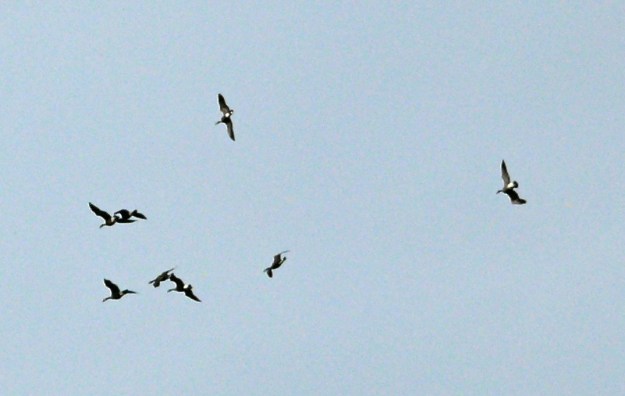
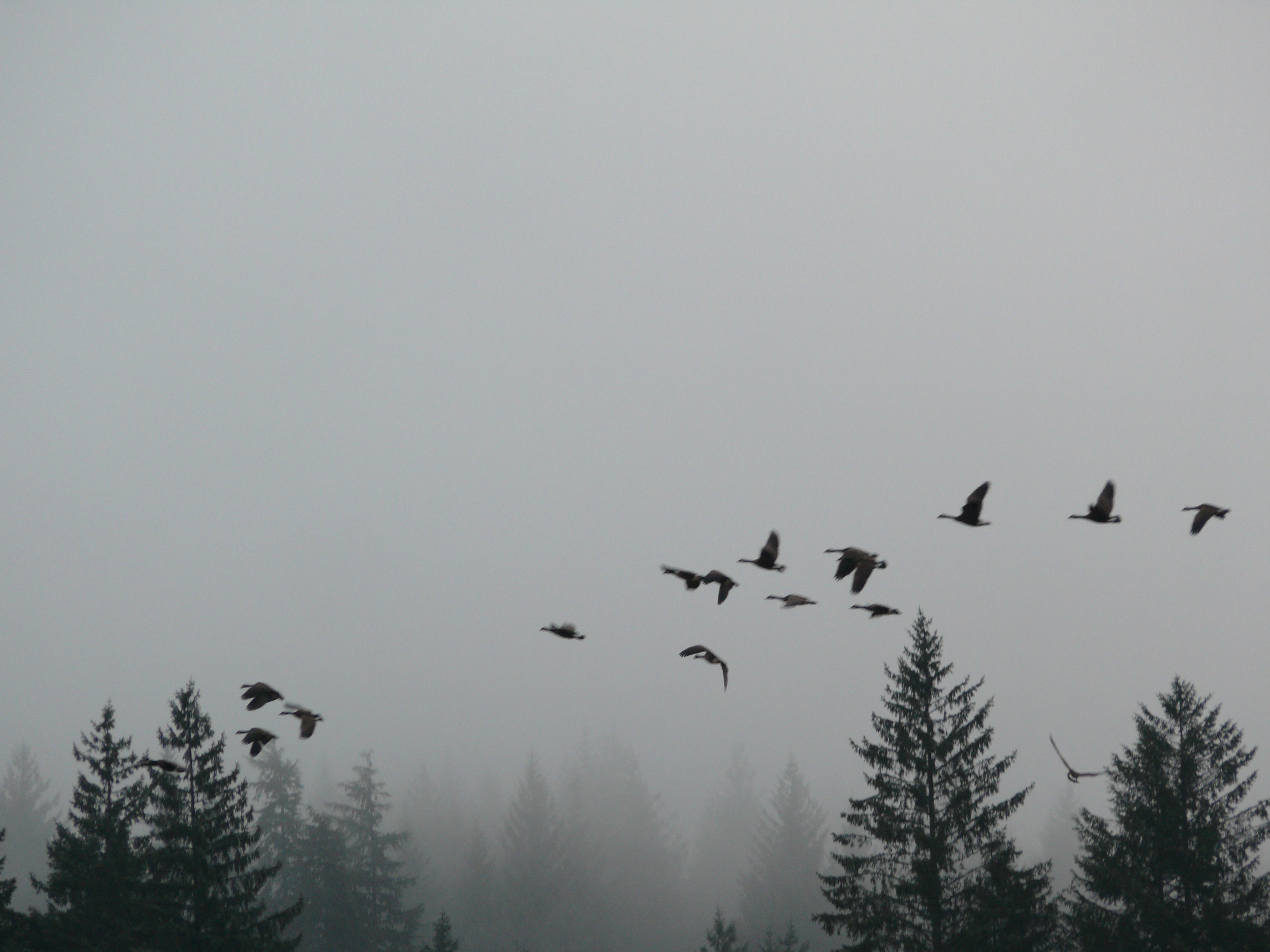
Minutes after the harrier drifted behind a big cottonwood tree, a tight formation of Canada geese flew over my little dog and I. In an explosion of noise the geese broke formation. Seconds later a bald eagle climbed back up to its hunting height.

3

I’ve seen peregrine falcons knock pigeons out of the sky over Downtown Juneau but never even heard of an eagle hunting like that. In spite of their size, the raptors seem most comfortable using their fierce beak and talons to tear meat from carcasses. They aren’t brave. I once saw a tiny arctic tern chase an eagle away from the tern’s nesting colony by pulling at its tail feathers. But, it is famine time for the big birds, when they have to get creative to eat. As I write this, an eagle flies circles over Chicken Ridge and I wonder if tonight, some neighbor will be missing their cat.

2

Out the Road

4

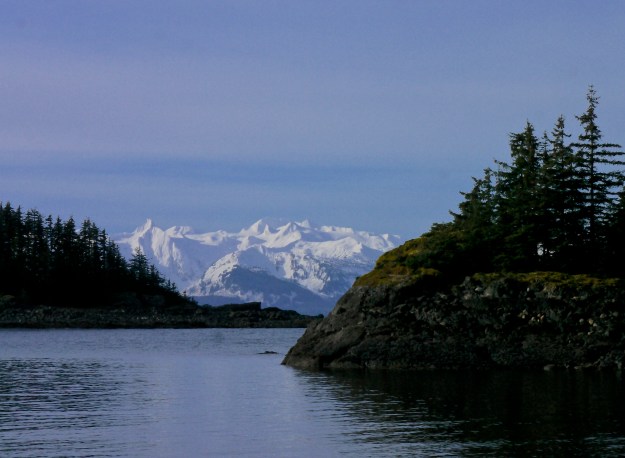
Aki and I head out the road. That’ local lingo for driving forty-miles to the north end of the Juneau road system. The little dog is getting frustrated because I stop often to take pictures of the spruce-green Lynn Canal islands back-dropped by the white frosted Chilkat Mountains. She starts squealing when I stop to photograph Canada geese near Eagle River. Because of the birds, Aki has to stay in the car.

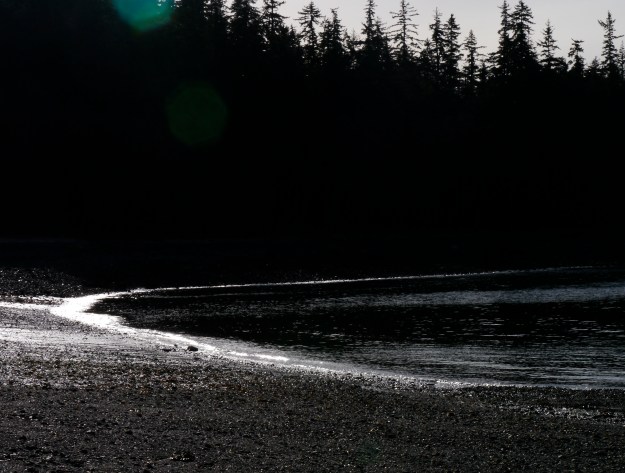
3When we finally reach the Camping Cove trailhead, the poodle-mix flies out of the car. I follow her down a newly graveled trail that winds to the beach through a mature alder grove. It’s the perfect day for this walk, which takes us along beaches and over the headlands that connect them. Perfect because last night’s cold temperatures have firmed up the boggy portions of the trail. Excellent because full sun floods the beaches with light, making the surf line burn with a silver light.
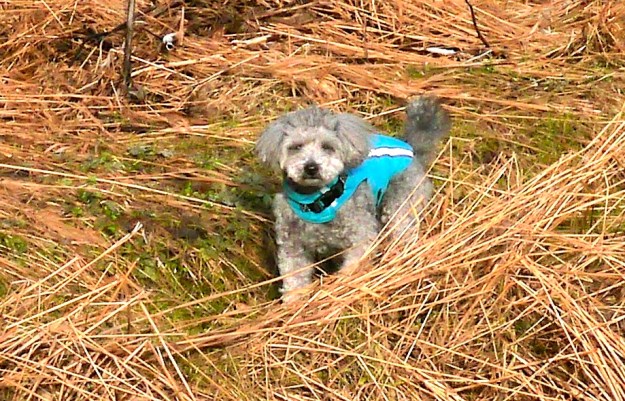
1It’s not all sweetness and light. The little dog disappears and then returns with a “he will never know” look on her face. In the car I smell the evidence. She rolled in something long dead. I see bath time in her near future.
2

Swan Among the Geese

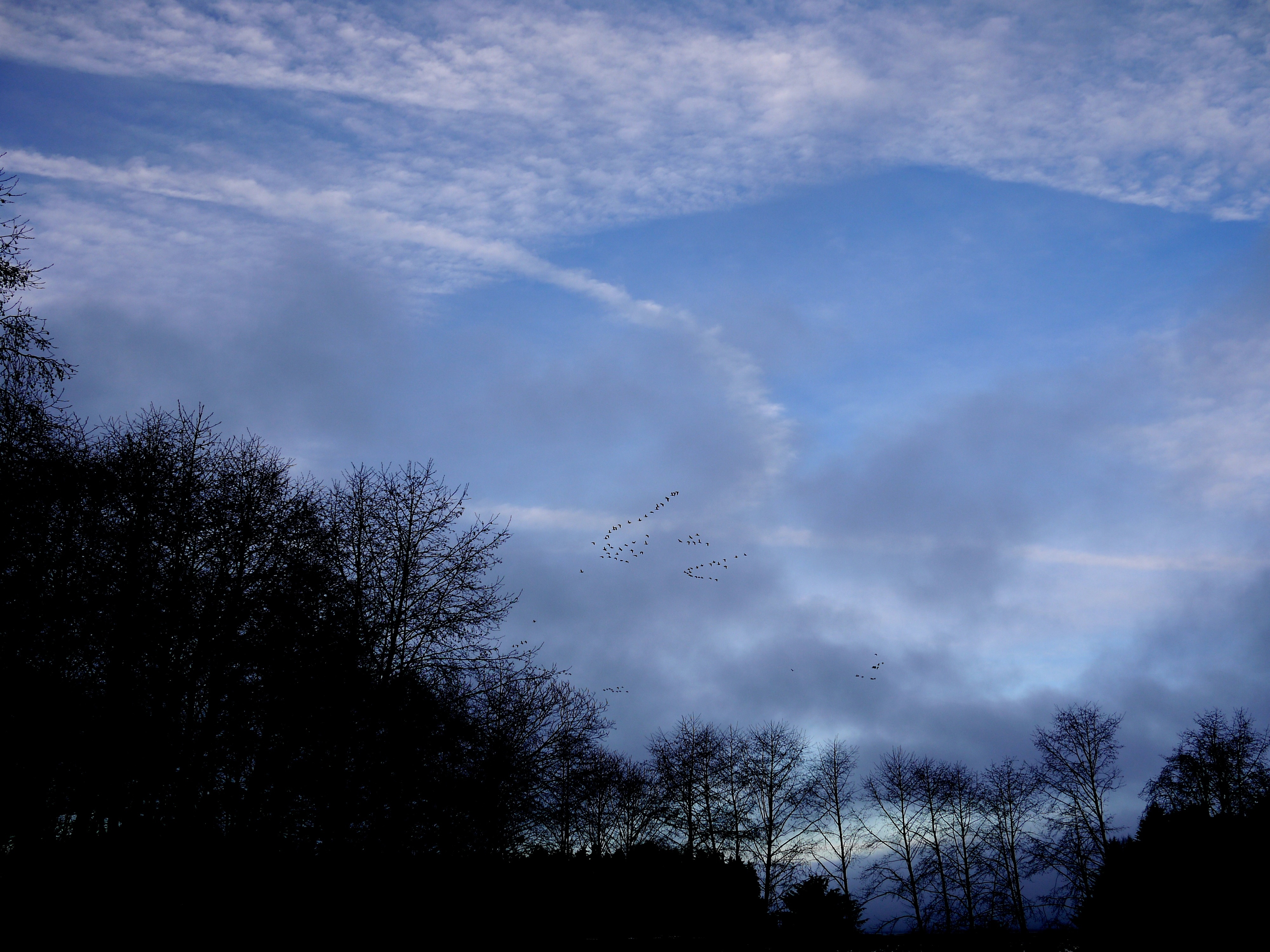
footsteps.jpgThis morning, Aki and her two humans cruised the semi-frozen wetlands. At the grassland’s edge, the ebbing tide revealed great expanses of sand over which the poodle-mix chased her Frisbee. A great gathering of Canada geese cackled together near Sunny Point, a name made ironic by the flat gray light and clouds that distributed snow pellets on Aki’s gray curls. Eagles, chased from the dump by cracker shells flew over the geese, set some to flight. Most of the Canadians stayed on the ground as did a single swan, its white-feathered body drawing my attention like a candle flame would on a dark night. The geese are local boys, commonly seen on this broad stretch of grassland. But a swan alone in mid-winter is a weather omen, sign of climate change, or just a confused bird.
swan.jpg

Aki and the Otter

geeseWe start every walk with the pooping ceremony. Aki circles one way and then the other to prepare the snow and loosen her bowels. If a squirrel doesn’t dash through her peripheral vision or a raven doesn’t chant, she does her job. Before the drop, I usually turn away and prepare the plastic bag for capture of her product. This morning, distracted by hundreds of Canada geese fleeing from something on the wetlands, I miss the ceremony. I will also miss the geese. Even though we will hear their cackling complaints during the entire walk on the Fish Creek delta, we won’t see the big fat birds. After the geese flyby, I search the snow for Aki’s scat and end up bagging several piles of poo with the hope that the little dog produced at least one of them.

fog Fog clogs the air above Gastineau Channel but hasn’t reached delta wetlands. That changes when we reach the creek’s mouth. I spot what looks like a shack walking upstream—a bird hunter packing out his decoys. Did he chase off the geese? Downstream, fog block our view of the glacier. The tide flooding onto the wetlands has driven the gray blanket over Smuggler’s Cove and onto the mountainsides, shrinking our world.

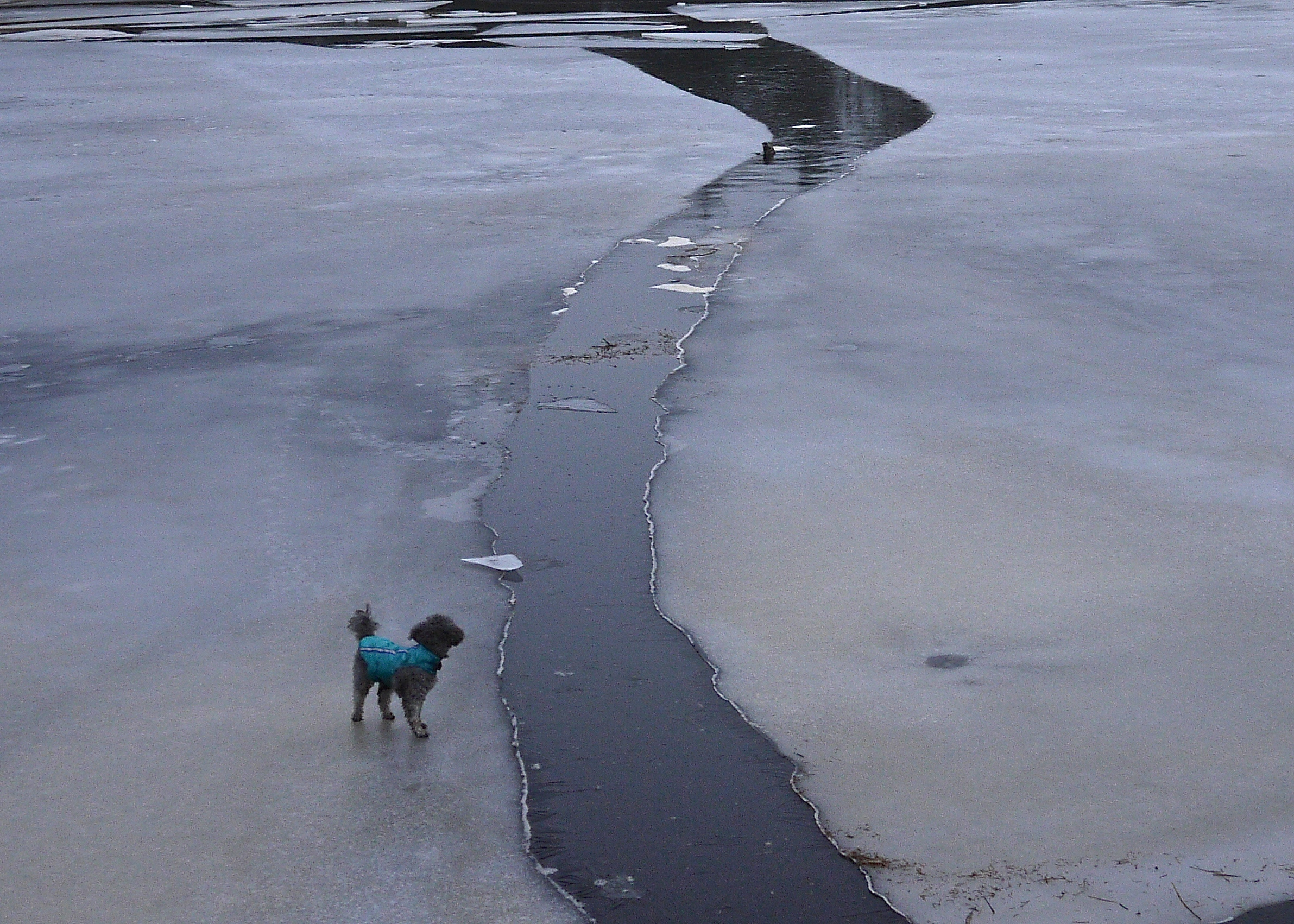
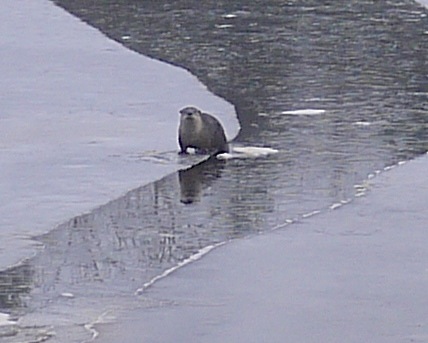
aki and otter When I stop to photograph a lead in the pond ice Aki slips onto the ice, now only 2 inches thick. I spot her nosing a recently disturbed patch of open water in the lead. The little dog scrambles on shore when I call her. Fifty feet away a river otter eye hops and then slides out of the water by extending its long neck over the ice. When half of his elongated body is on the ice the other half pops out of the water. The wild animal makes a chitterling call and Aki returns to the ice. I call her back but when she starts to respond, the otter chits. I call, the otter chits again and again until the little poodle mix finally slinks up to me, perhaps shocked at the language I used to demand her return. The otter, tail in the water, four paws on the ice, watches her playmate/tasty meal walk away.otter

Family Outings


P1010662It may be past Mid-Summer in Alaska’s biggest town, but along Anchorage’s Bike paths I see evidence of spring. Flowers bloom. Last night a moose calf and her twin long-legged babies blocked the Chester Creek path. In a corny, but beautiful move, a shaft of late evening sun brought all the gold out in the twins’ wet fur as they followed their mom up the trail. The moose trapped a young jogger against bordering birch trees. Although she could easily have been trampled by the skittish mother, the jogger, dressed in shorts and a tie-dye tee shirt, held her ground until the trio broke into the woods. We exchanged survivor smiles after the moose left the trail.

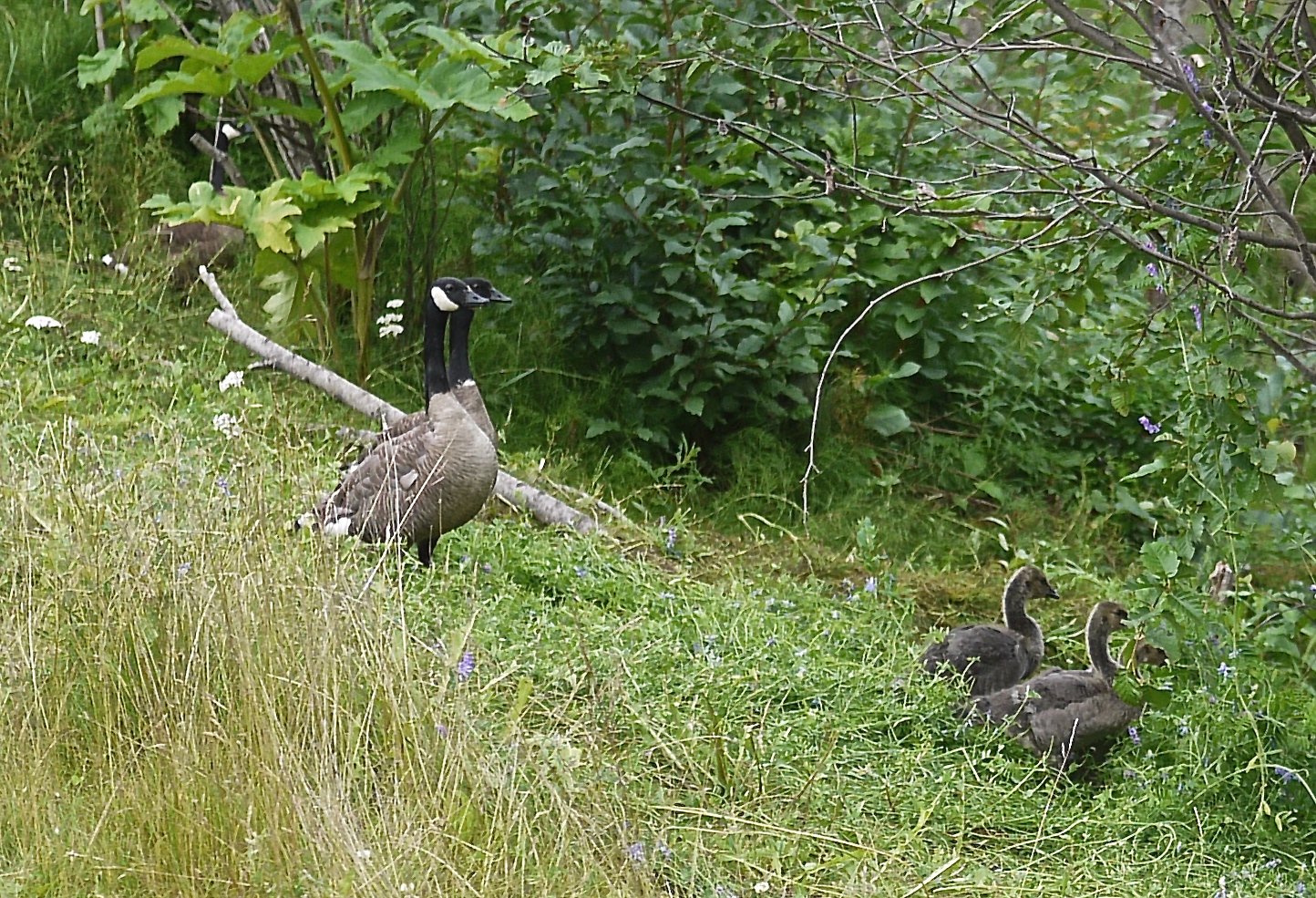
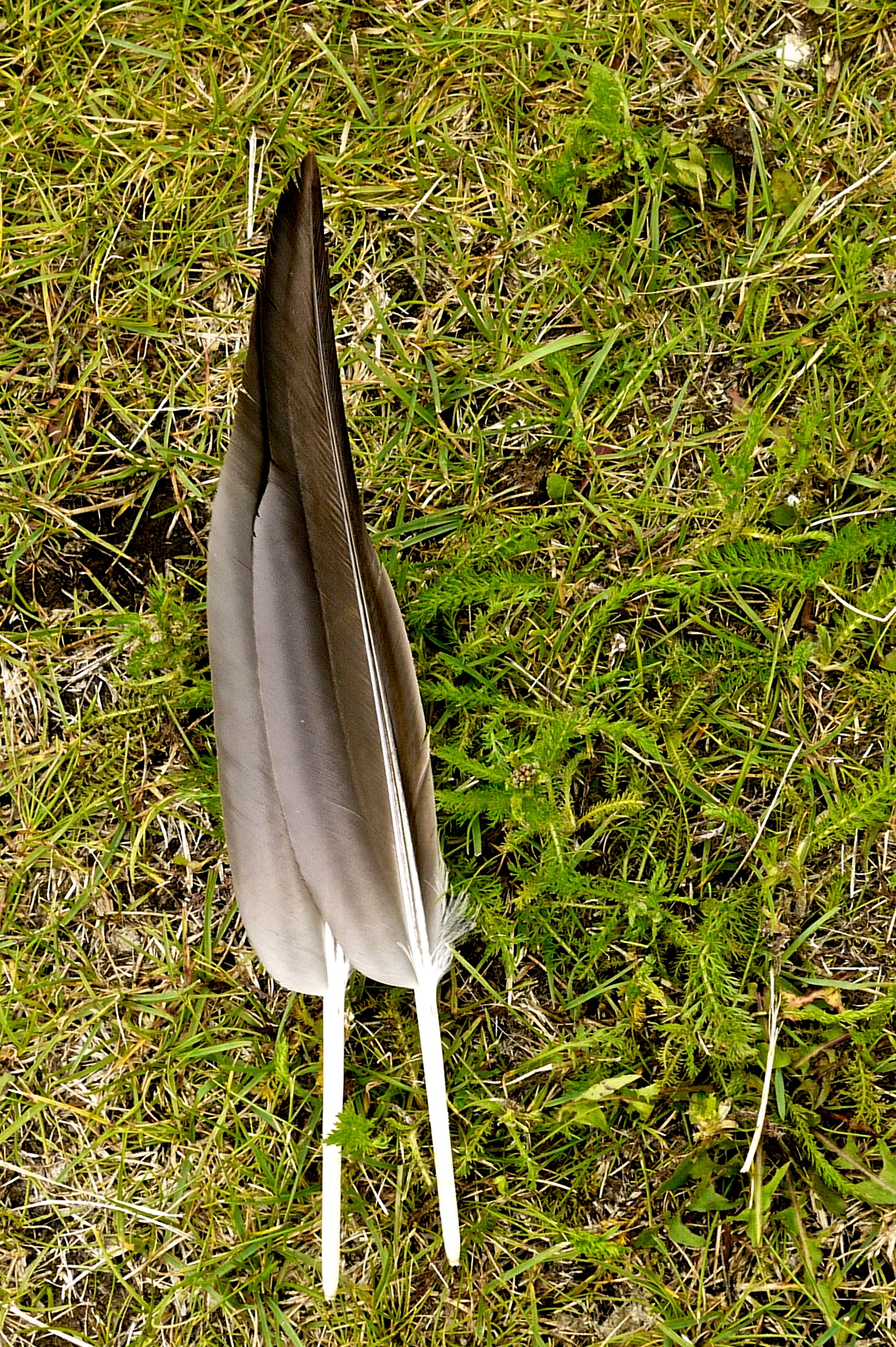
P1010664This morning it was birds—a family of Canada geese, two adults and three kids, who enjoyed a quiet meal along Campbell Creek. I wasn’t surprised. Canada geese are as common as Eton Swans in Anchorage. I dodged piles of their scat while biking to the geese picnic spot from the university. I also found two perfect geese wing feathers lying on the grass like careless lovers; each a weightless miracle that once helped to lift an adult bird over Cook Inlet. I took them, officially to save them from the lawn mover that would have chopped them in pieces if I didn’t find them a safe home. Tonight they rest on the desk in my otherwise unadorned dorm room. I can feel the tension of the tightly packed segments along each white, hollow shaft; count their many shades of brown.P1010657

After the geese, I pedaled to Campbell Lake and watched a reflection of a single gull under the clouded sun and wondered how it exceeds the beauty of the things that cast it.

Beautiful in Brown

L1220541I can’t find a speck of green on the wetlands this morning except for the yellow-green paint on the channel navigational aids. The grass lays dead on mud and weathered drift logs. There are crows, black silhouettes that spread out like new owners of a run down amusement park.

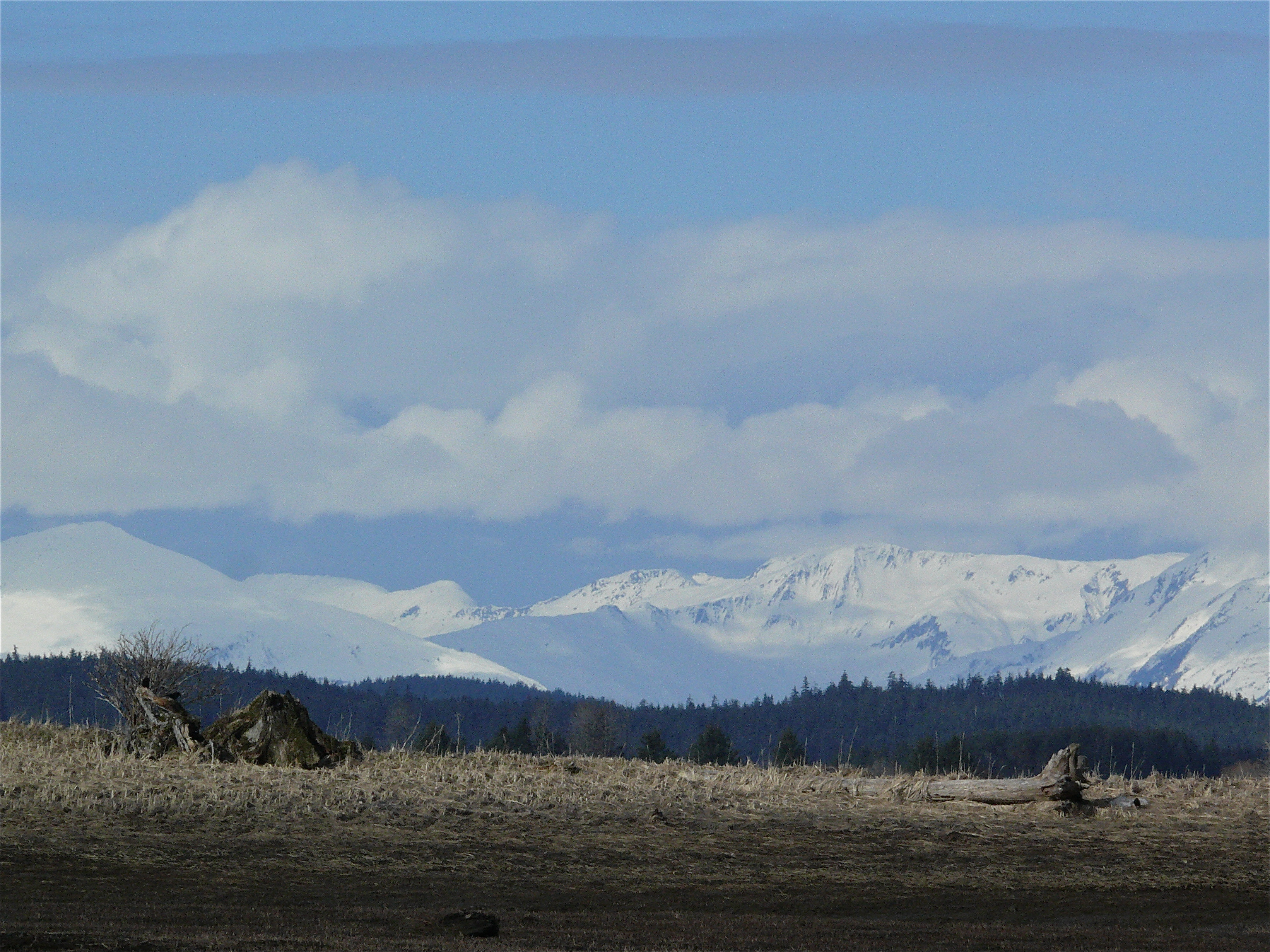
L1220577This is a day to look up, not down, as the morning sun milks the white beauty out of surrounding mountains and glaciers. We hear a beautiful song and find it comes from a song sparrow—a plump little brown bird. Another sings the refrain from 10 feet away. Another brown bird—this time a Canada goose, lifts off the wetlands in a noisy flight.L1220533

The muted palette suits Aki and I this morning and I find many reasons to click the camera shutter. It may bore the one bald eagle we spot. He sits atop a screaming red navigation aid and calls to the sun for a spotlight, the ham.L1220556

Winter’s Last Stand

OLYMPUS DIGITAL CAMERAWe drove almost 30 miles north of Juneau to find skiable snow. There is still lots of in the forests and on the meadows drained by Eagle River.  Under a light rain we started through the woods, alone. Aki found no dogs or other people to play with, no squirrel to chase. I found no tracks in the snow except for those left by dogs and their people on the weekend.

OLYMPUS DIGITAL CAMERAOn this northern battleground, the winter of 2014 made its last play—dumping snow during the weekend storm that hammered Juneau town with rain. Lovely but futile, like the Polish calvary charge at the start of World War II, the new snow won’t stop Spring’s blitzkrieg. Clumps of grass already push up through the meadow trail, and rain melts down the forest’s cover. Aki and I climb a low hill to watch the river freeing itself from ice, then count the puzzle pieces of ice stranded by the tide on the meadow. Two Canada geese make enough noise for a regiment when flying down meadow. Soon the river will fill with swans, geese, and other migratory waterfowl refueling on their northern migration, as spring prepares the ground for summer.

As Common as Geese

L1220080I’d be here on the wetlands photographing mountain obscuring fog obscuring and tide flattened grass if not for the geese. Minutes from the car I spot a good size gang of Canadians feeding just across a small stream from us. Aki and I respect their space, keeping on our side of the stream, far enough away to avoid flushing them. In the process we inconvenience a pair of ravens who make way for us by gliding with their feathered feet down, twenty feet from the trail. L1220008

The wetlands Canada geese, like many of their cousins in the rest of America, no longer migrate.  They have made themselves common by hanging around, filling the air with off-key singing, L1220084and covering the ground with their ropey scat. I still enjoy seeing their white cheeked heads on top of long black necks.  While admiring this local gang, another flight of Canadians, maybe 20, lifts off from Douglas Island and flies towards the locals and then makes a series of wide circles around Aki. I could be holding a tether to the lead goose. On their third flight around us I get it. Aki and I are standing on their intended landing field. Before we can move further out into the wetlands, they give up and fly to a spot on the other side of the already feeding geese. L1220135