Category Archives: Black bears

Another Moraine Bear


1

Aki and I are back on the glacial moraine. It’s early in the day—too early for wind to raise a ruffle on the Dredge Lakes. It’s also too early for other dog walkers to appear. On our last visit my little dog discouraged a black bear that must have been attracted by the herring scent floating off my coat. But since then I’ve washed the coat and we are on a different section of the moraine.
2

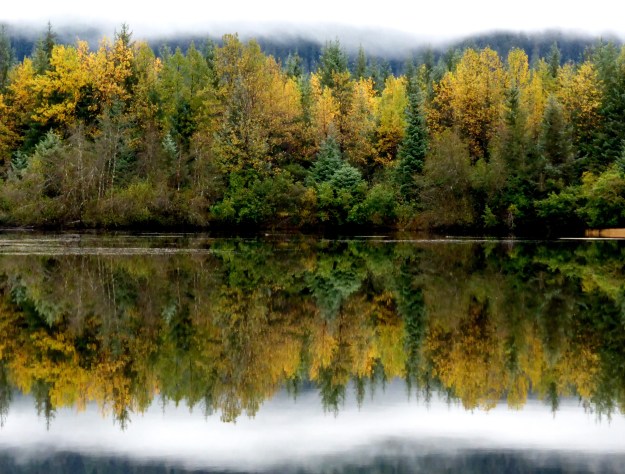
We drop off a raised trail to where we have an unobstructed view of Moose Lake. A white strip of fog separates lakeside cottonwoods in full fall yellow from a spruce-green mountainside. Reflected in the lake, the fog underlines the cottonwood trees. I take several photos of the scene and look at them on the camera view screen as we return to the trail. “This is why we are here, little dog,” I tell Aki and then say, “Uh-oh.” Aki, who apparently knows the meaning of “Uh-oh,” goes on alert and looks down the trail where a 100-pound-plus-pound black bear has just stopped walking toward us. With fluffy, shinny back fur and round belly, he has the just-moussed look of a bear full of fish fat. When Aki growls, it slowly turns around and trots away from us down the trail. “That’s it, little dog, I tell the ten-pound poodle mix, we are not coming back to the moraine until hibernation time.”

3

A Dangerous Coat

1

Aki and I head out to the moraines, trying to squeeze in a visit before a promised Pacific storm slams us with high wind and heavy rain. Already the leaves of our cottonwoods weaken from green to yellow to brown. This afternoon’s storm could strip some of the moraine’s trees bare.

On the drive out I think briefly about bears. A sow and cubs have been feeding on salmon spawning near the glacier. We should be ok, a half-a-mile away on the moraine trail. Even if we come near bears, they shouldn’t be interested in a little dog and her scruffy master. But, I haven’t factored in my fishy coat.

3

Without thinking about anything other than convenience as we left the house, I pulled on the coat I used on yesterday’s fishing trip. A person with a sensitive nose might detect the faint odor of herring rising off its sleeves. But to a bear in autumn, the jacket must smell like an unguarded fish market.

4

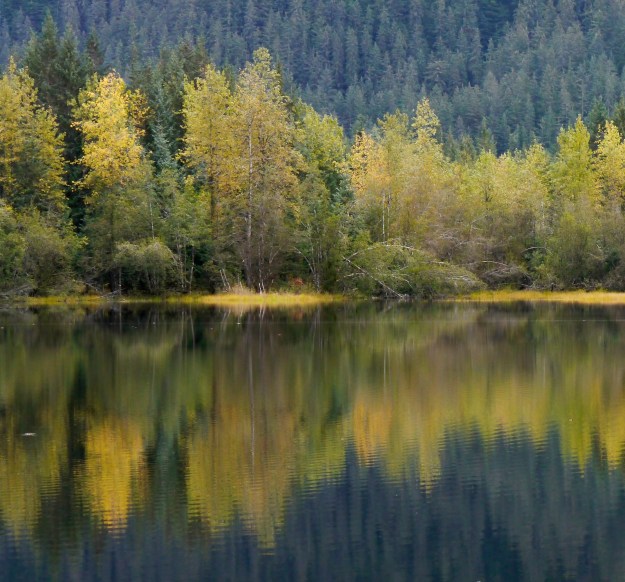
Ten minutes into the hike, Aki growls and makes a faint into the woods. The branch of a trailside alder quivers above her head. Suspecting she is flushing a bird, I call her back. We walk on, enjoying reflections of yellowing leaves of willows and cottonwoods in the moraine’s pocket lakes. Far from the quivering branch, Aki growls again and breaks into the woods. Another branch quivers. After I call her back, a bear lets out three huffs and climbs ten feet up a spruce tree.

2

We divert into the troll woods and swing a wide arc around the bear visitation spots. At home, I drop the herring coat into the washer.

Eagle River

4

Today, before a Pacific storm can hammer Juneau with high wind and up to eight inches of rain, I take the little poodle mix out to one of our favorite trails. It runs through the cottonwoods and spruce that border Eagle River and then swings north toward an open meadow. The untended-outhouse smell of dead salmon dominates the woods. Through a screen of alders I see gulls and ravens feeding on salmon flesh. They don’t worry me but a crashing sound that silences the bickering gulls—that cause concern. It could only be a bear. I start singing the Aki song to keep the little dog focused on me and to warn any bears of our presence. If we don’t startle one or come between it and it’s young, we should be ok.

1

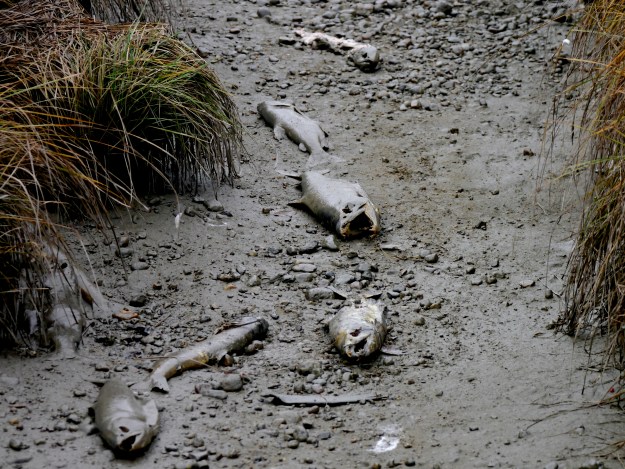
We reach the meadow without seeing any bears and cross it to reach the Glacier Highway. From there it is a short walk to a riverside meadow that is fertilized each year with salmon flesh. The big fish swim up small tidal streams during a flood tide and die after being stranded by the ebb. Here too, is the smell of death.

3

On an Eagle River gravel bar, an immature bald eagle feeds on a salmon carcass. After ripping off a portable piece the bird flies across the river to finish its meal on a driftwood stump. This is the first of many eagles we see feeding or roosting along the river. After passing one just before reaching the parking lot I think of the Haines, Alaska bald eagle confab that happens at the beginning of winter. Thousands of bald eagles gather there to feast on the participants in a late salmon run. Hundreds of people shiver in the cold to watch eagles bicker with each other over dying salmon flesh. As the first drops of promised rain fall, I think how much better we have it today. We only have to put up with a little rain and the constant smell of death.

2

Fireweed

1

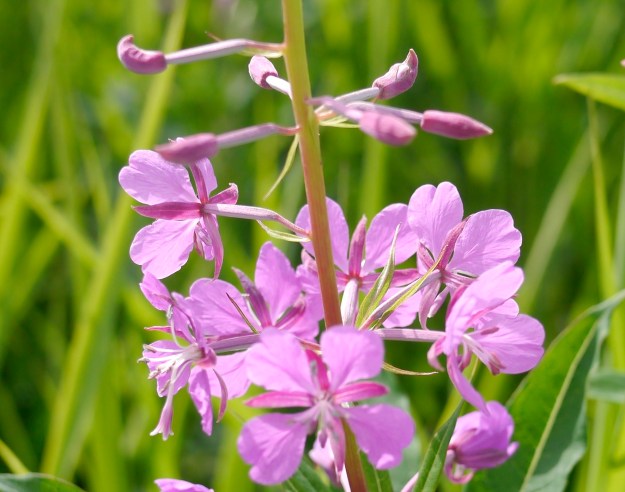
“Just to let you know. There’s a bear hanging around down there,” the nice sounding dog walker in expensive casuals says while pointing at a field of flowering fireweed that seems to stretch to the Mendenhall Glacier. I smile back, thank her, and walk onto the meadow. A bear is never far from you anywhere in Juneau this time of year.

2

An electric-orange plastic fence blocks the trail but the note stuck to it warns of erosion, not bears. Last week the ice dam that backed up water on the glacier at suicide basin broke, flooding the lake and raising the river to a record flood stage. Charged with fast water, the river undercut the trail, making it unsafe for travel. The little dog and I move onto a gravel “work around” trail and spot matted vegetation where a bear had slept and many bear sized trails through the five foot tall fireweed plants. Panting from the heat, Aki collapses in a patch of shade near some fireweed stalks and pants. I think of the cool forest the trail would take us through if we preserve, if we risk the bear. It’s not worth it. We turn back to the trailhead, arriving as a family with small children, all on bicycles, pedals to their car.

3

Out of the Wild

3

Last week, while Aki chased her Frisbee over Juneau trails, I explored lands drained by the Innoko River area in Western Alaska. Some of the area I passed through has been designated wilderness. But we saw as many or even more animals in the non-wilderness areas. The flying predators we spotted—eagles, peregrine falcons, owls (great grey and great horned), and even a raven—seemed more interested in keeping near their food source than fleeing us. On each beach we sampled we added our boot tracks to those of geese, wolves, moose, beaver, porcupine, and grizzly bears. Twice we watched moose swim the width of the Innoko River.

2

Today, now back with Aki in Juneau, I spent part of this Fourth of July picking blue berries near the Mendenhall River. While we walked on trails beaten through the patch by black bears, none appeared. Even one did appear it would not make the moraine a wild place, not when rubber rafts full of cruise ship customers constantly float past the berry patch.

1

People of the Salmon

3

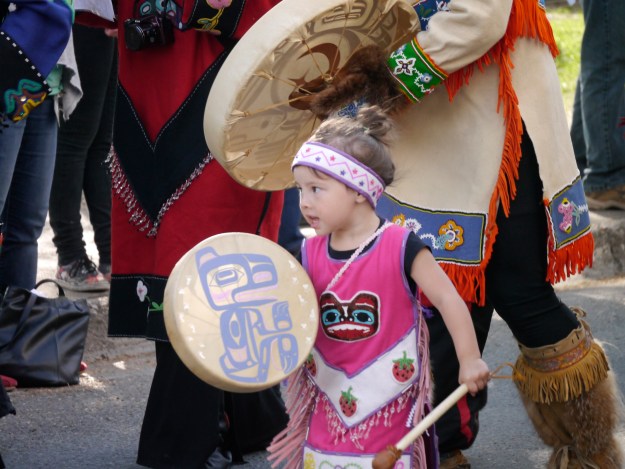
I could be in downtown, watching members of the three Tribal nations of Southeast Alaska—Tlingit, Haida, and Tsimshian—sing, dance, and drum down Egan to Centennial Hall. But Aki and I are walking a trail through the gravelly ground left behind by a retreating glacier. The parade is the first major event of Celebration 2016 I’ve missed since Wednesday evening’s opening parade.

4

We can’t hear dance drums echoing off the moraine’s pocket lakes and heavy cloud cover has grounded the tourist helicopters so there’s silence for reflection. I doubt that Aki reflects on anything more complex than animal scents and the pile of beaver scat that she rolls in while I enjoy the reverse image of tree-covered mountain flanks half-hidden by cloud.

1

Raven’s song bounces through my brain—the one performed as an encore last night by the Git-Hoan dancers. The name means, “People of the Salmon” in Tsimshian. It’s an inclusive term because of the importance of salmon to everyone in the Alaskan rainforest, especially the Native residents. Earlier in the perform Git-Hoan released three man-ravens into the crowd, dancers with large wooden raven mask with articulated jaws. Knowing the ways of the wickedly smart birds, the people of the salmon saw the dancers transform into ravens.

1


There are no ravens on the moraine today. Only sparrows and one, apparently grumpy robin appear. In a month or two, silver salmon will move through the waters we now walk along. Eagles and ravens will perch above the trail, waiting for their opportunity to feed. The Native people now in Juneau attending Celebration will be on their own salmon streams. Here, trout and char will stalk the spawning beds. The cruise ship tourists will be home in their suburbs. In the early mornings of spawning days, black bears will slap the silvers out of the water. Aki and I will be home on Chicken Ridge, eating fresh salmon,

Bear Signs

1

As if to encourage thoughts of our well-loved dead, clouds have jammed themselves tight against the channel-side mountains to diminish our view-shed. The same mass of grey now drops heavy rain onto picnic tables and popular beaches. The clouds haven’t spared Salmon Creek Trail where Aki, my now-soaked poodle-mix trots up a steep slope. Her enthusiasm wanes after she sniffs the severed trunk of a cow parsnip plant. She reacts as if the trunk were a half eaten salmon lying next to a spawning stream in August.

3

A bear chewed off the root structure and upper portion of the parsnip remnant before tossing it on the path. Other bear discards form a wavy line on the trail ahead, like shoes and bits of clothes dropped from front door to bed by a drunk. The last segment of torn leaf lies next to a thick patch of cow parsnip plants with swollen flower pods. I imagine the bear, 100 pounds, black fur shinny with rain, waddling down the trail, a three-foot-long chunk of cow parsnip crushed in its teeth, stopping every few seconds for another bite. He drops the last bit on the trail and heads down to Salmon Creek to see if the chum salmon have come home from the sea.

2

Bedtime for Bruins

P1130045This morning, with its moderate temperatures and lack of rain, the fog brought me joy. That changed in the mountains as I struggle to walk on slick ice trails in the rains. The fog softens and envelops the bare tree forest along Gold Creek and cuts off the mountain sides from view. I look for the tracks of the insomniac bear that still robs neighborhood garbage cans on pickup day but find only those of dogs and man. We had a banner salmon harvest from the local streams. He (or she) should be fat and happy and hibernating in a mountainside hobbit hole, not filling his stomach with man’s cast offs. If you see him, tell him its bed time for bruins. P1130043

Tracks and Ice

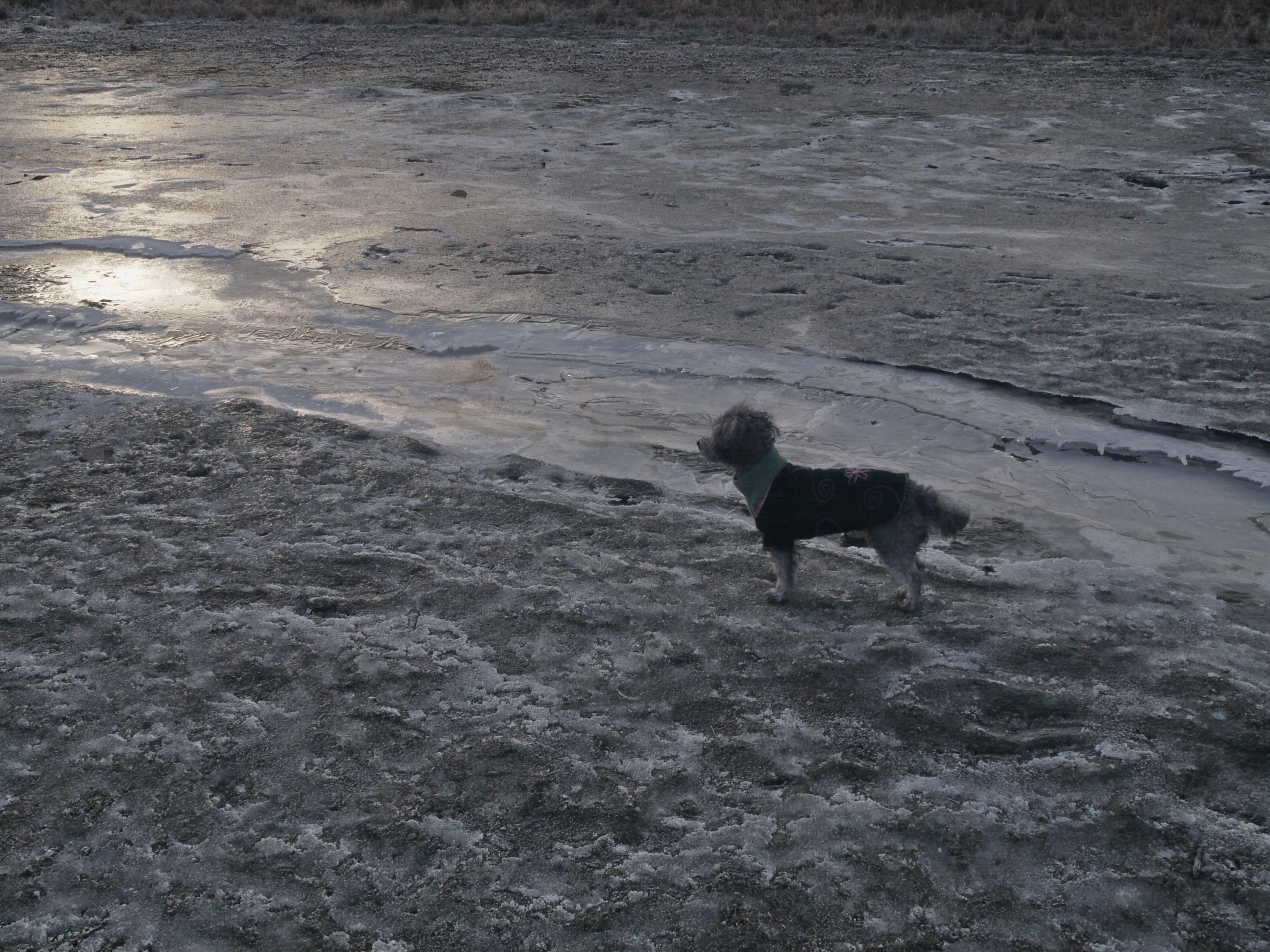
P1120265Walking where the moraine touches Mendenhall Lake, the little dog and I find a landscape newly trapped in ice.  A sheet of it stretches over the lake to the glacier. Last summer’s ice bergs and shoreline rocks form islands in the translucent gray covering.  Hoar frost gathers in deep boot prints in lake bottom recently exposed by dropping water levels. River pebbles appear to hide in steep sided holes formed when freezing water in the surrounding soil expanded. This pushed the soil up into canyon walls an inch higher than the pebbles.  The little rocks appear to seek shelter from winter. P1120242

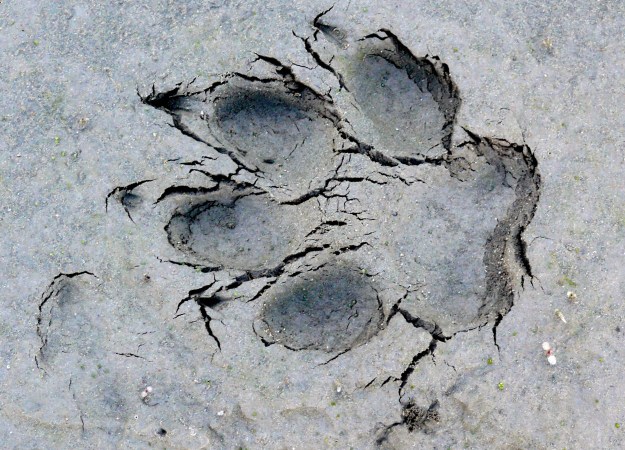
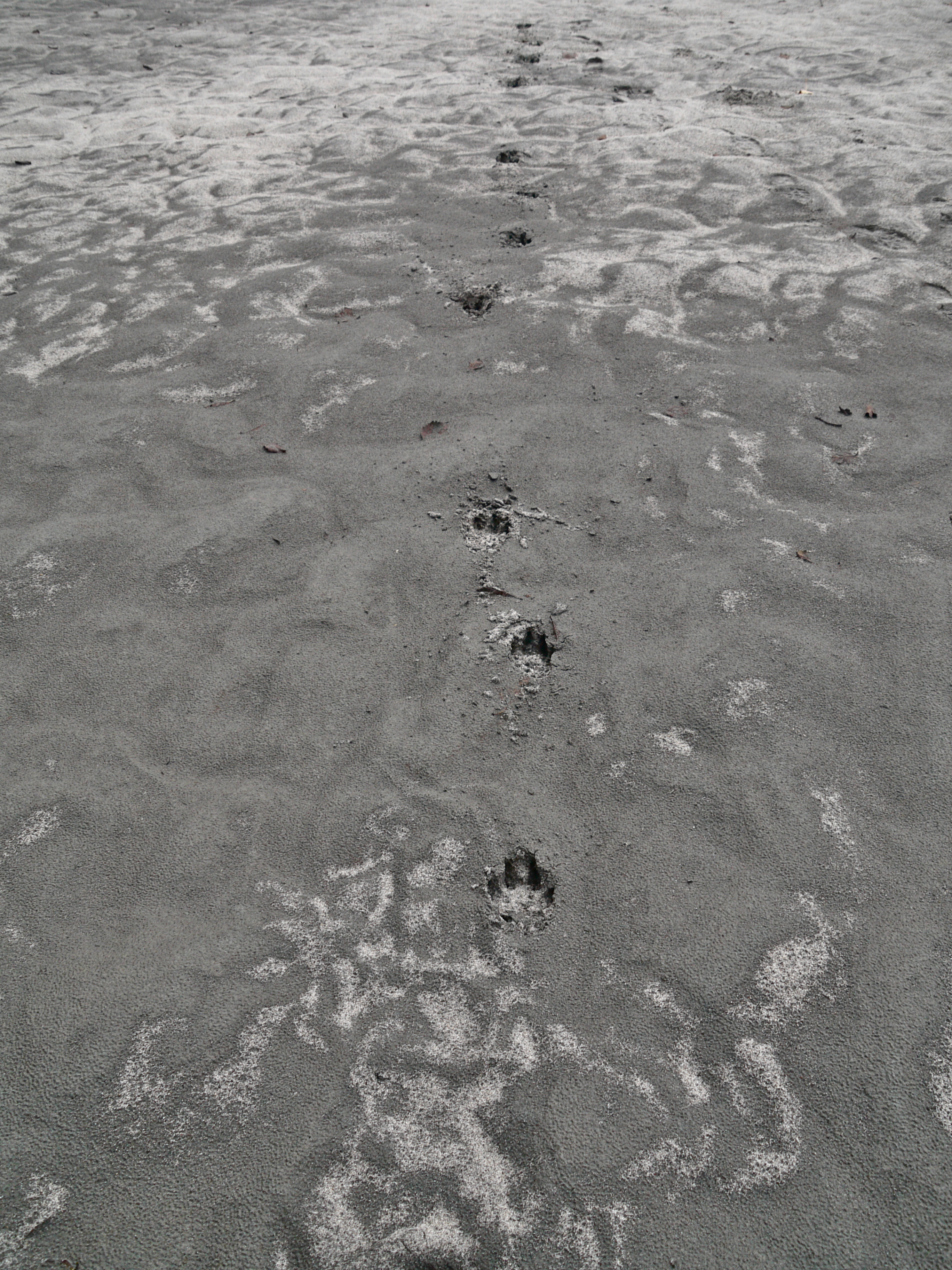
Along the slough we used last September to canoe to a berry picking patch, we find a bear print made just before the freeze. I can make out pad, toes and indentations made by the tips of P1120245claws. Brown bear? All summer the place is thick with the smaller black bears, drawn to the nearby salmon spawning stream but brown (grizzly) bears rarely visit. They prefer wilder places but a young one was seen last week roaming the moraine.

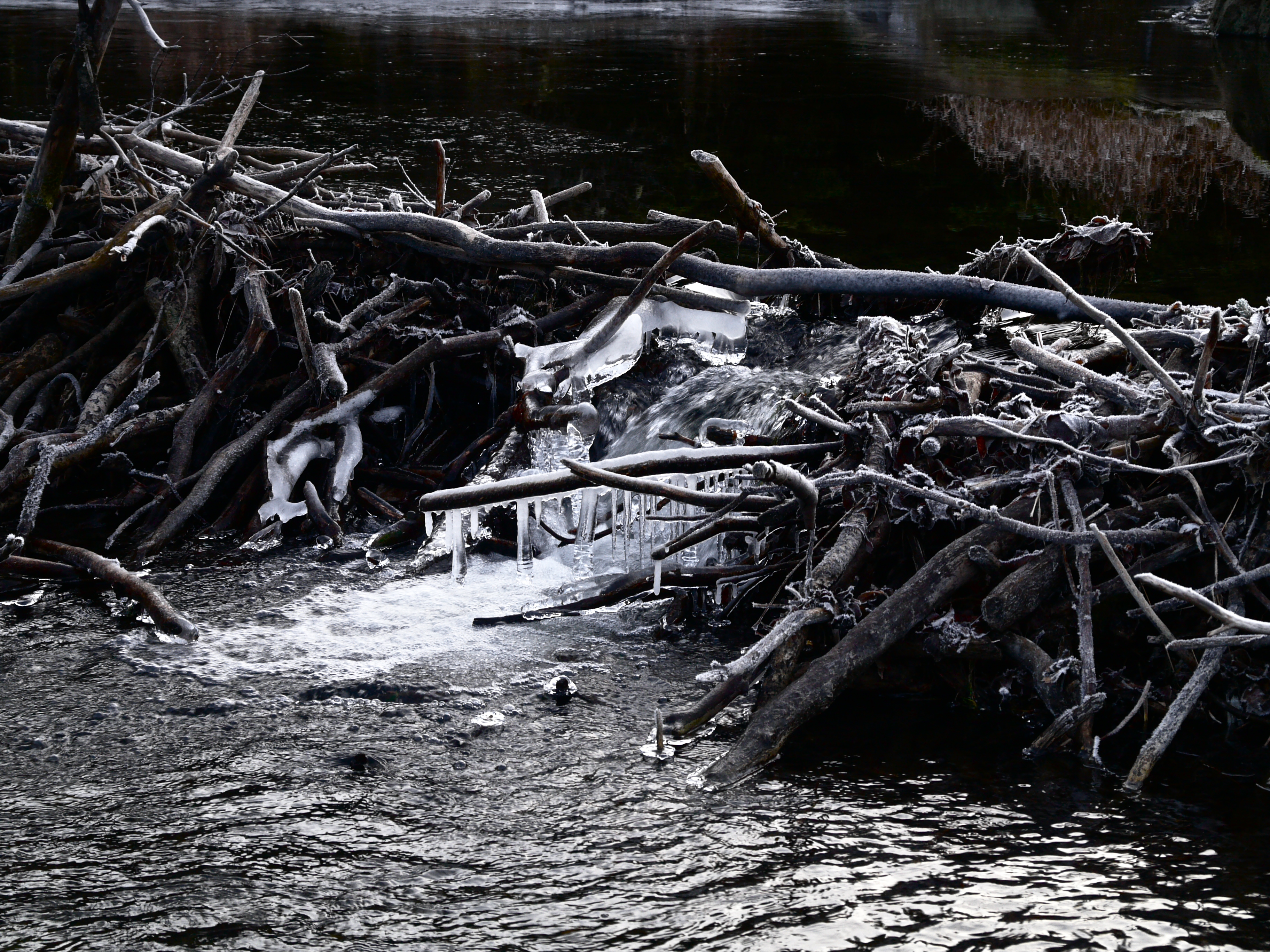
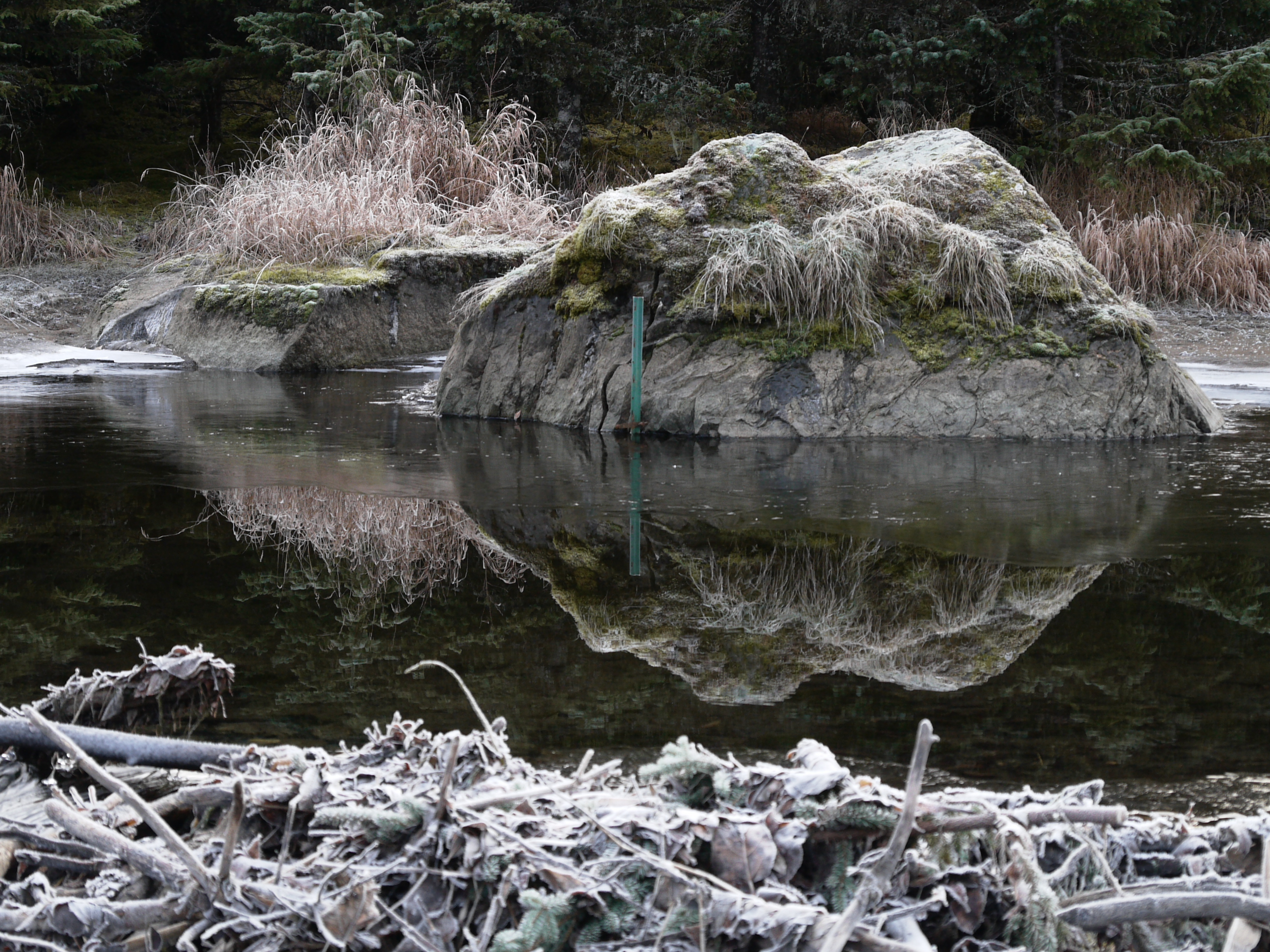
P1120228Not wanting to see how Aki would deal with a brown bear, I reverse direction and head back to the car. It’s time anyway. The sun finally crests Thunder Mountain so its rays can reach the upper glacier. This brings new beauty but also a rising wind chilled by its run over the ice field. On the way we visit a frost covered beaver dam, ice sculptures forming where water flows through a minor breach. Behind the dam, a glacier erratic mimics the beaver house in shape and placement. P1120229

Going to Rest for Winter

P1110958

Fall has drained most of the color from the tideland meadow we crossed this morning. Grass and sand now dominate the scene. Even the Herbert Glacier, wedged in a mountain gap upriver, lacks attraction under the gray sky.

One wolf left a description of his passage over a sandbar—stalking steps, a leap, quick turn after escaping prey, then purposeful exit into the woods. A mile away a bear ripped up beach grass in search of roots. We followed the path he broke through waist high grass to the spot, now stripped to the sand dune below. At least he made a meal of it. Given Aki’s recent aggression toward bears, I stopped often afterwards, scanning the beach and meadow for a black hump moving in a digging rhythm. Nothing stirs the grassland until a raven lands. Just before moving into the spruce forest we hear Canada geese being flushed from the tidelands—the only discord over a land going to rest for winter.
P1110974