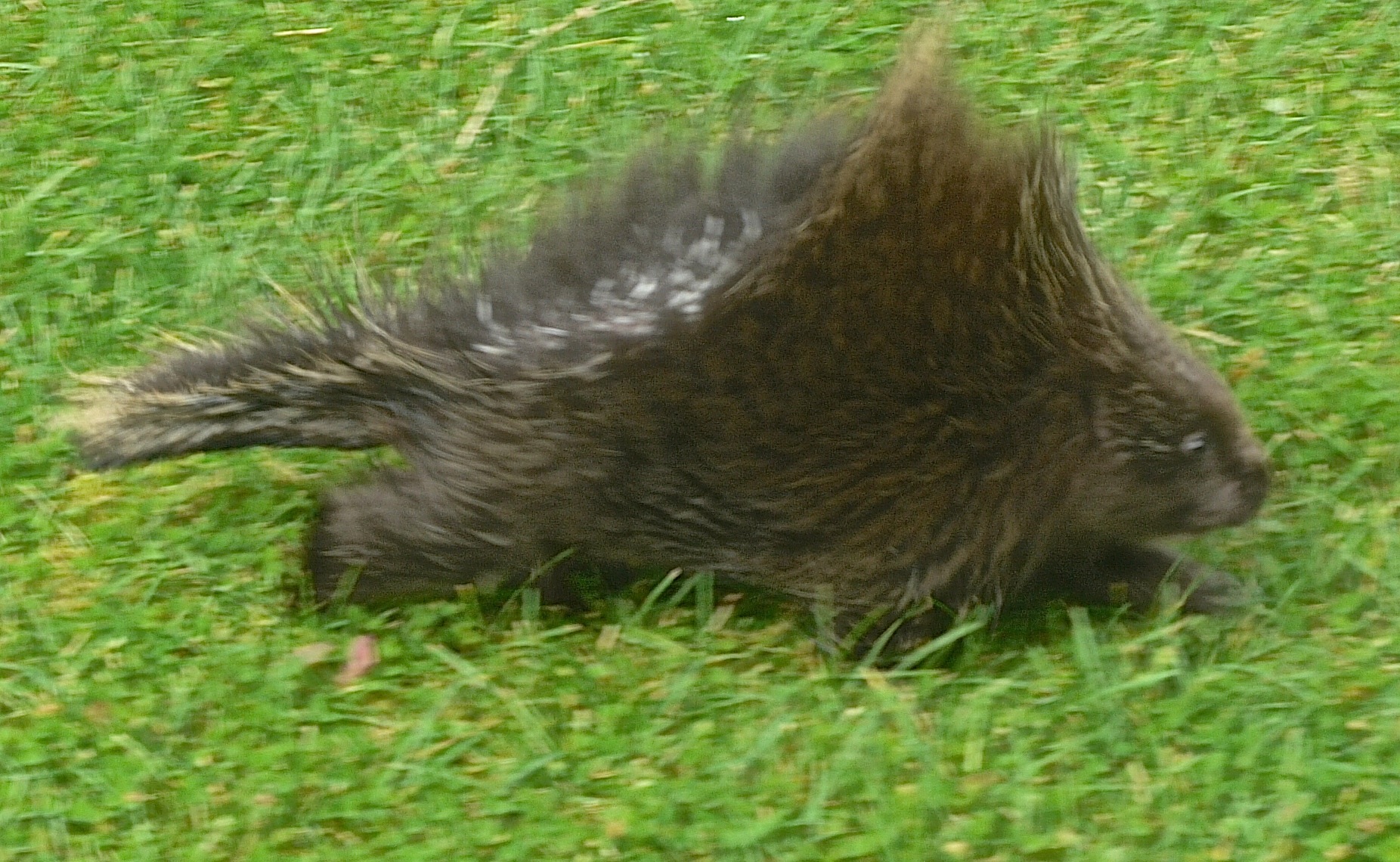
The sun shines on this porcupine in Amalga Meadows but not on the beach from where I had hoped to spot whale plumes and, if lucky, watch seals watching the little dog and me. A porky that looks a lot like this little guy (small size, big bald spot on back) has been “pruning” our young cherry tree. Even now, back on Chicken Ridge, it might be snacking on the tree’s still sweet limbs. I try not to hate this meadow porcupine for the sins of his Chicken Ridge doppelganger. On this tidal meadow, he only preys on wild things as dictated by evolution. Maybe he wants company—to share the meadow with his separated-at-birth twin now hammering our garden. It can be arranged.
Category Archives: Aki
Sweet Bear
I was looking for fall color in fog, not bears, when I let Aki show me the way into the Gold Creek Valley. The cottonwoods provided a little drama, but not enough to encourage a climb further up the valley so we cross the creek and headed west on the Flume Trail. I followed the little dog down a steep trail to Gold Creek and stopped just below a muddy section to wondered whether the bear, whose paw slipped and left five parallel grooves on the dun colored mud felt pleasure or fear. If it was the young black bear we saw on 7th street last Tuesday night, she must have enjoyed the trill. Still wet from crossing Gold Creek, she moved with surprising grace, the kind some rhythmic overweight people reveal when they dance. The bear bounced step by step down the street, stopped at each trash can to make sure they didn’t contain something tasty, then disappeared into a neighbor’s open garage. Such sweetness; such dangerous behavior. Already addicted to garbage and comfortable around people, the little bruin is not long for this world.
Nature Abhors the Straight Line
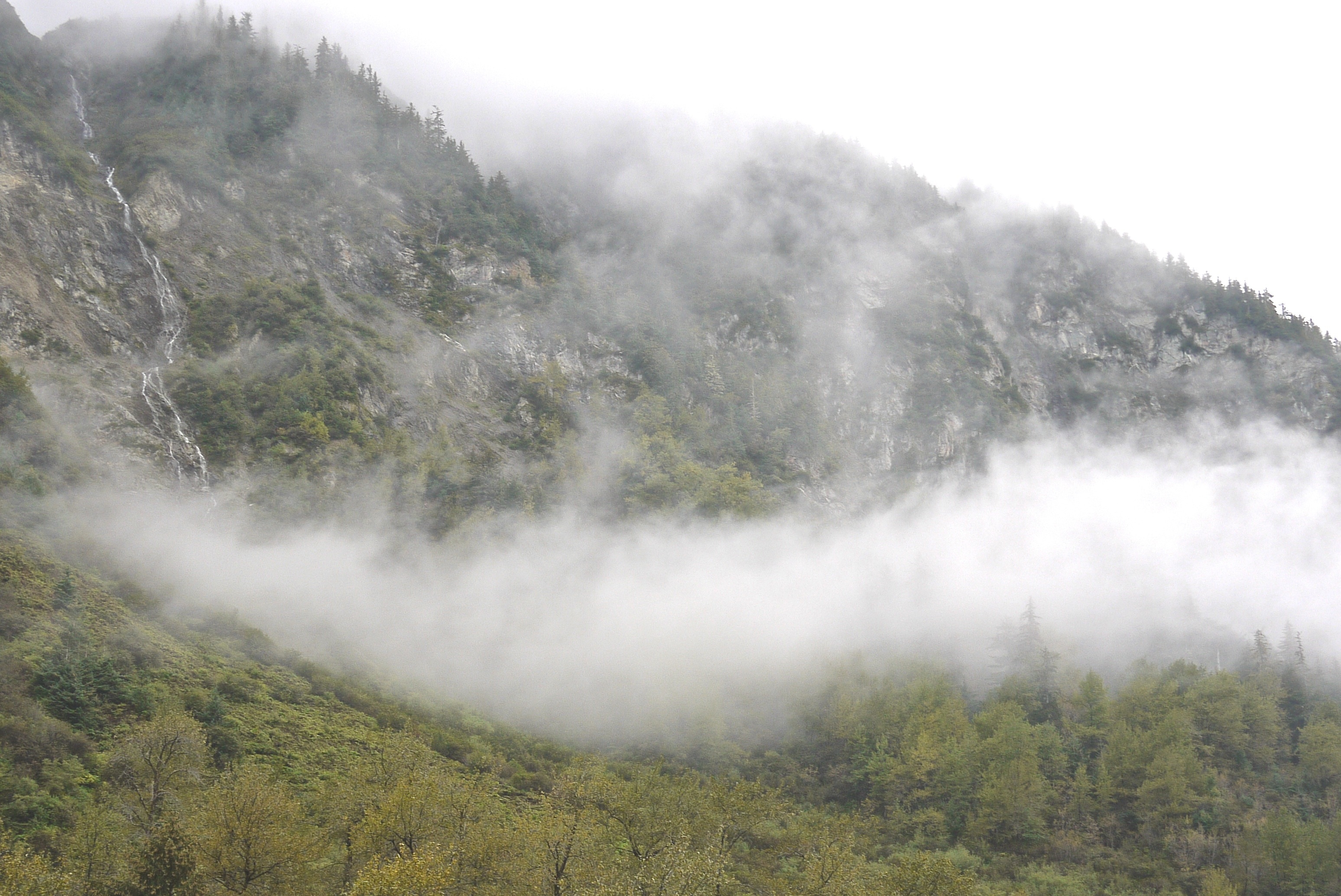
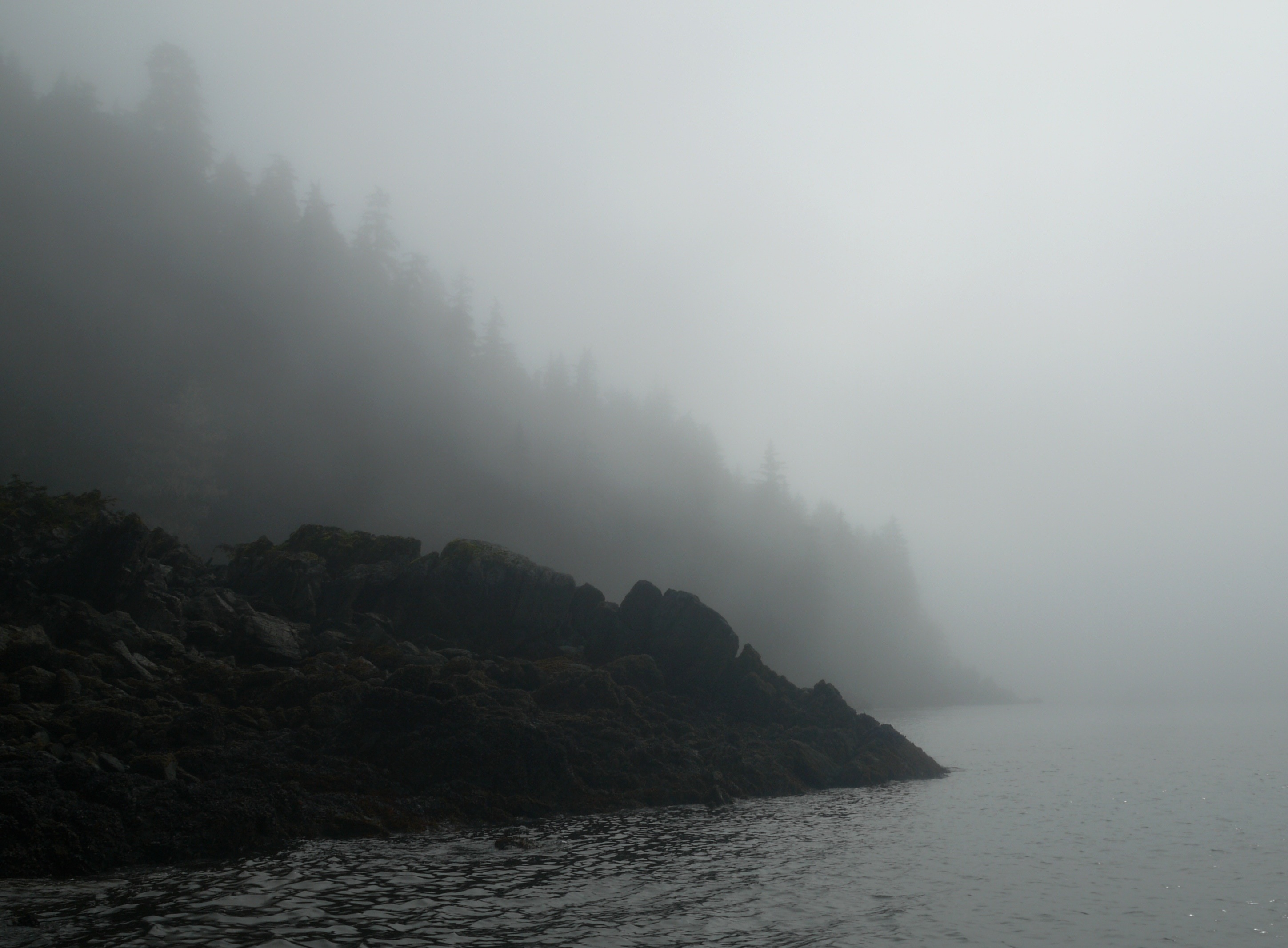
Across the channel from Treadwell, the marine layer cuts off the ridge line of the mainland mountains with a border between green and gray that couldn’t be drawn without a ruler. Between it and the equally straight Thane Road, a rain charged creek deepens its crooked channels in the Mt. Roberts’ avalanche chute. The straight line takes me aback. Nature favors curves and rarely tolerates a hard edge. Look at Aki, the little poodle-mix peeing on a scattering of curvy cottonwood leaves. Her form could be reproduced with ovoids and “o’s.”
The men and woman that replaced the Douglas Island old growth forest with a turn of the 20th century gold processing town were all about the straight line. The walls and floors of of their now windowless buildings are still square. But as the alder and cottonwood trees undulate the old town’s open spaces with their roots, shrubs, grasses, mosses, and even hemlock trees eat away at the town’s flat roots. They have reached the tipping point. Even now formerly sharp building edges are curved. An iron water pipe still cuts a straight line over an alder filled gap but I can see corrosive wounds on it’s underbelly.
Berry Picking Ethics
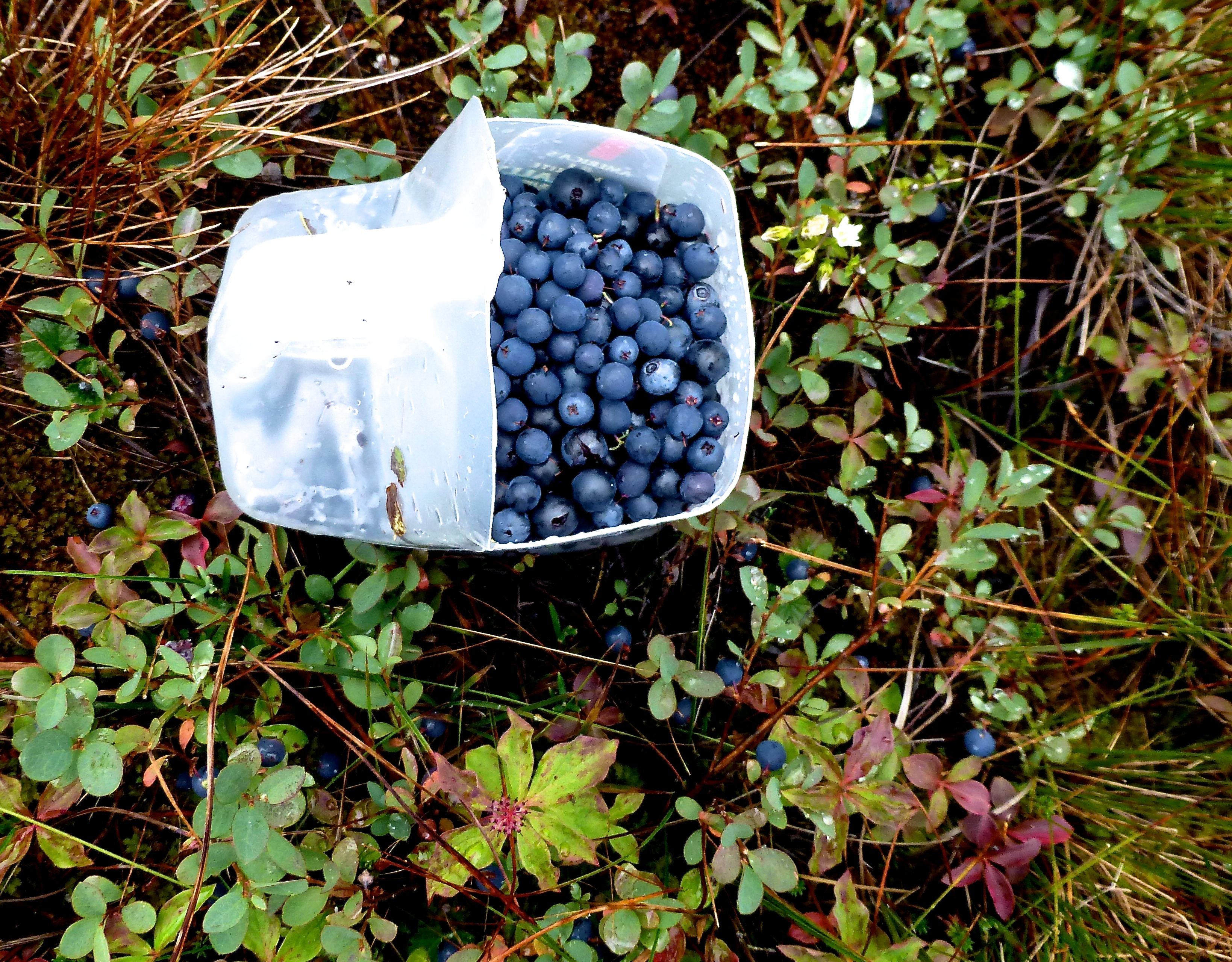
We were standing on a steep mountainside in between rain storms. When not interrupted by Aki’s demand to toss her frisbee, I filled a converted plastic soy sauce container with blueberries and huckleberries. After the little dog started to pester her other human, I slipped into that Zen state that comes to berry harvesters. An odd thought bubbled up. Am I cheating these berry bushes that worked so hard to package their seeds in tasty blue packages. They were designed by nature to seduce birds and bears that can carry the seeds to remote parts of the forest and deposit them where their off spring will be enriched by the animals’ scat. My berries will go into pies or pancakes but thanks to cultural restrictions, their seeds will end up at the Juneau sewage treatment plant. 
Draining Away the Green of Summer
Fall chips away at summer’s monopoly of green in the troll wood. Willow, alder and cottonwood roots suck chlorophyll from their plant’s leaves. Aki peed on all three. She doesn’t discriminate but I favor trees that produce colorful leaves like the willow, cottonwood and wine red high bush cranberry.
The leaves on alder trees, no nonsense pioneers that first colonized the glacial moraine, immediately go from green to dead brown. Their roots hoover all the color, nutrients and beauty from each leaf as if worried about a thief in the night. Willow and cottonwood roots sip the chlorophyll until yellow and oranges replace the leaf greens. I took many photographs of the colorful ones but only one of alder leaves and then only because they cradled a heart-shaped cottonwood leaf.
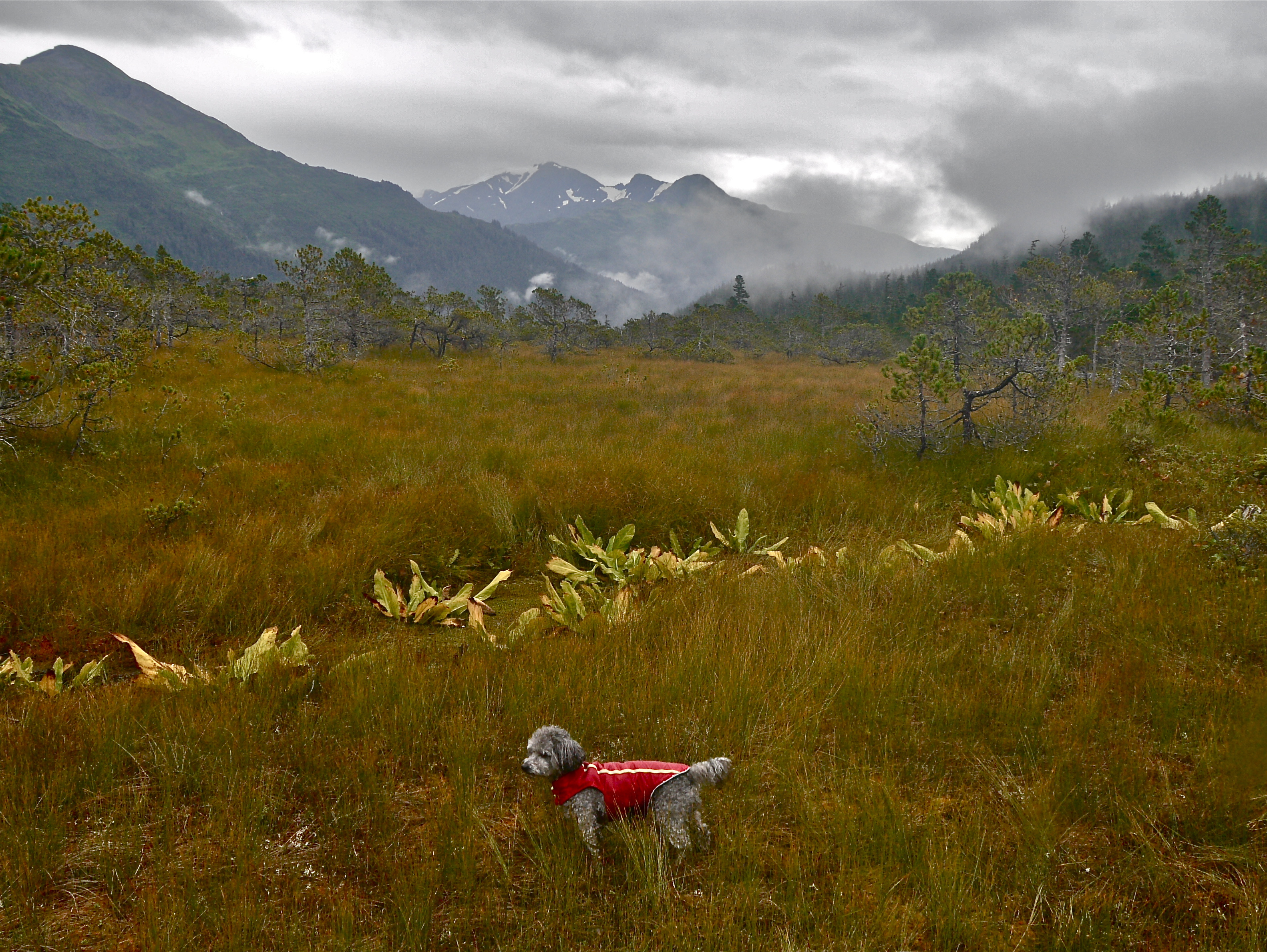
With autumn grayness dampening its visual beauty, I use taste to deepen my connection with this mountain meadow. Unlike the bear, wolf, and deer, who need to pack on pounds before winter drives their food underground, I can spend time and energy looking for berries on bushes past their prime that may only yield up a handful of fruit. Aki would rather stay on the trail with its promise of other dog encounters but follows me onto the wet muskeg.
Even though it takes a half an hour to gather twenty blue berries, I pop handfuls of them into my mouth; taste a tart confusion of flavors—a muddy mix of tannic and sour with a lingering sweetness. Another half hour of pick and wander refills my hand. I eat these berries one at a time after feeding a soft one to Aki. She doesn’t ask for another. Some have the sourness of died-back grass. Others produce an explosion of the tannic moisture that gives “muskeg” its name. One berry tastes like sugar in a bowl and I wonder if it grew next to the sweet smelling bog candle orchid that still manages to flash a little beauty on this sea of fading beauty.
The Dog Salmon Party is Over
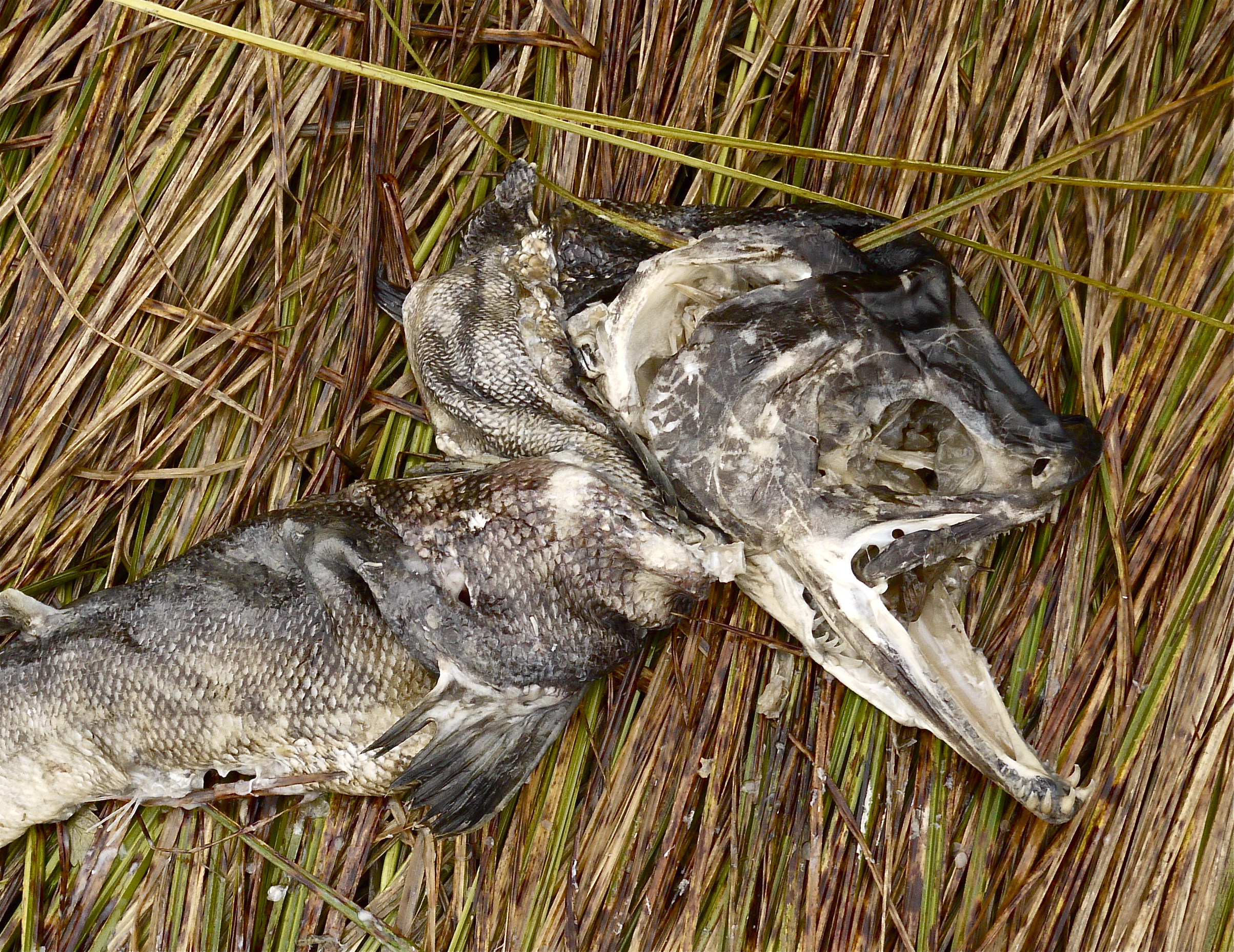
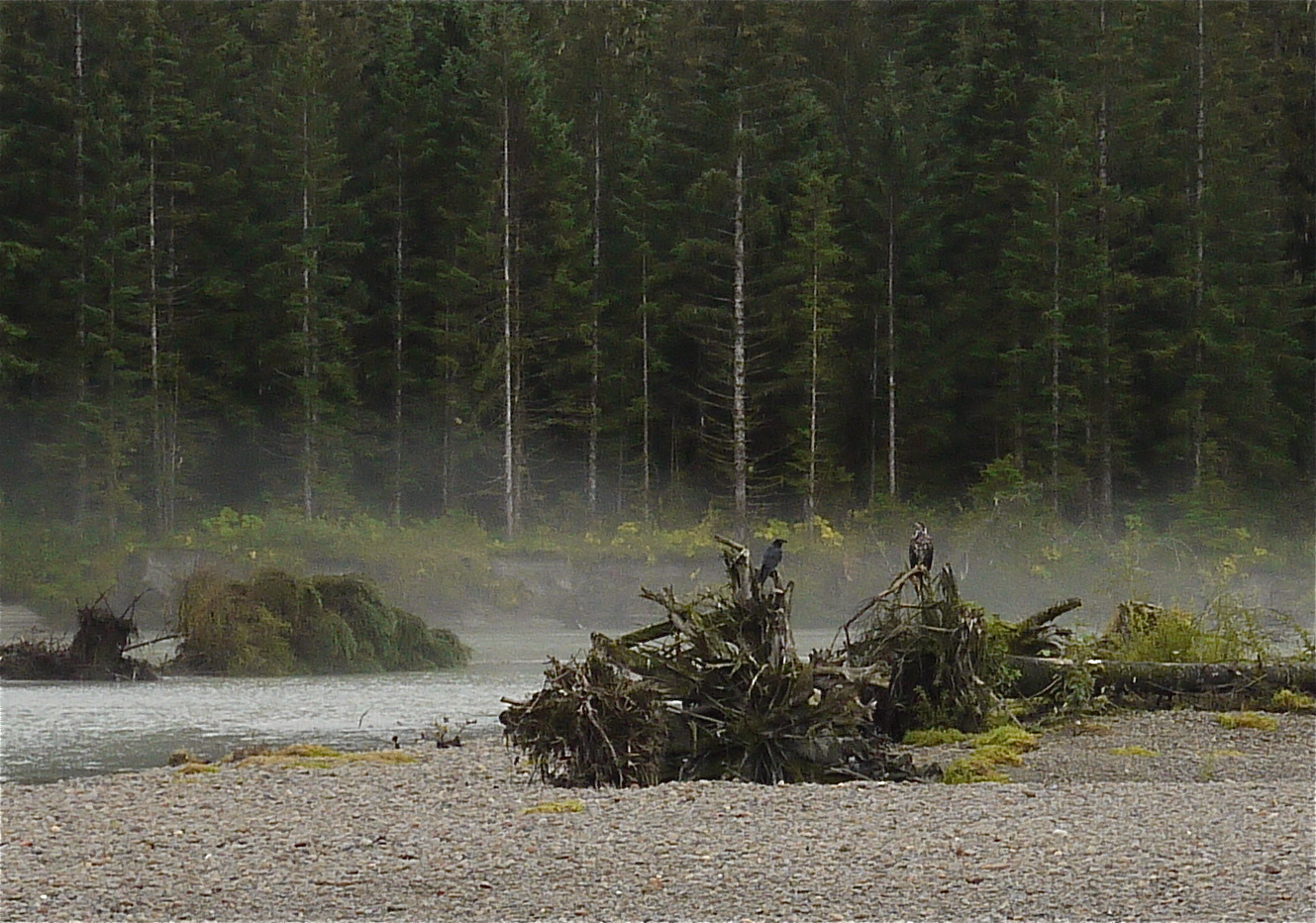
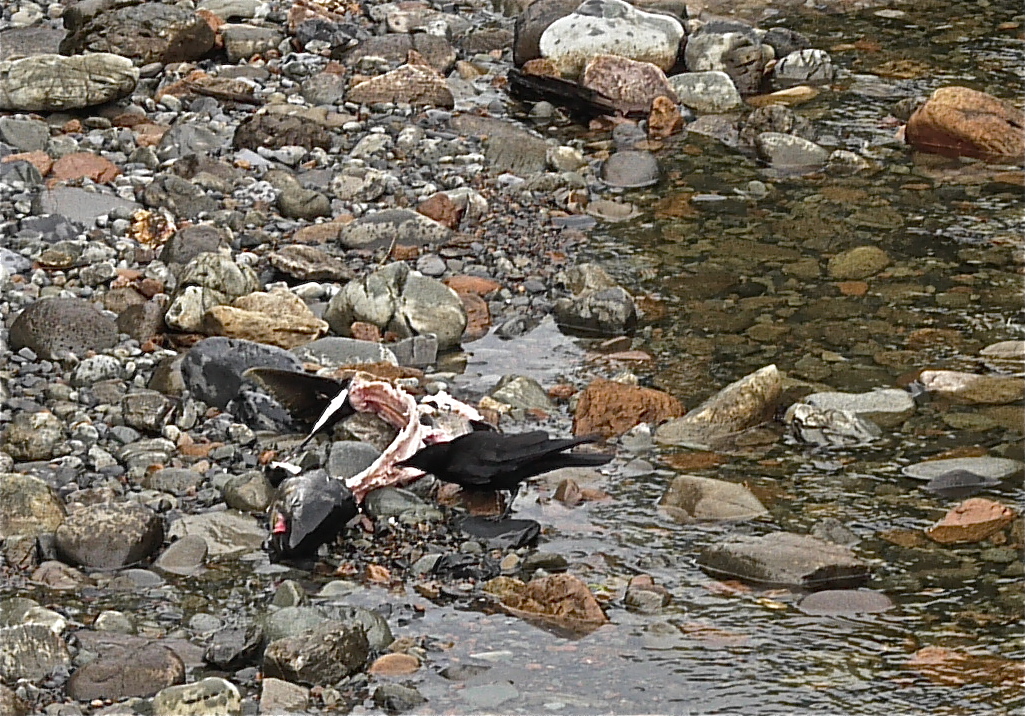
Yesterday I fished for salmon but caught only frustration trolling across the grain of the waves in North Pass. Rain, wind, cold featured prominently, as did a pair of feeding humpback whales. The experience helped me understand the songs sung today by clouds of eagles and gulls, ravens and crows in this riverside forest. They fight over putrefying scraps of dog salmon dropped on the trail by picky bears. I, like the birds and bears, wait for the next pulse of silver salmon, still ocean bright, to turn toward their home streams.
The place smells like death. That’s too broad to communicate the complexities of scent on offer. Deep in the forest quiet, decay flavors air spiced by ripe high bush cranberries. The riverbank smells like week-old road kill. Spots where Aki hangs behind me displease like an untended pit toilet, an odor that could mask skunk spray. Here waits a bear. Carrion eaters, bears are what they eat, smell like condensed decay..
I see bear sign everywhere—berry speckled poop, rough trails through the trail side brush, the odd head severed by sharp jaws from a dog salmon body. Time to leave,
Almost Fall
Back to the familiar with Aki—the trails on North Douglas Island. Unlike the lush summer conditions I experienced on my Vancouver Island bike tour, Juneau is tasting fall. You can see it in the berries, ripe, soft, almost sweet.You can feel it in the cool moist air still carrying a trace of last night’s rain storm. Already understory plants yellow and leaves fall. Soon the gray, wet, despair producing monsoons will come and stay until we pray for snow. Aki, although not a big fan of heavy rain, is more accepting than I of fall time in the rain forest. October I dream of desert dry; November I search the web for cheap flights south. But today, I pick a cup of full of perfectly red, round huckleberries that will enrich my lunch. Aki contents herself by chasing squirrels.
Take Beauty As it Comes
The Anchorage to Juneau jet was encased in dark clouds when the 10,000 foot warning chime sounded. I’d been thinking about lessons learned and relationships deepened during writing school at the University of Alaska. After hearing the chime, I looked down for dark shapes that could confirm we were over Lynn Canal and not skimming mountain tops. Seeing nothing but gray, I turned my life over to the pilot and his hi tech gear and tried to nap. It’s the only sane way to fly to a rain forest town crammed between glaciated mountains and a strip of sea.
Aki and my partner waited outside the security area. My partner smiled a warm welcome and the little dog squeaked and jumped when she spotted me. This morning Aki and I hiked up to Gasteneau Meadows even though it rained and clouds obscured the mountain tops. I couldn’t find flower blooms, wild animals, or even birds. Beauty hung in rain drops that clung to down facing pine needles. That’s how it is sometimes in Alaska. You learn to appreciate the comforts of friends, dog or human, and beauty where offered even when the rain falls and clouds block the peaks. You learn to appreciate the difference between the warm rain of summer and the punishing stuff that will come in October. In fall, you look forward to the crispness of winter and search the old growth for its rich mix of clam and drama.
Faint Tugs from DNA
I’ll be in Anchorage at writing school the next couple of weeks so this is my last trek with Aki for a bit. We walk along lower Fish Creek to the pond circled by a thin line of fisherman. Using large treble hooks, they try to snag king salmon now going to rot in the pond. The men ignore us, concentrate instead on the bass notes made by 20 pound salmon as they crash into the surface of the pond.
Fishermen and fish are both driven here by DNA. For the men, a deep need to hunt and harvest, feed their families, drove them from their beds. The fish seek only to reproduce but can’t make it up the shallow creek to their spawning beds until it is swollen by August rains. Genetics might also be behind Aki and my moves this morning. She seeks promising scents, I satisfy my inter-caveman with a camera rather than gun.
The tide is out so the place smells of death and new life—-the stink of spent salmon and exposed tidal mud is almost overpowered by the sweetness of just opened wild rose buds.
Eagles and crows hunt carrion on the tide flats. I look for a way to capture the gold-yellow beauty of a seaweed carpet exposed before the glacier by the ebb tide. Four foot hight stalks of fireweed stand before me and the tidelands, the bottom rungs of their ladders of magenta blooms already in full flower. The layers will blossom one after the other until all the flowers transform into seed down that will float away at the end of summer.