After yesterday’s expedition out the road, Aki and I are walking on a less demanding trail today. I need cleats to stay upright on the icy surface. Tomorrow’s promised rain should melt most of it away. I look forward to the end of ice season, but I’ll miss the snow that now covers the forest floor.
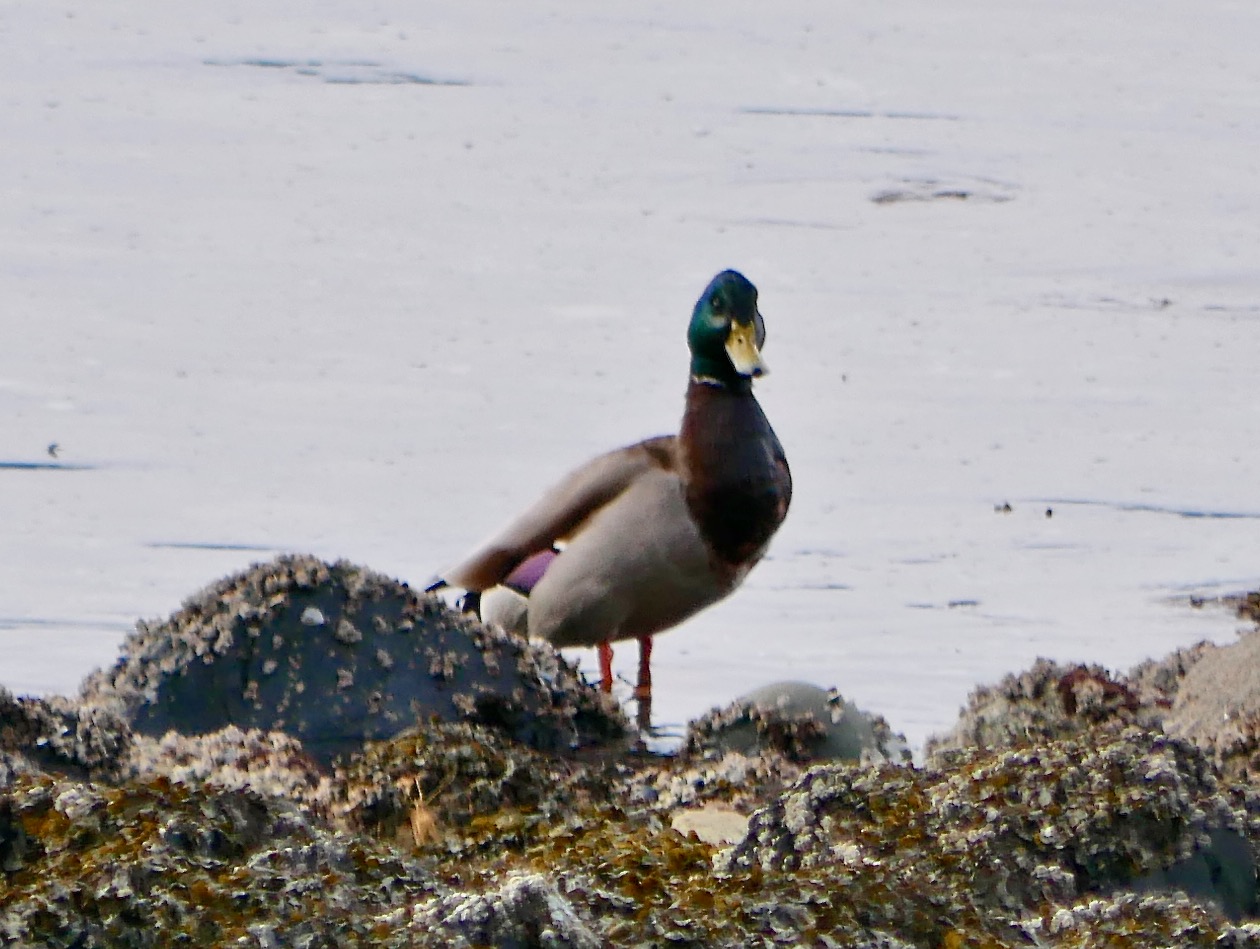
The trail circles through old growth rain forest. Halfway through, we drop onto a pebble beach. Our appearance encourages the resident mallards and harlequin duck to paddle into the bay. One mallard drake refuses to move. It just gives us a hard look. Okay, Okay, we were heading back into the woods anyway.
Aki and I are about as far away from Juneau as a person can get without boarding a plane or a boat. This fact is more descriptive of the limited Juneau road system than our adventurous spirit. We are at the end of the road.
I just stashed the snowshoes I had been carrying. They are not needed thanks to all the other walkers who compacted the trail snow with their boots. Two miles ahead is the Cowee Meadows cabin. Most of the winter trail users target that cabin or the Blue Mussel cabin on Pt. Bridget.
We leave the main trail and follow a small stream that winds towards a huge beaver pond. Thanks to our recent stretch of cold weather, the swampy land drained by the stream offers easy passage for the little dog and I. Soon, if the weatherman is to believed, warm, wet weather will make it impassible.
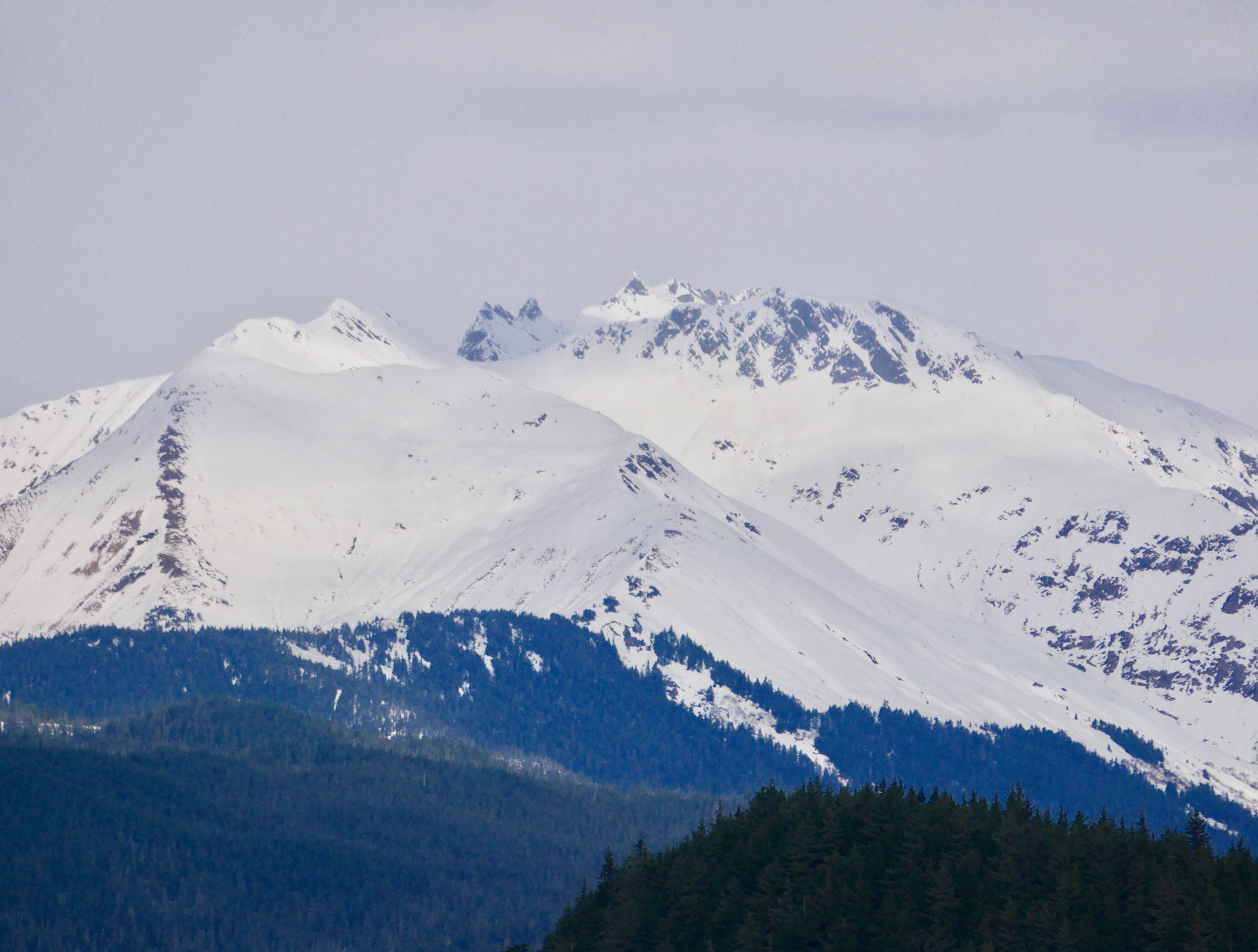
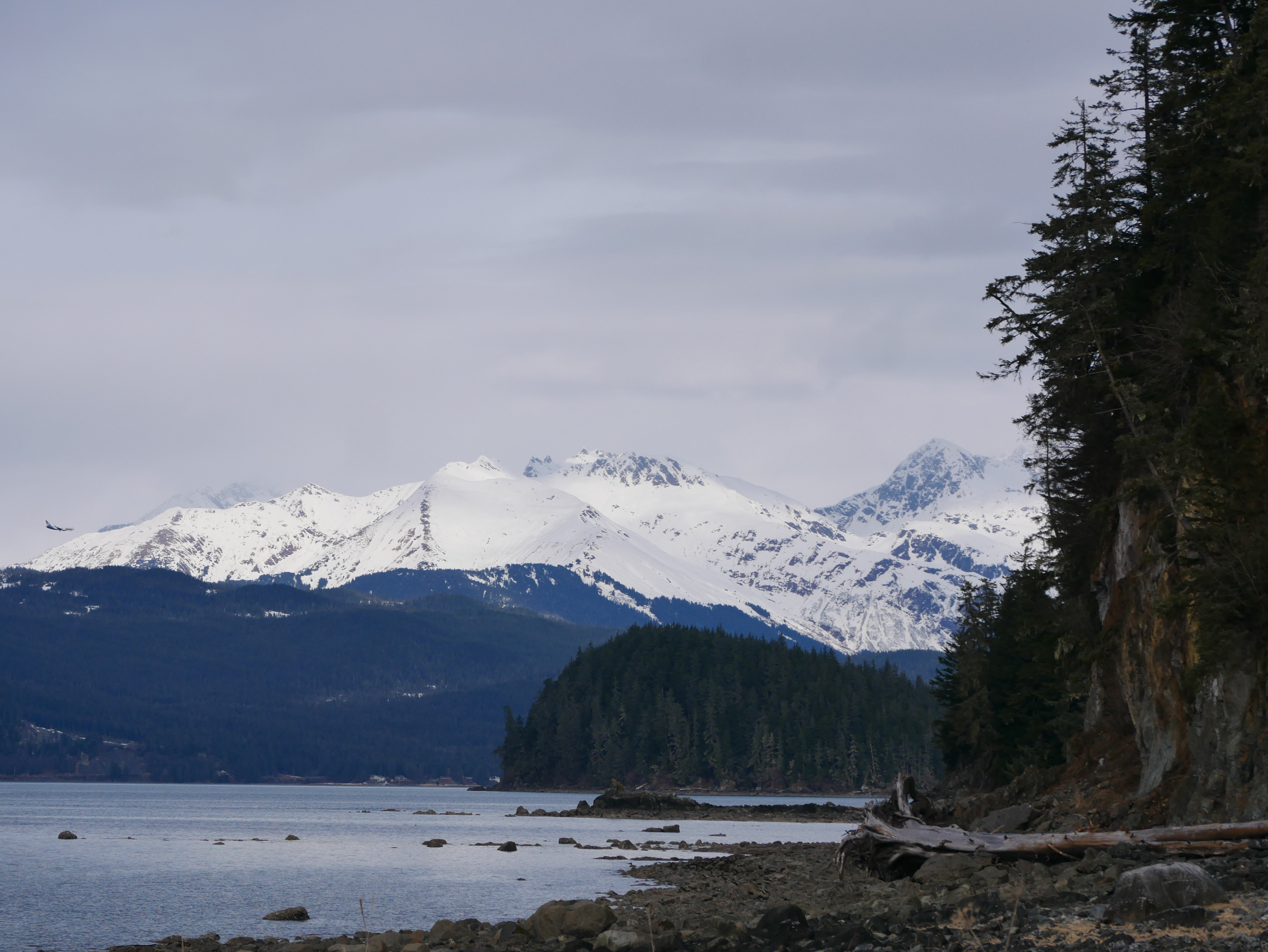
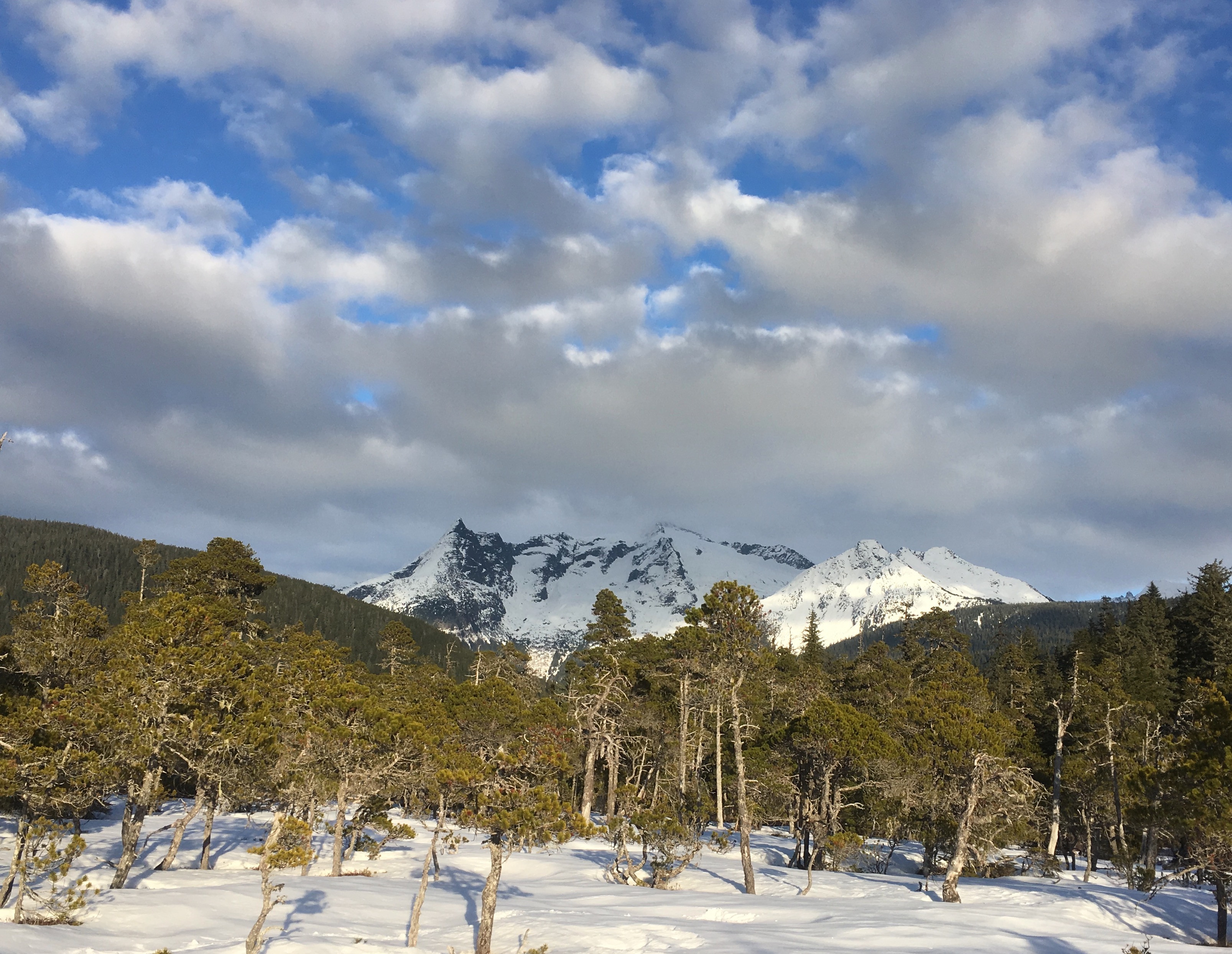
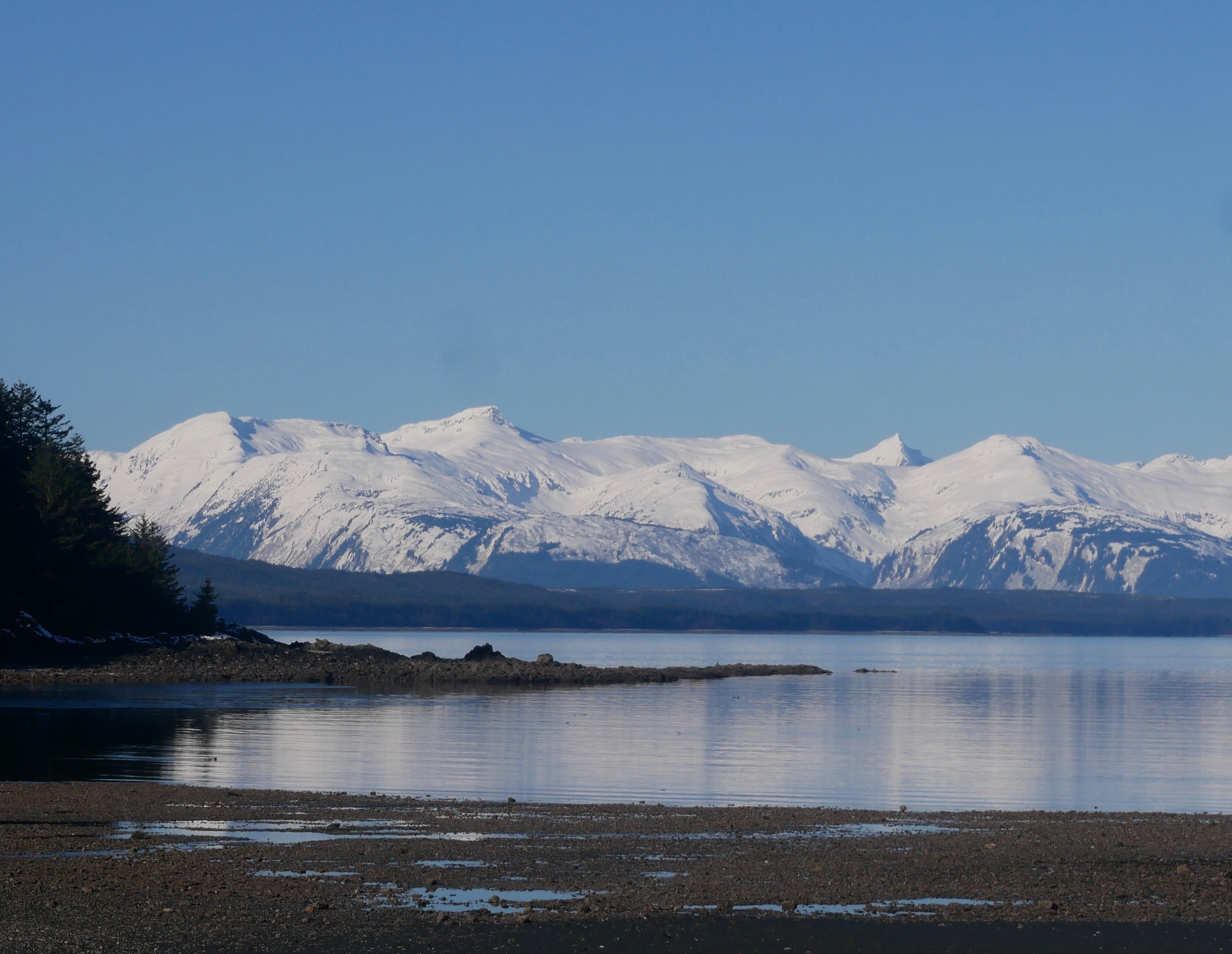
We’ve seen moose and bear on the meadow but no animals appear. We pass a beaver house, and negotiate a series of beaver dams before returning to the main trail. I stop often to listen for bird song but hear only ravens. The sun, which had been trapped all day behind clouds, breaks through to light up the irregular shaped peaks that circle the meadow. We push on to a rocky beach that offers open views of Berner’s Bay and Lynn Canal. A small raft of harlequin ducks have the water to themselves.
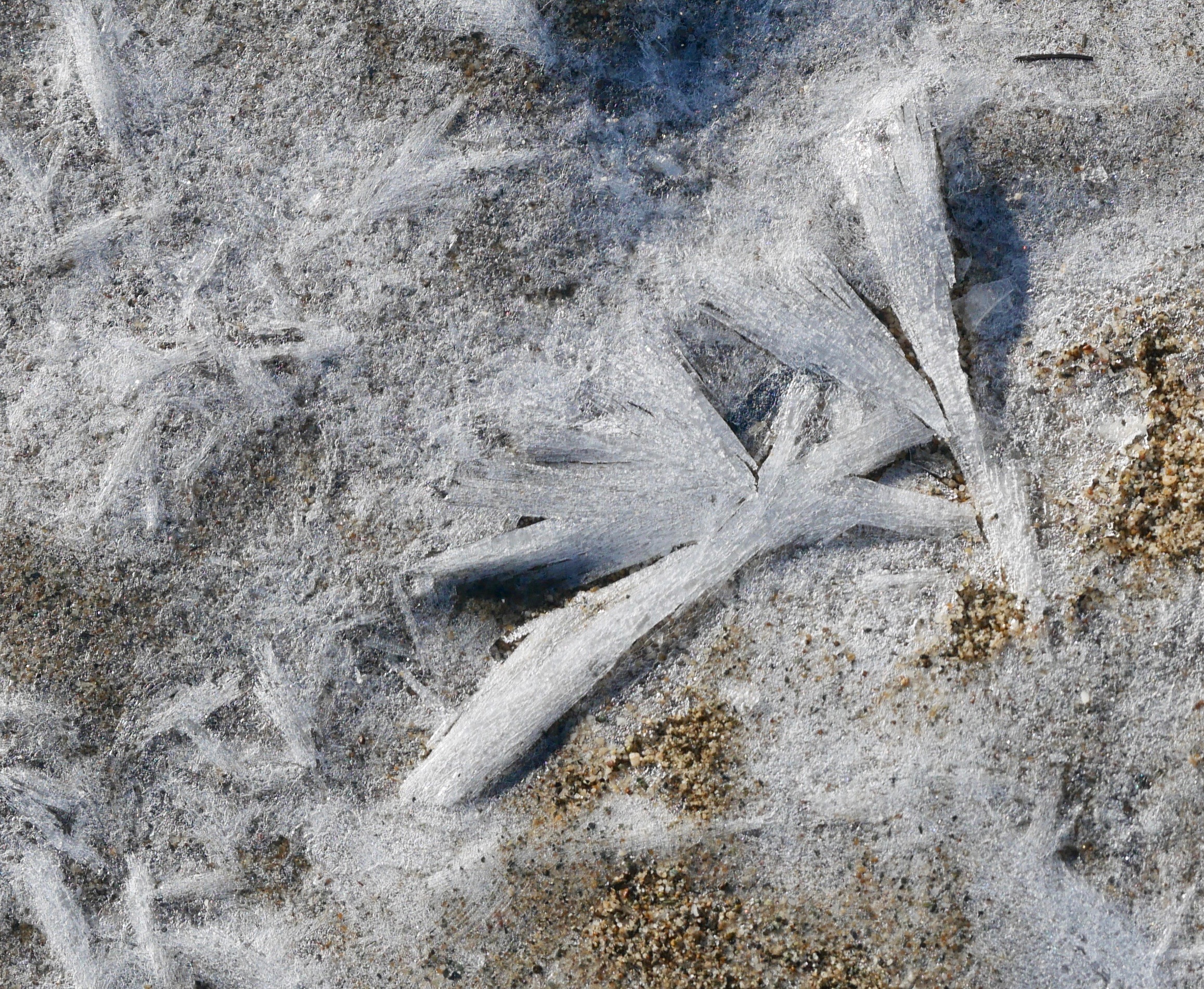
The little dog and I have the Fish Creek delta to ourselves. Frost feathers on broken pans of pond ice sparkle in sunshine that I am beginning to take for granted. We may pay later for our recent stint of clear, dry, and cold weather. But on this windless day it is easy to ignore the future.
The high tide is about to crests. It lifts and fractures the pond ice. In additional to the expected tinkling and cracking, we heard a deep base sound, like you’d hear after dropping a rock into a well. The sounds don’t bother Aki as she follows a scent trail around the pond edge. It’s hard to convince her to follow me onto the spit that separated the stream drainage from Fritz Cove.
Ten American widgeons pull away from the cove beach. A strip of seaweed dangles from one of their beaks. They don’t winter here so they must be transients. Golden eyes, local ducks, hunt offshore. Along the creek banks, other widgeons rest with beaks tucked into their back feathers. Hundreds of mallards sleep nearby. Transient green wing teal hunt for food in the creek.
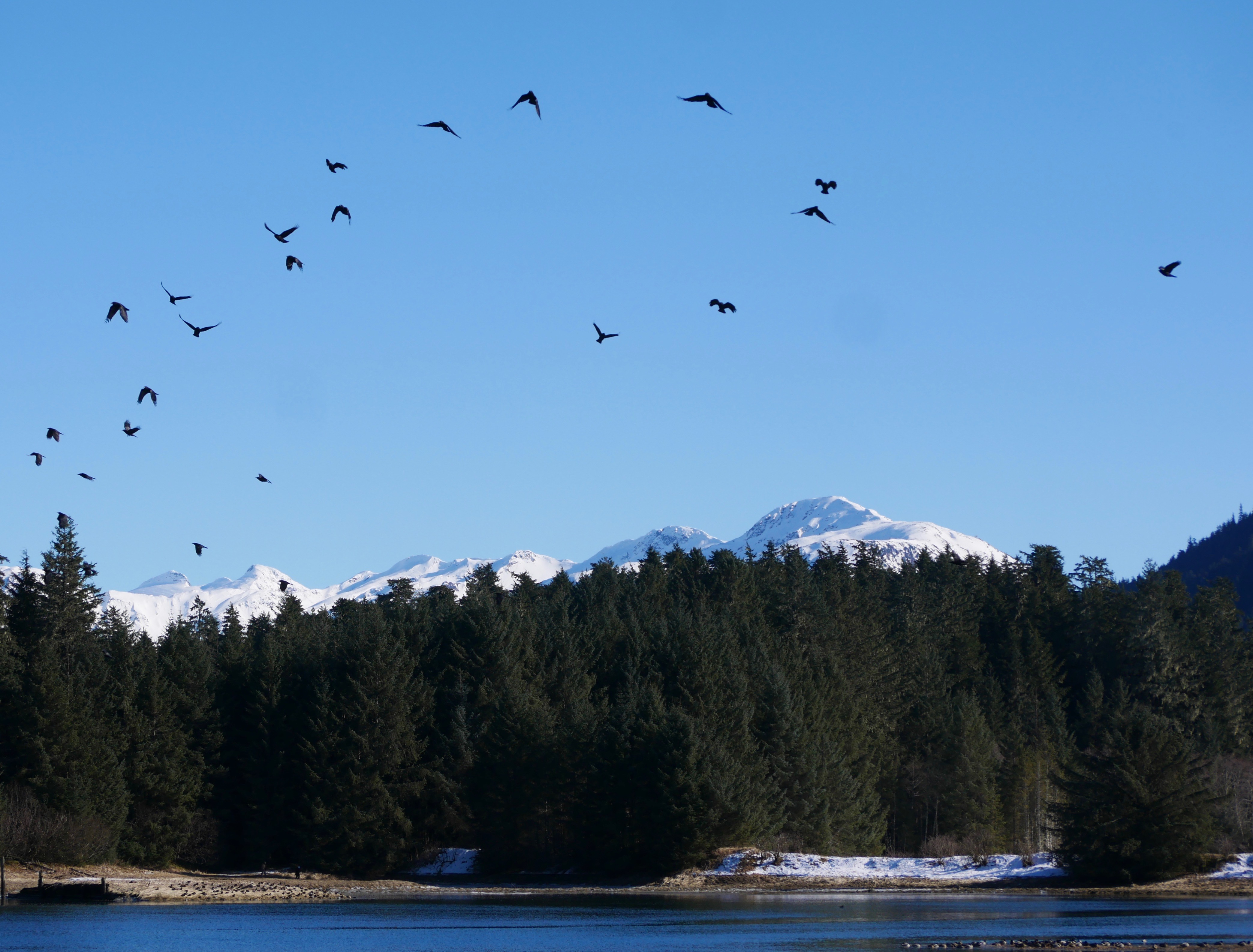
The sleeping ducks don’t stir until the crest of the tide, when the rising waters drive them from their beds. They don’t fly off in a panic. Just stir and let the tide carry them into the stream. Overhead, a murder of crows summersaulted through the air.
I can’t believe we are back on the ice cave trail, slipping along the edge of an open crevasse. Because of a recent cold streak, I thought the path would be safe. But I hadn’t given full credit to the power of winter sun.
We had no trouble crossing the ice of Mendenhall Lake. One of Aki’s favorite human friends joined us. The easy trail allowed us to enjoy watching the glacier grow in size as we approached it. Snow still covered the rocky peninsula that serves as a kittiwake rookery each summer. I searched it without success for ptarmigan feeding on willow catkins.
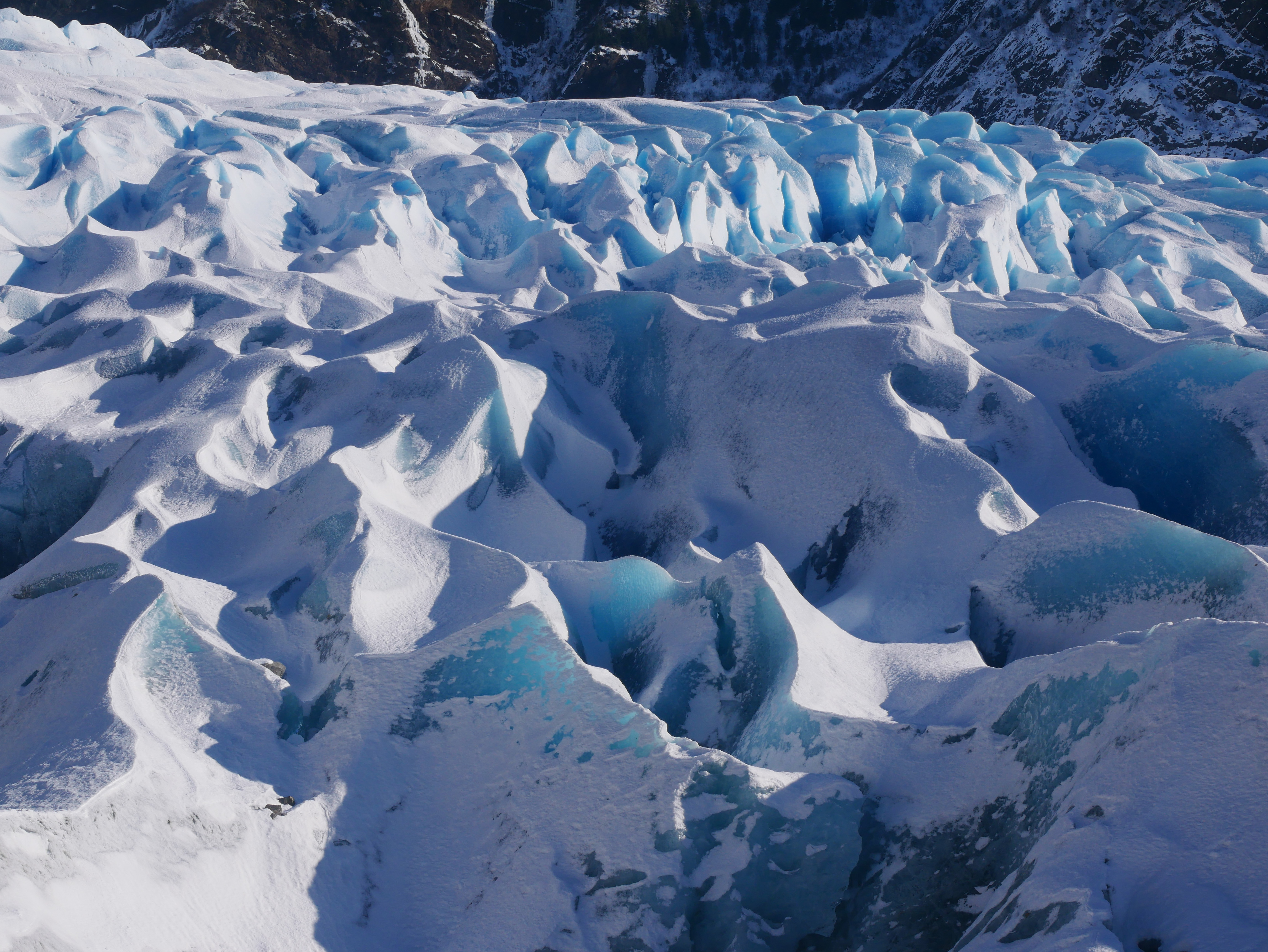
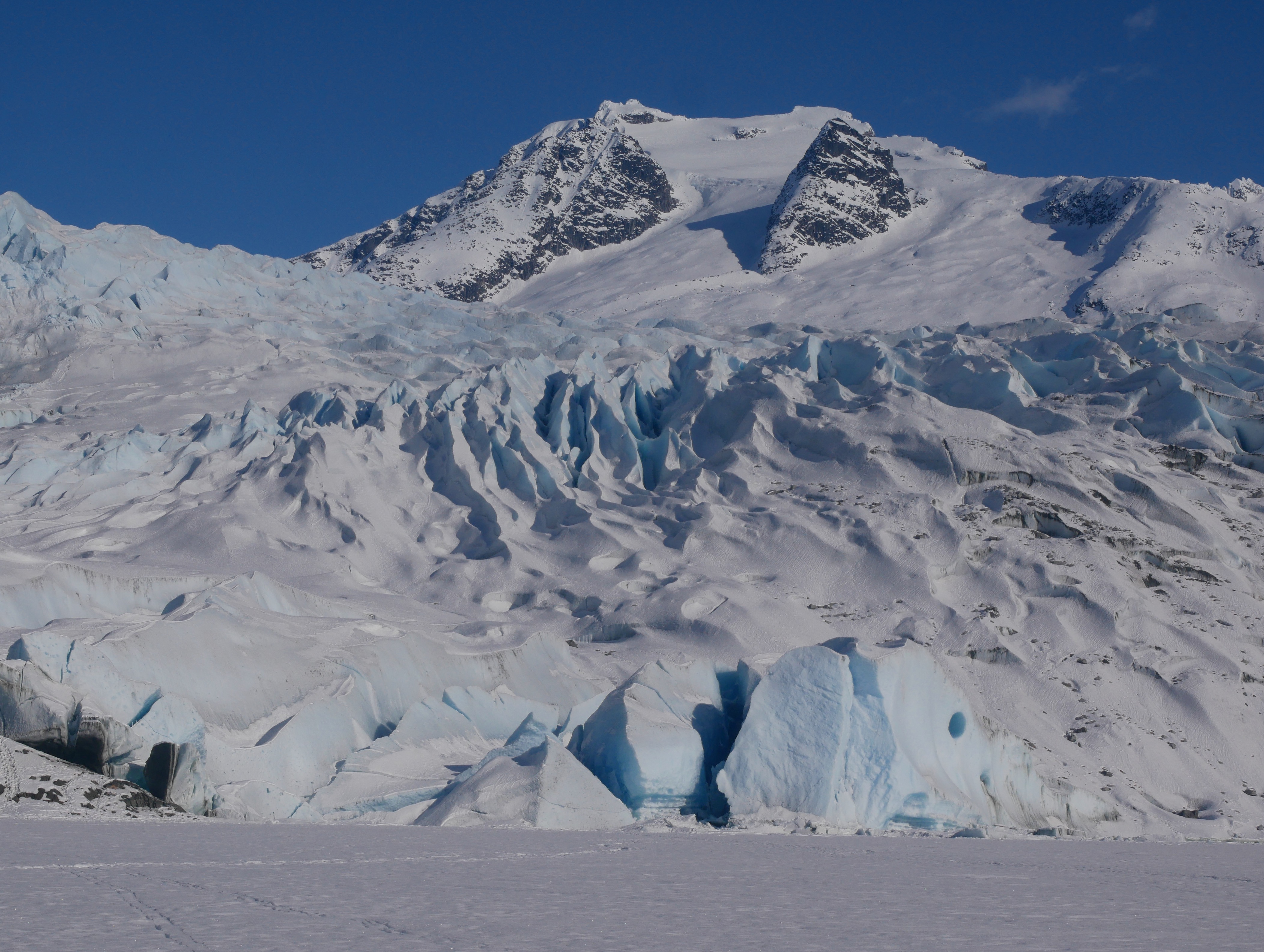
A large slab of ice formed from snowmelt covered the trail just above the lake. Instead of the easy walking we enjoyed on our last visit, we had to scrabble up and over ice to leave the lake. The trail improved after that so we could appreciate the jumble of pyramid-shapes that form the glacier’s icefall.
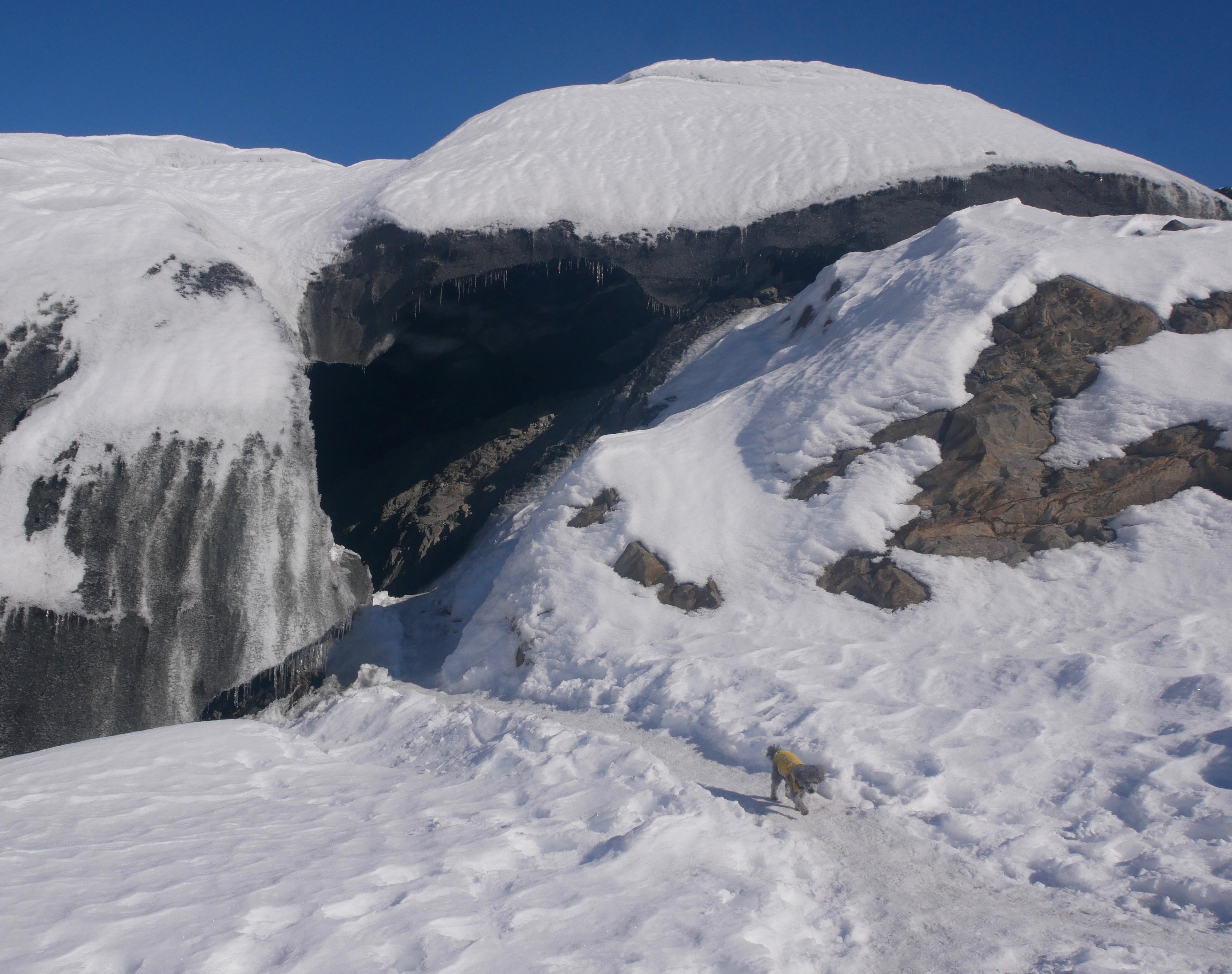
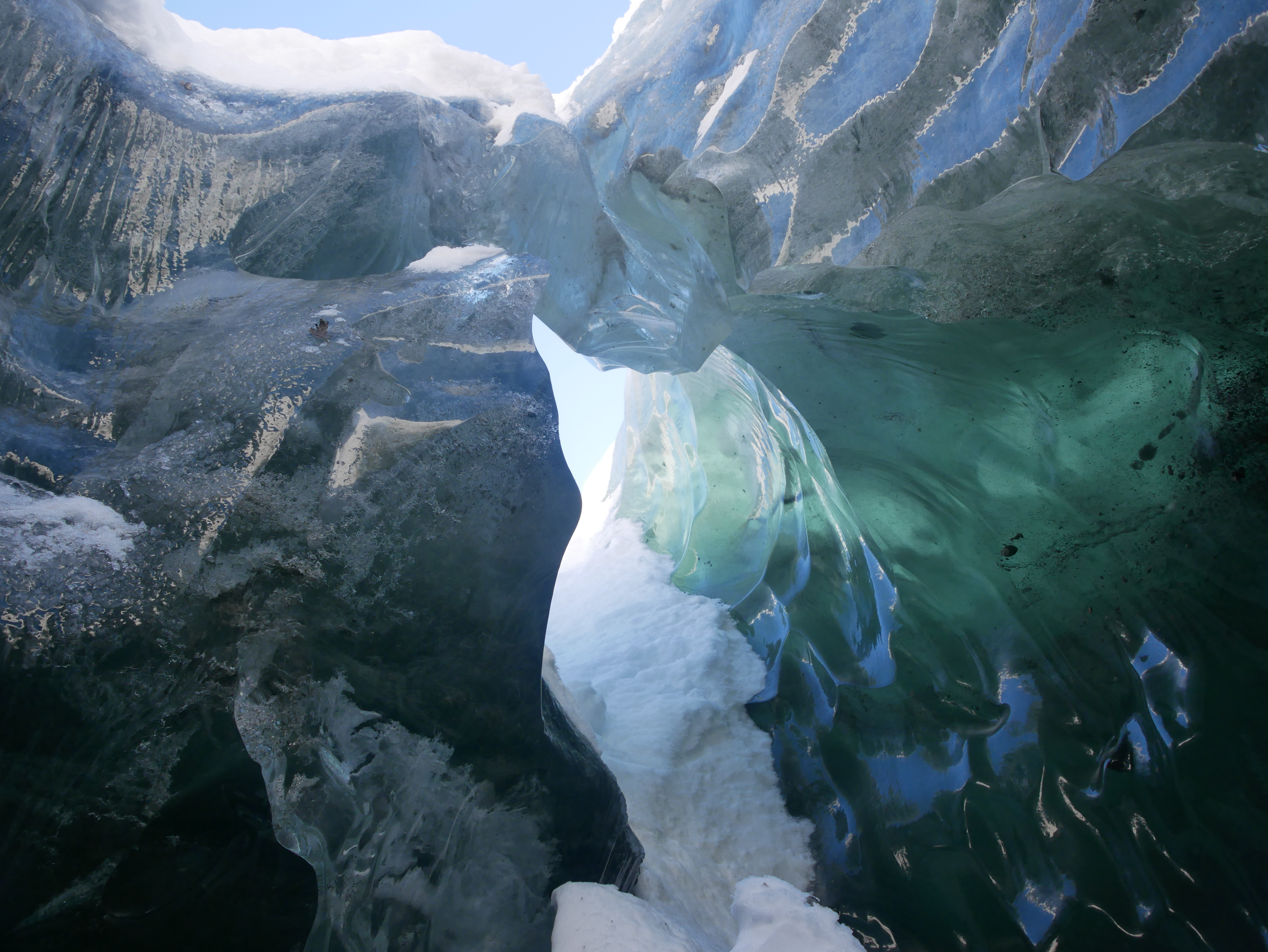
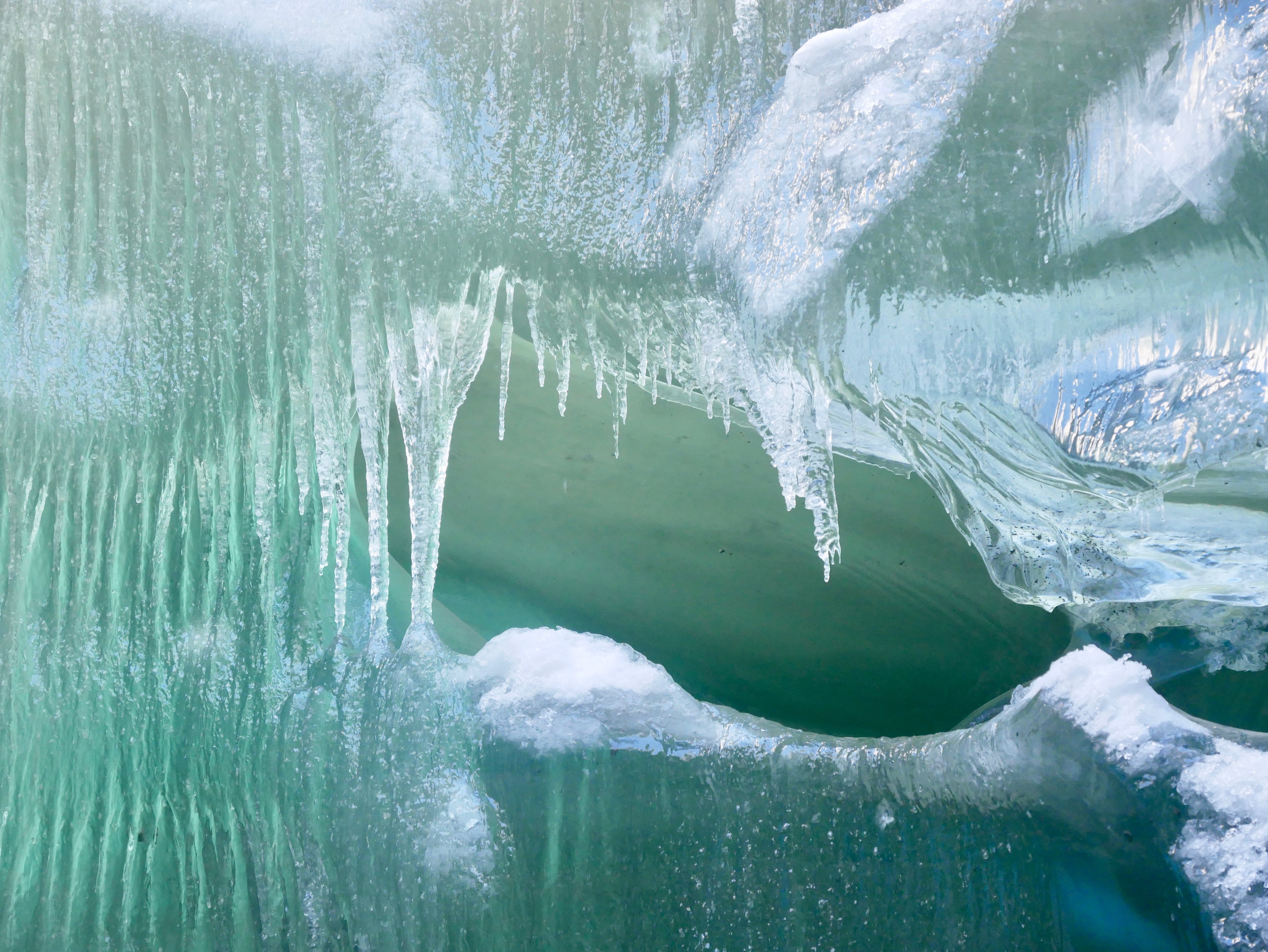
We stop to check out a minor ice cave but It looked like a muddy hole so we didn’t go in. We pushed on to the second cave, which is lined with aquamarine ice. To get there we have to pass through a section of icy trail and steep, snow-covered chutes.
Aki watches her humans slip and slide down the trail, like the nursery maid she thinks herself to be. A golden retriever joins us just before we reach the cave. The big dog distracts Aki for a few seconds. Then she is back on human duty until I pretzel my way through an ice labyrinth and disappear into the cave. Neither she nor the retriever followed me.
It’s too early for true spring, little dog. Aki squints up at me. She looks relaxed, not annoyed. Even through the temperature is below freezing, my gloveless hands are warm.
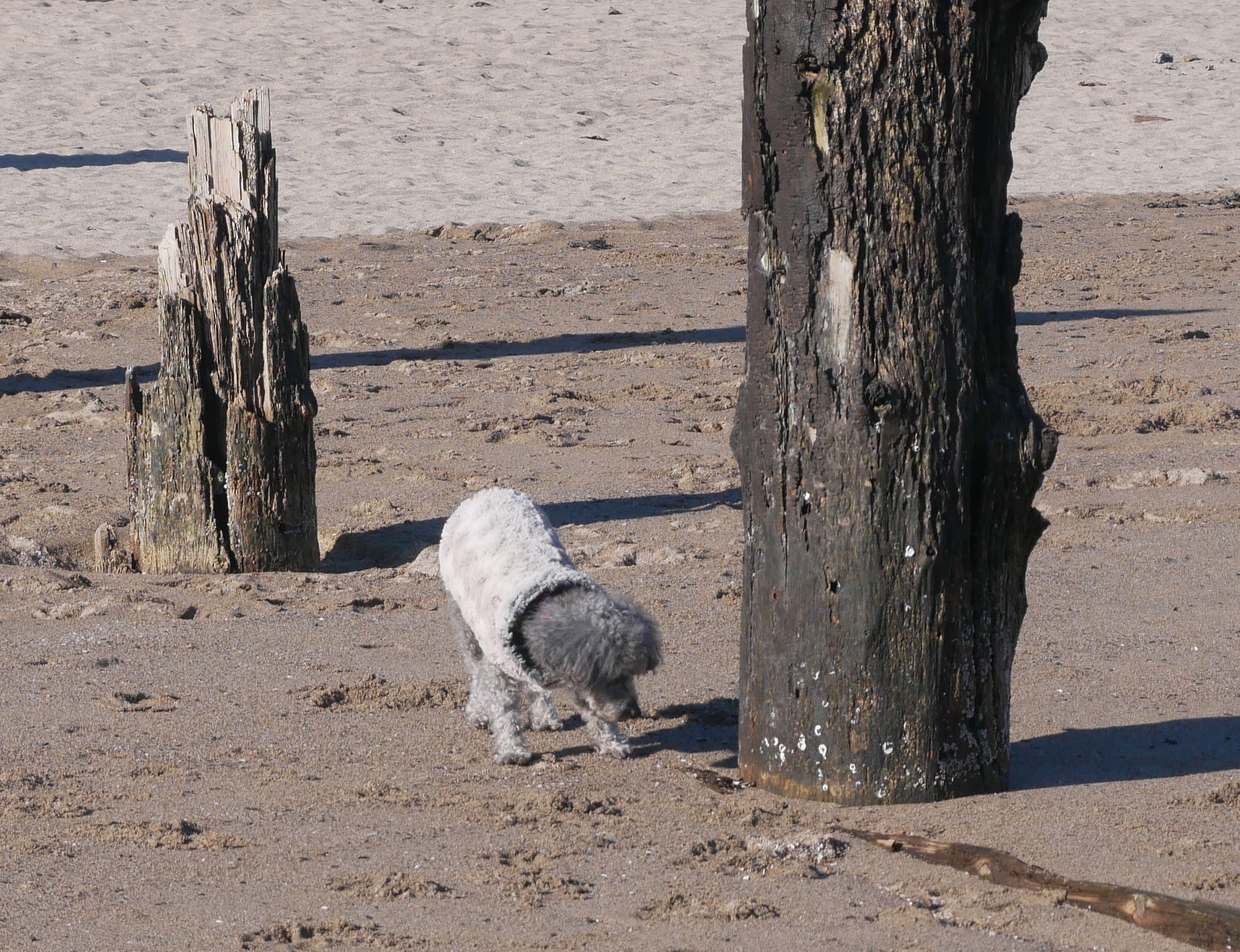
We crunch over still frozen sand toward the little bay formed by the collapse of the Treadwell mine tunnel. I look for bird tracks but see only those of dogs and their people. Just offshore, a small raft of golden eye ducks pull mussels off splinted pilings. We watch for several minutes until the head duck stares us down.
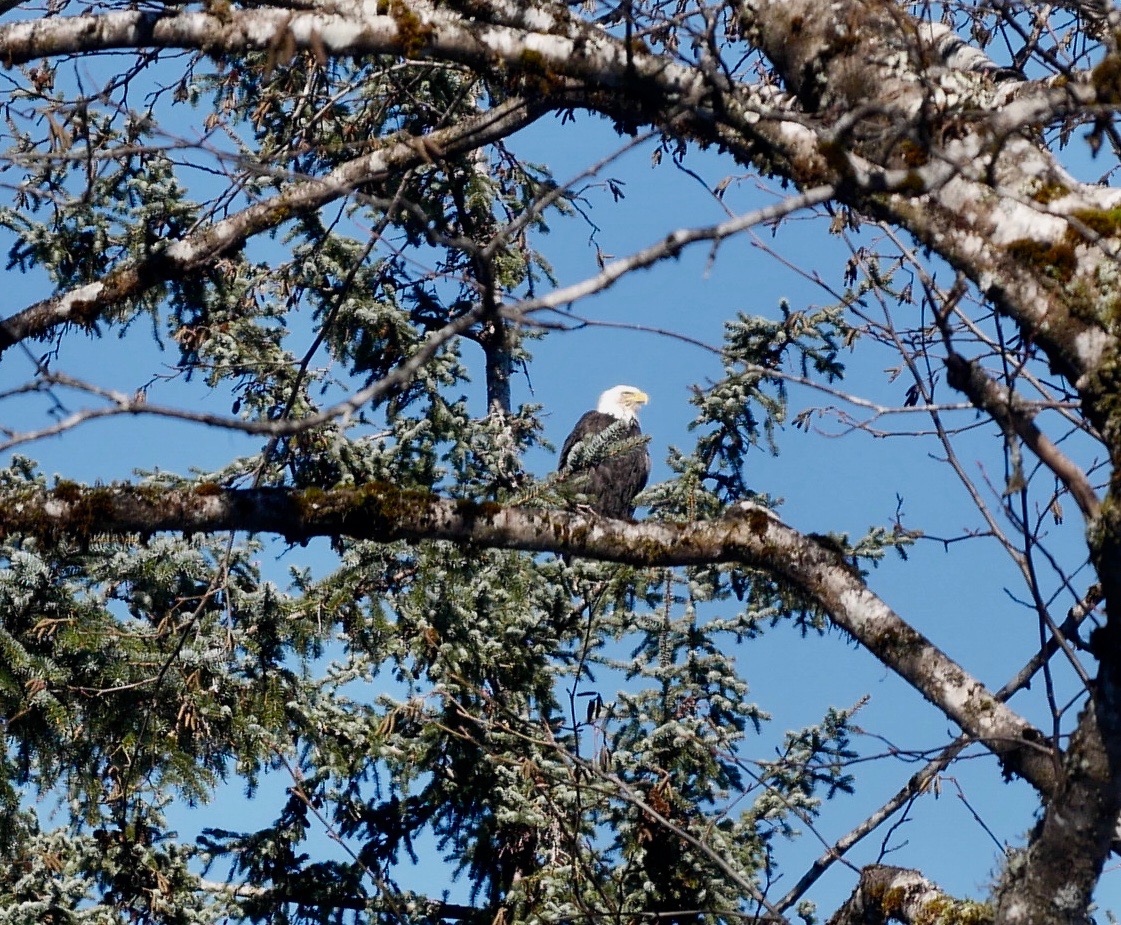
With regret, I lead the little dog off Sandy Beach and into the forested ruins of Treadwell. Even here, sunshine manages to dapple the snow-covered ground. A bald eagle gives itself away with a screech. I find him hidden in a snarl of spruce and cottonwood limbs, apparently enjoying the sun.
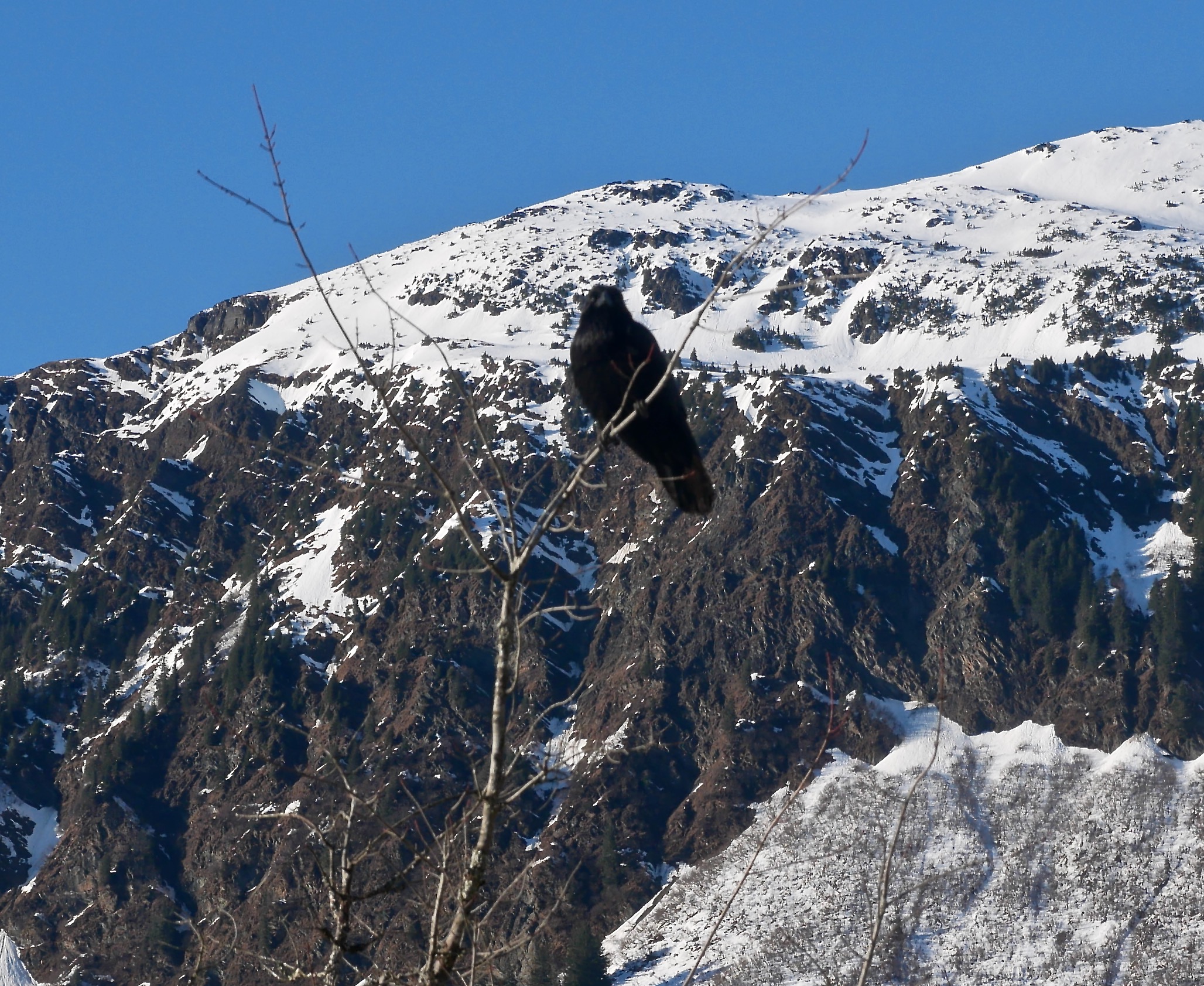
This morning a frustrated Aki barked through the window at a thieving raven. It didn’t stop the bird from tearing strips from a bundle of floating row cover. The poodle-mix barked even more when the raven flew toward its nest site with a beak full of lining material. The raven, a pirate by nature, would probably blame me for leaving the cloth just laying around. It might even find fault with Aki for not figuring out how to escape from the house.
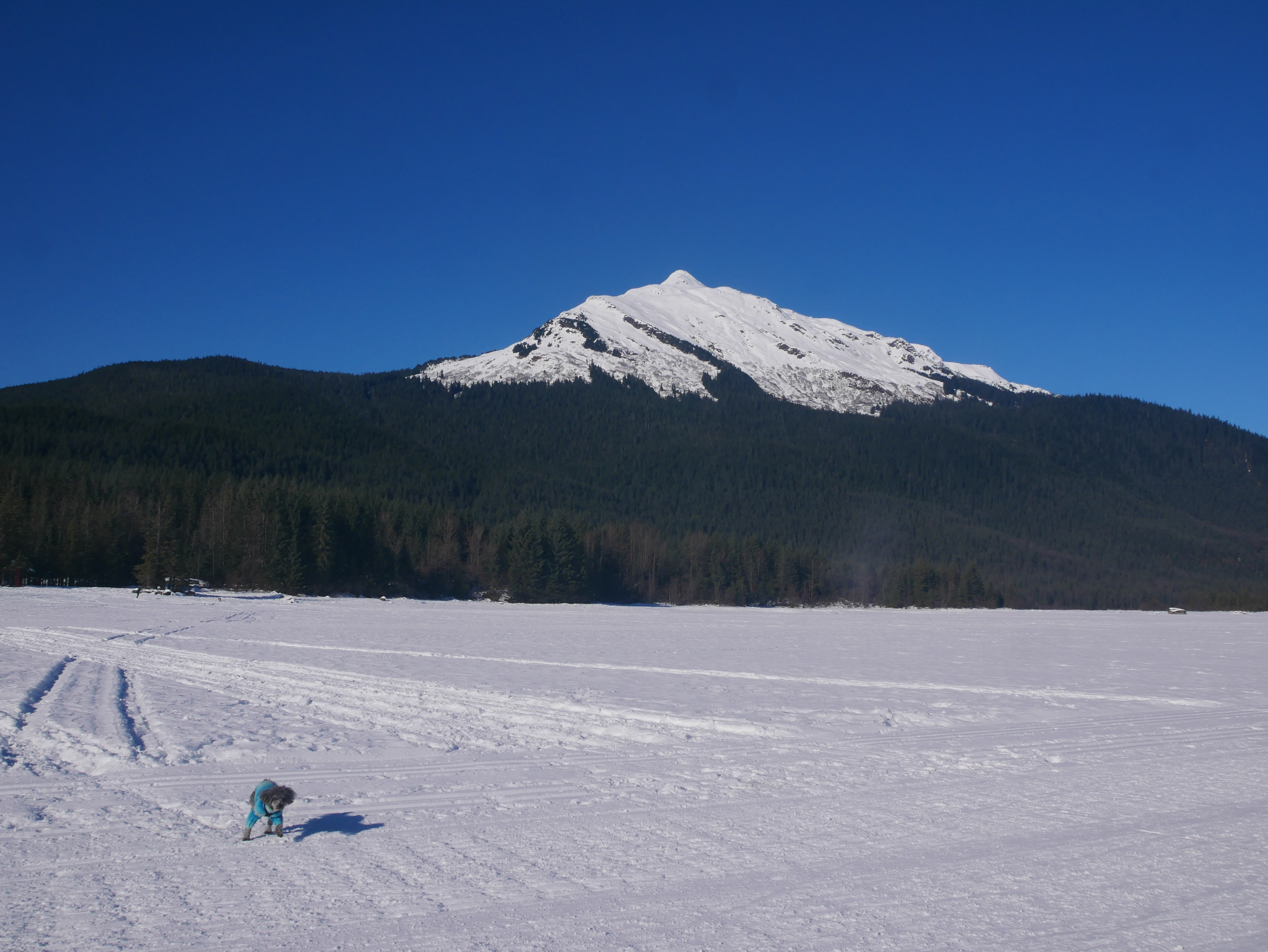
A few ravens flew over Aki as we slipped onto Mendenhall Lake to do a circuit around the cross-country ski course. Aki ignored them. There were just too many smells for her to catalogue. I listened to the hair-blown-through-comb sound of the passing corvid and started skiing toward the glacier. Aki dashed ahead until she was a tiny dot of color in a world of white—a small dog charging toward a river of ice.
The snow on each side of the path is too soft for even Aki to use. The little dog must master an icy chute of a trail if we are going to drop down to the road. I’d like to appreciate the sugar sparkle of the snow and the shapes formed by the bare cottonwood trees against the indigo sky. But Aki has all my attention.
The little poodle-mix tries a quick trot then slides and freezes into a cringe. When sure that she won’t slip out of control she reaches out with her front left paw to tip toe forward and drops into another cringe. Thanks to my cleats, I can move with confidence toward her. She arches her back after I arrive like she does when asking to be picked up at home. I do and carry her to the relative safety of the road. Soon she is trotting along in a snowy channel packed firm by the tire of a passing truck.
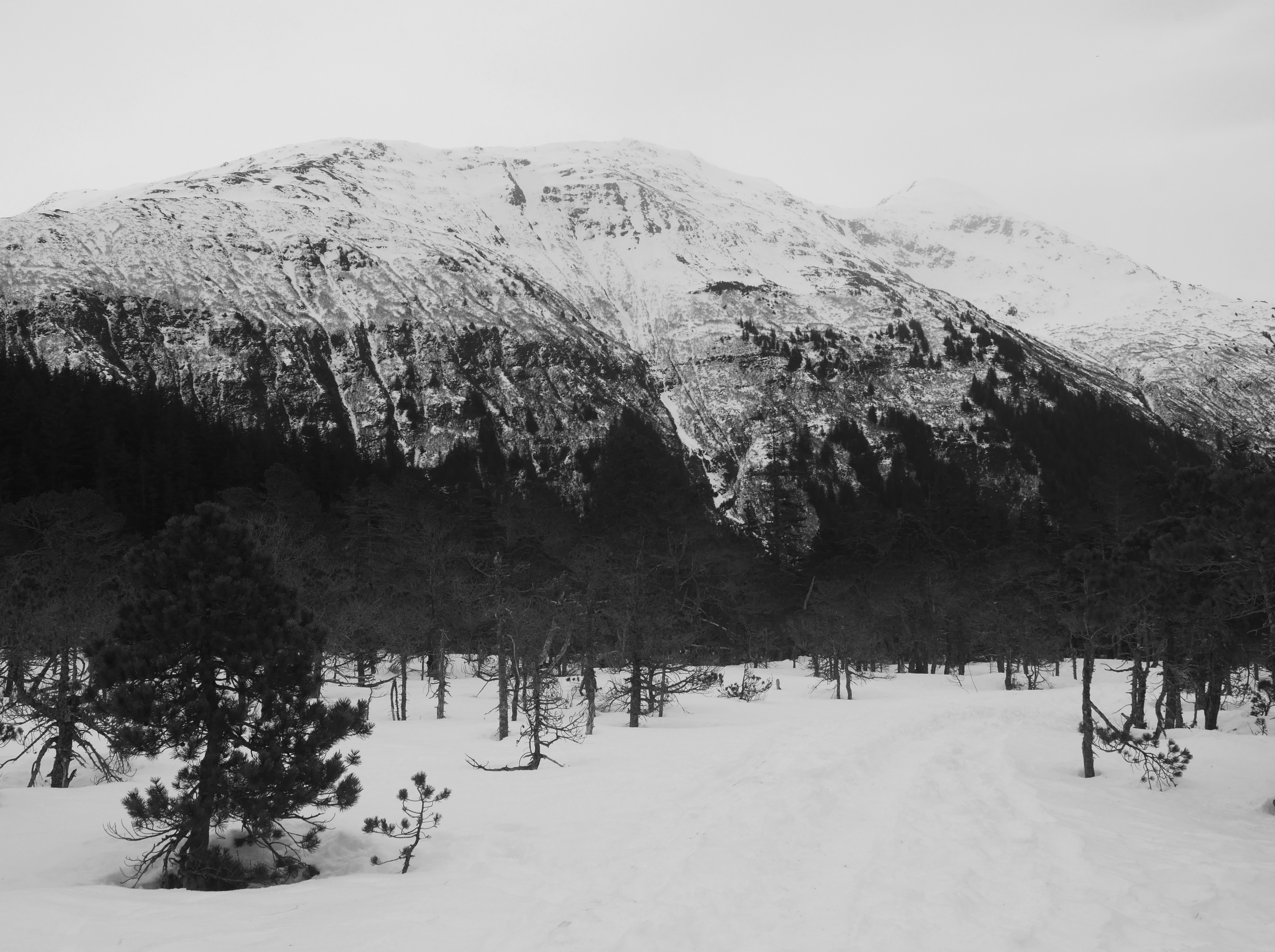
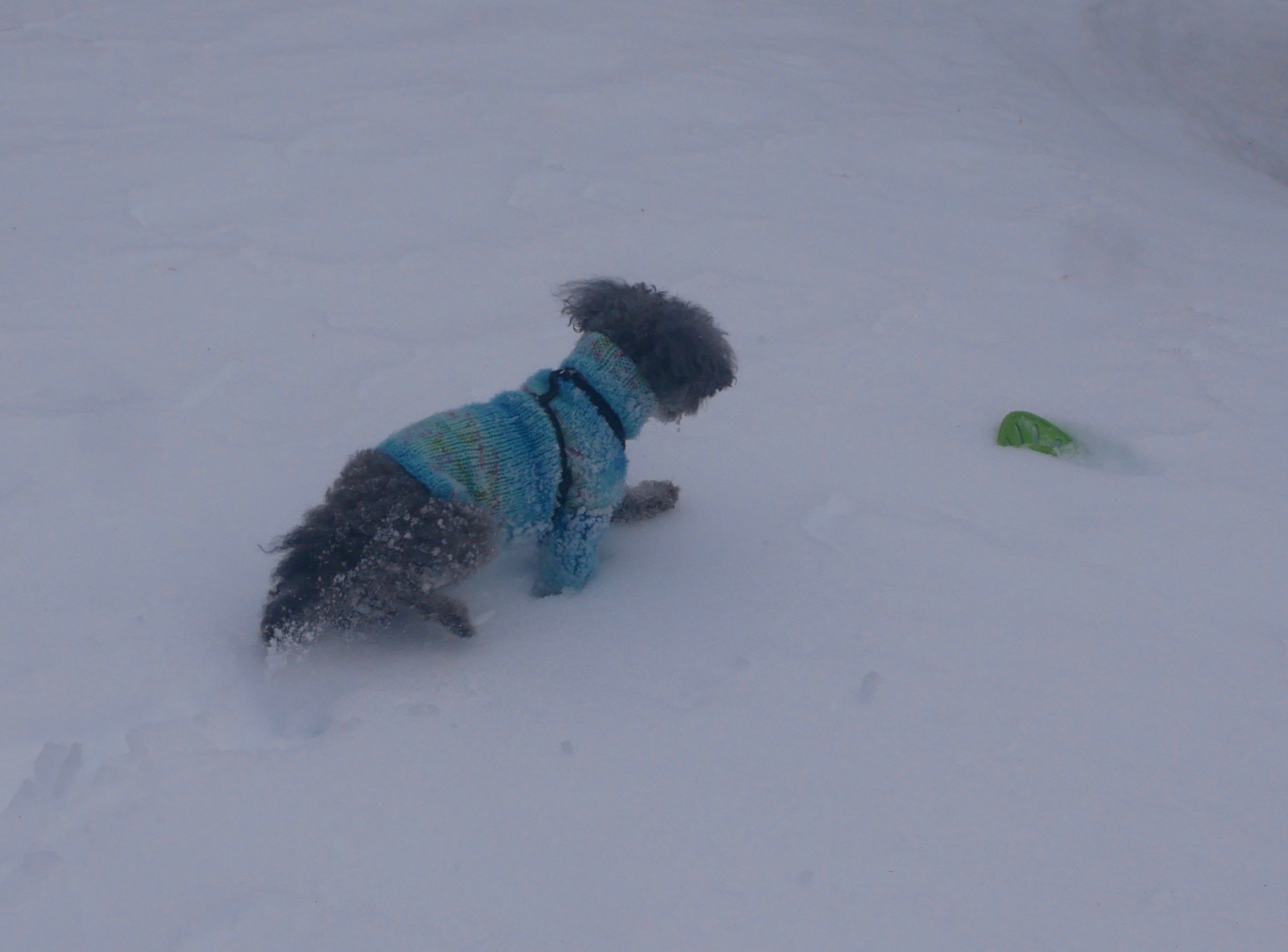
The sun exited today, leaving behind a place better suited for black and white photography than color. I pull Aki’s most colorful sweater over her muzzle and settle it over her back and shoulders. Then we head out to Gastineau Meadows.
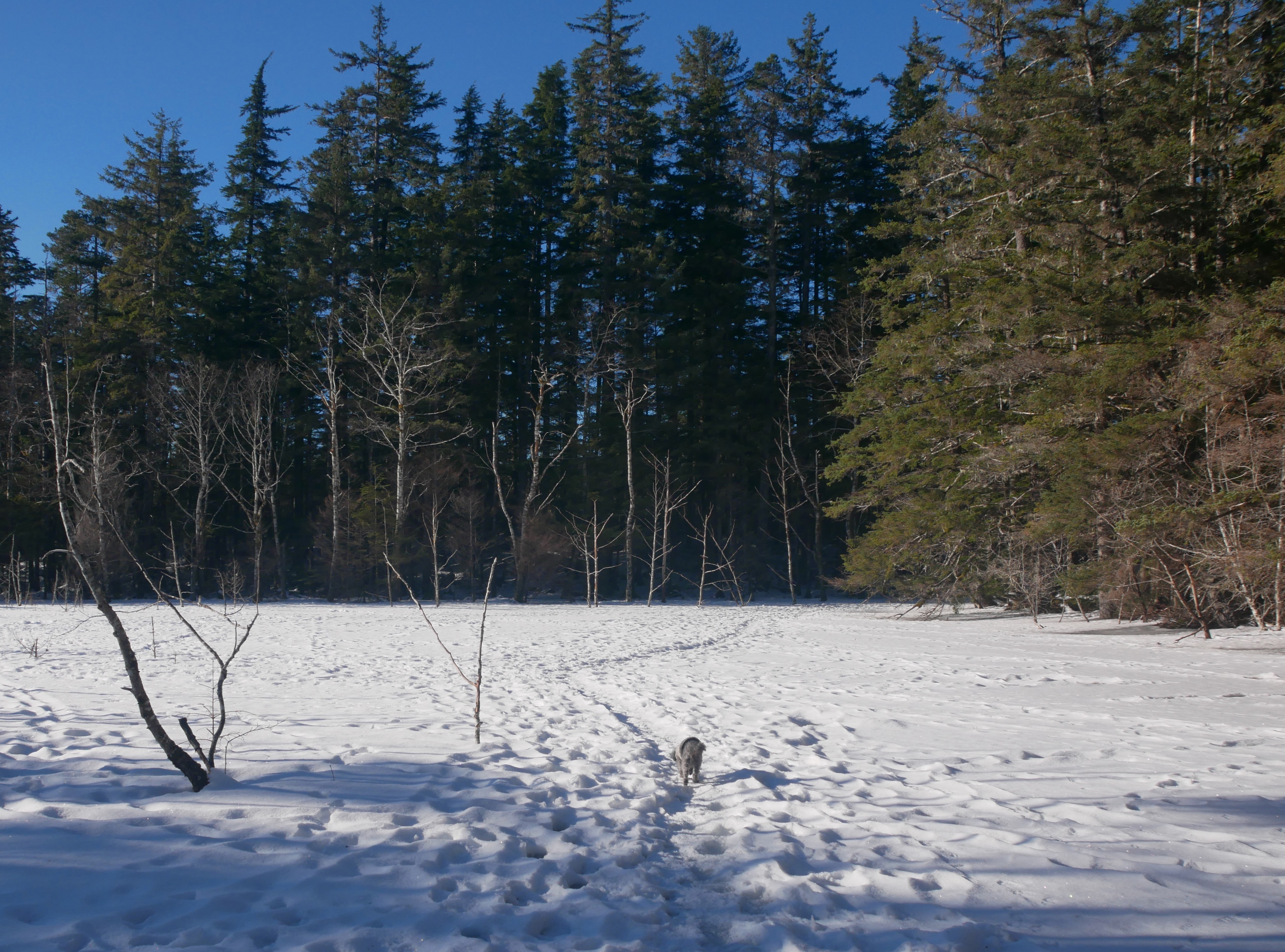
A week of cold temperatures has kept the meadow snow too soft for walking without snowshoes. I didn’t bring a pair. Aki is a shade better off. A thin crust mainly supports her. But the little poodle-mix breaks through every four or five steps. We’d be forced to turn around if three others with snowshoes had not set a trail for us.
Aki loves to chase her Frisbee over snowy meadows, especially this one. Today she growls after the toy when it lands in the broken trail. When it lands elsewhere, she minces toward it, sometimes chest deep in loose snow.
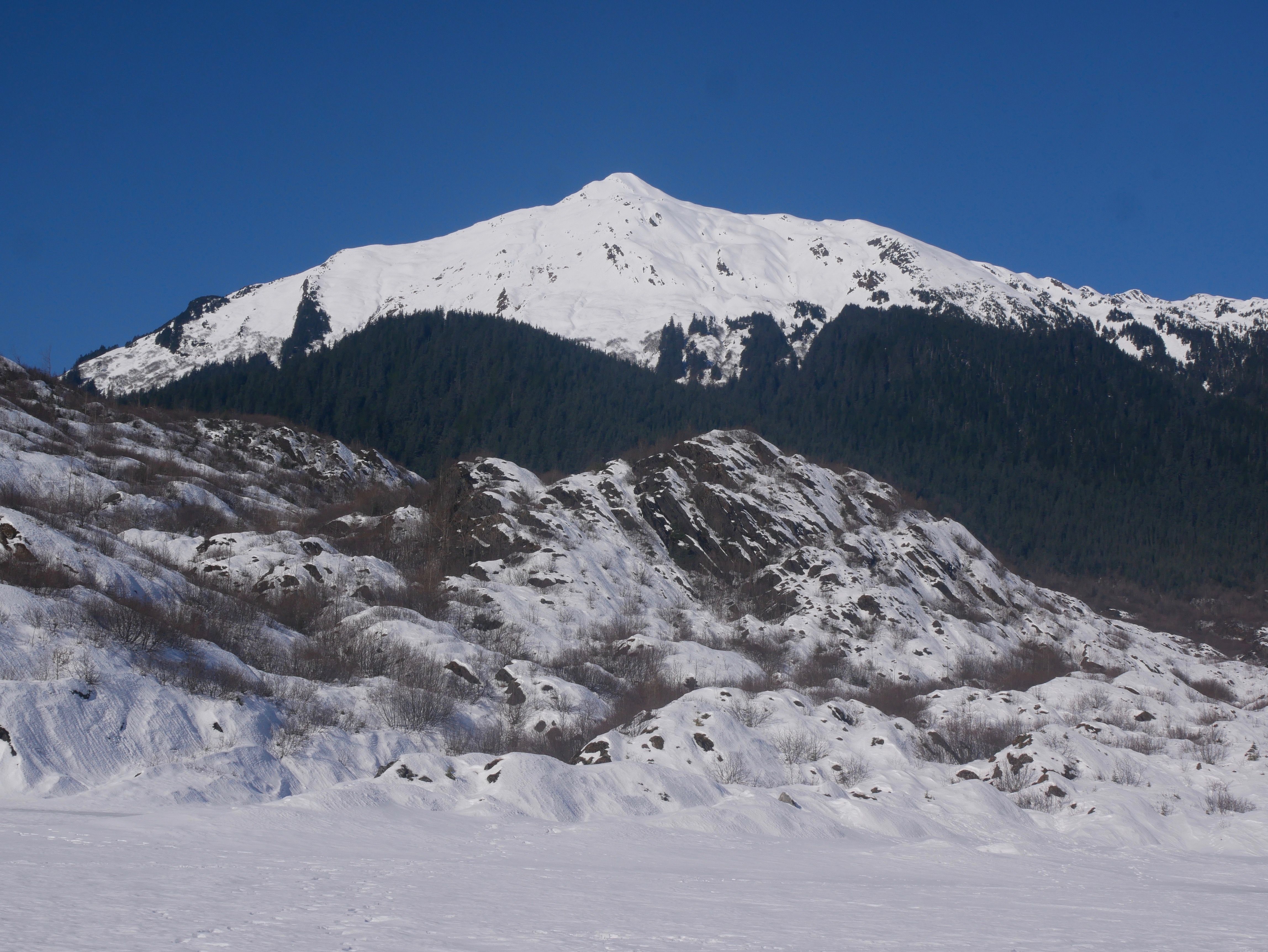
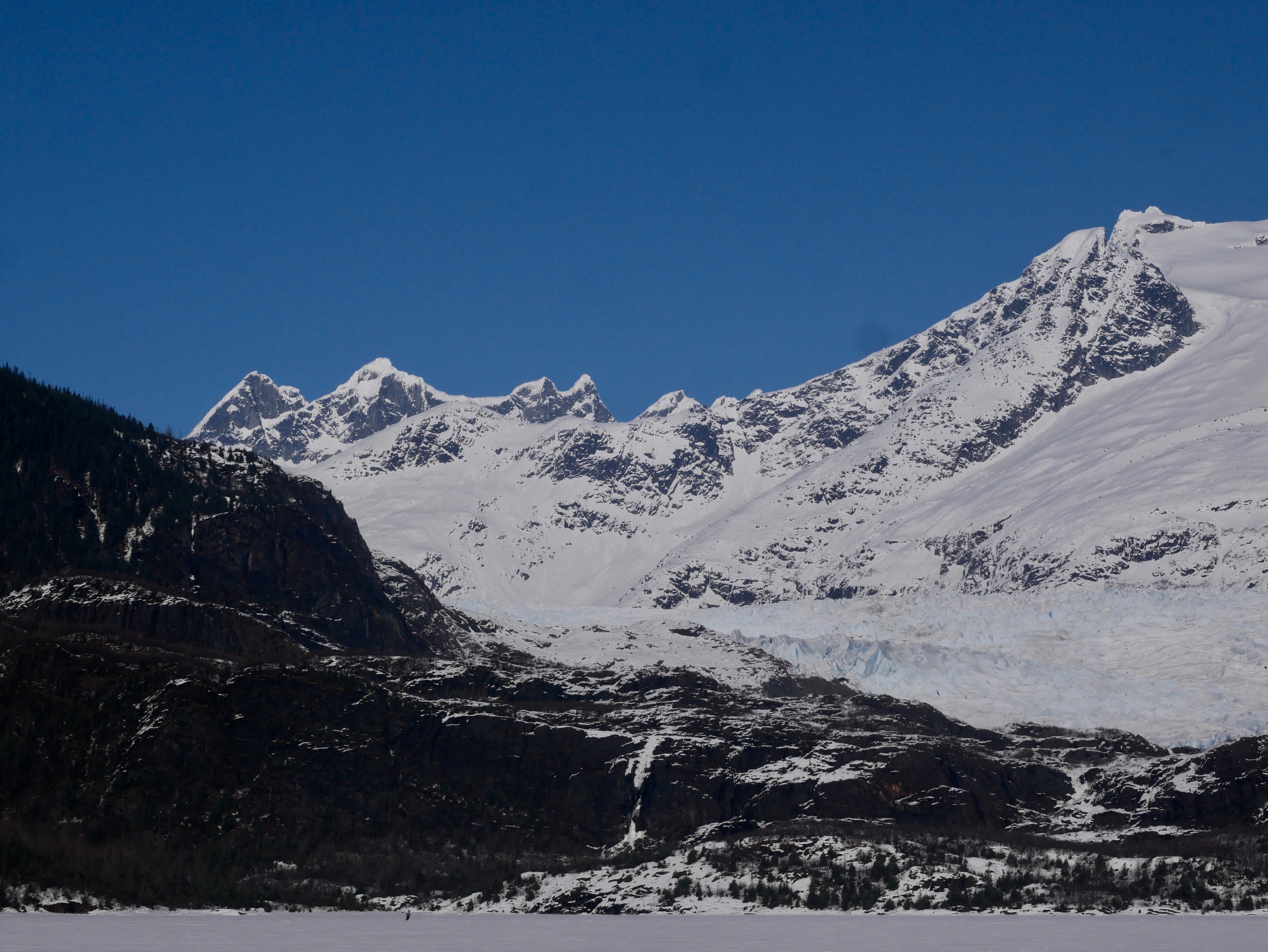
Aki is leading some out-of-town guests and me across Mendenhall Lake to the glacial ice cave. Mount McGinnis and the Mendenhall Towers form a jagged skyline against the indigo sky. It’s easy walking. Previous ice cave pilgrims have pounded our path smooth.
We got a late start. It’s still only 23 degrees F but the temperature is rising. Even now snow melt is seeping onto the moraine trail, making it too slipper to use without poodle paws or ice cleats. We have both. I ask hikers returning from the glacier if they made it to the cave. None managed it. Undeterred, Aki presses on, leading us across the mile-wide lake and onto the moraine.
To avoid sliding into a crevasse or rocks, we climb up hillsides rather than risk ice-covered sections of the trail. Translucent slabs of ancient ice line the trail, encouraging us to press on to the cave.
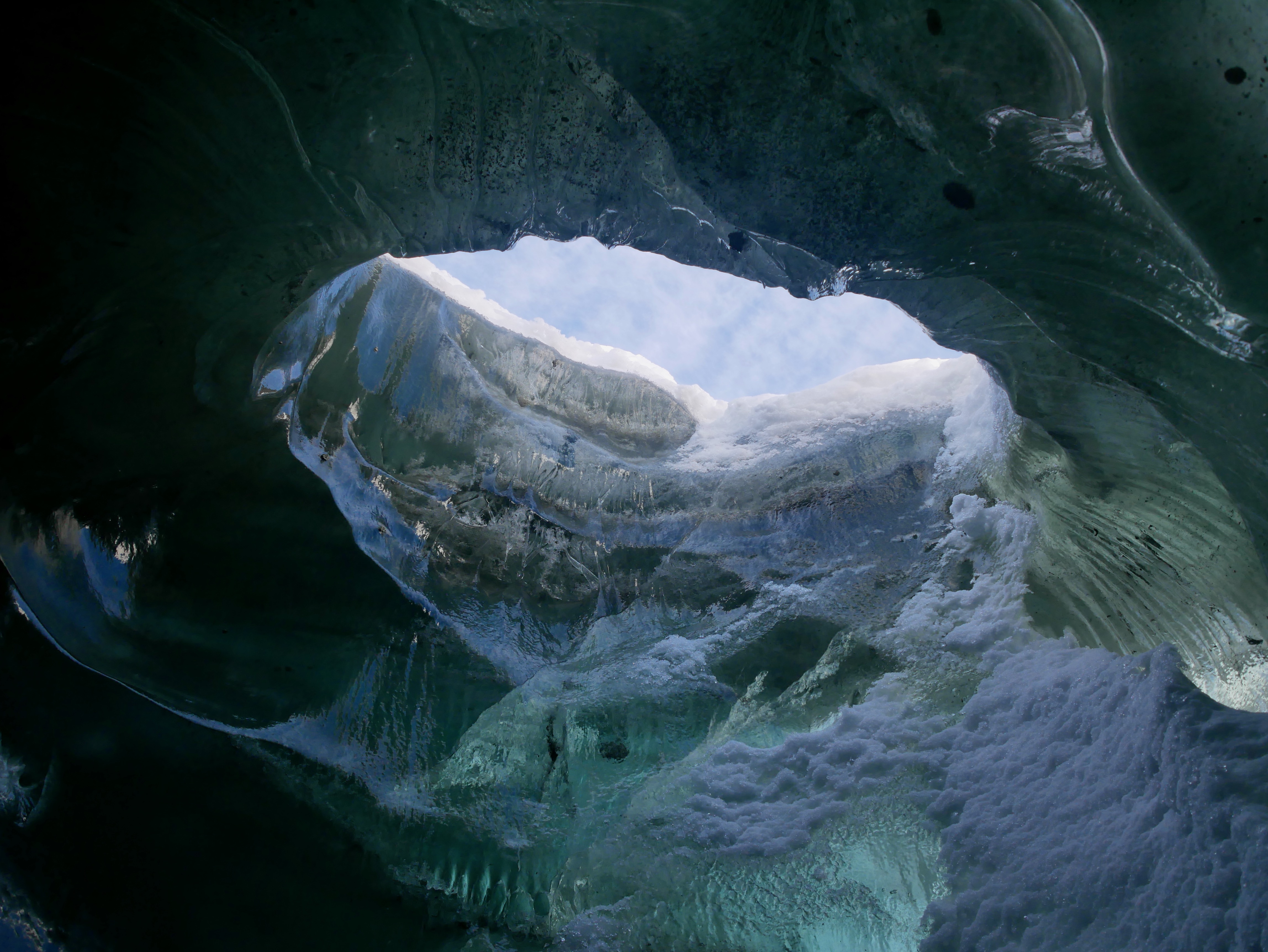
A jumble of clear, blue-tinted ice forms the only access to the cave. Aki refuses to enter. But her humans pretzel their way into the aquamarine-colored chamber. It has the same scalloped roof of the other ice caves we have visited. The roof and walls of those caves imprisoned round, foot-sized rocks. None decorate this cave.
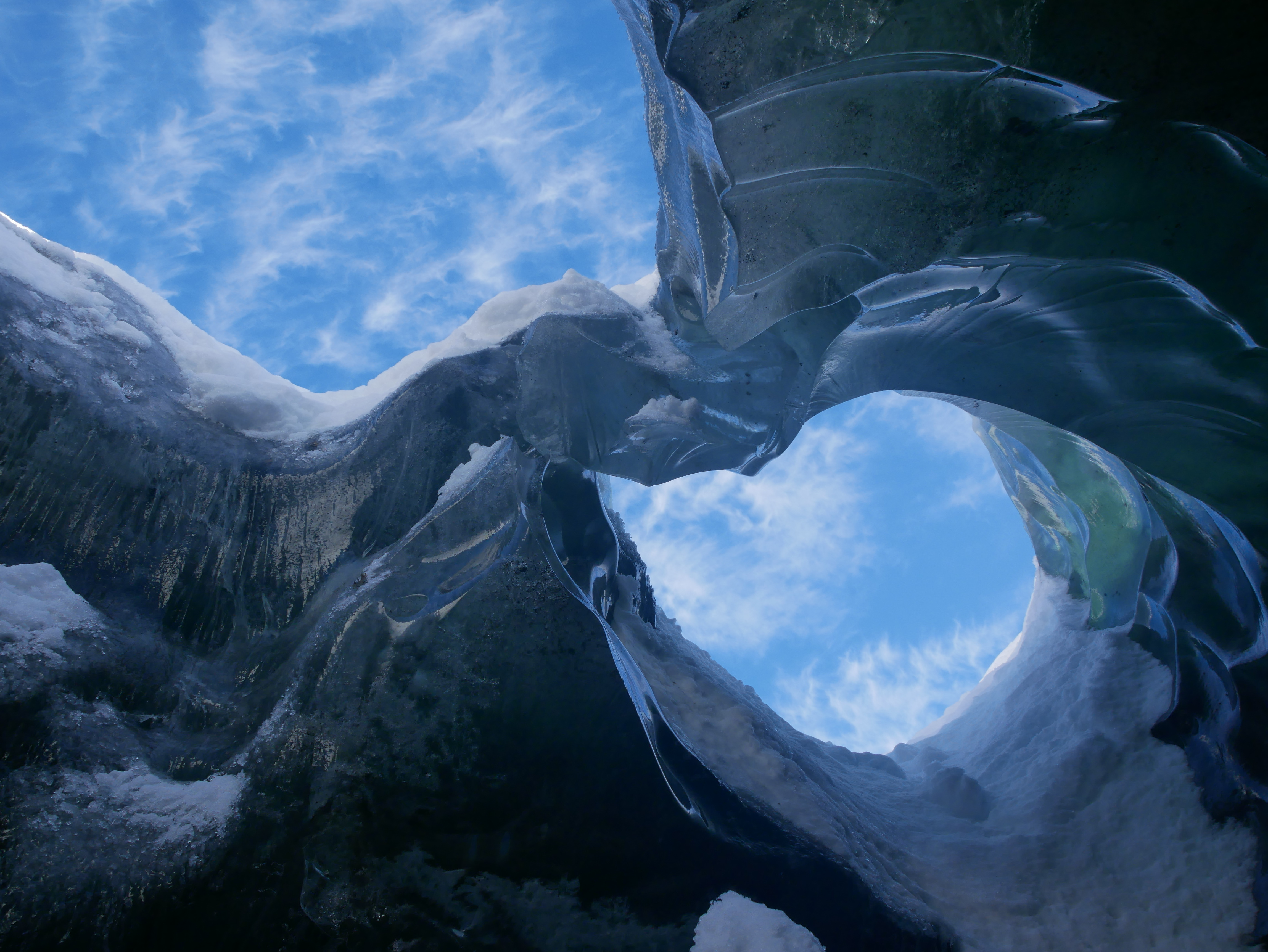
Drawn by a patch of bright, white light striking the floor on the opposite side of the cave, I cross a still-frozen stream and enter a vertical tube of scalloped ice. Above a series of ice lens offer circular views of blue sky and clouds. I can’t think of another view like it.
A week’s worth of sunny weather has turned all the snow on the Outer Point Trail to ice. This doesn’t cause a problem for the little dog or I as long as I wear my ice cleats. Her claws keep her safe. It’s a quiet place. No squirrels or Jays scold Aki. While crossing the ice-covered beaver pond we hear a flock of Canada geese fly overhead. Then it is quiet again.
I stop often to listen for bird song. Otherwise I couldn’t hear a crow’s creaky caw over the sound of the cleats biting into the ice. Until we reach the beach there is no caw to be heard. Just a profound silence, itself a beautiful song.
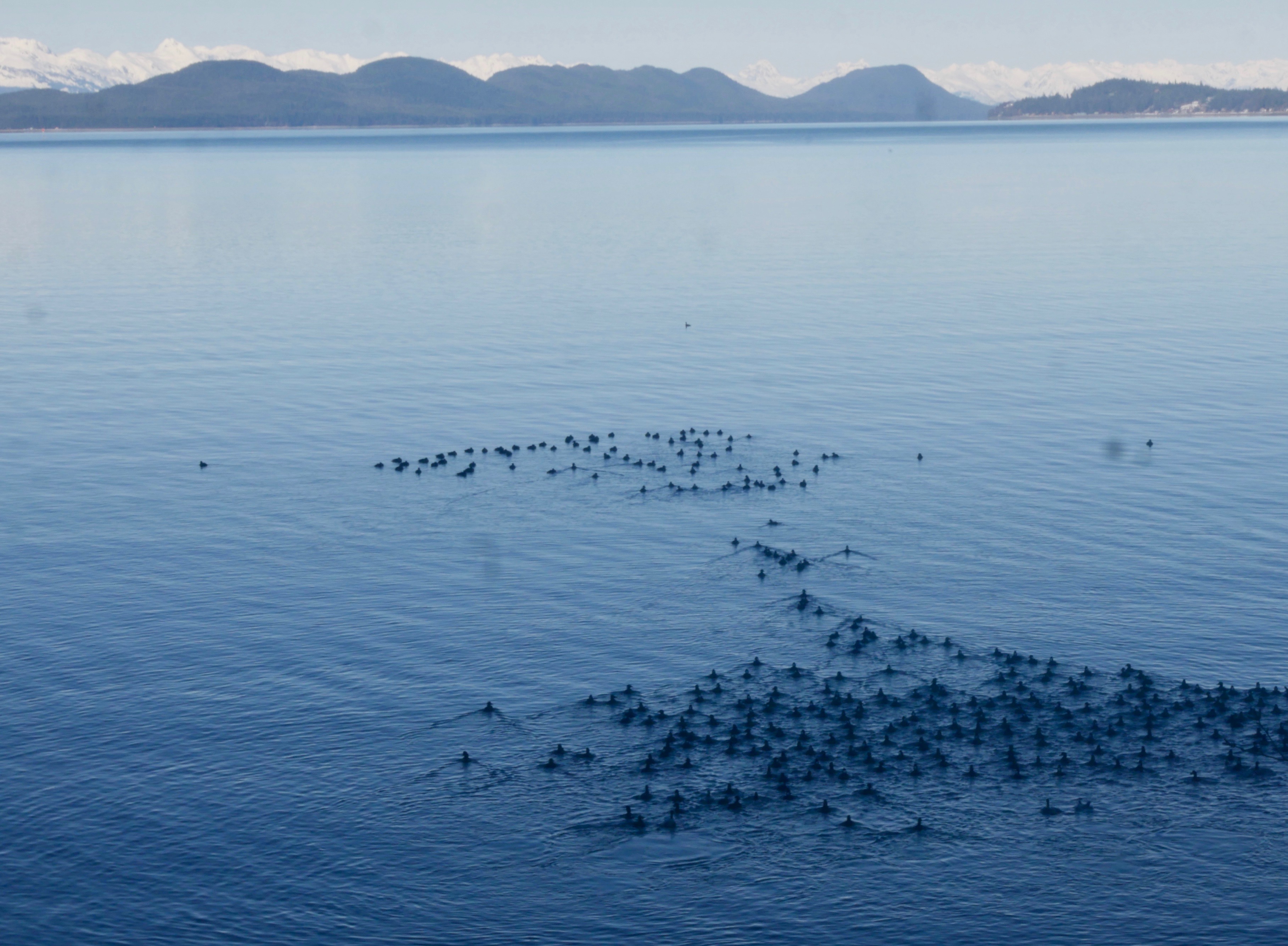
The beach is almost empty of ducks or gulls when we reach it. Here though, we do hear crow complaints. An Alaska ferry cruises past Lena Point on its way to Haines. Between the beach and the ferry a large raft of scoters changes formation like a high school drill team.











 Walking with Aki