Monthly Archives: June 2017

Ravens in the Rain

1

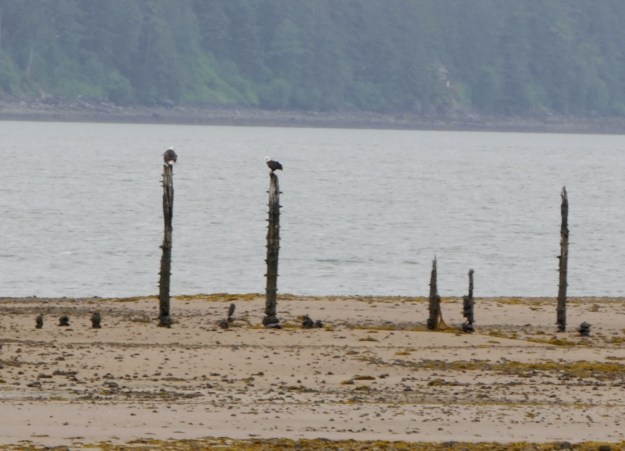
Rain or boredom seems to have depressed the Treadwell eagles this morning. Even though it is low tide and therefore the best time to find food or carrion, two mature bald eagles are glued to the tops of splintered pilings. Two more hunker on the beach near the water. The inclement weather doesn’t seem to have bothered the ravens. They fly back and forth over the glory hole, harassing first the piling plunked eagles and then returning to the beach occupied by those squatting on the sand.2

Aki finds a cache of dog kibble that has been sprinkled on the top of a foot-high piling. Someone, perhaps the sprinkler, placed a flat stone over the kibble but Aki manages to tongue out a morsels before I convince her to stop. Two ravens land on nearby pilings to watch. I have little doubt that they will have the stone off and the kibble down their beaks before we make it back to the car.3

Tern Redoubt

3

Information posted on a government sign made Aki and I cut short our planned visit to the moraine. It warned of the presence of a black bear sow with two cubs. The bear had lost its patience with dogs and their humans. No one had been hurt, but I didn’t want to put the bear in danger of assassination if it attacked my little dog or I. Instead we head over to the glacier visitor’s center and walk toward Nugget Falls. This turned out to be a good decision.1

The glacier this time of year is usually a place to be avoided. Industrial tourism buses rumble to and fro, picking up and dropping off cruise ship tourists. Seasonable government employees work crowd control. You can still see the big river of ice but somehow it seems diminished when viewed from within a crowd. This morning it is too early for the buses or the government minders. Even the wind is absent. Without it to ruffle the water, Mendenhall Lake is a giant mirror. Arctic terns temporality shatter the glacier’s reflection when they slam into the lake’s surface after salmon smolt.4

I’m surprised to see the sharp tailed birds. Last week a glacial dam broke, raising the lake to flood stage. In years past, similar floods have covered the tern’s sandy nesting area. But this morning, a half-a-dozen birds fish for young in the lake. The chitty conversation of the terns can be heard over the Nugget Falls’ roar, robin’s sweet song, and the off-key whistle of a territorial thrush.2

Rashes of Wild Flowers

1

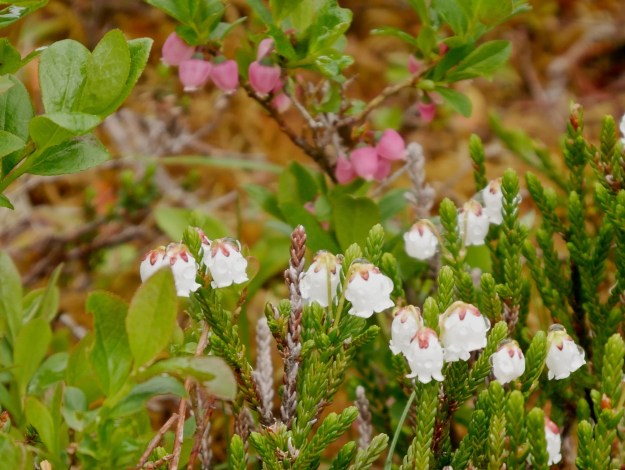
Last year’s weather was kind to this mountain meadow and its wild flowers. Like the California desert after a wet winter, the meadow is the midst of a super bloom. In some places, wild rhododendrons and bog rosemary form a magenta rash. In other spots they only pox the meadow.2

The place is also thick with flowering heather and shooting stars. The later are fading from magenta to lilac as they slide toward their annual death. It’s all summer and promise until I spot young fireweed plants forcing their way skyward. Soon they will set stalks of magenta beauty while continuing to grow new buds. The blooming of these will mark the end of summer and mark the coming of wet weather. But in between summer and fall, the fireweed will fill the sky with feathery seed cases—reminding us of the snows to come.1

Catching The Bottom

3

All fishing trips start early in the morning, many before the breakfast caffeine can clear the mind. This one begins at the relatively late hour of 7 A.M. Aki remains home, looking forward, not doubt, to a planned visit with one of her best dog friends. If fishing was the only point of the trip, I should stay home. Thanks to a dramatic fall off in the local king salmon returns, that fishery is closed. With better weather we would make the one hour run to Lizard Head, where King fishing is legal. But neither the sky nor the weatherman gives much hope of calm seas.2

In a normal year, the waters of the bay we fish out of would be full of king salmon fisherman, human and sea lion, as well as the occasional whale. But today, I only spot two eagles. One roosts on top of a commercial salmon troller, confident that it won’t put to sea until after they reopen the fishery. The other eagle, still acquiring its species’ trademark white head and tail, stands at the water’s edge, looking at its reflection as if basking in his beauty.1

Later we will try for halibut by dropping weighted line onto a reef off of Hump Island. Humpback whales and Dahl Porpoise will fatten in the herring-rich waters. An adult bald eagle will pluck a bait herring off the water close to our boat. We will catch only the ocean’s bottom with our hooks. But we really won’t be there for the fishing.

A Complex of Clouds

2

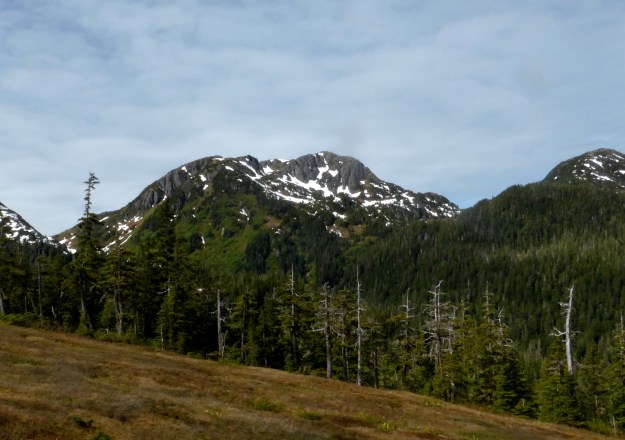
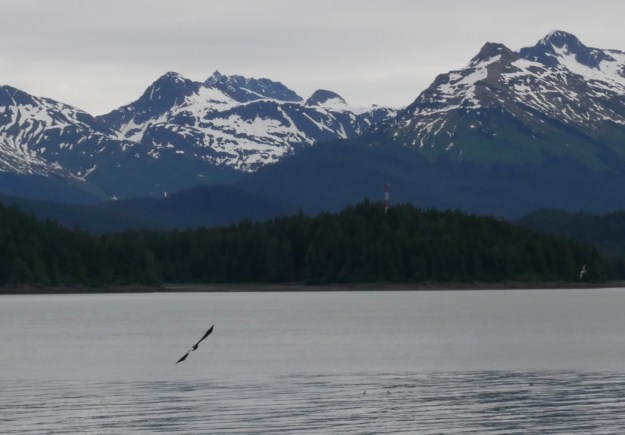
Aki and I walk on the spine of a long, gray gravel snake stretched out on the forest floor. On either side, the white flowers of food plants—crab apple, high bush cranberry, and Labrador tea—break the monopoly of forest greens. The snake will lead us to a beach where white gulls harass eagles away from food exposed by the ebbing tide. But my eye will be drawn to Lynn Canal where a complex of clouds, from white to dark gray, water the sea.1

Hot Mountain Dog

1

Instead of the promised rain, Aki and I have unfettered sun. Feeling a little like Obi Wan Kenobi from Star Wars, I am wearing a heavy sweatshirt with hood pulled up so it covered my ears and neck. Yet I still feel comfortable. Another Jedi mind trick. We are climbing a gravel road that transverses a small mountain bowl. When the road crests we have fine views of Ben Stewart and other mountains in the Douglas Island ridge.2

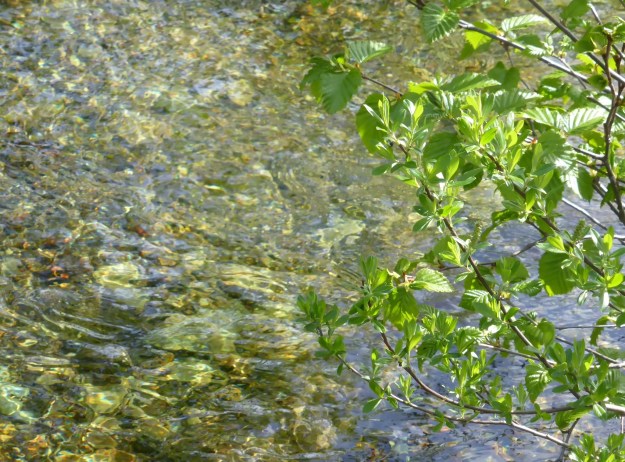
Aki is panting in the heat, looking for a water source. She finds it in a small, fast moving stream. Willows choke the stream banks except where a small gravel beach has formed. Aki wandering into the creek chest-deep and sips from the stream.3


Rounding False Outer Point

2

It’s the seventy-third anniversary of the Normandy invasion that eventually led to the end of World War II. Aki and I are rounding False Outer Point during an outgoing tide. Nothing about the scene inspires memories of D Day except the eagles that make my little dog nervous. During our approach to the point, an adult bald eagle, white head bold against the spruce where it roosts, dives toward the water with talons extended in the fishing position. But it carries nothing back to its roost. Aki gives me her “are you crazy?” look but still follows me around the point.3

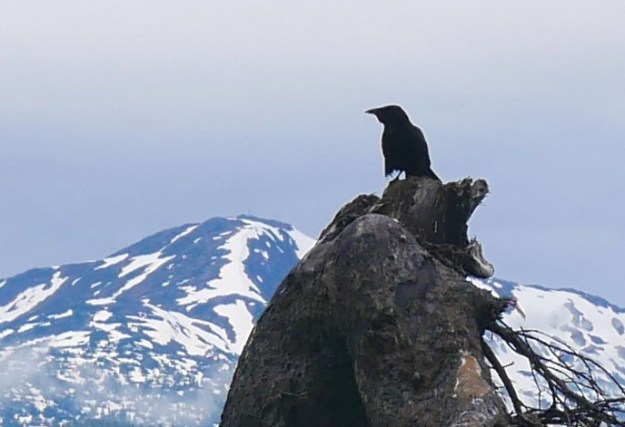
A flood tide forced us to rock climb around each headland the last time we made this trip. That day ended for me at the local urgent care facility where a doc-in-a-box stitched closed a cut I received after slipping on razor sharp shale. Today, with the tide on the ebb, we have an easy passage. Four eagles make lazy circles above the beach after the point but Aki doesn’t seem to notice. The resident crows notice us. One takes up station on the top of a driftwood root wad and polices our passage back into the woods.1

False Finds

3

Reunited after my stint at the Skagway writer’s school. Aki and I patrol Downtown Juneau. The little dog is all business, but doesn’t seem to hold a grudge about my absence. We walk in soft drizzle that dampens the morning’s color. A noisy raven, angry that one of his kind hold a tasty stick of something in its beak, lets us approach within a few feet. When he flies off, it is only to an alder a meter away where he continues to monitor the greed of his neighbor.1

The lucky raven seems more stressed than the one with an empty beak. After trying to squawk with food in its mouth, it stops feeding and shifts his prize to one of his claws. The other grips the wet skin of a Chevrolet pickup. Down on South Franklin Street, where the docks are empty and the stores are closed, three women of commercial beauty have been pasted to the side of a cruise ship perfumery. The brunette in the center declares her’s an ageless society. But soon, even her beauty will fade, victim of rain and sun.

2

Laughton Glacier


6It’s the last day of writer’s school in Skagway. Students and teachers, including Paul Theroux are in a White Pass narrow gauge railway carriage that rattles toward the Laughton Glacier trailhead. The conductor has stuffed all the writers into one carriage where the sound of thirty or forty conversations competes with the grumbles of the old carriage and the disembodied voice of a tour guide giving the railroad’s history.  5
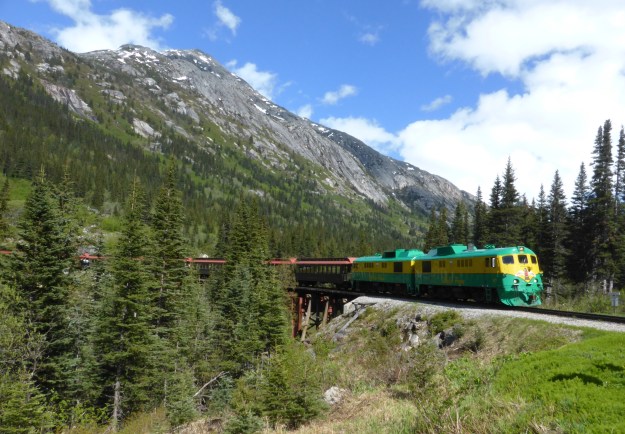
Last night rain soaked the trailside forest but now we have to squint to the morning’s sunshine while disembarking. Conversations began on the train continue as teachers and students start up the trail, joined by a couple from Galway who decided to follow us to the glacier rather than continue on the train to it’s terminus at Fraiser, British Columbia.1

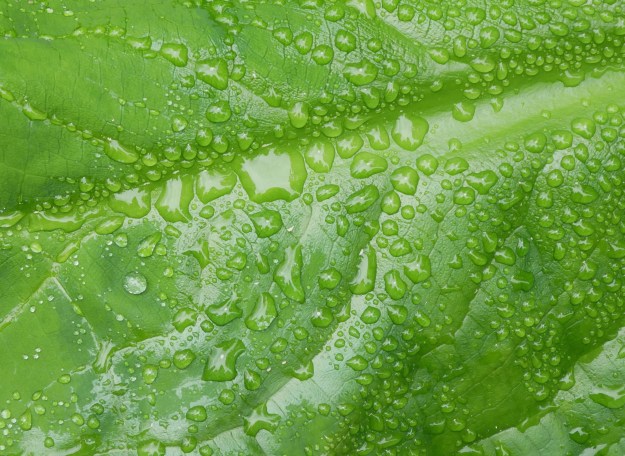
I hang back, letting everyone pass, until all conversation is being drowned out by a glacial river in a hurry to reach saltwater. The river also blocks out all birdsong. If a raven is scolding me, I can’t hear it. The forest plants aren’t steaming in the sun. That time has passed. But fat raindrops still cling to plantain plants and dead-brown foliage of last year’s bracken glows.2

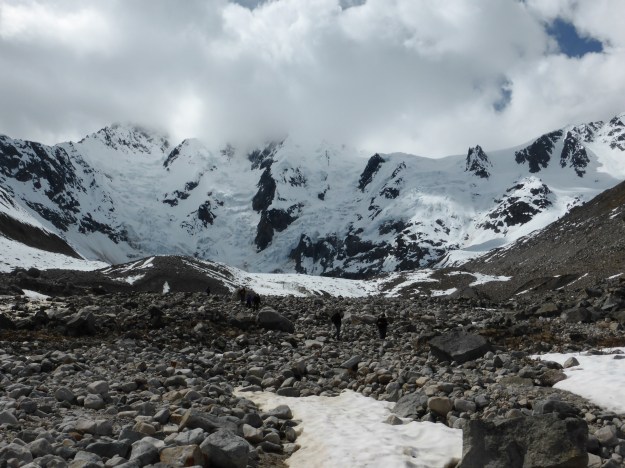
After a mile the trail leaves the river and leads me up through wind-stunted spruce and cottonwood plants. Still alone, I follow it onto a flat valley formed by twin walls of naked moraine. Only tough plants grow here. Ahead the Laughton Glacier curves up into clouds that obscure a mountain ridge. The clouds also block my sun. Ahead one of the writers, in long skit and windblown hair, walks towards toward the glacier with the help of a tall trekking pole. She turns the scene into a black and white photo of a pilgrim approaching her ashram.

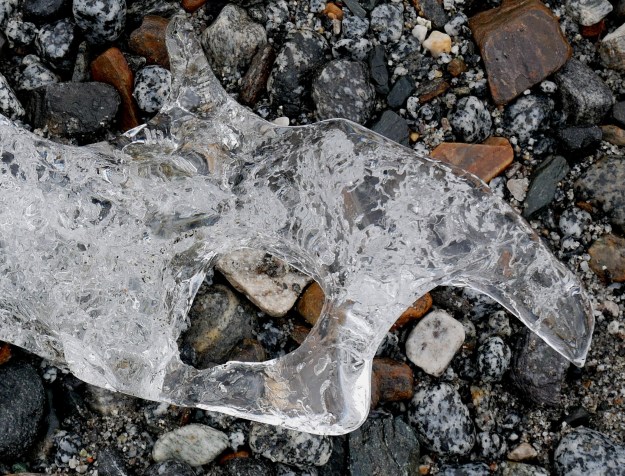
1I’ll pass the pilgrim and climb onto the shrinking toe of the glacier. The sun will return. I will hold sharp edged rocks just being released from glacial ice that carried them from mountaintop to my feet. “Look at these rocks,” I will shout to a much younger writer wearing heart-shaped sunglasses. But magic will be in their history, not their appearance so she will probably thinks me weird. Higher up the toe, I will fall into a conversation about wolverines: whether the grumpy loners are magic or just thugs. “Magic” will become my favorite word for the day.4
Skagway Cricketers

2

I’m in Skagway, a town eighty miles up the Lynn Canal fjord from Juneau. Having no need of writer’s school, Aki is back home. During a break between classes I am riding my bicycle on the road to the old gold rush town of Dyea. On my right a red-breasted sapsucker hammers a tin mail box, repeatedly striking the words, “U.S. Male” with its beak. I wonder about the bird’s politics.1

It’s a relief to escape class and the town of Skagway, now filled with 13,000 cruise ship visitors. Later on the ride I will pass a group of cruise ship workers playing cricket on a baseball field. They are short one bat so they have to make due with a section of alder. I think of the cricket game I once watched never Devon, England on a perfect pitch where the batters wore pads and the bowlers a wooden ball. The rubber one used by the cruise ship crickets didn’t yield that satisfying “crack” when hit that a wooden ball produces. But today’s game brought the guys joy. 3