Spa Day

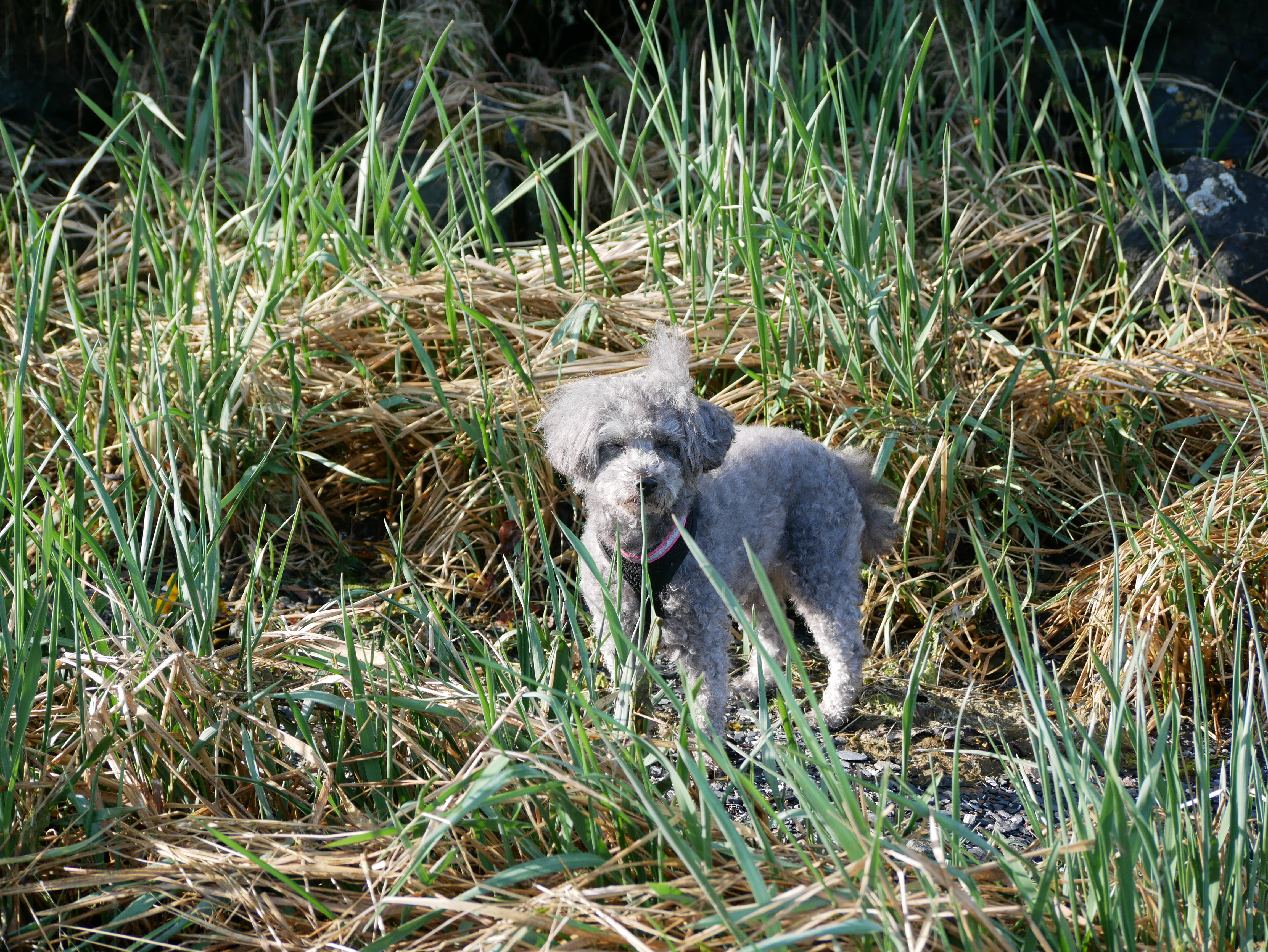
The way Aki is panting, you’d think we were crossing the Gobi Desert in high summer. The little dog and I are on a mountain meadow warmed by the sun to 67 degrees (f.)—what we call Tee Shirt weather. Aki can’t strip off her coat of fur so is overheating. 
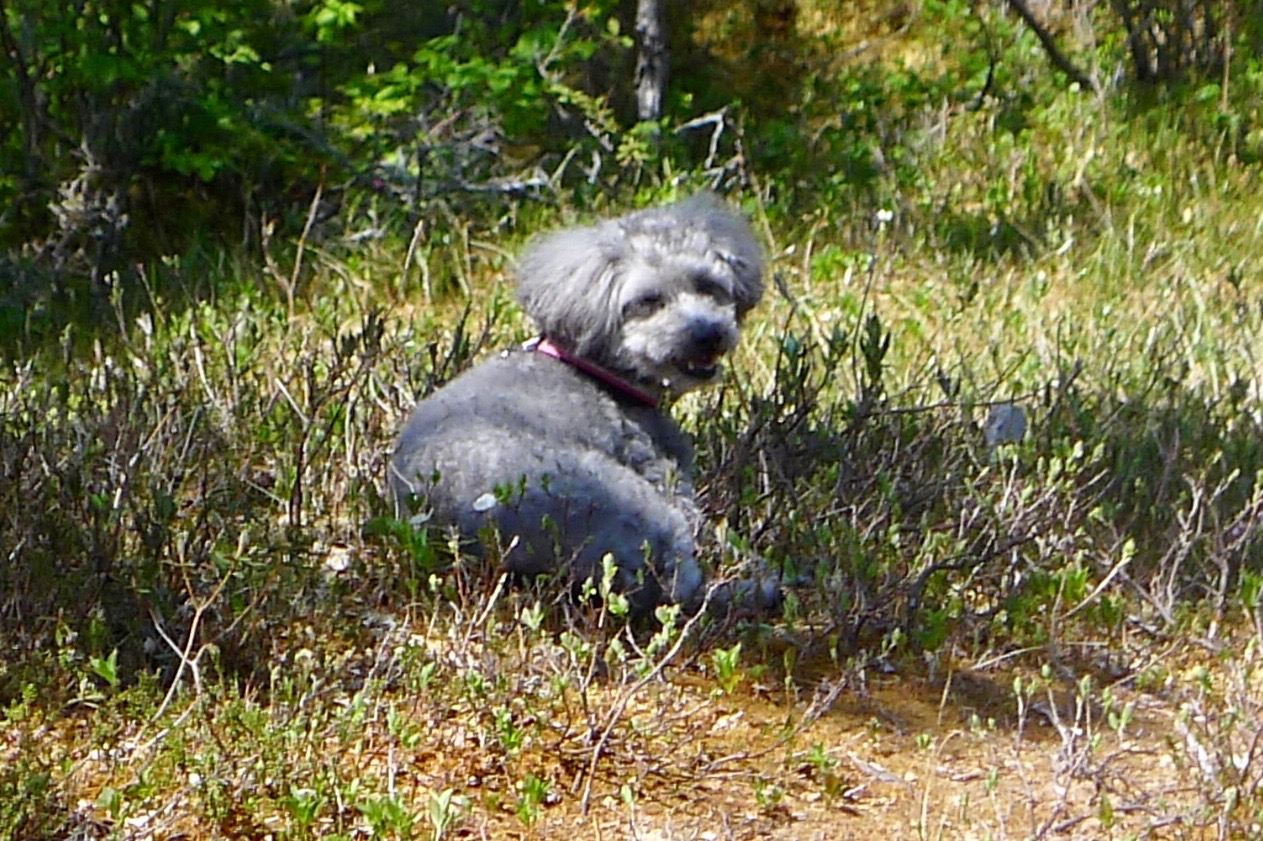
            I turn to mutter something to her about the abundant of bog rosemary flowers on the meadow and find that the little dog has moved to a shady verge. She looks content, like she could stay there until nightfall. 

            A loyal little thing, the poodle-mix follows me across the open meadow, past pocket ponds dry due to lack of rain. I lead her off the meadow toward the lush corridor of trees and brush drained by upper Fish Creek. Just before we reach it, Aki slips into a mud-bottomed stream and lets herself sink in to her chest. She emerges with her lower half coated in a chocolate-colored mask. Once dried, the muck will be almost impossible to remove. Aki trots toward the creek, acting as happy with herself as someone just treated to a spa day. 
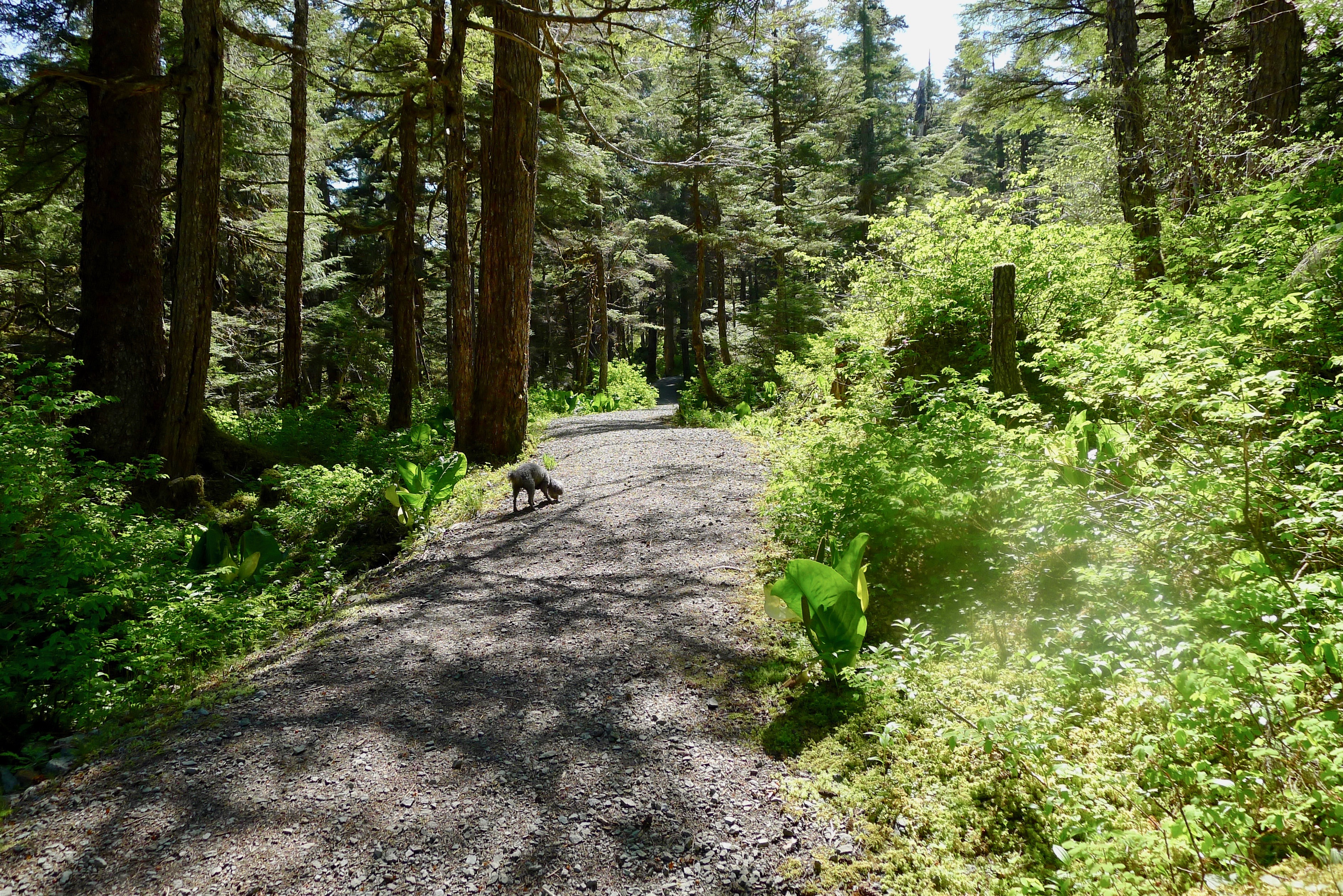
            We find a spot along the creek where I can wash Aki without concern that the current will carry her away. She doesn’t squirm when I lower her into an eddy of the chilling water. She looks a little disappointed when I lift her back to solid ground. But she won’t bolt into the shade or seek out another mud bath when we walk back to the car. 

Oil Change Day

Aki is 90% asleep when I slip on her harness and take her out to the car. We need to be at the auto shop in ten minutes. For there we will take the scenic route home. Aki demonstrates some mixed feelings about the whole project. The little dog would rather be home eating breakfast or at least sleeping. Now she is skirting around gas pumps and tire racks in the rain. We walk toward the whale statue. Aki throws on the brakes when we pass the Juneau Hotel. Maybe she smells breakfast cooking. In a minute we are back in motion.

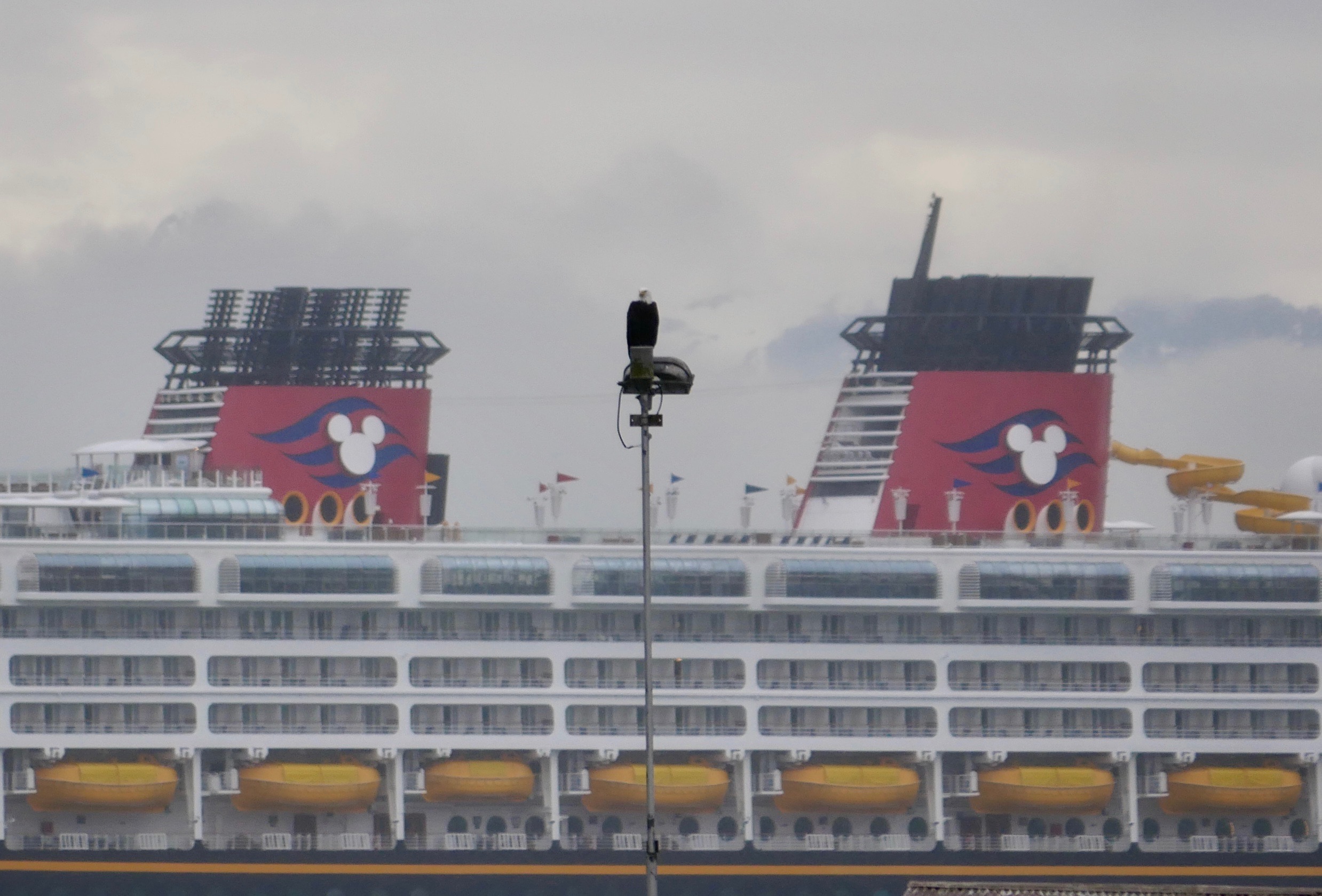
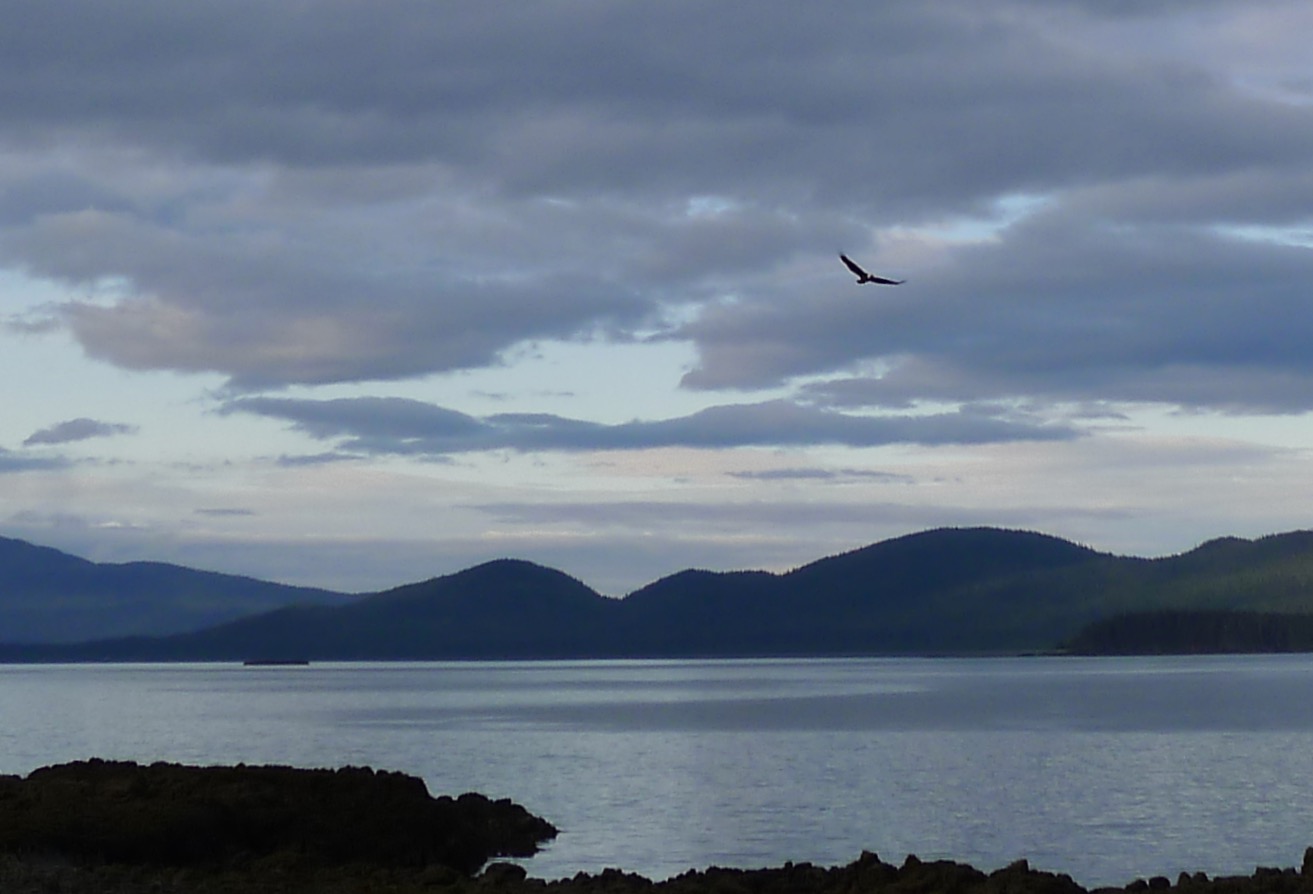
            The whale statue plaza is deserted. On a mid-channel navigational marker, an eagle sits, its head turned toward a gang of gulls clouded over a school of salmon smolt. The big bird launches from the marker and glides toward the gulls with talons extended. In seconds the gulls drive away the eagle. One escorts the still hungry eagle back to its mid-channel perch.             

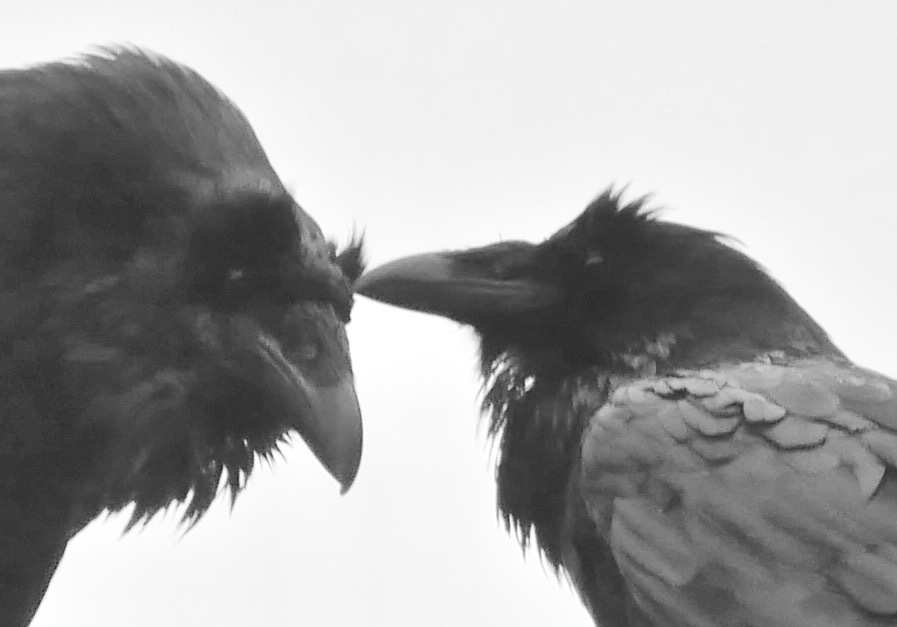
            While climbing up Main Street we spot two ravens in conversation. The smaller of the two birds is upbraiding the larger one, which is bent almost in half in supplication as the lecture ends. Ravens are the most human of birds. 

Steep Learning Curve

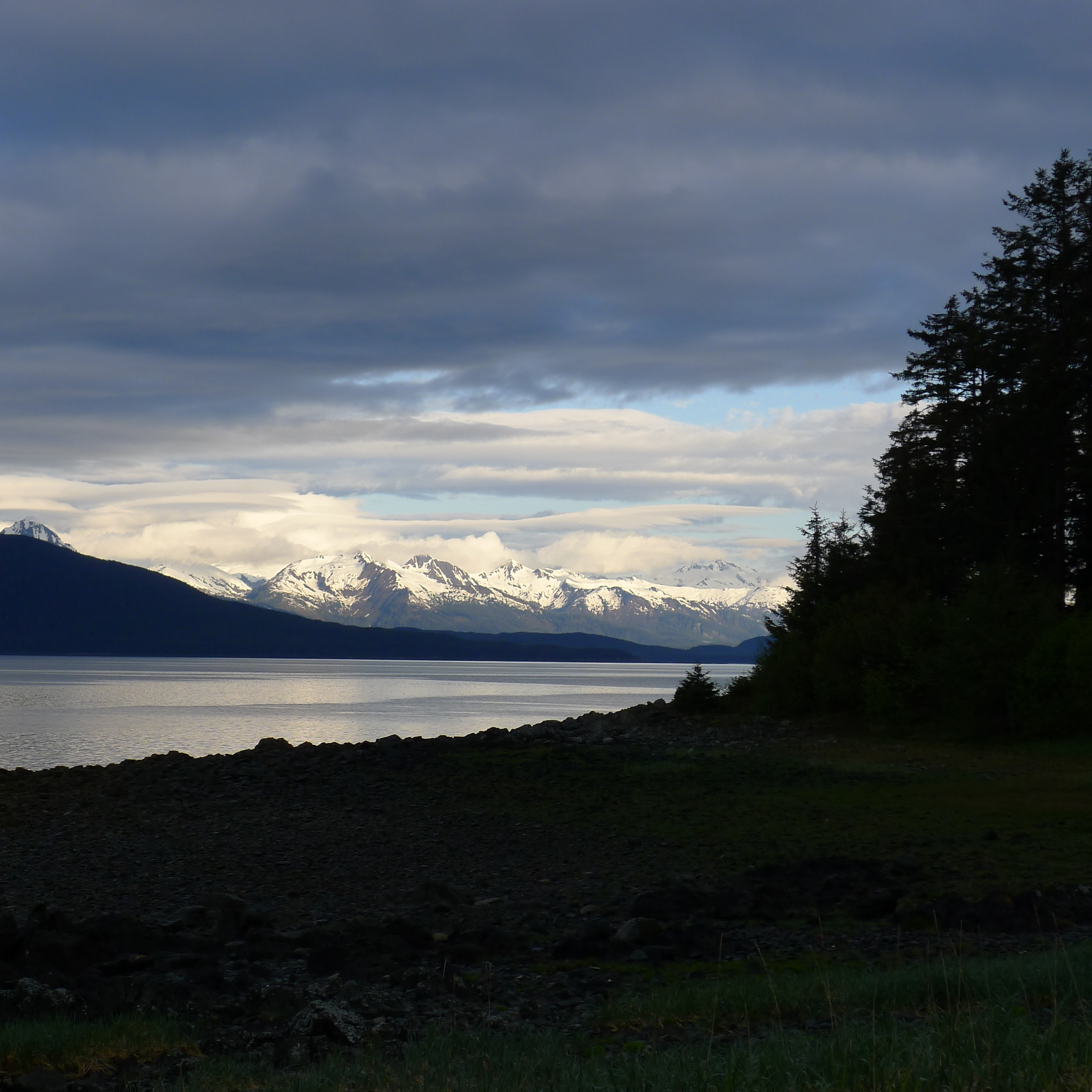
Last night Aki capped the last of a string of sunny days mooching for food around a campfire. A bank of clouds climbed over the Chilkat Mountains and onto Lynn Canal while the little dog’s human family roasted hot dogs over an open fire while The clouds robbed us of a sunset and brought today’s rain. 

            This morning Aki and I explore the Sheep Creek delta. The sun worshipers who gathered on the delta last evening are gone. Only those with serious purpose are here. Two men clothed in thick gauged raingear mess about with a little gold dredge. Soon their machine will begin sifting through beach sand for gold washed down by the creek. 

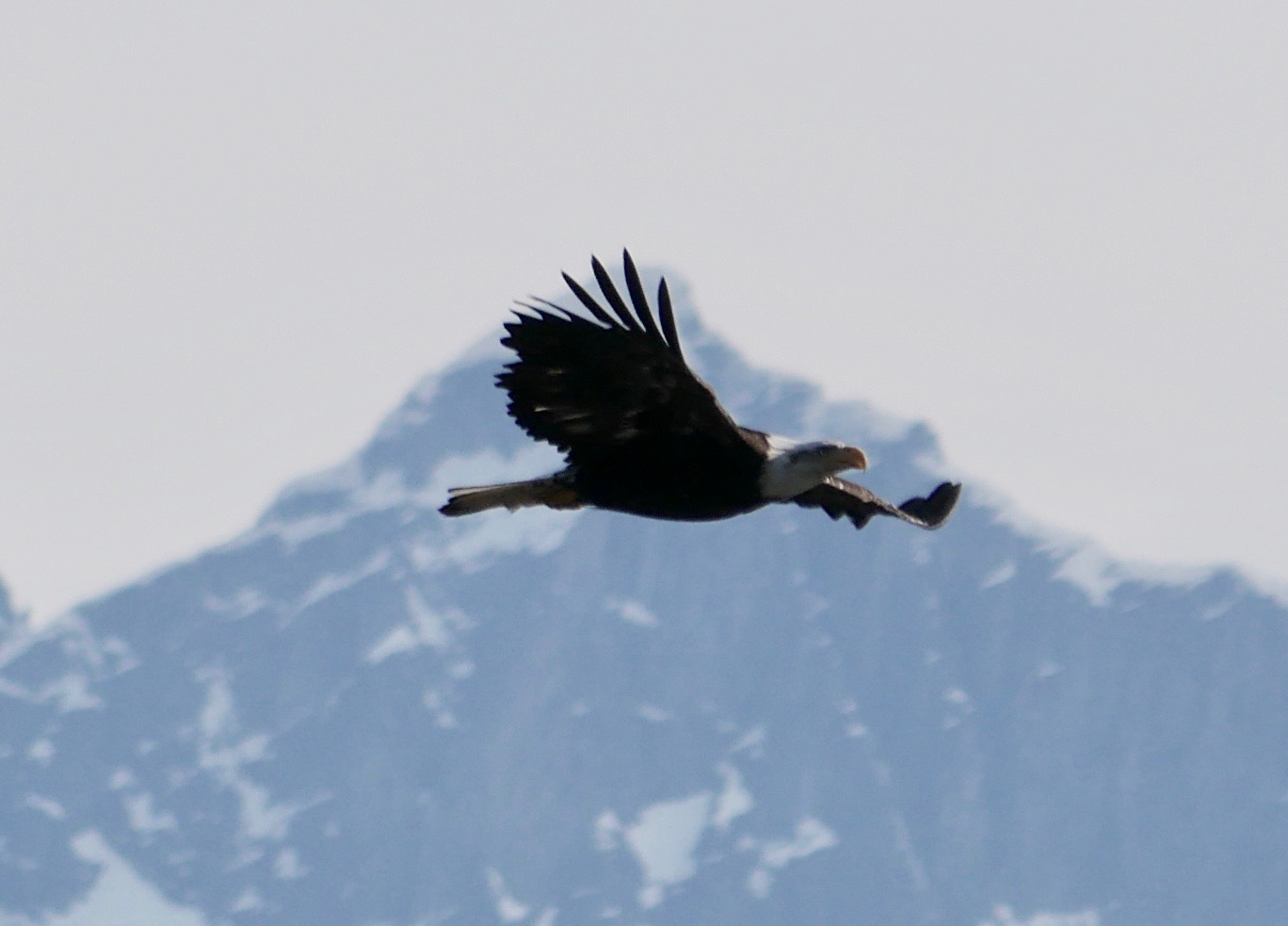
            Closer to the stream, two great blue herons hunt the shallows for food. A crow dives on an adult bald eagle, trying to dislodge it from its spruce roost. The eagle, its beak pointed up at its tormentor, screams defiance. 

            We have to cross squishy ground to get a decent view of the herons. By the time I figure out that one is a juvenile, Aki has moved to a drier part of the beach from where she tries to plant the idea in my mind that “It is time to get out of the rain.” 

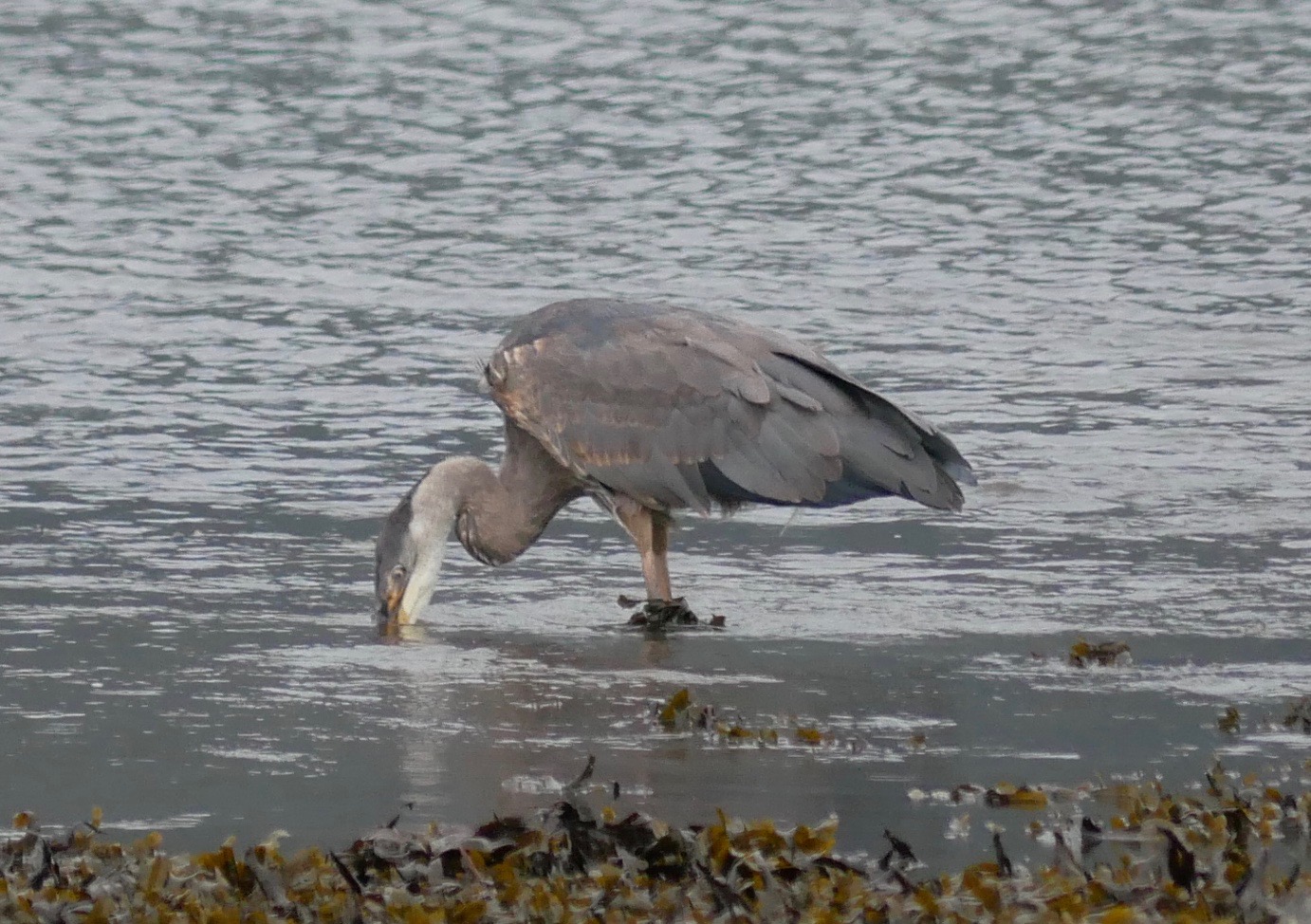
            I ignore the message and watch the juvenile heron fish. While the adult bird freezes in place to wait for opportunity, the young bird plunges it beak again and again into the water. Once it managed to lift of a stand of seaweed out of the water. The rest of the time it speared nothing. To make matters worse, it had to struggle to free its right leg from a tangle of rock weed. 

Empty Nest Syndrome

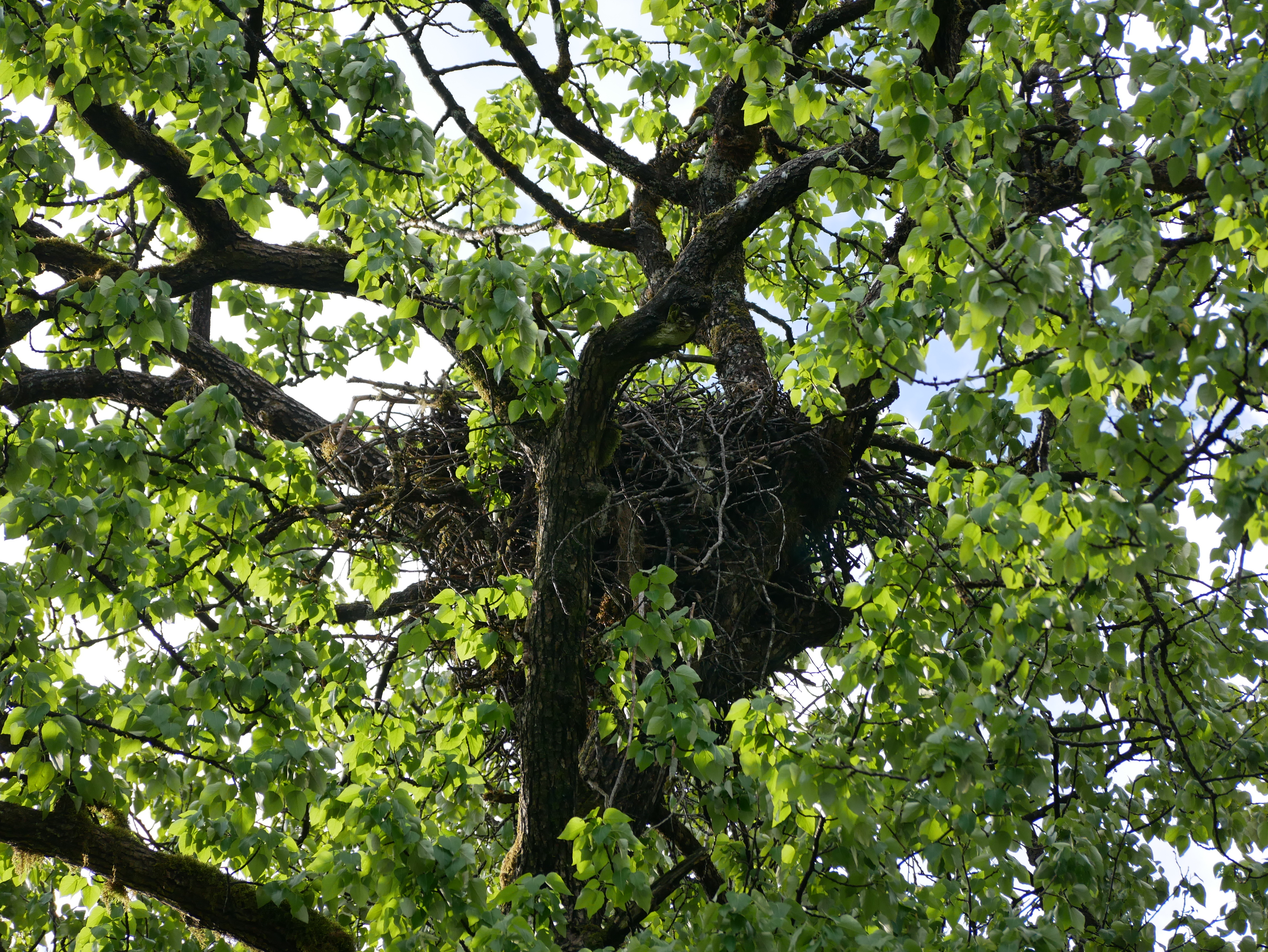
Aki and I are in the Treadwell Woods. Rather than taking our usual course, which gets us quickly to the beach, I lead the little dog up a hill to the eagle’s nest. It had a chick and parent in it last time we visited the woods. It’s empty this morning.

            Trying to be as patient as a heron, I stand beneath the nest tree, watching the wind sway it back and forth like a mother rocking a cradle. Is the sound of wind as comforting to a eagle embryo as the a mother’s heart beat is to human fetus? 

            When no eaglet pokes it head about the woven nest, I give into Aki’s silent plea and let her lead me down to the beach. The place is deserted except for one adult bald eagle. It sits on top of the old mine ventilation shaft, looking down Gastineau Channel. This must be one of the nest minders, now free to do what eagles do: scavenge, hunt, express opinions, and soar. 

Duck, Duck, Eagle

Eagles are flying over our heads, forced off the wetlands by an incoming tide. I ask Aki, “Little dog, where are the ducks? The poodle-mix looks at me like a person might look at someone searching for the nearest ice cream store in a burning city. Maybe she wonders why I care about dull ducks when the tidal meadow is magenta with shooting stars. She knows that they are my favorite flower, something I inherited from my dad.  

            My interest in waterfowl is more intellectual than esthetic. All winter the Fish Creek delta was infested with mallards. American widgeons and teals joined them in the spring. Fish ducks like golden eyes, buffleheads, and harlequins paddled offshore. Today it’s all gulls, eagles, and crows. 

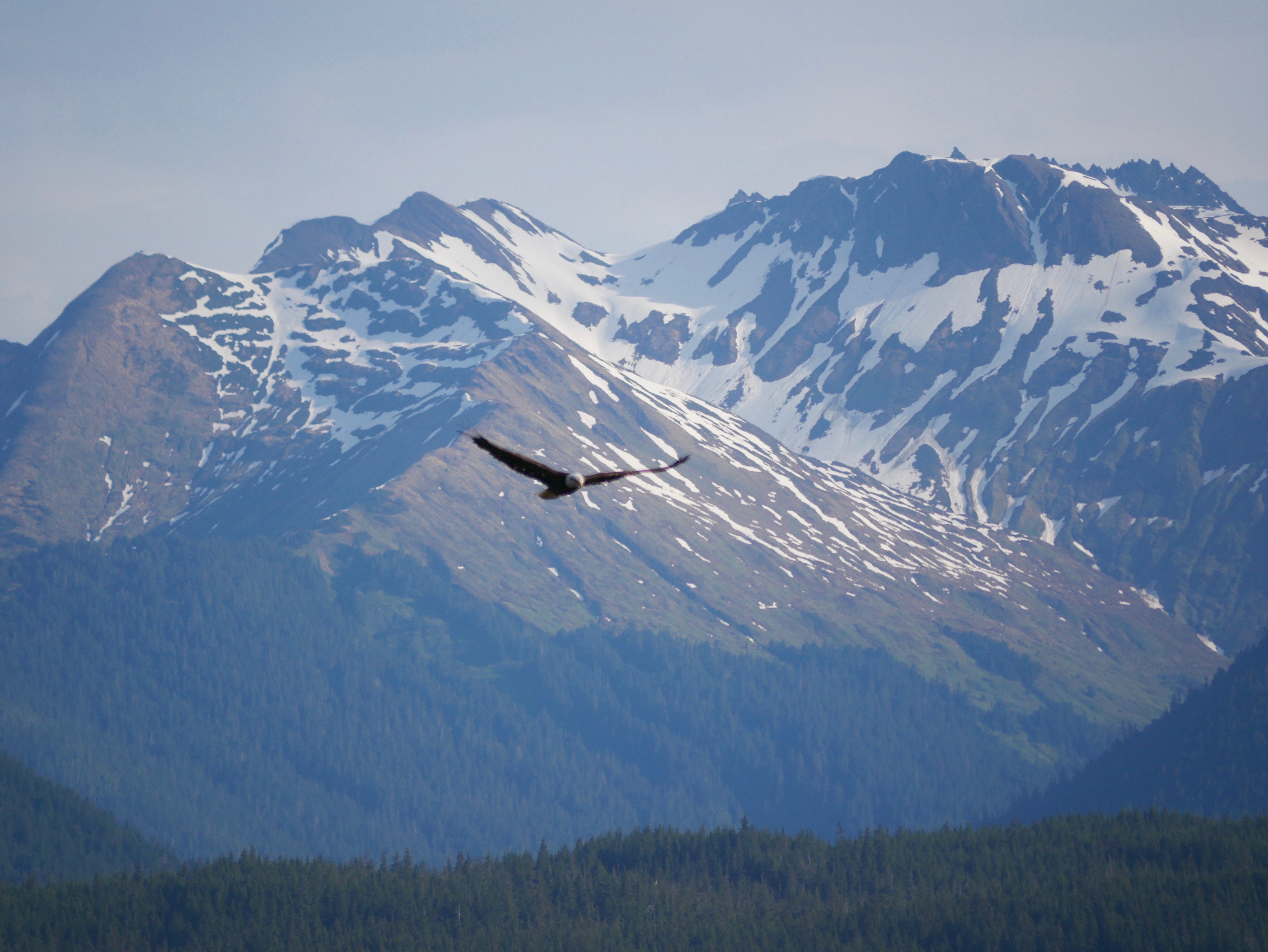
            Our first eagle of the day was an immature bird that roosted near the opening of Fish Creek Pond until forced off by one if its elders. We see the young eagle a half and hour later being driven off an ocean side roost by an adult bird. The three other adult birds in the neighborhood scream what sounds like curses as the immature eagle flies off across Fritz Cove. 

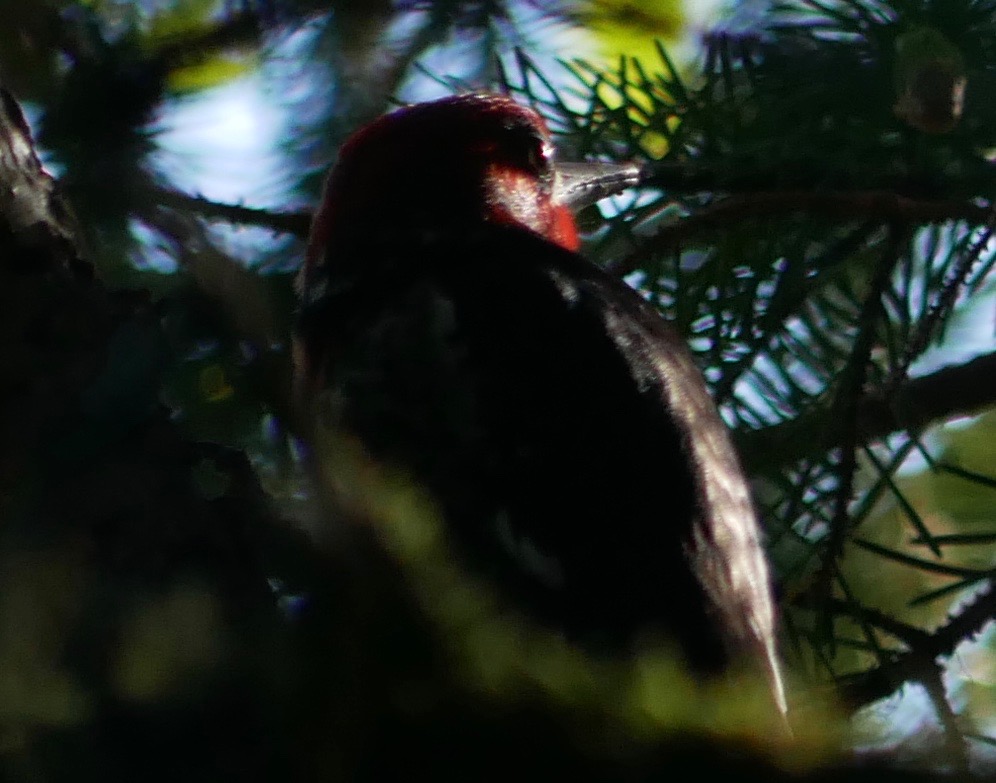
            All the eagle action pushed duck thoughts out of my mind. So did our sighting of a red-breasted sapsucker that we inadvertently flushed from the path as we rounded the pond.  But soon I thinking about ducks.

There is a place on the trail back to the car where a guy can sneak through a screen of spruce and spy on a little pond. A few weeks ago the pond was lousy with ducks. Today I found two mallards when I eased out of the trees—a hen and drake. They stood as close as lovers on a mound of bare dirt, a nesting pair. Mystery solved. 
Getting to Know Each Other Again

This is the first walk for the little dog and I since I returned from a solo adventure. Not a time for drama, intrigue, or distraction. To allow us both a quiet time to sync, I drove Aki out to the Troll Woods with a plan to wander around the beaver’s trail system. 

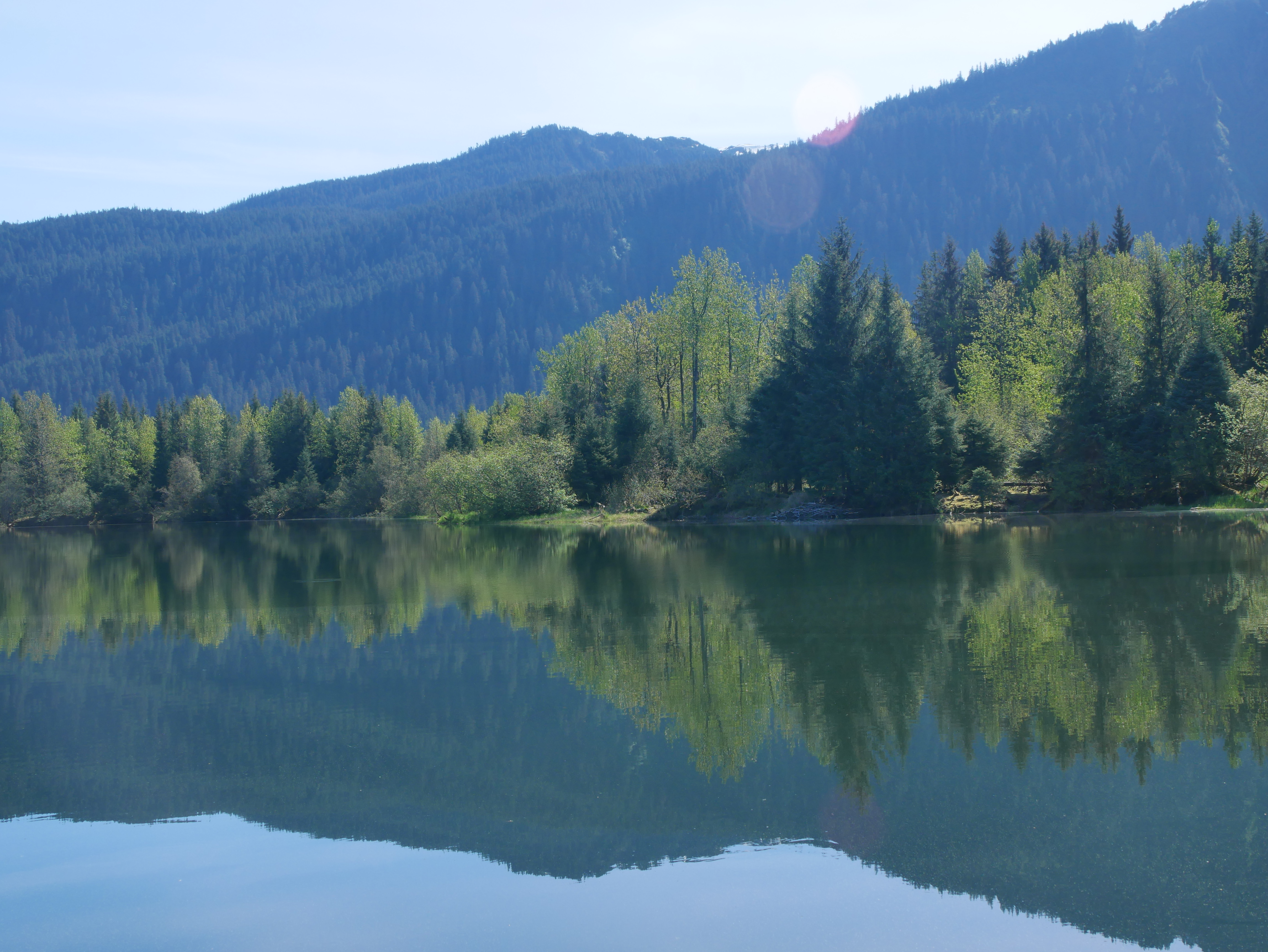
            It’s a bluebird day. The temperature may reach 70 degrees F. At first a little breeze riffled the lake surfaces. When it stopped the cottonwoods among Moose Lake could used the lake’s surface to appreciate their beautiful spring coats. My little dog wades out into the lake, making a hole in a scum of spruce pollen. The electric green pollen covers everything from cars to Aki’s little paws. The poodle-mix sneezes. I hope she isn’t developing an allergy to the omnipresent stuff. 

            We leave the lake for a path lined by northern marsh violets, one of the first wildflowers of the summer. Dragonflies, another harbinger of real summer, flit around us like mosquitoes. One lands close enough for me to photograph but takes off when Aki trots over to investigate him. The payable price of companionship.

The Bike Will Understand

Three miles in, I’m thinking that me riding alone to the Herbert Glacier was a bad idea. Maybe if I were on a mountain bike it would be okay. But I’m using my touring bicycle, hoping that its 29 inch tires can handle the trail’s rocks and roots.

I haven’t ridden to the glacier since Aki was a puppy. That day the tiny little guy chased my bike the four miles to the glacier. She has hated bicycles ever since. I have always regretted bringing her along.

The highway is my bike’s natural home. When I left Glacier Highway to ride onto the trail, I promised the bike I would turn around if things got too rough. After I’ve traveled on it for a few thousands miles the bike and I have developed that kind of relationship. Because it knows me, the bike expects my promise to be broken.

We do fine the first few miles. The trail is flat and covered with fallen spruce needles that cushion the ride. As we climb toward Herbert Glacier ugly lumps of rock start appearing above the needles but I avoid most of them. Just a mile before the glacier the trail turns into a rock strewn single-track. I should turn around but we are so close. The bike will understand. So I proceed with caution, cringing each time a tire slams into an unavoidable cob.


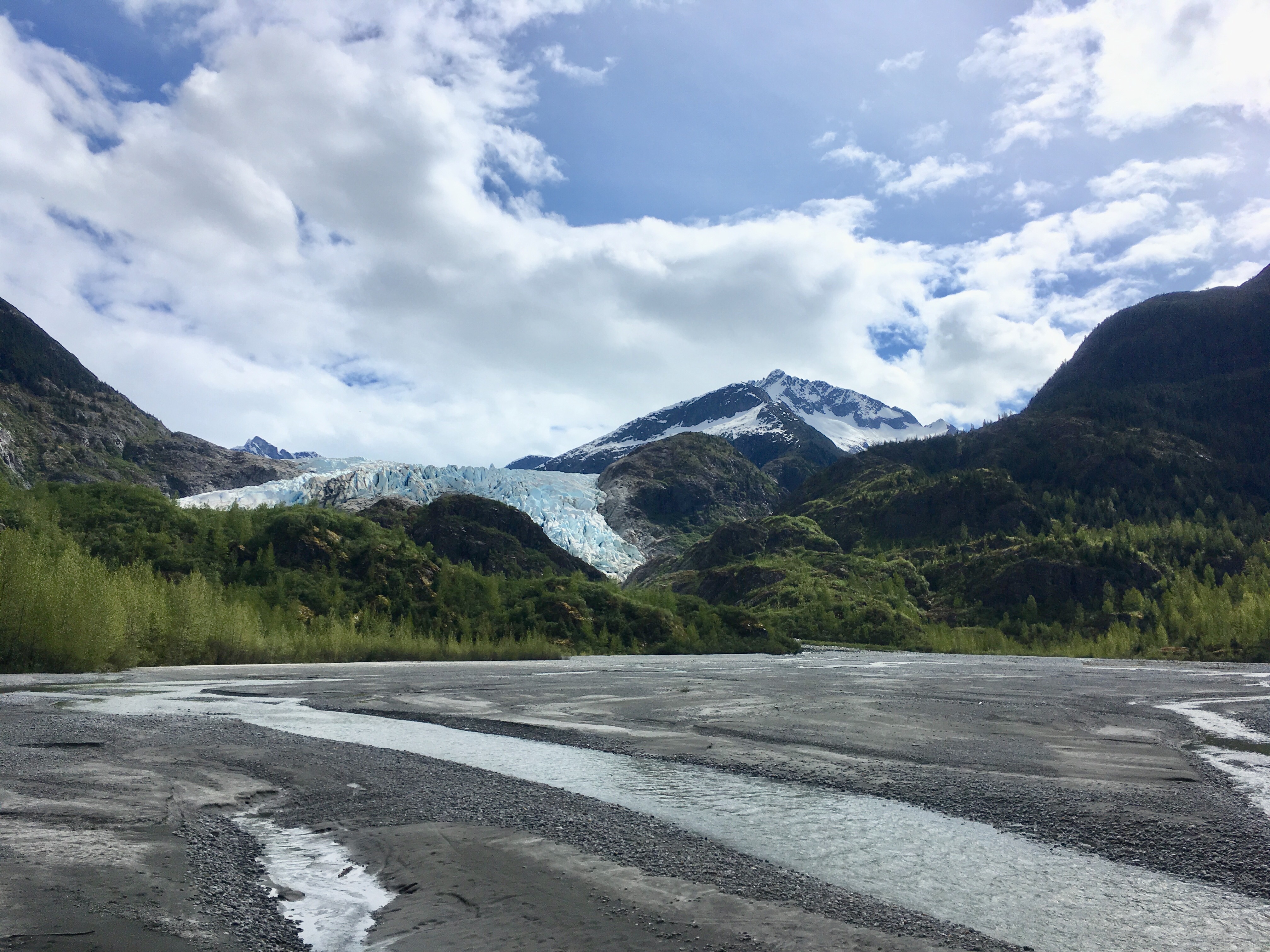
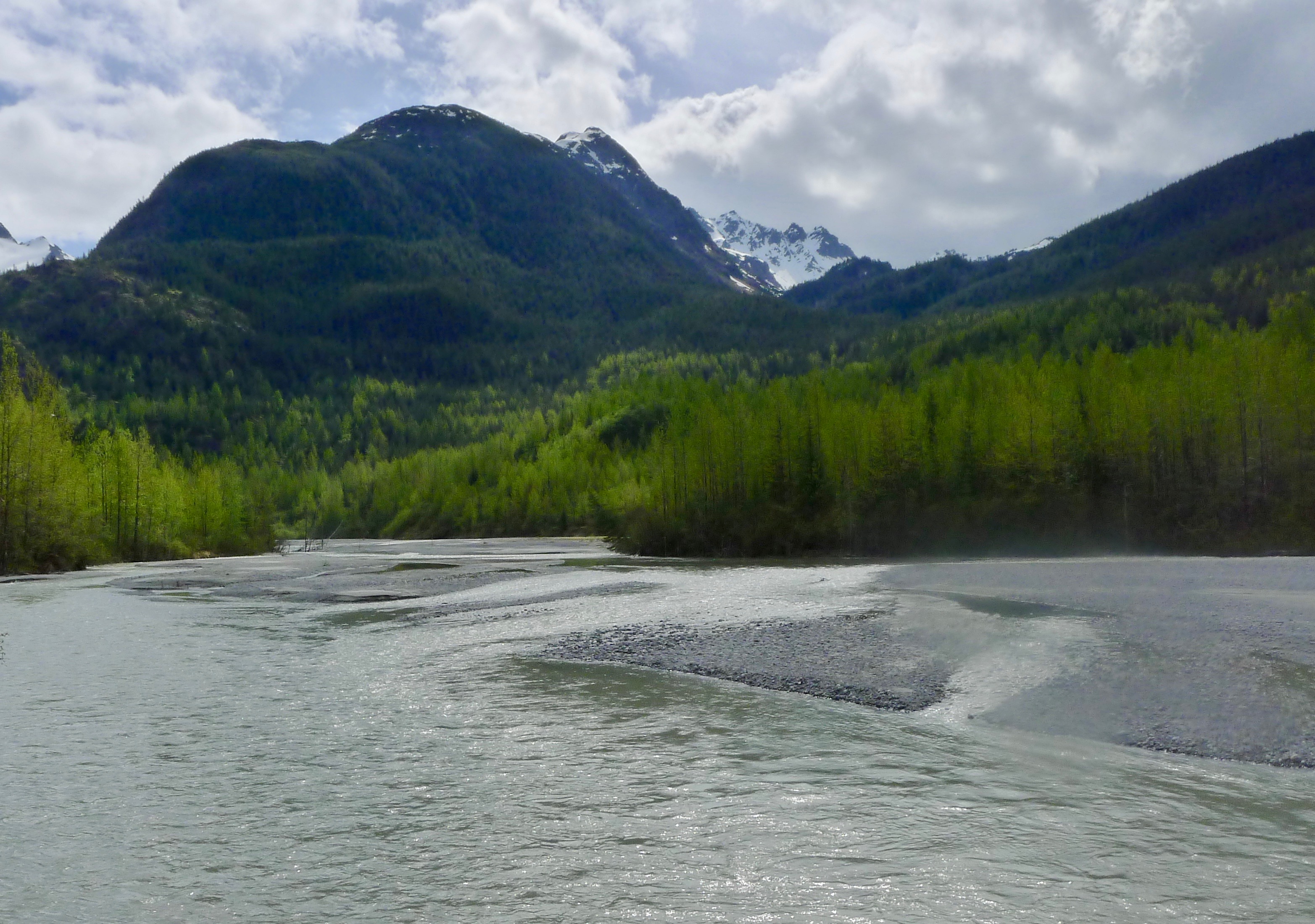
           When the trail becomes a narrow path between cliff and river, I finally park the bike and proceed on foot to where the glacier can be seen hanging above a forest of yellow green cottonwoods and alders. It’s cloudy, but here and there blue holes in the grey appears. One lets enough light through to bright out the best in he glacier and its forest.

Mellow Marmot

It’s 4:30 A.M. Aki is asleep in her kennel thirty miles away. I wonder what this hoary marmot would make of her. The oversized Guinea pig seems more interested in me than frightened. We sit on opposite sides of a narrow spit. I’m watching early morning sunlight clarifying Shelter Island. Minutes ago, while I spied on two harbor seals as they stalked a common merganser, the island was a dark mass interfering with my view of the Chilkat Mountains. Now every one of its trees has a distinct shape.


          This would be the quietest time of day. It might be if not for the crows. To protect their nests, a patrol of them are diving on a roosted eagle. They squawk and the interloper screams. They do this over and over again.


          If I was this close to a marmot in the high mountains it would pierce the air with a warning whistle.  She must have has grown used to the presence of people. Besides, her young are asleep and safe in their rock pile of a nest. Marmot doesn’t sound the alarm even when an eagle flies towards us on a low trajectory. She just dives into her nest, leaving me to watch the big bird return to its roost.


            In a few hours, after the sun has cleared the ridge behind me, It will be warm enough to doddle and dream on the spit. But its just ten degrees above freezing now. I try to tough it out in hopes of seeing the orcas. Yesterday, while I drank my first coffee of the day, a small pod swam past. A cow and calf surfaced not far from where the merganser just scooted away from a seal.


           I’d settle for a humpback whale, even one reduced by distance to a plume of exhaled spray. But nothing breaks blue’s monopoly on Favorite Passage. Time for another coffee.

The Taste of Summer

Aki and I are on the Outer Point Trail slipping through to the beach before the trail repair work for the day begins. A local nonprofit is trying to fix portions of the trail washed out by water flowing under a beaver dam. The affected path turned into an ice skating rink last winter and is now a muddy mess.

            The trail crew cannibalized some of the trailside spruce to make barriers to contain gravel and planks for new bridges. Sawdust from their work clings to Aki’s leg fur. The little dog seems puzzled by the trail work. Something just doesn’t smell right. But it doesn’t take much encouragement for her to trot with me toward the beach.

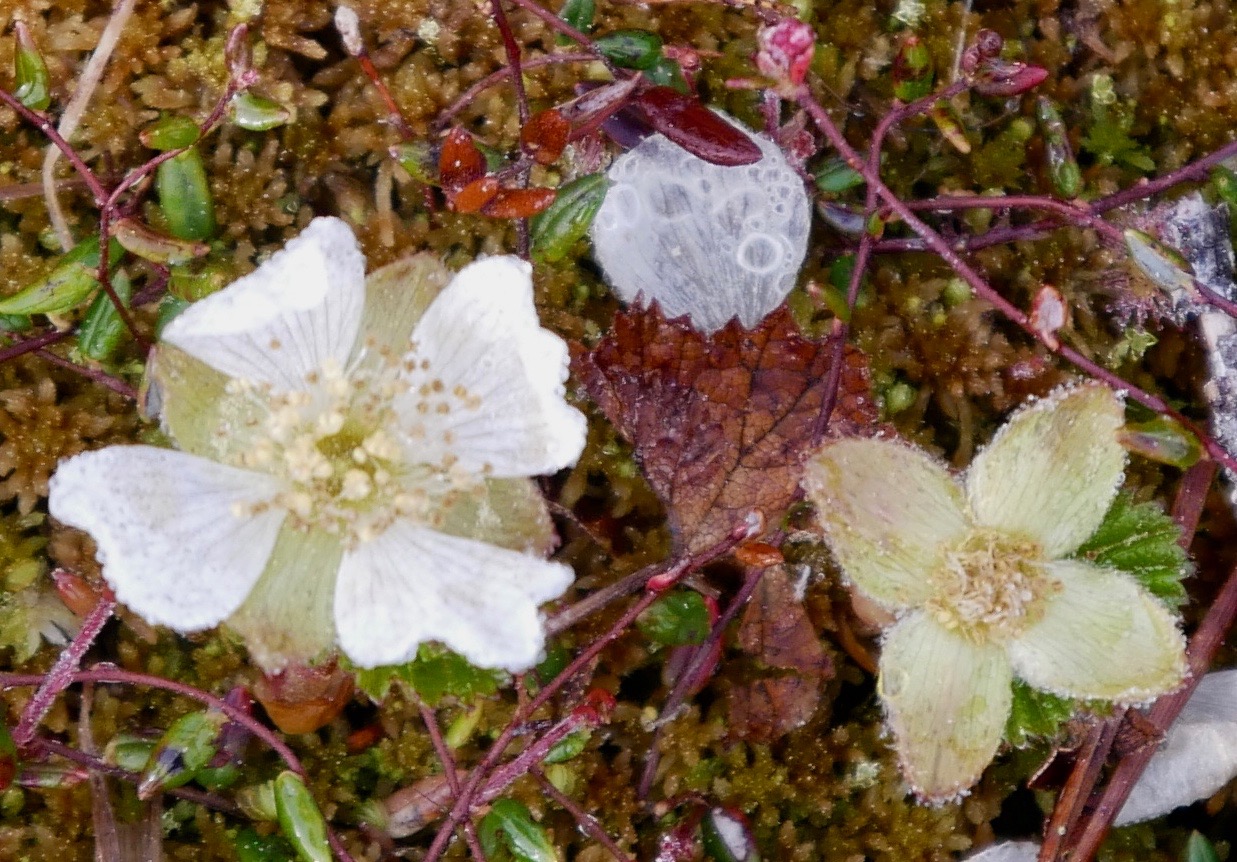
            We pass through a muskeg meadow before reaching the beach.  Like they have been scattered like chicken feed, the white blossoms of cloudberry plants form random patterns on the spongy ground. Called “hjortron” in Sweden and “salmon berry” by the Yupik people of Western Alaska, the harvest of cloudberries is an important cultural activity in the Nordic world.  They draw Swedish families to mountain meadows to preserve liters of the tangy-sweet fruit so they can taste summer in the heart of winter. Extended families of Yupik people use riverboats to reach traditional berry patches where elders teach the children the important of wild foods. Here in the rain forest years can go by without cloudberry plants setting any fruit. We target the more reliable blueberry crop. 

            This summer, after enough time has past for the cloudberries to turn soft and ripe, Aki and I might sneak back to this meadow and gather a bowl or two of the salmon-colored fruit. I will lick their juice from my fingers and remember picking in a tundra berry patch on a sunny day when the wind kept the mosquitoes away and cranes flew overhead.

Waiting for the Party to Start

Aki had to wait in the car while I dropped someone off at the hospital. There is not enough time this morning for a proper walk so I drive to the parking lot for our local radio station with plans to walk on the wetlands drained by Salmon Creek. 

            The roar of in bound traffic on Juneau’s only expressway masks the creek sounds. But the song of a persistent yellow warbler cuts through the urban noise. In a month, maybe two, there will be a dozen eagles on the wetlands, competing with gulls for scrapes of dying salmon. Fish ducks will waddle or float down the creek. People with heavy fishing rods will work the creek mouth for incoming salmon. But today, only the warbler and a scattering of board-acting crows show themselves. 

            The little dog and I move on to the fish hatchery beach where in June men and women will line the beach, tossing weighted hooks into the channel waters to snag chum salmon. The Salmon Creek gulls followed us to the beach, taking up temporary roosts on the top of traffic signs and hand rails. We see our first bald eagle of the morning sitting on top of a metal piling that secures a large fishing platform. The bird holds it ground as the little dog and I approach. The eagle, having watched throngs of fishermen crowd each summer, seems to know it has little to fear from one man and his 10-pound poodle. 

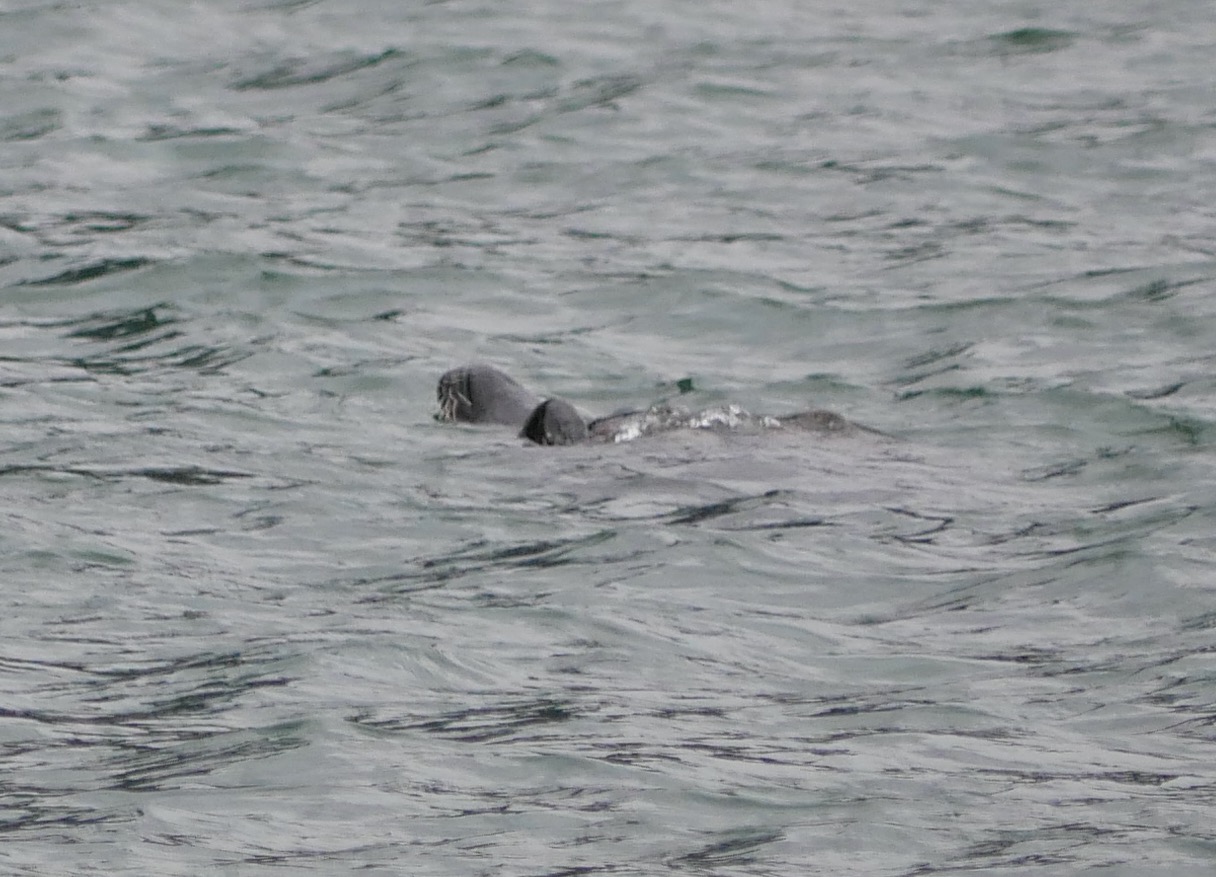
            In the water near the salmon holding pens a half-a-dozen harbor seals raise their heads so that their eyes clear the surface. Another seal floats on its back, apparently asleep. Those awake watch a hatchery worker toss handfuls of fish food into the salmon smolt holding pens. Do they expect the next handful to be tossed in their direction?