Brief Cameo Appearance

Aki must think I am crazy. All morning I’ve led her over, through, and around the Troll Woods looking for fish. She waited with patience as I made a few fruitless casts at each spot hoping to lure a fish to strike my hook. The little dog could have told me after the first three stops that the time for catching fish on the moraine is over for the year. Perhaps she is too polite. 
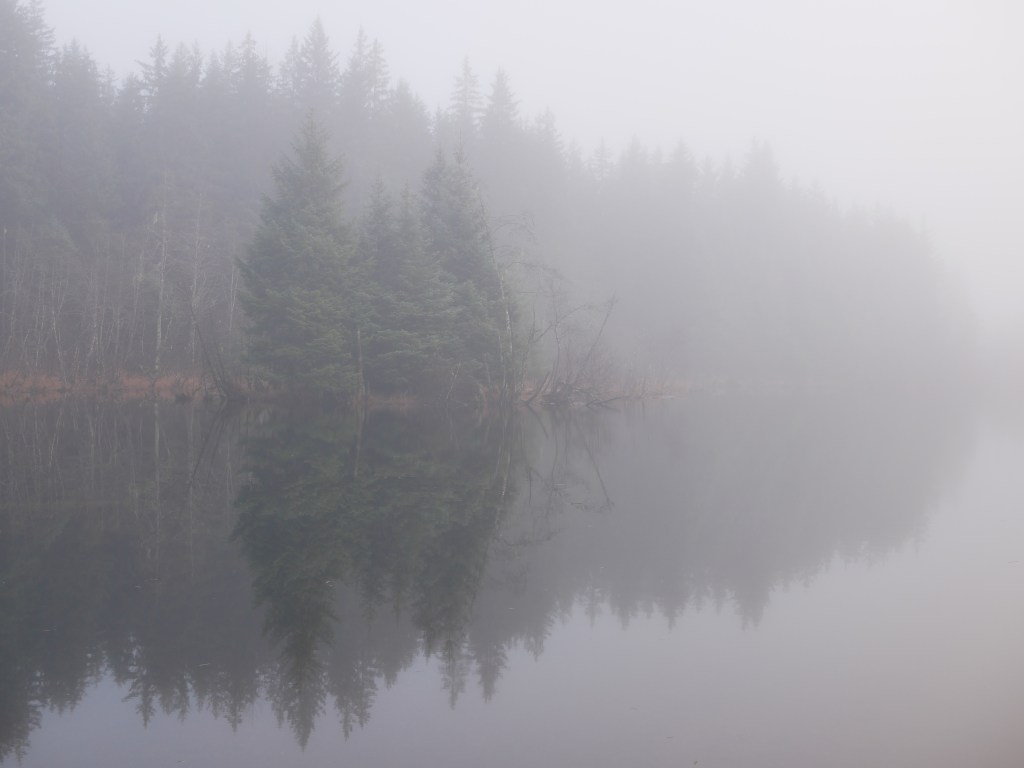
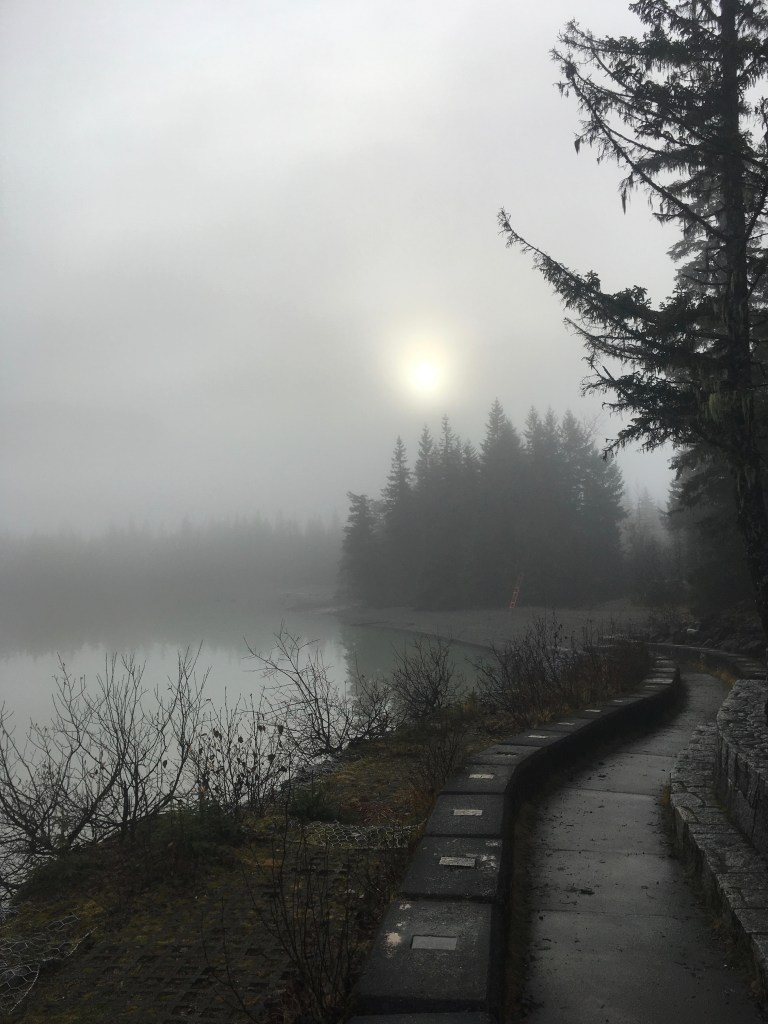
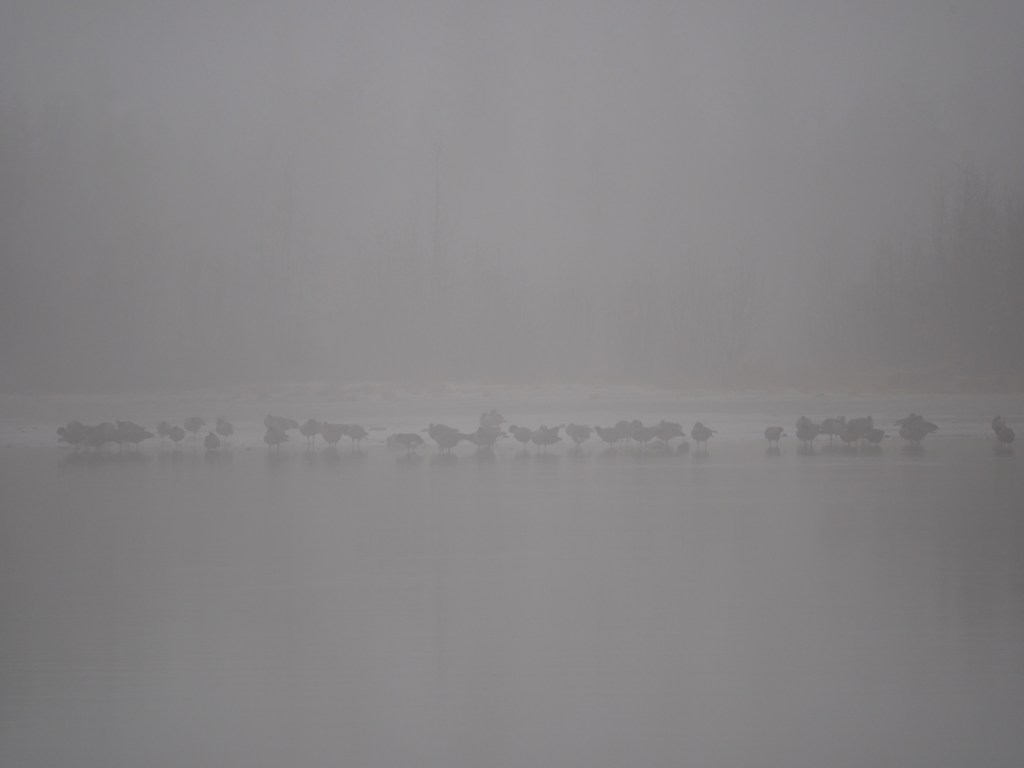
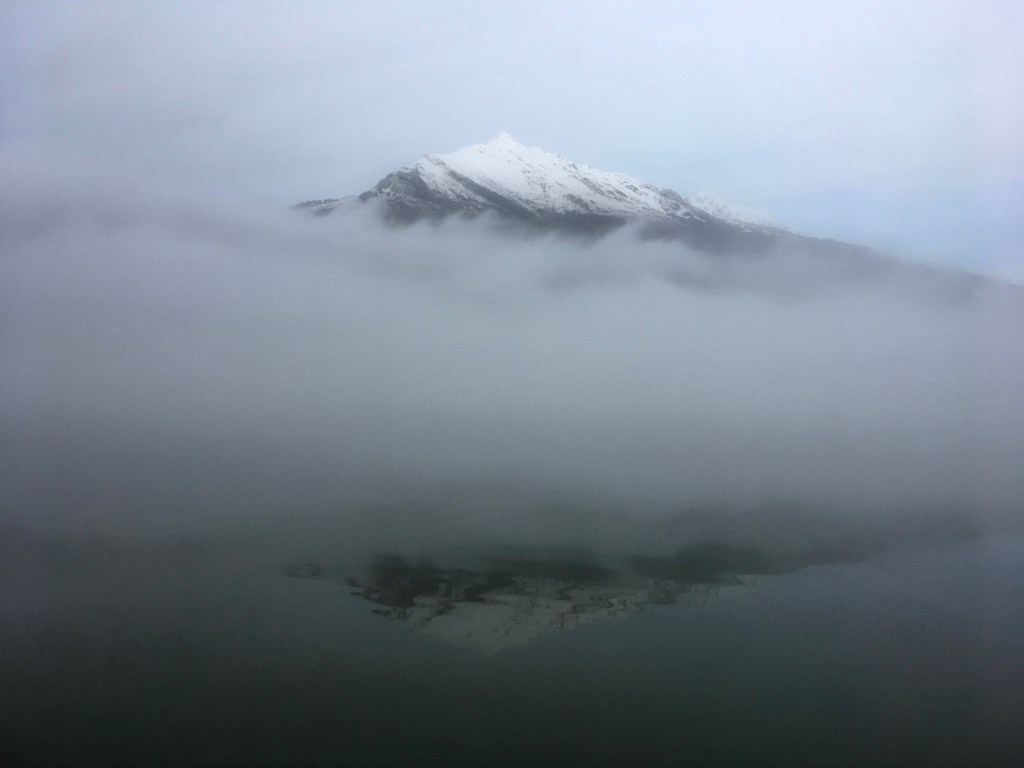
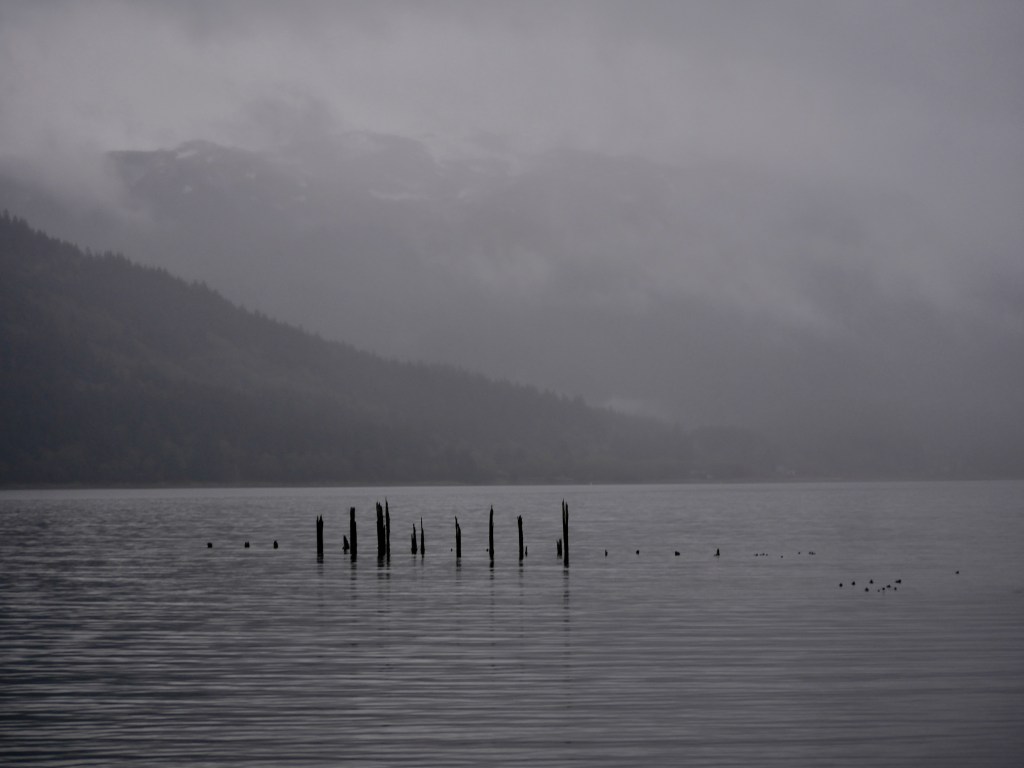
            Occluding fog reduced our view shed to fifty meters when we first arrived at the trailhead. Now the sun is burning through. The snowy peak of Mt. Stroller White suddenly appears. Dark, duck-like forms cruise in and out of the fog bank still floating over Moose Lake. 

            We move on until met by a trio of golden retrievers that show little interest in meeting Aki. She shrugs off the group rejection and follows me to a fog free Moraine Lake.  Above the lake, a circle in the clouds forms frame around the upper half of Mt. McGinnis. By the time we circle around the little lake, the fog has returned, banishing  the mountain. 
So Calm

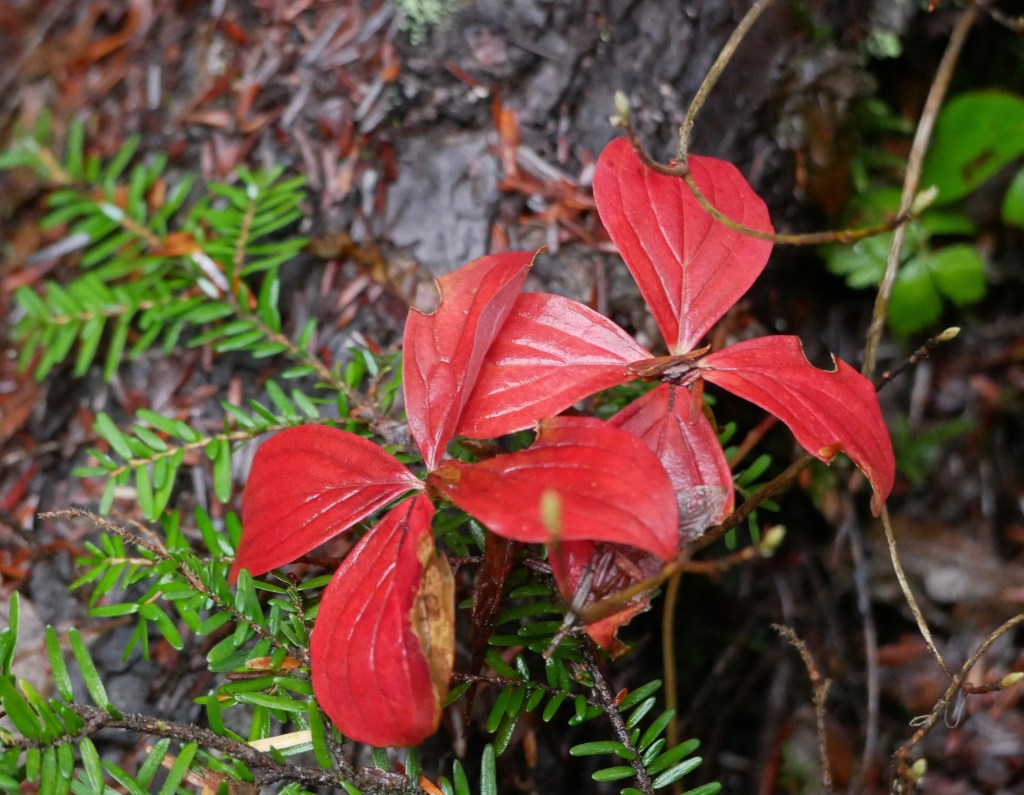
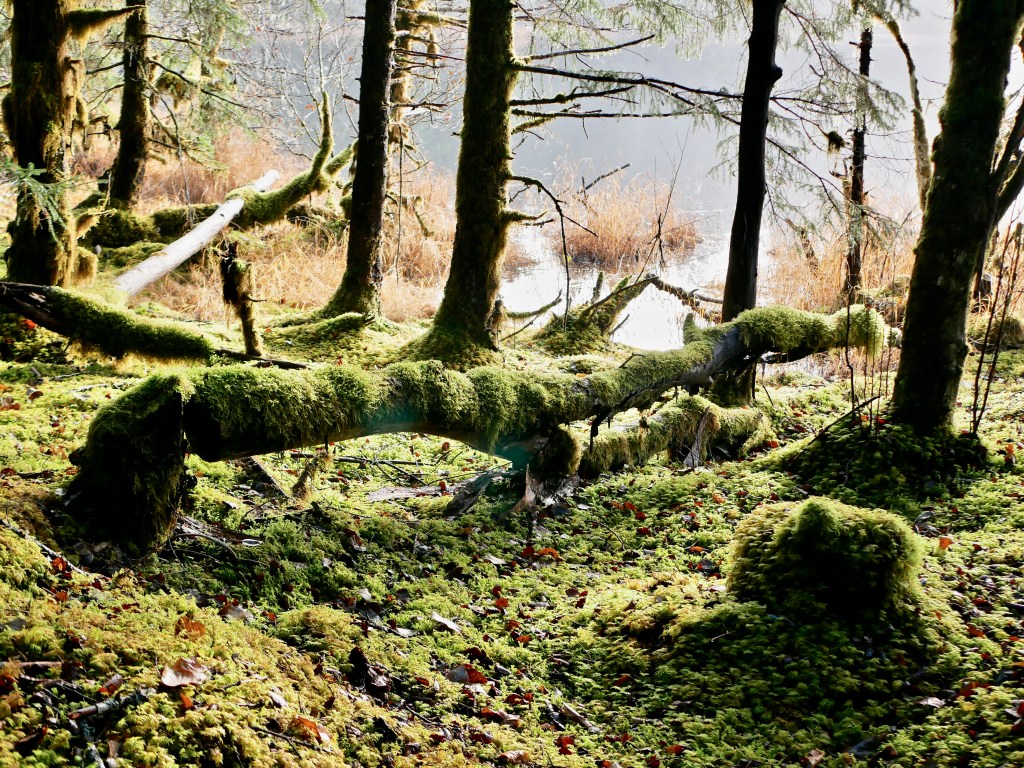
The rain forest is darker than the last time Aki and I visited. Then leaves still held their fall color. This morning it’s all bare branches and fallen leaves quickly being reduced to mush. Only the bottom hugging sorel retain color. On the drive to the trailhead I spotted two lines of sand hill cranes heading toward the forest. Now, mixed in with the noise of a passing prop plane, I can just make out their ratching calls. 

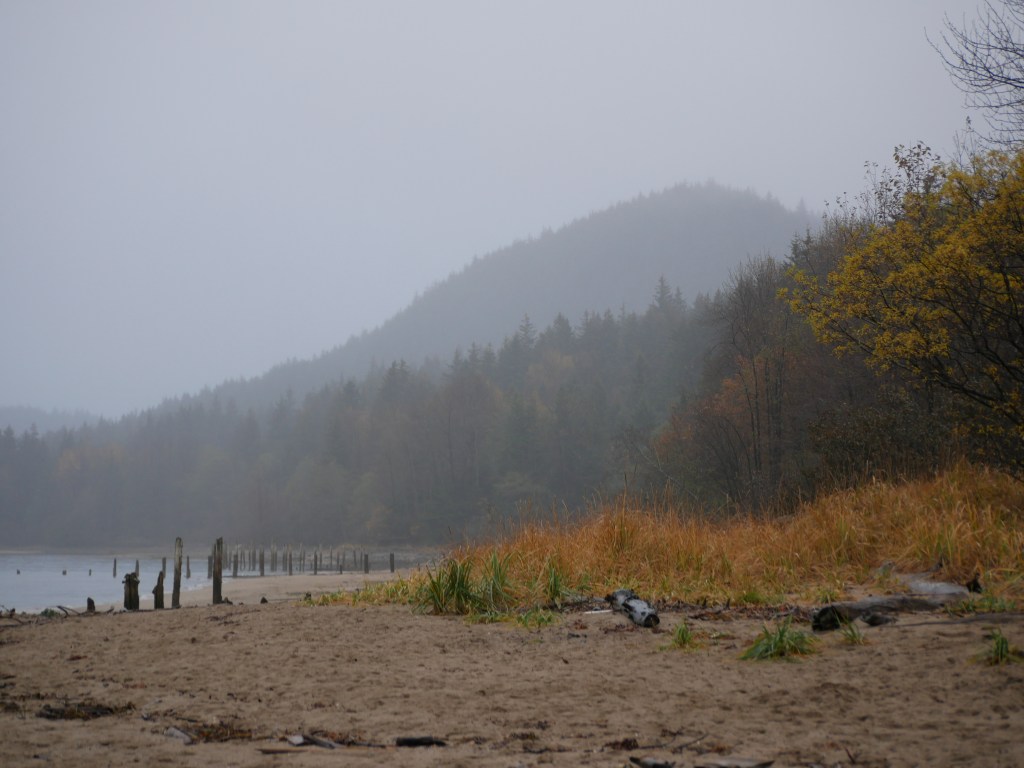
            Weeks of heavy rain have swollen the beaver pond and flooded parts of the trail.  The pond is empty of cranes or other birds. My eyes are drawn to the islands of golden-brown reflected in the pond water. Aki breaks ahead of me to circle around a submerged portion of the trail. I follow her to a beach that borders a small cove. Gulls and mallard ducks are the only things that disturb the flat-calm water. 

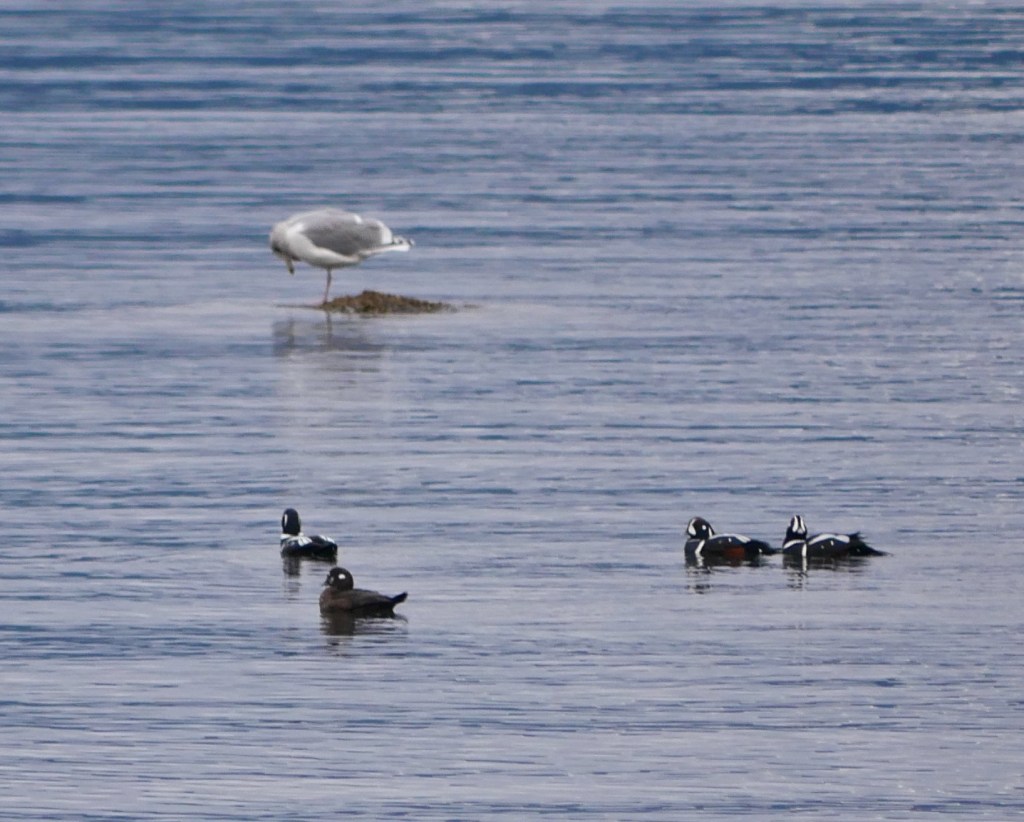
            There is something calming about an expanse of undisturbed water. If I had brought troubles or worry to this beach, they would soon be forgotten. We stroll down the beach, over a small headland, and onto another beach. Here harlequin and golden eye ducks work the water for food. The Chilkat Mountains, looking crisp with fresh snow, rise across Lynn Canal. 

Peaking Through the Fog

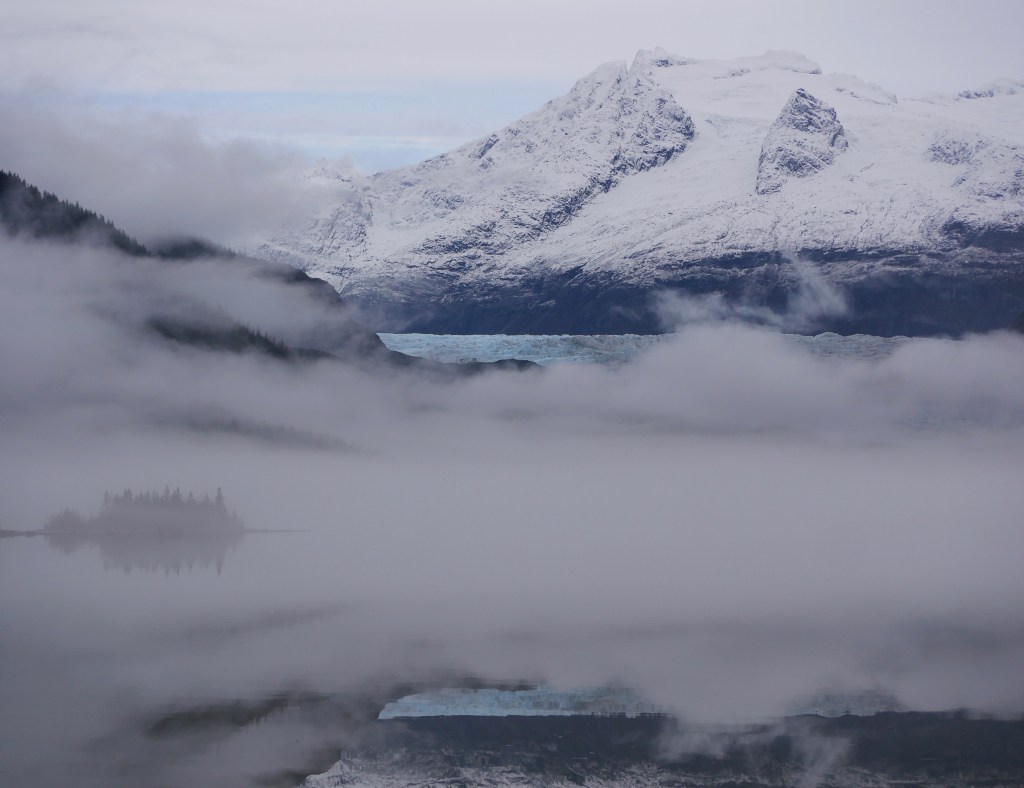
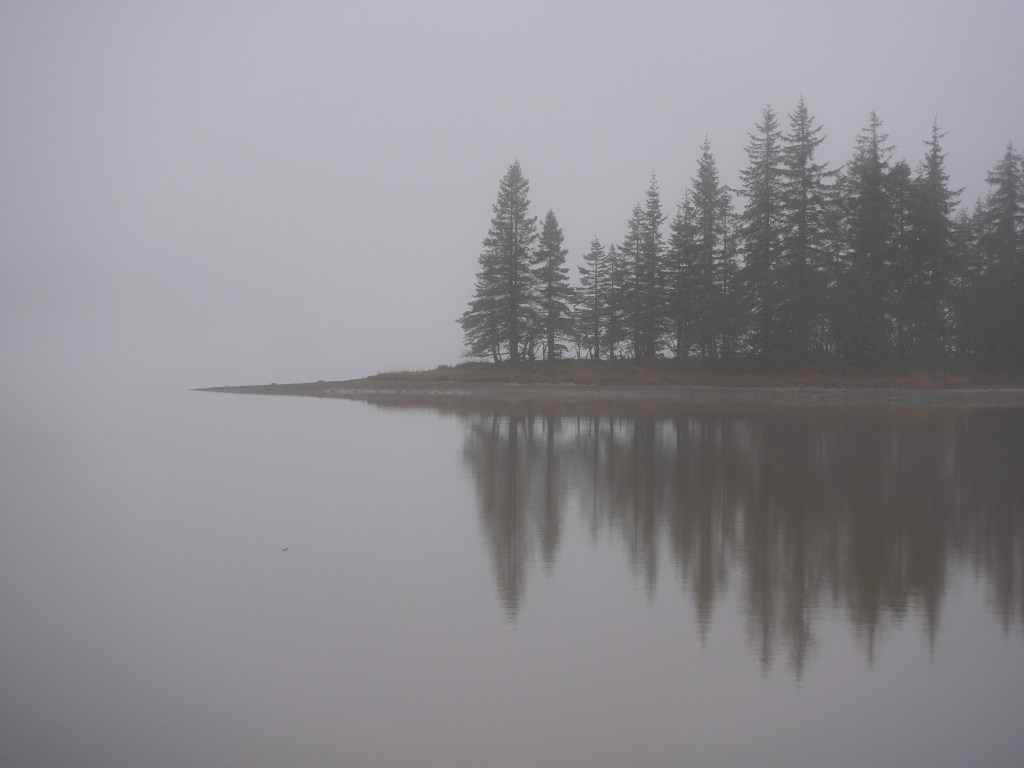
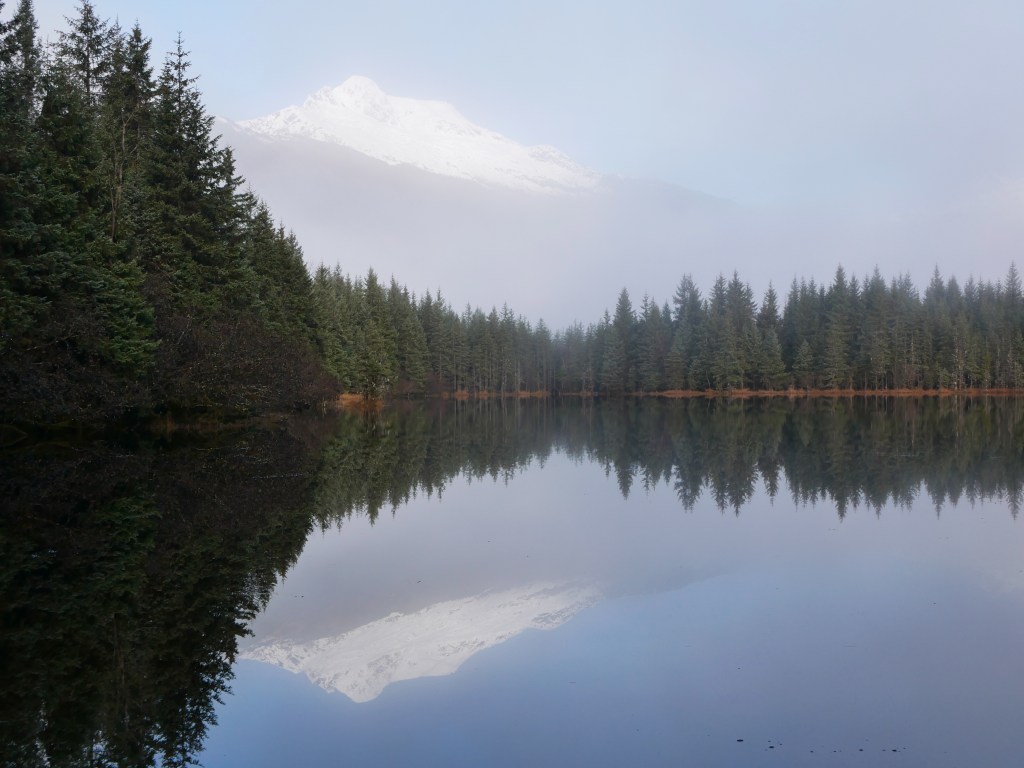
On a windless morning, Aki and I crested a small rise, which normally offers views of mountains and glaciers. Fog shrouded all these marquee things. It also framed a line of spruce trees and softened their reflection in the lake, without effort creating an impressionist scene. 

We could hear the honking of Canada geese over the roar of an invisible Nugget Falls and the scolds of a hidden Stellar’s jay. Behind us, the sun burned a silver disk in the marine layer.

Aki led me onto a small trail that paralleled the lakeshore. I didn’t try to hurry the dog, letting her linger as long as she pleased over each piece of pee mail. I was happy for the delay. It might give the fog time to part.

The little poodle-mix almost dragged me through the woods and onto the road through the campground.   When thickening clouds blocked out the sun, I stopped looking through openings in the forest for views of the glacier.

Aki spirits picked up each time we ran into another dog. She was trotting a few meters in front of me when we returned to the lake, which now reflected a blue strip of glacial ice. Soon we could see the mountains behind the glacier. Then the fog closed in again, returning us to a soft, white world. 

Rainforest Return

Aki snuffles a patch of trailside grass. After watching her beaver away, I scan the Fish Creek Pond for bird life. Only the severed leaves of cottonwood trees float on the pond’s surface. Heavy raindrops plunk down on fallen leaves covering the trail. As the little poodle-mix finishes her investigation and seals the spot with urine, I try to ignore the chilling rainwater slowly working its way through the fabric of my expensive rain parka to soak the sweatshirt underneath. 

My little dog trots down the trail, undeterred by the rain or the hypothermic temperatures. While I was soaking up sun in California and Washington State, Aki went out each day in the rain. It’s as if she has never stretched out in the sun.
            While Aki squished down empty rainforest trails, I crunched over a gravel path, passing curated maples, ginko trees, and Henry Moore bronzes. While a North Pacific storm rolled over Aki and Juneau, I strolled along the Tacoma waterfront in crisp, dry weather. When I stepped on fallen leaves, they crunched underfoot. 

            The little dog and I push on to the mouth of Fish Creek. There gulls and mallards mutter to themselves and swim slowly away from the beach. The resident eagles are elsewhere. Maybe they have already joined the thousands of their kind that assemble north of Haines each November to feed on a late arriving run of chum salmon. 

Bad Habits

Aki and I are using an elevated boardwalk near the glacier visitor center. It has heavy wire sides designed to keep the local bears safe from the tourists. During bear season you have to pass through gates to enter the boardwalk. They have been removed for the season so I assumed that it is safe for the little dog and I to use the boardwalk as a shortcut to the car. 

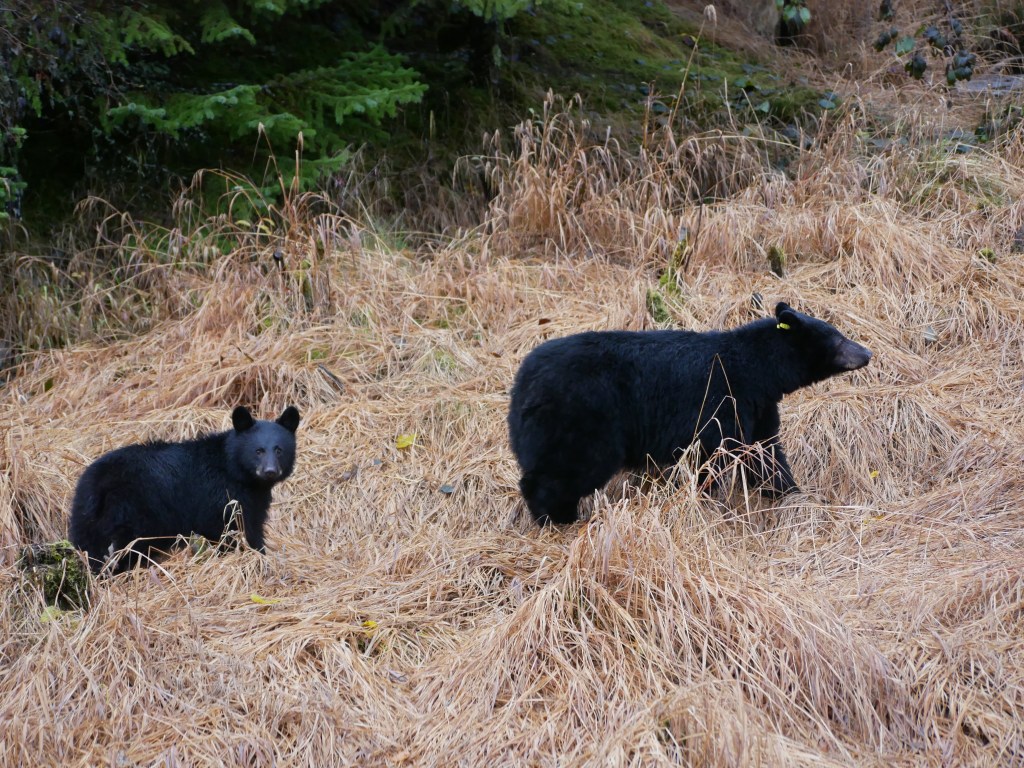
            A yearling bear cub ambles under the boardwalk. Its mother walks closely behind. I grab Aki but there is no danger for either of us. The bears are old pros as at this. All summer tourists have watched them fish for salmon in a nearby creek or dig for chocolate lily roots in the meadow. It has become their habit to ignore the smelly creatures trapped behind the boardwalk fences, which form a people zoo. 

            Two days ago I watched another habituated bear gorging itself on my neighbor’s garbage. It has learned to identity people with food. That bear now knows that it can ignore our efforts to scare it away from garbage. As much as I enjoy watching a fat bear sauntering along a salmon stream, I’d give up any chance of seeing one again if it meant that bears would never lose their distrust of humans. But now many Juneau bear have.


Saying Goodbye

It’s been three week since the last tour buses released their hordes onto the Mendenhall Lake trails. Aki and I are the only ones using the lake margin this morning, if you don’t count a pair of eagles and one very vocal raven. Last night’s rainstorm ended just before we arrived. The ground, leaves, and eagle feathers are still soaked.  

            There is no wind to ruffle the lake’s surface so it can’t mirror the glacier. Only the swirls of a school of silver salmon mess with the reflection until the head of a harbor seal appears about the surface. It must have followed the silvers up the river and into the lake. I wait near the salmon to see if the seal can snatch one until Aki begins to keen. 

            Even after days of heavy rain the lake level has dropped enough for us to beach walk around a peninsula where the arctic tern nest during the summer. The terns have long ago left for their 10,000-mile migration to South America. But the little dog and I still avoid walking over their nesting area, which still feels like holy ground. From the beach I can see scattered feathers, relics of an unfortunate bird who didn’t live long enough to make the long flight south.  

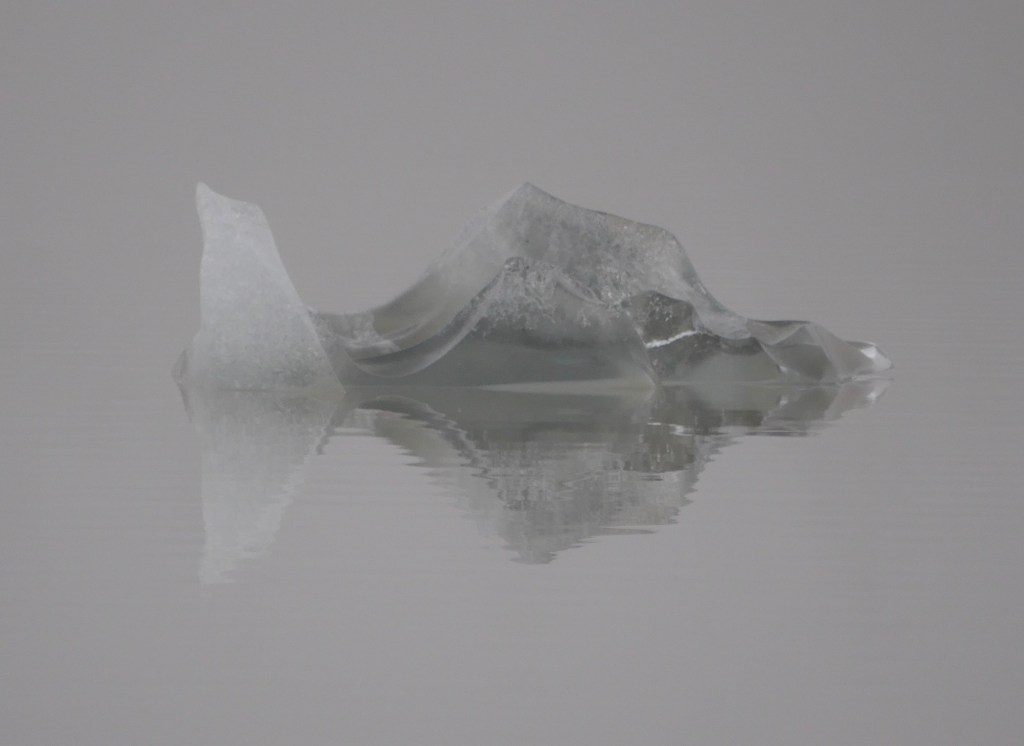
            A large iceberg has come to ground off the tip of the peninsula. Last winter Aki and I might have walked on its surface when it was still part of the glacier. These days I find myself taking many photographs of icebergs. I will not have an opportunity to do it in a few years after the glacier has completed its retreat from the lake.  

Trash Day Bear

It’s trash-pick-up day. A black bear ambles toward our wheelie bin. Because I am standing near the bin it looks like the bear is strolling up to me. It’s a yearling, taught last summer by its mother how to pry open the bins so he can pull out plastic bags full of food waste. He ignores me when I tell him to go away, just keeps sauntering toward the bin. When I drop my voice and raise my hands he changes direction and grabs a neighbor’s bin.

            The bear holds the bin with its from legs, like it is hugging a child, and pries open the locked lid with its teeth. Now nothing I can do will stop him from ripping open garbage bags and supping on out neighbors’ discards. Now totally habituated to man, the bear is doomed. Soon a police officer or fish and game official will have to shoot it. 

            Bringing frustration with me, I drive Aki out to North Douglas. Last night a storm from the Gulf of Alaska muscled through the Inside Passage and slammed into town. It brought heavy rain and a wind strong enough to strip leaves from trees and raise waves on the waters of Fritz Cove. We find shelter on a trail to old growth woods. I brace for a resumption of the wind when we reach the beach but there is not even a breeze to bend the beach grass. Off shore several rafts of harlequin ducks compete for access to a bait ball. They are still wild, still know enough to keep their distance from the little dog and I.    

Ducks in Love?

Yesterday, Aki and I watched hundreds of mallard ducks feeding in Fritz Cove. On this rainy morning I can only find gulls. Most huddle together in twos and threes on the beach as raindrops bounce off their feathers. Aki sniffs a quick survey of the ground and gives me a nervous look. No eagles sulk in the rain. No mean spirited shiba inu stares at her from the forest’s edge so I continue down the beach. 

            Still-yellow wild rose bushes, mountain ashes, and cottonwood trees glow like muted lights in the gray gloom. The next windstorm should strip the trees and bushes bare. After that we will have to look for beauty in bark patterns and tangled branches until it snows.   

            A matched brace of mallards swims out from a weathered piling. They swim slowly away from each other and come back together, tracing the shape of a heart on the water’s surface. A hundred meters away, a large raft of golden eye ducks float on Gastineau Channel. But there are no other mallards within sight. Without looking at the little dog I ask, Aki, do you think these two are on a honeymoon? She is already in the woods, sheltering from the rain. 

Big Beak, Bigger Heart

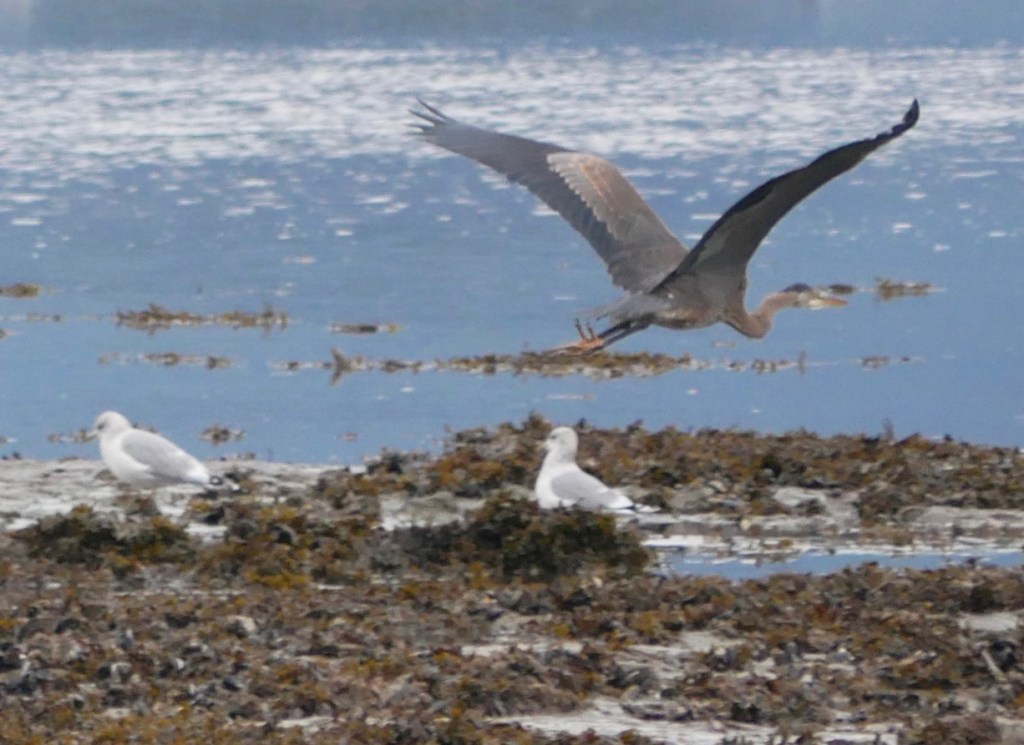
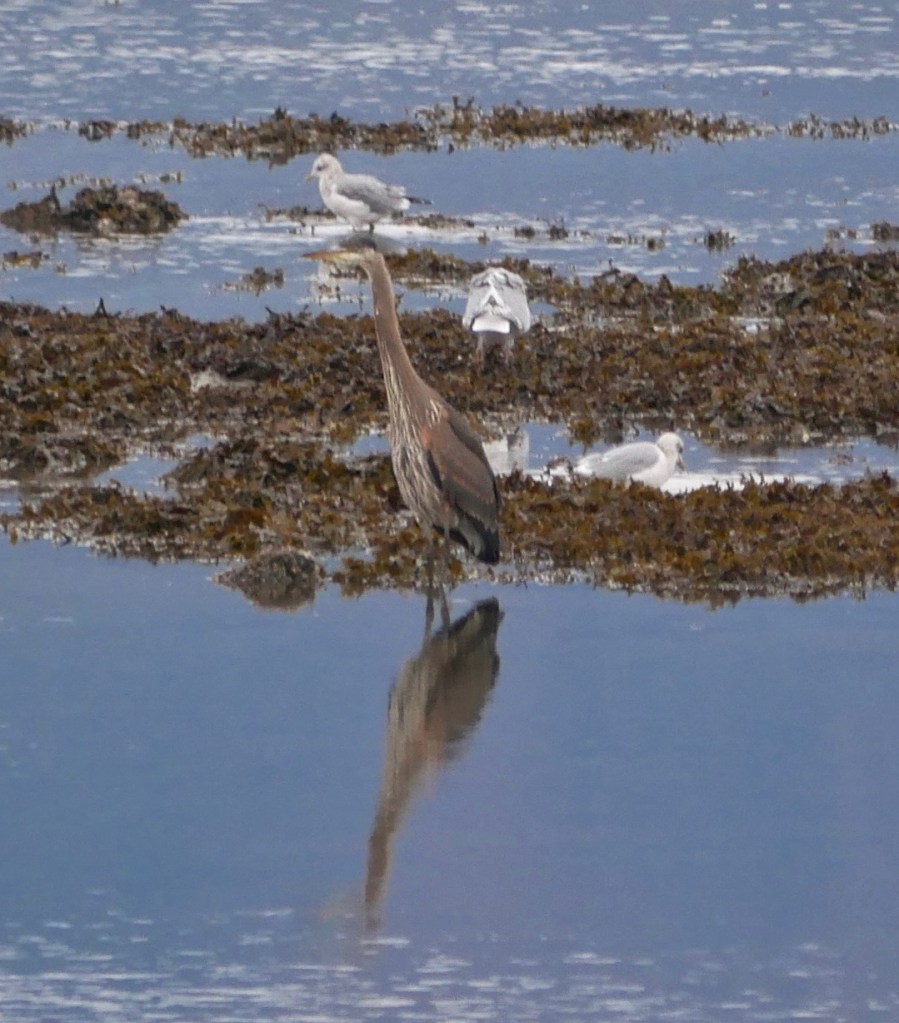
We have just turned our back on a great blue heron, leaving it standing tall among gulls on a gravel bar. The heron was looking toward the glacier, not the gulls or Aki, when we slipped around a rocky headland.

            Now we are walking along a strip of gravel between a forested island and Fritz Cove. Inside the island crows and several bald eagles bicker and scream. Apparently having enough of the crow’s harassment, two of the eagles fly out of the trees and over our heads, startling ducks and gulls into flight. While the little dog and watch the eagles fly towards the Chilkat Mountains when we hear a sound like a rock plunking into the water. 

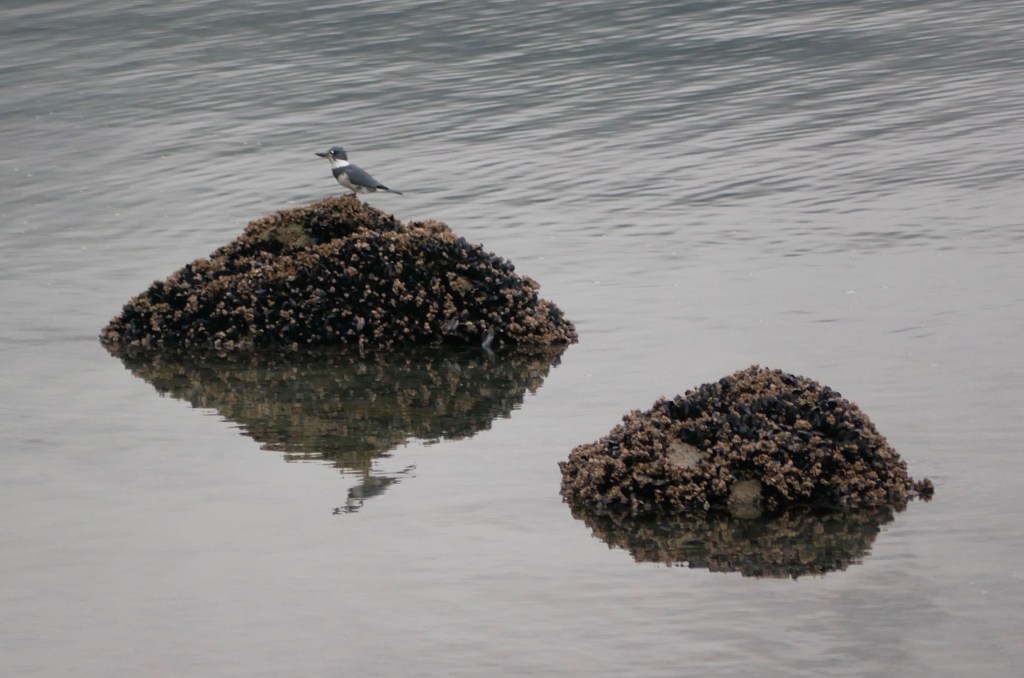
            Looking toward the sound, we spot a belted kingfisher shooting out of the water. It lands on an offshore rock just as another plunk sounds. This one is made by the first bird’s mate. The first guy flits onto another rock, drawing attention away from the other bird. It stands in profile with its huge beak pointing down the beach. Each time we move a few meters away from the second bird, the first one glides down the beach.  When we are thirty meters from the second bird, the first guy circles over the water and reunites with its mate. 

             I wonder why the Creator burdened the diminutive kingfisher with such a massive beak that looks so like that of the heron. The spear-shaped beak is a well-balanced weapon on the large heron’s head. It forms a projectile the heron can shoot forward with its powerful neck muscles.  The kingfisher must use his whole body as a spear, driving beak-first after fish swimming feet below the surface. 

Going Urban

This walk is Aki’s choice. The past two mornings, the little dog had hung back when it was time to get into the car. Yesterday I promised her that today we would start from the house. Aki trots with purpose down and our street and straight through the intersection where we would have to turn left to the take the Perseverance Trail. She wants to go urban. No waterfalls or noisy creek today. 

Sunshine slants across Downtown Juneau, backlighting the leaves of maple trees imported to remind transplanted Juneauites of crisp fall days back home. The sun, a rare visitor this time of the year, has drawn people out of their studio apartments. They sit on steps and sidewalks smoking cigarettes made with tobacco or the now legal marijuana.

Ravens patrol overhead, sending down condemning croaks when not happy with they see. One homeless guy croaks back, engaging a raven in a harsh duet. When an immature bald eagle flies near, the raven brakes off to chase the much bigger bird away.