Teenagers

Aki and I are following Fish Creek to its mouth. The trail takes us along the spine of a spit. Two eagles watch us pass from roosts on the other side of the creek. A strong flood tide is quickly expanding the creek, covering the dead-grass meadow bordering it. 
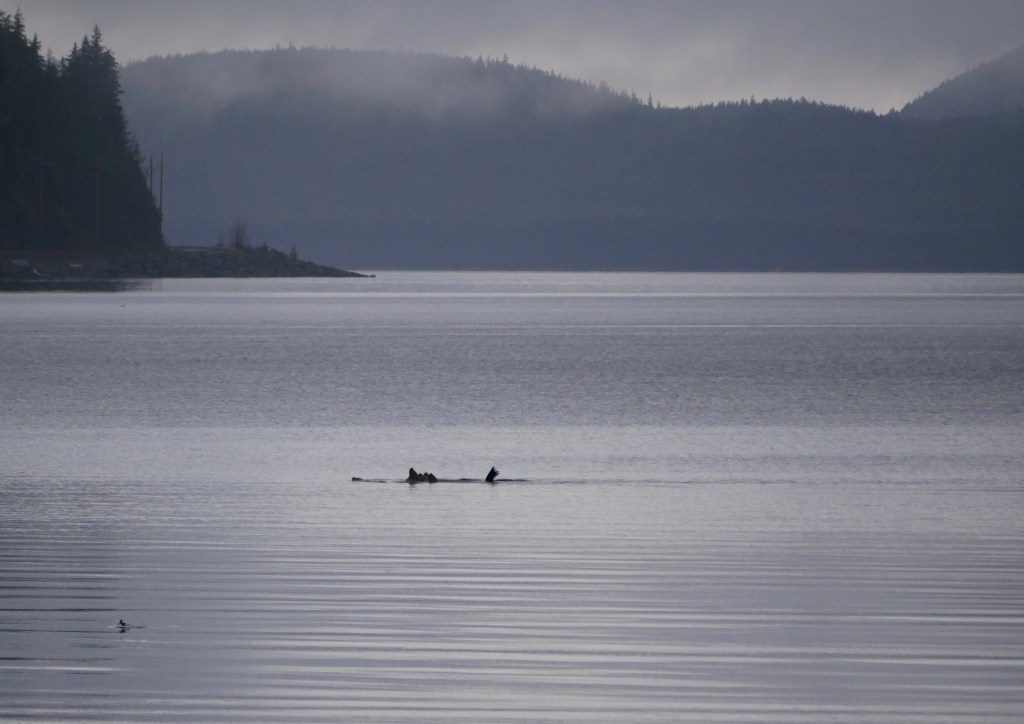
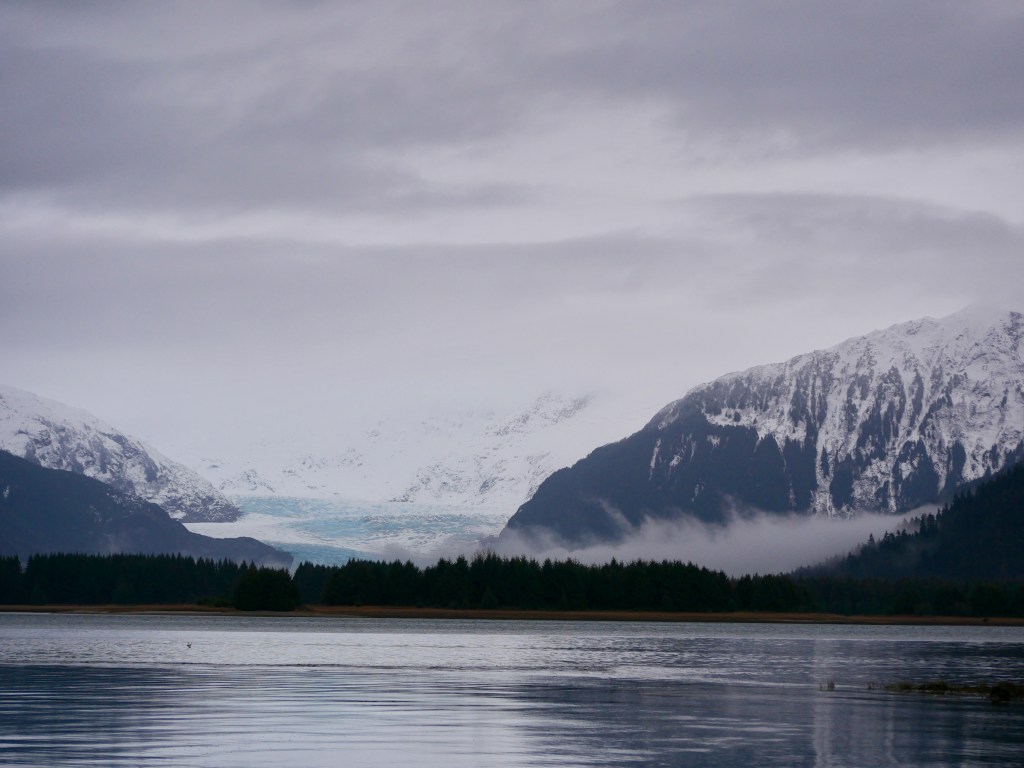
            While Aki investigates the base of a cow parsnip stalk, I look seaward, hoping to see the Chilkat Mountains on the west side of Lynn Canal. I can make out Admiralty Island but clouds hide the Chilkats. In the foreground something that looks like a half-submerged drift log is moving around Fritz Cove at an impossible speed.  With the help of my telephoto lens, I figure out that my log is actually a gang of adolescent Stellar sea lions.  

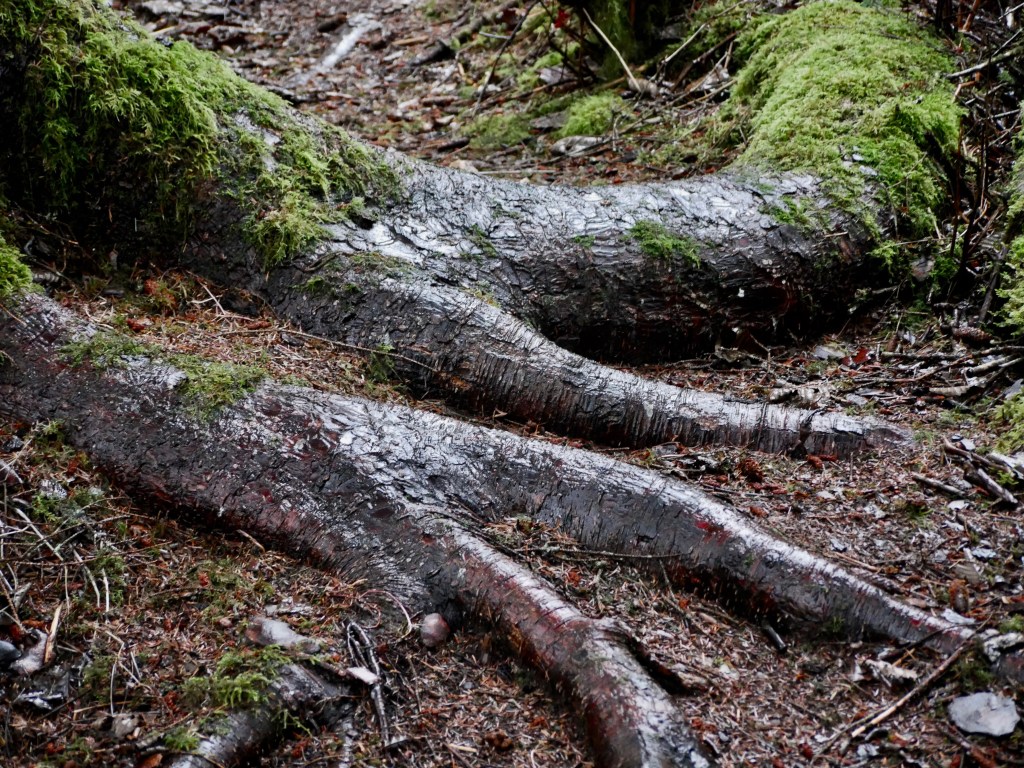
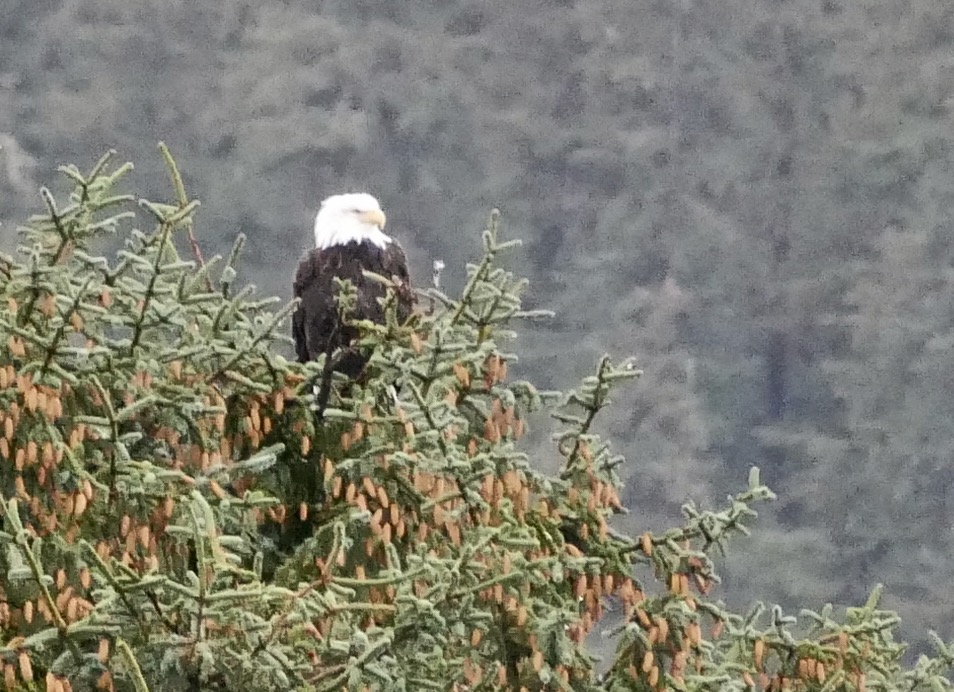
            What I took to be a blackened root is actually the fin of a reclining sea lion. His buddies swim around and under him, sometimes jamming their heads together only to explode away. Another eagle watches the sea lions with what could be a judgmental expression on its face. 
Just Hanging Out

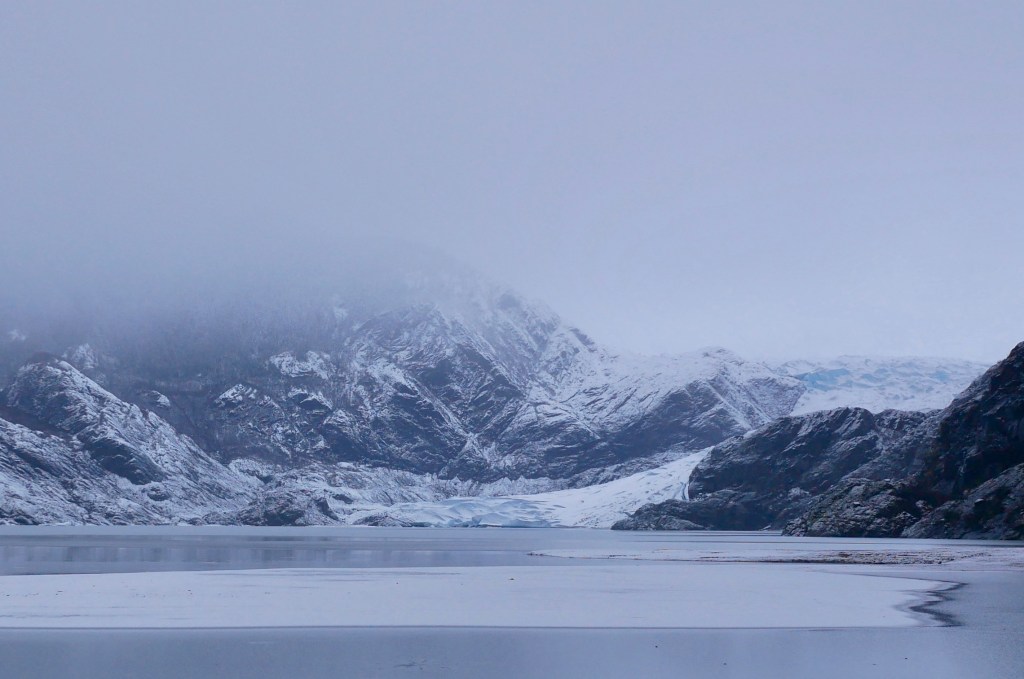
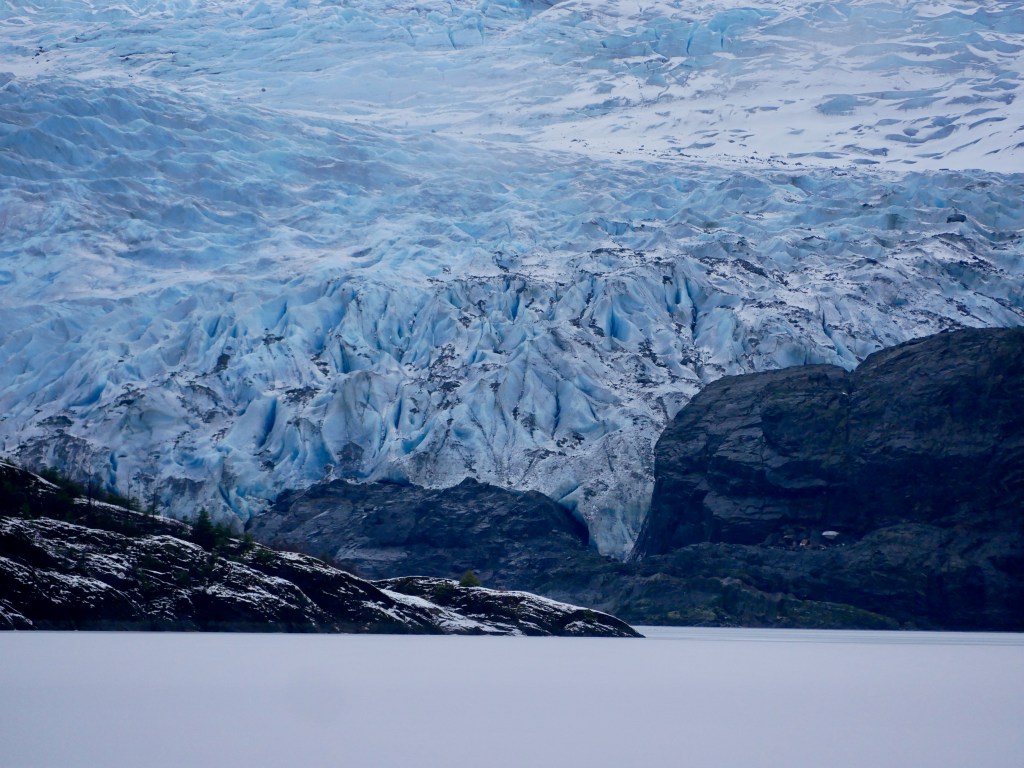
Yesterday’s storm forced the snow to retreat a thousand feet up the Douglas Ridge.  It did the same to the snow covering the flanks of the mountains surrounding Mendenhall Glacier. It also opened up bare patches on the Mendenhall Lake’s beaches. Aki and skirt the bare bits, using the remaining snow and ice as bridges over the silty beach. 

            The lake’s surface is still covered with ice. We find open water where the lake waters flow into Mendenhall River. It is hard for ice to form over Water quickening into current. Here, as other has been the case all through the walk, Aki keeps close. On previous walks along this beach, the little dog has wandered into the woods, trusting me to keep safe. 

            I want to tell her to relax. I won’t swim in the open water or slip on a patch of ice. Do I seem more vulnerable to her this morning?  Does she smell a wolf hanging out in the woods? Maybe she just wants some quiet time with aa friend before the next storm hits.  

The Second Growth

The wind shook our little car on the way to this morning’ trailhead. With the help of the windshield wipers I could make out the road through sheets of rain. Aki still whined with excitement a few blocks before we reached the entrance to the Marriot Trail. Two ravens were waiting for us. They flew ahead and landed on a spruce tree and watched. The ravens followed as we walked along a creek and then out onto a very wet meadow. No longer inhibited by the forest trees, the wind blasted the little dog and I. We pushed on. The ravens did not. 

            The trail led us into a forest still recovering from being clearcut. Like all second growtht forests, it is dark even on a sunny day. Thanks to the dense canopy formed by densely packed spruce and hemlock trees, not enough light can reach the forest floor to support life. We drop into a creek drainage which was never logged. Some of the thick spruce have been growing here for three hundred years. 

            The second growth forest continues on the other side of the street. Thin trees, twenty feet long and stripped of bark lay scattered on the ground. Most still have a root ball. Micro-bursts of wind must have uprooted them years ago, and tossed them about like an angry giant. Here and there new trees have taken root in an old growth stump. If left alone, nature wastes nothing.

Foolish Pioneer

            It stops me dead in my tracks. Aki trots off to catch up with her doggie guest. As she disappears around the corner, I stare at the source of my distraction—a leafed-out blueberry bush. It’s almost January, you little fool. The lush, green plant doesn’t look out of place. At the bush’s base sorrel plants are yet to turn red. I suppose I shouldn’t be surprised. It’s 40 degrees. Winter seems like a legend for old men to share with their grandkids.
            In a week the little dog and I might be struggling down this same North Douglas trail through deep snow. Then the precocious blueberry plant will suffer like a Dickensian orphan. Now, its roots are drinking in the rain.

Little Shepherd in the Snow

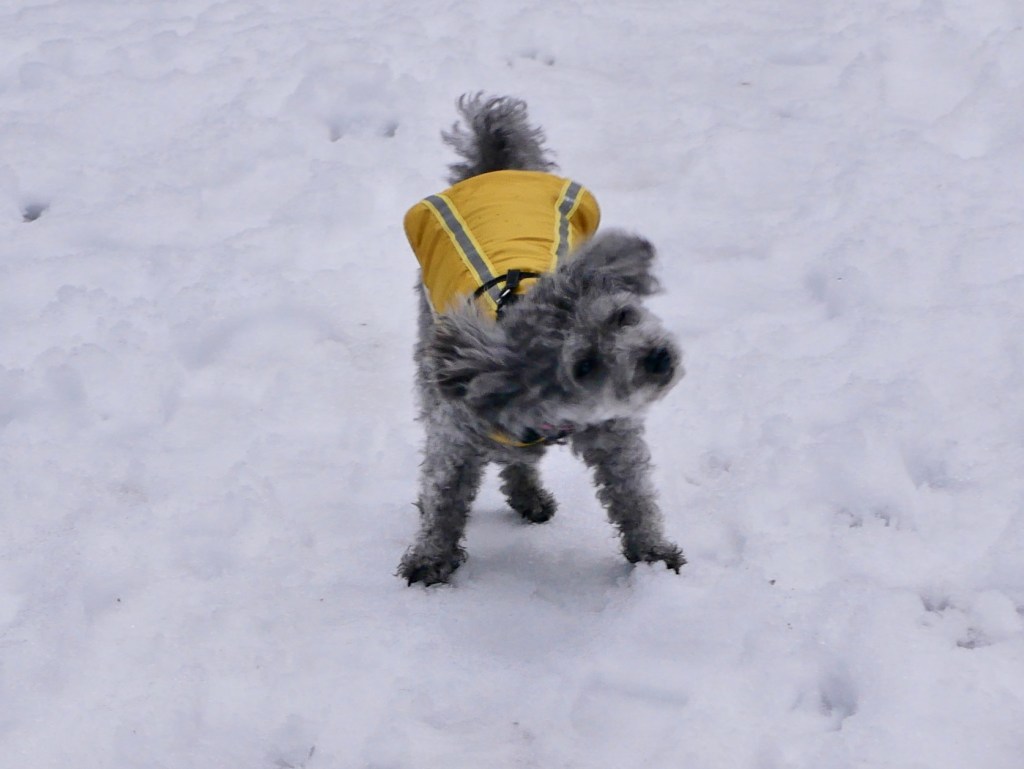
Aki and I have guests this week. One is Lulu, a low-slung dog that is struggling to walk on the snowy trail to Nugget Falls. Aki is more than happy to wait for Lulu, serving as her gentle shepherd. We are walking over glacial moraine in the snain (snow mixed with rain).

            It is snaining in Downtown Juneau too, where Aki lives. But snow no longer covers the street or sidewalks. Low clouds hide Mt. Juneau and the Douglas Mountain Ridge. On the moraine we can just make out Mt. McGinnis. But the clouds hide the mountains and towers that rise above the Juneau Icefield. Snow covers much of the glacier so it glows white, rather than ice blue. 

            When we reach the falls, we are hit by a wind channeled by the mountains down the Nugget Creek Valley. It carries mist from the falls that would soak the little dog and I if we stood too near. Aki avoids the mist. She is already cold enough to shiver when not moving. 

Christmas Dog

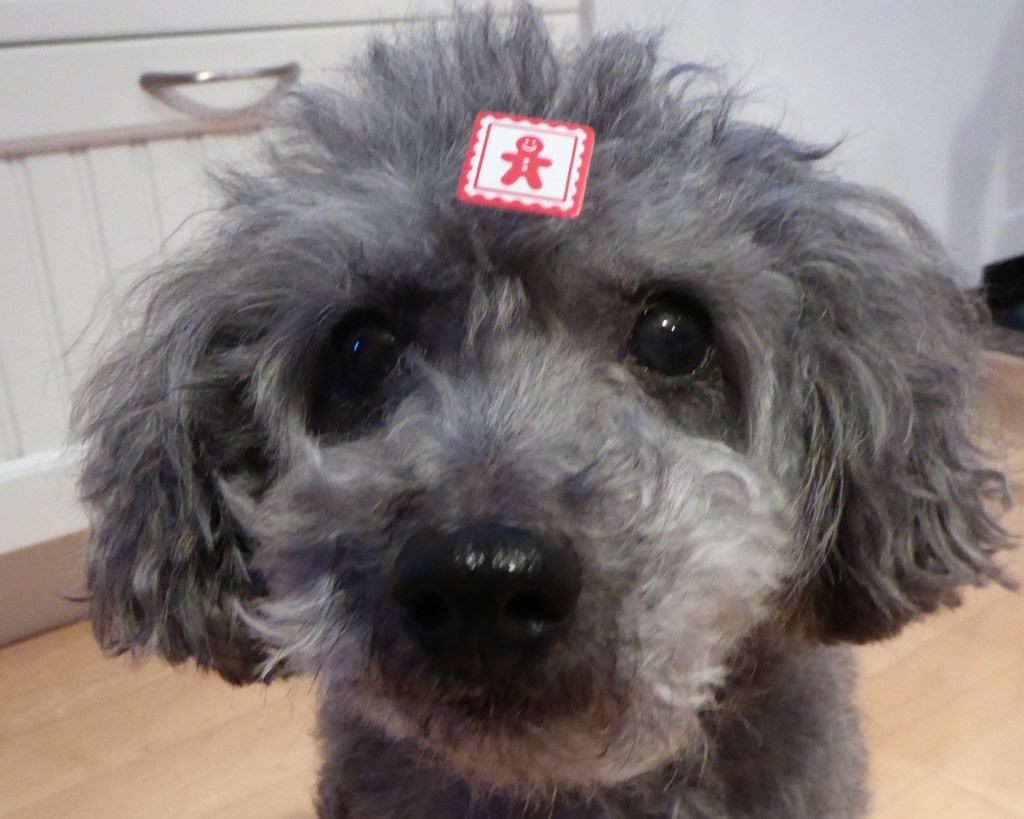
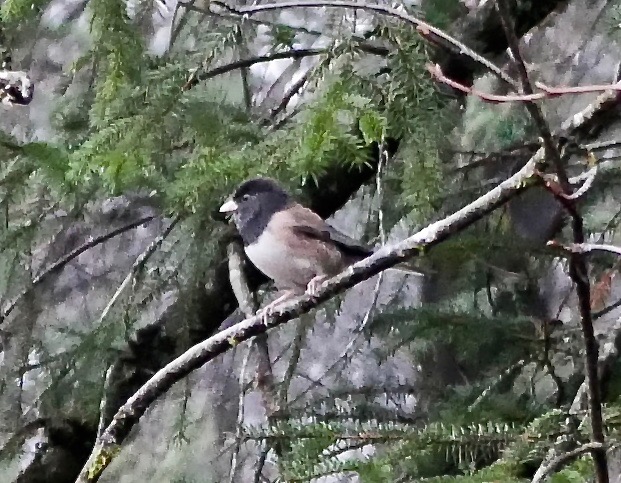
Before we left the house, Aki’s other human affixed a gingerbread-themed sticker in the middle of her forehead. This makes the little dog the most Christmassy thing today in the Treadwell Woods. She has little competition. The wood is full of hundred-foot tall spruce trees, some decorated by a flock of dark eyed junkos. Plumped up against the cold, the little songbirds could pass for Christmas ornaments. But the snow that flocked the big trees yesterday has been melted away by this morning’s rain. 

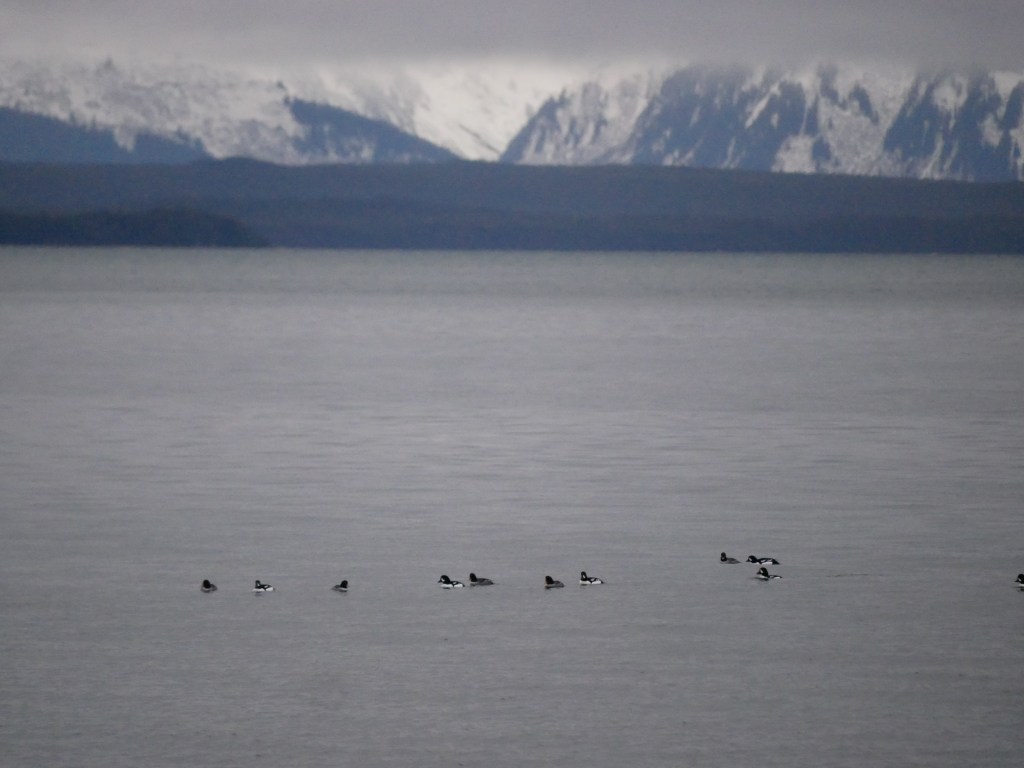
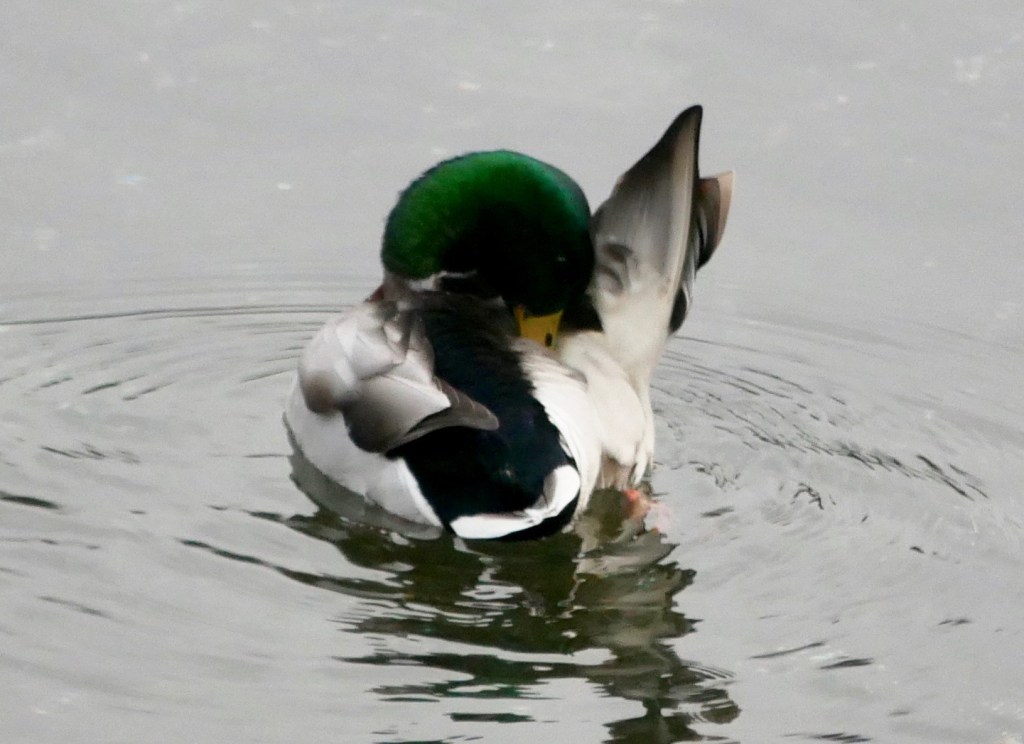
            Helped by strong wind blowing up Gastineau Channel, an 18-foot-high tide covers Sandy Beach. Without being stopped by a protective beach barrier, waves erode away the soil into which trees along the wood’s edge have sunk their roots. The only things exhibiting holiday happiness are a dozen merganser ducks offshore. They are so at home in the turbulent water that they preen their feathers as they bounce up and down the swells.           

  Aki and I should be used to low contrast Christmases. Thanks to climate change, the rain forest has seen few white ones in the past years. While we long for the winter crispness this time of year, we can’t ignore the beauty of trees grown tall thanks to an abundance of rain.             

Ravens All The Way

Aki ignores the raven squawking on roof of the old Norwegian Consulate. The little dog also ignores the quarter-sized snowflakes settling into her grey curls. She is deciphering an important pee mail message. When raven dived bombs the poodle-mix. She charges after it until reaching the end of her leash. By then the raven is safely sitting on another roof. 

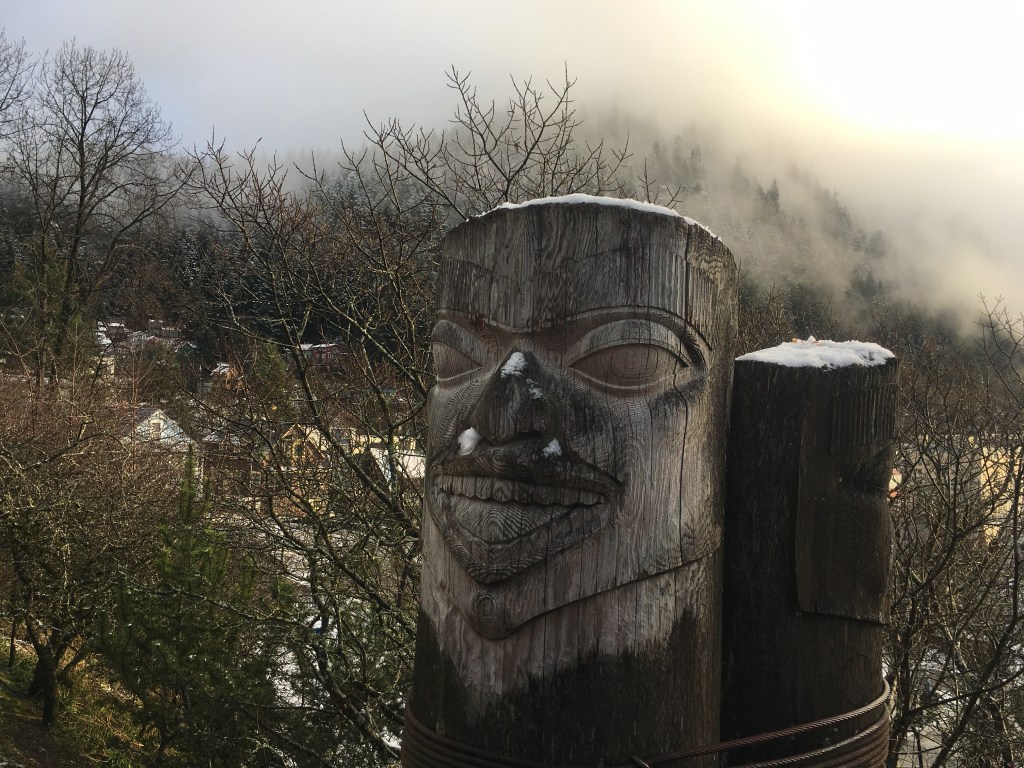
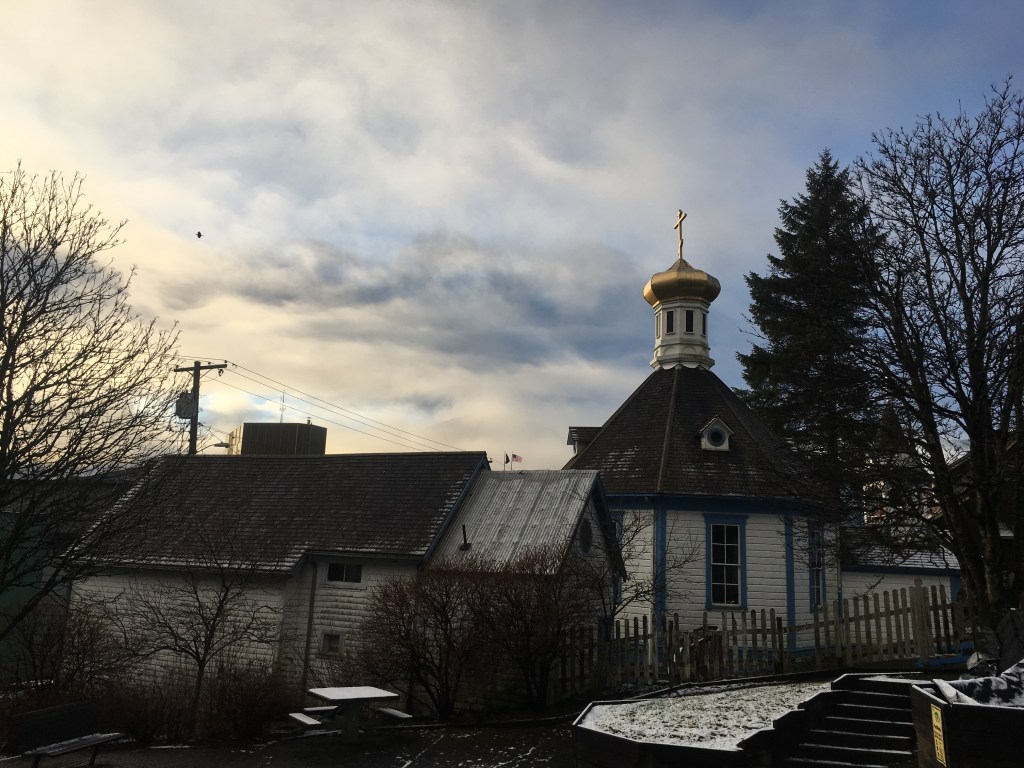
            We drop off Chicken Ridge. I am careful not to slip on the slushy snow. I wish that the snow could survive another day to give us a white Christmas. Our neighborhood totem pole still wears a crown of snow. But the Russian church cupola is already bare. 

            A raven flies into the frame as a I try to photograph the church. Two other ravens land nearby, affecting interest in an overflowing recycle bin. We climb up Gastineau Avenue and find at the crest, a flock of pigeons arranged like musical notes on utility lines. Below them a raven, looking very like one that divebombed the poodle, sits on a fence rail. It holds it ground even after Aki growls and I move close enough to a decent photograph.

            We take the stairs down to South Franklin Street and walk over to the old Alaska Steamship Dock. A raven awaits us there, roosting on a deck railing. This one also holds it ground. I think this guy will follow us all the way home.  

Raven Speak

Raven could have roosted on a fence rail, cottonwood tree, or even the Saviko Park totem pole. He could be squatting on the cab roof of the beater pick-up truck with flat tires. Instead he has perched himself on top of a “permit parking only” sign near the small boat harbor. As the little dog and I approach, another raven lands on a fence rail and looks upat the permit parking only raven. Both fly off when Aki and I close to within ten meters. 

            I wish I could speak the local raven dialect, understand what the birds mean to saw when they mimic the sound of a Subaru’s electronic lock. By the way one raven looks at another that just croaked, clucked, or cawed, I know they communicate with each other. When the duplicate the sound of my car locking, are they trying to communicate with me?

Troglodytes on the Wetlands

This day after the winter’s solstice, Aki and are exploring a new trail across the wetlands. Expecting more hours of gray, we are surprised by sun. It makes us squint like troglodytes. The wetland grass looks trampled, crushed down by now melted snow. Dead-brown stocks of cow parsnip and driftwood are the only vertical things on the wetlands. 

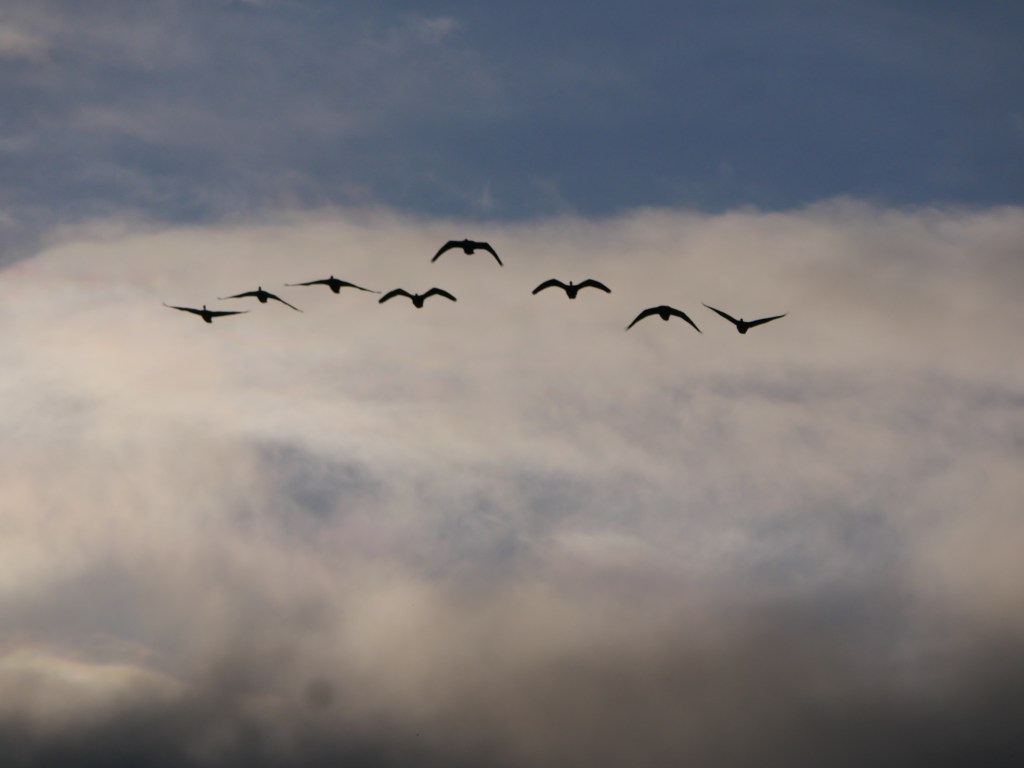
            The flocks of sparrows have disappeared. We can hear the resident gang of Canada geese on the other side of Fritz Cove. Later something will flush them skyward. They will fly over our heads and to touch down near where the spruce forest touches the meadow’s edge. 

            We reach the river and follow it towards its mouth. A single merganser duck fishes the river. Only the airplanes on approach for landing break the silence. Turning around to watch one glide over the wetlands, I am surprised to see Mt. McGinnis emerging from dissipating cloud cover. It is over-bright in the morning sun, like it is trying out for a role as a minor winter god.  
Remembering Romeo

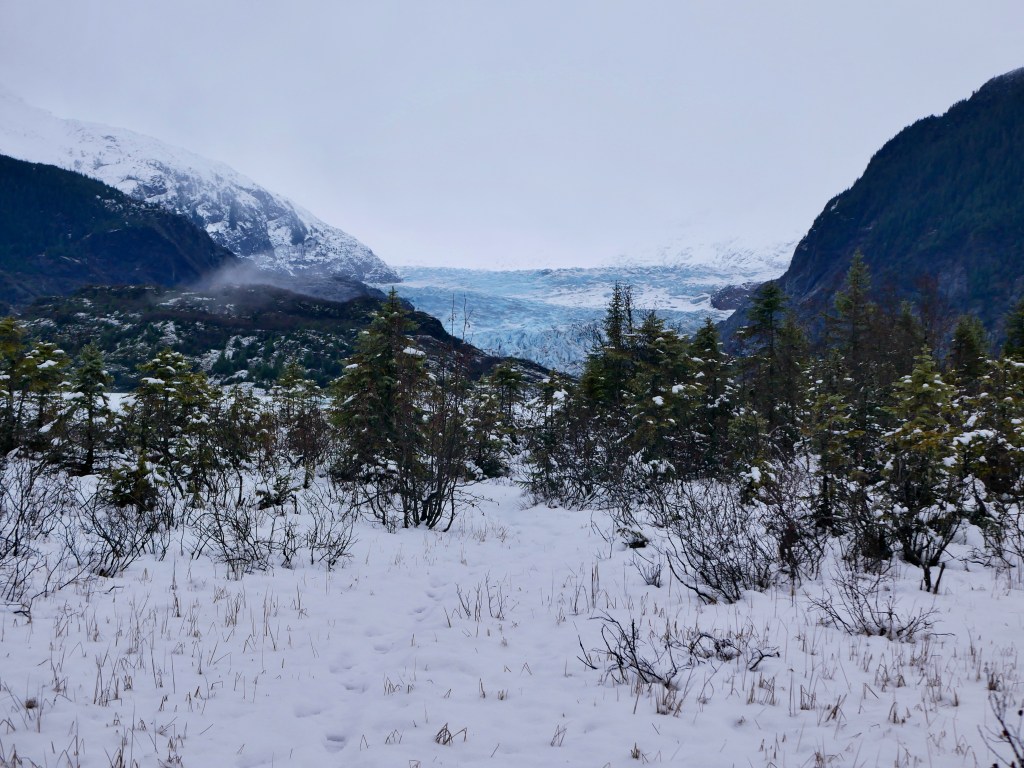
Aki is nose down, snuffling her way along a moraine trail. Her paws punch inch-deep holes in the snow as we make our way over ground still rebounding from the time, not so long ago, that it supported the weight of a retreating glacier. 

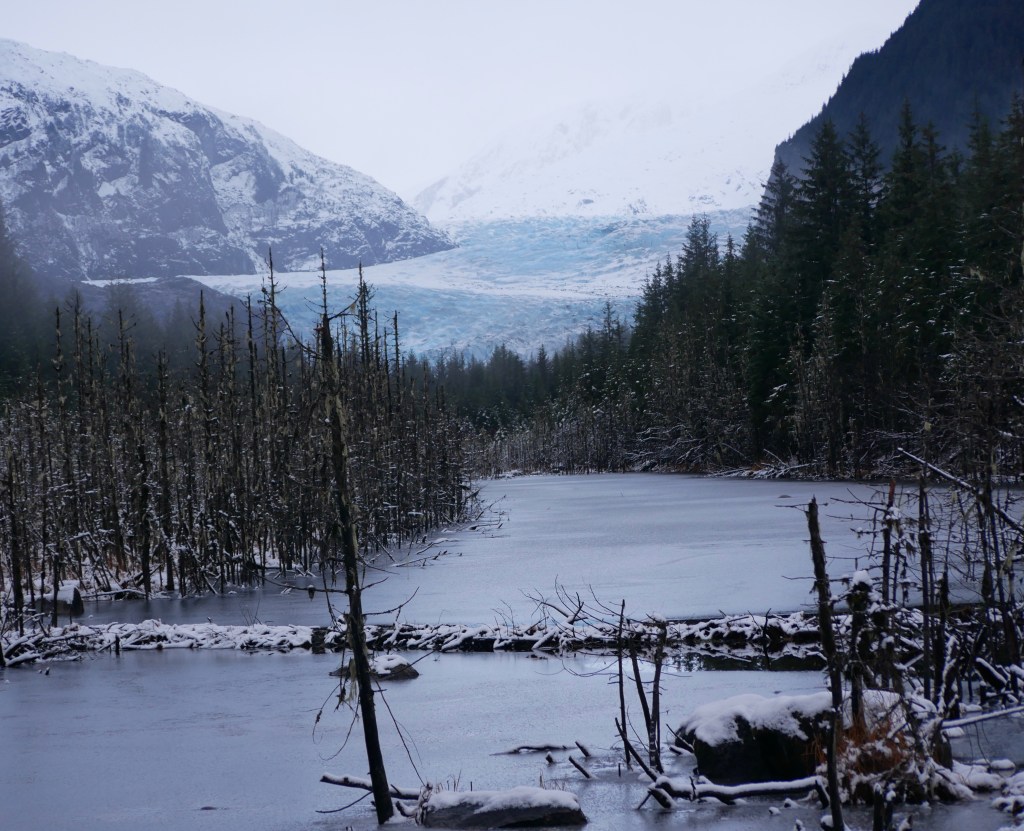
            In s normal winter the little dog and I would be in danger of slipping on icy or crusted-over snow. But the stuff covering the moraine trail is soft and yielding. We pass the edge of a beaver pond covered with a paper-thin layer of ice. Water still pours over the beaver’s dam where some guy tried to dismantle it. 

            We drop down onto the lakeshore to get our first unfiltered view of the glacier. There is an informal trail packed down by the boots of paws of others. I leave the easy path and punch my way to the ice edge and find only the track of one large canine that moved with purpose toward the Mendenhall River. The animal moved in a steady trot, the kind used by sled dogs and wolves to cover ground. 

The romantic in me wants to attribute the tracks to a wolf. Years ago, Aki and I listened to wolf howling when we skied along the edge of this lake. Later that winter, a black wolf nicknamed “Romeo” followed the little dog and I as we crossed the moraine. But Romeo is now long dead. These might be wolf tracks. No trail of boot prints runs parallel to them.