Soul Gaze

I wanted be out on the wetlands at first light. It makes the best shadows, deepens the colors of frost-covered grass. But the little dog needed her breakfast and me my morning coffee. It’s still early in the day when we arrive. Skims of ice soften the reflections off the river. Frost feathers decorate stubs of grass and the still frozen trail mud. 

We are the first to stumble onto a flock of nibbling Canada geese. Apparently wanting nothing to do with the large, noisy birds, Aki ignores them. The geese try to ignore us. Unfortunately, they have staked out the trail as part of their feeding ground. The geese fly off in twos and threes when I try to sidle around them. 

            I had hoped to see the owls again. Two short-eared owls hunted the wetlands the last time we walked along this part of the Mendenhall River. If not them, we might see more swans. But there are only ducks and the now nattering geese. One eagle does a high Passover but sees nothing worth diving on. 

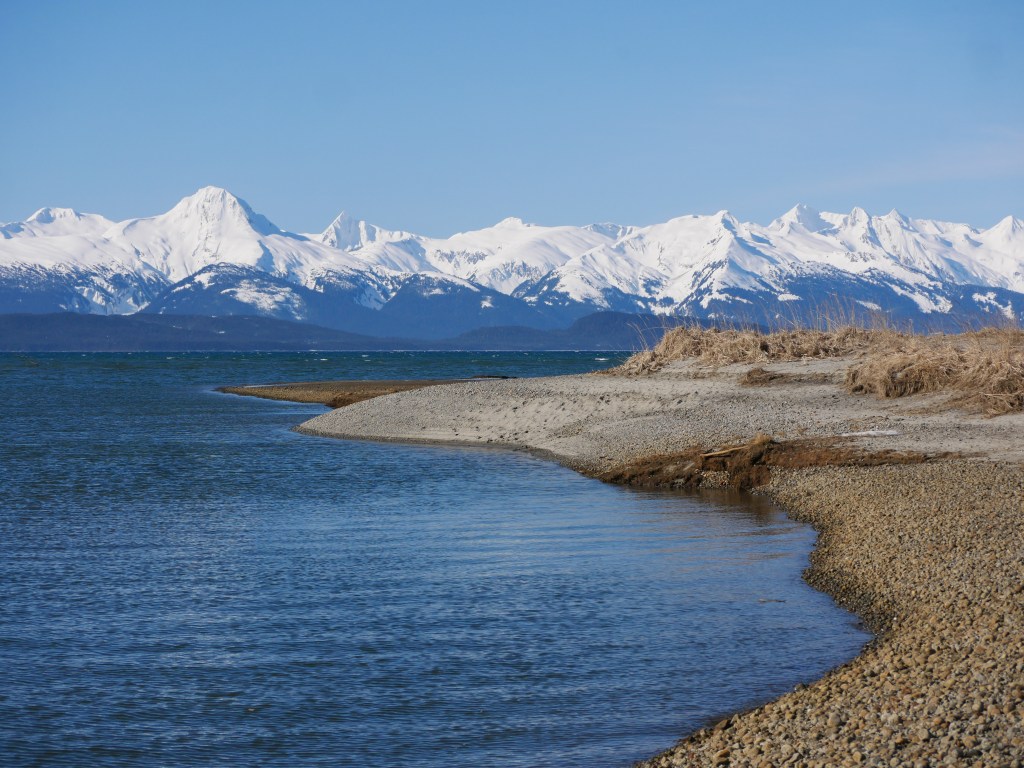
            The trail deteriorates as we walk, softening under the rising sun. We drop off the meadow to walk along the river beach. The ebb tide has reduced the river to narrow stream, but it is wide enough to reflect the glacier and the sawtooth peaks that frame it. The beauty of it should be enough to satisfy. But Aki is short-sighted and I am disappointed not to see the owls.

            As I try to measure ice loss on the glacier, the Alaska Airlines jet from Seattle photobombs our view of it like bald eagles have done before. Anyone that deplanes from the jet will have to go home and stay there for the next two weeks. 

            Feeling the need for another coffee at our own quarantine zone, I try to rush Aki toward the car. She passes me when I stop to watch a flock of pine siskins party among the limbs of an alder tree. One of the tiny birds settles on the nearest limb and studies me, tilting his head to get a clearer view. I think of Annie Dillard’s famous soul gaze with a weasel. Ms. Dillard saw the wild one’s eye as a doorway. For me the siskin’s eye is a mirror, reflecting the sunlight bouncing off the river.     


Aural Dramas

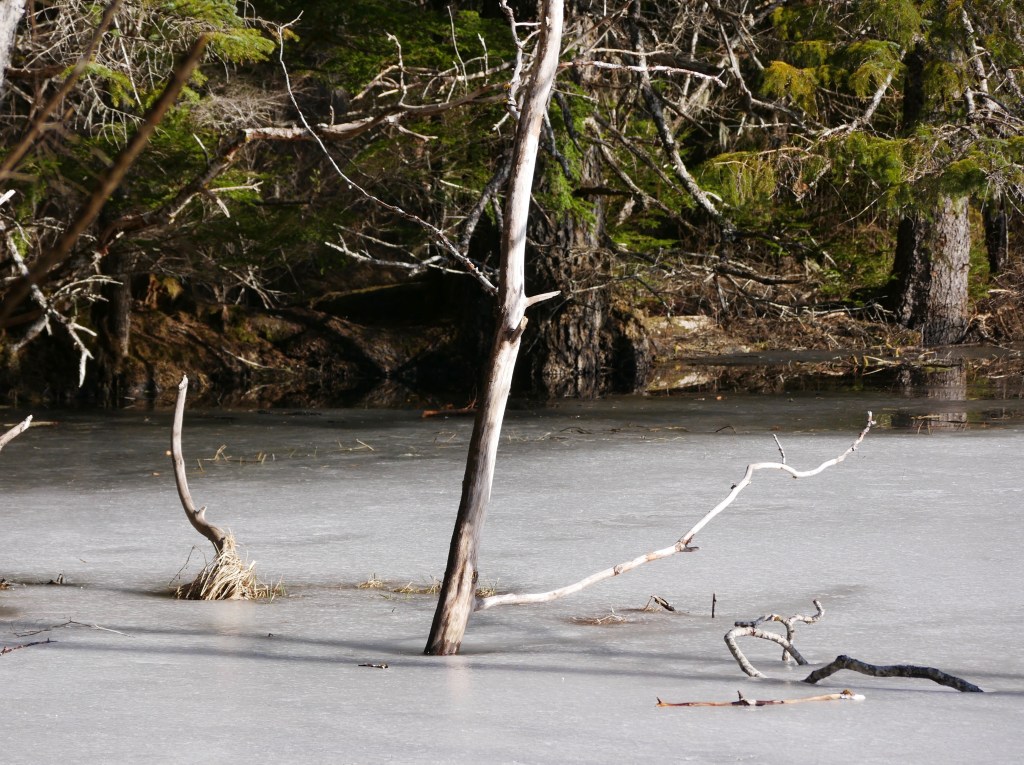
It is quiet in the forest. We can’t even hear the sound of wind whipping up waives on nearby Lynn Canal. That’s why the smack of a bark fragment hitting the beaver pond ice grabs my attention. After a second fragment joins the first one, I notice a faint tapping sound. It’s too weak to be made by the aggressive red breasted sapsucker. Looking up I spot the percussionist—a downy woodpecker. He is still tapping his way up the spruce tree as Aki and I round the pond and head toward the beach.

We hear a sharp crack—just one—as we leave the pond. I want to wait to see if the deer will reveal itself. Aki will have none of it. She has scents to check and pee messages to leave. We cross a small muskeg meadow before reaching the beach. It is dotted with tall pine snags with twisted branches that reach toward heaven like desperate saints. Fast moving crossbills appear and disappear on the higher branches. We are closer to the beach now so the sounds of surf mingle with the crossbill’s kip-kip calls. 

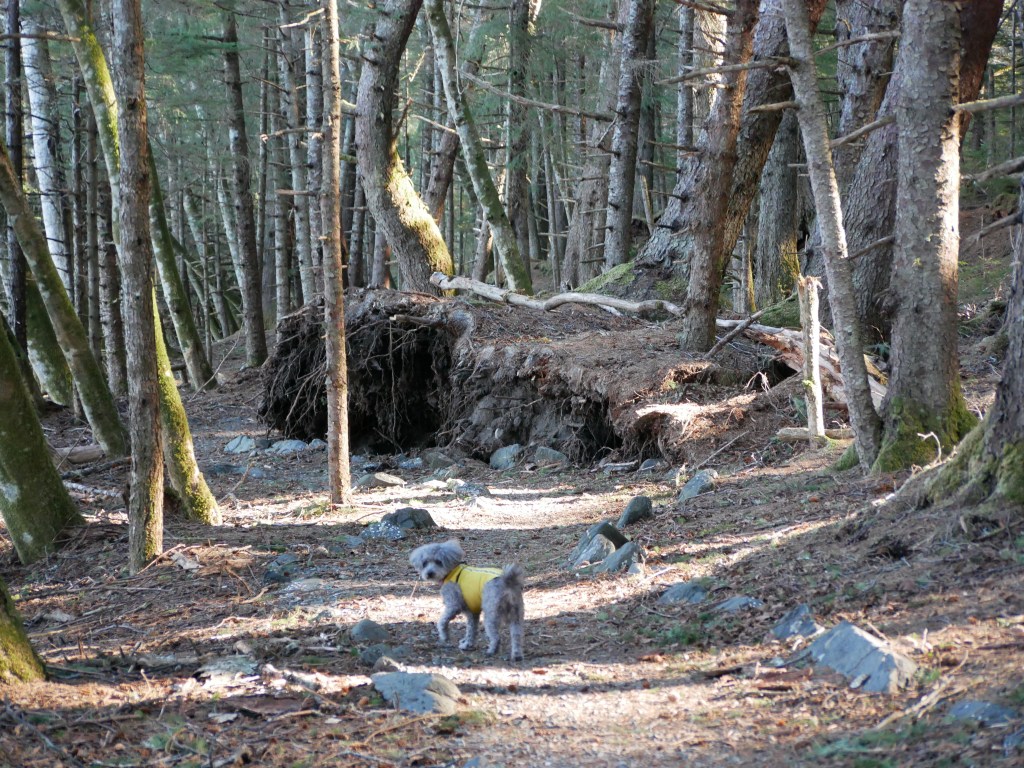
After a short swing along the beach, the trail crosses a headland recently hammered by a fierce wind. It downed or tipped over more than a half-dozen trees. Most were middle-aged hemlocks. One was a giant spruce. It didn’t snap off at the base or collapse onto the forest floor. It still reclines against another spruce with most of its roots exposed to the air. 

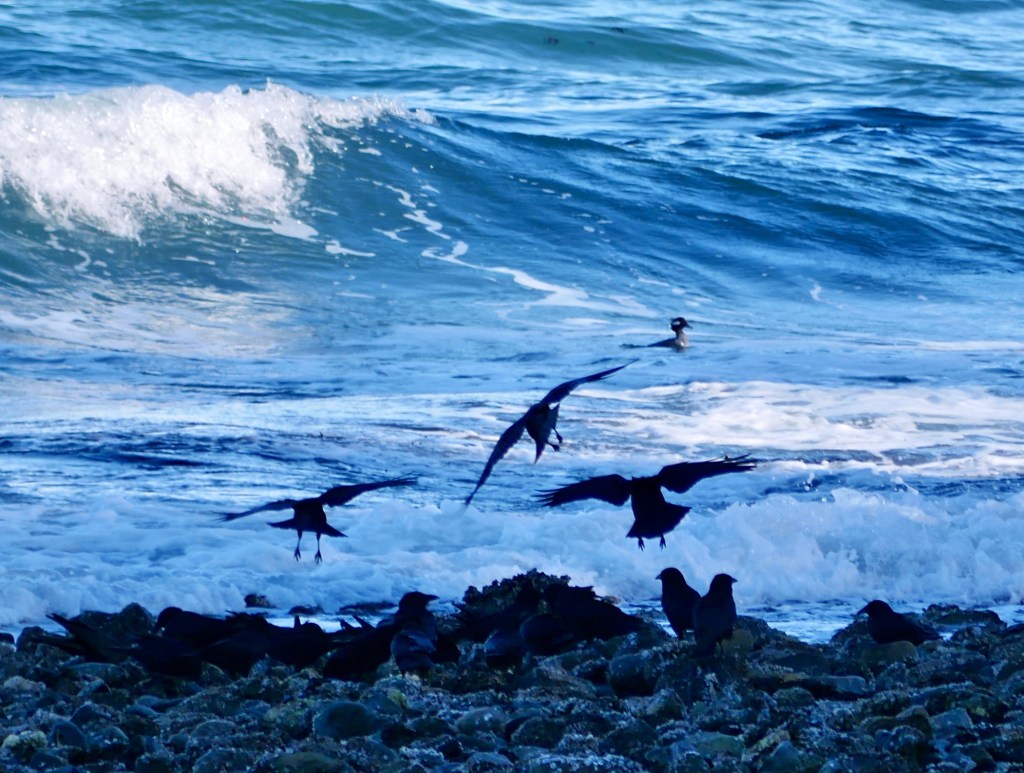
Wind and surf have forced off most of the ducks and all the gulls and scoters. Only the tiny harlequin and bufflehead remain in the cove, bobbing up and down on incoming waves. A murder of nervous crows overflies the ducks, lands for a few sections on a rocky ledge, and then returns to the air.   

Self Quarantine Rain Forest Style

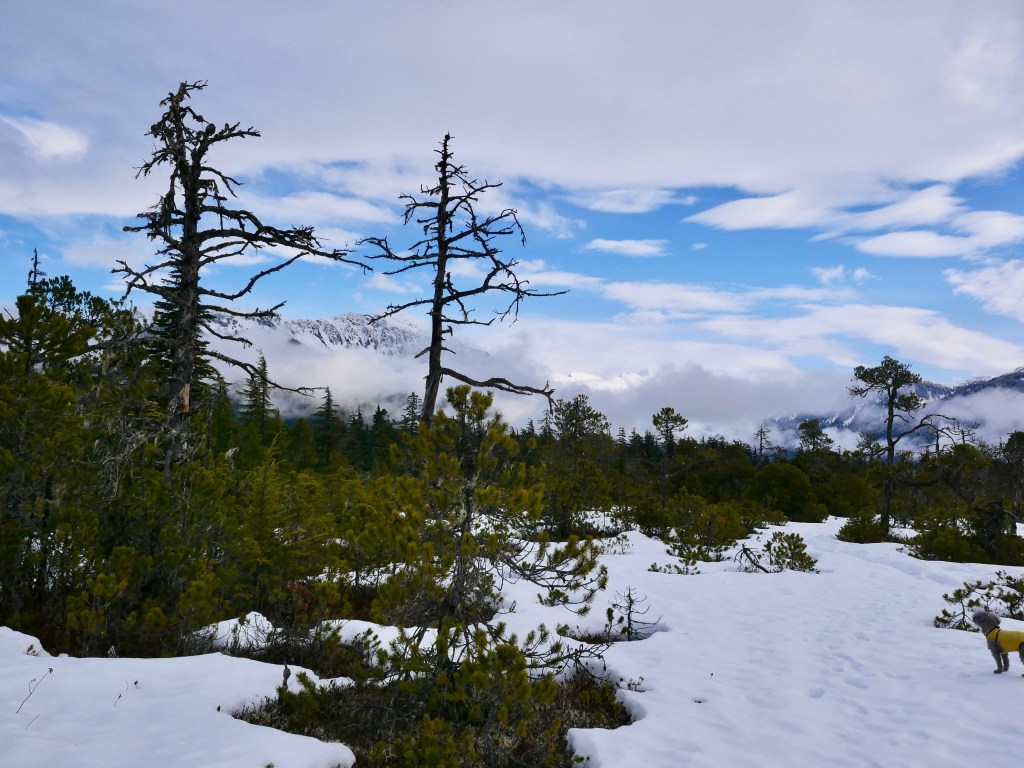
No formal trail crosses this meadow. Mountains surround it on all sides. Fast moving fog reveals and then as quickly obscures them. Normally, morning sunshine destroys meadow fog. These gray tendrils thicken as we work our away across the meadow.

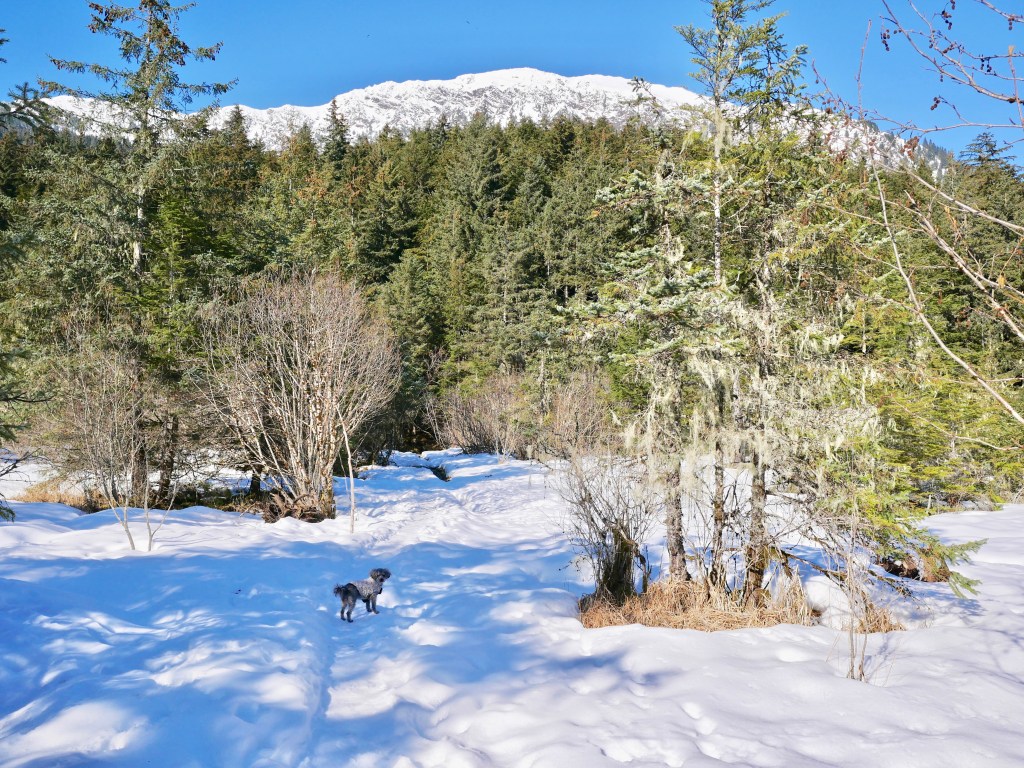
            Aki wouldn’t have picked this place for our daily adventure. It offers no chances for dog encounters or even pee mail to read. Over a foot of snow still covers the ground. It softened during yesterday’s heat and was crusted over by last night’s hard freeze. The crust supports Aki’s slight weight. I only break through every fourth or fifth step. Thanks to the conditions, we have the meadow to ourselves if you don’t count the gang of blue jays bickering nearby. I am confident that it will stay that way. If we have to isolate ourselves from neighbors, we might as well find a place of beauty for our quarantine. 

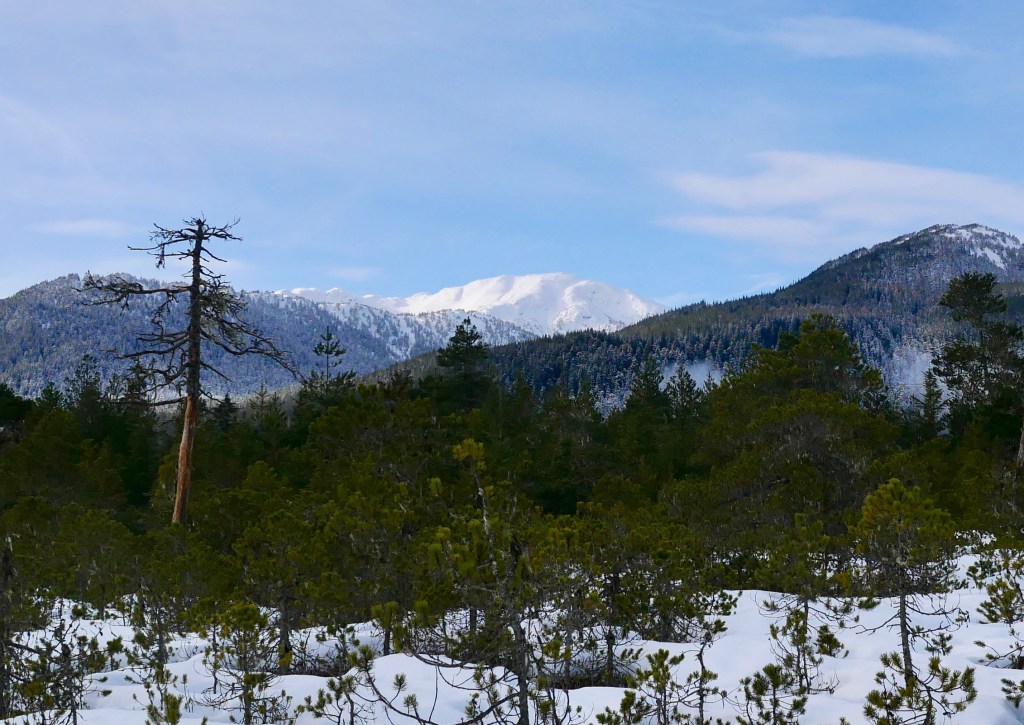
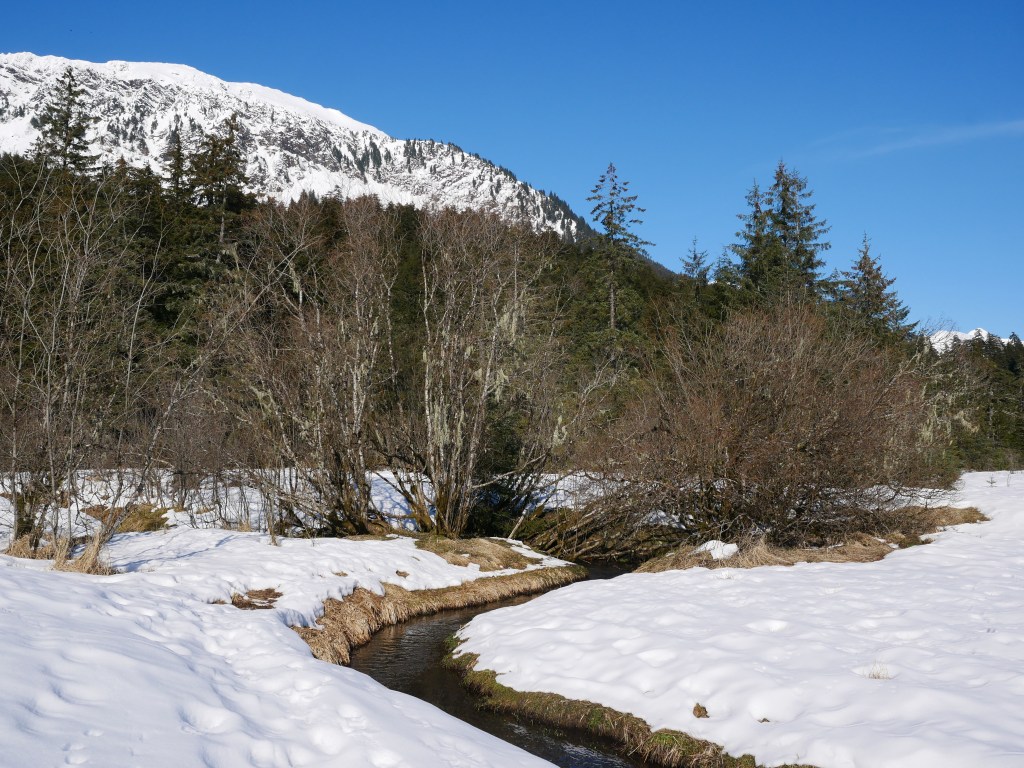
I stop when we reach a small meadow within the meadow that has I few trees to block our view of the mountains. The fog has thickened enough to obscure the ridge to the west. But only one long tendril interferes with our view of a mountain bowl to the south. I take a quick photo of it before the tendril expands. 

The snow crust seems to soften as I start moving toward the south. In a half-hour I will post holing into deep, wet snow. Even though there is no danger of her breaking through the crust, Aki is more than happy with my decision to backtrack our way off the meadow. 

Thinning Ice

Aki and I are out on Mendenhall Lake. The temperature is above freezing and it is raining. I’ve stopped after crossing over two long linear cracks in the snow-covered ice. I’ve stopped to avoid skiing over an area covered with blue-green blotches. They will be puddles soon if the rain keeps up. Time to turn back to shore.

            The little dog doesn’t mind retreating as long it doesn’t require returning to the car. She trots along behind until we almost reach the shore when she rushes off the ice. The skiing is better on the lake ice than shore so I don’t join Aki. She keeps to the snow-covered ground. Her hearing is superior to mine. Maybe she can hear the ice settling.

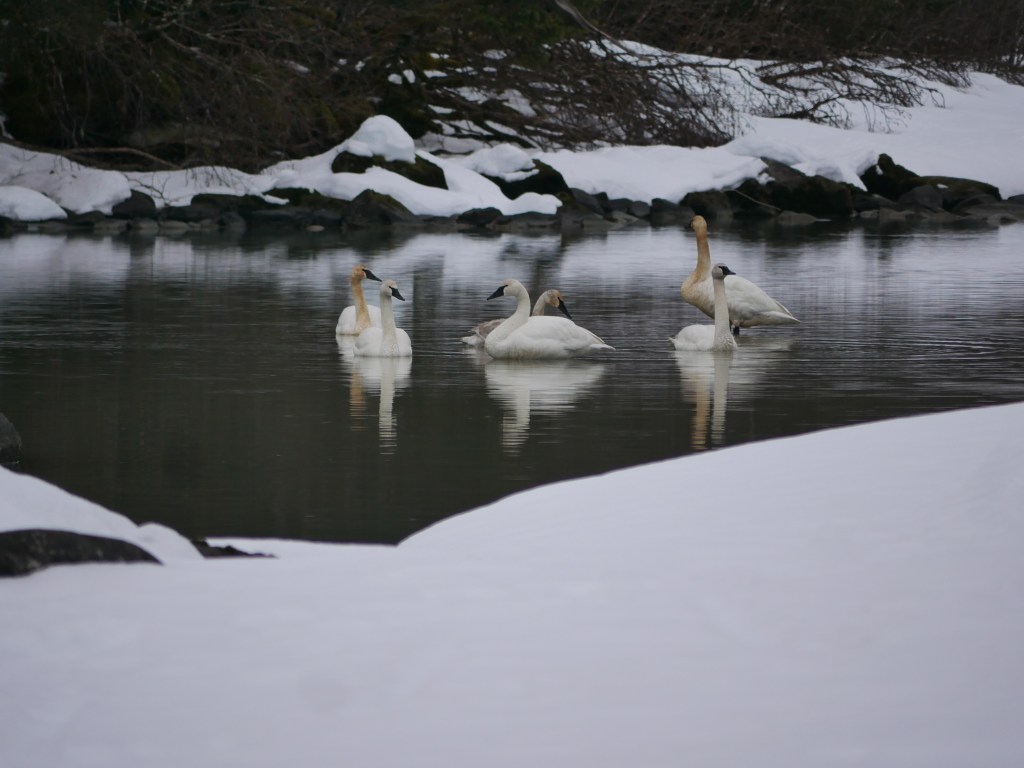
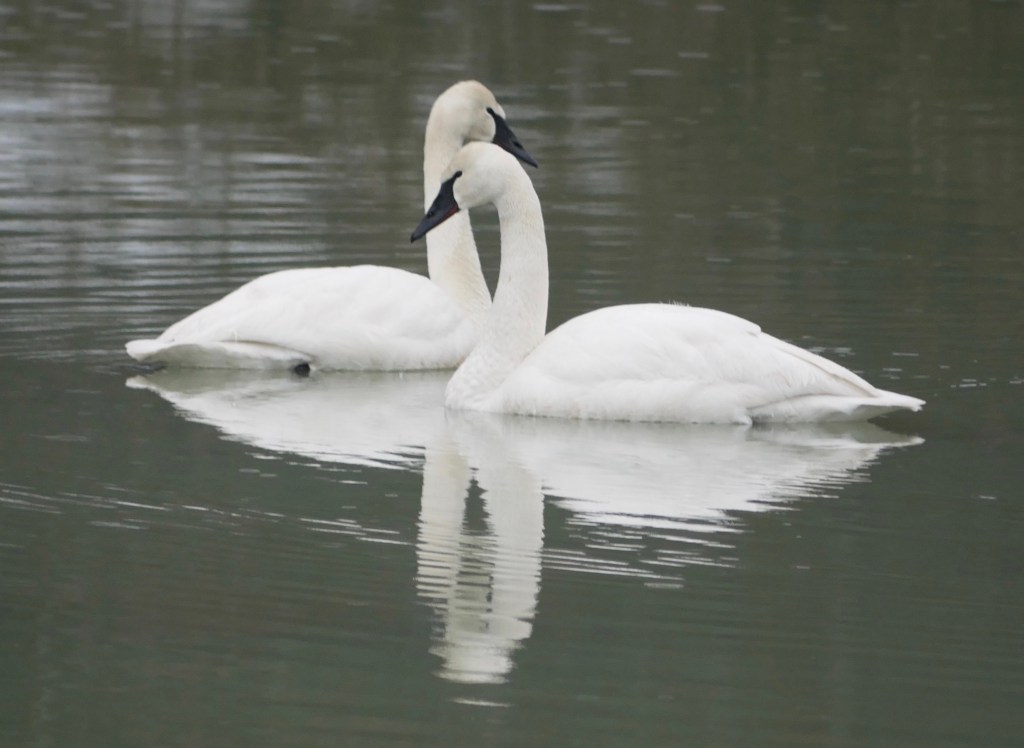
            Our paths converge where the Mendenhall River leaves the lake. The trail is still hard and fast from last night’s hard freeze. I’m so preoccupied with staying upright that I don’t notice six swans in the river until we are only ten or fifteen meters away from them. The big birds look as surprised as I feel. 

            I take off my skis so I won’t startle the swans more by falling. At first, they relax. While one keeps watch the others go back to sleep. As I take swan portraits, a large human family walks out of the woods downriver from us. They have a large dog that entertains the family’s preschoolers by splashing in and out of the river.
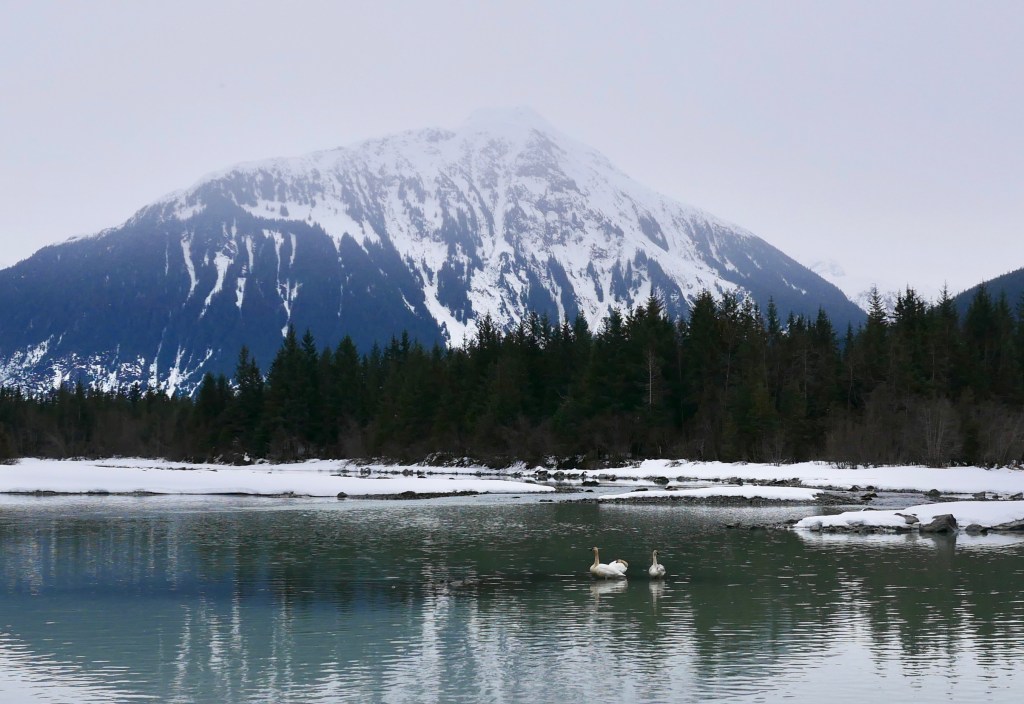
Even though they are several hundred meters from the family, the swans start paddling up river to increase the distance, moving nearer to us in the process. Aki and the swans ignore each other. But I feel like I might be placing the birds under stress. The little dog and I move on, leaving at least this part of the river to the swans. 

Duck Diplomacy

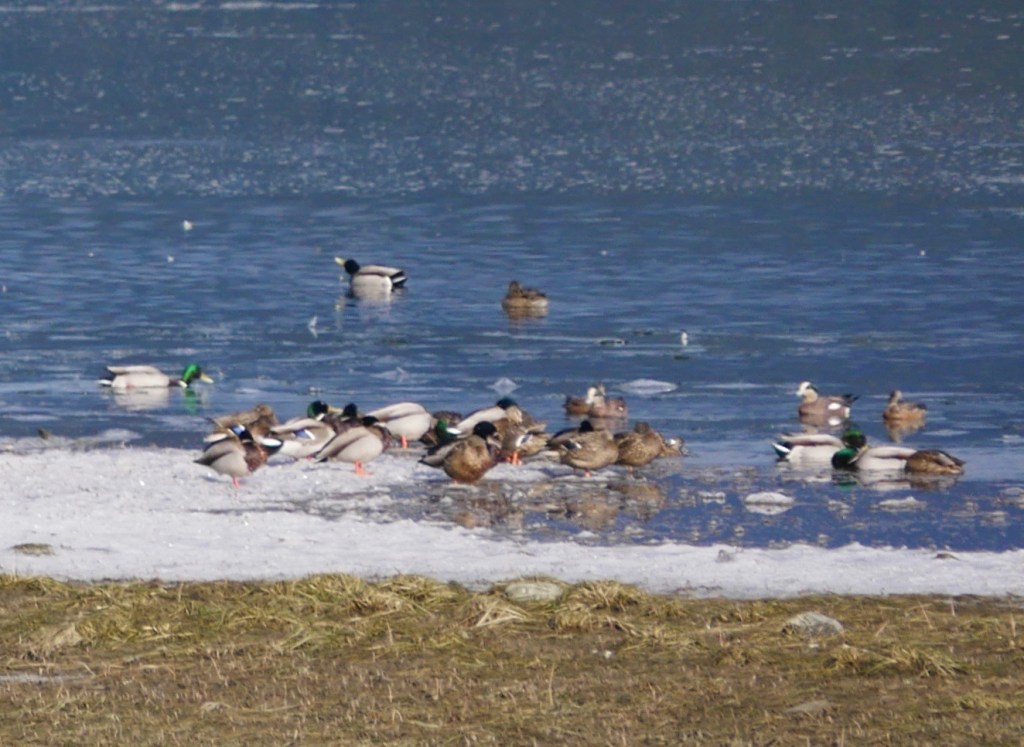
The mallards are gathering along Fish Creek. A medium-high flood tide is pushing them off the wetlands in threes and fours. They fly past the face of Mendenhall Glacier and up the creek, circle like they are waiting for a parking place to open up, and then splash down on the water. Each new group of arrivals is welcomed with maniacal mallard laughs. 

            Some of the incoming ducks are American widgeons. After they settle on the water, they chuckle hellos to the mallards. Widgeon diplomacy must work. In no time the mallards and widgeons are peacefully sharing the same water.

            This morning most of the birds are heard but not seen. Two eagles screech when we walk close to their roosts but we will never spot them. The trail side woods are full of junkos and siskins too shy to show themselves. Unseen varied thrusts punctuate the smaller birds’ songs with their shrill one note calls. 

            A small raft of Barrow golden-eye ducks cruises near the Fritz Cove shore. Each drake looks like a miniature common loon.  Further off shore several buffle-head drakes start squabbling over fishing rights until two of them leave. One of them walks on water for a meter before going airborne. Soon all the buffleheads are spread out like naval pickets on blockade duty. When one splash dives on bait fish every bufflehead on the cove collects around it. 

You've Gotta Love These Guys

Even though they are as common as lice in in urban and suburban centers, the presence of Canadian geese always excites me. Maybe it’s because here they hunt for their food rather than nibble golf course grass. This morning, one of our local flocks follows the flood tide up the Eagle Beach bar. The sun shines over my shoulder and onto the chestnut sides of the geese. I can almost make out the feather details.

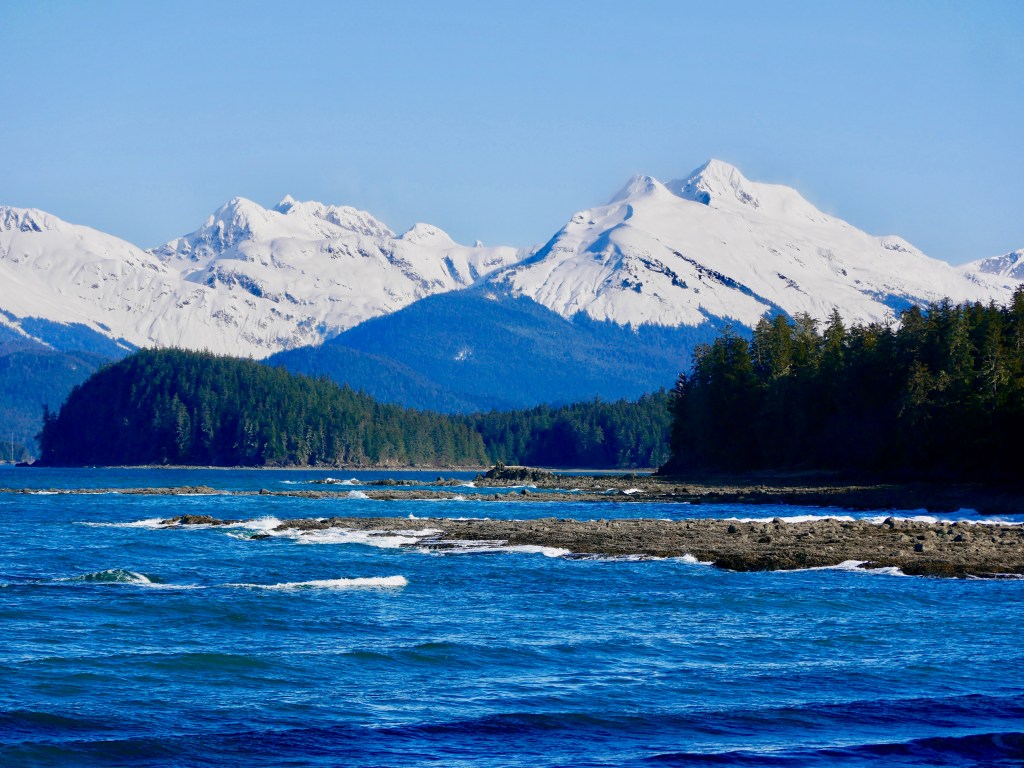
            Aki and I are crunching along a snow-covered portion of the beach. It is calm but the north wind is already whipping down Lynn Canal, raising a building surf. When it reaches this beach it will feel more like winter than early spring. 

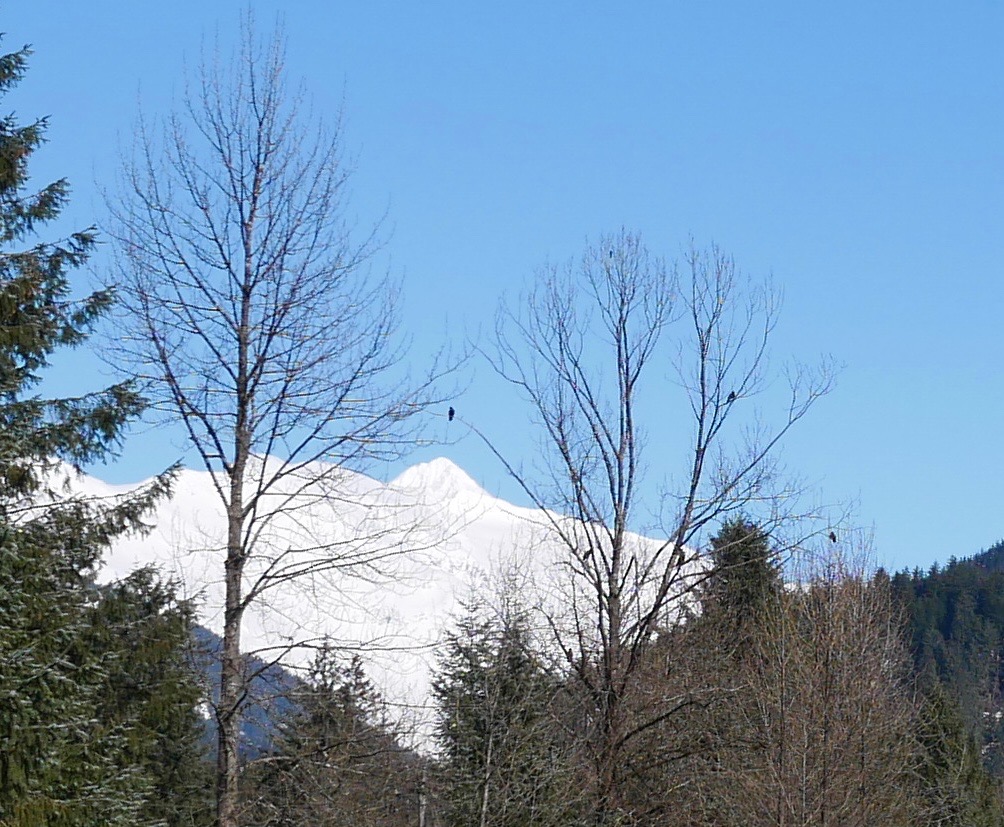
            The sunlight that strikes the geese is also brightening the white sides of the Chilkat Range. It seems like months since I’ve last seen these mountains that form the western edge of Lynn Canal. 

            On the way from the car we spotted a large flock of gulls tucked together as tight as puppies on a sand bar. When the tide must flooded their sandy nest the gulls formed a sudden avian cloud above the surf line, startling a cabal of crows into the air. The now black and white cloud pulses above the canal, some birds settling on the water, only to explode back into the air. When the tide retreats off the beach, they settle back into their puppy pile. 

Nervous and Mellow Swans

Aki and I have returned to the moraine, looking for swans. A little superstitious, and more than willing to indulge in magical thinking, I intend to take the same route to the river eddy where yesterday we saw the swans.               

            Unlike yesterday, there is no sunshine to soften the snow or blue sky to act as a backdrop for the Mendenhall towers and Mt. McGinnis. The top of the towers and mountain are partially obscured by clouds. But the Mendenhall Lake is skiable. I shush along the surface with the little dog in my wake. Careful not to ski too close to open water, I reach the river where the trail snow is still icy from last night’s freeze. 

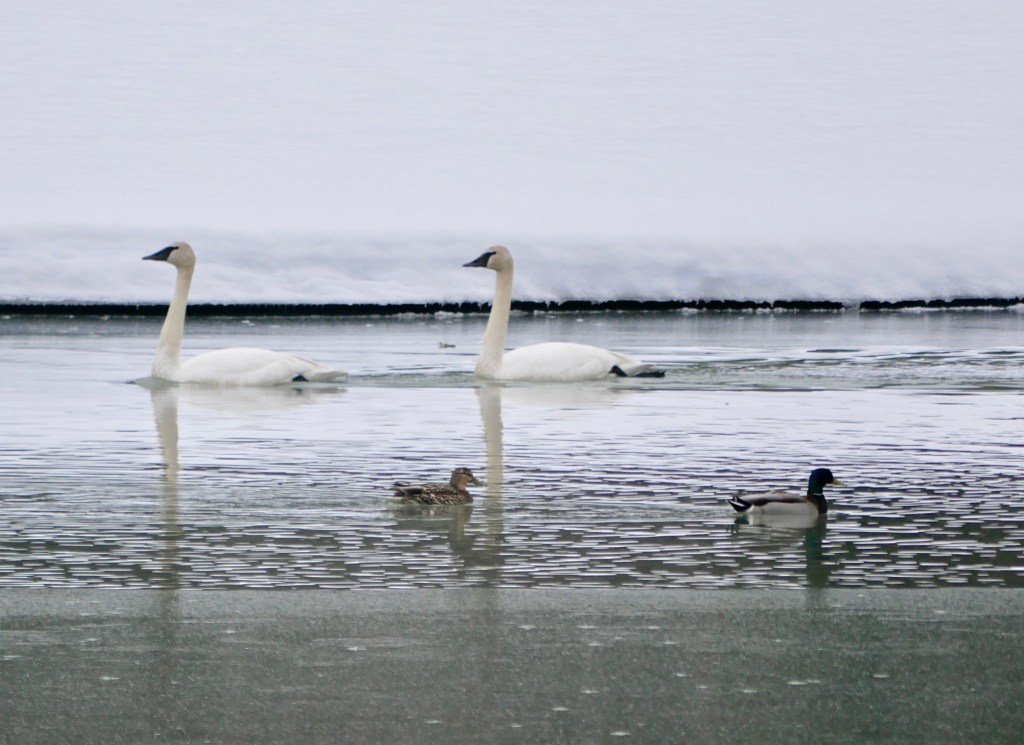
            What yesterday was a carefree trail softened by sunshine ski is now a tense transit along the running river. When we reach the eddy I look for the trumpeter swans we saw before but spot only mallards. In the patch of open water below the eddy two tundra swans paddle down river. They pivot back in our direct just before reaching the ice edge. Compared to yesterday’s trumpeters, the tundra swans seem edgy. They mutter their “oo oo oo” call and never stop paddlng.

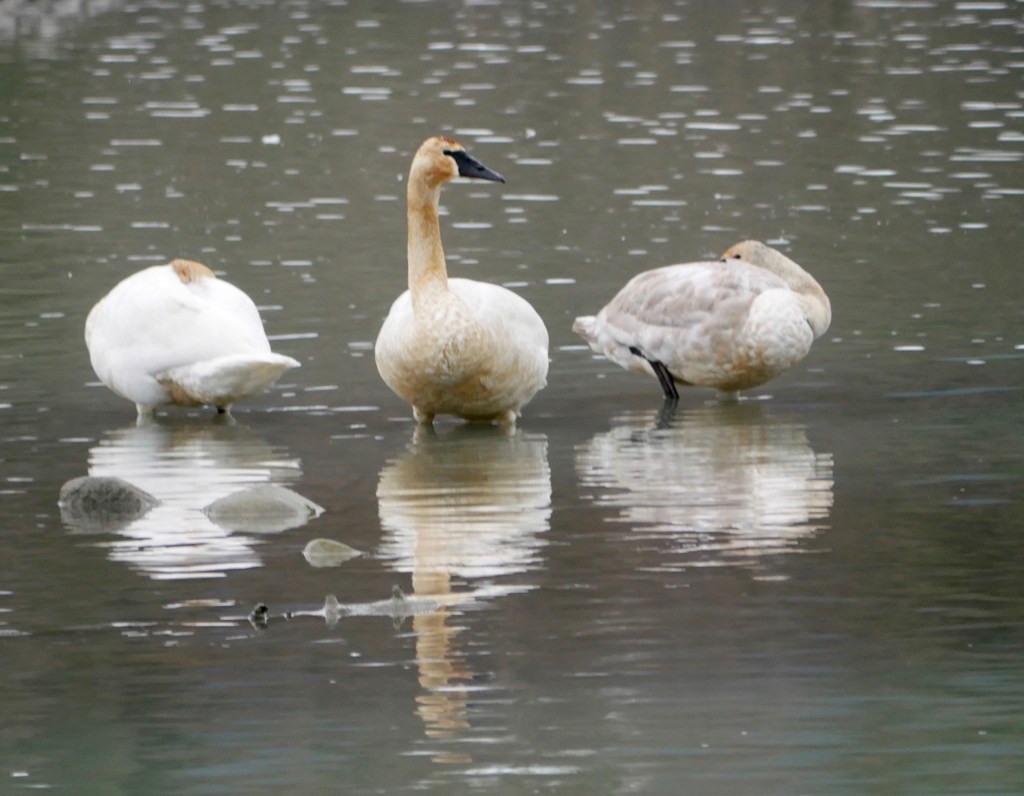
            After watching the nervous tundra swans for a few minutes, I start back down the river. There, maybe five meters from the trail are yesterday’s three trumpeters. They stand on a high spot in the river bottom. One watches us approach as the other two sleep, beaks poked into their wing feathers.
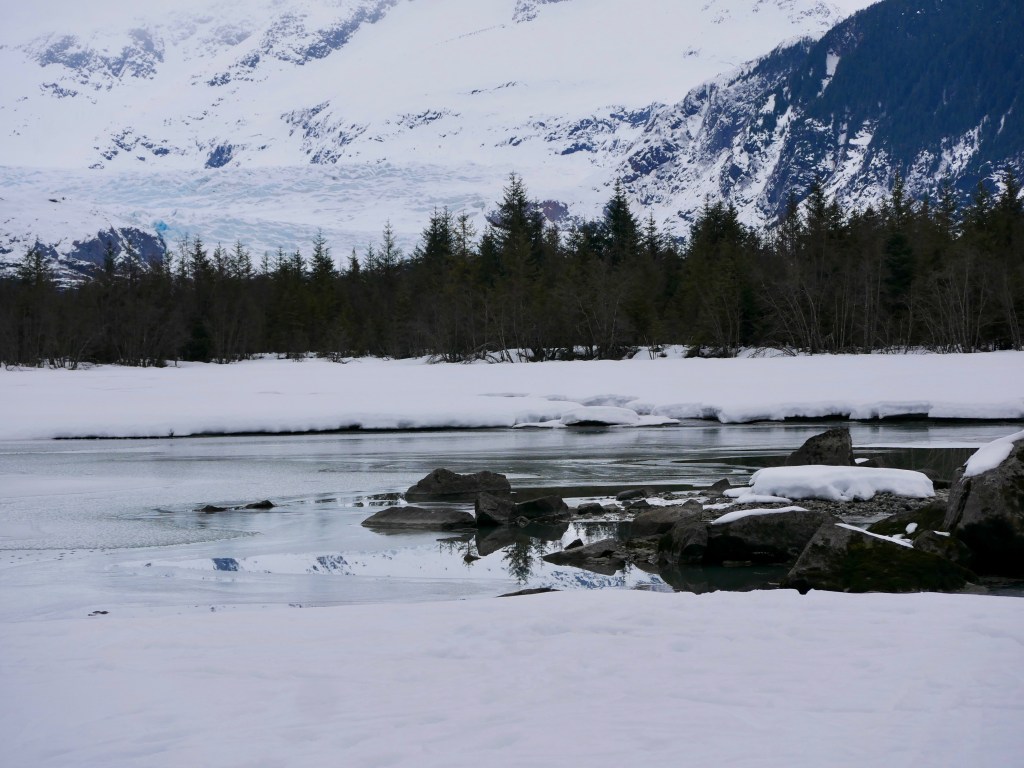
            Do they feel safe, maybe even invulnerable thanks to their five-meter moat? Or are they just too tired from their long migration to care? 

Fast Ice and Swans

Far out on Mendenhall Lake an exclamation point and a period move toward us. In a minute the punctuation marks transform into a skiing man and his dog. Assured that the lake ice is now firm enough, I ski onto the lake. Aki follows and the passes me. Soon she is running in large circles. 

            The glacier grows in size as I move further onto the ice. The conditions are perfect—five centimeters of sugar snow on firm, flat ice—almost too perfect. We are moving fast. Soon the little dog and I will be reduced to punctuation marks when seen from the beach. Worrying about skiing onto ice weakened by hidden currents or underwater springs, I head over toward the beach. 

            We cross a series of points and small bays to reach the Mendenhall River, which still runs dark and free. I can’t remember a winter cold enough to silence it. Something honks as we approach the place where the trail leaves the river bank and enters the woods. 

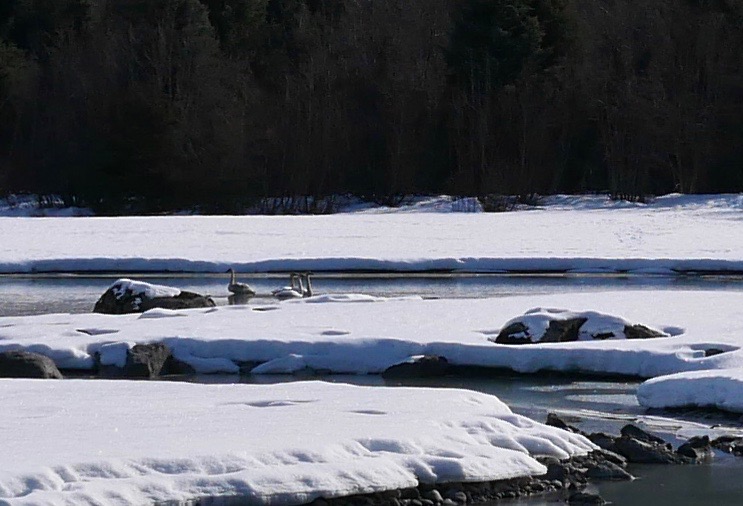
            Expecting Canada geese, I spot four large waterfowl gliding on a river eddy. The fierce morning light makes it hard to see more than the birds’ shapes. They could be Canadians but they would be larger than normal Canadians. Aki follows as I ski further down river to a get a better angle for investigating the birds. I stop when I can see that the birds are swans. They are recovering from their northern migration on the only piece of open fresh water for miles around.      

      The swans huddle against a snow-covered gravel bar where they almost vanish. After Aki and I move into the woods the swans come out of hiding. I watch them for a few minutes while screened from their view of shoreside alders.  

Concerto in C for Chain Saw

The birds are singing out the chorus to Concerto in C for Chain Saw. People who have never visited a rain forest won’t recognize it. Pine Siskins begin the chorus with high notes. Red breasted sap suckers hammer in a percussion line. Three-toed woodpeckers and blue jays take up the tenor parts. Then, from the other side of the forest a chain saw roars. 

            The chain saw’s contribution grows as we walk deeper into the woods. When it pauses, we can hear spruce wood cracking. A trail crew must be dropping the three-hundred-year-old spruce that has been rotting near the trail for decades. Porcupines had hallowed a chamber at the tree’s base. Last fall the big trees’ twin fell during a wind storm. 

            As we approach, I try to engage Aki in a debate about whether the crew should be hurrying the old giant’s death. Aki doesn’t bite. Being the practical one, she probably agrees with the trail crew. If they don’t cut it down today, it might someday crush one of her dog buddies when it falls naturally. 

Enforced Social Distancing

The ravens sound angry. Aki and I can hear them croak and complain as we walk along Switzer Creek. It drains a diminutive old growth forest that is bordered by a recovering clear cut. Forty or fifty ravens are hurling abuse from posts inside the forest canopy. One of the big scavengers shows itself only to disappear when I lift my camera.  

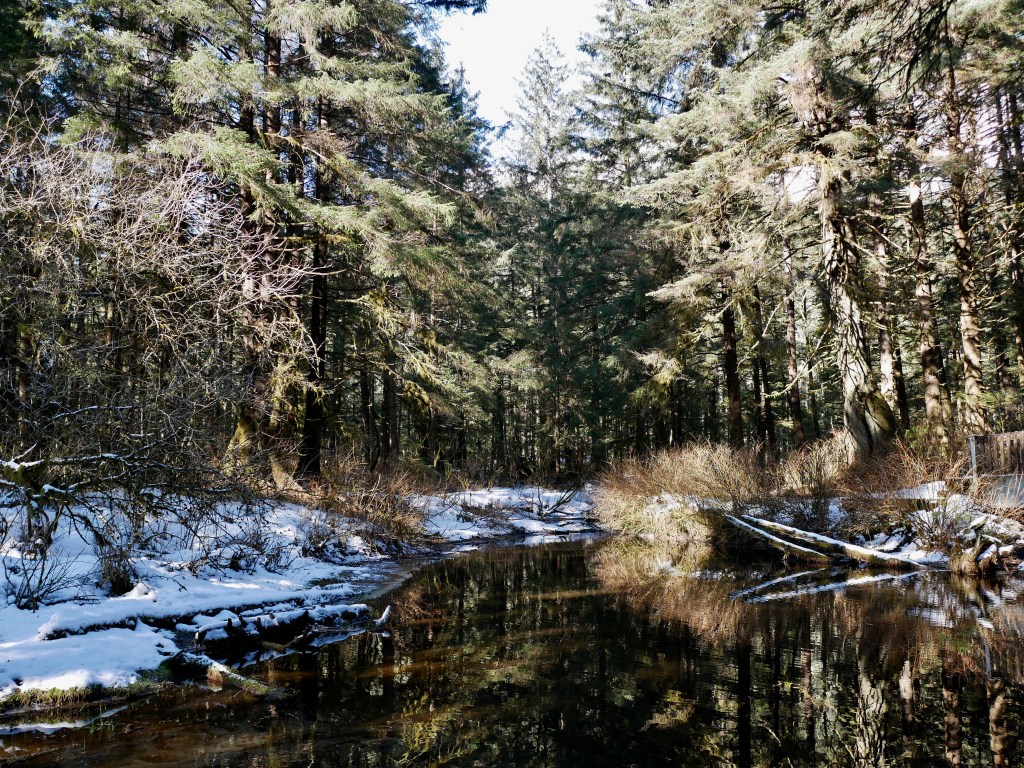
            Snow still covers the forest ground but the creek runs free. The pale-yellow shoots of three skunk cabbages have emerged a few centimeters above their mother plant. It feels like spring is checking out the woods but in a cautious way in case winter is just outside taking a smoke break. Aki and I are over-dressed. 

            The little dog cools off by rolling in wet snow. I take off my winter coat. We walk out of the woods and onto a snow-covered meadow, squinting from sun glare bouncing off the snow. Three ravens and an eagle leave the canopy. The eagle tries to settle into a tall spruce snag. More ravens show up to drive it away. 

            Aki and I head back to forest. Before entering it, we stop long enough to watch the gang of ravens chase the eagle. The swirl higher and higher over the meadow, rising above the tree line on the slope of Blackerby Ridge until they are just dark silhouettes against mountain snow.