Rusting Away

The last time Aki and I circled Moose Lake, yellows and browns dominated. This morning, all is green. The new leaves display a crayon box worth of green colors. The trail is perfumed by balm of Gilead (cottonwood) sap. 

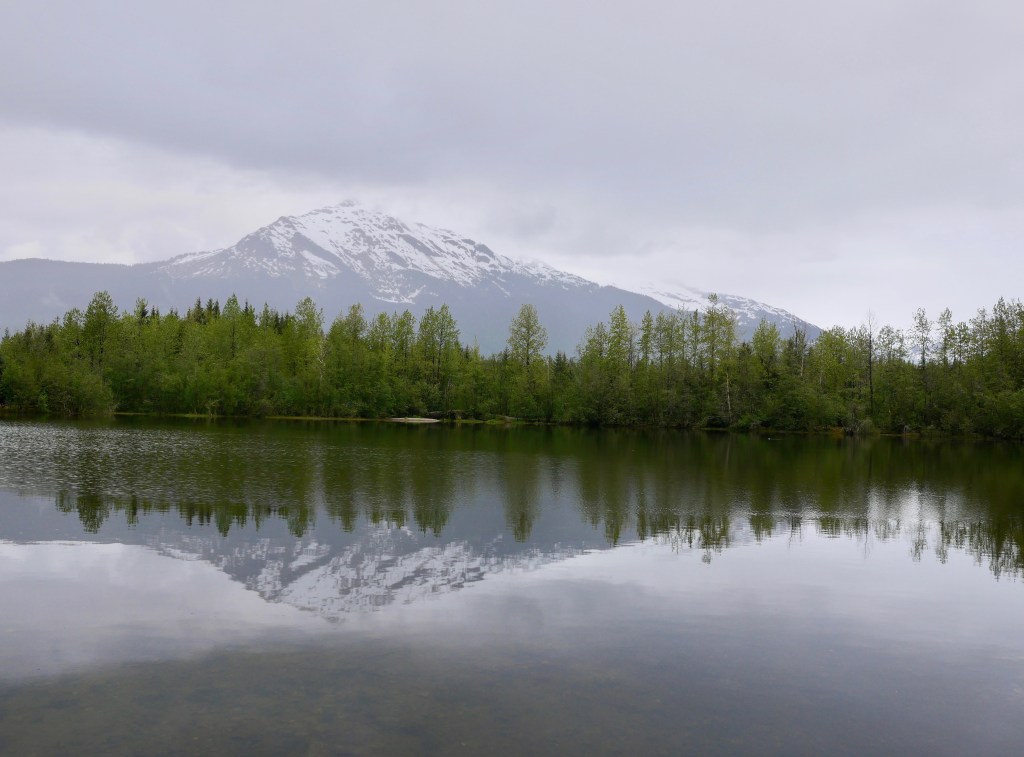
            We take a back trail through the troll woods and stop at a break in the trees to admire the reflection of Mt. McGinnis in the lake. It would be perfect if not for the expanding rings made by feeding trout. 

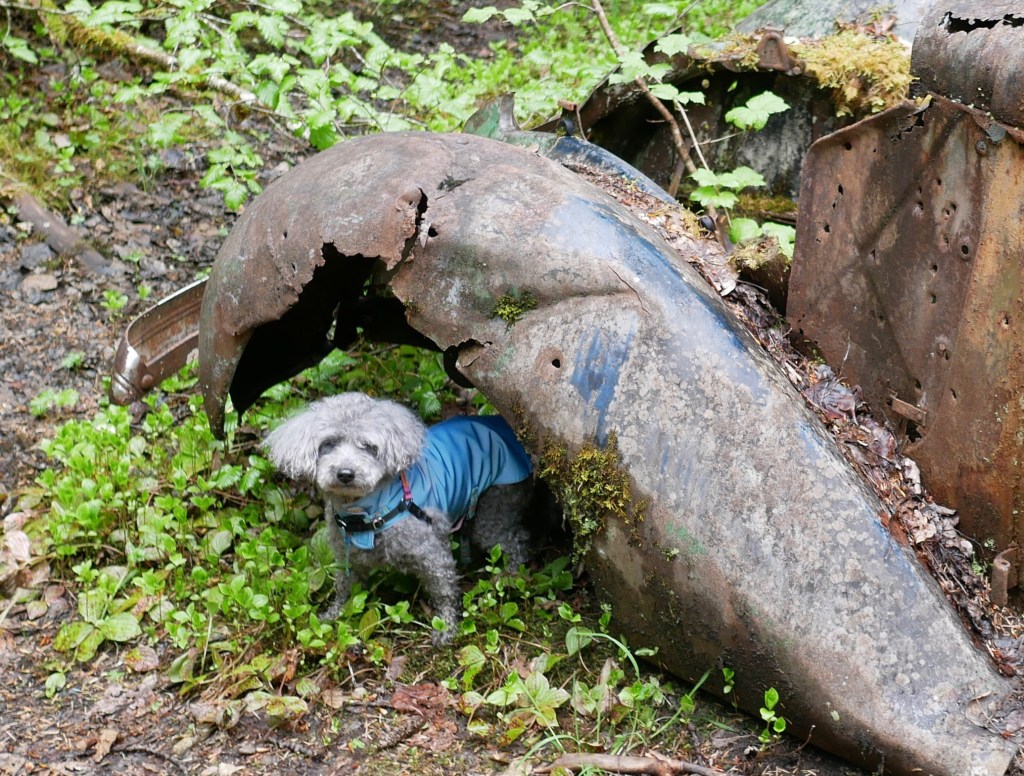
            Before the trees colonized the moraine, a person tired of owning a 1930’s era sedan abandoned it here. Alders started to pioneer the moraine gravel. Their fallen leaves mulched into soil. Over the years it became rich enough to support the growth of cottonwood trees and spruce. The whole time the old sedan had rusted until now it is only an outline of its original self. But there is enough of its bulbous fender left to provide Aki shelter from the rain. 
The pine siskins have spread out over the wetlands. It must be their nesting time. If you hear bird song now, it is either a siskin or the more vocally skillful American robin. The robins hop through the low grass, always trying to seduce you into following them away for their nest. It makes them seem common and uninteresting until you spot one of the males, with a red breast posing in front of butter cup flowers. 
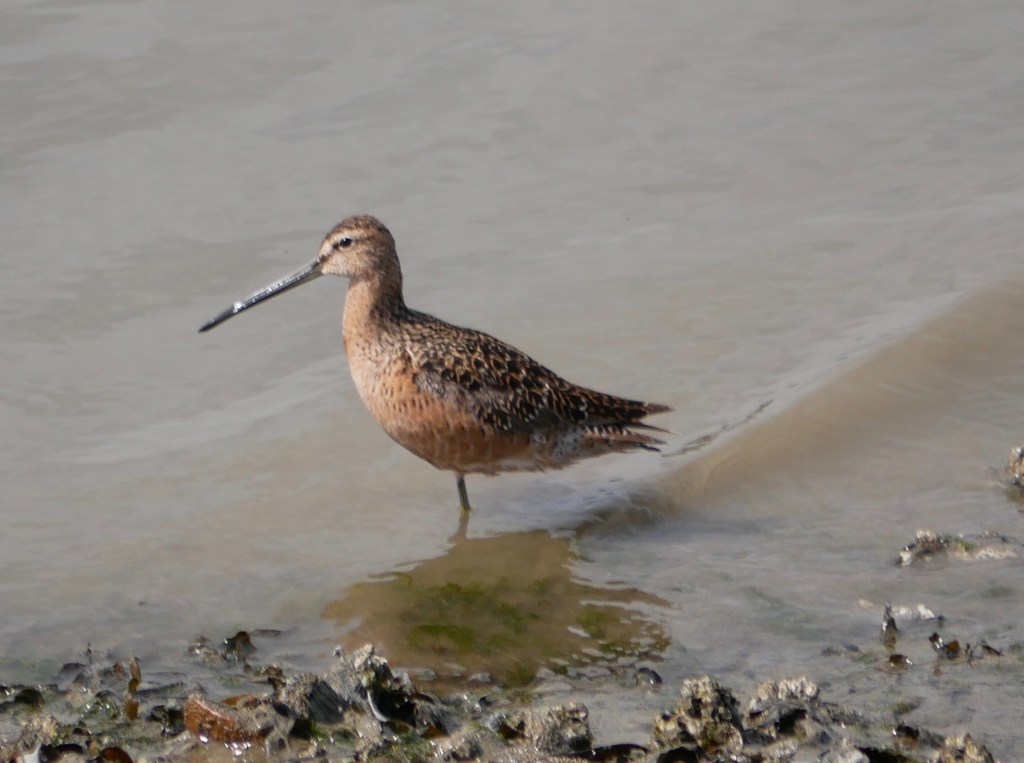
            I’ve a soft spot in my heart for the pine siskins, the way they sing while swaying in the top of a shaft of impossibly thin dried grass. Since I am confessing, I also have a thin for sandpipers, the way they stand in the shallows on one leg. Are they resting the other one or just showing off?

            The trail is crowded today with dog walkers. This pleases Aki, who really enjoys meets and greets. While she and another dog exchange sniffs, we owners walk slowly our of sneezing range of each other. We are practicing social distance, like the birds who fly off if a dog or human gets too close. A belted king fisher buzzes over our heads and hovers over the river while screaming our its discordant call. I will it into one of its patent cannonball plunges. But rather dive in the water, it flies across the river looking for more accessible prey. 

Stubborn Flowers

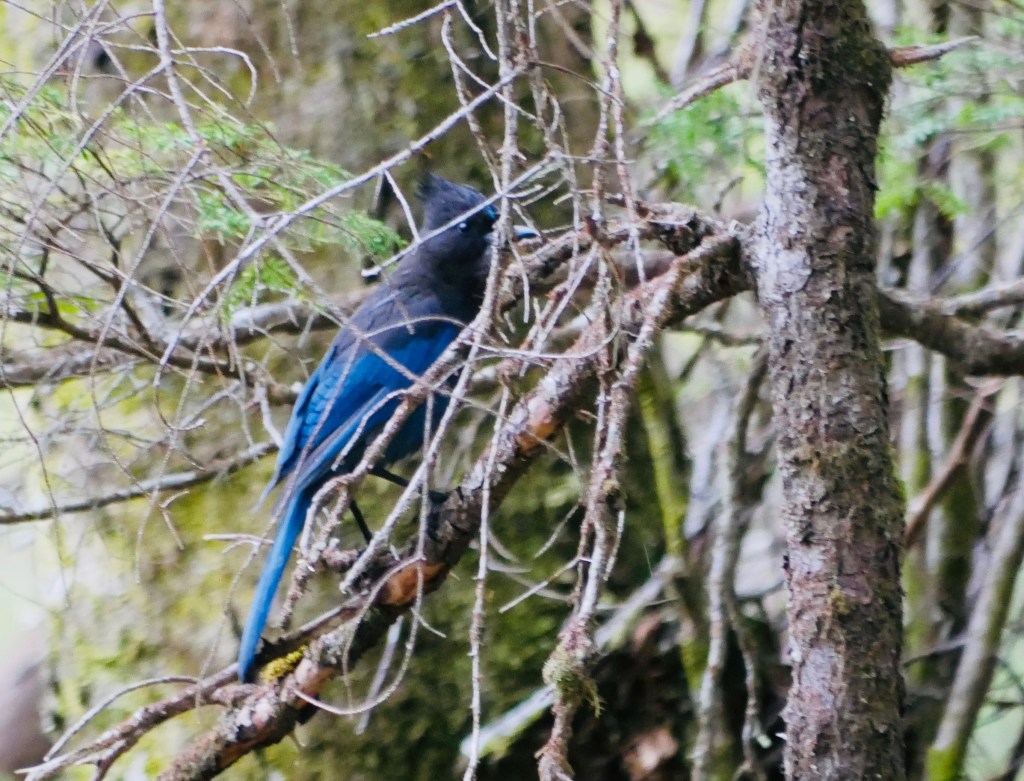
Rain seems to have driven the old growth birds to ground, or at least to the nests. Only the Stellar’s Jay, the forest’s policeman, shows himself. He throws a hard stare at me from between branches of a spruce tree.

            The heavy rain drops hammering the beaver pond have little effect on the pond lily flowers and their broad leaves. Some of the flowers float on the surface like lotus blossoms. Most have risen a few inches into the air where they sway in the wind. 

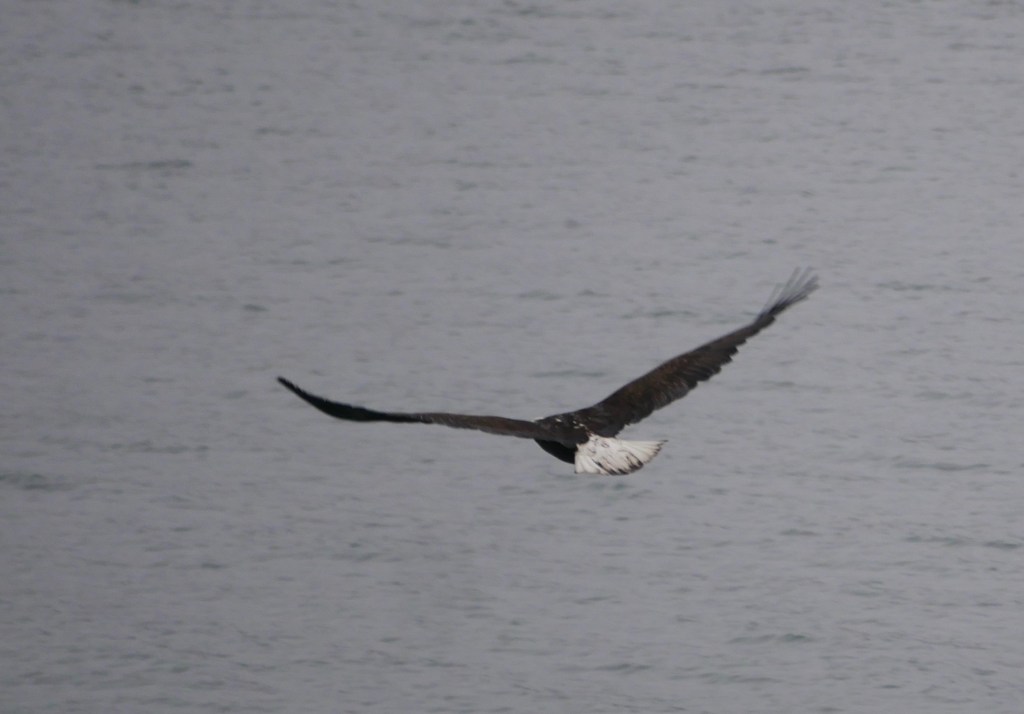
            The beach, when we reach it, is empty of birds. You’d think a guy could find some crows or gulls skulking around a tidepool. But nothing swims off the beach or walks the tide line. I spot a bald eagle flying out over Lynn Canal. It is too far away for me to see if it still has its chestnut feathers of youth.  

Tough Little Terns

The first gray day to follow a sunny stretch is crushing. Even a dry overcast day like this one offers little reason for me to leave the house. The same is not true for Aki. She was more than ready to hop into the car this morning. 

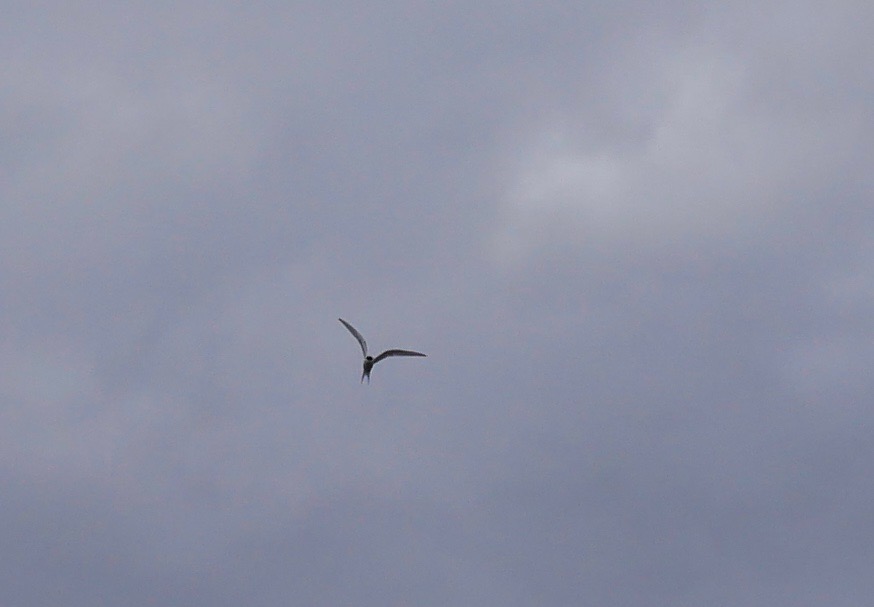
            Figuring that the gloom would discourage others from visiting the glacier, I picked it for our venue. I want to see the artic terns. Those diminutive birds have just arrived after flying 12,000 miles from Antarctica. They are building their nests on the ground of sandy peninsulas that poke out into the lake. Usually they only a few birds show themselves above the nesting grounds. But when we arrive, what looks like the entire flock is swarming in the air. They’ve been stirred off their nests by three humans, one pushing a wheel barrow. 

            One male tern hovers for a moment over the little dog and I before flying off. It would have dive bombed us if we looked threatening. Once I saw a tern chase an adult bald eagle out of the air space above the tern nests, tugging at the big predator’s tail feathers to hurry it along. 

I am surprised that the terns have returned. Each of the last few summers, water released by a collapsed ice dam on Mendenhall Glacier has released water that flooded the terns’ nesting area. Last summer a wolf destroyed some of the tern nests. After receiving such treatment, you would think the terns would migrate to a safer nesting site. 

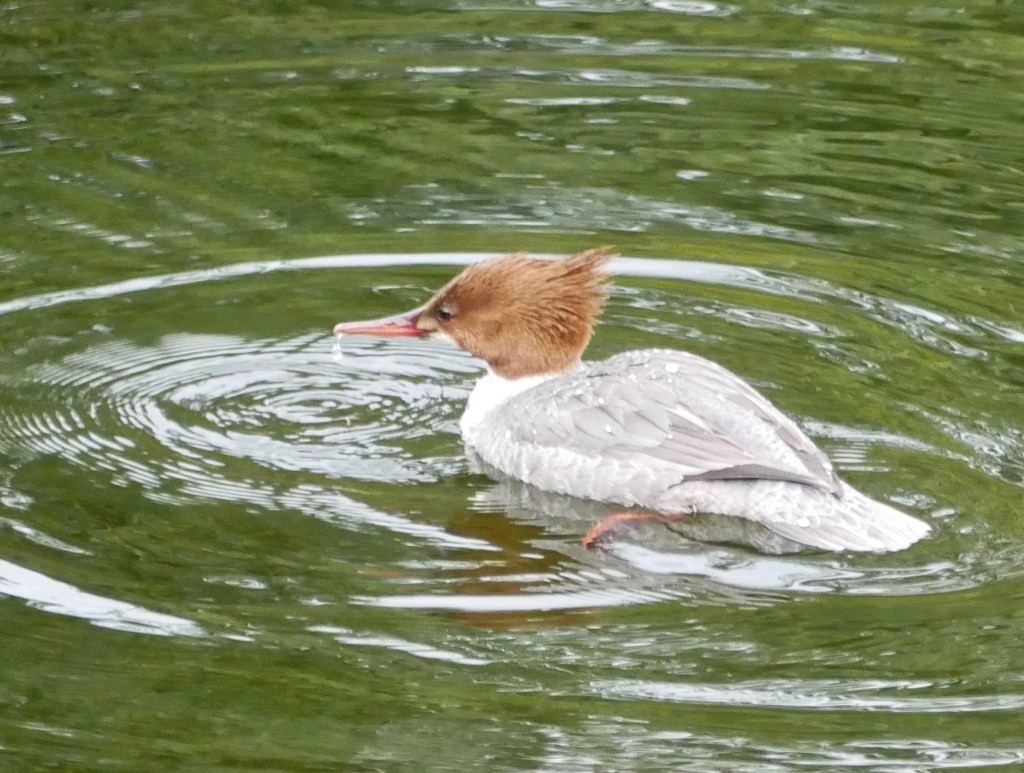
Common Merganser Hen

Southern Light, Northern Beach

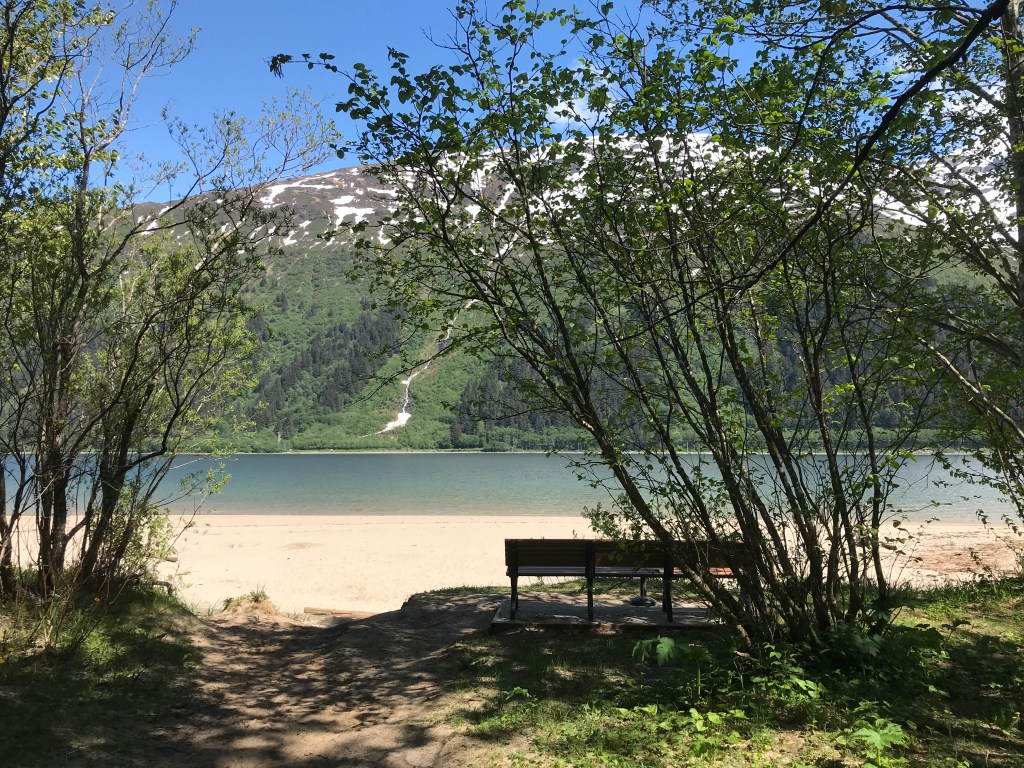
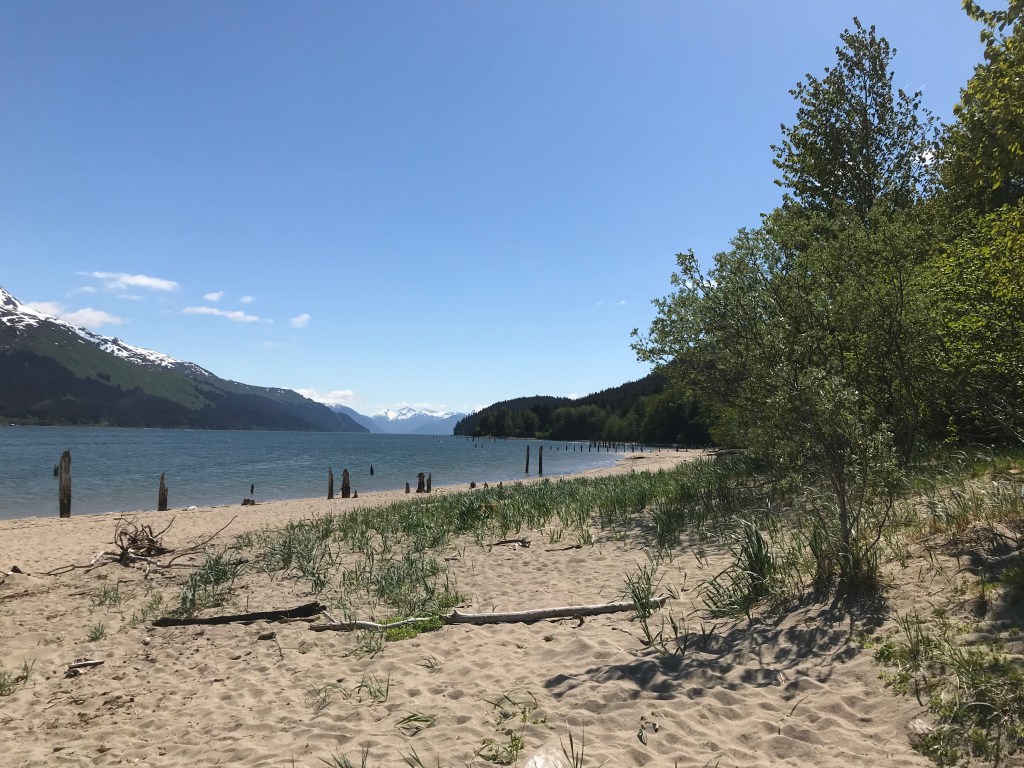
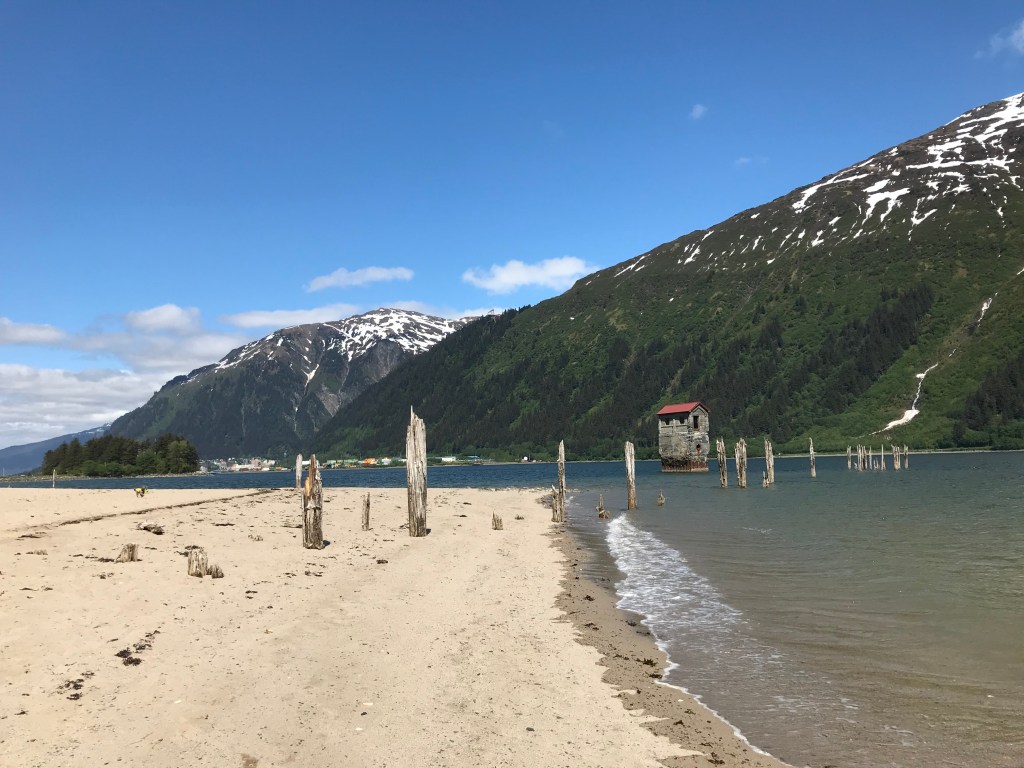
Aki snuffles along the sandy beach, reading the recent history written in scent. If the temperature was 80 rather than 55 degrees we could be in the south of France. Today we have the same clarifying light artists record when plein air painting near Arles. 

            At first, the beach seems empty of people, which is unexpected given that it is midday. Then we stumble upon a small family that appear stunned by the sun. They lay on the sand, protected by a driftwood windbreak. The children sport floppy sun hats and play clothes that might have been bought at a Hanna Andersen store. 

After we pass the first family of sun worshipers, each spot on the beach that offers protection from the cooling breeze is occupied by a different family grouping. Taking advantage of the broad beach, we keep twenty-five meters between them and us. Small waved roll onto the beach but no ducks work the surf line for bait fish. A raven flies over but we will neither see nor hear eagles or gulls. More proof that we have been transported to le côte d’Azur?

Thanks to an Apple Pie…

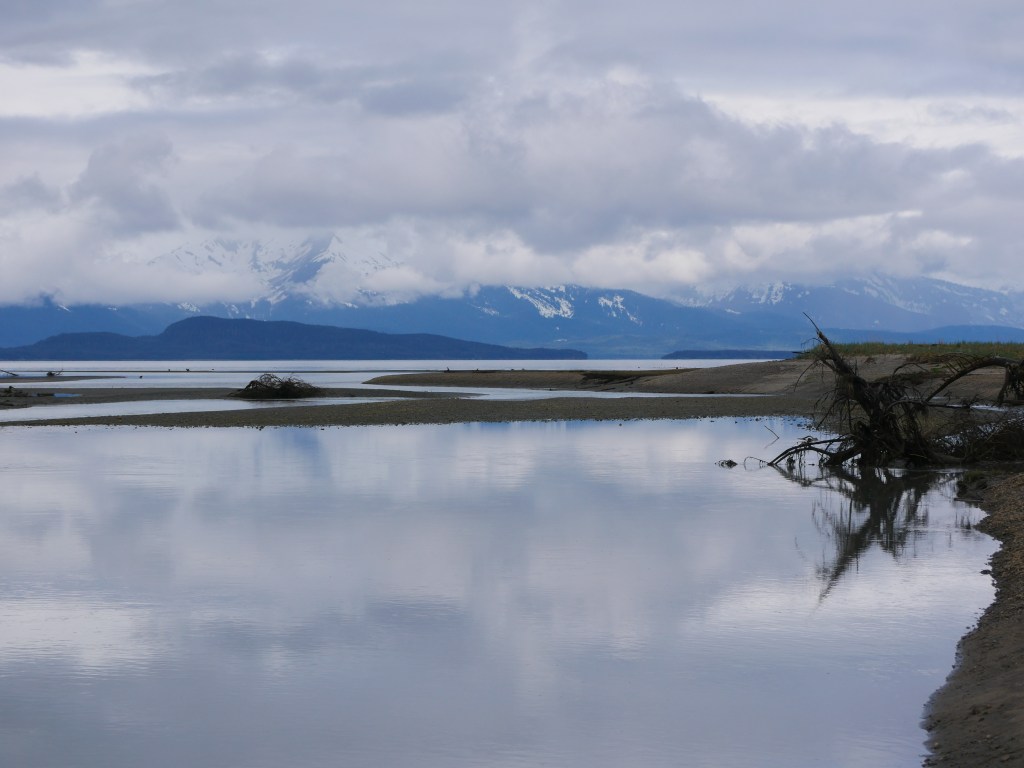
We travel to the Eagle River this morning, not because of the to snow geese, the deer, the four herons or the two merganser ducks we will see along the way, but to deliver an apple pie. The pie was made last September with apples picked a little before peak ripeness so the neighborhood bear wouldn’t damage the tree trying to reach them.  

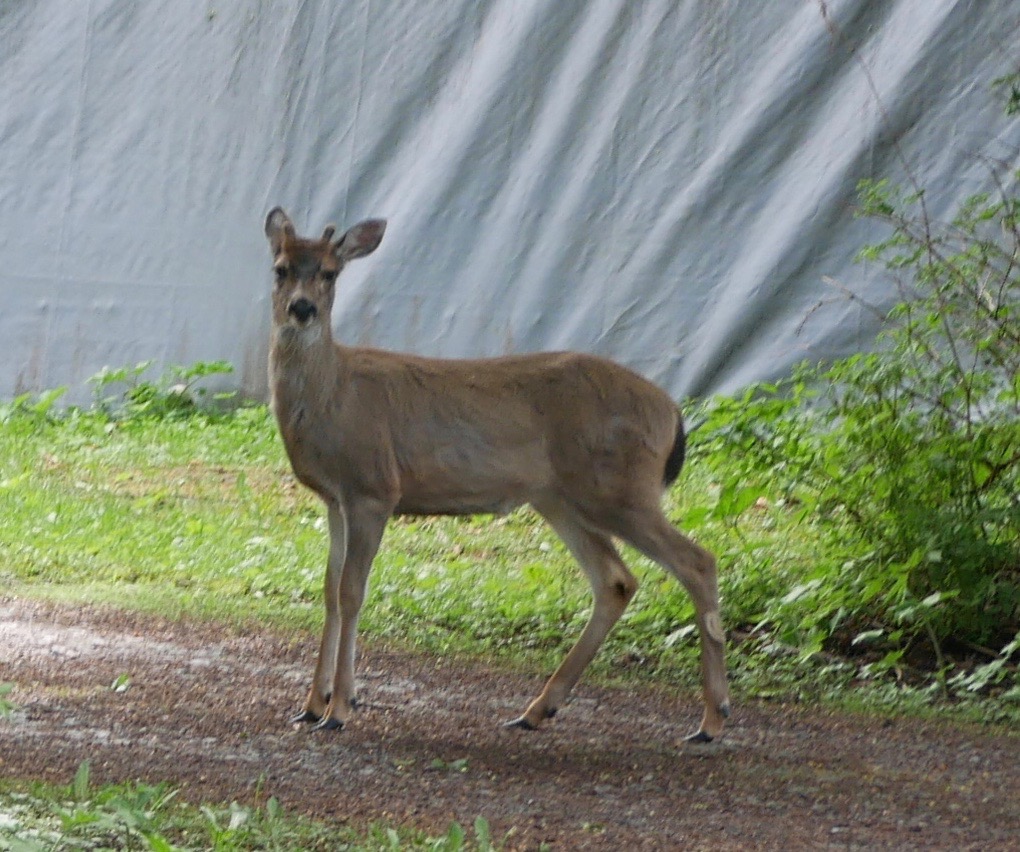
We will look for bears on the way to the river. They like to eat dandelion flowers that are now blooming in the road verge. But no bear will appear. One deer will cross the road in front of us. Another, so intent on the spring-fresh grass growing in a roadside ditch, will ignore us when we drive past. 

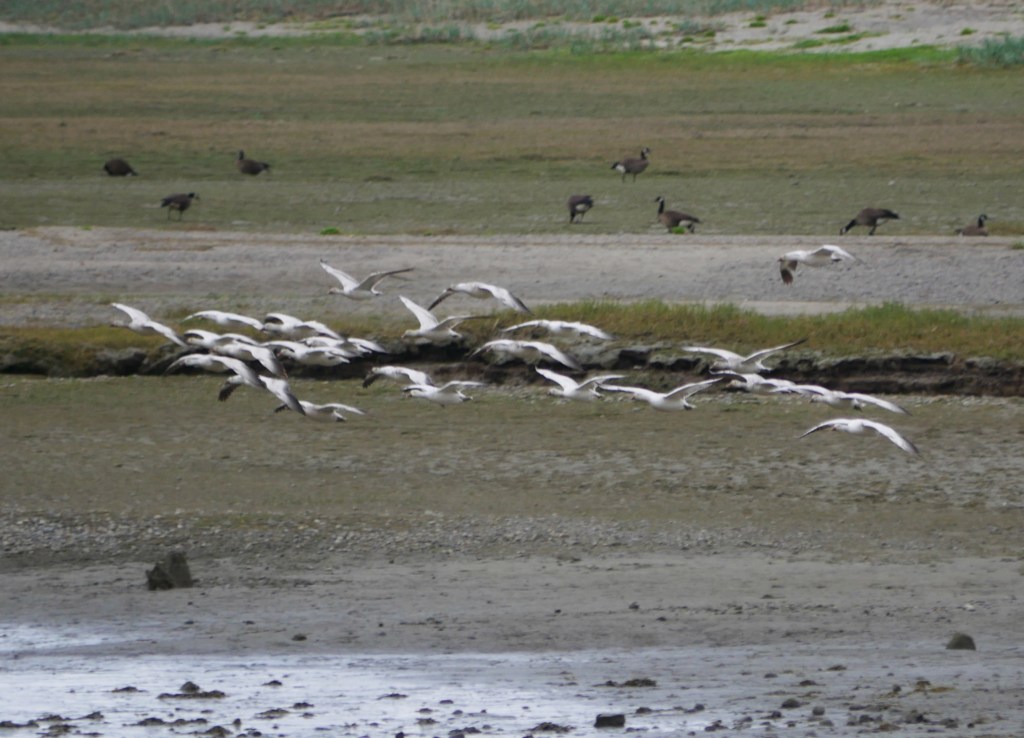
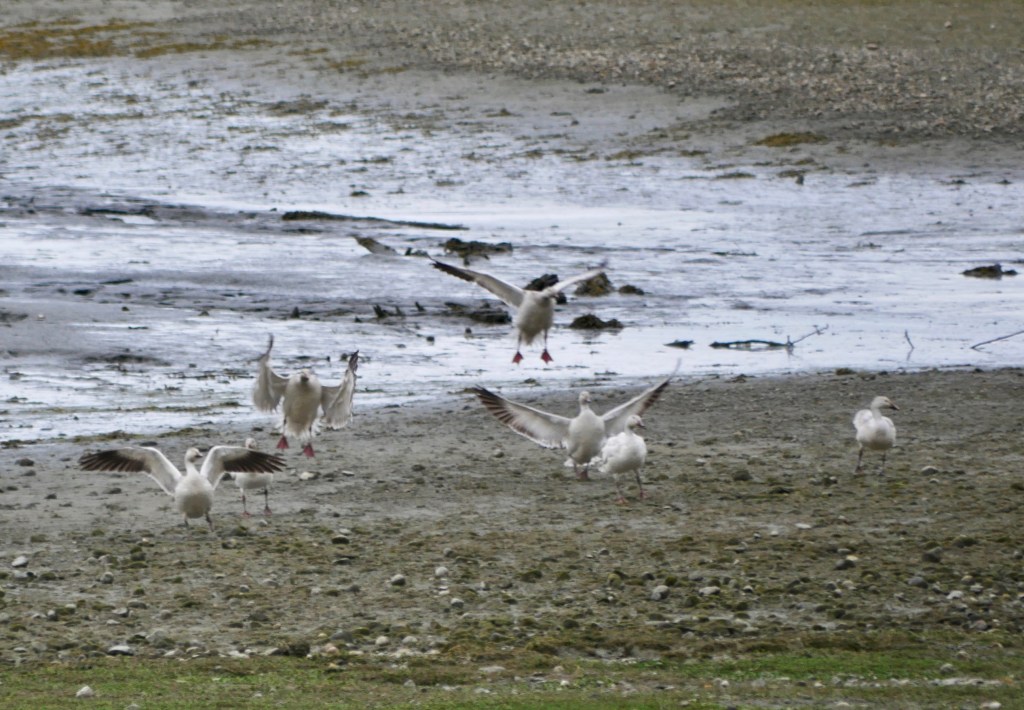
Near the mouth of the river we will join a handful of bird watchers trying to photograph snow geese. The mostly white birds will look as common as feeding barnyard birds until one of the bird watchers gets too close. Then, they will burst into the air, swing low over the beach and crash land near a small band of Canada geese. Because the little dog and I will be standing 15 meters away from the Canadians, I’ll have no problem seeing them land. 

That leaves the four heron and the two mergansers. We will surprise the two ducks as they are cuddling on a beach rock. Then they will swim away, head hairs all ahoo. The four heron will be feeding on tidal flats near the ferry terminal. All four will keep their backs to the little dog and I. We will only see the head of one when it uses its beak to preen some wing feathers. 

Wet Eagles

This morning started being about the rain and ended up being about eagles. Rain beat a tattoo on the house roof as I pulled on my parka. Reminding her that the weather is never as bad as it appears from inside a snug house, I secured a wrap on the poodle-mix and led her to the car. We drove out the North Douglas Island Road. The rain stopped by the time we arrived at the trailhead. What did I tell you, little dog?

            We crossed over a stream that will host spawning silver salmon in July. Oversized skunk cabbage plants lined both sides if it. Aki stops to sniff at a print made when a large canine planted one of its paws in the muddy bank and lept in or over the narrow stream. She keeps at my heals after that. 

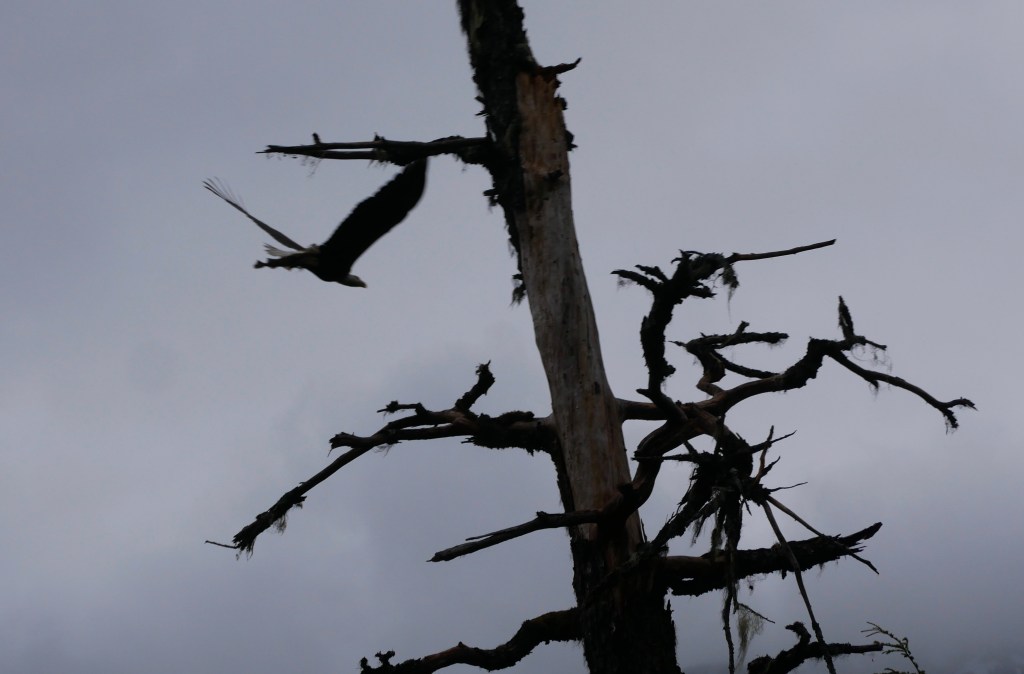
            After passing many flowering cloudberry plants, we reach the beach in time to watch a line of seven bald eagles flying down Stephen’s Passage to Admiralty Island. The first eagle hovers and then dives toward the water. The rest continue south. I go back and forth between watching the diving eagle and keeping track of the rest of them until I misplace them all. 

            Aki, who is not comfortable around eagles or wolves, hangs back at the forest’s edge until the last eagle disappears. She leads me off the beach and up to a muskeg meadow where three of the eagles fly over low our heads. One clasps a small fish in its talons. It heads into the woods, maybe to deliver the fish to its nest-minding mate. 

Quiet Drama

There is little drama on the Fish Creek delta today. We are in between ducks and salmon. Even the tide is middling. In an hour the flood will cover this trail like it has already covered the food-rich wetlands. Then it will retreat and things should get more interesting. As the Tlingit elders tell their grandchildren, when the tide is out, the table is set. 

            The tide is widening channel of Fish Creek where a great blue heron hunts and pecks for salmon smolt trying to reach salt water. Several crows land near the heron, watching it out of boredom or in hopes of snatching some leftovers. In a minute they are gone. The crows didn’t distract the heron. Nor did a bald eagle that flew a meter above the heron’s head. 

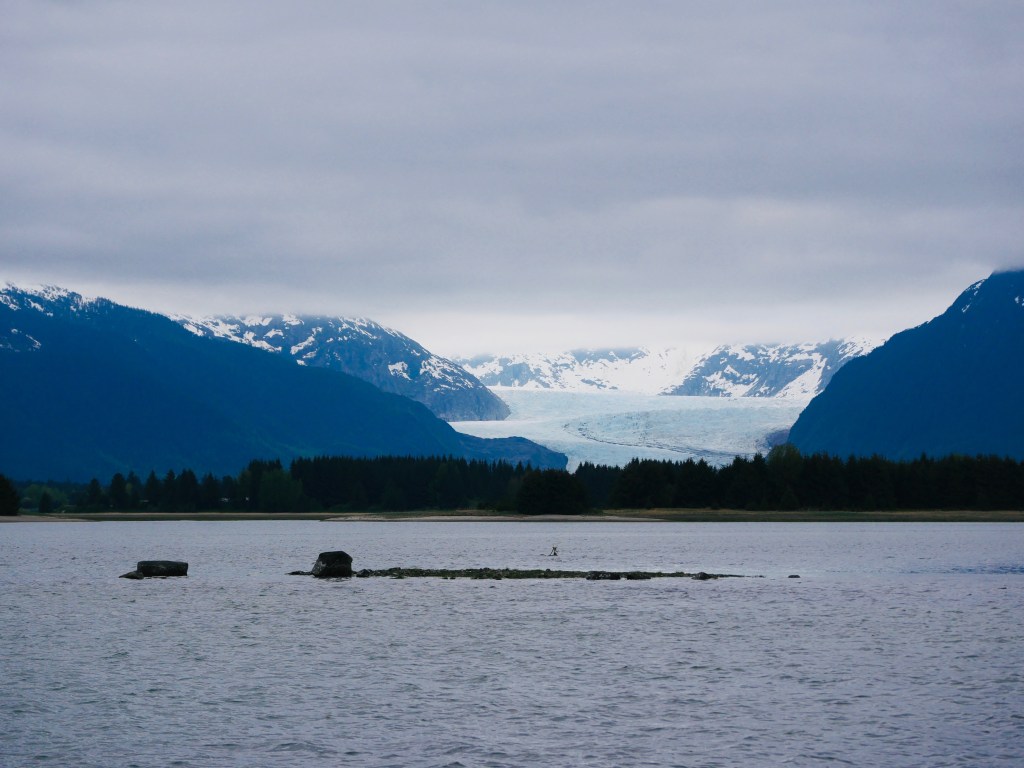
            My attention level is somewhere between the heron and the crows. I planned to remain near the heron long enough to watch it spear a salmon smolt. Then an eagle flew down the creek and clouds that have been covering the top half of the glacier lifted. I leave the heron to head down stream to Fritz Cove where one might better see the glacier, spot a seal lion or maybe even a killer whale.  

The Whales Won’t Mind

A year ago today a mega cruise ship was plugging its way up Favorite Channel. The on-board naturalist would have used the public address system, the same one used to announce the opening of the casino, to direct passengers’ attention to Shelter Island where two humpback whales had just surfaced. I would have grumbled to Aki that the whale watching boats couldn’t be far away. 

            If we didn’t move from this rocky headland, we would have seen four or five go-fast-boats circle around the whales as more on-board naturalists clicked the microphones on their PA systems. I would have remembered the time, on an early spring day, before the first cruise ship of the year, when two newly-arrived humpback whales surfaced less than fifty meters from here. The little dog and I were the only ones to see them. 

            This morning, the channel is empty of cruise ships and whale watching boats. No one follows the whales as they swim from Pearl Harbor to Shelter Island. This will be the first summer in decades without cruise ships or whale watching boats. No helicopters loaded with cruise ship passengers will buzz overhead on their way to the Juneau Ice Field. The city’s economy is going to take a hit. But the whales won’t mind. 

Rite of Spring

A porcupine the size of a small pig waddles through trailside alders. The top of its tail and a large patch of its rear are bare. Before being attacked by a dog or the other predator sharp-tipped quills covered the bald spots. What ever attacked the porcupine is still trying to rid its muzzle of quills. 

            Aki starts to wander toward the porcupine, nose to the ground. In a few seconds she will spot movement and dash over to the Alaskan hedgehog. Seconds after that I’ll be pulling quills from her face. Sacrificing a chance for a great photo, I drop the camera and grab the dog. Together we watch the porcupine force itself into a blue berry thicket. The color of its quills is an exact match to the branches of the still-bare blue berry bushes, so it appears to disappear.

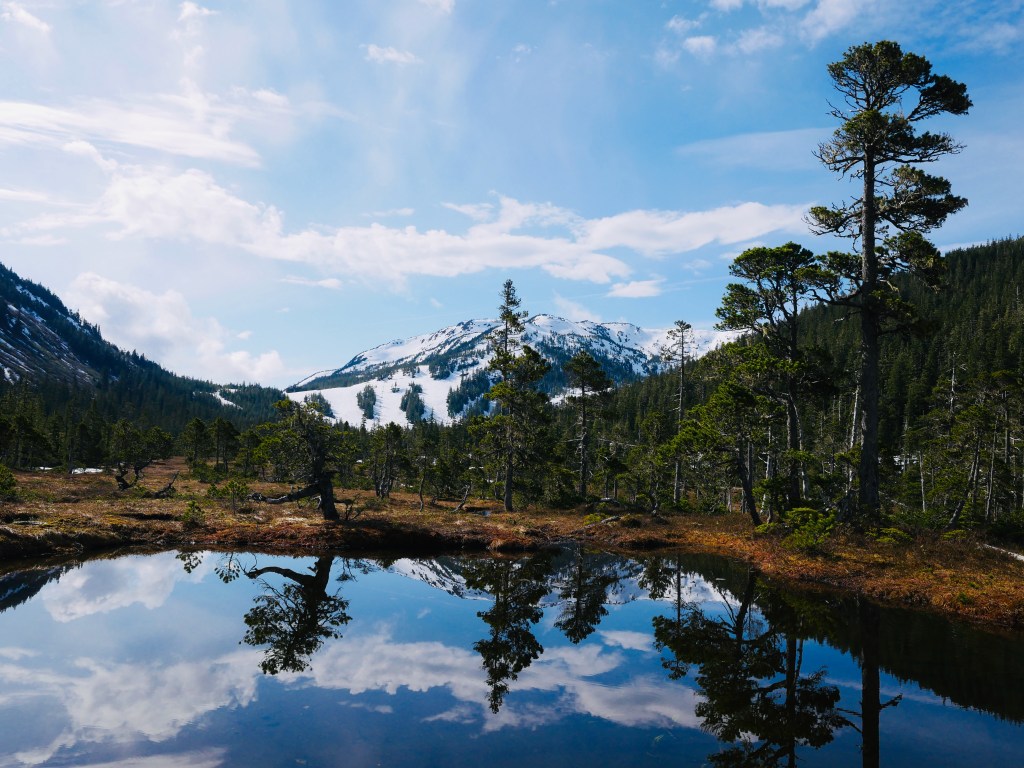
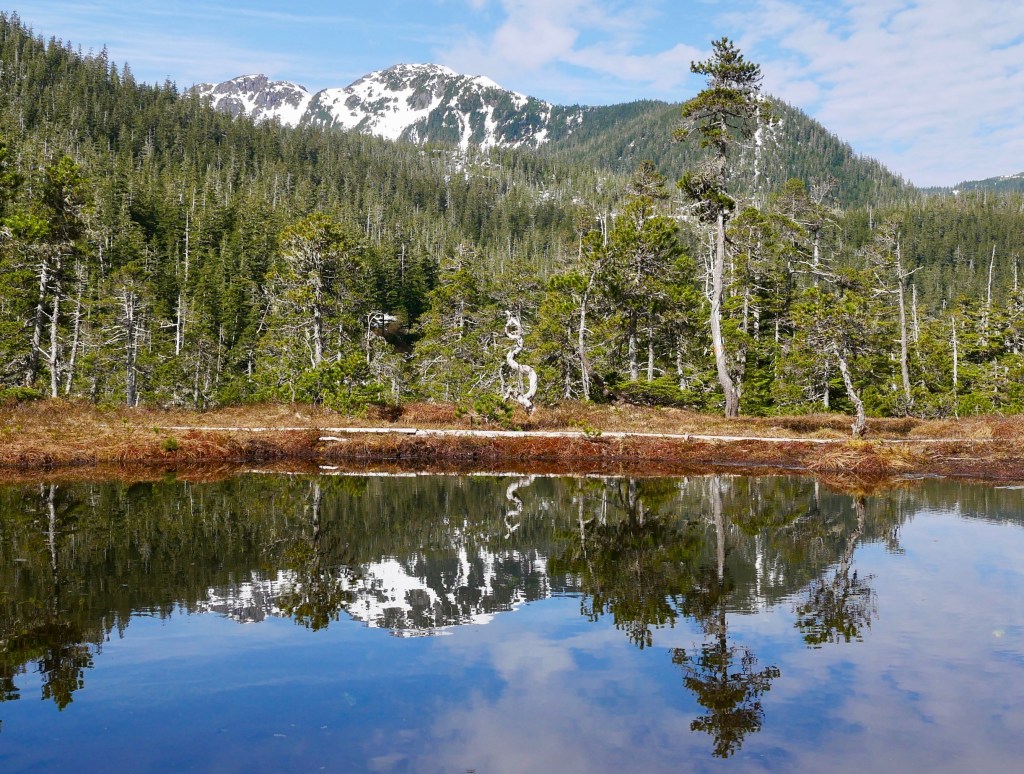
            We are on a mountain meadow. Snow still covers much of the trail. That’s why I brought the little dog here. It’s one of our rites of spring that requires a warm day after a cold night that sets up the snow for walking. When we reach the snow, the poodle-mix does a few donuts and then rubs her face in the white stuff.  She shakes her face, sending wet snow flying. Some of it ends up on my pants, which is a small price to pay. As my pants dry, I enjoy the meadow ponds capture the surrounding snow-covered mountains.