 April 24
Last evening wind-created fog obscured our view of the headlands to the the north. All day heavy rain had eroded tracks into the sides of soft-soiled cliffs had stopped by then but a strong southerly wind soaked my pants in seconds. A small clutch of crows hunkered on the beach looking for food. All night the wind blew hard, knocking moisture from surrounding spruce trees onto yurt where we slept. I prayed that the storm would blow itself out. This morning, the wind still blows but at a manageable speed and there is sun. An osprey hovers down beach and them floats toward me. Built for soaring, it lets the wind carry it, shifting a wing or tail feather now and then to stay on course. Beyond the breakers, a quarter section of rainbow strengthens then disappears when a new wall of storm clouds blocks the sun. Later we return to the beach and find a gull trying to pull flesh from a cormorant carcass.  His efforts draw a crowd–8 turkey vultures and a bald eagle that swoops low over the body and then pulls skyward over the surf. One vulture, its red, naked head catching some morning light, worries the cormorant bones for a minute and then leaves it for the lone gull. In the afternoon we learn that the cormorant is one of several that have died recently. No one knows why, I wonder if the birds ate some of the plastic bits scattered on the beach like holiday confetti by the flood tide. Never having seen the gaudy decorations on the beach before I wonder if they are the Japanese Tsunami debris, made small by currents and storms that delivered it to this Oregon Beach. Later, on another beach, we read a sign asking people to help collect Tsunami plastic items that gather on the sand.
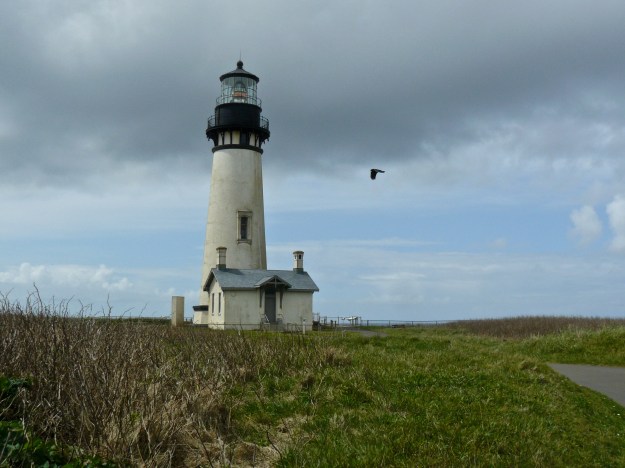 April 28 Portland I was not surprised by osprey that flew over me at Beverly Beach, a place rich in silence and food for raptors. But in the city, in Portland, it seemed so out of place. True, we were riding on along side train tracks that bordered along a reedy lake. True, we stopped hearing city sounds a few minutes before, blocked by an island in the Willamette River. The bird didn’t care if he was expected. We stopped and watched it hover and then dive. Concentric rings expanded from the spot where its talons touched the water but missed the prey. Three rings dotted the lake waters until, on the fourth try, the osprey secured a meal. Like mountain lions, coyotes, and Juneau’s black bears, ospreys hunt in wild urban places.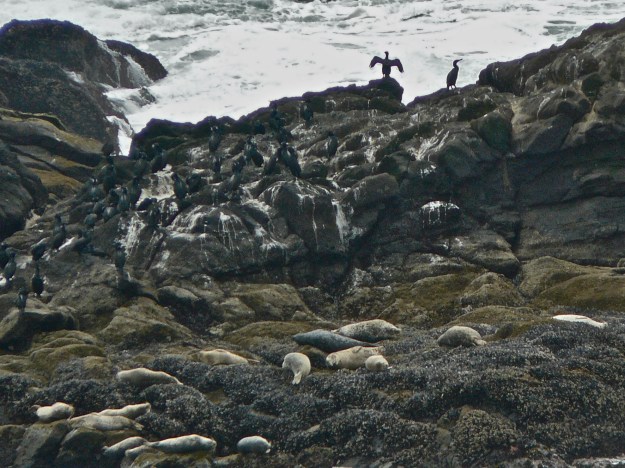
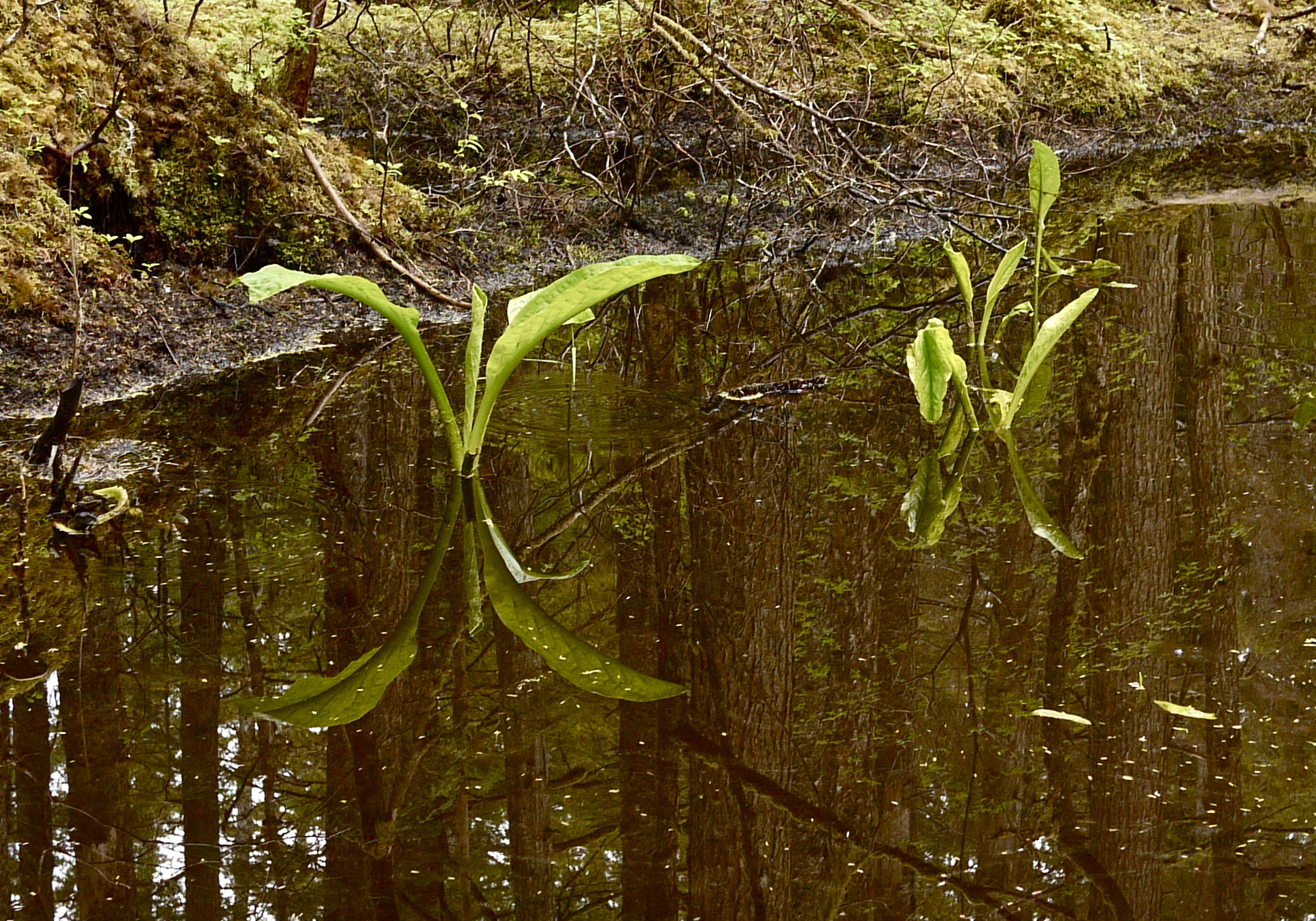
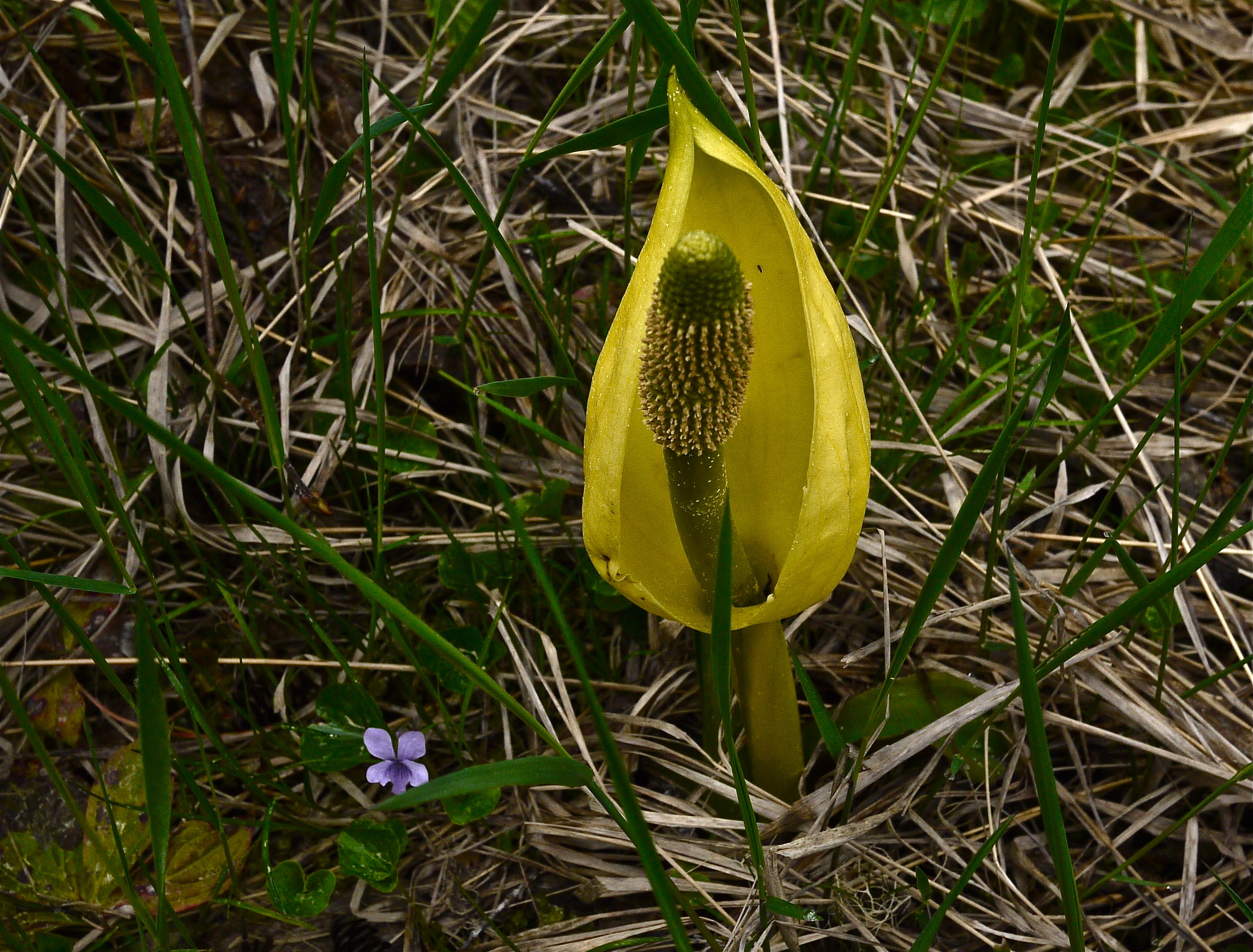
 Today’s light rain has chased away everyone from the rainforest trail but Aki, my adult daughter and me. We find the forest green, its foliage still intact, yet to be wounded by hungry insects, deer, and bears. The broadleaf skunk cabbage plants are still spring supple.
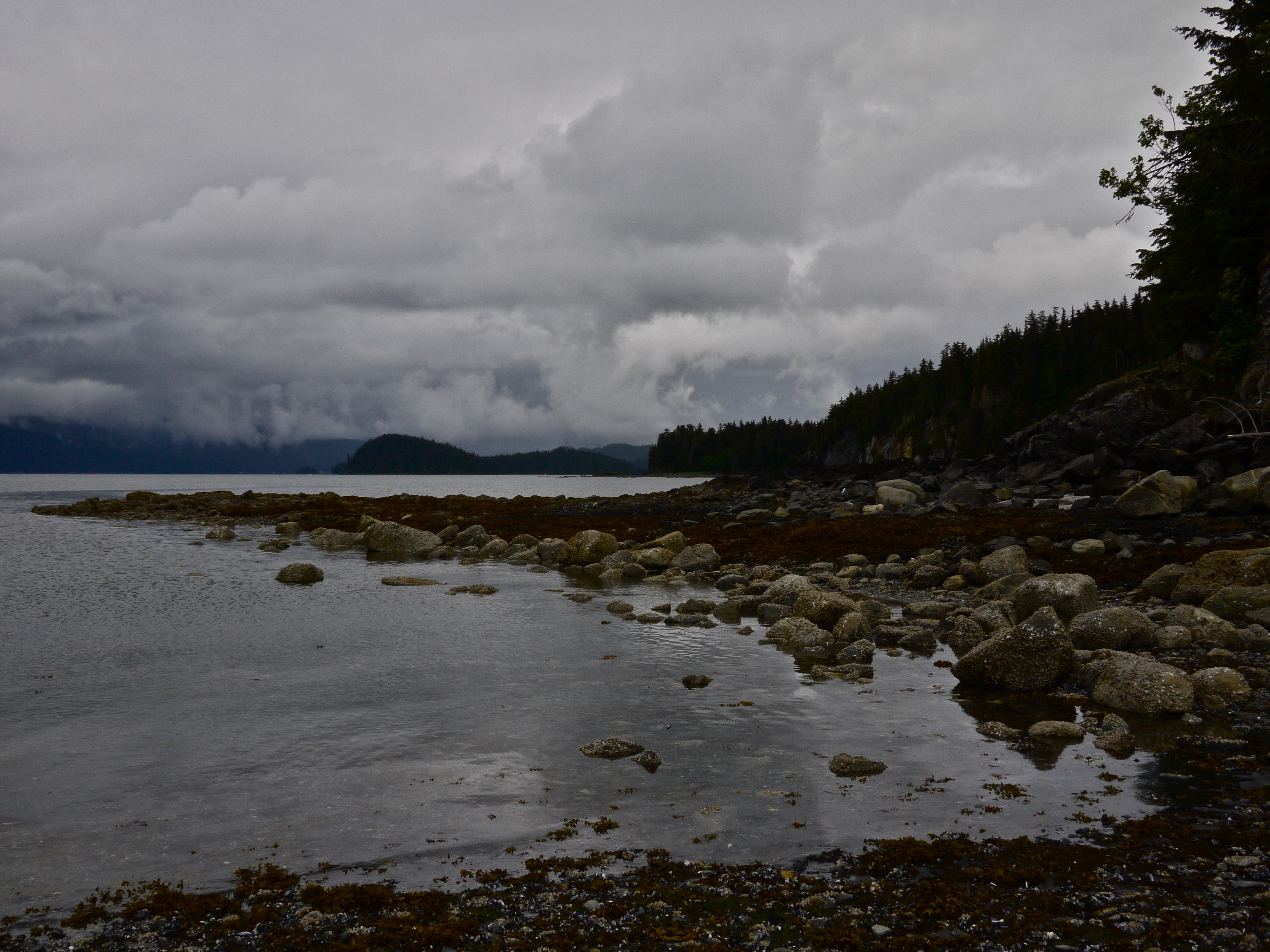
  At the forest edge, Aki looks for someone to throw her frisbee so she can chase after it down the beach.She has to settle for the daughter skipping rocks over salt water. We walk out a spit of land that will disappear under an incoming tide to where good flat rocks are plentiful. The path is still two feet above water so I don’t worry about whether the tide is ebb or flood. Aki wades chest deep to better watch the rocks skip five, six, sometimes ten times before sinking. I watch too and remember how I watched her skip rocks on beaches here and in Ketchikan for more than 20 summers. Distracted, I don’t notice the tide cover our escape route until it maroons us. We have to wade through ankle deep water to reach dry land.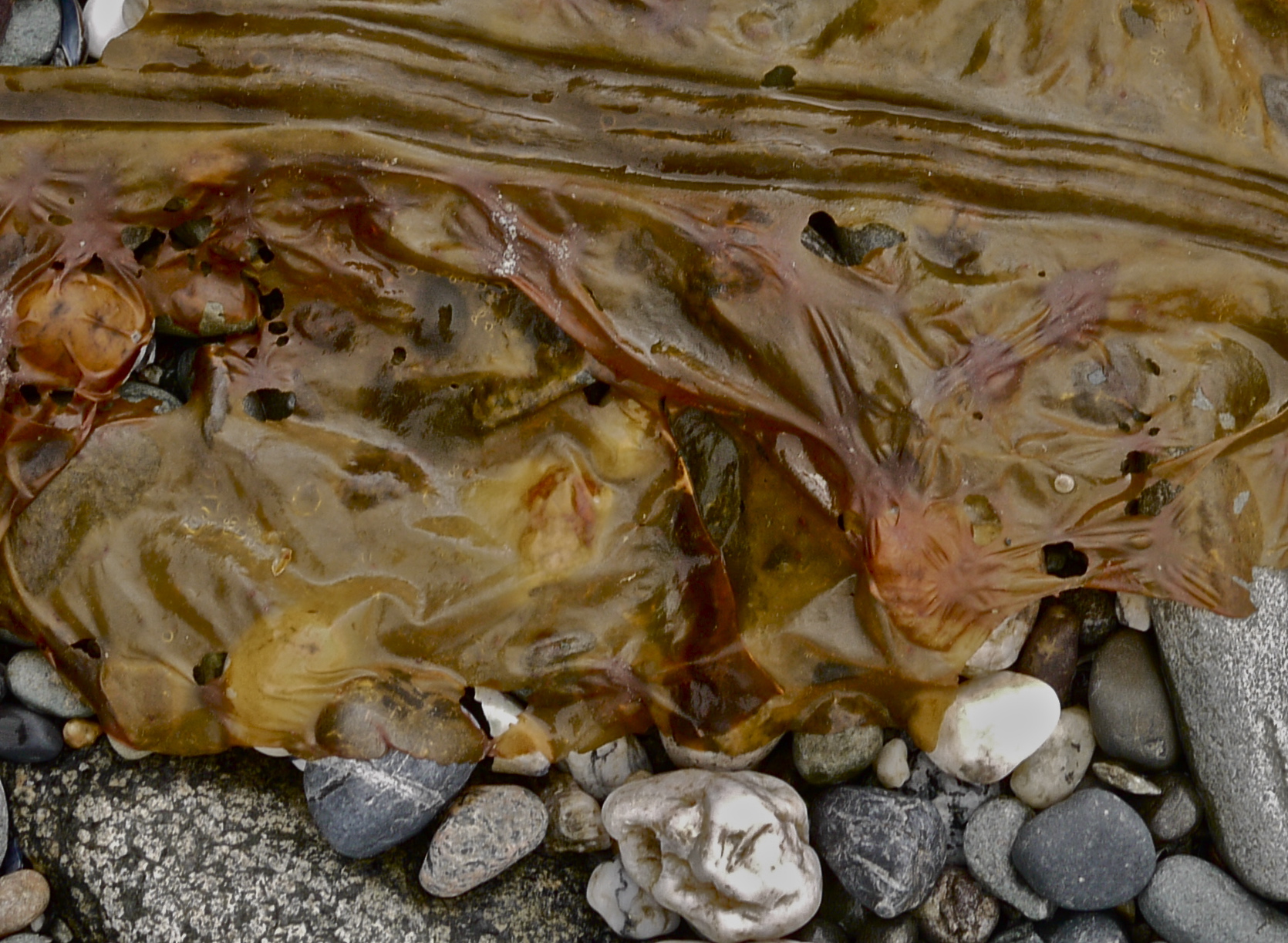

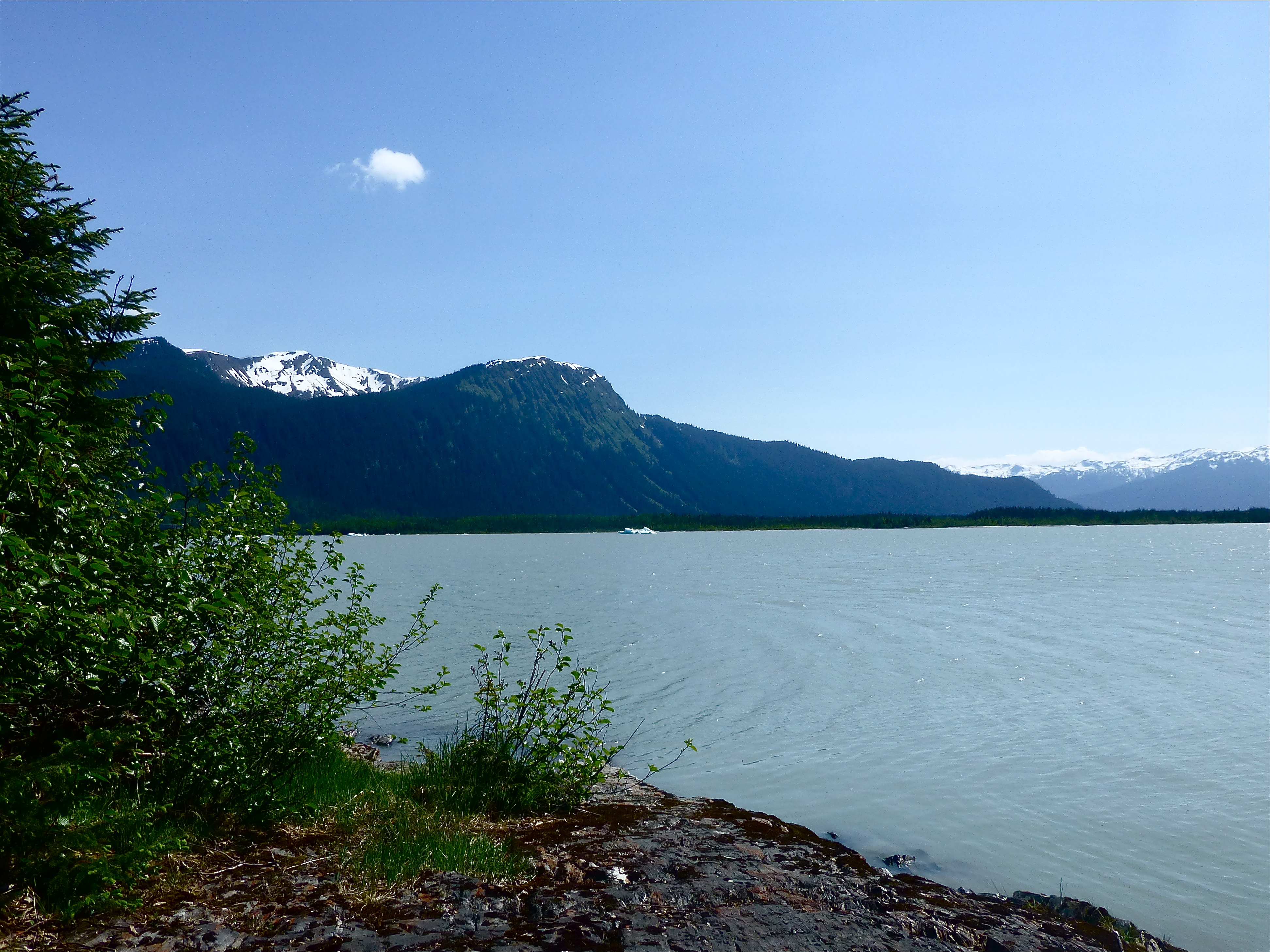
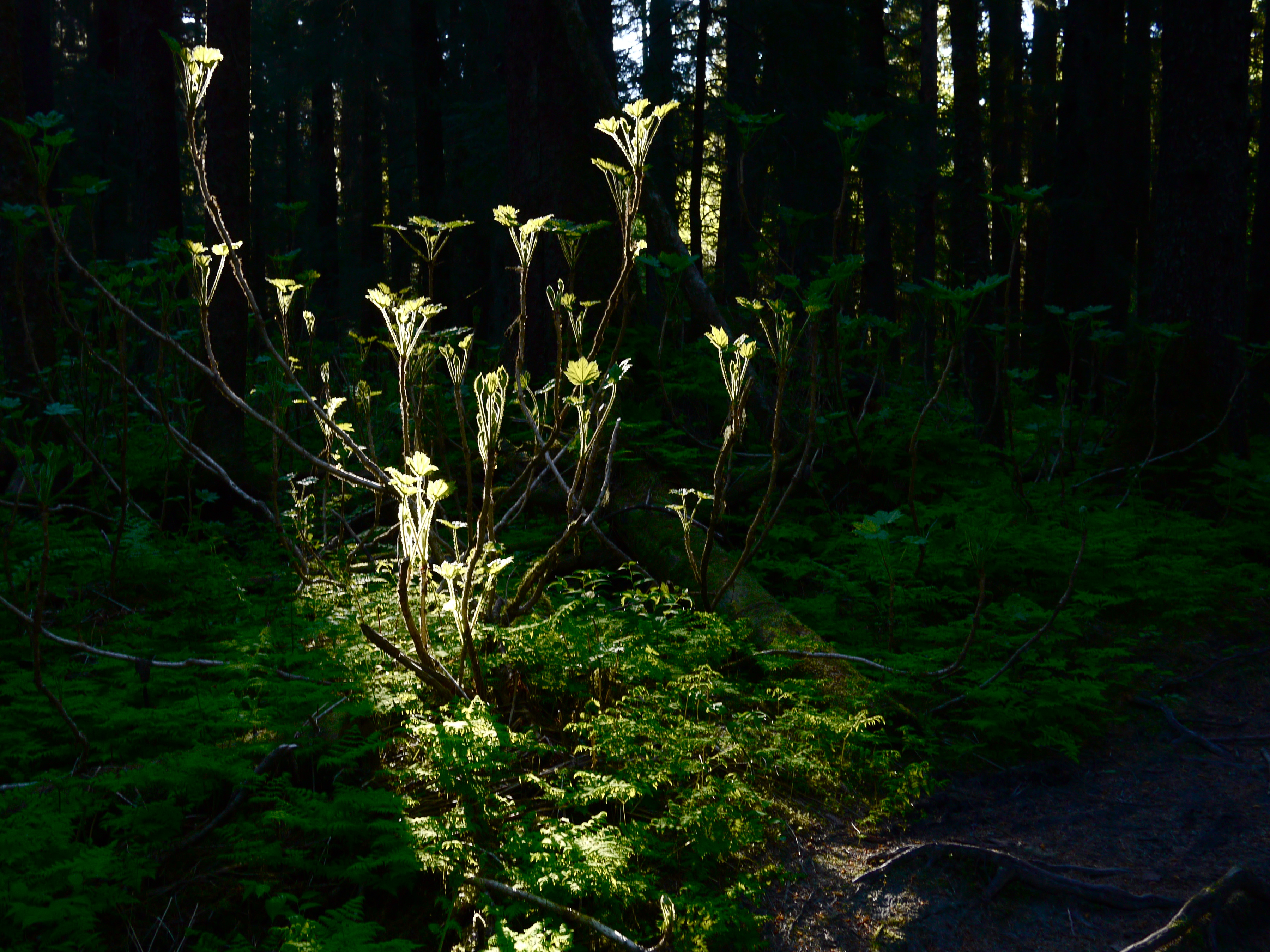
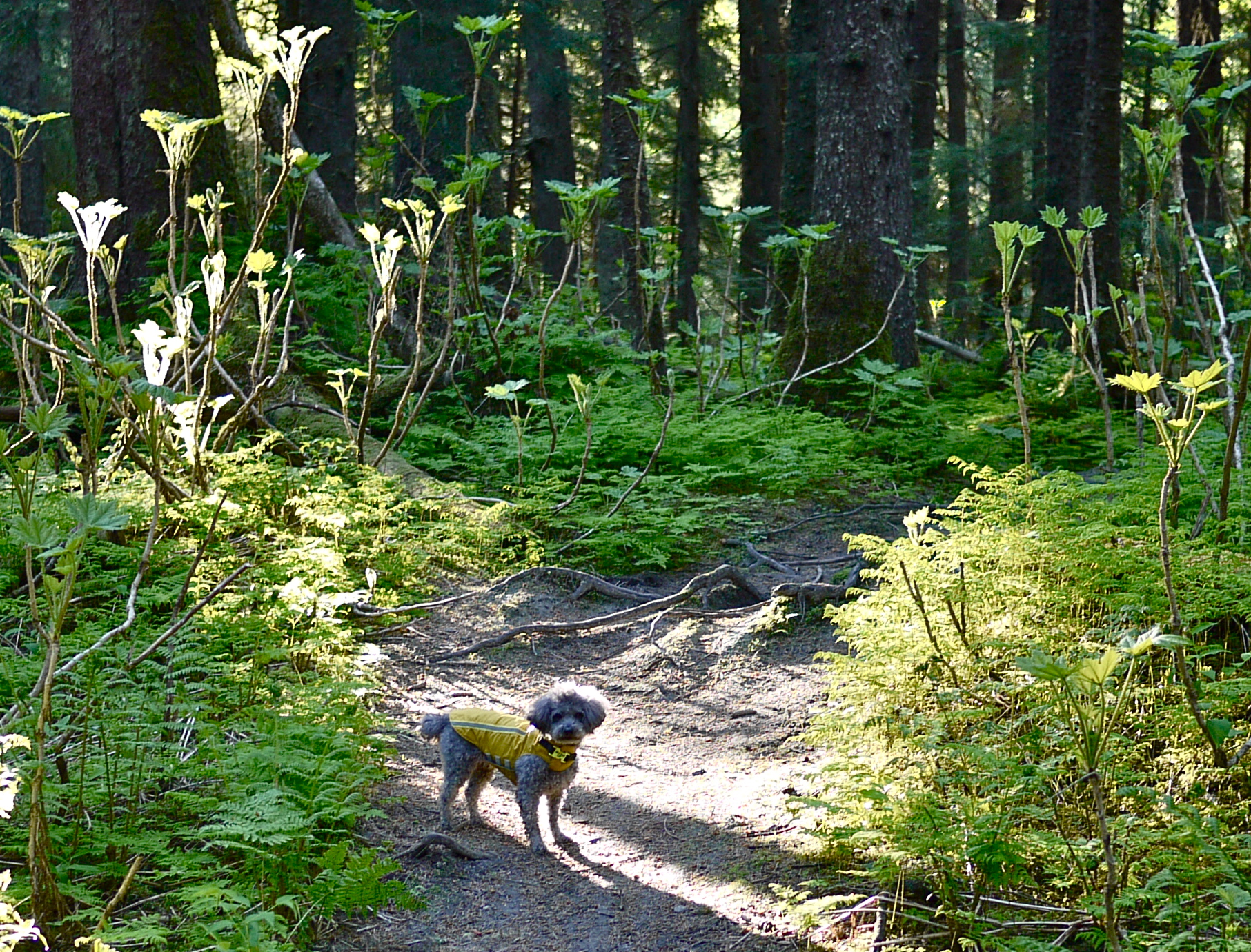
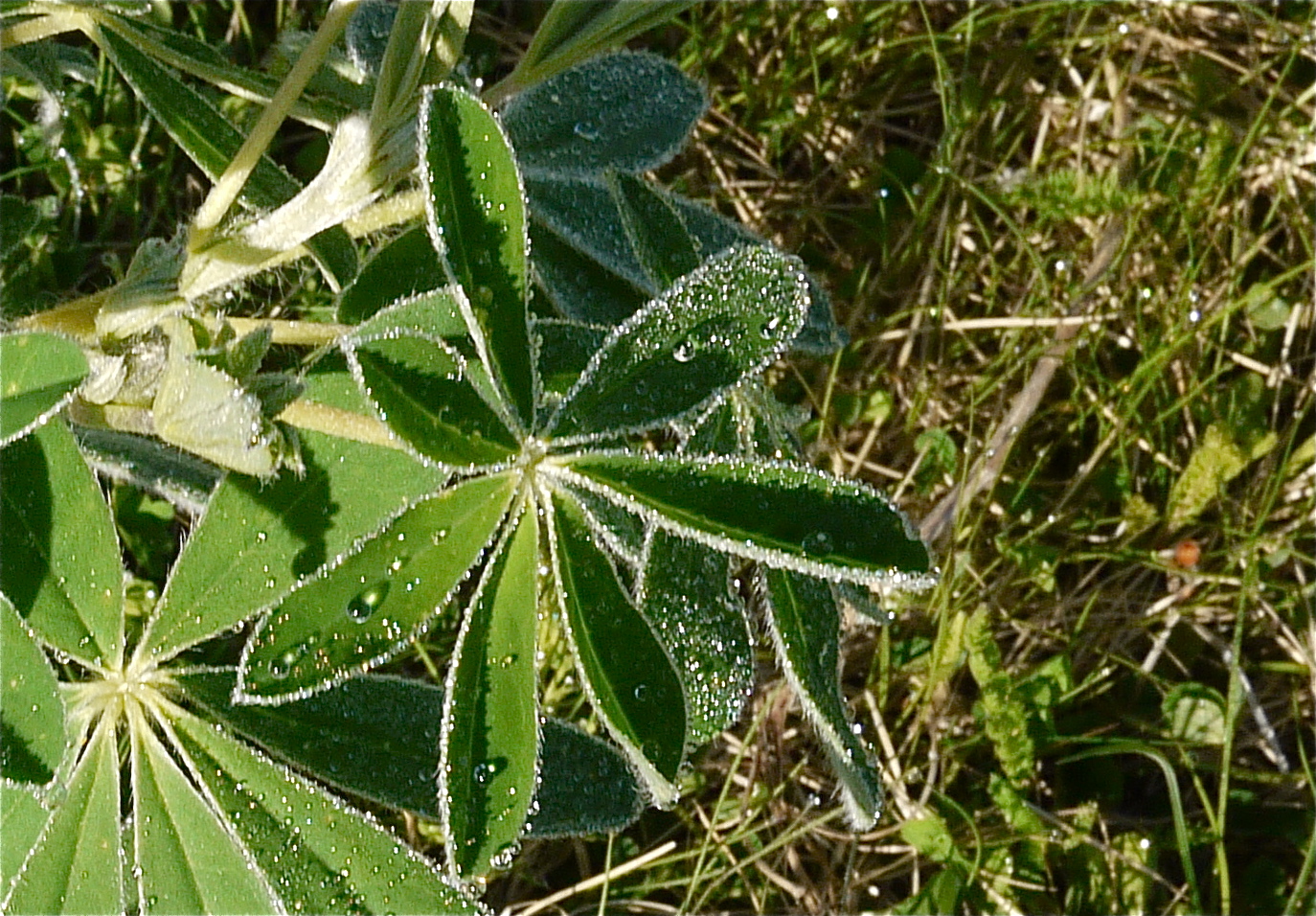








 Walking with Aki