Cranes

4

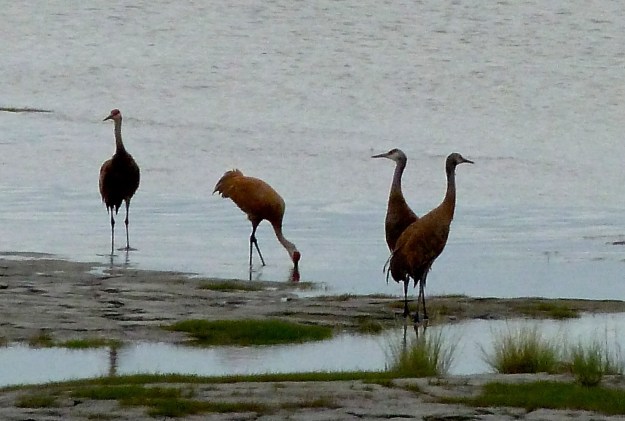
It’s raining on this, the last morning of writer’s school—my last chance to spot a moose. I choose the Chester Creek trail even though it doesn’t offer the best chance of encountering big animals. I just hope to watch the sandhill cranes.

It’s windy. Last night a gust knocked over a portal toilet that is used by residents of a makeshift camp. Near downtown I pass a pile of black trash bags, each stuffed full of the possessions of homeless people. The only mammals I spot on the ride to Westchester Lagoon wear spandex and high tech rain gear.
1

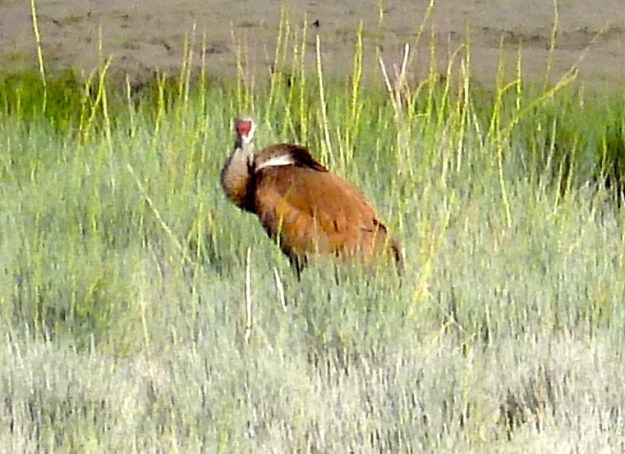
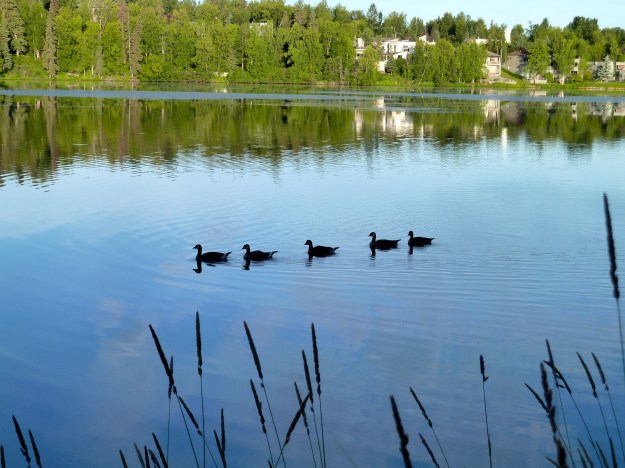
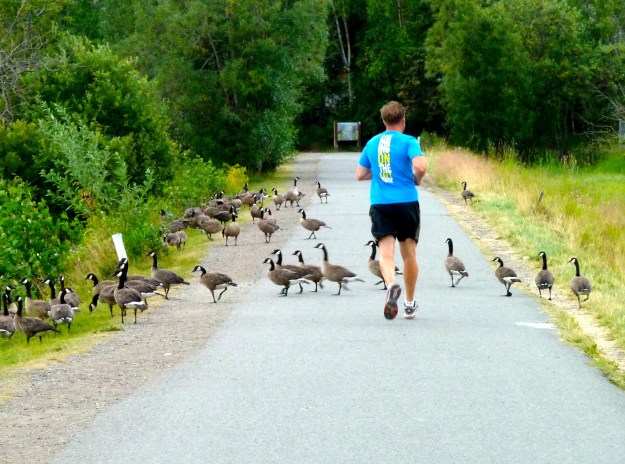
At the lagoon’s western edge the resident Canada geese wait out the wind. Comfortable in such a large group, each goose seems reluctant to yield enough space on the bike path for a jogger and I to pass. Surviving the geese traffic jam, I pedal to the mouth of a small slough. The ratcheting cry of two cranes reaches me as I put on the brakes. Another pair of sandhills flies low over the singing birds.
3

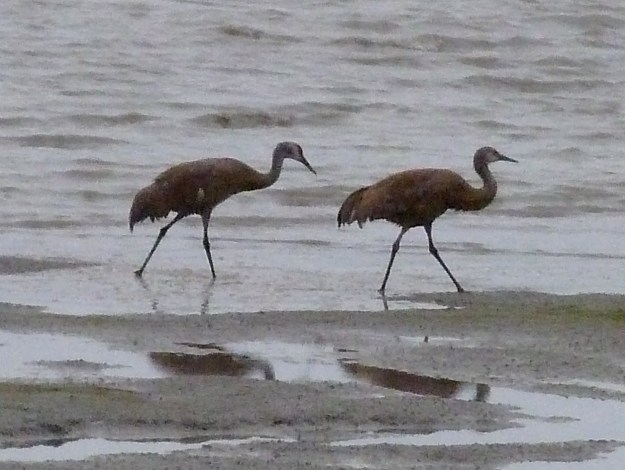
The feeding pair stretch out their long necks when another crane call sounds. Soon five cranes gather to feed at the edge of salt water even as a bald eagle flies over at hunting height. One crane seems to stand guard as the others feed in pairs. There is no morning class scheduled to force my departure but I only stay ten minutes. The cranes might stay nearby all morning or explode into flight in seconds. But I feel sated, like I might after a rich dinner followed by cake.
2

Sparks of Life

1

Sand hill cranes have dominated my twelve-day stint at the Anchorage writer’s school. No moose or bear sighting yet. This morning, at the mouth of a slough that drains into Cook Inlet, two cranes foraged on a small island of reeds. Yellow legs scurried over the surrounding mud. When another crane called, one of my pair stretched its long neck to full height and looked toward the call. I looked in the direction indicated by the searching crane, hopping to spot a descending one. We were both disappointed.

2

Saturday afternoon, I might have seen the off-stage singer feeding along with this morning cranes on the inlet’s mud flats. Even though they had sole possession of the flats, the cranes gave each other excessive personal space. Watching from the Tony Knowles Coastal Trail, I envied the cranes’ solitude. Every few seconds strolling tourists or bike riders filled the air with chatter. Some of the cyclists talked about their hope of seeing the carcass of a dead humpback whale now stranded on a beach near the motocross track. I would never see or smell the whale. Nor would the hundreds of people who poured down from the Kincaid Park chalet to hunt for its bones for it rested elsewhere. As I weaved through them, I wondered why they so wanted to see a whale that had lost its spark of life.

3.jpg

Morning Light

1

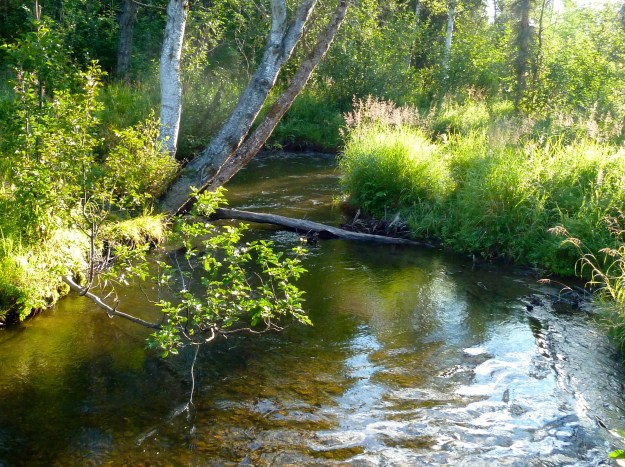
I am starting to take Anchorage’s sub-arctic sun for granted. The last few mornings, it has brought richness to the forest colors. But it can’t reach the half-a-dozen sockeye salmon malingering in an eddy a few feet away. It hasn’t robbed the stream water of the power to obscure the big fishes’ red and greed coloring. I feel isolated in the good way you feel isolated when in forest solitude. Then, the beep-beep-beep of a garbage truck shatters the illusion. The water must obscure sound as well as color because the salmon don’t react to the intrusion.

Being Invisible

1

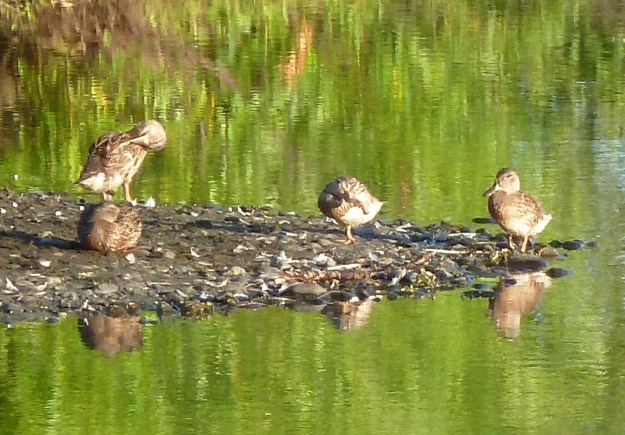
As if they wish to make a point, all the animals I passed on this morning’s bike ride ignored me. Ducks slept balled up on gravel bars, king salmon sulked in eddies, and even Canada goose mothers let their goslings sleep feet away from the bike path as I climbed past. The dogs didn’t even bark. It’s okay being invisible in this borderland between the wild and the tame, town and country. I probably don’t fit in either place.

2

Unencumbered

1

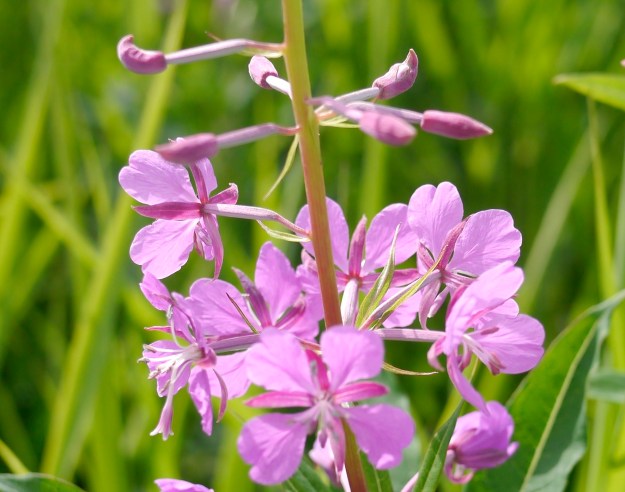
I’m back in Anchorage for writer’s school. While I am gone Aki is living large with friends at their waterside property. Last summer I saw many moose on my morning bike rides but this week I’ve only spotted homeless folks and grim faced commuters on the Chester Creek bike path. Until reaching Winchester Lagoon, I ride through light filtered by birch leaves. But the fireweed-covered islands in the lagoon almost glow thanks to the unencumbered early morning sun. The resident Canada geese have already formed lines of battle, each five birds long. When I stop riding, they move slowly past me, just a few yards from the bike path.

2

I’m awed but also a little sad to see this calm reaction of once wild birds to my presence. Swerving to avoid goose scat, I pedal toward the coastal trail where two days before I heard and saw a pair of sandhill cranes. They have always been an icon of wildness since I first watched they fly low over tundra near Bethel during their Spring migration. In the thirty something years since that day, I always savor the sound of their ratcheting cry.

3

I won’t see the sandhills on this ride but a flock of yellow legs mitigates the loss. They explode from the beach when the engineer of a Fairbanks-bound train releases a mournful warning whistle. I am near a woman with face hidden by a high-end DSLR camera. The shorebirds circle around us, instantly change directions and fly another circle in the opposite direction. Lowering her camera she gives me a stunned look. “Did you get a good shot of the birds?” I ask. “I don’t know,” is her reply. Unencumbered by camera, I cached a memory of the flight, how they instantly transformed from creatures of shadow into those of light when they snapped off their coordinated turns.

Fireweed

1

“Just to let you know. There’s a bear hanging around down there,” the nice sounding dog walker in expensive casuals says while pointing at a field of flowering fireweed that seems to stretch to the Mendenhall Glacier. I smile back, thank her, and walk onto the meadow. A bear is never far from you anywhere in Juneau this time of year.

2

An electric-orange plastic fence blocks the trail but the note stuck to it warns of erosion, not bears. Last week the ice dam that backed up water on the glacier at suicide basin broke, flooding the lake and raising the river to a record flood stage. Charged with fast water, the river undercut the trail, making it unsafe for travel. The little dog and I move onto a gravel “work around” trail and spot matted vegetation where a bear had slept and many bear sized trails through the five foot tall fireweed plants. Panting from the heat, Aki collapses in a patch of shade near some fireweed stalks and pants. I think of the cool forest the trail would take us through if we preserve, if we risk the bear. It’s not worth it. We turn back to the trailhead, arriving as a family with small children, all on bicycles, pedals to their car.

3

Rush to Fall Time

2

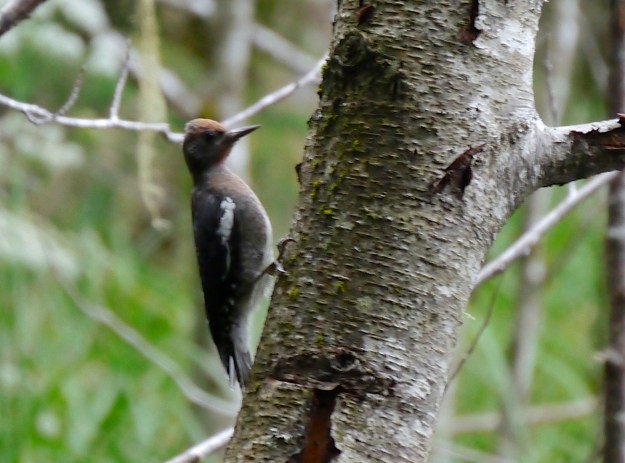
Aki and I needed a trip to the woods. After the morning fog burned off, we headed to one of our favorite trails—one through old growth forest to the beach. Ten minutes in, Aki leaped up to some high ground above a dying pond and stiffened tail, body, and ears. I wondered if she spotted to young male deer I saw here on our last visit but found that she was staring at a tree creeping bird. I’d just seen a red-breasted sapsucker hammering a spruce tree. But the bird that worked its way up the trunk of a dying red alder didn’t have the fire engine red head and chest of an adult red-breasted sapsucker. It must have been a juvenile bird. Like a shy human teenager, it took advantage of it’s dull, earth tone feathers to blend into the background.

1

The forest was in high summer. The time of blue berries had passed but there were still many purple and red huckleberries to pick. As a sign that we are charging towards fall, I found chicken of the woods fungus growing on a downed tree. The time of king salmon must have also passed. Few boats fished for them off of false outer point or the mouth of Fish Creek. Why is nature in such a rush to end summer?

3

Out of the Wild

3

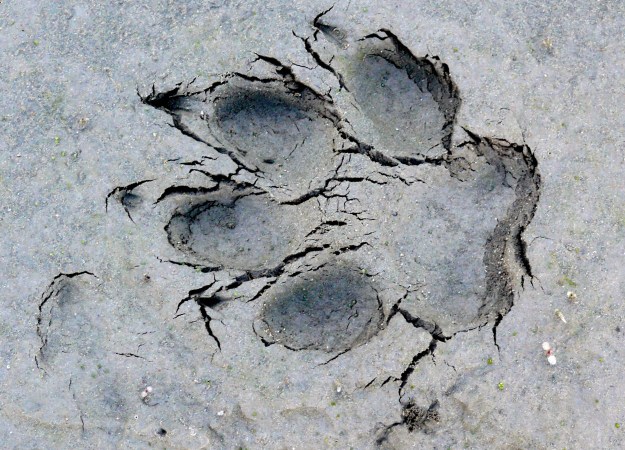
Last week, while Aki chased her Frisbee over Juneau trails, I explored lands drained by the Innoko River area in Western Alaska. Some of the area I passed through has been designated wilderness. But we saw as many or even more animals in the non-wilderness areas. The flying predators we spotted—eagles, peregrine falcons, owls (great grey and great horned), and even a raven—seemed more interested in keeping near their food source than fleeing us. On each beach we sampled we added our boot tracks to those of geese, wolves, moose, beaver, porcupine, and grizzly bears. Twice we watched moose swim the width of the Innoko River.

2

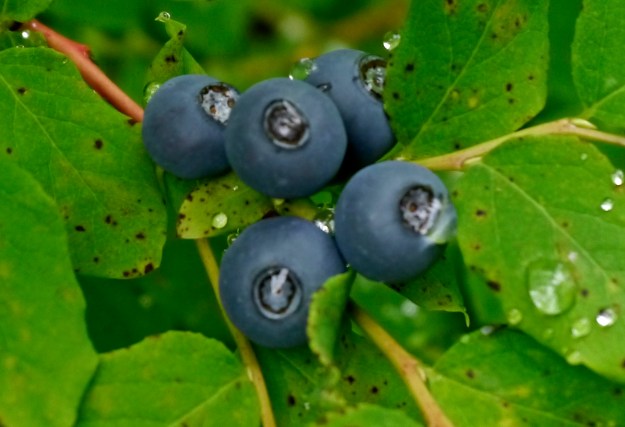
Today, now back with Aki in Juneau, I spent part of this Fourth of July picking blue berries near the Mendenhall River. While we walked on trails beaten through the patch by black bears, none appeared. Even one did appear it would not make the moraine a wild place, not when rubber rafts full of cruise ship customers constantly float past the berry patch.

1

Taste

1

At Eagle Beach, Aki charges over the wild strawberry patches to retrieve her orange Frisbee. Drops of water fly from the brush she forces her way through to get her toy. When she returns it to us for another throw, green seeds color her muzzle. The little dog doesn’t notice the bent over humans up and down the beach as they search for the tiny strawberries. Some move on their hands and knees, like supplicants to the berry god. At first I share Aki’s disinterest in the berries. Domestic strawberries are already ripening in our yard and we will have almost two quarts of wild blue berries picked for pie before sunset. But between tosses, I start searching the weeds and find little red globes hanging just above the ground. They taste sweet but not like a farm berry. They taste a little like the grass and peety soil smells. They taste of the place that grew them.

2

Father’s Day Bison

1

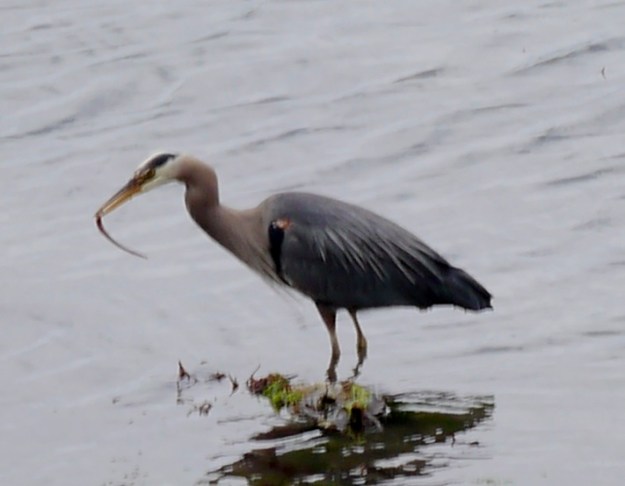
Last Father’s Day at 6 A.M. in Missoula, when Aki was home in Juneau, I checked the progress of the sunrise. Yet to climb above the Garnett Mountains, the sun still managed to paint the underside of broken clouds pink and pearl. Each subsequent second intensified the colors of a yellow and green field of blooming wild mustard. A single blue heron flied toward me as I straddled my folding bicycle. The bird’s wings beat a slow, full rhythm as if all the souls of those who had died during the night rode burrowed under its feathers. The heron, its body almost as thin as a paper airplane, flied toward the Blackfoot River and disappeared into a wall of still-gray clouds.

2

I rode toward the town of Lolo to watch a herd of bison graze near the edge of Highway 93. Traffic was light, but I still took the unfinished bike trail rather than the highway for the views it offered of the Blackfoot River a quarter of a mile below. The slight sound of my brakes disturbed to flight another heron feeding along the river. Later, I watched it fly over my head when I pedaled back to Missoula.

3

The rancher was irrigating the field where the bison herd grazed. Some stood in the spray like city kids on a hot day. Most fed on the drier grass along the old rail line that once served the Bitter Root Valley. One large bull watched my every move. He had a lot to protect. At least a half-a-dozen young bison, horn-less and with fur still reddish-brown, wandered among the bulls and cows. One butt his mother, like a dairy calf wanting to suckle. Getting no response, he returned his attention to the grass. While most of the young feed, one gave me a long hard stare until I remounted my bike.

4

Back in Juneau and reunited with Aki, I follow the little dog down one of our favorite beachside forests. Rain, rather than irrigation spray wets the ground. I think of the Lolo bison and the mule and whitetail deer that I saw on my recent family visit to Montana. Funny that I haven’t see many our Sitka black tail deer on my walks with Aki. Then, I spot the young male deer, hock deep in shallows of a little pond, starring at me. I’m not carrying a camera, which allows me to extend the eye lock without the distractions of focusing and framing. I broke before the deer, which held its ground even after I continued down the trail.

5