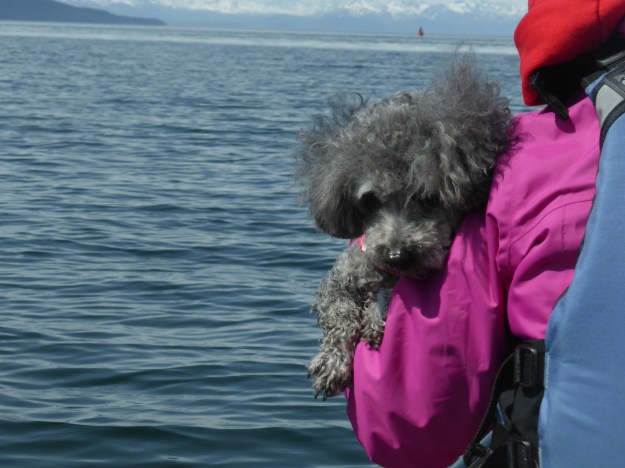
Statistics about human/killer whale interactions will tell you that none of the big porpoises have ever attacked a human. But you still worry that you might be first. Maybe it’s the name or the times you’ve watched one grab 1000 pounds of sea lion and toss it back to it’s children to finish off. I try not to think about that when Aki’s other human and I launch our canoe onto the waters of Tee Harbor where a killer whale has just surfaces a half a kilometer away.
Aki whines and paces around the canoe. Her humans paddle and scan the water for another whale sighting. But only a pair of marble murrlets show on the surface. From the mouth of the harbor I spot the killer whale. It is miles away on the other side of Favorite Passage. But water sparkling on its back makes it easy to spot.




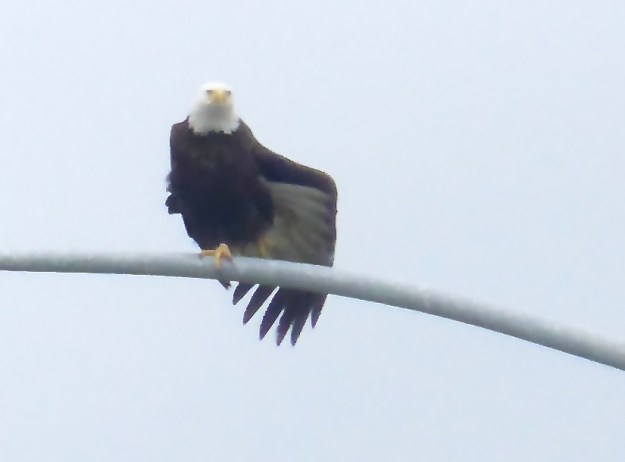

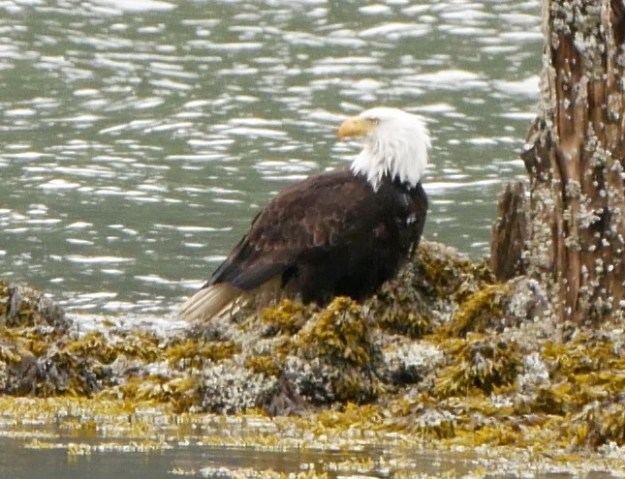
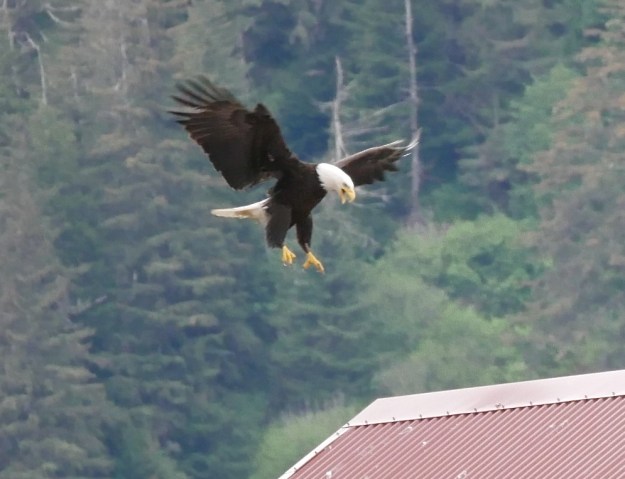 Down the beach two bald eagles scan the scene from a top a metal-roofed tower that once provided air to miners working the Ready Bullion tunnels. One spots food on the beach and glides down to investigate. It crashes chest deep into the water and splashes about until waddling onto an island of dry beach.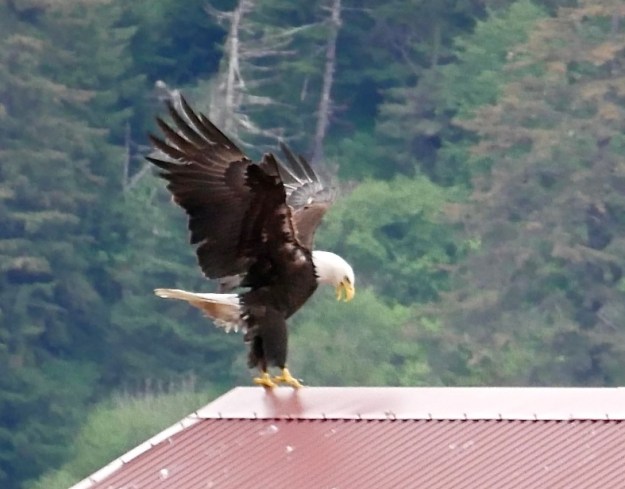

 Aki and I shelter from a nasty rainstorm in an old growth forest. Earlier storms toppled a score of middle-aged hemlocks within our view shed. But the forest can’t protect our car from the guy stealing one of its fog light assemblies. The thief, probably a heroin addict, might be able to covert it into a fix. But it will cost me much more in cash and bother.
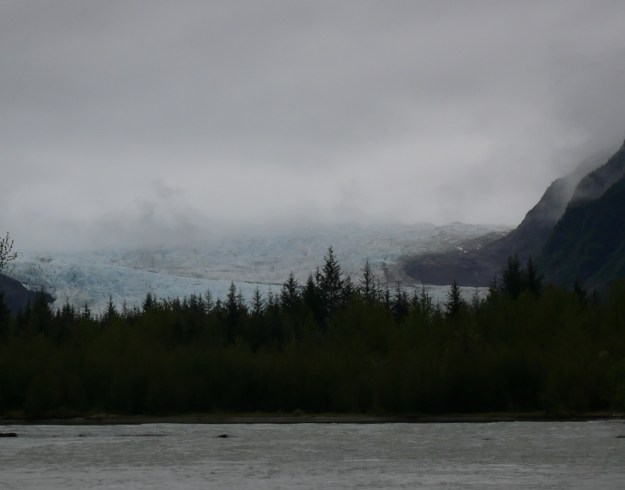
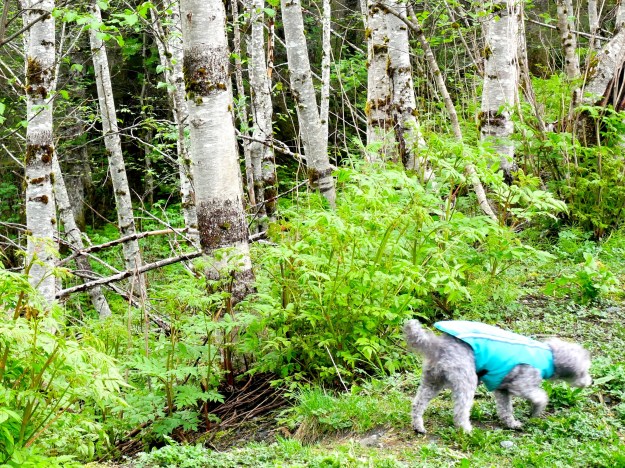
 Happy in our ignorance, the little dog and I cross a pocket meadow decorated with cloudberry blossoms. If the summer dries out and brings enough sun, we will be back in July to harvest the succulent berries that are already forming in the heart of the dying blossoms. Cloudberries are fixtures of the tundra. Before last year, we never harvested many of them. Our summers were never hot enough for their ripening. Now global warming has given us a gift that I’d gladly turn down if the glaciers would stop retreating.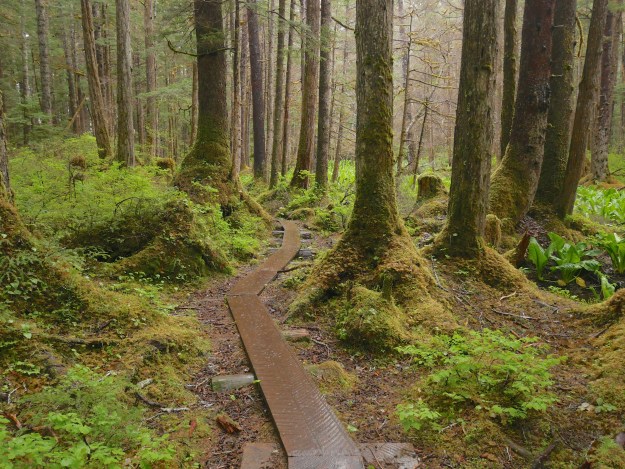

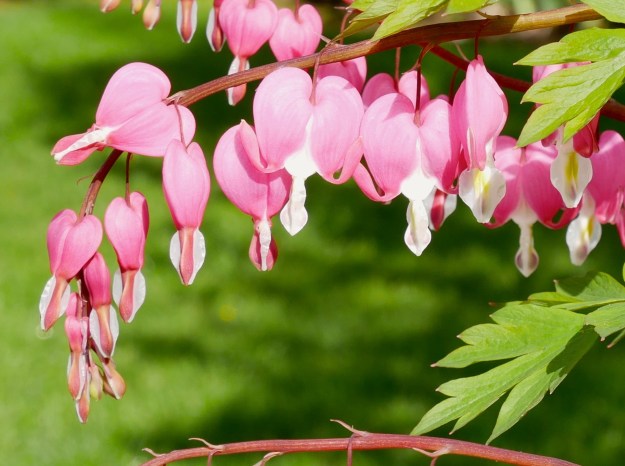
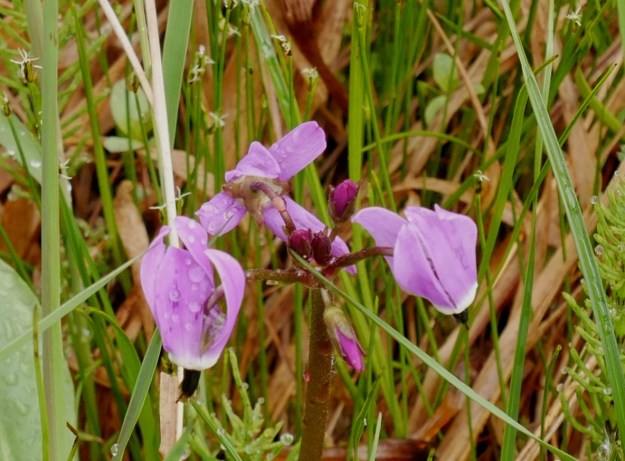 We push on and find the small section of meadow where shooting stars grow and find them in bloom. My dad learned to love the shooting stars that grew on meadows near his Montana home. Maybe he passed this love on to me, They are one of my favorite wild flowers.
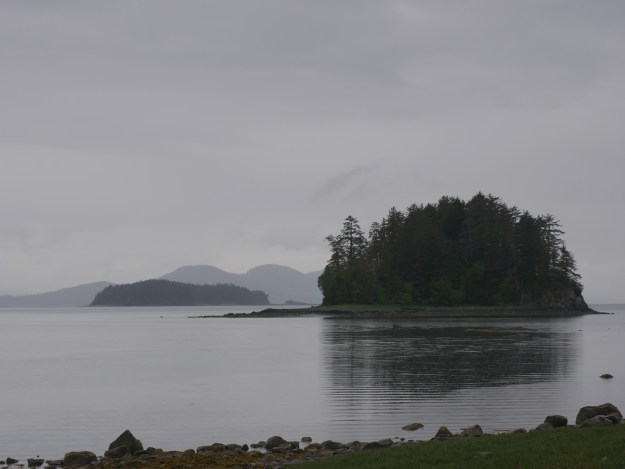
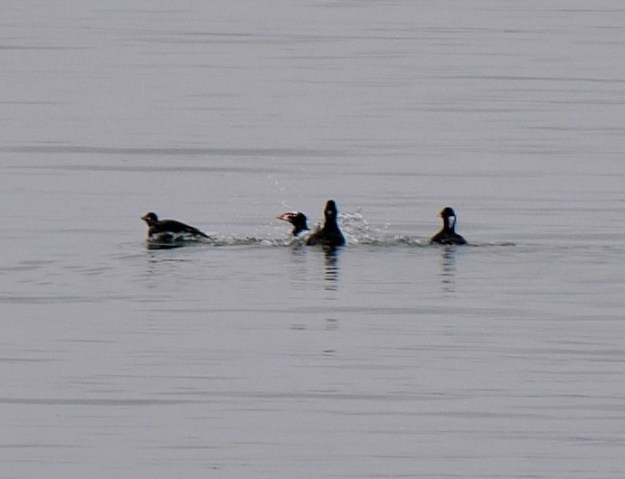 We break out of the woods and find the beach empty except for a desolation of crows. Even the rain-rattled water between outer point and Shaman Island is vacant except for a pair of mergansers wandering near the point. On the north side of the island, other crows fly over surf scoters and a mated pair of harlequins. They photo bomb my shots of the ducks and the cloud-shrouded mainland.

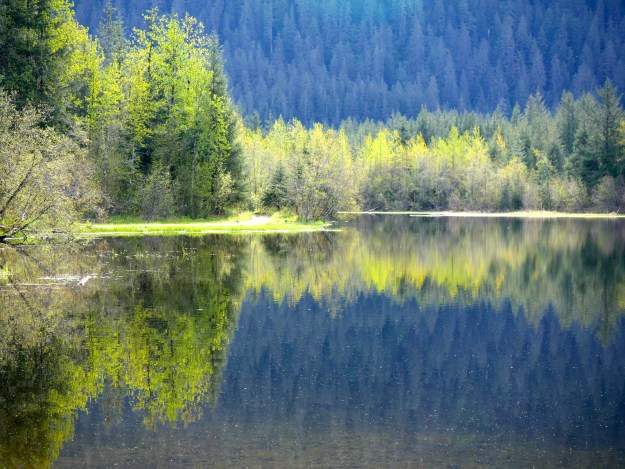
 Minutes later, another beaver scrabbles out from underneath a bridge we are crossing and plops into the lake. Aki paces up and down the bank while I measure the progress of its underwater swim by the trail of breath bubbles. Four meters from the shore, the beaver surfaces, see us, and crashes back under the water with a tremendous splash.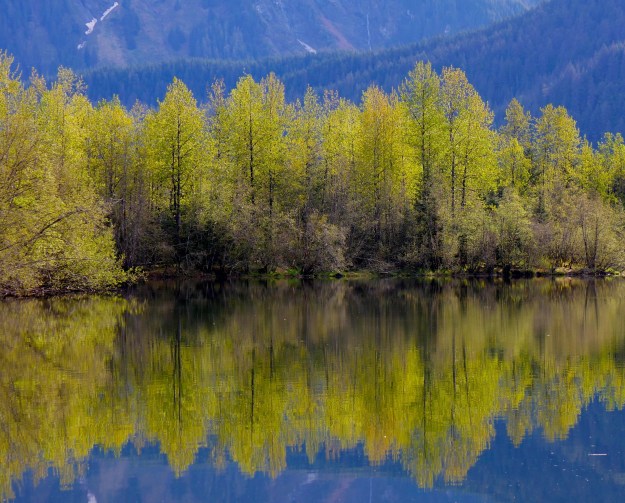
 Walking with Aki