
My pant legs are as wet as Aki’s fur. I’ve spent the last half hour pushing through rain soaked meadow grass. Aki followed close behind. When I could, I used a bear path. The bear’s wide body crushed a nice swatch through the meadow grass. The bear and we were heading to the Peterson Salt Chuck—a flooded staircase of rock that homecoming salmon used to climb from salt to fresh water.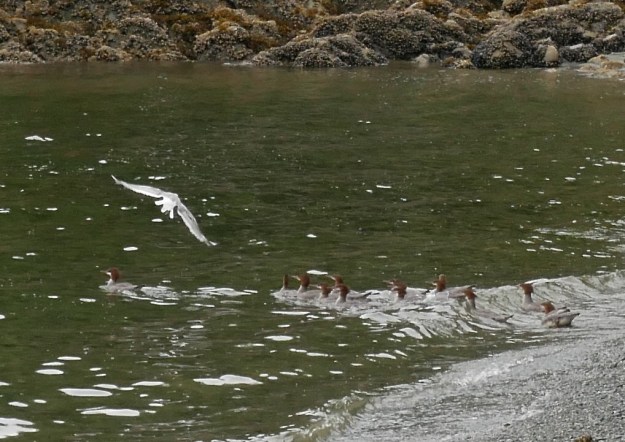
At the edge of the meadow the bear trail lead us over a forested headland, past a river otter den, and down to the salt chuck. Careful not to step on any of the partially eaten salmon littering the ground, I walk toward splashes on one of the salt chuck pools. Several bald eagles, a coven of ravens, and some watchful gulls stirred during our approach. Three or four chum salmon squirm in the pool. They had had to clear several waterfalls to reach the pool. Now they wait to jump the falls feeding the shallow basin where they stage.
Wanting to photograph one of the salmon in mid-leap, I stand and wait for action. Aki rests on of her rear paws on my soaked boot. She looks behind us, covering my back. When a Stellar’s jay scolds us from a nearby rock, I turn away from the pool. Seconds later, the dorsal fin of one of the salmon cuts the water above the waterfall. I missed it. Resolved to photograph the next attempt, I ignore the efforts of a belted kingfisher to get my attention and the didgeridoo sound of a raven flying just above my head. An eight-pound chum salmon throws himself onto the waterfall, thrashing with his tail, and slumps back into the pool. 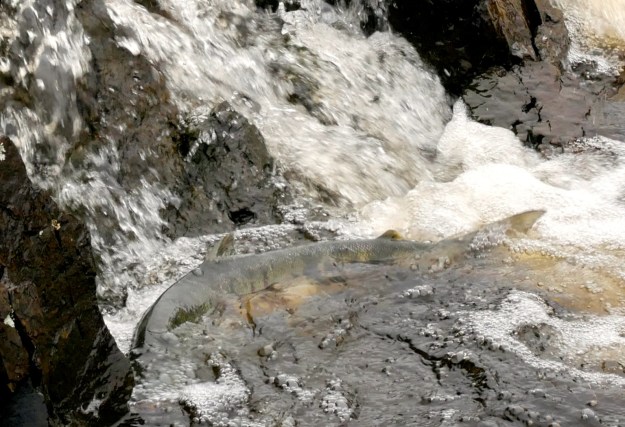 That will have to do little dog, we don’t want to keep the bears from their lunch. Aki and I climb over an exposed headland and drop onto the beach occupied by a landed raft of mergansers and their three-gull escort. Between the ducks and the woods are fresh tracks of a black bear. Aki follows the tracks into the forest and disappears. But when I catch up she isn’t growling, just smelling the scent left behind by the bear.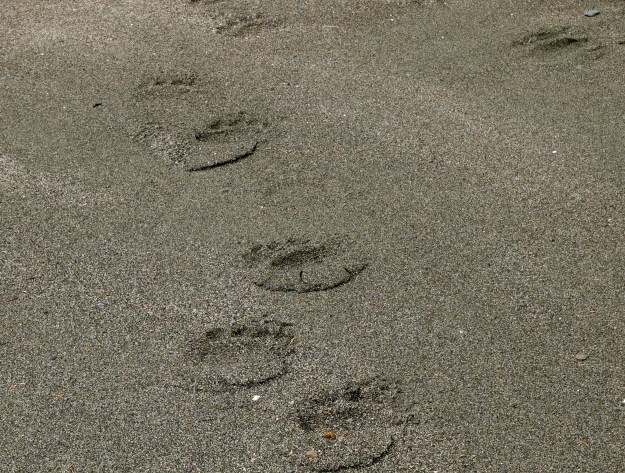



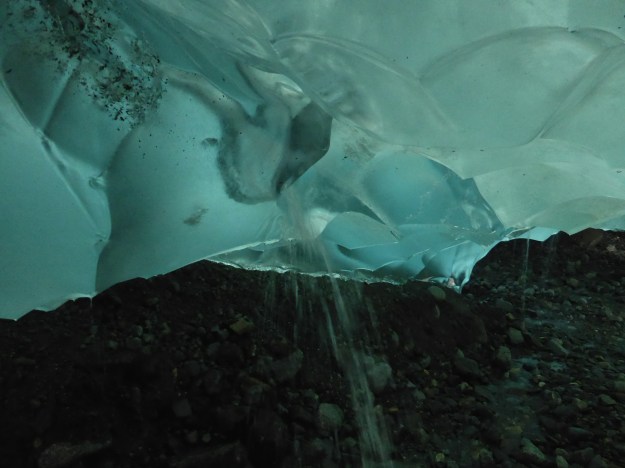
 The roar of Nugget Falls blends with the complaints of gulls that appear to yell at us from nurseries formed on rock recently revealed by the retreating glacier. We have no problem finding a landing place near the glacier’s face—another sign of the retreat. A well-trod gravel path leads to the mouth of an ice cave. Last winter we needed ice cleats to walk on the cave floor. Today, it is ice-free gravel. Last winter we could wander down at least two tunnels. Today, one has collapsed and we have to duck under a low roof in the main chamber.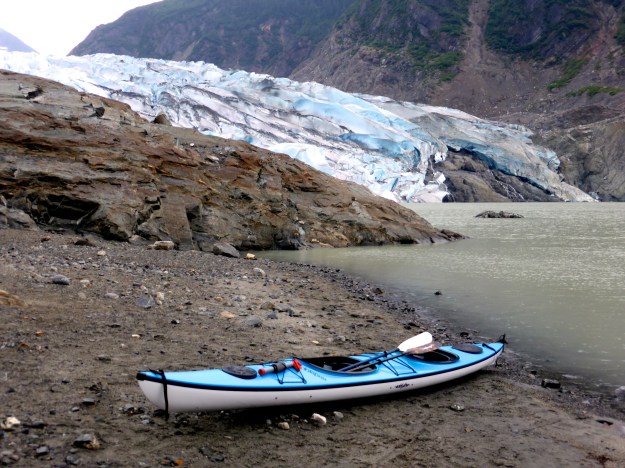
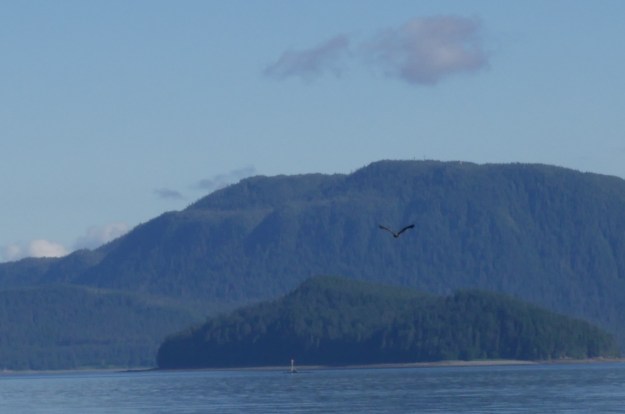
 Fifty feet ahead an immature bald eagle rises from the creek, a twelve–inch-long fish dangling from its talon. The fish drops as the bird wings skyward. I know the scene took only seconds but when I play it back in my head, the bird and prey moved in slow motion, like I could have dashed over and caught the fish before it hit the meadow grass.
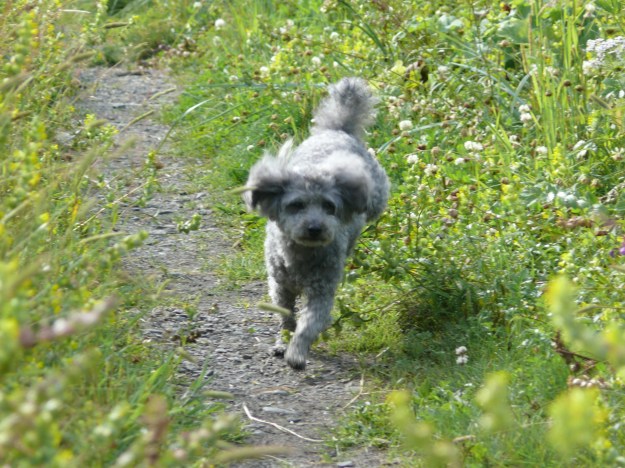 Aki clung to my side during the walk. She was spooked by the sound of 10-20 pound king salmon splashing in the creek pond and the off-key symphony performed by ravens and crows in the creek side alders. I was spooked too by the angry sounding splashes and the smell of dead salmon, both of which draw bears.
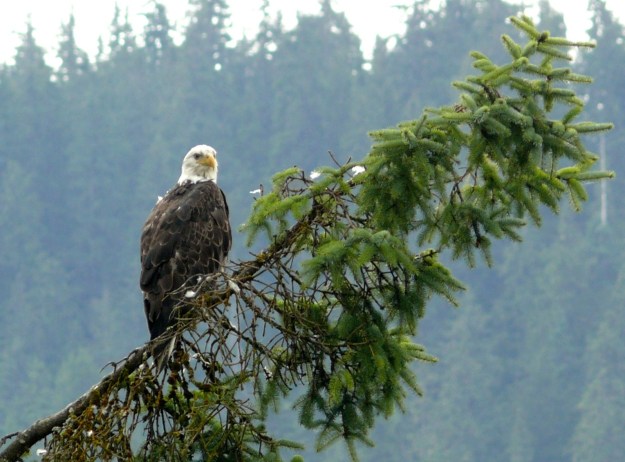 It was low tide when we reached the creek delta. Clutches of six or more eagles loitered on the exposed wetlands. One burst out of the tree just above my head when I stopped to count its cousins. Any peace the eagles and gulls had reached was broken when an immature eagle flew over a gull-feeding zone. The little white birds dived bombed the eagles and drove them into a nearby spruce forest.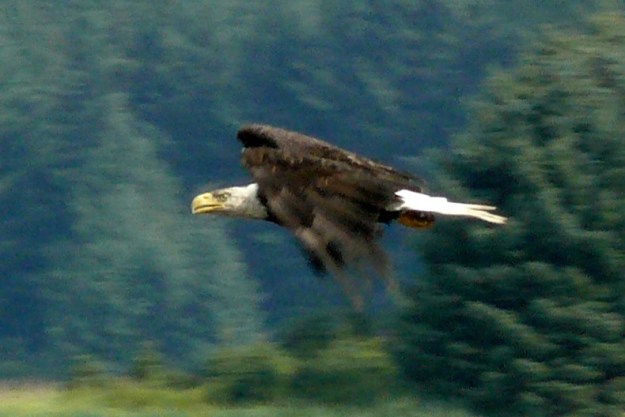


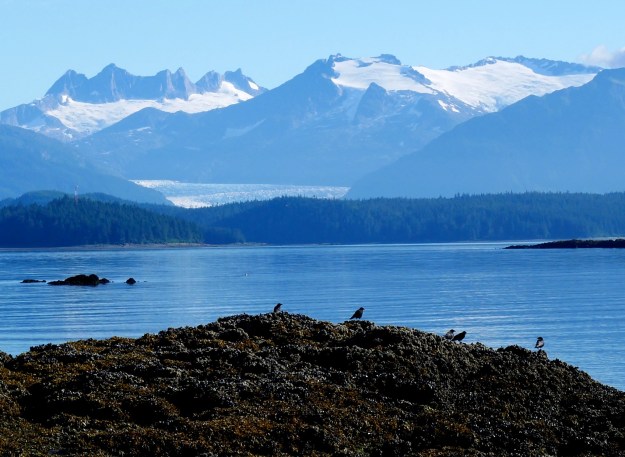 It’s low tide. Just off the mouth of Peterson Creek pink salmon leap out of the water and then drop back to join a school of their kind killing time until the flood tide arrives to carry them to their spawning grounds. The crows and gulls sound impatient for the fish to die.
 Walking with Aki