
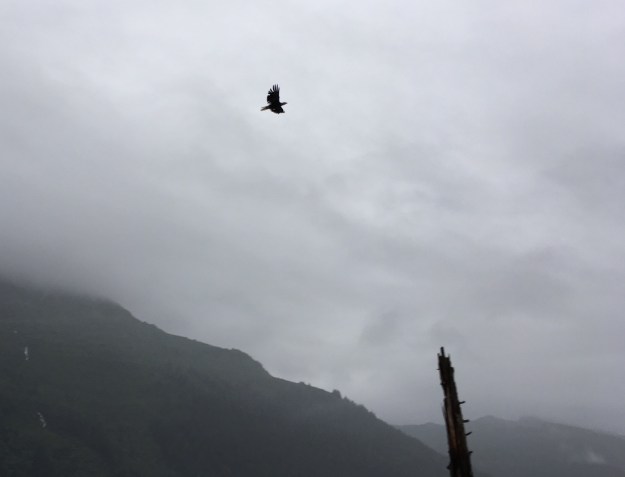
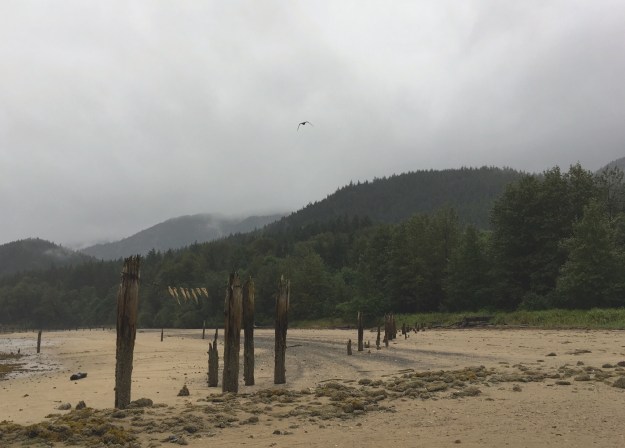
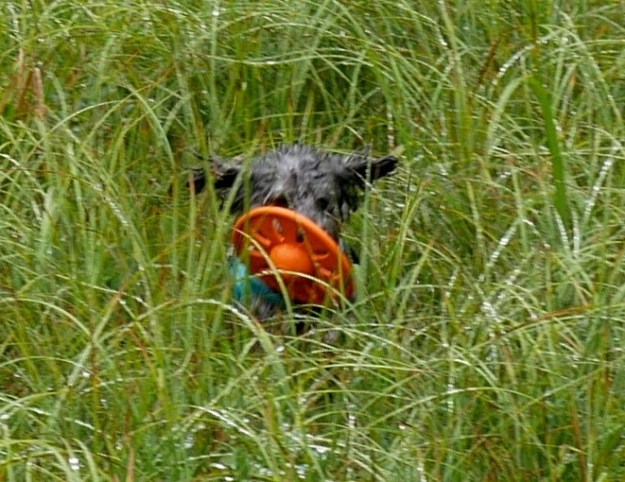
Aki and I are soaked from brushing up against understory plants. Maybe we shouldn’t have taken this seldom-used path that cuts across headlands to a pocket beach. But it’s the end of summer when the little dog and I make a pilgrimage to the beach for its view of Favorite Passage. We usually spot an eagle or two, maybe a whale, seal, or sea lion. A bald eagle does flush from a spruce when we break through to the beach. But only one guillemot dots the passage.

We shouldn’t be surprised. It’s been a challenging summer with little sunshine and lots of rain. The rain plumped the harvestable berries but ripening without the benefit of sunny days, they are either insipid or sour. This has made me pessimistic so I am not surprised by the lack of wildlife. I give little attention to an oval of blue forming above Shelter Island. Dark storm clouds will soon cover it.

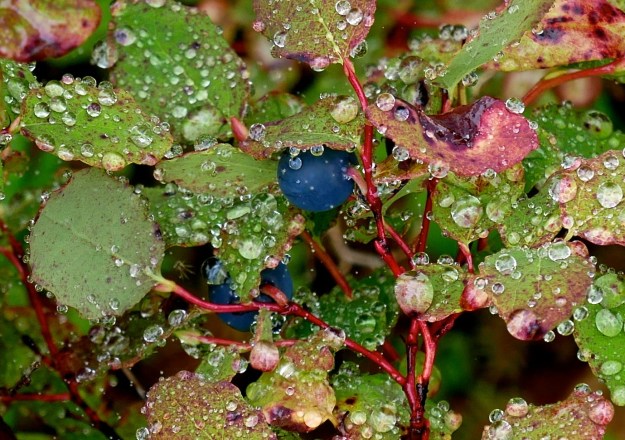
While climbing over a low coastal hill, we pass a patch of blue berry brush that sports a handful of ripe fruit. The one berry I can reach is as sweet as farm grown. Next to it is a bush already darkening to fall reds and browns. But the optimistic plant also has new flowers that now glow in an unexpected shaft of sunlight.




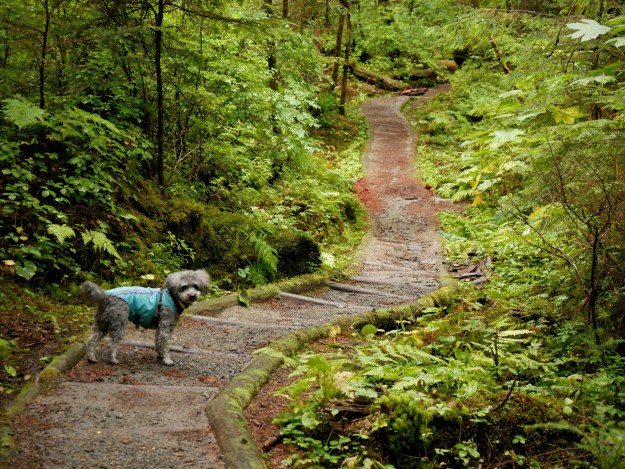
 In a few weeks, scoters and ducks will work the waters just offshore from the beach. But now the sea is empty and only a brace of gulls walk the beach. Aki keeps her nose down, hunting for sign. But we only meet one dog on the walk.
 Around False Outer Point and across Gastineau Channel a remnant of Lemon Glacier hangs above Costco and the state jail. On most days it looks no more remarkable than a snowfield. But there is something about today’s light that turns its ice a pastel blue. In the Alps or even the Canadian Rockies, there would be a good trail leading to the hanging glacier. But here, its just another sign of the warming earth.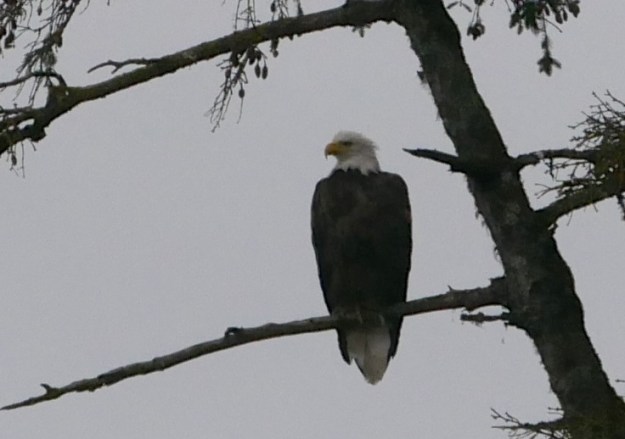
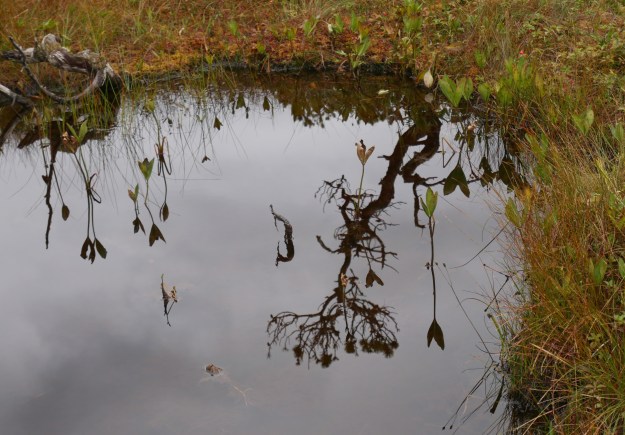




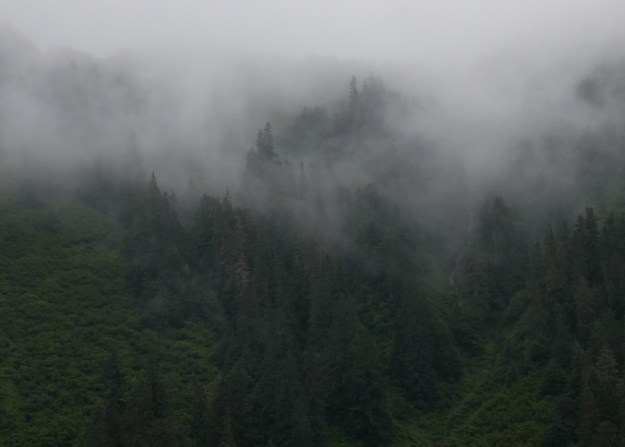


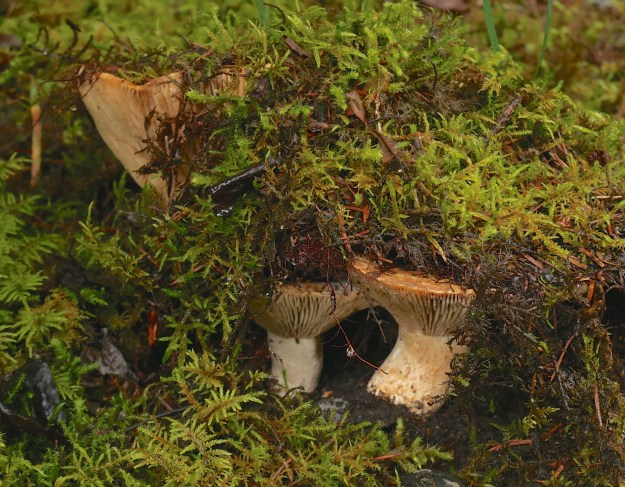 On this walk over the moraine Aki and I have already seen evidence of the wild world’s give and take: mushrooms ripping their way through the trailside moss, bones and berries in bear scat, cottonwood trees fallen by beavers, and moss slowing reducing trees in the troll woods to soil
 Walking with Aki