Category Archives: Uncategorized

A Whitehorse Day in Black and White.

We feel a little betrayed by the promising pink sunrise that started the day. Since then a thin gray cloud layer has blocked the sun from Whitehorse Yukon Territory. Thin as  it is this overcast is made edgy by the sunlight filtering through and offers none of the comfort or drama offered by cloudy days in Juneau. Our hotel is full of Asian tourists here for the Northern Lights. They may have to wait a day or two to see them.

With plans to visit the Canadian Tire store on the way home we drive 35 kilometers north to a hot springs complex where cross country ski trails snake through a poplar forest. It’s good skiing but we miss the drama of yesterday’s ski near Lake Bennett.  Moose tracks cross the ski tracks many times but none of the big animals has walked on the tracks themselves. With the forest floor covered with deep soft snow you would expect them to use the packed trails. At one point we passed nearby a moose, which startled us when he broke nosily away. Every though they look like some kind of farm animal moose scare me more than bears. When they take it into their mind to stomp you they persist until you either escape or feel pain. It is worst if you get between a cow moose and her calf.
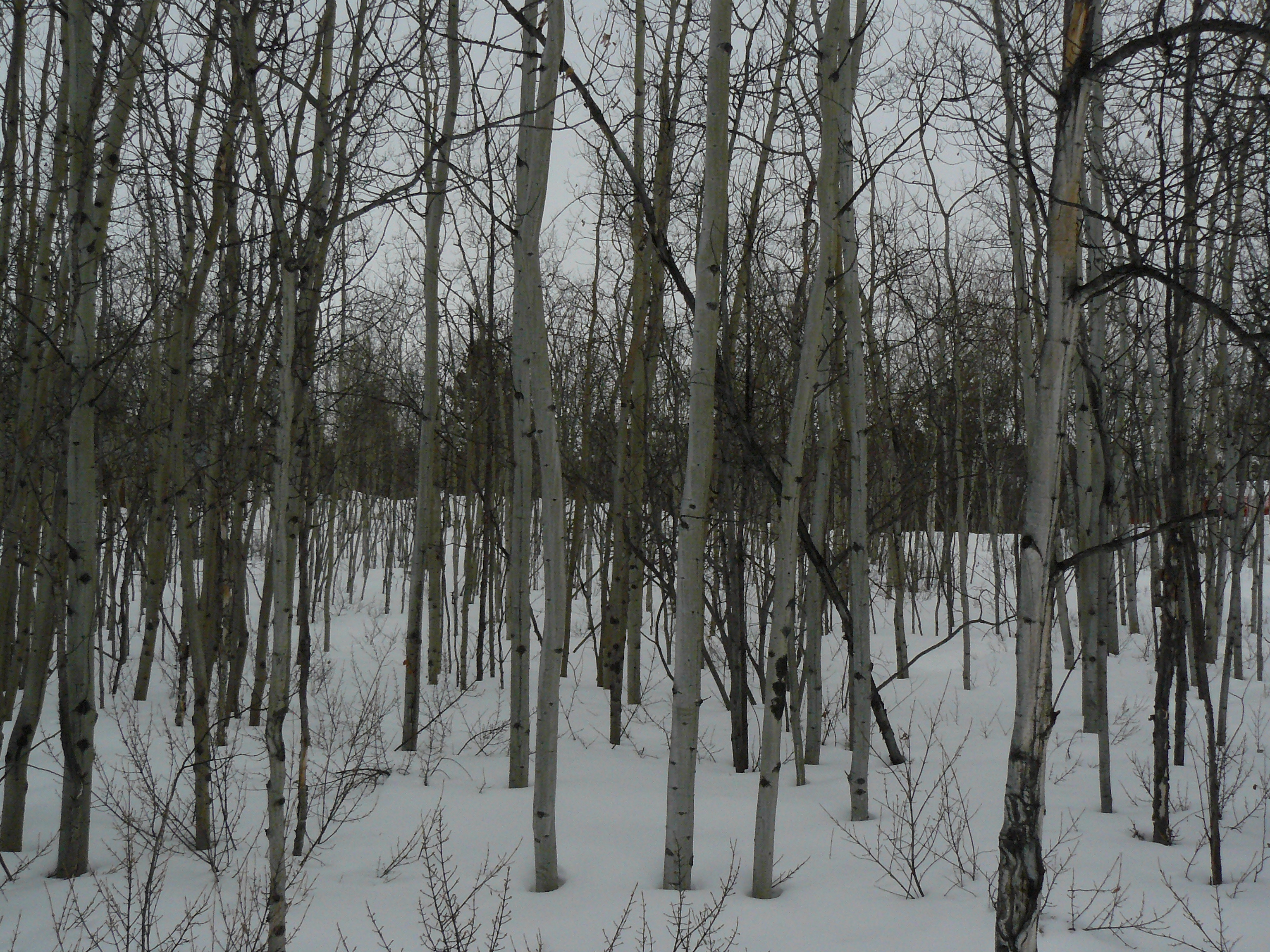
While the gray ski offers little beauty, that of the gray barked poplar forest has all the romantic beauty of a black and white film from the 40’s.  The trees have a Scandinavian sense of personal space, leaving a couple of feet between each neighbor. Thin, tall, and always just a little crooked, their trunks rise ten or fifteen feet above the snowy ground before sending out branches. Even then they grow upward like saints in prayer rather than out like an apple tree.

Solitude Follows the Bitter

The party is over on the glacial moraine. Most of the fall color left last week. The first strong wind will blow away the rest. We walk through it in the rain, alone but for the few ducks prospecting the far side of Crystal Lake for food.

Aki finds plenty things to smell and many trails to follow. She passes two piles of bear scat, each the color and texture of crushed plaster. A man’s boot print marks one of the piles. I’m thankful Aki ignores both and feel sorry for the guy now washing the smelly stuff off his size 10 hunting boot.

I wanted to stay in the open moraine but can’t resist following Aki down our familiar trail into the troll woods.  The light and sounds are different here.  Rain drops on the dead leaves covering the moraine trail mimicked the sound of a campfire being stirred. In the deep woods the rain is felt and seen hitting puddles and lakes but no longer heard. We stopped hearing the rain in here when the big leaves dropped.

A half and hour in I’m cold enough to wish I had replaced my cotton T-shirt with a quick dry base layer. The waterproof coat over wool and fleece isn’t doing the trick.  In this season I wonder if my bones, grown to length in a California desert can get me through another Alaska winter.  This is the time of hypothermia not my discontent. Always damp and never more than 49 degrees, our days in late autumn drive most people to Fred Meyers or Costco. Tomorrow I’ll avoid that fate with a warmer set of gear.

The bitterness of this weather grants the gift of solitude to those willing to embrace it.  With solitude comes a peaceful isolation and sometimes wonder. I was trying to engage Aki on the subject when we rounded a grove of moss encumbered cottonwoods and reached the shore of a pocket lake. Six mallard hens exploded from where they had been sheltering just feet from us. Lifting off at a steep angle, they held in tight formation until out over the lake where they spread out, blanked as a team, and headed out toward the moraine.

We see two of the hens later while trying to negotiate a trail now flooded by beavers. Having dropped all the smaller cottonwoods in reach the big rodents have started to gnaw their way through some trees a good 2 feet across. Tacked to a nearby spruce is a polite request from the Forest Service not to poke any more holes in the beaver’s dam. This is a good choice for a sign post because beavers don’t seem to chew spruce.  Another sign asks for fellow hikers to snitch on anyone, presumably wearing wet boots and a look of frustration, trying to undo the beaver’s work. We see no one attacking the dam. We see no one at all.

Beauty in the Dying

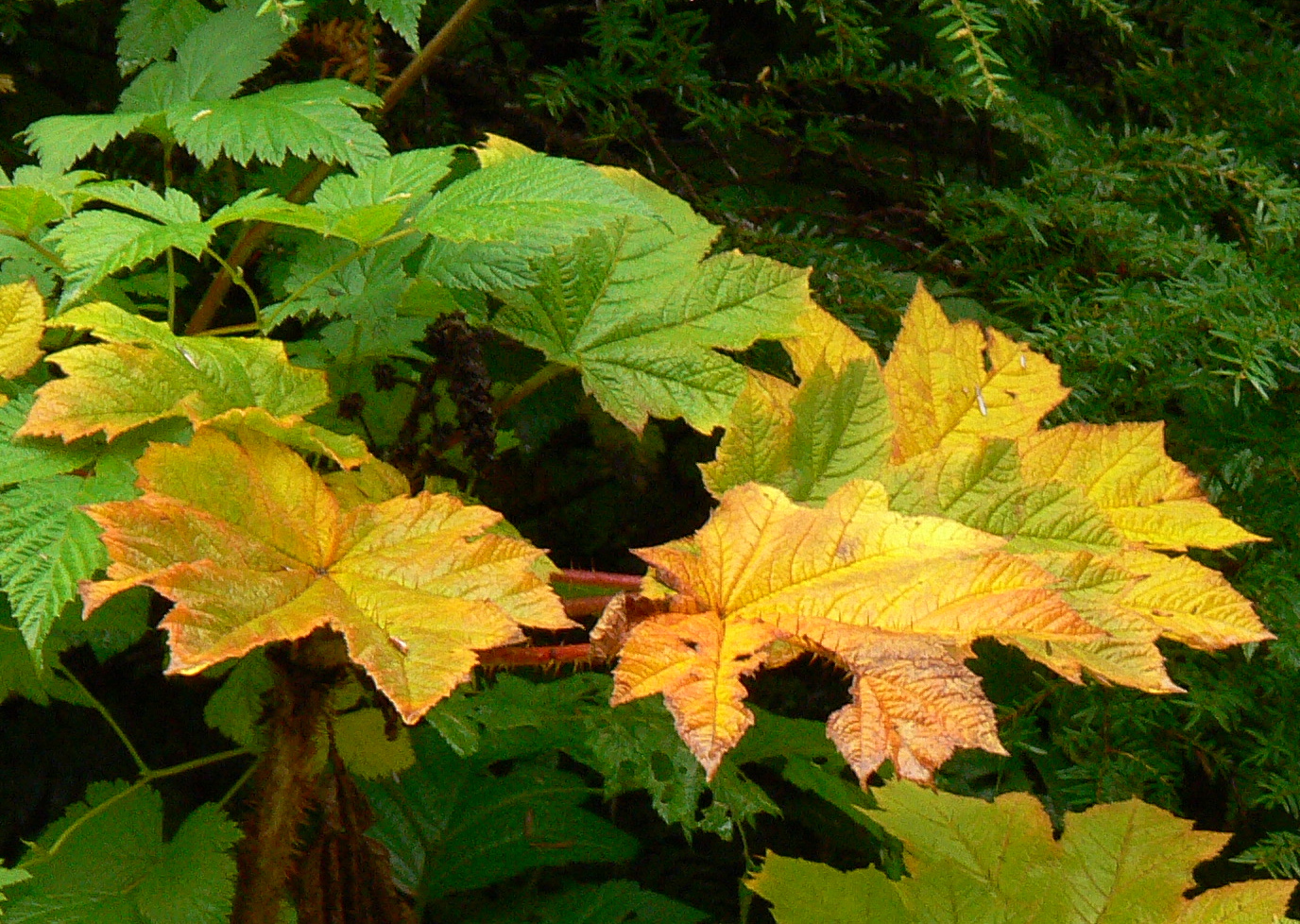
An empty parking lot at the trail head promised solitude and we have it to enjoy for a few minutes. After the complaints of a disturbed eagle fade away it is quiet. Taking advantage of openings left by crumpling devil’s club leaves we leave the main trail to follow a faint path over to the river, There, 10 feet above the water we look down on two sand bars divided by a tea colored stream. Two sets of track, one bear and the other wolf parallel each other on the near bar and I wonder if they were left last night by two friends going to a party.

Aki quickly finds a way down to water level, sprints across the near bar, fords the stream to gain the other bar where she dashes up and down, ears flapping, tongue hanging carelessly to one side. After this brief but exuberant indulgence she returns to my feet and we return to the main trail.

Farther along sound like that made by a confusion of gulls carries from across the river. It’s made by children yelling, lot of them. With any chance of solitude gone I turn into Sister Anna Marie and my tormentors become Mouse Powers and I sharing a joke in the confession line. On realizing this I forgive the river children in the way Sister had to forgive us for bad church behavior.

With distance the irritation fades and we enter a dessert without wild sound or sights. The beach where we turn around is empty except for two ravens that fly back and forth over our heads, wings sounding like whisk brooms in the hand of angry janitors. The party is over for another year. Ravens might stick around to clean up but with the salmon spawned out there is nothing to attract life here but bugs in the water and bones on the beach.

We spot four nervous mergansers—local boys—-but no swans or cranes or geese. After the fish ducks fly off  only a small series of rollers make sound as they hit this gravel beach. With better luck we might have heard the creaking gate sound of migrating sand hill cranes.  That song use to dominate the brief Fall on the Kuskokwim River.

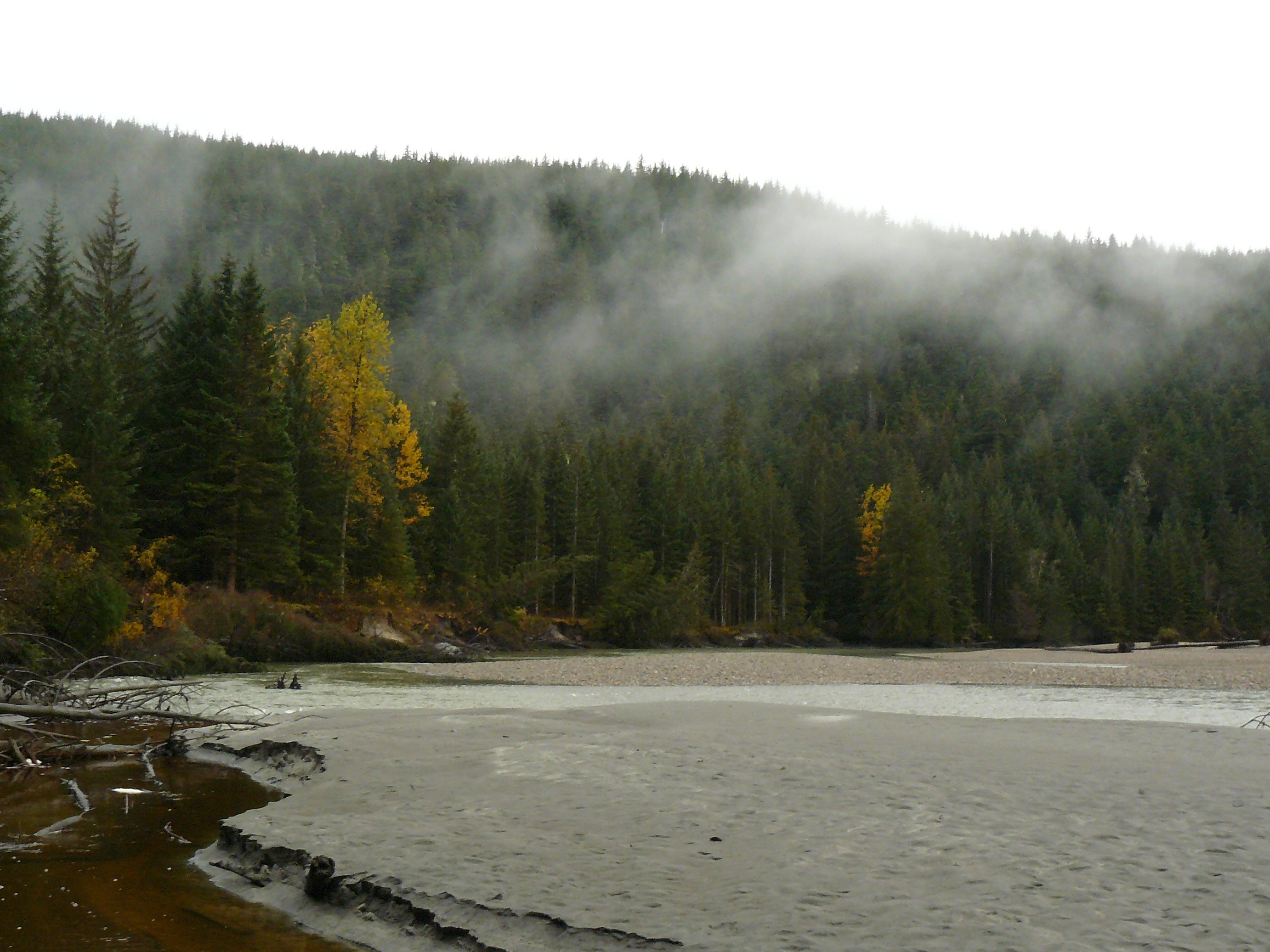
In the absence of wild sounds or sights we have a greater appreciation of the color of leaves dying so their plants may live. Death with a guaranteed resurrection. Today even the smallest clump of beach grass produces beauty in the dying.

Indian Point

We find the first part of the Indian Point Trail inhospitable — just a root and mud path moving through thick blue berry brush and wind hammered trees. Aki moves with delicate steps around the hazards while I slip from one slick tree root to the next, falling from sometimes into devil club thickets or bog holes. We break for the beach at the first opportunity where low tide has set a fair table for eagles, crows, and gulls.

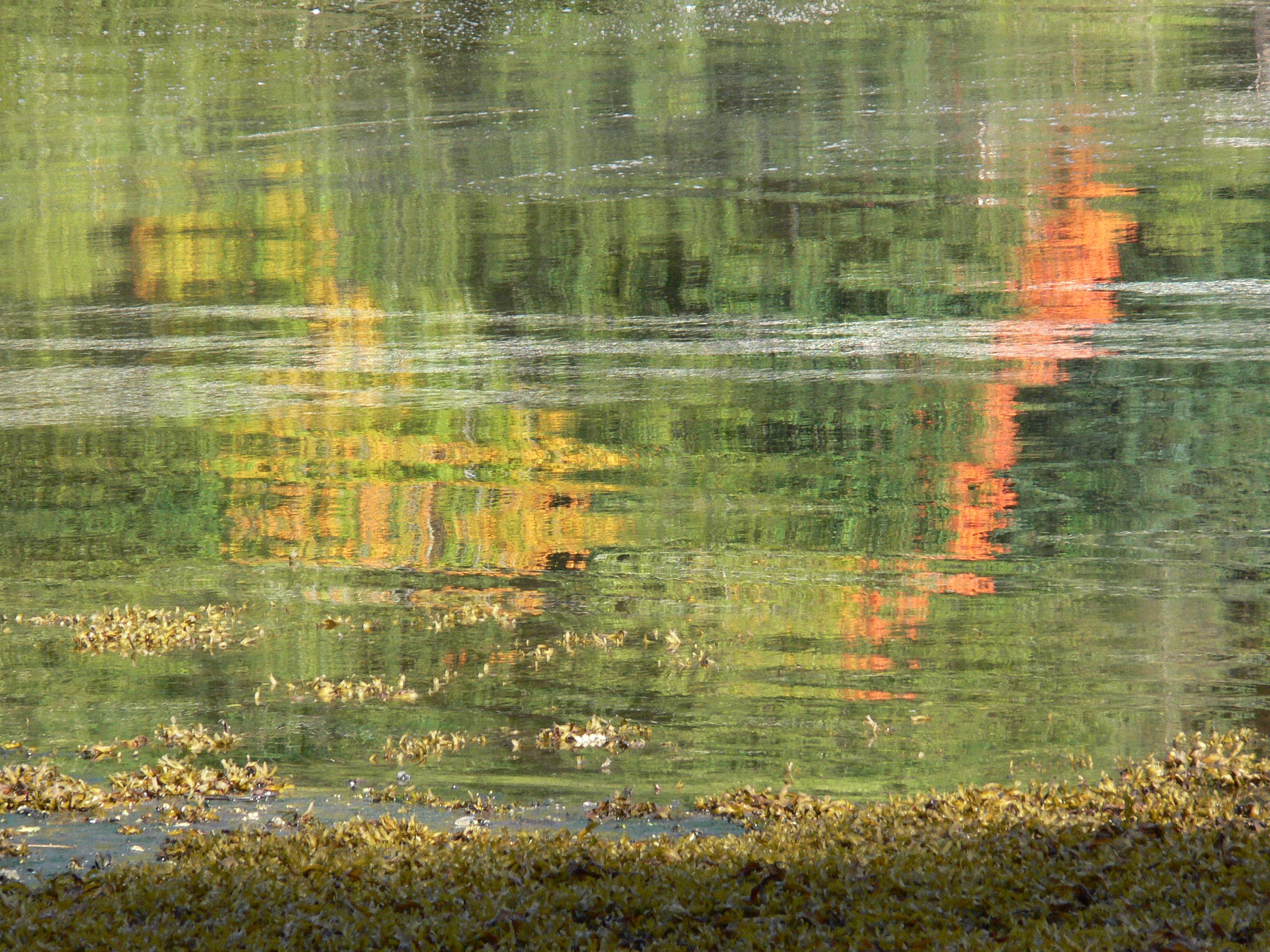
At first I watch Aki to make sure she doesn’t roll in one of the ripening salmon carcasses lying in the tidal grass. When she passes them by I turn to watch a mature bald eagle lift off from the beach. The water behind her reflects two large domestic maples, one burning yellow and the other orange. I thank the person who planted them when Alaska was a territory and you needed a boat to reach his homestead. Back then, planting a maple was an act of faith that the fish would come, the deer make themselves available, or the A.J. Mine wouldn’t play out.

More eagles sun themselves on Indian Point. Watching us with exaggerated nonchalance, they let us get within 30 feet before lifting calmly in the air. Moving into their sun, I stand with eyes closed against the glare while Aki sniffs for sign at my feet. Nearby a volunteer Sitka Ash, having forced itself between alders and spruce, mimics the maples’ fall colors.

The rising tide has closed off the beach path so we turn into the woods. Here, it is said, his beloved buried a holy man. We see only an old growth forest and the return trail to the car. Just off it an odd shaped spruce grows alone in a small clearly. Squirrels have created a smooth and even mound beneath the tree with gnawed spruce cones. The tree rises straight for five feet where a goiter of severed limb stumps and burls has formed in the shape of a pregnant womb. Several trunks grow up from here to the forest canopy. Sunlight floods most of the forest surrounding the clearing but little reaches the tree. Turing our backs to this special tree we hear gulls complaining and the chat of eagles and enjoy a filtered view of the silverly sea.

Another Walk into the Clouds


This gravel road climbs up from Glacier Highway like it was built for logging. Wide enough for an timber or ore truck it rises past a gravel barrow pit then up through an old growth spruce forest that has never seen professional logging.

At first we are eye level with the forest understory plants, mostly berry brush and devil’s club displaying the reds and yellows of fall. Tall spruce trunks rise naked above the color. Further up the trail we look directly into the thick canopy growth that would block out the sky if we walked beneath it.

The trail flattens out before we rise above the tree tops and then cuts through a muskeg meadow marked by all terrain vehicle tracks. Here, rather than man’s road, we find bear scat darkened with blue berry juice. The bushes lining the meadow have been picked almost clean. I find one berry, late to ripen, that taste as sweet as store bought candy.

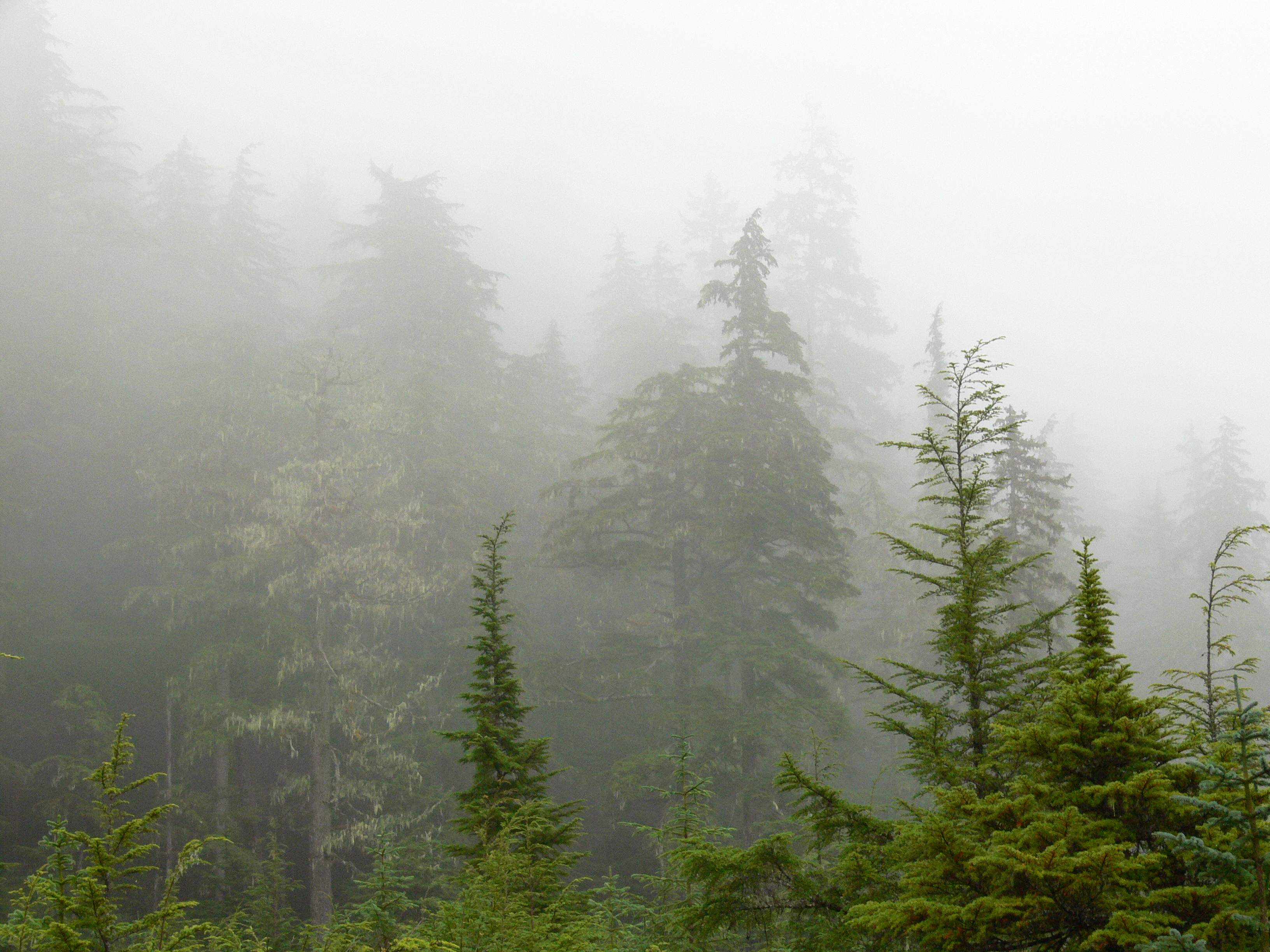
After returning to the road we move up to where the cloud cover reaches into the forest to obscure the spruce tops. With Spanish moss drapery distorting their shape the big trees look like ancient Scotch giants about to descend on the Peterson Creek spawning beds.

Aki walks past the giants without concern but stops where the road cuts through thick brush. Like the fool she know me to be, I move ahead. Fifty feet later she joins me at a gallop. Another fifty feet and she discovers something that she practically sucks down into her stomach and then runs large circles around me. Her victory dance.

My glasses fog up each time I try to focus the camera and moisture builds up on my face as we move further into the clouds. The road ends before we are fully enveloped. I’m tempted to follow a rough trail leading to whatever develop that justified construction of the road but turn back just before water logged brush can soak my unprotected jeans.

The Bass Line of Planes

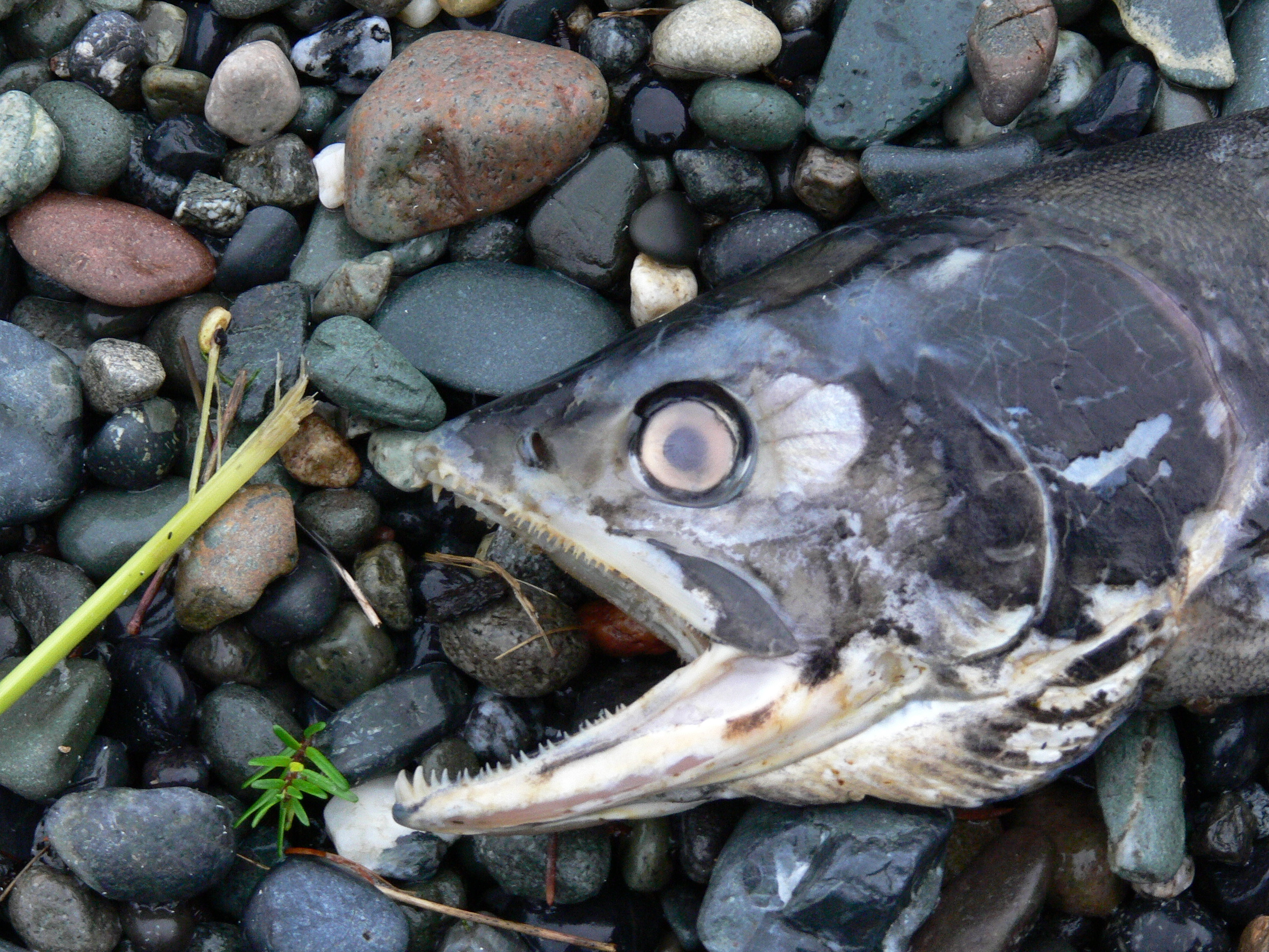
Low clouds and fog obscure the glacier and most of the islands we can see from here on a clear day. Aki runs the beach on a search for clues of those who passed last night but ignores this fierce salmon carcass with its cloudy eye and skin dulled by death. We startle a feeding eagle to flight when rounding False Outer Point but it doesn’t cry out. I listen to the sound of wind move over its flapping wings mix with that of water running through beach gravel.

A whale exhales on breaking the surface near by, drowning out water sounds as it forces air through its blow hole. I turn quickly to the sea but find only disintegrating fog pawing a flat calm channel. Now there is only the sound of the stream, far off eagle complaints and battling gulls’ mews. The low clouds have temporarily grounded the machines of industrial tourism. All I want is for it is continue long enough for a kayak trip to Portland Island on this gentle sea.

My wish cracks the spell and a line of DeHaviland Beavers flies over on their way to the bear viewing concession on Admiralty Island. Their old school radial engines dominate the beach with a deep drone. I imagine myself a dog walker on the Hastings’ shingle cheering on a British squadron of mosquito bombers as they head for danger over the skies of Nazi Germany. I pretend that the planes play a unimagitive bass behind the manic sounds of loons and gulls for the benefit of these two eagles hanging out on the Shaman Island causeway.

Then I turn into the forest to find solace in a recently discovered patch of red huckleberries.


After we move deeper into the forest the skies clear of planes. Here three hemlocks, with deeply furrowed bark line the trail and I wonder why I never noticed their beauty before. Hidden among also rans they took years to discover. That it happened the faint light of this gray day fills me with hope.


Queen of Cotton

Would Andrew Wyeth have snapped this picture from the seat of his touring bicycle? This image of this woman with hair the color of the arctic cotton she gathers as muskeg water soaks her shoes? At this distance he would be able to impose his idea of beauty on her face and form. I couldn’t get the colors right but do see her passion.  We would both crown her queen of wild cotton.

Shaman Island Exposed Again

Shaman island, gloomy in early morning gray, stands exposed by the minus tide. It’s our Mont San Michel but without a monastery or crepes. Named for the Native holy man buried there, it usually enjoys a barrier of salt water.  Crossing the drying causeway we find a beautiful blend of wildflowers just above the high tide land — yellow Indian Paintbrush, red Columbines, and purple Harebells.

We start to circumnavigate the island but stop after realizing that every step around the island’s back side would crush a dozen barnacles. Most of the island lacks a beach. Here, on the back side, waves reach the base of a step slate cliff that protects the bones. Elsewhere on the island a thick tangle of spruce discourages the curious from entering its interior. I’m drawn to the cliff by displays of Harebell and Fireweed flowers that have somehow anchored themselves into the lichen covered rock face. The flowers have spaced themselves to mimic offerings left at a columbarium. Below thins sheets of fallen slate crack under my boots sounding like knackebrod being broken and shared on a Swedish picnic.

Pink salmon jump in the nearby sea, waiting for the flood tide to carry them to their birth waters in Peterson Creek. The small fry, crows and gulls, fight for scrapes on the creek mud flats. Eagles and Ravens squawk and jostle for position in spruce trees lining the beach. They wait for a more bountiful meal.

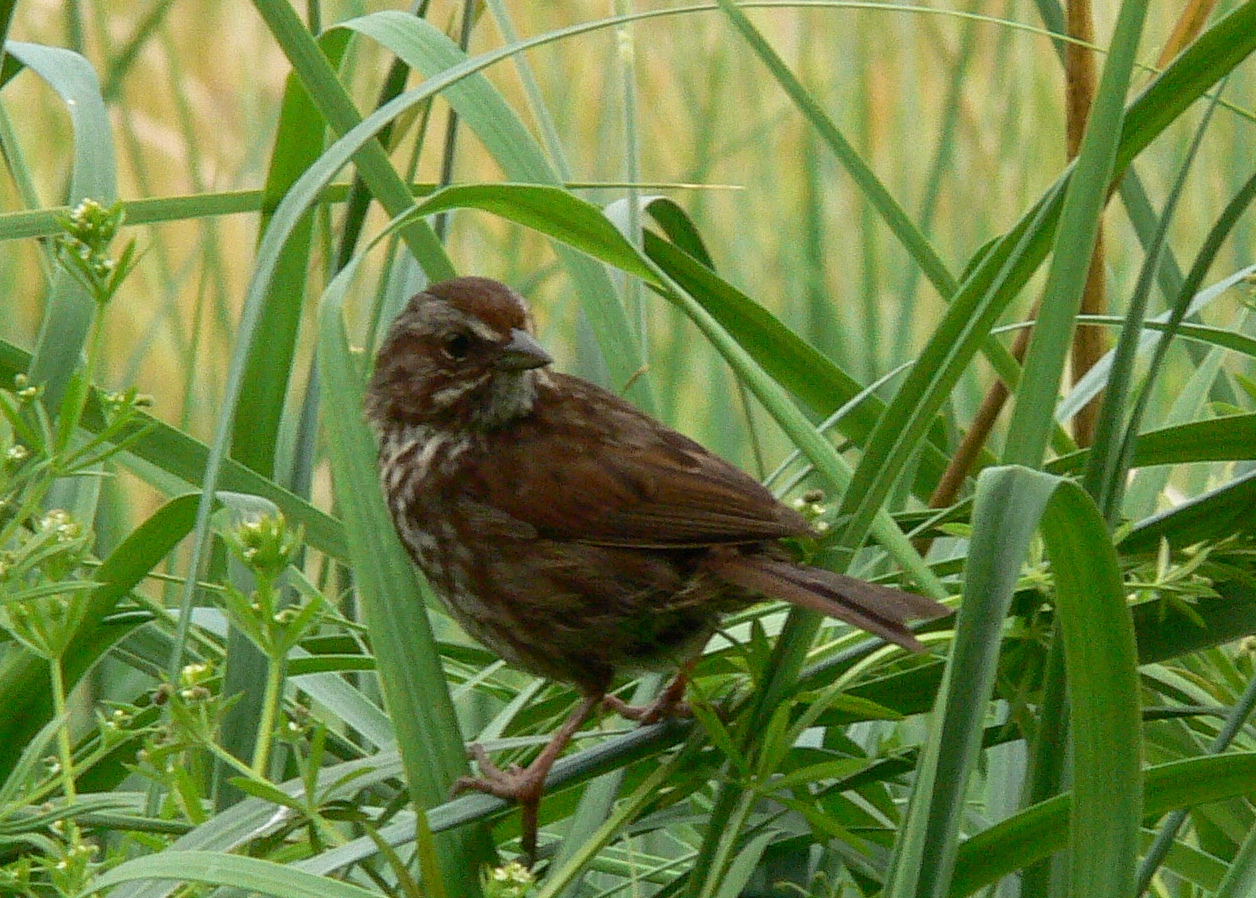
We leave over the temporary causeway for the trail home, passing a trusting song sparrow and a nervous deer. 

Fairbanks

Late yesterday afternoon I was rode a bike along the Chena River under a strong northern sun. Where the Chena merges with the Tanana a woman exercised her German Shepard dog in the big river. The current drew me toward the river too with the promise of movement and coolness on a hot day.

Today it rained hard but brief leaving the smell of drying northern wildflowers and ground. We don’t have an opportunity to smell drying ground in Southeast Alaska for our dirt never dries out from frequent soakings of tide and rain. Its a gift enjoyed by dessert dwellers and subarctic people.

Beaches and Bluffs

Midsummer, hot, sunny and still only two or three families are using this beach.  With the tide out, it forms a broad sloping border between sea and the spruce forest that has grown over the old Native village site.  Aki chases her frisbee while we pass the canoe haul out ground. This space, now covered with flowering shrubs and berry brush once accommodated large ocean going canoes formed from huge red cedar logs. Fast and stable, they could carry subsistence harvesters, hunters, or warriors quickly to their goal. Canoes from here in 1794 scared Captain Vancouver’s men of the Royal Navy into a retreat to the back side of Admiralty Island.

Today the beach is clean, swept by the solstice tide. Only Aki’s tracks and those of shore birds mar the canvas of sand. Small waves touch the beach in groups of threes and fives, giving a family of children an excuse to squeal.

Moving on we head for a lunch on the Eagle Scout bench at Lena Point. Here the Princess Kathleen, on its way to Skagway sank in 1952. It was a beautiful, well maintained ship with a bow line dropping straight to sea and triple stacks amidships. Too bad it was poorly handled on the night it wrecked.

Only a small buoy bag, attached by rope to the wreck, marks the Princess’ grave. Wild geraniums, now showing translucent purple blue flowers line the cliff above the wreck as if left by mourners   Over the site a school of salmon give away their location with multiple leaps into the air. On returning to sea from each jump they shatter the glistening calm of water at slack tide. From here we could have watched the Captain Vancouver’s long boat running for Admiralty Island.