Category Archives: solitude

Standing Alone

This could be a story about the spirits that animate these trail side alders in the privacy of night. Each morning they leave the trees frozen in twisted last dance poses. Aki, with more common sense than imagination would not like that. For her even the arthritic swellings of the older alders are best explained by external forces of nature. She’d rather me tell a tale of her heroic efforts to clear the trail of red squirrels.

We start down this river side trail between snow flurries. Even this far from the sea an onshore wind carries the echo of nervous geese chatter. They must be feeding on exposed sand bars near the surf line.  The incoming tide should flood the bars and drive the geese to the big meadow on this side of the river. I pick up speed to be on the meadow when the geese take flight.

Reaching tidewater we find a big gang of stubborn Canada Geese holding on a shrinking sand bar across the river. Hundreds of gulls share the ground with them.  All locals, they intend to feed on the bar until the last second. Hoping we can witness the exodus from the flooded bar I walk toward the beach. Just as we reach it, a cloud of gulls explode off the geese’s sand bar and fly over to our side of the river. Many pass just in front of where we stand. Perhaps better judges of the sea, the geese hold fast as the tide begins to retreat. With no hope to see them fly, Aki and I turn to walk down the beach as the wind drives snow in our faces.

Aki hits my leg with a paw and looks up with a longing look. When I pick up a throwable stick she makes a small sound of excitement. Turning so my back is to the wind I toss the stick for her to retrieve.  For a few minutes only me and the sand and stick exist. When the stick suddenly loses its charm, Aki turns into the wind and we continue down the beach. Curtains of wind driven snow partially obscure the islands and waters of Favorite Passage and force us to leave the beach for a more protected meadow trail leading back to the river.

The meadow forms a yellow brown plain bordered on the far end by a scruffy collection of spruce and one bare cottonwood tree. Grey black snow clouds, shredded by wind, fill the sky above the tree line. It could be a fallow Montana wheat field and the line of trees could be the farmer’s windrow for providing a windbreak for the house and barn. Aki and I have cross this meadow often. Sometimes geese or crows or eagles hunt for food here. Even then my eye is drawn to the lone cottonwood tree.

Thinking of the old cottonwood dominating the meadow I lead Aki back to the river where a single Canvasback Duck, beak tucked into his back feathers, floats close to the far bank. His kind is rarely spotted in Southeast Alaska, especially in Winter. The big bird must be taking a break from his long compute to the Northern Tundra.  I can’t spot any other transit birds. Did he drop out of a northbound group or does he just seek solitude?  Not a very ducky thing to do.

Sea Lions, Goldeneyes and Grosbeaks

Every four years the calendar gives us this extra leap day. Aki and I spend part of it exploring the country around the Peterson Creek Salt Chuck. Only a steep cascade of boulders separates salt chucks from the sea. High tides rise above the cascade and push salt water into the chuck. Today, with  the tide out we can listen to water draining from the salt lake into the big fjord known as Lynn Canal.

We must make this trip in the morning before today’s sunshine and warm temperatures melt away the crust that formed over this snow covered trail during last night’s hard freeze. The crust provides Aki with a wide platform for dashing about and taking the occasional rolling tumble.  The freeze decorated these bare alder and willow branches with ice crystals that now sparkle in the sun. Like the crust they soon will yield to the day’s warmth. Some, made more beautiful by their own melting, already fall to the ground.

Above the transitioning scene a male Pine Grosbeak, showing strong red color against the blue sky, sings out from the top of a tall spruce tree. Aki has never seen a Grosbeak before but I enjoyed them often when living along the Kuskokwim River.  In that place of great silence only Grosbeaks could break the forest’s quiet with song.

Moving away from the salt chuck I follow Aki into the woods above a headland and we make our way to a pocket beach. The hatchery has anchored its pens full of salmon fingerlings just off shore. In a few months hatchery staff will release hundreds of thousands of the fingerlings into the canal. Those that survive local predators will cruise the North Pacific until the call to spawn sounds and they return to natal waters.

Looking for a free meal, a gang of Golden Eye Ducks patrol around the nets until a Stellar Sea Lion breaks the surface. Then the ducks collect in a pocket formed where a rocky point juts out from the beach. Unlike the transit ducks that fell victim to seals at the Mendenhall River  mouth last weekend, these are local boys that know they can’t swim out of this danger.  Aki, concentrating on good beach smells, ignores the ducks but I watch them tense and then fly over the sea lion’s head before dropping to sea nearer the nets.   

On Ground Usually Seen from Afar

It’s 49 degrees above zero at home when head out north to hike the Eagle River trail. With the streets ice free I am tempted to take the bicycle out for a ride and leave Aki. As if she senses such thoughts running through my brain, she takes up station at door to whimper. Soon we are driving to the trailhead, snowshoes in the trunk.

A marine layer of clouds forms over us as we drive north.  Twenty miles out we find black ice on the highway and fresh frost covering the roadside willows. Winter is already returning to Upper Lynn Canal. The trail takes us along the edge of a muskeg meadow populated by stunted Mountain Hemlock and Shore Pines. The crust allows freedom of movement for both Aki and I. We take this rare opportunity to walk ground usually viewed from afar. I take many pictures of the pines covered with bumps of frost that now glow in filtered sunlight.

The freeing crust reminds me of the way snow on the tundra would set up every clear night in later winter. I’d hitch up a team of six or eight husky dogs to a sled filled with camping clear and head for places unmarked by trails. The dogs would fly over the frozen crust until midday when the sun softened it. Then we either had to camp or find a packed snowmachine trail.  Daylight stretched until 9 or 10 at night that time of year allowing plenty of time to set up camp, secure the dogs and cook their dinner on a gas stove. They would watch the ice melt in the big pot we used and then stir when I dumped in the food. Then they would howl. The noise dropped each time I placed a full bowl of feed in front of a dog.  A brief period of noisy eating came next, followed by a profound silence only found on a vacant tundra.

With the chores done we’d build a wood fire and pick out constellations until the moon rose. Then the dogs would howl. Sometimes I’d join in just to feel the relief of release—the casting off, if for an evening, of my civilized coat.

The Meadow

Our northern rain forest weather rides a pendulum between the seasons. For last two weeks it brought us serious winter with the cold and heavy snowfall that comes with it. Today. it brings Juneau an early spring day.  It’s well above zero. The sun shines but the wind does not blow. With Aki I am cross country skiing on a long flat meadow dotted with dark green islands of compact spruce trees.  A fragile mist rises just above the snow but will soon be vanquished by the rising sun.

It froze last night to cover the meadow’s deep wet snow with a crust. Aki trots easily along it. When moving through the meadow’s willow barrier my skis break through. Seeking easier passage I fight my way along the meadow’s edge and drop onto a little stream.  We find faint tracks that lead to slides formed by the river otters that have colonized the meadow. Given all the recent rain I‘d expected thin ice here but it easily holds my weight. Downstream we find the answer in the form of a beaver dam that turned the steam into a long winding pond. A snow covered beaver den and their wood pile straddle the dam, which has  become a waterfall. It’s all open water below the dam.

Denied an ice highway by the beavers I move onto the meadow proper and find it easy going.  A heavier crust supports my weight so I can actually do the kick slide kick that makes skiing so much fun. Far from flat the meadow snow forms a field of small domes, maybe 2 feet across. low wrinkled ridges protect the northern edge of each dome as if the resident mink expect a siege by mice.

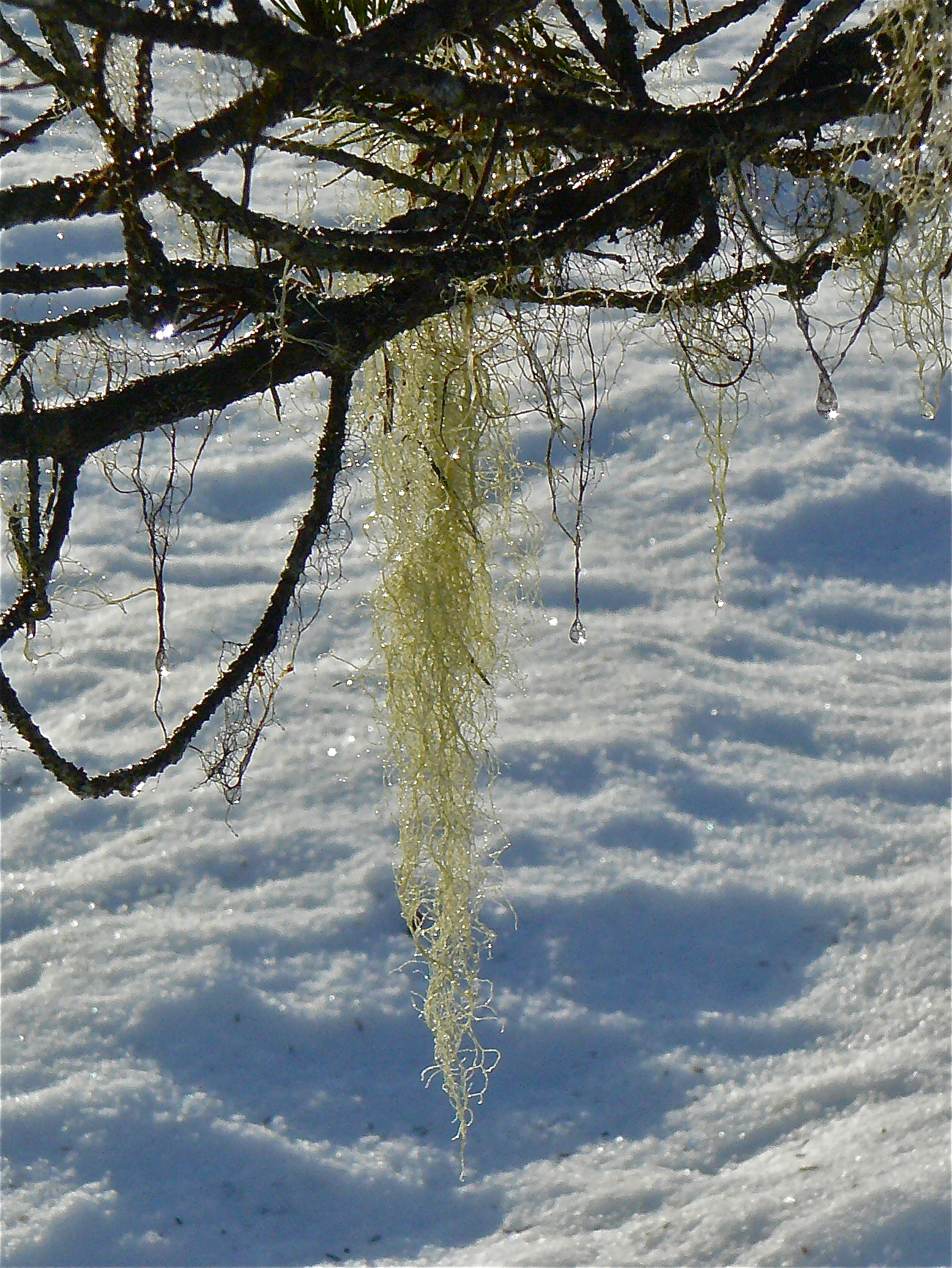
The sun almost blinds me on our return loop across the meadow so I guide us into a grove of tortured bull pine trees.  Each still manages a show of long green needles but I barely notice them for the many flags of yellow Spanish moss hanging from every branch. Each flag sparkles with backlit drops of snowmelt.

Cold Day in Paradise

A small glacier erratic has pride of place on this pocket beach. Standing alone near the surf line it is blackened by mussels crowding its surface. The shellfish fight for space on the rock like owners of time shares in Heaven’s first condo.   I wonder if they have overstayed the season for it is just above zero fahrenheit and even the harsh illumination of the morning sun gives little warmth. Can their thin shells hold off frostbite for the 2 or 3 hours it will take for the flooding tide to cover them over in temperate water? Last night they had to withstand subzero temperatures.

Ducks tucked into a tight raft move past the mussel condo, apparently too stunned by cold to notice Aki and I.  Taking off my right glove I fiddle with the camera in an effort to take their picture. When numbing cold renders my index finger useless I try taking pictures with  my other three fingers but can’t force them to press the shutter button.  Only my fleshy thumb works in the cold.

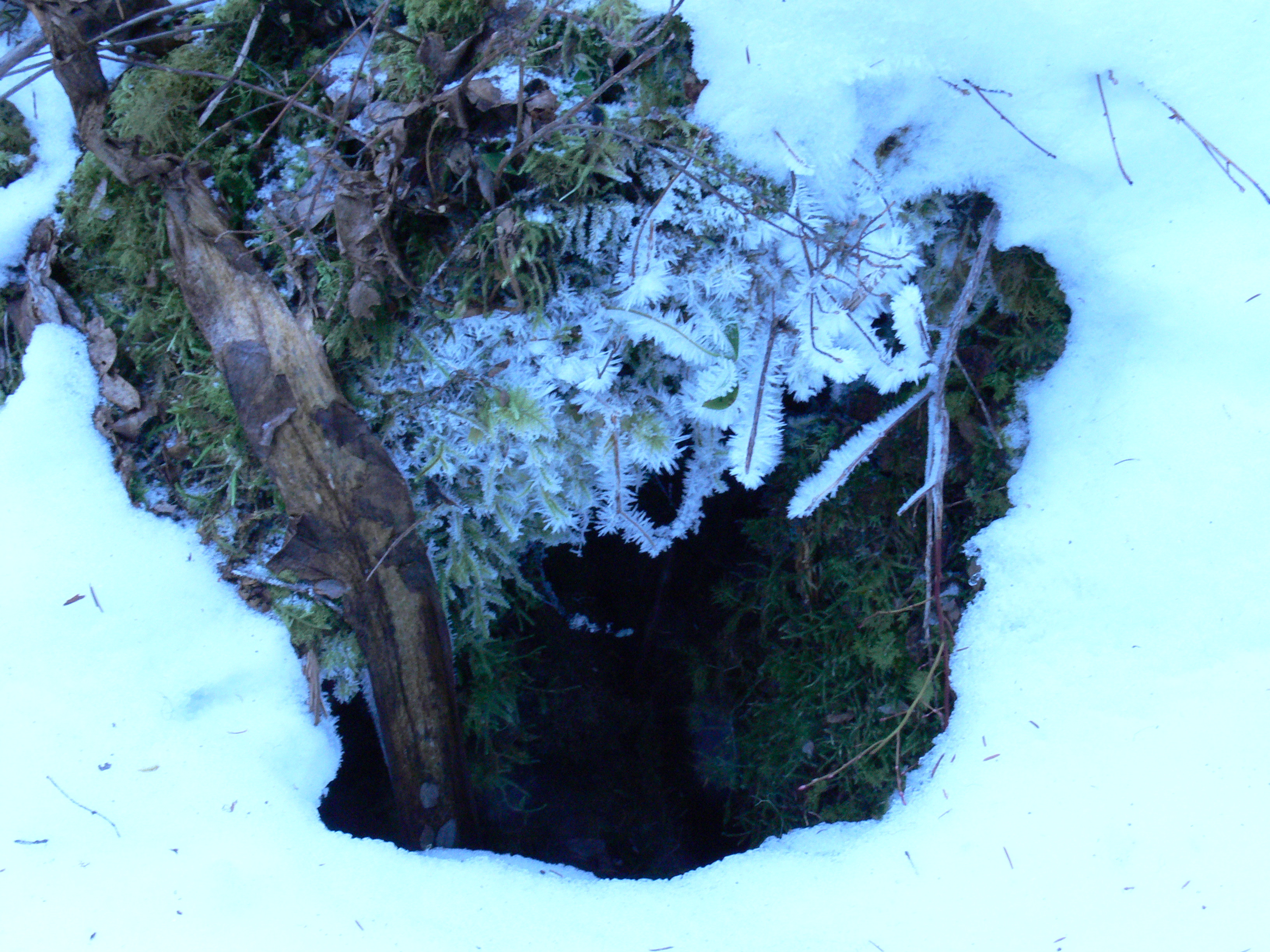
Aki, double wrapped in felted wool and a puffy pink top (I did not dress her) isn’t affected by cold until we come to a small stream covered with seeping water. Here she waits for me to lift her over to the other side. Entering a forested headland we move along a deer track, recently traveled given the fresh tracks in snow to a small plateau.  On the way we pass the entry to small hole in the mossy forest floor, each decorated by frost feathers formed by the breath of its hibernating occupants.

The plateau overlooks another pocket beach  and Lynn Canal beyond. Discouraged by cold hands, I’ve tuck the camera into my jacket and take mental inventory of the scene. We can’t walk to the beach for last night’s salt spray covered the plateau rocks with super slick ice. I’d be in the sea in seconds of attempting passage over it. The little point on the beach’s far side is bare so we can easily see the white sawtooth peaks of the Chilkat Mountains to the west and a confusion of spruce covered islands on the channel. A small sea lion breaks the surface 20 feet away but I don’t bother with the camera.  Without it I’m free to watch the sea lion pull the length of its grey body onto the surface then roll into a quick dive. Aki stirs at the sound of branch  snapping, probably by the passing deer but I stand quietly listening to small surf striking the beach and waiting for the sea lion to show himself again. He does, just before passing behind the far headland. .


Trapped in a Peaceful Place

Pushed up against mountains and an ice field, Juneau enjoys significant micro climates. Downtown gets the wind and 100 inches of rain each year. Douglas receives more of both. Most storms pass over the small area running from North Douglas Island to Smuggler’s Cove, which only receives 60 inches of precipitation.  With a strong rain soaked wind hammering the house on Chicken Ridge Aki and I hope to find a sheltered walk in this dessert on North Douglas Island.

Apparently a strong believer in meteorology, Aki is unperturbed by wind that rocks our car on the Douglas Island Bridge and whips up white caps on the usually sedate Gasteneau Channel. She stares down the road with anticipation but does not smirk when the rain and wind drop as we reach False Outer Point.

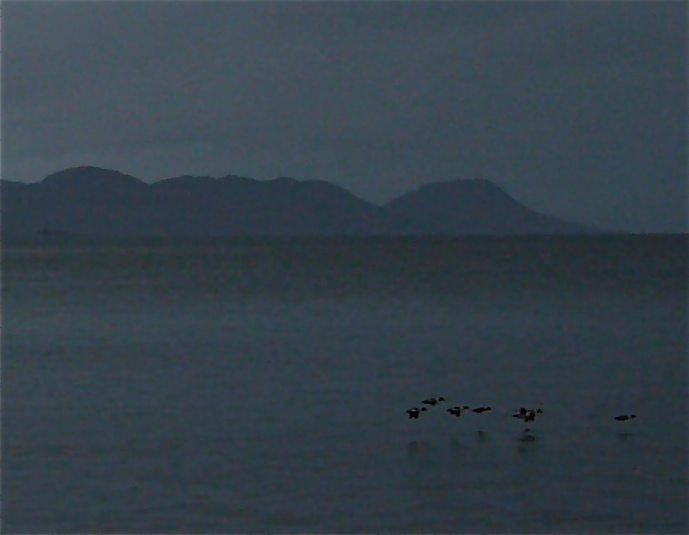
We have the forest to ourselves but find the beach crowded with water fowl. A small raft of ducks who were tight against the shore when we arrived move slowly into deeper water. A pair of loons feed in the open space between us and Shaman Island.  We all enjoy the flat calm sea only occasionally dimpled by rain. An incoming tide shrinks the beach and threatens to force us into the woods. Wanting to walk a while on ice free ground we quicken the pace to round the next point before the tide makes that impossible.  We make it just as the tidal door closes, leaving us alone with the birds.

Two eagles in trees just behind us exchange angry words and more of their kind tussle for roosting space on the Outer Point side of this now flooded bay. Some chase each other over the water, talons extended out as if they were about to snatch a herring from the water. Seems too early for their mating dance —-the one where they lock talons and then spin in circles as gravity pulls them to ground. I saw that hookup once but the tangled eagles dropped out of sight behind the tree line before I could see if they broke off before hitting the ground.

We find the fresh carcass of a loon washed into the rocks. Just off shore another one floats aimlessly by. The eagles go quiet and nothing breaks silence except the flutter of gull wings.

The sight of death saddens me as does the loon appearing to morn but the silence is a perfect gift and I remember Slavic (Russian Christmas), which was celebrated yesterday in the Kuskokwim River villages of Western Alaska where we use to live.

Spring’s Promise on the Solstice

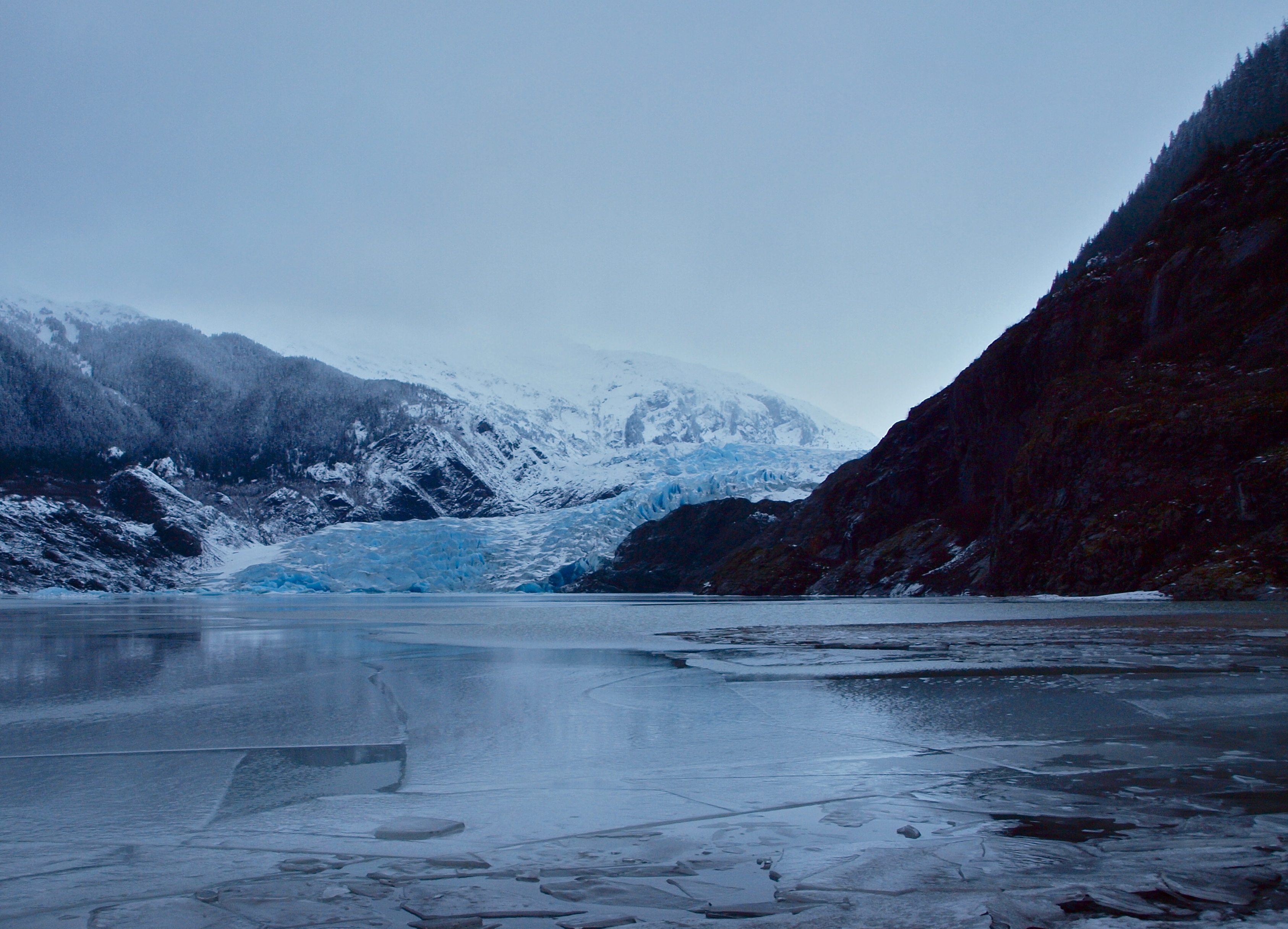
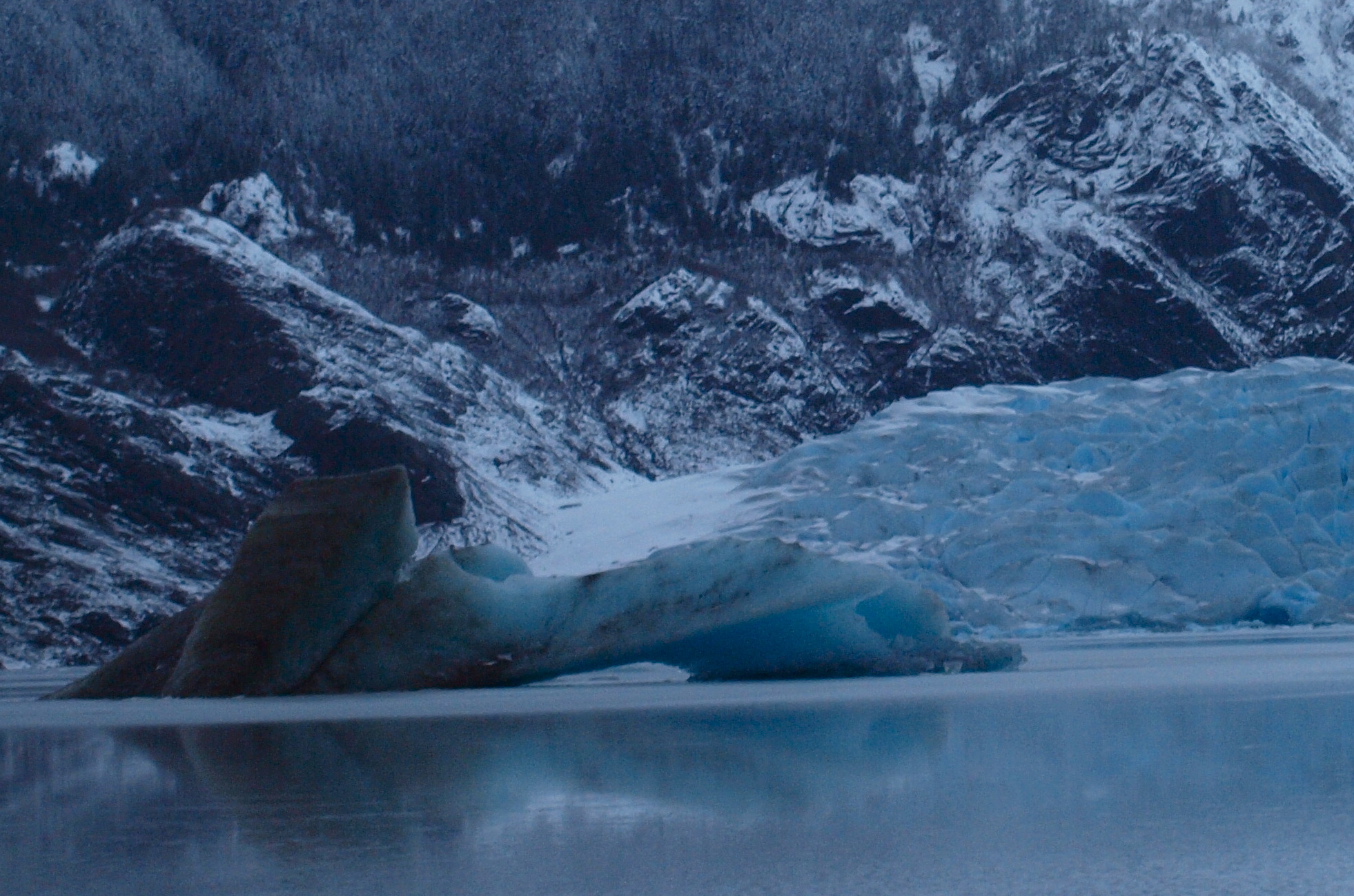
Aki and I lean into the wind of a building storm. This morning the weatherman promised it wouldn’t arrive until 3 this afternoon. Yet here it is at 10 am, blocking our view of the valley with its snow thickened clouds. Behind us the glacier  and icebergs scattered about the barely frozen lake still glow several shades of azure blue. The storm will dampen the display with inches of new snow.

It’s time to move quickly for I am dressed for the rain, not winter but I stop to inspect a small blot of white on a willow branch closed up in winter brown. It’s a pussy willow soon to be damaged by the return of winter. There is no denying its soft beauty which makes my knowledge of its fate almost painful. With gloves off I can feel its softness and do, forgetting for a moment the fast moving storm. Aki stirs with impatience and and looks up with eyes filled with judgment. She can smell the coming snow.

The pussy willow is a fitting gift on this shortest day when winter reigns so I thank the willow for reminding me of spring. Then I feel foolish for elevating it from plant to sentient being. Better to thank the creator for the promise of sun’s return and for sending the storm that brings us this solitude. Aki and I have the glacier and its lake to ourselves.

Alone we crossed the dormant nesting ground of  Arctic Terns, now enjoying summer in another hemisphere. Alone we catch the reflection of cast off icebergs in thin sheets of water on the lake ice.  With only Aki I touched spring before it’s covered over again by winter snow.