
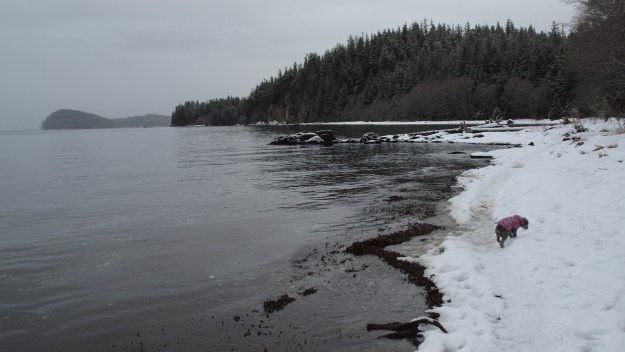
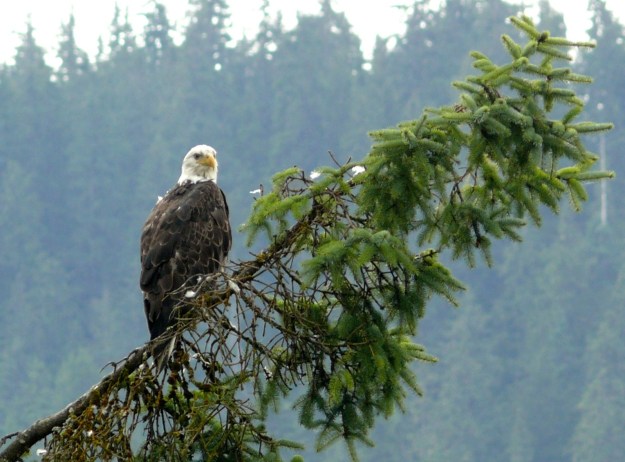
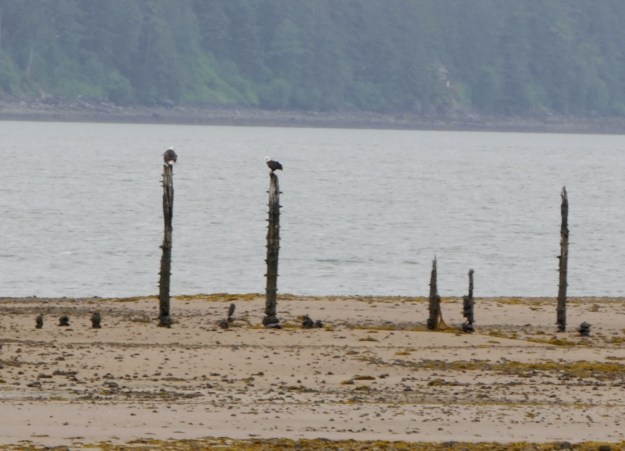
Three eagles stand still as hunting herons at the edge of Fritz Cove. Between the eagles and me, fat flakes of snow fall, softening the birds’ outlines. A cloud of ravens flit in and out of the scene. Food, and lots of it, must be near. Otherwise the eagles wouldn’t tolerate my presence or that of the ravens. Just offshore a harbor seal treads water, only its head shows above the surface. I remember a stripped deer carcass that Aki and I stumbled on when walking by this spot last year. Then a far off shot reminds me that it is still hunting season.

Wanting to leave the birds to their cleanup work, I drive on, passing a large raft of surf scoters moving in unison to form shapes on the waters of the cove like a high school marching band between half of a football game. From a distance they look like a group of composed individuals. But with the help of the telephoto lens, I can see the frantic efforts they make to maintain the group’s shape.

After watching the scoters, I drive to a North Douglas Island trailhead and take the little dog for a walk. So little snow makes it through the forest canopy that I wonder if the storm is tapering off. I stop wondering when we reach a pocket meadow where falling snow collects on the gnarled bark of mountain hemlocks and bull pines. I try, once again, to take a picture that shows what my eye can see: tens of thousands of snow flakes floating down against a background of dark evergreens.
 We pass back into woods where the blood of a recently killed animal stains the snow. Small bits of the prey animal remain so the kill was recent. Canine prints trample the area making it difficult to determine if this is the work of a wolf or raptor. While I bend low to search for clues, Aki urinates on the evidence.


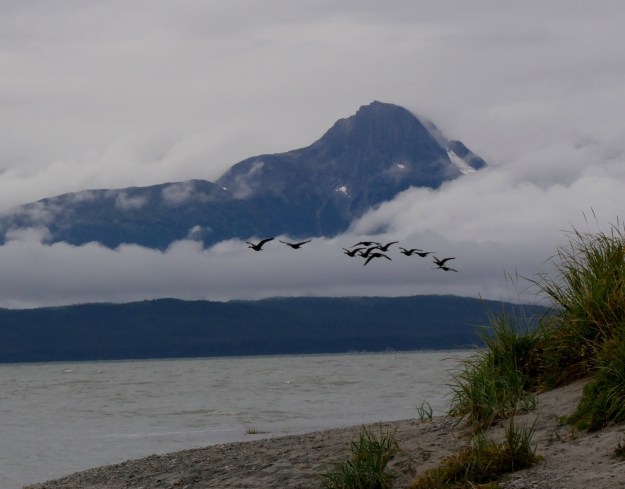



 Fifty feet ahead an immature bald eagle rises from the creek, a twelve–inch-long fish dangling from its talon. The fish drops as the bird wings skyward. I know the scene took only seconds but when I play it back in my head, the bird and prey moved in slow motion, like I could have dashed over and caught the fish before it hit the meadow grass.
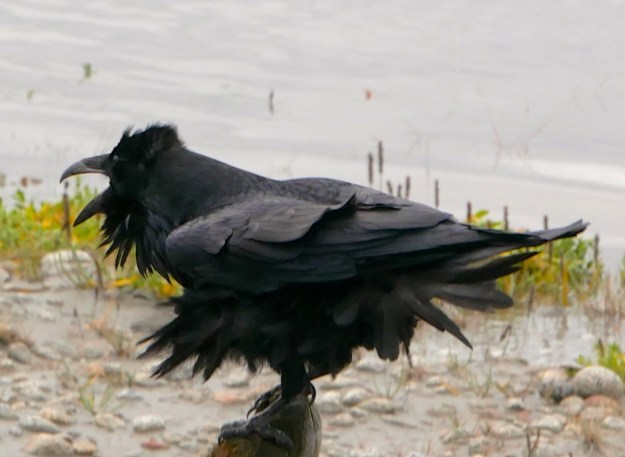
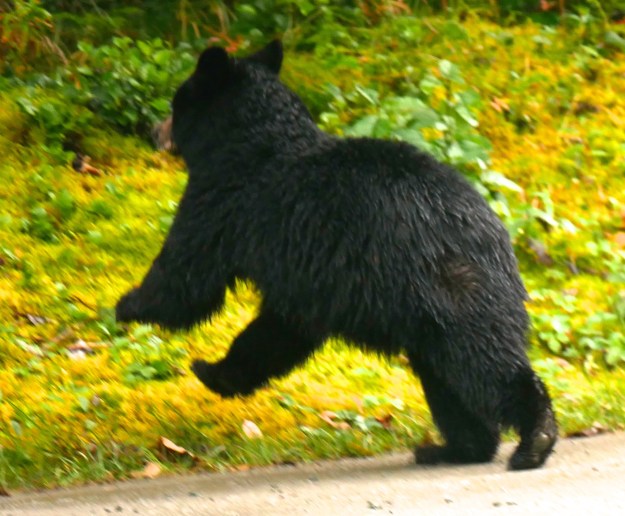
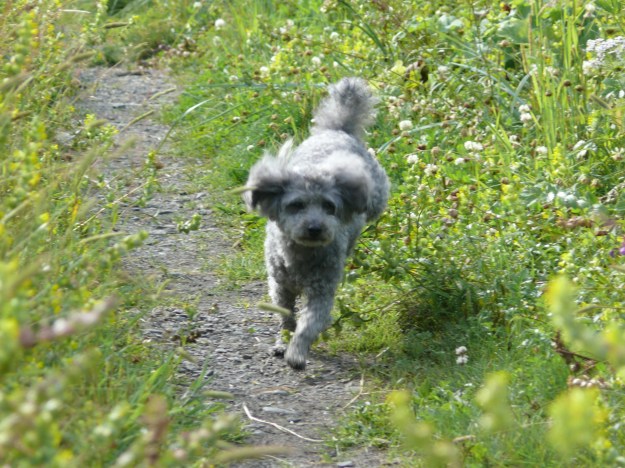 Aki clung to my side during the walk. She was spooked by the sound of 10-20 pound king salmon splashing in the creek pond and the off-key symphony performed by ravens and crows in the creek side alders. I was spooked too by the angry sounding splashes and the smell of dead salmon, both of which draw bears.
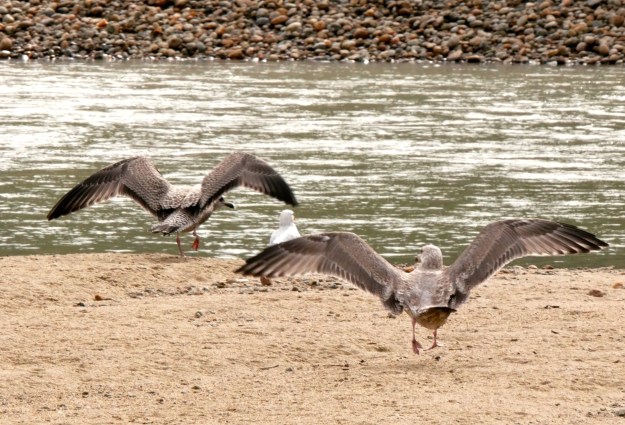
 It was low tide when we reached the creek delta. Clutches of six or more eagles loitered on the exposed wetlands. One burst out of the tree just above my head when I stopped to count its cousins. Any peace the eagles and gulls had reached was broken when an immature eagle flew over a gull-feeding zone. The little white birds dived bombed the eagles and drove them into a nearby spruce forest.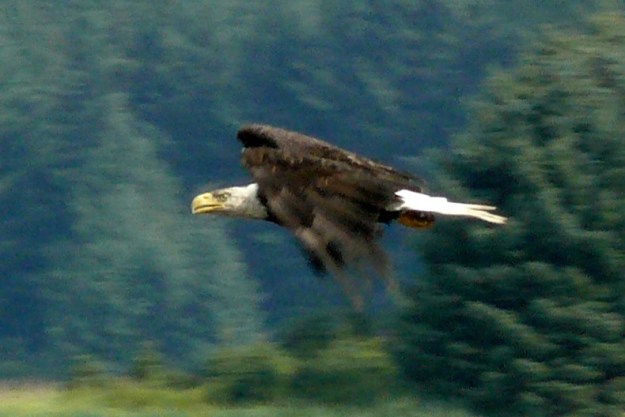








 It’s the last day of writer’s school in Skagway. Students and teachers, including Paul Theroux are in a White Pass narrow gauge railway carriage that rattles toward the Laughton Glacier trailhead. The conductor has stuffed all the writers into one carriage where the sound of thirty or forty conversations competes with the grumbles of the old carriage and the disembodied voice of a tour guide giving the railroad’s history.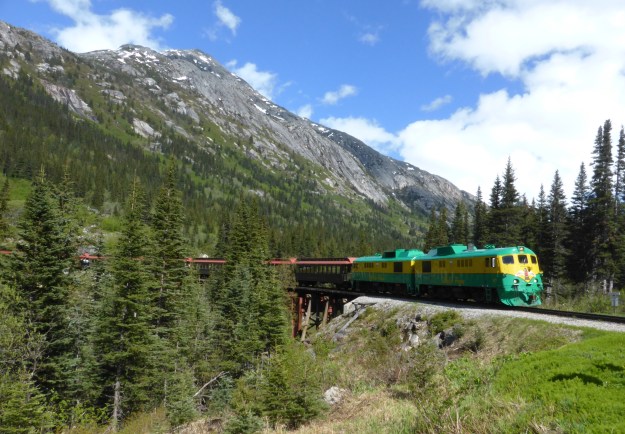


 I’ll pass the pilgrim and climb onto the shrinking toe of the glacier. The sun will return. I will hold sharp edged rocks just being released from glacial ice that carried them from mountaintop to my feet. “Look at these rocks,” I will shout to a much younger writer wearing heart-shaped sunglasses. But magic will be in their history, not their appearance so she will probably thinks me weird. Higher up the toe, I will fall into a conversation about wolverines: whether the grumpy loners are magic or just thugs. “Magic” will become my favorite word for the day.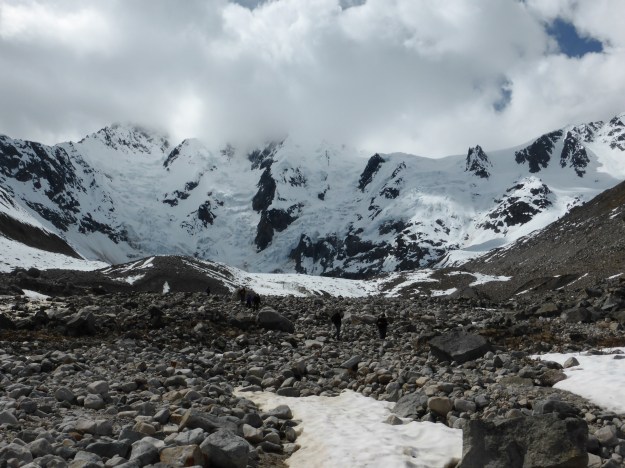
 Walking with Aki