Category Archives: Poodle

Christmas Dog

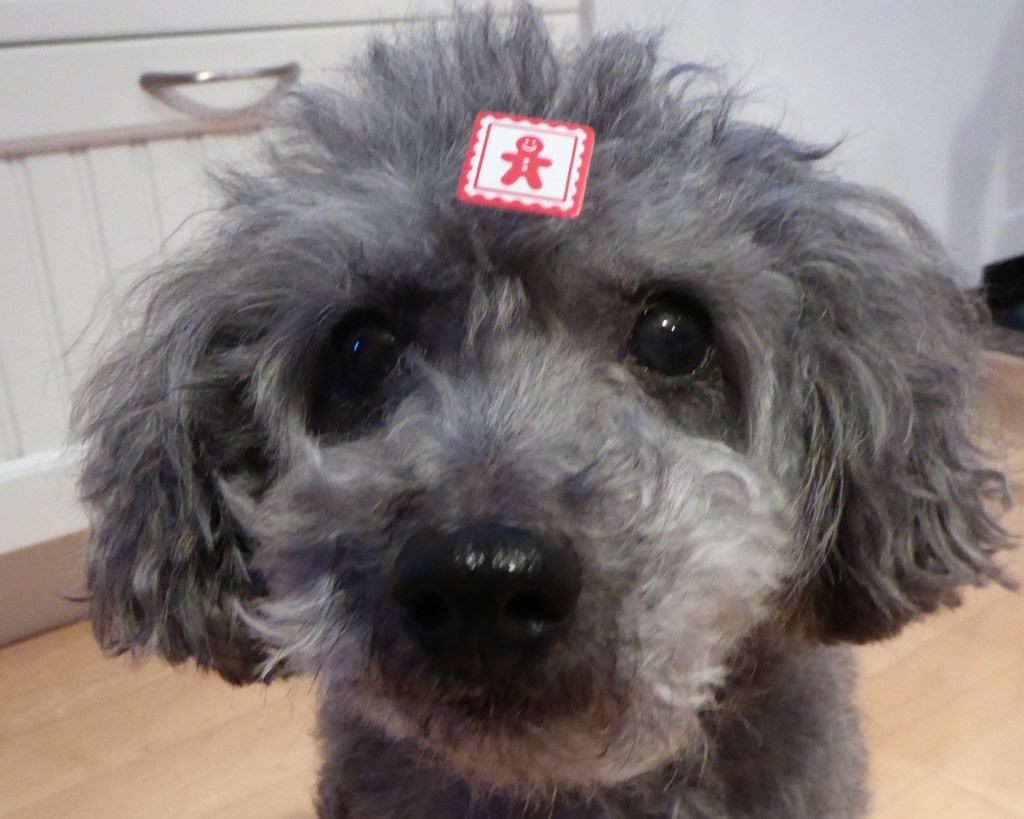
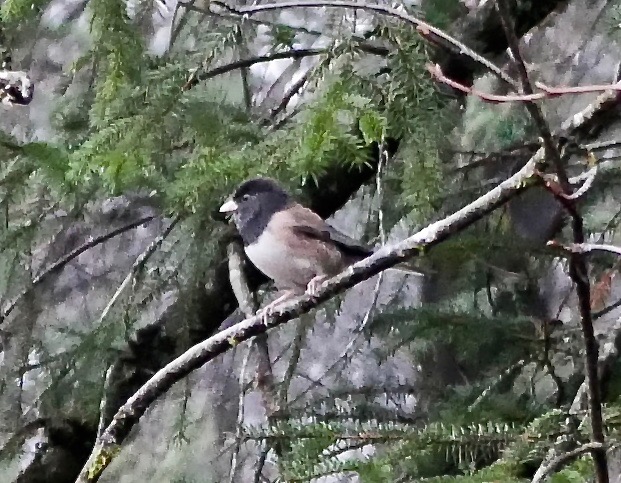
Before we left the house, Aki’s other human affixed a gingerbread-themed sticker in the middle of her forehead. This makes the little dog the most Christmassy thing today in the Treadwell Woods. She has little competition. The wood is full of hundred-foot tall spruce trees, some decorated by a flock of dark eyed junkos. Plumped up against the cold, the little songbirds could pass for Christmas ornaments. But the snow that flocked the big trees yesterday has been melted away by this morning’s rain. 
            Helped by strong wind blowing up Gastineau Channel, an 18-foot-high tide covers Sandy Beach. Without being stopped by a protective beach barrier, waves erode away the soil into which trees along the wood’s edge have sunk their roots. The only things exhibiting holiday happiness are a dozen merganser ducks offshore. They are so at home in the turbulent water that they preen their feathers as they bounce up and down the swells.           
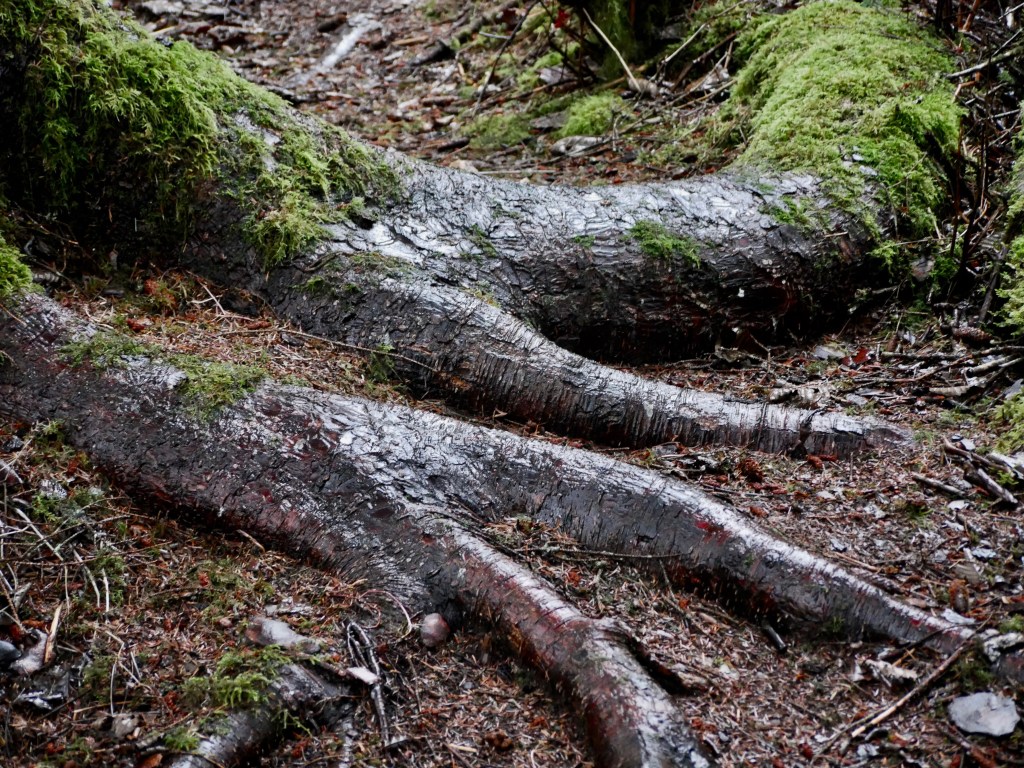
  Aki and I should be used to low contrast Christmases. Thanks to climate change, the rain forest has seen few white ones in the past years. While we long for the winter crispness this time of year, we can’t ignore the beauty of trees grown tall thanks to an abundance of rain.             

Ravens All The Way

Aki ignores the raven squawking on roof of the old Norwegian Consulate. The little dog also ignores the quarter-sized snowflakes settling into her grey curls. She is deciphering an important pee mail message. When raven dived bombs the poodle-mix. She charges after it until reaching the end of her leash. By then the raven is safely sitting on another roof. 

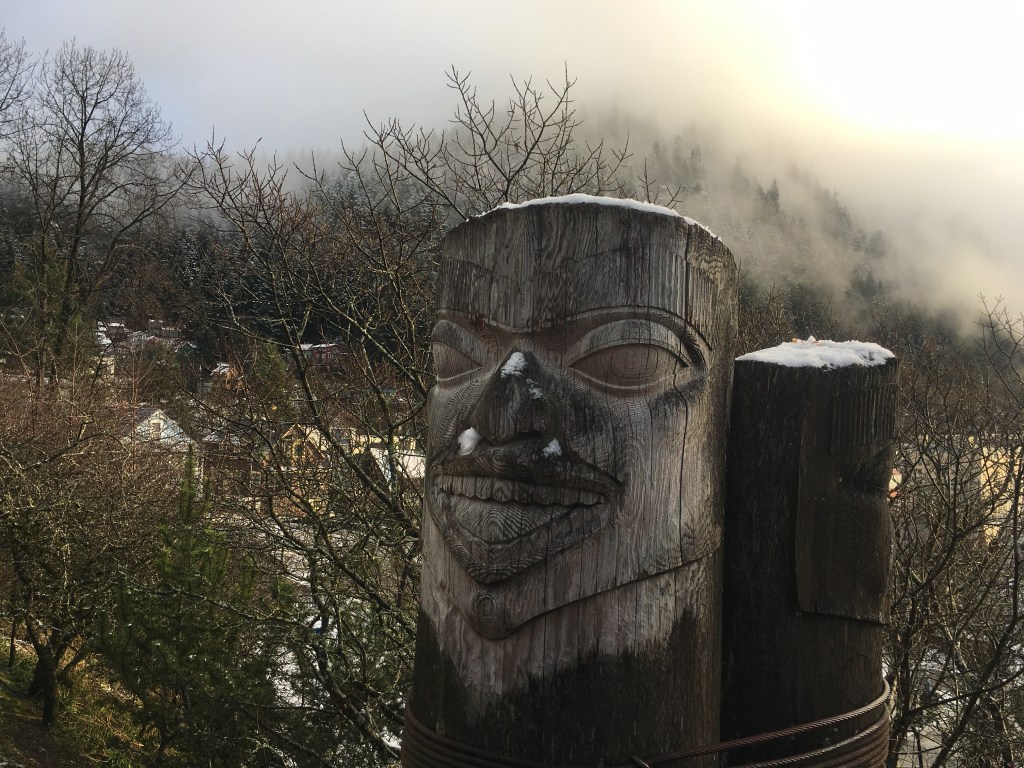
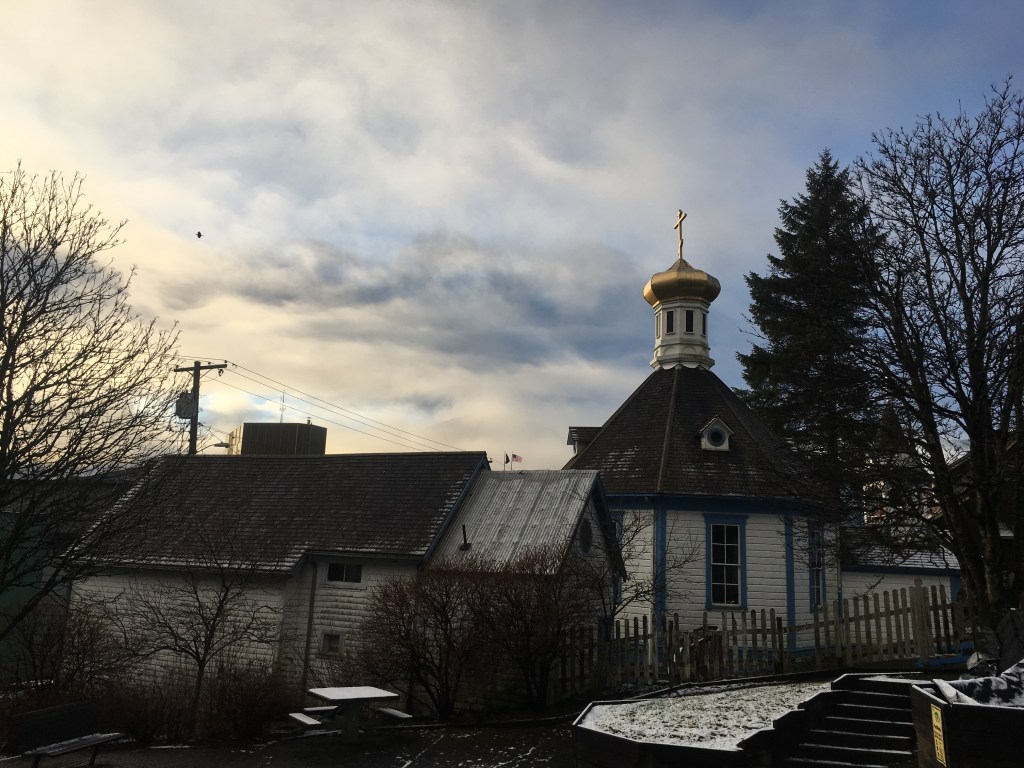
            We drop off Chicken Ridge. I am careful not to slip on the slushy snow. I wish that the snow could survive another day to give us a white Christmas. Our neighborhood totem pole still wears a crown of snow. But the Russian church cupola is already bare. 

            A raven flies into the frame as a I try to photograph the church. Two other ravens land nearby, affecting interest in an overflowing recycle bin. We climb up Gastineau Avenue and find at the crest, a flock of pigeons arranged like musical notes on utility lines. Below them a raven, looking very like one that divebombed the poodle, sits on a fence rail. It holds it ground even after Aki growls and I move close enough to a decent photograph.

            We take the stairs down to South Franklin Street and walk over to the old Alaska Steamship Dock. A raven awaits us there, roosting on a deck railing. This one also holds it ground. I think this guy will follow us all the way home.  

Troglodytes on the Wetlands

This day after the winter’s solstice, Aki and are exploring a new trail across the wetlands. Expecting more hours of gray, we are surprised by sun. It makes us squint like troglodytes. The wetland grass looks trampled, crushed down by now melted snow. Dead-brown stocks of cow parsnip and driftwood are the only vertical things on the wetlands. 

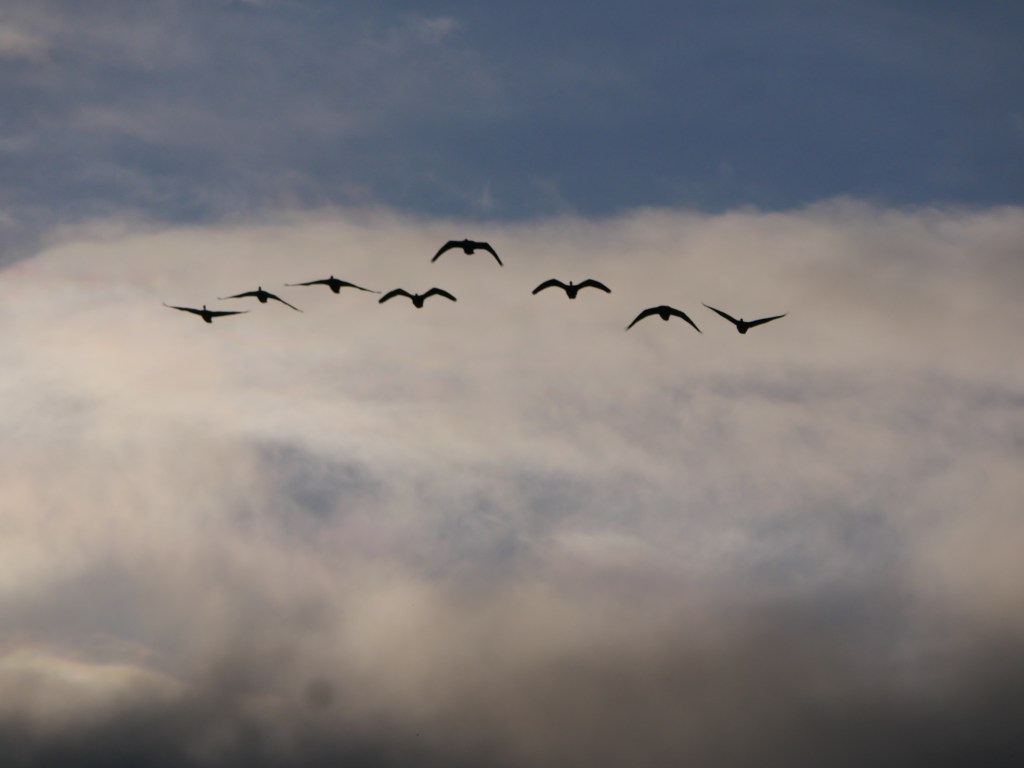
            The flocks of sparrows have disappeared. We can hear the resident gang of Canada geese on the other side of Fritz Cove. Later something will flush them skyward. They will fly over our heads and to touch down near where the spruce forest touches the meadow’s edge. 

            We reach the river and follow it towards its mouth. A single merganser duck fishes the river. Only the airplanes on approach for landing break the silence. Turning around to watch one glide over the wetlands, I am surprised to see Mt. McGinnis emerging from dissipating cloud cover. It is over-bright in the morning sun, like it is trying out for a role as a minor winter god.  

Remembering Romeo

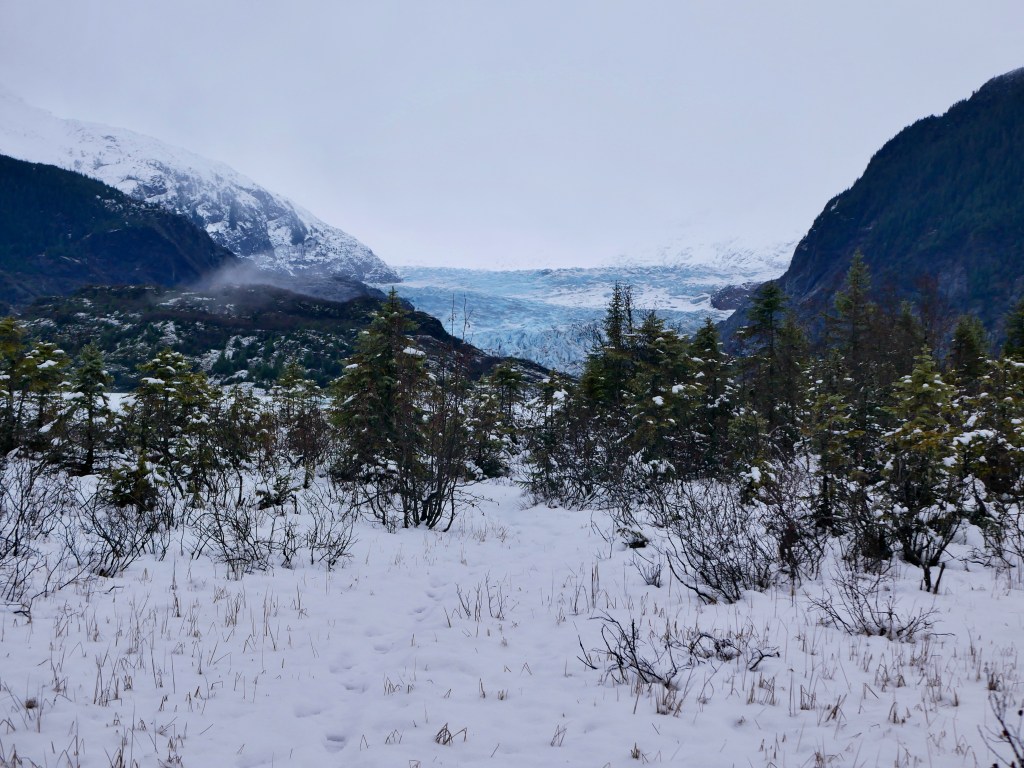
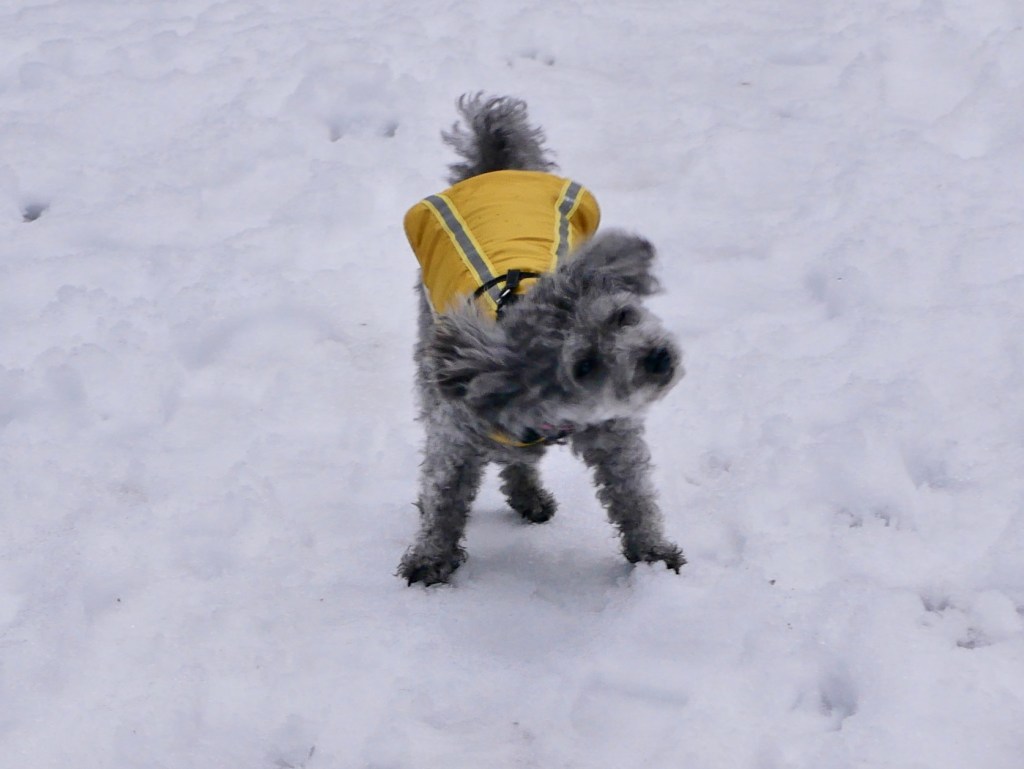
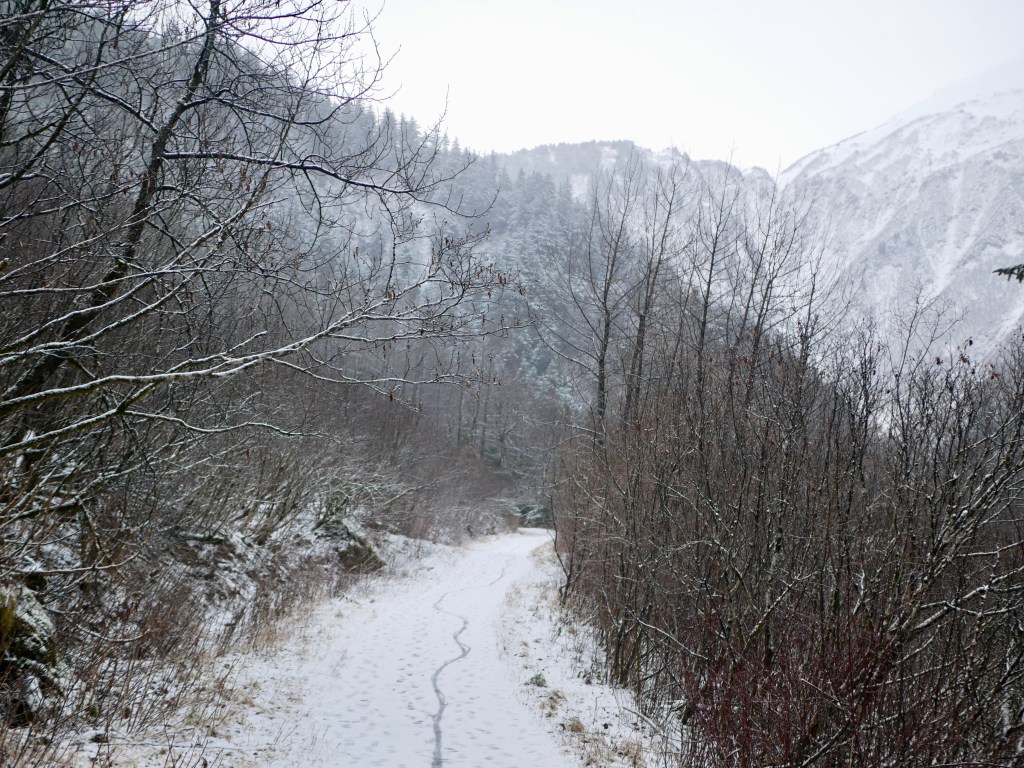
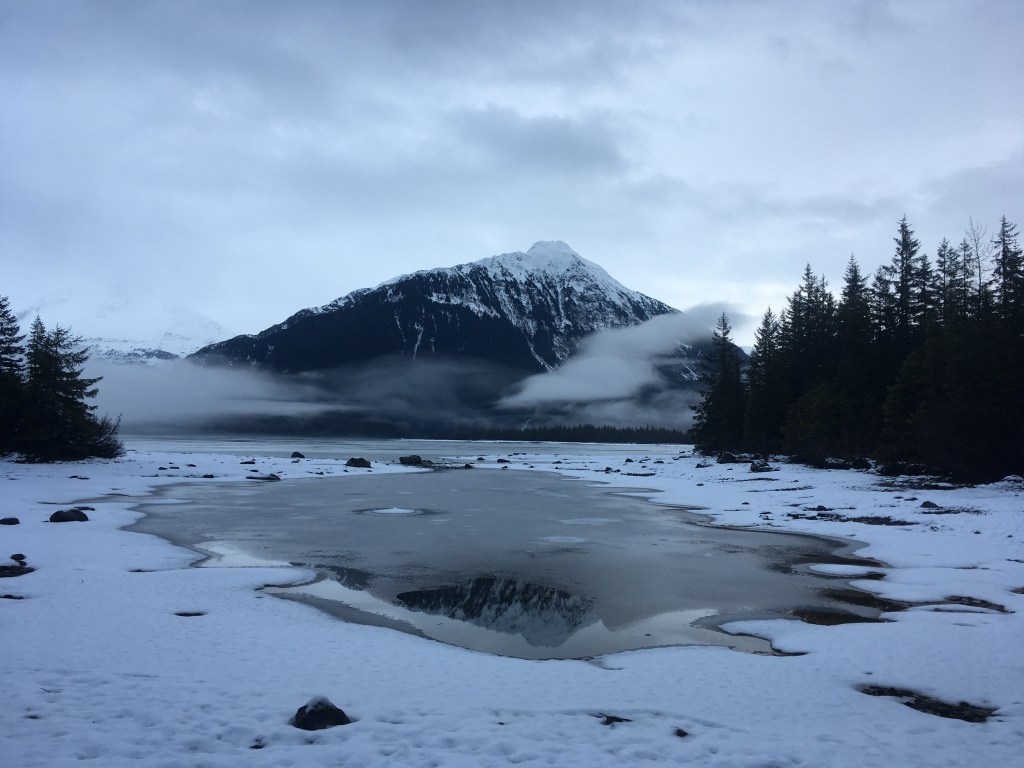
Aki is nose down, snuffling her way along a moraine trail. Her paws punch inch-deep holes in the snow as we make our way over ground still rebounding from the time, not so long ago, that it supported the weight of a retreating glacier. 

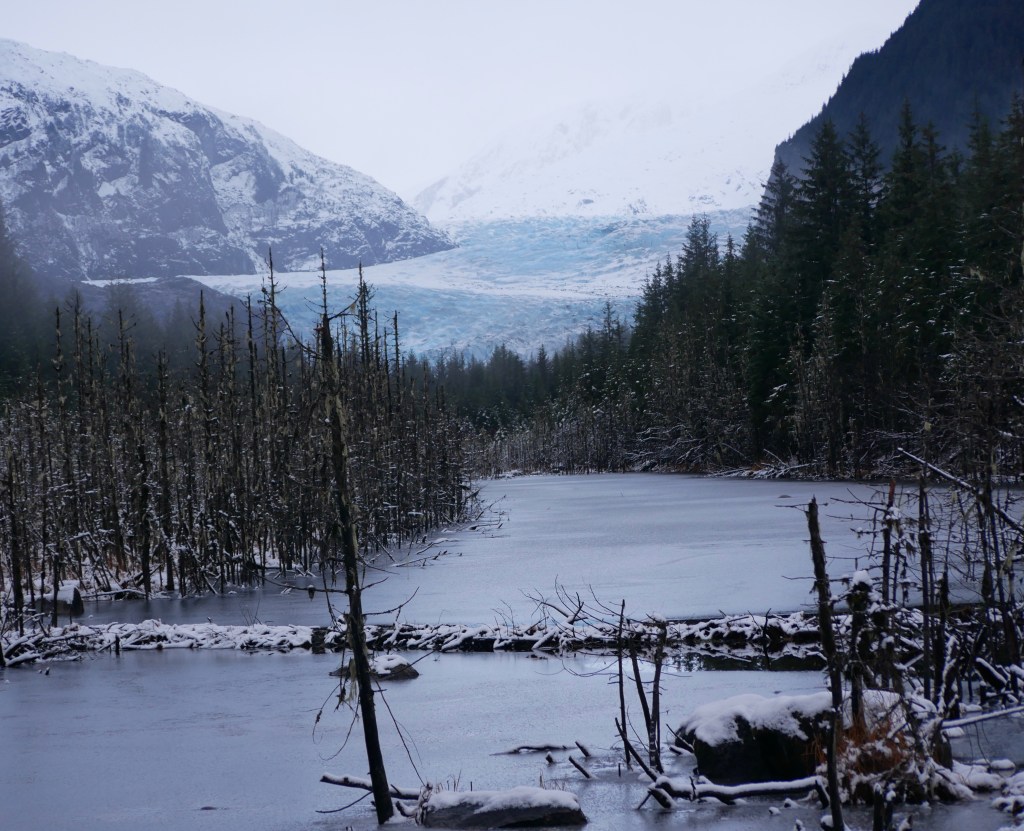
            In s normal winter the little dog and I would be in danger of slipping on icy or crusted-over snow. But the stuff covering the moraine trail is soft and yielding. We pass the edge of a beaver pond covered with a paper-thin layer of ice. Water still pours over the beaver’s dam where some guy tried to dismantle it. 

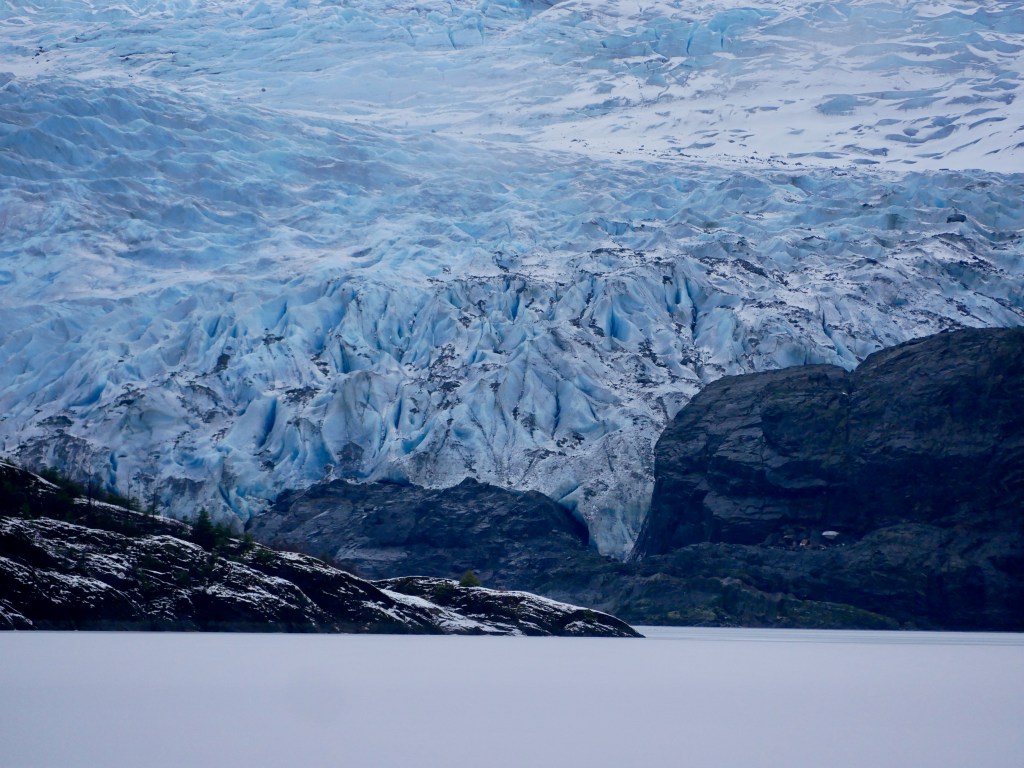
            We drop down onto the lakeshore to get our first unfiltered view of the glacier. There is an informal trail packed down by the boots of paws of others. I leave the easy path and punch my way to the ice edge and find only the track of one large canine that moved with purpose toward the Mendenhall River. The animal moved in a steady trot, the kind used by sled dogs and wolves to cover ground. 

The romantic in me wants to attribute the tracks to a wolf. Years ago, Aki and I listened to wolf howling when we skied along the edge of this lake. Later that winter, a black wolf nicknamed “Romeo” followed the little dog and I as we crossed the moraine. But Romeo is now long dead. These might be wolf tracks. No trail of boot prints runs parallel to them. 

Eagle Free Beach

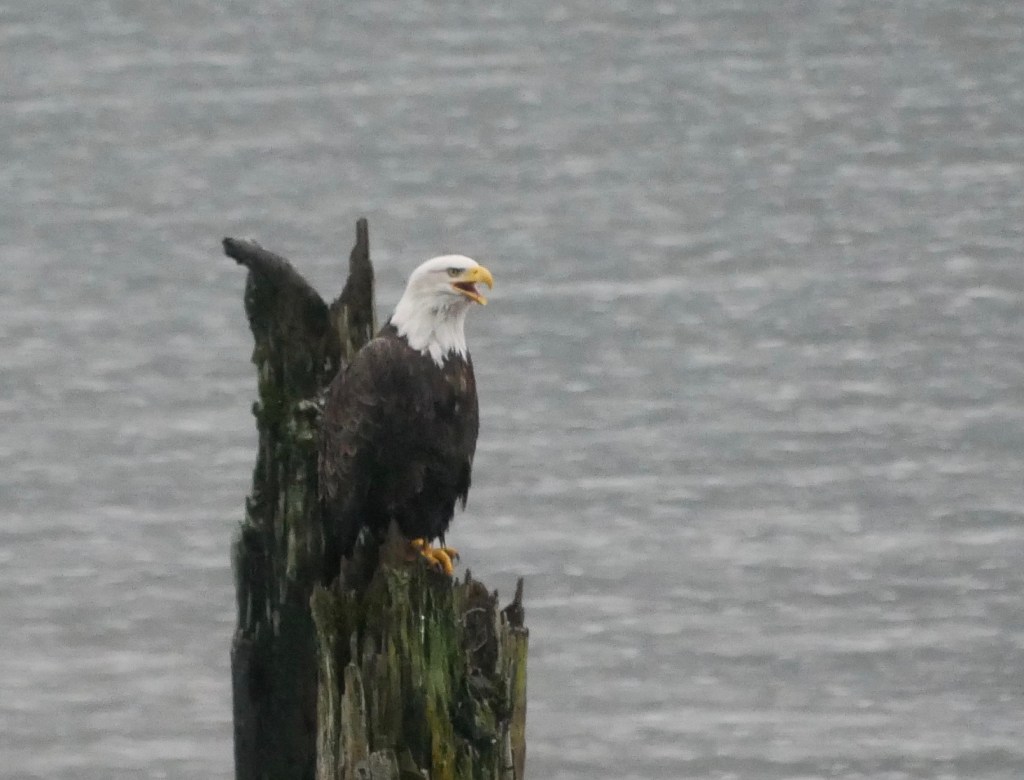
Aki, why is this eagle sulking? When I look down at the little dog she appears to be sulking too. The eagle has jammed itself into the tangled branches of an alder tree. The dog stands at my few, squinting to keep rain drops out of her eyes. Aki and I have just left the Sheep Creek Delta where only the ducks seem to be enjoying the weather. 

            The beach was empty except for the resident gulls, mallards, and Barrow golden eye ducks. The gulls clustered together on a sand bar. The golden eyes paddled and fed just off shore. But to my surprise, the mallards waddled around the beach where they would be easy targets for eagles. They were today’s canaries in the coal mine, letting me know that there were no eagles around to carry my diminutive poodle away.  

Closeting Snow

With the snow falling in dime-sized flakes, Aki and I head over to Basin Road. After climbing to the top of Gold Street and taking a moment to look down Gastineau Channel to Taku Inlet, we reach the road. Even though it is already mid-morning, the Christmas lights decorating a low of Craftsman houses pop in the gloam. As she often does here, Aki tries to convince me to turn around. She must smell danger or at least the potential for boredom. It takes little to get her to follow me. She won’t try to reverse us again. But she will hang back until we reach the turnaround point for this morning’s walk. 

            We will see things on the walk but nothing will amaze. We’ll step over tracks recently left by an ambling porcupine and meet three dogs. Two will be friendly. The third dog will trot by Aki, throwing her a look of distain. The snow will continue to fall but we will still be able to see the surrounding mountains. The falling snow will whiten the ground and narrow our view, making it almost impossible to think about the angry parts of the world. 

Bad Timing

Sorry little dog. I really misjudged the tide. Aki is not impressed with my apology. But then, she is not impressed by our predicament. We are caught on the downriver side of a rocky point now poking out into the Mendenhall River. The path around the outcropping was open when we walked around it a half-an-hour ago. I figured we would have enough time to slip down to a big sand bar downriver and be back before the tide flooded over our path home. But there were just many distractions to slow us down.

            There were the two seals riding the flood tide upriver, eye balling us as they floated by. I had to stop and muse about some pink clam shells that decorated the sand bar. Aki needed extra time checking out a scent she found in the beach border grass. Then there were the noisy Canada geese. They stirred and fussed on a shrinking sand island. I burned up time waiting for the tide to force them into flight. When it did, the geese flew away rather than toward us. Now the little dog and I have no choice but to scramble up a little ravine that bottoms out on the shrinking beach on which we stand. Like the geese, we will soon have no choice but to rise above the tide.

            The ravine would have been impassible last summer when the thorny leaves of devil’s club plants blocked the path. With a little care I am able to slip between the bare devil’s club stalks and climb up to a short, but steep section of the river bluff. After lifting Aki over the little cliff, I start to climb a series of exposed spruce roots to the top. Halfway up, the geese fly over our now drowned beach honking hysterically. Disappointed by not being able to photograph their passage, I follow Aki back to the car. 

Finally Getting Her Way

     Aki, why do you want to stay in the woods? It’s not a fair question to ask the little dog. The woods and the campground road just beyond them are rich with dog smells. She can almost make out the scent left by one of her dog buddies, maybe Cedar. Aki doesn’t care if the lakeshore trail offers wonderful, if misty, mountain views. Besides, it has started to rain. The woods will provide her some shelter from the wet. 
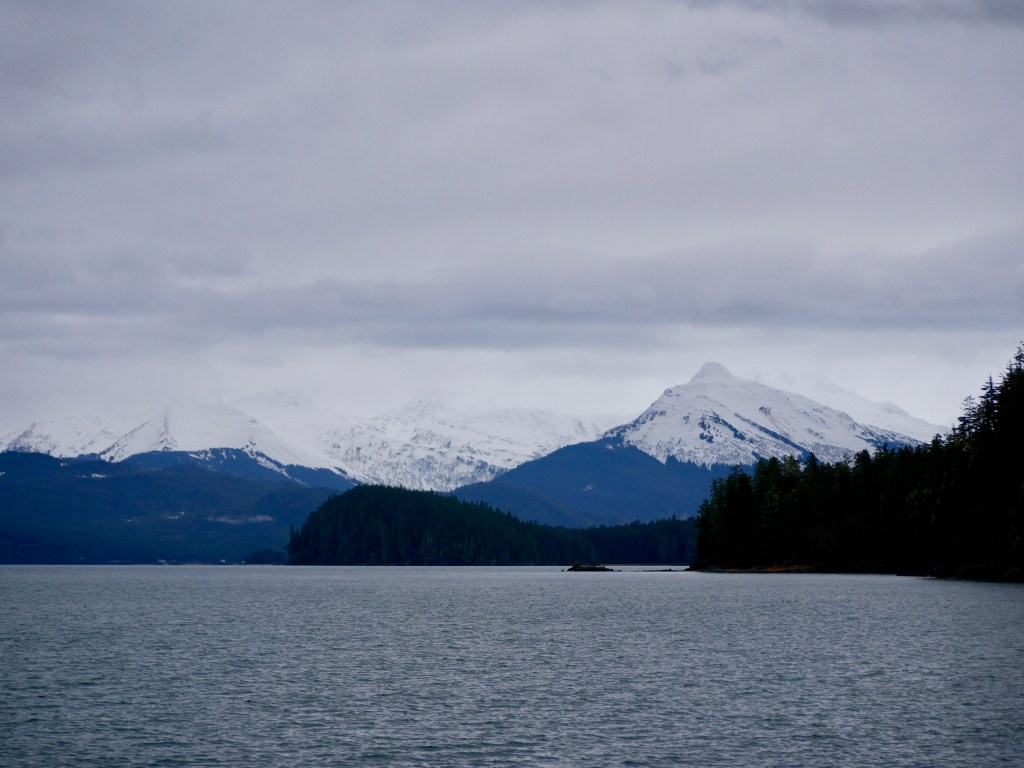
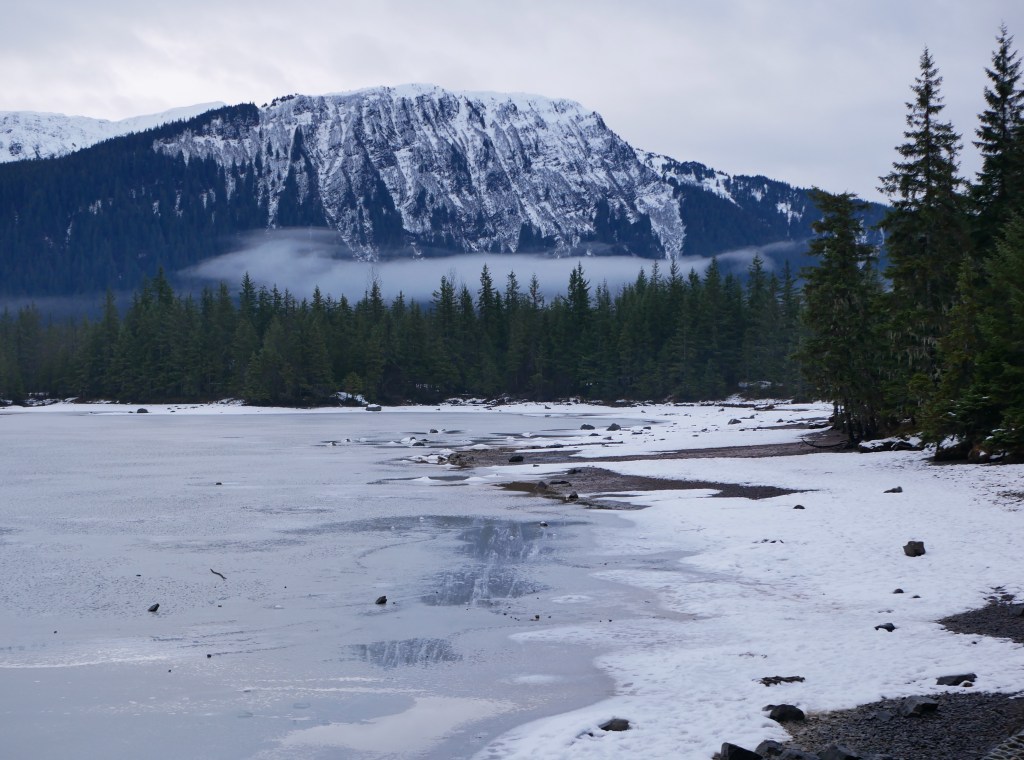
      The poodle-mix might also be deterred by the crunch of ice that follows each of my steps along the snow-covered shore. A two-inch thick sheet of ice is buried beneath snow. An irregular surface of beach rocks stretch beneath the ice. I fracture the ice with every step. 

         I crunch my way around and between a set of small islands. Aki has planted herself at the forest edge. Only when I disappear around a point of land does the little dog trot after me. We repeat this pattern all the way to the place where the Mendenhall River leaves the lake. Then we re-entered the forest and walk on an icy road through the campground and back to the car. Now a happy Aki is free to catalogue the passage of other dogs that recently left their mark on the snow.    

Passive Man

Beavers own this forest. Their castle is tucked safely away under a pond-sized tree. Aki and I are walking along the base of their major dam. The beavers have anchored the walls of it to a curving line of 100-year-old spruce trees that grew out of another beaver dam. Off and on, beavers have held this forest for more than a century. The little dog would have had to swim along the base of the dam if not for some trail work done last spring. Thanks to loads of gravel and bridges fashioned from peeled and split spruce trunks we can keep our feet dry. But during the last dumping of rain, even the new trail flooded. 

          Every night the beavers try to plug leaks in their dam with severed alder limbs and blue berry twigs. Water still pours over their works and makes its way down a small stream to another dam, this one five feet high. Downstream from that another dam backs water up and over the trail we will use to return to the car. 

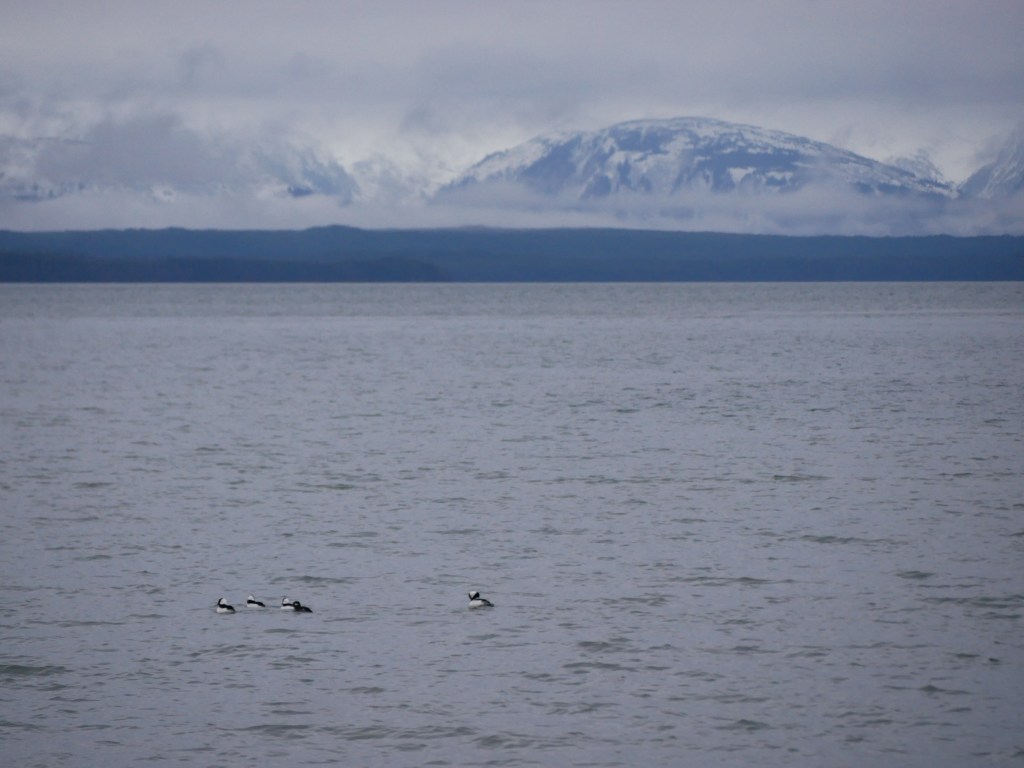
           We round the pond and walk over icy trails to the beach where we surprise five bufflehead ducks. Rather than panicking into flight the little white-headed guys paddle a few meters further off shore and resume fishing. Further out, a young Pacific loon shoots onto the surface and quickly dives back under the water. A powerful underwater swimmer, the loon could be behind Shaman Island before it returns to the surface. 

           I try to remember when I became so passive—a walking man content just to see. Years ago, I hunted ducks and would have been tempted to destroy beaver dams that flooded beloved trails. Now I carry a camera and wear waterproof boots. 

Calling The Otters Out

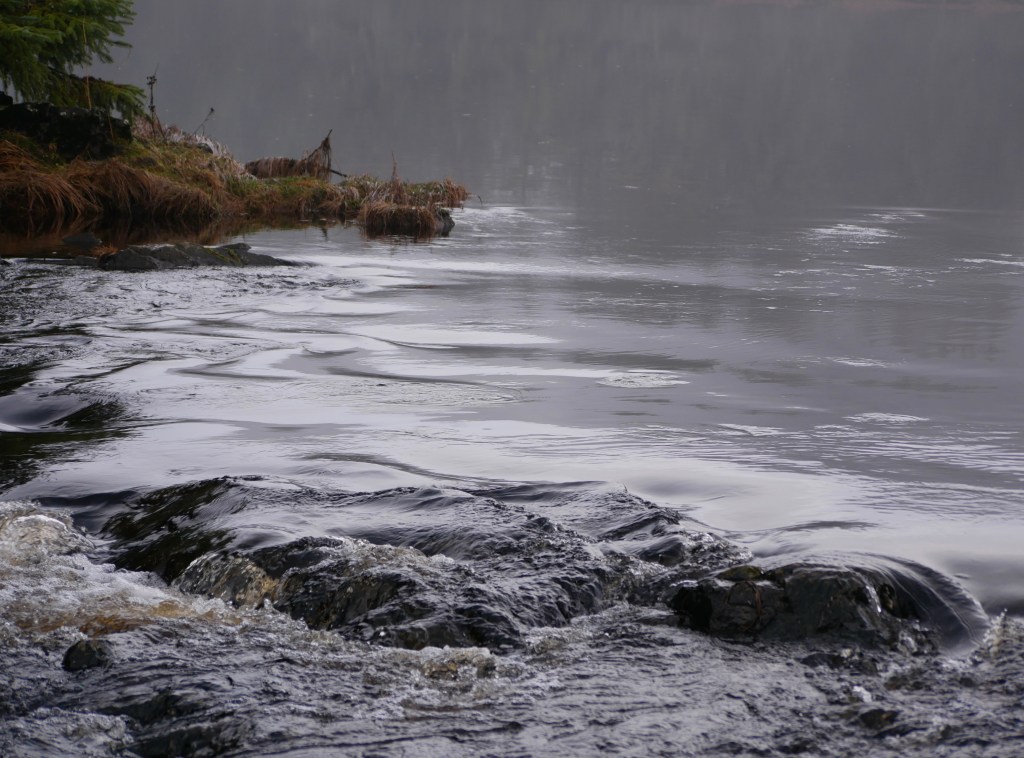
        Aki waits in the woods as I scramble over some rocks to the outfall of a salt chuck. At extreme high tide, salt water flows over the outfall and into the small lake that it drains. That’s why it’s called a salt chuck. Steel head trout and three different types of salmon climb the outfall rocks on their way to the spawning grounds. This morning here might be some fall run steel head moving into the lake. 

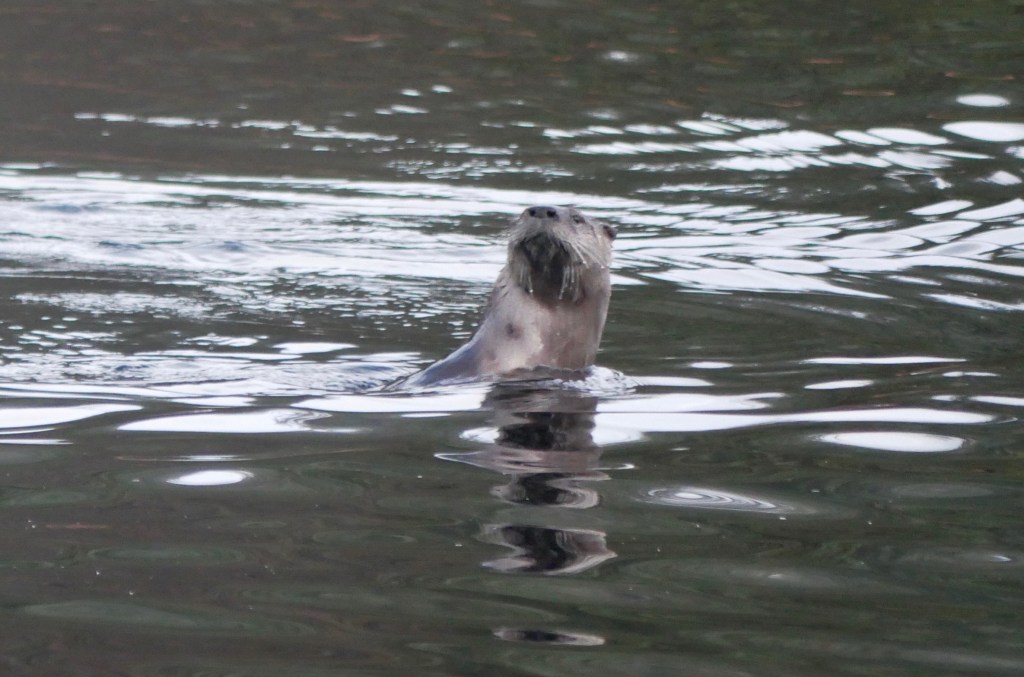
         Turning, I scan the lake and spot a heron on the far shore. From here it could be a piece of driftwood. But my camera lens confirms it to be a great blue heron. While I spy on the heron with the camera, a river otter pokes it head into the frame. It acts as surprised as I feel, rising high into the air and then crash diving beneath the lake’s surface.  By now Aki is standing by my side. The little dog starts barking and wagging her tail.
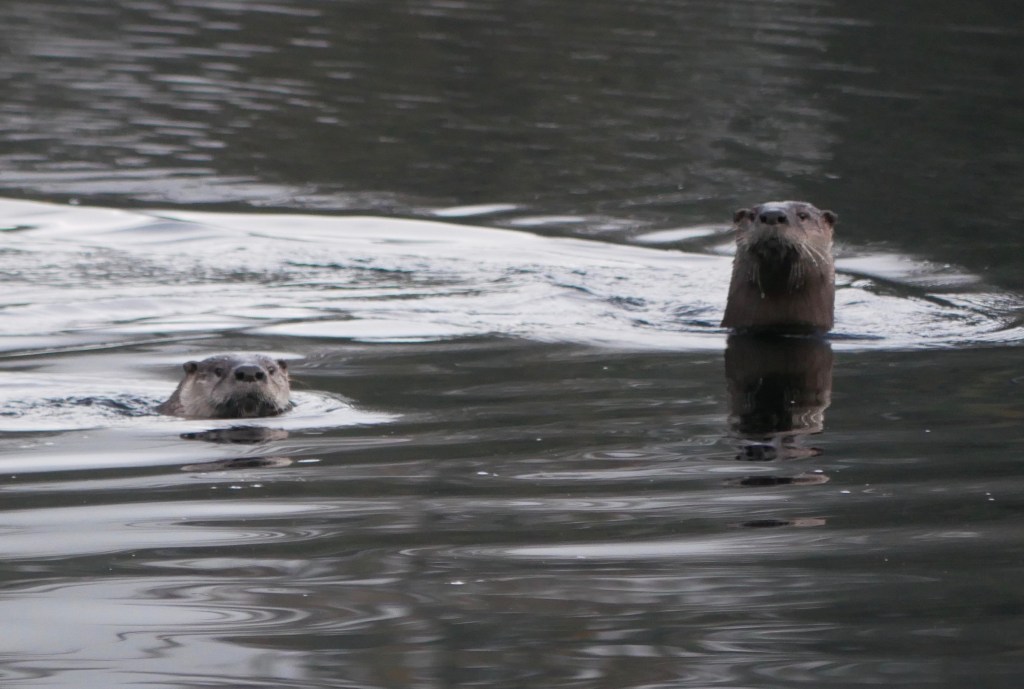
          The otter returns, this time with a friend for back up. Now two otters swirl nearby in the lake, occasionally lifting their heads high above the large. They make a chuffing sound. Aki responds with more barking. In the past, when trying to coax Aki into the water, otters had made a chirping sound. Today’s chuffing seems designed to intimidate rather than seduce. 

         Otters are at home on land as well as in water. As they slowly close the distance between themselves and Aki, I snatch up the little poodle-mix and carry her away. She may have meant her barks to be inviting. The otters were acting as if she was challenging them to a fight. Since they outweighed the little dog by at least two to one, it would be a fight that the poodle could not win.