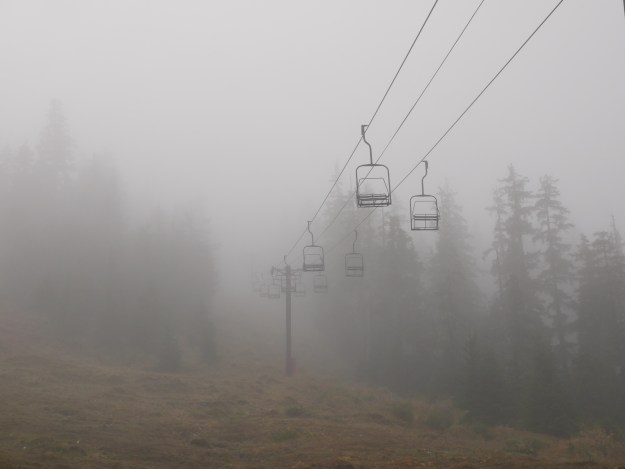
This morning dense fog hides the Douglas Mountain ridge and Gastineau Channel from those of us on Chicken Ridge. I think of last night’s cloudless sky that offered the first views of stars for weeks. Aki, if a person and his little dog climb up that steep service road at the ski area, they might walk in sunshine above these clouds. Aki sighs, as if she knows that we will never reach sunshine on that road. But she trots to the front door when called.
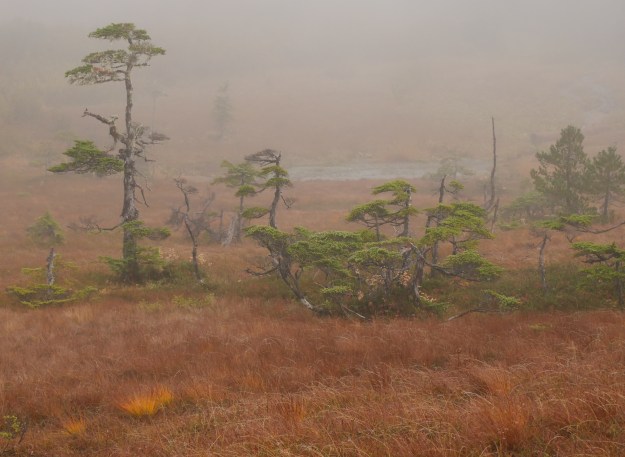
At the ski area the motionless chairs of the lifts hang empty from their cable. Most of the chairs hide in the fog. No man or dog breaks out of the gloom to join us. The tear and rattle sound of a landslide reaches us from the flank of Mt. Troy. I feel like the first victim in a horror movie filmed in an abandoned amusement park.
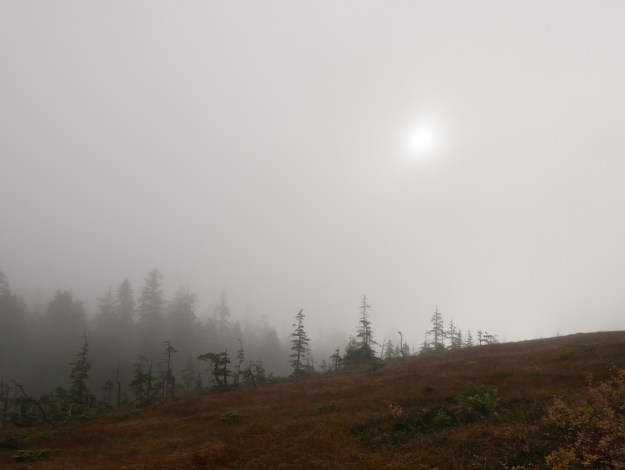
It seems that Aki is always lagging behind me on the climb. But she is just reading the pee mail. I am heartened by the appearance of the sun’s glowing globe trying to break through the cloud that we walk through. I imagine Troy and Ben Stewart suddenly poking out of the ground fog as the marine layer yields to the blue sky. I think, for a moment, that I was foolish to leave my sunglasses at home. But I will never need them.

The fog has settled into gaps between the mountain spruce and pines. We will have to settle for what beauty it can provide as it.

 It’s the last day of writer’s school in Skagway. Students and teachers, including Paul Theroux are in a White Pass narrow gauge railway carriage that rattles toward the Laughton Glacier trailhead. The conductor has stuffed all the writers into one carriage where the sound of thirty or forty conversations competes with the grumbles of the old carriage and the disembodied voice of a tour guide giving the railroad’s history.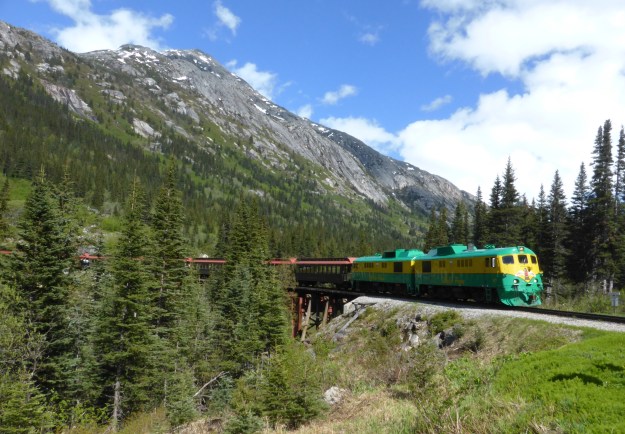


 I’ll pass the pilgrim and climb onto the shrinking toe of the glacier. The sun will return. I will hold sharp edged rocks just being released from glacial ice that carried them from mountaintop to my feet. “Look at these rocks,” I will shout to a much younger writer wearing heart-shaped sunglasses. But magic will be in their history, not their appearance so she will probably thinks me weird. Higher up the toe, I will fall into a conversation about wolverines: whether the grumpy loners are magic or just thugs. “Magic” will become my favorite word for the day.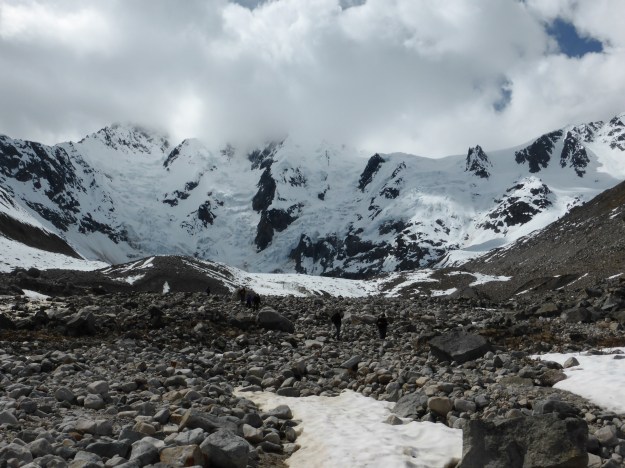




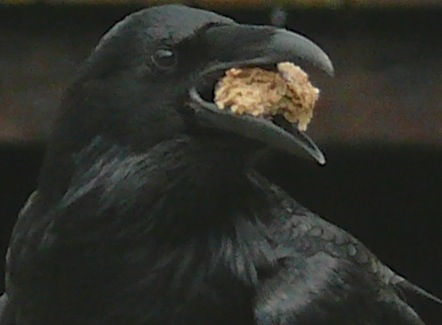
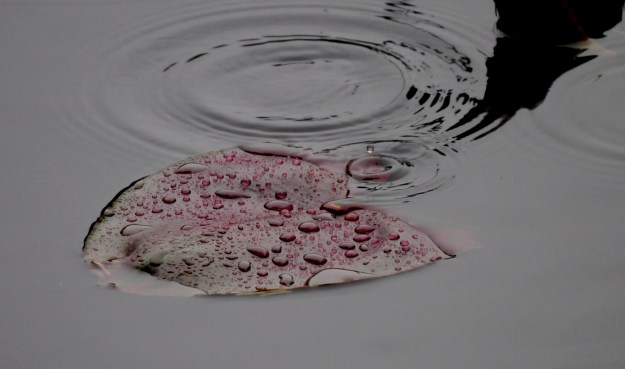

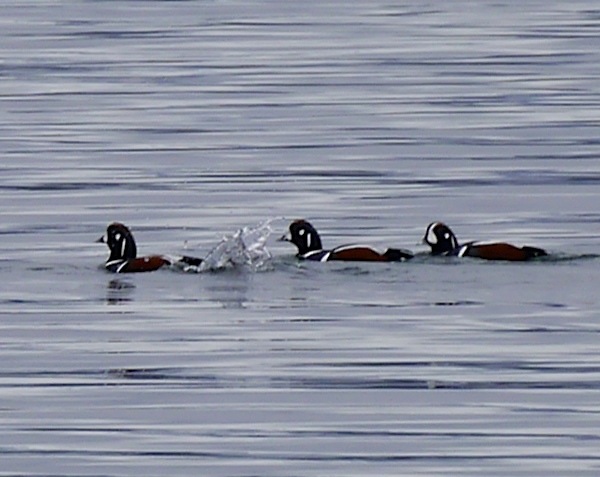


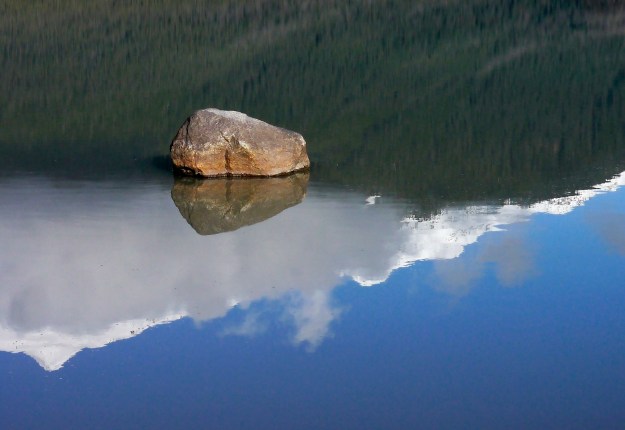

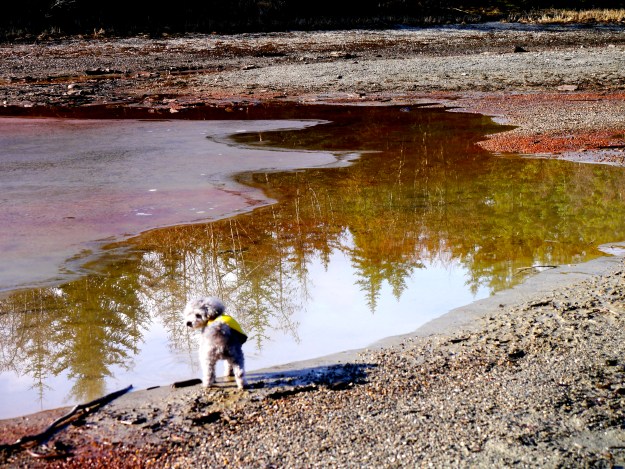
 Rain and slick-ice trails must be keeping everyone else out of the Gold Creek valley. Aki doesn’t appear to notice the solitude. For a dog with sensitive nose and an inquisitive nature like her, this mid-winter thaw is magic—as stimulating as Disneyland or an overturned meat truck. Nose impaired and cocooned in waterproofs against the rain, I look inward, rather than out today.
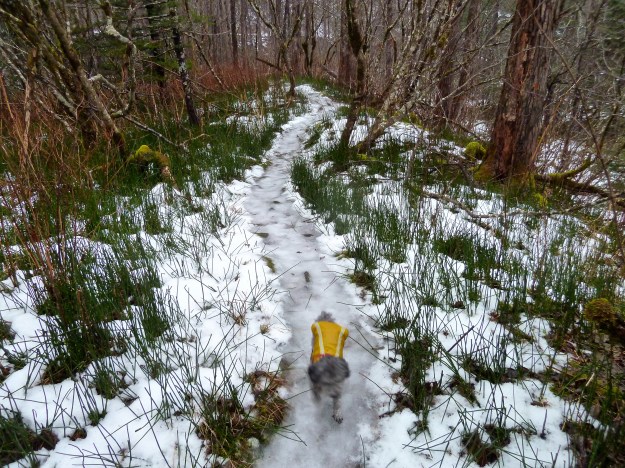 We cross a young forest growing over the rubble of hydraulic mining. A century ago, I couldn’t walk over the wasteland created here by men moiling for gold. The old growth forest they destroyed fed hunters and gathers and offered a peaceful place for the rest. But the gold extraction efforts that destroyed it provided jobs for the people in the nescient Juneau town. Without them, there would be no Juneau. Without them, I might still be living in California. I guess I owe them a debt but refuse to share responsibility for their destructive acts.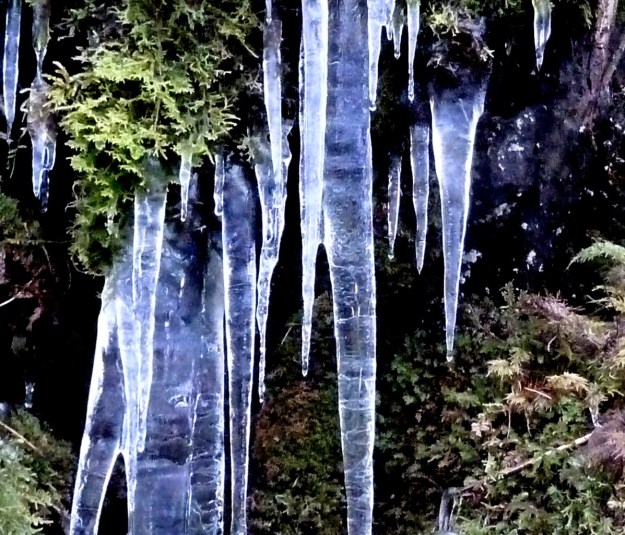


 Walking with Aki