Category Archives: peaceful isolation

Winter Giving Way to Spring

Aki would have loved this sun soaked meadow of snow. She might have shown concern or distain when I broke through a snow bridge and plunged into a foot deep stream. I am glad she missed that part. It is enough that I must ski all the way to the car with one very wet foot.

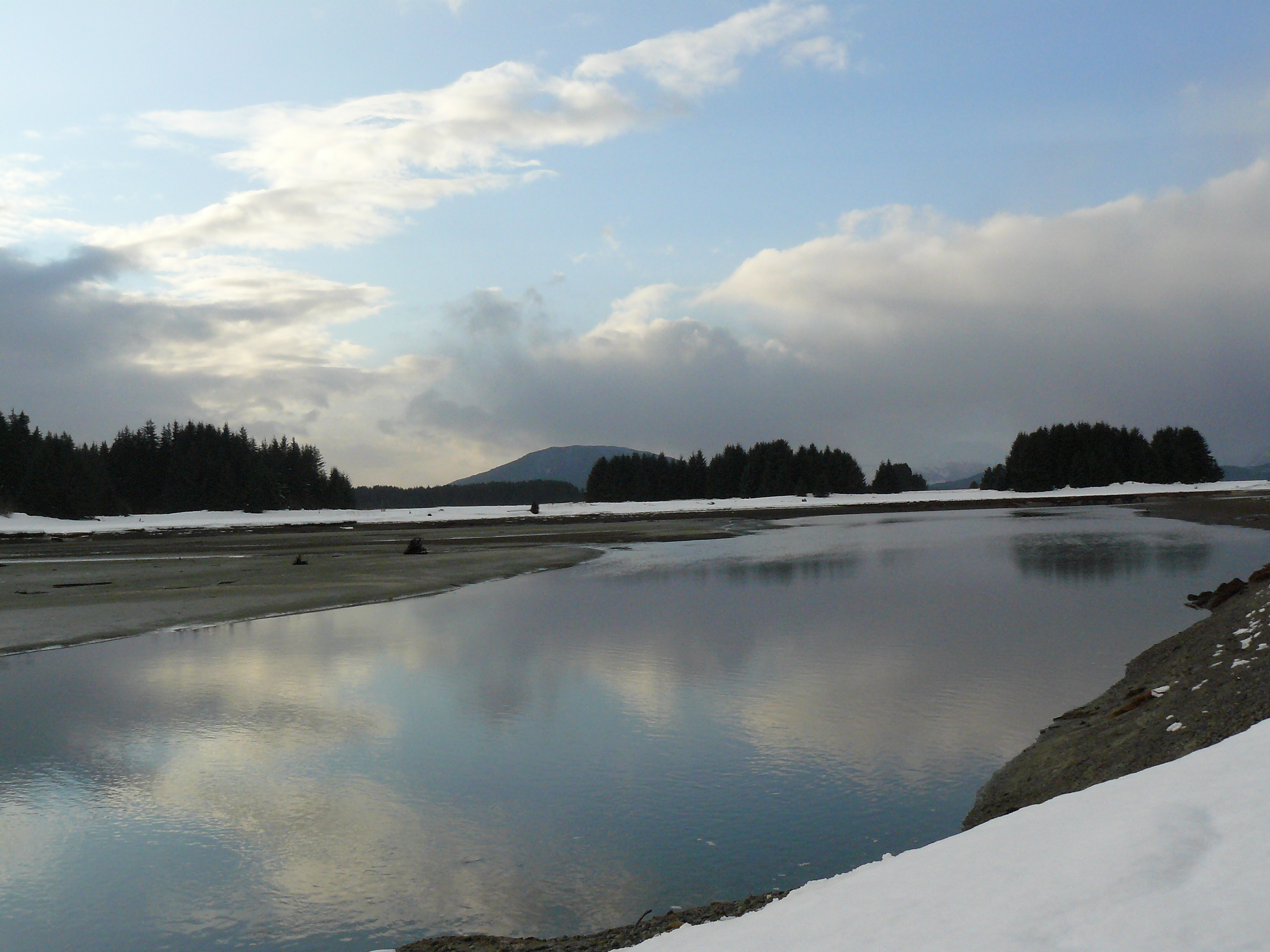
The taste of spring hangs in the air over Amalga Meadows. One big rain storm will push it into spring. Now mud and snow fight it out for the high ground while watercourse ice rots to liquid. Even now a long tongue of open water reaches halfway across the salt chuck. Pushing past the stream of my rude baptism and deeper into the meadow, I find only silence.  Expecting the chatter of chickadees I only hear melting snow drops  hitting gentling moving water. It pleases rather than disappoints.

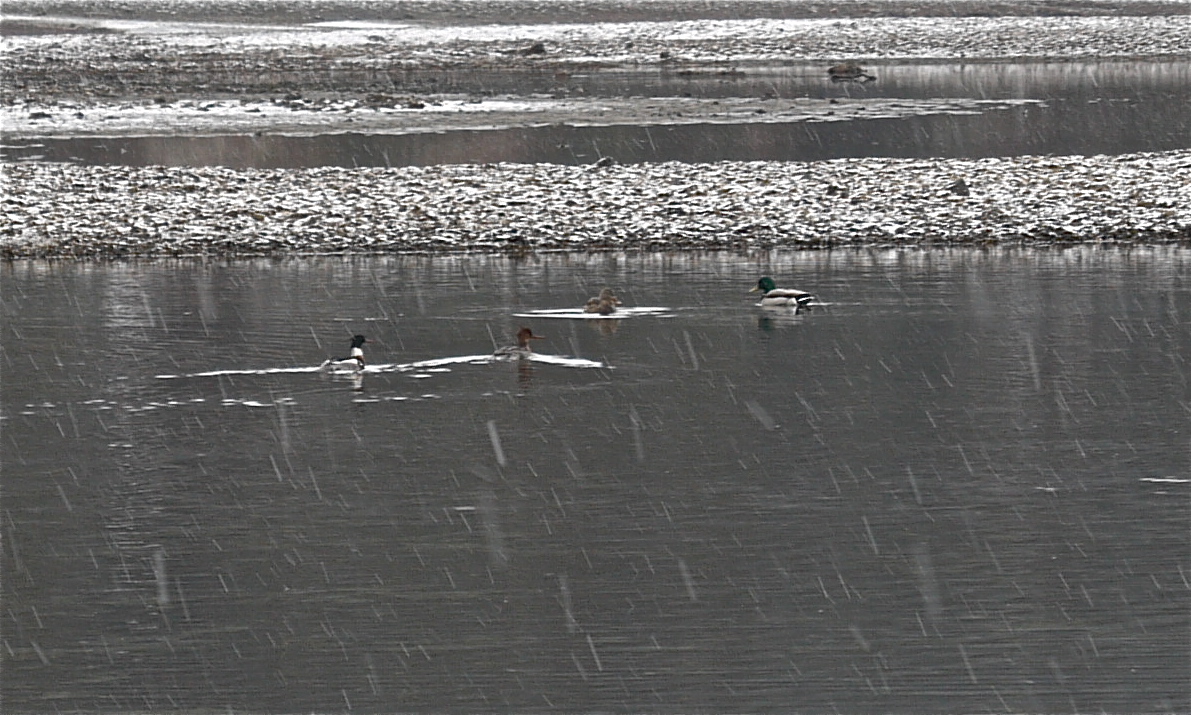
Later I ski over over a little hill to a pocket beach to test a theory. Without Aki will the ducks and birds relax around me? No. A small gang of mergansers relaxing on the beach re-enter the water when I am still in the woods and paddle to the middle of the bay. They leave me with a woodpecker pounding out food from a beach side spruce. Without seal lions or seals to keep them pinned to the beach the mergansers form an raft with a mix group other of ducks. Their muttering mixes with the sound of the woodpecker’s impact drill and periodic splashing by something I can’t make out.  A photograph shows something like a duck doing the iron cross. I’s guessing cormorant. 

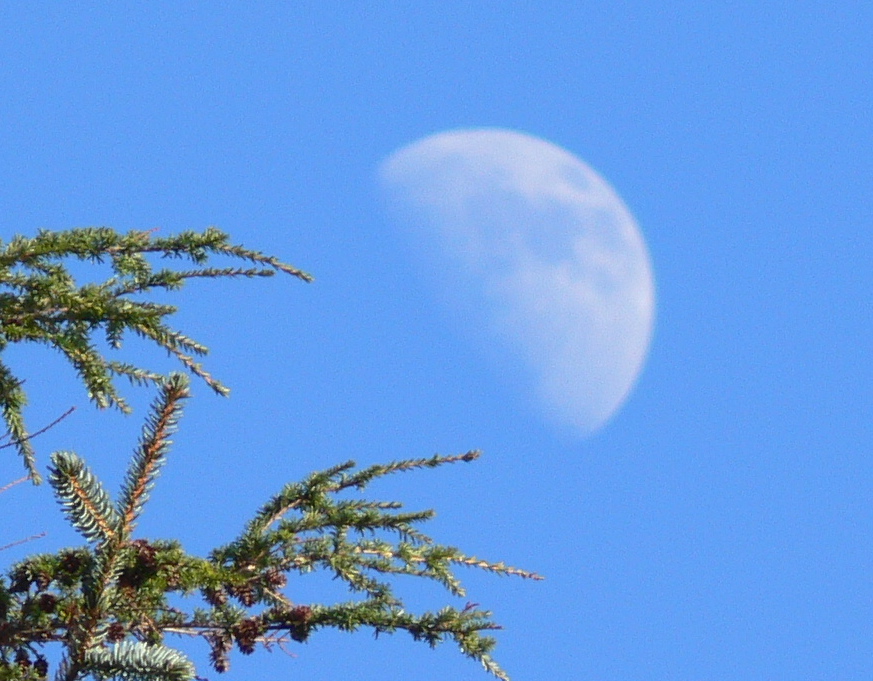
Turning back from the beach I search for the woodpecker and notice a rising half moon emerging from behind a spruce. It wears a toupee of clouds. He is bald before I can snap a picture.  
Wednesday in Ordinary Time

I should be disappointed that clouds have replaced the sunny blue skies that blessed Juneau this morning. But overcast often hangs over our rain forest. The clouds raised the temperature to near 50 degrees so I leave my jacket in the car and join Aki for a skiing investigation of this great open meadow. After dashing about and rolling in the snow Aki settles into a patience pace by my side.

Almost two feet of compressed snow still cover the meadow promising a late Spring for the wild flowers below. It easily supports our weight making skiing a matter to be done without stress or thought. We have the place to ourselves. No recent animal or people tracks dimple the snow. Finding that solid ice still covers the meadows’ watercourses I drop down into one and ski over to the beaver housing complex. The ice ends there and stream water sings a calming song by flowing over a dam made of gnawed tree limbs and sticks. The beaver’s huge pile of feed wood sits at one end of the dam and a snow covered den at the other.

Near here three or four shafts, maybe 12 inches across, drop to the meadow surface. I probe one with a ski pole and find a small tunnel entrance at the shaft’s center. Small concave shelves have been fashioned just beneath the snow’s surface, which makes me suspect it to the be the work of land otters. I can just see then nose out of their home tunnel, place front paws on the shelves and launch themselves onto the snow. There should be a rutted trail of tracks leading from the escape shafts to an otter slide down to the steam ice. There should be an otter sized hole chewed into the ice. We have seen slides and opens holes in the ice here before. Maybe the otter clan has moved over to the salt chuck to fatten up on last Fall’s salmon fry migrating to Favorite Passage.

Many willow bushes dot the meadow. Some mimic English tea roses with objects looking like fully formed flowers that might draw a second look from a florist. These miracles were not produced with the wave of a wand but rather the invasion of the willows by a parasite. Midges formed the flowers or gall for shelter for their larva. Green in summer these galls have now dried to a convincing rose shape the color of dried blood.


Wild Barnyard of Geese

The hike starts with a strange sound heard in a familiar place. An angry little sound, hawk like, breaks the silence of morning followed quickly by that of a song bird. The thick forest hides both singers so we move up river. Afterwards I stop often to listen for more bird song but only hear Aki’s paw-falls on the crusty snow.

This morning’s low sun backlights the moss covering the big spruce and cottonwoods lining the trail making the moss grow with yellow green tones. I try again to capture a tenth of the beauty with my camera and fail. The place rewards physical, not virtual visitors.  

Leaving the boreal forest for a muskeg meadow we begin to hear the geese. We have been through this before — hearing a big flock of Canada Geese from this meadow but never seeing them when we reach the beach.  Today, the sound stirs Aki to explode down the trail. I find out why when we reach the river with its big meadow covered with geese.

Aki has driven at least one bear up a tree but has never before acknowledged the presence of waterfowl. Even today, when they strut openly on the dead grass land and shout out random warnings, Aki acts as if they do not exist. I see this as a sign of sensible caution, not arrogance.  Our mere presence, a couple of hundred yards away, seems to set the geese on edge so we keep our distance. Downriver a ringing geese alarm sounds, something like the amplified dithering of the Three Stooges, and a set of geese flies overhead. This is repeated several times — the die hard feeders being driven off their sand bars by a flooding tide.

Soon the meadow becomes an untidy barnyard of geese, heads down, looking for a meal. Above them snow whitened mountains rise into a darkening sky. Then it begins to snow.     

Ducks and Snow

The weather changed this morning at 7.  Just a half an hour earlier the sky had gone from black to deep blue, promising another sunny day.  Then it was all grey skies and snow. Expecting no sparkle on its waters. Aki and I drive through the 2 mile avalanche zone on Thane Road to Sheep Creek. A high snow wall still boarders the uphill side of the road marking the edge of the avalanche that closed it last month.

At Sheep Creek snow covers the vast expanse of sand and gravel exposed by the outgoing tide. The creek cuts a diminutive and wandering channel through a huge bar formed by tidal forces in Gasteneau Channel. The sound here in Summer can be deafening—territorial gull cries, eagle screams, and rolling salmon fighting for possession of the spawning redds.  The carcasses of spent salmon left behind by ebbing tides add a nasty spice to the air. Today we only smell wet sand and sea weed and hear the voices of song sparrows working the beach.

Farther out, where the gravel bar edges Gasteneau Channel big disorganized rafts of ducks, gulls and scoters fish the shallow waters. They don’t react to us. We can trace the movement of schools of bait by their meanderings.  This is unlike the organized scoter rafts of summer. They hold tight formation facing the swell. As if responding to command the front row dives en mass letting the second row replace them at the front of the raft. In a few seconds members of the former first row bob to the surface at the raft’s rear to form a new back line. This is repeated until the last once again becomes the first and then again the last. 

When today’s disorganized bird rafts move into deeper water Aki and I turn to the mountains and walk onto a large sandy expanse. She dashes away at full speed for several hundred yards and then returns at the same breakneck speed. I have nothing to give for this performance but praise. It must be enough for she does it several times before settling in at my side for the snowy walk back to the car. 

On Ground Usually Seen from Afar

It’s 49 degrees above zero at home when head out north to hike the Eagle River trail. With the streets ice free I am tempted to take the bicycle out for a ride and leave Aki. As if she senses such thoughts running through my brain, she takes up station at door to whimper. Soon we are driving to the trailhead, snowshoes in the trunk.

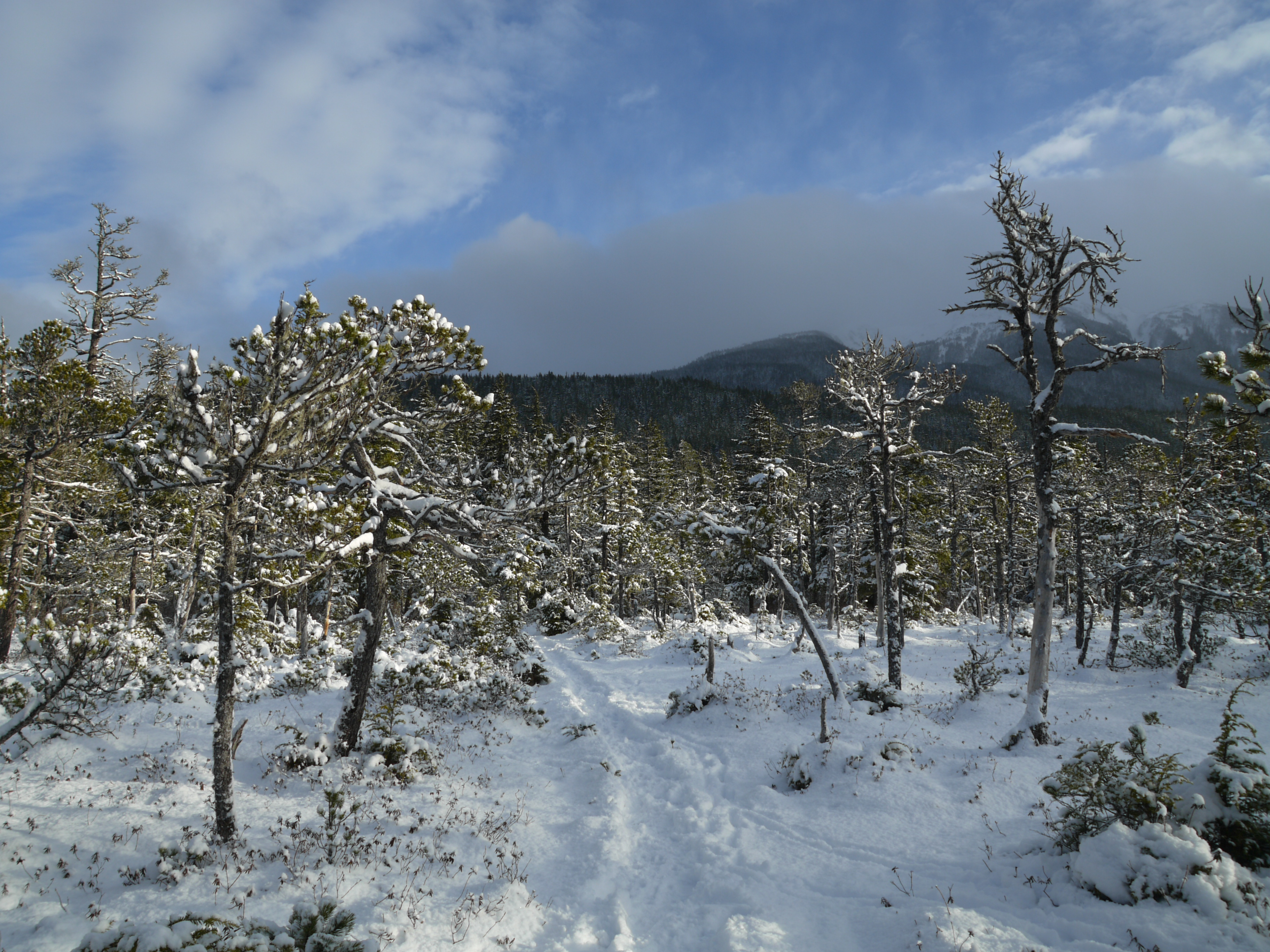
A marine layer of clouds forms over us as we drive north.  Twenty miles out we find black ice on the highway and fresh frost covering the roadside willows. Winter is already returning to Upper Lynn Canal. The trail takes us along the edge of a muskeg meadow populated by stunted Mountain Hemlock and Shore Pines. The crust allows freedom of movement for both Aki and I. We take this rare opportunity to walk ground usually viewed from afar. I take many pictures of the pines covered with bumps of frost that now glow in filtered sunlight.

The freeing crust reminds me of the way snow on the tundra would set up every clear night in later winter. I’d hitch up a team of six or eight husky dogs to a sled filled with camping clear and head for places unmarked by trails. The dogs would fly over the frozen crust until midday when the sun softened it. Then we either had to camp or find a packed snowmachine trail.  Daylight stretched until 9 or 10 at night that time of year allowing plenty of time to set up camp, secure the dogs and cook their dinner on a gas stove. They would watch the ice melt in the big pot we used and then stir when I dumped in the food. Then they would howl. The noise dropped each time I placed a full bowl of feed in front of a dog.  A brief period of noisy eating came next, followed by a profound silence only found on a vacant tundra.

With the chores done we’d build a wood fire and pick out constellations until the moon rose. Then the dogs would howl. Sometimes I’d join in just to feel the relief of release—the casting off, if for an evening, of my civilized coat.

Storm Break

Last night Aki’s other human and I enjoyed the Juneau Symphony’s performances of Rachmaninoff’s First Piano Concerto and a small piece by Franz Linzt.  The drama of both prepared us for the near blizzard blowing outside the auditorium. It snowed steady all night. This morning it took an hour for me and the neighbors to clear an exit path off of Chicken Ridge.  Looking for cover from the storm we headed to the forested trails on North Douglas Island.

Here, as happens often, we find a break in the storm clouds that allows in the sun. Aki dives out of the car and rolls in new snow, one of her favorite things. Then she dashes down the old growth trail to the beach. Since it is more open than the Troll Woods, strong sunlight penetrates this forest  to illuminate each flake of snow blown out of the canopy by a dying breeze. It is too beautiful to describe and too etherial to capture with my camera. I just stand there for a moment with that feeling you get as fine Swedish chocolate melts at the back of your mouth. Aki spends this time having another roll in the snow. Both saited by indulgence, we move on a muskeg bog where only ancient Bull Pines manage to grow among the berries brush. I call it the monastery meadow.

I know they are just trees, these gnarled and stunted conifers. Their inability to compete with the faster growing spruce force them onto such marginal ground. While trees of the forest offer each other protection from fierce winds these pines stand alone and allow the wind to prune away superfluous growth. Today they rise, comfortably spaced over this berry patch as the sun melts away last night’s snow. If trees were sentient beings these pines would be their spiritual masters, life reduced to simplicity by wind and poor ground.

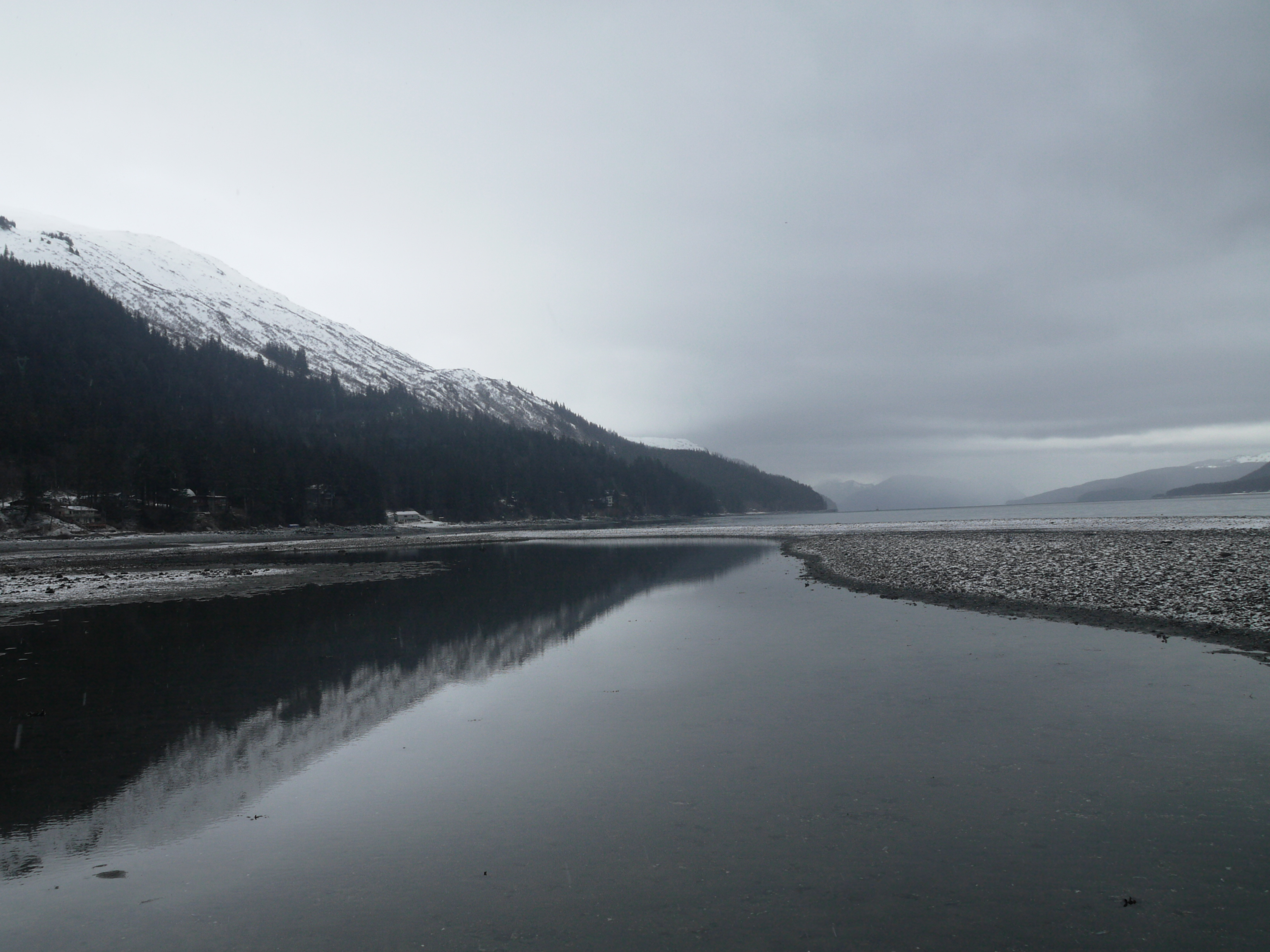
Moving on we re-enter the old growth forest and walk to the ocean’s edge. Today’s 18 foot high tide has taken all of the beach, leaving us a small snow covered strip of grassland on which to stand. The water is claim so it reflects all the pinks and blues and grays of the sky,  The scene is too peaceful to last and I expect a breaching Humpback Whale to break the silence but hear only mewing Gulls and the nervous song of Scooters.

Looping back through the woods we reach the road from which you can see mountains on Admiralty, the large island just across Stephens’ Passage from us. Storm clouds move up channel in front of the mountains while more of the same have already climbed island’s ridge and will soon block Admiralty entirely from view.  Flakes are already falling when we reach the car.


Opposites

We take a lesser use trail today through riverine woods until the road noise dies away and there is only silence.  I hear a faint swishing sound and am surprised to find it is made by my jacket rubbing against itself when I move. When Aki and I stop so does all sound. Usually the river can be counted on for a gurgle but our recent cold snap locked it down.  The wind storm that buffeted Downtown doesn’t bend and shake trees so snow finds its own path to the forest floor. Even the birds roost quietly out of sight.

Profound silence is rare in this rain forest but it always blesses tundra on windless winter days if you stay off the main snow machine trails between villages. At another time of my life I’d drive a small team of sled dogs up the ice over twisting streams where no noise could reach. Then the the sound of their panting seemed deafening. Today Aki and stand completely still as I strain to hear if falling snow makes a sound striking the ground. It’s a foolish test that my ears fail. Aki’s canine hearing might pick it up but she won’t say.

We must sound like a circus train moving up the trail for we see signs of animals that had dashed to cover just before we reach their location. We step over the freshly laid tracks of a snowshoe hare we scared away from a dinner of young willow. On the return trip I find where a deer hid in thicker woods for us to pass on the way up the trail.  Later I puzzle over a 2 inch wide path trodden by tiny feet across the trail and then disappears into a snow bank.  (A small bird or rodent?).

When the trail takes us onto a muskeg meadow I hear what sounds like a jet engine and remember the wind and how the waves it drives onto a nearby beach during storm time can mimic a jet taking off.  Leaving the protective forest we see and feel the effects of a north wind flying down Lynn Canal. There is the sound, now more clearly that made by storm driven breakers and there is the beauty of storm light on green seas toped with creamy foam. There is also the cold that we both feel. In minutes we turn around and head toward the car.

Avenues of Ice

I never know what to expect on a winter hike, even one taken on an old friend like this moraine trail. We dressed for cold, Aki and I, but I still feel it numbing hands and feet. Aki shows no pain but seems ready at each trail junction to take the fork offering the quickest passage to the car.

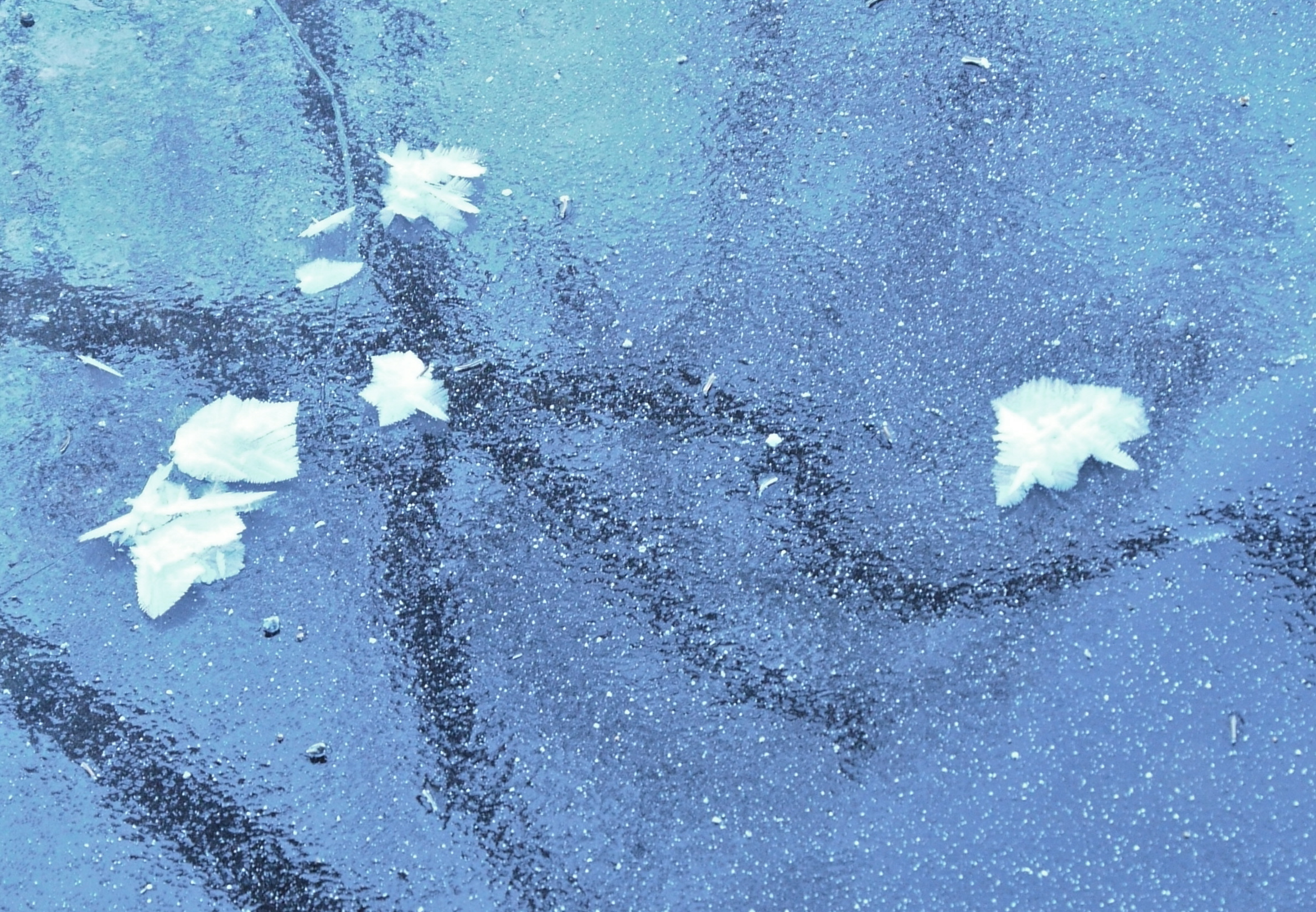
Wishing to take advantage of several days of near zero degree weather we head toward the beaver stronghold, no longer protected by flooding waters. Passing over newly frozen translucent ice we find a scattering of pure white frost flowers. each 2 or 3 inches as if they had been tossed before a processing bride. The flowered path leads to a large square of ice recently trod upon by a congregation of beavers.  It would be a lovely spot for a wedding being on the shore of this small lake, which creates enough open space for views of the Mt. McGinnis and its snow covered buddies now just catching the first morning light.

Aki draws me to the clear ice formed between the beaver’s dams. Here the very recently laid tracks of a scurrying beaver mark the lightly frosted surface.  The beavers have dropped several large cottonwood trees since our last visit and severely wounded one that now leans toward the ground. It will fall in the next strong wind.

Wanting to use these new ice highways to explore other areas of the moraine we move west to where older beaver activity destroyed a once flourishing copse of woods. Now dead, the tree’s shells still stand at sharp angles to their flooded ground against a backdrop of glacier cut mountains

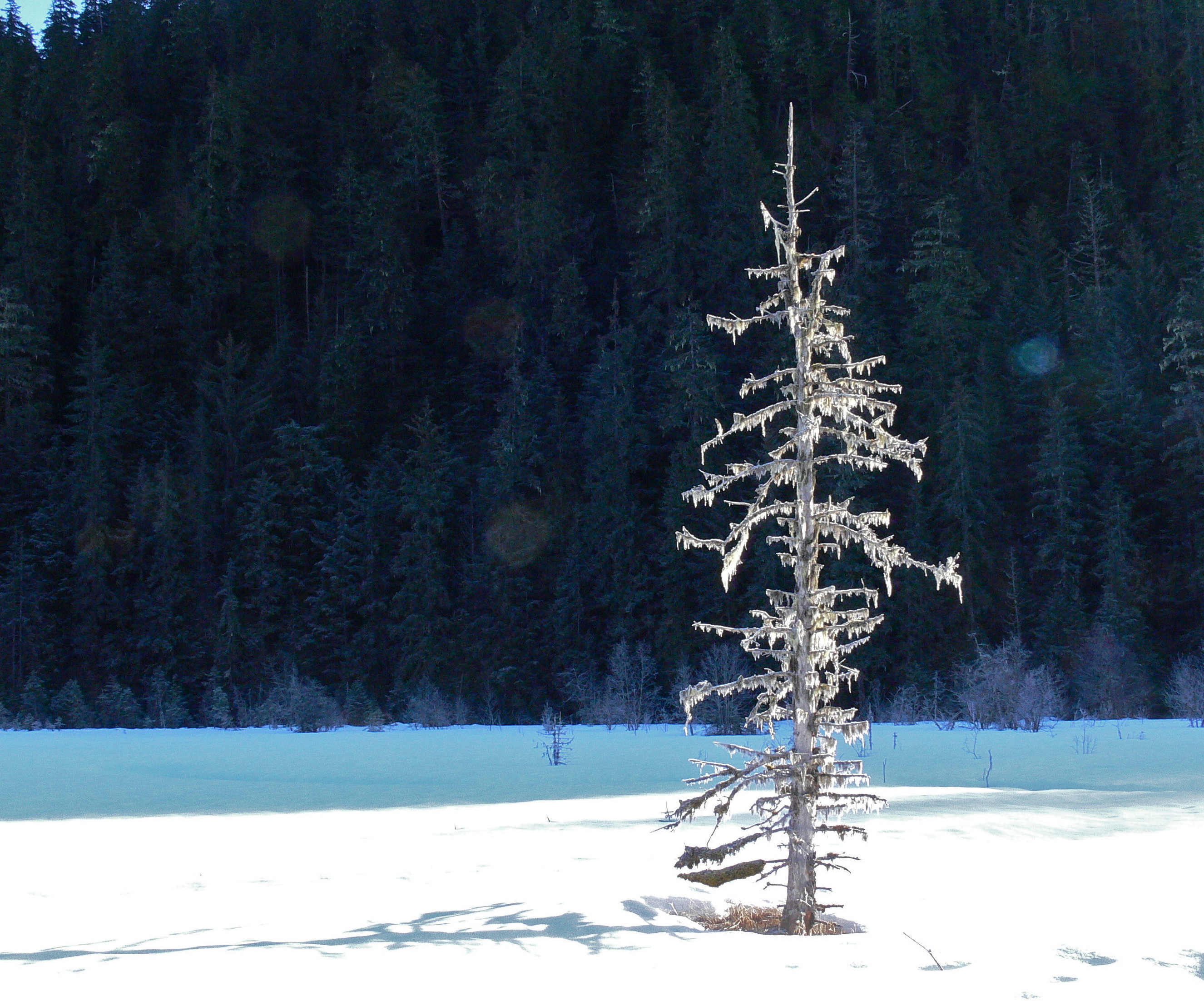
Aki and I are both cold now so when given the chance to walk on a sunny lake rather than a dark forest trail we take it.  White frost covers the lake ice except for isolated places in lake center where  tracks suddenly start then stop—the work of ravens.  Walking off the lake and out of the sun we circle back to the car through Troll Woods. Green still dominates this dark mossy place but patches of sun light manage to each random spots of forest floor. One illuminates a tiny Hobbit hole mantle of sticks and moss. Tiny frost feathers formed by the breathe of its inhabitants decorate the doorway. We have seen these frosty den doors many times before but this is the first time one has sparkled for us in a single shaft of light. Eight minutes ago, as the earth rolled toward its source, sunlight began its 93 million mile journey through space. It  passed over the Douglas Island Mountains then squeezed through an opening in the Troll Woods canopy. All this to give life to tiny white frost feathers trimming a rodent’s home.

Trapped in a Peaceful Place

Pushed up against mountains and an ice field, Juneau enjoys significant micro climates. Downtown gets the wind and 100 inches of rain each year. Douglas receives more of both. Most storms pass over the small area running from North Douglas Island to Smuggler’s Cove, which only receives 60 inches of precipitation.  With a strong rain soaked wind hammering the house on Chicken Ridge Aki and I hope to find a sheltered walk in this dessert on North Douglas Island.

Apparently a strong believer in meteorology, Aki is unperturbed by wind that rocks our car on the Douglas Island Bridge and whips up white caps on the usually sedate Gasteneau Channel. She stares down the road with anticipation but does not smirk when the rain and wind drop as we reach False Outer Point.

We have the forest to ourselves but find the beach crowded with water fowl. A small raft of ducks who were tight against the shore when we arrived move slowly into deeper water. A pair of loons feed in the open space between us and Shaman Island.  We all enjoy the flat calm sea only occasionally dimpled by rain. An incoming tide shrinks the beach and threatens to force us into the woods. Wanting to walk a while on ice free ground we quicken the pace to round the next point before the tide makes that impossible.  We make it just as the tidal door closes, leaving us alone with the birds.

Two eagles in trees just behind us exchange angry words and more of their kind tussle for roosting space on the Outer Point side of this now flooded bay. Some chase each other over the water, talons extended out as if they were about to snatch a herring from the water. Seems too early for their mating dance —-the one where they lock talons and then spin in circles as gravity pulls them to ground. I saw that hookup once but the tangled eagles dropped out of sight behind the tree line before I could see if they broke off before hitting the ground.

We find the fresh carcass of a loon washed into the rocks. Just off shore another one floats aimlessly by. The eagles go quiet and nothing breaks silence except the flutter of gull wings.

The sight of death saddens me as does the loon appearing to morn but the silence is a perfect gift and I remember Slavic (Russian Christmas), which was celebrated yesterday in the Kuskokwim River villages of Western Alaska where we use to live.

After the Storm

We return to the woods along Eagle River with skis rather than snowshoes. Yesterday’s heavy snow fall followed by equally heavy rain transformed the trail. A weak crust covers 2 feet of heavy wet snow. Aki tries her luck on the crust but it is too weak to support even her diminutive frame. Soon she takes up station behind my skis as I slog along.

Sections of the trail are craters as if shelled by tiny mortars and I wonder if the beavers are escalating their battle with the U.S. Forest Service.  I dismiss the silly notice but can’t ignore the carters, some 10 inches deep and 2 feet across. Looking up I find the answer in the now bare spruce branches above the trail.  The weekend storm loaded down the branches with snow which was released in great masses by the heavy rain. It must have been frightening for any wandering these woods during that wet storm—snow release, violent upward snap of the newly freed tree branches, explosion of snow on snow.

This morning as nature regroups from the storm, the gray marine layer fragments into irregular shaped clouds willing to show us a little sun and blue sky. Still, at 11 AM the colors of sunrise are all we see until reaching the tidal meadow.  There the full rich tones of our winter sun make us squint but we can’t resist keeping our faces turned toward the source of irritation.

Tired of breaking trail I lead Aki onto the beach to where tide has washed away the snow.  As I empty my boot of snow an eagle cries out and five Canada Geese fly over our heads. Aki (proud dog owner speaking) doesn’t bark or break down the beach as they fly over.

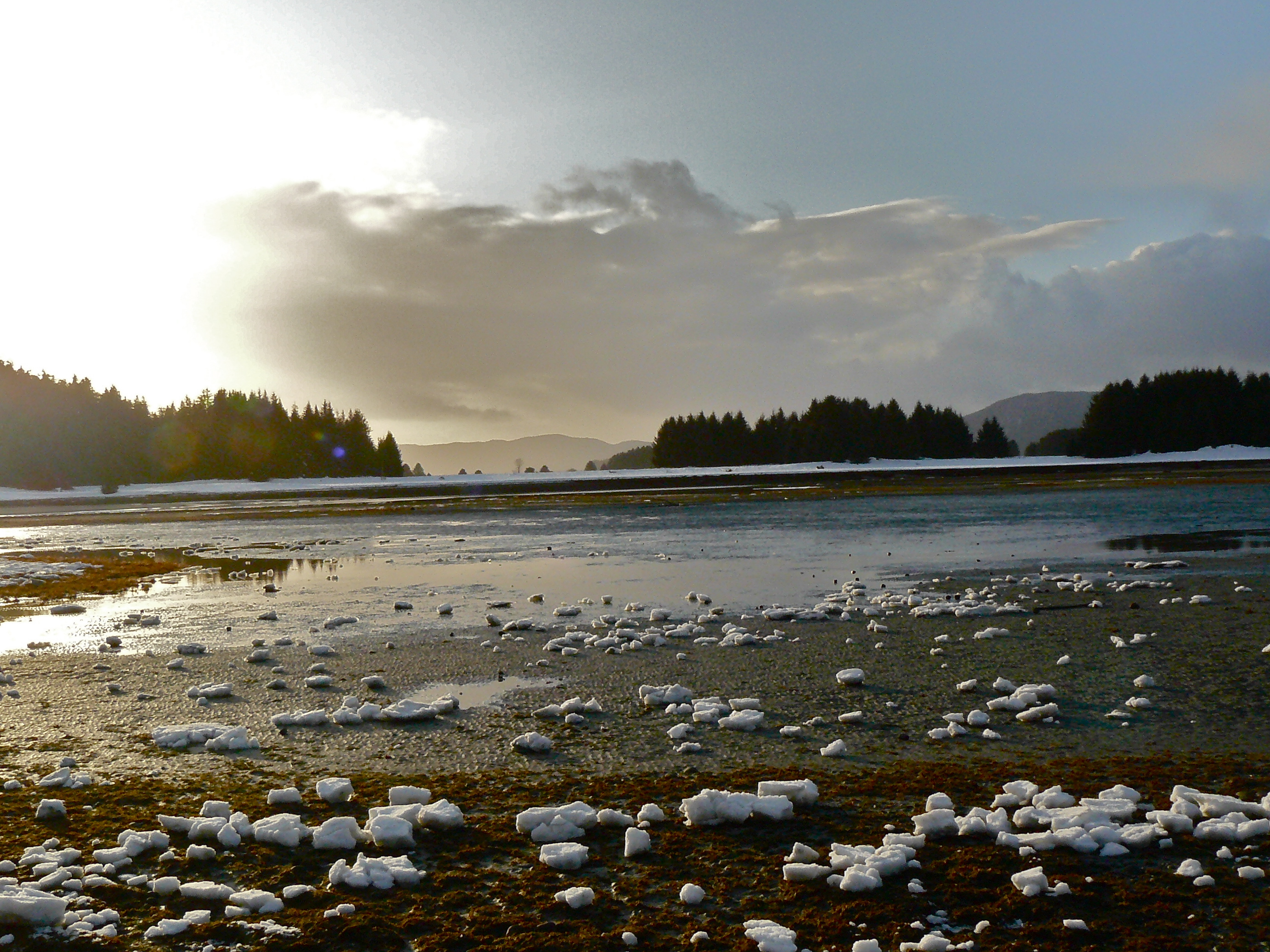
Two puzzling terraces of snow border the frozen beach. I reject the first explanation that comes to mind—that the last high tide overrode snow forming the lower terrance but left a three inch blanket of it intact. Then I remembered the intensity of yesterday’s storm that covered footprints leading to our house in minutes. Rain must have given way to snow in the early morning as the tide receded, leaving behind this fine white blanket glistening in the sun.

Since the tide was out I had hoped to walk around the meadow on the bare river bank but it was too steep so we return to the meadow where I break new trail for Aki until we find one set by other skiers.  For the first time since May I enjoy the kick, glide, kick of classic skiing.