Category Archives: Southeast Alaska

Dodging Scat

It’s a day for dogging dog scat. Canine poop and the other detritus of winter are emerging from the melting trail snow. Aki loves this time of year when dog snacks dropped months ago seem to just appear. It’s a time for song birds to hunt and peck on newly snow-free gravel. Aki search for treats gives me plenty of time to watch two dark eyed junkos working the ground.

            Ever since a junko pair nested in our carport, I’ve had a special place in my heart for the little guys. All they needed to bread was a plastic grocery bag full of plastic gutter parts that hung on the carport wall. After the chicks fledged I found a tidy little nest lining a gutter end cap. I had limited of the car port all summer but that seemed a small price to pay. 

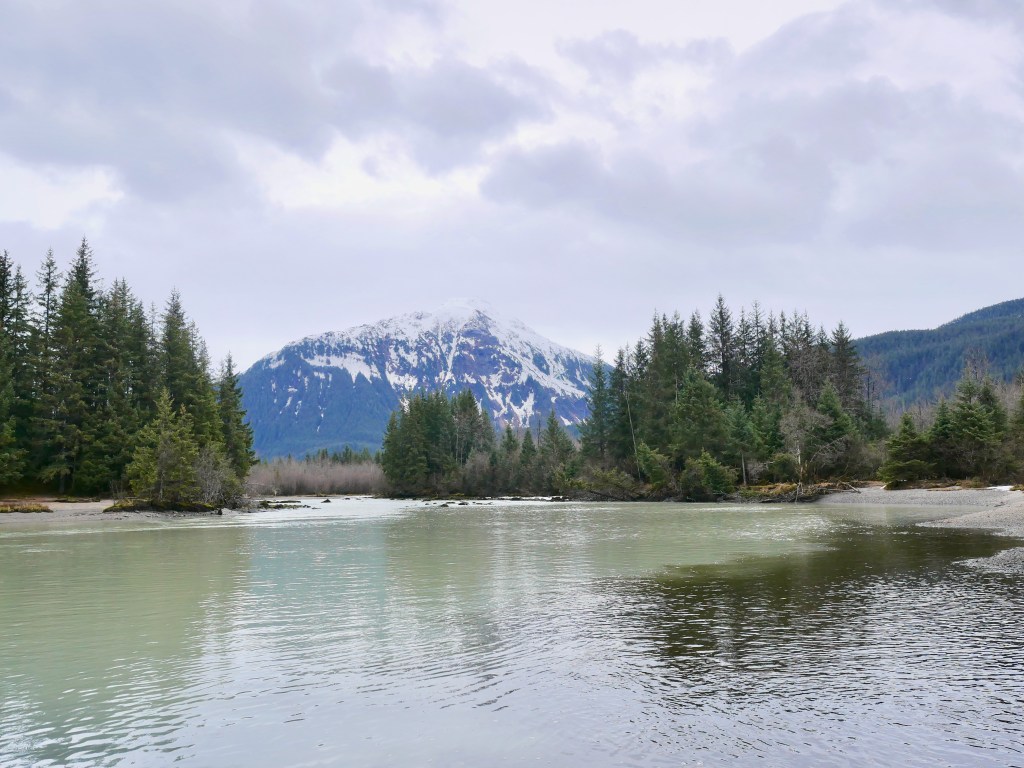
            The little dog and I push on to Moose Lake, hoping for another chance to watch the swans. But they have moved north, their place replaced by several pairs of bufflehead ducks. I coaxed Aki to following me onto a still snow-covered trail to the Mendenhall River where newly arrived swallows juked and dived on the year’s first hatch of mosquitos. 
Contrasts

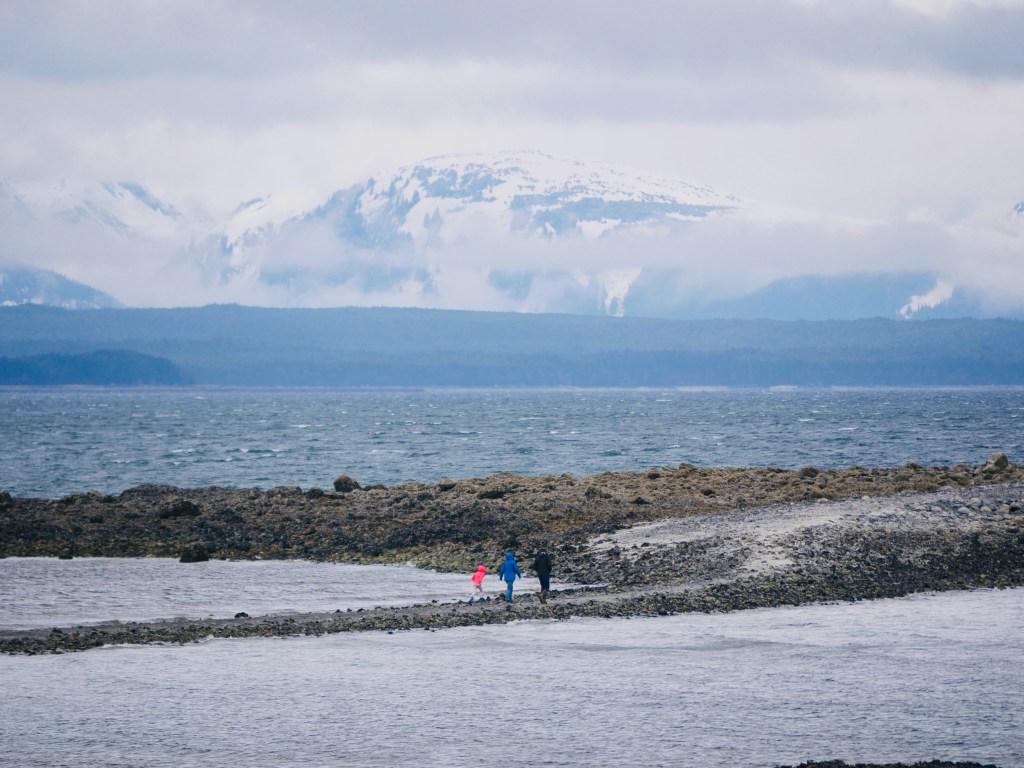
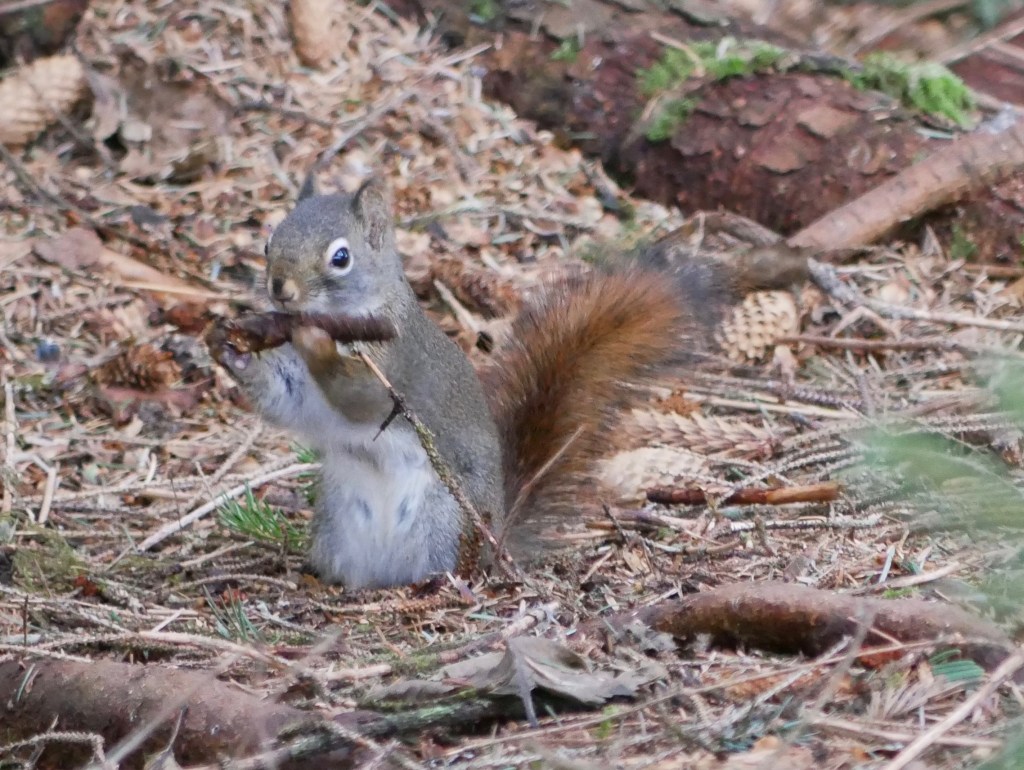
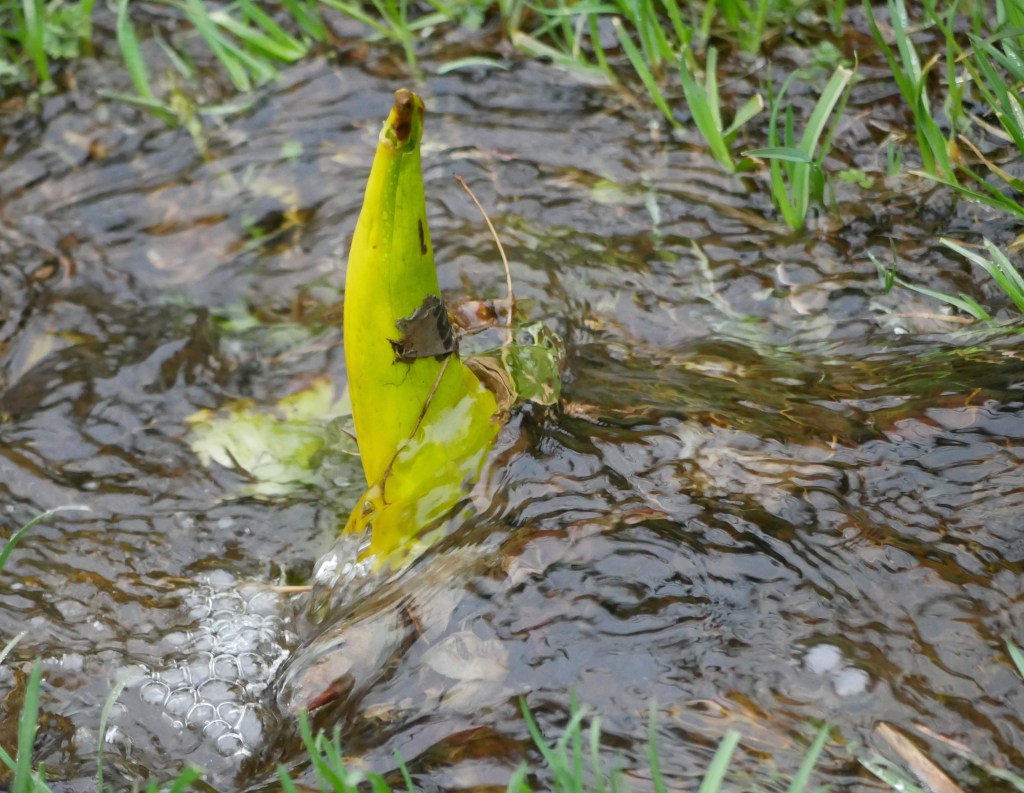
Aki and I stand several meters off the trail like lepers. I say “hello” to the family as they move up the trail but I feel like calling out “unclean.” We reenact the scene every fifteen minutes. A strong ebb tide has exposed the causeway to Shaman Island, which is too narrow to allow us to safely pass the families streaming over it. Meanwhile, nature goes about its business. Songbirds claim nesting space, skunk cabbage stalks rise up from swampy ground. Hummingbirds hover over opening blueberry blossoms as red squirrels prepare for winter. 

Return to the Troll Woods

It’s been a long time since Aki and I last walked through the Troll Woods. The trails, pounded out by beaver feet, see few humans. The disintegrating chassis of a VW Beetle is the only sign of our civilization. Proof of beaver presence is everywhere. Every few meters the little dog and I have to step over the trunks of beaver-fallen cottonwood trees stripped each bare of bark.  

            Still standing cottonwoods bear heavy loads of moss that drips rain water onto the mossy forest floor. Colonies of leaf-shaped lichen cling to the sides of spruce trees like swamp orchids. Moss covers every surface not treaded on by beavers, even glacier erratics—those granite boulders scatter over the moraine by the retreating Mendenhall Glacier. 

            The blurry whistles of nest building thrush mix with the sweeter tunes of other song birds as we approach a pocket lake. Ice covers all but a tiny portion of the lake’ surface. A brace of bufflehead ducks float on this lake within a lake. Even though we are on the opposite side of the lake, the male duck seems more interested in us than a discordant squeal coming from deeper into the forest. While I try to guess what kind of bird is making the noise, I hear the tinkle of tiny bells. Someone is making a first crossing of the woods on their mountain bike while a dog wearing bear bells patrols ahead.  

Nothing is Wasted

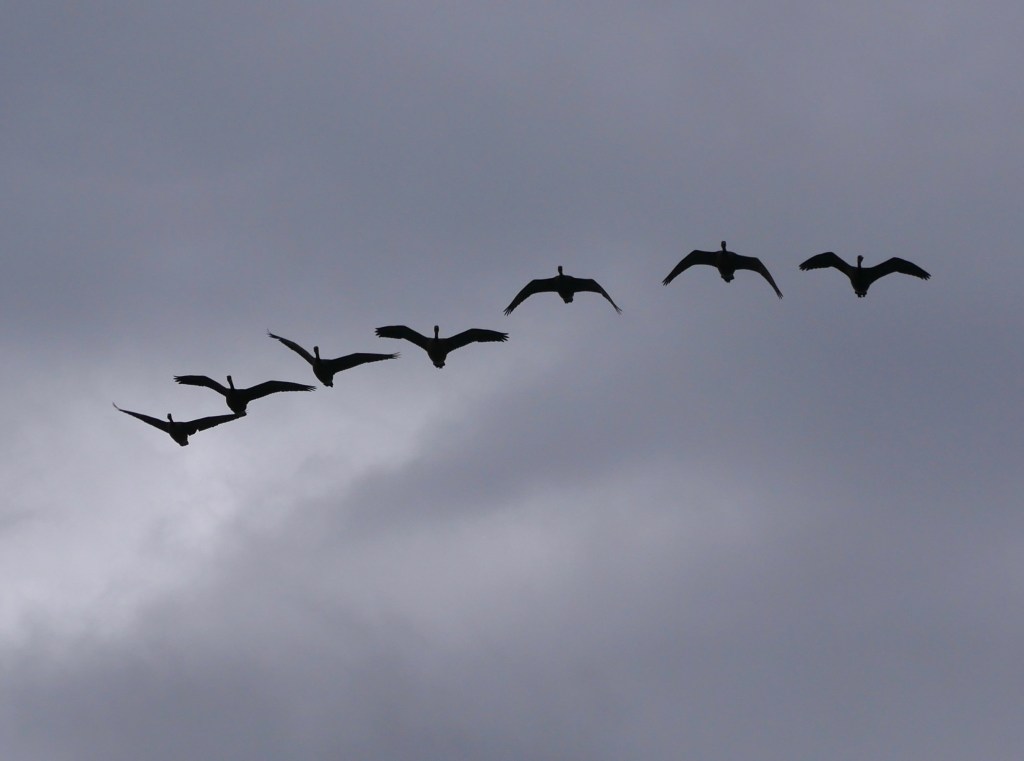
Several hundred Canada geese are chowing down along Eagle River. The biggest concentration is on a large tidal meadow. I have to take care not to step on their scat as Aki and I skirt the meadow.  

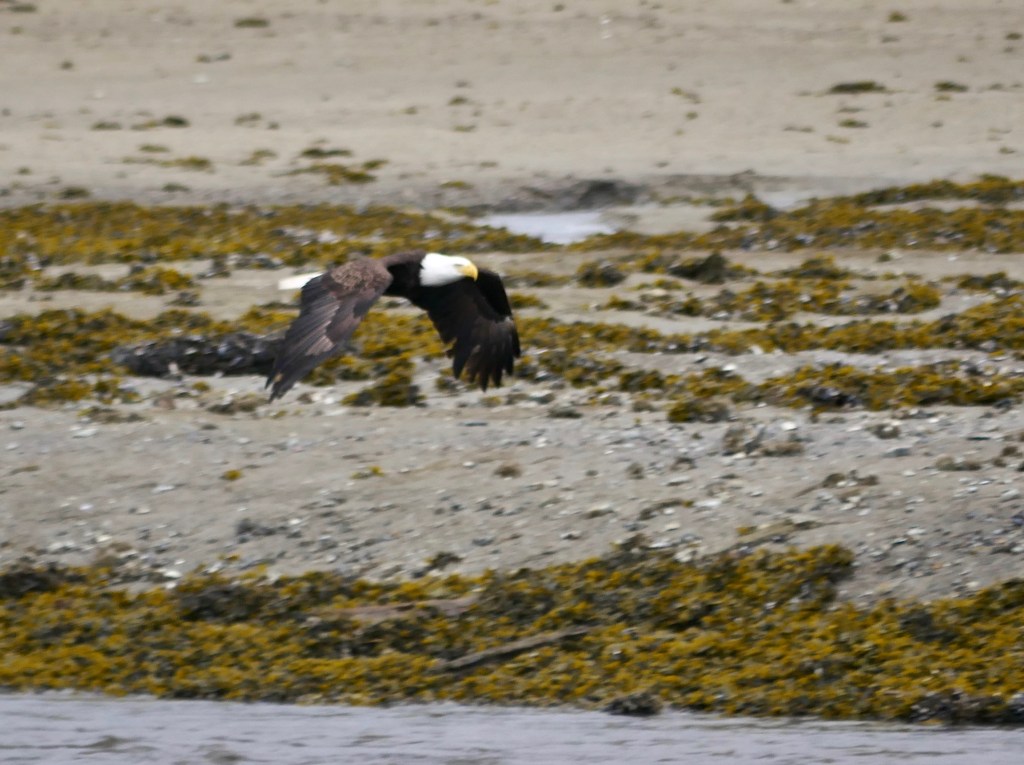
A smaller group of poke around for food on mud flats now exposed at low tide. Mallards waddle around them until an eagle flies over, flushing the ducks to flight. The geese ignore the eagle as they jab their beaks into the mud. What are they eating, little dog? Aki never heard my question. She’s turned a sand bar into her own race track, running circles around its parameter for the sheer joy of it.

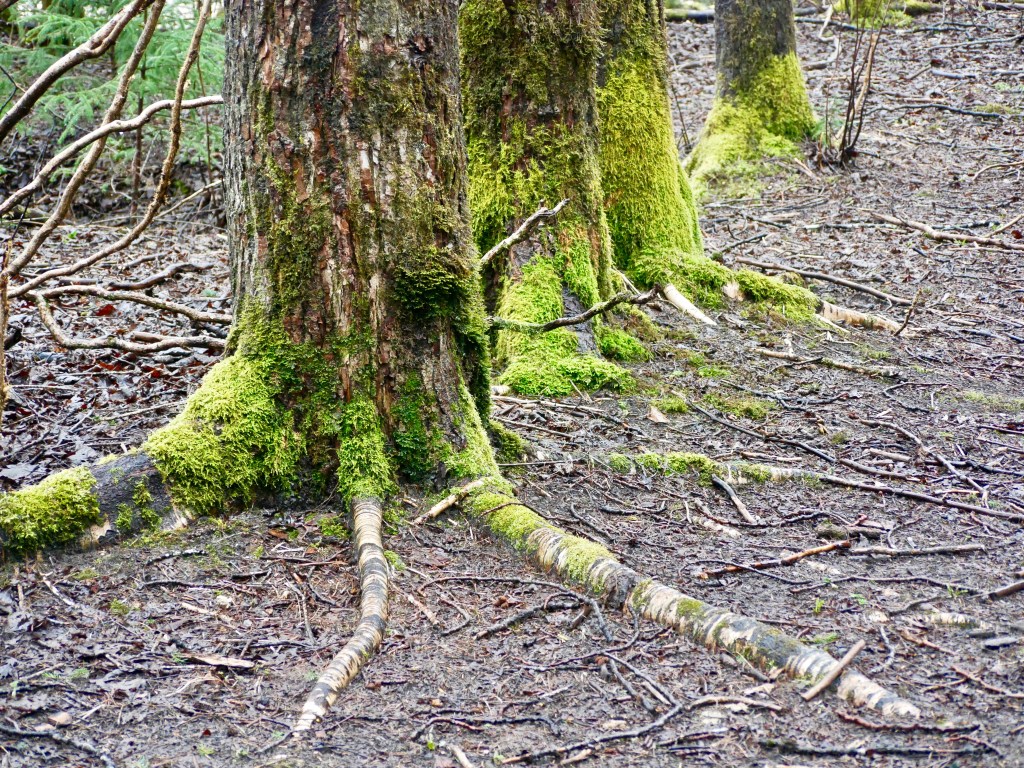
 Near the river mouth, wave erosion has destroyed part of the trail and halved the size of a small copse of spruce trees. Because they root in glacial silt and sand, the spruce trees have smooth, straight roots. Tlingit weavers have come all the way from Ketchikan to harvest the roots, which they use to strengthen strands of their weaving wool. I wonder where they will find replacement roots when erosion finally wipes away this little forest.

After walking on the beach, I lead Aki across a grass-covered dune and stumble upon the esophagus of a Canada goose. The thick-sided, opaque tube is crammed with small, pink-colored shells. Other shells and a crab claw have spilled out of one end of the esophagus. This not the scene of the crime, which would be marked by a scattering of bones and feathers. I suspect that a raven or eagle was attacked by another scavenger bird while carrying the esophagus in its talons. The prize fell onto dune while the birds continued to scrap. They flew away, allowing slugs to finish what remains.

Out of Sync

I am wearing my winter coat, which makes me out of sync with the place where Aki and I walk. The crows and eagles are gathering nesting material. They know it is spring. So do the robins and their cousin thrush staking out territory with their sweet, sweet songs. Already the mallards have formed a nesting colony above the high tide line. 

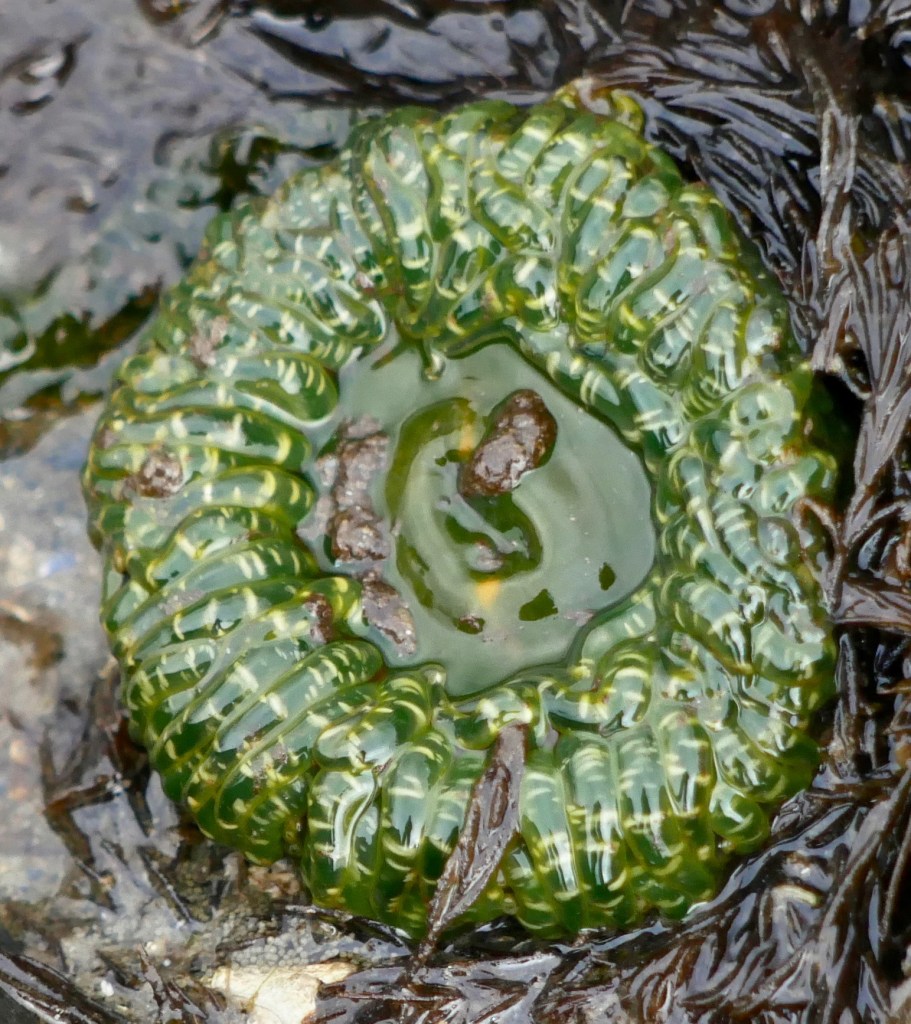
            Aki reluctantly follows me onto tidelands exposed by the ebbing tide. We can hear eagles bickering while they watch us from their spruce top nest. At water’s edge, plovers and other waders walk stiffly on sticky mud. I almost step on a sea anemone. Exposed to the air, it has to keep its green tendril tucked up tight. In a hour, as the flooding tide washes over it, the anemone will release its tendrils. They will flutter like a tart’s skirt, seducing small fish to their deaths. 

            A large raft of feeding mallards panic into light when a bald eagle flies near and lands. The ducks dither in the air for a few seconds and then return to the ground to feed a few meters from the predator. 

Bending Down to the Rain

Aki barely stirs when I walk up to her, harness and rain coat in hand. She raises up her head when I call her name then curls up on the bed where she spent the night. I know she can hear me. The sound of heavy rain drops hitting the house’s metal roof isn’t loud enough to block the sound of my voice. I ask her to get up. With some reluctance the little poodle-mix stands, does a downward dog yoga stretch, and lets me dress her. 

            I’m not looking forward to this walk in the rain. But I know that Aki will be squealing with anticipation when I park the car near the Treadwell Woods trailhead. After she leaps out of the car, I’ll climb out to join her, pull up the hood on my rain parka, and realize that it’s not as bad as I thought it would be. 

            We will walk into woods full of bird song, including the sweet-as-candy call of the American robin. Thrush and flycatchers, grown tame by the absence of other dog walkers, will ignore us as they go about their business. 

            Aki will investigate seductive smells. I will look down, not up for things to photograph, find an iron mine car railing emerging from the bell of a spruce tree. I will be surprised by other things that I passed by in the past without recognizing their beauty. It’s an unexpected benefit of having to bend down to the rain. 

Nest Fights

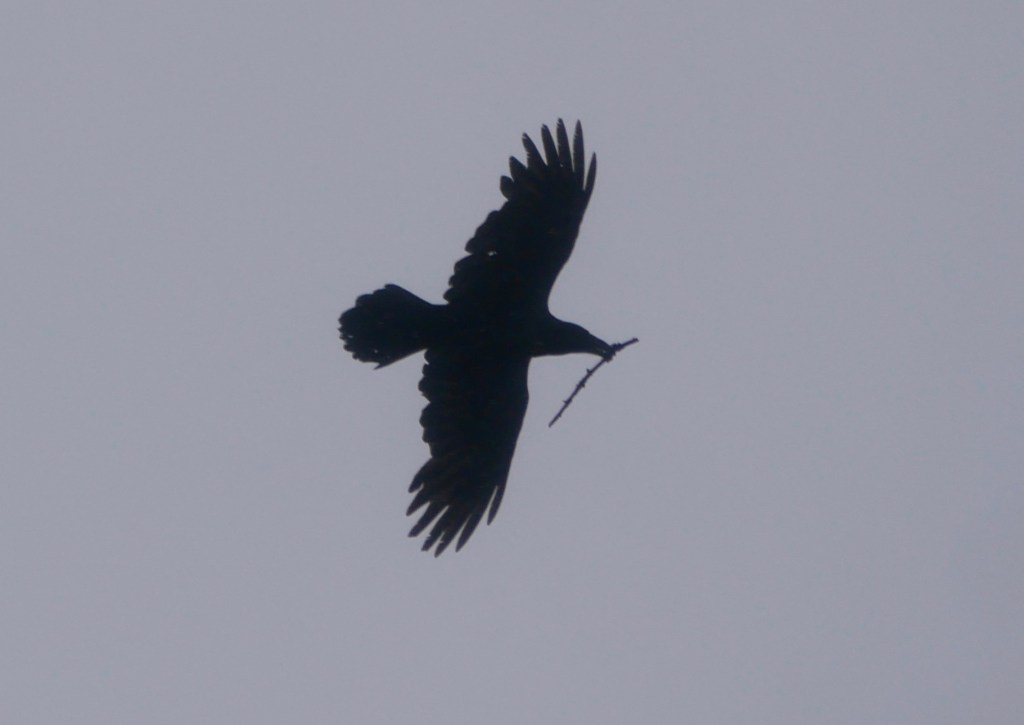
This morning we have wind-driven rain and a sky full of swarming scavengers. Just a few meters above the tree tops ravens and eagles juke away from and dive on each other. The ravens are making all the noise. Hampered by my rain-spotted glasses I first assume that a raven gang is trying to drive one eagle away from the forest and the river beach it fronts.  After wiping the glasses down with a handkerchief, I can see more than one eagle.

In less than a month, king salmon will rest in nearby river eddies before making their final push to the spawning grounds. Pink, chum, and silver salmons will follow. For most of the summer, the nutrient-rich carcasses of spawned out salmon will drift up onto the beach. Ravens and eagles tough enough to establish nests along the beach will have more than enough food for their chicks.

Eagles are doing most of the nest building. One eagle tries to keep a clump of old man’s beard lichen in its beak as it barrel rolls to escape two ravens. A third eagles takes advantage of the distraction to carry a cottonwood twig to its nest site. The members of the two bird clans are having a free-for-all fight over nest building materials. 

Mellow Swans

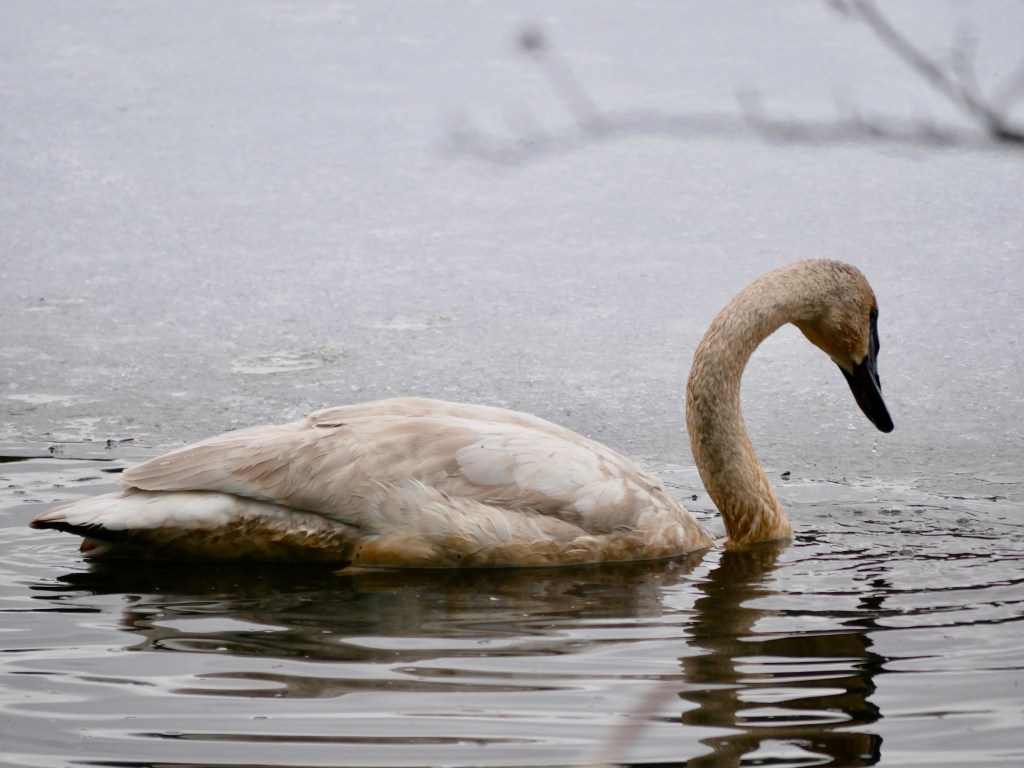
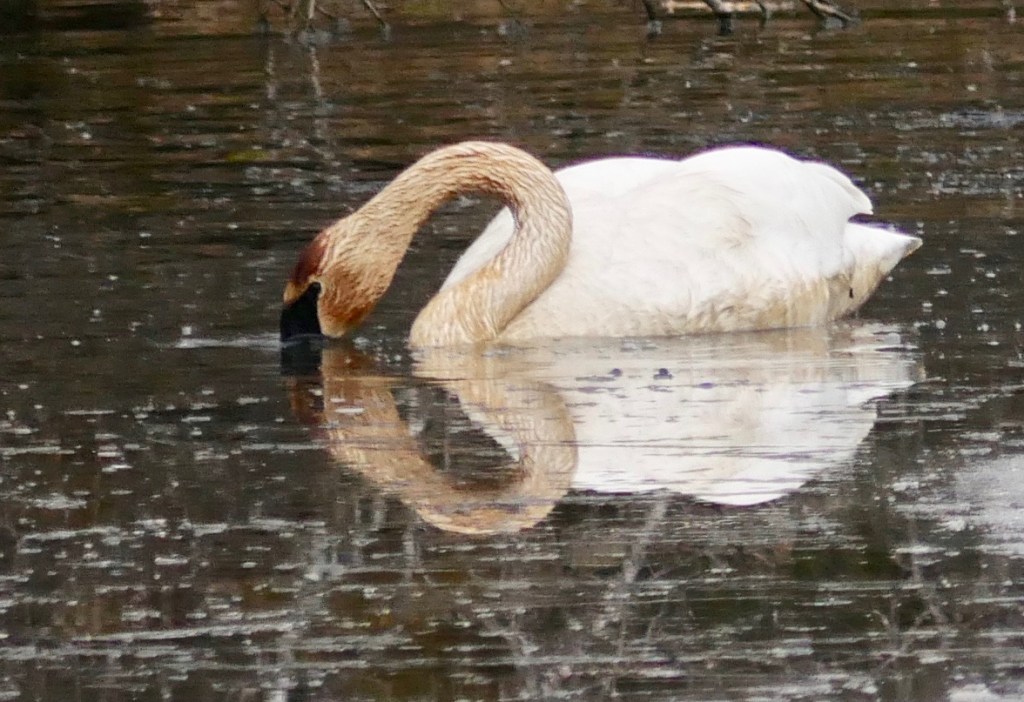
Aki stands staring at two trumpeter swans that feed in a sliver of open water on Moose Lake. Her tail is up but she doesn’t bark. The swans, only a meter away from her, continue to search for food in the calm manner they showed when we first spotted them.

            A screen of alders prevented me from seeing Aki approach the swans or I would never have let her go so close to the tired looking birds. I would have kept closer tabs on the little poodle-mix if not distracted by a stream of water drops pouring off the beak of a third swan that swam a few meters away from Aki’s brace.  

            Because of their massive size, few animals prey on swans. Trumpeters are the largest waterfowl in North America. Their wingspan exceeds two meters. Humans could bring them down with a well-aimed shotgun but that would break federal law. This might explain why the much-hunted mallards usually fly off in a panic when we approach but swans just ignore us. 

            This morning a brace of mallards paddle tight circles around one of the feeding swans. The mallard hen gives me a hard stare, then returns her attention to the swan. The ducks must be feeding on scraps that fall from the swans’ beaks or eating food stirred up as the swans dredge the lake bottom with their massive beaks. 

One Last Ski to the River

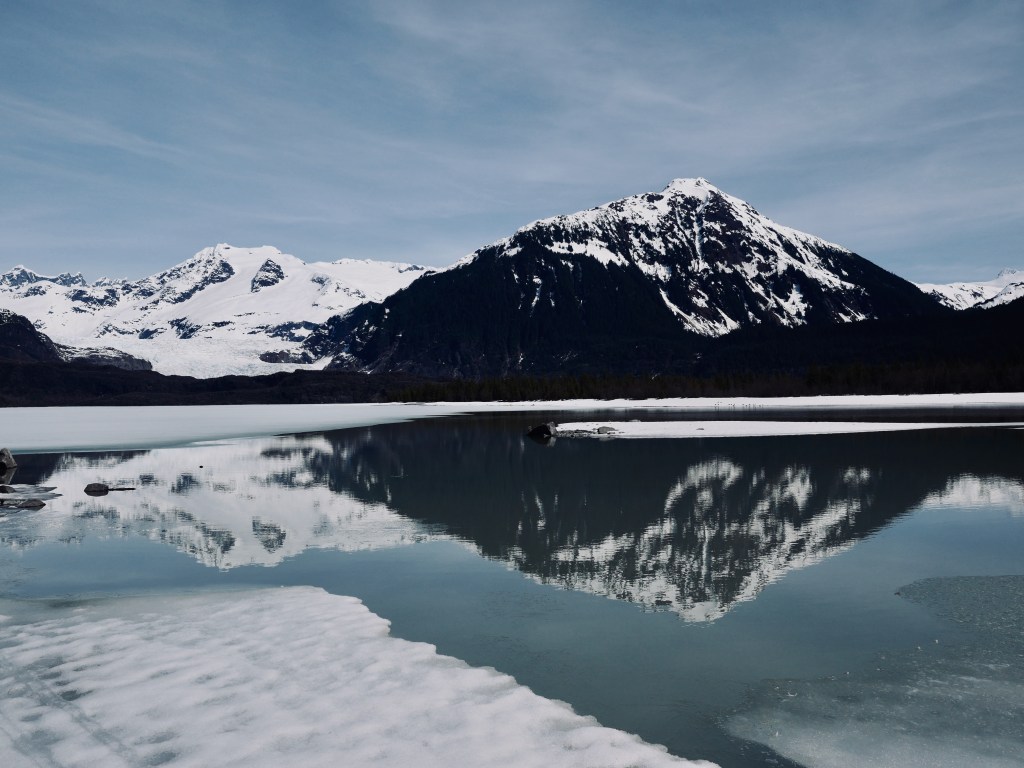
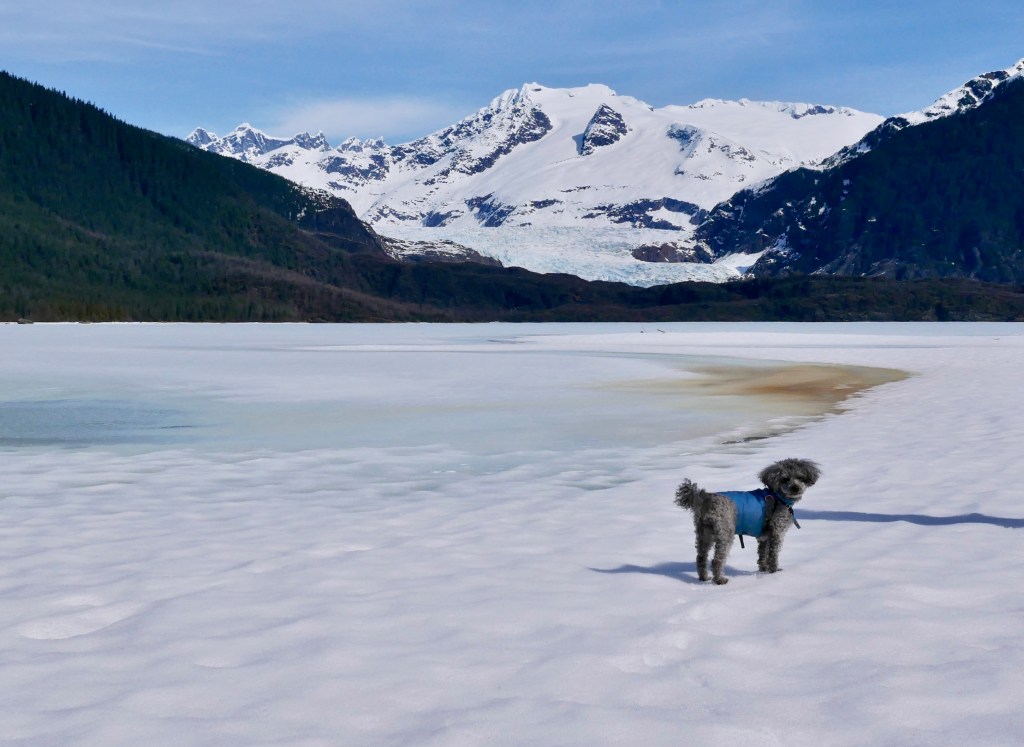
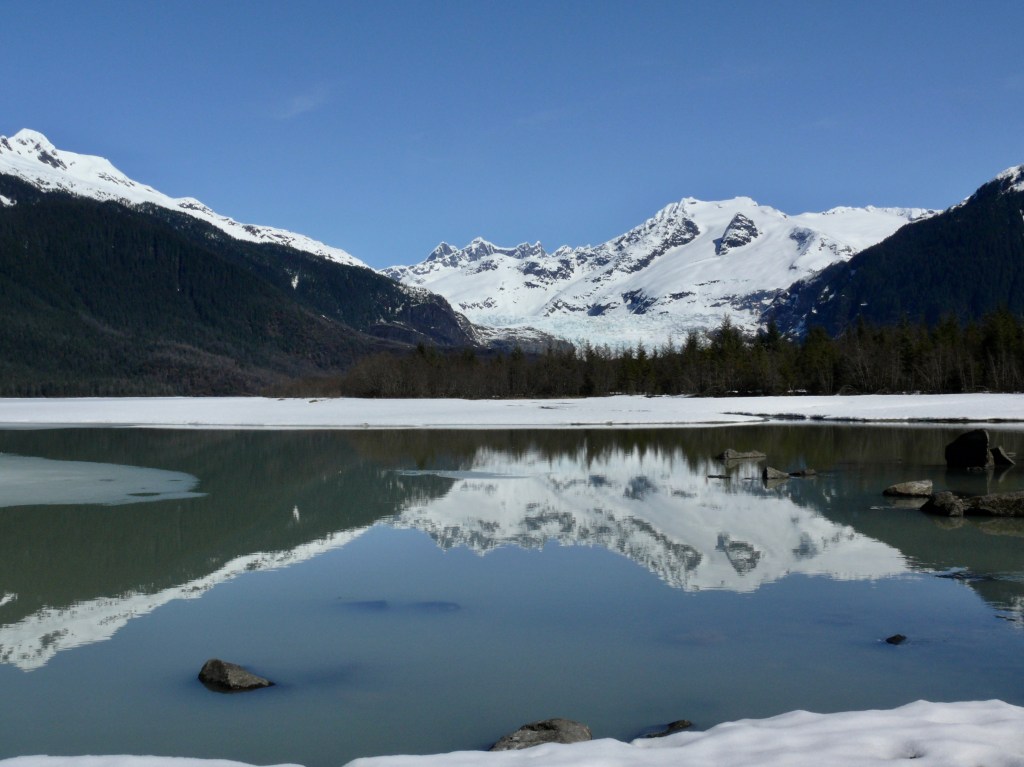
Wondering if we can ski all the way to the river, I lead Aki past Skater’s Cabin and onto the still-snow-covered beach of Mendenhall Lake. The snow is softer than yesterday but still firm enough for skiing. Like yesterday, we have the place to ourselves. 

            Aki rolls in the snow and then plants her face in it. Holding a handful of the coarse-grained stuff is like holding a handful of cold sand. Crush it and you have an ice cube rather than a snow ball. 

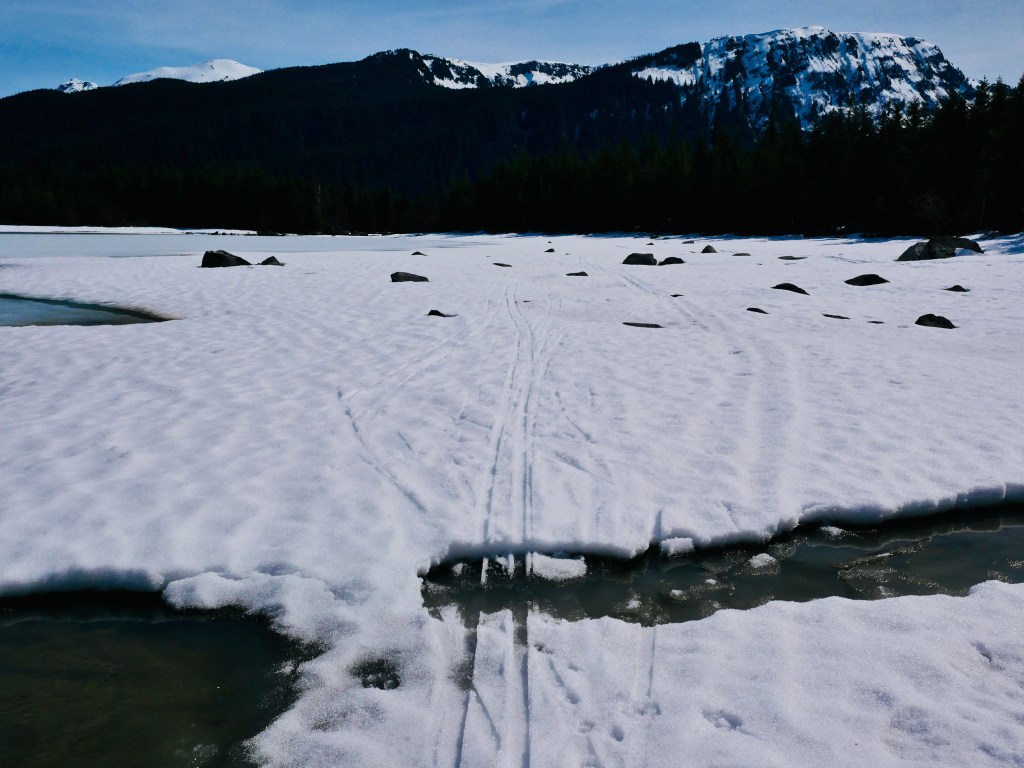
            I ski parallel to yesterday’s tracks, surprised to see the tops of rocks poking up through them. On the way to the river, my skis break through a snow bridge over a narrow stream. Thanks to expanding bare spots along the river, I will have to carry my skis a longer distance than yesterday.  

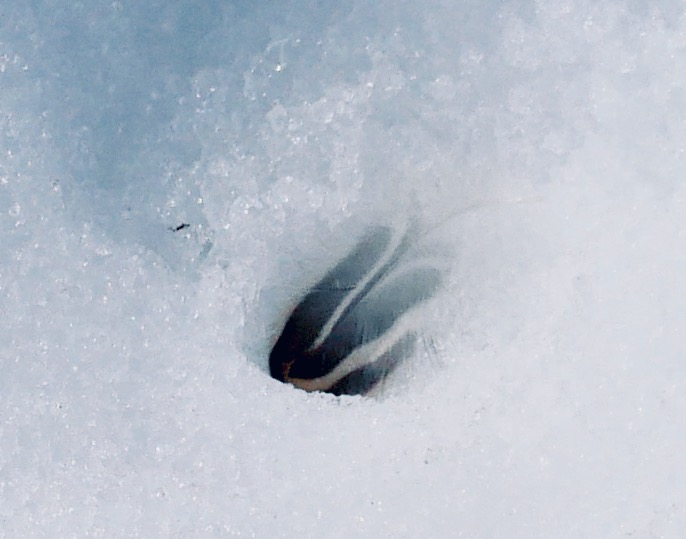
            We pass divots in the snow formed by light, fallen objects rather than rocks. Sun heated things leaves, feathers, and tangles of tree lichen have melted the snow where they came to rest. I remember visit I made this time of year to Grayling on the Alaskan portion of the Yukon River. An Athabaskan man was scattering wood stove ash onto a bulldozer sized patch of snow. When I asked him why, he dug down until he struck the yellow-colored cab of a small Caterpillar earth mover. 

Safe Social Distancing

It’s already 10 degrees Celsius and the sun’s been up for hours. Good thing I can hike in these ski boots, little dog. Aki, who knows she will get in a walk one way or another, doesn’t care what kind of boots I pull on this morning. After securing her in the car and fasten skis and poles on the roof top carrier, I drive out to Mendenhall Lake.  A lot of snow covered the shore two days ago. Maybe we can still ski along the beach. 

            The warm, sunny weather has drawn people away from their home shelters. Cars fill the Fred Meyers parking lot. More head out Glacier Highway to drive thirty miles to the end of the road system and return. I expect to find the lake shore crowded with people escaping quarantine. But the Skater’s Cabin lot is empty as is the lake. This is almost as surprising as trail conditions. The temperature dropped below freezing last night long enough for a thick crust to form on the beach snow. 

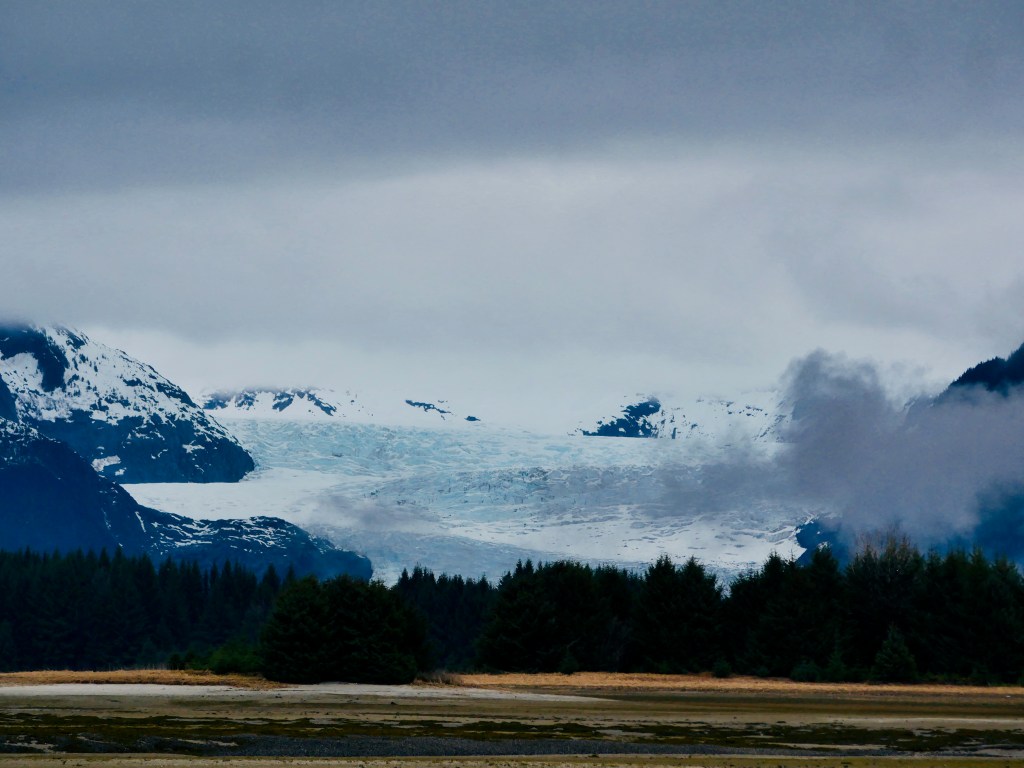
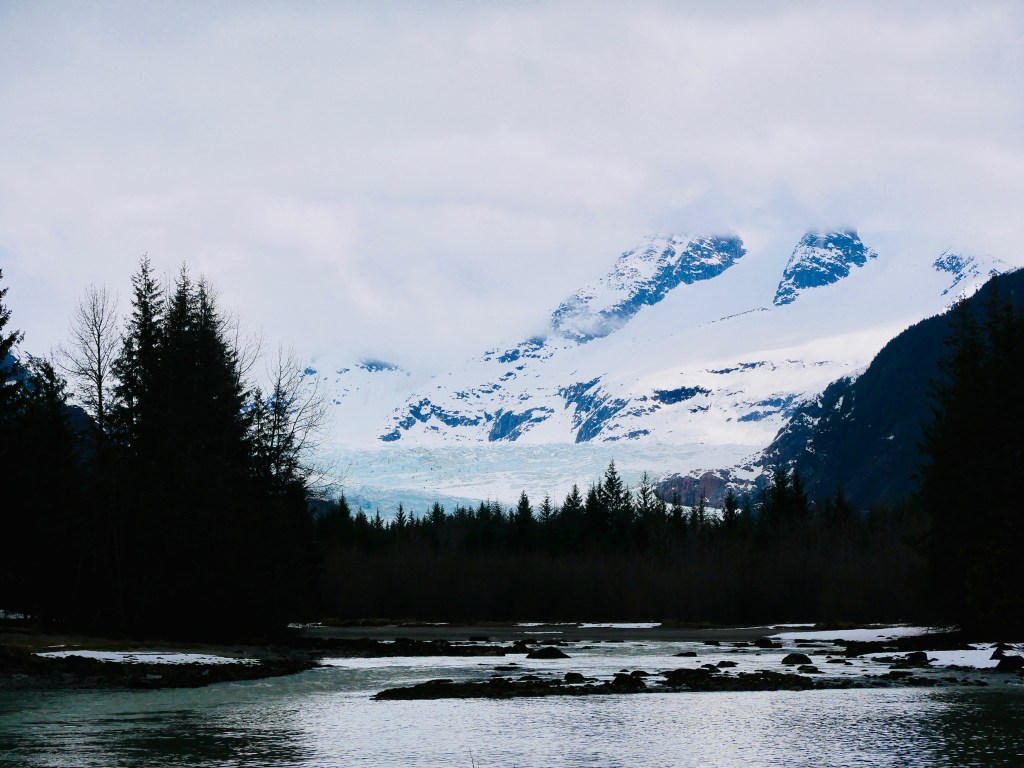
            The little dog trots behind as I sneak onto the lake ice to skirt a bare spot in the beach. It holds, even offers good skiing. I think, for a few seconds, of leaving the safe, solid shore for the freedom offered on the lake ice. We could ski all the way to the glacier free from people and virus worries—establishing a social distance of six kilometers rather than the two meters we must struggle to maintain at the grocery store. But breaking through the lake ice far from help could create a social distance I could not close without becoming a ghost. 

            We return to shore and ski again to the river where mallards sunbathe on the snowy banks. Some fly further downstream when we approach. Most just ignore the little dog and I. The even ignore the martial sound of an avalanche crashing down the flank of Bullard Mountain.