Category Archives: Southeast Alaska

Norton Lake

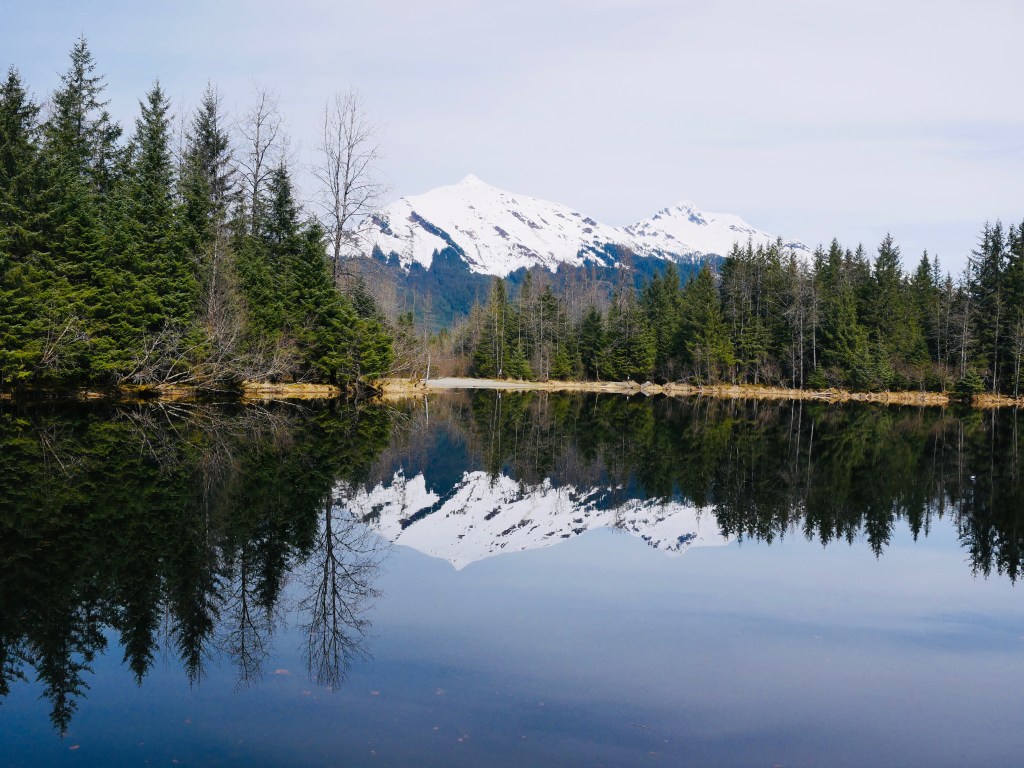
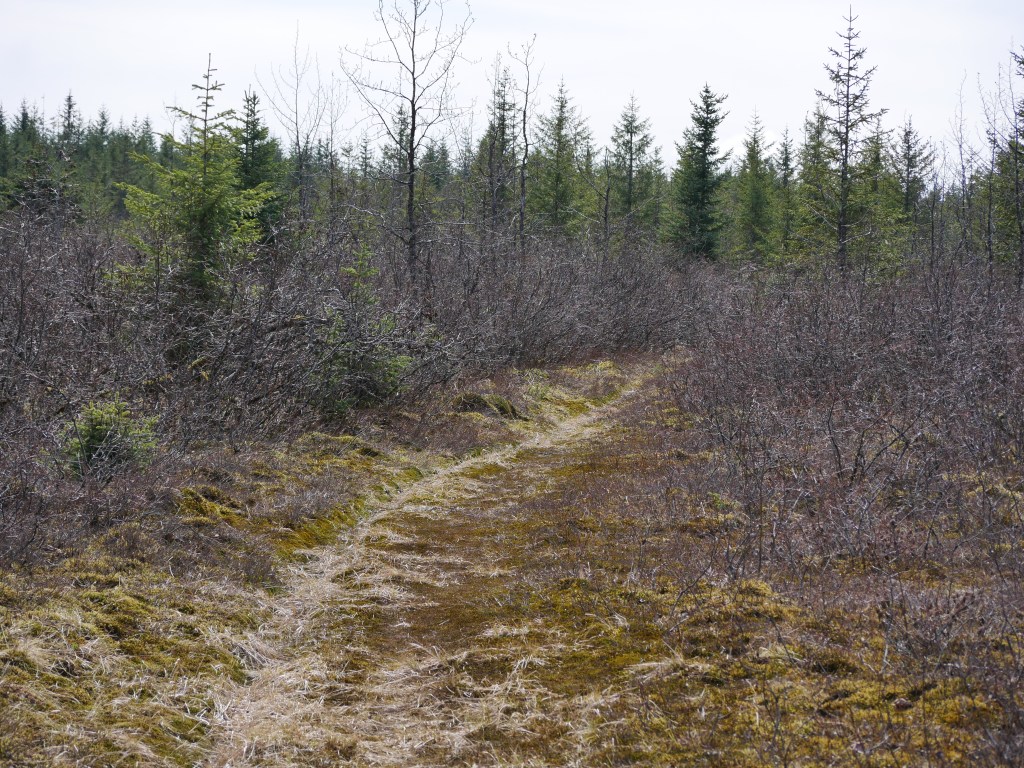
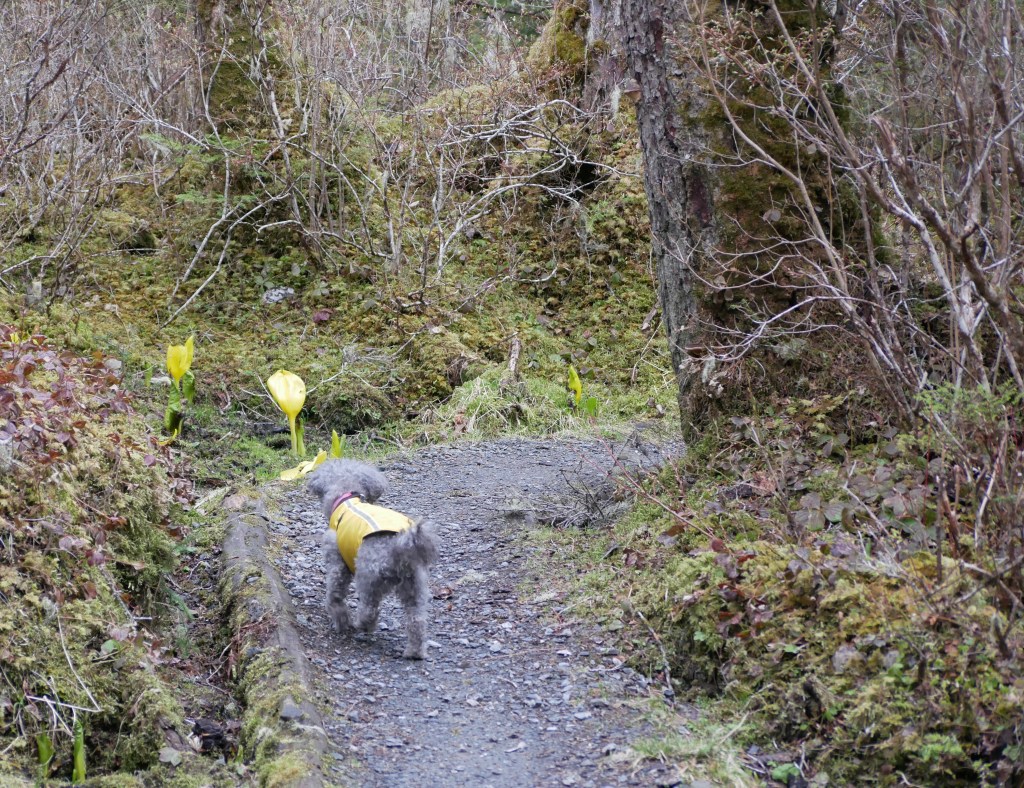
This is our third attempt in a month to reach Norton Lake. Water backing up from a beaver dam flooding the trail forced me to give up on the first two attempts. It has dropped enough to allow me to reach the lake with damp, but not soaked boots. Aki and I splash along the edge of the water until reaching an old beaver dam. I walk across the top of the dam until reaching a deer trail that leads to the lake. 
Aki didn’t walk onto the dam until I was most of the way across it. When I look back, she gives me her, “Are you sure this is how you want to end your life?” look. I search the pond waters for crocodiles and the nearby woods for bears. Seeing none, I push on. Aki dashes across the dam to join me on the other side. Then, she gives me her “I hope this is worth it” glare. 
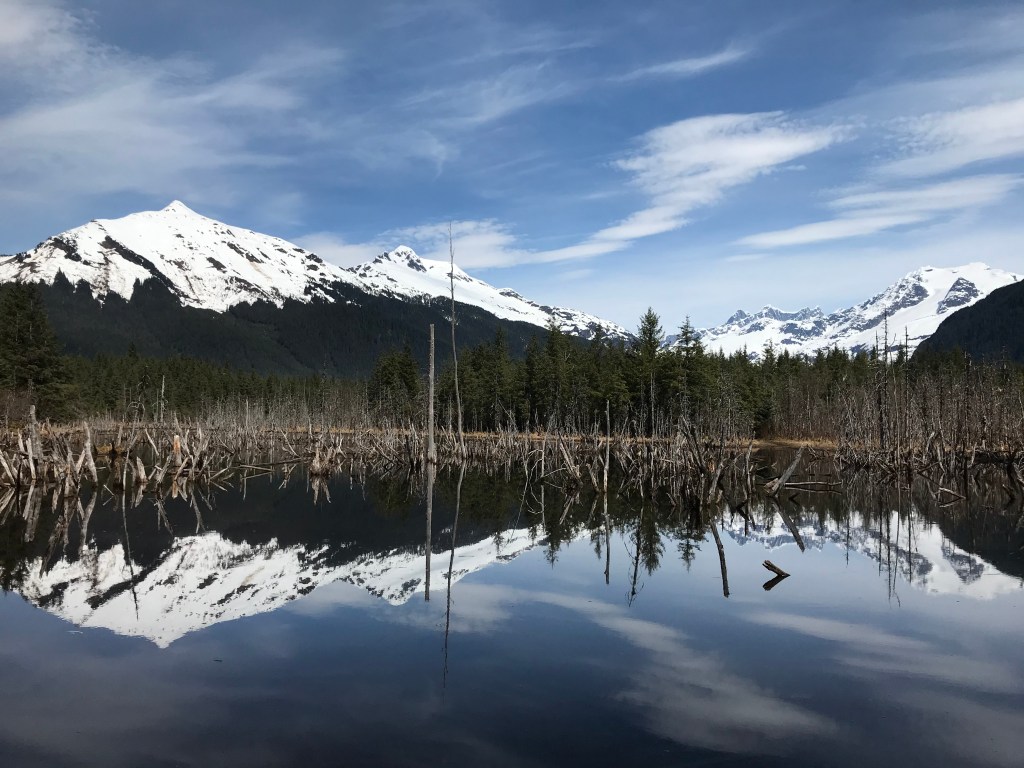
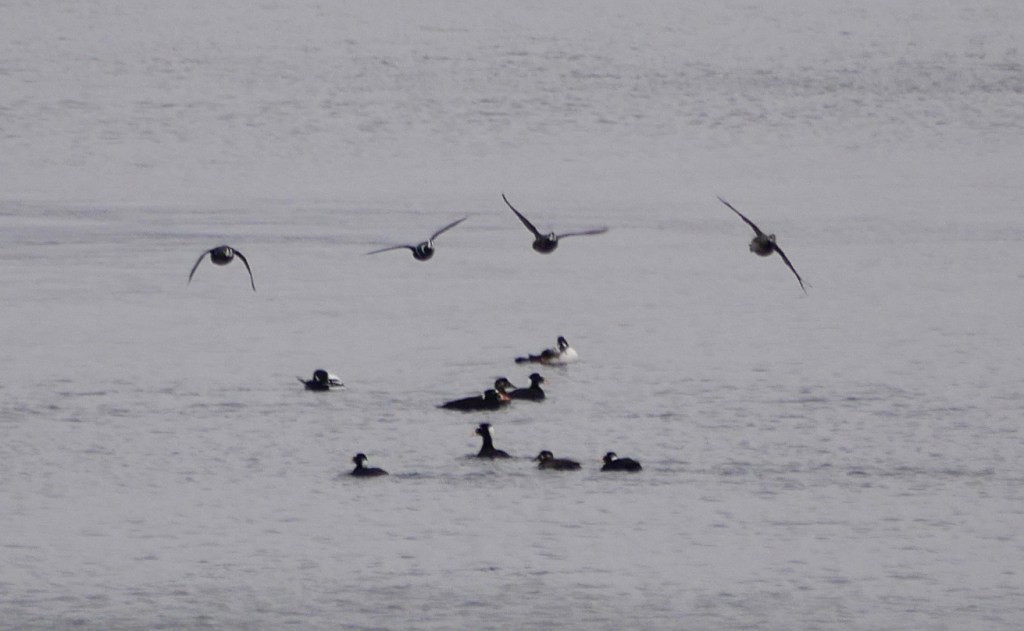
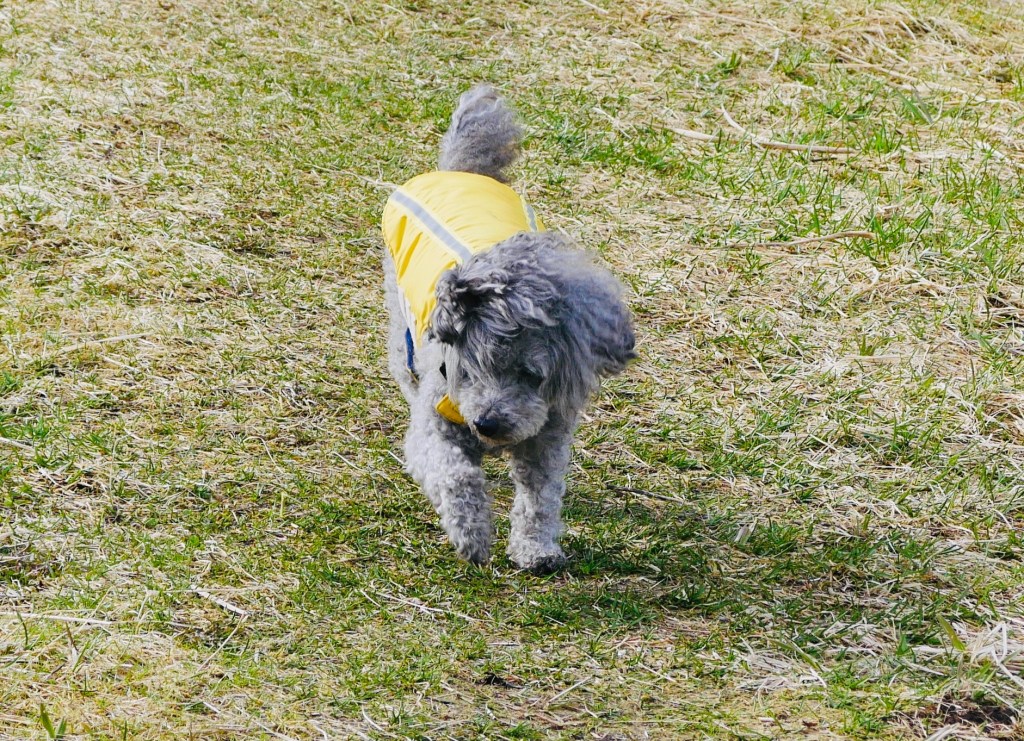
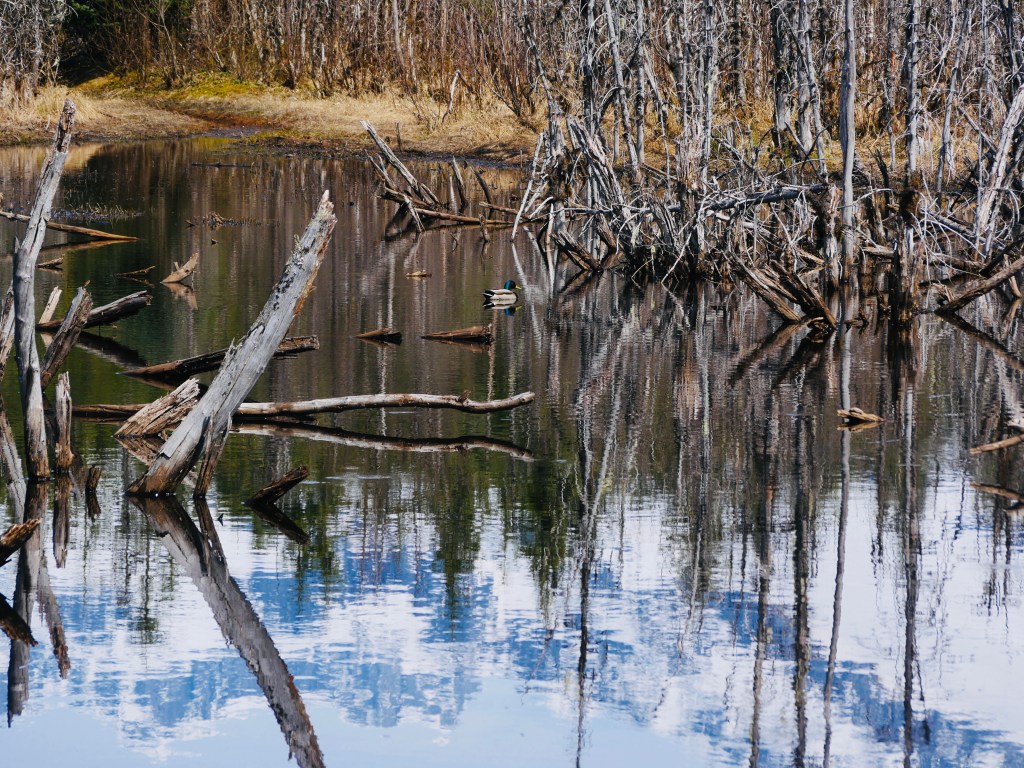
              Few dogs have passed this way so at first Aki has little use for her nose. Then she finds beaver scent and appears to go into a trance as she rolls in it. That must have made the dam crossing worth it for the little poodle-mix. I expected a chance to view more northbound waterfowl or even a young beaver looking for a mate. But we only see a bufflehead drake and a small gang of tense looking mallards. 
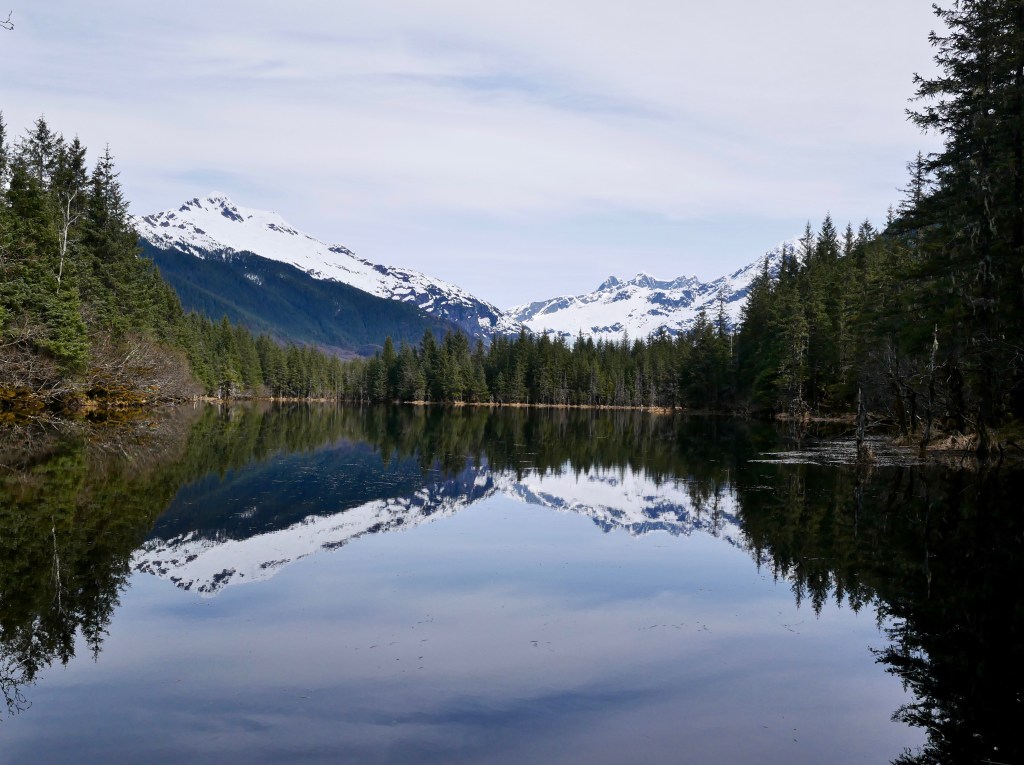
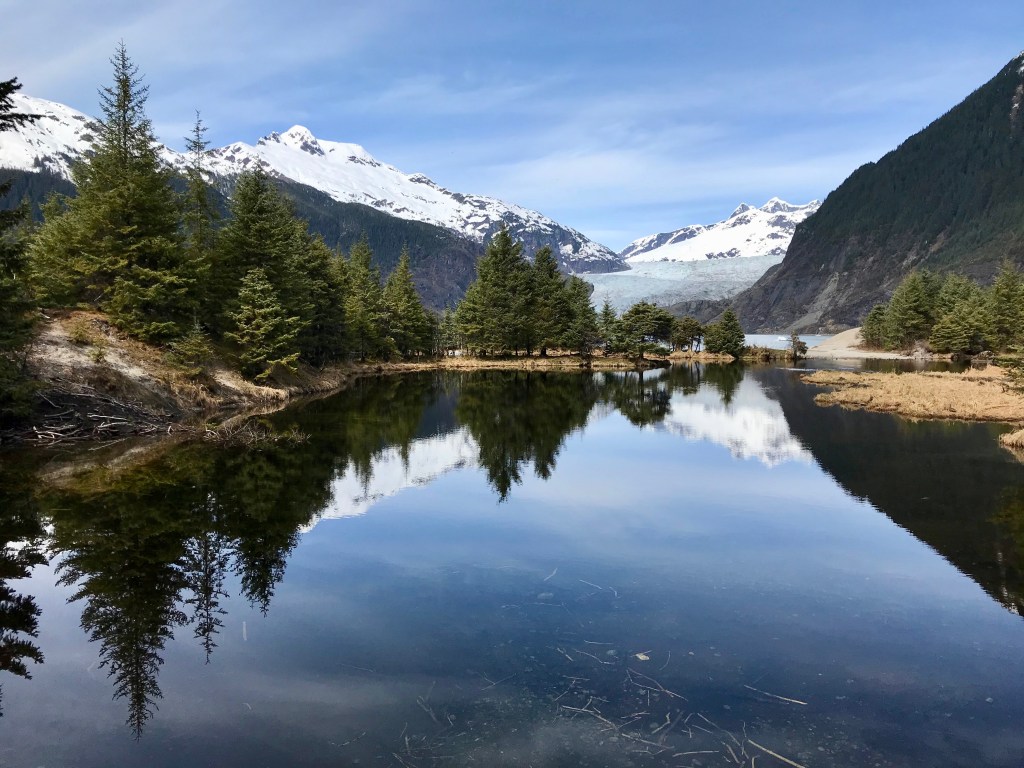
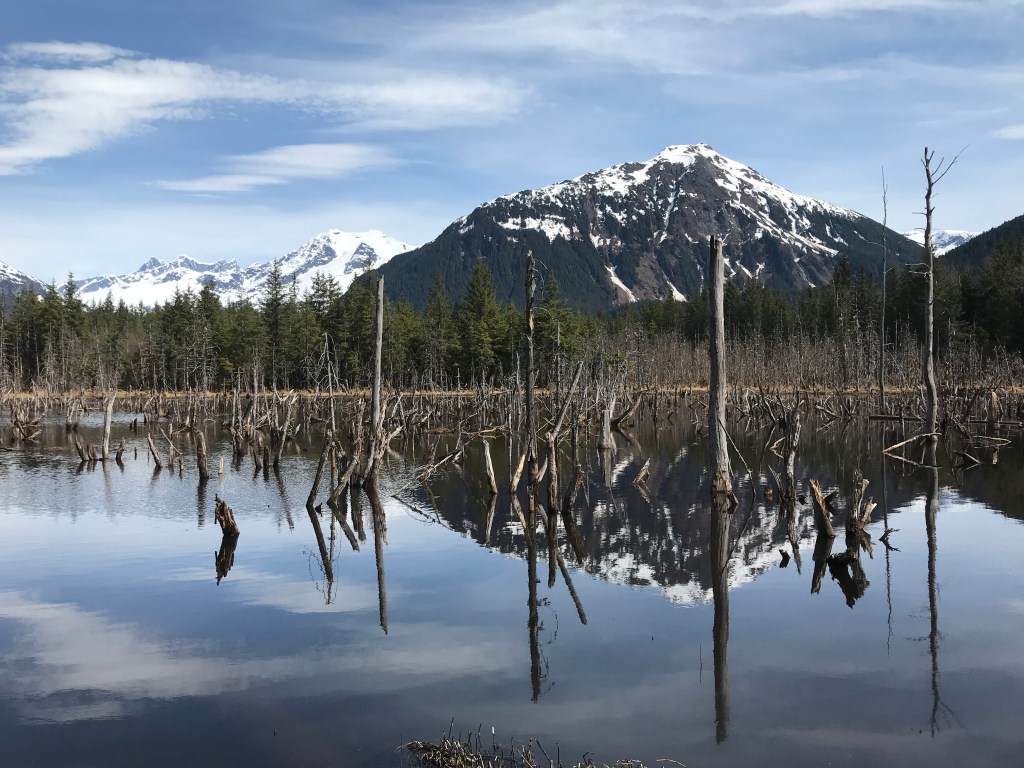
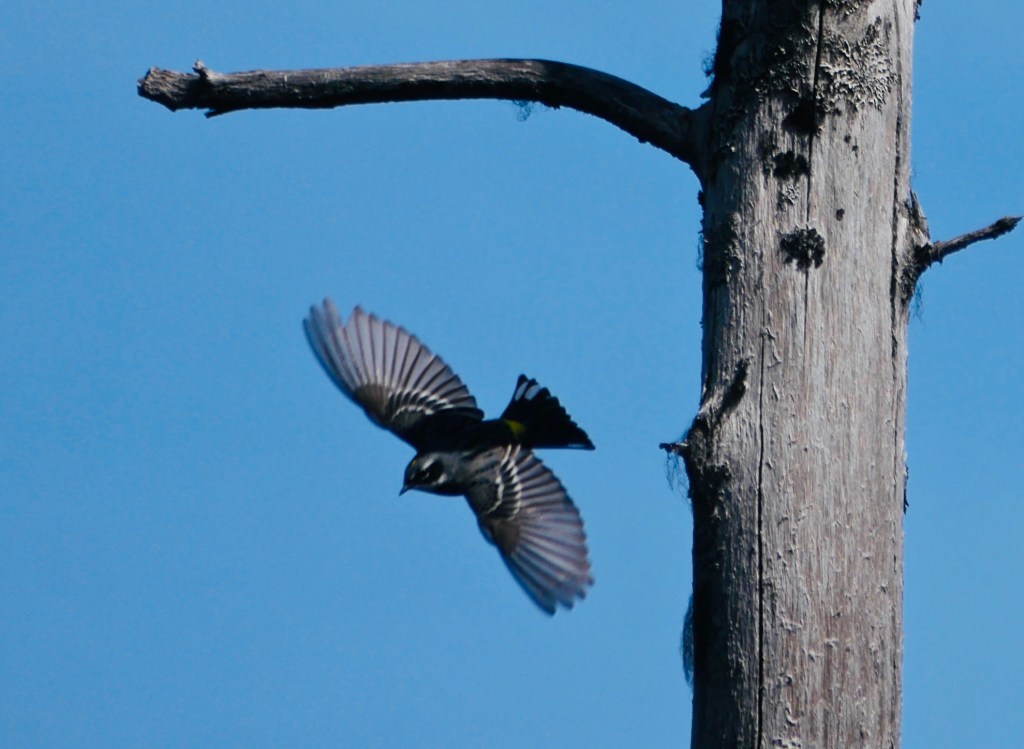
            It’s a clam day so lake provides a nice mirror for the glacier and Mt. McGinnis. Little birds sing and make quick sorties onto the ground for seeds or gravel but don’t stay long enough for me to make an identification. Then, an alder flycatcher bops unto the limb of a dead snag lets itself be photographed. I manage to take two photos—one when it is frozen on the snag, and the other with its wings flashed out in a turn. 
Alone with the bears

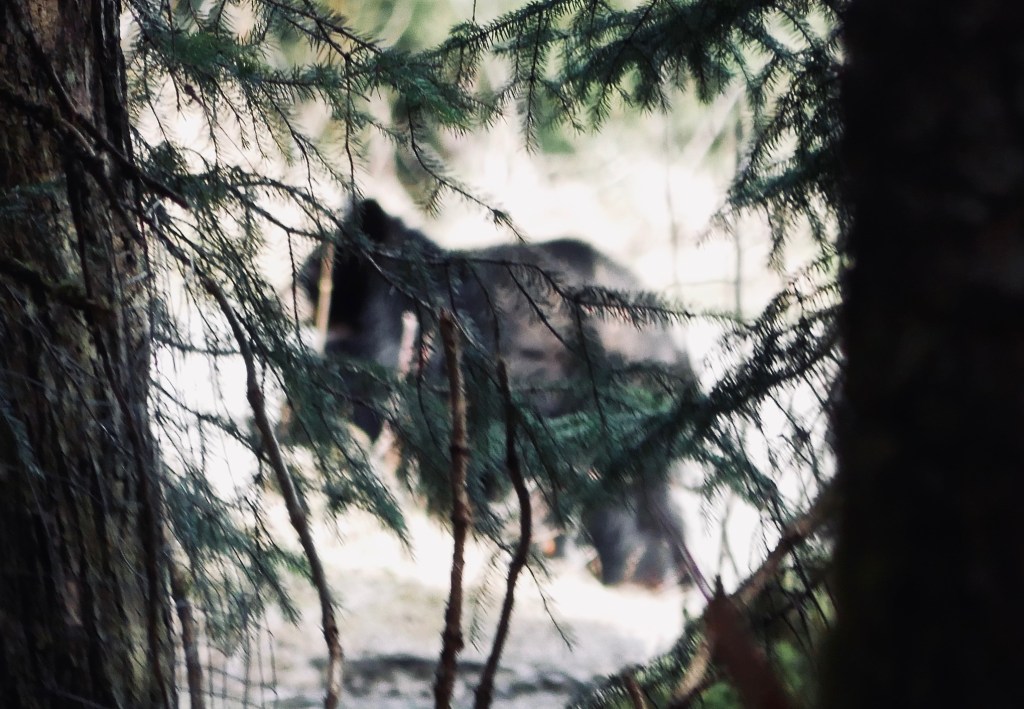
When the bear and her two cubs wander out of heavy brush, I’m pulling off my sweatshirt. The plop-like sound of the hoodie releasing its hold on my head causes momma bear to look across the stream that separates Aki and I from her and hers. As I fumble through switching the telephoto for my wide angle lens, the bear family slips back into the brush. I manage to spot mom moving between two large spruce and the teddy bear face of one of the cubs poking out from a tangle of alders. 

            If Aki tumbled to the bears’ presence, she didn’t let me know. We start down a trail the troll woods away from the bear family. I didn’t want to enter the woods on this blue-sky day. It would have been better to circle around Crystal, Moose or Moraine Lake, watching transient ducks, like blue wing teals, paddle across the reflections of the glacier or one its mountain consorts.

            The bear’s was the only family we would see on the moraine. That was my plan. We had to avoid the beaches because it is Sea Week. Today’s minus 4.4 foot low tide will drawn every family with grade school children to our beach trails. For the past 49 years the kids would have ridden school buses to the beaches exposed by big spring tides to celebrate Sea Week. Naturalists pointed out cool things found in tide pools and helped them understand the power of the tides. This year, thanks to the virus, parents must take on the naturalists’ role, like they have to be their kids teachers after the schools closed, like mother bear does for her cubs.

Orange-crowned warbler

It will be a quiet summer

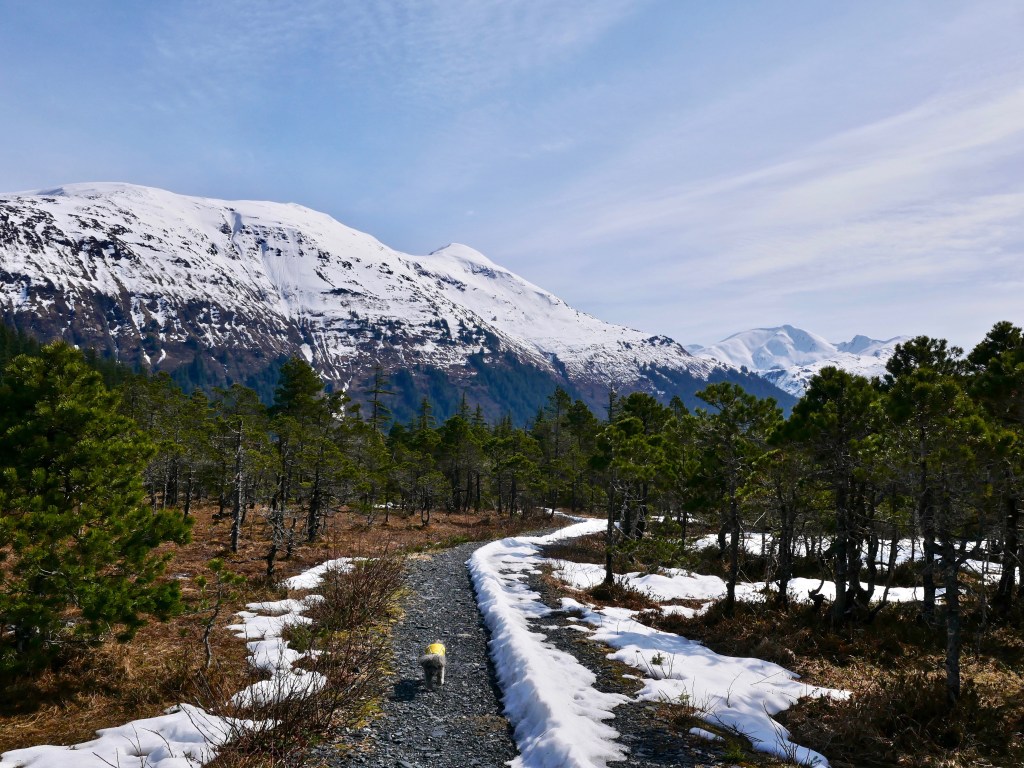
The snow seems to have vanished from the glacial moraine, uncovering dead grass, bare blueberry bushes, bones, and a scattering of feathers. Aki finds the feathers fascinating. The bird that sported them must have died near winter’s end. The little dog rarely shows an interest in old feathers. 

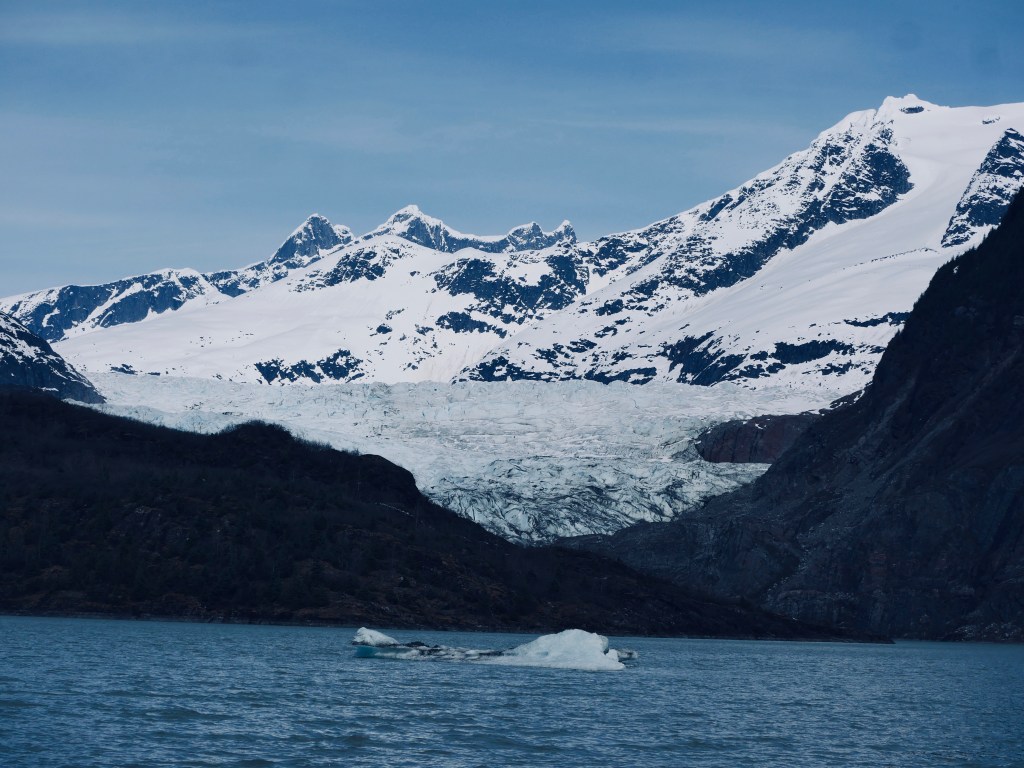
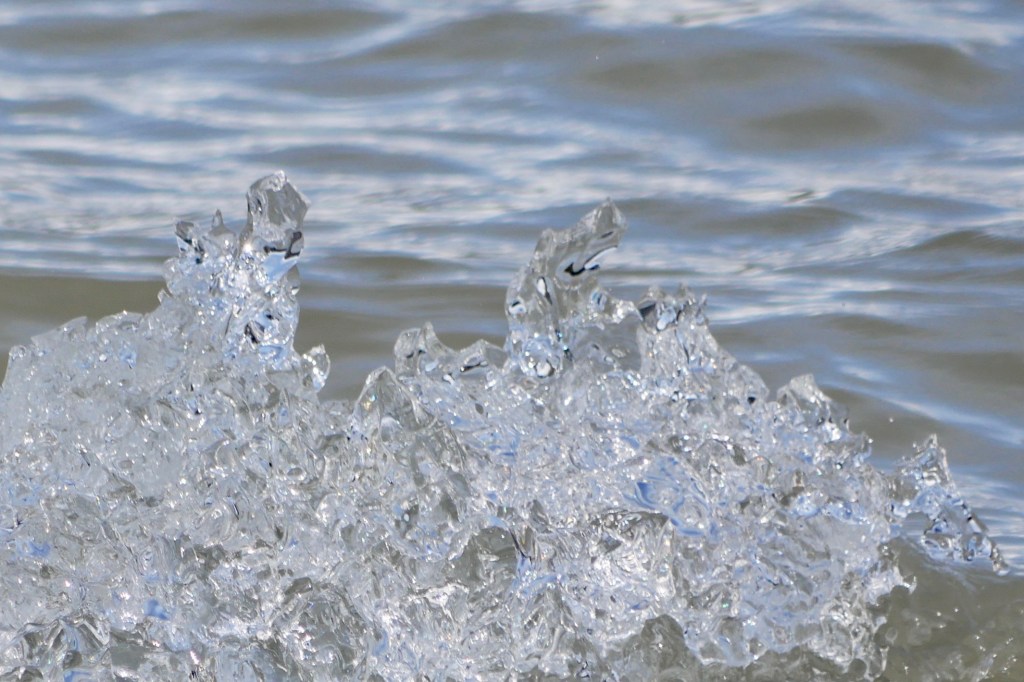
            The lake is now ice free, if you don’t count icebergs recently calved by the glacier. Some sail like boats across the lake. Most have come to rest in the shallows. Most look white after escaping from the glacier. The older ones crystalize into super-clear ice. Then, they melt away.

            I wish Aki had the patience for kayaking. If she did, I’d be on the lake right now, making the long paddle to the glacier’s foot. After beaching the boat, the little dog and I would look for translucent-blue caves in the melting ice. I usually make such a visit in early May, before the cruise ship tourists arrive. 

This year, cruise ships will not their usual disgorge their usual million tourists onto the Juneau docks. They have cancelled all sailings to Alaska. Aki, the other locals and I will have the moraine to ourselves. I’ll have the pick of summer days to paddle out the great river of ice. 

Just Passing Through

After yesterday’s canoe ride under technicolor skies, this walk on the wetlands may disappoint. Flat gray light flattens the scenery. Still, the color-blind little dog is finding plenty of smells to keep her busy. 

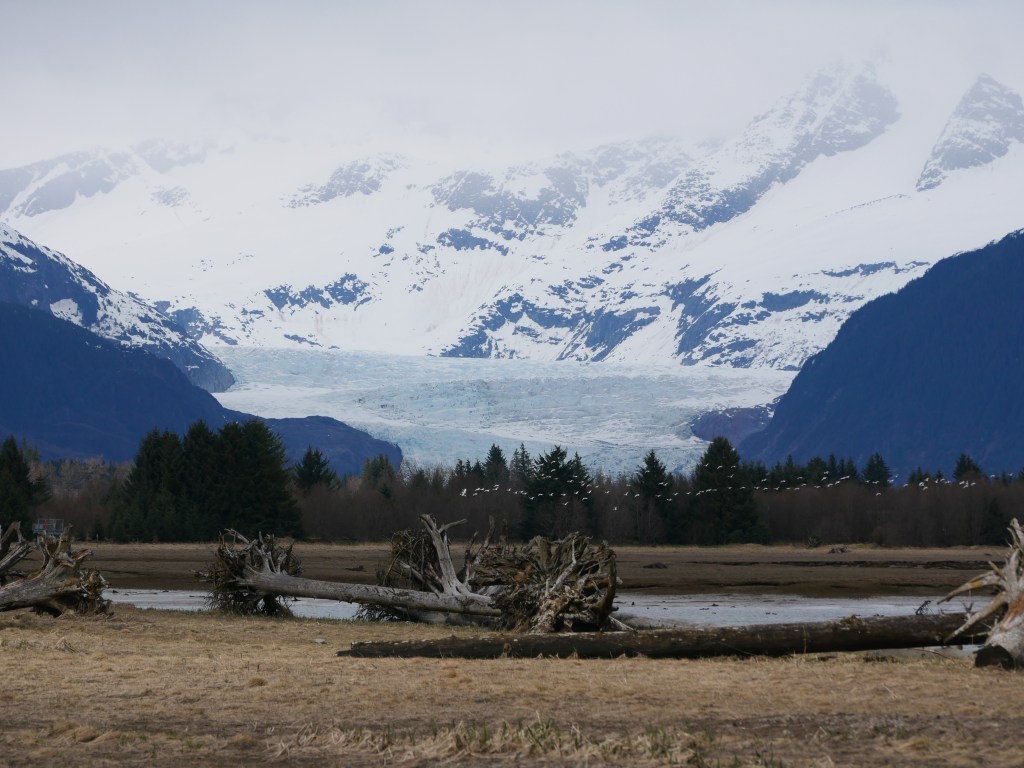
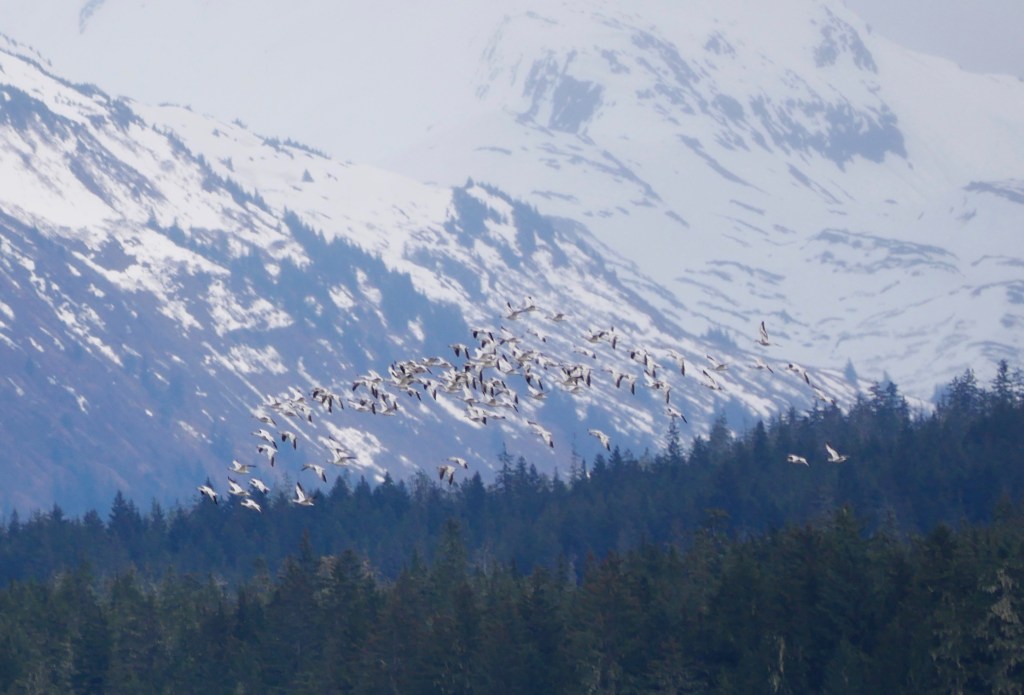
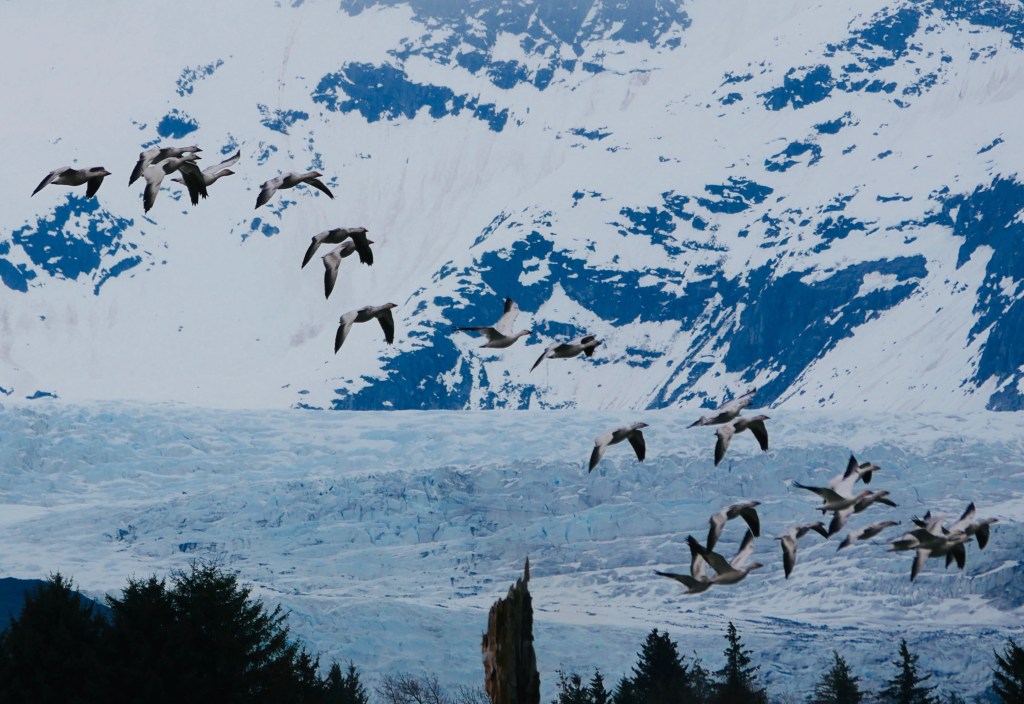
            A white cloud rises out of the pewter-colored river and pulses over the wetlands. It also honks. Snow geese. Over a hundred of the white travelers swirl toward us and then crash into the river. If another dog doesn’t spook them, we may get a decent view of the geese. They are just passing through. Soon, they will continue their flight to their traditional nesting areas along the Bering Sea coast, over 1500 miles to the north. They need their rest. 

            Other northern migrants manage to get in some sleep today. A small scattering of canvas back and red headed ducks are curled up on the riverbank mud like sleeping sled dogs. A large flock of shorebirds aren’t so lucky. They are being chased from one end of the wetlands to the other by a husky-mix dog.    

Early Season Canoe Trip

Aki watches her people tie on masks outside the grocery store. She squeals in fear, not that we will be arrested while robbing the store. She squeals in fear that we will take precious outdoor time shopping in the store. She had better calm down. After searching the store for flour and tahini we are heading to the end of the road. Aki is in for a wait. 

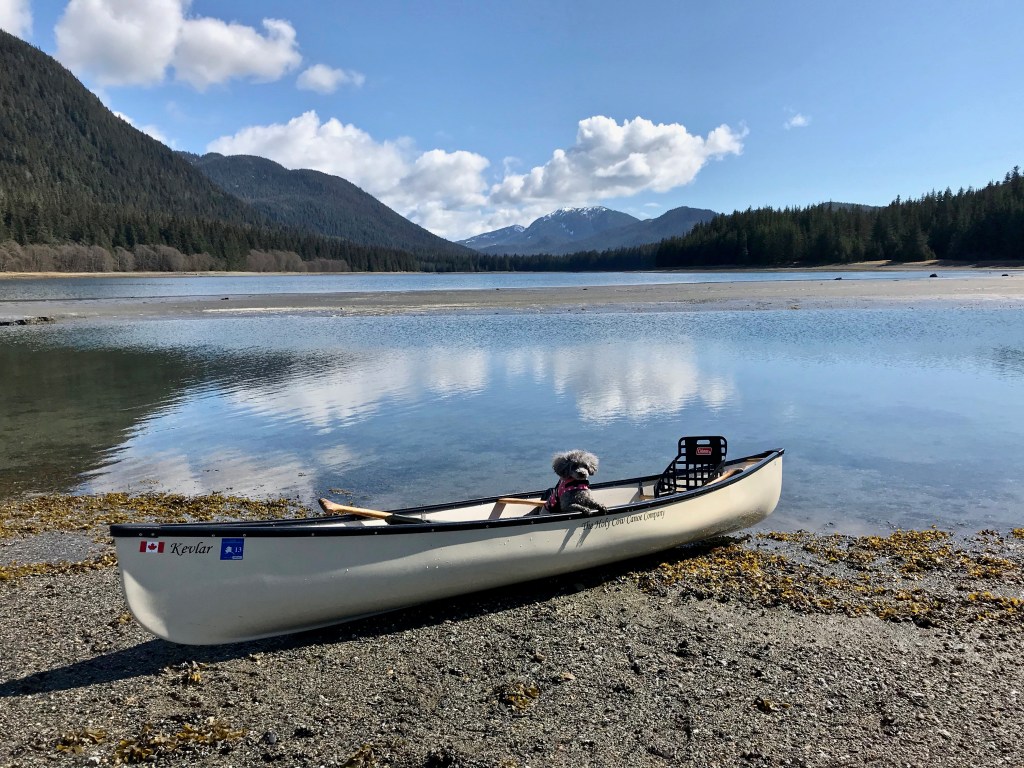
            The store is out of flour but we are able to buy tahini and a bag of dog treats for the poodle-mix. Keeping the treat a surprise we drive 30 miles to the north end of the Juneau road system and launch our canoe in Echo Cove. Fighting a head wind, Aki’s humans make slow progress toward our destination—a large sandbar that narrows the mouth of the cove.

            This early in spring, the cove’s birds act tame. Two marble murrelets paddle without haste a few meters from our canoe. A line of Bonaparte gulls let us get within a few meters before moving off. A single murre pays us no attention. Other gulls scream and hover over a ball of herring or hooligan. They are all here to feed on young salmon, herring, or hooligan, called candle fish for their high fat content.             

Aki makes us carry her from the canoe after we land on the sand bar. Once she feels sand beneath her paws, she tears around in circles. She’ll make many more circles in the sand before we use the canoe to return to the car. The little dog will sleep in the car and have just enough energy to mooch rice from her human’s dinner. It was a good day, except the lack of flour.   

Little Grumpy

Aki is in a sulk. Whether tired from yesterday’s forest hike or just disinterested in another walk in the rain, the little dog drags behind as I try to hurry up Basin Road. I want to reach the Perseverance Trail before the mountain goats move too far up the flanks of Mt. Juneau. Each spring morning they work their way up the mountain side so they can be far away by the time most dog walkers start up the trail. We should be early enough to spot them fairly close to the trail. 

            I also hope to see two yearly bear cubs that were playing in an avalanche runout two days ago. Close to fully grown, the cubs spent the afternoon climbing up a snow field and sliding down on their rear ends. Apparently not interested in bears or goats, Aki is content to sniff every inch of the road. After an extensive examination, she throws me one of her significant looks. It could mean that she is tired and bored and I am a fool to be out here in the rain to early in the day for encounters with other dogs. I suspect she is trying to tell me that a bear waddling down the road last night and she has no interest in meeting it today. 

Trail Less Traveled

Aki is frustrated. She and I have spent the last hour driving from one trailhead parking lot to another, looking for one that is not jammed with cars. She can’t understand why we have to avoid crowded trails. The Fish Creek parking lot has a half-a-dozen cars but it services three trails. We take the one least traveled. That will make all the difference. We will only have to pass three guys, and that at place to will allow us to keep three meters of distance.

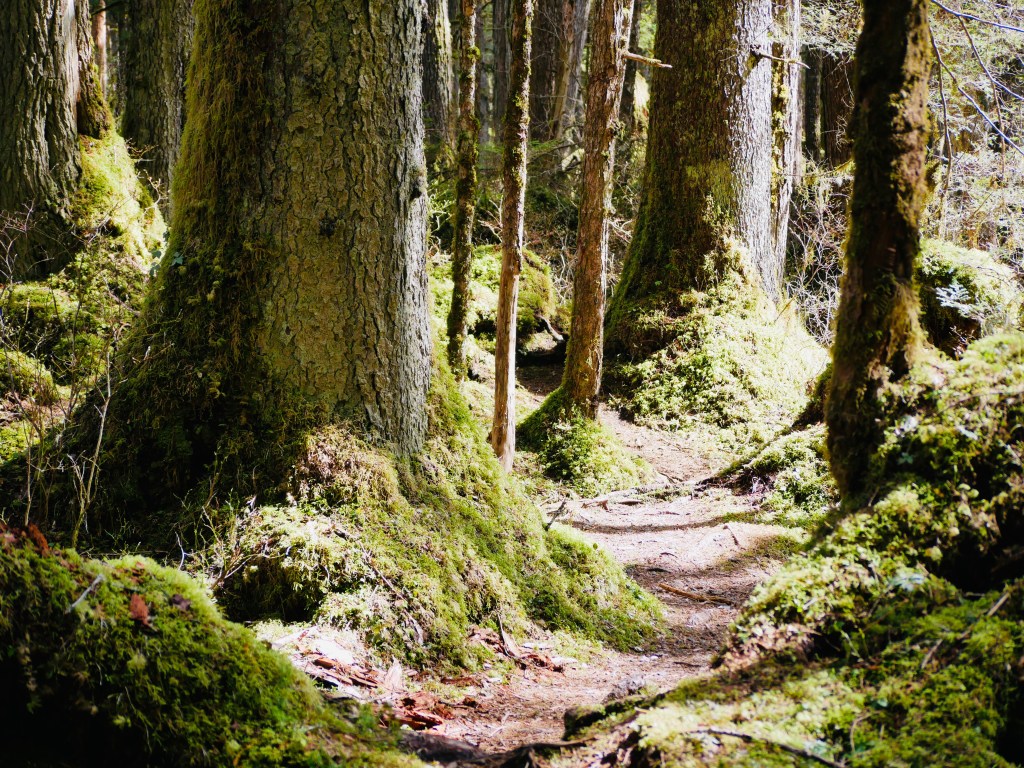
            Our chosen trail takes us up the creek, past an amazing number of huge spruce trees. Many might have sucked water from the creek during the English Civil War. Most stood before white people arrived in North America.

   Few fish swim in the creek. It’s too early for adult salmon. Until they arrive, there will be no trout or dolly vardens. By now, most of the salmon smolt have made it to salt water. If we see a flash of silver in the stream, it will be a spawning steelhead trout.

            We can hear bird song when the trail takes us away from the noisy creek. Two male sap suckers pound spruce bark, trying to attract a mate. Nearby, a trio of pine siskens lands on a wind fallen spruce to tear thin strips from the bark for nests.   

Pocket Wilderness

I expected a grey but dry day when we set out for Gastineau Meadow. Then the sun surprised us. Like most rain forest dwellers, I’ve learned to find beauty in soft, wet days. I even appreciate the power of storms. But that shell cracks when warmed by unexpected sunshine.

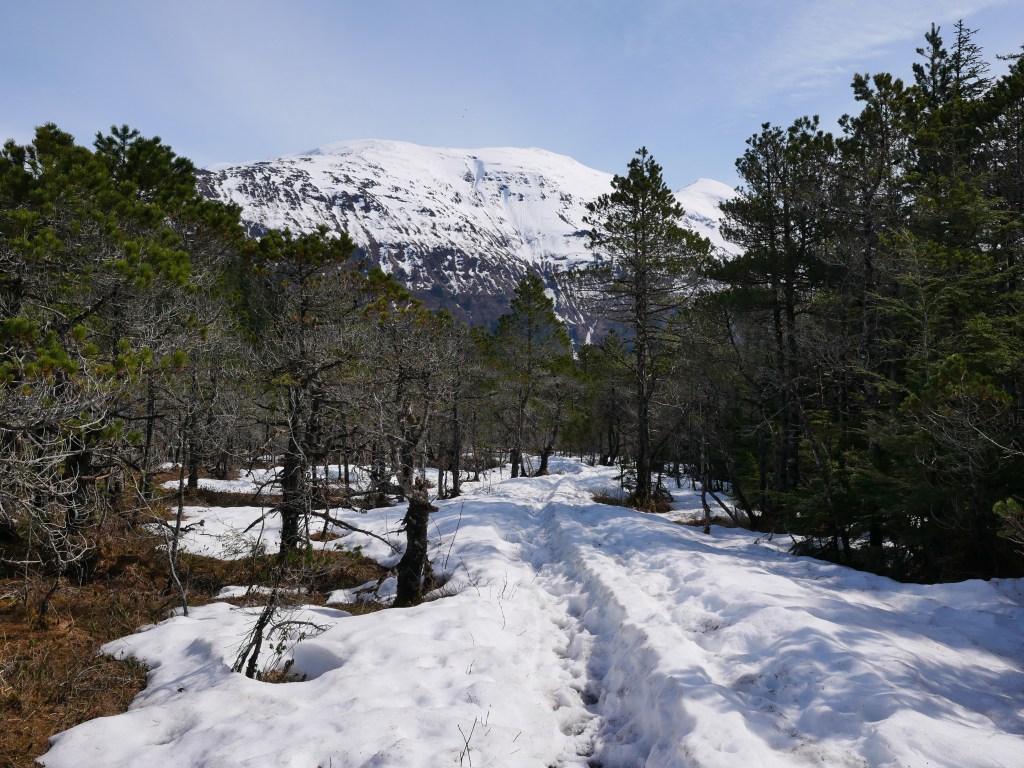
            Snow still covers part of the meadow trail. A sharply defined line of it stands in the middle of the trail, like the third rail of the D.C. Metro. The snow forming the line was compressed tight by many winter-boot prints. It will be the last to melt.

            Robins sing and Stellar’s jay scold from the branches of Douglas pines. I wish the jays would let the robins perform. After a winter of silence on the meadow, spring bird sounds are very welcome. 

            I coax Aki off the main trail and follow a deteriorating one onto the meadow.  Without meaning to, we flush a flock of dark eyed junkos off the snow. Some carry bits of dried grass in their beaks. They will fledge two crops of chicks in their meadow nests before the snow returns. 

            Even though Aki and I enjoy the warmth of this spring day, we will miss the snow. When it finally melts away, the still frozen meadow beneath it will thaw, making it a mess for walking. We won’t see the wildflower blossoms turn pink or yellow or watch the fruit of ground hugging berry plants plump and color. Those things will be for the birds, deer, bears, wolves, and coyotes on this pocket wilderness. 

Silence

Wind-driven rain slammed into the car as we drove out to the northern end of Douglas Island. The rain but not the wind stopped when we arrived at the trailhead. When a few minutes down the trail we flushed a varied thrush from the trail. It landed on a nearby alder branch and gave the little dog and I a hard stare. That’s when I notice the total absence of bird song. On our last visit, varied thrush, like the one looking at us, filled the air with their blurry whistles. Wrens and kinglets added their signature songs. This morning, not one bird, or even a squirrel tried to be heard over the sound of the wind.  I normally savor silence. It’s hard to come by, even in the rain forest. But this absence of bird song is chilling. Trying not to think about Carson’s Silent Spring, I follow Aki down the switchback trail that leads the beach. 

            At forest’s edge, we hear a thrush whistle and then the sweet song of a robin. The resident rafts of golden eye ducks and surf scoters work the offshore waters. Two eagles fly interlocking circles over Shaman Island. A song sparrow searches clumps of greening beach grass for food. Another sparrow sings out from inside an alder thicket. 

            Everything seems normal on the beach until a red breasted sap sucker lands on an exposed alder trunk. With jerky movements it moves up the tree, not stopping to hammer it with its powerful beak. It’s the first time I’ve seen any woodpecker land on an alder, let alone one so exposed. 

Salmon and Birds

An adult bald eagle circles over the meadow where Aki and I stand. I check to make sure that the little dog is too close to me to be eagle bait and then turn to watch the eagle. Low angle sunshine lights up the eagle’s white head and enriches the chestnut tones of its wing feathers. Taking advantage of its two-meter wingspan, it lets the wind carry it higher over our heads. 

 When the eagle’s mate calls out from a nearby spruce top, it glides toward a nearby one, hovers for a second over its apex, and lands, talons first on a thin branch. The tree top sways with the eagle’s sudden weight, rocking the big bird back and forth until it settles. Once stable, the eagle watches a yellow legs sandpiper quick stepping across the shallows of a small pond.  

Earlier in the walk we watched two guys from the hatchery installing net pens for holding king salmon smolt. While the we watch the eagle watch the sandpiper, we can hear the sound of salmon smolt being pumped from a tanker truck into the pens. After four months in the pens, the smolt will be released. They will make their way down stream to the ocean. 

Adult king salmon, released from the pens over four years ago, will pass the smolt as they swim upstream to the pond. The big salmon, some weighing more than ten kilos, will wander around the pond, trying to find a way to satisfy their instinctual urge to spawn. A few might follow silver salmon upstream to their spawning gravel. Most will be caught by fishermen or bears.