Category Archives: Southeast Alaska

Eagle Edgy

4

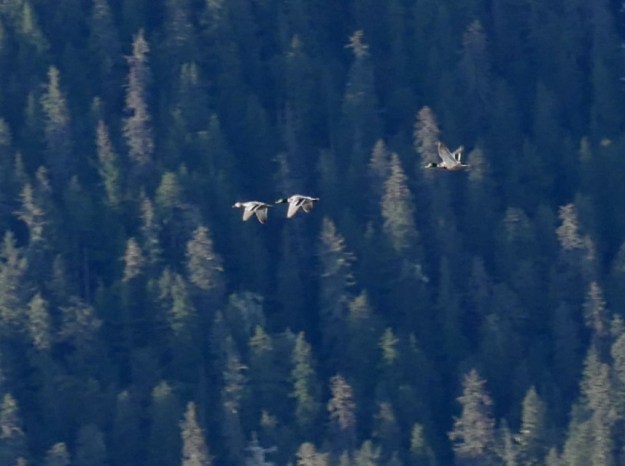
All the birds on the Fish Creek delta are edgy and its not Aki’s fault. It can’t be the weather. We have clear, windless skies. A gentle sun warms the beach grass straw. It can’t be the tide, which retreated this morning to leave acres of exposed mud for the birds to hunt and hide on. Mallards burst off the flats in twos and threes to fly in an arc around us and land on the creek water.
1

Eagles launch from beachside spruce to shrink into dots over the wetlands. Eventually, I make the connection. It’s their gliding flight that routs the mallards and other ducks.

2

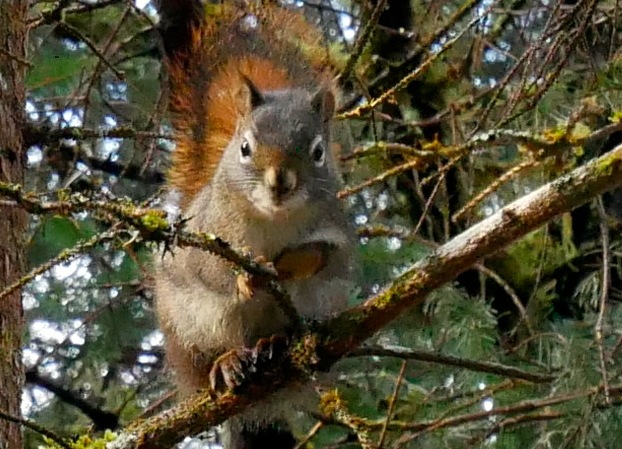
In the woods along Fish Creek pond, a murder of crows wake from their roost. Their outriders dog our passage back to the trailhead, croaking warning to the little dog. But the resident squirrels, normally the first to scold Aki, watch us pass without comment.
3

The Church of Powder and Shot

2

As Aki and I hurry past the gun range to where the Montana Creek ski trail starts, I wonder at these people who chose to spend Sunday morning discharging high power rifles. Perhaps their Sabbath falls on a different day of the week. It’s still early so maybe they are centering themselves for the mid-morning Palm Sunday service by releasing violence against a paper target. For others, this may be their church: their way to celebrate creation and life. Instead of following along in hymnals, they use the Remington 270 or a standard thirty-ought-six to sing divine praise. Members of this church of powder and shot must prefer the bark of a Winchester 30-30 carbine to a homily.

4

When the rifle range noise becomes hidden by the sound of Montana Creek, I ease into skiing. Aki releases her tail from between her hind legs and trots along, stopping to sniff and pee like she does when relaxed. But at the turnaround spot, where there is only a tributary of the creek to break the silence, we hear three loud bangs. Down goes the tail until it is curled between Aki’s legs. Even though we are soon back to where the creek noise blocks out violence sounds, the little dog doesn’t relax.

3

After we run out of skiable snow, we walk. Yesterday, on this patch of ice and pavement, I felt like a WWI recruit approaching the trenches for the first time, trying not to duck for cover. But today, we don’t hear any shots during the 500-meter walk to the car. The gun range is practically empty. We spot only two men and them conversing quietly next to their pickup truck. Church must be out.

1

Winter on Life Support

2

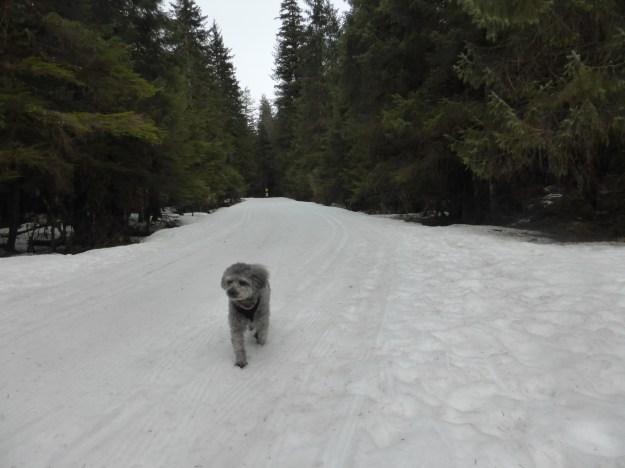
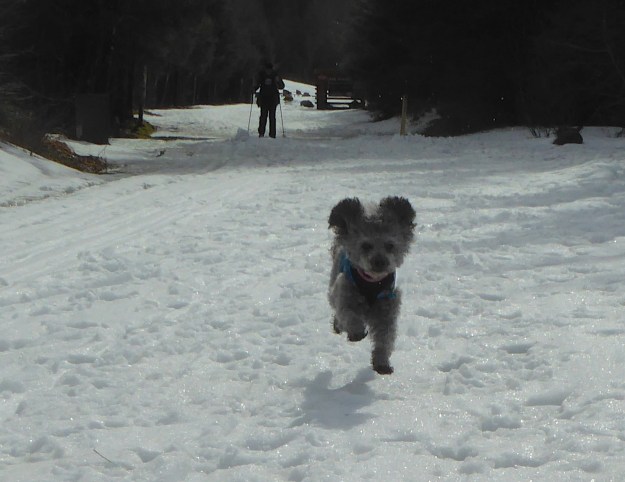
Aki was not pleased at being left out of yesterday’s hike. Giving me hard looks, she followed me around the house this morning as I gather needed stuff for a cross-country ski on the Montana Creek trail. We have avoided this trail for the last two seasons because it starts near a very active gun range. The cannon-like noise produced hurts my ears and makes the little dog very nervous. But Aki loves snow, especially when it offers her a chance to run along side one of her people skiing. So here we are.

1

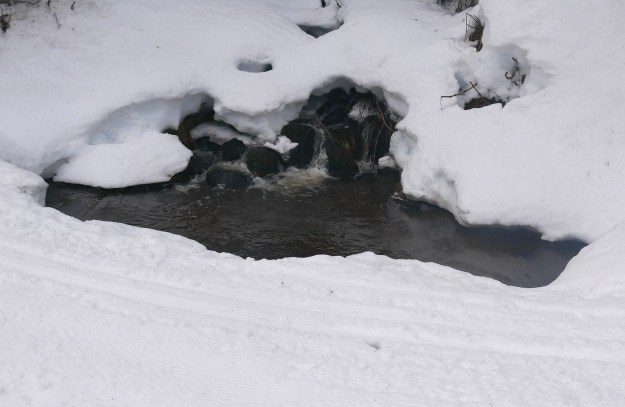
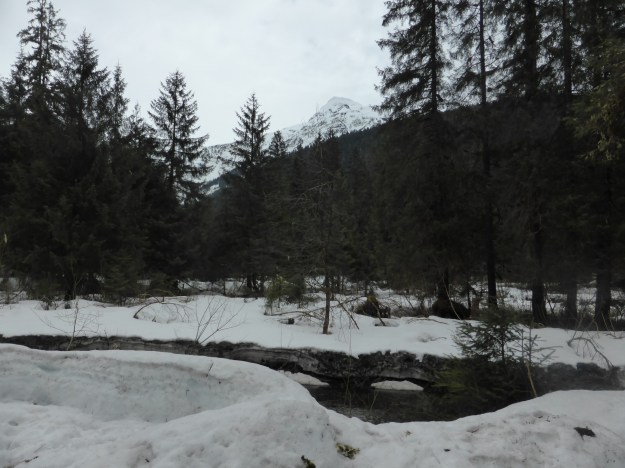
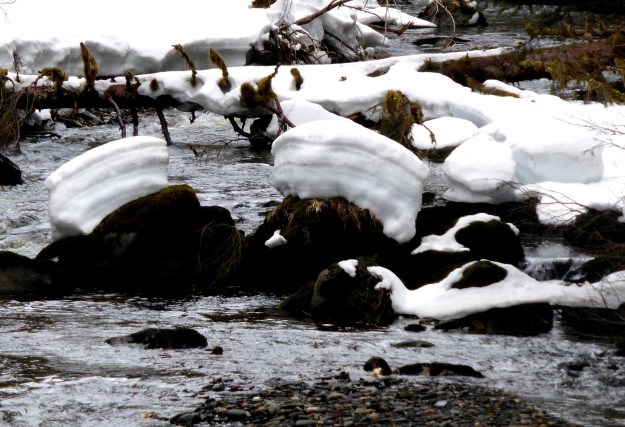
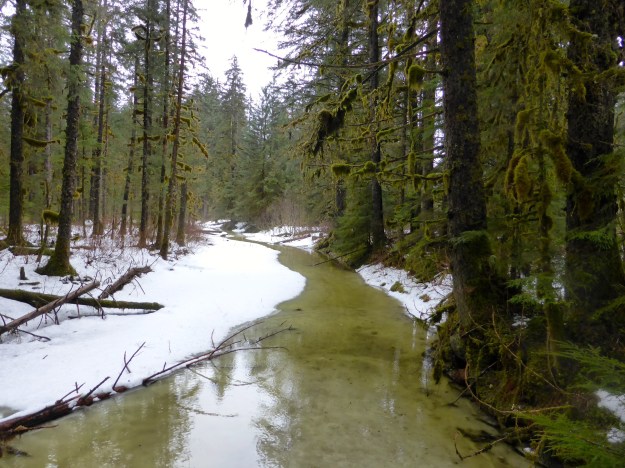
Thanks it its proximity to the glacier, Montana Creek has an icebox microclimate that keeps winter alive as spring flowers open on Chicken Ridge. While walking away from the gun range on a bone-dry road I wonder if we left it too late. But three hundred meters ahead we find an icy covering that had been made just skiable by groomer. With the drum and track setter that he tows behind his snowmachine (Skido in Canadian, Snowmobile in American), he keeps winter on life support for the first kilometer of the trail. After that he just has to tidy up the snow that winter retains on its own. For the last two kilometers of the creek side trail snow stacks three feet high decorate boulders in the stream and a blanket of the same thickness covers the forest floor.

3

Seven Miles

3

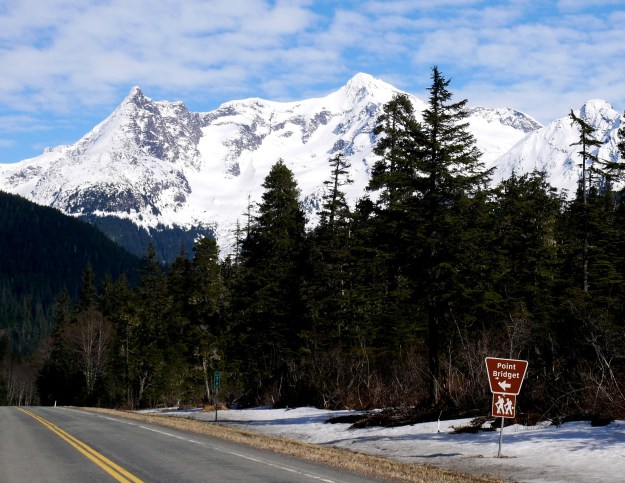
On this seventh day of the fourth month of the seventeenth year I hike seven miles without Aki. Later, I will learn that the little dog had a great time walking around Downtown Juneau. But she would have enjoyed this meander around the Point Bridget Peninsula. First, there is the weather: mild with little wind, occasional sun, temperatures in the fifties. Second, there is the company: a group of hikers who enjoy each other’s company as much as they do the woods.

2

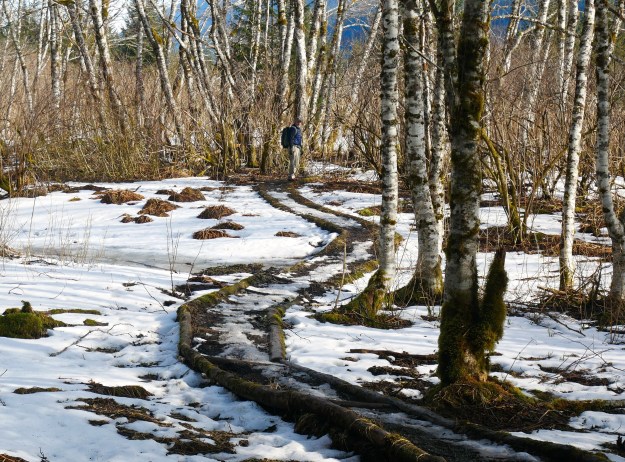
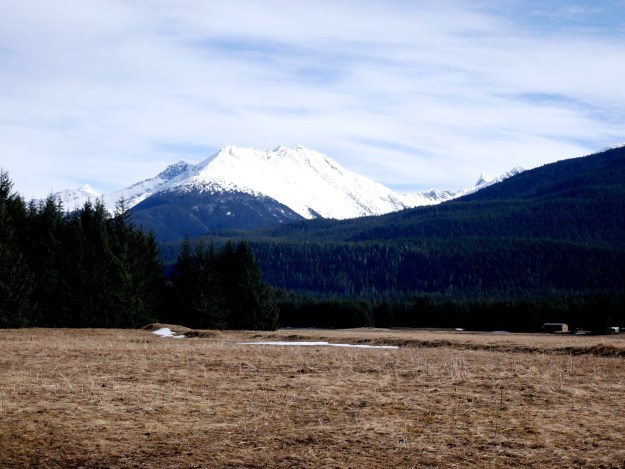
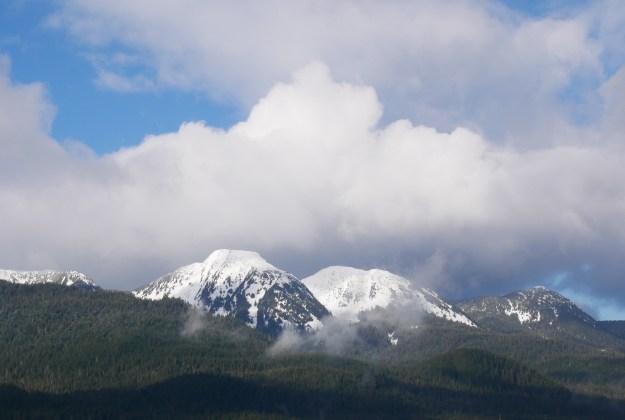
We start by skirting the beaver dam ponds that Aki and I walked across during our last visit. Then the trail takes us down the edge of a meadow that is rich in wildflowers in high summer. Already wild iris push little green arrows through last season’s dead growth. In a month or two their purple flowers will wave in the summer wind above chocolate lilies and magenta shooting stars. But today nothing on the meadow pulls the eye away from the still-white mountains of Yankee Basin.

1

After the meadow we climb to Cedar Lake, with its northern-most stand of yellow cedar trees. Then it’s up an old mining trail and down to Camping Cove. The rest of hike offers us at least filtered views of the ocean. At times only the sound of it’s small waves competes with that made by boots hammering muddy ground.

4

Avalanche Season

2

It’s avalanche season in the Perseverance Basin. The little dog and I hear the thunderstorm drama of two but don’t turn back. We’ve chosen a route that avoids the run outs of their chutes. It still startles to hear the ripping, crack of thunder sound of a winter’s buildup of snow breaking away from Mt. Juneau. Today the smaller snowfalls we see quickly diminish to cascades that sound like loose gravel falling down a drainpipe.

3

It’s also early spring. The forest ground, now freed of its overburden of snow, seems to exhale. It’s breath smells faintly of mold, dirt, and the resin of fallen spruce needles.

1

Fishing Near the College

1

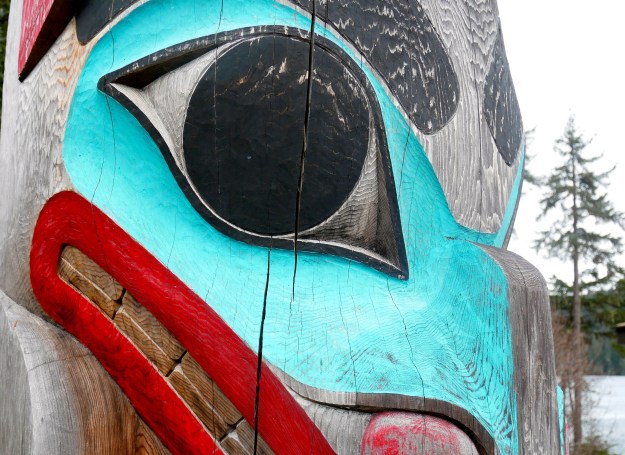
We start this hike on a trail through Juneau’s tiny university. Students encased in rain gear talk about classes or the opposite sex. In less than five minutes were are on the Auk Lake trail, passing in the process two totem poles and a bronze sculpture of a breaching humpback whale. Aki likes this portion of the hike, perhaps because of the friendly reception she receives from the students.

2

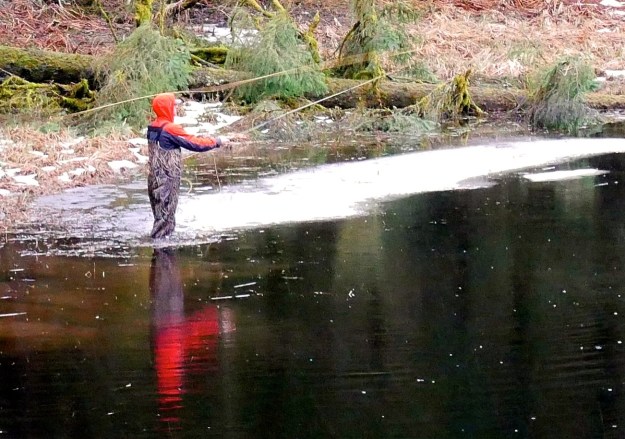
On the edge of the stream that drains the lake, a guy in commercial crab pulling rain gear casts with a fly rod. The stream carries thousands of sockeye fry past him and dumps them into Auk Bay. This salmon fry river draws the attention of cutthroat trout and dolly varden that had wintered in the lake. The fly fisherman targets the dollies and trout, which target the salmon fry, which have been feeding on things lower down the food chain. So much violence carried on beneath the languid surface waters of the lake and stream.

3

Silent Beach

3

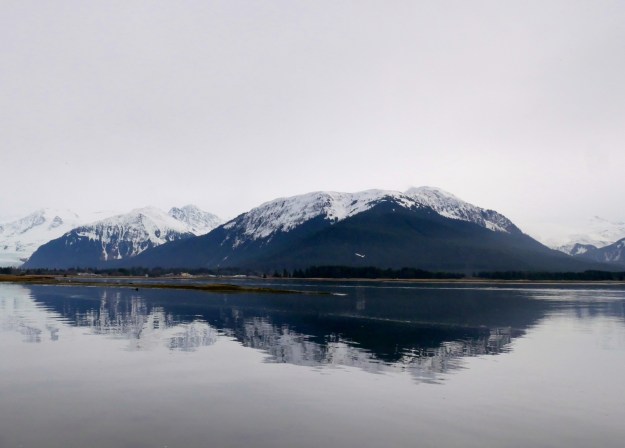
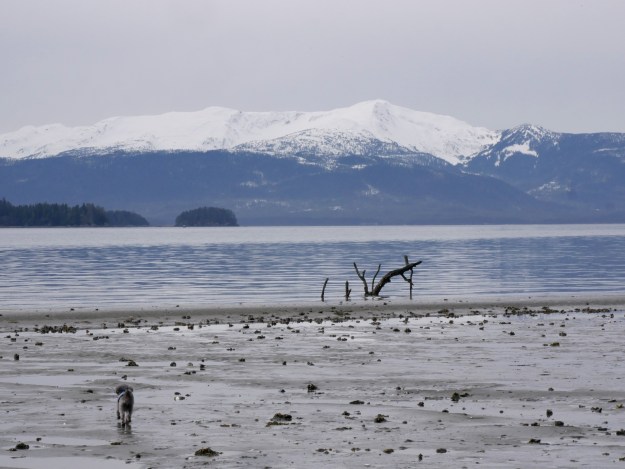
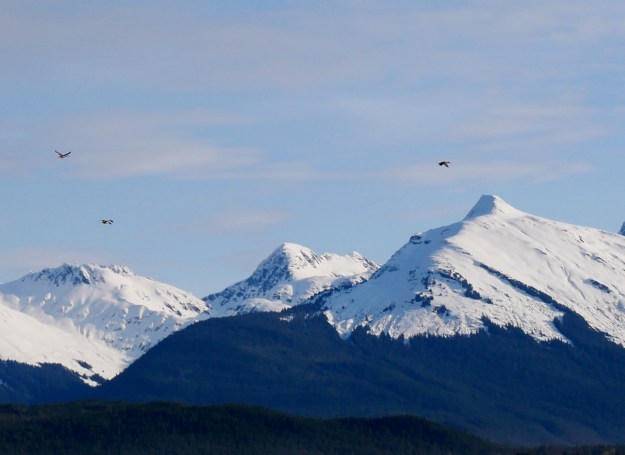
I should know what to call that mountain, little dog. When I check a map later, I’ll learn that its name is Thunder. But this morning, it is just another tooth in the saw blade of mountains that dam the Juneau Icefield. Aki doesn’t care about mountains or their names. She worries about eagles. We keep to the beach’s brush line even though it’s as quiet as Rachel Carson’s Silent Spring.


2

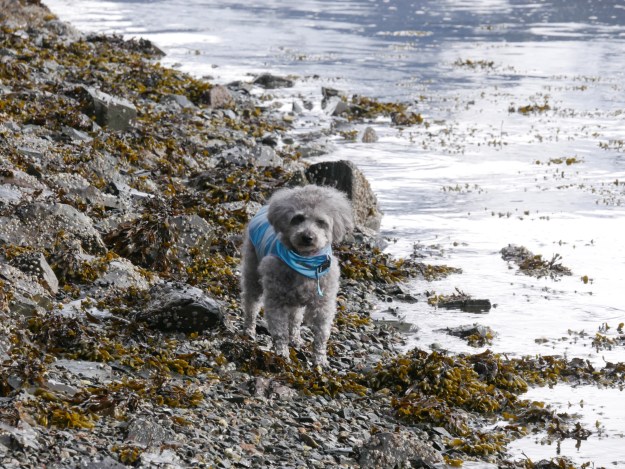
Last night the trail’s tidal door closed. Now it opens on the ebb. But seawater still covers most of the beach and the sand bars that form the mouth of the Mendenhall River. I lead Aki around several headlands, each time expecting to see eagles, otters, ravens, or song birds. When none appear, Aki trots across a widening sand bar to a driftwood root wad where eagles like to roost at low tide. After nosing small surf striking near the wad, she turns back to the brush line. An eagle launches from a spruce deep in the forest and flies over us. Minutes later two other eagles play chase over the river. The one behind extends its talons like they do when diving on prey or seeking to mate. A gull dives on them, breaking up their fun.

1


Uncommon Merganzers


1.jpg

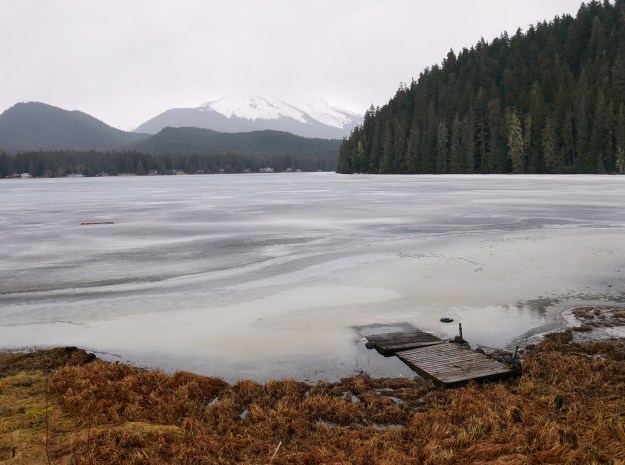
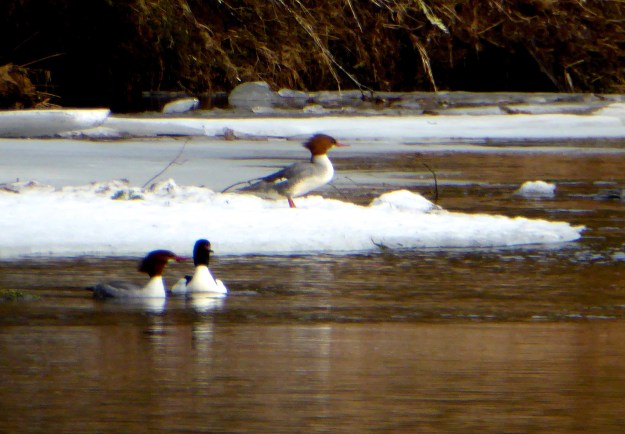
The common merganser is not so common in the rain forest that Aki and I patrol. We see many of the red headed variety. Today, one our way to ski, we spot a raft of both types of the merganser cousins on a stretch of open water of the otherwise still frozen Peterson Creek. We also watched a larger raft of mergansers react nervously to a hunting eagle over Amalga Harbor. Both are signs that the spring bird migration has begun.

1

The ski trails along Eagle River are deteriorating but by making the occasional work around we managed to reach the river. Encouraged by the two merganser sightings, I hope to spot more migrating birds here. In past springs, we watched tundra swans, geese, and a myriad of ducks rest on the river before resuming their northward flight. But not today.

Sunday Morning Coming Down

2

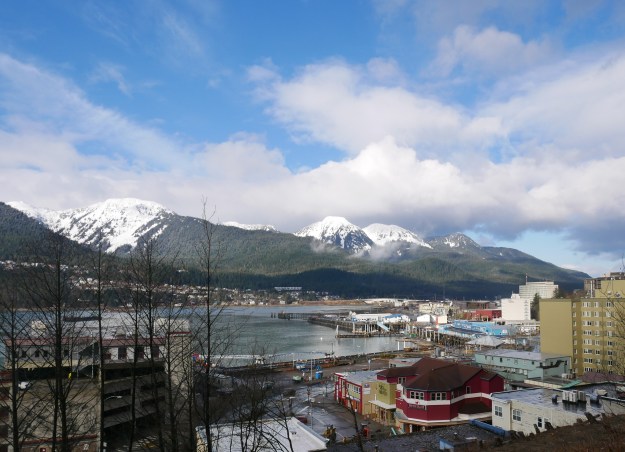
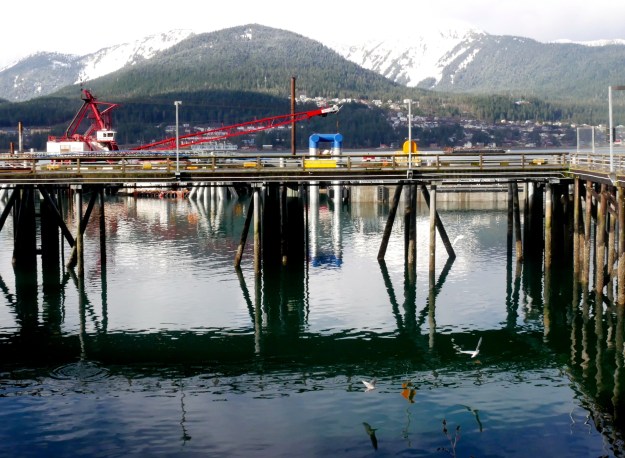
Not far from the ruins of the A.J. Mine, Aki and I pass a woman sleeping in the front seat of an old SUV. I hope she doesn’t have children cuddling together in the car’s luggage area. After passing her in silence, we drop down Boroff Way—nothing more than metal stairs crooked enough for a fairy tale—to reach South Franklin Street. Ravens croak and a flock of red polls chit and swirl overhead. But I can barely hear them over the sound of a motorized barge warming up. The bargemen will work overtime today to get the new cruise ship dock ready for the first Princess boats in May.

3

On South Franklin several homeless people make their way to the Glory Hole for breakfast. One pulls a wheeled suitcase behind him. Weak sunlight glints off the plastic with which he has wrapped his bedroll. Three homeless, gray haired, dressed in faded gear, have jammed themselves onto a Marine Park bench. Others stand along a nearby railing. In a tree above them, a raven roosts in silence. The homeless stare out at a channel empty of boats, birds or whales. Are they looking at from where their came? With a decent boat, they could use the channel to reach their home village or even take the Inside Passage to Seattle.

Later and blocks away up Main Street, I’ll hear my first robin song of the year. But in this place where Juneau’s homeless pass the day, robins rarely sing.

1

Cusp of Winter

1

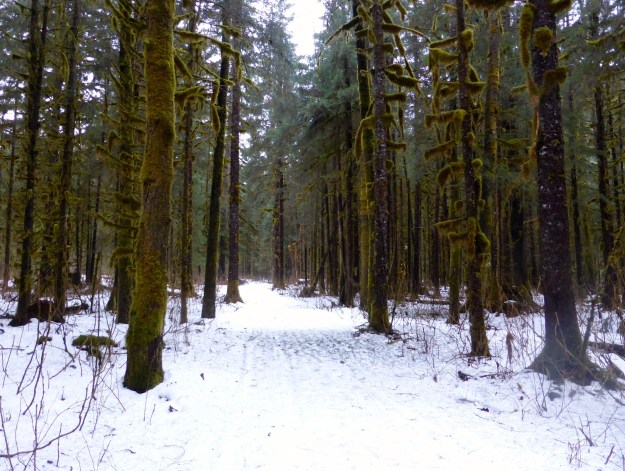
It’s the cusp of winter and this spruce forest is at its ugliest. Aki doesn’t care. She dashes ahead as I ski past old growth trees heavy with moss and lichen. But I can’t ignore how the detritus of winter—dead limbs and thwigs, cones stripped of seeds by red squirrels, and dried spruce needles—discolor the snow. There are no leaves or ferns to soften the lines of the bare blueberry brush or devil’s club stocks. It must be like surprising a beautiful woman just as she stirs from a fitful sleep. At first all you notice is the tussled hair, naked imperfections in the skin, and reddened eyes. You wonder how you could have ever believed her special.

2

But the beauty here is found above the forest floor in the old growth spruce trees spaced along the trail like soldiers. Without winter snow or summer growth, the beauty of their strong bones has no competition.

3