Category Archives: Nature

Sometimes the Small Guys Win

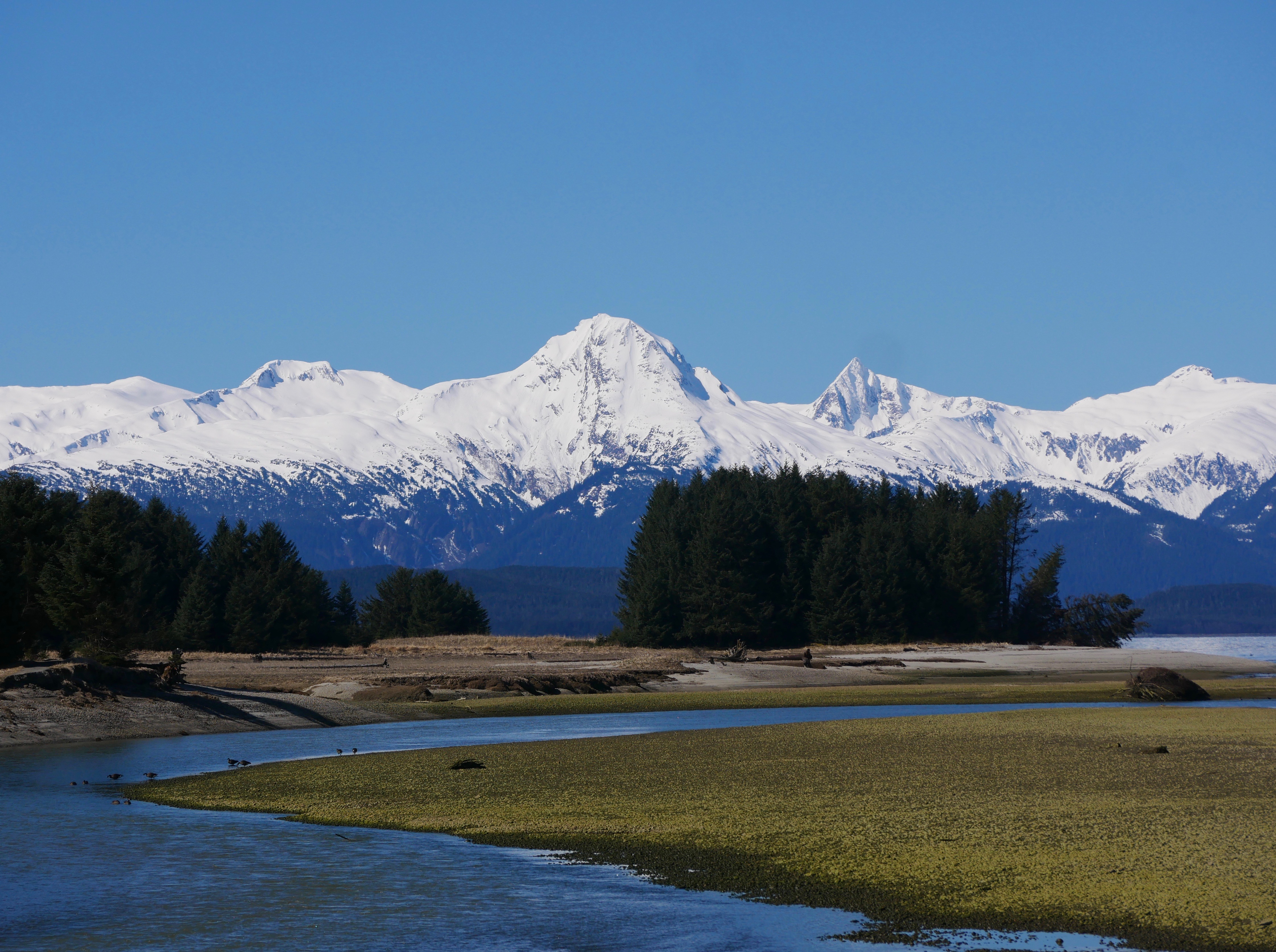
Aki and were walking back to the car, powering into a strong wind when the heron flew low over our heads, croaked like a sick raven, and dropped onto the surface of a small pond. The heron was a surprise. I expected to see some eagles on the Fish Creek delta and we did. But we rarely see herons here. 

I could see five bald eagles from the spot where I watched the heron. Aki acted like we were alone in the universe. Two eagles were hanging out on a nearby navigational aid tower. Another stood on a beach, ripping apart some morsel of food. The other two eagles crouched, head to head, on the bank of Fish Creek. They couldn’t see much in the creek. Our recent rainstorms had swollen it and turned its normally clear water mocha brown. 

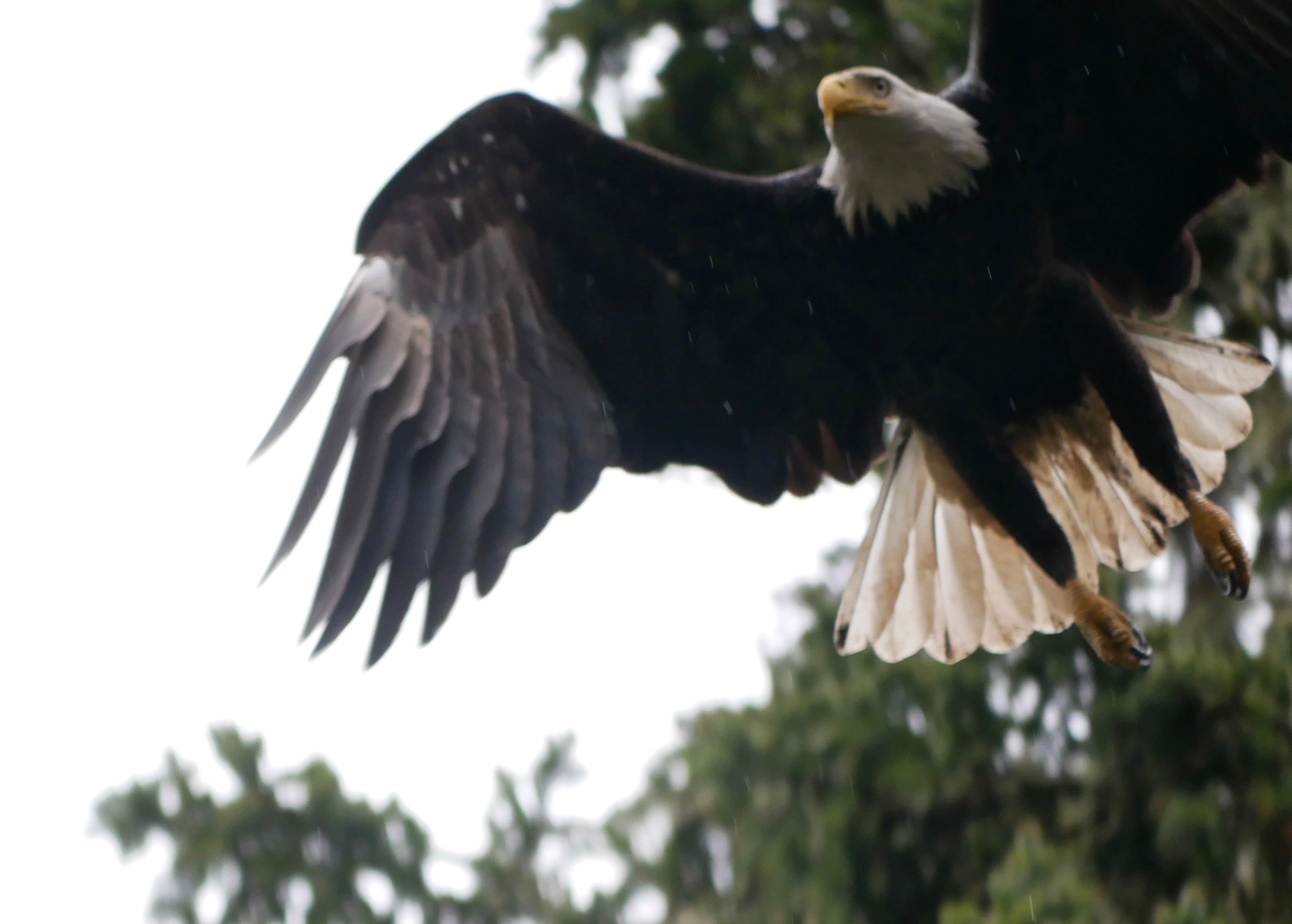
            During the outbound portion of the walk, we had watched an adult bald eagle lift off from the wetlands and fly toward us. As it grew larger and larger I looked down to make sure Aki was safe. No fool, the poodle mix stood right next to my legs. Another eagle, roosted just above us in a spruce, screamed out a welcome just before the other eagle joined it. 
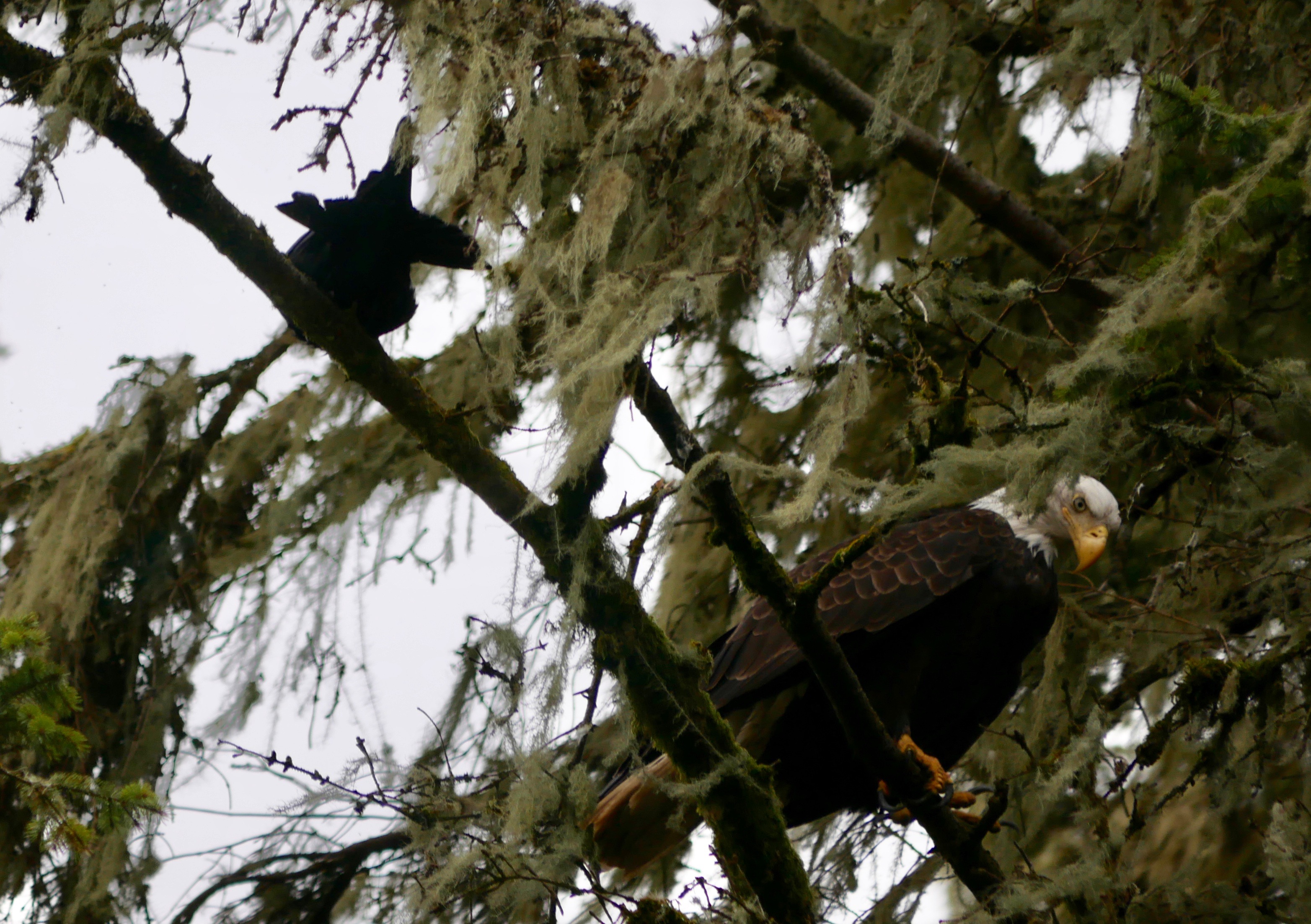
            A brace of crows, each less than an eighth the mass of the eagles, landed just above the eagles. They cawed and invaded the eagle’s personal space. They weren’t going to let two eagles roost on the edge of the forest where their murder is raising this year’s brood.  In seconds the eagles departed. We left too before the crows focused their attention on us. We have both been dive bombed by crows during their nesting season. 
Thanks Kids

Aki and I are cruising the Mendenhall campground, looking for the perfect spot to set up our family tents. We need a place with room for two tents that is within easy canoe carrying distance of the lake. From nearby comes the sound of preschool students heading in our direction. Aki, who thinks that little kids are really just puppies wearing funny clothes, tends to scare them with exuberant welcomes. To avoid that I lead the little dog down toward the lake and find a great blue heron fishing the shallows. 
            Either Aki can’t see the bird or she ignores it. Either way the heron doesn’t exhibit any signs of stress or concern. It lets me watch it stalk salmon smolt, moving slowly with its neck pulled back to form an “S.” When it freezes, it releases the tension in its neck to fire its head and long beak forward like a lance.  It does this several times. The fish win their first battles with the heron. Finally the tall bird snatches a meal from the water, flipping up its beak to force its prey down that long neck. 

            After the preschoolers move on, Aki and I return to the campground road and follow it around the edge of a large pond. Mergansers, buffleheads, and mallards are paddling toward the far shore when an osprey cruises over their heads to land in the top of a nearby spruce. It’s been years since I have seen one of the fish eagles. I would have passed the pond long before the osprey appeared if not the for noisy toddlers.

Worth It

One of Aki’s other humans and I paddle toward the glacier into a rain bearing head wind.  Kittiwakes from the nearby rookery watch us from a small iceberg. They don’t stir as we pass.  Members of their clan mew and keen before diving on sockeye salmon smolt in the lake waters. I worry that we will face worse conditions when we round a point of a rocky hill that has been partially blocking the wind. I am glad that Aki is home snug and warm.

It may be the lovely month of May but today is a wicked-wet day. It’s the only day I have to sneak in a kayak trip to the glacier. Soon an eco tourist company will be hauling cruise ship tourists across Mendenhall Lake in faux Chippewa canoes and lead them into the shrinking ice cave. I want to enjoy it when empty. 

            Pulling past the point we get an unblocked view of the glacier descending out of rain clouds.  A rocky hill rises to our left, colored by low growing plants fertilized by kittiwake guano.  It seems to take hours to paddle the mile to the glacier in the now unrestrained wind. An empty tourist canoe sits on the beach where we haul out the kayak. Who, I wonder, would pay big money to ride here in an open canoe today? Must be a group of hardy Australians. 

            Listening for ANZAC accents, we walkover a landscape as barren as the moon’s surface. At first appearance, the trail seems to be well graveled. But I find myself slipping on portions that are really hard glacial ice covered with a thin layer of mud or pebbles. We pass torn chunks of trees just released from hundreds of years of icy imprisonment by the glacier’s retreat. The only bird sound we hear is from the keening kittiwakes. No songbirds could earn a living in such a sterile place. 

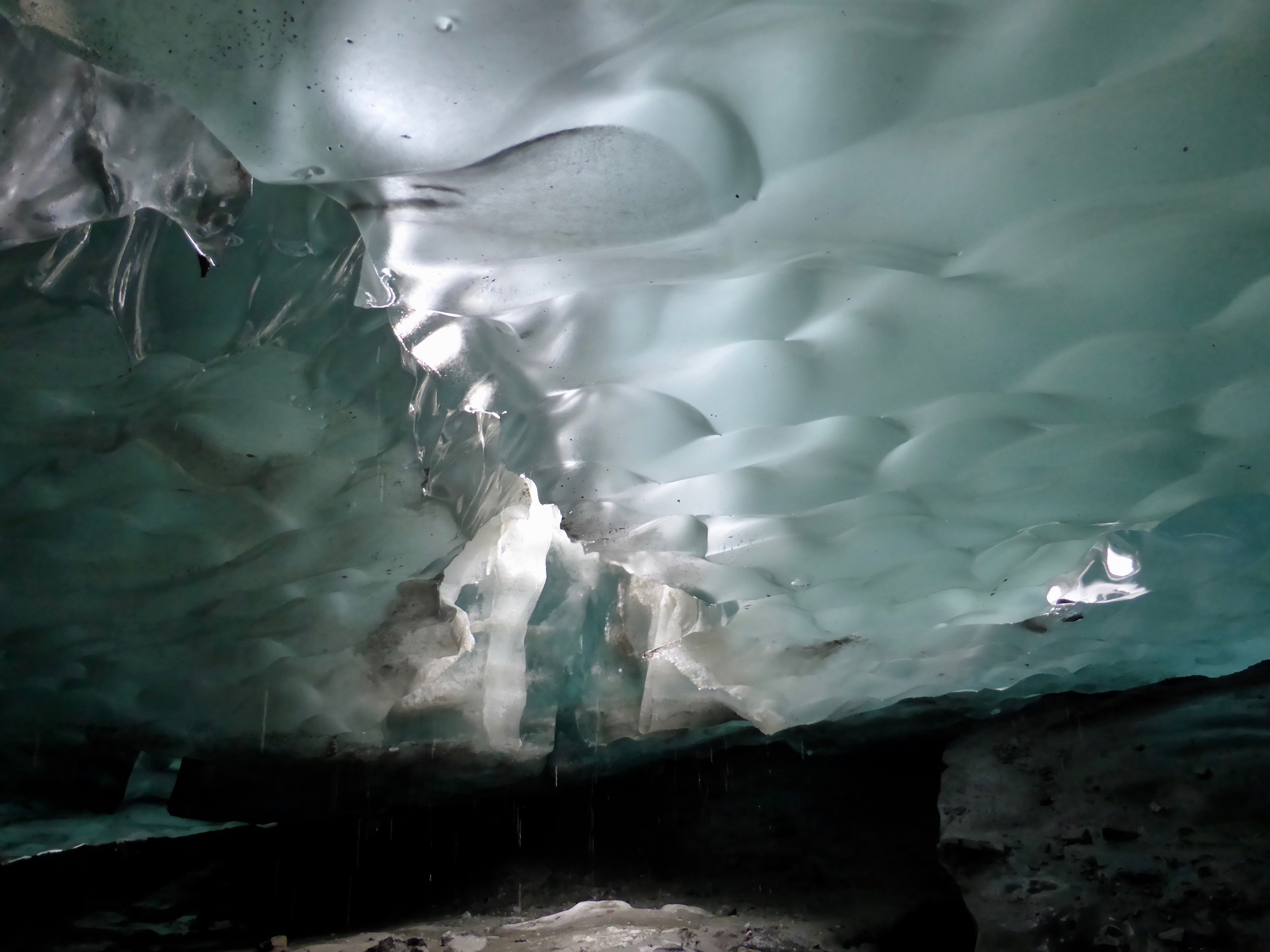
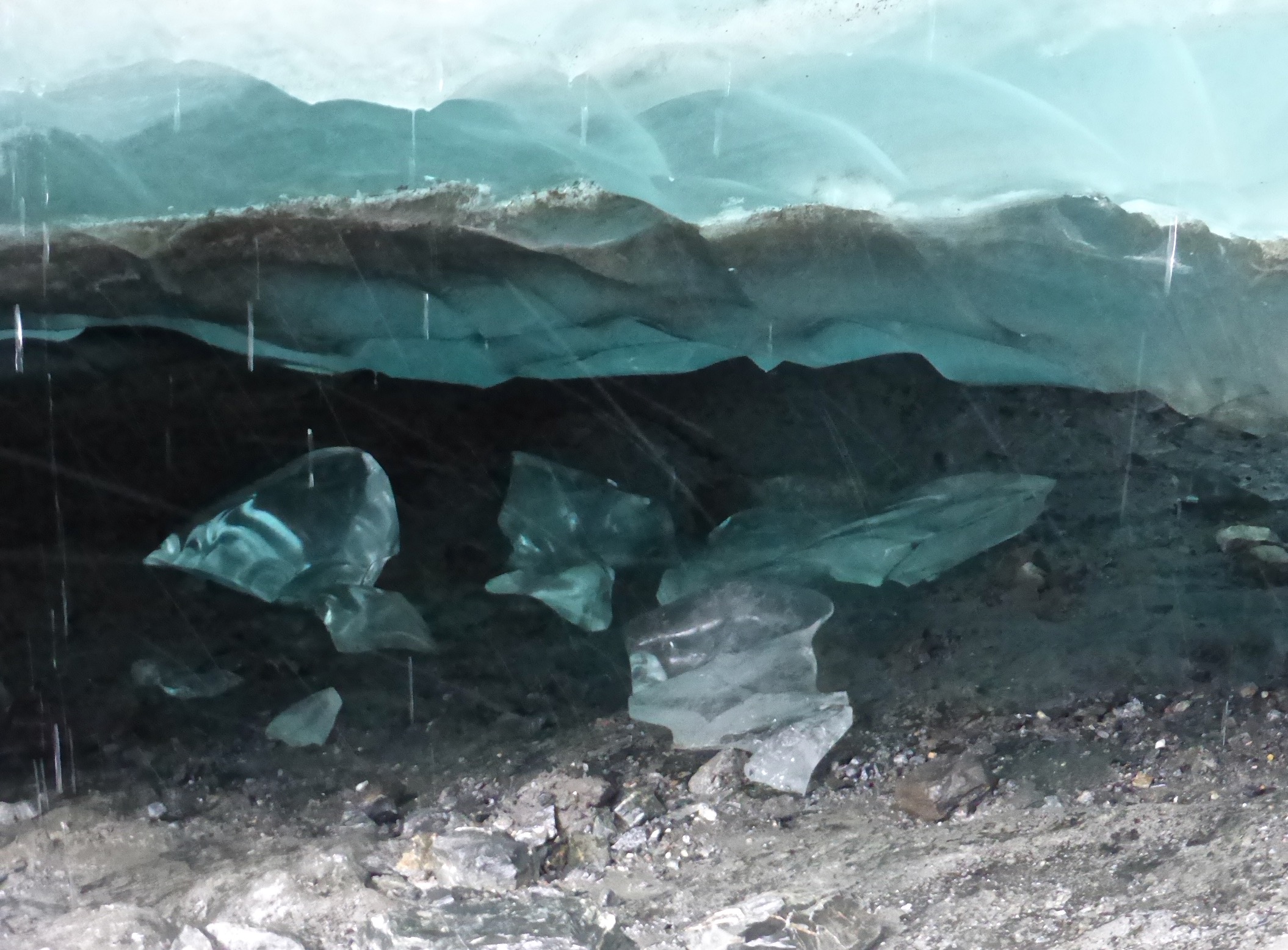
            The glacier seems to be collapsing into itself like an overripe pumpkin. Mocha brown water rushes from beneath the ice. I worry that the mystic blue ice that formed the glacial cave will now be fragile, and opaque. But in spite of our recent heat wave and the subsequent days of rain, the cave retains its basic shape and color. Rainwater streams from cracks in the overhead ice and some of the old entrances have collapsed. It is still a suitable venue for a religious ceremony or at least a brief prayer for our challenged world. 

It is Must be Summer

In the center of Treadwell Woods, a single salmon berry flower bounces gently up and down. It is moved, not by wind, but by the heavy raindrops falling through the forest canopy. This far away from the beach, the magenta-colored flower is the only thing challenging the trees’ monopoly of grays and browns.             

            As Aki moves ahead, excited by a pee mail message left by an earlier canine visitor, I stay with the flower, remembering a visit made years ago to my carving class by a Haida elder. Her eyes promised the delivery of an exciting message. It is summer. I just saw my first salmon berry blossom. 

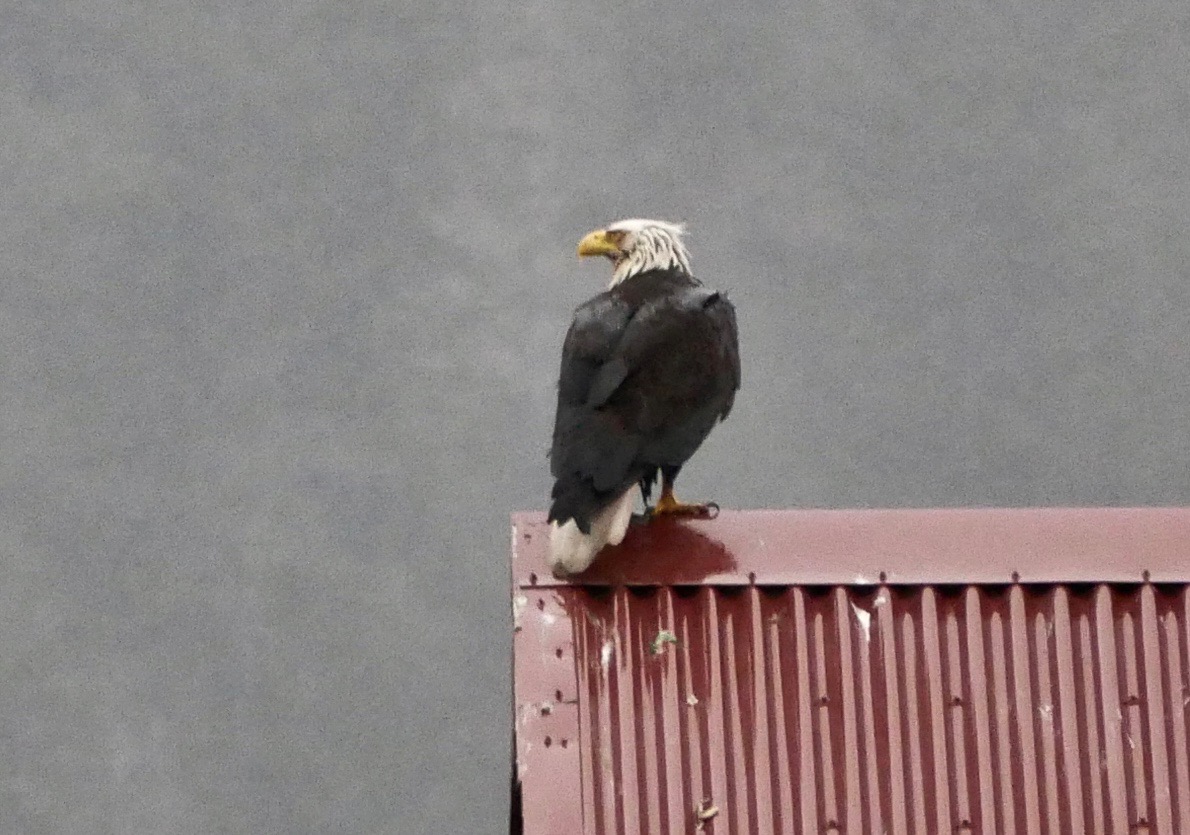
            The little dog and I move through the woods and drop onto Sandy Beach. It is empty except for a bald eagle. The big bird perches on top of the old ventilator tower, its feathers soaked and askew.  Wind driven rain sweeps down the beach, making me wince and Aki shiver.  It feels more like early winter than summer. But salmon berry blossoms provide color along the beach’s edge. Summer can’t be denied. 

All Birds

It rained last night for the first time in at least a week. It will rain again and soon. Good day to visit with the ducks. Aki and I head out to wetlands drained by the Mendenhall River.  We pass two bald eagles perched on the superstructure for one of the airport approach lights. After a third eagle flies over them, the roosting pair lean in toward each other, as if to gossip or show each other affection. Heads almost touching, the eagles watch the early morning jet to Anchorage. 

            To be honest, I here for the blue birds, not eagles or waterfowl. Many Juneauites have seen mountain bluebirds perched on snags above one of the wetlands meadows. The little dog and I leave the main trail to better scan the meadow for little guys. We won’t spot one of the rare songbirds but will make our first yearly sightings of northern shovelers and lesser scaups. 

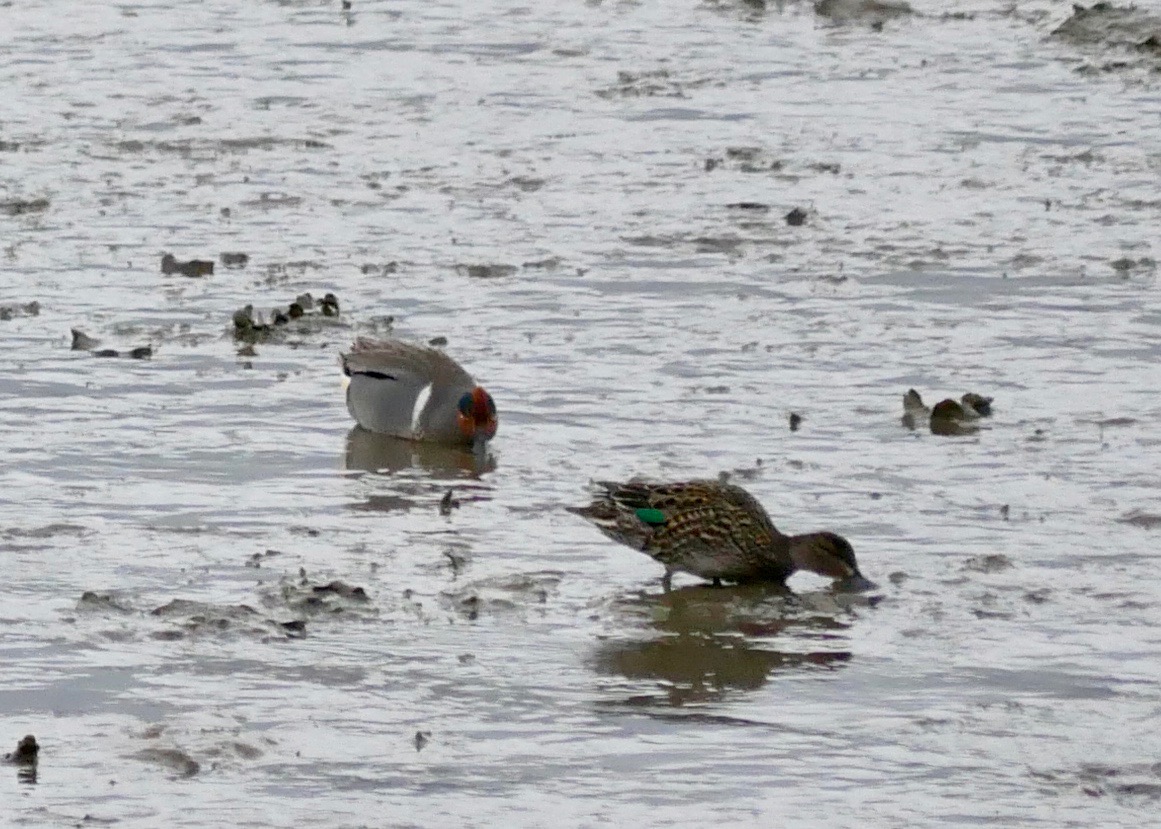
 We’ll have ample opportunities to watch green wing teals and American Widgeons patrolling the mud flats for food. At one point two Canada geese will fly over our heads, giving away their position by their persistent honking. 

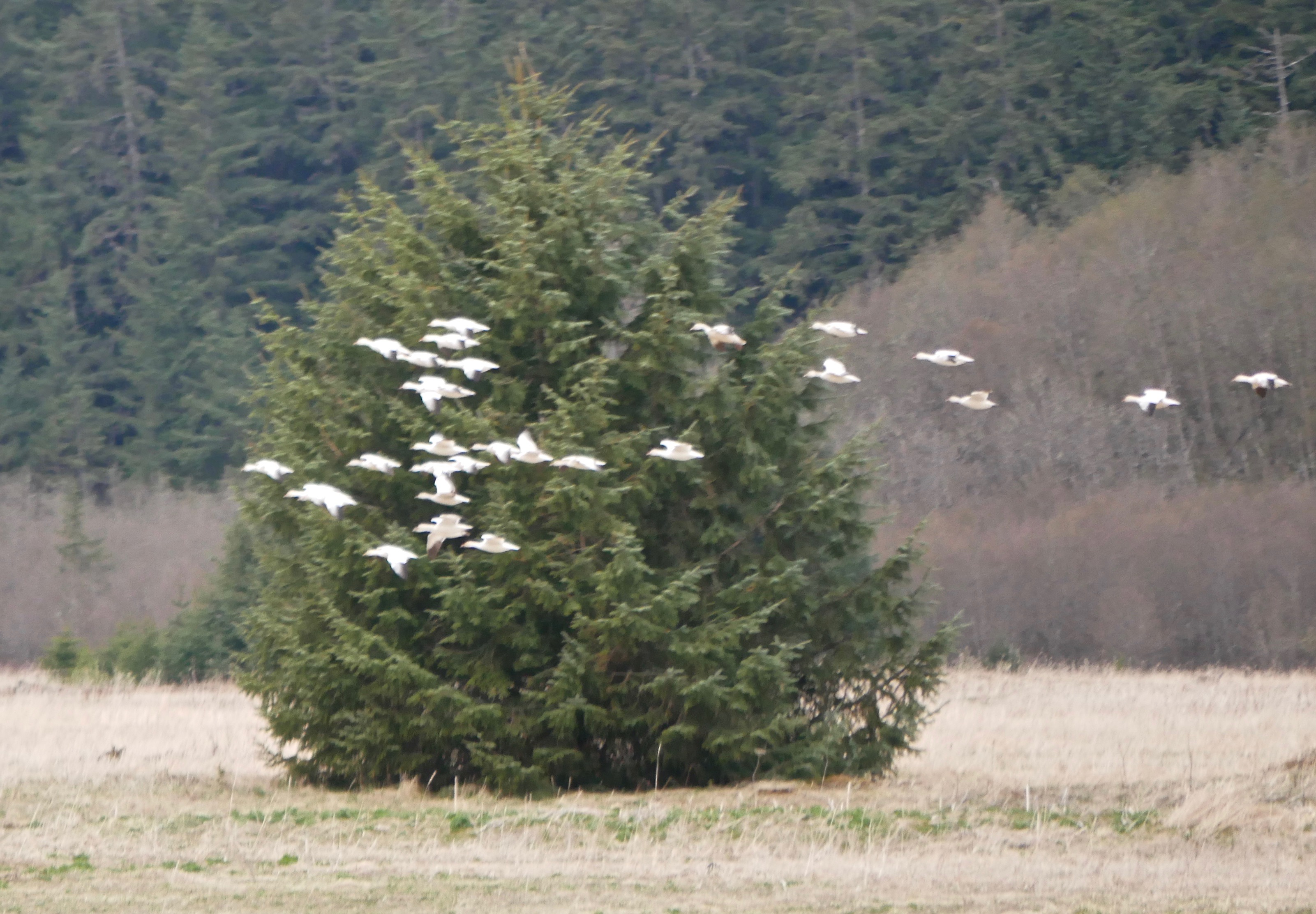
            There will be other eagles and a greater yellowlegs shorebird. But the big surprise, sprung on the little dog and I while crossing the most likely part of the meadow for spotting bluebirds, will be a flight of migrating snow geese that rise out of meadow grass and head down the Mendenhall River. 

Not Even Close

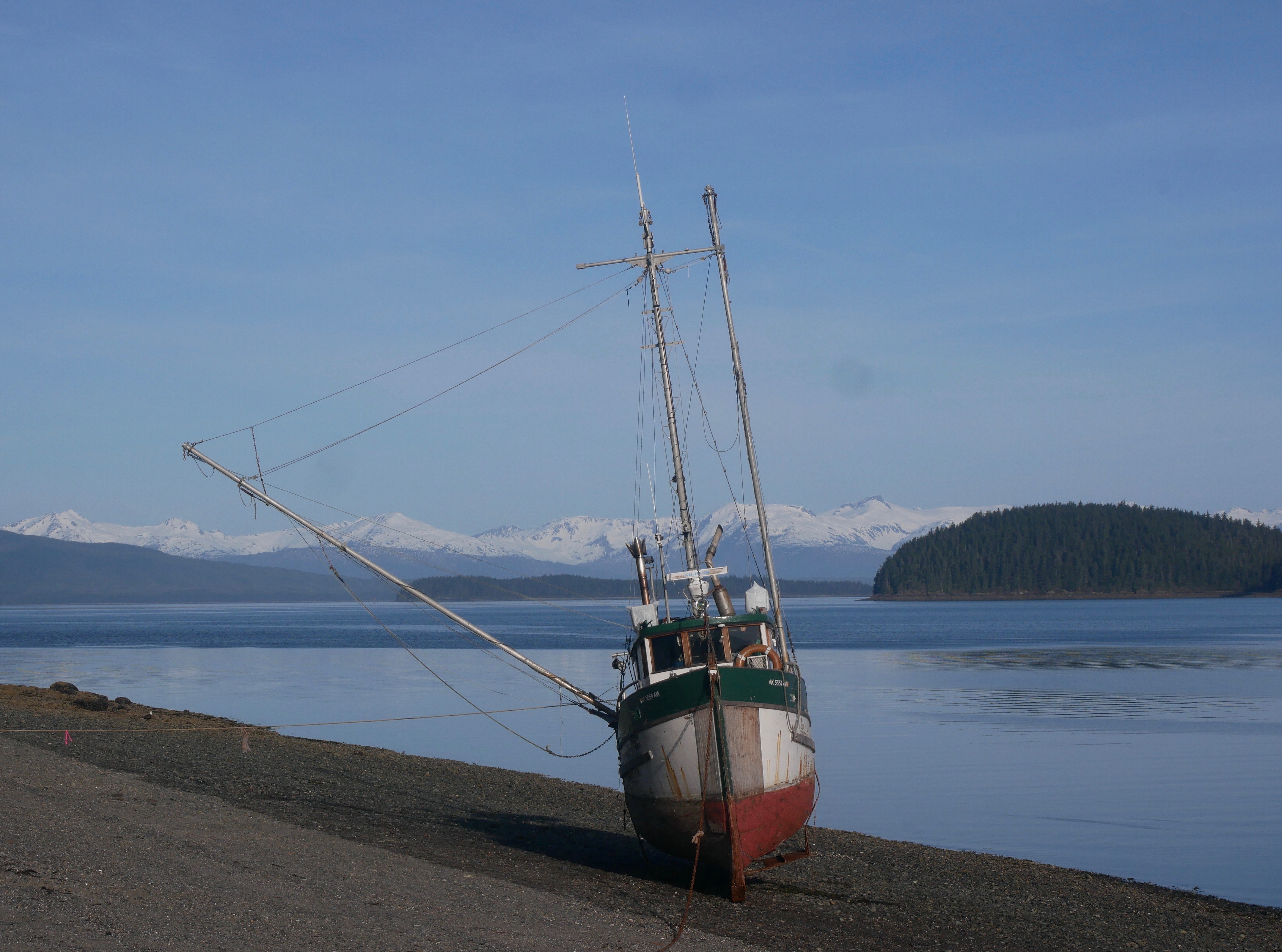
This morning, I stopped at the North Douglas Boat Ramp to take a picture of a commercial fishing boat. The boat was designed to catch salmon by trolling a collection of baited hooks through the water. Now it squats on beach usually used for launching kayaks, useless but looking as pretty as a picture. 

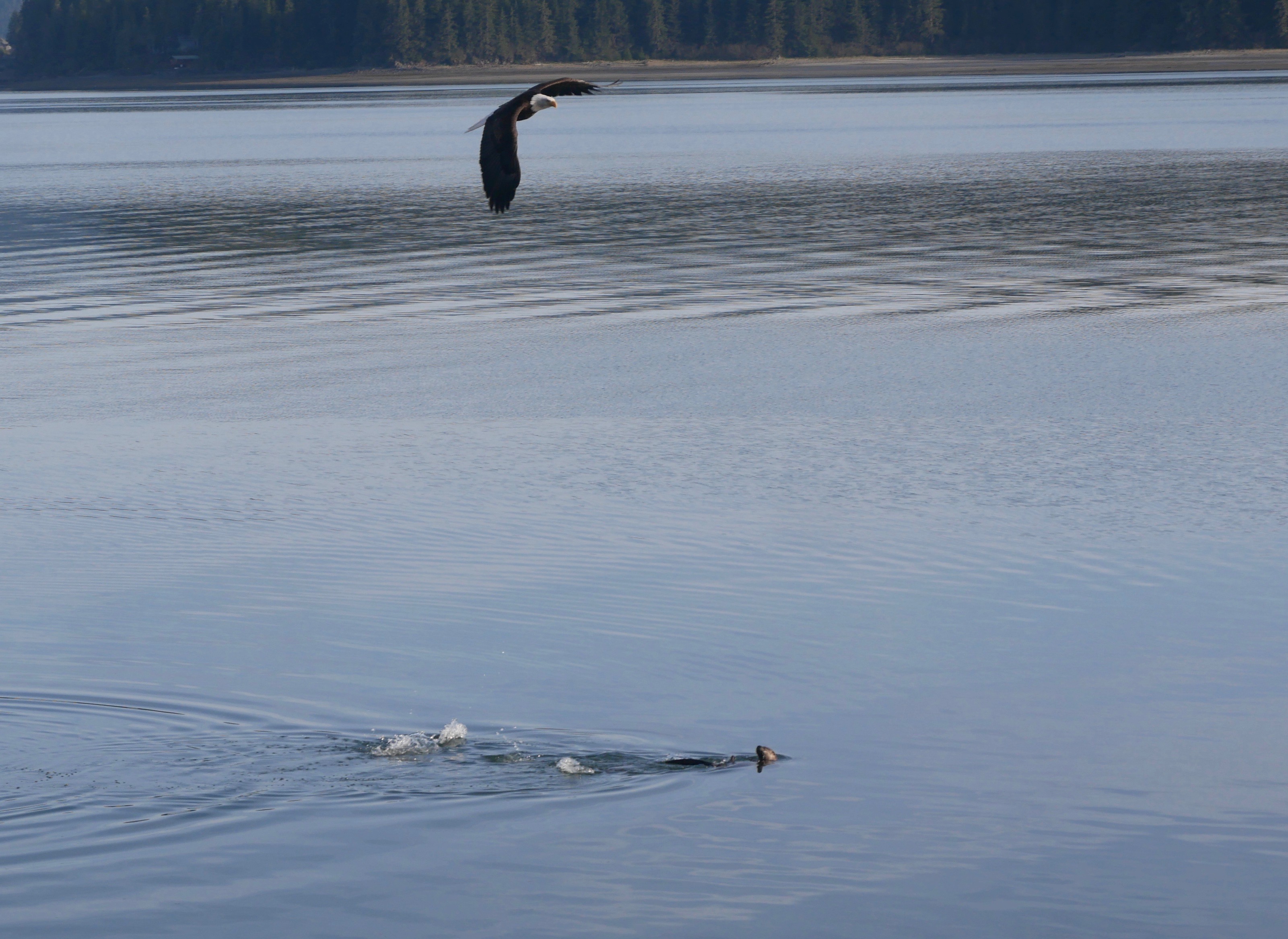
            Three land otters swam past the troller and climbed onto the end of the boat ramp float. Like hungry burglars, they gorge themselves on chunks of flesh discarded by the person who cleaned his catch on the little processing table. Good thing I didn’t let Aki out of the car. The last time we came across this gang of otters, they tried to seduce her into the water. 

            As the otters savored their quick meal, an adult bald eagle approached from the north.  Rather than using the usual circling technique, this sneaky eagle cruised low over the water. The otters spotted me and dived into the water. When they looked up again, the eagle was right above them. Apparently startled, the otters panic dived as the eagle arcs toward them. 

            A land otter can weigh anywhere between 11 and 30 pounds. They are way too heavy for the eagle to lift, even from dry land.  The aquatic otters were never in any real danger.  After the hungry eagle returned to its roost, the otters cruised along the shore, heads above water, looking for more trouble. 

Small Thing

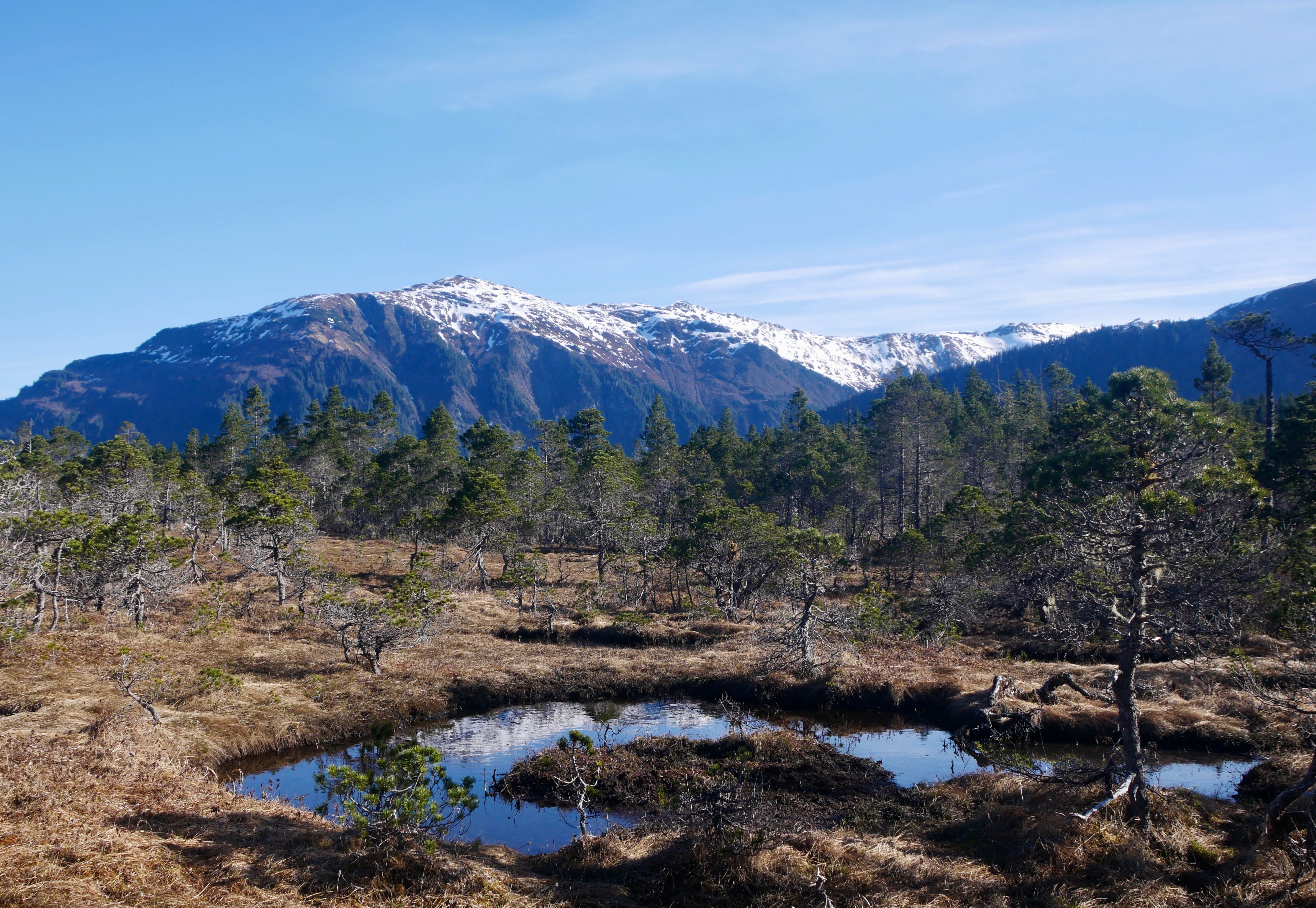
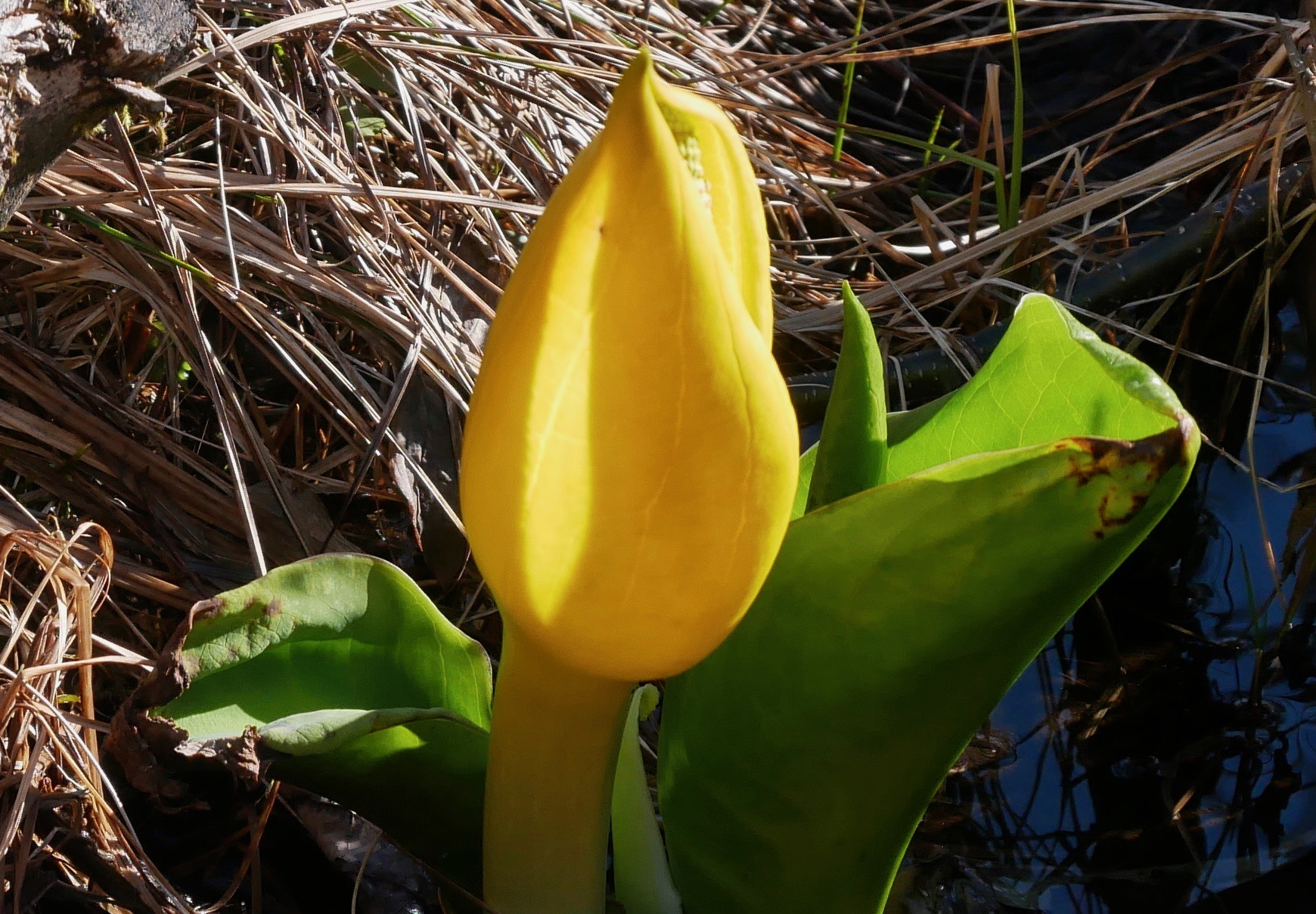
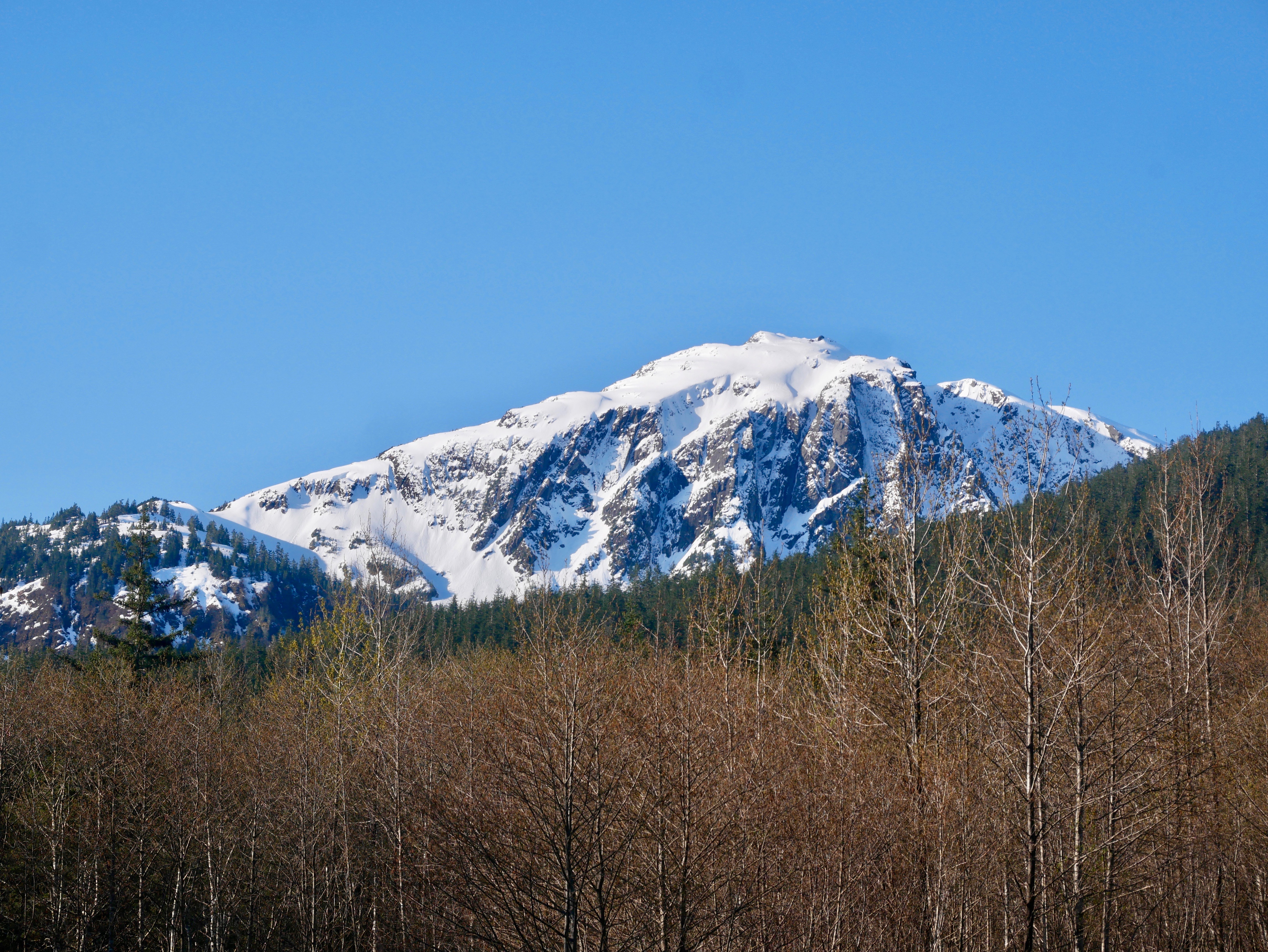
It’s as hard to ignore the screaming yellow skunk cabbage blossoms as it is to look away from the mountains that surround Gastineau Meadows. I am making a conscious attempt to find beauty on a much smaller scale. This, as any delay in our walk usually does, seems to perturb Aki. She refuses to join me in my search of the wet meadow. 

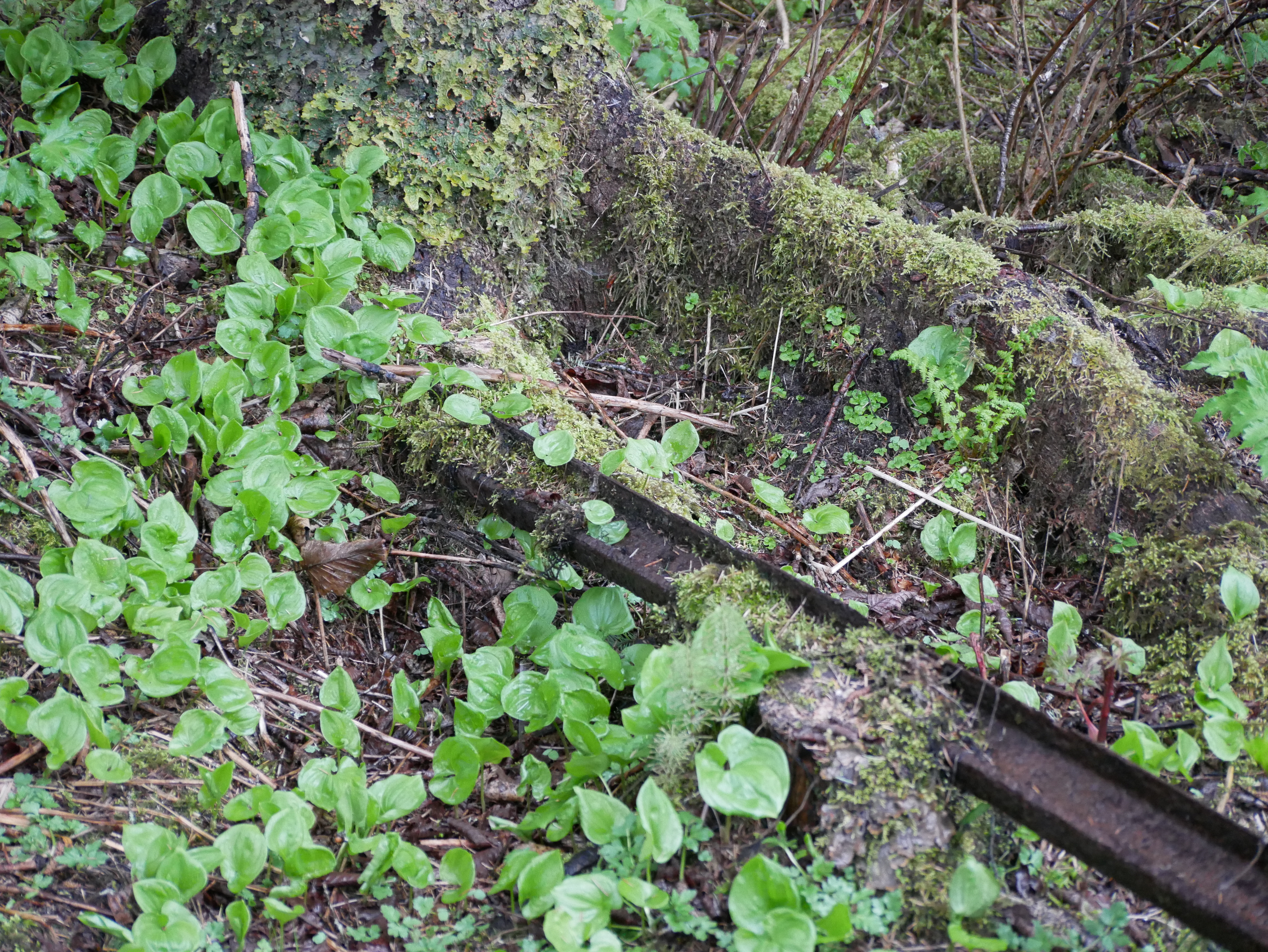
As the little dog keeps her paws dry, I pry back dead blades of grass and find tight buds of cranberry leaves and swelling pollen pods at the tip of Labrador Tea stalks. A scattering of last summer’s cranberries dot mossy patches. In those places reduced to mud by dogs and hikers, the insect eating sundew plants spread their tentacles like tiny sea anemones.

The poodle-mix and I are startled by the sudden appearance of three songbirds. Two of them drive a third one to the ground where it rolls onto its back. All I can make out of their tussle is a confusion of brown and white feathers and a blade of grass clamped in the beak of the downed bird. Before I can raise my camera they are airborne.  From the branch of a dead pine tree one of the birds, with the dark head of a junco, gives the little dog and I a nasty stare and is gone. 


Pilgrim at Fish Creek

The little dog and I rush out the door again, again wanting to see the Fish Creek delta while the morning light is still good. Okay, that was a human-centric statement. While I wanted to see the delta washed by the kind of light captured by Flemish painters, Aki would have preferred a sleep in. She’s joined up to make sure I don’t get into trouble. It’s still cold enough on the delta for me to need gloves. (Another human-centric statement). The grass not yet touched by the morning sun is covered with a fine frost. Crow caws and eagle screams let everything within a mile that Aki is back in town. 

            As I watch a solitary swallow thin out the mosquito population, I think about Annie Dillard and her book, Pilgrim at Tinker Creek. She dived deep in what her creek had to offer on each of her many visits. If she lived in our rain forest, what would she make of seeing only one swallow instead of the expected cloud of its kind diving and gliding after flying bugs. The scene might inspire her to get out her copy of Silent Sprintand return each morning in hope of seeing more swallows hunting over the meadow. 

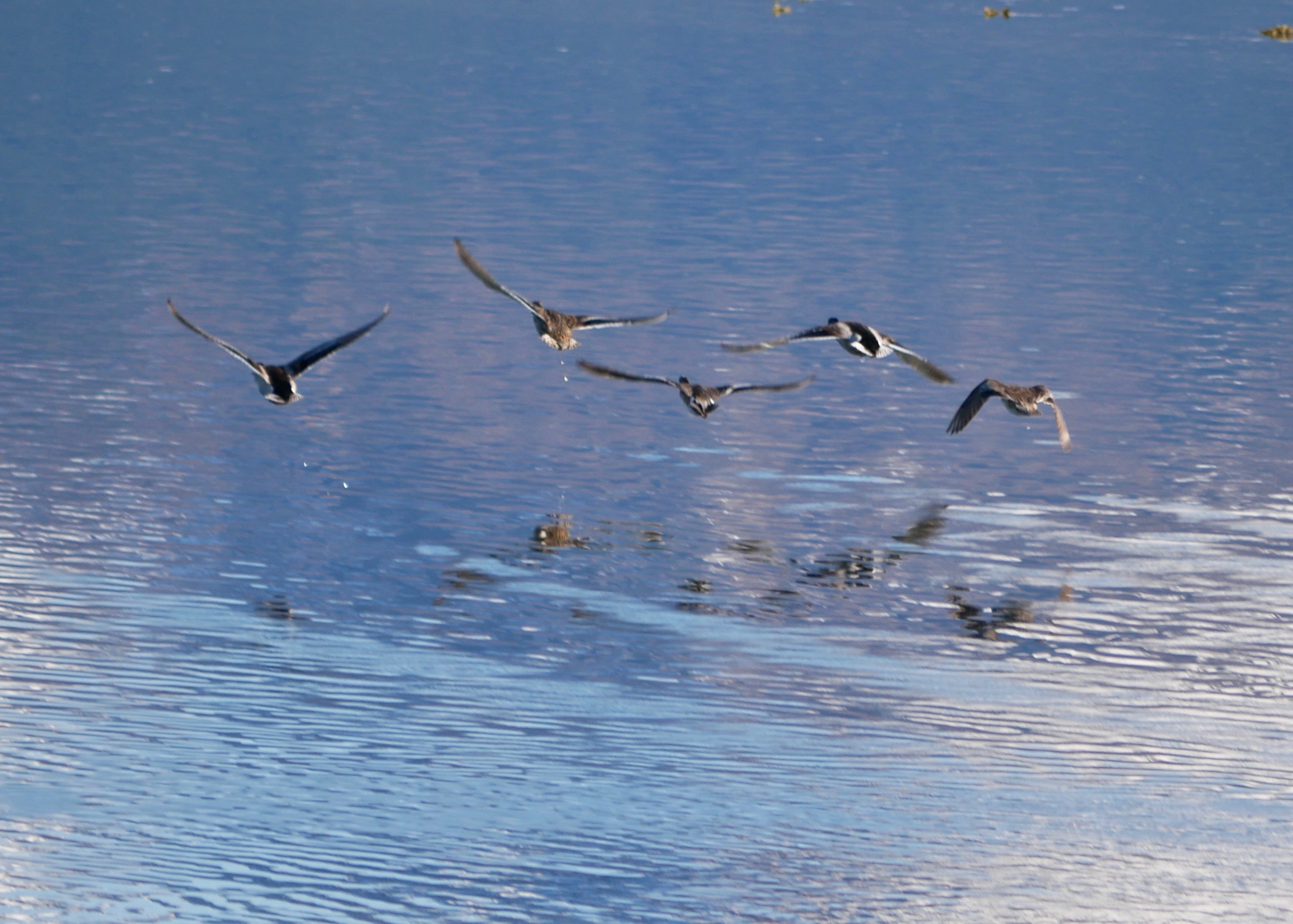
            Trying on Ms. Dillard’s skin for size, I lead Aki along the creek, watching mallards in twos and threes fly over our heads and those of roosting eagles to the same meadow where I watched to swallow. Would she guess that the flooding tide forced the ducks into the air? 

            Crows seem to be every where, wading in shallow ponds, bathing in the fast moving creek, pecking their way through meadow grass. So are eagles. A brace of mature eagles keeps watch on each end of the causeway that links the mainland with a small, spruce-covered island. The island seems infested with noisy crows. We inadvertently flush an immature eagle from the edge of the island by walking under its roosting tree. It circles over our head and lands in a different roosting tree. Ms. Dillard might ask what is keeping all these eagles on the parameter of a crow-infested island. 

Aki gives me her worried look, something she conveys by flexing her eyebrows.  She doesn’t care about natural philosophy or biology or Annie Dillard. She was touched by the shadow of a predator. “Time,” the ten-pound-poodle-mix seems to say, “to go.” 

Grump

Aki’s heading up Mount Roberts. So are three of her humans. It seems like every family in Juneau is climbing the mountain too. There are even a few tourists off the first cruise ship of year using the trail.  Aki is in doggie heaven because many of the humans have brought their pups. 

            I should be happy to share the mountain with so many people. But I’ve become addicted to solitude and I am not getting it today. It’s too bad I’m preoccupied and grumpy. Otherwise I could fully appreciate the sunlight dappling the forest floor, shinning spotlights on emerging ferns. I’d probably get a kick out of the ravens flying low over our heads as they imitate the beep beep sound of an unlocking Subaru hatchback. 

Noisy But Beautiful

Canada geese have made themselves as common as pigeons in the USA and even Europe. But I still love to hear their nervous honking calls and watch their plump bodies strutting over a gravel bar.  This morning a small gang of the geese feeds down near the mouth of Eagle River. Their designated guard goose issues more and more desperate warnings as the little dog and I approach them. 

            An extreme ebb tide has drained much of the water from the river. It would take us no more than minutes to reach the geese across the exposed riverbed. They would be airborne and gone in half that time. Aki, who weighs less than the guard goose, studiously ignores the noisy birds. I take a few photographs and swing with Aki into the riverside woods. 

            Thanks to strong sunshine it had been warm on the riverbank. Here, where trees block the sun, I start wishing for a heavier coat. We can hear robins and their cousins thrushes, except when their songs are blocked out by the honking warning of the gravel bar geese.