Category Archives: Nature

Winter Sits Down so Fall can Dance

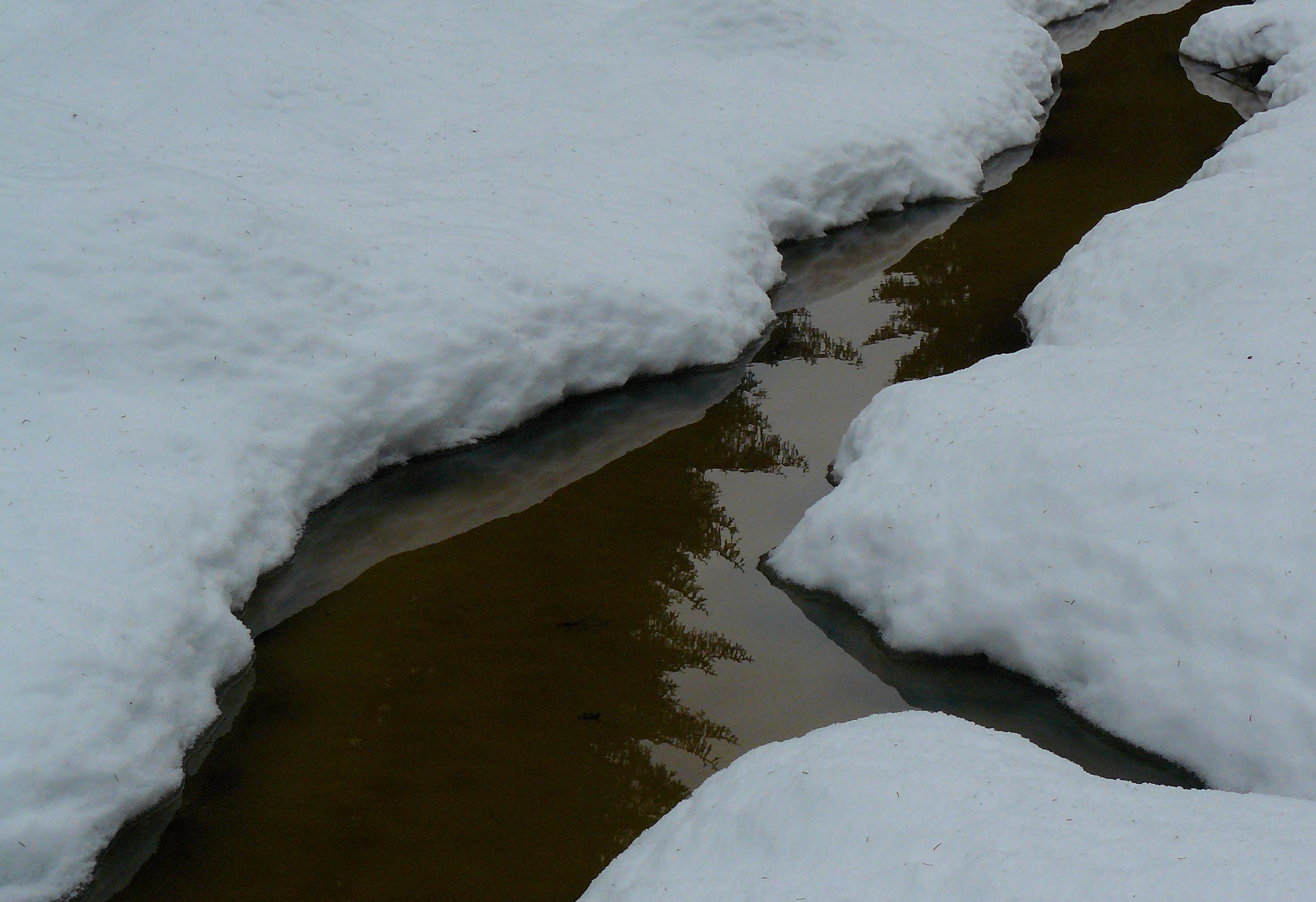
Rain rather than snow spots the windshield as Aki and I head out the road. We don’t complain for the weatherman promised heavy rain that would have melted all snow. Instead we have uncertain drizzle that merely shrinks the pack.

Gun shots block out the moving river’s sound at the trailhead.  Deciding that the trail will not lead us into a hail of bullets I pull on snow shoes while Aki assumes a defensive stance at my side.  When, I wonder. did she learn to identify gunshots with danger?  The noise soon ends confirming my suspicion that it came from young hunters emptying their guns before the trip home.

Now naked of snow, the old growth spruce lining the trail rise starkly from white ground. Last weekend this would have been a place of winter wonder. Today it offers simpler fare; yellow green moss wrapped around tree branches. prismatic bags of snow melt hanging from each twig, and the sound of water courses resurrected with snow melt. I think of a doctor announcing the mother’s death in child birth, cushioning the blow with news that the child will survive. Then I feel shame. That is tragedy and this is another rain forest day where winter and fall whirl in and out of our lives with each change in wind direction.
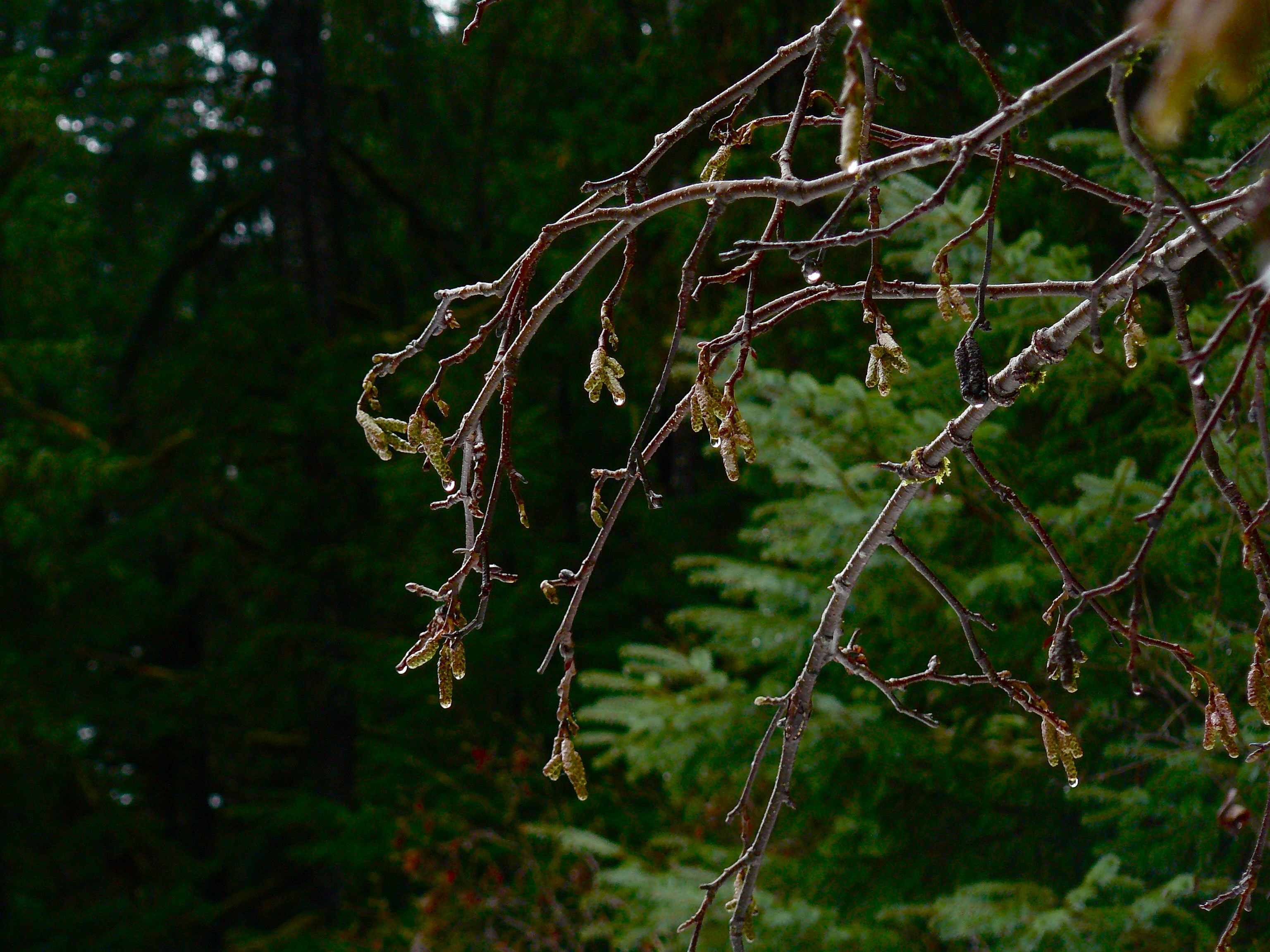
The shrinking snow pack shows sign of a recent wind storm. In the deep woods we have to duck under a broken cottonwood trunk and we find its beautifully shaped leaves in scattered pattens on the trail. We also find chunks of moss and lichen covered branches on the ground after being blown out of the canopy.

Taking advantage of the freedom provided by snowshoes I move off trail and onto a meadow drained by a now charged stream. We cross very fresh tracks of a deer that had to drag its rear hooves over the snow surface.  He is very near. Aki stares across the stream and warns me of the deer’s presence with a bark. Wanting to reduce the animals’ stress I backtrack to the woods and we take the trail to the river.

The tide is out but we find little action on the river’s sand bars. A single bufflehead duck rides a stiff current toward the sea and I wonder if he is that last of the gang I watched float past an eagle at this same spot in the fall. Later we findt the rest of his raft fishing in some eddies up river.

We climb a rise which offers a cruising eagle’s view of the river. Almost all color has drained from the landscape below. I concentrate on the pans of broken river ice melt on the higher sand bars where they were left by last night’s falling tide.  Aki leans against my leg, eyes turned back the way we came, watching my back.
Beach Walk in the Dark


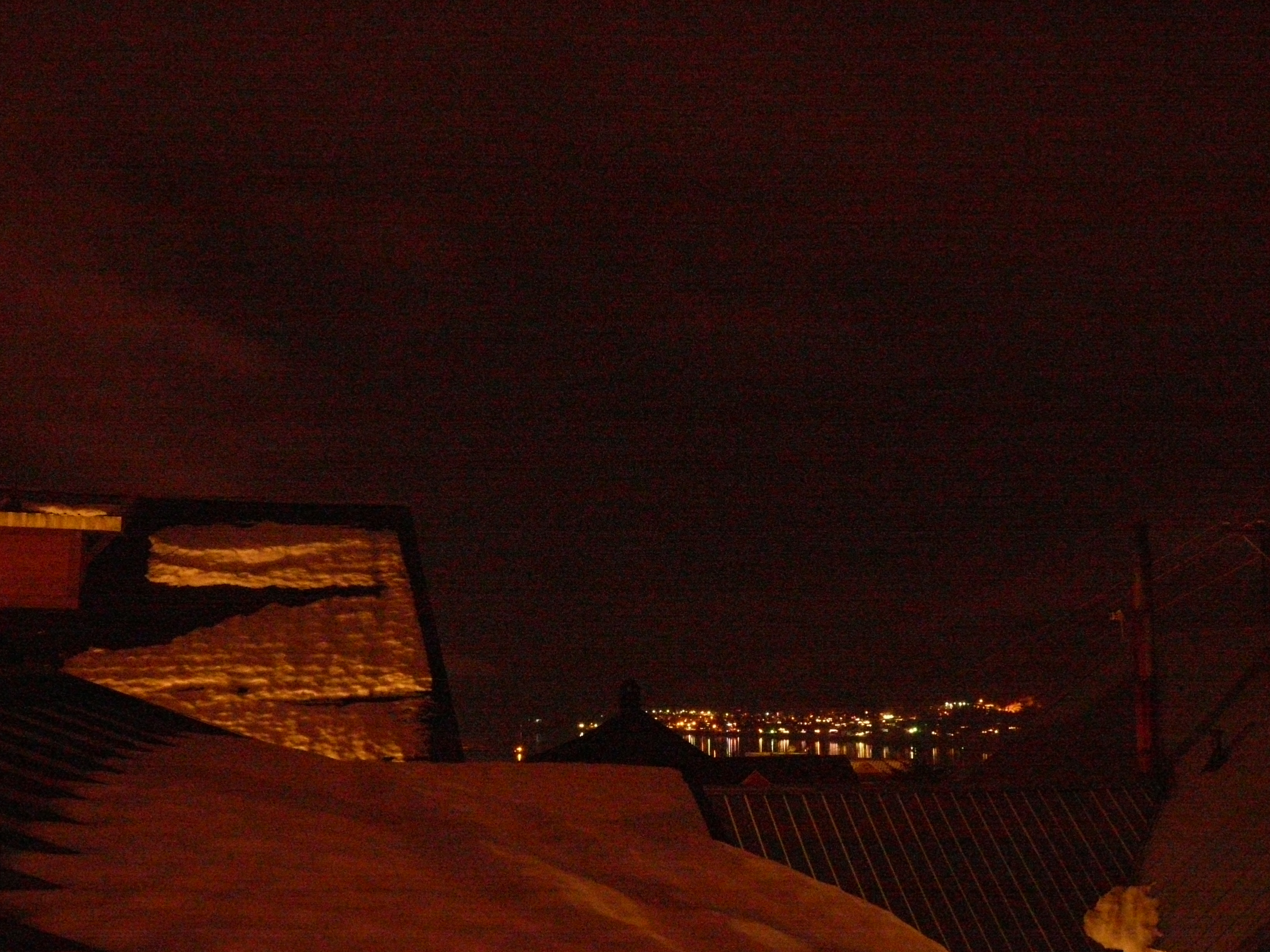
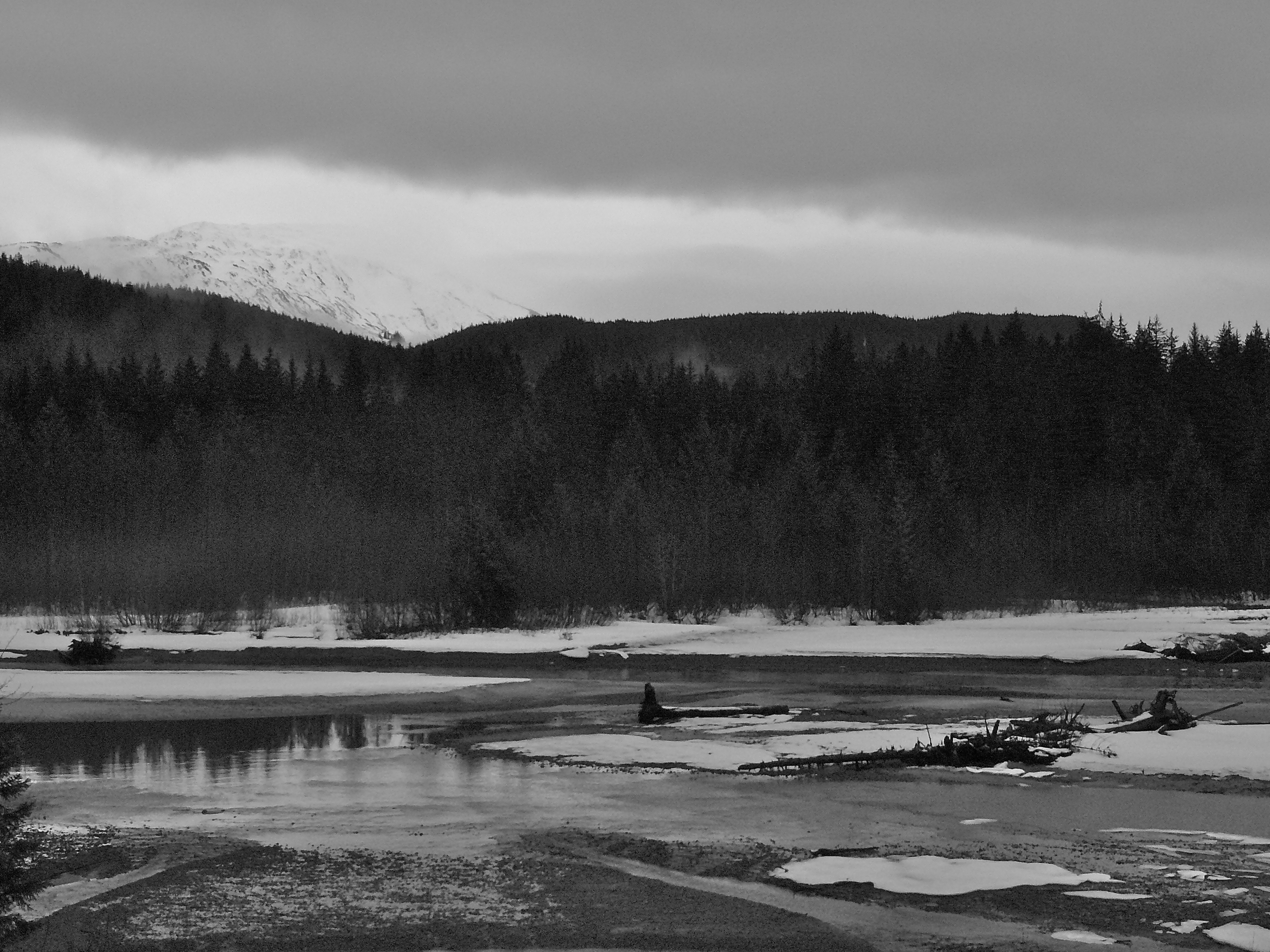
Our friends from Sitka could be home in 40 minutes if they took the plane. Instead they chose the Alaska Marine Highway MV Taku, which won’t reach Sitka for 16 hours.  We dropped then at the ferry terminal long before sunrise and then walked the edge of a wide crescent shaped beach in the dark.  Last night’s flood tide wiped the beach clean of snow so we are left with the choice of walking on dark sand or the snow brightened forest trail. We take the trail at first, thankful to have it to ourselves.

Later we drop onto the beach and listen to ducks complain near the surf line. Aki ignores then but I listen, trying to determine if they are exchanging information or expressions of frustration that we woke them up at this unnatural hour. The sea begins to carry reflective light—enough to allow us to spot a couple of seals cruising just off shore.

We can’t expect true daylight for hours yet but the morning dusk is winning it battle with the night and soon we can spot islands and low tide reefs as well as the horizon. Eagles stir in the growing light and move off in search of a morning meal.

For a brief moment we alone share this beach country with winter hardy gulls and two harlequin ducks.  Then, offshore the Le Conte ferry moves up Lynn Canal on a run to Haines, bright electric light pouring from its forward lounge. When it moves out of sight we have only the grayness of a stretching day spiced with white flakes of falling snow.

Charlotte?

I’ve never known this meadow to carry such a snow load.  The recent storms spread a white layer three feet thick over the muskeg. Tight white runs of snow line the tops of the spindly bull pine branches giving them a respectable mass. We follow a trail once beat down by other snowshoers.  Snow from last night’s storm partially obscures it but there are three of us with snowshoes to pack it down again until it becomes a two deep canyon cutting across the meadow.

Aki sprints up and down the trough from me to the friends breaking trail and then back. While her people stand tall enough to see the mountain peaks of Gasteneau Channel dominating the compass points,  Aki, only sees snow and snowshoes. We expect little sunlight this close to the solstice but some manages to reach high up Mts. Juneau and Roberts before fog moves in to obscure it. For a short while we feast richly on lights and darks—-snow transformed trees beneath walls of white capped with grey clouds slashed by blue.

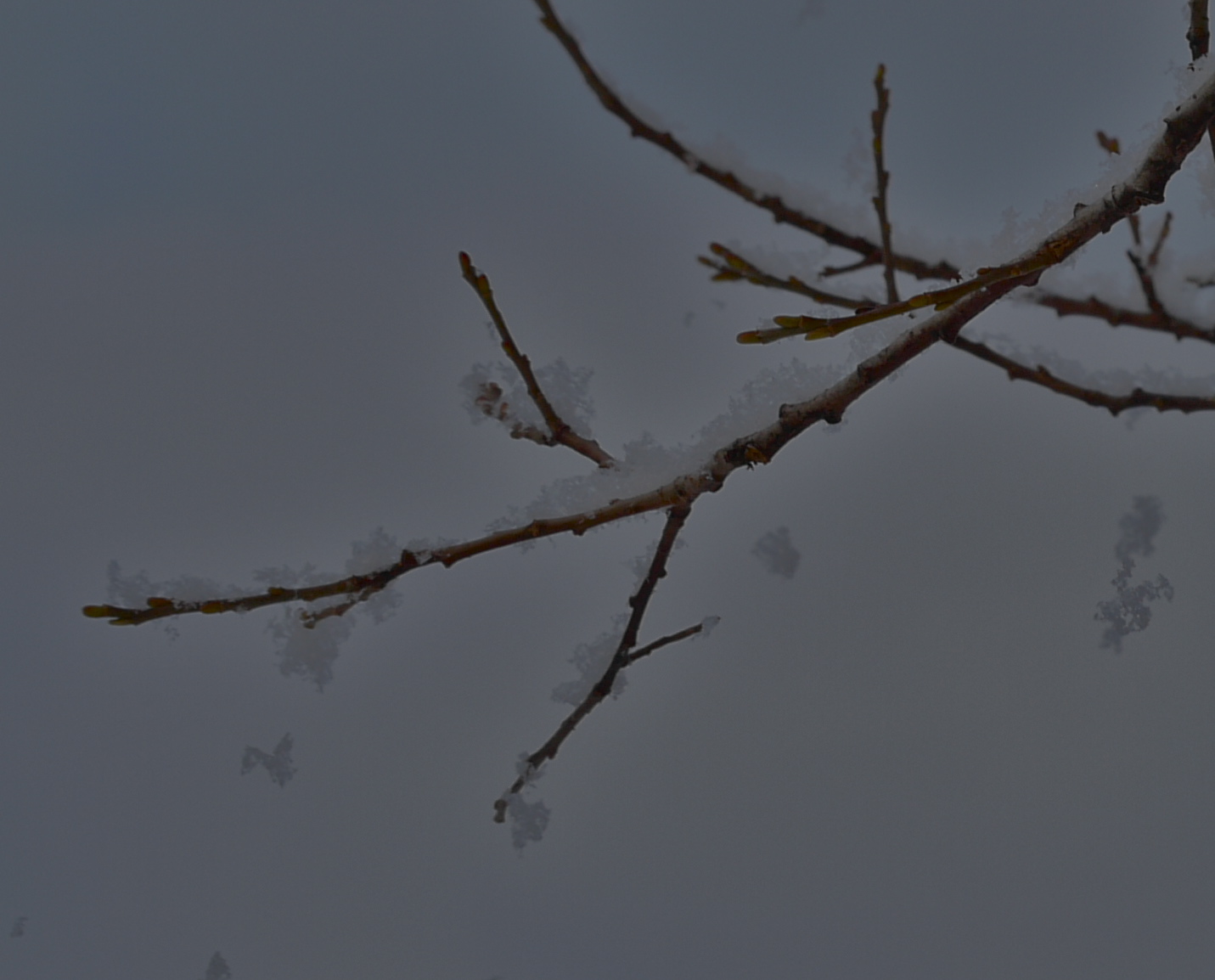
I won’t speculate on how Aki values her transit of the long two foot deep trench but its all beauty from where I am standing. There is also wonder when I find small assemblages of snow flakes dangling from a bull pine branch on spider web strands. They hang where no spider prey could venture now.  It makes me believe that the story of Wilbur and Charlotte could be true.

Thanksgiving

The first steps of the year in snowshoes always leave me discouraged.  It lasts until I find the rhythm and adjust the pace of travel.  Only snowshoes will work this morning. A series of nasty North Pacific lows have buried us in two feet of snow.  Strong winds pushed the stuff into the woods so nothing changes when we move from open moraine into the troll woods.  This first snow of the year has enough cohesion to drape white thick blankets over the trail railing.

I find the rhythm quicker than Aki who hangs back 20 feet and occasionally glances toward the car with a look of cautious hope on her face. Has she out grown the puppy joy that plunging head first into deep snow used to bring?  She did turn 5 last week. We have this place of beauty to ourselves so I move deeper into the woods. Eventually she takes station a foot behind the tail of my snowshoes.

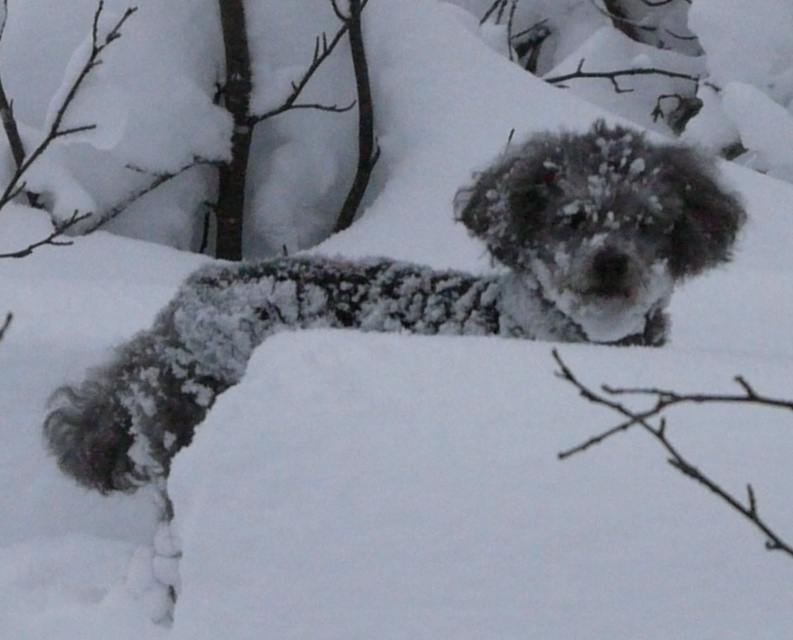
No tracks mark the snow before we crest a low ridge and drop into the beaver flooded land. Then we see snowshoe hare tracks everywhere. Trail side alders hear heavy loads of snow. Those overcome by it lean low over the path so I have to duck under or turn back. At one of these barrier trees Aki bursts forward to roll wildly in the trail. Distracted I rise up too quickly and discharge a bucket of snow onto my head. Some manages to fall between my jacket and shirt collars. If Aki finds this funny she doesn’t show it on her poodle poker face.

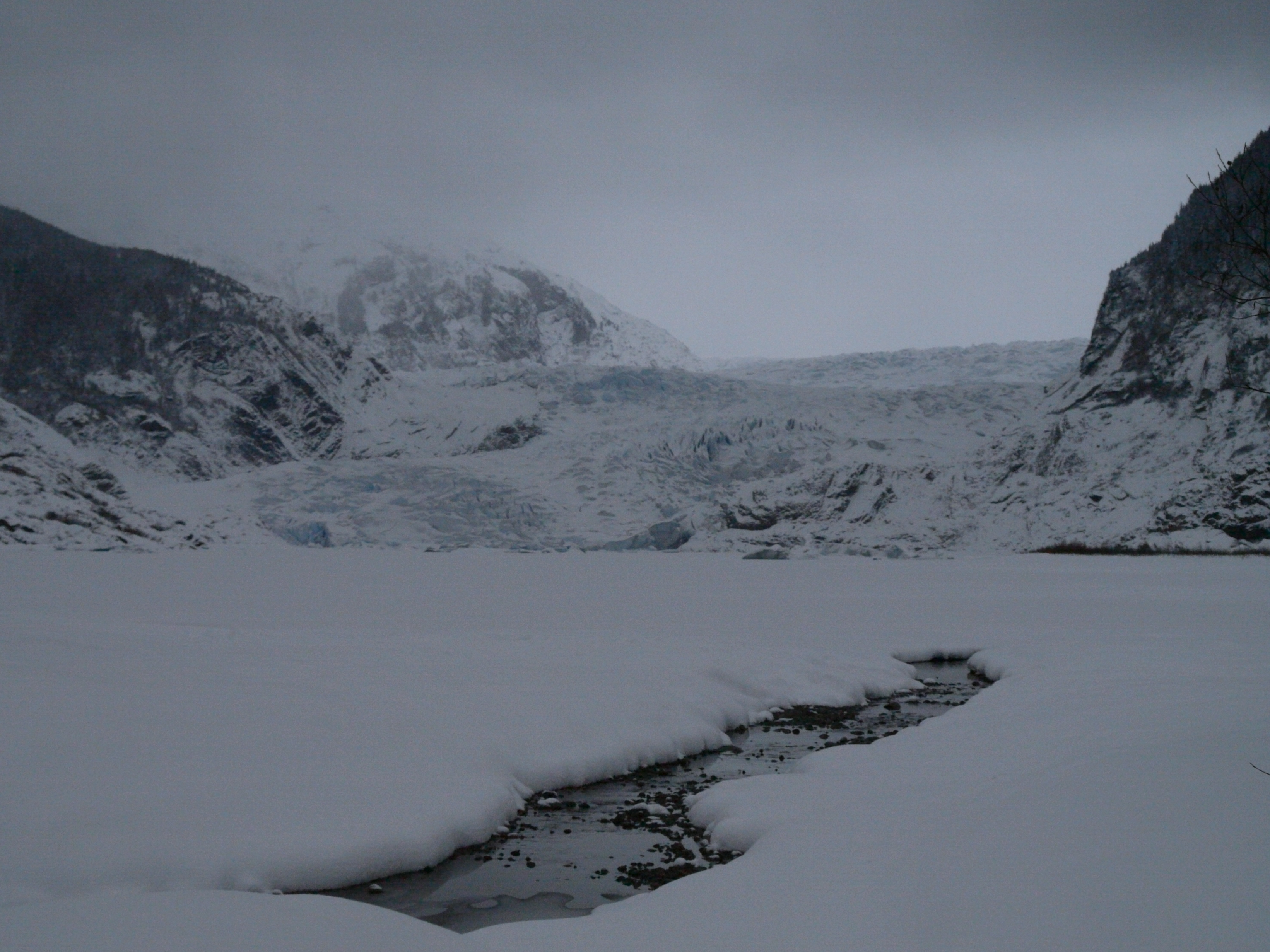
My goal is the troll woods with its legion of moss transformed trees. We turn back before there when we come to the recent tracks of a wolf crossing the trail. Back at the car I pull golf ball sized snow balls from Aki while watching another snow storm move over the glacier. Its blue ice glows beneath a thickening layer of snow.

Bearing a Heavy Load of Snow

Totem poles almost never smile even when warmed and dried by summer sun.  Today the carved face that watches my morning descent off of Chicken Ridge has nothing to smile about for he bears a heavy burden of fresh snow with more on the way.   Still he offers me reassurance, not judgment.  Does he know that the red cedar giant stood worse winter storms a hundred times before being quartersawed for the ones who created him?  Pretty good carvers, those guys, to plant such a question in my mind.

Measuring Sunsets

When visiting family in Central Montana I found that the best part of a sunset came after it dropped below the wheat stubbled field. Then, moving fast enough to keep ahead of the mosquitos I’d walk west on the ranch road as the sky bruised purple, red, apricot and yellow and wondered if the sun’s passage wounded the blue prairie sky.

Summer dusk in Montana dragged on long enough to discourage sleep. Not so in the Florida Keys where I just spent a week camping and bicycling. There the wise watch sunsets from their front porch or carry a flashlight. You can’t rely on a lingering dusk to help you find the trail home. I couldn’t rely on lessons learned on the prairie to measure sunsets in the Keys.

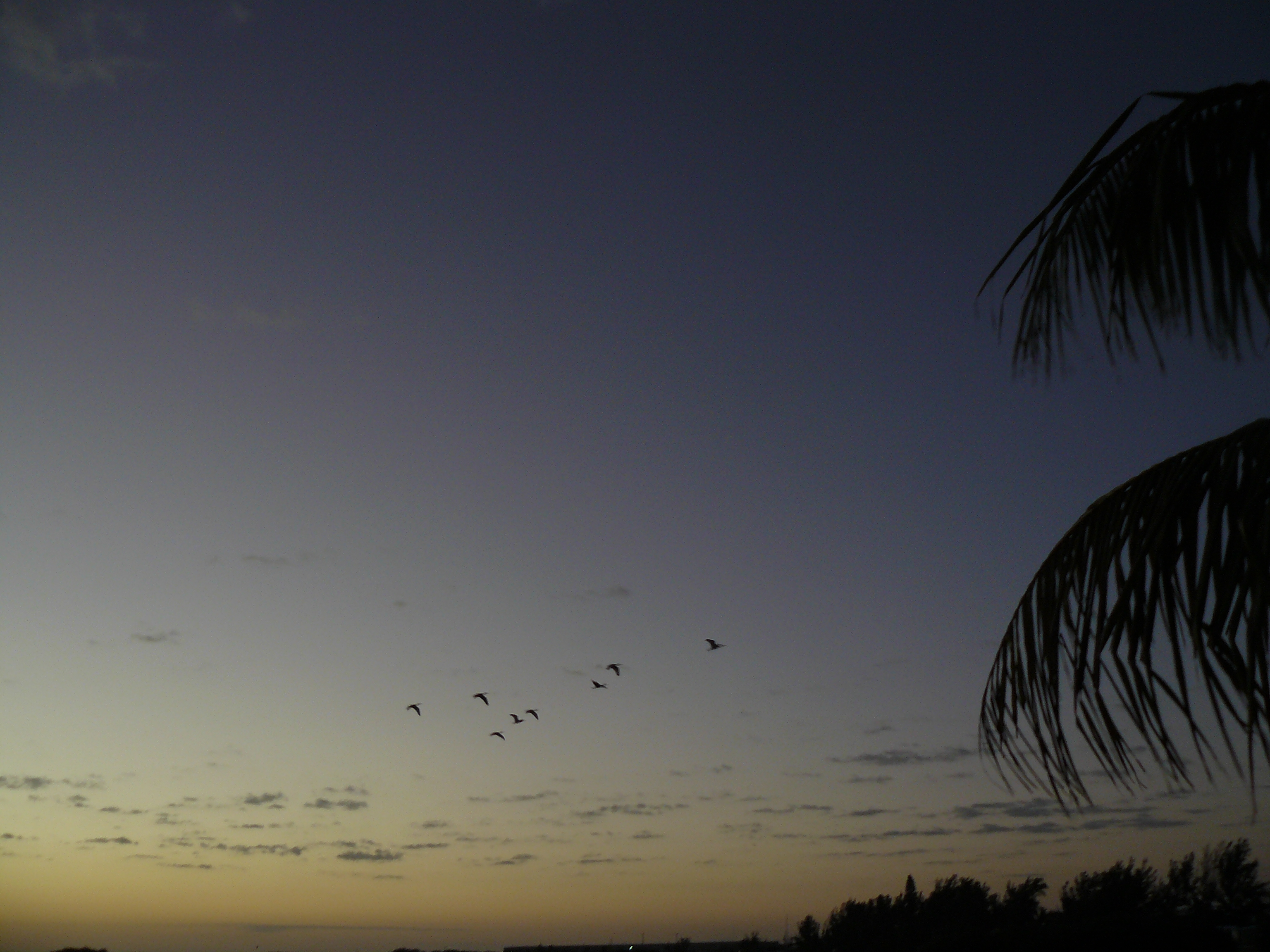
On the Keys the real beauty happens with the sun still a long necked beer bottle length above the Gulf of Mexico when an orange to apricot light colors the under sides of clouds but the sky still holds blue. Then pelicans, egrets and gulls reduced to black make small migrations across the sun. Just as it eases into the horizon the sun sends a reflection all the way to the beach.  After that it drops quietly into the sea and night takes charge.

One evening, while waiting for a sunset I tried to draw pelicans and cormorants drying themselves in the last heat of the day. The ever moving pelicans made poor models but the cormorants would form an iron cross with their wings for minutes at a time and the herons and egrets could be counted on for short periods of stillness as they stalked prey in the water.

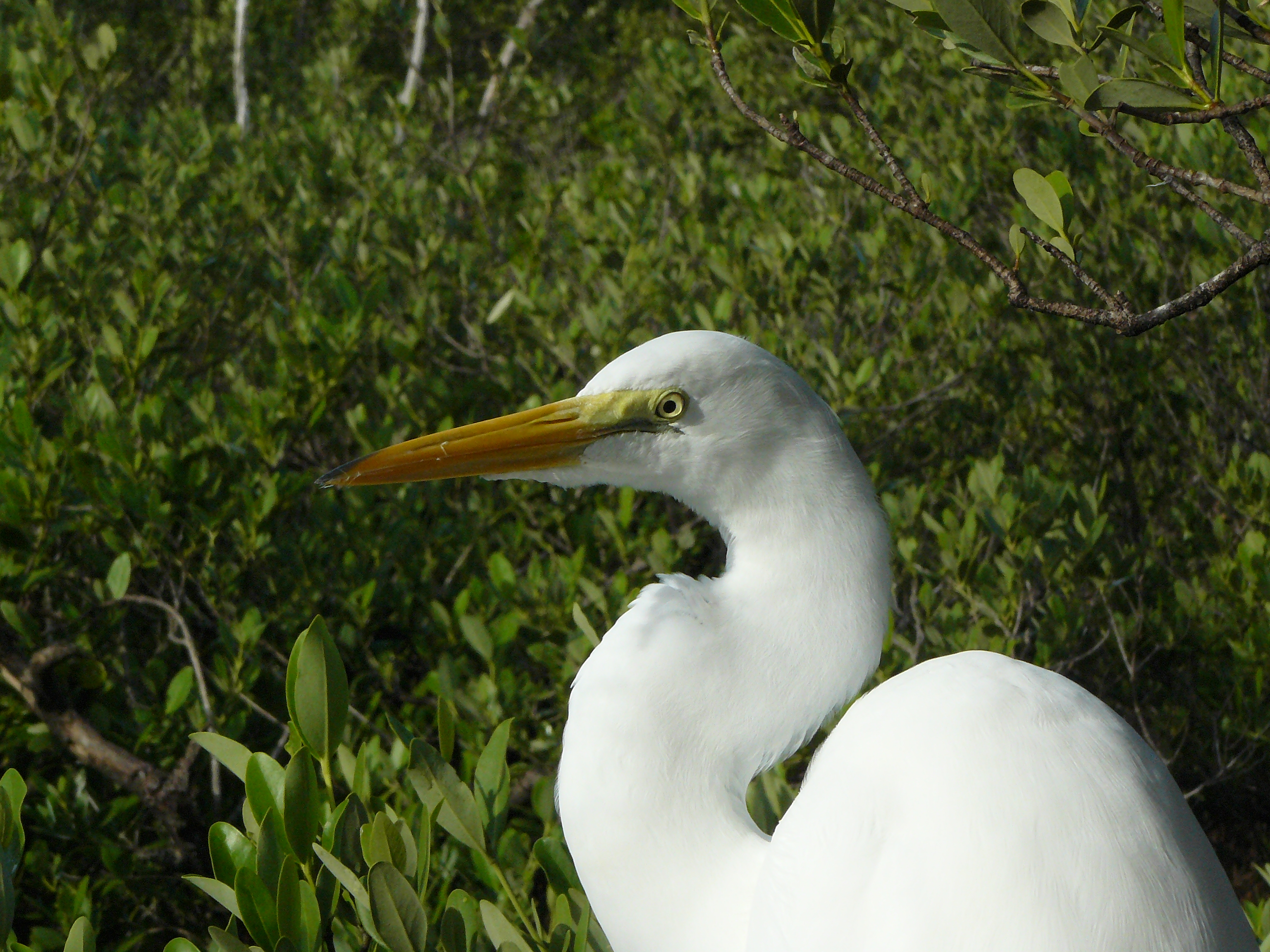
After catching and swallowing a bait fish one great egret turned as if to watch me draw. In minutes he hopped up to share the dock with me, showing me first one profile than the other. He then struck a series of 30 second poses, some with neck stretched to full length and others with it folded into an impossible curve. His Great Blue Heron cousins in Alaska wouldn’t so much as share a large inlet with me. I know there is something wrong with this hunting bird actions but they still marveled. 

The next morning I watched the sunrise over the Atlantic. The sky colored to apricot a half an hour before the sun appeared and then started paling to white. This stirred the birds who flew in long thin wedges across the bay and then over my head. Pelicans flew with beaks stretched out and egrets held their long necks in a “s” form so they looked like paper airplanes in the soft morning light.  All continued on over the roaring traffic on U.S. Route One and under fighter jets taking off from the naval air station.    

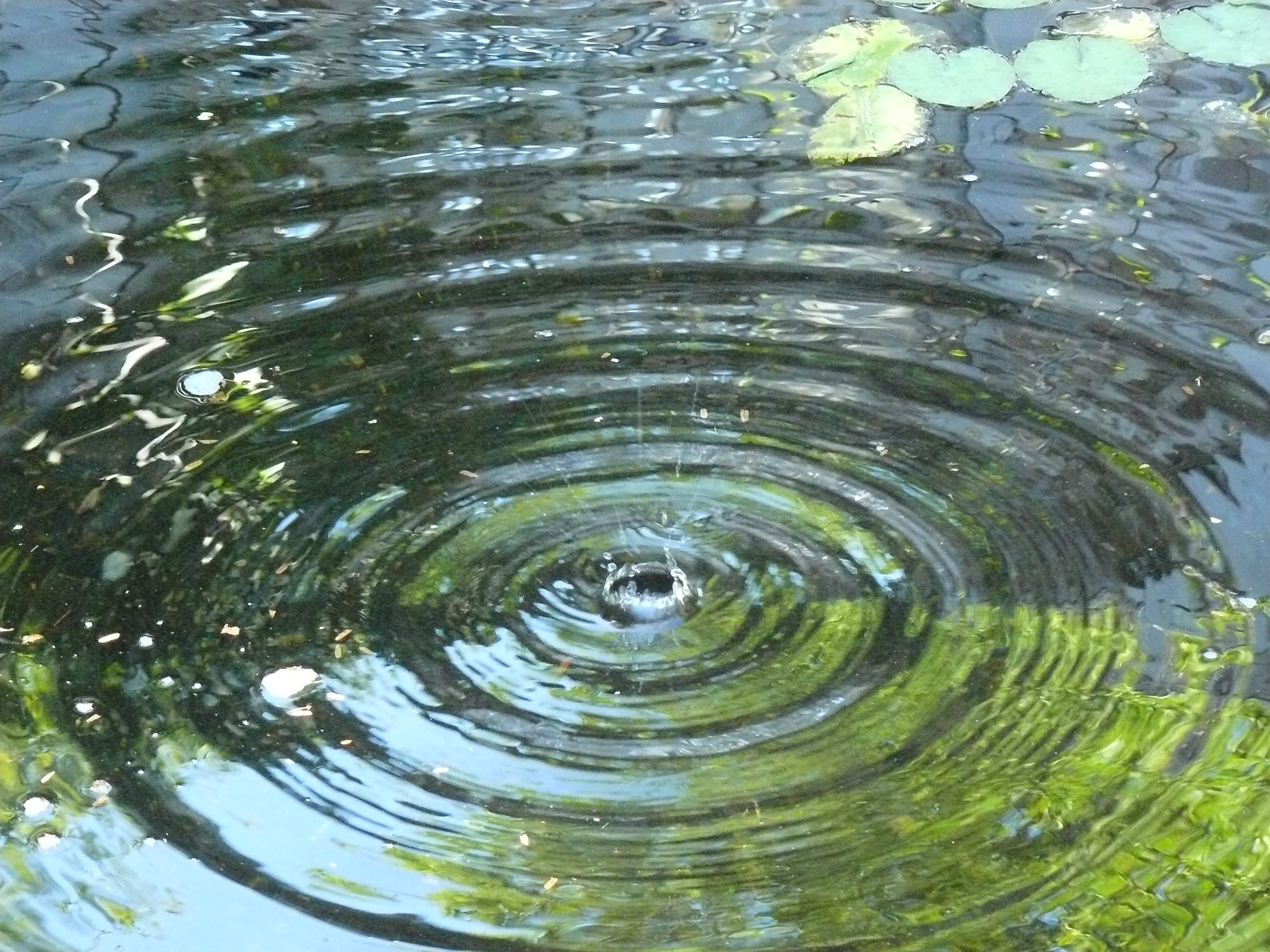
Later we visited a butterfly garden in Key West where a bronze blue heron waded in a Koi pool. Single drops of water fell from the heron’s beak into the pool to send out predictable ripples that rolled over the surface. I found myself wondering why a person living in the land of real fish, heron and egret would create something that could only remind one of true natural beauty. Then minutes went by with me simply watching the ripples distort the orange, red and black of the Koi fish gathered in the heron’s shadow.  

Winter in Autumn

Today we get a taste of winter between autumn storms. No sun reaches us on the North side of Douglas Island even though it is after nine in the morning.  With the temperature in the 20’s Aki and I move rapidly through the woods for warmth.

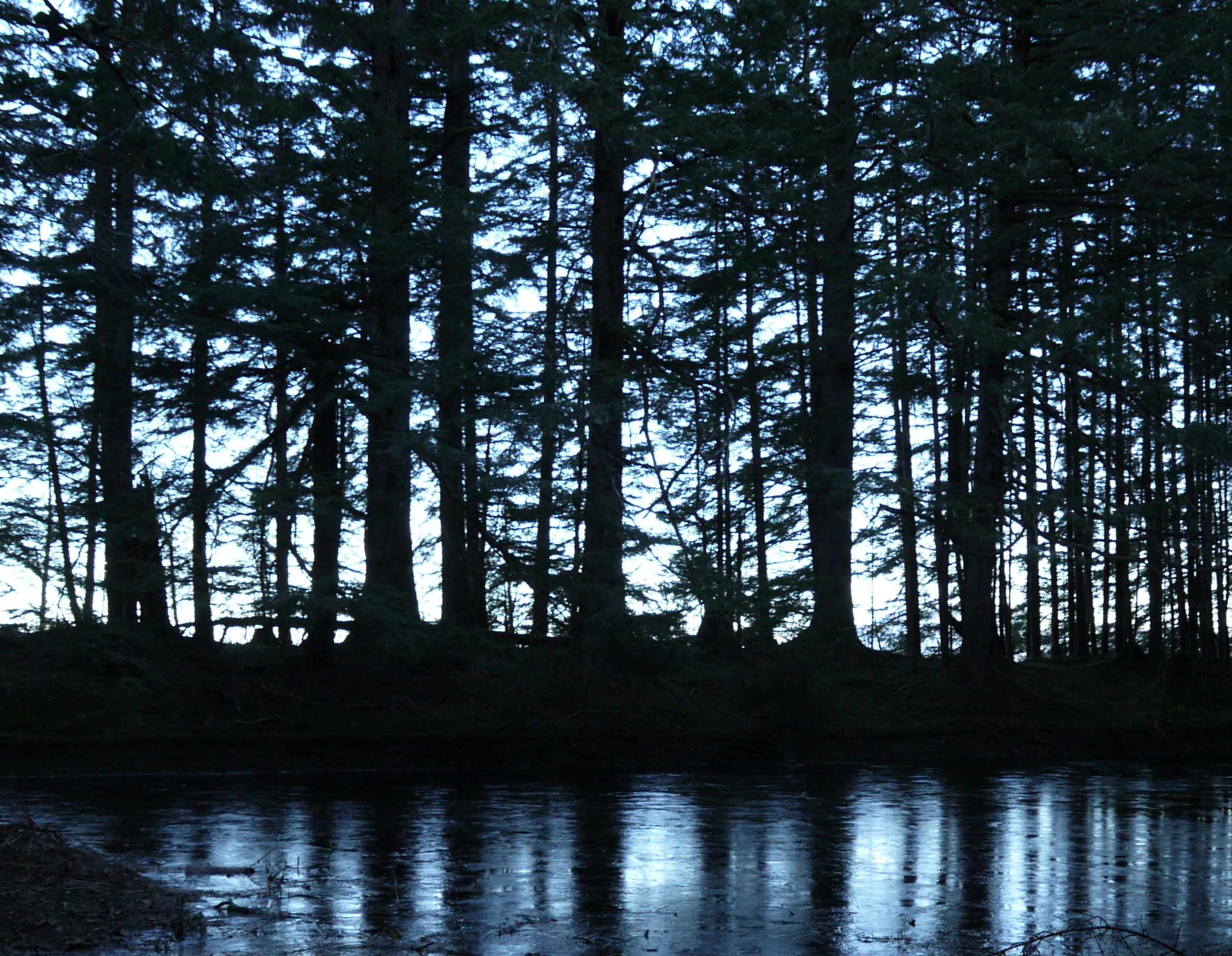
The temperature drop gave forest moss a crunchy texture and formed a thick ice skim on the forest ponds. Those plants still sporting green look like overdressed fools in a hardware store. Their practical neighbors already wear their winter gear.

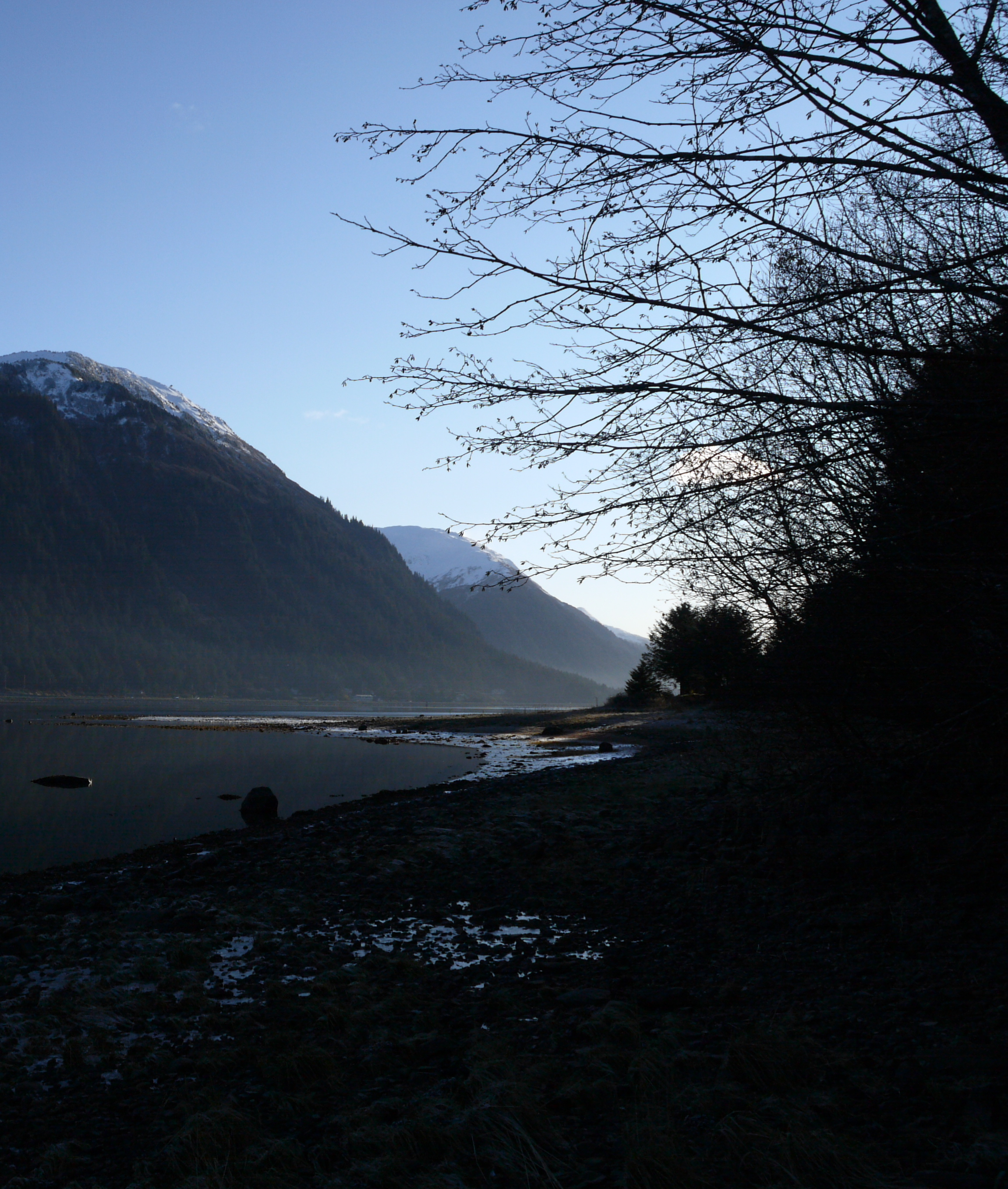
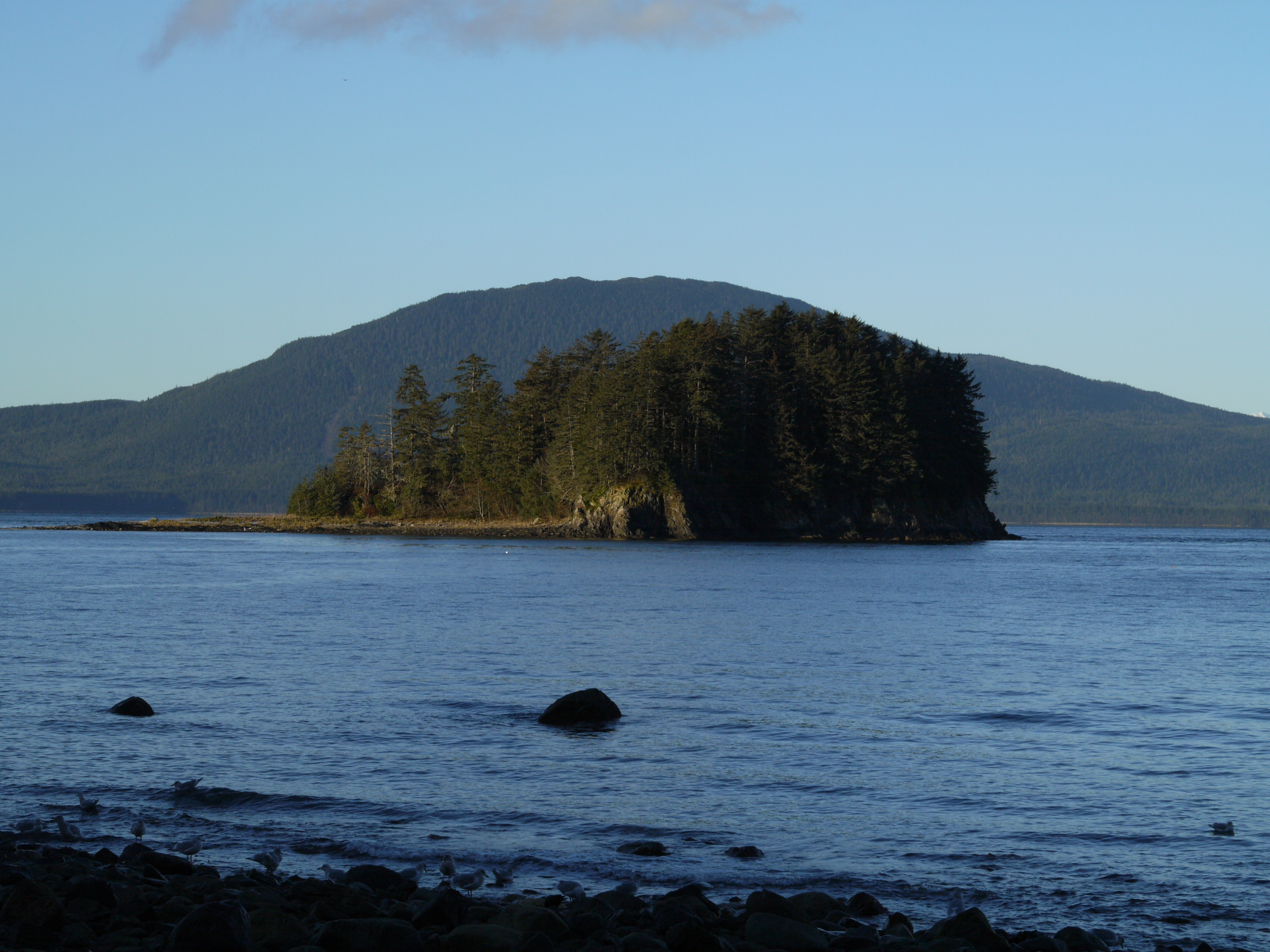
Nearing the beach we see Shaman Island through a screen of trees. The sun shines there but not on the beach.  Looking from this dark place over water to the light flooded island, I feel like a witness at the universe’s birth.  The low angle light of dawn reveals so much truth—-the grain in the island’s cliff, the number of each tree and bush. Clarity fades as the sun climbs and an Alaska Ferry moves past Shelter Island on its way to Haines. In between a lone sea lion breaks the surface of Lynn Canal.

Pre-Dawn Ice

This morning a thin coating of ice covers all the walking surfaces on Chicken Ridge. The glazing on our small front deck makes retrieving the Juneau Empire a danger filled undertaking. Pre-dawn ice this time of year brings the promise of clear weather at least until the next North Pacific storm brings back the rain.

First ice brings beauty along with danger. Only a flat footed walk—more a slide really—can get me safely from Chicken Ridge to work. Shoe skating down 7th Street brings me to the Seward Street Stairs and a first view of Gasteneau Channel. This morning it wears a shawl of vampire fog, which can’t survive sunrise. That won’t be for a half an hour so there is still time for my idle neighbors  to put Beethoven’s Sixth on the stereo and watch the day build in richness with his music.

Beaver Wars

Beavers have a reputation for hard work but not high intelligence. Their big scaly tails, perpetually wet fur and oversized buck teeth scream, “Awkward.” I once watched one trying to raise the level of a huge cement dam one stick at a time. Risking a tumble to his death over the spill way, he would  swim with a stick in his teeth, release it to be washed over the dam edge and then swim back for another sacrifice. That was an Oregon beaver, not one born on the glacial moraine. Our local boys must be more intelligent. They outsmarted the U.S. Forest Service. I have the wet boots to prove it.

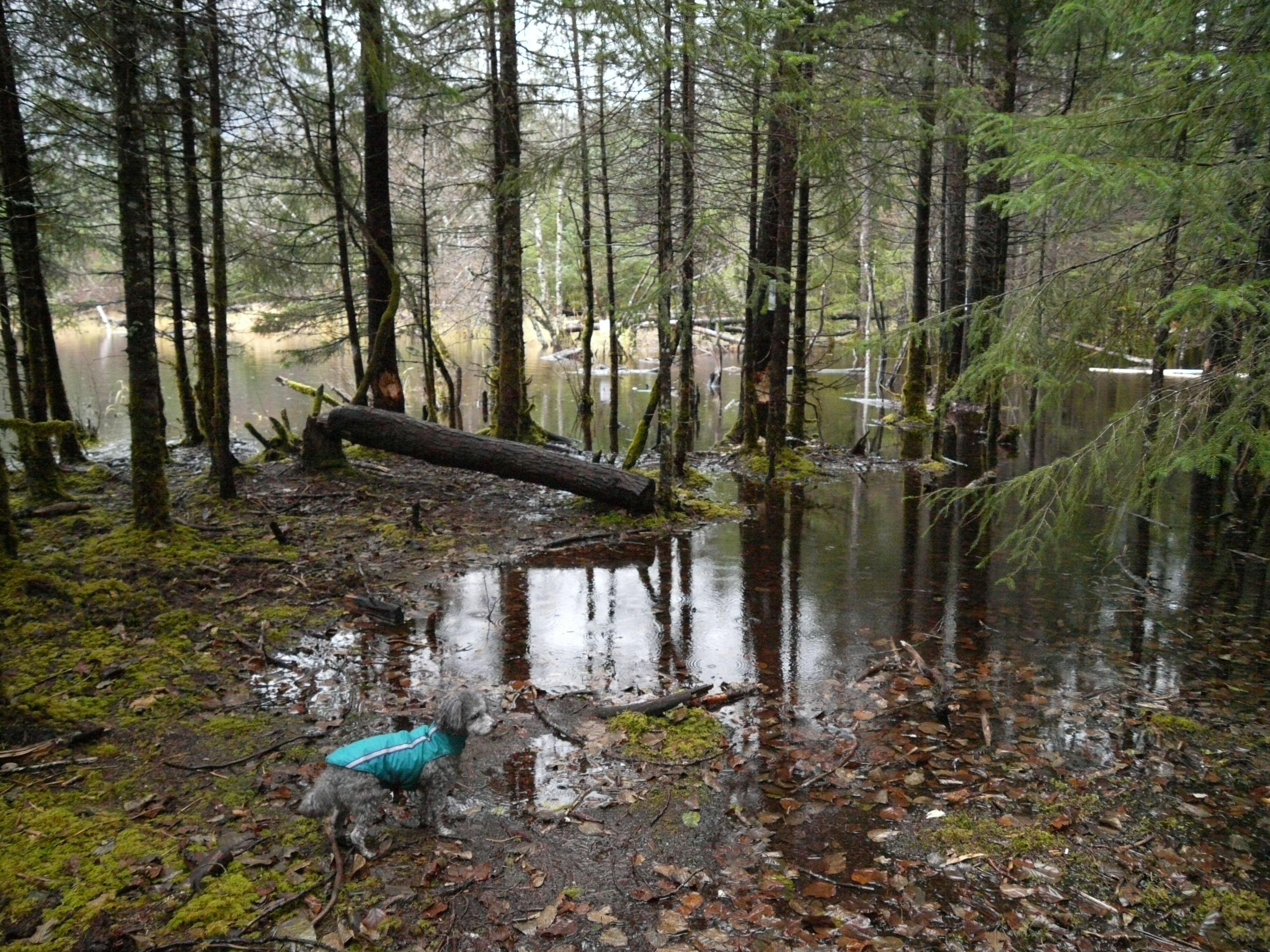
The soaking happened today, as Aki and wound our way through glacier moraine and troll woods to avoid an increasing number of beaver flooded trails. The dog showed little enthusiasm for the venture. I blamed the pounding rain and promised her that we will soon be protected from the worst of it by a thick forest canopy. She still hesitated then took up station at my heals as she does when smelling danger. A few minutes later she shot ahead. The rain continued so a strange smell or one given off by a bear must have caused her timid behavior.

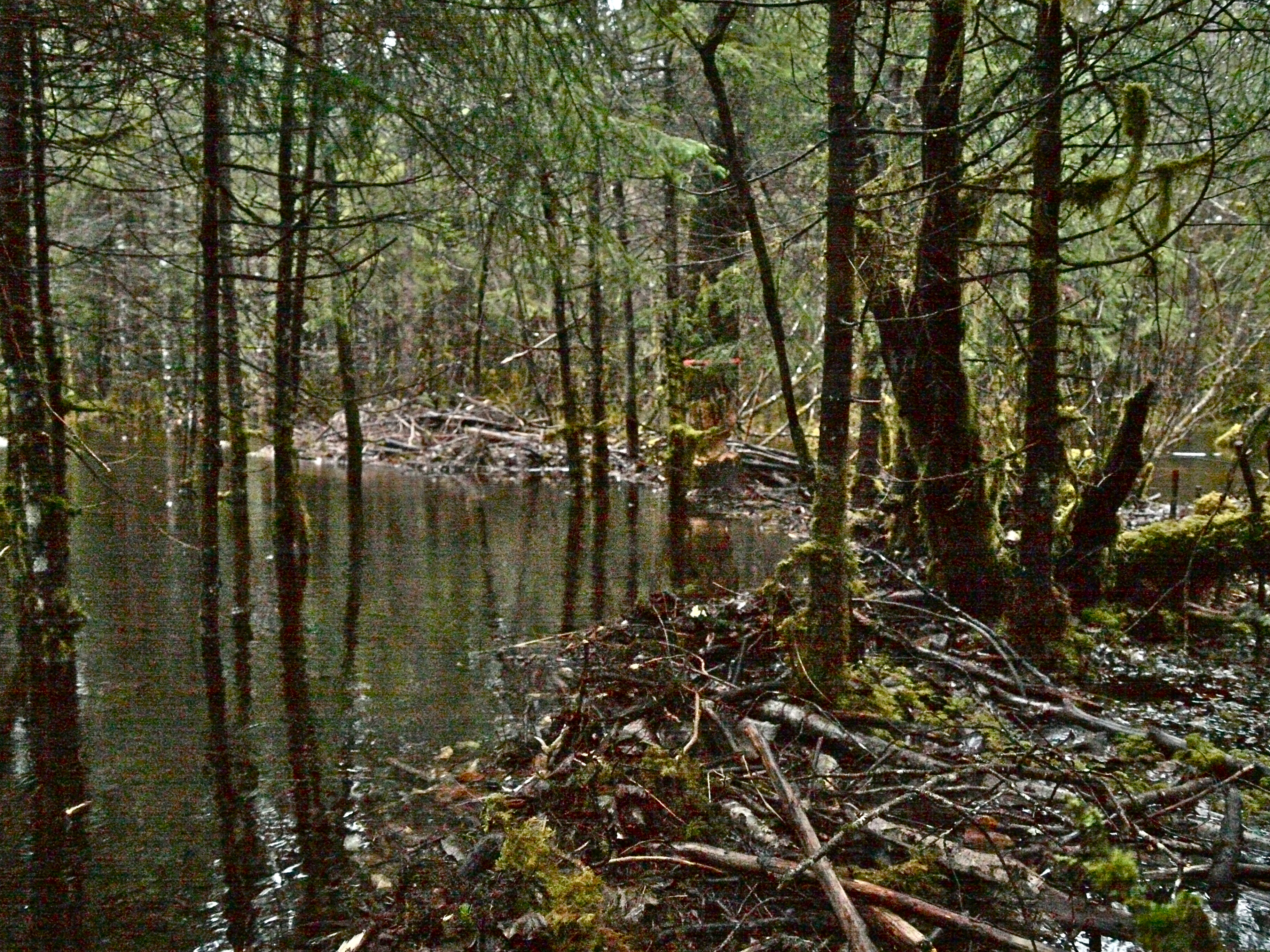
We emerged from the woods onto Crystal Lake. Across the lake a trail runner and his dog forded 100 feet of flooded trail. His trainers sent waist high splashes with steps that submerged his legs to mid-calf. Aki would have to swim it and I am tired of wet boots so we planned another route home. This took us to ground zero of the beaver vs. Forest Service war  At the head of Crystal Lake last spring the beavers built a massive dam that turned the area around the lake into a water park. With the Forest Service slow to react, vigilante hikers started dismantling the dam, stick by stick. This concerned the Feds, in part because the dam kept silver salmon out of Crystal Lake where State Fish and Game had just planted a bunch of land locked king salmon. Both sets of biologists warned that the two specifies could not safely share the same water.  Last Fall the Forest Service thought they fixed the problem by running a water pipe under the dam designed to reduced the lake water level without allowing a silver salmon invasion.

With the pipe in place the lake level dropped and the trails dried out and hikers credited the Forest Service with a win. The beavers retreated to their winter dens and planned next summer’s campaign.

This summer, rather than blocking the Forest Service pipe, the beavers built a new higher dam 100 feet down the outlet stream from the old dam. Water backed up from their new edifice over the top of the old dam and onto the surrounding trails. My feet and Aki’s undercarriage are soaked from our efforts to reach a dry trail on the other side of the flooded area.

What next? Will the Forest Service try to undermine the new dam with another pipe? Will the beavers respond with another dam further down stream?  Will my boots ever dry out?