Fifty-five years ago I rode up Canada’s Highway 1 in the back seat of a Studebaker Champ. This was way before Aki but a standard poodle leaned over me, his drool falling on my sweatshirt sleeve, as we looked out the window at lower Vancouver Island. We probably would not have noticed two gray-haired bicyclists riding up island so I won’t bother to fantasize about time travel. I thought about that car and that old poodle this month, when a friend and I rode the 500 kilometer length of Vancouver Island. When you have wide road shoulders to ride in, you can let your mind wander into lives, your own and those of the people you pedal past.
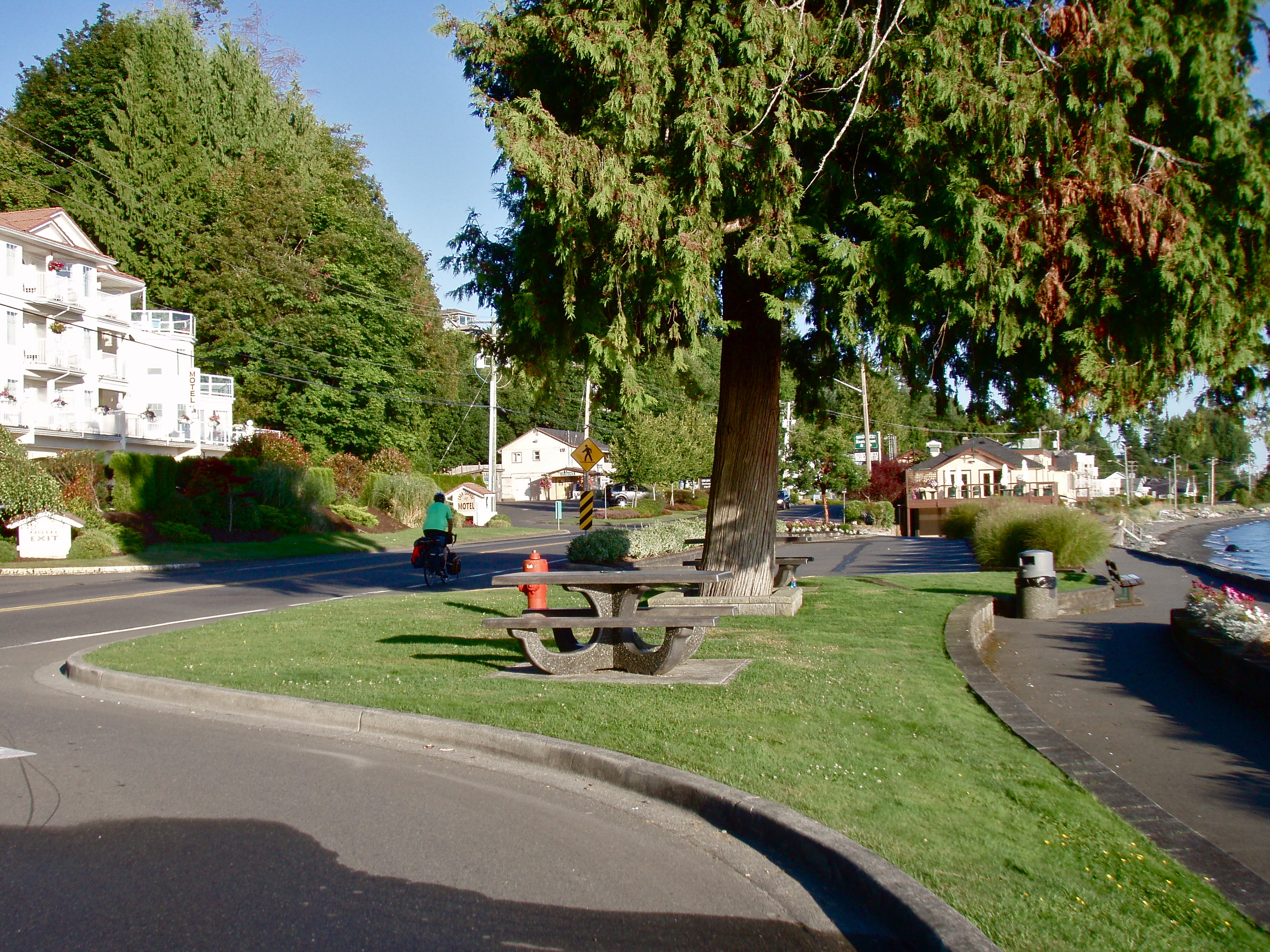
 Local regulators and developers have tamed the island from Victoria to Campbell River—forced a balance of strip malls and ocean views, green space and clapboard sided houses. They whipped the lower island but gave up on the mountainous stretch northwest of Campbell River. Whether they feared dragons or the timber industry, developers never crossed the salmon-filled Campbell. My riding partner and I only feared the climbs we would have to face after we left civilization and the ample opportunities it offered for Indian food, draft beer, and soft beds.
Knowing we must camp each night after Campbell River, I loaded the panniers of my 30 year old touring bicycle with warm clothes, stove, boil-in-a-bag food, and camp gear. Like camels on caravan, we moved past Walmarts, Costcos, and huge grocery stores in 90 degree heat. We met a trickle of southbound cyclists on the hilly north island. They told of RV mirrors slicing overhead as they clung to the edge of shoulder-less roads. None mentioned cougars, the one North American predator I had not seen. This was their prime range and my partner and I both wanted to see a wild one, maybe as it looked at us from across an uncrossable river.
 One night we shared the rest area at Eve River with a couple from the lower island. They encouraged us to spend the next night at a lake 80 kilometers to the north. “You can bathe there,” the woman said. “Your bikes should be able to handle the gravel road down to the campsite, ehey,” the man added. My bike couldn’t. It’s rear wheel exploded the next afternoon as we reached the bottom of the drop to the lake. The explosion ripped off 10 inches of the rear rim. I had no way to get back to the highway or reach the ferry terminal at Port Hardy where we were scheduled to catch a boat to Prince Rupert in three days. Those problems were solved when a fishermen offered to haul our bikes and gear to the Port McNeil bike shop the next morning.
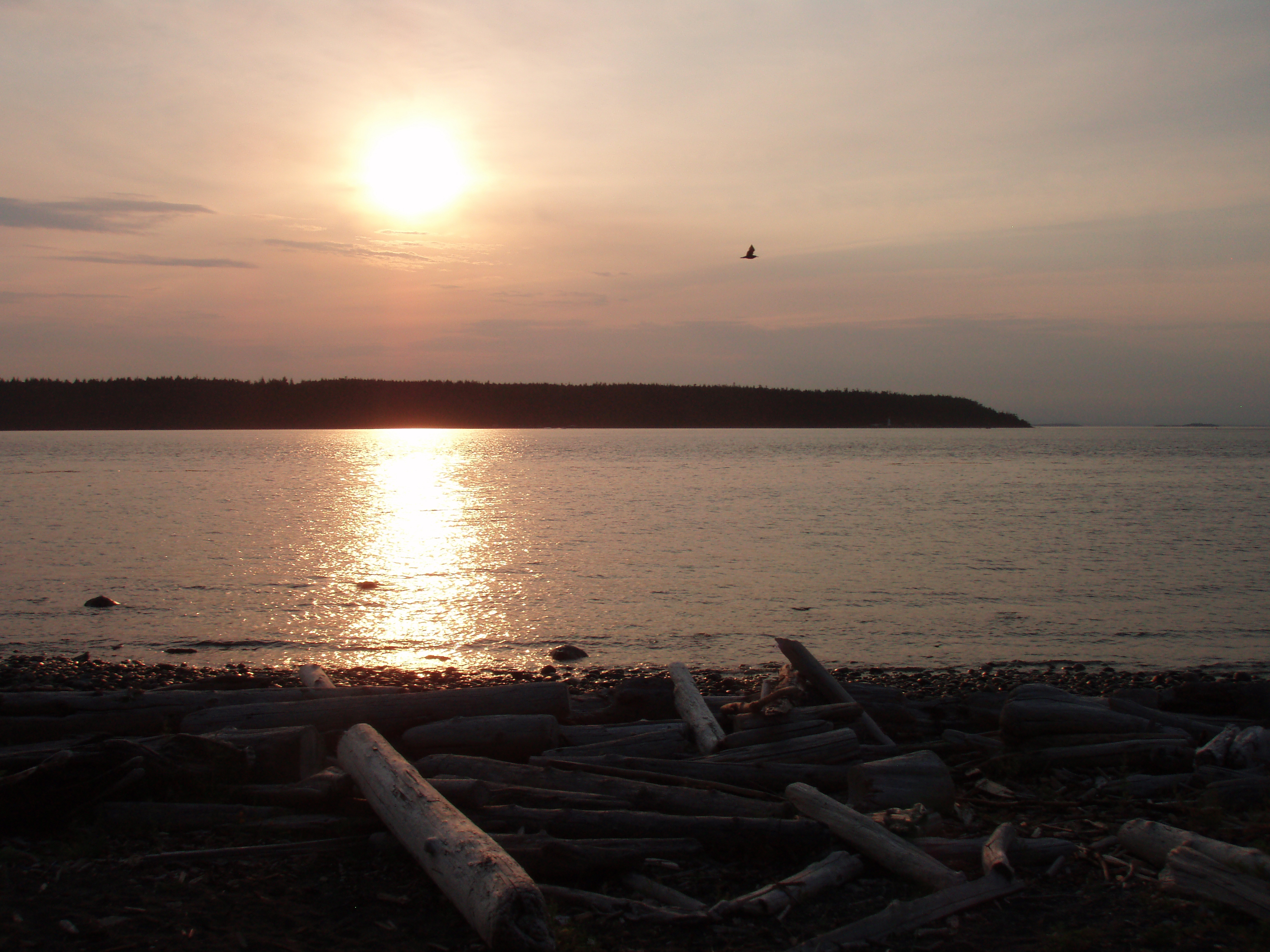
 We ate boil-in-a-bag Indian rice and watched the late evening light turn the lakeside clear cuts into a chunk of Southern France. After dinner, I spotted a cougar 30 feet away from our tent. Thin, with hip bones bulging under a burnt-brown coat, it walked past the Pit Toilet I intended to use and sat with the erect posture of a Canadian finishing school graduate. When it moved again, it slinked like a Hollywood starlet, swished its long tail so that the curl at the end brushed the dust from the ground. We watched it drop down to the lake for a drink. Then it disappeared. I wanted to follow it, get near enough for a good photograph but you don’t make wild things feel hunted.
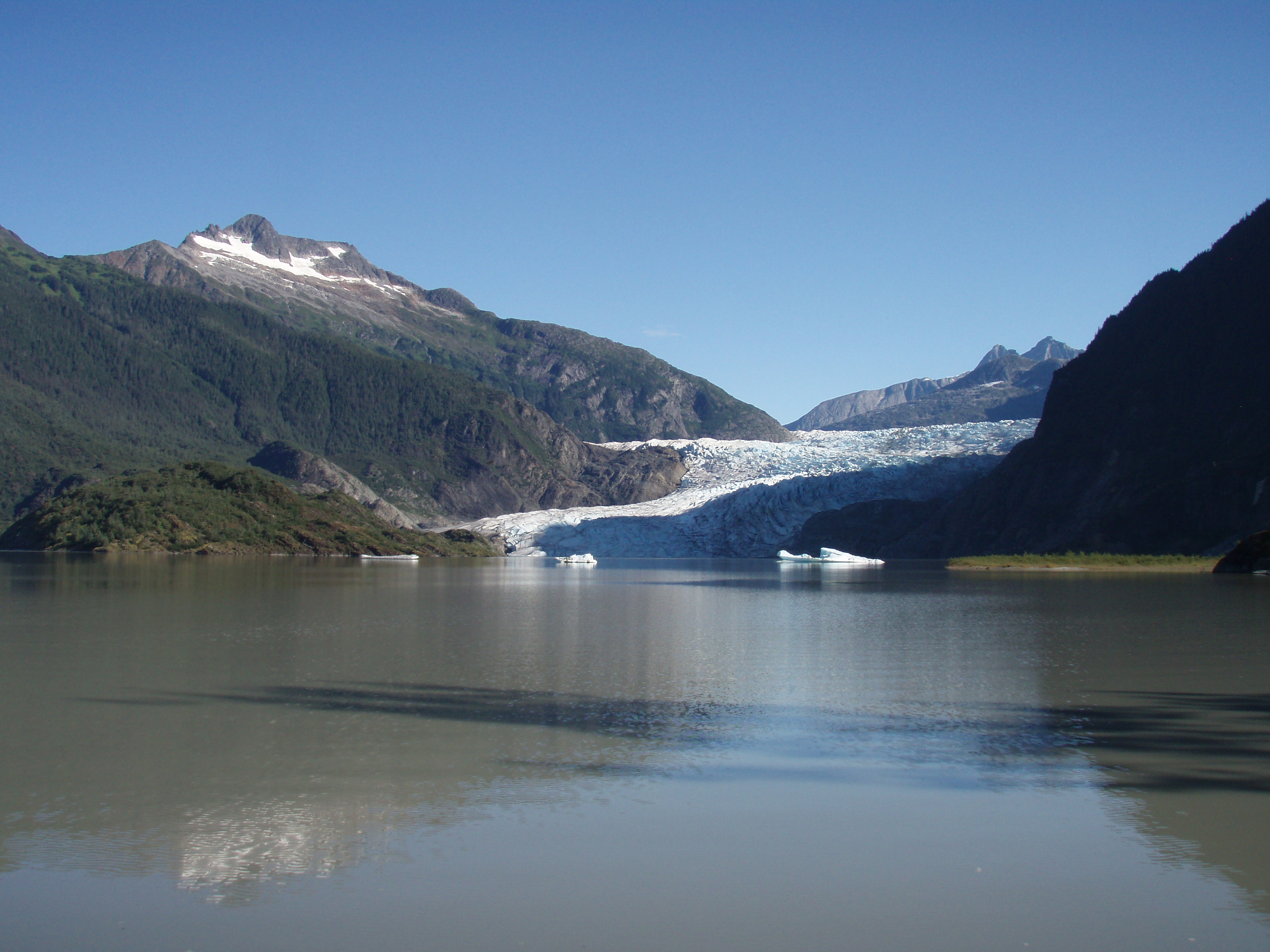
 I knew the big cat was a predator and that were we meat. I’d learn later that one had killed a cyclist on the island that summer by taking him down from behind. But I felt awe and honored, not fearful. In the morning the fisherman said that no one had seen a cougar at the campground that year and that they seldom show themselves. Thanks to the kindness of the cougar and the fisherman, we made it to Port Hardy after a competent mechanic in Port McNeil rebuilt my bike’s rear wheel. We saw much beauty but nothing spectacular, nothing like the Mendenhall Glacier, 12 miles from our house, when it reflects back early morning light.
 Across the channel from Treadwell, the marine layer cuts off the ridge line of the mainland mountains with a border between green and gray that couldn’t be drawn without a ruler. Between it and the equally straight Thane Road, a rain charged creek deepens its crooked channels in the Mt. Roberts’ avalanche chute. The straight line takes me aback. Nature favors curves and rarely tolerates a hard edge. Look at Aki, the little poodle-mix peeing on a scattering of curvy cottonwood leaves. Her form could be reproduced with ovoids and “o’s.”
 The men and woman that replaced the Douglas Island old growth forest with a turn of the 20th century gold processing town were all about the straight line. The walls and floors of of their now windowless buildings are still square. But as the alder and cottonwood trees undulate the old town’s open spaces with their roots, shrubs, grasses, mosses, and even hemlock trees eat away at the town’s flat roots. They have reached the tipping point. Even now formerly sharp building edges are curved. An iron water pipe still cuts a straight line over an alder filled gap but I can see corrosive wounds on it’s underbelly.