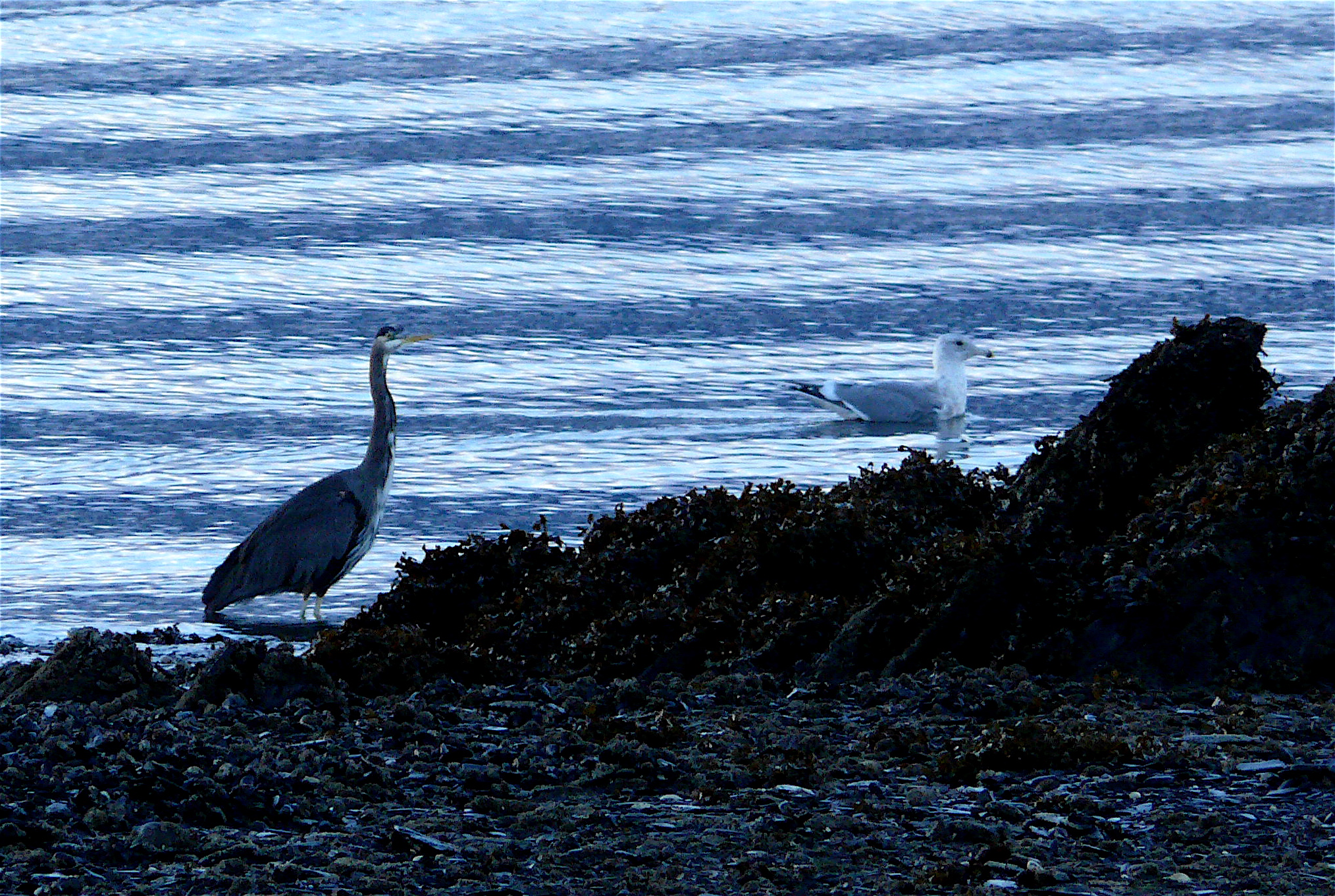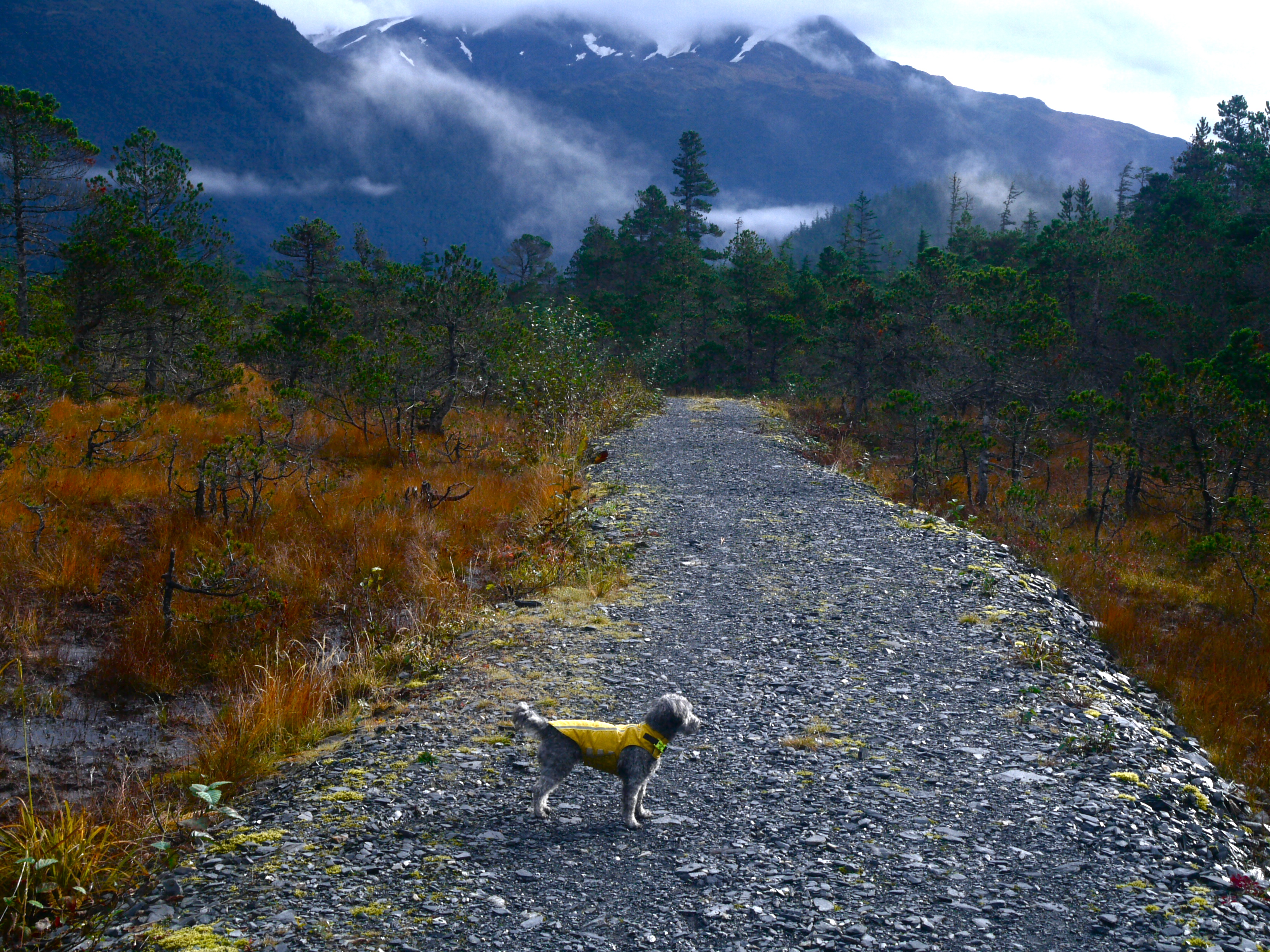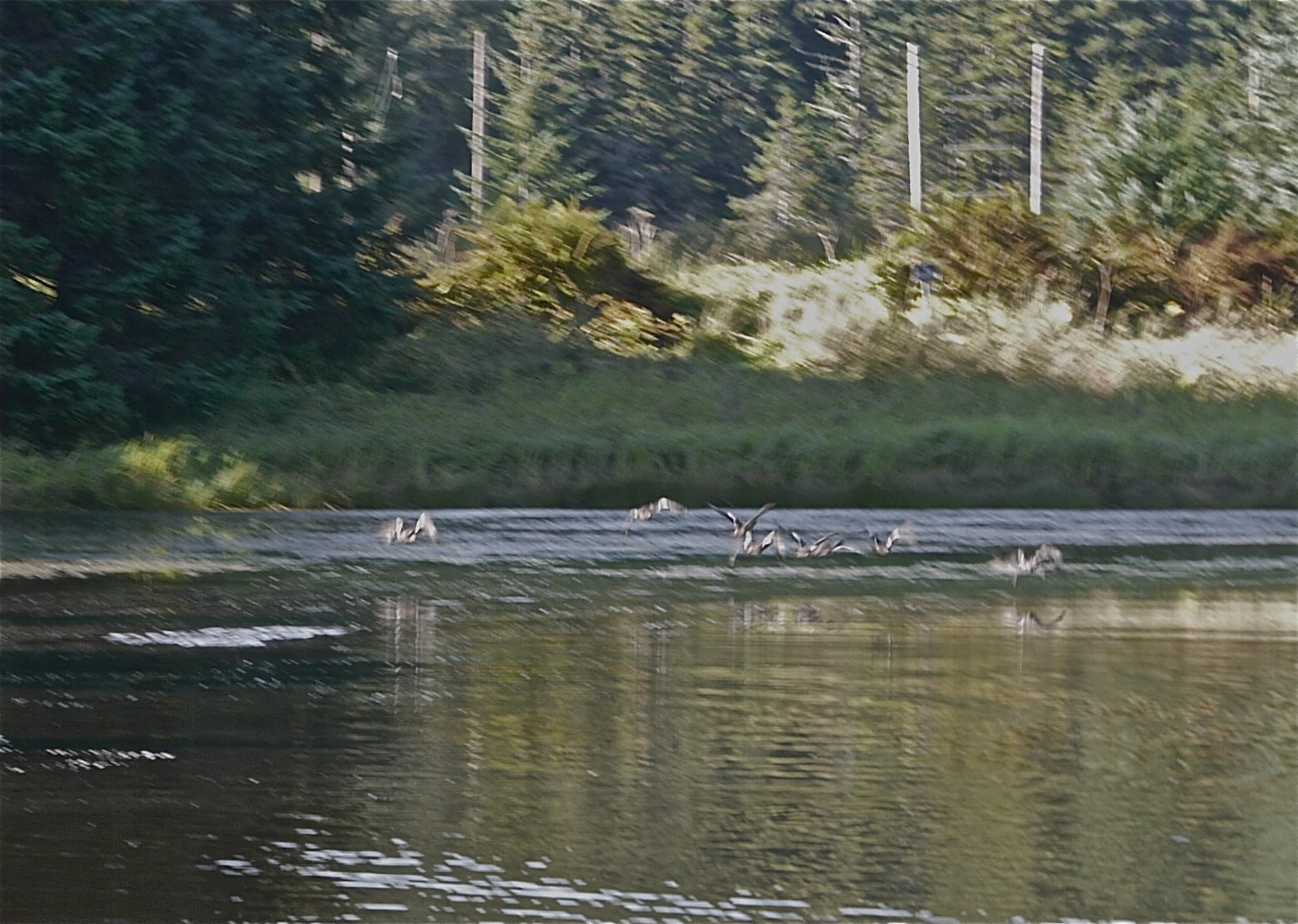
Who was more surprised, me or the heron? He had been hunting near Auk Bay Harbor when a boat wake flushed him toward me. Camera already focused to photograph shorebirds, I clicked the shutter in time to capture his hasty landing. He must have pulled up short on seeing me and the dogs, choosing the company of gulls and crows to ours. 
Category Archives: Juneau
The Seal’s Orphan Eyes
This afternoon Aki shared the riverine forest trail with best dog friend, Zoe. We haven’t been back since the incident last month—when Aki tried to chase down a fleeing black bear. Zoe, an Irish water spaniel, was the most bear-like creature we saw. There was plenty of the subtle fall color that highlights our forest in fall: yellowing devil’s club leaves and bright red high bush cranberry brush, some backlit by a surprise appearance of the sun.
Always the drama queen, Aki broke into the woods, barking all the way to the base of a large spruce. Zoe, older and therefore wiser than the little poodle waited on the main trail until Aki returned to my side, no bear in chase. There was no more drama until we reached the river meadow where four seals moved upriver. Their presence encouraged a raft of Canada geese to move into some upriver shallows and cackle like gossips.
One seal surfaced in mid-river then kept us fixed in his eyes as he floated by. We saw no menace or curiosity in those round brown eyes, just the pity invoking sadness of a homeless orphan. 
Patience and Unexpected Beauty
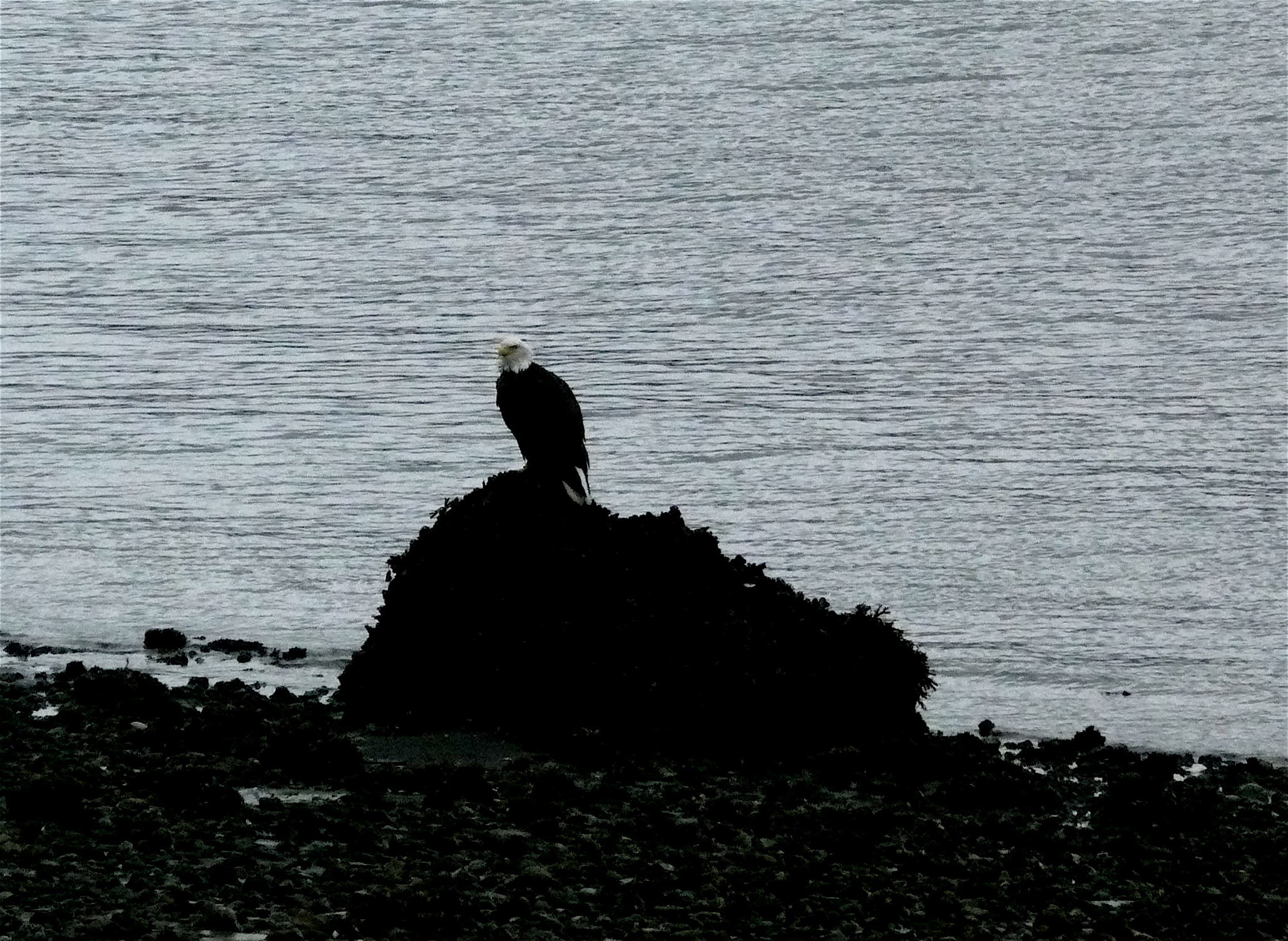
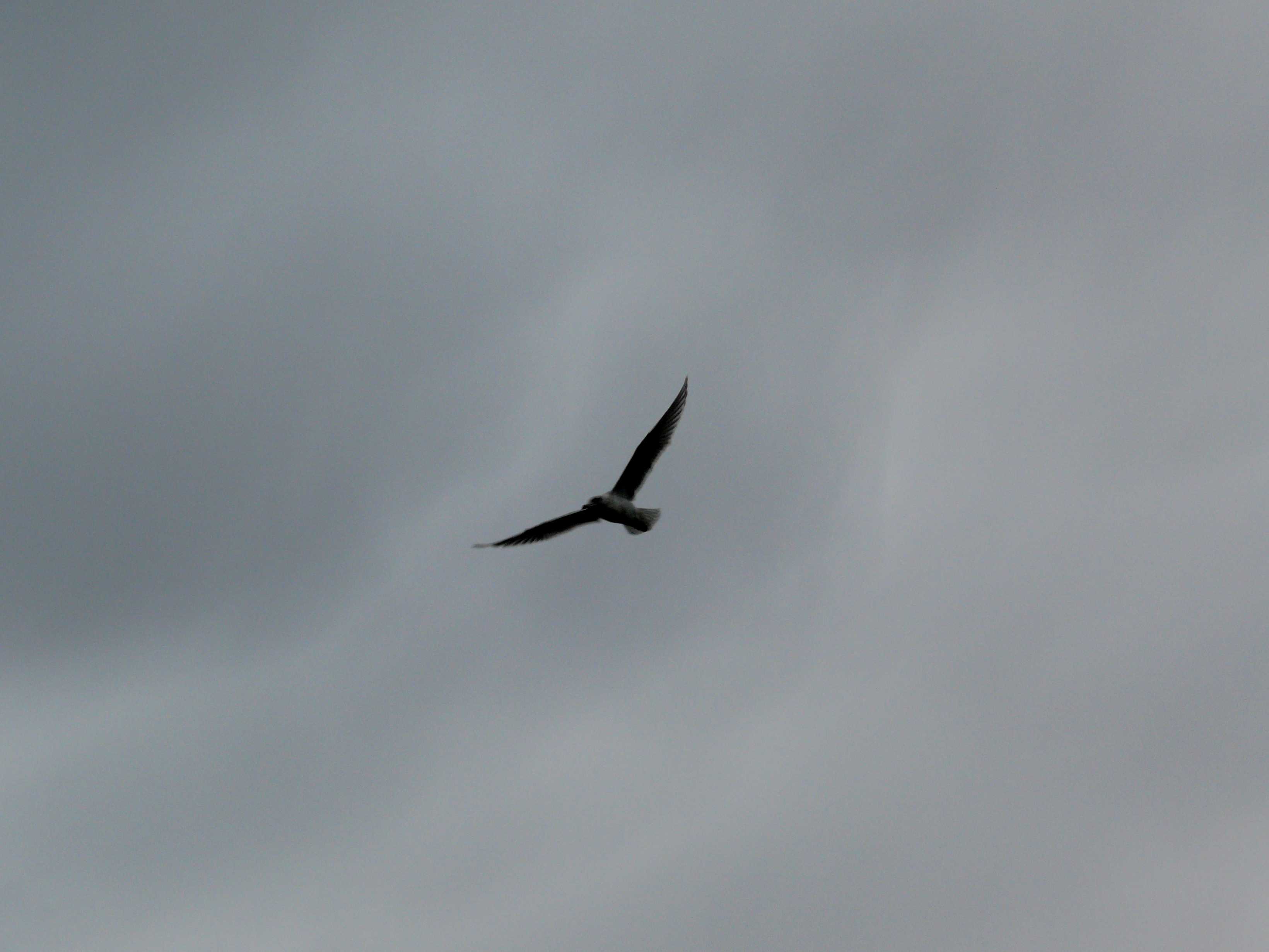
If I had more patience on this gray morning, I’ve have a picture of this eagle in flight instead of one showing him skulking on an exposed tidal rock. He must have flown off when the kettle came to boil, gone when I returned with the day’s first cup of coffee. The hunters, eagles, otters, and heron, have moved on with the season, leaving the beach to the professional scavengers—crows, ravens, and gulls. With the movie stars gone, I can appreciate the beauty in a gull’s flight.
Triggered by the Memory of Cranes
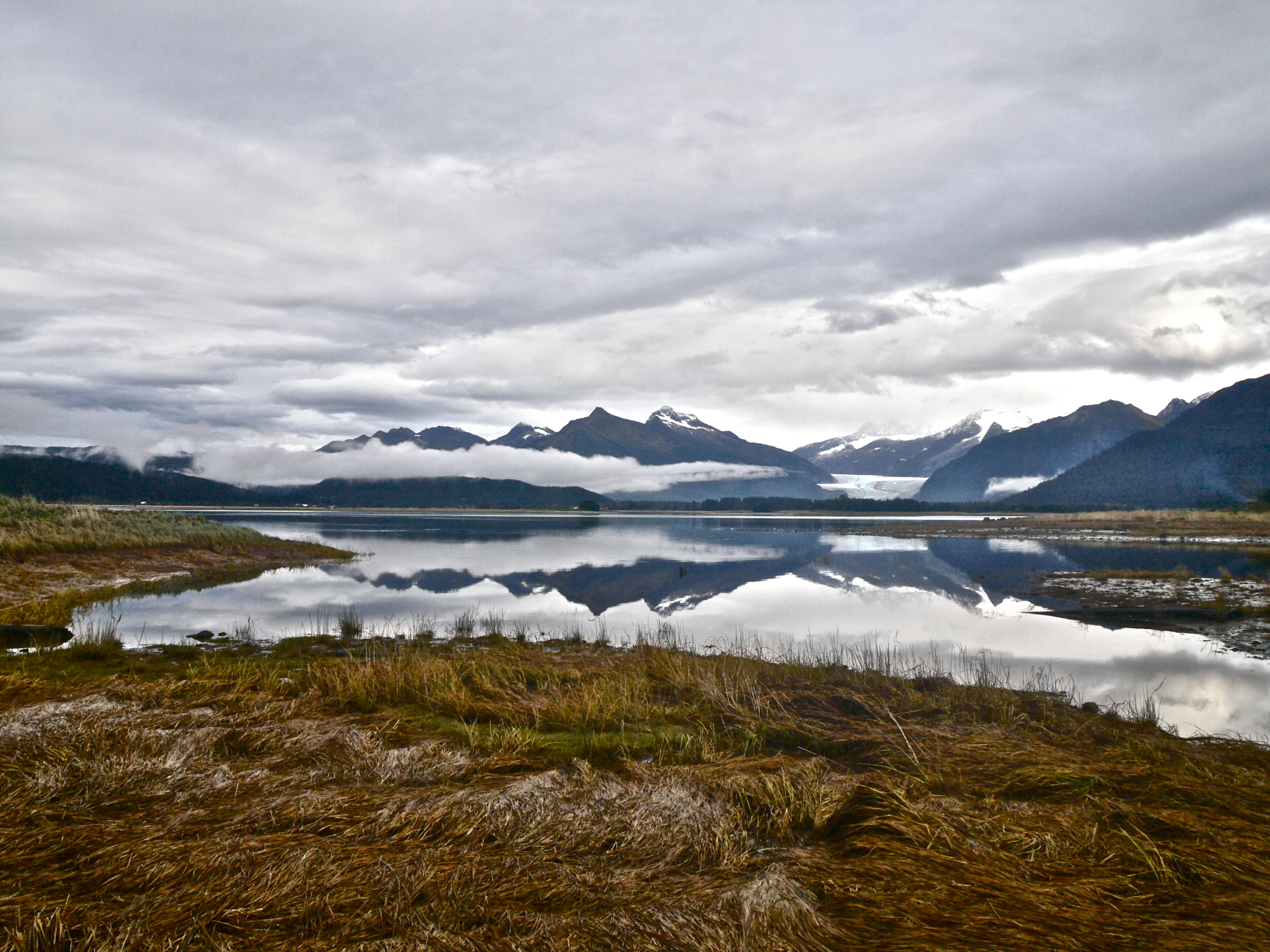
This morning Aki and I cross Gasteneau Meadows under high overcast. It’s what we expect in October—subtle gray light of fall, usually illuminating some form of rain. No precipitation falls but it can’t be far off.
The lower portion of the trail leads past a school playground full of happy kids. Give a Juneau kid a rain coat and he will find the same joy in playing outside as one in Southern California. Aki ignores them in a search for dog sign. Many passed this way recently but we won’t see another dog on today’s walk.
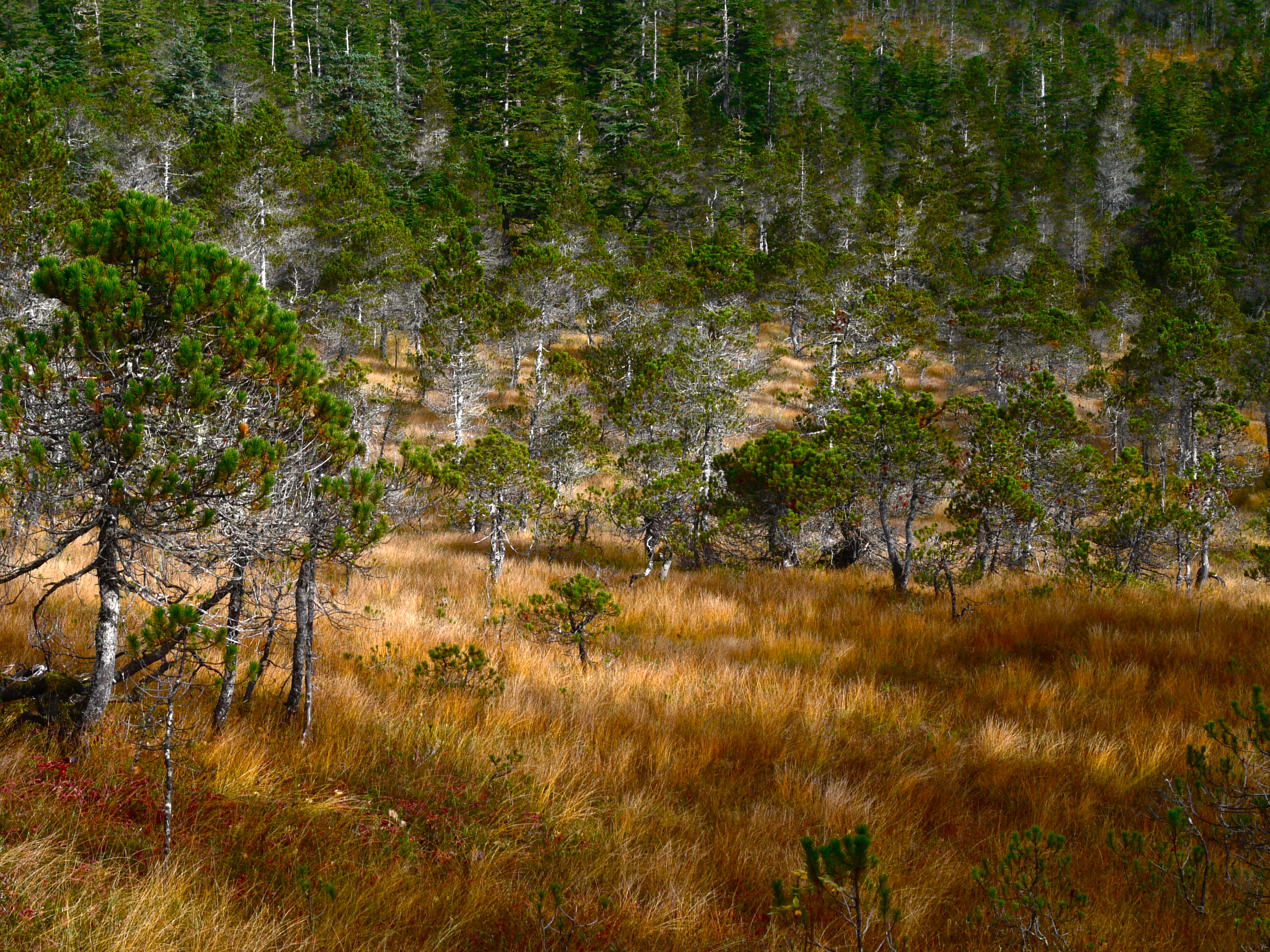
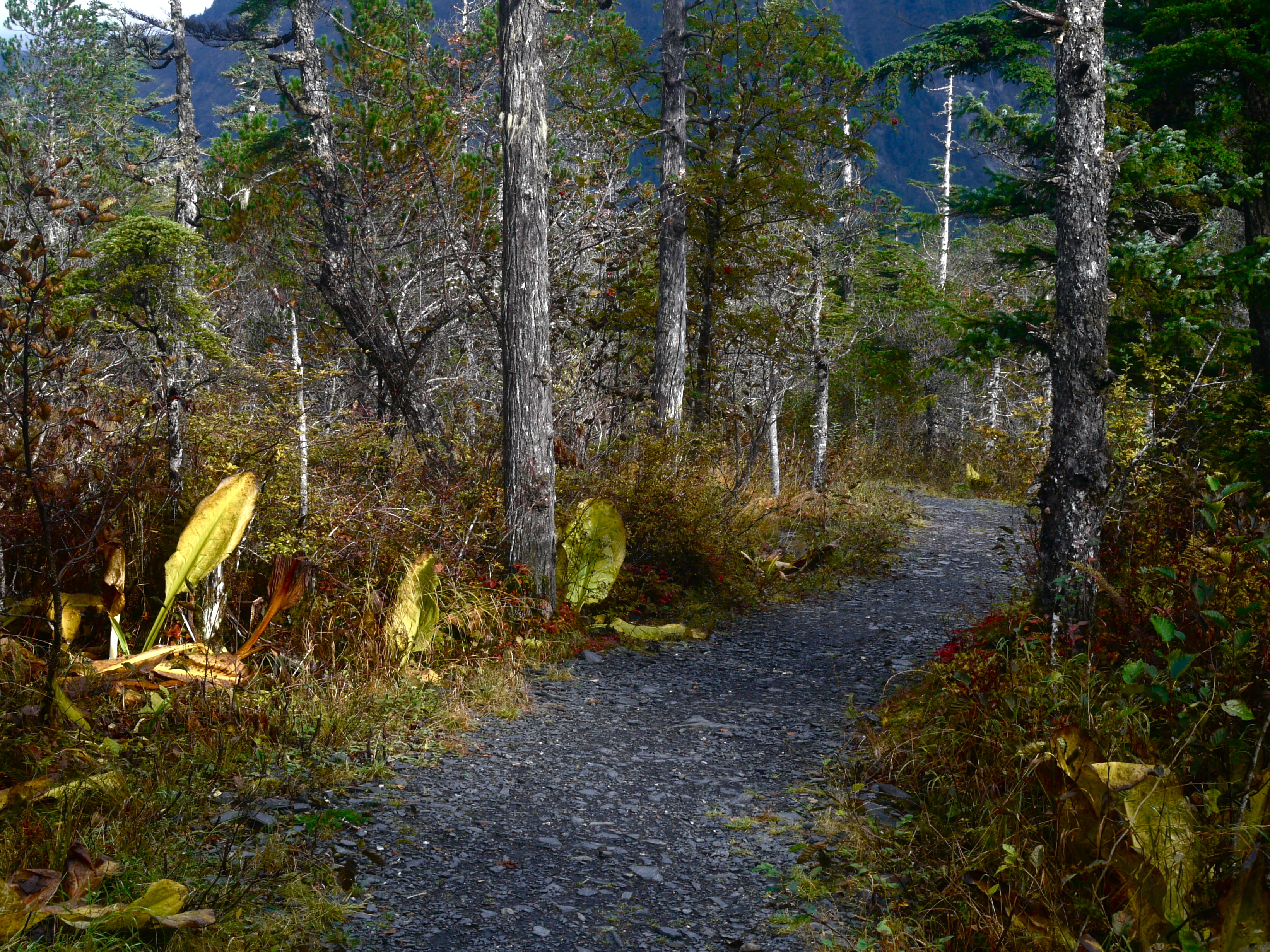
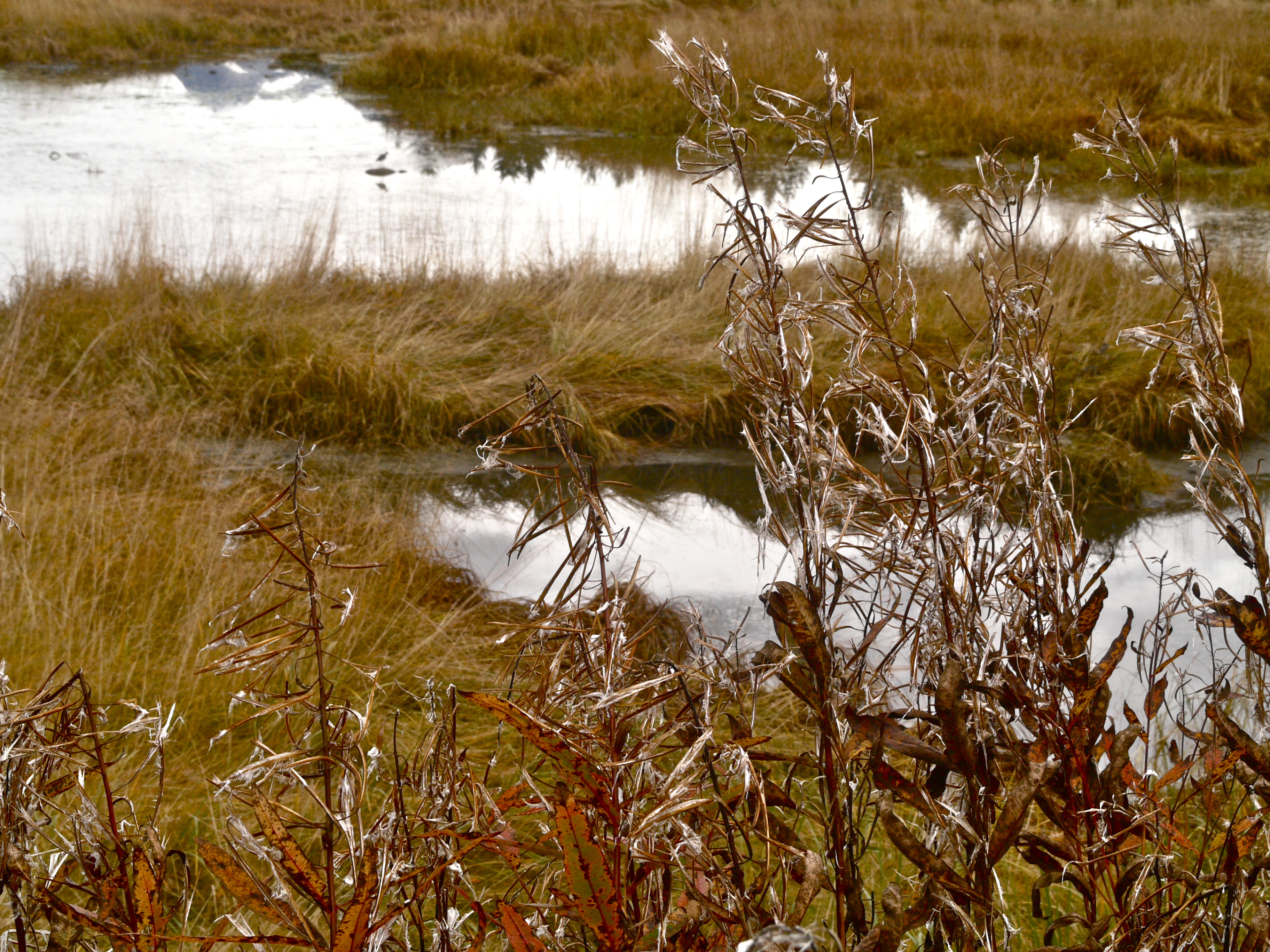
A shaft of sunlight would bring out the color of the red in the dying berry bushes and emphasize the tone variations of gold yellow meadow grass. With no hope of that show, I am satisfied with the color contrasting in places where red or yellow plants crowd the barkless flesh of dying pine trees.
On most walks I have to wait for Aki but today she presses ahead, stopping just before disappearing from my vision. The trail leaves the open meadow, moving into the heavy blanket of spruce that covers most of Douglas Island. That’s where I hear the squeaky door song of migrating Sandhill Cranes. They must be far off, flying high and away from congested Juneau. A guy standing on the meadow might see their thin dark lines against the gray sky. I’m suddenly homesick for the tundra of Southwest Alaska, where for a few days each fall I’d listen to cranes forming up then flying south before winter denied them food. How can the memory of migrating cranes’ noisy passage through the delta’s dark blue skies trigger a longing for a place when recollection of more common events can not? Is it the other memories that form a rosary with that of the cranes—sinking into fragrant tundra to watch the birds pass overhead, tasting the last ripe berries as blue as the crane’s eyes, listening to a small child’s giggles as she uses a rolling gait to move across spongy tundra toward the arms of an encouraging mother? 
Hunter’s Eye
With the temperature in the high 40’s F., no wind, and the cloud cover persistent but high enough to reveal mountains and glaciers, Aki and I walk Fish Creek to salt water. Our moods are as neutral as the day’s color palette. The little dog seems preoccupied with her bodily eliminations. I’m puzzled by the lack of ducks on the Fish Creek Pond. The complaint of an eagle roosting on a trail-side spruce warns of his approaching cousin. The newcomer, just a speck in my eye, flies high over the pond. You can see him in this picture by using your hunter’s eye.
We all have one, a hunter’s eye, even the pacifist vegan. It’s what draws you to the sudden emergence of a seal’s head, an out of place sandpiper, the expanding ripples of a feeding fish.
Calm in Repose
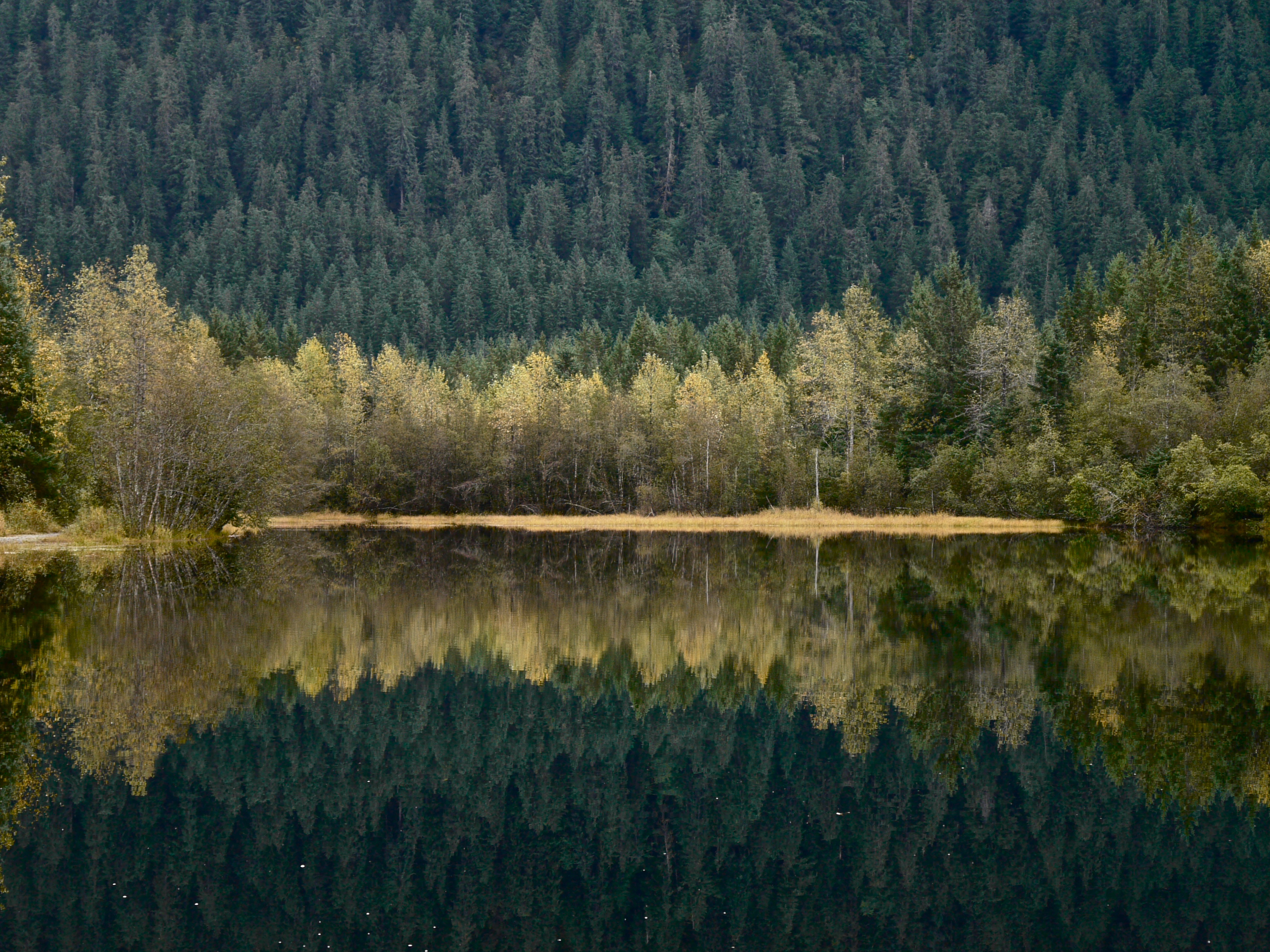
After soaking in the intensity of Oahu with its rainbow colored flowers made almost garish by strong sunlight, I hardly notice the moraine’s fall coat. For my first walk with Aki after returning to Juneau, I chose this trail, which crosses glacial moraine before looping through the troll woods. Happy to be on an adventure, Aki bursts down the trail, breaking to investigate an interesting smell here, an unexpected motion there. I’m as calm as this gray, windless day. As far as my little dog is concerned, I’m spending far too much time watching mountains and trees reflecting on dark pond waters.
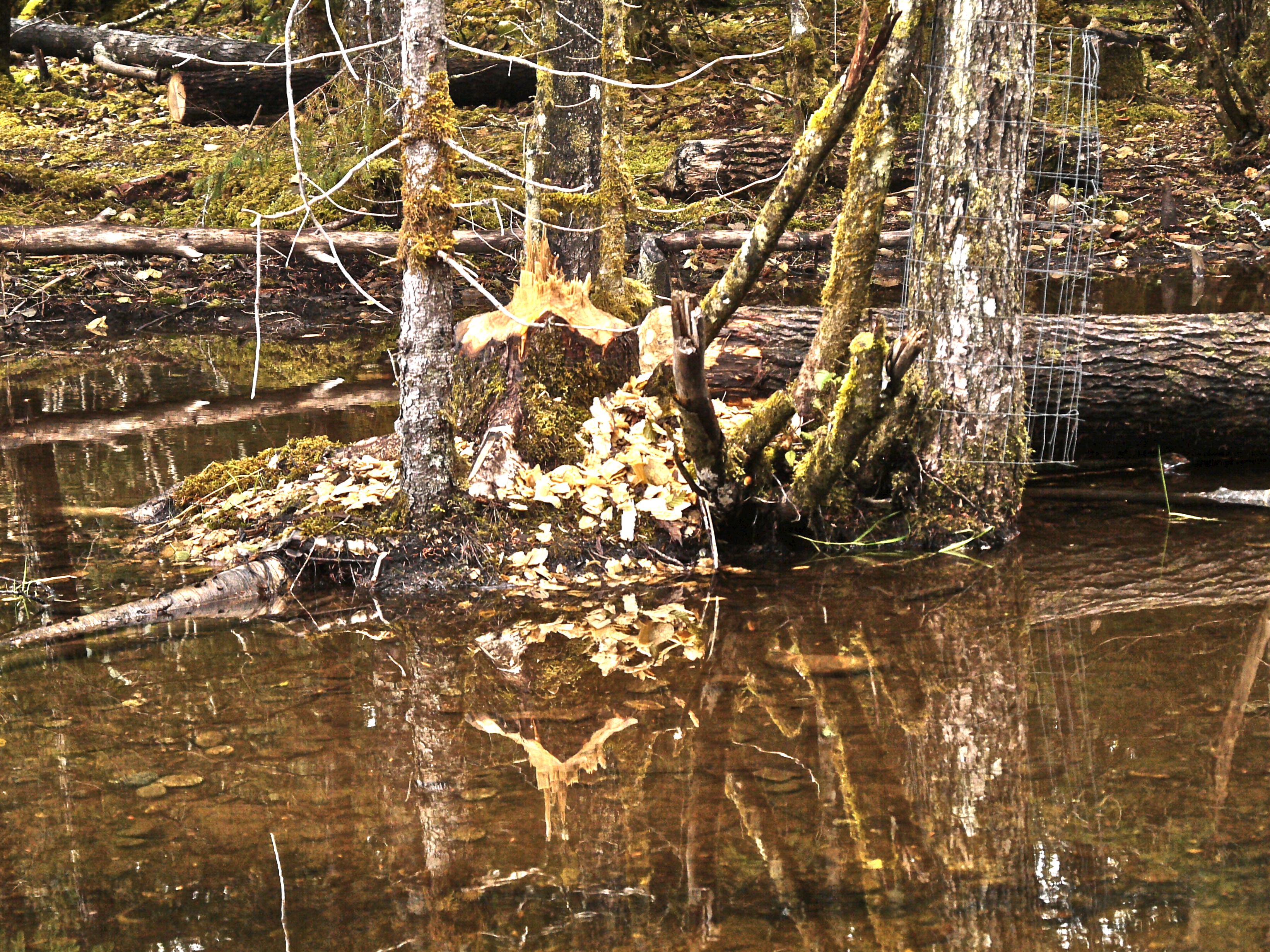
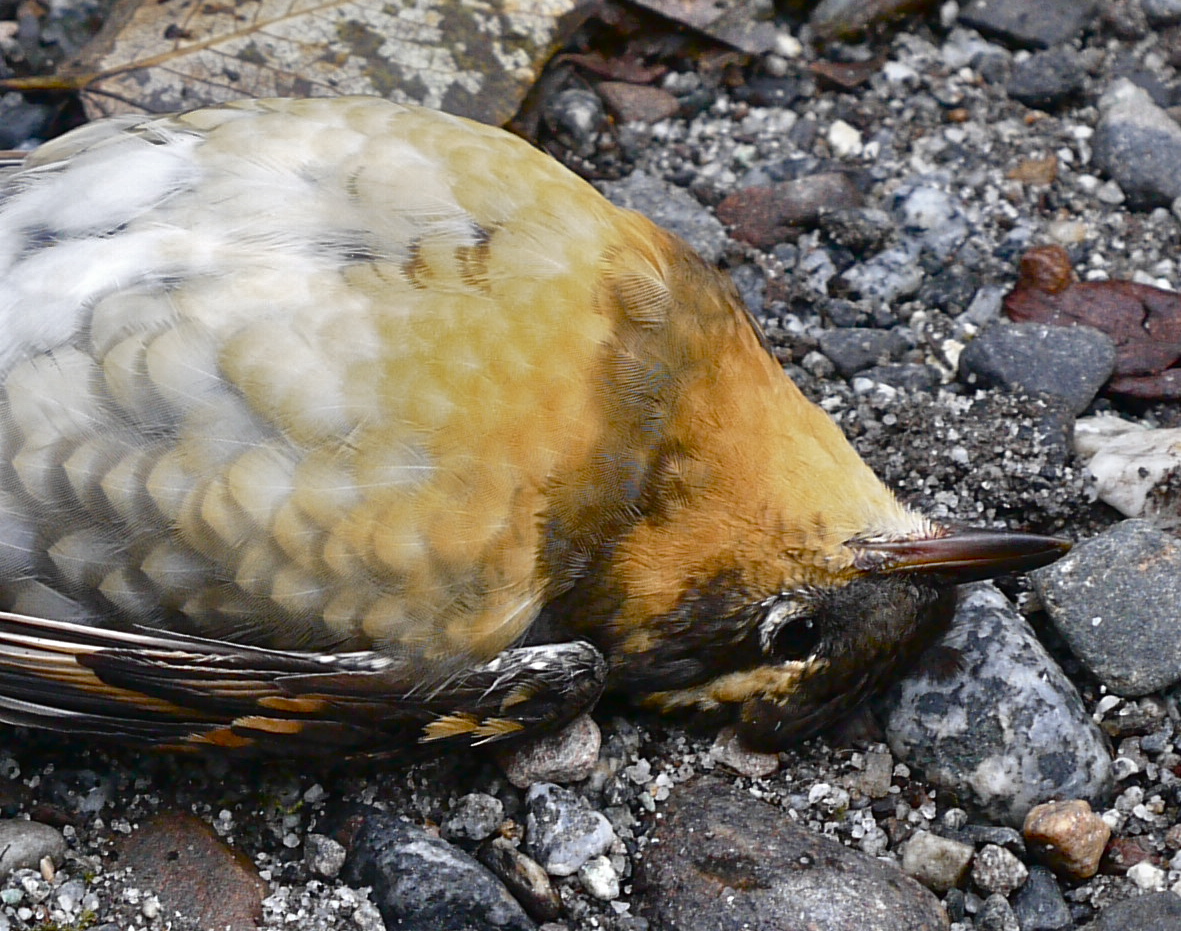
We enter the beaver war battlefields, finding normally flooded places on the moraine dry enough for walking. Vigilantes have deconstructed several more beaver dams, opening up a path to a duck hunter blind. The recently dead body of a juvenile varied thrust lays on the trail. Aki freezes into a defensive position, wrapping tail between her rear legs just before we hear the oddly beautiful sound made by a 12 gauge shotgun fired over lake waters. The bird’s body seems intact, not torn by shotgun pellets. Bending down, I search unsuccessfully for clues of its death. I want to take it home and puzzle longer over its beauty–the way its spade shaped feathers, gray-white with orange accents, form a breast plate over its swollen chest.
We hear rather than see most of our rain forest birds. The blurred whistle of varied thrust is one my favorite bird songs. Using this rare opportunity to study the singer, I try to feel sadness at its death. It would be easier if I could find sorrow or at least a recognition of terror in its open eye. There is only peace, as if the young bird accepted that its time had come.
Aki and the Smell of Death
We are back at the Peterson Creek Salt Chuck, this time under sunny skies. Late arriving silver salmon roll on the chuck’s surface, already positioning themselves for the best spots on their spawning beds. Just a few hundred meters away from the scene of their future lustful, deadly effort to procreate, the new silvers pass the lifeless bodies of an earlier wave of their brothers, now floating down current. Some of the deceased will feed eagles, ravens, and trout. Others will ride back and forth on the tide until pushed by an autumnal flood onto the forest floor as fertilizer. Even now decaying salmon bodies fill the air with the scent of death.
Aki watches the rolling salmon with interest, rear up, tail fanning the air, but agrees to follow me around the lake and into the woods. My clumsy steps through deep grass set a raft of mallards to a low flight. The ducks settle 50 meters up a little slough. To give them a break, I lead Aki into the woods where we join a trail leading to a string of little crescent shaped beaches that should be free of dead salmon and their smell.
At trails end, I rest on sun dried rocks above one of the beaches to scan Favorite Channel and Shelter Island beyond. While watching humpback whale spume rise above the channel I smell death. This is a concern here, away from the salmon waters because death is a perfume favored by bears this time of year. The smell fades as I turn to look into the forest for its source. No bear stares back. This happens several times and I begin to wonder if death, the kind that ends human and animal lives, carries the scent of decay. Is a smelly grim reaper in the neighborhood, enjoying some down time on this soft, sunny day? When Aki approaches from one of her forest recon missions, I pick her up and discover the truth. She is the source of the foul odor. Somewhere the little brat found bear scat or a dead salmon and rolled in it. 
Another Field of Blues
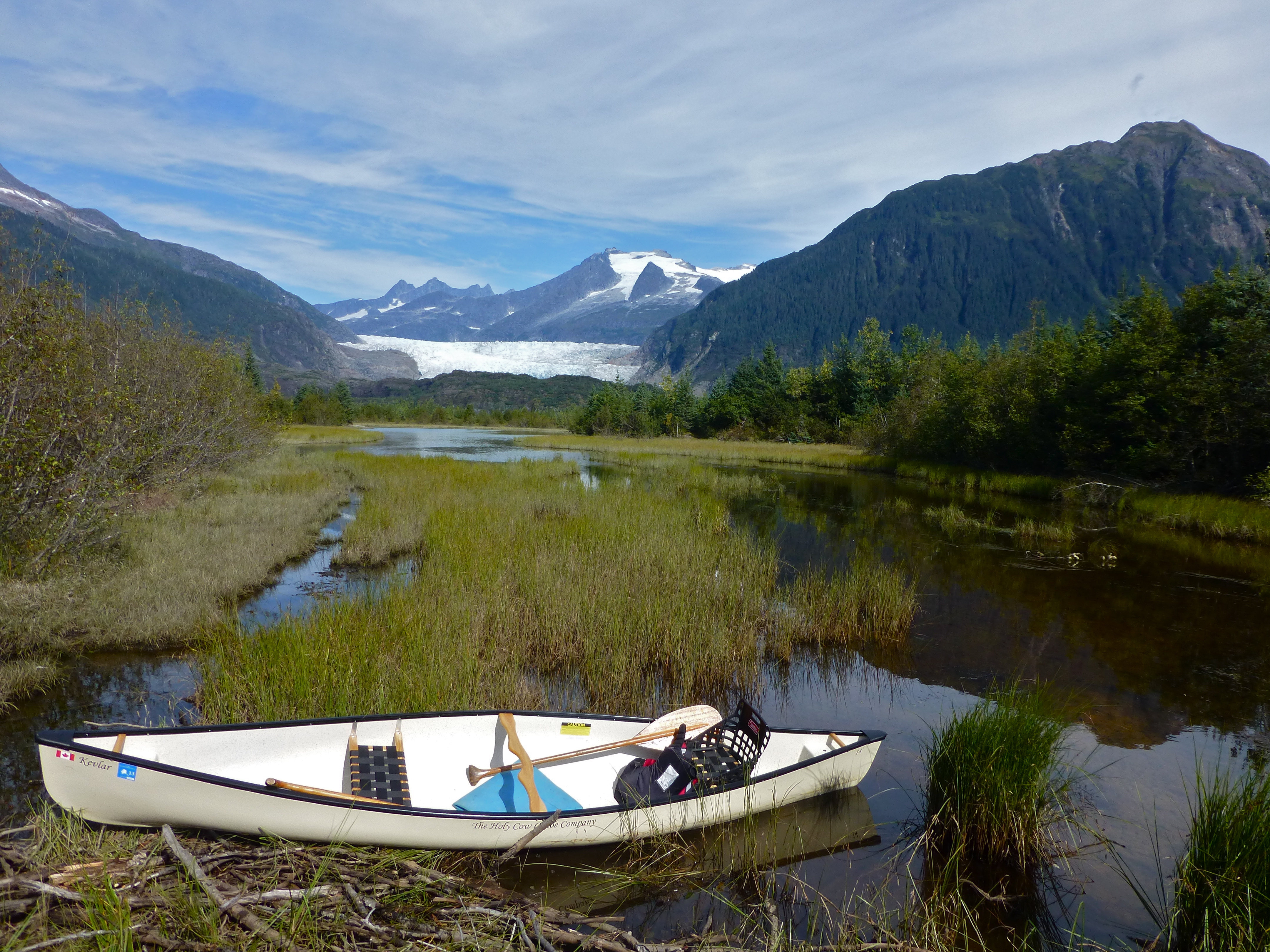
When the sun burned off this morning’s cloud cover Aki’s other human and I decided that we had to go berry picking, Even though it was cold, in the low 40’s, and Friday the 13th, we took the canoe out to the glacial lake for a paddle to a part of the moraine covered with low bush blueberry plants.
This late in the season we only had the right to expect a scattering of berries and even those might explode at our touch. Perhaps driven to arrive before all the berries dropped with overripeness, we left the house without food, water, a knife or matches.
A light breeze coming off glacial ice carried away most of the sun’s warmth so we were glad to reach the berry fields, which are protected from the wind by a screen of willows and cottonwoods. There the sun warmed us and highlighted the reds and yellows of autumn leaves.
While her humans drifted in different directions across the berry patch, Aki dashed back and forth between them. Sometimes she harvested her own blues. At first I concentrated on the hunt, happy to find plenty to pick. As my berry bucket, a cut open half gallon soy sauce container, filled, I went on autopilot and left my mind to its cleaning—-disposing of useless or harmful thoughts. With berries and a rejuvenated mind, I joined Aki and the other paddler on a beach of glacier crushed white sand. Across the lake the glacier wound between mountain peaks it carved in earlier times. Above that it was all blue skies.
Late Summer Fog
Aki sleeps through the fog horn blasts that wake her humans. I forgive the intrusion, happy that even with all their electronic guidance equipment cruise ships still need to give a mechanical warning of their approach through the fog.
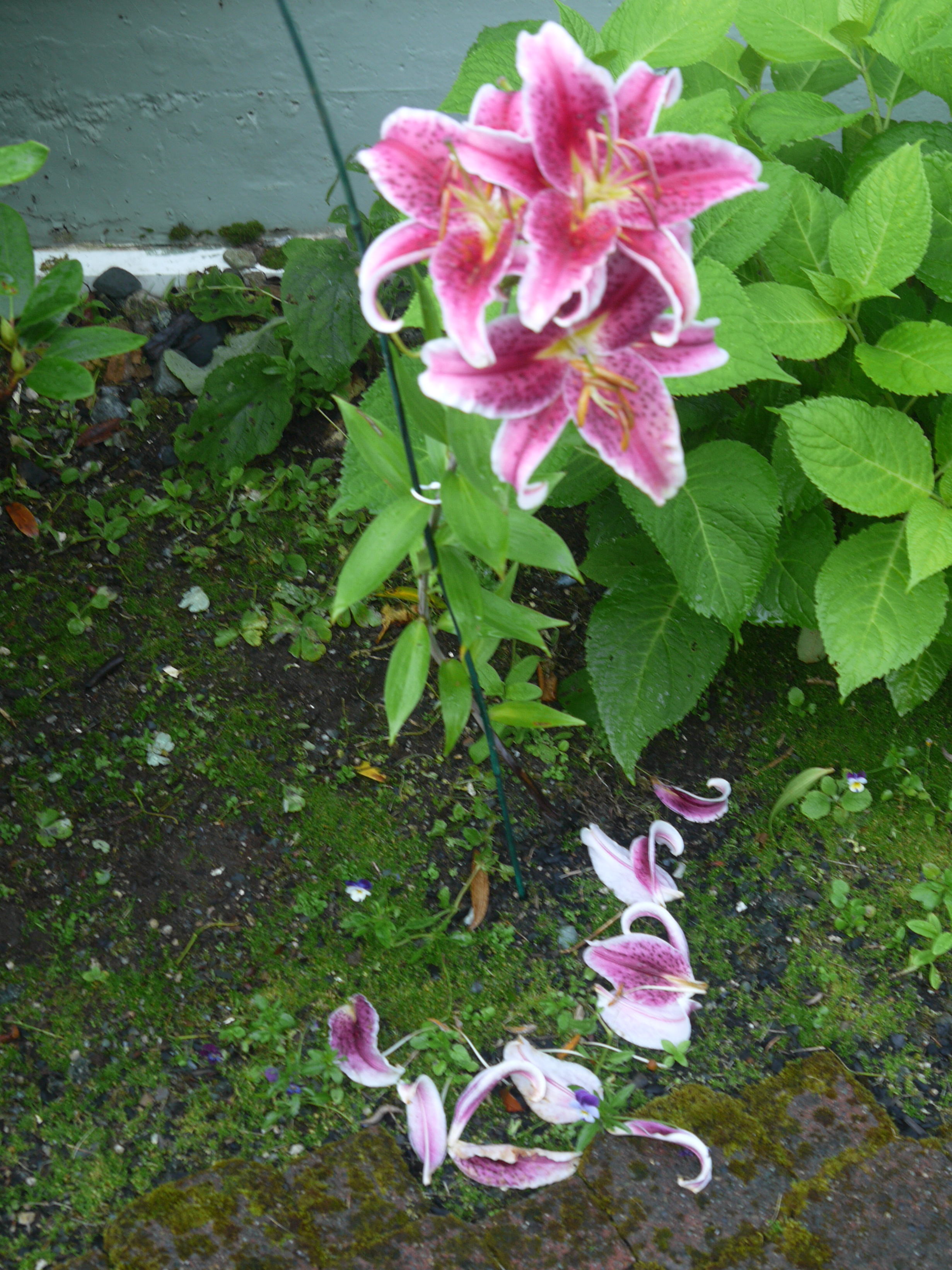
This dry fog blanket hides the anchoring cruise ships and the mountain spine of Douglas Island. It even blocks houses a hundred meters away but can’t hold out for long. Even now morning sun climbs over Mt. Roberts to burn the white away. Soon it will shine on the fallen petals of this summer’s last blooming lilly.
Otters or Kushtakas
In season, this trail along the lower reaches of the Mendenhall River draws waterfowl, eagles, and ravens. Aki and I have watched seals hunting ducks on the river waters, seen large choreographies of eagles fly over the mud bars, been intimidated by ravens holding a convention in the shoreline trees. Today only an immature bald eagle greets us with a fly over. Gaps in its wing feathers make me wonder how it manages to fly.
Rounding a rocky point we see a flat triangle of beach, empty except for something splashing in a nearby section of the river. I fasten a lead to Aki’s collar and move close enough to watch a gang of three river otters pulling onto the beach. Each chomps on a sculpin—the bony bottom fish known locally as a double ugly.” Nearsighted, Aki only detects their motion. The otters know we are here. One looks right at me each time he finishes a fish.
After ten minutes I lead Aki down the beach. When the otter gang moves into the river I take Aki off lead. The little poodle mix trots over to check out the otters’ lunch spot. They swim close, making a friendly sounding noise with their noses. This draws Aki into the water. I think Kushtaka. the sea otter like creatures of the indigenous Tlingit’s World. They lure people into the water for capture. But Kushtakas don’t like dogs so these guys are probably otters, still able to drown my little dog if it pleased them. Aki answers my summons before we find out if they are friend or foe.