Category Archives: Montana

My Mentor and the Bear

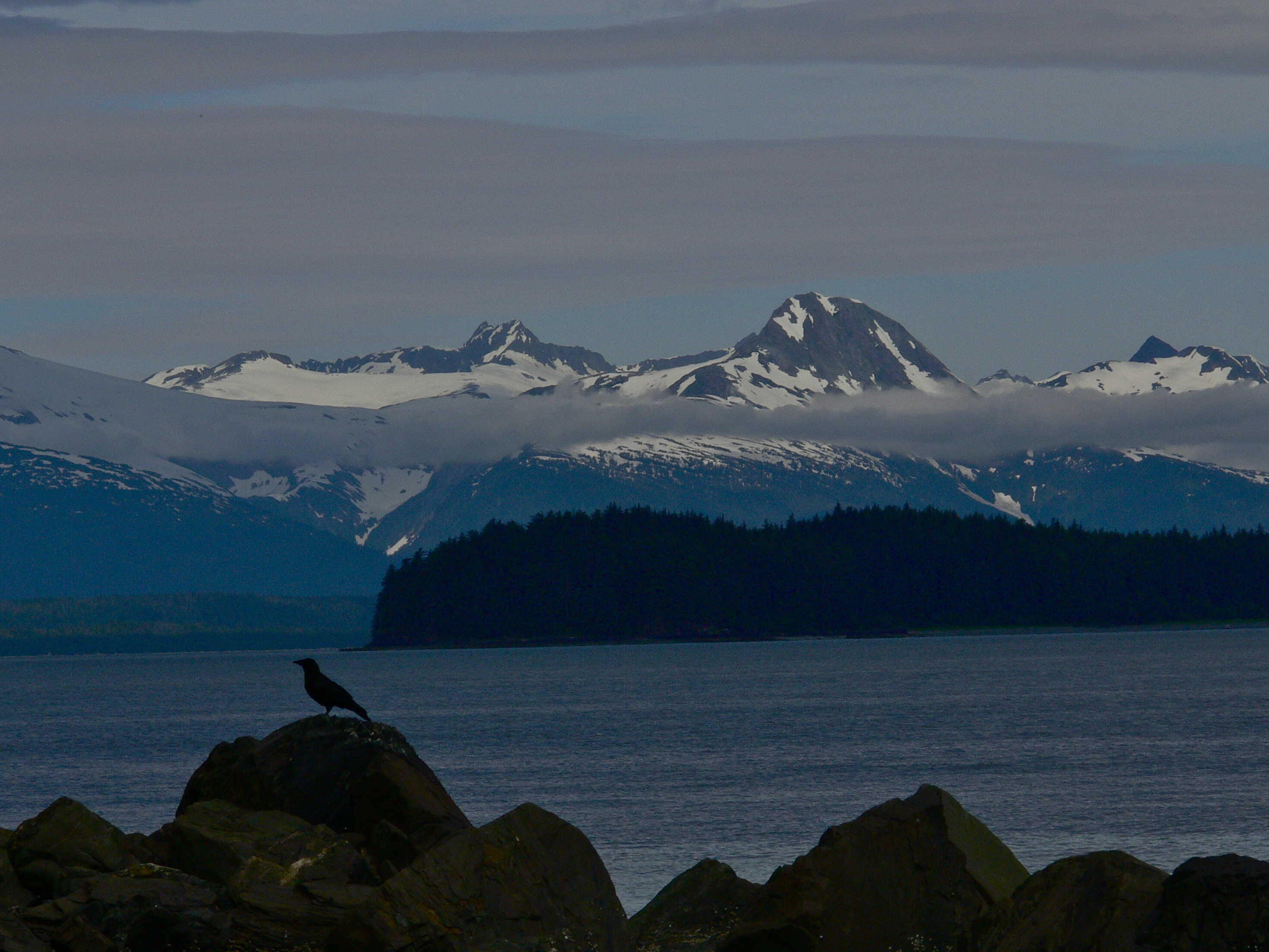
I’m at Mile 35, Haines Highway. The mileage marker tells how far we are from Haines Alaska, Five more miles would take us to the Canadian Border.  Slowly low clouds lift from the peaks across the Chilkat River to offer us something to paint.

Aki, who has little patience for watercolor painting, is back in Juneau so I sit alone with a mentor. She has come to this milepost many times to paint a hanging glacier that spits two alpine shaped peaks.  A bit older than me, this is may be her last chance to capture the contrast of high summer green hills with the blue and whites of the river of ice.

Imbued with patience by years of successful painting, she tells me to slow down and use applications of different paints until a honest color match shows up on my paper. I stop painting and watch — her brush then the glacier then her moving brush. Her pigments tells her story of the mountain and ice and her many hours spent painting Alaska mountains. Depicting dark gray mountain granite with an equal shade of purple, she slowly moves Milepost 35 into her world.

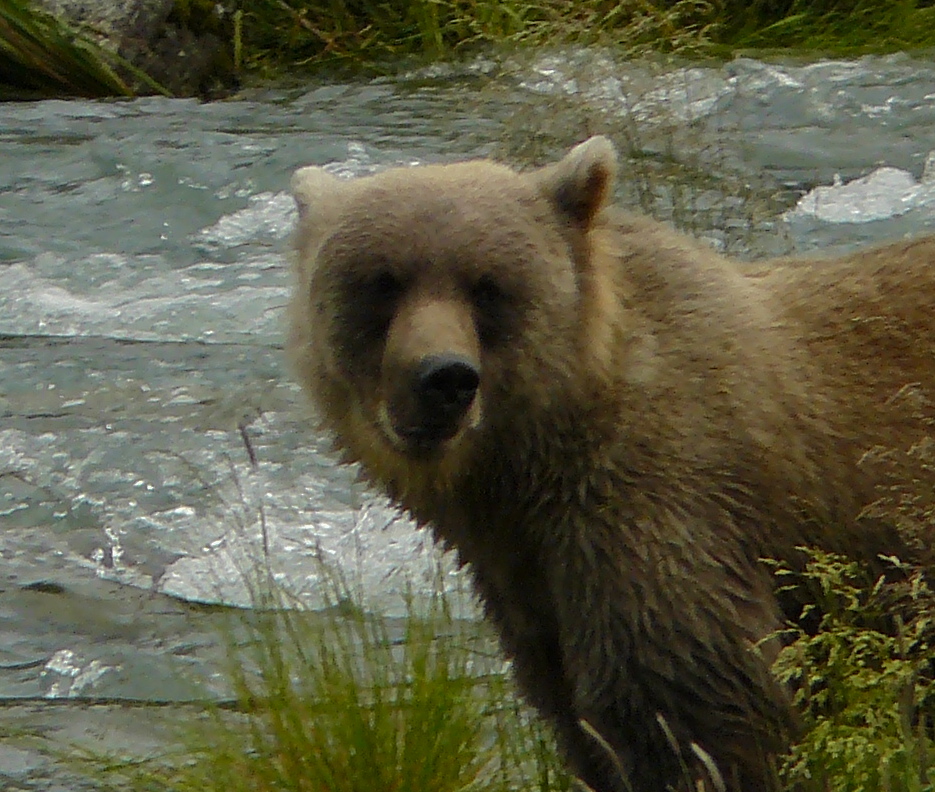
Having made a good start with a few hours of work, my mentor puts away brush and paint and we return to Haines. Latter with only a couple of hours before I have to board a ferry back to Juneau, we drive along the shorter Chilkoot River and spot a fishing Brown Bear. It strolls through chest deep water, passing men fishing for Sockeye Salmon until it finds the head and backbone of a recently filleted salmon.

We leave the car to stand with other visitors, some sipping from beer cans to watch the big animal feed. Being only a hundred feet away, we all have a great chance to watch the bear tense his muscular humped back while ripping off strips of red salmon flesh. He is a beautiful wild thing who could kill anyone of us in a flash but we all stay. He only reacts to our presence when my mentor speaks. Then he looks at her — not in anger but with a little concern. 
Absence

Absence is the theme for this walk around False Outer Point. I stay away from here during early summer when the chance of catching a king salmon from shore draws big crowds. Then bon fires burn on this beautiful beach and a community of fishermen form on the point. Today, with the kings now up in the spawning streams, only one car sits in the trailhead parking lot.

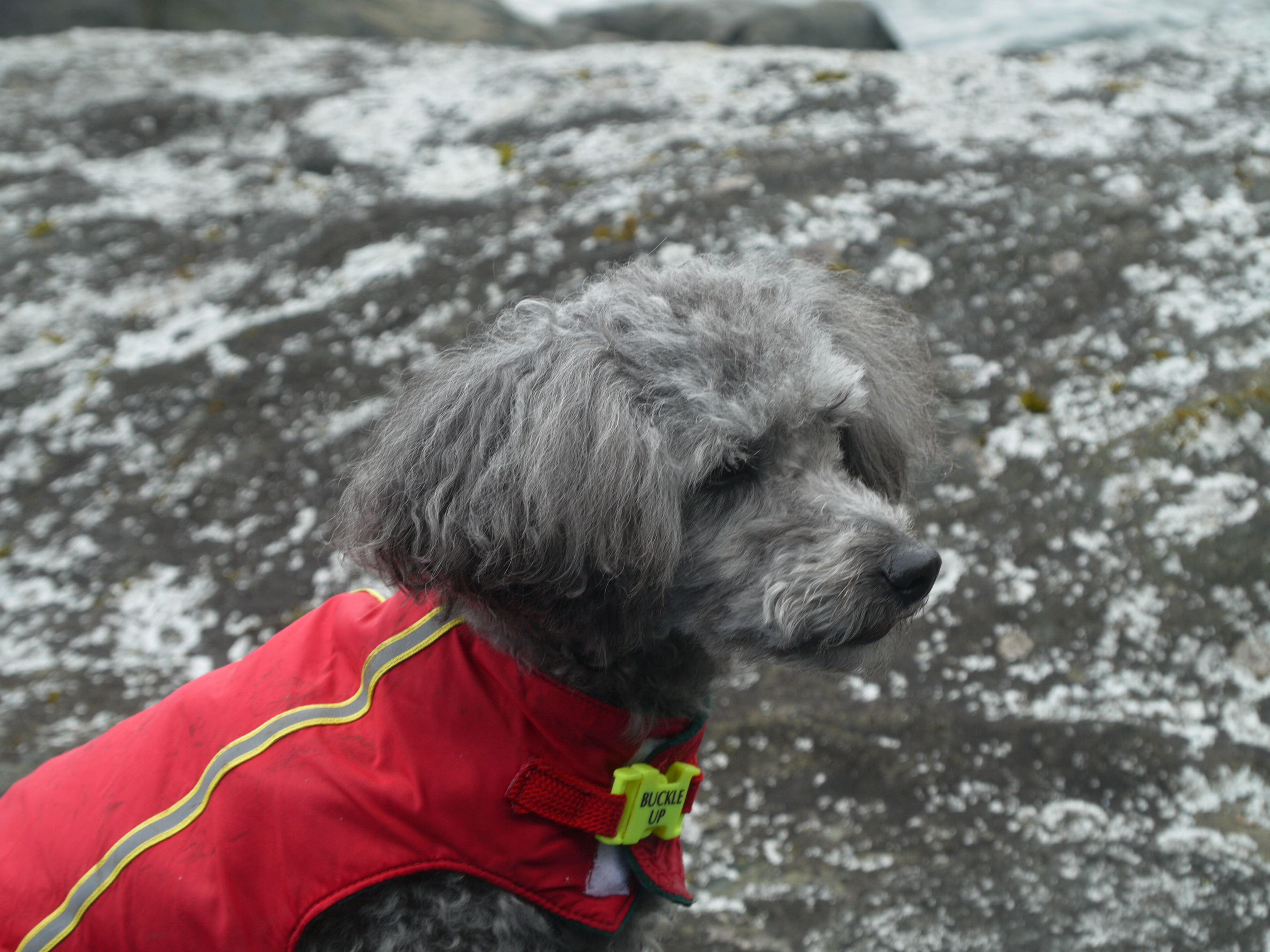
Aki loves this trail and I have to hurry down it to keep up with her and she charges ahead. She slows where we reach the crescent beach, now half exposed by the outgoing tide. The signs of man are everywhere but I can’t spot the owner of the other car. Someone has fashioned a spiral shaped labyrinth out of smooth beach stones but we don’t try it.

When Aki stops to drink from a runoff stream I scan the ocean for life and at first see only timber covered islands and the glacier beyond. No whales, porpoise, ducks or geese appear. Then a large dog salmon performs several leaps out of the water, ending each with a happy splash. It’s as if he wants one last celebration before the fight for spawning space in the redds.

A noisy gang of crows occupies the point. After chasing off the ravens and eagles that usually hang out here, they have little patience for us. A couple fly low over me but don’t bother with Aki. By rounding the point we reach a pocket meadow still moist from the retreating tidal water. Surrounded by barnacle incrusted rocks, only salt tolerant plants can survive in the meadow. I can’t remember seeing one like it on our other travels. 

The sun breaks through briefly to light up the golden yellow rock weed covering portions of the beach nearest the water. Only artists that can recreate this color on canvas have a chance of conveying the beauty of a Southeast Alaska beach to others.

Around the next headland I spot two people sharing a conversation in a flat grassy spot between trees and the beach. As we approach I can see their camping gear. When they spot us, the campers begin to pack things away. The woman, at first standing straight and upright, bends her torso like a dancer taking a bow. Her hair forms a blond cascade that bounces as she stuffs a sleeping bag into its stuff sack.

The campers move quickly enough to raise suspicion.  Are they embarrassed by being caught acting out what seemed like a good idea last night at the Imperial Bar? More likely they are hurrying back to town for hot breakfast and good coffee. 

They’ve camped just beyond a trail junction where Aki and I take a path leading into the woods so we don’t meet them. I stop from time to time to pick blue berries, which gives the campers time to almost catch up. The possibility of them doing this causes me to walk faster until we leave the main trail from a seldom used route that will lead to the car. The campers, who must own the other car parked by the trailhead must also know the way for I hear the man’s voice rising above forest bird song when we reach the road to home.

Arriving back at the parking lot just before the campers I am relieved to have avoided the forest equivalent of an awkward elevator moment—the one where you are in an tall building’s elevator with someone your barely know that works for your employer.  Stuck in a moving box you first wrestle with whether to initiate a conversation and then after giving in to that temptation, the effort to maintain it until the elevator debouches one of you. The conversation is always about the weather. I can only talk about rain for so long. 

A Life of Adventure, Then Patience

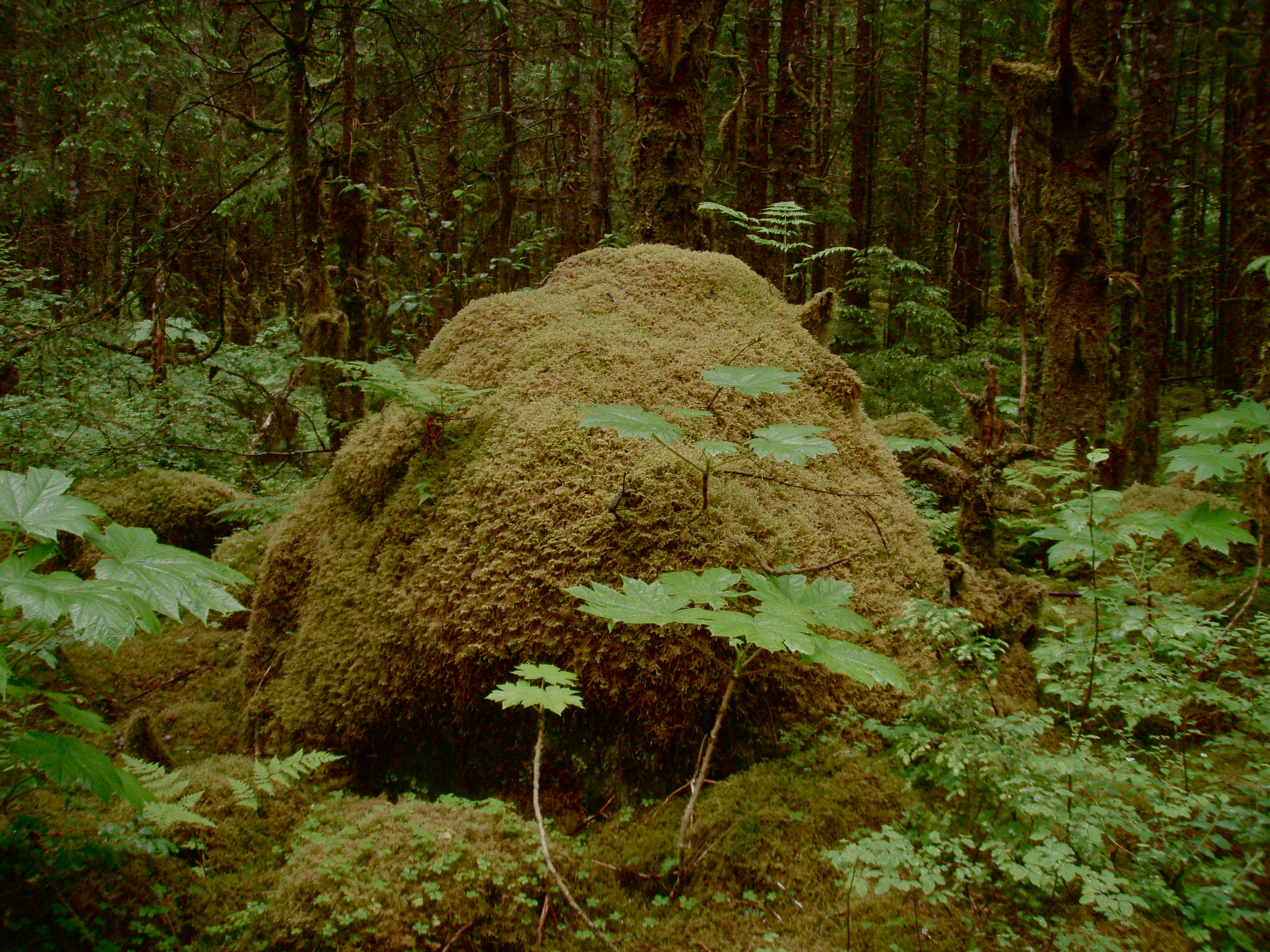
This boulder has no soul. I know this and know that it does not breathe, bleed or feel emotion. If it did we could admire it for courage and patience.  An advancing glacier ripped it into life from a granite bed and carried it toward the sea. When riding in the interface of land and ice the boulder cut long straight grooves in the passed over rock. Later the ice entombed it until it broke to the glacier’s surface. Then the glacier retreated back over this flat ground and dropped the boulder here where we call it an erratic.

Imprisoned by inertia, its life of adventure over, the erratic rested here with patience, as naked as the rest of the moraine left behind by the failing river of ice.  Pioneering moss moved in and softened all sharp corners with a brown and green blanket. That’s what Aki and I see today.

A troll could pass through this moss covered boulder field without making a sound or stubbing a toe. We enter it and wander in rain until we get just lost enough to inject some adventure. Aki hangs back at my heels but doesn’t break back to the trail. Without landmarks I take the easiest path through the woods. We could be miles lost. Aki breaks suddenly to the right, runs ten feet, and then turns back with an invitation to follow. I do and soon we are back on a trail lined in thick green brush and a scattering of pearl pink orchids. 

First Harvest

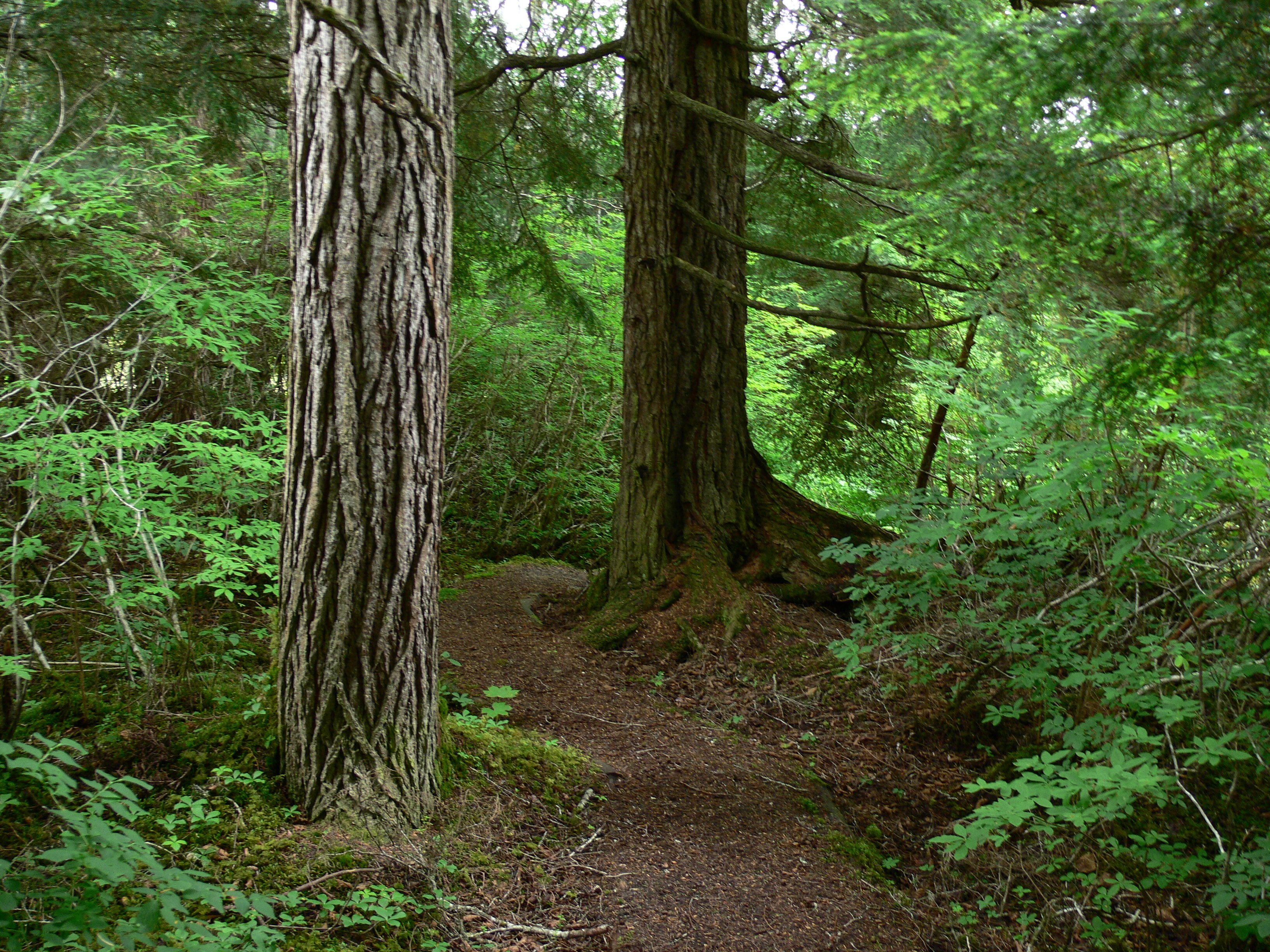
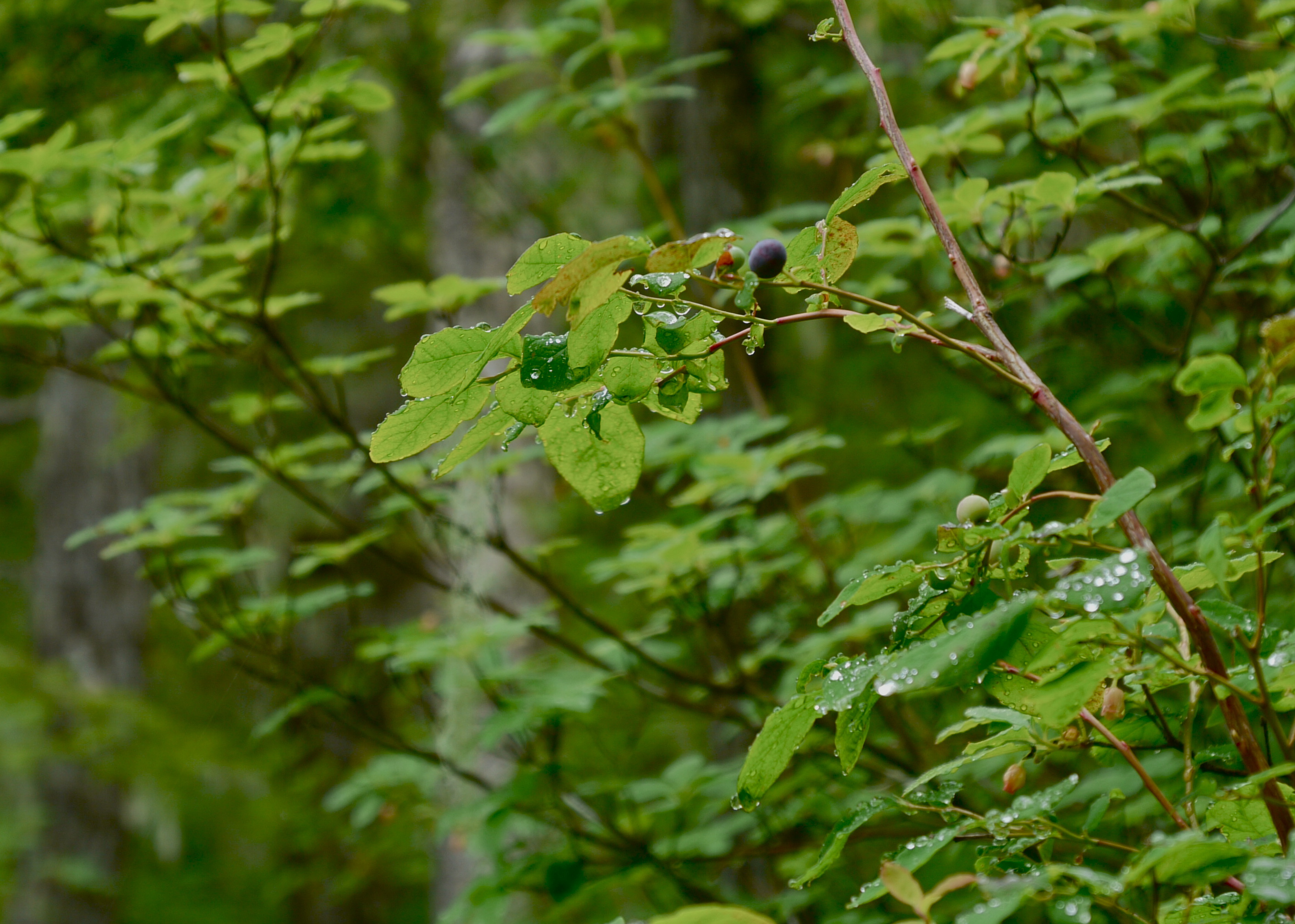
In the northern rain forest you don’t measure high summer by heat but by the progress of salmon and the ripeness of berries.  We must be there because eagles and ravens line trees along salmon streams while king and dog salmon fight for space on the spawning redds.  Along this trail through the old growth woods ripe blue berries confirm the season. I harvest my first while Aki waits just down the trail.

The berry, grown on a bush fertilized by decayed leaves, tastes more bitter than sweet. I decide to leave the rest to ripen and move down the trail. After this first act of harvest I only have eyes for plants that bear fruit rather than beauty. Aki, wanting to reach the beach ranges far ahead while I stop often to check for ripeness.

The tide is well out when we reach the beach. A eagle complains loudly then flies over our heads being pursued by a single diminutive crow.   An army of other crows fill the beach side trees and range over the exposed tidelands searching for food. Knowing they will actively resent our presence I lead Aki back into the woods to further measure the progress of summer.  

July 4th Escape

We Americans make too much noise celebrating Independence Day. In Juneau it started last night with an evening of amateur pyrotechnics that ended with a professional display at midnight. Firework rockets exploding over Gasteneau Channel appeared to set the clouds on fire while echoing canon fire off the walls of Mt. Jumbo. It sends Aki into a frightened confusion that only ends with the last bomb blasts.

This morning there was more noise made by the downtown parade — Scottish and American marching bands, honking trucks, grinding mine vehicles, and the whine of two cycle miniature car engines driven by Shriners in funny hats.  Not being a big fan of noise for noise sake, I think we would be better off celebrating the holiday reading the Declaration of Independence from England, signed July 4th, 1776.

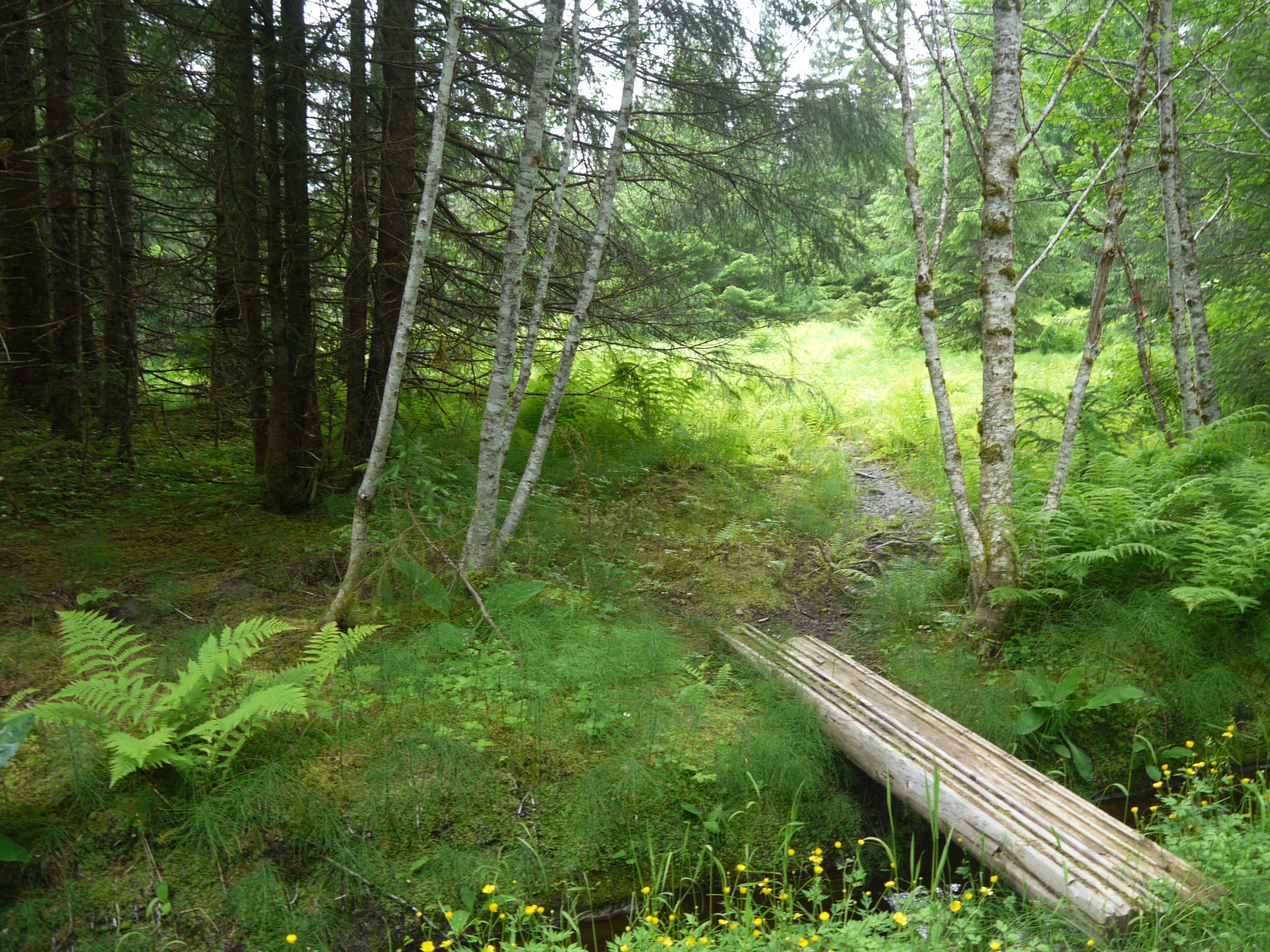
Looking for some quiet time Aki and I drive out the road to a salt chuck meadow. Seeing two not before noticed boards laid seductively across a road side ditch I park the car and lead Aki across the portal. A green field awaits beyond that sports creamy arctic cotton, purple lupine and spikes of the hooded ladies tresses orchids. There is silence here. No cruise ship horns, helicopter noise, airplane roar reaches. We wander about, crossing a barrier of spruce trees then entering another meadow dominated by an orchard of crab apple trees just now setting fruit. Nearby Aki finds a large patch of orange colored moss that has been disturbed here and there by a foraging bear. She  rolls on to her back and squirms with pleasure on the soft moss.  I’ve never seen her look happier.

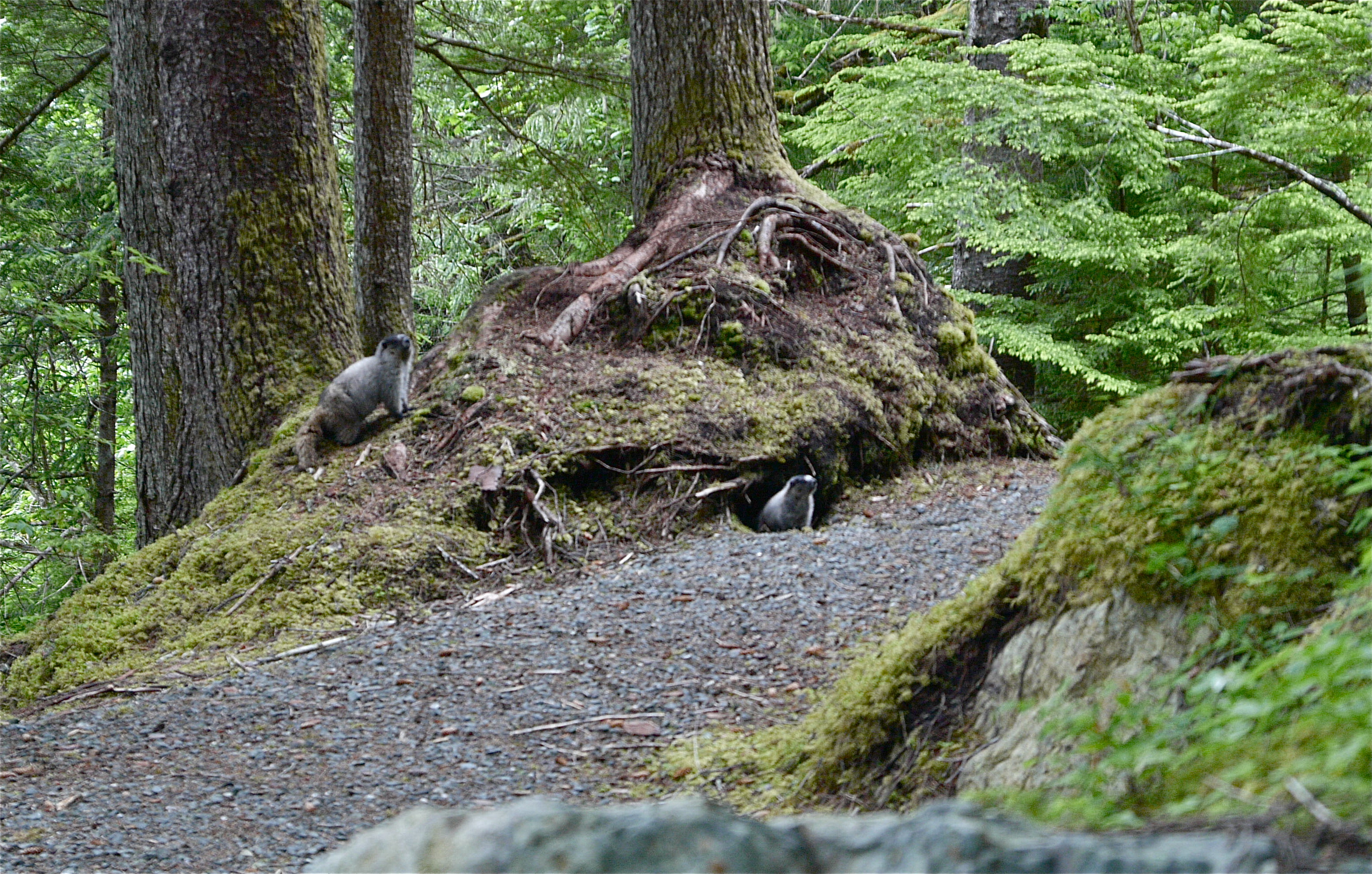
Following animal trails we make our way to a gravel path that leads over a small coastal hill to a pocket beach. Large ferns crowd the trail but we have no problem making headway.  Two eagles break from the trail side spruce when we approach then we hear a series of low warning whistles from a marmot. The big cavia stands erect and as gray as the granite rock he stands upon. Rounding the corner we spot his mate looking out from the door of their tree root home. He issues one more shrill warning whistle and then both marmots go to ground. Only then does Aki decide to bark, bless her. 

Skirting the beach we take a lightly used forest path to a pocket beach with plans on continuing on to another cove. It’s just high tide, which will block further passage for another 20 minutes so we find a comfortable outcropping of rock to wait.  I doze then awake to see a seal break the surface just off shore. We watch him slowly approach our perch, rise a foot or so out of the water and then sink under the water. They are such curious critters. 

Trying to Stay Happy in the Palm of God

Natural beauty should move people to a respectful place. Great beauty can you place you content in God’s palm. Today Aki and I are surrounded by landscape compelling enough to move anyone except the person who fired 30 bullets into this trash can and then set it on fire.

Following Aki across the pedestrian bridge over Montana Creek I let the roar of  creek waters ease me into the woods. The creek is high from snow melt and recent rainfall.  A half a mile in Aki urges me to take a small trail down to the creek side. Here years ago a large Sitka Spruce tree, uprooted by high water, fell in a perpendicular line across the creek. It’s top fell just upstream of a glacier erratic, which anchored it.

Stream floods delivered sand and gravel to fill in behind the massive trunk and now to is a three foot high dam that salmon must leap over to reach the spawning redds. I’d like to return and watch silver salmon, in their spawning colors, gather in the pool just down river from the log and then take turns launching themselves over it. We might also see a bear on the log waiting to pick off a flying silver with its jaws.

We don’t need to wait until spawning season to find beauty along this creek. Here is a crisp hoof print just left in the sand by a deer. There lies the print of a bear that I examine until Aki obscures it with her muzzle. Just the way simple rain drops gather morning light on this wild cucumber stalk now setting flowers can make forget the damage of man.  

A Black Cat on Grandfather’s Land

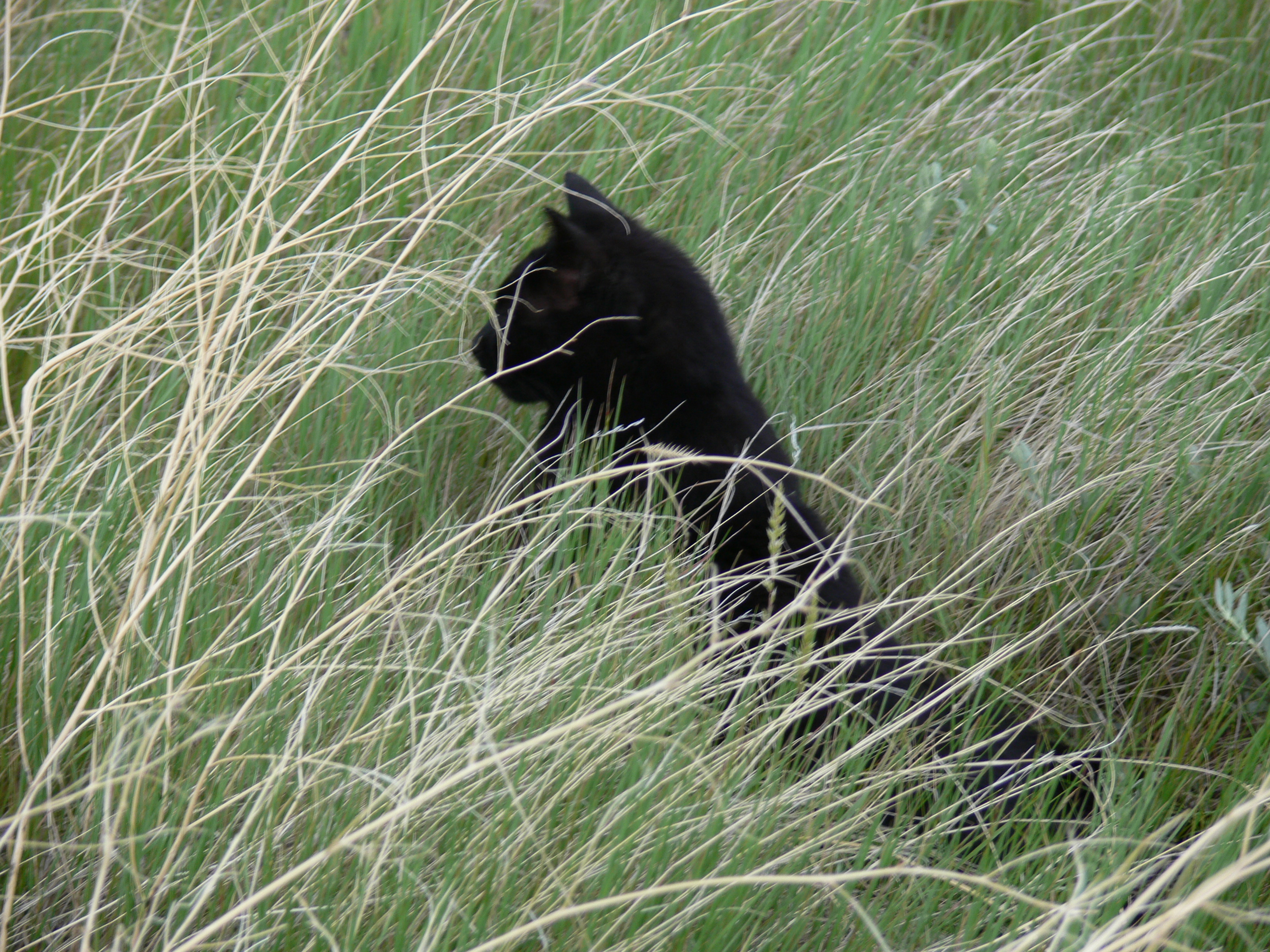
A strange black cat follows as I walk over wheat stubble to the breaks. My grandfather homesteaded this piece ofMontanaprairie almost 100 years ago. My Cousin now farms it.  Winter wheat, grown on the place without irrigation, supported grandmother and my mother and two of my uncles from their infancy until adulthood. Today the grandkids own it. This black cat has no claim on the land.

The cat is a mystery. A friendly gal, it greeted us when we arrived at the ranch house. No one lives here this time of year so the cat was alone. It readily took baloney meat from my sister but otherwise showed no sign of starvation.  It only longs for companionship. This morning the cat greeted me at the door then followed me onto the stubble field. Now it walks along beside me if in imitation of Aki. Unlike that little dog, she ignores the small birds trying to distract us from their nests in the wheat field.

It is near sunrise and pearly pink light peaks out from under the otherwise universal cloud color. Summer is late in coming this year. It should be warm, if not hot, and the ground of this stubble field should be sun baked brick hard. Instead green weeds grow between rows of six inch high dead wheat stubble and a moist strip of open ground meanders across the wheat field.

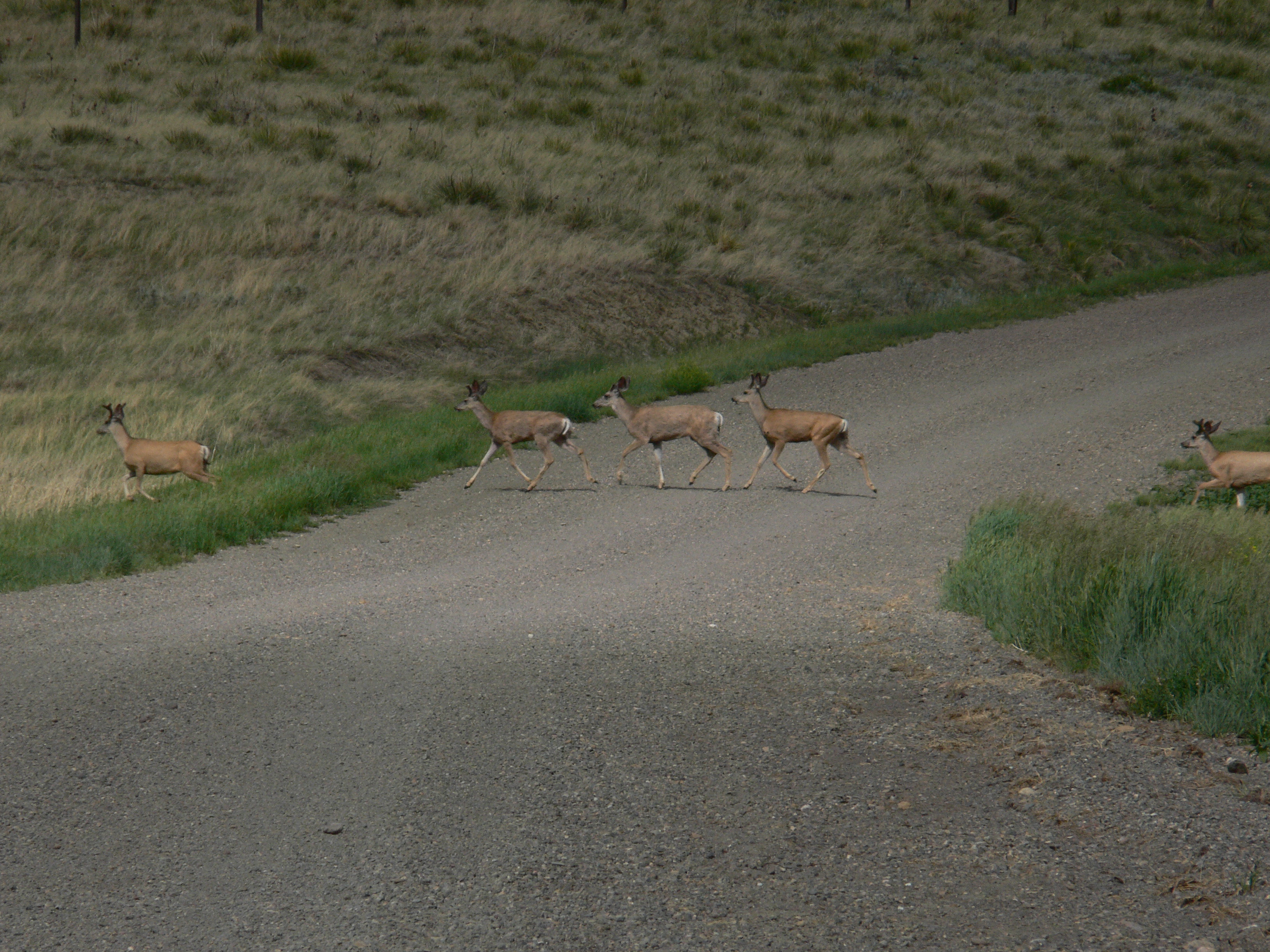
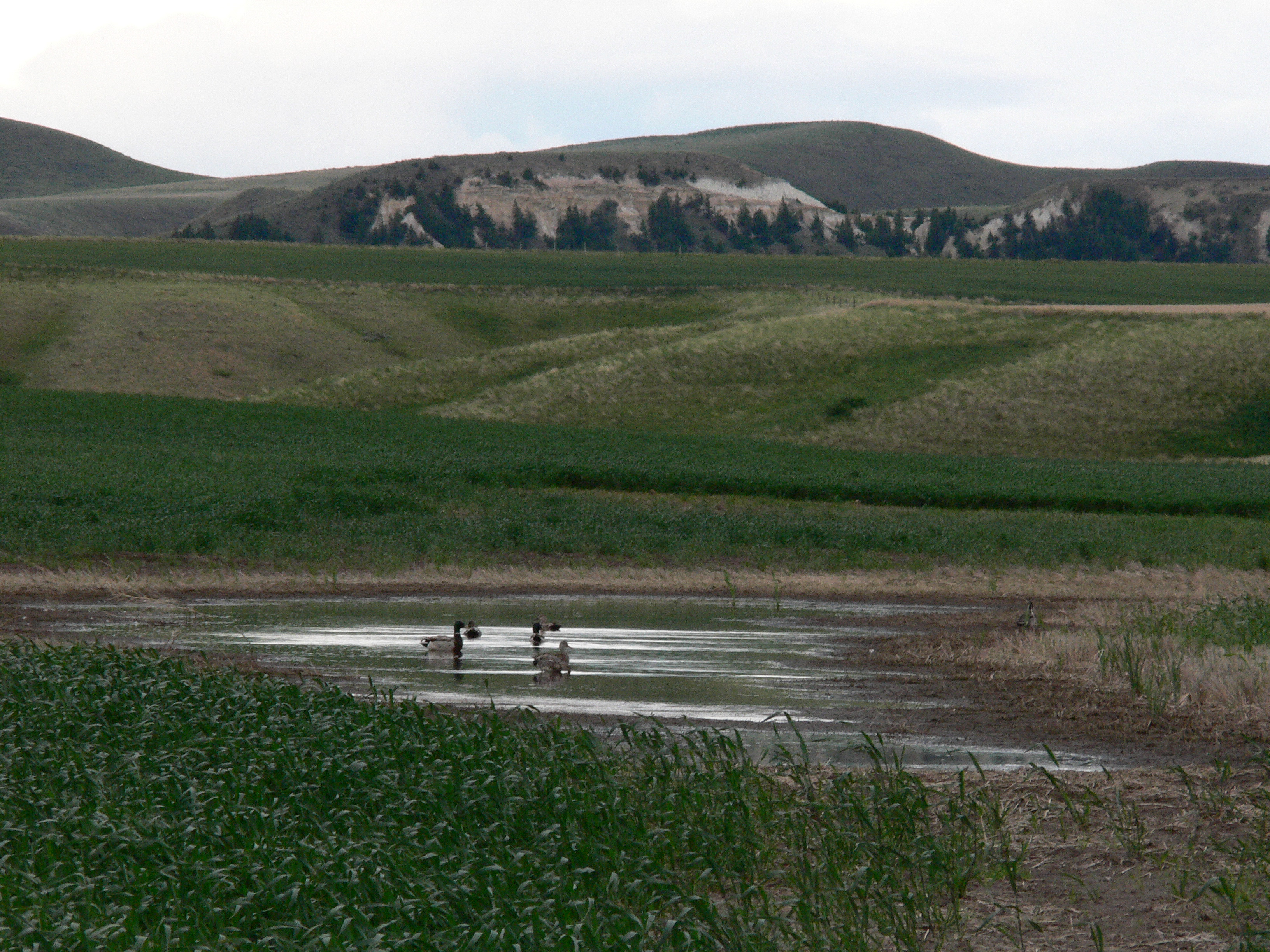
Normally I stay out of the wheat until harvested but none grows on this moist strip. Others have walked the strip before us.  We follow the diminutive tracks of a single pronghorn antelope and heavier ones of a mule deer. Yesterday I saw a gang of six or eight deer cross the road to the ranch but only one tracked this path last night. The tracks lead us to a small raft of mallard ducks floating on a tiny pond where Coyote tracks cross those of the antelope.

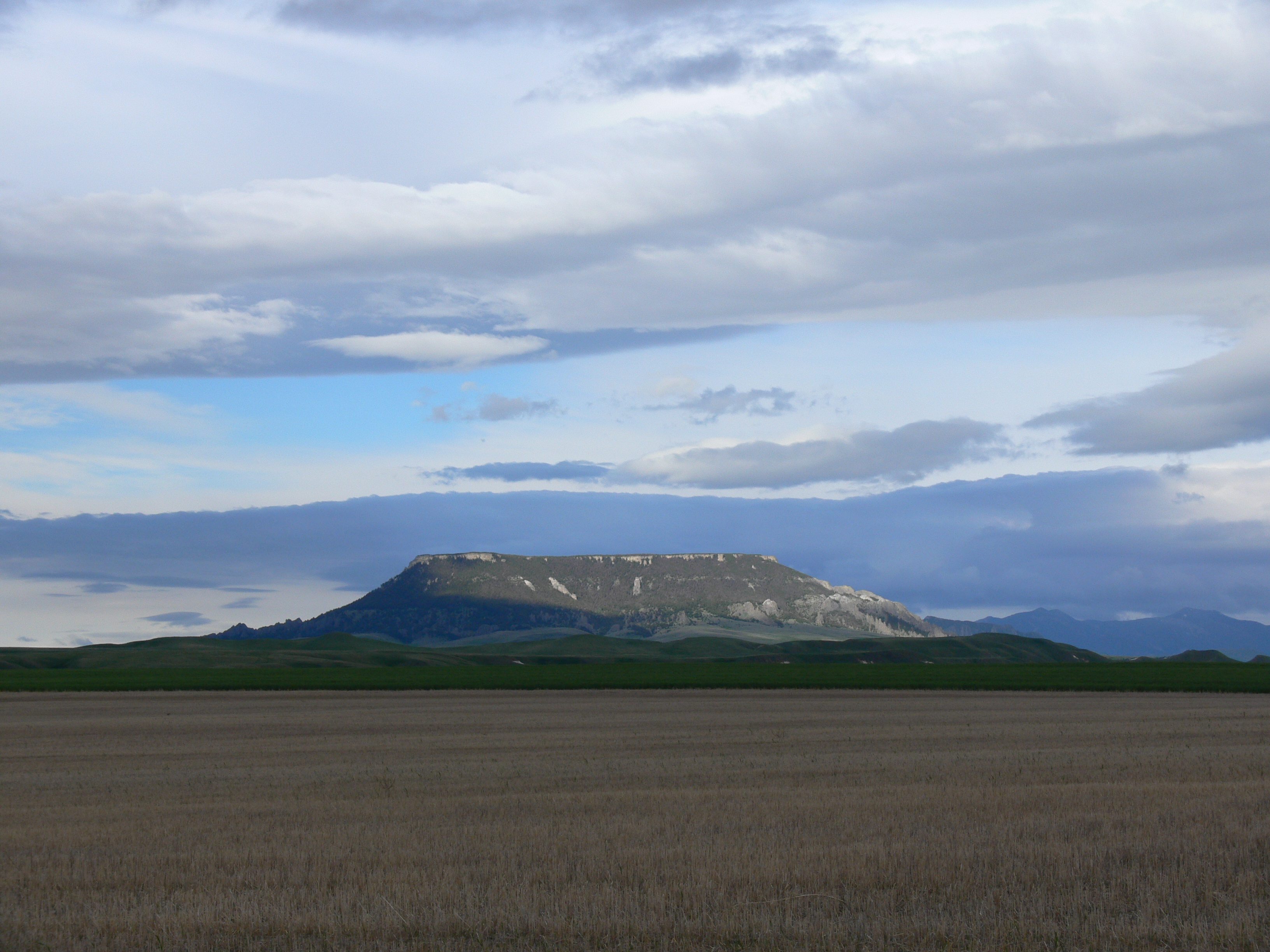
The ducks fly off before we reach the pond. I still stop to examine it for even small pools of standing water are rare here. Except for two wheat stalks breaking the surface, the pond is sterile. The path continue beyond the pond and It only takes a minute to pass through the wheat field to another one of stubble. My cousin planted winter wheat here the previous fall and harvested it last summer. Now it rests as a stubble field for a season after harvest. Alternating fields of pale yellow stubble and green growing wheat run to the horizon to produces checkerboard pattern on the flat bench land.

Daylight breaks through briefly to illuminate Square Butte, a weathered flat topped volcanic plug dominating the western horizon. Cat purrs and rubs against my leg as I struggle to focus the camera before the sun leaves. Nothing much makes sense about the cat.  She lives alone in a wild place but is not feral. She ignores small birds but takes food from my sister. She follows along like a dependent dog not the aloof cat she is. I begin to wonder if she is more spirit than corporal.

Walking on the stubble parallel to the wheat field we eventually reach a barbwire fence that borders still untilled breaks beyond. While the ranch spreads over a flat bench of land, a series of converging dry channels forms the breaks that eventually leads to theMissouri River.

A meadow lank sings from its perch on a fence post. Another meadow lark sang during our father’s internment at a nearby cemetery while a small group of pronghorn antelope grazed nearby. Together they softened the pain of burial. Today’s lark song offered similar comfort as I think of those who walked before me to this border fence.

The wind rises on my return to the ranch house , now a tiny white box half hidden by the green wheat filed. I continue on the stubble field to the road rather than using the muddy detour through the wheat field. Rain falls in sprinkles at first then turns into heavy wind driven drops. The cat disappears. I expect to find her at the ranch house begging for entrance but she is not there. Maybe a coyote got her or she cut across the fields to another farmstead where she lives. Maybe she really is a spirit, driven away by the Meadow Lark’s song.

So Green

Missouri River Near Cascade

The color brown dominated my other trips to the Idaho and Montana prairies. They were in summer, most of them, after the high heat of that season knocked the green of spring from seas of grass. It was all hot and brown and blue skies, those family visits. Spring still dominates the land on this trip.

On the way to Montana’s wheat country, I’m in Missoula, the state’s cosmo college town. It tends to collect bookstores, writers, and people willing to sell you a decent fancy coffee drink.  It also has some good bike stores. One rented me a road bike, which I’m riding along the Clark’s Fork River that runs high with the energy of Spring. A guy in a wet suit surfs on a small standing wave. He falls before I can get out my camera and fights the current taking him quickly downriver.

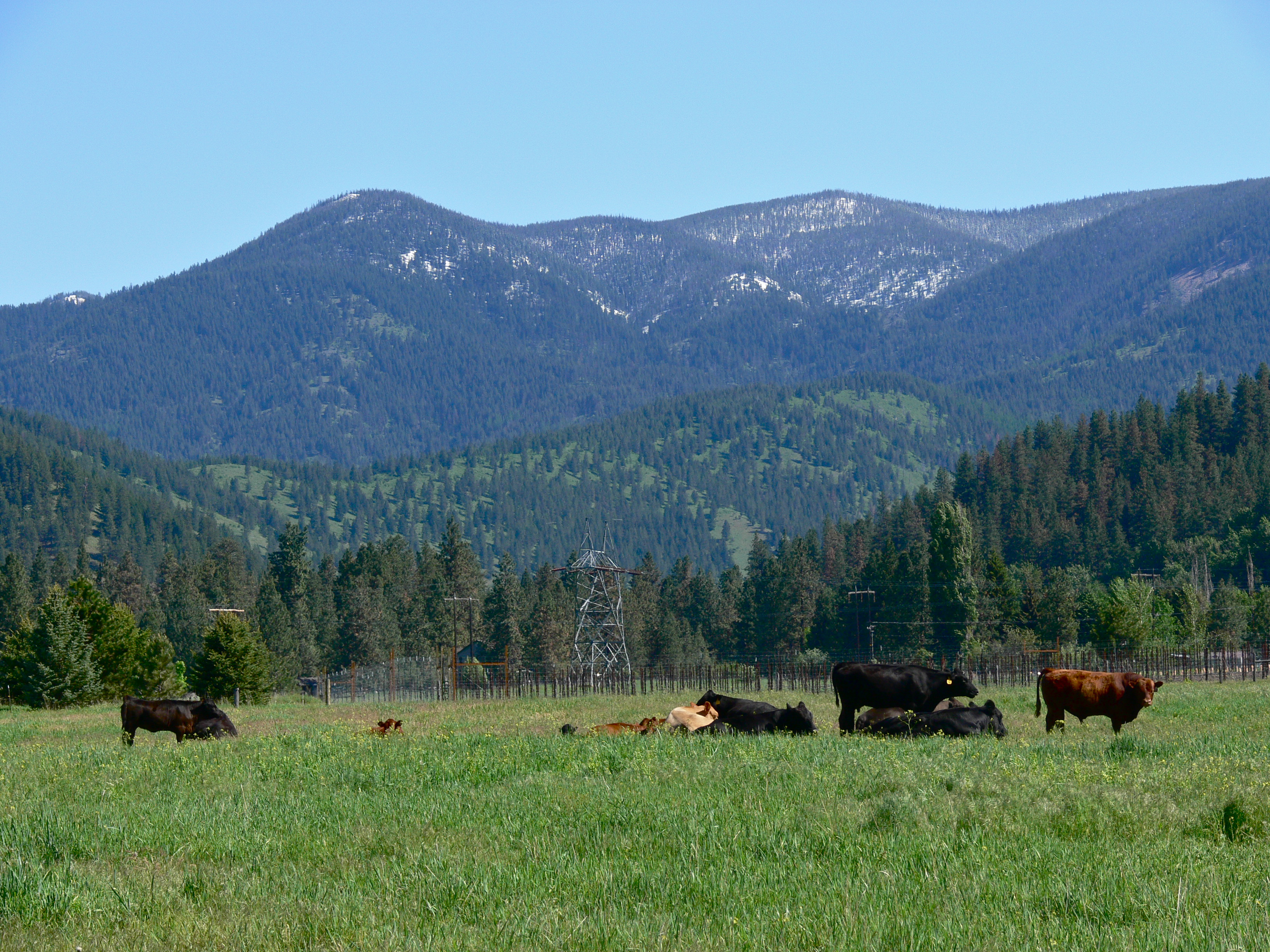
 Crossing a bumpy wooden pedestrian bridge, I pass through a shopping mall parking lot, under a freeway and out of urban Montana. After a mile of well tended suburban yards I’m briefly in farm land where fat cattle feed on rich green grass. The path then passes into a pine forest.

In summer our forests in Southeast Alaska thicken with devil’s club and berry brush making for a difficult passage. This Montana forest, formed along Rattlesnake Creek, is open and welcoming. The pines, with their thick furrowed trunks have spaced themselves apart like shy persons at a school reunion. Green grass grows tall and thick between the trees.

The roadside bike path ended in the farm land so I am riding on a narrow lightly used road. I stop where it comes closest to the creek to listen to a bird trying to be heard over the noisy stream. It rained yesterday and snowed in the surrounding mountains. It will rain again tomorrow. Today I stand under full sun enjoying the coolness of the day, a land still green with spring, and the song of my now favorite bird.