Category Archives: Kwethluk

Nature

Harvesting

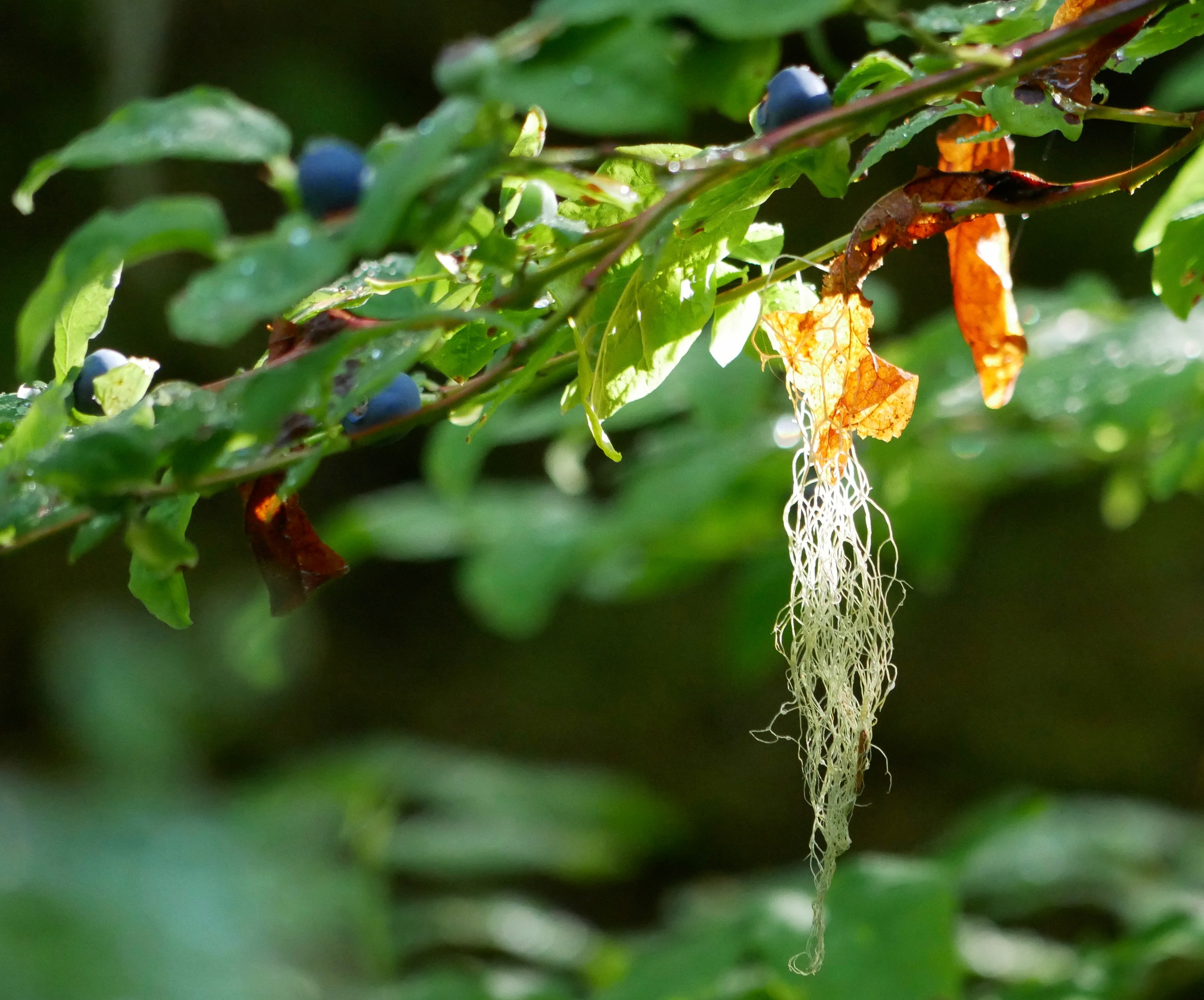
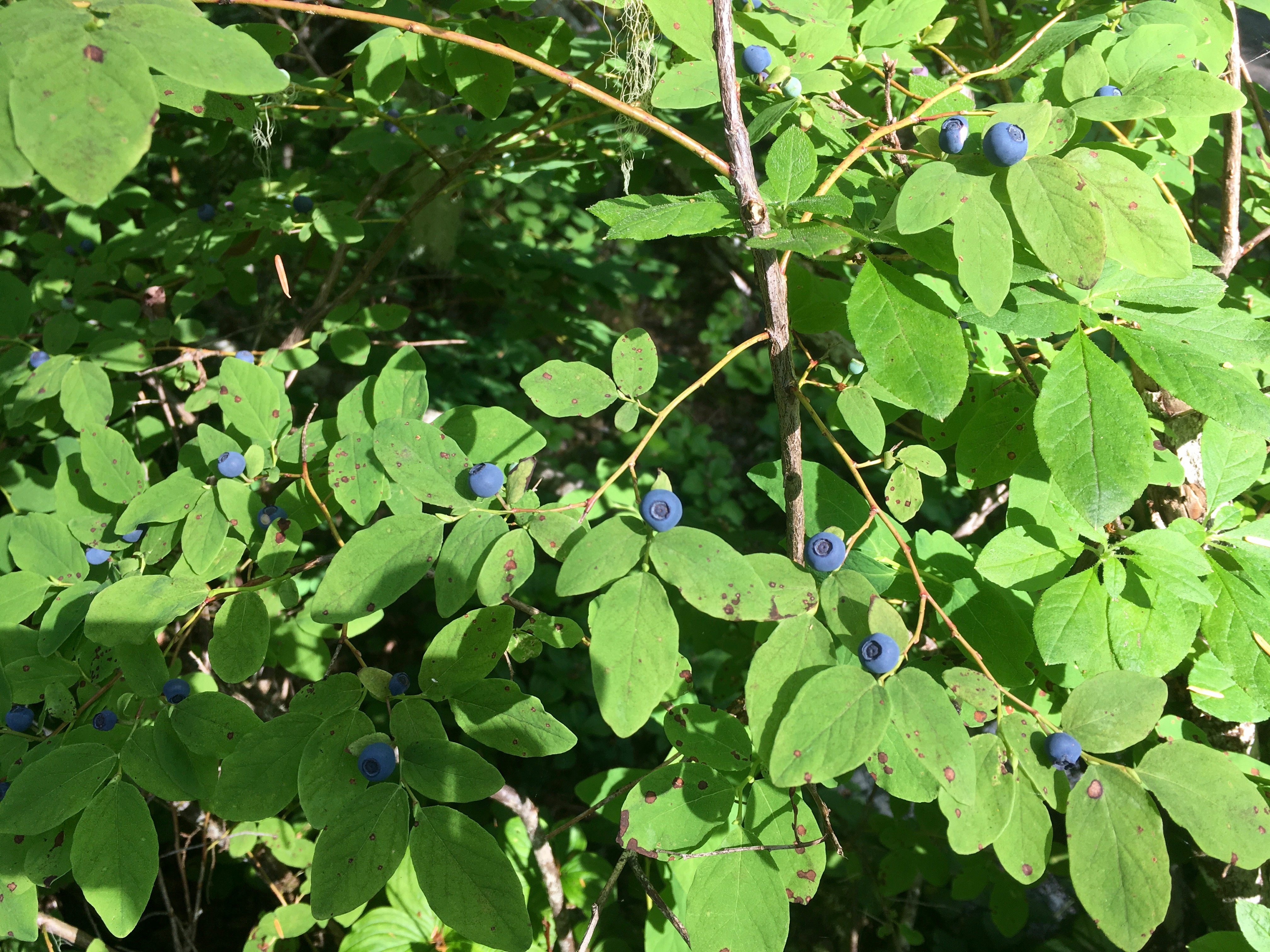
It’s harvest time in the Rain Forest. Aki was barely awake when we headed out to a promising berry picking spot. The little dog showed great patience as her other human and I slowly filled our recycled buckets with blueberries. 
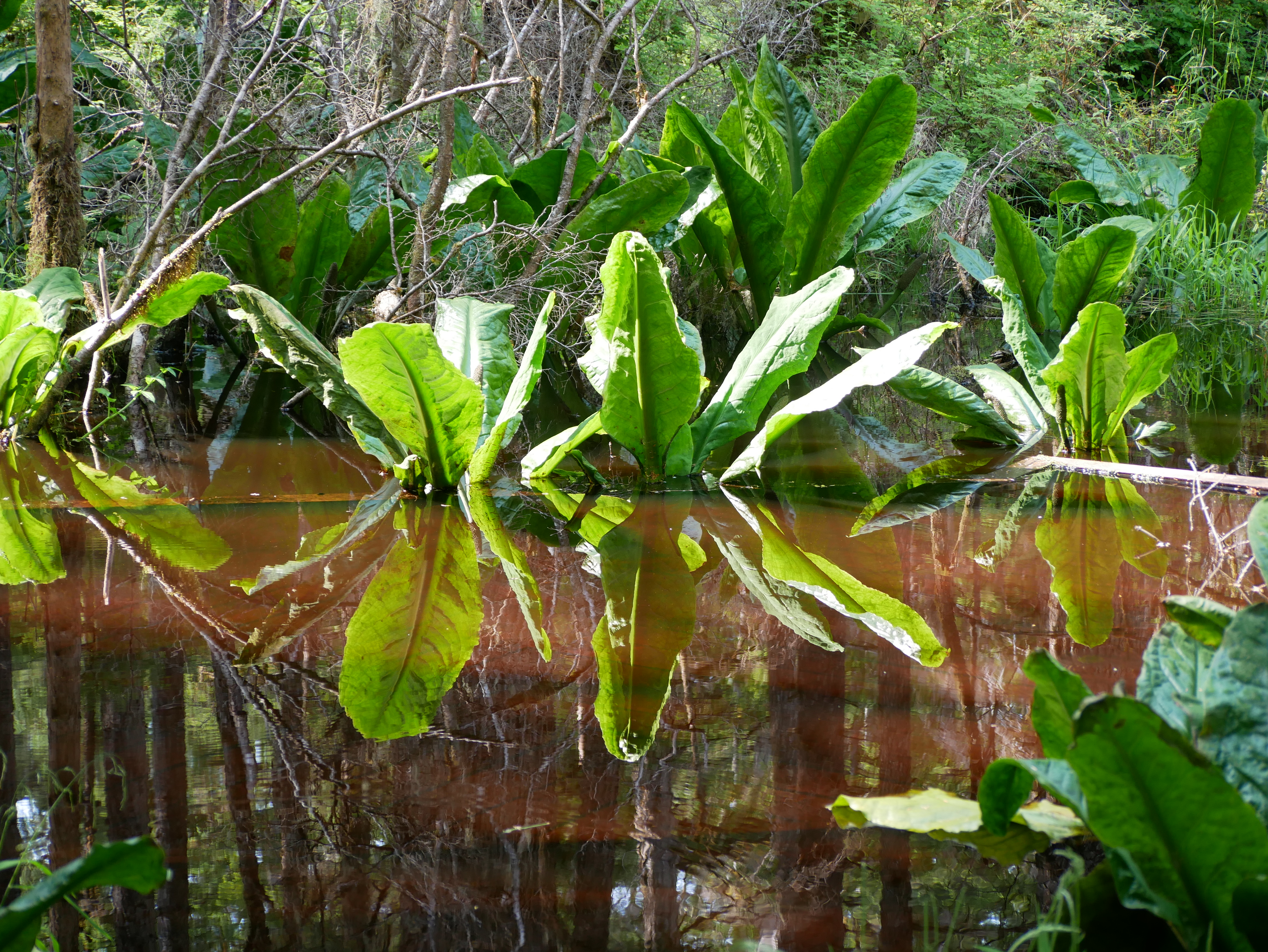
            Last year, a hungry sow black bear and her cub hammered the patch that usually satisfied our berry needs for the year. We turned to the mountain meadows as back up but their production was also down. On today’s expedition, which I thought would only be a reconnaissance mission, we picked close a gallon of blueberries in less than two hours. Most were plump and juicy.            

  When our buckets were almost full, Aki started keening.  It was clearly her time for attention and exercise. She led her humans us on a loop through the forest; stopping often to luxuriate in the rich smells left by other four-legged visitors.  
Another Bear Story

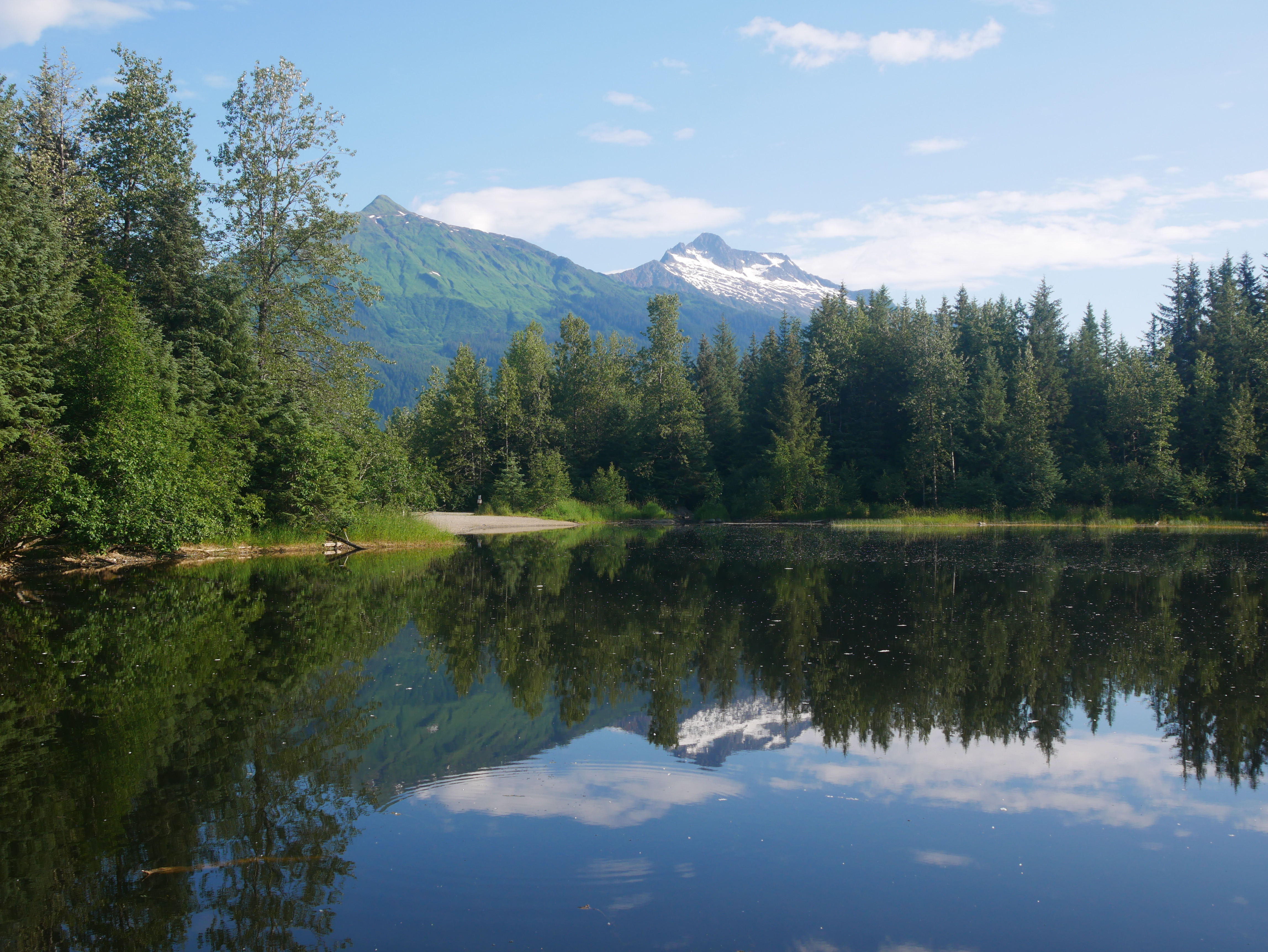
Yesterday, rising trout in one of the troll woods’ lakes surprised me. A couple of the active fish appeared to have some shoulders, maybe enough body to fill a frying pan. Early this morning Aki I re-entered the woods. I carried a fishing pole. The little dog was armed only with her sharp noise and bravery too large for her 10-pound body. I tried to ignore a premonition that we would run into a bear. 

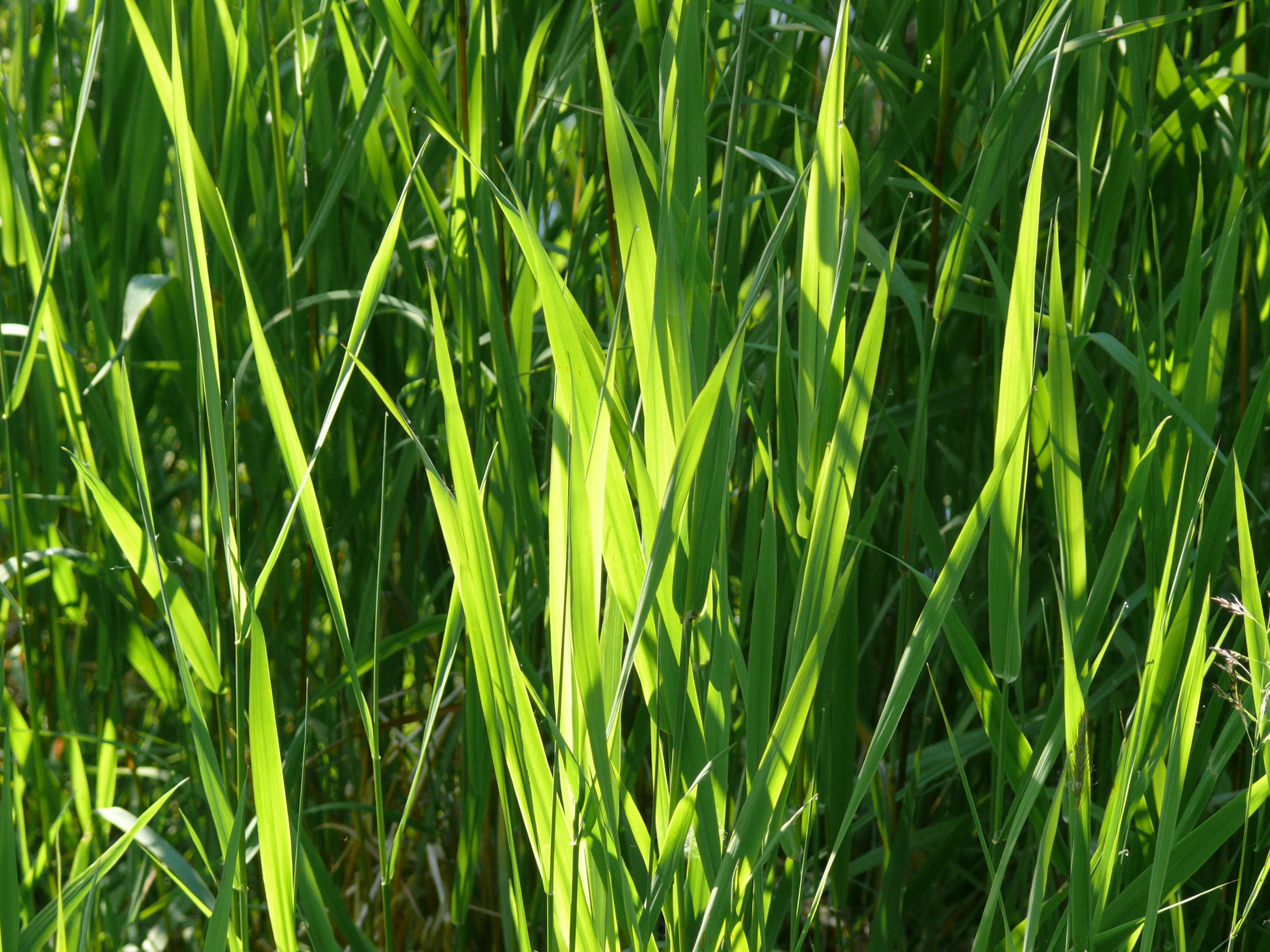
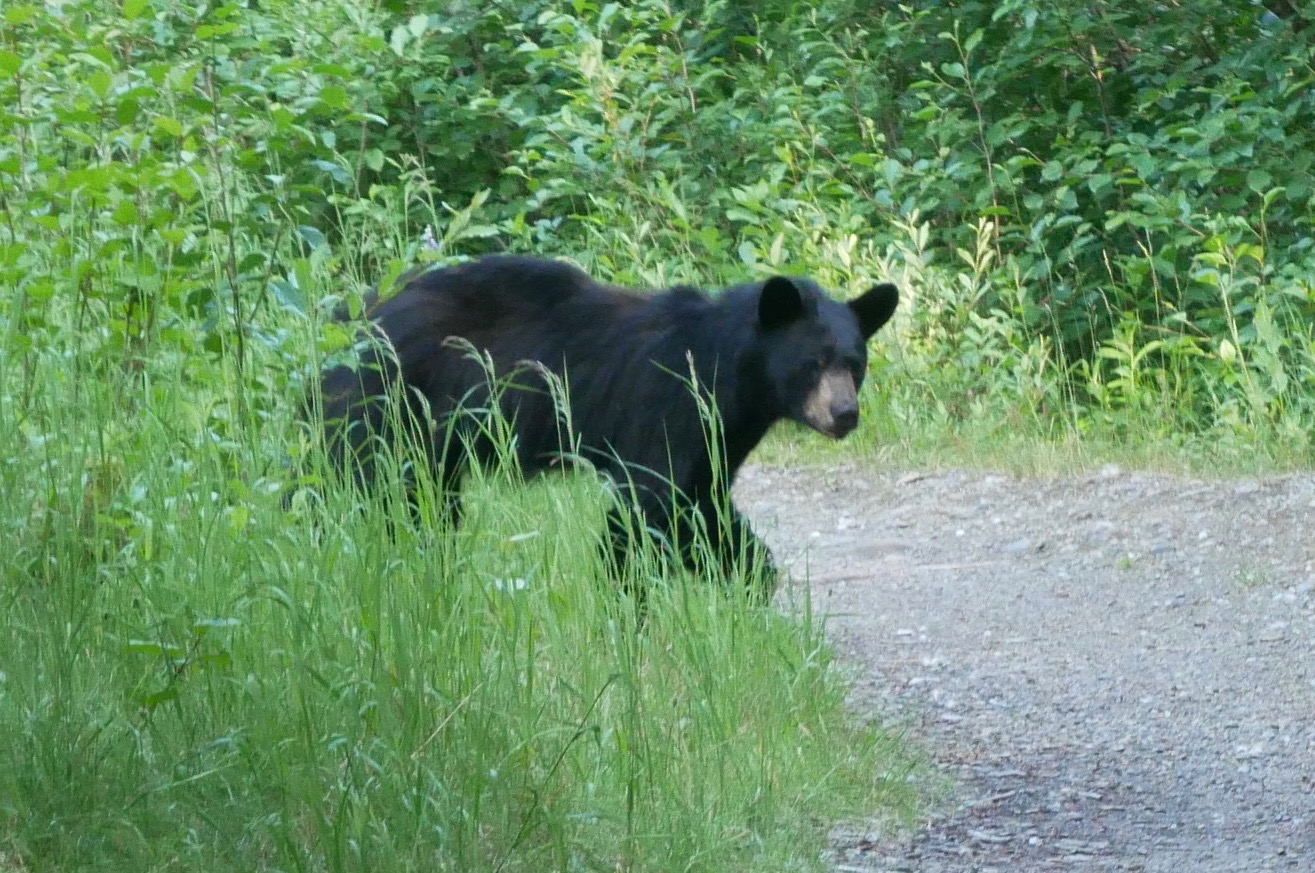
            Aki doddled behind as I quick walked toward the promising lake. Morning sunshine shone through translucent grass blades and made the little dog little squint. She was forty meters behind me when the bear appeared. Thankfully it was a boar, not a sow with cubs. It was, as seems to be the case in almost every Alaska bear story, the largest black bear male seen in some time. 

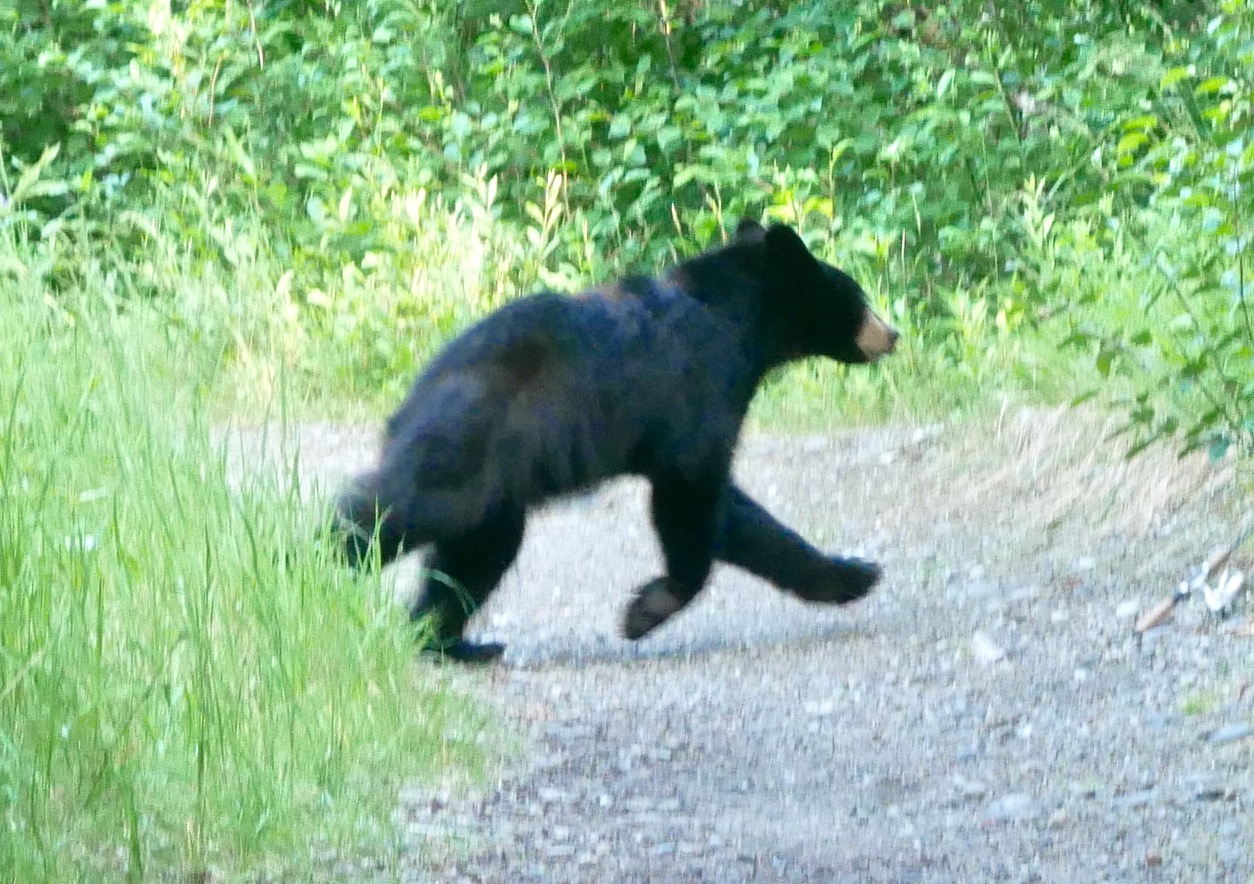
            Showing the considerate caution of its breed, the bear left the trail to shelter in a strip of alders that bordered the lake. I was about to trot back to retrieve the still ignorant poodle-mix when the bear started moving in her direction. If the boar continued it would soon find Aki blocking the way into the troll woods. I dropped the fishing pole and ran to grab my dog. The bear reversed direction and skulked to the very spot where I had dropped the fishing gear. Aki spotted the bear as it emerged onto the trail. She growled and barked, sending the bear rushing across the trail and into the woods. 

            On the theory that no bear would appreciate my performance, I sang an off key version of “Super Trooper” by ABBA on our return to the car. If Aki’s growling hadn’t been enough, my singing must have driven the bear deep into the Troll Woods.  

Inadvertent Interference

I wanted to make an undetectable approach to the beaver pond so I left the usual trail for a more casual one. Aki waited on the good trail for me to return to my senses. In minutes, after I have made enough noise to wake a sleeping dragon, I rejoin the little dog. Well that blew any chance of sneaking up on the heron. 

            Aki and I had startled a great blue heron when we first circled the beaver pond. It whooshed over our heads and flew to the other side of the pond, squawking like a barnyard goose. Given the winged hunter’s reluctance to leave, I hoped that it might return while we walked to the beach and back into the woods. 

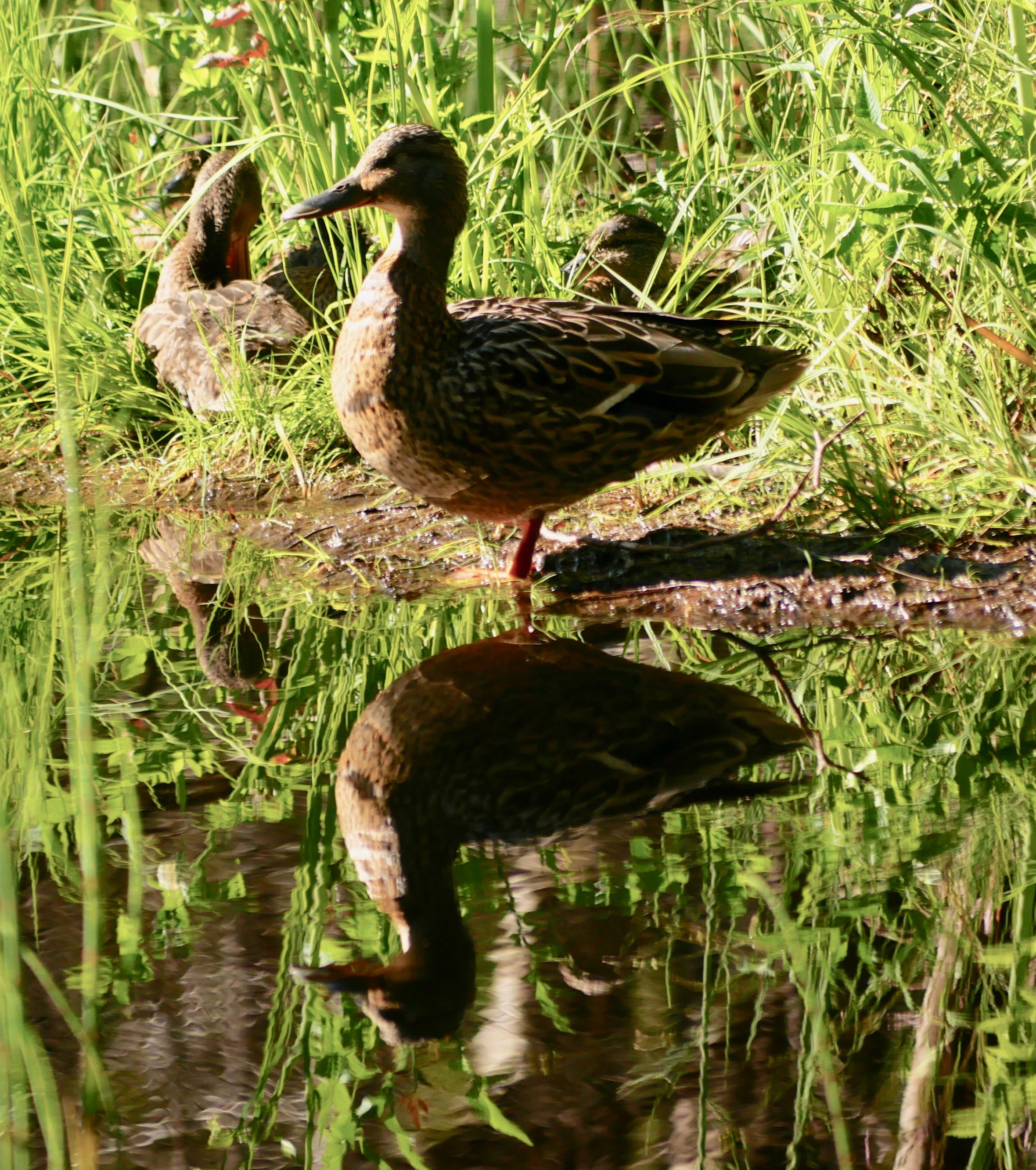
            With a faint hope that the heron was hard of hearing, I lead my little poodle-mix to the main trail and find, not the expected heron but a mallard hen. She stands, still as a statue at the edge of the pond. Three of her chicks, partially hidden by grass, sleep while their mom stands watch. 

Duck hunting season is closed or a hunter could easily orphan the mallard chicks. The hen isn’t worried about humans carrying guns. She doesn’t flinch when I move closer for a better view of her kids. But she twitches each time a nearby eagle screams. No one is going to cite an eagle or heron for hunting out of season. Had our earlier appearance at the pond saved the ducklings from the heron? 

Trying to Reduce Them to Our Level

I just can’t help attributing human attributes to wild things. In the stare of a thrush I see defiance. A slouching marmot telegraphs nonchalance. This morning, on the way to the Rainforest trailhead, I tried to read the emotions of an adult bald eagle. 

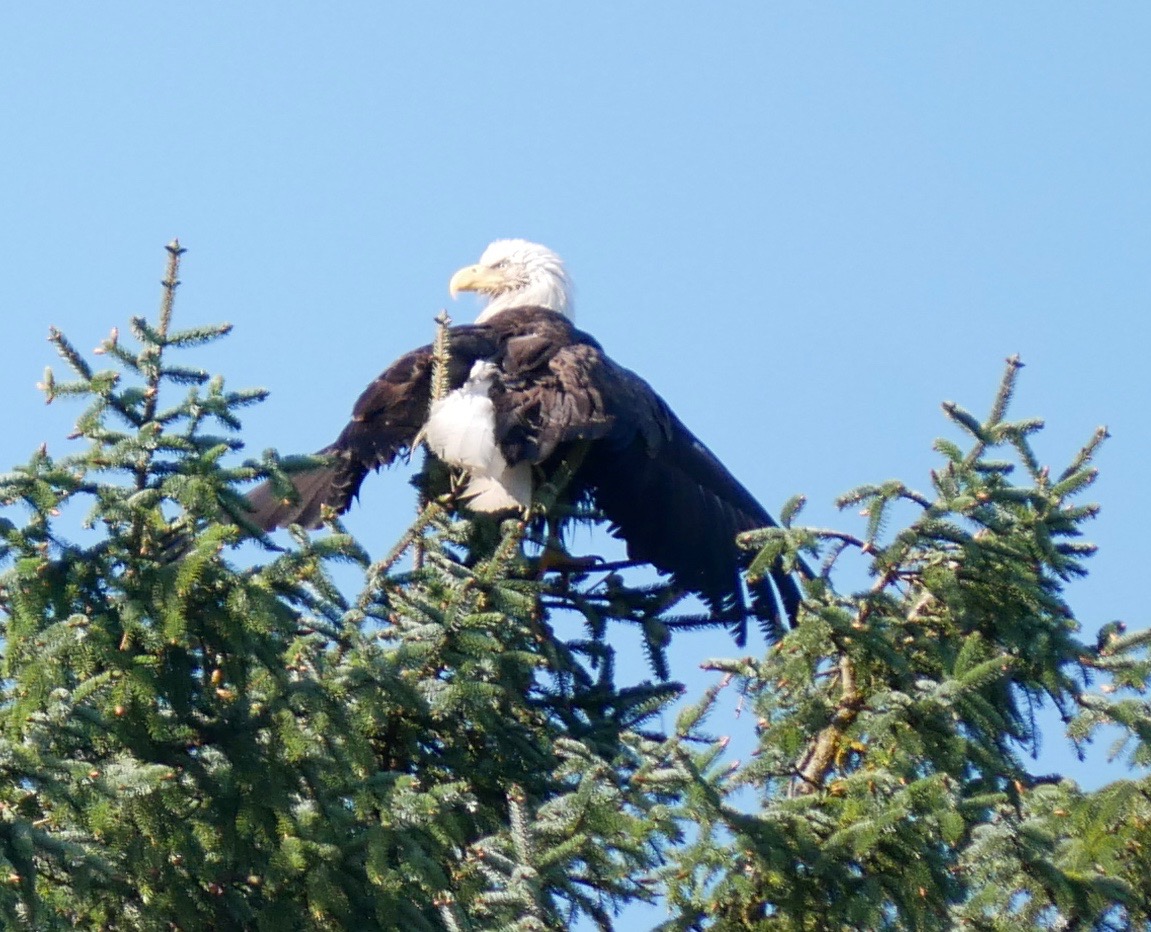
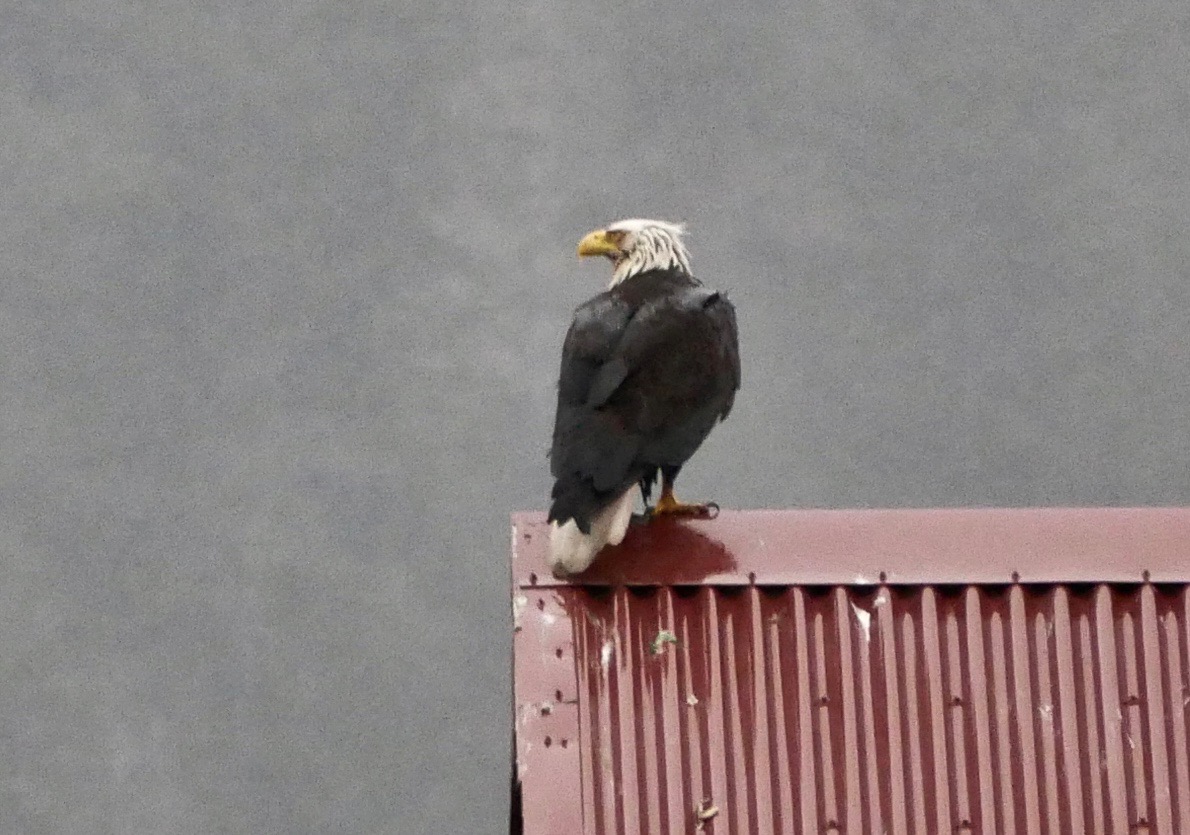
The big bird was perched in the top of a short spruce tree. I stopped the car just twenty feet away. The eagle looked to be contemplating the view up Lynn Canal or maybe just enjoying the feel of sunshine drying out his rain-dampened feathers. An audio version of Nina George’s “The Little Paris Book Store” was playing on the car stereo. As one of the actors described the meeting of the protagonist and his lover, the eagle turned and looked at us with its eyebrow raised, as if questioning my taste in books.  
It’s early morning so there is only one car in the trailhead parking lot when we arrive. In an hour or two the eco tour vans will disgorge cruise ship passengers more interested in wild things than jewelry shopping on South Franklin Street. They are my favorite kind of visitors but I’m pleased not to have to share the trail with them today. 
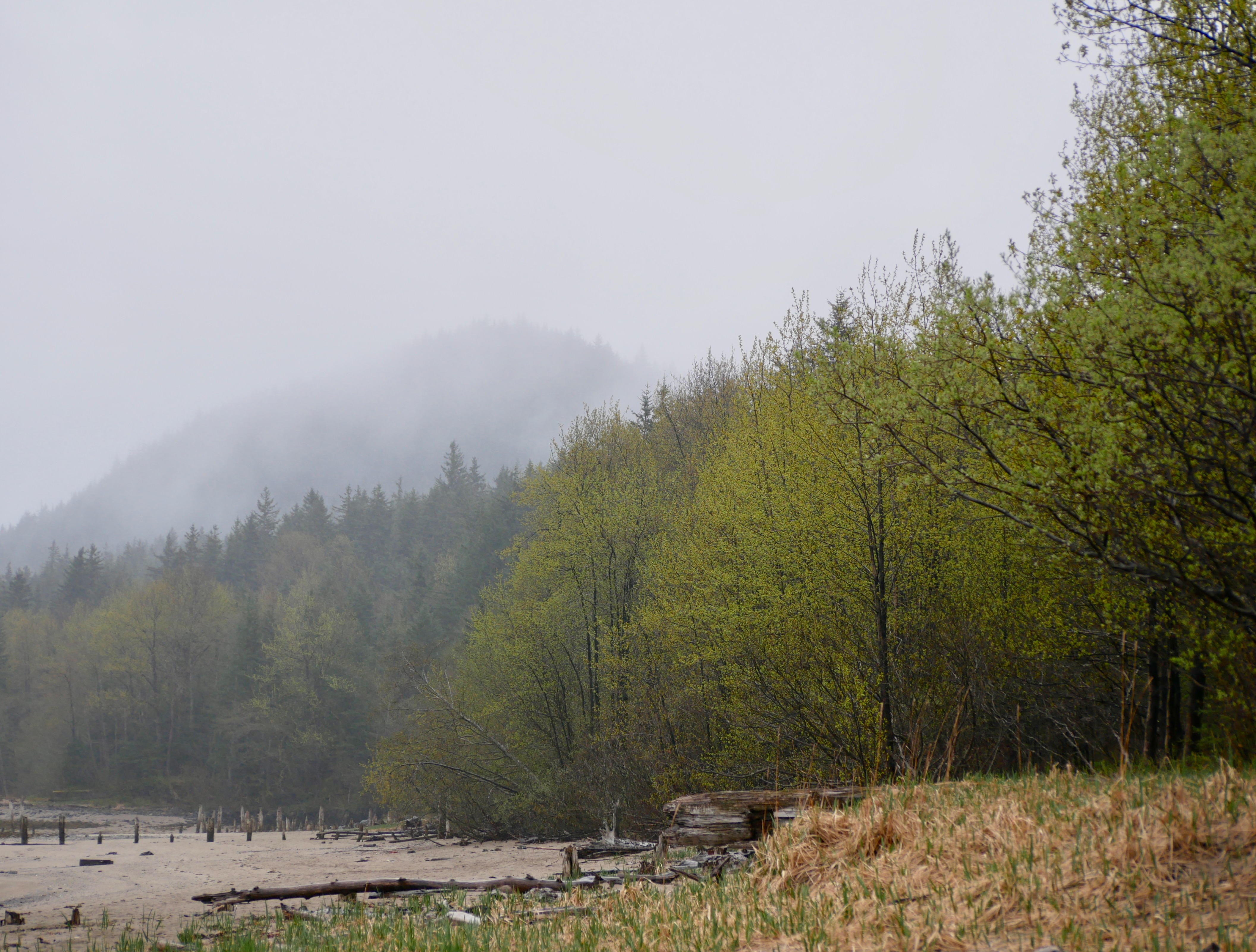
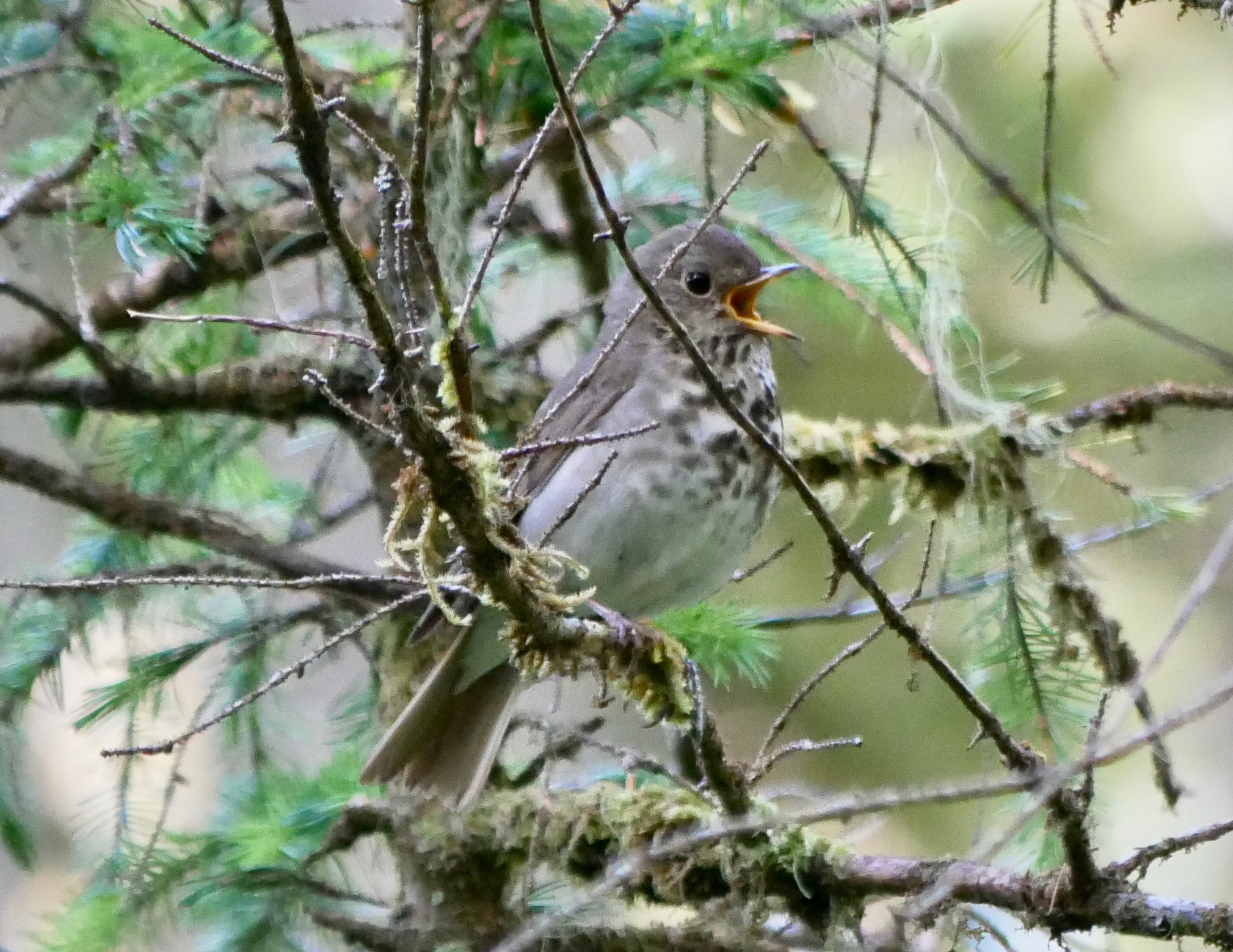
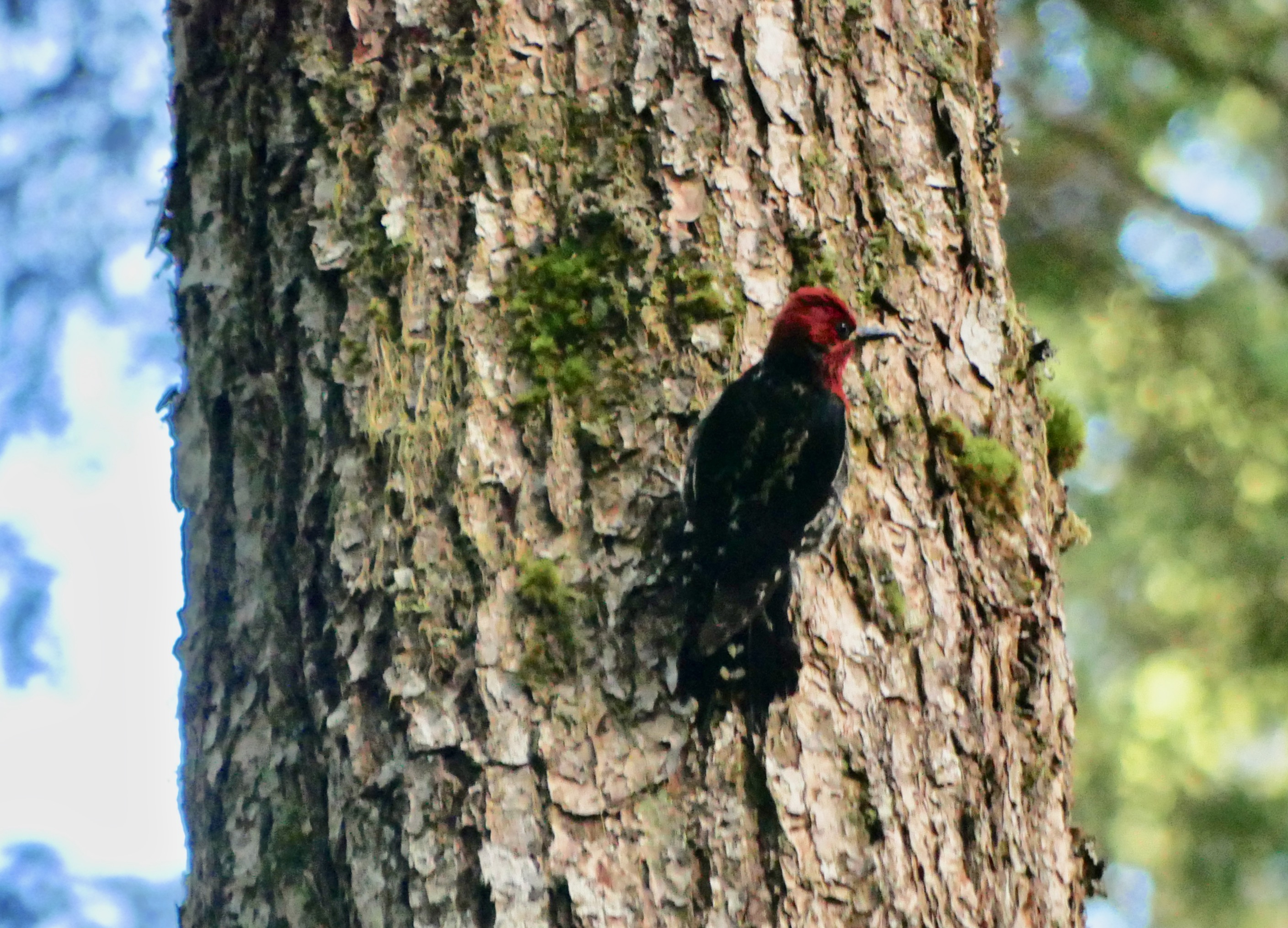
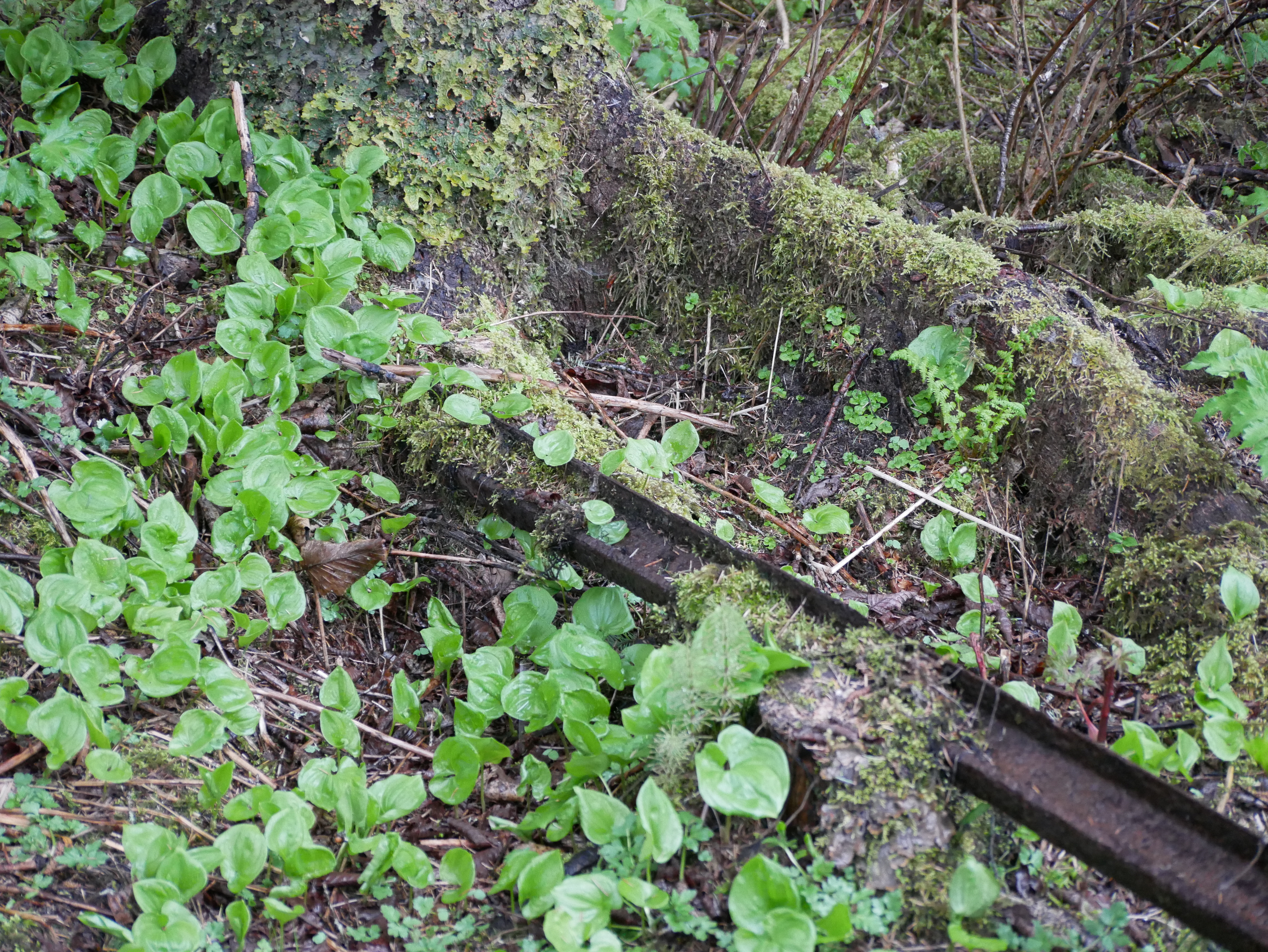
The leaves of understory plants in the forest are still weighed down with rain from a recent shower. They sparkle when struck by sun shafts. Above the trail a gray thrush mom tries to induce one of its chicks to fledge. In a nearby hemlock, a red-breasted sapsucker stops hammering the tree’s bark to give the little dog the stink eye. 

Day for the Living

Aki is covered in mud again. It just took seconds for her to sneak past her human family and slip into a pond that is thick with decomposing plant matter. We aren’t worried. Soon we will reach a pocket beach where she will get a quick bath. 

            It’s Memorial Day in Alaska. For Aki’s family it’s a day to drop out of normal life and spend time with each other. What better way is there to honor the family’s deceased? While Aki chases her Frisbee, I remember my parents and grandparents and the other honored dead. If they retain the love they had for life after joining the dead, they would smile knowing that their living kin were enjoying life, human and wild, on a wild beach rather than standing before their headstones. 

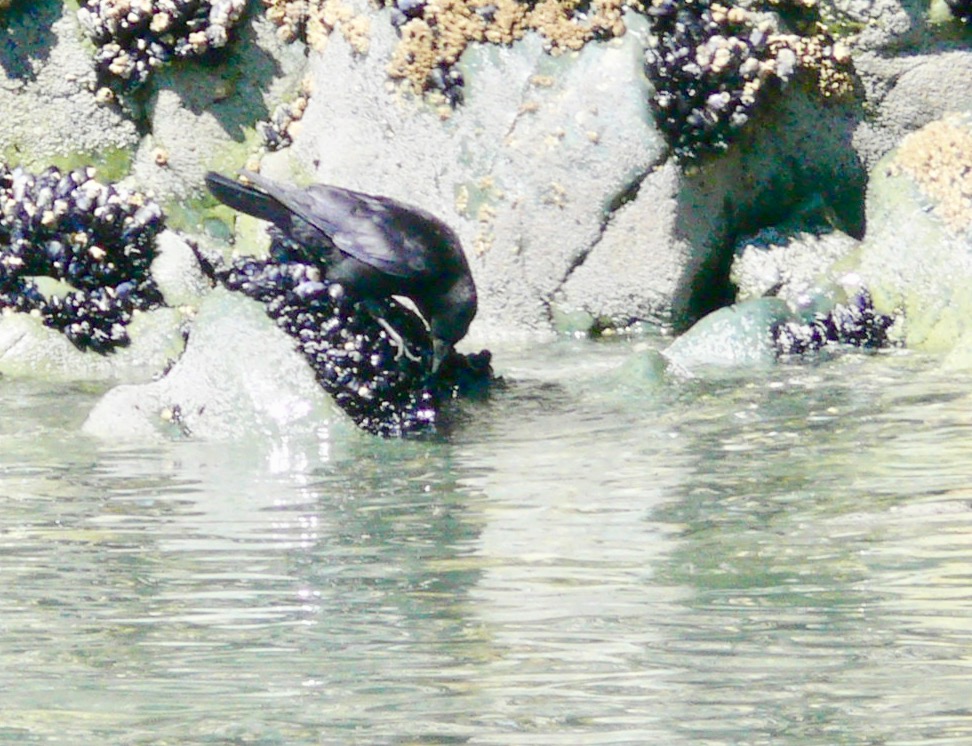
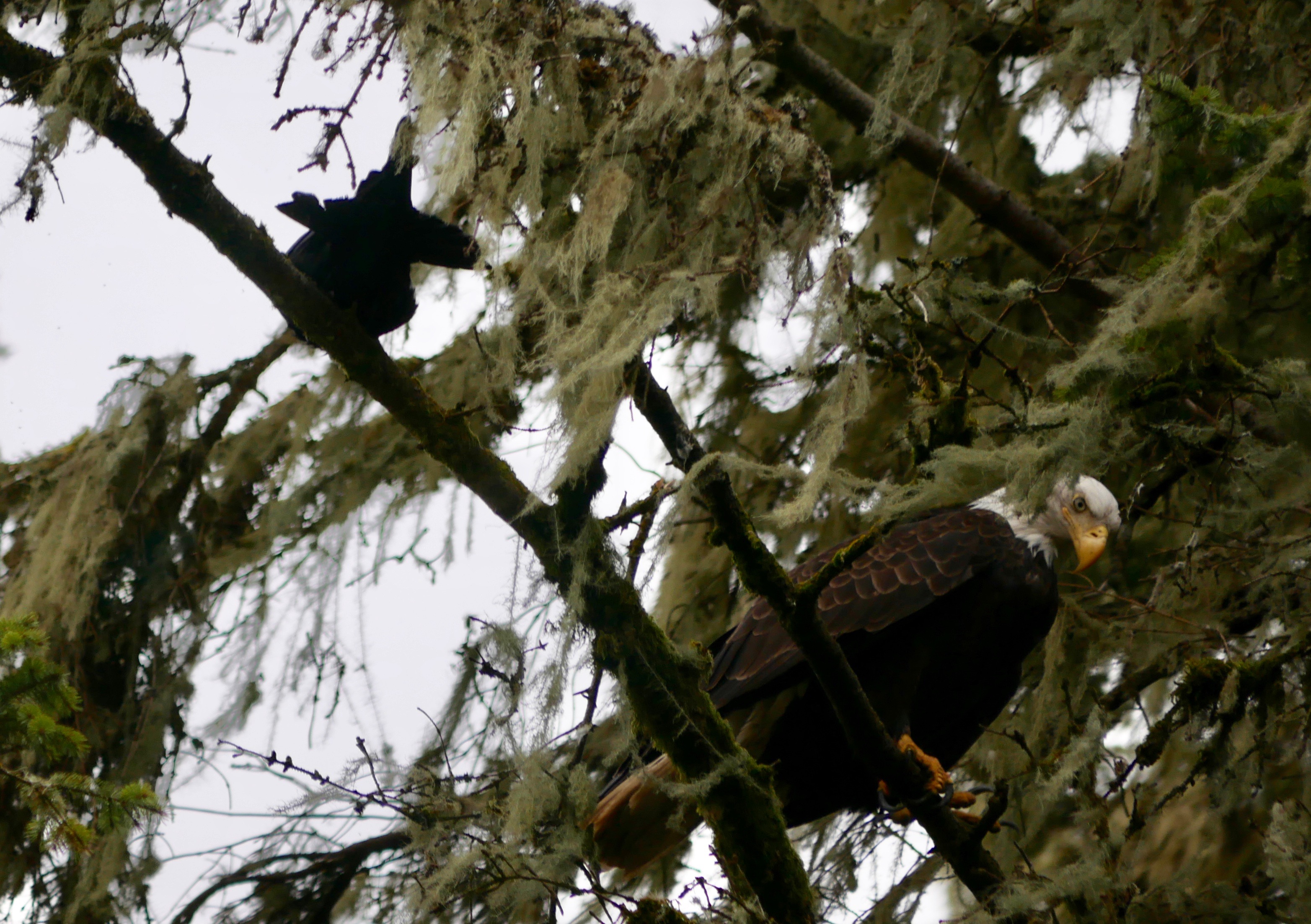
            We spooked an immature bald eagle to flight when we reached the beach. The crows moved in after the eagle left, teasing mussel shells off exposed rocks. The ones they couldn’t crack with their beaks were carried into the air and then dropped on a flat rock, which served first as an anvil and then a table for the hungry birds. 

Peace on the Delta

It is almost impossible to rise with the sun during the northern summer. At this time of the morning last winter Aki and I would have been hiking in the dark. Still, during most of our visit we will have the Fish Creek delta to ourselves. A nice bird watcher arrived just before us but didn’t go beyond the pond. 

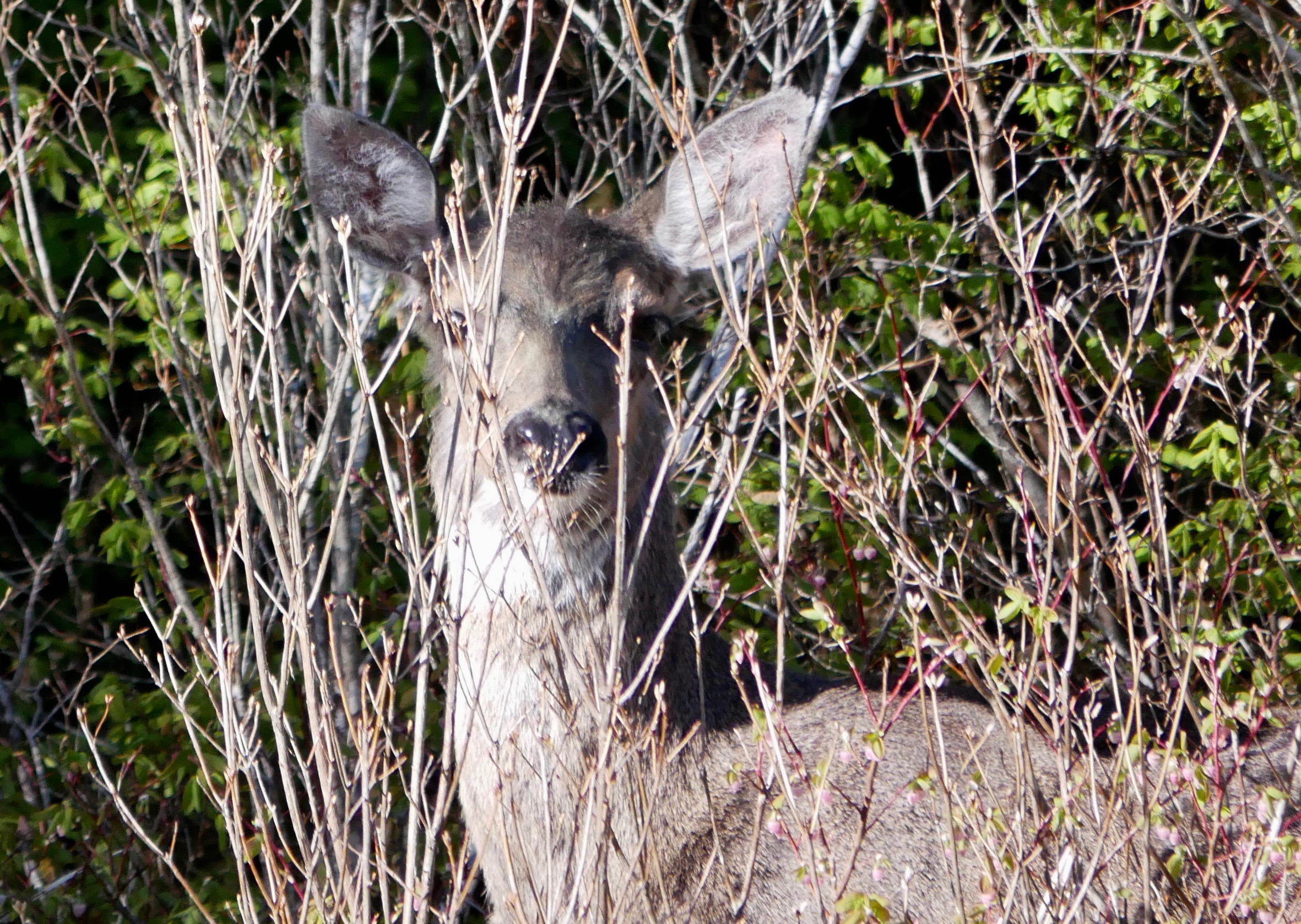
            On the drive to the trailhead, I thought about deer and when a doe walked in front of the car. After we stopped, it crossed to the west side of the road and tried to find cover behind a sparse blueberry bush. Another deer appeared to be waiting for us at the trailhead parking area. Acting like it was still undiscovered, it tiptoed off the trail and into a forest tangle. 

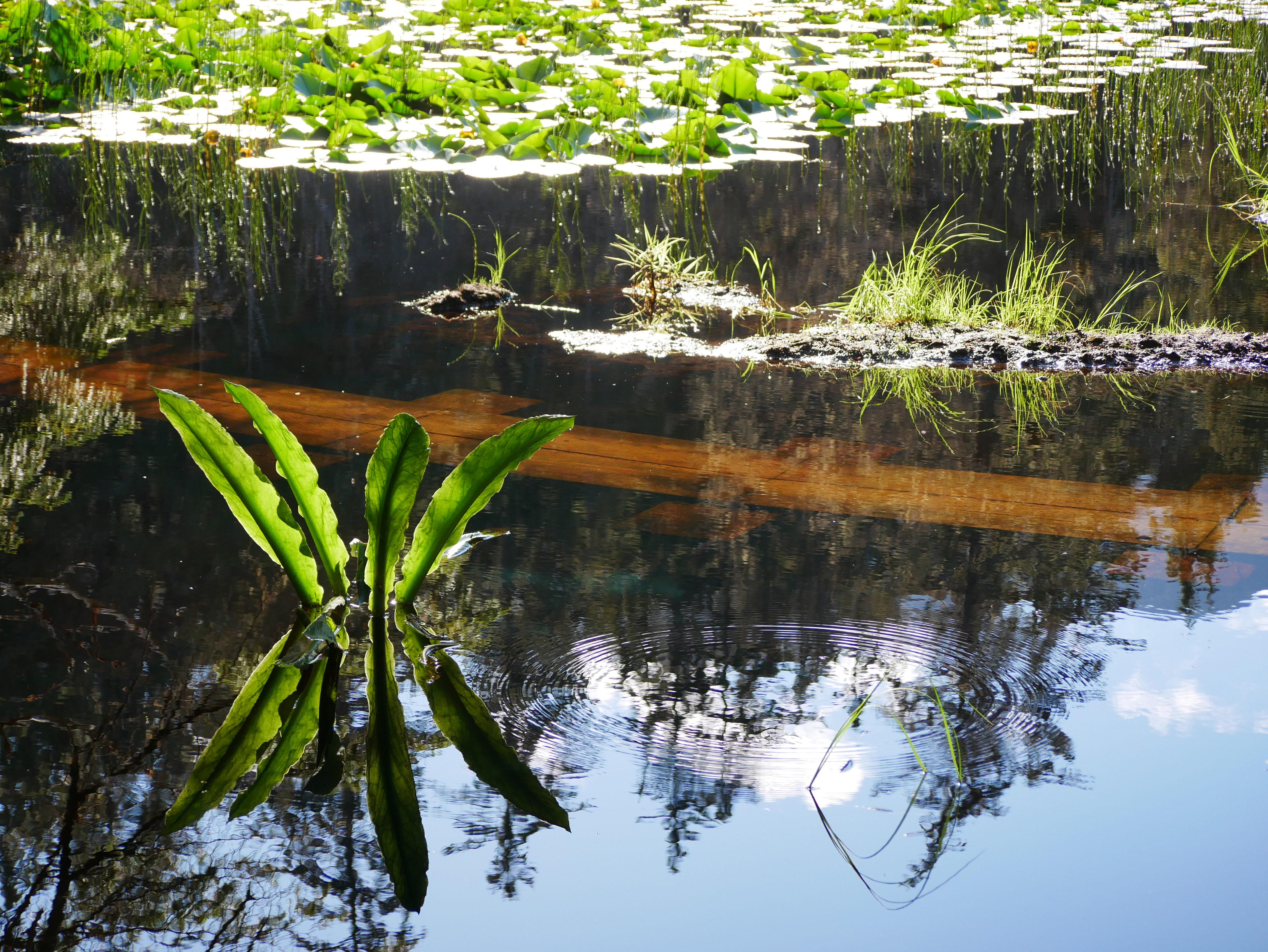
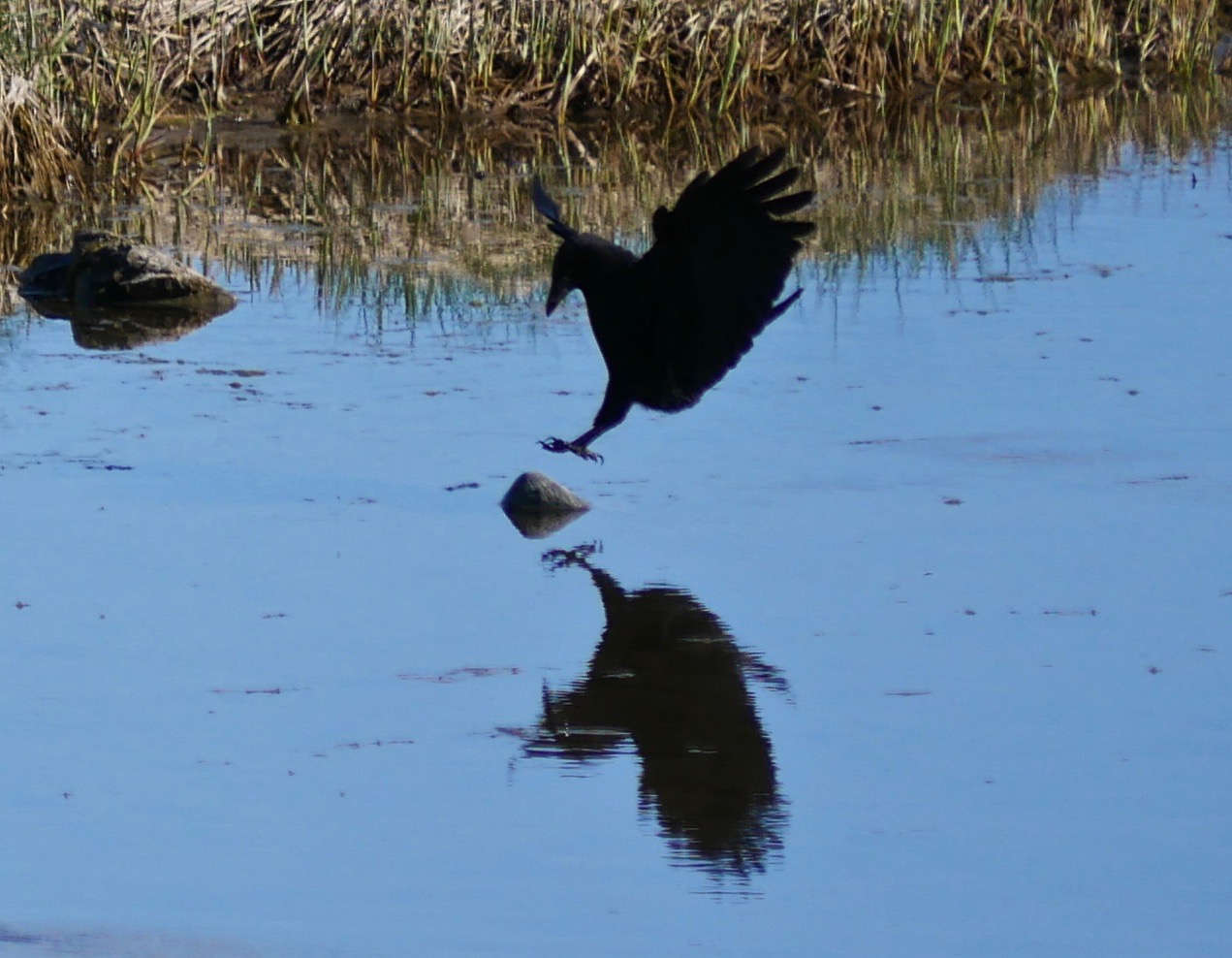
            Things have calmed down on the delta since our last visit. The resident eagles have reached accommodation with the crows, which no longer try to drive the bigger predators from their roosts. Freed up from defense work, the crows have spread out to feed on the tidal meadow. One crow lands on a rock in the middle of tiny pond, apparently to enjoy its reflection in the pond’s surface. It doesn’t seem to notice a sandpiper that wades past.            

The marine layer that darkened our skies for weeks is breaking into clouds that reflect in the waters of Fritz Cove. An adult bald eagle flew out over the cove, dove on a fish and pulled up—wings wet and talons empty. Now it squats at the top of a spruce tree with its wings spread out to dry, a sour look on its face. 

Sometimes the Small Guys Win

Aki and were walking back to the car, powering into a strong wind when the heron flew low over our heads, croaked like a sick raven, and dropped onto the surface of a small pond. The heron was a surprise. I expected to see some eagles on the Fish Creek delta and we did. But we rarely see herons here. 

I could see five bald eagles from the spot where I watched the heron. Aki acted like we were alone in the universe. Two eagles were hanging out on a nearby navigational aid tower. Another stood on a beach, ripping apart some morsel of food. The other two eagles crouched, head to head, on the bank of Fish Creek. They couldn’t see much in the creek. Our recent rainstorms had swollen it and turned its normally clear water mocha brown. 

            During the outbound portion of the walk, we had watched an adult bald eagle lift off from the wetlands and fly toward us. As it grew larger and larger I looked down to make sure Aki was safe. No fool, the poodle mix stood right next to my legs. Another eagle, roosted just above us in a spruce, screamed out a welcome just before the other eagle joined it. 

            A brace of crows, each less than an eighth the mass of the eagles, landed just above the eagles. They cawed and invaded the eagle’s personal space. They weren’t going to let two eagles roost on the edge of the forest where their murder is raising this year’s brood.  In seconds the eagles departed. We left too before the crows focused their attention on us. We have both been dive bombed by crows during their nesting season. 

Worth It

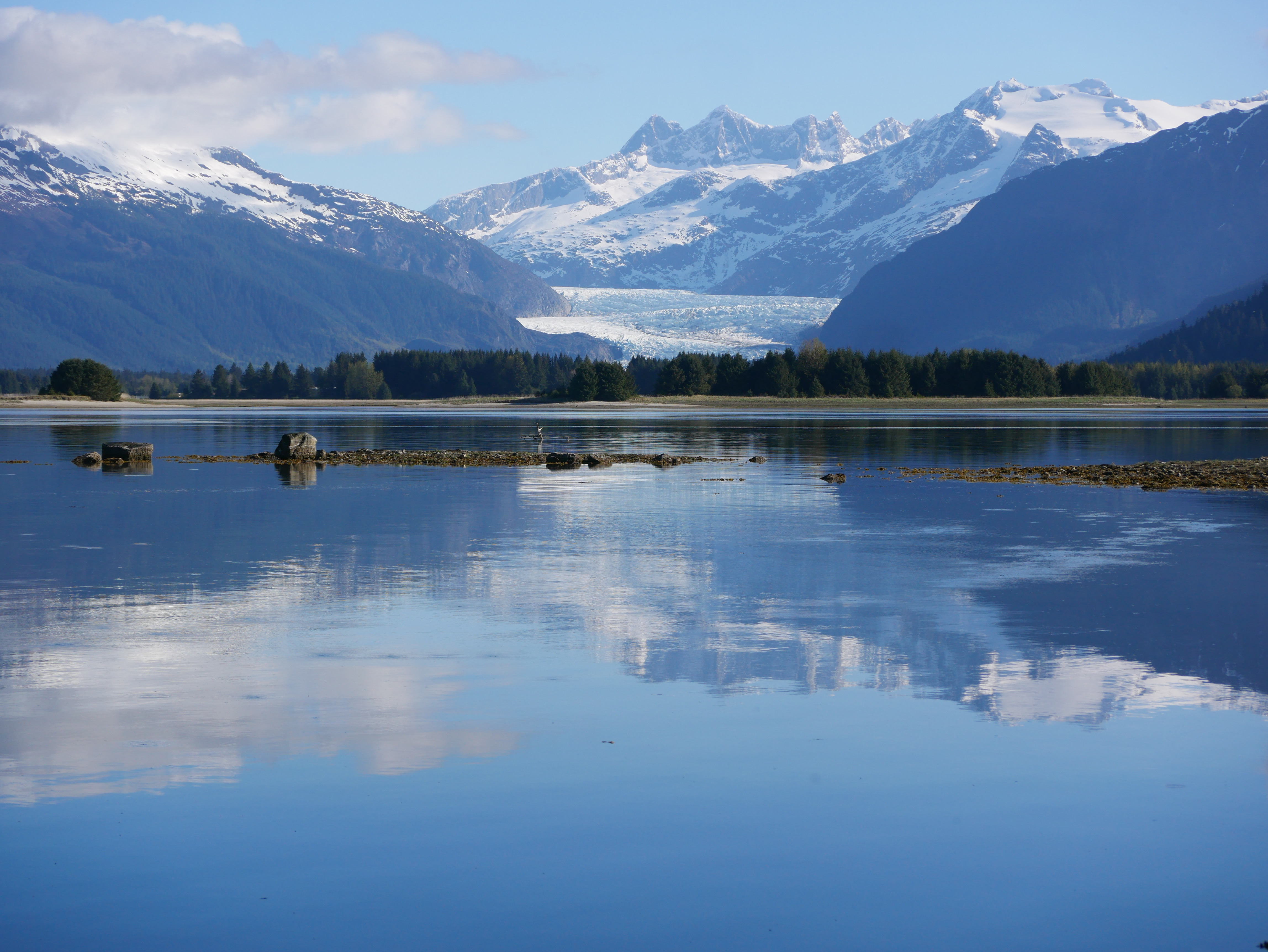
One of Aki’s other humans and I paddle toward the glacier into a rain bearing head wind.  Kittiwakes from the nearby rookery watch us from a small iceberg. They don’t stir as we pass.  Members of their clan mew and keen before diving on sockeye salmon smolt in the lake waters. I worry that we will face worse conditions when we round a point of a rocky hill that has been partially blocking the wind. I am glad that Aki is home snug and warm.

It may be the lovely month of May but today is a wicked-wet day. It’s the only day I have to sneak in a kayak trip to the glacier. Soon an eco tourist company will be hauling cruise ship tourists across Mendenhall Lake in faux Chippewa canoes and lead them into the shrinking ice cave. I want to enjoy it when empty. 

            Pulling past the point we get an unblocked view of the glacier descending out of rain clouds.  A rocky hill rises to our left, colored by low growing plants fertilized by kittiwake guano.  It seems to take hours to paddle the mile to the glacier in the now unrestrained wind. An empty tourist canoe sits on the beach where we haul out the kayak. Who, I wonder, would pay big money to ride here in an open canoe today? Must be a group of hardy Australians. 

            Listening for ANZAC accents, we walkover a landscape as barren as the moon’s surface. At first appearance, the trail seems to be well graveled. But I find myself slipping on portions that are really hard glacial ice covered with a thin layer of mud or pebbles. We pass torn chunks of trees just released from hundreds of years of icy imprisonment by the glacier’s retreat. The only bird sound we hear is from the keening kittiwakes. No songbirds could earn a living in such a sterile place. 

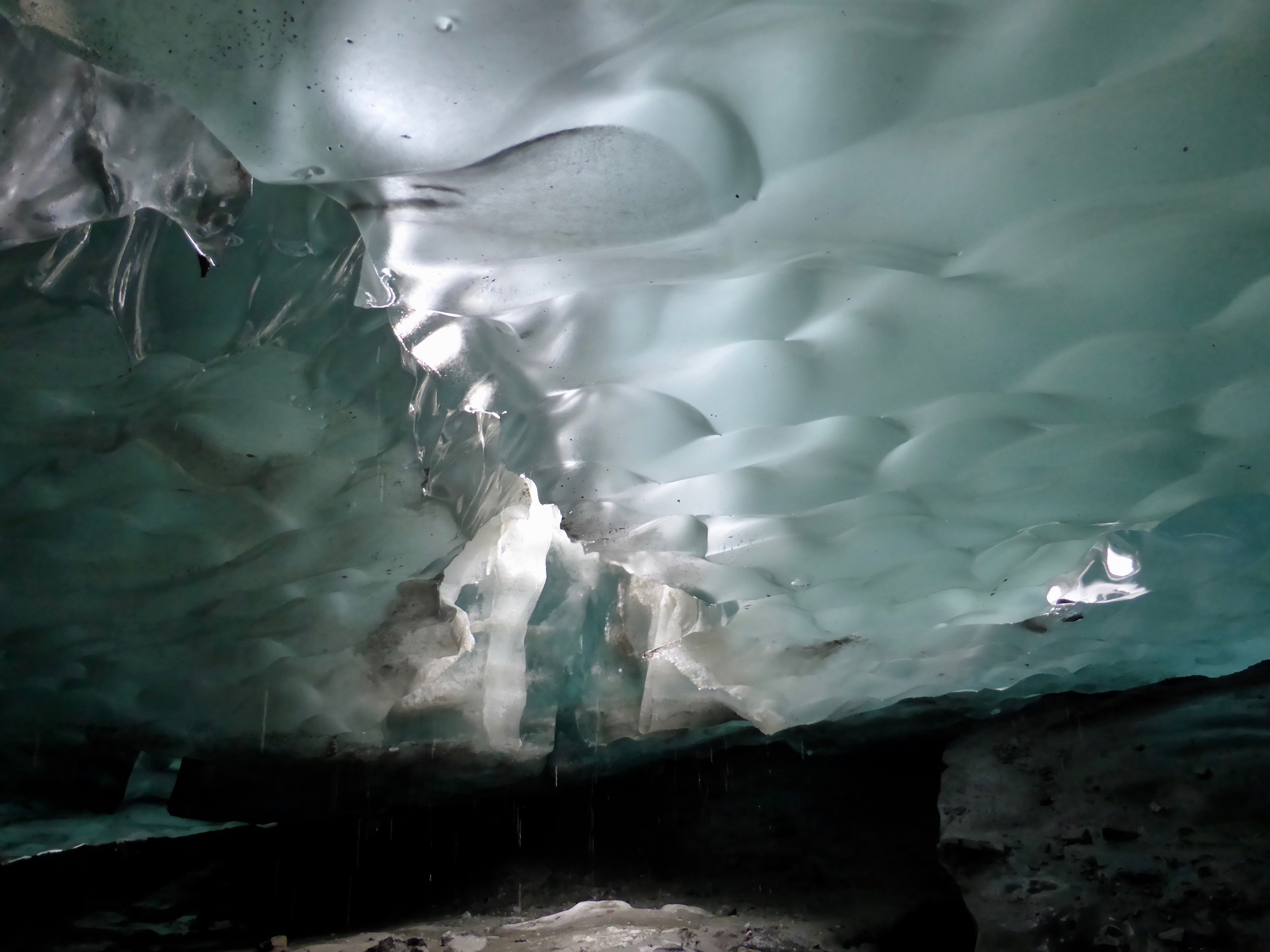
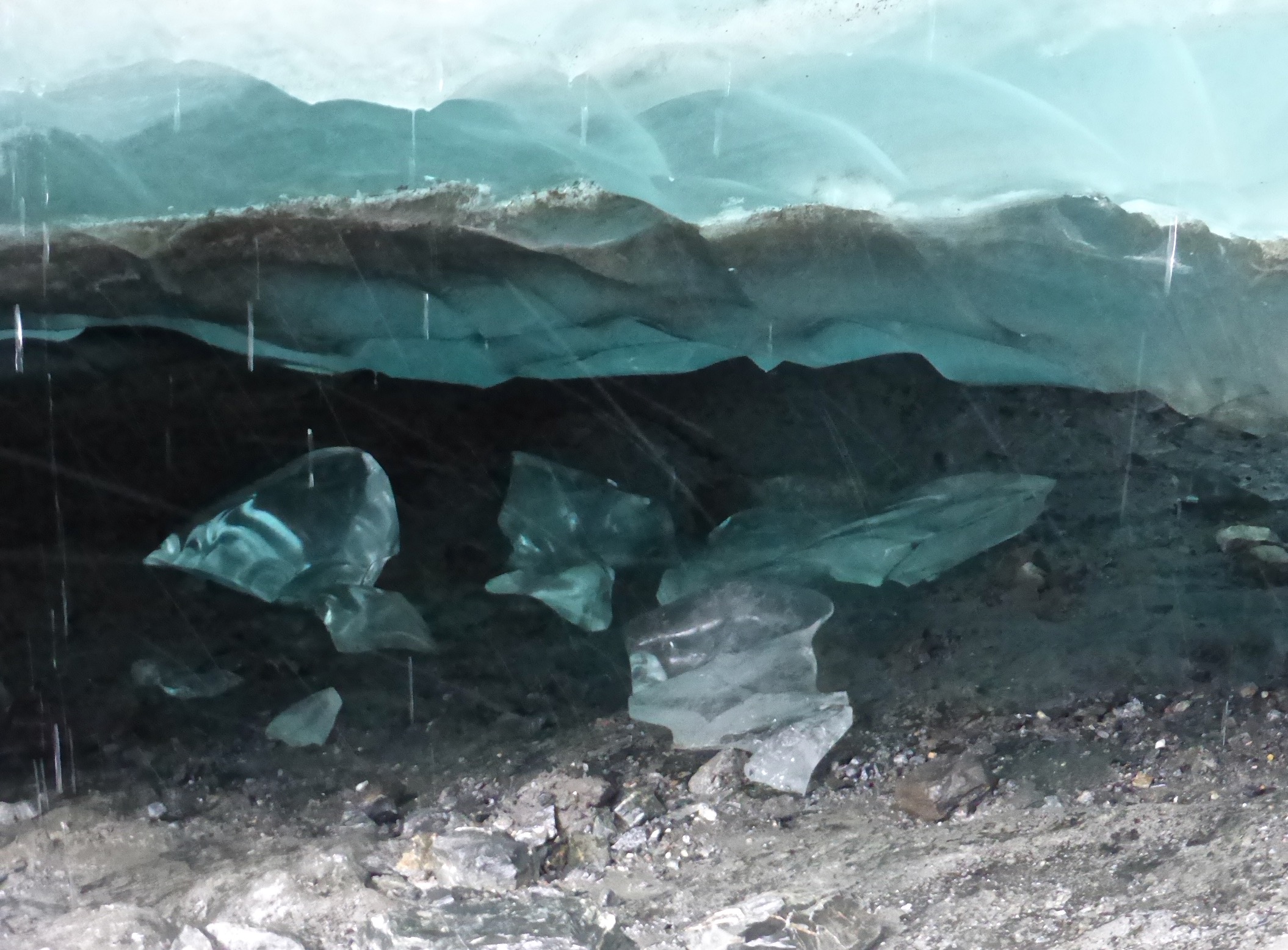
            The glacier seems to be collapsing into itself like an overripe pumpkin. Mocha brown water rushes from beneath the ice. I worry that the mystic blue ice that formed the glacial cave will now be fragile, and opaque. But in spite of our recent heat wave and the subsequent days of rain, the cave retains its basic shape and color. Rainwater streams from cracks in the overhead ice and some of the old entrances have collapsed. It is still a suitable venue for a religious ceremony or at least a brief prayer for our challenged world. 

It is Must be Summer

In the center of Treadwell Woods, a single salmon berry flower bounces gently up and down. It is moved, not by wind, but by the heavy raindrops falling through the forest canopy. This far away from the beach, the magenta-colored flower is the only thing challenging the trees’ monopoly of grays and browns.             

            As Aki moves ahead, excited by a pee mail message left by an earlier canine visitor, I stay with the flower, remembering a visit made years ago to my carving class by a Haida elder. Her eyes promised the delivery of an exciting message. It is summer. I just saw my first salmon berry blossom. 

            The little dog and I move through the woods and drop onto Sandy Beach. It is empty except for a bald eagle. The big bird perches on top of the old ventilator tower, its feathers soaked and askew.  Wind driven rain sweeps down the beach, making me wince and Aki shiver.  It feels more like early winter than summer. But salmon berry blossoms provide color along the beach’s edge. Summer can’t be denied. 

Not Even Close

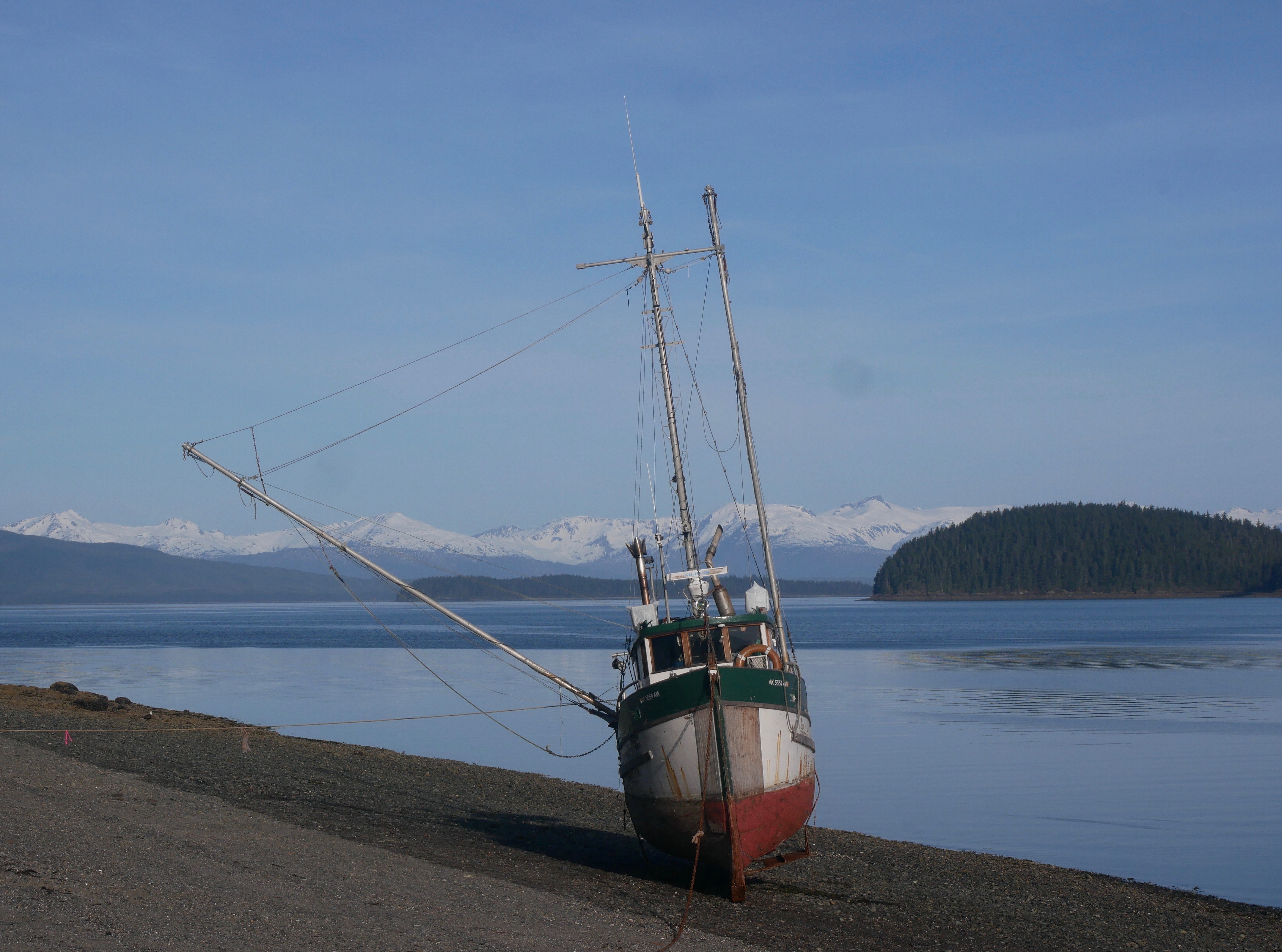
This morning, I stopped at the North Douglas Boat Ramp to take a picture of a commercial fishing boat. The boat was designed to catch salmon by trolling a collection of baited hooks through the water. Now it squats on beach usually used for launching kayaks, useless but looking as pretty as a picture. 

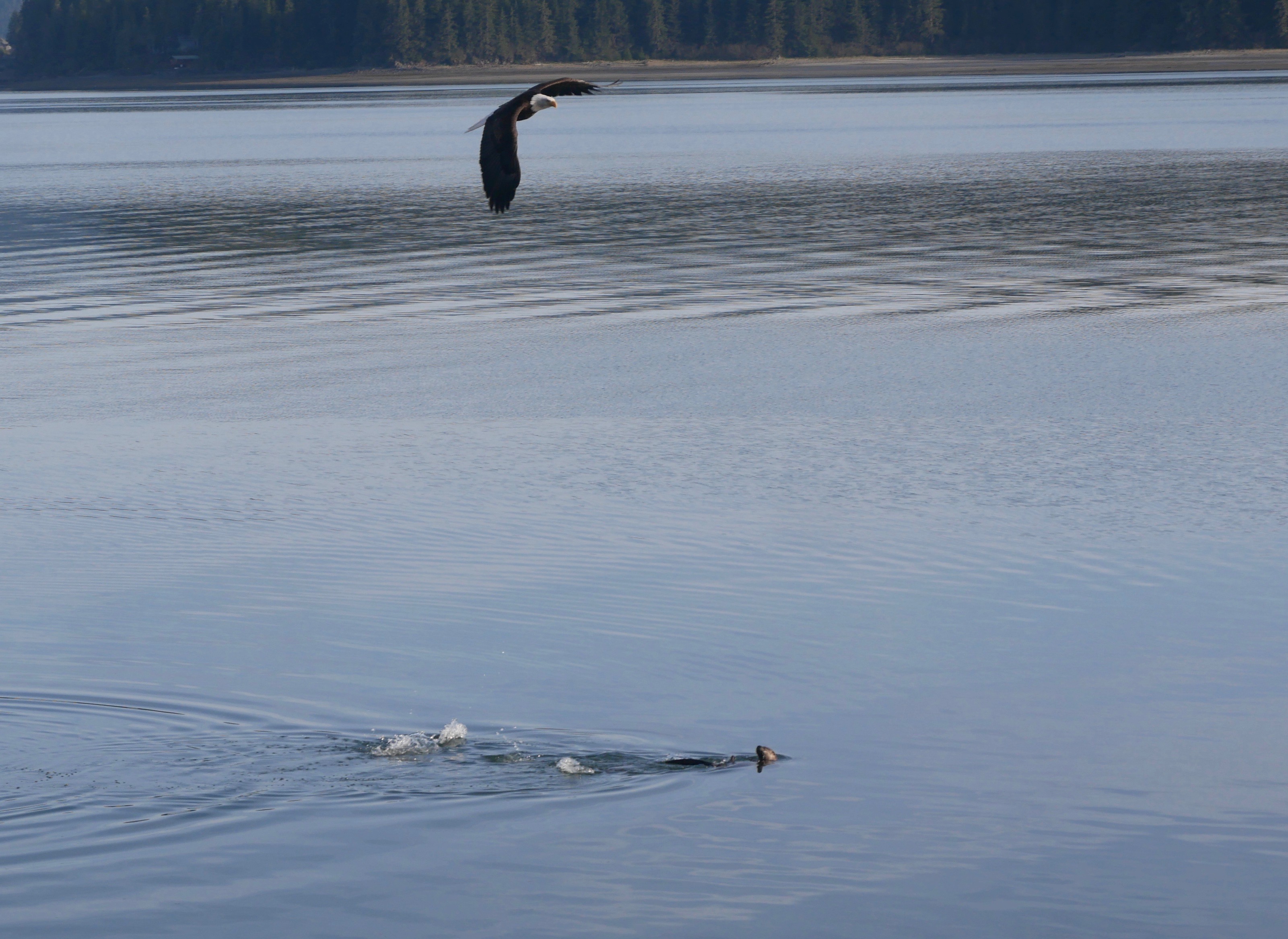
            Three land otters swam past the troller and climbed onto the end of the boat ramp float. Like hungry burglars, they gorge themselves on chunks of flesh discarded by the person who cleaned his catch on the little processing table. Good thing I didn’t let Aki out of the car. The last time we came across this gang of otters, they tried to seduce her into the water. 

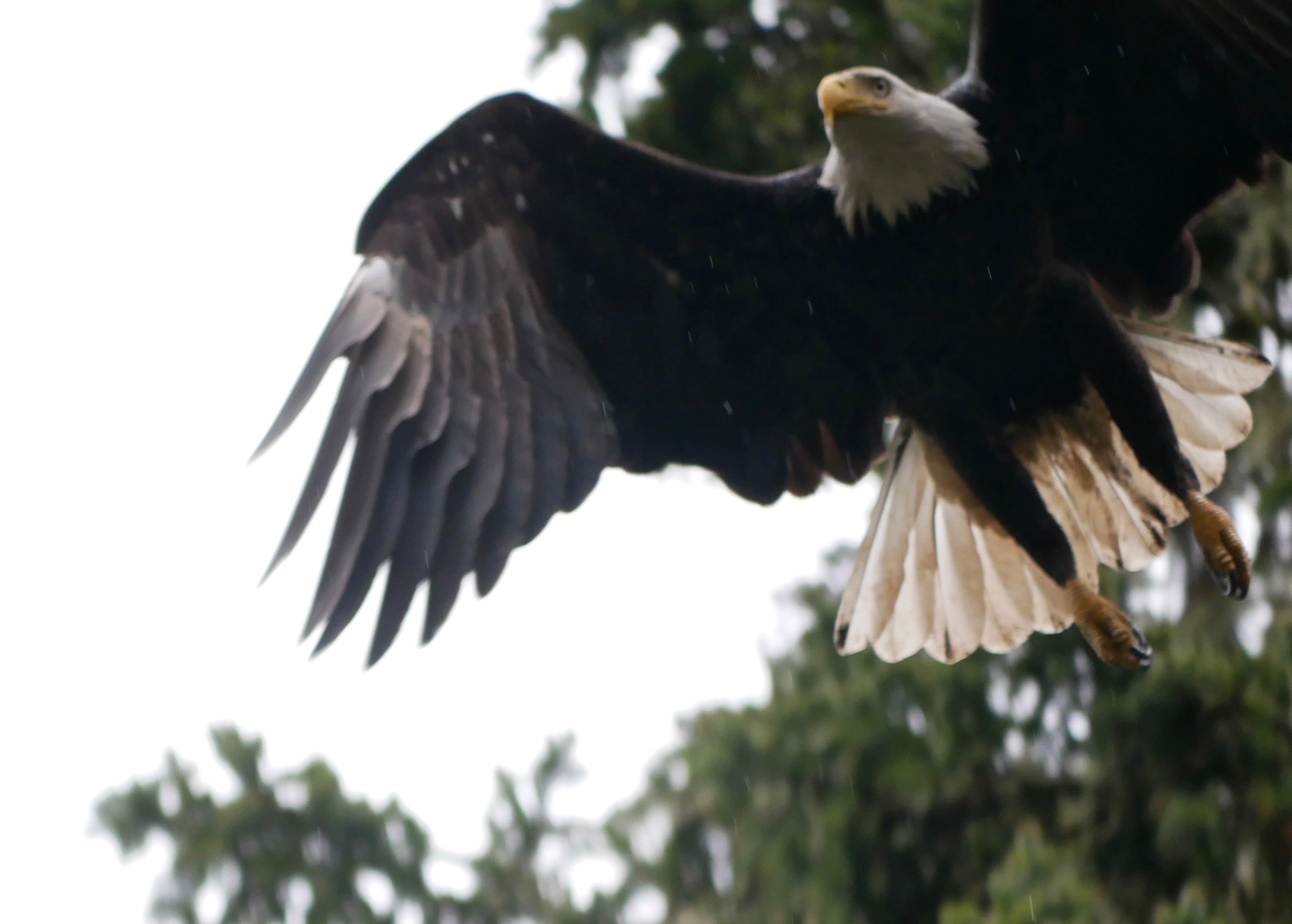
            As the otters savored their quick meal, an adult bald eagle approached from the north.  Rather than using the usual circling technique, this sneaky eagle cruised low over the water. The otters spotted me and dived into the water. When they looked up again, the eagle was right above them. Apparently startled, the otters panic dived as the eagle arcs toward them. 

            A land otter can weigh anywhere between 11 and 30 pounds. They are way too heavy for the eagle to lift, even from dry land.  The aquatic otters were never in any real danger.  After the hungry eagle returned to its roost, the otters cruised along the shore, heads above water, looking for more trouble.