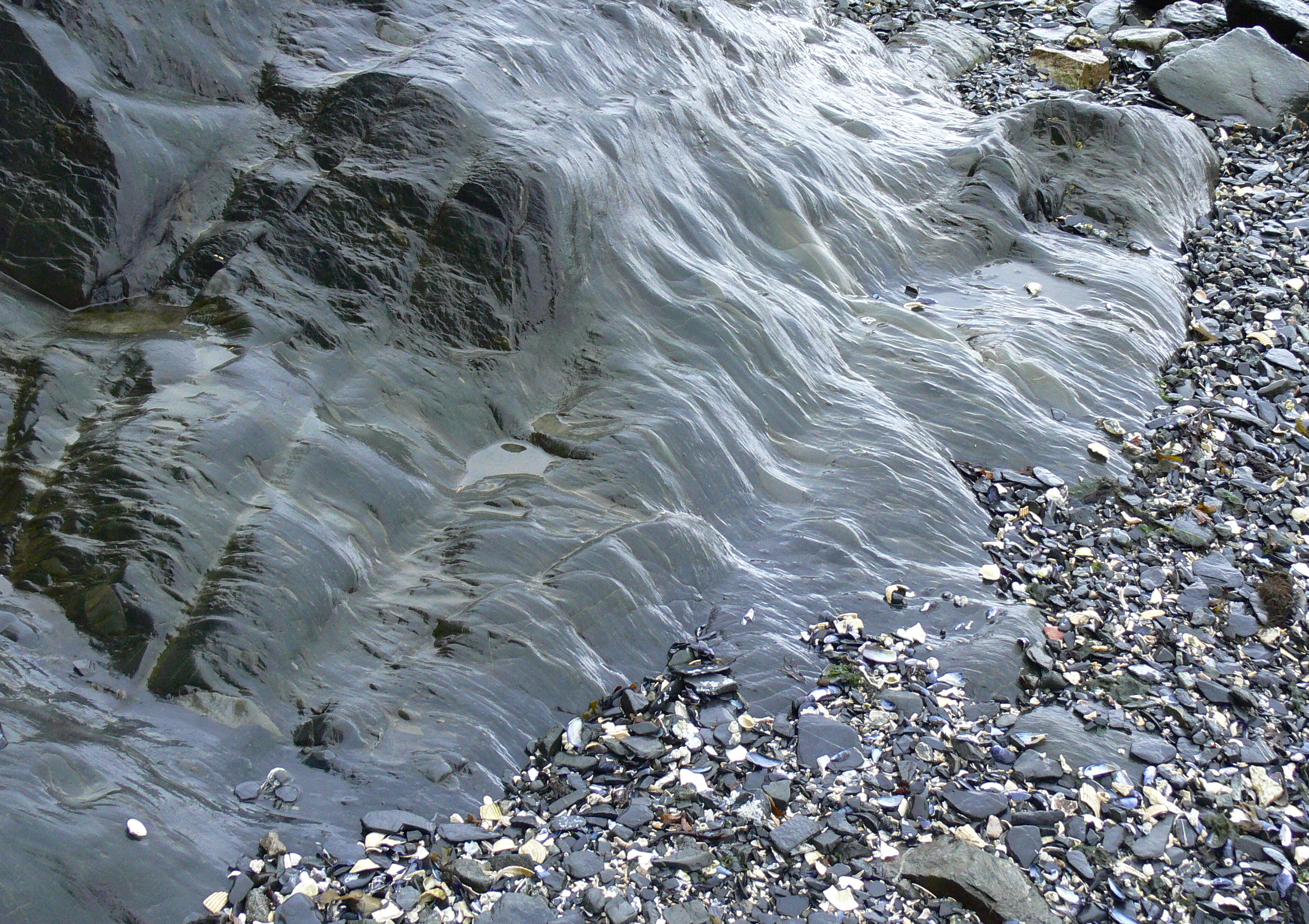
Do all children carry magic lights
revealing the beauty
hidden by everyday life?
Today mine casually points
to beach rocks passed over hundreds of times
speaks and I see
light transforming common into something
worthy of a museum.
Do all children carry magic lights
revealing the beauty
hidden by everyday life?
Today mine casually points
to beach rocks passed over hundreds of times
speaks and I see
light transforming common into something
worthy of a museum.
We find the first part of the Indian Point Trail inhospitable — just a root and mud path moving through thick blue berry brush and wind hammered trees. Aki moves with delicate steps around the hazards while I slip from one slick tree root to the next, falling from sometimes into devil club thickets or bog holes. We break for the beach at the first opportunity where low tide has set a fair table for eagles, crows, and gulls.
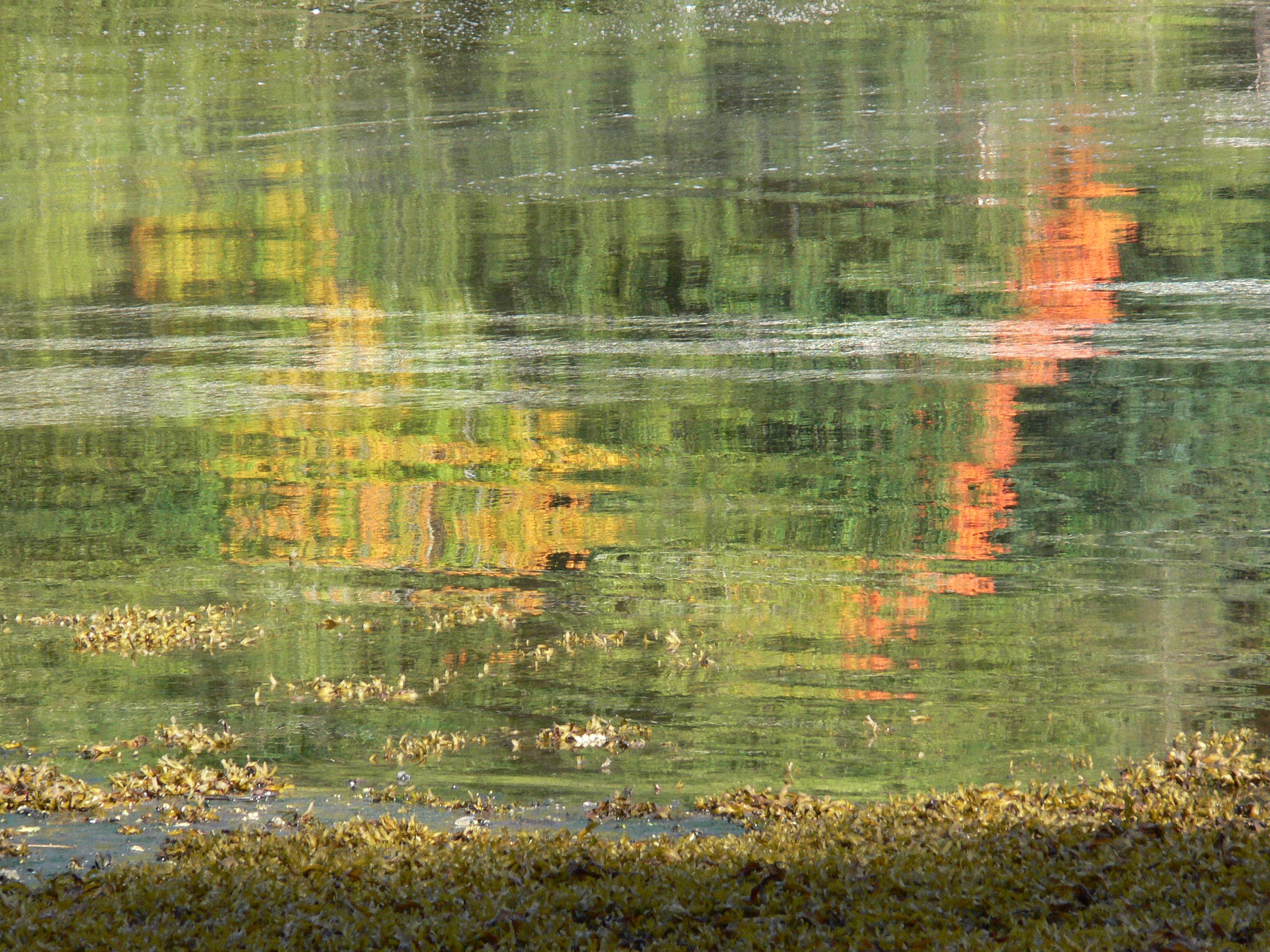
At first I watch Aki to make sure she doesn’t roll in one of the ripening salmon carcasses lying in the tidal grass. When she passes them by I turn to watch a mature bald eagle lift off from the beach. The water behind her reflects two large domestic maples, one burning yellow and the other orange. I thank the person who planted them when Alaska was a territory and you needed a boat to reach his homestead. Back then, planting a maple was an act of faith that the fish would come, the deer make themselves available, or the A.J. Mine wouldn’t play out.
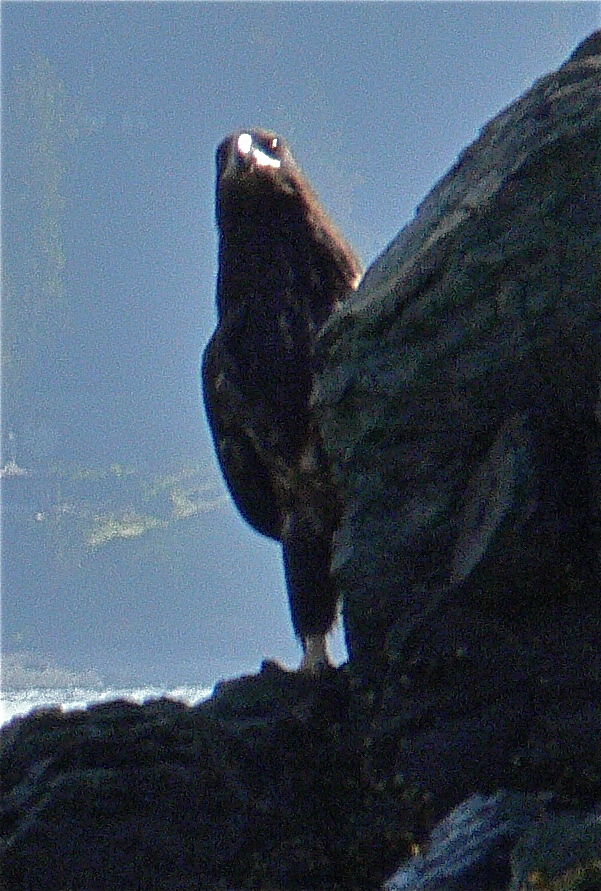
More eagles sun themselves on Indian Point. Watching us with exaggerated nonchalance, they let us get within 30 feet before lifting calmly in the air. Moving into their sun, I stand with eyes closed against the glare while Aki sniffs for sign at my feet. Nearby a volunteer Sitka Ash, having forced itself between alders and spruce, mimics the maples’ fall colors.
The rising tide has closed off the beach path so we turn into the woods. Here, it is said, his beloved buried a holy man. We see only an old growth forest and the return trail to the car. Just off it an odd shaped spruce grows alone in a small clearly. Squirrels have created a smooth and even mound beneath the tree with gnawed spruce cones. The tree rises straight for five feet where a goiter of severed limb stumps and burls has formed in the shape of a pregnant womb. Several trunks grow up from here to the forest canopy. Sunlight floods most of the forest surrounding the clearing but little reaches the tree. Turing our backs to this special tree we hear gulls complaining and the chat of eagles and enjoy a filtered view of the silverly sea.

The sun opens this September morning planting a chaste kiss on Mt. Juneau
but leaves the town wrapped in a protective wrap of gray
cut off from the orgy of light we need after a week of wet and wind
until the north wind lays us bare under the deep blue sky
we despaired of every seeing again before the Taku winter winds blow.
I just want to make the perfect cup of coffee this morning and drink it watching the day slowly brighten to a pleasant grey. All the ingredients are here –- the kettle full of filtered water, freshly ground french roast beans, and a functioning french press. All I need is time and the patience to wait a full seven minutes for the grounds to steep. It would have happen as planned if I hadn’t glanced out the window and saw the sea otter.
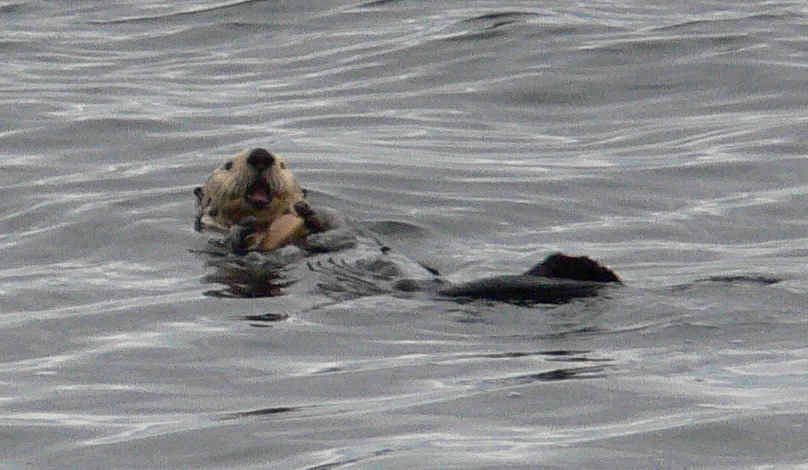
Our friend’s Sitka home fronts waters where humpback whales, sea lions and otters often feed. Past stays trained me to look often toward Mt. Edgecumbe for sea life. Until this morning, only ravens and seine boats passed by on my watch. Now, six minutes away from coffee perfection the sea otter breaks the surface near the house and starts banging away on something with a rock.
Sea otters eat on their backs, like couch potatoes who happen to be floating up and down on the ocean swell. Wanting to watch and listen and take pictures I jam down the french press plunger, pour the weak contents of the press into a travel cup and head out side. Now I can hear the slapping sound he makes trying to free food from its shell. After finishing that snack he dives back for more. I sip my disappointing coffee and wait. He pops up fairly close to shore and rises half out of the water to measure me for danger. I must pass for he is soon on his back hammering and eating away.

I am looking at a spruce that lodged twenty feet above the creek at least fifteen years ago. It would have dropped into the water to rot if the creek did not drain such a steep sided “V” shaped valley. Even so, it had to tumble on a perpendicular line to the creek and jam between rock gaps on both ends. Now it forms a tense line above the stream, mimicking a bone stuck in a dog's teeth.
Another spruce, twelve feet high, grows out of the middle of the downed logs, roots jammed deeply into the rotting wood. Doomed by the three fathoms of air between its nursery log and the stream, it will eventually destroy its source of life and fall with it into fast moving water.
Standing by the stream in a downpour I wonder at the wasted effort — a fertilized spruce seed released by its tired parent, the seed germinating then rooting in the suspended log, the resulting seedling muscling out the competition. All this for a chance to grown and live and reproduce. An Alaskan translation of the Parable of the Sower.
You see similar examples all over this rain forest. Here some stunted spruce started life in a few cups full of soil on a rocky depression then sent tough covered roots over twenty feet of granite to the ground. Nearby a mature spruce, over a hundred feet high, thrives in spite of a trunk pierced near grown level by the shaft left when its nursery log rotted away. All fight and adapt to live in this rain forest, positioning themselves to obtain enough light to live, betting on the wind to blow down a neighbor or two to open the canopy up.
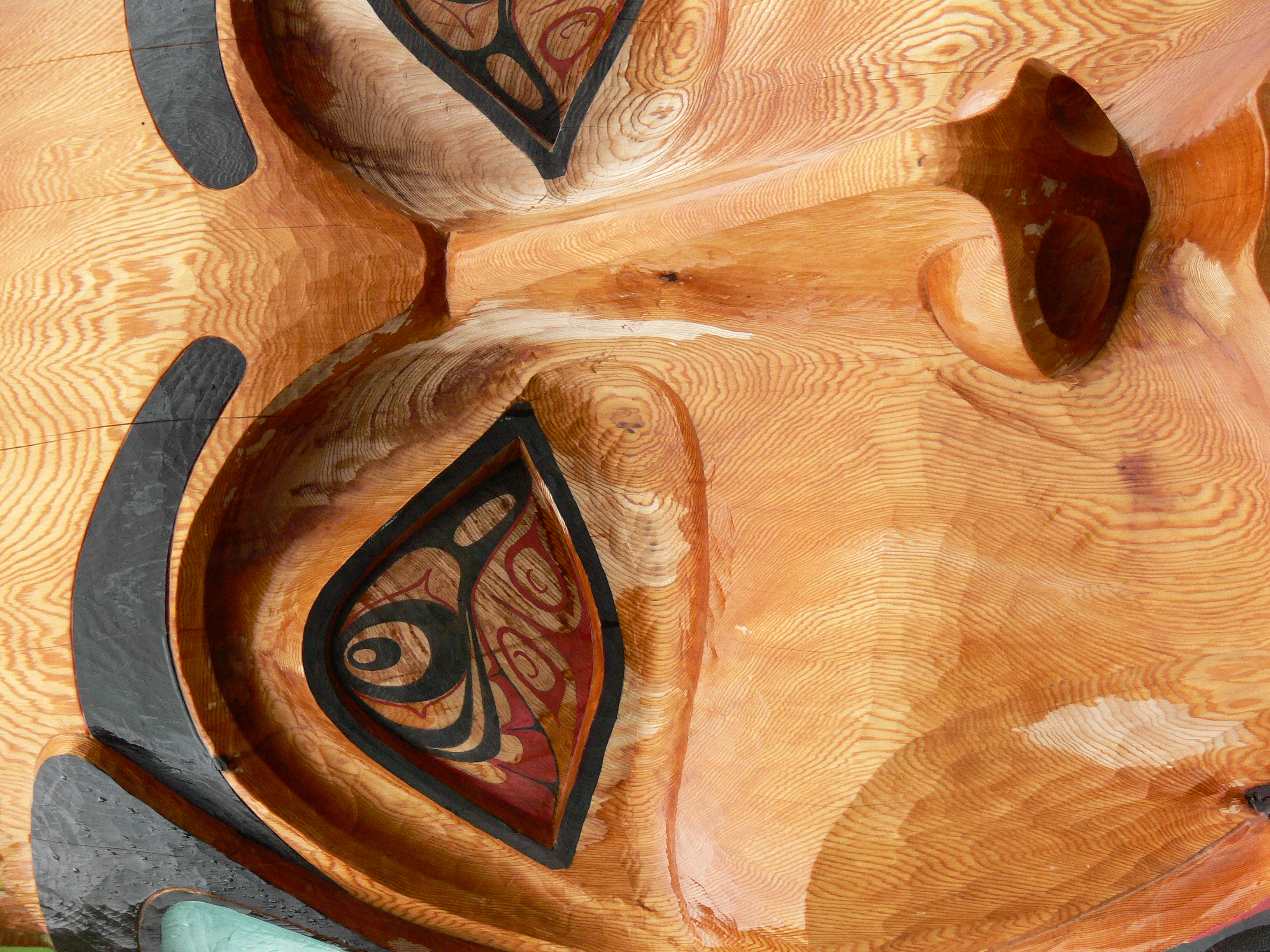
With Aki hunkered down at a neighbor's house we flew over to Sitka yesterday for a long weekend away. The rain followed us and now pounds the surface of Sitka Sound with an admirable consistency. I'm on a trail following the Indian River to Sitka Sound. On this inland stretch big alders crowd the shores. Humpbacked pink salmon occupy the river with military precision. From time to time, a platoon of them shifts position and then drops back into formation while gull screams block out all other noise.
The gulls, fat on salmon carrion know why they are here. The salmon, made simple by lust, treat the gulls like unwelcome witnesses to procreation rather than the clean up crew.
Gull noise grows as we near salt water where a new wave of salmon is clearing the barrier gravel bar to move into the stream. Most of the birds feed on the recently deceased but some burst suddenly into a short upriver flight, land on the water and ride the current back the their starting point. One turns tight circles on the water during the float.
A blue heron, apparently worn out by the gull’s antics, slowly climbs to a tree branch high above the river for some “me” time. Following his example I follow a trail of totem poles that lead through a thick old growth spruce forest toward Sitka. The trail bisects an area of destroyed trees being colonized by a new generation of spruce. The downed trees had solid form when first nurseries for the new growth. Now they have rotted to pulp and then eroded away from the roots of the new trees, leaving them free standing, apparently supported by air.

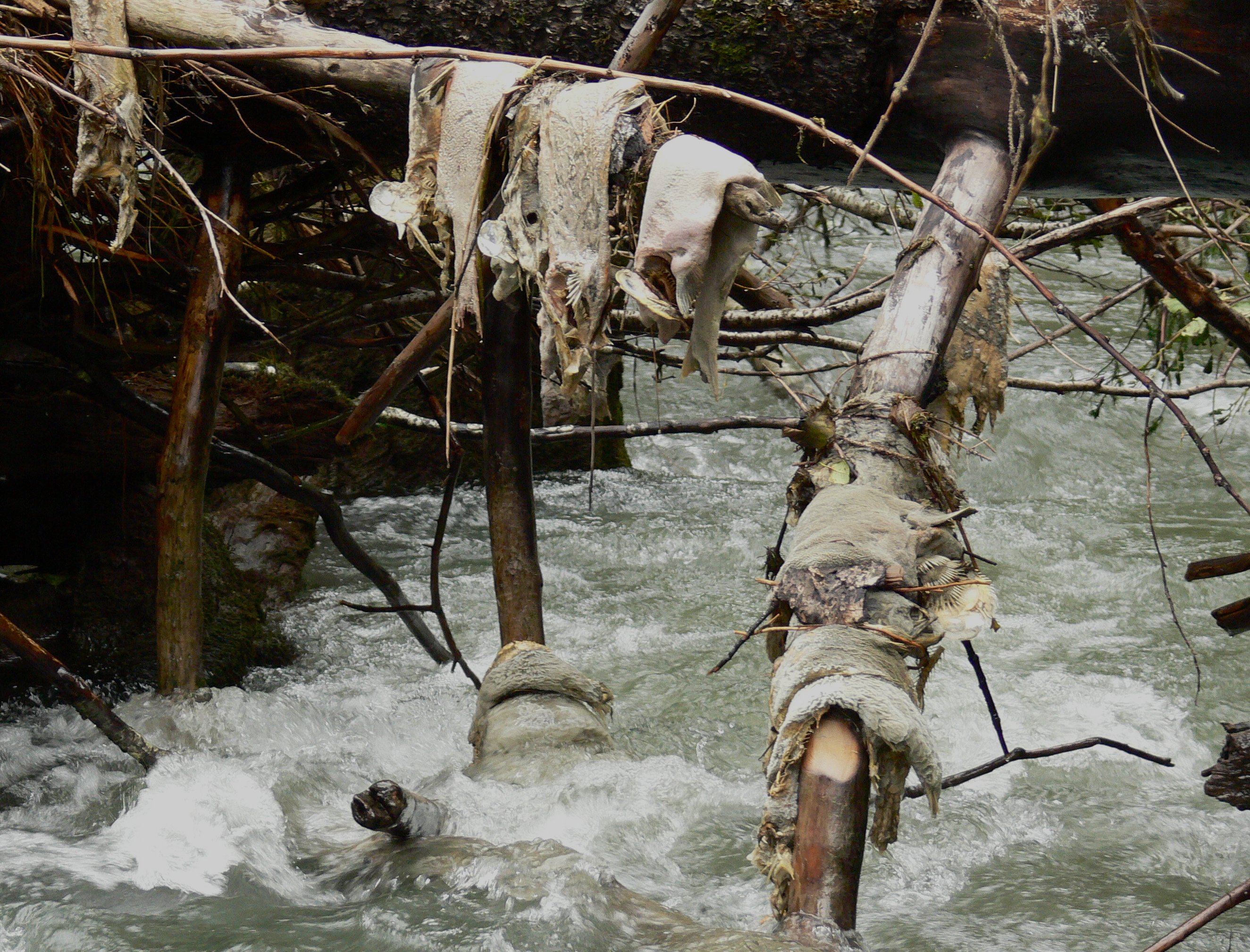
On the Kowee Creek its all over but the dying for the pink salmon. Aki and I are looking for Silvers fresh from the sea. We lose hope after passing some nattily dressed fly fishermen on our way downriver who tell us they had no luck.
The trail runs through old growth spruce woods to a large tidal meadow. All drained by the creek. The beautiful woods smell of death. There are no birds and only one set of fresh bear prints crosses the trail just before we make the meadow. Salmon carcasses unmolested by bear or bird hang tangled in the creek’s many log jams. Some hang in neat lines on drift wood as if by a bear preserving meat for the winter. Killed by a recent rain driven flood, the fish ended up on the drift wood when the water receded. The absence of eagle and raven puzzles me. Salmon death camps are usually their scene.
A hunting kestrel flies over us when we break into the meadow. At first we can see well over thigh high grass and wild geraniums, I pick a horse trail heading toward the lower river and soon enter a forest of 6 foot high fireweed stalks, having already flowered and released their down like seeds into the wind. Now they stand flaming red, providing a gift of fall color before dying back to their roots.
Our fireweed forest ends abruptly at the river bank where we stumble on raven chasing a belted kingfisher. The kingfisher lands on a nearby snag, sees us, and flies off with an indignant squawk. In the brief moment before his exit I see the highlights in his oversized eye and stunning blue, white, and black coat. He is the most beautiful bird in our forests. When he flies off I notice piles of freshly chewed salmon carcasses on the trail and bear tracks everywhere. Aki seems relaxed so the bear must be resting. We drop down onto a gravel bar so I can fish.

At first we see only languid pink salmon now drained of color. My footsteps spook one and he swims onto the gravel to our feet. While Aki gives it a cautious sniff as I lift it back into the water. A splash sounds just downriver followed by many more. Sleek silver salmons start leaping around the edge of the eddy I am fishing. Now eagles and ravens join us in the surrounding trees. The ravens try to give me advice on how to catch the salmon but it is no good. The silvers move on upriver as does the raven.
While I fished Aki found some bear poop to roll in. The smell punished me all the way home in the case. Aki paid later by submitting to two baths.

Aki loves this trail for its abundance of robins, thrush, and annoying squirrels. I appreciate its gradual descent through reddening blueberry bushes and the subsequent drop through old growth spruce to the sea.I didn’t expect to make any startling discovery on this walk over well known ground. For some reason I look up just past the blue berry patch and notice for the first time a world of hanging moss just above the trail. Shimmering droplets of rain cling to the tips of the nearest They fill the negative space between tree branch and twig with a lacy screen, like sheer fabric softening the decolletage of a middle aged woman.
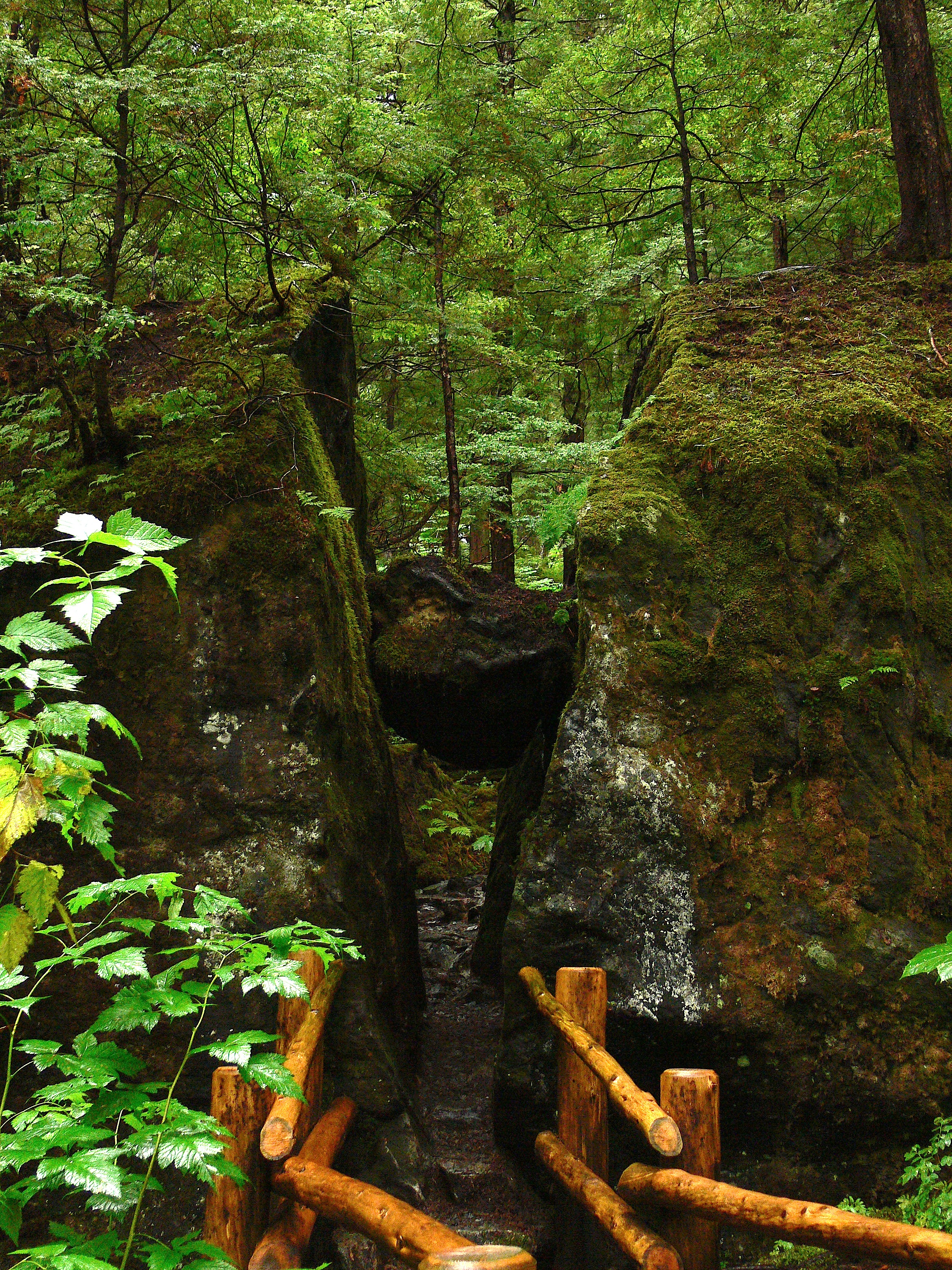
I’m surprised again when dropping deeper into the old growth forest where spruce trees rise over a hundred feet above the trail. No moss hangs here. Looking down I begin to appreciate the strange shapes formed where the spruce fasten themselves into the ground. Aki drew my attention to one when she leaped over a thick tree root submerging itself at a gentle angle into moss covered ground.
Some of these spruce rise as straight as a grade schooler’s drawing, swelling only slightly just before entering the ground. Most, having started their life growing out of the trunk of a downed ancestor formed forked trunks. If they also grow up near a glacial erratic they often wrap at least one foot thick branch over the rock before sending it to ground. Of all the organic sculptures scattered around this forest my favorites are the ones where the tree truck frames a large rock with the expose side as vertical as a flat screen television. Aki finds one of these for me but my camera can’t capture its beauty on this dark day. I have to settle for a tree forming a moss covered settee on the forest floor.


Looking at this pile of grounded leaves
I wonder why a bear would shake
a fruitless tree
Yesterday its cloak
purple red and orange
offered the only brightness
in a day of gray
Today just a threadbare chasuble
covers its bones
Did he climb it for safety
or jostle just to stand tall
through a colorful shower of leaves?
You never know with bears.
Day three of a heavy rain storm and Aki and I are on a mission to close the circle through these troll woods. We like this mossy place when it rains but the best path through it ends at the Moraine Glacier Trail. The Park Service closed that trail because it crosses Steep Creek, now thick with spawning sockeye salmon. The salmon draw bears who use the moraine trail to get to their meat. With the moraine trail closed we need a new way back to car which doesn’t involve back tracking. Aki hates that.
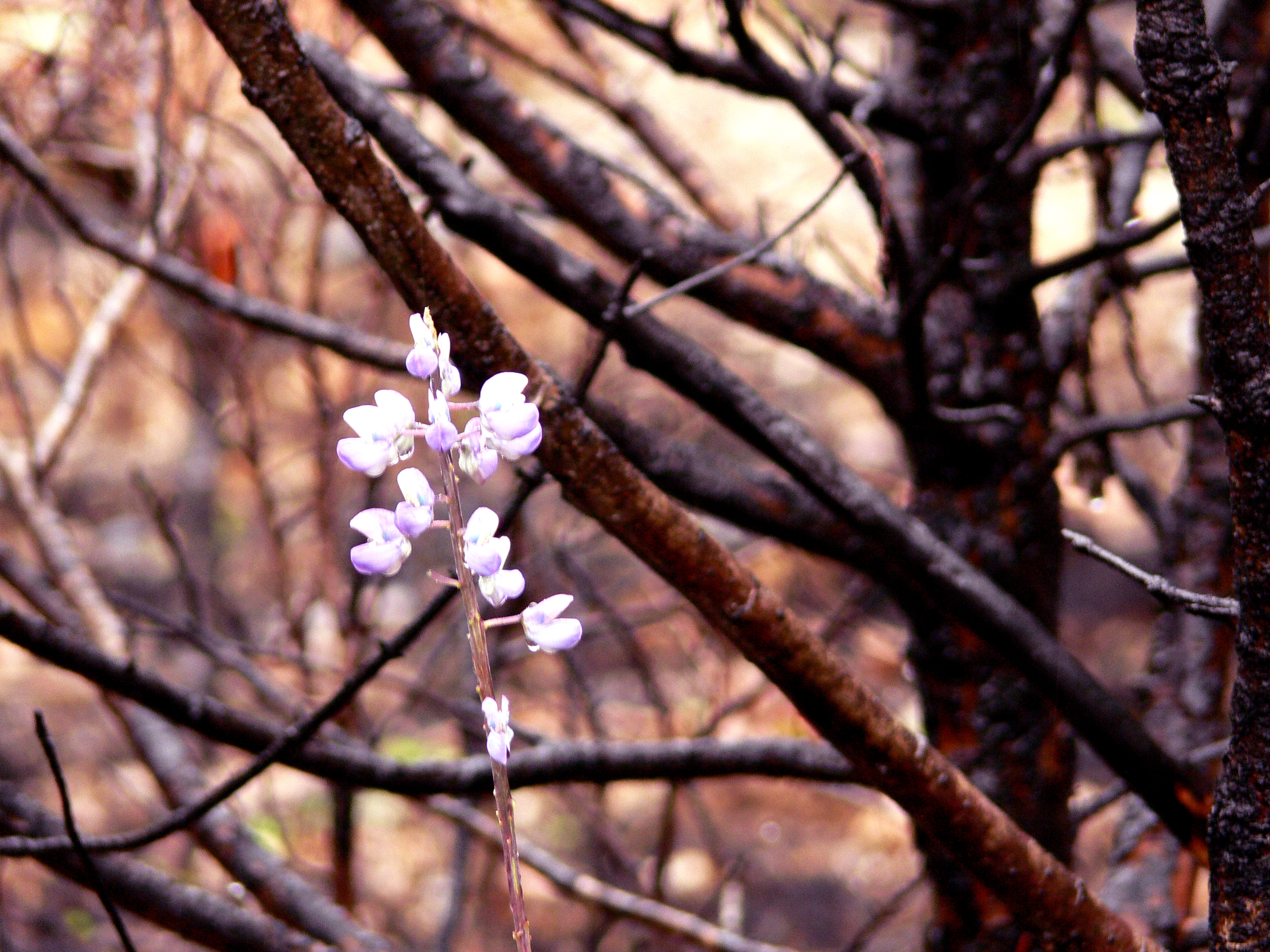
On the way we pass the patch of burned out forest that yielded unexpected beauty earlier this summer. Lupine now recovered from being burned to the soil line display pale lilac blossoms. Their brothers and sisters on undisturbed ground have long since gone to seed and I wonder if these survivors would have been better off saving root strength for next spring. We’ll know then, if theirs is a foolish or wise choice but for now it’s enough to enjoy their small gift of spring while leaves around them fall.
We enter the true troll woods soon after the burn and discover a well used trail forking right from the one we usually take. A perfectly shaped poplar leaf, its deep green giving way to a wave of yellow marks the junction. We follow a series of these transition leaves up the new trail. I start looking for a witch’s house and remind myself not to let Aki eat the gingerbread if we find it.
The trail leads past trees freshly dropped by beavers and across a narrow but deep channel between two ponds. After that it is marked with mushrooms, not yellowing leaves and peters out when we cross another narrow channel. Aki is willing to go on for she fits easily under the alder brush now blocking the way for me. Turning around I realize that we have been walking on the beaver’s logging roads that cross the channels they prepare for moving wood product to their food pile. I can hear cruise ship buses rounding the visitor center parking area so we have come close to closing the circle but not close enough. “Sorry little dog,” we have to turn back.

 Walking with Aki