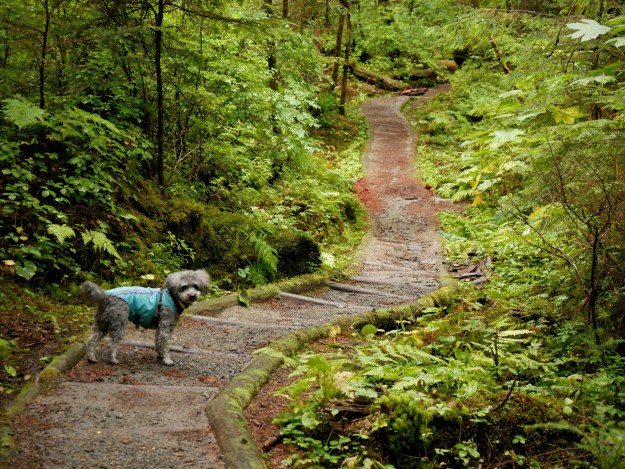
This morning I am a little overwhelmed by forest greens. Aki and I are walking through a protected old growth forest that is not surrendering to fall. All life has already drained from the line of cow parsnips that buffer the forest from the sea. Atop their dead-brown stalks, the plants’ large flowers have been replaced with circles of seeds. But under the forest canopy blue berry bushes still display fruit on their summer-green branches.
 In a few weeks, scoters and ducks will work the waters just offshore from the beach. But now the sea is empty and only a brace of gulls walk the beach. Aki keeps her nose down, hunting for sign. But we only meet one dog on the walk.
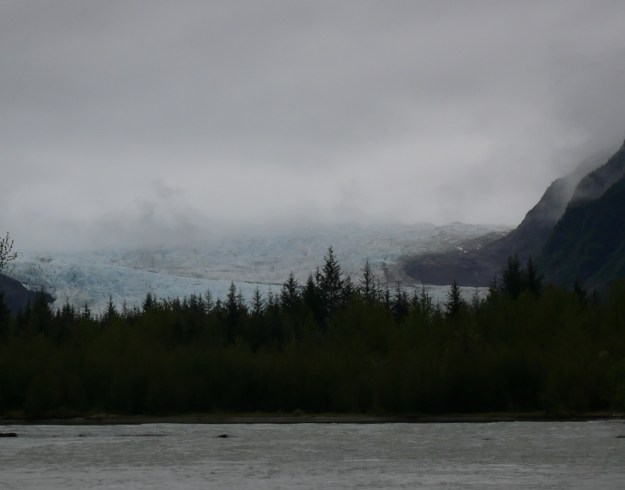
 Around False Outer Point and across Gastineau Channel a remnant of Lemon Glacier hangs above Costco and the state jail. On most days it looks no more remarkable than a snowfield. But there is something about today’s light that turns its ice a pastel blue. In the Alps or even the Canadian Rockies, there would be a good trail leading to the hanging glacier. But here, its just another sign of the warming earth.
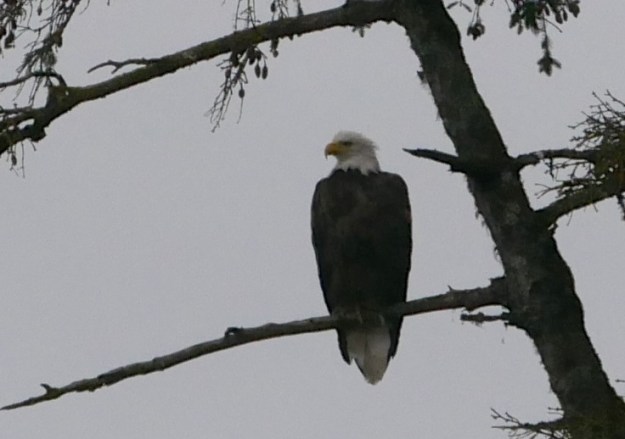
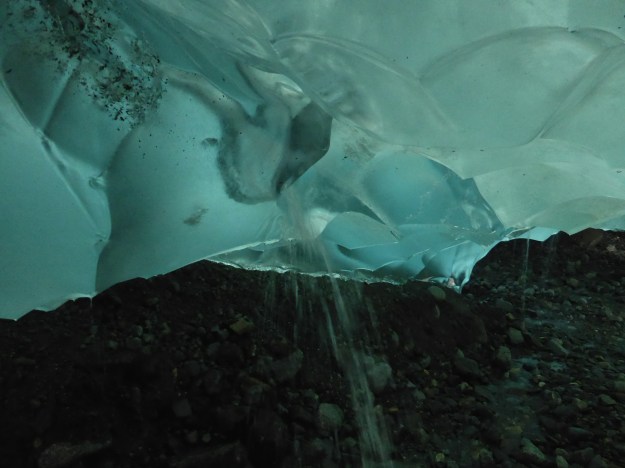
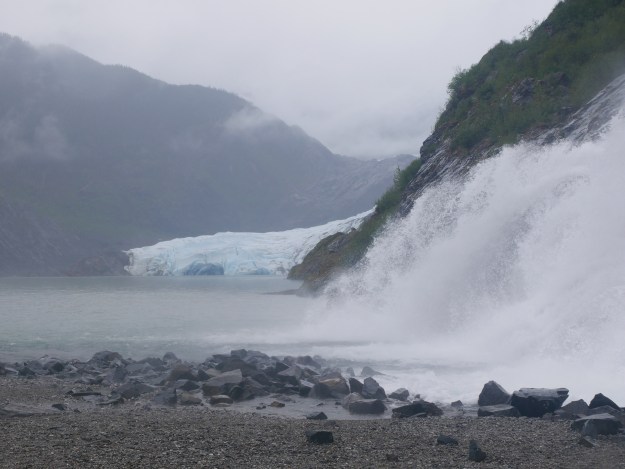
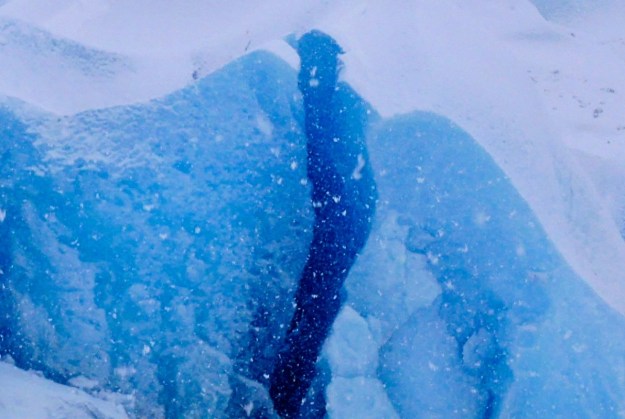
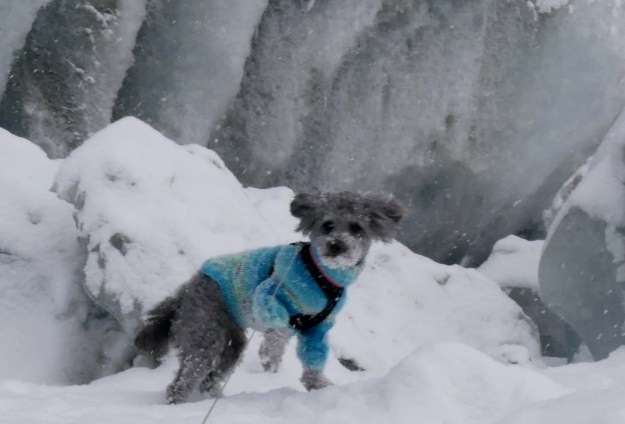
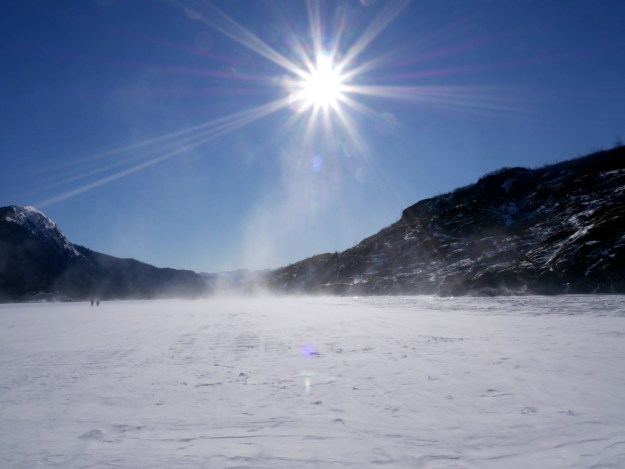
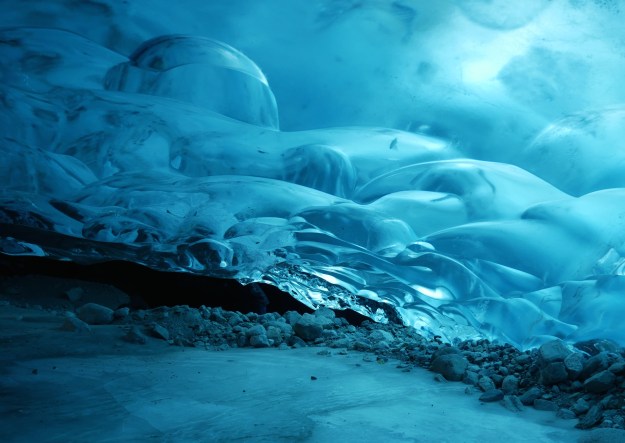
 The roar of Nugget Falls blends with the complaints of gulls that appear to yell at us from nurseries formed on rock recently revealed by the retreating glacier. We have no problem finding a landing place near the glacier’s face—another sign of the retreat. A well-trod gravel path leads to the mouth of an ice cave. Last winter we needed ice cleats to walk on the cave floor. Today, it is ice-free gravel. Last winter we could wander down at least two tunnels. Today, one has collapsed and we have to duck under a low roof in the main chamber.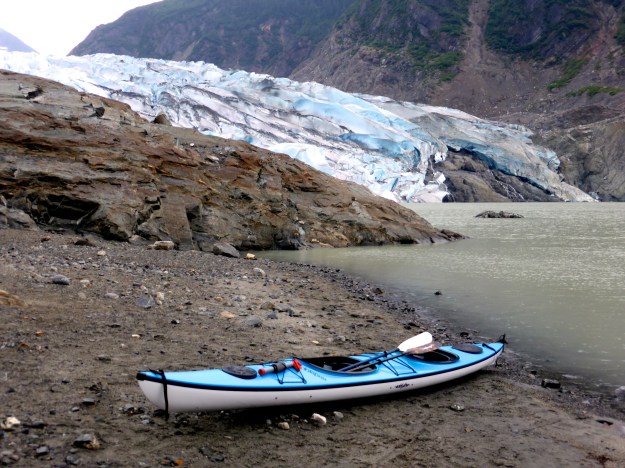


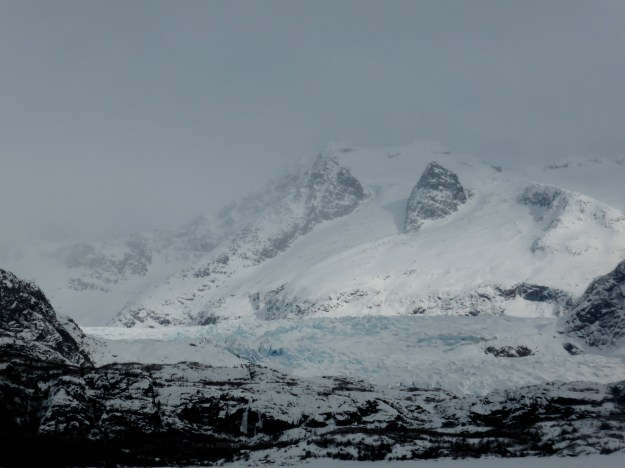
 It’s the last day of writer’s school in Skagway. Students and teachers, including Paul Theroux are in a White Pass narrow gauge railway carriage that rattles toward the Laughton Glacier trailhead. The conductor has stuffed all the writers into one carriage where the sound of thirty or forty conversations competes with the grumbles of the old carriage and the disembodied voice of a tour guide giving the railroad’s history.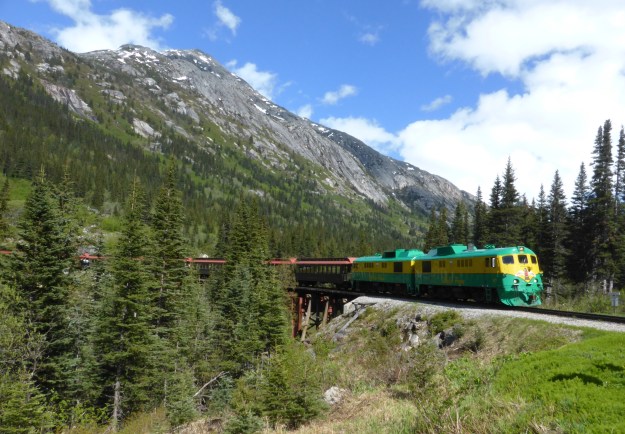


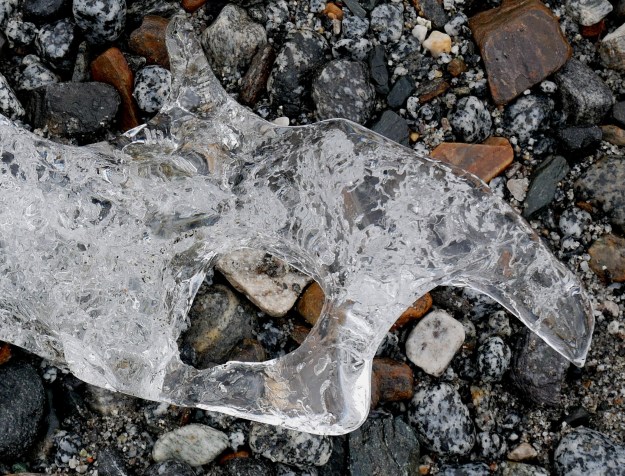
 I’ll pass the pilgrim and climb onto the shrinking toe of the glacier. The sun will return. I will hold sharp edged rocks just being released from glacial ice that carried them from mountaintop to my feet. “Look at these rocks,” I will shout to a much younger writer wearing heart-shaped sunglasses. But magic will be in their history, not their appearance so she will probably thinks me weird. Higher up the toe, I will fall into a conversation about wolverines: whether the grumpy loners are magic or just thugs. “Magic” will become my favorite word for the day.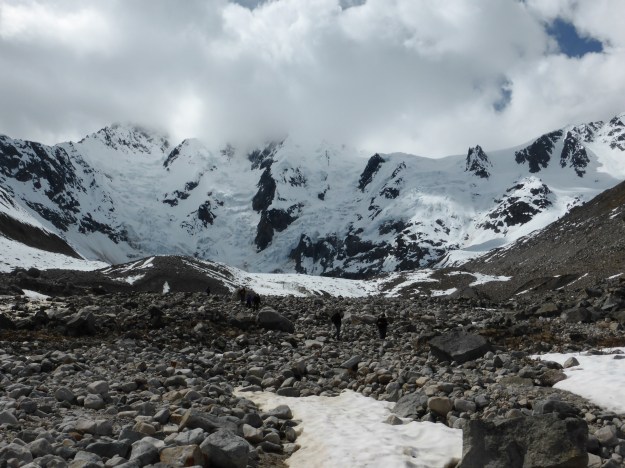








 Walking with Aki