Category Archives: glacier moraine

Teenagers

Aki and I are following Fish Creek to its mouth. The trail takes us along the spine of a spit. Two eagles watch us pass from roosts on the other side of the creek. A strong flood tide is quickly expanding the creek, covering the dead-grass meadow bordering it. 
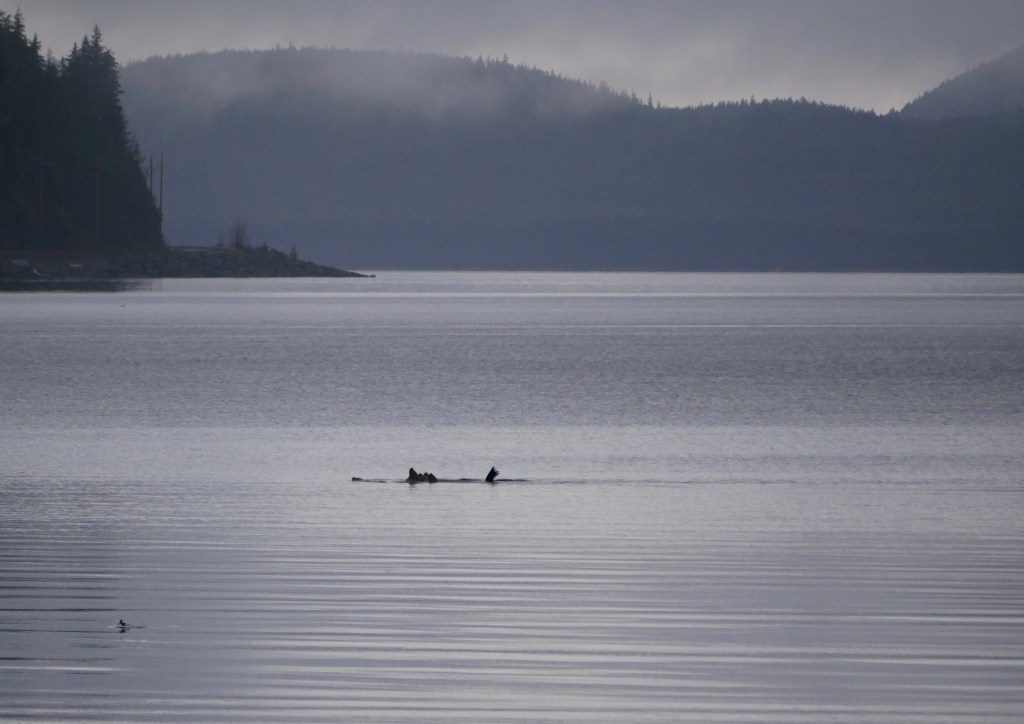
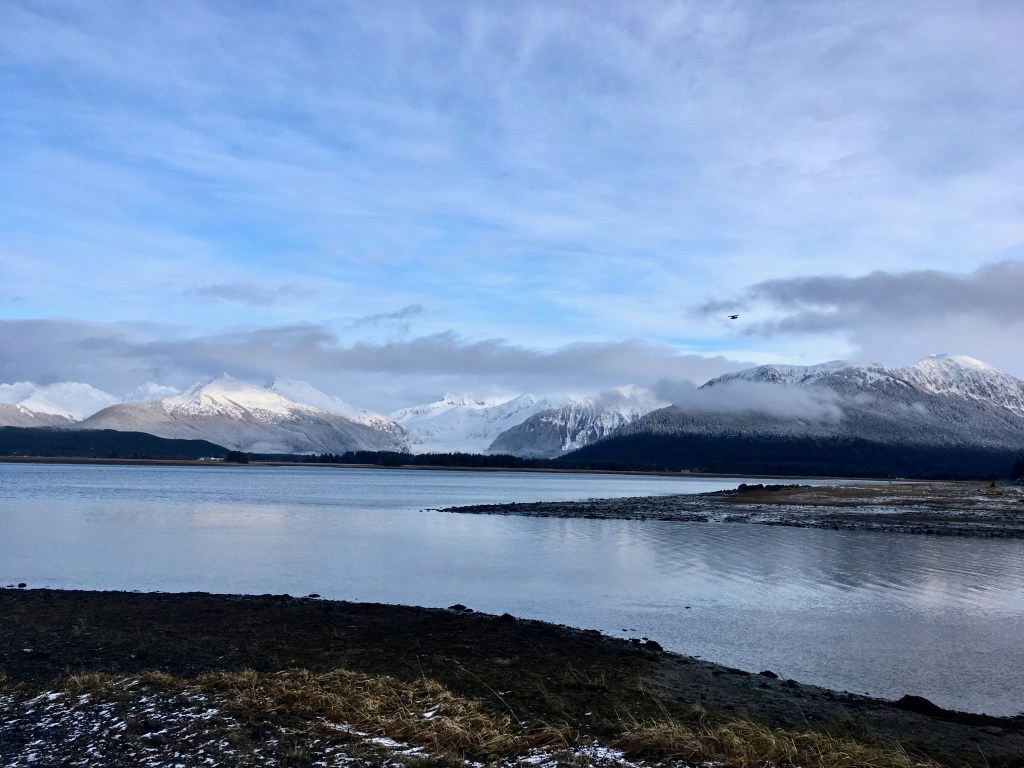
            While Aki investigates the base of a cow parsnip stalk, I look seaward, hoping to see the Chilkat Mountains on the west side of Lynn Canal. I can make out Admiralty Island but clouds hide the Chilkats. In the foreground something that looks like a half-submerged drift log is moving around Fritz Cove at an impossible speed.  With the help of my telephoto lens, I figure out that my log is actually a gang of adolescent Stellar sea lions.  

            What I took to be a blackened root is actually the fin of a reclining sea lion. His buddies swim around and under him, sometimes jamming their heads together only to explode away. Another eagle watches the sea lions with what could be a judgmental expression on its face. 
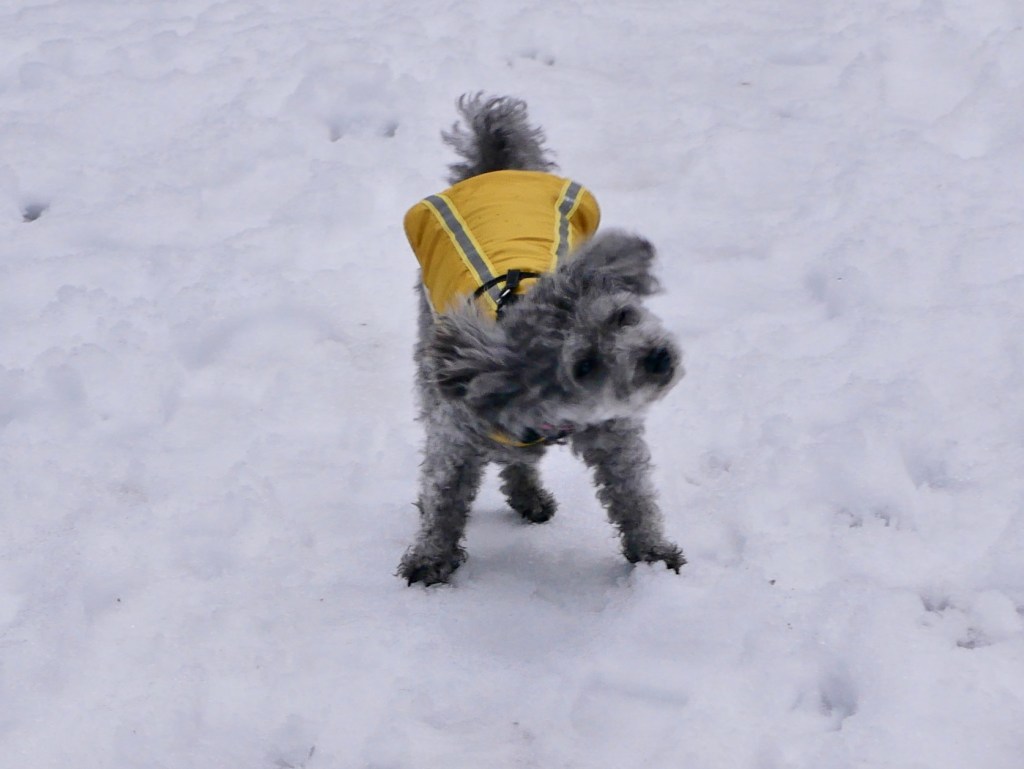
Little Shepherd in the Snow

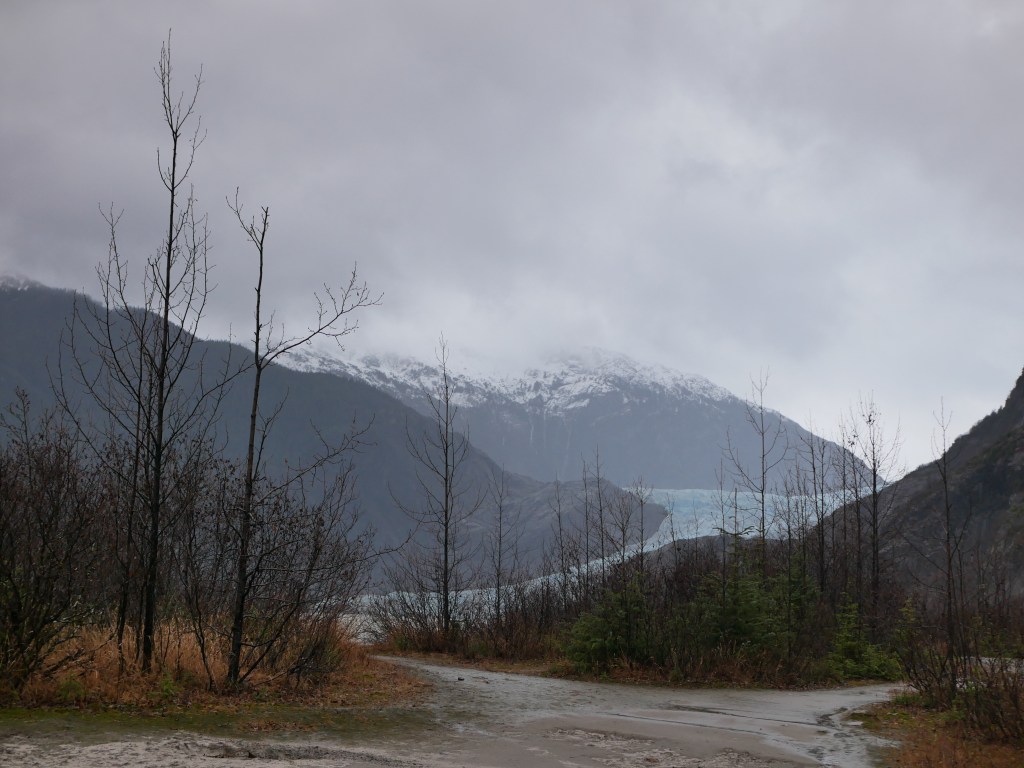
Aki and I have guests this week. One is Lulu, a low-slung dog that is struggling to walk on the snowy trail to Nugget Falls. Aki is more than happy to wait for Lulu, serving as her gentle shepherd. We are walking over glacial moraine in the snain (snow mixed with rain).

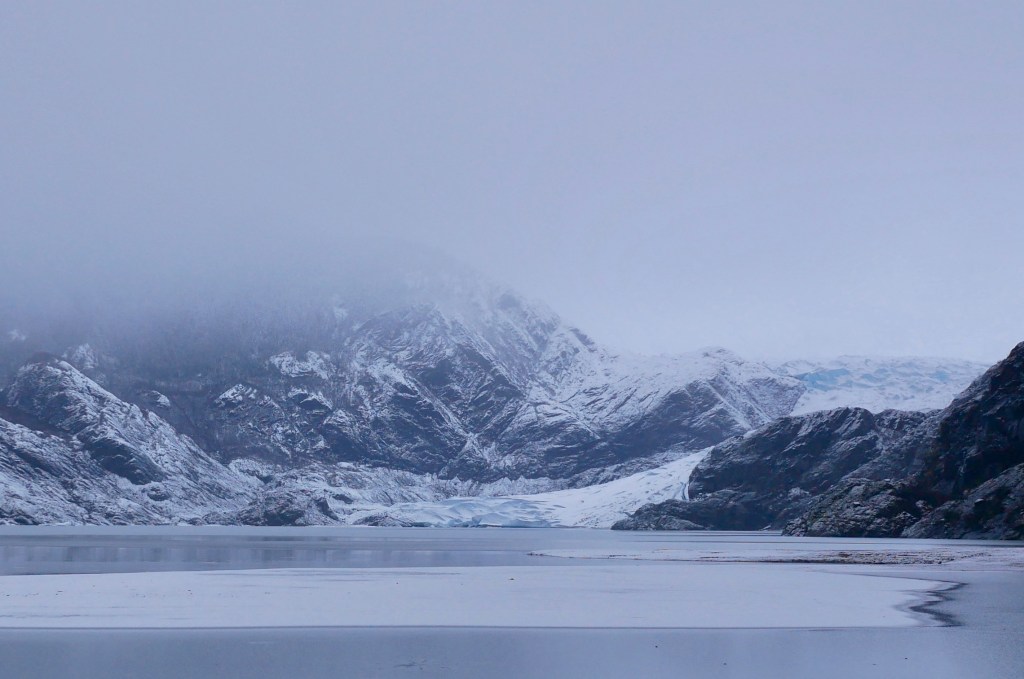
            It is snaining in Downtown Juneau too, where Aki lives. But snow no longer covers the street or sidewalks. Low clouds hide Mt. Juneau and the Douglas Mountain Ridge. On the moraine we can just make out Mt. McGinnis. But the clouds hide the mountains and towers that rise above the Juneau Icefield. Snow covers much of the glacier so it glows white, rather than ice blue. 

            When we reach the falls, we are hit by a wind channeled by the mountains down the Nugget Creek Valley. It carries mist from the falls that would soak the little dog and I if we stood too near. Aki avoids the mist. She is already cold enough to shiver when not moving. 

Troglodytes on the Wetlands

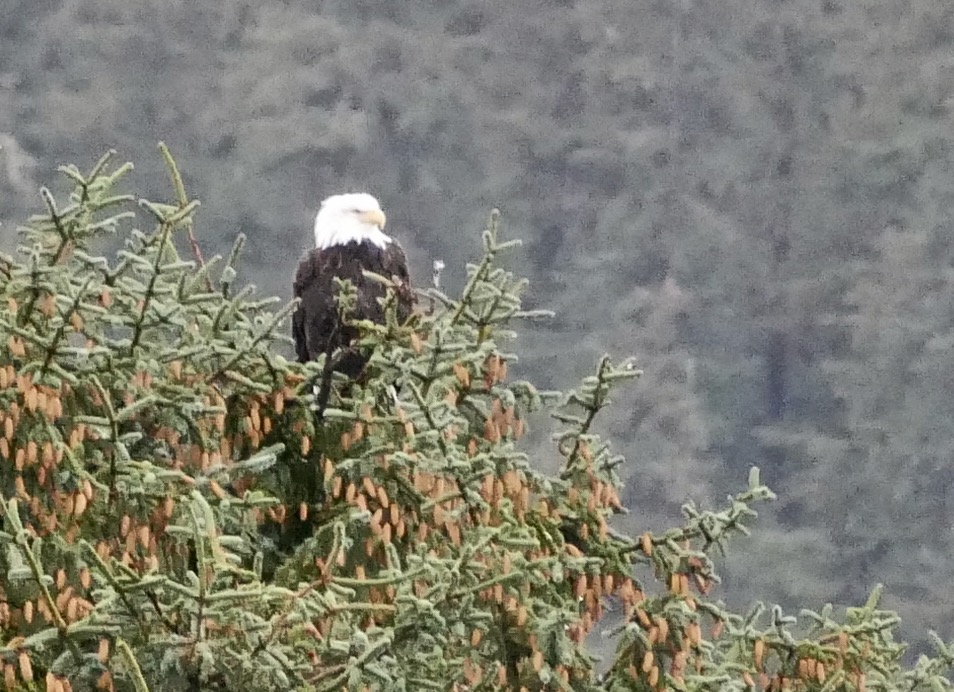
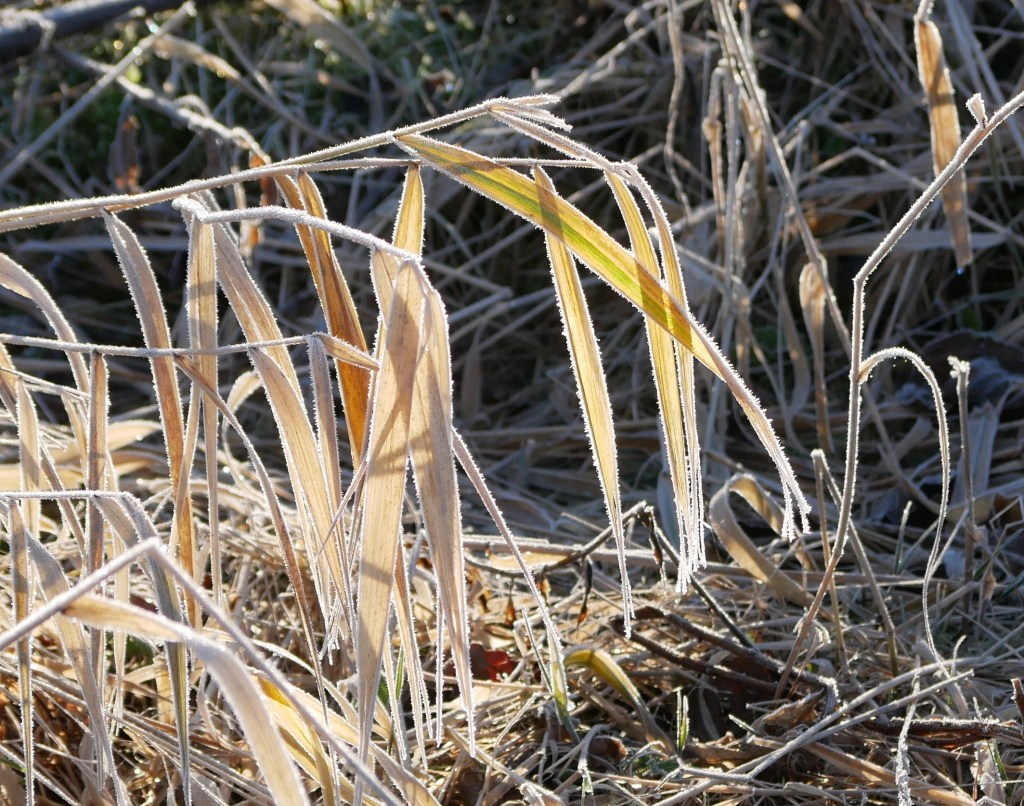
This day after the winter’s solstice, Aki and are exploring a new trail across the wetlands. Expecting more hours of gray, we are surprised by sun. It makes us squint like troglodytes. The wetland grass looks trampled, crushed down by now melted snow. Dead-brown stocks of cow parsnip and driftwood are the only vertical things on the wetlands. 

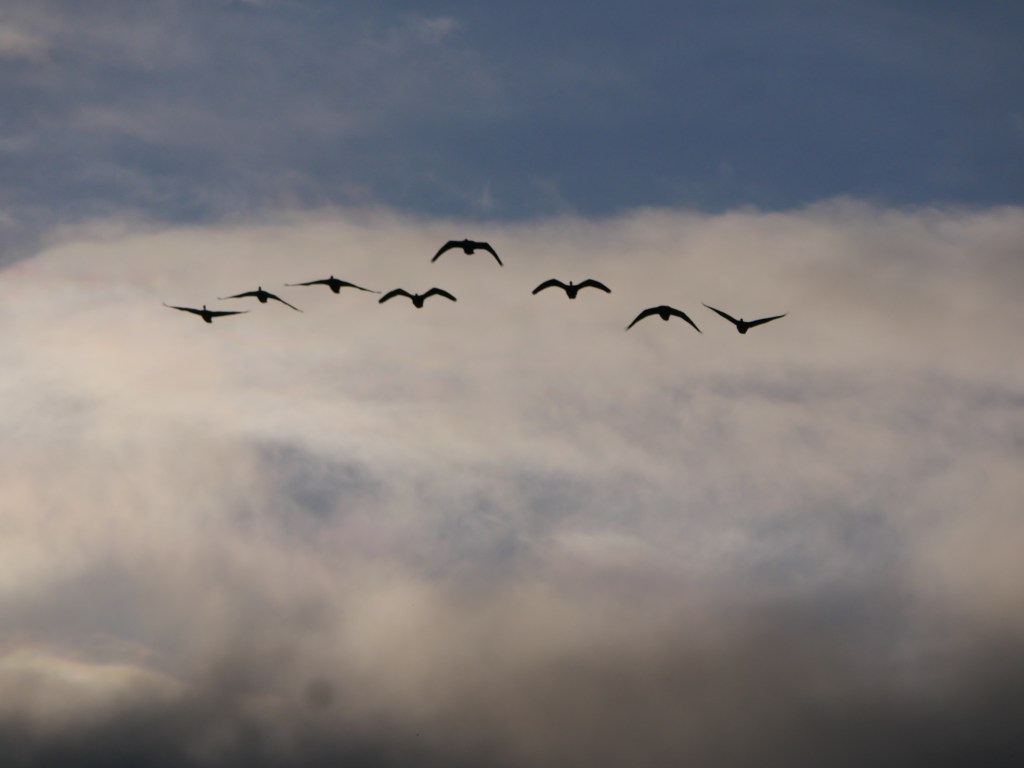
            The flocks of sparrows have disappeared. We can hear the resident gang of Canada geese on the other side of Fritz Cove. Later something will flush them skyward. They will fly over our heads and to touch down near where the spruce forest touches the meadow’s edge. 

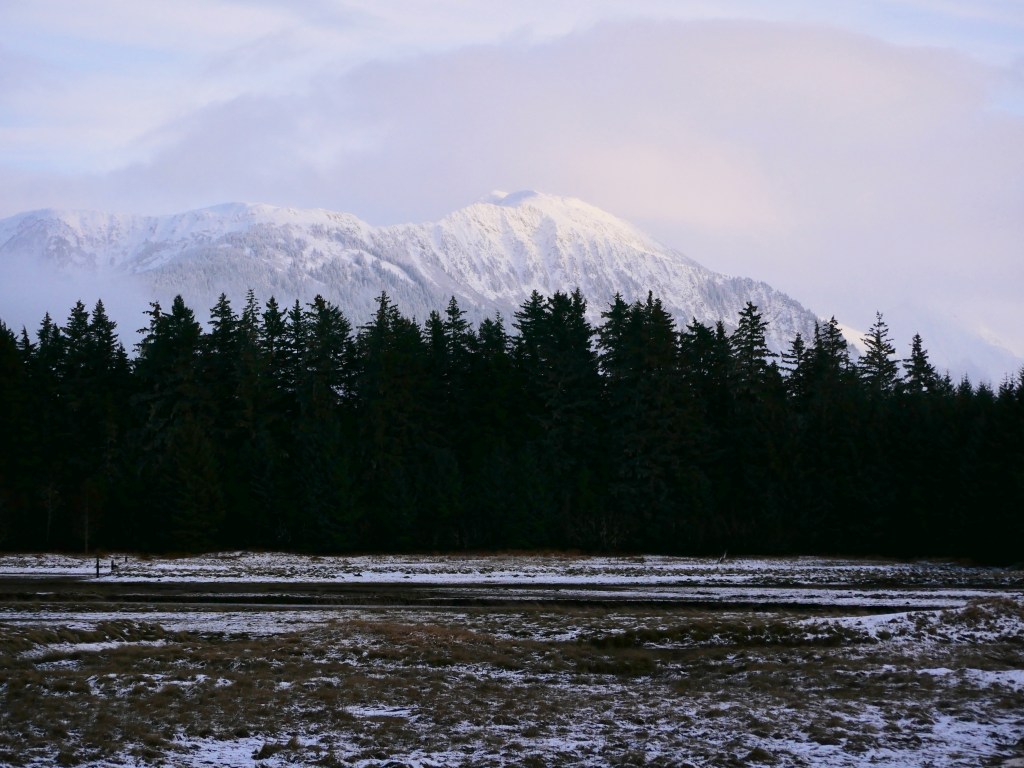
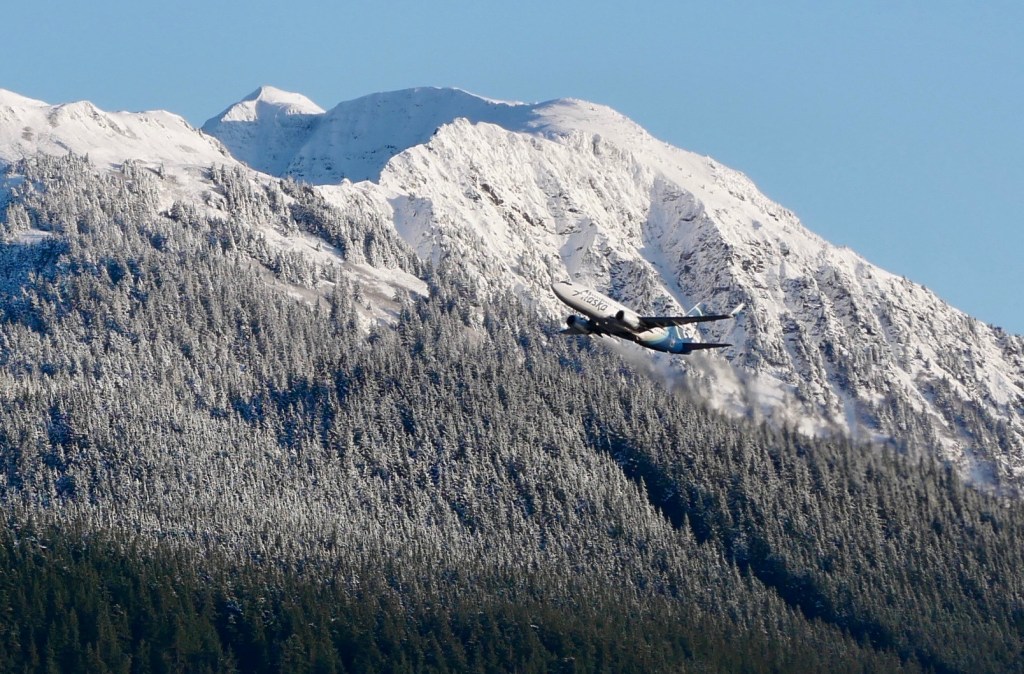
            We reach the river and follow it towards its mouth. A single merganser duck fishes the river. Only the airplanes on approach for landing break the silence. Turning around to watch one glide over the wetlands, I am surprised to see Mt. McGinnis emerging from dissipating cloud cover. It is over-bright in the morning sun, like it is trying out for a role as a minor winter god.  

Remembering Romeo

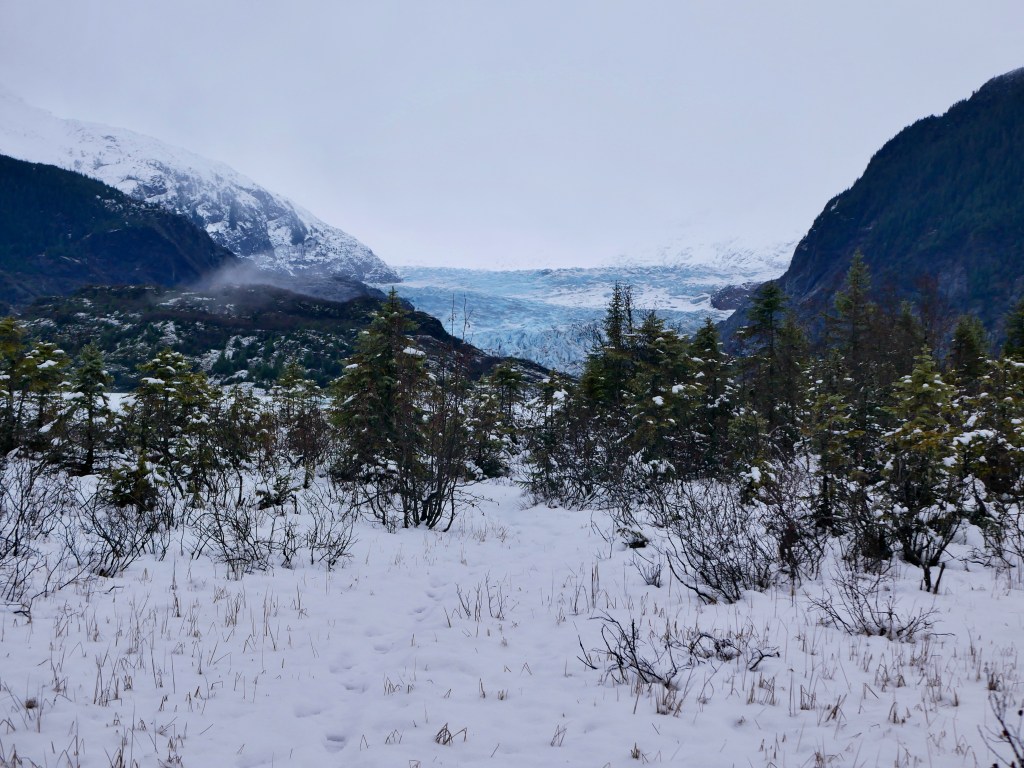
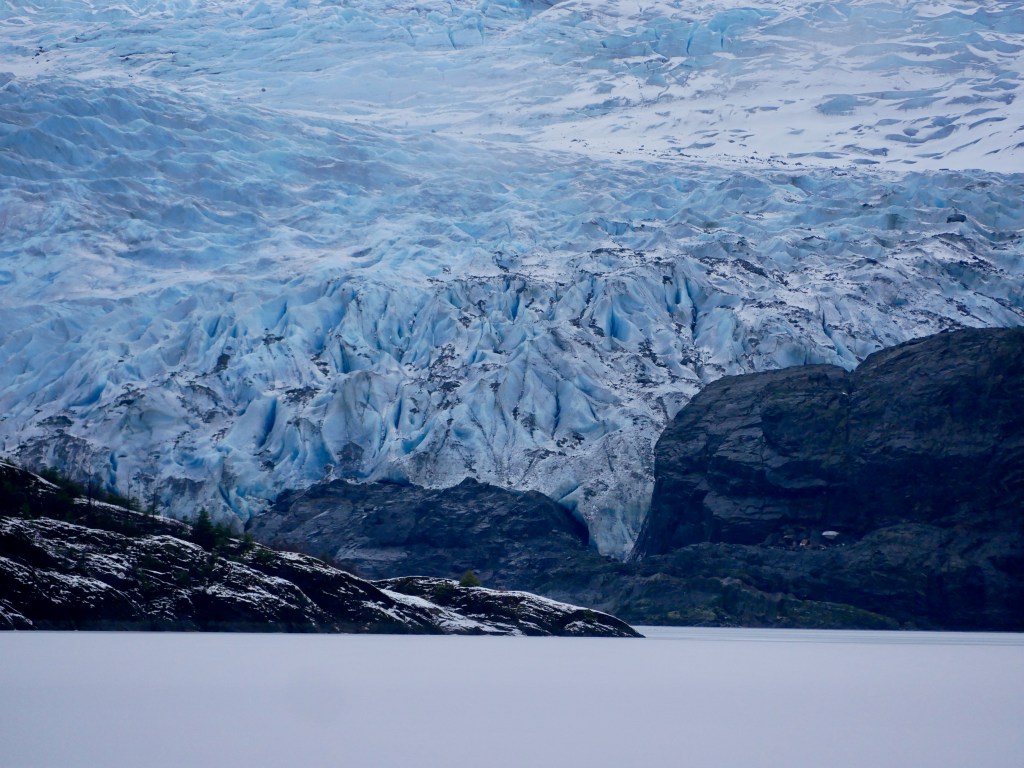
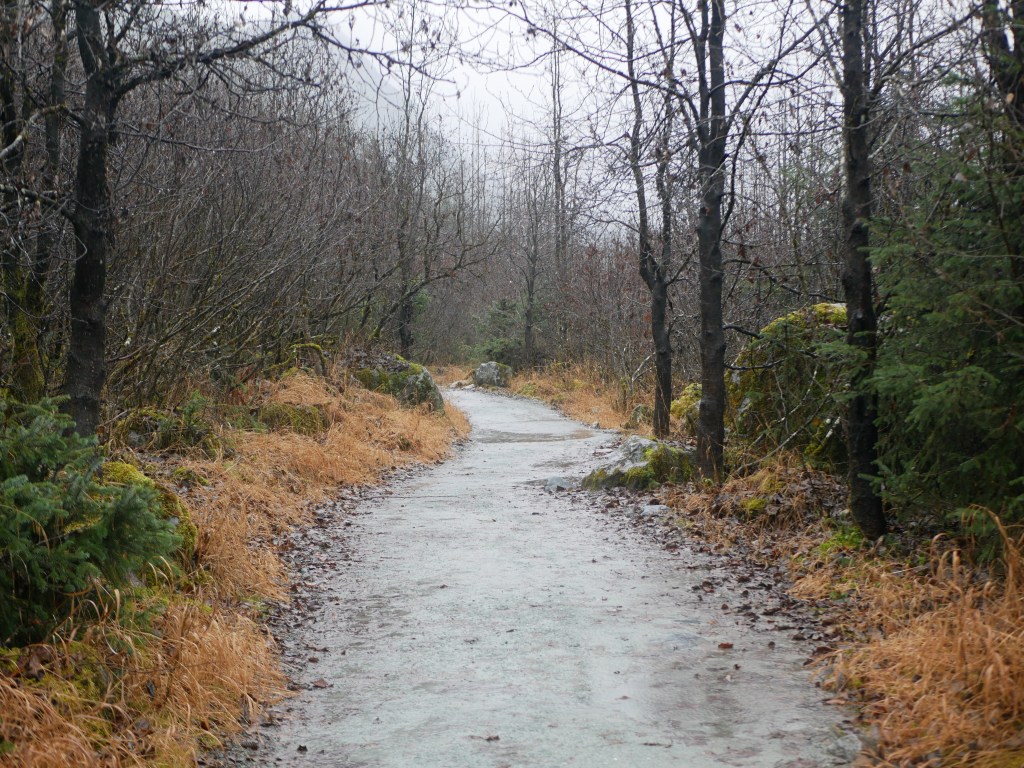
Aki is nose down, snuffling her way along a moraine trail. Her paws punch inch-deep holes in the snow as we make our way over ground still rebounding from the time, not so long ago, that it supported the weight of a retreating glacier. 

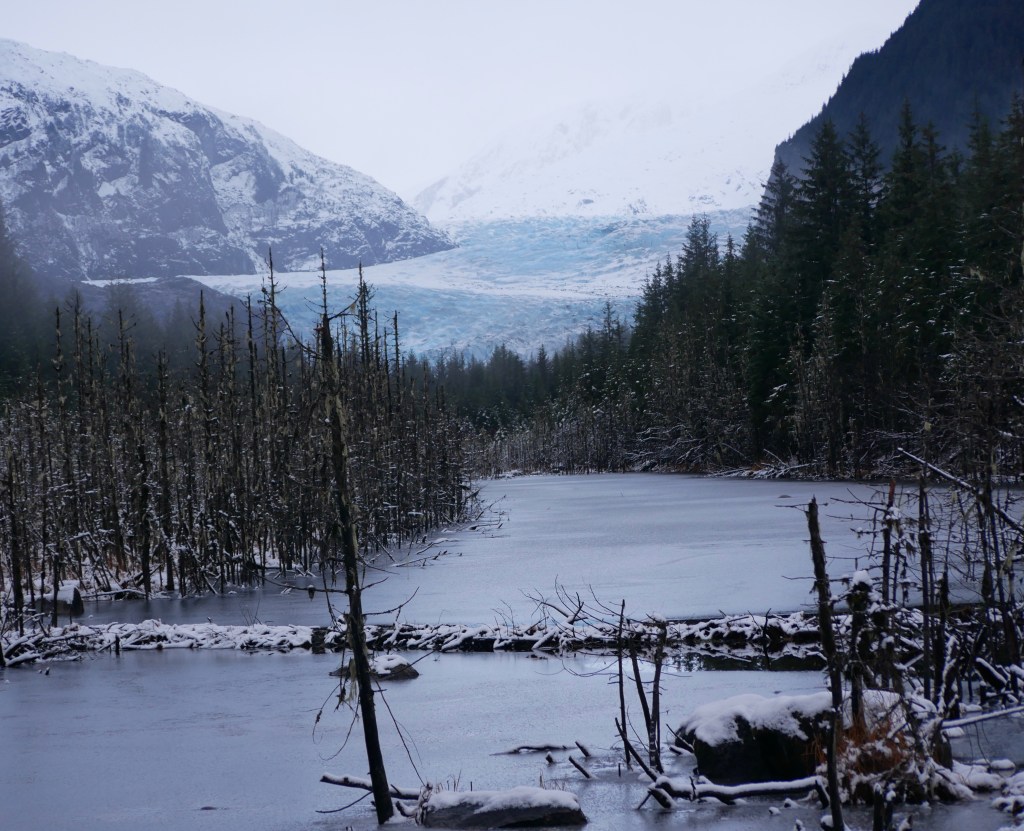
            In s normal winter the little dog and I would be in danger of slipping on icy or crusted-over snow. But the stuff covering the moraine trail is soft and yielding. We pass the edge of a beaver pond covered with a paper-thin layer of ice. Water still pours over the beaver’s dam where some guy tried to dismantle it. 

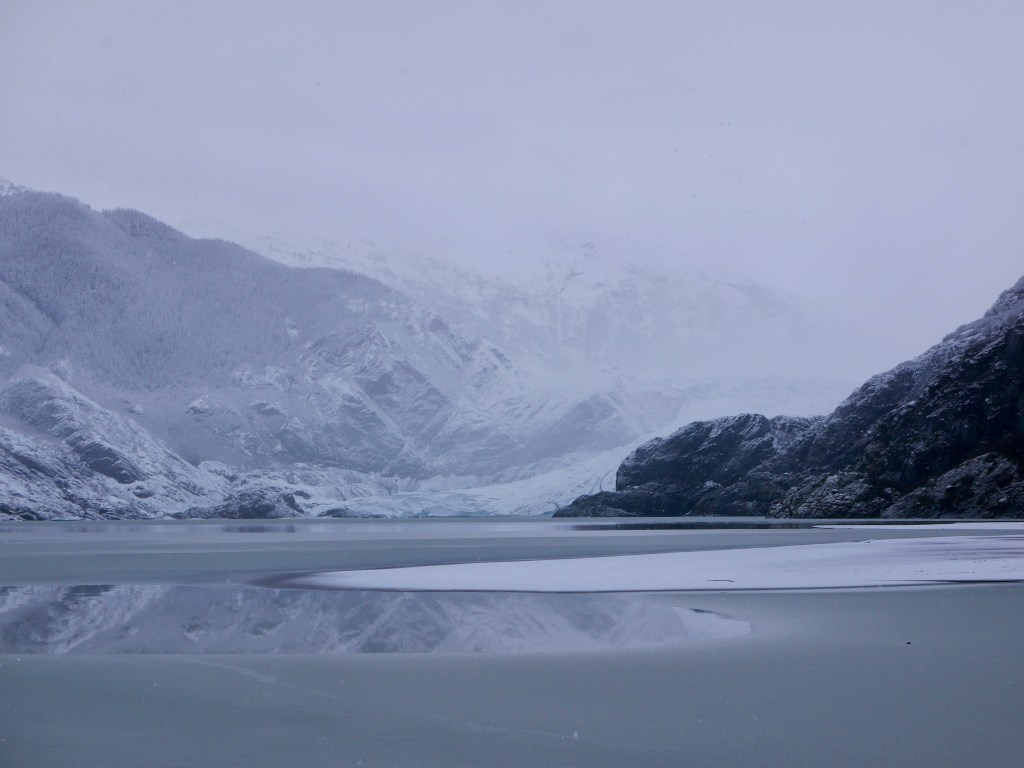
            We drop down onto the lakeshore to get our first unfiltered view of the glacier. There is an informal trail packed down by the boots of paws of others. I leave the easy path and punch my way to the ice edge and find only the track of one large canine that moved with purpose toward the Mendenhall River. The animal moved in a steady trot, the kind used by sled dogs and wolves to cover ground. 

The romantic in me wants to attribute the tracks to a wolf. Years ago, Aki and I listened to wolf howling when we skied along the edge of this lake. Later that winter, a black wolf nicknamed “Romeo” followed the little dog and I as we crossed the moraine. But Romeo is now long dead. These might be wolf tracks. No trail of boot prints runs parallel to them. 

Finally Getting Her Way

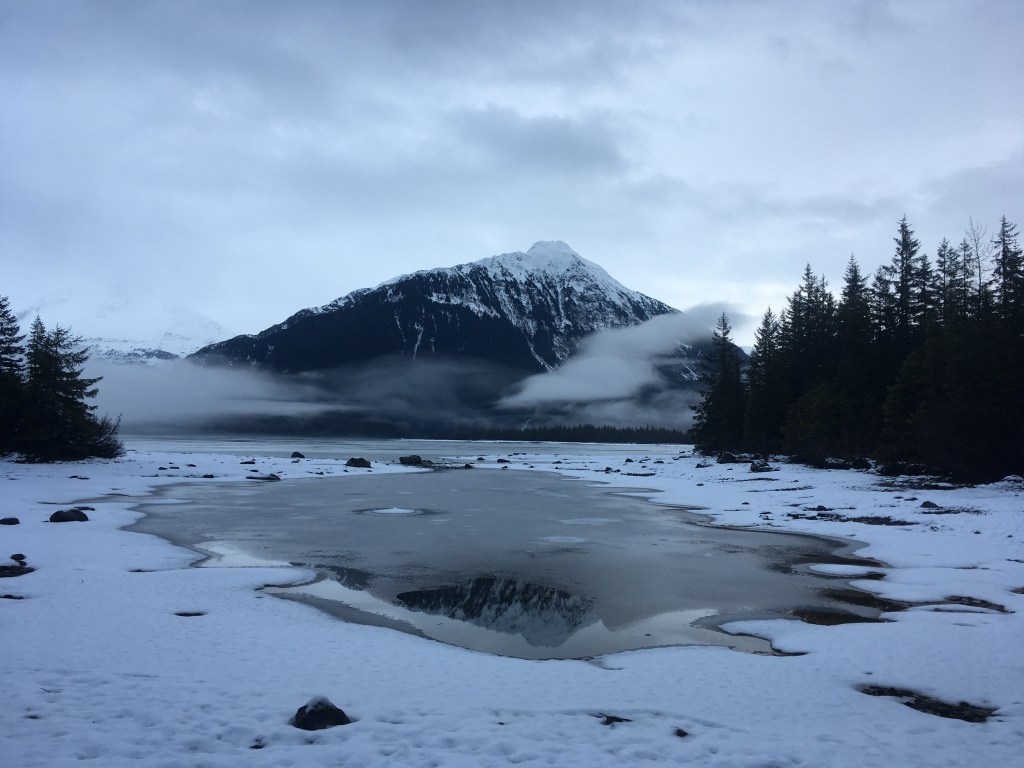
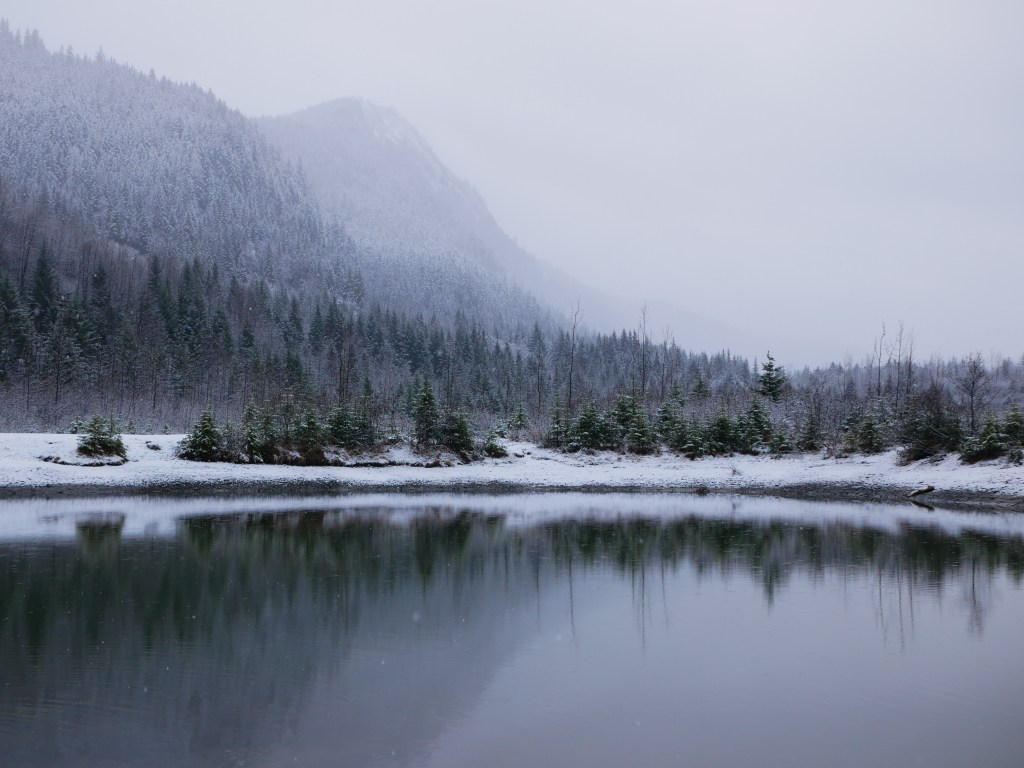
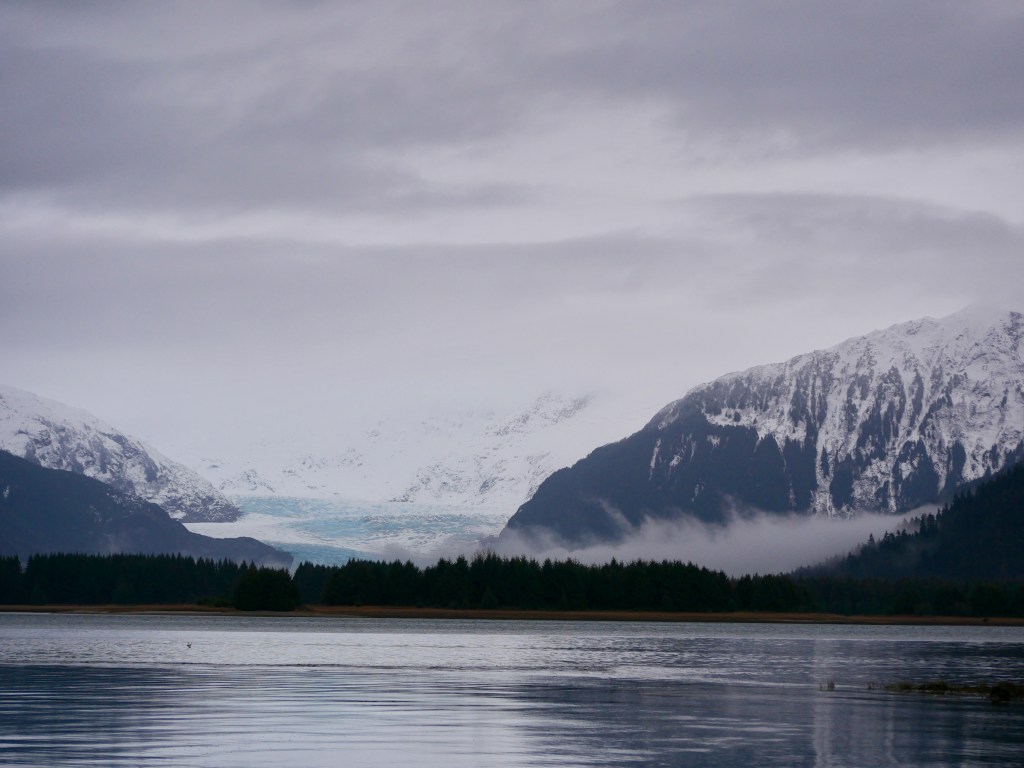
     Aki, why do you want to stay in the woods? It’s not a fair question to ask the little dog. The woods and the campground road just beyond them are rich with dog smells. She can almost make out the scent left by one of her dog buddies, maybe Cedar. Aki doesn’t care if the lakeshore trail offers wonderful, if misty, mountain views. Besides, it has started to rain. The woods will provide her some shelter from the wet. 

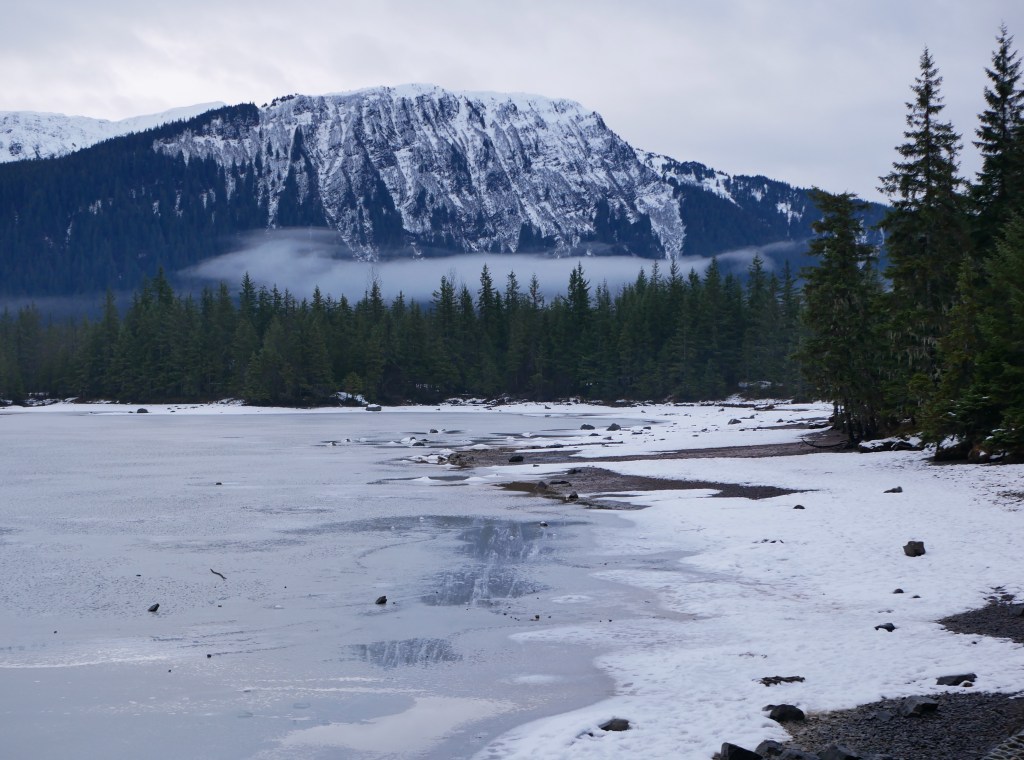
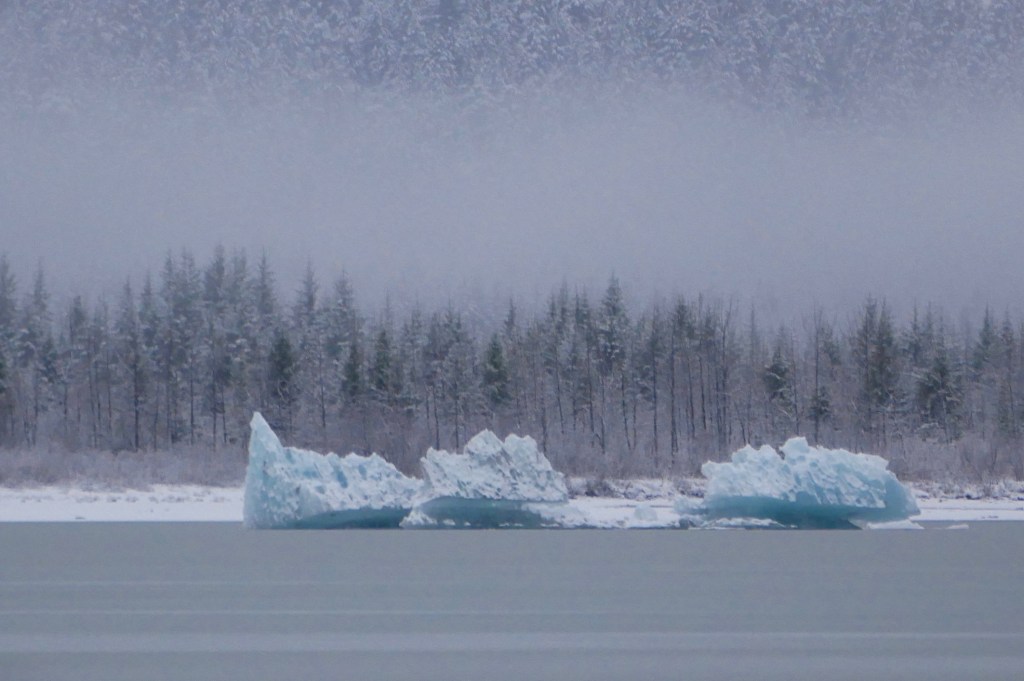
      The poodle-mix might also be deterred by the crunch of ice that follows each of my steps along the snow-covered shore. A two-inch thick sheet of ice is buried beneath snow. An irregular surface of beach rocks stretch beneath the ice. I fracture the ice with every step. 

         I crunch my way around and between a set of small islands. Aki has planted herself at the forest edge. Only when I disappear around a point of land does the little dog trot after me. We repeat this pattern all the way to the place where the Mendenhall River leaves the lake. Then we re-entered the forest and walk on an icy road through the campground and back to the car. Now a happy Aki is free to catalogue the passage of other dogs that recently left their mark on the snow.    

Winter Beachhead

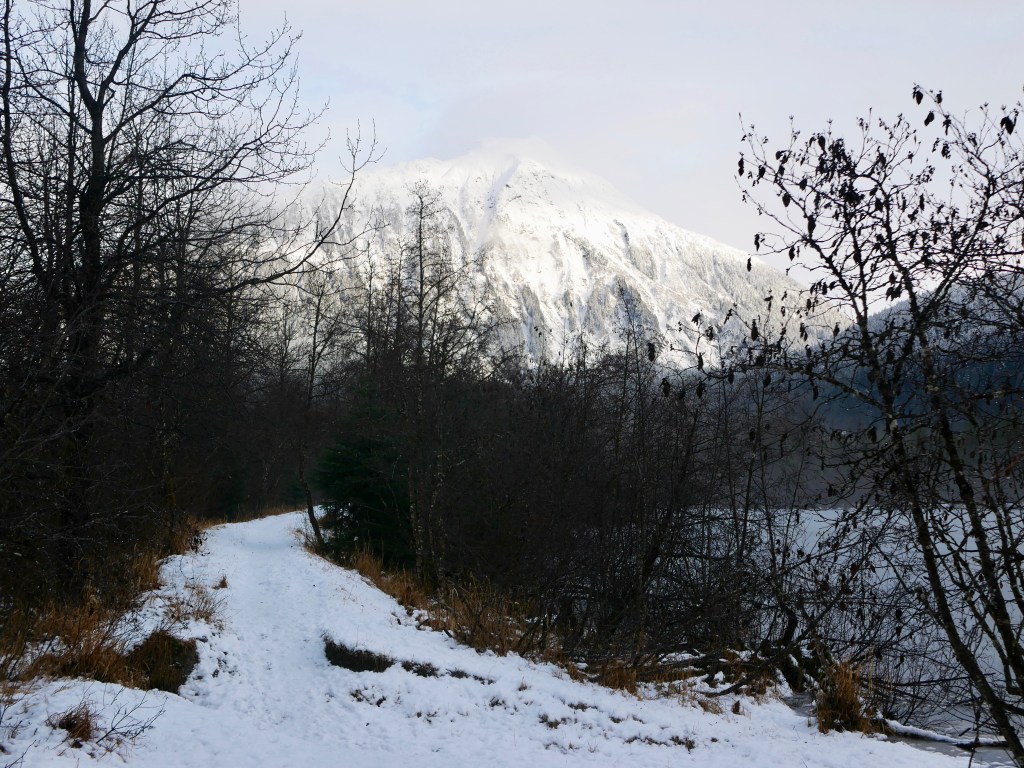
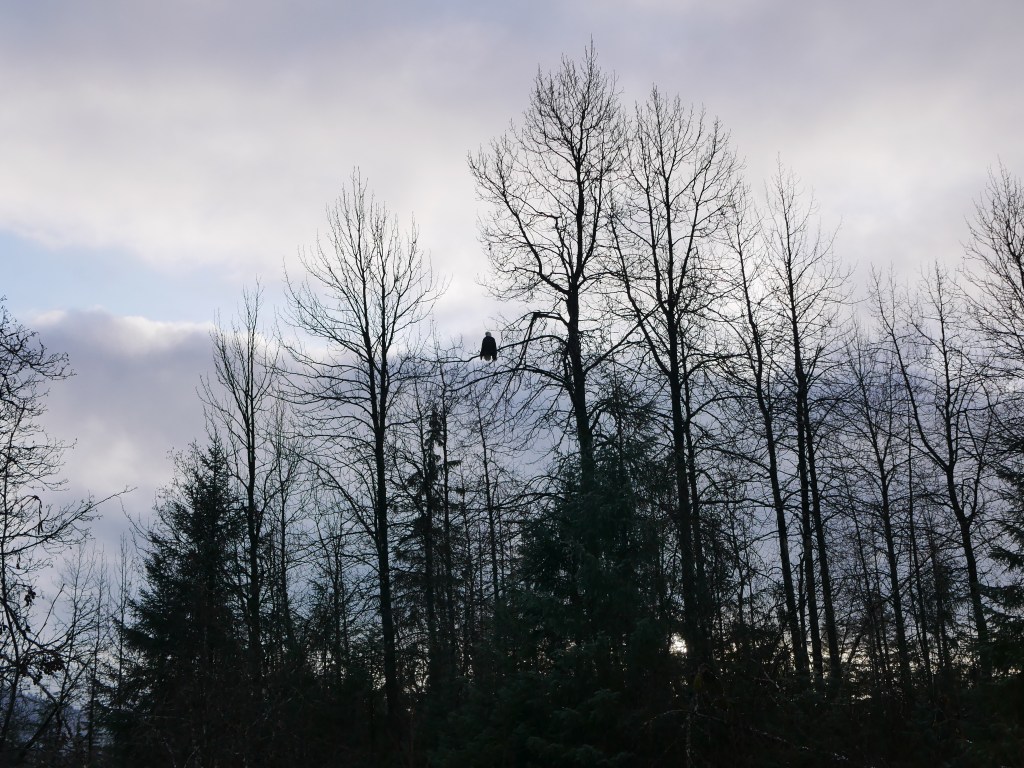
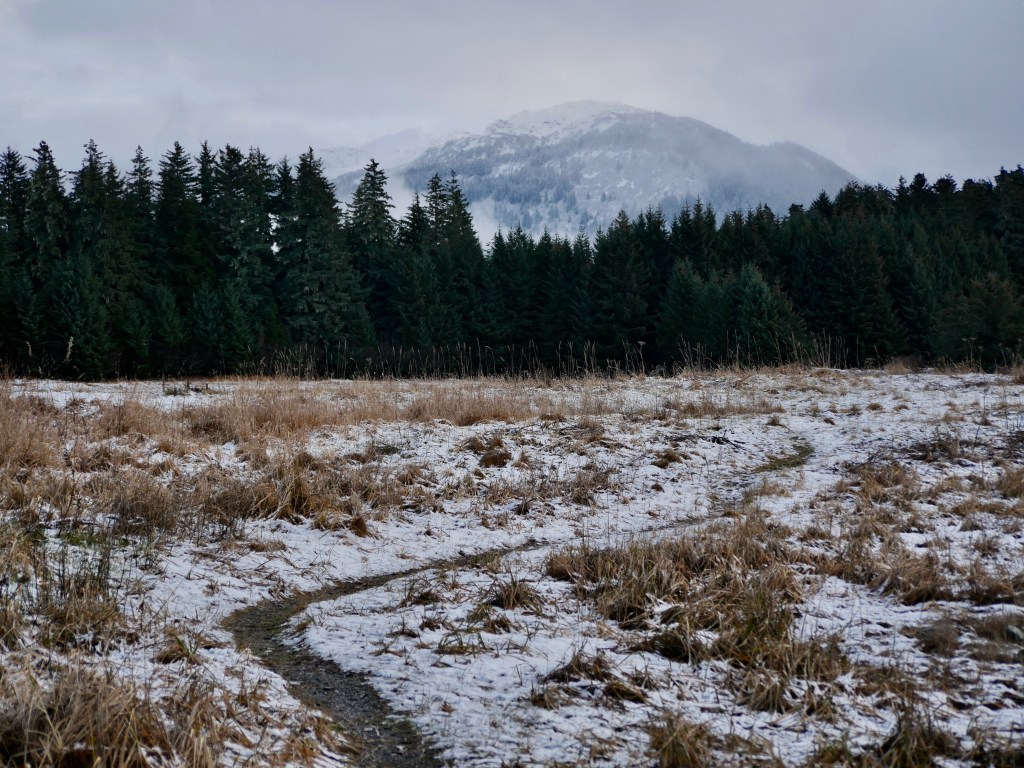
           Winter is holding its beachhead on the moraine. Aki and I are walking on a snow-covered glacial trail when an eagle lifts off the ground and lands in a nearby cottonwood tree. I search the ground for what drew the eagle. All I find is fresh blood on the snow.  

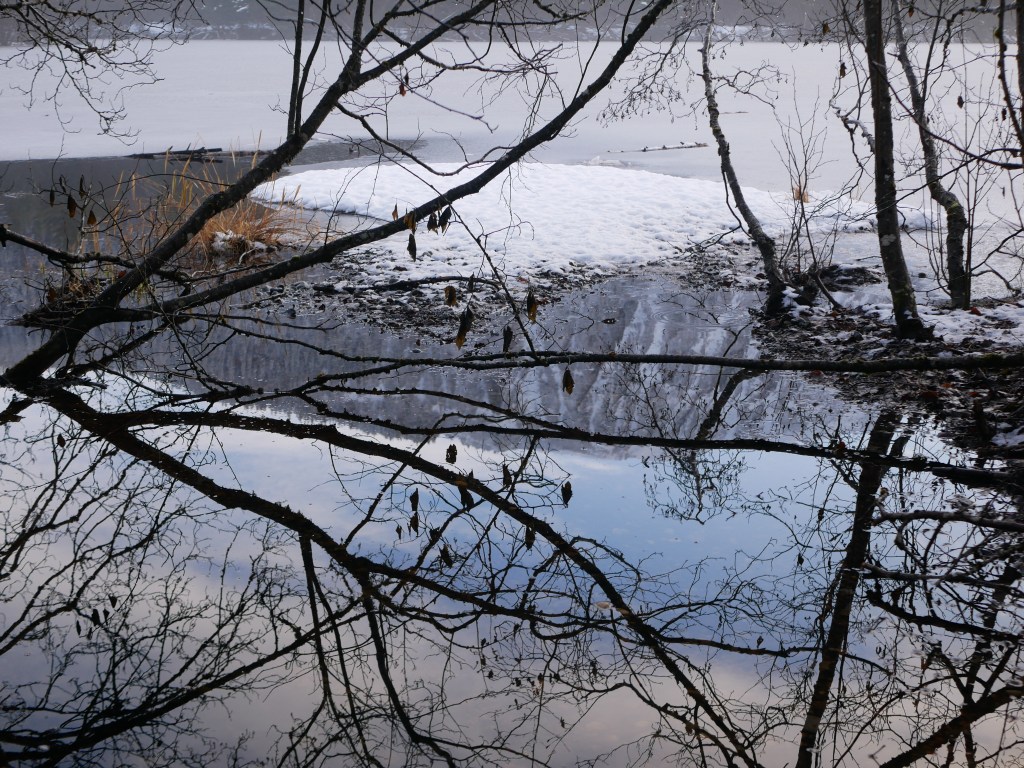
           A low layer of clouds hid the mountains when we first arrived. Now the sun is trying to burn it off. I can just barely make out the shoulder of Mt. McGinnis rising above the Troll Woods. Then the peak appears underlined with a thin strip of grey cloud. The air brightens when patches of blue appear in the eastern sky. It is reflected in a small beaver pond that almost touches the tree where the eagle waits for us to leave. 

          We move on to visit the beaver village. There thin ice barely covers the pond. Aki holds back at the edge of village. I wonder why. She normally loves to explore near beaver dens and always smiles when she rolls in their scat. I turn around after reaching the hole the beavers use to slip in and out of the pond. There is Aki, giving me her “Are You Crazy!!!” look. We seen no tracks of bears or wolves so I have no idea what has the little dog on edge.             

Waiting and Wishing

        At 9:15 this morning, the sun climbed above the Douglas Island mountain ridge and lit up the glacier and mountains on the north side of Gastineau Channel. Aki and I waited at the mouth of Fish Creek for the sun to climb high just a little higher so it could shine light on the tidal meadow on which we stood. 

         Trailside grass protected the diminutive poodle from the wind. But nothing prevented the breeze from carrying away my body heat. Just offshore, a small circle of gulls rolled and splashed in the water. It was time for their morning bath. Further out, over a hundred mallard ducks lazed. 

          Feeling totally out classed by the birds and unwilling to let my hands go numb as they held my camera, I pulled on a heavy pair of mittens and turned to search for the sun. Even though it was only 9:30, the sun had already slipped behind the mountains for the day.

         Aki needed no encouragement to join me on a return hike to the car. No ducks paddled on the pond but we did see a red-breasted merganser caught out in the open on the creek. The exposed fish duck powered through the current to reach the wooded shore where it disappeared under the overhanging limbs of a spruce tree.              

First Real Snow

A bald eagle flies over our car as I steer it into our driveway. Look at that, little dog, we spent hours walking over semi-wild lands and saw nothing but pine siskins. If we had stayed home, we could have seen that eagle being covered with snowflakes as it sulked on our neighbor’s roof. Aki, hoping to find some abandoned food morsel on the kitchen floor, urges me to stop second guessing myself and let her into the house. 

           We have just returned from a visit to the glacial moraine. An inch of squeaky snow covered our trail. Quarter-sized flakes drifted down as we walked out to Nugget Falls. We could just make out the glacier and Mt. McGinnis through the falling snow. 

          I usually look forward to deciphering tracks made by animals in snow. But those left light night were already buried with newly fallen stuff.  Near the lakeshore, we found fresh tracks that could have been left by a small black bear.  Maybe someone is late to hibernate.          

 Aki and I enjoyed our first snowy walk of the year. Even during a storm, the white stuff brightens the day. But the appearance of the sun could have added a crispness to the scene. This morning, while preparing to drive out to the moraine, the sun did muscle out from behind snow clouds to light up the waters of Gastineau Channel. It happened as an ocean tug pulled the weekly freight barge from Seattle toward its moorings. I wondered what dreamed for goodies rode on the barge.  

Industrial Beauty

         Aki looks at me like she might at a dog ignoring a cooling chunk of king salmon. Have you lost your mind, man of mine? I’m squatting close to the meadow grass, trying to aim my camera so that it will capture a picture of the glacier but not the string of airport runway lights that slice across the bottom of the frame. I want to use some driftwood logs in the foreground to cover up the lights. 

I want to use some driftwood logs in the foreground to cover up the lights. 

I manage to depress the shutter button without falling on my face. But the resulting picture will end up in the deleted files folder. On a gravel bar on the other side of the Mendenhall River, a hundred Canada geese seem to be laughing at me. Standing up, I capture the best view of the scene—the one that includes the airport lights and the reflection of the glacier in the river. It’s a view remarkable for its beauty but also because it demonstrates how close our machines of commerce are to the river of ice.
To get to this wetlands trail, we had to drive past a lumberyard, welding shops, boat storage lots, and a warehouse. Jets flying to Anchorage or Seattle and floatplanes traveling to Angoon or Hoonah flew over our heads during the walk. So did an eagle. A seal broke the surface of the river while the beep-beep-beep sound of a truck backing up reached us from water treatment plant.
I head over to the river to where the salmon pens are anchored. The Mendenhall Towers and boats on blocks for the winter rise above the river.  Almost anywhere else in North America, the land under the boat storage lot would be packed with luxury houses that offered river and mountain views. Our city planners realized the value of providing fishing boats easy access to the sea. 

Even in the Rain

           Rain starts soaking into Aki’s curls as soon as she jumps out of the car. Thanks to the storm, we had our choice of parking places. I expect to have the lake to ourselves. Then we hear someone speaking with a Caribbean accent. He is walking up the steps from the lake with his parka hood up. A white ear bud trails from his ear to the cell phone in his hand. By ease dropping I learn that he has just texted a selfie of himself to person he is talking too. His face beams with the excitement of seeing a glacier snaking through granite to the lake. If the rain can’t dampen the joy of his visit, I can’t let it discourage the little dog or I. 

          The level of the lake is high but there is enough exposed beach to provide a path to the Nugget Falls Trail. We join the trail where it touches a slanting rock wall that still bears the groves cut into it by sharp stones frozen into the bottom of the retreating glacier. Rainwater brings out the beauty of the grooved rock. Like a pebble plucked from a creek bottom, the beauty of the rock will fade as it dries.

          On the way to the falls we detour over to the arctic tern nesting area. The fierce little birds are long gone. Small, white feathers, sodden with rain, cover the green moss of the nesting area. Here and there the moss has been ripped away, exposing a woven mat of willow roots. I stick my finger into a tiny, cave-like opening under the root mat. Is this the work of a hungry bear or a nesting tern?